 Skip to content
Crinkle Fabric Manufacturing Guide: How Is Crinkle Fabric Made for Dresses?

Your trusted Women’s Apparel Manufacturer from China
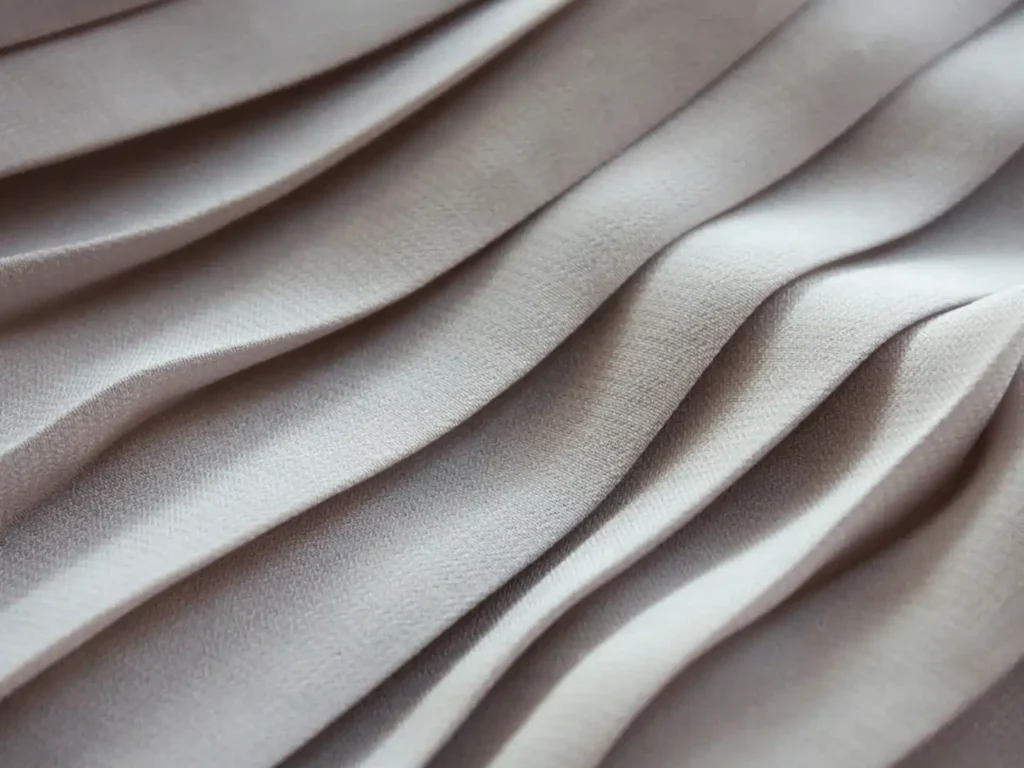
Crinkle fabric is one of those materials that can look wonderfully simple on a hanger and become unexpectedly technical the moment a dress enters development. The intentional ridges, puckers, and compressed valleys can add depth to a plain color, soften the look of everyday wrinkles, and give a lightweight garment more visual movement. Yet the same texture can change usable width, apparent stretch, drape, finished length, transparency, seam behavior, and even the way a quality inspector measures the garment. A swatch that looks perfect in a showroom is therefore only the beginning of the decision, especially when one approved sample needs to be reproduced consistently across colors, sizes, and bulk production lots.
Crinkle fabric is made by creating controlled surface puckering through yarn structure, weaving or knitting, mechanical compression, differential shrinkage, heat setting, chemical finishing, or a combination of these methods. For dresses, the manufacturing route matters because it influences texture durability, drape, extension, recovery, shrinkage, cutting behavior, seam appearance, pressing limits, lining compatibility, and finished-garment measurements. The safest development process tests the actual fabric rather than relying on the commercial name alone.
The difference becomes obvious when two rolls labeled “crinkle fabric” reach the sample room. One may be a soft viscose that opens easily across the width and settles longer after hanging; another may be a heat-set polyester with a sharper surface and stronger dimensional stability. Put the same pattern on both and the dress can fit, hang, and photograph differently. That small production-room surprise explains the central lesson of this guide: crinkle is not merely a visual effect. It is part of the garment engineering, and understanding it early makes every later decision easier.
What Is Crinkle Fabric?
Crinkle fabric is a textile intentionally developed with a wrinkled, puckered, rippled, or compressed surface. The effect can come from yarn structure, weaving, knitting, controlled shrinkage, mechanical compression, heat setting, chemical finishing, or several methods combined. Because “crinkle” describes a surface effect rather than one fixed construction, fabrics sold under the same name can behave very differently in dresses.
What Creates the Crinkle Texture?
A crinkle surface forms when different parts of a textile do not remain perfectly flat under the same tension. The dimensional imbalance can be introduced through twisted or differential-shrinkage yarns, specialized weaving or knitting, mechanical crushing, pleating, controlled washing, heat treatment, or finishing. The visible ridges are therefore intentional rather than accidental creases. The important production question is not simply how dramatic the texture looks, but what physical mechanism is holding it in place and how that mechanism reacts when the cloth is stretched, steamed, washed, dried, or carried through a sewing line.
That distinction changes garment decisions. A softly puckered viscose may become noticeably wider when the surface is gently opened, while a heat-set polyester may hold a sharper relief with less change. A knitted crinkle can combine true loop stretch with surface extension, making hand-stretch observations misleading. For development, useful records include composition, fabric weight, relaxed usable width, stretch direction, recovery, transparency, drape, shrinkage, and texture response after care. Those measurements describe what the pattern and sewing teams will actually work with far better than a supplier name such as “bubble,” “wrinkle,” or “crinkle crepe.”
Control Item | Useful Specification | Dress Production Meaning |
Texture depth | Fine / medium / pronounced; confirm by approved swatch | Changes visual volume, drape, and how strongly panel variation is seen |
Texture direction | Random / vertical / horizontal / repeated | Affects marker direction, symmetry, and panel matching |
Relaxed usable width | Measure without pulling the surface flat | Used for realistic marker planning and fabric consumption |
Extension and recovery | Record both directions under one repeatable method | Separates surface opening from true elastic behavior |
Wash response | Compare dimensions and appearance before/after approved care | Shows whether texture and garment measurements remain acceptable |
Pressing response | Trial steam, pressure, contact time, and temperature | Prevents accidental flattening or shine during finishing |
A crinkle fabric specification is strongest when the physical swatch and the measurement method are kept together. The values above are control categories rather than universal pass-fail limits; the acceptable range should be defined by the garment, the brand standard, the care method, and the approved sample. Recording the test condition also prevents different teams from creating different results simply because one person stretches the fabric more than another during measurement.
Is Crinkle Fabric Permanently Wrinkled?
Some crinkle effects are highly durable, while others soften, open, or flatten after laundering, prolonged hanging, steaming, pressing, or body tension. Permanence depends on the fiber and on whether the texture is built into the yarn or fabric construction, created by differential shrinkage, or mainly imposed during finishing. Even a surface marketed as permanent should be treated as a performance claim that needs to be confirmed under the intended care method, because a stable dry swatch may behave differently after washing or after the garment finishing room applies heat and pressure.
Garment weight adds another layer. A short swatch sitting flat on a table experiences almost no sustained vertical load, but a full maxi dress can pull continuously on a soft crinkled structure. That can change total length, tier proportions, or hem balance even when the fabric has not technically “shrunk.” For long dresses, asymmetric hems, and fluid rayon or viscose styles, hanging trials before final hemming are useful. The development team should compare the approved appearance before care, after care, after pressing, and after realistic hanging rather than relying on the visual condition of a freshly opened roll.
Is Crinkle the Same as Crepe?
Crinkle and crepe can look related, but they are not automatically the same textile. Crepe is a broad family usually associated with a grainy, pebbled, or finely irregular surface that can come from high-twist yarns, fabric construction, or finishing. Crinkle generally describes more obvious puckering, ridges, compressed wrinkles, or three-dimensional surface relief. Plisse, seersucker, bubble textures, crushed finishes, and crinkle crepes can sit close together visually, which is why trade names often overlap from one mill or fabric market to another.
For a dress manufacturer, the physical swatch is more useful than the label. One supplier may call a lightweight textured polyester “crinkle crepe,” while another uses “wrinkle chiffon” for a very similar visual effect. Yet one may extend across the width and the other may stay relatively stable. Pattern allowances, seam settings, lining selection, and pressing cannot be decided from the commercial name alone. The approved specification should therefore record measurable behavior: composition, weight, relaxed width, extension, recovery, shrinkage, directional texture, opacity, and the intended care method. Terminology starts the sourcing conversation; performance data finishes it.
What Makes Crinkle Fabric Suitable for Dresses?
Crinkle fabrics are valuable in womenswear because surface texture adds dimension without requiring prints, embroidery, or heavy decoration. Fine wrinkles can make a lightweight solid fabric look richer, while deeper puckering can create controlled volume in sleeves, tiers, ruffles, gathered skirts, and relaxed bodices. The texture can also disguise casual handling creases, which is useful for travel, resort, summer, and easy-care concepts. These advantages are strongest when the fabric behavior matches the silhouette instead of being selected only because the swatch looks fashionable.
Loose midi and maxi shapes usually tolerate dimensional movement better than sharply engineered styles. Bodycon dresses, corset-inspired bodices, fitted waists, narrow hip lines, symmetrical cut-outs, and precise panel seams demand closer control because small width or recovery differences become visible on the body. A crinkle fabric that performs beautifully in a tiered resort dress can be frustrating in a close-fitting mini. The practical selection sequence is therefore silhouette first, texture second: define the required fit, drape, opacity, care, and structure, then choose a crinkle construction whose measurable behavior supports those requirements.
How Is Crinkle Fabric Made?
Crinkle fabric can be produced through mechanical manipulation, heat setting, controlled shrinkage, chemical finishing, specialized yarn arrangements, or engineered weaving and knitting. There is no single universal process. The best route depends on fiber type, construction, desired texture depth, wash durability, hand feel, and how stable the surface must remain during cutting, sewing, finishing, wear, and laundering.
How Does Mechanical Crinkling Work?
Mechanical crinkling changes the fabric physically by compressing, twisting, crushing, folding, pleating, or otherwise forcing a flat textile into an irregular surface. Depending on the construction and mill process, cloth may be handled in rope form, twisted before drying, compressed between surfaces, mechanically pleated, or subjected to a controlled finishing sequence that locks in part of the deformation. The visual range is broad: very fine random wrinkles, vertical ripples, deep crushed ridges, and irregular bubble-like surfaces can all be produced through mechanical routes combined with different fibers and constructions.
The advantage is flexibility in appearance, but the first visual result does not prove long-term stability. Water, steam, pressure, body tension, or hanging can partly relax some surfaces. Manufacturing consistency also depends on how later departments handle the fabric. If a technician approves the cloth relaxed, a cutter stretches it flat, and a sewing operator feeds it under tension, each department is effectively working with a different dimension. Sampling should establish the approved relaxed condition, spreading method, and finishing method before bulk production, so texture remains a controlled design feature instead of a variable created by individual handling habits.
How Does Heat Setting Work?
Heat setting is especially important for thermoplastic fibers such as polyester because controlled heat can help stabilize an intentionally created shape. The material may be mechanically compressed or pleated first, or it may contain yarns engineered to respond differently when heated. Thermal treatment allows the structure to settle into a more stable configuration after cooling. The exact temperature, exposure time, tension, and equipment depend on the fiber, yarn preparation, dyeing route, fabric weight, and desired hand, so a single heat-setting recipe should never be copied across unrelated crinkle qualities.
For dress production, the more immediate concern is what happens after the fabric leaves the mill. Pressing tables, steam, fusing operations, and final garment finishing can alter a heat-sensitive surface. A pressing method that is harmless for flat woven polyester may flatten crinkles, create shine on the raised ridges, or distort one area of a garment more than another. Sample development should include pressing trials on approved fabric from the intended lot. The working standard should define a safe combination of temperature, steam, pressure, contact time, and protective layers before bulk operators begin finishing the garments.

How Does Chemical Finishing Work?
Chemical finishing can change how fibers swell, shrink, crease, recover, or retain a deliberately introduced surface. Cellulosic fabrics such as cotton, rayon, and viscose may be treated so different zones respond differently during later processing, while resin or cross-linking systems can be used in certain finishes to improve crease retention or dimensional behavior. The phrase “chemical crinkle” is still too broad to function as a technical specification because mills use different chemistries and process sequences for different fabrics, market requirements, and hand-feel targets.
From a garment-development perspective, the performance and compliance of the finished cloth matter more than memorizing a finishing formula. The sourcing team should confirm declared composition, intended care, hand feel, shrinkage, colorfastness, relevant chemical requirements, and texture durability with the supplier or mill. Finishing can make a fabric drier, firmer, smoother, or less absorbent, so a replacement fabric can look similar but feel noticeably different against the skin. When a crinkle quality is substituted, the fabric should be re-approved for drape, recovery, shrinkage, surface stability, and garment fit rather than assumed equivalent from appearance alone.
How Do Yarn and Weave Create Crinkles?
Some crinkle effects begin before finishing through the yarn and fabric architecture itself. High-twist yarns, differential yarn shrinkage, uneven tension, selected yarn placement, woven puckering, or engineered knitting can cause the surface to contract and rise after weaving, dyeing, washing, or heat treatment. Because the texture grows out of the textile structure, these fabrics can retain a distinctive relief without relying only on a post-production crush. Structural crinkles can also show clear direction, with ridges or extension behaving differently along the length and width of the fabric.
That directional behavior affects pattern efficiency and fit. A woven crinkle may open noticeably across one axis but barely move along the other, while a knitted crinkle can combine loop stretch with surface expansion. Costing should use the relaxed usable width that will actually be used in the cutting room rather than a width measured after the cloth has been pulled flat. Pattern teams should also record grain direction, texture orientation, and recovery. When a fabric’s visual effect is tied closely to construction, reversing panels or rotating markers simply to save consumption can change both appearance and mechanical behavior in the finished dress.
Which Fibers Work for Crinkle Fabric?
Cotton, rayon, viscose, polyester, nylon, and blended fibers can all be used for crinkle fabrics. No fiber is automatically best. Cotton offers a natural hand, rayon and viscose can provide fluid drape, polyester supports stable heat-set effects, and blends can balance softness, resilience, strength, or true stretch. Selection should begin with the intended dress silhouette, care method, and fit requirements.
Is Cotton Crinkle Different?
Cotton crinkle usually has a relaxed, natural character that works well for summer dresses, casual midis, loose shirt dresses, tiered skirts, and resort collections. Cotton can feel breathable and familiar against the skin, but moisture and drying can influence both dimensions and surface appearance. The important distinction is between intentional texture and uncontrolled shrinkage. A garment may keep attractive wrinkles while becoming shorter, narrower, or more asymmetric after washing, so the fact that a dress is meant to look crinkled does not remove the need for dimensional-stability testing.
Cotton crinkles also cover very different constructions. Lightweight gauze-like qualities can shift and compress easily during spreading, while denser woven crinkles may hold more volume and feel comparatively stable. A specification that only says “100% cotton crinkle” is therefore too loose for repeat production. The approved swatch should be tied to weight, usable width, finish, hand feel, opacity, shrinkage, and the care method. If the fabric is changed during costing or replenishment, the new option needs a physical comparison because even the same fiber content can produce a noticeably different silhouette.
Fiber Route | Common Dress Weight Reference* | Typical Strength | Main Development Check |
Light polyester crinkle | 60-110 gsm | Crisp or fine texture, easy-care potential | Heat response, static, opacity, pressing |
Rayon / viscose crinkle | 90-160 gsm | Soft hand and fluid drape | Relaxation, hanging length, wash change |
Cotton crinkle | 100-180 gsm | Natural hand and casual volume | Shrinkage, width change, surface consistency |
Viscose / polyester blend | 100-180 gsm | Drape with improved resilience | Recovery, hand feel, batch consistency |
Stretch crinkle knit | 150-240 gsm | Body-following texture and true stretch | Extension, recovery, seam performance |
*These are broad commercial sourcing ranges, not textile standards. Mills can produce crinkle fabrics outside these weights, so the actual swatch, construction, finish, and garment silhouette should determine approval. Weight is most useful when it is compared with drape, opacity, stretch, recovery, and texture depth; treating GSM as a stand-alone quality grade can lead to poor substitutions when two fabrics share a number but behave differently on the body.
Is Rayon Crinkle Good for Dresses?
Rayon and viscose crinkle fabrics are strong choices when a dress needs fluid movement, softness, and a lightweight surface with visible dimension. They are frequently suited to relaxed midis, flowing maxis, gathered dresses, ruched designs, beach styles, and tiered silhouettes where the fabric should move rather than stand away from the body. Their strength is also the source of several production risks: soft rayon can shift during spreading, lengthen under garment weight, and respond noticeably to moisture, especially when the crinkle opens easily under light tension.
Long styles deserve extra attention because gravity continues working after sewing. A maxi can measure correctly on the table and then settle longer after hanging, particularly where panels are cut on different directions or where multiple tiers add weight. For some styles, a controlled hanging period before final hemming helps reveal this behavior. The exact time is fabric- and garment-specific rather than a universal rule. During sourcing, compare relaxed width, weight, recovery, wash change, and hanging behavior. A visually similar viscose replacement can require pattern or hem adjustments if its surface compression and recovery differ from the original sample fabric.
Is Polyester Crinkle More Stable?
Polyester can provide strong crinkle retention because thermoplastic fibers respond well to controlled heat setting, making it useful for travel dresses, pleated looks, lightweight partywear, and easy-care collections. It also absorbs less moisture than cellulosic fibers, so some polyester constructions show less moisture-driven swelling and contraction. Stability still cannot be assumed from fiber content alone. A fine polyester crinkle chiffon, a stretch bubble knit, and a dense textured crepe can all be predominantly polyester while behaving very differently in drape, extension, recovery, opacity, and pressing.
Finishing-room heat is a particularly important control point. An operator may be tempted to flatten sewing creases with the same pressure used on a conventional polyester woven, yet that can reduce texture or create shiny high points. Sample pressing should establish the least aggressive setting that produces an acceptable garment appearance. Static, skin feel, and breathability also deserve consideration because they influence the wearer’s experience even when dimensional stability is excellent. Polyester often brings useful production consistency, but the final choice still needs to balance performance with the hand and movement the design requires.
Are Blended Crinkle Fabrics Better?
Blended crinkle fabrics can solve performance trade-offs that are difficult to manage with a single fiber. Polyester-viscose combinations may retain some fluidity while improving resilience, cotton-polyester blends can balance a more natural touch with easier care, and elastane-containing qualities can add genuine stretch for fitted silhouettes. The most important development distinction is between elastic stretch and crinkle extension. A fabric can become wider because elastane stretches, because the textured surface opens, or because both mechanisms occur together, and the recovery behavior can be very different.
Imagine two swatches that each become about ten percent wider under gentle hand tension. One contains elastane and returns quickly; the other simply flattens its crinkles and remains partly open after release. A loose dress may tolerate either behavior, but a fitted waist, hip, or sleeve does not. Development records should note stretch direction, relaxed width, extended width, recovery, weight, opacity, drape, and intended care. A blend is therefore “better” only when those properties match the garment. Fiber percentages are useful clues, but construction and finishing determine whether the final dress actually performs as expected.
How Does Crinkle Affect Dress Performance?
Crinkle texture can influence drape, apparent stretch, garment measurements, shrinkage, and wash appearance. A compressed surface may open under tension even when the fabric contains no elastic fiber, so the same cloth can occupy different dimensions when relaxed, stretched, steamed, or washed. Dress patterns and QC measurements should therefore use a clearly defined fabric condition instead of relying on casual hand tension.
How Does Crinkle Affect Drape?
Crinkle adds three-dimensional structure, so a cloth with the same nominal weight as a flat fabric can look fuller, softer, or more voluminous. Fine surface texture can make lightweight material appear richer without adding much mass, while deeper puckering can hold the cloth slightly away from the body. That difference matters when translating a reference image into production. A flowing style photographed in soft crinkle viscose may become stiffer, wider, or more sculptural if the replacement fabric has a firmer polyester construction, even when color and weight appear similar on a specification sheet.
Fabric weight is useful context but not a complete predictor. As a broad sourcing reference, many lightweight dress crinkles fall around 70-120 gsm, medium dress qualities often appear around 120-180 gsm, and heavier textured knits or structured crinkles can exceed 180 gsm. These are commercial ranges, not performance standards, and two fabrics at 120 gsm can still drape very differently because of yarn twist, density, finish, and texture depth. A fabric should therefore be approved on a form or sample garment as well as by numbers, especially for tier proportions, sleeve volume, ruching, and asymmetric hems.
Does Crinkle Fabric Stretch?
Crinkle fabric can extend without being technically elastic because the compressed surface opens when pulled. This mechanical extension should not be confused with controlled stretch and recovery from elastane or a highly elastic knitted structure. A fabric may widen easily in the hand yet recover slowly or incompletely after tension is released. If a pattern maker treats that behavior like conventional stretch jersey, the finished garment can loosen at the waist, seat, elbow, or other areas that remain under repeated tension during wear.
A practical evaluation checks both directions and records what happens after release. For example, the team can measure a relaxed 20-centimeter section, extend it under a consistent light force, note the extended dimension, then allow it to recover before measuring again. The goal is not to create a universal stretch percentage but to compare materials using the same method. Lining must be considered at the same time. A freely extending crinkle shell paired with a rigid lining may feel unexpectedly restrictive, while a highly elastic lining can allow more movement than the outer design was intended to show.
Does Crinkle Affect Dress Sizing?
Yes. Crinkle can affect sizing because measurements depend on how open or compressed the surface is at the moment the garment is checked. The same waist panel can measure differently when left naturally relaxed, casually smoothed, or pulled nearly flat. On highly textured fabrics, that difference can become several centimeters across a full garment circumference. Production therefore needs a repeatable measurement condition so sample makers, sewing lines, final QC, and the brand are all evaluating the same physical state rather than unconsciously applying different hand tension.
Sizing sensitivity increases in bodycon dresses, fitted waists, narrow skirts, close hip lines, strapless bodices, and fitted sleeves, where small dimensional differences directly change how the garment sits on the body. Looser resort or tiered styles may tolerate more movement, but hem balance and total length can still shift. The safest method is to develop the pattern in the actual approved fabric, allow the finished sample to relax, measure using defined points of measurement, and recheck fit after any fabric substitution. Reusing an old pattern simply because the new fabric “looks similar” is one of the easiest ways to introduce inconsistent fit.
Does Crinkle Fabric Shrink or Change After Washing?
Crinkle fabric can shrink, relax, deepen, flatten, or redistribute its texture after washing because fiber swelling, residual tension, yarn movement, drying, and heat all affect the material. Intentional wrinkles do not make dimensional change irrelevant. A shell can remain visibly crinkled while becoming shorter, or it can keep nearly the same dimensions while its surface becomes noticeably smoother. Fabric-level tests should therefore record both length and width changes as well as texture appearance, rather than treating “still wrinkled” as evidence that the cloth stayed stable.
Garment-level checks reveal interactions that a swatch cannot. A shell may change two percent while a lining changes very little, creating bubbling, pulling, or a lining that becomes visible below the hem. Different panel directions can also produce uneven hem behavior or seam twist. The appropriate tolerance depends on the garment, care method, brand specification, and target market, so there is no responsible universal percentage for every crinkle dress. The useful goal is controlled, understood behavior: after the agreed care cycle, the garment should remain within the approved measurement and appearance requirements for its intended fit and silhouette.
How Do You Cut and Sew Crinkle Fabric?
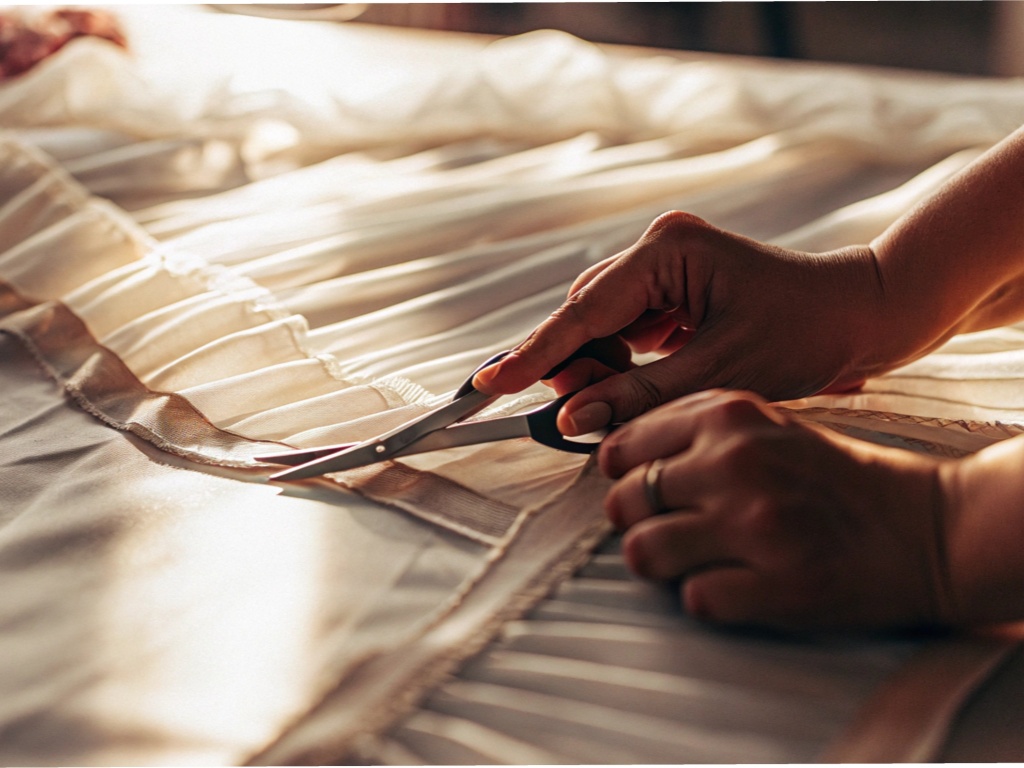
Crinkle fabric should be cut and sewn in a controlled, relaxed condition without unintentionally stretching or flattening the approved texture. Spreading tension, grain direction, pattern allowances, seam settings, pressing, and lining choices all need to reflect the fabric’s real dimensional behavior. Even small handling differences can change panel dimensions when the surface opens easily under light tension.
Should You Relax Crinkle Fabric First?
Relaxation is useful whenever rolling, transport, folding, winding tension, or storage can change the fabric surface. A roll may look narrower and more compressed immediately after opening, or it may retain tension that gradually disappears once the cloth is laid out. Cutting before the material reaches a repeatable condition can cause early and late lays to behave differently. The development team should compare relaxed width and surface appearance after unwinding and again before cutting, then establish a practical handling procedure for the approved quality instead of assuming every crinkle needs the same waiting time.
The same idea applies after sewing. A newly stitched dress may carry temporary tension from feeding, pressing, handling, or hanging. Long skirts, maxis, bias sections, and heavy tiered constructions can continue settling before the final hem is stable. Rather than adopting a universal rule such as “always hang for twenty-four hours,” sample development should observe the actual garment until meaningful length change stops. The approved process can then be repeated in production. Consistency comes from defining the condition that produces a stable measurement, not from copying a relaxation time from an unrelated fabric.
How Should Crinkle Fabric Be Cut?
Crinkle fabric should be spread without forcefully stretching it lengthwise or crosswise just to make the surface look flat. Excessive pulling can create panels that contract after cutting, while leaving the cloth randomly bunched can create the opposite problem. The cutting condition used for the approved sample should be repeatable in bulk. Before marker placement, the team should confirm face side, texture direction, shade, usable width, edge behavior, and whether the crinkles create a visual nap that makes reversed panels appear different under light.
Roll inspection is particularly important because textured surfaces can hide local flat spots, abrupt changes in crinkle density, stretched edges, or compressed sections near roll ends. Those defects may look minor on loose fabric but become obvious once adjacent panels are sewn together. Directional surfaces should normally be kept consistent across visible garment panels unless the design deliberately uses contrast. Marker efficiency matters, but saving a small amount of fabric by rotating panels can be expensive if the finished dress shows different sheen, texture direction, or mechanical behavior between the left and right sides.
How Should Patterns Allow for Crinkle?
There is no safe universal crinkle allowance. Pattern adjustment depends on relaxed width, extension, recovery, shrinkage, garment fit, drape, and whether the style includes lining or internal structure. An arbitrary percentage added to every seam can create as many fit problems as ignoring the texture. The first sample in the intended fabric is therefore essential: the pattern maker can observe bust, waist, hip, length, neckline, straps, armholes, and movement while the material is behaving under real garment tension instead of extrapolating from a flat fabric calculation.
If the fabric changes later, the pattern should be reviewed again. A replacement with different weight, recovery, texture depth, or shrinkage can change the silhouette even when composition is similar. This matters for repeat orders as well as first development. A paper pattern is only one part of the production standard; it works correctly because it was approved with a specific fabric condition, lining, construction, and measurement method. Large-scale reproducibility improves when those relationships are documented, because the result no longer depends on one experienced sample machinist instinctively knowing how much to stretch or ease the material while sewing.
How Do Seams and Linings Affect Crinkle Fabric?
Seams can flatten texture, stretch a soft layer, create puckering, or make the garment appear asymmetric when machine settings are not matched to the fabric. Lightweight woven crinkles are especially sensitive because there is little mass to hide tension imbalance. Fine dress fabrics are often sampled with needles around Nm 60/8 to 75/11 and stitch lengths around 2.0-2.5 mm, but those values are starting references rather than fixed rules. Yarn size, weave density, finish, stretch, seam type, and the risk of needle damage should determine the final setup after trial seams are reviewed.
Lining adds another mechanical layer. A crinkle shell may extend and recover freely while a rigid lining restricts movement, or the shell may shrink after washing while the lining stays stable and begins to pull at the hem. Transparency, comfort, support, and fit all influence whether full, partial, stretch, or no lining is appropriate. The shell and lining should be evaluated together after the intended care process, not separately. Presser-foot pressure, differential feeding, steam, and final pressing should also be tested because a secure seam is only successful when it preserves the approved surface and does not distort the garment around it.
How Is Crinkle Fabric Controlled in Bulk Production?
Bulk control starts with an approved physical fabric reference and measurable requirements for composition, weight, usable width, stretch, recovery, shrinkage, color, and surface appearance. Incoming fabric, cutting, sewing, pressing, and finished garments should all be checked against that standard. Because crinkle is intentionally irregular, QC must separate acceptable natural variation from changes that affect fit, symmetry, or repeat-order consistency.
Which Fabric Tests Matter?
The most useful test plan follows the fabric, garment, care label, and destination market rather than applying every laboratory test to every order. Crinkle constructions often deserve close attention to dimensional change, weight, usable width, stretch and recovery, colorfastness, pilling, strength, and wash appearance because those factors can alter both the texture and the finished measurements. Risk should drive the plan. A pale loose resort dress may need more focus on transparency and shrinkage, while a dark fitted crinkle style may need closer review of color transfer, recovery, seam extension, and surface polishing.
Testing is most valuable when the results connect directly to a production decision. If wash testing shows meaningful length loss, the team may adjust the pattern, change care instructions, pretreat the fabric, or select another material. If recovery is weak, a fitted silhouette may need more ease or a different construction. If bulk fabric weight is outside the approved range, drape and opacity may change even if the color looks correct. The goal is not to collect reports for their own sake. It is to identify the failures most likely to affect wear, fit, appearance, labeling, and bulk consistency before those failures become finished garments.
Control Point | Measurement / Check | Typical Production Decision |
Fabric weight | GSM against approved swatch or agreed range | Confirm drape, opacity, consumption, and lot acceptance |
Usable width | Relaxed width in approved cutting condition | Finalize marker efficiency and fabric requirement |
Dimensional change | Length and width before/after intended care | Review pattern, care method, or fabric choice |
Stretch and recovery | Warp/weft or wale/course extension with repeatable method | Confirm fit, ease, and seam requirements |
Colorfastness | Wash/rub or other tests appropriate to product | Assess staining and shade durability risk |
Texture comparison | Approved swatch vs. bulk rolls and finished panels | Accept natural variation or segregate abnormal sections |
Pressing trial | Temperature, steam, pressure, contact time | Set finishing-room instructions |
Finished measurements | Approved points of measurement and tolerances | Confirm size consistency before packing |
The exact acceptance limits should come from the brand specification, test method, product category, and approved production sample. Crinkle fabrics benefit from measurable controls, but one set of numbers cannot responsibly cover every fiber and construction. The strongest bulk-control plan connects each measurement to a real production action, such as holding a roll, adjusting a pattern, revising pressing instructions, or requesting a new approval before more fabric is cut.

How Is Crinkle Texture Checked?
Texture inspection is partly visual, but it should still be systematic. Inspectors can compare bulk fabric with an approved physical swatch for overall density, relief, direction, local flat spots, unusual compression, edge distortion, and roll-to-roll variation. Because raised surfaces create highlights and shadows, lighting angle can make the same fabric look dramatically different. Mobile-phone photographs are useful for communication, but they are not a reliable sole standard for subtle texture depth or color. A physical fabric reference and an approved garment provide a much stronger basis for judging bulk consistency.
Finished garments need a second level of comparison because panel relationships can make variation more obvious than it appeared on the roll. Left and right bodice pieces, paired sleeves, front skirt panels, symmetrical cut-outs, and waist sections should look intentionally related rather than accidentally mismatched. Natural irregularity does not need to be eliminated; that is part of the charm of many crinkle fabrics. QC should focus on variation that changes the garment impression, such as large flat zones, a visibly different texture direction, abnormal stretching, or one panel that reflects light in a clearly different way from its pair.
How Is Shrinkage Controlled?
Shrinkage control begins before the marker is finalized. Representative fabric should be evaluated using the intended care method, and the result should include both dimensional change and surface appearance. A fabric that becomes two percent shorter while keeping the same texture creates a different development problem from one that stays nearly the same size but becomes much flatter. When change is meaningful, possible responses include pattern adjustment, fabric pretreatment, revised care instructions, a different lining, or selection of another fabric. The correct response depends on the product rather than on one universal shrinkage allowance.
Garment verification then checks interactions that fabric data cannot show by itself: hem balance, shell-to-lining compatibility, seam twist, strap position, fitted measurements, and the way different panel directions respond after care. Repeat orders also benefit from keeping the approved swatch, fabric supplier reference, dye-lot history, and prior test results. A new lot does not have to be molecularly identical to the original, but it should reproduce the approved garment performance within the brand’s agreed tolerance. When the fabric behaves differently, the pattern or construction should be reviewed before bulk cutting rather than after finished-garment inspection.
How Are Color, Hand Feel, and PP Standards Approved?
Color should be approved against a physical reference whenever precision matters because crinkle surfaces scatter light unevenly. Raised ridges can look lighter and recessed valleys darker, while satin-like or synthetic surfaces may shift again under photography lighting. Depending on the project, approval may use an existing swatch, a custom-dye lab dip, a physical color reference, and a bulk dye-lot comparison. Hand feel needs separate approval because composition and weight alone cannot describe softness, dryness, surface friction, or the way the cloth moves against the body. The sealed swatch should therefore remain part of the production record.
A pre-production sample brings those material decisions together with the final pattern, lining, trims, construction, measurements, pressing, and appearance. For crinkle dresses, PP review is particularly useful when texture affects fit or dimensional stability. The approved sample can then serve as a production and QC reference, with comments translated into updated patterns, size specifications, sewing instructions, inspection points, and packing requirements. For brands developing custom crinkle programs, Jinfeng Apparel can support fabric review, sampling, pattern adjustment, bulk production, and quality control within the same project workflow, which helps keep material decisions connected to the finished garment rather than treated as isolated sourcing choices.
Conclusion
Crinkle fabric works best in womenswear when the texture is treated as both a design feature and a measurable material behavior. The surface that gives a dress its movement can also change relaxed width, apparent stretch, recovery, drape, seam feeding, pressing response, wash dimensions, and finished length. None of those factors makes crinkle inherently difficult. They simply mean that fabric approval must happen before the pattern, sewing, and quality teams lock themselves into assumptions that were made from a small showroom swatch.
A reliable development sequence is straightforward: identify the fiber and construction, understand how the crinkle is created, approve a physical swatch, measure the fabric in a defined relaxed condition, test its response to the intended care method, develop the pattern in the actual material, confirm seams and lining, seal the pre-production standard, and compare bulk against that reference. When those decisions are connected, the crinkle stays where it belongs – in the design – rather than becoming a production variable that has to be corrected after thousands of panels have already been cut.
Share This Article :

Jerry Lee
Categories

Latest blogs
Table of Contents
Here, developing your OEM/ODM private label clothing collection is no longer a challenge—it’s an excellent opportunity to bring your creative vision to life.

