
How to Reduce Sewing Operations in a Dress Without Sacrificing Fit or Quality

Your trusted Women’s Apparel Manufacturer from China

A dress can look effortless on a model and still be surprisingly difficult to manufacture. A clean satin mini dress may contain separate bodice panels, lining sections, an invisible zipper, understitching, edge stabilization, bust shaping, and several pressing stages. Each detail seems small in isolation, yet together they add handling, operator changes, machine setups, quality checks, and opportunities for rework. Reducing sewing operations is therefore not a matter of telling a production line to move faster. It begins by deciding which construction steps create real value and which steps simply make the garment harder to produce.
To reduce sewing operations in a dress, review the pattern, construction sequence, fabric behavior, and quality requirements before bulk production. Combine compatible pattern pieces, remove nonfunctional seams, simplify lining and finishing methods, standardize suitable trims, and use folders or positioning aids. Validate every change through samples, SMV comparison, fit checks, and realistic pilot production.
Consider a fitted dress with forty-two recorded sewing operations. The development team removes seven steps to meet a target cost, and the revised sample still looks convincing in photographs. After several hours on a fit model, however, the neckline begins to stretch because one apparently minor stabilizing operation was removed. That single failure captures the central lesson of construction engineering: the shortest operation bulletin is not automatically the best one. The real goal is a dress that is simpler to make, stable in bulk production, and still worthy of the brand name sewn into it.
What Is a Sewing Operation in Dress Production?
A sewing operation is one defined, repeatable task used to assemble or finish a dress, such as joining a side seam, attaching a zipper, setting a sleeve, or hemming a skirt. A reliable operation review also counts positioning, turning, pressing, inspection, and component handling because these activities influence production time even when the sewing machine is not running.
Operation Breakdown
An operation breakdown translates a dress design into the sequence a factory will actually follow. It normally begins with small-part preparation, moves through bodice and skirt assembly, and finishes with closure installation, hemming, pressing, inspection, and packing preparation. A simple sleeveless woven dress might include darts, shoulder seams, side seams, neckline finishing, zipper insertion, waist joining, and hemming. A lined or structured version can require a second assembly path because the lining, cups, boning, or support layers must be completed before they are joined to the outer shell.
The wording in the breakdown needs to be specific enough for production planning. “Make bodice” is not an operation, while “join front princess seams with lockstitch” is. “Install invisible zipper” may also hide several actions: stabilize the opening, attach the first zipper tape, align the waist seam, attach the second tape, close the lower center-back seam, and press the finished opening. Depending on fabric behavior and line organization, these may remain separate operations or be grouped under one skilled operator.
A practical breakdown identifies the component, sewing action, seam or stitch type, machine, skill level, estimated cycle time, preceding operation, following operation, and any inspection point. That detail creates a shared language between design, pattern, sampling, industrial engineering, sewing, and quality teams. It also makes cost discussions more constructive because everyone can see which details are necessary, which are difficult, and which may be simplified without changing the intended product.
Operation Count and SMV
Operation count and standard minute value measure different things. Operation count shows how many defined tasks appear in the production sequence. SMV estimates how long those tasks should take under specified working conditions. A dress with thirty-four operations can take longer than one with forty-two when the shorter list contains difficult ruching, lace matching, a fitted invisible zipper, or narrow turned straps. The longer list may rely on straightforward overlock and lockstitch operations that trained operators can repeat quickly.
This distinction matters when a collection is being value engineered. Removing three easy operations that each take ten seconds may save less than redesigning one complex task that takes two minutes and repeatedly causes rework. Product teams should therefore rank operations by time, skill, bottleneck risk, defect history, and contribution to the garment. The strongest candidates for reduction are usually steps that consume meaningful time without adding equivalent value to fit, strength, comfort, appearance, or wear performance.
SMV should also be interpreted as a planning measure rather than a promise that every line will achieve the same output. Fabric variation, operator experience, bundle preparation, machine condition, style changeover, and quality requirements can affect actual performance. A technically sound review uses operation count to understand complexity, SMV to understand time, and quality data to confirm whether the proposed saving survives bulk production.
Measure | What It Shows | Main Limitation |
Operation count | Number of defined production tasks | Does not show difficulty or actual time |
Sewing SMV | Estimated direct sewing time | May exclude indirect handling and support work |
Total garment SMV | Sewing plus related production time | Does not include every material or commercial cost |
Bottleneck time | Slowest or most constrained operation | Does not show complete style profitability |
Rework time | Time used to correct defects | Often underestimated before bulk production |
Table 1. Production measures used when reviewing dress sewing operations.
Hidden Handling Time
A sewing line does not spend every minute with the needle moving. Operators pick up components, separate layers, match notches, align seams, fold edges, position trims, turn pieces, clip threads, stack completed work, and transfer bundles. These actions can become a large share of the cycle in dresses made from slippery, sheer, stretchy, or embellished fabrics. A mesh dress with separate lining may require constant control of two layers, while a satin style may need repeated repositioning to prevent twisting and seam distortion.
Handling time rises when pattern pieces are small, visually similar, poorly marked, or delivered to the operator in inconsistent condition. It also rises when several layers must be controlled together or when seams cross gathers, pleats, waist joins, or curved panels. The factory may improve output more effectively by adding reliable balance notches, separating left and right components, controlling bundle orientation, or using a positioning template than by deleting a visible seam that already runs efficiently.
This is one reason operation engineering must observe the actual workstation rather than rely only on a tech pack. A line study can reveal that the slowest part of a strap operation is not sewing but turning the narrow tube, or that zipper installation is delayed by repeated measurement. Once the handling source is visible, the team can change preparation, marks, guides, component order, or work aids while preserving the approved appearance.
Sewing and Support Tasks
Pressing, clipping, trimming, turning, marking, measuring, and inspection are not always listed as direct sewing, yet they influence garment cost and throughput. A curved princess seam may be fast to stitch but slow to clip and press. A narrow tie may take only seconds under the machine but become a bottleneck during turning. A full circular hem may require hanging, leveling, trimming, and careful pressing before the final stitch is made.
A complete review separates direct sewing, component preparation, material handling, intermediate pressing, quality checking, and likely rework. That broader view prevents false savings. Removing a sewing operation is not useful when the same work reappears as manual finishing, additional pressing, or repair. It is equally misleading to move a task from the main line to an off-line worker and then claim the garment has become faster because the sewing bulletin is shorter.
The most credible production comparison follows the garment from cut component to finished piece. It records where labor is used, where work waits, where quality problems emerge, and where operators must slow down. Only then can a team decide whether an operation should be eliminated, combined, improved, or simply assigned to a better-prepared station.
Which Dress Details Add the Most Operations?
The details that add the most operations are usually extra pattern panels, layered linings, complex closures, narrow straps, pleats, ruching, ruffles, lace placement, corset structures, and decorative stitching. Their real cost depends on preparation, alignment, pressing, machine changes, and inspection, not only on the number of seams visible in the finished dress.
Panels and Seams
Every additional pattern piece creates work before and during sewing. It must be marked, cut, bundled, identified, aligned, joined, finished, and often pressed. A decorative panel that adds one visible seam can therefore create several separate production actions. Princess seams are a familiar example. They give precise control over bust and waist shaping and can support a strong visual line, but a six-panel bodice requires more cutting, matching, sewing, clipping, pressing, and inspection than a simpler bodice shaped with darts.
Similar effects appear with curved underbust seams, separate waistbands, yokes, godets, contrast inserts, side-front panels, side-back panels, and cut-out sections with internal facings. Before removing any seam, the development team should establish whether it provides shaping, reinforcement, grain control, or meaningful design identity. A seam that appears decorative in a flat sketch may be doing important work when the dress is worn, especially around the bust, waist, hip, or curved neckline.
Combining panels can reduce labor but increase fabric consumption. A larger pattern piece may be harder to place efficiently on the marker, particularly when the material has a directional print, nap, border, engineered motif, or restricted usable width. The proposed change should therefore be reviewed through sample fit and marker planning. Saving two sewing operations is not a commercial gain when it creates higher material waste or weakens the silhouette across the size range.
Linings and Facings
Linings are one of the largest sources of duplicated work in dress production. A fully lined dress may require a second bodice and skirt to be assembled almost like the outer shell. The lining then has to be connected at the neckline, armholes, zipper, waist, or hem. That duplication can be justified by opacity, comfort, structure, support, drape, static control, or protection from rough embellishment, but it should never be added automatically simply because a previous style used it.
Not every dress needs a full lining. An opaque woven skirt may only need a lined bodice. A stable sleeveless style may use a facing or binding. A fitted stretch dress may use a clean elastic finish where a woven style requires a shaped facing. The team should define the exact function of each internal layer and then select the simplest method that provides the same coverage, comfort, stability, and appearance in the actual fabric.
Facings also create pattern pieces, cutting, fusing, joining, understitching, edge finishing, securing, and pressing. A facing can produce a clean result, yet a poorly engineered one may roll outward, add bulk, or show through lightweight material. Replacing it with binding may reduce components but demand greater control at the machine. Internal construction should be simplified by function, not by assuming one finishing method is universally faster.
Closures and Trims
Closures add operations because they require preparation, reinforcement, accurate positioning, and inspection. An invisible zipper may involve stabilizing the opening, marking the stop, attaching both tapes, matching the waist seam, closing the remaining center-back seam, securing the lining, adding a hook and eye, pressing the opening, and checking flatness. A zipper that crosses a fitted waist or a seam with different thicknesses demands more skill than a zipper set into a straight, stable panel.
Buttons create their own sequence of marking, buttonhole sewing, button attachment, thread security, and alignment checking. Corset lacing may require reinforced channels, eyelets, consistent spacing, cord preparation, and edge support. Narrow ties look simple in a sketch but can involve folding, stitching, trimming, turning, pressing, and attachment. Decorative tapes, piping, lace appliqué, fringe, metal rings, and multiple topstitch rows may create similar handling and quality risks.
Standardization can reduce variation across a collection. One approved zipper family, a controlled group of elastic widths, consistent label positions, and repeated trim specifications make sourcing, setup, training, and inspection easier. Standardization should still follow product performance. A lightweight resort dress and a structured evening dress may need different closure strength, even when the visual direction is related.
Fabric-Driven Complexity
Fabric behavior can turn a visually simple dress into a difficult production style. Satin shows puckering, needle marks, pressing impressions, and zipper distortion. Chiffon moves during cutting and sewing, frays easily, and often needs a narrow finish. Mesh may stretch unpredictably or tear near seam lines. Lace can require motif placement and careful edge treatment, while sequins create bulk, needle breakage, rough seam allowances, and packaging concerns.
The same silhouette cannot always keep the same operation plan when the fabric changes. A ponte bodycon dress may use overlock assembly and a straightforward hem. Reproducing that fitted shape in non-stretch satin may require darts, a zipper, lining, stabilization, and additional pressing. Even fabrics with similar fiber content can behave differently because of weight, weave or knit structure, finishing, stretch direction, and surface friction.
For each fabric, the team should identify the operations needed to control slippage, fraying, transparency, recovery, seam appearance, and comfort. Removing those controls may shorten the bulletin but increase defects. The practical target is the simplest construction that can be repeated reliably in the chosen material at normal production speed, not the fewest operations that can be achieved in one carefully made sample.
Fabric | Common Production Risk | Typical Control Needed |
Satin | Puckering, snagging, zipper waves | Stabilization, careful pressing, controlled feeding |
Chiffon | Slippage, fraying, uneven hems | Fine seam finish, narrow hemming, layer control |
Mesh | Stretching, tearing, transparency | Reinforcement, lining, controlled feeding |
Lace | Motif mismatch, holes, rough edges | Placement control, appliqué, careful joining |
Sequin fabric | Bulk, needle breakage, skin irritation | Local sequin removal, seam protection, lining |
Ponte | Stretch variation, seam impressions | Recovery testing, suitable stretch construction |
Table 2. Fabric characteristics that commonly add sewing or control operations.
How Can Dress Construction Be Simplified?
Dress construction can be simplified by merging compatible pattern pieces, removing low-value decorative seams, selecting efficient shaping methods, reducing duplicated lining work, and standardizing suitable components. Further savings come from clear notches, folders, templates, guides, and better machine setups. Every revision must preserve fit, fabric performance, comfort, appearance, and repeatability across the intended size range.
Combine Pattern Pieces
Combining pattern pieces is one of the clearest ways to reduce sewing operations, but it must be approached as pattern engineering rather than visual editing. A center-front seam can sometimes be removed when it has no shaping or opening function. A separate waist panel may be merged into the bodice or skirt when its purpose is mainly decorative. A shoulder yoke can occasionally be integrated into the main bodice. Each removed seam may also eliminate matching, seam finishing, pressing, and inspection.
Before pieces are merged, the pattern maker should review bust, waist, and hip shaping; grain direction; usable fabric width; marker efficiency; print placement; seam balance; pressing behavior; and grading. Darts may replace panel seams in some woven dresses. Stretch can replace certain shaping seams in fitted knit styles. Gathers can create volume without multiple shaped panels, although they introduce preparation and distribution work of their own.
The full size range matters. A merged pattern may look correct in the sample size and lose control in larger sizes, particularly around the bust, armhole, waist, or hip. Simplification should therefore be checked through graded patterns and at least the critical size points defined by the brand. A practical comparison considers component count, labor time, fabric consumption, fit, and visual identity together. If one saving creates a greater problem elsewhere, it is not an improvement.
Simplify Internal Construction
Internal construction should be reviewed according to function. Every lining, facing, support layer, stay tape, or reinforcement should have a clear purpose. A fully lined chiffon dress may be necessary because of transparency, while a satin mini dress may only need bodice lining and a clean skirt finish. A stable woven style may work with a facing, and another may perform better with binding. A sequin dress often needs lining to protect the wearer from rough seam allowances.
Possible changes include replacing full lining with partial lining, using self-facing where the fabric allows it, replacing a separate facing with controlled binding, reducing duplicated seams in the lining, integrating support into an existing layer, or removing internal tabs that add no useful function. Each option affects bulk, opacity, comfort, pressing, and production skill. A method that looks efficient on paper can become slower when the actual fabric stretches, slips, or shows every internal edge.
The internal finish should also match the expected product level. A premium occasion dress may need cleaner inside construction than a casual jersey style because the wearer handles, sees, and feels the garment differently. Successful simplification removes work the customer does not need while preserving the quality she can see, feel, and rely on. It does not treat all hidden construction as unnecessary merely because it is not visible in campaign photography.
Standardize Components
Standardization reduces variation across a collection and can lower setup time, sourcing complexity, and inspection errors. Useful areas include zipper families, hook-and-eye specifications, elastic widths, label positions, hanger-loop construction, binding widths, hem depths, seam allowances, stitch density, and reinforcement positions. When the same component is repeated under similar conditions, the factory can stabilize the method, train operators once, and build more consistent quality into several related styles.
For example, one approved invisible zipper family across a group of woven dresses reduces repeated testing and purchasing variation. A controlled elastic width allows the same folder or guide to be used on multiple stretch styles. Consistent label and care-label positions reduce marking and checking. Repeated seam allowances also make templates, notches, and operator habits more reliable, especially when several styles move through flexible production lines during the same season.
Standardization should not become rigid. A heavy evening dress may require stronger closure support than a lightweight summer dress. A fitted bodycon garment may need a different elastic recovery level from a loose resort style. The rule is to standardize where function and conditions are genuinely similar, then document the exceptions. Good standardization removes avoidable variation without forcing technically different products into one construction solution.
Improve the Method
Some of the most valuable savings require no visible design change. Folders, guides, jigs, templates, and positioning marks reduce repeated manual adjustment and help operators produce consistent results. A folder can turn and stitch binding in one controlled pass. A template can set straps at the same angle on every bodice. A guide can hold a narrow hem width, while clear balance notches shorten the time needed to distribute gathers or match a waist seam.
Machine selection can also change the sequence. A seam that is sewn and finished separately may be completed with a suitable safety-stitch setup when appearance and strength requirements allow it. A programmable machine may improve repeated reinforcement shapes when the order volume supports setup time. Controlled left-and-right bundling can prevent operators from repeatedly turning or identifying mirrored parts, while pre-marked zipper stops remove measurement from the sewing station.
Work aids should be tested during sampling or pilot production rather than introduced after bulk components have been cut. The seam allowance, component size, fabric thickness, and order structure must suit the aid. A folder that performs perfectly on stable poplin may feed soft satin unevenly. The best method is the one that operators can repeat at production speed while maintaining the approved seam appearance and measurement standard.
Production Area | Original Method | Improved Method | Likely Benefit |
Narrow binding | Fold and align manually | Suitable folder attachment | More consistent width and less handling |
Strap placement | Measure each component | Positioning template | Faster, more repeatable placement |
Waist matching | Visual alignment | Balance notches and guide marks | Lower positioning time |
Narrow hem | Manual folding | Hem guide or folder | Better width consistency |
Reinforcement | Operator-dependent backtack | Standardized stitch pattern | Lower variation |
Component sorting | Mixed bundle orientation | Controlled left/right bundling | Fewer handling errors |

How Do You Protect Fit and Quality?
Fit and quality are protected by identifying structural operations, selecting methods that suit the actual fabric, and validating every revision through samples and pilot production. Operations controlling neckline stability, seam strength, zipper flatness, bust support, lining behavior, or stretch recovery should not be removed without testing. The goal is fewer unnecessary steps, not fewer performance controls.
Keep Structural Operations
Some of the most important sewing operations are almost invisible in the finished dress. Staystitching, reinforcement, understitching, support tapes, and internal securing can appear expendable during a cost review, yet they often prevent problems after fitting, pressing, hanging, packing, transport, and wear. A neckline may look correct immediately after sewing and begin to stretch later. A slit may pass inspection on a hanger and tear at the top when the wearer walks.
Structural operations commonly protect bias-cut necklines, narrow shoulder straps, deep V openings, bust cups, corset panels, slit ends, zipper bases, cut-out corners, heavy embellishment, stretch seams, and lining position. Understitching helps a facing or lining remain inside the garment. Reinforcement supports points under tension. Stay tape controls edges that should not grow. These tasks are not decorative additions; they are part of the engineering that keeps the dress stable on a moving body.
The review team should separate visible design features from hidden performance controls. Removing a decorative seam with little shaping value may be sensible. Removing reinforcement that prevents a strap, slit, or zipper from failing usually creates a larger cost through repair, delayed delivery, returns, or complaints. A responsible reduction plan protects any operation that performs a clearly defined structural or wear-related function.
Match the Fabric
Construction decisions should be approved in the actual production fabric or in a closely comparable material. Fiber composition alone is not enough. Weight, weave or knit structure, stretch percentage, recovery, surface friction, transparency, thickness, finishing, and shrinkage influence how a dress responds to sewing. A method that works in firm cotton may fail in soft viscose, while a neckline finish that lies flat in crepe may become bulky or visible in velvet.
The development team should review stretch direction, recovery after extension, seam slippage, fraying, needle marking, pressing response, transparency, surface damage, shrinkage, and dimensional stability. The effect on fit must be considered at the same time. Removing a waist seam can reduce control over bodice and skirt proportion. Replacing princess seams with darts may alter bust shape. Removing lining can change how the dress slides over the body and may make internal edges visible through the outer fabric.
A useful fit review includes movement rather than a static front photograph. The wearer should sit, walk, raise her arms, use the closure, and remain in the garment long enough for stretching or twisting to appear. A construction is not truly simplified when it only survives a short fitting and fails during normal wear. The approved method must support the intended silhouette in motion and across the planned size range.
Validate Through Samples
Sample development is the safest place to test a revised construction. The first sample confirms the general structure. A fit sample identifies proportion, balance, and movement issues. A revised sample tests corrections, while the pre-production sample confirms approved materials, measurements, construction, and finishing before bulk cutting. When operations are changed, each sample has to answer a technical question rather than merely provide another visual version of the same dress.
The simplified sample should be measured, fitted, opened, closed, stretched, pressed, hung, and reviewed internally. Stretch dresses should be checked for recovery. Satin should be viewed under directional light. Sheer styles should be assessed with the intended lining and realistic undergarments. Zippers should be operated repeatedly across body curves. Hems should be reviewed after hanging, especially on bias, circular, or lightweight skirts that may drop unevenly over time.
Revision records should identify the pattern version, fabric and trim references, construction method, measurement results, photos of critical areas, comments, and approval status. This record prevents an old method from returning when the style moves from the sample room to production. It also gives the sewing and quality teams a precise reference for internal details that may not be obvious from the finished appearance.
Control Bulk Production
A successful sample does not guarantee stable bulk production. Sample machinists are highly skilled and may complete difficult work more carefully than a bulk operator working at normal line speed. The revised construction should therefore be tested under realistic conditions. Incoming fabric inspection, shrinkage or relaxation control, cutting checks, bundle identification, first-piece approval, in-line measurement, seam appearance checks, pressing control, and final inspection all influence whether the simplified method remains consistent.
Pilot production is particularly useful for fitted dresses, difficult fabrics, new folders, or operations that have been combined. A small controlled run can reveal whether the machine setup is stable, whether operators understand the method, and whether defects rise at normal pace. The team should watch first-pass quality as closely as output. A faster operation that creates more puckering, skipped stitches, uneven gathers, distorted necklines, or measurement variation is not truly efficient.
Quality records help distinguish a real saving from work that has merely moved into repair. If SMV falls while first-pass quality and measurement consistency remain stable, the revision is likely sound. If rework rises, the cost reduction may disappear before packing. Bulk control should therefore confirm both speed and repeatability, with special attention to the points most affected by the construction change.
How Do You Measure the Real Savings?
Real savings are measured by comparing the original and revised operation bulletins, SMV, handling time, machine requirements, output, defect levels, and rework. A reduction has value only when the revised dress still meets the approved fit and quality standard. Labor savings must be reviewed together with fabric consumption, trim cost, equipment needs, and production risk.
Compare Both Methods
The original and revised constructions should be compared under controlled conditions. Use the same sample size, comparable fabric, the same quality expectation, and a realistic production method. For every changed operation, establish the function of the original task, the time it required, where that function has moved in the revised method, and whether the change affects fabric use, machine requirements, operator skill, pressing, or inspection.
Replacing a separate facing with binding may remove pattern cutting and facing assembly but introduce a more demanding binding operation. Removing a decorative panel may shorten sewing while enlarging the pattern piece and reducing marker efficiency. A seam may disappear from the sewing line and create extra pressing or hand finishing. The revised bulletin must therefore include direct sewing, preparation, handling, pressing, inspection, and likely rework rather than presenting only a shorter list of needle operations.
A strong comparison explains exactly what was removed, combined, moved, or changed and shows how the decision affects fit, appearance, material consumption, and bulk repeatability. This gives product and sourcing teams a practical basis for approving the revision. It also prevents disagreements later, because the cost change can be traced to a documented construction method rather than a vague expectation that the factory should simply make the style faster.
Track the Right Metrics
Operation count is useful, but it should be reviewed with sewing SMV, total garment SMV, machine types, setup and changeover time, bottleneck cycle time, output per operator hour, first-pass quality, rework minutes, and material consumption. These measures show different parts of the production picture. A lower operation count with a higher defect rate is not a saving, while a method that keeps the same number of operations but shortens handling may produce a meaningful improvement.
Consider an illustrative dress whose total SMV falls from 24.0 minutes to 20.0 minutes after pattern and method revisions. The calculated reduction is 16.7 percent: (24.0 – 20.0) divided by 24.0, multiplied by 100. For an order of 5,000 pieces, four minutes per garment represents 20,000 minutes, or approximately 333 production hours. These figures show the scale of small engineering decisions when they are repeated across a bulk order.
The calculation does not mean the garment price will fall by the same percentage. SMV is only one cost component. Fabric, trims, overhead, packaging, inspection, testing, and logistics remain separate. The strongest review connects time savings with quality and material impact, then estimates the commercial effect using the factory’s actual labor, efficiency, and overhead structure rather than applying a generic percentage to every style.
Metric | Original Dress | Revised Dress | Difference |
Sewing operations | 42 | 35 | 7 fewer |
Total SMV | 24.0 min | 20.0 min | 4.0 min lower |
SMV reduction | – | – | 16.7% |
Machine types | 6 | 5 | 1 fewer |
Time for 5,000 pieces | 120,000 min | 100,000 min | 20,000 min saved |
Equivalent production hours | 2,000 hr | 1,667 hr | About 333 hr saved |
Table 4. Illustrative comparison of an original and revised dress construction. Results vary by style, fabric, factory method, and quality standard.
Check the Full Cost
Fewer operations do not always produce a lower total cost. A merged pattern piece can use more fabric. A simplified finish may require a specialized folder, machine, or highly trained operator. Removing lining may create extra seam finishing, opacity problems, or a lower perceived quality. A faster method may increase defects when it cannot be controlled consistently across operators, sizes, or fabric lots.
A complete review covers labor, material, equipment, quality, and product value. Labor analysis asks whether direct and indirect time falls. Material analysis checks fabric yield, lining consumption, trim quantity, and waste. Equipment analysis considers attachments, setup, maintenance, and training. Quality analysis measures puckering, seam failure, size variation, first-pass quality, and rework. Product-value analysis confirms that the revised dress still supports the intended retail position and customer expectation.
The lowest SMV is not automatically the best commercial result. A premium occasion dress may justify clean lining, internal support, careful pressing, and secure closures because those details are part of the experience the customer is paying for. The practical target is the lowest repeatable production time that still delivers the approved standard. That point is found through coordinated design, pattern, sampling, production, costing, and quality decisions rather than a single demand to remove steps.
Share This Article :
Prepare a Useful Brief
A manufacturer cannot assess operation reduction accurately from one reference image. A useful review package includes the tech pack or construction sketch, an original sample when available, front and back images, close-up details, intended outer fabric and lining, trim and closure requirements, size chart, full size range, estimated quantity, target market, quality level, target cost, packaging requirements, and any design feature that must not change.
The response should provide more than a lower quotation. A professional construction review explains which operations can be removed, which should remain, how the proposed method affects fit and fabric consumption, what risks need testing, and which sample stage will confirm the decision. This turns cost reduction into a controlled development exercise rather than a last-minute request to simplify the garment after materials have been ordered or bulk patterns have been finalized.
Jinfeng Apparel supports custom dress development from pattern assessment and fabric sourcing through sampling, bulk production, quality control, private-label packing, and export coordination. The company’s documented production system includes six owned women’s fashion factories, more than ten long-term satellite production partners, two sample rooms, seven or more senior pattern makers, twenty or more sample machinists, eighteen or more sewing lines, and fifteen or more QC inspectors. Custom production starts from 200 pieces per style and color, subject to fabric, trims, construction, packaging, and scheduling.
Brands planning a new dress collection can send a tech pack, reference sample, fabric direction, size range, expected quantity, and target cost to info@jinfengapparel.com. The development team can review pattern structure, high-time operations, lining and trim alternatives, sample requirements, and bulk-production risks before the final construction is approved. The most useful quotation is one that protects the dress while making every necessary operation easier to understand, cost, and repeat.
A well-engineered dress does not look simplified; it simply reaches the approved result with fewer avoidable actions. When pattern, fabric, method, sample, and quality decisions are reviewed together, cost reduction becomes a controlled improvement rather than a compromise. That is the standard to use when evaluating any proposed change before bulk production begins.

Jerry Lee
Categories

Latest blogs


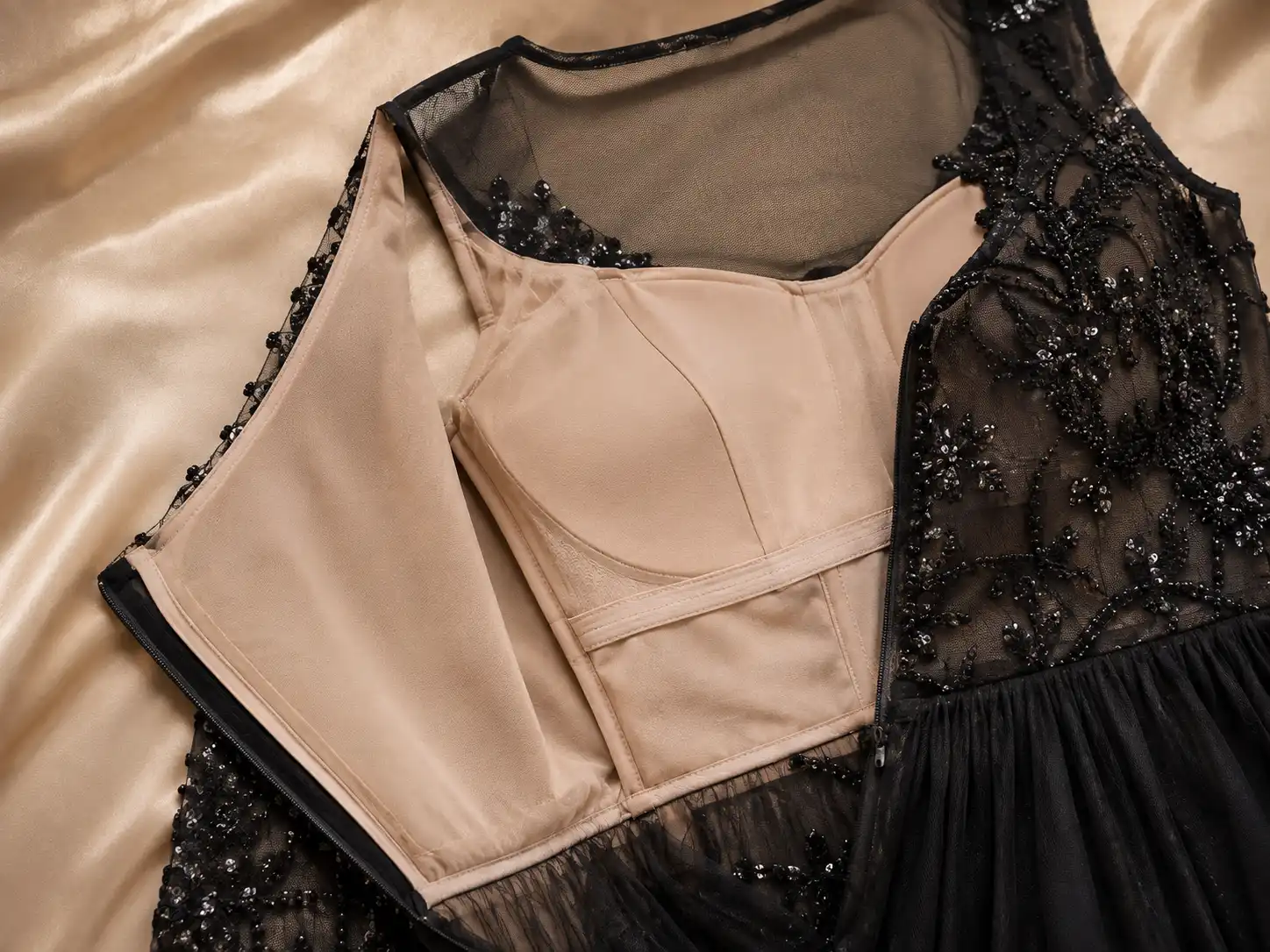
Table of Contents
Here, developing your OEM/ODM private label clothing collection is no longer a challenge—it’s an excellent opportunity to bring your creative vision to life.

