 Skip to content

How to Adapt a Dress Design to a Target Price Without Losing Its Value

Your trusted Women’s Apparel Manufacturer from China

A dress can look commercially strong on a moodboard and still become difficult to launch once the first realistic quotation arrives. The silhouette may feel right, the fabric may photograph beautifully, and the first sample may fit the collection perfectly, yet the estimated manufacturing cost can sit several dollars above the level the business can support. At that point, simply asking a factory to “make it cheaper” rarely produces the best result. Every dress has a cost structure, and the useful task is to understand which parts of that structure create meaningful customer value and which parts are consuming money without contributing enough to the final product.
To adapt a dress design to a target price, first define the correct cost target and measure the gap between that target and the current estimate. Then review fabric consumption, lining, trims, construction, pattern efficiency, embellishment, quantities, colors, and production methods. Protect the silhouette, fit, quality, and high-value design details, re-cost each meaningful revision, and validate the new version through sampling before approving bulk production.
Consider a fitted occasion dress estimated at $22.40 when the commercially workable production target is $18.80. The development team does not really have a “high price” problem; it has a clearly defined $3.60 engineering problem. Perhaps $0.85 can come from changing fabric without changing its visible character, $0.60 from more focused lining, $0.75 from simplifying decorative work, and the remaining amount from better pattern utilization and construction. Suddenly, cost reduction becomes a product-development exercise rather than a negotiation argument, and that is where stronger dresses are usually created.
What Does a Target Price Mean for a Dress?
A target price is the cost boundary a dress must meet while still supporting the intended retail position, margin, fit, quality, logistics, and customer experience. Before modifying the product, confirm whether the target refers to retail price, landed cost, FOB price, or another manufacturing cost level. Working toward the wrong number can create unnecessary design compromises without solving the actual commercial problem.
Define the Right Cost Target
The phrase “target price” is often used casually inside apparel teams, but it can represent very different numbers. A merchandising team may be discussing the retail price customers will see online, while sourcing is concentrating on landed cost and the manufacturer is quoting an FOB or production price. Unless those definitions are separated early, a team can spend several sample rounds reducing the wrong part of the cost structure and still end up with a dress that does not meet its commercial requirements.
The most practical approach is to work backward from the planned selling environment. The retail price needs to support the company’s margin structure as well as logistics, import expenses, warehousing, promotions, returns, payment fees, customer acquisition, and other operating costs relevant to that business. Once those requirements are understood, product development can establish a realistic manufacturing ceiling. That number then becomes one of the technical constraints of the dress, alongside silhouette, fabric performance, measurements, size range, launch date, and quality expectations.
A target should also be confirmed at the beginning of development rather than introduced after an expensive sample has been perfected. When designers, pattern makers, fabric teams, merchandisers, and manufacturing teams know the cost boundary early, they can make decisions that naturally fit the commercial objective. When the target appears only after the first quotation, the conversation often becomes defensive because materials, patterns, and construction have already been selected around a different cost assumption.
Measure the Cost Gap
Once the cost level is clear, calculate the exact difference between the current estimate and the target. A dress estimated at $21.60 with a production target of $19.20 has a $2.40 gap, equivalent to roughly 11.1% of the current estimate. That figure is far more useful than saying the quotation is “a little expensive,” because it immediately tells the product team how substantial the intervention needs to be.
A gap of $0.30 may be resolved through a trim change, marker improvement, fabric negotiation, or a small construction revision. A $2.40 difference usually requires several changes working together. If a $20 dress needs to become a $12 dress, the problem is unlikely to be solved through minor engineering. At that point, the original concept, material choice, construction, assortment position, or retail expectation may need to be reconsidered more fundamentally.
One practical method is to classify the dress into non-negotiable, flexible, and low-value-cost elements before anything is removed. Non-negotiable elements include the parts that make the style recognizable or make it fit correctly. Flexible elements may include hidden construction, secondary trims, lining coverage, or material specification. Low-value-cost elements are expensive details that have little effect on what the customer actually sees or feels. This prevents teams from removing a signature feature while leaving costly but commercially unimportant details untouched.
Protect the Commercial Margin
A dress should be evaluated through its complete commercial path rather than factory price alone. Freight, duty, inspection, warehouse handling, returns, markdowns, payment costs, and promotional activity can all change the final economics of a style. Two companies selling visually similar dresses may therefore need completely different factory targets because their selling prices, sales channels, promotion strategies, logistics models, and expected return levels are not the same.
For example, a brand planning an $89 party dress may determine that its landed cost cannot reasonably exceed $23 after considering the margin required by its particular business model. If freight, duty, and related inbound costs are provisionally estimated at $4.50, the manufacturing target may need to sit close to $18.50. These numbers are illustrative rather than universal industry benchmarks, but they demonstrate the sequence required to translate a retail strategy into a useful product-development target.
Illustrative Cost Stage | Example Amount | Main Decision |
Planned retail price | $89.00 | Does the product fit the intended market position? |
Maximum landed-cost target | $23.00 | Does the cost leave enough commercial margin? |
Freight, duty, and inbound allowance | $4.50 | Are non-factory costs realistically covered? |
Target factory/FOB level | $18.50 | Can the intended design be produced at this level? |
Current estimated production cost | $21.20 | Which components create the $2.70 gap? |
At meaningful volume, even relatively small differences become important. Saving $0.80 across 500 garments represents $400, while the same saving across 20,000 garments represents $16,000. Yet the calculation also works in the opposite direction. If that $0.80 reduction makes the fabric transparent, weakens bust support, increases defects, or creates more returns, the apparent saving can become expensive very quickly. Target costing should protect commercial value rather than simply produce the smallest possible invoice.
Which Dress Elements Drive the Most Cost?
The main cost drivers in a dress are usually fabric consumption, material specification, lining, trims, sewing time, construction complexity, embellishment, and the way the order is divided by quantity, color, and size. Effective cost reduction begins by identifying the largest contributors individually. It is normally more productive to solve two expensive cost drivers intelligently than to simplify every visible detail across the garment.
Fabric and Consumption
Fabric is frequently one of the largest variable costs in a dress, but the price per meter is only one part of the calculation. A material priced at $4.50 per meter may create a higher garment cost than one priced at $5.00 if the cheaper option is narrower, produces more cutting waste, requires greater consumption, or needs a full lining that the second material does not require. For this reason, fabric should be compared at finished-garment level rather than on swatch price alone.
Consumption is strongly affected by silhouette. Maxi skirts, circular hems, large sleeves, wide flounces, bias pieces, deep ruching, layered chiffon, asymmetric overlays, and dramatic draping all require additional material. The fabric itself can add further constraints. Velvet, directional sequins, engineered prints, stripes, checks, or lace motifs may prevent pattern pieces from being rotated freely in the marker, reducing usable yield even when the theoretical fabric width appears sufficient.
Suppose a dress consumes 2.30 meters of a $4.20 fabric. The base material value is already $9.66 before allowing for waste or other garment components. Reducing consumption by only 0.10 meter saves $0.42 per unit at that material price. Across 5,000 pieces, that represents 500 meters of fabric and $2,100 of material value. These are straightforward arithmetic examples rather than promises of achievable savings, but they illustrate why pattern and fabric consumption deserve serious attention before visible design features are removed.
Trims, Support, and Lining
Small components can create a surprisingly large cumulative effect in structured or decorative dresses. A corset-inspired style may require molded cups, boning, channels, underwire, elastic, hooks, anti-slip tape, a zipper, reinforcement, lining, and several internal finishes. A party dress may add rhinestones, chains, specialty sliders, decorative zippers, sequins, lace trims, or branded hardware. Each component carries not only a purchase price but also cutting, positioning, sewing, checking, and sometimes minimum-order requirements.
Lining deserves particular scrutiny because its cost reaches beyond the fabric itself. Full lining requires additional material, cutting, bundling, sewing, hemming, pressing, and handling. However, removing it without understanding its function can create transparency, static, exposed seams, uncomfortable skin contact, poor drape, or weaker structure. A lower-cost dress that looks unfinished under strong lighting is not a successful commercial adaptation.
The better question is whether lining can be concentrated where it performs a real function. A sheer maxi dress may require secure body coverage but not necessarily full-length lining. A mesh style may perform better with a targeted stretch lining around the torso. A corset bodice may require substantial internal support while the skirt needs much less. The goal is functional allocation rather than simply removing layers.
Sewing and Construction Time
Material often attracts the most attention during cost discussions because its price is easy to see, while sewing cost is hidden inside the construction. Yet two dresses using the same fabric can have dramatically different production costs. A simple slip silhouette with relatively few seams has little in common operationally with a ruched corset mini containing cups, boning, multiple bodice panels, lining, concealed closures, straps, and several carefully controlled gathered sections.
Every operation takes time, and difficult operations also increase the chance of rework. Slippery satin can shift as seams are stitched. Stretch mesh can distort under tension. Lace may need to be aligned or positioned visually. Sequins around seam allowances may interfere with needles and require preparation. Deep ruching needs consistent distribution so that hundreds of finished garments look alike rather than producing different gather patterns from operator to operator.
This creates opportunities for invisible savings. A redundant internal facing may be removed, two hidden pattern pieces may be combined, a strap construction may be standardized, or a secondary topstitching operation may be changed without affecting the customer-facing design. Cost engineering works particularly well in these areas because simplifying production can reduce labor and improve repeatability at the same time.
Quantity, Colors, and Sizes
The order structure also changes unit economics. Manufacturing 1,200 pieces in one color is not operationally identical to making 1,200 pieces divided into six colors of 200 units. Each color can require separate fabric lots, thread matching, trim coordination, cutting bundles, production identification, shade control, quality references, packing checks, and inventory management. Low quantities across many colors can therefore reduce some of the efficiencies that are available in a more concentrated production run.
Size structure matters for similar reasons. A five-size assortment and a much broader range do not require identical pattern, grading, marker, and fit-management work. Larger sizes can also change consumption because the pattern pieces occupy more fabric area. This does not mean extended sizing should be reduced simply to obtain a lower price; rather, the actual range and expected size ratio should be shared early enough for the quotation and marker assumptions to reflect reality.
A manufacturer can usually provide more useful options when quantity, colors, and size distribution are discussed together with the design. Jinfeng Apparel, for example, documents a standard MOQ starting from 200 pieces per style/color, with fabric availability, trims, color development, construction complexity, packaging, and production scheduling affecting the final arrangement. The broader lesson is that cost engineering involves the order architecture as well as the physical garment.

How Can Fabric Be Changed Without Losing the Look?
Fabric can be changed without weakening a dress when the substitute preserves the properties that create its visible and wearable character, including drape, stretch, recovery, opacity, weight, texture, sheen, and movement. A successful substitution is therefore not simply a cheaper composition. It is a material that behaves similarly in the finished garment while improving cost, consumption, MOQ, availability, or production stability.
Match Performance, Not Just Composition
Two fabrics with identical fiber percentages can behave very differently once they are cut and worn. A 95% polyester, 5% spandex jersey may have strong recovery and controlled compression, while another fabric with the same label becomes loose at the hip after several hours of wear. Two polyester satins may differ dramatically in weight, shine, drape, snag resistance, and the way they behave around curved bust seams or bias areas.
The starting point should therefore be the function the fabric performs in that particular dress. A bodycon silhouette may depend on four-way stretch, recovery, sufficient density, surface smoothness, and controlled compression. A fluid slip dress relies more heavily on drape, softness, movement, low snagging, and an appropriate level of shine. A mesh party dress needs transparency, recovery, softness, stretch direction, and resistance to holes or permanent distortion.
This distinction gives sourcing teams more flexibility. The replacement does not necessarily need to reproduce every technical specification of the original fabric if those differences cannot be perceived in the finished garment. At the same time, an alternative that is visually close on a hanger but behaves poorly under tension should not be approved merely because the supplier’s price is attractive.
Compare Total Material Cost
Material comparisons become more useful when price, width, consumption, lining, and construction are considered together. The following example is intentionally illustrative, since real pricing varies considerably by supplier, order quantity, finish, country, certification, dyeing requirement, and market conditions. Its purpose is to show how a higher meter price can sometimes produce a more efficient garment.
Fabric Option | Price per Meter* | Usable Width | Estimated Consumption | Lining Requirement | Development Implication |
Satin A | $4.20 | 145 cm | 2.15 m | Full lining | Low meter price but higher consumption |
Satin B | $4.75 | 155 cm | 1.82 m | Partial lining | Better width may improve garment economics |
Satin C | $5.10 | 150 cm | 1.90 m | Minimal lining | Higher material price but simpler construction |
*Illustrative figures only, not current market quotations.
A lighter fabric can appear to solve the target cost immediately, yet become more expensive after a second layer is added to control transparency. A slightly heavier fabric may cost more per meter but provide enough coverage or structure to remove another component. The garment cost must therefore be recalculated after the full construction is considered rather than comparing one material quotation against another in isolation.
Use Stock and Custom Fabrics Strategically
Stock fabric is not automatically lower quality, and custom-developed fabric is not automatically the best commercial solution. Stock materials can be valuable when the priority is speed, controlled commitment, available colors, and manageable material MOQ. Custom dyeing, printing, texture development, or special composition becomes more attractive when a unique appearance or performance feature is important enough to justify the additional development and volume.
The difference is particularly relevant when a dress is struggling to meet its target cost. A special lace may require more meters than the order itself consumes because of the mill’s minimum. A custom color may involve dyeing minimums or surcharge conditions. A bespoke print can add sampling, strike-off approval, setup, and testing steps. When the garment quantity is relatively modest, those costs are spread across fewer pieces and can make the style commercially difficult.
For a first production run, a carefully selected existing fabric can sometimes preserve the design character with less financial exposure. If the style later becomes a strong repeat item, custom development may become more practical because recurring demand supports larger fabric commitments. Good sourcing decisions therefore consider the expected life of the product, not only the first purchase order.
Rework Lining and Layering
Layers are another area where cost can accumulate without being immediately obvious on the finished garment. Double mesh, full self-lining, complete skirt lining, interlining, and multiple support layers all increase material consumption and add cutting and sewing operations. Before removing them, however, the development team needs to know exactly what each layer contributes to opacity, structure, comfort, seam coverage, support, drape, or durability.
A useful test is to divide the garment according to functional zones. A sheer dress may need dependable coverage through the bust, waist, and hip but can intentionally remain transparent at the sleeve or upper chest. A lace dress may use a shorter stretch lining under the body rather than carrying lining to the full hem. A structured bodice may require reinforcement and support that are completely unnecessary in the lower skirt.
Any revised construction should then be tested under real conditions. Daylight, bright interior lighting, camera flash, sitting, walking, and stretching can reveal transparency or movement problems that are difficult to see on a hanger. Jinfeng Apparel’s documented fabric-development process similarly considers target price alongside drape, stretch, transparency, lining requirements, material substitution, and bulk-production risk.
Which Design Details Can Be Simplified?
Design details should be simplified according to the value they create for the person wearing or purchasing the dress. Protect the silhouette, fit, focal areas, support, and recognizable visual language. Simplify hidden construction, excessive paneling, secondary decoration, or labor-intensive details with limited perceived value. Effective value engineering should make the style easier to manufacture without making the finished dress look obviously reduced.
Reduce Low-Value Complexity
Every seam and panel should perform a clear job. Some create shape around the bust, waist, or hip; some control fabric behavior; others define the visual identity of the garment. Those features usually deserve protection. Other seams may exist because they appeared attractive on the sketch but contribute little once the dress is made in a dark fabric or viewed at a normal distance. Those details deserve a much more critical review.
Princess seams in a fitted woven dress, for example, may be essential because they distribute bust and waist shaping effectively. Removing them simply to eliminate sewing operations could damage fit and force other corrective construction. A decorative horizontal skirt seam may be different if it changes neither silhouette nor function. The same logic applies to internal facings, concealed reinforcement, secondary topstitching, or small panels that add labor but little meaningful value.
A productive development review therefore asks whether each detail improves fit, function, fabric behavior, or visual recognition. If it does none of those things convincingly, there may be a simpler way to construct the area. This approach protects the design language while removing complexity that customers are unlikely to reward.
Control Ruching, Pleats, and Draping
Ruching and draping can create powerful visual impact in occasionwear, bodycon dresses, party styles, and asymmetric silhouettes, but they can also consume substantial additional fabric and sewing time. The answer is rarely to remove the detail completely. A better approach is to identify where the volume creates the strongest visual effect and whether the same impression can be produced with a more controlled amount of material.
A heavily gathered area might use a high fullness ratio, but a slightly reduced ratio may still appear rich enough once worn. The correct adjustment depends on fabric thickness, stretch, surface, and the intended silhouette, so it should be tested physically rather than decided from a formula alone. Pleats can be reviewed in a similar way. Twenty narrow folds may sometimes be replaced by fewer, broader folds while preserving the direction and rhythm that make the design recognizable.
Draped overlays deserve particular attention because a large amount of fabric can be hidden inside folds. A slight adjustment in panel geometry, attachment position, or depth can sometimes reduce consumption without changing the photographable front view. Side-by-side sampling is useful here: if the revised version maintains the same visual impression while using less material and requiring fewer difficult operations, the change is doing useful commercial work.
Rework Corset Construction Carefully
Corset-inspired dresses are among the easiest products to damage through aggressive cost reduction because the internal components often control the entire wearing experience. Cups, boning, underwire, waist reinforcement, anti-slip tape, lining, and closure construction may be almost invisible in ecommerce photography, yet they determine whether the bust stays secure, the neckline remains clean, and the waist holds its intended shape.
The first decision is to separate a true support requirement from a corset-inspired appearance. A style using visible corset seam lines for fashion effect may not need the same internal architecture as a strapless occasion dress expected to provide reliable support for several hours. Once that distinction is clear, the development team can review boning locations, cup specifications, channel construction, reinforcement, lining, and closure methods more intelligently.
Any modification affecting support should be tested through movement rather than approved on a mannequin. Sitting, walking, raising the arms, bending, and turning quickly expose gaping, slipping, collapsed cups, or uncomfortable pressure. A hidden construction saving is valuable only when the garment still performs. When support is central to the style, preserving that performance should take priority over achieving a small numerical saving.
Focus Decoration Where It Matters
Decorative elements should be evaluated according to where they create the strongest visual return. Rhinestones around a neckline, beads concentrated across the bodice, or sequins positioned around a focal cut-out can define the entire first impression of a dress. Similar decoration distributed across a low-visibility back panel may consume significant labor while contributing relatively little to the moment when the customer first sees the garment.
This makes zone-based decoration especially useful. The strongest focal area can retain density and quality, a secondary zone can use a lighter treatment, and low-visibility areas can be simplified substantially. Depending on the design, hand-applied details may also be replaced with controlled machine application, a prepared decorative trim, or a less labor-intensive placement method without making the overall surface appear empty.
Customers generally respond to placement, sparkle distribution, movement, contrast, and overall finish rather than counting individual stones or beads. Cost engineering should use that fact carefully rather than as an excuse for weak workmanship. The objective is to concentrate resources where they create an emotional response and remove spending where it produces little visible benefit.

How Can Pattern and Production Choices Lower Cost?
Pattern and production decisions can reduce dress costs through better fabric utilization, fewer unnecessary operations, realistic size planning, clearer construction methods, and more efficient production runs. These improvements are particularly valuable because they often make little visible difference to the customer. A better marker, clearer sewing operation, or more repeatable detail can reduce cost while simultaneously improving bulk consistency.
Improve Marker Efficiency
Marker efficiency describes how effectively pattern pieces use the available fabric width during cutting. It is an area where a small technical adjustment can create meaningful savings without visibly changing the garment. A skirt panel that is only slightly too wide to fit beside another major piece may increase consumption across every unit, while a minor change in panel division or flare can sometimes create a more efficient arrangement.
The effect becomes especially important at scale. If a pattern revision saves 0.08 meter per garment, a 5,000-piece production run would use 400 fewer meters. At $4.50 per meter, that arithmetic represents $1,800 in fabric value before considering other factors. Whether a particular style can actually achieve that reduction depends on its construction, material, size mix, and marker, so the example should be understood as a way to illustrate scale rather than a standard saving expectation.
Materials with direction reduce the available options. Velvet, directional satin, one-way prints, certain sequins, stripes, checks, and lace motifs may require pattern pieces to remain aligned in a specific orientation. The strongest pattern engineering therefore works within the visual rules of the fabric rather than forcing better yield at the expense of shade, nap, motif placement, or finished appearance.
Plan Sizes More Realistically
Size ratios influence both commercial inventory and manufacturing efficiency. A 1,000-piece order divided evenly across five sizes can look neat in a spreadsheet, but it may be a poor decision if previous sales consistently show that two sizes account for most demand. The wrong ratio can leave the brand carrying unwanted inventory while simultaneously understocking the sizes that could have sold more quickly.
Size also affects pattern area and marker behavior. Larger sizes naturally require larger pieces, and very broad size ranges may need different marker combinations or additional development attention. Extended sizing can also require separate fit reviews, revised support solutions, grading adjustments, or additional wear testing. These are legitimate parts of product development and should be planned rather than hidden inside an unrealistic target price.
A provisional size ratio should therefore be discussed during costing whenever useful historical information exists. For an established repeat style, past sell-through provides a strong basis. For a new category, related style data can provide a starting assumption until actual sales become available. Better size planning cannot replace good design, but it can prevent production economics and inventory risk from working against each other.
Design for Repeatable Production
A sample room can produce complex details through careful individual attention, but bulk production requires those details to be repeated accurately across many garments and operators. A beautiful drape that depends on one sample machinist adjusting the fabric by eye can become slow and inconsistent once thousands of pieces enter production. The cost of that uncertainty appears through training, slower operations, inspections, repairs, and sample-to-bulk variation.
The strongest production-ready designs turn subjective instructions into measurable ones. A drape can use defined attachment positions, a ruched section can specify a controlled finished length, an embellishment placement can follow a template, and straps can use precise dimensions rather than visual judgement. These controls do not make the garment less creative; they convert creativity into an instruction that can be repeated reliably.
Repeatability also improves cost in less obvious ways. Fewer defects mean less rework, clearer operations reduce line interruptions, and measurable standards make quality inspection faster. A complicated dress can still be commercially efficient when its complexity is properly engineered. The problem is not complexity itself but uncontrolled complexity that has to be interpreted again every time an operator touches the garment.
Use Volume Where It Makes Commercial Sense
Increasing quantity can improve material purchasing, cutting utilization, production allocation, trim costs, and line efficiency, but a lower factory price is not useful if the additional inventory cannot be sold. A company should therefore compare total inventory risk with manufacturing efficiency instead of automatically selecting the quantity that produces the lowest unit quotation.
Suppose 300 pieces carry the highest unit cost, 800 pieces receive more efficient production treatment, and 2,000 pieces provide the strongest purchasing leverage. The 2,000-piece option only becomes commercially superior when expected sales velocity, season length, available cash, storage, markdown exposure, and replenishment strategy can support that commitment. Saving $0.60 per garment becomes irrelevant if hundreds of excess units later need a large discount to clear.
Color concentration can sometimes improve the production structure without increasing the total order. Rather than launching six colors at 200 pieces each, a brand may choose three stronger colors at 400 pieces each if sales data and merchandising strategy support that decision. The total quantity remains 1,200 pieces, while purchasing and production may become easier to coordinate. The right answer is always product-specific, but quantity planning should be part of design-to-cost rather than an afterthought.
How Do You Re-Cost and Validate the Revised Dress?
Every meaningful cost-driven revision should be re-costed and physically validated before bulk approval. Changing fabric, lining, trims, pattern geometry, support, or construction can affect several cost components simultaneously. A dress has reached its target only when the new quotation is confirmed and the revised sample still satisfies fit, appearance, comfort, durability, quality, and repeatable production requirements.
Re-Cost Every Real Change
A cheaper component does not automatically produce an equal saving in the finished garment. A fabric that costs $0.50 less per meter may require additional consumption, a second layer, slower sewing, or higher wastage. Removing boning may reduce trim and labor cost but require another reinforcement method. Changing a skirt panel may improve marker efficiency while altering lining consumption. Each modification therefore needs to be traced through the complete garment rather than entered as a single subtraction.
A disciplined re-costing process records the original estimate, the required cost reduction, each proposed modification, its expected effect, the result after sampling, and the revised total. This allows the team to understand which changes produced real value. It also prevents several revisions from being combined into one unexplained new quotation, which makes it difficult to determine which decision actually moved the cost.
Revision | Illustrative Saving* | Main Risk | Validation Needed |
Change main satin | $0.60–$1.00 | Different drape, shine, or snagging | Full garment sample |
Reduce lining coverage | $0.30–$0.80 | Transparency or comfort | Lighting and wear test |
Simplify ruching | $0.20–$0.60 | Weaker visual impact | Side-by-side comparison |
Standardize zipper | $0.10–$0.30 | Hand feel or durability | Component and sample check |
Improve marker layout | Style-dependent | Pattern proportion changes | Marker review and fit confirmation |
*Illustrative ranges only. Actual cost effects vary significantly by fabric, supplier, construction, quantity, and manufacturing conditions.
This comparison also helps prioritize changes by risk. If changing a visible zipper saves very little but makes the garment feel less premium, the decision may have poor commercial value. If a marker improvement removes significant material consumption while the finished dress remains identical, it is a much stronger saving because the customer loses nothing.
Know When to Re-Sample
Not every adjustment needs a complete new development cycle, but changes that affect the relationship between fabric and body generally deserve physical validation. Main fabric, stretch percentage, fabric weight, lining coverage, cup shape, boning, neckline structure, pattern shape, ruching ratio, garment length, and major seam placement can all change how the dress looks or behaves even when the technical alteration appears relatively minor.
A useful rule is to think in terms of risk rather than convenience. The closer a revision is to fit, support, stretch, opacity, movement, or skin comfort, the stronger the case for making or modifying a sample. Packaging changes rarely require a new fit sample, while replacing the stretch fabric in a bodycon dress almost certainly deserves one because the same measurements can produce a completely different level of body tension.
The sample-development stage is therefore not an unnecessary expense standing between the brand and a lower price. It is where cost engineering is verified. Jinfeng Apparel’s documented sample process, for example, includes checking whether the chosen fabric is appropriate, the pattern is stable, construction can be repeated, and the cost remains compatible with the intended target before bulk production progresses.
Validate Fit and Product Quality
The revised dress should always be compared with the original product promise rather than simply celebrated because it reaches the spreadsheet target. For fitted garments, bust, waist, hip, length, neckline, armhole, and strap positions deserve renewed attention. Stretch products should be checked for recovery after wear, while structured dresses need testing for bust security, waist stability, closure performance, and pressure points created by internal support.
Movement reveals problems that static fitting often misses. The wearer should sit, walk, turn, raise the arms, and move naturally while the development team watches how the neckline, lining, side seams, straps, hem, and support structure respond. A mesh dress that appears fully covered on a mannequin may become too transparent when stretched over the body, while a corset neckline that looks secure when standing can begin to gap during normal movement.
Surface quality also matters. Zipper waviness, uneven ruching, exposed lining, twisting side seams, inconsistent embellishment, satin snagging, shade differences, and unstable hems can all become more visible after materials or construction are changed. The revised product should still look like something the company intended to develop, not like a compromise created after the quotation arrived.
Know When to Stop Cutting Cost
There is always a point where additional cost reduction no longer removes waste and starts removing the product itself. A heavily embellished corset evening dress with multiple layers, specialty satin, supportive cups, boning, detailed draping, and complex finishing cannot necessarily be converted into an extremely low production-cost style while maintaining the same fit, visual impact, comfort, and quality.
When the remaining gap stays substantial after sensible material, pattern, trim, and construction changes have been tested, the commercial decision should become broader. The dress can be repositioned at a higher retail level, redesigned into a genuinely simpler product, produced in a more selective quantity, used as a statement item within a wider collection, or removed from the range before further development money is spent.
Experienced product teams are willing to stop before the design loses its reason for existing. The lowest quotation is not automatically the strongest result. The better objective is the lowest sustainable production cost at which the garment still delivers the appearance, fit, quality, and repeatability that make customers willing to purchase it in the first place.

Conclusion
Adapting a dress to a target price works best when cost is treated as part of product development rather than an argument that begins after sampling. The team first defines the correct target, measures the exact cost gap, identifies the largest drivers, and protects the features that create customer value. Fabric, consumption, lining, trims, internal construction, marker efficiency, quantity, colors, and production methods can then be adjusted deliberately instead of being simplified at random.
For brands developing custom dress collections, involving the manufacturing team early can make this process considerably more productive because material availability, pattern efficiency, sewing difficulty, MOQ, and bulk repeatability can be evaluated before expensive decisions become fixed. A knowledgeable manufacturing partner should be able to explain where the cost is coming from, show realistic alternatives, and distinguish genuine efficiency from a quality downgrade rather than simply responding to every target with a lower-grade material.
A strong final result should not look like a dress that was made cheaper. It should look like the original idea was developed with sharper commercial judgement. When a product reaches its target through thoughtful fabric selection, construction engineering, pattern work, and validation, the customer should continue to see the silhouette, fit, finish, and emotional value that made the dress desirable, while the business gains a product that is more realistic to produce, sell, replenish, and scale.
Share This Article :

Jerry Lee
Categories

Latest blogs
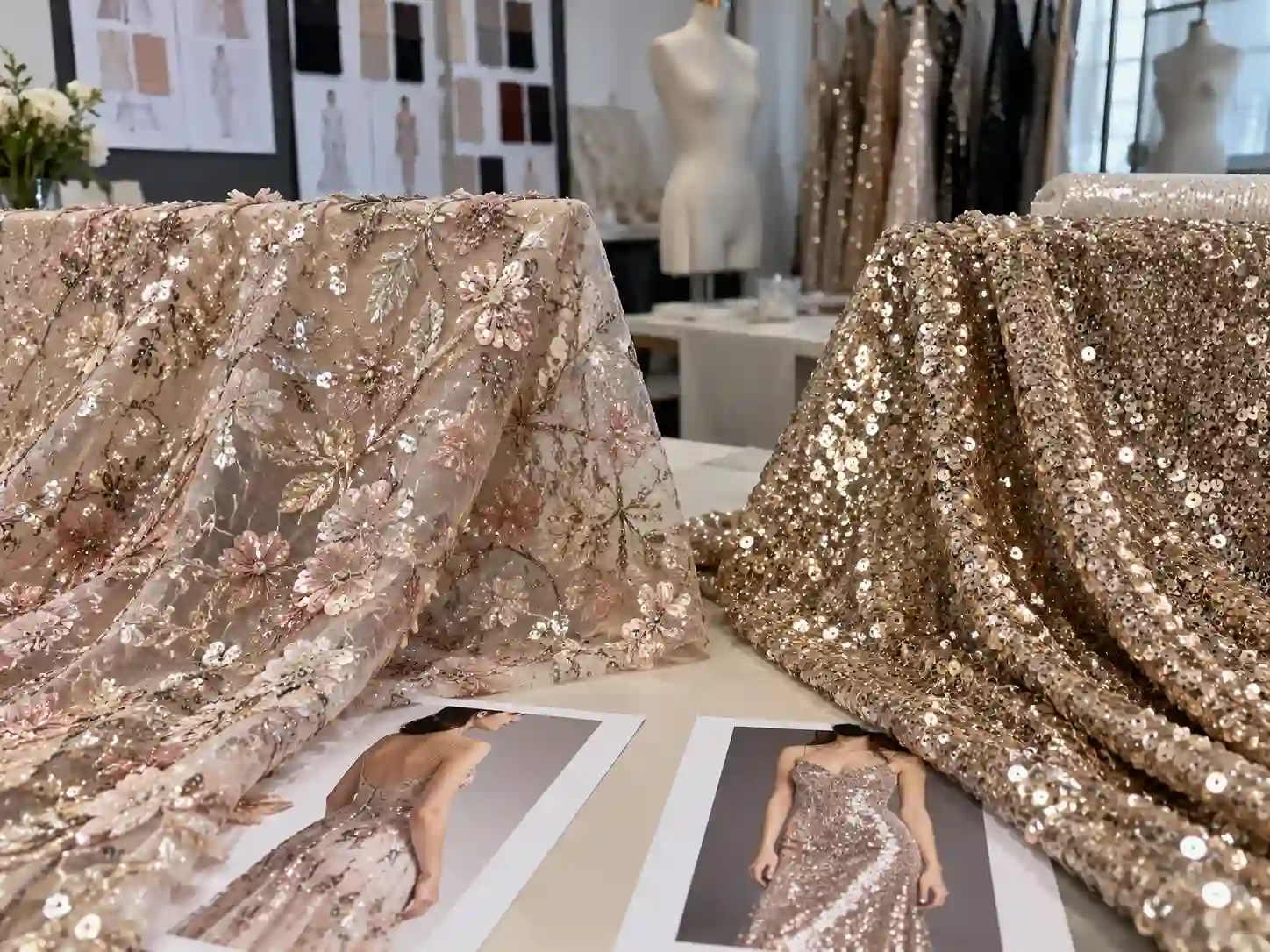
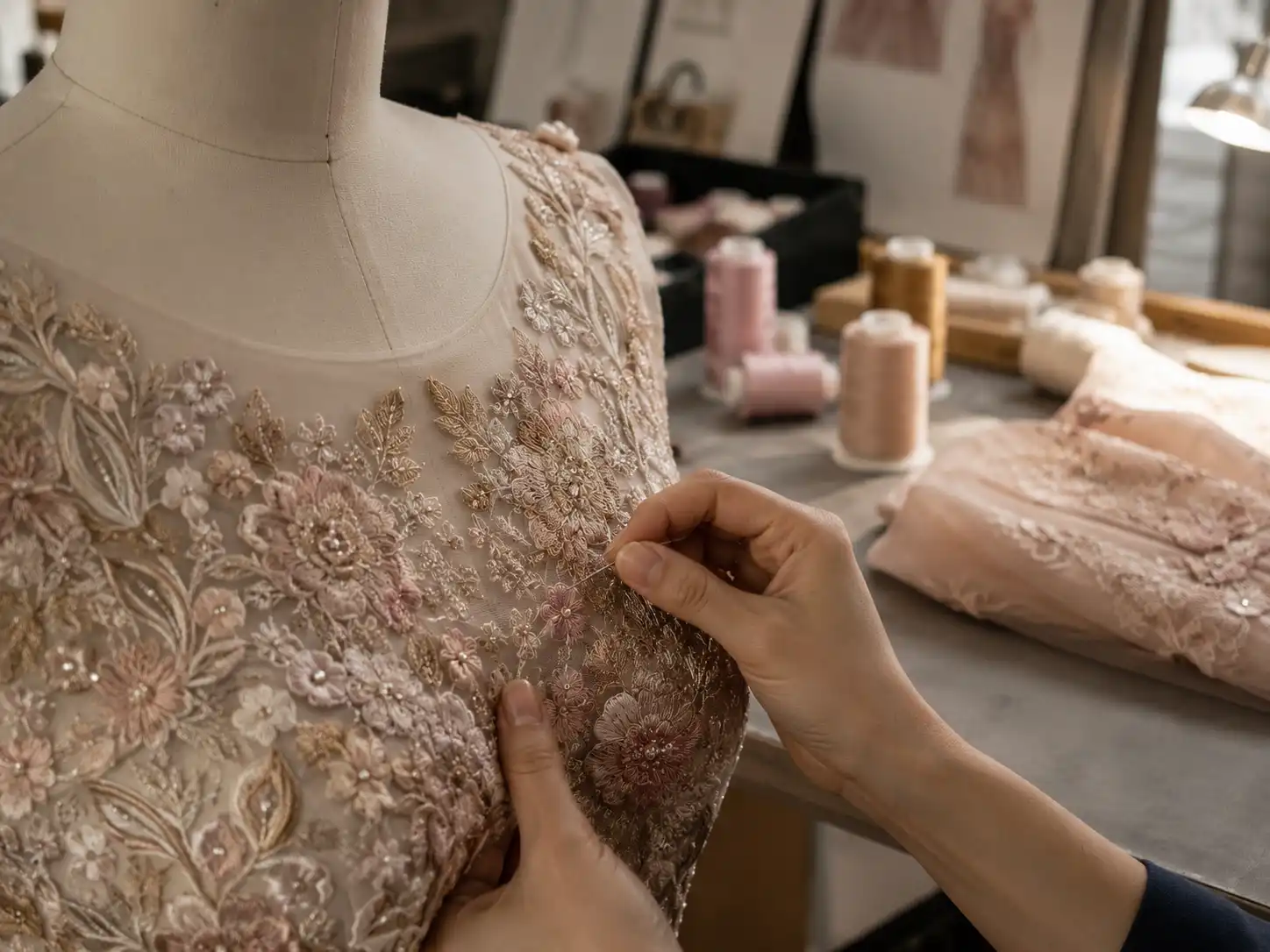
Table of Contents
Here, developing your OEM/ODM private label clothing collection is no longer a challenge—it’s an excellent opportunity to bring your creative vision to life.

