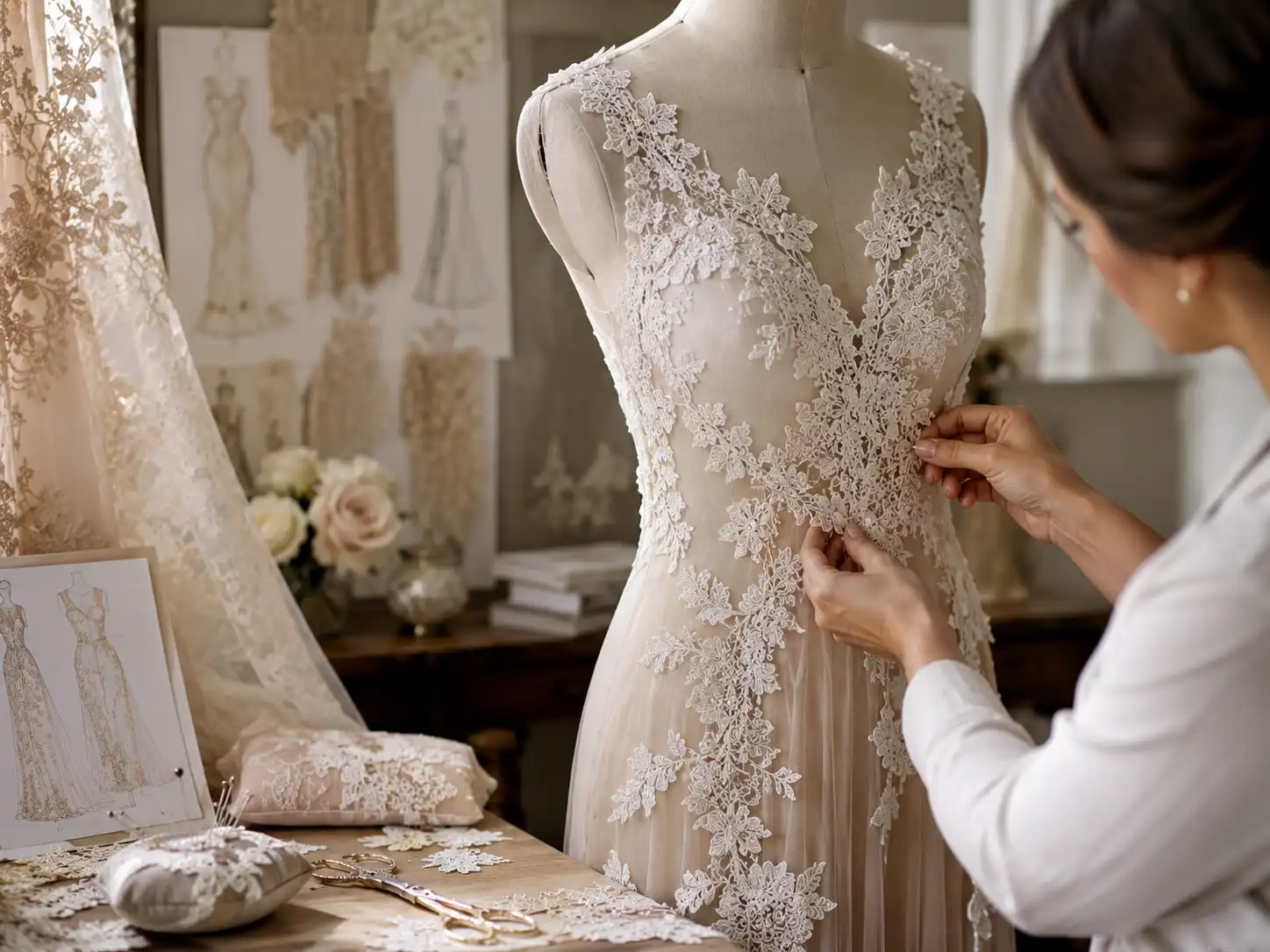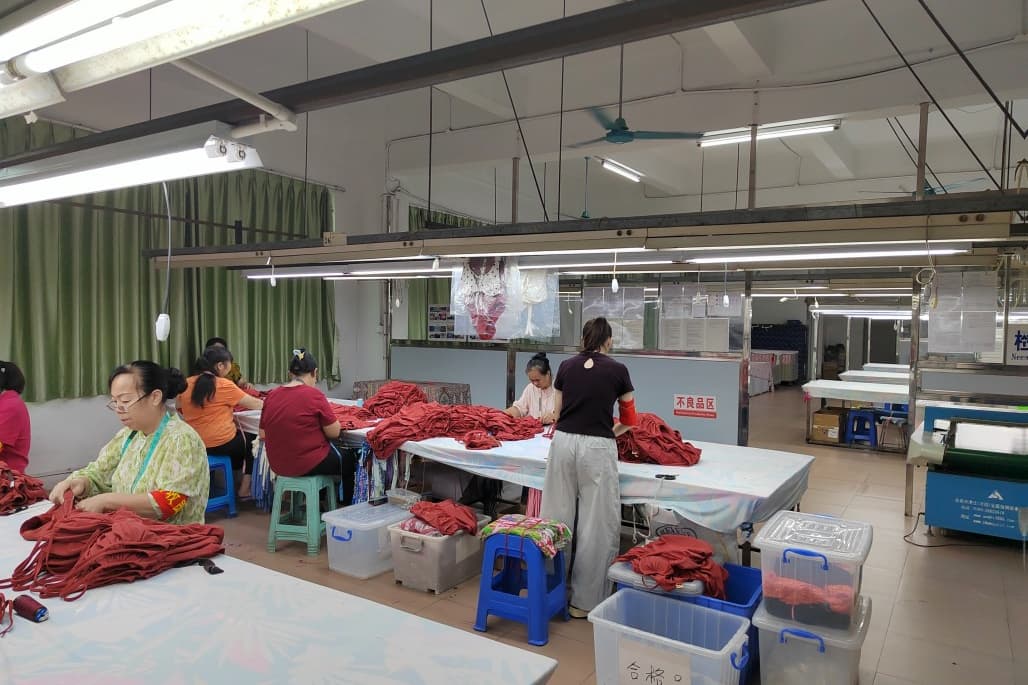

Two similar-looking dresses can have very different manufacturing costs. One might use a stable lace with a small repeating pattern that cuts neatly into ordinary panels. The other might need every flower centered on the bodice, a scalloped edge preserved around the hem, and an extra lining layer to make it comfortable. That difference becomes obvious in the pattern and cutting plan.
Lace affects dress manufacturing cost through fabric price, usable width, material consumption, motif matching, sewing difficulty, lining, and quality control. A simple lace trim may add little expense, while a fully lined dress with directional embroidery or individually attached motifs may require more fabric and labor. Reliable costing compares the complete garment specification, including order quantity and construction, rather than the lace price per meter alone.
For a fashion brand, this is more than a question about finding a cheaper fabric. Lace creates much of a dress’s character, so replacing it without considering texture, transparency, and drape can erase the feature that made the style appealing in the first place. At Jinfeng Apparel, we approach lace dress development through fabric sourcing, pattern development, sampling, bulk production planning, and quality checks. The aim is to make the design commercially workable while keeping the approved appearance and fit intact.
Imagine a team approving a beautiful sample, then discovering its floral pattern must match at four seams across every size. The sample was achievable; the missing question was how consistently it could be repeated hundreds of times. That question sits behind a meaningful lace dress quotation, where material choice and cost planning connect. It is worth asking before approving the bulk fabric order.
Does Lace Increase Dress Cost?
Lace can increase dress manufacturing cost because decorative fabrics may require more expensive materials, careful cutting, extra lining, and additional sewing operations. The increase is not automatic. A narrow lace insert on a simple dress may add little, while a full-lace garment with matched motifs and complex finishing can cost substantially more. The relevant comparison is total production cost, not fabric price alone.
What Makes Lace More Expensive?
The first cost difference usually appears in the material specification. Lace may contain a fine mesh ground, raised embroidery, open decorative areas, elastic yarns, or a substantial ornamental border. Each feature influences how the fabric can be cut and sewn. A plain opaque fabric often allows relatively flexible placement of pattern pieces; lace with recognizable flowers or directional embroidery may force the cutting team to follow the motif instead of the shortest possible layout. That can increase the amount purchased for every dress.
Production time matters just as much. Open lace may need careful handling so that the seams do not stretch, distort, or reveal uneven allowances. Raised embroidery can create bulky joins or interfere with zipper insertion. A scalloped edge may save a conventional hem operation but require the garment pattern to be designed around the border. Every choice changes the amount and kind of work involved, so treating lace as one flat surcharge gives brands very little useful information.
Jinfeng Apparel assesses these effects as part of the entire dress, including the fit, decorative placement, lining, trims, and finishing. A lace selected because it looks attractive on a small swatch may behave differently when it covers a fitted bodice or full skirt. The production question is not merely whether the lace looks expensive. It is whether it can deliver the intended appearance repeatedly, with acceptable fabric yield, sewing quality, and inspection requirements.
Is Lace Always the Costlier Choice?
Not every lace is more expensive than an alternative dress fabric. A standard polyester lace made in a widely available color may be less costly than some specialty satins, silk-rich fabrics, or heavily embellished textiles. Nor does every design use much lace. A short strip at the neckline has a different cost profile from an all-over overlay, and a decorative panel that replaces another material may add less expense than a second layer sewn on top of an existing dress shell.
What matters is what changes in the completed garment. If a lace insert replaces a plain panel, the manufacturer compares the two materials, seam construction, and any supporting layers. If lace is placed over a complete bodice, both layers must usually be sourced, cut, and assembled. If the design relies on the lace’s transparency, the brand may intentionally leave some areas unlined; elsewhere, coverage or comfort can require additional lining and pattern work. Those structural choices often matter more than the label on the fabric roll.
A sensible comparison should keep the style, size range, quality expectations, and delivery terms constant. Otherwise a cheaper quotation may simply describe a different garment. For a brand evaluating several options, it is often worth developing two material combinations that achieve a similar look, then comparing their sample performance and complete production costs instead of declaring one lace type the budget winner before either has been tested.
How Does Lace Affect Factory Quotes?
A useful factory quotation is built from a defined garment specification. The dress silhouette, lace composition, usable width, repeat direction, lining, trims, seam finishes, size distribution, and quantity all affect the calculation. Two photos of black lace mini dresses might appear similar, yet one may have standard seams while the other requires precisely positioned appliqués across a corset-shaped bodice. Without those details, a price can be little more than a rough assumption.
Jinfeng Apparel’s documented quotation approach considers fabrics, trims, construction, pattern and sampling work, cutting, sewing, pressing, quality control, packaging, losses, and the applicable delivery requirements. Our standard minimum order quantity begins at 200 pieces per style and color, depending on material availability, color development, construction, and scheduling; specialty lace may involve higher supplier minimums. Those conditions are important when a brand compares prices for one sample, several colorways, or a full seasonal order.
It is also worth separating manufacturing cost from the final retail price. A factory quotation does not explain a garment’s entire store price, which may also reflect freight, import charges, inventory, photography, marketing, distribution, and the retailer’s margin. Conversely, a relatively understated lace dress can have demanding manufacturing steps that are not obvious in a retail image. Transparent cost discussions begin with the actual garment rather than an assumed connection between luxury appearance and factory expense.

Which Lace Types Cost More?
Lace cost varies by fiber composition, construction method, embroidery density, usable width, pattern repeat, and supplier availability. Chantilly, Guipure, and embroidered laces cannot be ranked reliably by name alone because modern commercial versions range from straightforward machine-made fabrics to specialized materials. A useful comparison combines supplier pricing with fabric behavior, cutting yield, and the operations needed to make the dress.
How Do Chantilly and Guipure Differ?
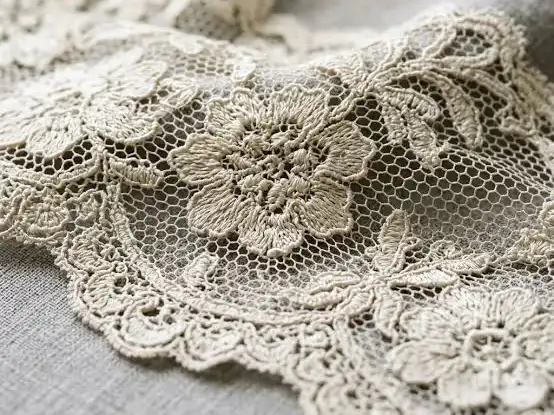
Chantilly-style lace is commonly associated with delicate motifs on a fine net ground, giving it a light, detailed appearance suited to sleeves, overlays, and softly draped dresses. Guipure generally has motifs connected through threads or bridges instead of a continuous net ground, which often creates a more pronounced surface. These descriptions help explain how the fabrics look and behave, but the commercial category alone does not confirm fiber content, durability, or a particular price level.
A lightweight lace can look effortless on a finished dress while demanding careful handling at the sewing machine. A denser Guipure may sit beautifully on a structured bodice but create bulky seam allowances where embroidered motifs overlap. The preferred fabric depends on the dress: a floating resort style needs different drape from a fitted occasionwear design. When a lace requires extra support or lining, those related materials belong in the comparison too.
It is possible for a premium Chantilly-style lace to cost more than a standard Guipure, and for a densely embroidered Guipure to cost more than a simple net lace. Instead of assuming one category is universally more expensive, brands should compare physical swatches, actual composition, available colors, width, motif scale, and supplier terms. Those details provide much stronger evidence than fabric names, which are often used loosely in fashion marketing.
What Do Fiber and Embroidery Change?
Polyester and nylon laces are common choices for commercial collections because suppliers offer a broad range of colors, patterns, weights, and stretch properties. Cotton-rich lace may create a different hand feel or surface character, while silk-containing materials can carry different sourcing and care requirements. However, composition alone cannot establish cost: yarn quality, finishing, production scale, embroidery, and available stock can change the supplier’s quotation substantially.
Embroidery deserves particular attention because it affects both the fabric cost and how the dress is assembled. Dense raised motifs can make some seams bulky, and beads or sequins may create areas that cannot be sewn through conveniently. In certain constructions, decorative pieces must be repositioned or carefully finished around closures. The work can be worthwhile when the detail is central to the brand’s design, but it must be considered during development rather than discovered after a bulk order is quoted.
Stretch lace adds another layer to the decision. A fitted dress may benefit from a lace containing elastane, yet the direction and recovery of the stretch must work with the pattern and lining. A stretchy lace sewn to a restrictive lining may no longer feel comfortable, while a fabric with poor recovery may struggle to keep the intended measurements. The right lace is the one whose appearance and physical performance fit the dress, not automatically the one with the lowest unit price.
Which Specifications Matter Most?
A supplier’s nominal width is not necessarily the width a cutting team can use. Decorative borders, uneven edges, defects, or required motif placement can reduce the practical area available for pattern pieces. Pattern repeat is another hidden variable: a large directional flower may demand more spacing between panels than a small non-directional design. For a wide skirt or full-length dress, those differences can change consumption even when two laces are quoted at the same price per meter.
The specification sheet should therefore record measurable details alongside the visual reference. It helps to confirm whether the lace is supplied by running meter or another unit, whether width includes decorative edges, whether the motif has one correct direction, and whether stock colors differ from custom shades. A lace sourced for one colorway may be readily available while the same construction in another shade requires separate dye approval or a supplier minimum.
| Specification to verify | Practical unit or check | Cost consequence |
| Nominal and usable width | Centimeters, excluding unusable edges | Changes pattern layout and meters required |
| Pattern repeat | Centimeters vertically and horizontally | Affects motif matching and cutting waste |
| Fiber and stretch | Composition; stretch direction and recovery | Influences fit, handling, and lining choice |
| Embroidery and border | Motif density; border position | Changes seam methods and placement options |
| Color and supplier minimum | Approved shade; meters per color | Affects purchasing and order planning |
At Jinfeng Apparel, reviewing these specifications alongside a proposed dress pattern provides a more realistic comparison than looking at fabric prices in isolation. A lace that appears cheaper on a supplier list may lose its advantage if a wide border cannot be used efficiently, or if decorative seams require more labor. Proper material approval gives the brand a clear reason for choosing one lace over another and reduces preventable changes during sampling.
How Does Lace Usage Affect Cost?
Lace usage affects cost through the amount purchased for each dress and the proportion that becomes usable garment panels. Full-lace designs generally consume more lace than small decorative inserts, but pattern matching, skirt volume, borders, and size ranges can change the calculation. Material cost should be based on an approved cutting plan that includes realistic loss, not only the visible lace area.
Does Full Lace Cost More Than Panels?
Using lace across an entire dress will usually require more of that material than applying it only to the neckline, sleeves, or selected bodice panels. Yet the saving is not always proportional to the reduction in coverage. Small decorative inserts can require extra joining seams or precise attachment, and individually placed motifs may consume more sewing time than a single continuous lace panel. The right comparison considers both the fabric bill and the operations needed to assemble the complete design.
Consider three hypothetical designs using the same lace at an assumed material price of $12 per running meter. The quantities below are illustrative planning inputs, not Jinfeng Apparel prices or standard industry consumption rates. They show only what happens to direct lace spending when consumption changes; actual costing must also include lining, labor, other materials, overhead, and commercial terms. Even a small construction change may alter the result.
| Lace application | Assumed use per dress | Lace cost per dress | Lace cost for 400 dresses |
| Full-lace coverage | 2.00 m | $24.00 | $9,600 |
| Partial lace overlay | 1.25 m | $15.00 | $6,000 |
| Selected lace panels | 0.65 m | $7.80 | $3,120 |
Under these assumptions, the difference in direct lace cost between the full-coverage design and the selected-panel design is $16.20 per dress, or $6,480 across 400 dresses. That is a material difference, not a promised manufacturing saving. If the selected-panel design requires complex seam finishes or manually applied motifs, some of the material advantage can be offset by additional labor. A sample comparison is the reliable way to judge which construction best preserves the intended look at the desired cost.
How Does Pattern Matching Create Waste?
Distinctive floral lace often requires designers to decide where motifs should sit before the first production panel is cut. The center front may need a balanced flower, the sleeves may need a matching direction, and the waist seam may need the same pattern to continue across joining panels. Those priorities restrict how freely cutting operators can nest shapes beside one another. Material can be left unused even though it looks large enough for another garment piece.
Marker efficiency expresses the relationship between the net pattern-piece area and the total area used in a cutting layout. In a simplified illustration, imagine garment pieces occupying 1.50 square meters. At 75% marker efficiency, the corresponding layout area is 2.00 square meters; at 85%, it is approximately 1.76 square meters. If both layouts use the same usable fabric width of 1.40 meters, they represent roughly 1.43 and 1.26 running meters respectively. The hypothetical difference is about 0.17 meter per garment, before other allowances.
That example explains the arithmetic, not a typical efficiency benchmark for lace. Real markers vary with fabric width, motif direction, garment size, pattern shapes, defects, and the need to preserve decorative borders. Higher efficiency is not automatically preferable if it produces mismatched flowers or an unbalanced appearance. The practical goal is the best acceptable layout: one that uses material thoughtfully without changing the design the customer approved.
Do Width, Length, and Size Matter?
Dress length matters, but so do flare and fullness. A fitted maxi dress may use less lace than a shorter dress with a wide gathered skirt, depending on the pattern and usable fabric width. Two dresses with the same hem length can have completely different cutting requirements if one includes an A-line skirt and the other has several broad panels, pleats, or a dramatic sweep. A photograph rarely provides enough information to estimate consumption accurately.
Size distribution creates another complication. A graded pattern includes different panel dimensions, and larger sizes may not fit alongside one another in the same arrangement as smaller sizes. A production run with an unusual size mix can therefore have a different average fabric requirement from an order of the same total quantity in another size mix. A reliable cutting estimate should use the intended quantity by size rather than multiplying the consumption of a single showroom sample by the whole order.
Bordered lace can make width even more important. When a scalloped edge must follow the hem, a technically usable fabric area may still be unsuitable for particular panels because the border appears in the wrong position. The most helpful measurement is not just nominal width, but the width and layout available after respecting the design. Reviewing that information early can prevent unexpected fabric purchases after a production order has already been planned.
How Does Lace Construction Affect Cost?
Lace construction influences cost when open patterns, embroidery, delicate edges, or stretch require more careful cutting, sewing, lining, and inspection. A lace dress is not automatically difficult to make, but its manufacturing method must suit the selected material. Extra labor is justified when it protects seam strength, fit, decorative alignment, and the appearance of the finished garment across a production run.
How Does Lace Change Sewing Time?
Sewing time depends on how many operations the dress requires and how consistently each one can be completed. Open lace may stretch or catch while it passes through the machine, whereas thick embroidery can create uneven seam bulk and make closures difficult to attach smoothly. Fitted seams, curved necklines, and delicate straps introduce different challenges. A technique that works on a plain woven dress may not give the same result when it is used without adjustment on lace.
Production timing should be checked with the approved construction rather than guessed from appearance. For a simple arithmetic example, an additional placement operation taking six minutes per garment would represent 40 direct labor hours across 400 dresses. If an alternative approved method reduced that operation to three minutes, it would represent 20 direct labor hours for the same quantity. These are assumed times to illustrate the effect of an operation; they are not factory productivity claims and exclude setup, allowances, and management time.
The faster approach is not automatically the better one. A seam method that saves minutes but causes distortion, weak attachment, or uneven pattern placement may create rework and inspection problems. The manufacturing objective is a method that can be repeated with acceptable quality across operators and sizes. For repeat styles, documented construction details can be more valuable than a small one-time reduction in sample sewing time.
Does a Lace Dress Need Lining?
Lining depends on the intended transparency, comfort, and structure of the dress. Some styles deliberately keep the sleeves or upper neckline sheer, while covering the bodice and skirt. Others use lace as an overlay on top of a complete dress shell. The lining should be selected according to the approved design rather than added automatically or removed solely to lower the quotation. Its color, elasticity, and drape can dramatically change how the lace looks on the body.
Lining has a measurable material cost and also introduces extra pattern pieces, cutting, joining, attachment, and inspection. Suppose a hypothetical dress uses 1.20 meters of lining priced at $3.50 per meter. Its direct lining material cost would be $4.20 per dress, or $1,680 for 400 dresses, before adding the work involved in cutting and sewing that lining. Actual prices and consumption depend on the style and supplier; the example simply shows why a secondary material can matter across a production run.
Compatibility is as important as price. A non-stretch lining under elastic lace can restrict movement, while a lining with the wrong body or hand feel may change the intended drape. A nude lining may make floral motifs stand out differently from a black or ivory lining, particularly under bright lighting. During sampling, Jinfeng Apparel reviews fabric and lining together so that coverage, movement, fit, and appearance are approved as one garment rather than as unrelated material decisions.
Which Finishes and Checks Add Cost?
Lace often needs finishing that follows its actual structure. Fine transparent material can reveal bulky seam allowances, while dense embroidery may be hard to fold neatly. A scalloped edge may need to be positioned precisely along a hem or neckline, affecting both the garment pattern and cutting plan. The right treatment is not always the most complicated one; it is the one that creates a clean, durable result without unnecessary handling or decorative damage.
Quality checks begin before assembly. Incoming lace should be reviewed for holes, damaged motifs, color differences, and visible pattern faults. Cutting checks focus on correct panel direction, matching, pattern versions, and the grouping of sizes. Sewing checks then examine seam appearance, symmetry, lining attachment, decorative alignment, and any damage that occurred during handling. Final garment inspection addresses measurements, fit, pressing, fabric condition, closures, labels, and packing requirements.
Jinfeng Apparel’s documented quality-control process covers material, cutting, sewing, garment, and packing inspections, with lace-specific attention to pattern alignment, seams, edges, lining, and holes. These activities are part of the cost of producing consistent garments, not unnecessary extras. A low quote that omits a needed finishing operation or assumes defects will be accepted may prove more expensive once rework, rejected units, or retail complaints are considered.
How Is Lace Dress Cost Calculated?
Lace dress manufacturing cost combines lace and lining consumption, trims, pattern and sample requirements, cutting, sewing, finishing, quality control, packing, and applicable production expenses. The factory’s final selling price also reflects overhead, commercial margin, and agreed delivery terms. A dependable calculation needs an approved design, material specification, and order breakdown rather than a general product photograph. Missing details can change the answer.
What Goes Into a Cost Sheet?
A cost sheet turns design decisions into quantities and operations that can be checked. It starts with the main lace requirement, using the planned marker or a suitable production allowance to account for usable yield. It then adds lining, zippers, support materials, decorative trims, and labels. Cutting, sewing, pressing, quality inspection, and packaging are estimated against the approved method, while overhead, development charges where applicable, testing, shipping arrangements, and the factory’s margin are treated according to the agreed commercial scope.
The following hypothetical cost sheet shows selected direct inputs for a lined lace dress. Its figures are deliberately illustrative and should not be mistaken for current market rates, verified factory production data, or a Jinfeng Apparel quotation. The $42.65 subtotal does not include every cost required to determine a finished selling price; it shows how separate production decisions contribute to a calculation that can later be reviewed and completed.
| Selected direct input | Illustrative calculation | Cost per dress |
| Main lace | 1.80 m × $12.00 | $21.60 |
| Lining | 1.20 m × $3.50 | $4.20 |
| Trims and accessories | Assumed allowance | $1.35 |
| Cutting | Assumed operation charge | $2.40 |
| Sewing | Assumed operation charge | $8.75 |
| Pressing and quality checks | Assumed combined charge | $3.25 |
| Basic packing | Assumed allowance | $1.10 |
| Illustrative direct-input subtotal | Sum of listed inputs | $42.65 |
In this example, the lace itself makes up approximately 50.6% of the listed direct-input subtotal. That percentage is not an industry norm; it follows from the assumed figures. A dress with appliqués or hand-positioned decoration might allocate much more to labor, while a simple lace overlay could have a different balance. A sound quotation also prevents double-counting: cutting loss already included in fabric consumption should not be charged again as an unexplained separate allowance.
Are Sampling Costs Separate?
Sampling often has a different cost structure from bulk production because development requires individual decisions and work before the design is ready to repeat. A first lace dress sample may involve reviewing the reference, sourcing candidate fabrics, creating patterns, cutting a single set of panels, sewing, fit assessment, revision, and approval. Those activities help establish a repeatable production method, but they are not identical to sewing a standard unit on an organized production line.
The sample is also where hidden expense becomes visible. A lace may look attractive as a swatch but prove too stiff for the skirt, or the approved floral placement may need more material than the original estimate assumed. A zipper construction may require adjustment around bulky embroidery, and an intended sheer panel may need extra coverage after a fitting. Correcting those issues before bulk cutting is usually more controllable than changing the garment after hundreds of panels have been prepared.
Brands should distinguish development and sample charges from recurring unit costs, and confirm how any approved pattern or tooling expenses are handled commercially. Jinfeng Apparel’s sampling workflow moves through structure review, fabric and trim sourcing, pattern development, sample making, fit checks, revisions, and pre-production approval. The purpose is to turn the design into a specification that can be costed and produced consistently, not simply to make one attractive photograph-ready dress.
How Do MOQ and Color Mix Affect Price?
A larger total order can help distribute some setup and preparation expenses, but it does not automatically reduce every lace-related cost. Fabric purchasing depends on available colors, supplier minimums, and the actual material selected. Labor-intensive motif placement still requires work on each garment, even if more units are ordered. A high total quantity split across many small color groups may also involve more sourcing and coordination than the headline number suggests.
Jinfeng Apparel’s standard MOQ starts at 200 pieces per style and color, with actual eligibility depending on fabric, trims, color development, construction complexity, and scheduling. For example, one style ordered in three colors at 200 pieces each represents 600 garments, but the lace must still be available under appropriate purchasing conditions for each of those colors. A special dye lot or custom embroidery specification may involve a supplier requirement above the standard starting MOQ.
Size ratios matter as well because panel dimensions change across a graded range. A realistic quotation should use the intended quantity by color and size, the chosen lace and lining, the target market, construction details, packaging requirements, and agreed delivery terms. Sharing a target manufacturing budget can help the development team discuss suitable alternatives, but it cannot replace technical specifications. The aim is a price that describes the garment the brand will actually receive.
How Can Brands Control Lace Dress Cost?
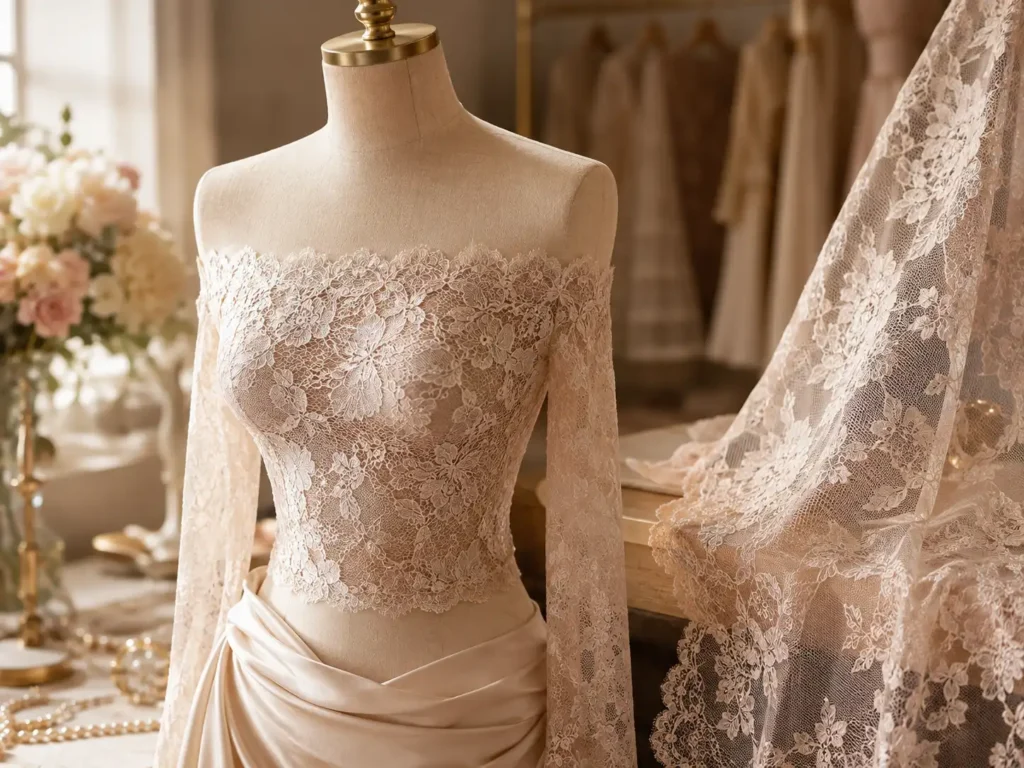
Brands can reduce avoidable lace dress costs by comparing suitable fabrics, improving cutting layouts, simplifying operations where possible, and confirming specifications during sampling. The most successful changes preserve the garment’s appearance, fit, comfort, and quality. A lower material quotation is useful only when it leads to a lower total manufacturing cost without introducing new production problems. That distinction matters across repeat orders.
Which Material Changes Are Worth Testing?
Material substitution works best when the team first identifies what the customer will actually notice and what the garment must do. If a dress depends on soft drape, a much stiffer lace is unlikely to be a suitable alternative even if its price is attractive. If the design calls for a bold floral texture on a structured bodice, a simpler fabric with comparable visual density may work well. Comparing swatches on a table is useful, but the decision should also be tested in the garment.
An illustrative calculation shows the attraction of a lower supplier price. At 1.80 meters per garment, changing the lace assumption from $12.00 to $10.50 per meter reduces direct lace spending from $21.60 to $18.90 per dress, a difference of $2.70. Across 400 dresses, that is $1,080 in direct material cost under otherwise unchanged assumptions. The saving disappears or shrinks if the alternative creates extra cutting waste, needs additional lining, or increases sewing operations.
Other variables deserve just as much attention. A readily available color can sometimes be commercially simpler than a custom shade, while a wider usable fabric may improve a cutting layout even if its per-meter price is higher. At Jinfeng Apparel, fabric sourcing and cost optimization are considered alongside the pattern, sample, and production method. The useful question is whether the full dress improves, not whether a single line of its cost sheet becomes smaller.
Can Placement and Construction Be Simpler?
Lace placement is a design decision and a manufacturing decision at the same time. An all-over overlay can create a striking look, but concentrating lace at the bodice, sleeves, or selected skirt panels may preserve the strongest visual detail with less material. The trade-off is assembly: additional panel joins, curved inserts, or separately attached motifs can increase labor. A design that saves fabric but creates several difficult operations may not produce the saving the brand expected.
Construction can sometimes be simplified without changing the design’s identity. A continuous lace panel may replace several individually positioned pieces, or an existing scalloped border may serve as a finished edge instead of requiring a separate decorative treatment. Adjusting a seam position may improve cutting yield, but that decision must respect fit and motif balance. These are possibilities to confirm through pattern work and sampling, not universal rules that apply to every lace style.
Collection planning also offers opportunities. When several styles can use compatible lace specifications or approved colors, sourcing and material coordination may become easier. However, forcing one fabric onto dresses with different stretch, drape, or coverage requirements is a false economy. The stronger approach is to standardize what genuinely works across styles while protecting the construction requirements that make each dress fit and look right.
How Do Approvals Protect the Budget?
A carefully approved sample protects the production budget because it exposes problems before bulk material is committed. Lace can change appearance dramatically when viewed over lining, stretched across a bodice, or joined along a curved seam. A floral motif that appears balanced on a small sample panel may look awkward across a full size range. Finding that problem during development makes it possible to adjust the pattern or material plan before extensive cutting begins.
Approval should confirm not just the general look but the actual fabric reference, lining, motif direction, seam method, decorative edge, measurements, closure construction, and accepted quality standard. When a detail changes, the costing assumptions should be revisited. Adding a lining layer, widening a skirt, changing a border position, or introducing appliqués can alter consumption and labor even if the product still resembles the same design photograph.
Jinfeng Apparel supports brands through development, sample revision, approved pre-production references, bulk production, and quality checks. Maintaining pattern, material, and trim records also makes future color extensions and repeat orders easier to evaluate. The result of careful approval is not simply a cheaper dress. It is a design whose cost and appearance can be explained, reproduced, and managed across the quantities a fashion brand intends to sell.
A well-made lace dress has to achieve more than visual impact. It needs to feel right on the body, fit consistently, meet the brand’s quality expectations, and remain sensible to produce at the planned quantity. The most effective way to control cost is to connect the fabric choice to the pattern, the cutting plan to the decorative placement, and the sample to the actual bulk specification. When those decisions are made together, lace becomes a manageable part of product development rather than an unpredictable expense discovered after the design has already been approved.
Frequently Asked Questions
Does lace always make a dress more expensive to manufacture?
No. Lace may increase expenses when it requires extra fabric, lining, pattern matching, or specialized sewing, but a small lace insert can have a limited effect. A straightforward machine-made lace can also be less expensive than certain specialty dress materials. The appropriate comparison is the full garment cost under equivalent quality and construction requirements, not the lace price in isolation. A dress designed around the selected lace may be more economical than one that adds it as an extra decorative layer.
Which is more expensive, Chantilly or Guipure lace?
Neither category is always more expensive. Chantilly-style lace commonly has fine motifs on a net ground, while Guipure generally uses connected decorative motifs without the same continuous mesh background. Actual cost depends on fiber, embroidery density, width, production method, and supplier conditions. A premium Chantilly can cost more than a simple Guipure, while a heavily embroidered Guipure can reverse the comparison. Comparing physical swatches and confirmed specifications is more reliable than comparing the category names alone.
How much lace is needed to make a dress?
There is no dependable one-size-fits-all quantity because consumption depends on silhouette, skirt volume, garment length, fabric width, decorative borders, and the size distribution of the order. A small panel may use much less lace than a full overlay, while a flowing skirt may consume more than a fitted one. Motif matching can also require cutting allowances that are not visible in the finished garment. The best estimate comes from a developed pattern and a cutting layout using the selected lace’s actual usable width.
Does lace pattern matching increase fabric waste?
It can, especially when a large floral motif must be centered or continued across bodice, sleeve, waist, and side seams. Matching limits how freely pattern pieces can be positioned during cutting, which may lower material utilization. The amount of additional waste varies with the lace repeat, garment shapes, usable width, and required appearance. Marker efficiency can help evaluate the layout, but a higher percentage is not worthwhile if it breaks the approved motif placement or makes the dress visibly asymmetrical.
Do lace dresses need lining?
Some do and some do not. Lining may be needed for coverage, comfort, support, or a specific appearance, while sheer sleeves and decorative areas may intentionally remain unlined. The chosen lining affects cost because it adds material, cutting, sewing, and inspection, and it can change how the outer lace drapes and stretches. A suitable lining should be approved with the lace during sampling rather than added as a last-minute fix. Color and elasticity are often as important as the lining’s price.
What information is needed for an accurate lace dress quotation?
An accurate quotation benefits from a tech pack or clear design reference, preferred lace or fabric swatch, garment measurements, lining details, seam and finishing requirements, target sizes, quantities by color, and packaging expectations. A physical sample can also provide useful construction information. The manufacturer still needs to verify actual material availability, usable width, cutting requirements, and sewing operations. Jinfeng Apparel evaluates these details during custom dress development so that the resulting quotation reflects the intended production garment rather than an incomplete estimate.