Skip to content

A collection can look convincing in a design presentation and still struggle once it reaches the market. The failure is rarely caused by a lack of creativity. More often, too many styles are approved because they look impressive in sketches, reflect a visible trend or receive enthusiastic internal feedback. Less attention is given to whether customers understand the product quickly, feel confident wearing it, accept the price and keep it after delivery rather than returning it for fit, coverage or fabric-related reasons.
To select commercial styles for a fashion collection, define the target customer and selling channel, score each design for demand, brand fit, price, margin, wearability and production feasibility, then build a balanced range of core, fashion and statement pieces. Validate the shortlist through costing, fabric review, fit samples, SKU analysis and a final order-depth check.
The strongest collections are edited rather than merely designed. A team may begin with forty ideas, turn twenty into serious development options and approve only ten or twelve for launch. That reduction is not lost creativity; it is disciplined product management. One rejected dress may photograph beautifully but fail because its neckline moves during wear. Another may have strong visual appeal but require a fabric minimum that the planned order cannot absorb. The style that reaches bulk production should survive every conversation, from design and merchandising to fitting, costing, factory planning and eventual reorder.
What Makes a Style Commercial?
A commercial style gives a defined customer a clear reason to buy while meeting the brand’s requirements for price, margin, fit, production and delivery. It does not need to be basic or universally appealing. It must be desirable within a specific market, understandable at first glance, wearable in real life and repeatable when demand supports another production run.
Commercial Is Contextual
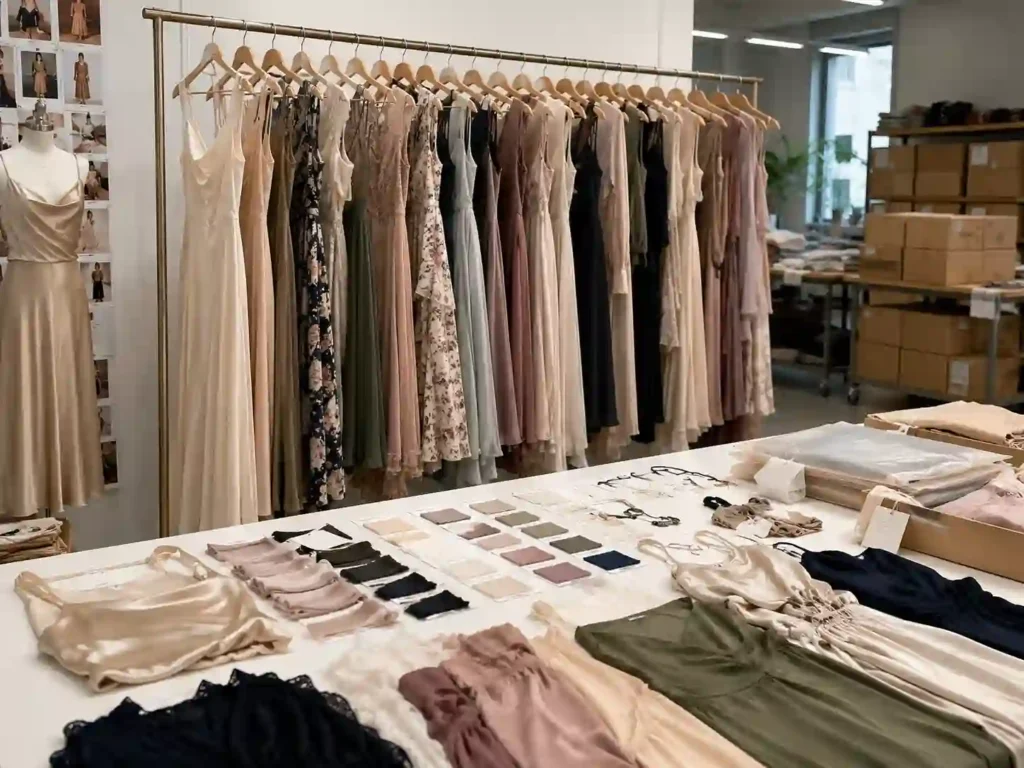
A style is never commercial in isolation. The same satin mini dress may be a strong volume product for a partywear label, an occasional fashion piece for a broad womenswear retailer and completely unsuitable for a conservative workwear range. Commercial value appears only when the customer, selling channel, retail price, launch season and surrounding collection all point in the same direction.
Teams often make weak decisions when they judge designs mainly from sketches. A sketch communicates proportion and creative intention, but it cannot show whether a neckline stays stable, a skirt rises while walking, a fabric wrinkles after sitting or the finished cost supports the intended price. A commercially sound design must survive both visual review and practical testing, with no major contradiction between the two.
A useful first test is whether the product can be explained in one clear sentence. ‘A supportive corset midi for weddings and evening events’ gives the customer a recognizable use case. A description built around several experimental details may sound exciting inside a design meeting, yet it can reveal that the product lacks a simple commercial purpose. Clear products are usually easier to merchandise, photograph, search for and purchase with confidence.
| Commercial Area | Strong Signal | Warning Sign |
| Customer need | A clear occasion, outfit function or wardrobe problem is addressed. | The customer cannot easily imagine when or where to wear it. |
| Product message | Silhouette, value and intended use are understood quickly. | The design needs lengthy explanation before its value becomes clear. |
| Wearability | The garment remains stable during sitting, walking and normal movement. | The product looks convincing only in a static pose or heavily styled image. |
| Price position | Fabric, construction and finish visibly support the retail level. | Cost is concentrated in details that customers barely notice. |
| Production | Pattern, fabric, trims and workmanship can be repeated consistently. | The style depends on unstable materials or one-off components. |
| Range role | The product adds a distinct occasion, silhouette, price or styling function. | It duplicates another style without adding meaningful choice. |
Trend Appeal Is Not Enough
Trends can create attention, but attention and sales are not the same. A dramatic sheer dress may perform strongly in social content while producing weak conversion because customers are uncertain about coverage, underwear and the occasion. A more commercial interpretation may use a mesh overlay, controlled transparency or strategically placed lining. The trend remains visible, but the product becomes easier to understand and wear.
Timing is equally important. A team may identify a silhouette in January, finish samples in March and receive stock in May. By that point, the market may already be crowded. The decision should therefore consider whether the trend will remain relevant when the product is available, not simply whether it looks popular during the first research meeting. Fast-moving visual details deserve tighter quantities and fewer colors than broader product movements.
It helps to separate a lasting direction from a short-lived signal. Corset influence, feminine texture and event dressing can remain useful across several seasons, while a specific flower placement, novelty buckle or social styling trick may disappear quickly. Broad movements can support deeper investment because they can be translated into several products. Narrow details are better used as controlled accents rather than the foundation of the complete range.
Demand Needs More Than One Signal
Historical sales are useful, but they must be read with context. A style may have sold more because it received deeper inventory, stronger advertising or better launch timing. Social engagement can also mislead because people often like and share products they would not personally purchase. The strongest demand case appears when several signals point in the same direction and none of the major operational indicators contradict the conclusion.
- Strong full-price sales in comparable silhouettes
- Healthy net sales after returns and cancellations
- Repeat demand for particular colors, fits or lengths
- Waitlist, restock and back-in-stock activity
- Search interest connected to the category or occasion
- Positive reviews that mention fit and wearability
- Limited dependence on deep discounting
- Consistent interest from retail or wholesale partners
- An identifiable market gap rather than simple imitation
Return data deserves equal attention because initial sales can hide a product problem. A dress with rapid early sales but repeated complaints about bust support, transparency or zipper function may create less value than a slower style with lower returns and stronger net margin. The practical question is not only how many units left the warehouse, but how many remained with satisfied customers after the return window closed.
New categories rarely offer perfect evidence, so controlled testing becomes important. One or two colors, a focused size range, sample feedback and limited launch quantities provide more useful learning than a broad commitment based only on enthusiasm. Each test should answer a specific question, such as whether customers accept the neckline, fabric or price. General comments that people ‘like the style’ are not enough for an inventory decision.
Repeatability Creates Value
A style becomes more commercially valuable when it can return in new colors, fabrics or seasonal updates without repeating the complete development process. Repeatability depends on pattern stability, material availability, trim continuity and clear construction records. A product that sells well but cannot be remade quickly may create excitement without delivering the replenishment opportunity that turns one good launch into a dependable commercial program.
Consider two visually similar corset dresses. The first uses a specially molded cup, custom hardware, an exclusive lace and a high-minimum dyed fabric. The second uses a stable cup shape, repeatable boning, an available satin base and a documented lining structure. The first may be more distinctive, but the second may be easier to reorder, recolor and extend across several seasons without rebuilding the supply chain.
Repeatable products usually have an approved graded pattern, reliable fabric and trim references, stable measurements, reproducible sewing methods, defined quality checkpoints and packaging information that can be reused. This does not mean every style should become permanent. Some products are intentionally seasonal. However, a collection with no repeatable foundation forces the team to restart development every season, increasing lead time, cost and consistency risk.
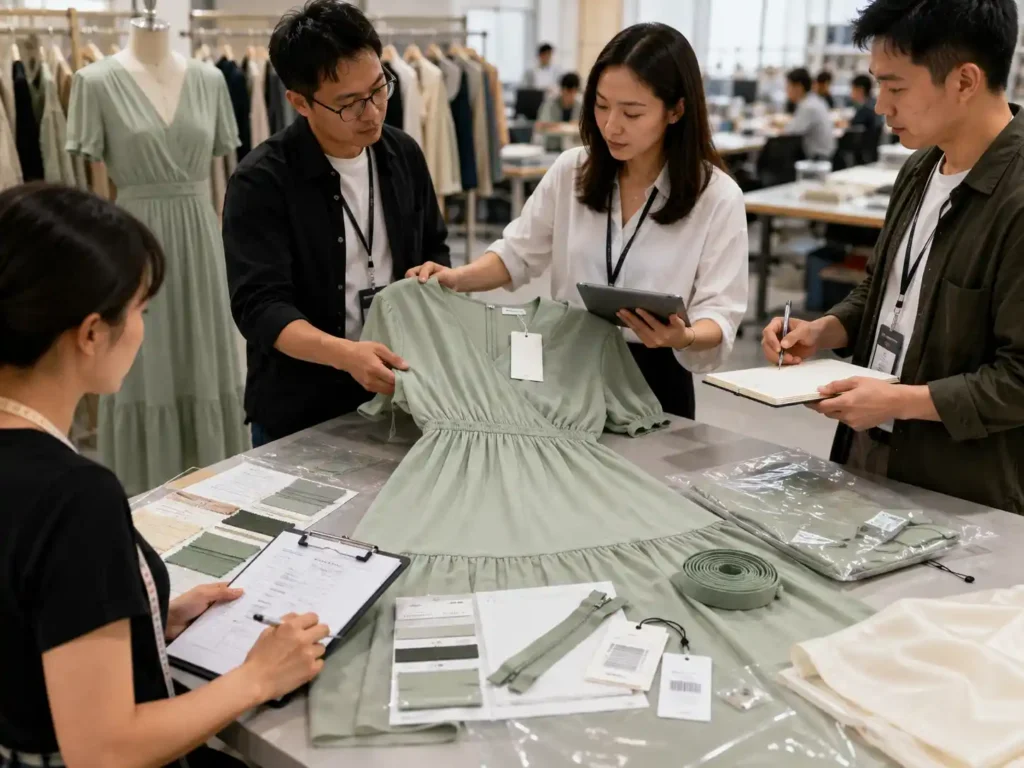
Who Is the Collection For?
A collection should be built for a defined customer with recognizable shopping behavior, not a broad age range or vague lifestyle description. Teams need to understand what she buys, where she wears it, how she expects it to fit, what price she accepts and which problems lead to returns. Clear customer knowledge makes commercial editing faster and more objective.
Define Behavior, Not Demographics
‘Women aged twenty to thirty-five who follow fashion’ is too broad to guide a product range. That group may include customers buying fitted birthday dresses, wedding guest outfits, office clothing, vacation pieces and everyday separates. Each purchase has different expectations for coverage, support, comfort and price. A useful profile must describe decisions and habits, not only age, city and general interest in fashion.
A commercially useful profile asks whether the customer buys for specific events or frequent wardrobe updates, prefers fitted or adjustable silhouettes, normally wears a bra with the garment, accepts deep necklines and values easy care. It should also identify which body areas she wants supported or emphasized, how long she expects the product to last and which fit problems cause her to return an item.
Purchase behavior changes by occasion. A customer may accept a fitted mini for a birthday but choose more support and coverage for a wedding. She may buy a bright color for vacation and black for an evening event. This is why one simplified customer description cannot guide every category. The profile should contain several real purchase missions connected to the collection’s selling period.
Order history should be reviewed by silhouette, category, color, size, occasion and retail price. Repeat purchases are especially useful because they show what customers trusted enough to buy again. A style with moderate first-season sales but strong repeat behavior may have greater long-term value than a heavily promoted launch piece that achieved attention but failed to build product confidence.
Connect Styles to Real Occasions
Commercial fashion is tied closely to the customer’s calendar. Weddings, graduations, holidays, birthdays, vacations, festivals and weather patterns create purchase triggers. A collection without an occasion map may look coherent but still lack urgency. The customer needs to recognize a reason to buy now, and that reason is often more powerful than a general claim that the product is fashionable.
An occasionwear range may need options for wedding guest events, formal dinners, birthday celebrations, graduation ceremonies, holiday parties, date nights and resort evenings. Each moment creates practical requirements. A wedding guest dress should allow sitting comfort, secure coverage and flexible shoe styling. A party mini may rely more heavily on visual impact but still needs stable straps and enough movement for walking and dancing.
The difference between planned and impulse purchases also matters. Customers often research wedding and formal dresses carefully, comparing fit information, reviews and delivery dates. A social-media-led mini may be purchased faster, based more strongly on image and immediate desire. These journeys influence the level of detail required on product pages, the acceptable fit risk and the depth of initial inventory.
A balanced occasion-led range should include both hero pieces and easier alternatives. The customer attracted by a dramatic sheer maxi may ultimately choose a lined midi with similar design language. The campaign product still performs a useful role by bringing attention, while the more wearable version converts that attention into sales. Treating both products as identical volume opportunities would ignore their different commercial functions.
Match the Sales Channel
A product that works online may perform differently in wholesale or physical retail. Ecommerce styles need to communicate quickly through thumbnails, model images and video. A clear silhouette, recognizable color and visible construction can improve first-click interest, but the delivered garment must match the visual promise. Poor opacity, weak support or misleading fabric appearance can turn a strong image into a high-return product.
Wholesale partners often judge a style within a broader store assortment. They consider whether the product fills a category gap, sits within a proven price bracket and can be displayed clearly. A garment requiring detailed styling instructions may be harder for a multi-brand store to sell than a product with an immediate visual message. The line sheet must make the product’s role obvious without relying on a long presentation.
Physical retail introduces fabric hand feel, hanger presentation, fitting-room behavior, ease of steaming, durability during repeated handling and limited rail space. Marketplace channels place more pressure on price comparison, delivery speed, size clarity and review performance. Direct-to-consumer websites allow richer storytelling, but they still require strong conversion and manageable returns. Before approval, the team should name the primary channel and judge the style through that channel’s real conditions.
Let Price Shape the Product
Retail price should influence design before sampling begins. When teams develop a style without a target price, they often approve expensive fabrics and labor-heavy details, then remove them after costing. The final garment can feel like a weakened version of the original idea. Working backward from the intended price gives design and development a realistic framework before resources are committed.
The question is not simply what the product costs, but what customers expect to see and feel at each price level. A premium occasion dress may justify internal support, carefully controlled draping, full lining and more complex finishing. An entry-price dress may use simpler construction, yet it still needs reliable fit and one clear visible feature that explains its place in the collection.
Price architecture also prevents unnecessary internal competition. A practical range may contain accessible entry products, main-volume styles in the central price band, higher-value pieces with stronger fabric or construction and a limited number of premium statement products. The exact numbers vary by market, but the purpose is consistent: each price tier should offer a clear step in visible value rather than a random group of similar garments.
Cost control should protect the main reason for purchase. Better fit, clean drape, stable necklines and suitable lining usually create more value than several decorative components that complicate production without improving wearability. Removing every detail is rarely the answer. The stronger approach is to spend where the customer notices the benefit and simplify operations that add little visual, functional or emotional value.
Which Styles Belong in the Range?
The strongest ranges combine dependable core products, seasonal fashion pieces and a smaller number of statement styles. Every design should have a specific role. When two products serve the same customer, occasion, silhouette and price point, one may be using development and inventory resources without giving the customer a meaningfully different choice.
Build a Clear Architecture

Core styles provide continuity and volume. They use fit logic the customer already understands and can often return in updated colors or fabrics. Fashion styles introduce current proportions, surfaces or details while staying connected to the brand. Statement styles create visual impact and distinction, but they usually carry greater demand, fit, price or production risk and should be planned accordingly.
An illustrative starting mix is forty-five to sixty percent core product, twenty-five to forty percent seasonal fashion product and ten to twenty percent statement product. These are planning ranges rather than fixed industry standards. A social-first label may use more fashion pieces, while a retailer with a loyal repeat customer may depend more heavily on proven fits and colors.
The important discipline is to assign a role before approving a design. A statement dress should not automatically receive the same order depth as a proven bodycon or occasion silhouette. Its value may include campaign images, press interest or social engagement rather than high unit volume. Core does not mean dull; a well-fitted satin slip or reliable corset shape can remain commercially important for several seasons.
| Product Role | Illustrative Share | Main Purpose | Main Risk |
| Core styles | 45-60% | Stable volume, customer familiarity and repeat-order potential. | The range may feel too safe when updates are weak. |
| Fashion styles | 25-40% | Seasonal relevance, category development and controlled newness. | The trend may lose momentum before inventory sells through. |
| Statement styles | 10-20% | Campaign impact, differentiation and editorial interest. | Lower conversion, higher returns or complex production. |
Control Style and SKU Count
More styles do not automatically create a stronger collection. They increase sample workload, fabric commitments, measurement approvals, barcode creation, packaging complexity and the risk of shallow inventory across too many combinations. The real workload is determined by the complete style-color-size count, not the number of sketches shown in the first range meeting.
The basic calculation is straightforward: total SKUs equal styles multiplied by colors multiplied by sizes. Twelve styles offered in three colors and six sizes create 216 combinations. Eighteen styles in four colors and seven sizes create 504 combinations. That increase affects forecasting, fabric purchasing, labels, packing, warehouse space and the probability of broken size runs, even before different lengths or cup options are added.
Use three practical limits. The customer limit asks how many choices can be understood without duplication. The development limit asks how many styles the team can fit, cost and approve properly. The inventory limit asks how much capital can be placed without making every color and size too shallow. A focused ten-style launch can outperform a twenty-style range when every product has a clear role and adequate depth.
Before adding another design, identify the new occasion, silhouette, price band or styling function it contributes. If the answer is vague, the product may be filling an internal desire for variety rather than a customer need. Removing an unnecessary style can release budget for stronger fabrics, better photography, deeper size coverage or faster replenishment in the products most likely to sell.
| Range Example | Styles | Colors | Sizes | Total SKUs |
| Focused launch | 8 | 2 | 6 | 96 |
| Standard capsule | 12 | 3 | 6 | 216 |
| Broad seasonal range | 18 | 4 | 7 | 504 |
| Large multi-category drop | 24 | 4 | 8 | 768 |
Remove Internal Competition
Design teams notice differences that customers may not see. Three black mini dresses may use different seams, necklines and fabrics, yet appear nearly identical in small product images. This creates internal competition and divides inventory across products serving the same need. The problem is easy to miss when each style is reviewed separately and obvious when the range is presented in customer-facing formats.
Review the collection as ecommerce thumbnails, a wholesale line sheet, a physical rail, complete outfits, a price-sorted list and an occasion matrix. Describe each product in one sentence. When two descriptions are almost identical, examine whether both are necessary. ‘Black fitted mini for parties’ and ‘black fitted mini for evening events’ may not offer enough separation to justify separate development and inventory.
Cohesion does not require every garment to look alike. A strong collection can include minis, midis, sets and jumpsuits when they share recognizable elements such as waist placement, fabric language, color, hardware or styling mood. Customers also need easier alternatives to campaign pieces. A dramatic sheer maxi may attract attention, while a lined midi using the same visual language may convert more customers.
Balance Color and Fabric
Color should follow demand confidence. A proven style can support a broader offer, while an untested silhouette may be safer in one or two focused colors. Adding options simply because a supplier has them can create inventory without a commercial reason. A practical hierarchy often begins with proven neutrals, adds seasonal commercial colors and reserves one or two stronger shades for campaign impact.
Category balance should follow customer demand rather than internal symmetry. A dress-led brand does not need equal numbers of mini, midi and maxi styles. It needs enough variation to cover key occasions without duplicating the same use case. Review each category by expected revenue contribution, customer demand and fit confidence, not just by how balanced the range looks on a planning spreadsheet.
Shared base fabrics can improve purchasing efficiency and color consistency. One satin may support a slip dress, corset midi and matching set, provided each product has a clearly different silhouette and purpose. Shared materials reduce sourcing risk, but excessive repetition can make the collection feel narrow. The best fabric strategy improves supply efficiency without reducing visible customer choice.
Fabric commitments should be checked before final color expansion. A planned style may require only a modest garment quantity while the custom-dyed material carries a higher supplier minimum. The team may need to share the material across products, choose a stocked shade or reconsider the fabric. The garment MOQ and the material MOQ are different constraints, and both must work within the range plan.
How Do You Score Each Style?
Each candidate style should be assessed through a weighted scorecard covering customer demand, brand fit, wearability, price, margin, channel suitability, production feasibility and repeat potential. A score does not replace experienced judgment, but it exposes weak assumptions, makes disagreements clearer and prevents the loudest opinion in the meeting from controlling the range.
Use Metrics in Context
Revenue alone does not show whether a style is commercially healthy. A product may generate high sales because it received more inventory, stronger advertising or longer homepage exposure. Compare similar products under comparable conditions and include full-price sell-through, net sales after returns, gross margin value, markdown dependence, weeks to sell through, product-page conversion, reorder frequency and remaining stock.
A satin midi launched during peak wedding season should not be judged directly against a casual mini sold in a slower month. Measures such as units sold per week, net revenue per active SKU and margin after returns create a fairer comparison. The purpose is not to make every decision mathematical, but to stop obvious differences in timing and exposure from being mistaken for product strength.
Size-level performance can reveal hidden problems. A style may appear successful overall while repeatedly failing in larger sizes because the grading does not provide enough bust or hip room. Color data also matters. When one shade generates most of the sales, the silhouette may still be strong, but the broader color strategy was weak. The next order should reflect that distinction rather than repeating equal quantities automatically.
Treat Returns as Evidence
Returns are not only a customer-service issue; they are one of the clearest sources of product-development information. A high-selling style with frequent returns may produce less profit and more operational cost than a slower product with stronger retention. The reason matters more than the percentage alone because different return patterns point toward different decisions in pattern, fabric, imagery and size guidance.
Group return comments into useful categories: overall size, bust-waist-hip balance, length, transparency, support, fabric feel, scratchy embellishment, closure difficulty, restricted movement, color mismatch and difference from photography. Repeated comments reveal patterns. ‘Too small’ across several sizes may indicate grading or fabric recovery. ‘No support’ may show that the image created an expectation the internal structure could not meet.
Do not remove every product with returns. A strong design idea may deserve a technical correction when demand is real and the problem can be solved without damaging price or appearance. At the same time, a weak-selling product with poor fit should not receive endless revisions simply because the team likes the concept. Development time, sample cost and calendar space are also commercial resources.
Score the Complete Product
A practical scorecard should reflect the brand’s actual priorities. An occasionwear label may give more weight to support, fit and visible value. A high-frequency ecommerce label may emphasize trend timing, channel impact and reorder speed. The structure below is an example of a one-hundred-point system that can be adjusted as the brand learns which factors most strongly influence profitable sales.
| Criterion | Example Weight | Decision Question |
| Customer demand | 20 | Is there credible evidence of interest beyond internal enthusiasm? |
| Brand and range fit | 15 | Does the style strengthen the collection rather than imitate the market? |
| Wearability and fit | 15 | Can the customer move, sit and wear the garment with confidence? |
| Price and margin | 20 | Can cost and visible value support the intended retail price? |
| Production feasibility | 15 | Can fabric, trims, construction and quality be controlled? |
| Channel suitability | 5 | Does the product work in the primary selling channel? |
| Repeat potential | 10 | Can the style be reordered, recolored or developed further? |
| Total | 100 | Use the pattern behind the score, not only the final number. |
A score above eighty may be treated as a strong approval candidate, while a result in the mid-sixties to high-seventies may require correction, fewer colors or controlled order depth. These are planning examples rather than industry standards. The pattern matters more than the total. A style can score well overall but receive a very low production score that threatens the launch calendar.
Resolve Disagreement with Evidence
Design, merchandising, sales and production teams naturally see different risks. Design may defend originality, merchandising may focus on range gaps, sales may rely on customer feedback and production may identify material or construction problems. A commercial decision should use all four views. The objective is not to eliminate disagreement, but to turn it into a clear question that can be answered.
When disagreement occurs, define whether the real issue is demand, cost, fit, timing or brand relevance. Then identify the evidence required. A physical sample may resolve a fit disagreement. A revised cost sheet may clarify margin. Customer or wholesale feedback may show whether the category has demand. Avoid averaging opinions without discussion, because a style receiving very high and very low scores is a high-disagreement product, not an ordinary medium one.
A useful review meeting ends with one of four decisions: approve, approve with controlled quantity, revise and reassess, or remove. ‘Keep it for now’ allows weak styles to survive until late development, when cancellation becomes expensive. Clear decision language protects sample capacity, fabric commitments and the launch calendar while giving every function a shared understanding of what happens next.
Is Each Style Commercially Viable?
A style is commercially viable when its target retail price, garment cost, fabric supply, fit, construction, MOQ, lead time and quality requirements work together. A product can have strong market appeal and still fail commercially if the margin is too narrow, the material is unstable, the fit cannot be graded or production cannot meet the selling window.
Work Backward from Retail

Commercial costing should begin with the target retail price and required margin, then move backward toward an acceptable landed cost. The relationship varies by channel, market, tax structure, freight, returns and discount strategy, so a universal multiplier should not be treated as a rule. The brand needs a cost model that reflects its own selling conditions and customer-acquisition economics.
The calculation should include more than the factory price. Landed cost may contain garment cost, labels, packaging, testing, freight, duty, inspection, warehousing, payment costs and a reasonable allowance for damage or shortage. Planned margin should also consider returns and seasonal markdowns. A product may look profitable at full price but become weak after high returns and late-season discounting are included.
Cost reviews should identify which details create visible value. A supported bust, clean drape, suitable lining and stable neckline may justify higher cost because customers feel the result. Multiple hidden operations that do not improve appearance, comfort or durability may be candidates for simplification. Cost reduction should protect the product’s main reason for purchase rather than remove the feature that made it desirable.
Confirm Fabric and Trim Reality
Fabric selection affects appearance, fit, cost, production speed and returns. A design should not be approved from a small swatch alone. The same material can behave differently when cut on the bias, gathered, lined, stretched or used across a floor-length garment. Review usable width, weight, opacity, stretch direction, recovery, shrinkage, shade consistency, surface risk, seam behavior, minimums and reorder availability.
A satin may show shade differences when panels are cut in different directions. A mesh may stretch more through the body than expected. Lace may require motif placement or matching that increases consumption. Sequins can damage thread, irritate skin and complicate pressing and packing. These are not minor factory details; they influence price, delivery, customer comfort and the consistency of every finished unit.
Trims create similar constraints. Custom hardware, molded cups, zippers, specialty elastic and branded components may carry separate minimums and lead times. A commercially viable product needs dependable continuity or a documented approved alternative. A rare one-off material may suit a limited statement style, but it is risky for a core product expected to support rapid reorders or several seasonal colors.
Test Fit Across Sizes
A first sample fitting one model does not prove that the style will grade successfully. Commercial viability requires the design proportions to work across the intended size range. Risk areas include bust shaping, waist placement, hip ease, armhole depth, strap length, neckline stability, sleeve movement, jumpsuit rise, skirt balance, slit height, elastic recovery and the relationship between lining and outer fabric.
Fitted and structured products usually need more careful review than relaxed silhouettes. Corset dresses, bodycon styles, strapless designs and jumpsuits are especially sensitive because small measurement changes affect support, comfort and appearance. A graded pattern nest can reveal progression between sizes, but a physical sample shows movement, containment, fabric tension and visual balance in ways that measurements alone cannot.
Tolerance standards should match the material and measurement point. A relatively tight tolerance may be reasonable for a stable woven waist, while the same number may be unrealistic for a draped edge or elastic opening. Applying one tolerance to every point creates unnecessary rejection in some areas and insufficient control in others. Complex fits or wide size ranges often justify reviewing at least one additional physical size before bulk.
Check Production and Timing
A style is not commercially viable when it cannot reach the market within its selling window. Fashion products can lose value quickly when delays move them beyond a wedding season, holiday period or planned campaign. Build the schedule backward from the warehouse date, including freight, customs allowance, final inspection, packing, production, material arrival, pre-production approval, fit revisions and first-sample development.
Complex garments require more time because structure, fabric behavior and sewing methods need testing. A first sample, one or more fit revisions and a pre-production sample are common controlled stages. Skipping them may appear faster, but it transfers unresolved problems into bulk production, where correction is more expensive and often less complete. A realistic calendar protects both quality and launch credibility.
MOQ must be reviewed at garment and material level. A manufacturer may accept the planned finished quantity while a custom fabric, lace or trim supplier requires more than the order can consume. The complete supply chain, not only the sewing minimum, determines feasibility. Color count, size distribution, fabric sharing and planned replenishment can sometimes solve the problem, but the decision should be made before sample approval.
How Do You Validate the Final Range?
Validate the final range by combining market evidence with physical samples, confirmed costs, fit reviews, SKU analysis, production planning and order-depth decisions. Every style should pass a final gate before bulk production. Products that remain unclear, over-costed, poorly fitted or difficult to repeat should be revised, limited or removed before they become inventory problems.
Sample the Highest-Risk Questions
Do not sample styles only in design order. Prioritize products carrying the greatest commercial uncertainty or technical risk, including new silhouettes, complex bust structures, unfamiliar stretch fabrics, sheer layers, heavy draping, bias cuts, new trim systems, jumpsuits with sensitive torso measurements and products expected to receive deep initial orders. Early sampling should answer the questions most capable of stopping the range later.
The first sample should be linked to clear checks. Does the neckline remain stable? Does the drape fall as intended? Can the wearer sit and walk comfortably? Is the fabric too transparent? Can the construction be repeated consistently? A beautiful sample that fails to answer these questions is incomplete because it demonstrates appearance without proving fit, usability or production readiness.
Record corrections by measurement, pattern point, material and construction detail instead of relying on comments such as ‘make it fit better.’ Photographs help document appearance, but they cannot replace physical review. Fabric hand, movement, tension, zipper function, lining behavior and internal comfort must be experienced directly. Clear sample records also reduce misunderstanding when several people, factories or production stages are involved.
Use Fit Review as a Gate
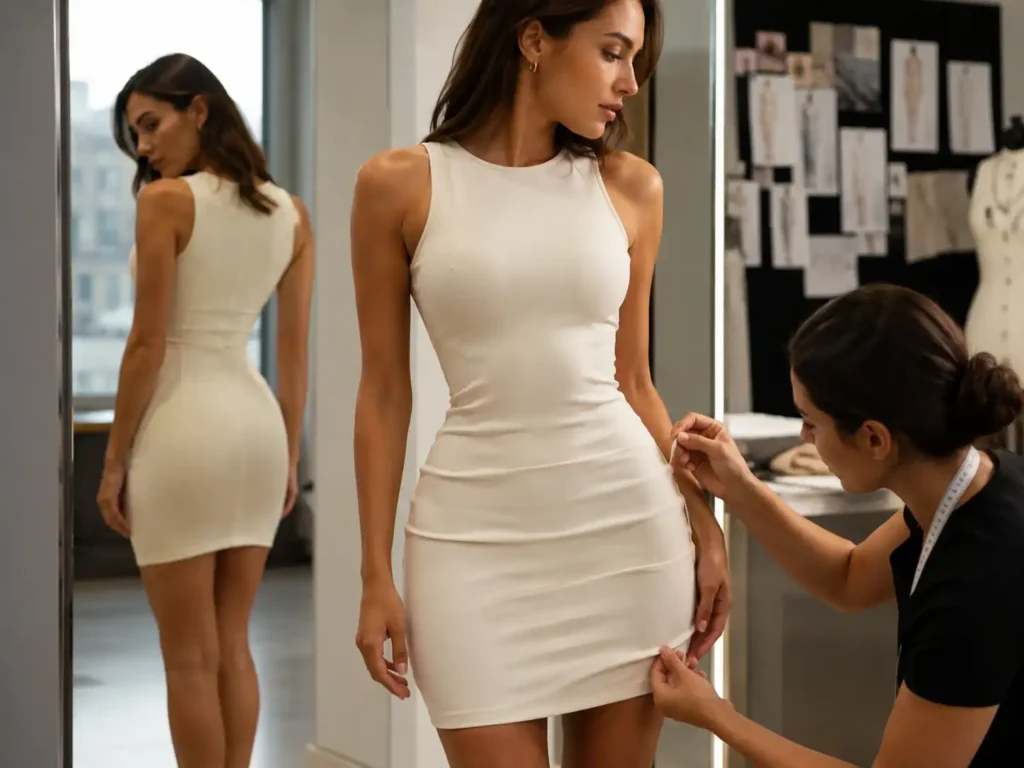
Fit meetings should lead to decisions rather than endless discussion. Review front, side and back balance, standing and seated fit, walking and arm movement, bust containment, waist and hip placement, hem behavior, lining movement, closure function, strap stability and fabric recovery. The sample should also remain visually faithful to the approved concept after the technical corrections are made.
Classify issues by severity. Critical issues include unsafe exposure, closure failure, severe movement restriction or unacceptable fit. Major issues include visible imbalance, poor support, incorrect proportion or repeated measurement problems. Minor issues are small visual or finishing corrections that do not materially change the pattern. A style with unresolved critical issues should not move forward, while several major corrections may require another sample.
Keep the commercial purpose visible during correction. A technical change that improves abstract fit perfection but removes the intended silhouette can weaken the product. The target is not a universally perfect fit; it is the correct fit for the intended customer, fabric and occasion. The final decision should reflect both the physical garment and the expectations created by the campaign imagery and product description.
Review the Range as a System
Once individual styles are approved, review the complete collection again. Problems often appear only at range level: excessive concentration in one silhouette, too many similar colors, missing price points, overdependence on one fabric, weak outfit combinations, excessive SKU count, material-minimum conflicts and several styles requiring the same specialist sewing operation. Individual approval does not guarantee that the complete system is balanced.
A collection containing five complex corset dresses may look strong creatively, but all five may compete for the same skilled operators and create a production bottleneck. Reducing one product, simplifying a construction or lowering its initial quantity may protect the delivery schedule. The same principle applies to fabric supply, trim procurement, quality inspection and packaging when several styles depend on the same limited resource.
Order depth should reflect confidence. Proven core products can support deeper quantities when sales and fit history are strong. New fashion pieces may need controlled exposure, while statement products often need shallower depth unless pre-orders, wholesale commitments or highly comparable historical evidence support more. The range plan is not complete until style count, color count, size count and unit depth can be viewed together.
Protect the Reorder Path
Validation should include what happens after launch. When a product sells faster than expected, the team needs reliable information to determine whether and how quickly it can be repeated. Retain approved patterns, grading files, final measurements, fabric and trim references, color standards, construction notes, approved samples, quality checkpoints, labels, packaging files and carton information.
A coordinated development and production partner can reduce the work that must be rebuilt each season. Jinfeng Apparel supports custom womenswear from pattern and fabric development through sampling, bulk production, quality control, private-label packaging and export coordination. Its Guangdong network includes six owned factories and more than ten long-term production partners, with standard MOQ beginning from 200 pieces per style and color, subject to material and construction requirements.