Skip to content

How Do Manufacturers Review Dress Design Feasibility Before Sampling?

Your trusted Women’s Apparel Manufacturer from China

Some of the most difficult dresses to manufacture do not look difficult on a screen. A clean satin mini dress may hide a complicated bust structure. A backless style may lose the support normally provided by the back bodice. A narrow cut-out may look balanced in one sample size and become too exposed after grading. Even a simple ruched dress can become inconsistent when several sewing operators distribute the gathers differently. For manufacturers, the real question is therefore not whether a dress can be sewn once, but whether the original design can survive fabric behavior, fit, movement, costing, sampling, size grading, production, and quality control.
Manufacturers review dress design feasibility by checking the design information, fabric behavior, fit and support requirements, construction method, trims, cost, size range, sourcing conditions, production timing, and bulk repeatability. A feasible dress is not simply one that can be made as a single sample. It must be possible to fit correctly, manufacture consistently, control within the intended commercial framework, and reproduce across the required sizes and production quantities.
The difference becomes obvious when two factories receive the same complicated dress. One may immediately reply that everything is possible. Another may ask about the intended fabric stretch, question the neckline depth, check whether the zipper area needs stabilization, request the size range, and flag a decorative detail that crosses a high-tension seam. The second conversation may initially require more decisions, but it often prevents far more expensive conversations after several samples have already been made.
What Does Dress Design Feasibility Mean?
Dress design feasibility is the process of deciding whether a creative concept can become a wearable, technically stable, commercially realistic, and repeatable garment. Manufacturers examine the relationship between design, fabric, fit, construction, trims, sizing, cost, and production rather than judging appearance alone. A successful review protects the intended look while identifying problems before they become repeated sample revisions or bulk-production failures.
Production-Ready vs. Visually Possible
A sketch, reference photograph, 3D render, or AI-generated concept can communicate an attractive silhouette without explaining how the garment physically holds that shape. Fabric in an illustration does not stretch, collapse, wrinkle, pull against a zipper, or move when the wearer sits down. Real fabric does all of those things, which is why visually convincing concepts can become difficult as soon as pattern development begins.
Consider a strapless satin mini dress with a sculpted bust, low back, tight waist, and asymmetric draping. The outward design may appear clean and minimal, but the internal questions quickly become complex. The manufacturer may need to determine whether the satin has enough body, whether cups are required, how boning should be positioned, where tension is transferred around the torso, whether the lining stretches with the shell, and whether an invisible zipper can remain flat under the intended fit.
A similar problem appears with cut-outs, low necklines, and bodycon silhouettes. The image shows the desired exposure and proportion, but the factory has to determine how those proportions remain stable while the wearer walks, bends, sits, and moves. A design therefore becomes production-ready only when its visual effect has a workable technical structure underneath it.
Feasibility Area | Main Manufacturing Question | Typical Risk |
Visual feasibility | Can the intended silhouette and proportion be retained? | Finished garment no longer resembles the design |
Technical feasibility | Can fabric, pattern, seams, support, and trims work together? | Gaping, twisting, slipping, puckering, weak support |
Production feasibility | Can the method be repeated across sizes and quantities? | Strong sample but inconsistent bulk production |
Commercial feasibility | Can cost, sourcing, MOQ, and timing support the product? | Technically possible design misses budget or launch timing |
A useful feasibility review therefore produces decisions rather than a vague approval. The manufacturer may confirm the design as presented, request missing information, propose testing a different fabric, recommend hidden stabilization, or identify a feature that needs to be evaluated during the first sample. The objective is not to simplify every fashionable detail. It is to understand what must happen behind the visible design for the garment to work reliably.
Sample Feasibility and Bulk Feasibility
A skilled sample machinist can often make a difficult garment look excellent because sample development allows time for judgment and manual correction. She may redistribute ruching, ease a curved seam, reposition lace, adjust tension, or reinforce a delicate area while sewing. Those interventions are useful during development, but they can also hide a problem if the construction still depends too heavily on one person’s experience.
Bulk production has different requirements. Several operators may work on different parts of the same garment, and each operation needs clear information. Pattern pieces require reliable notches, trim positions need measurable references, seam allowances must be controlled, and the sewing sequence has to work consistently without constant improvisation. The more a style depends on individual judgment, the more likely appearance will drift across a production run.
Ruching is a good example. An instruction such as “make the ruching look fuller” is open to interpretation. A production-ready instruction can define the start and end points, gathered section length, finished measurement, elastic length when applicable, and an approved visual reference. The same logic applies to bows, cut-outs, lace motifs, boning, decorative chains, asymmetric pleats, and hand-applied embellishments.
Size grading creates another challenge. A waist cut-out that looks balanced in the base size cannot always be enlarged proportionally. Cup shapes, neckline depth, strap position, slit height, and low-back exposure may require controlled grade rules. Manufacturers therefore review whether the product can preserve its design language as the pattern moves through the intended size range, not merely whether one sample looks correct.
Preserving Design Intent
Feasibility review should not turn an expressive fashion design into a safe, generic dress. Fashion brands often create value through details that are technically demanding, including sculpted cups, dramatic draping, low backs, transparent mesh panels, fitted silhouettes, asymmetric openings, lace placement, sequins, or unusual strap structures. Removing those details simply because they are difficult may solve a production problem while destroying the commercial identity of the product.
A better approach separates the visible design intention from the technical method used to achieve it. If a low-back silhouette is essential, the solution may involve cups, side support, strategic lining, internal tape, carefully positioned straps, or a fabric with stronger recovery rather than closing the back. If asymmetric draping defines the style, the factory should work on controlling drape position, panel shape, anchoring points, and fabric weight instead of removing the drape altogether.
This distinction becomes especially important in partywear, occasionwear, corset dresses, bodycon styles, mesh dresses, lace dresses, and satin products. These categories often appear simple in campaign photographs because the internal work has been hidden successfully. Experienced development teams understand that the best engineering is frequently invisible to the final customer.
A strong feasibility decision therefore does not sound like a simple yes or no. It sounds more like a technical agreement: the intended visual effect can be retained, but a particular fabric specification, internal structure, trim, seam treatment, or construction detail needs to change so the garment remains wearable and repeatable.
What Do Manufacturers Review First?
Manufacturers first identify what is confirmed, what is missing, and what remains flexible. The initial review normally covers sketches or reference images, measurements, size range, fabric direction, trims, closures, construction details, intended quantity, target cost, and launch timing. The purpose is to remove hidden assumptions before pattern development, fabric purchasing, and sample sewing begin consuming time and money.
Design Inputs
A complete tech pack provides an efficient starting point because it can connect the visual design with measurements, construction notes, BOM information, fabric specifications, colors, labels, and packaging requirements. However, many commercially successful styles begin with less complete material. Brands may provide a reference image, an original garment, a hand sketch, a line sheet, a fabric swatch, or several visual references that need to be interpreted into one new product.
Each type of input answers different questions. A reference image may communicate silhouette, skirt volume, neckline direction, visible seams, and general styling, but it cannot reliably reveal internal support, exact measurements, seam allowance, fabric composition, lining construction, or hidden components. An original garment allows the factory to inspect actual dimensions, construction, fabric behavior, closures, and seam details. A fabric swatch gives information that cannot be judged accurately from a screen, including stretch, recovery, thickness, transparency, drape, surface texture, and hand feel.
Even a detailed tech pack should be reviewed critically rather than followed without question. Measurements can conflict with the sketch, a chosen fabric may behave differently from the visual reference, or a neckline specification may create significantly more exposure than the technical drawing suggests. Product development therefore begins by reconciling the information rather than assuming every document is automatically correct.
Jinfeng Apparel’s documented sampling process supports development from tech packs, reference photographs, original samples, sketches, fabric swatches, trim cards, target prices, and launch dates. Those inputs can move through requirement review, structure analysis, material decisions, pattern development, sample sewing, fit checking, revision tracking, PP sample approval, and Golden sample sealing before bulk production.
Missing Decisions
One of the most valuable skills in dress development is noticing what has not been specified. A front-view reference can appear very detailed while leaving the manufacturer without any information about the back. A fabric may look like satin but could be rigid woven satin, stretch satin, or a lighter material with completely different construction behavior. A low neckline may appear intentional while the acceptable level of bust coverage remains unknown.
A weak development process silently fills those gaps. The merchandiser assumes one fabric, the pattern maker assumes one fit, and the sample room chooses a closure or lining method based on convenience. The finished sample can then be technically well made while still being fundamentally different from what the brand expected. Repeated sampling often begins not because the factory cannot sew the garment, but because important decisions were never made explicitly.
A practical way to manage this uncertainty is to classify information into three groups. Confirmed details should not change without approval. Flexible details can be adjusted when they improve performance, availability, cost, or construction. Test-required details should become specific questions for the first sample. For example, two mesh weights may need comparison, cup depth may require fit testing, or final slit height may remain open until the garment is evaluated during movement.
The method is simple, but it prevents a familiar argument in apparel development: the brand believes a detail was obvious, while the factory believes the detail was optional. Making uncertainty visible before cutting starts is usually faster than discovering it after the sample has already been delivered.

Quantity, Price, and Launch Timing
Commercial information should be reviewed earlier than many design teams expect because quantity, target price, and launch timing can change the technical solution. A custom zipper, special lace, exclusive print, branded metal component, or custom-dyed fabric may have a supplier minimum that is completely different from the garment factory’s production minimum. A style may therefore be easy to sew while remaining commercially difficult to source.
Target price creates a similar constraint. A dress containing premium fabric, full lining, cups, boning, hand-applied embellishment, multiple layers, complex ruching, and unusual hardware may be technically achievable but incompatible with the intended cost. Discovering that after two or three sample rounds wastes development time. An early feasibility review allows the team to decide which details are essential and where alternative materials or construction methods may be acceptable.
Launch timing matters because garment development is a chain of dependent activities rather than one single lead time. Fabric sourcing, trim development, pattern making, first sampling, fit review, revision, PP approval, production, inspection, packing, and logistics all compete for the calendar. An unresolved fabric decision at the beginning can delay several later stages rather than only the fabric stage itself.
Collection-level planning also changes the picture. Ten dresses that share one satin, lining, zipper family, and several common trims may offer sourcing efficiencies that do not exist when each product is evaluated separately. Ten unrelated styles with ten different specialty materials can create the opposite effect. A manufacturer therefore needs enough information about the broader collection to judge whether an individual design fits naturally into the overall development and production plan.
Which Fabric and Fit Risks Matter?
Fabric and fit must be evaluated together because material behavior changes how a pattern performs on the body. Weight, stretch, recovery, drape, transparency, shrinkage, surface sensitivity, and lining all influence fit. A pattern developed successfully in one material may produce a very different silhouette when bulk fabric has different stretch, thickness, recovery, or drape characteristics.
Fabric Behavior
Fabric names alone are not precise enough for technical decisions. Satin, mesh, jersey, lace, chiffon, and crepe describe broad material groups, but two fabrics within the same group can perform very differently. A light satin may drape beautifully while revealing seam tension and body lines. A heavier satin may produce a smoother surface but feel more structured. Two meshes may appear almost identical yet behave very differently when stretched around the neckline or bust.
Manufacturers therefore look at properties that can be observed or measured. Stretch affects pattern reduction and movement. Recovery determines whether the fabric returns toward its original dimensions after tension. Drape influences how the skirt falls and how gathers behave. Transparency determines whether lining is necessary and where it should stop. Shrinkage influences finished measurements, while surface sensitivity affects cutting, sewing, pressing, inspection, and packaging.
Fabric Check | Practical Example | Development Impact |
Stretch | A 10 cm section stretches to 12 cm, indicating 20% extension | Influences pattern reduction and fitted silhouettes |
Recovery | Fabric is measured again after stretching and relaxing | Helps predict neckline, waist, and hip distortion |
Shrinkage | A 3% reduction over 100 cm equals 3 cm | Can materially change dress length and fit |
Transparency | Shell checked over intended lining or skin-tone reference | Determines coverage strategy and lining construction |
Drape | Material tested over the intended silhouette | Influences skirt fall, bias behavior, ruching, and volume |
Surface sensitivity | Snagging, shine, crease marks, or sequin loss observed | Changes handling, pressing, QC, and packing controls |
The figures above illustrate how fabric behavior can be described rather than universal acceptance limits. Actual tolerance depends on the material, brand specification, garment structure, and intended use. A 3% dimensional change may be manageable in one casual style and unacceptable in another product where finished length or fitted body measurements are especially sensitive.
Jinfeng Apparel’s documented material system covers fabrics including satin, stretch satin, mesh, power mesh, lace, chiffon, jersey, ponte, crepe, velvet, sequin fabric, organza, and tulle. Material review includes hand feel, drape, stretch, transparency, lining requirements, shrinkage, wrinkle risk, color variation, sampling risk, bulk-production risk, and cost considerations.
Bust, Waist, and Hip Balance
Fit is created through relationships rather than isolated circumference measurements. Bust, underbust, waist, hip, front length, back length, shoulder position, neckline depth, armhole shape, strap length, skirt length, and fabric behavior influence one another. A garment can match a measurement chart and still look wrong because the balance between those dimensions has been lost.
Fitted dresses make the problem more visible. Increasing bust circumference without correcting panel shaping can simply make the bodice wider instead of creating space in the correct area. Increasing hip measurement without adjusting the waist-to-hip curve may rotate the side seam toward the front or back. Moving the waistline changes the apparent torso length even when the waist circumference itself remains correct.
Strapless and corset-inspired designs require another level of control because the garment must resist downward movement without becoming uncomfortable. Upper bust, underbust, cups, boning, waist shaping, zipper stability, lining, and sometimes anti-slip components need to operate as one system. Changing only one element can easily create a new problem somewhere else.
Bodycon dresses depend heavily on stretch and recovery. A pattern developed around a fabric with strong recovery may feel loose when transferred to softer bulk material. Replacing a soft jersey with a firmer stretch fabric can create the opposite result. The pattern may technically remain unchanged while the wearing experience changes significantly.
The company’s documented pattern and structure system includes 7+ senior womenswear pattern makers, 2 sample rooms, and 20+ sample machinists. Recorded control points include upper bust, underbust, waist, hip, front and back length, shoulder width, strap length, armhole, neckline depth, slit height, and lining, illustrating how many variables sit behind a seemingly straightforward fitted dress.
Coverage and Movement
A dress can appear completely correct while the wearer stands still and still fail in normal use. A low neckline may open when she bends forward. A high slit may reveal significantly more while sitting. A waist cut-out can widen as the torso rotates. A backless dress may pull the front neckline outward because the back panel that would normally stabilize the bodice has been removed.
For that reason, fit review should involve movement rather than relying entirely on static front, side, and back photographs. Walking, sitting, raising the arms, turning the torso, bending slightly, and putting the garment on and taking it off can expose stress points that cannot be identified from flat measurements. These simple actions often reveal whether the problem lies in fit, material recovery, support, or construction.
Coverage also needs to reflect the intended wearing occasion. A party mini dress and an office midi dress will naturally use different standards for neckline depth, skirt length, slit height, and ease. A wedding guest dress may prioritize controlled movement and elegant coverage, while clubwear may intentionally expose more skin but still needs enough stability to prevent unintended movement.
The purpose of feasibility review is not to make every dress more conservative. It is to ensure that the actual amount of support, exposure, movement, and comfort matches what the brand intended to offer. Successful fit therefore has three dimensions: the garment should look right, remain controlled during wear, and preserve those characteristics across the intended size range.
How Is Construction Feasibility Checked?
Construction feasibility is checked by tracing how the dress will actually be cut, assembled, supported, closed, pressed, and inspected. Manufacturers review seams, panels, lining, straps, zippers, cups, boning, gathering, cut-outs, decoration, edge finishes, and stress points to confirm that the desired appearance has a practical manufacturing method that can be repeated beyond the sample room.
Seams, Panels, and Stress Points
Every visible design line eventually becomes a construction decision. A princess seam may shape the bust, but the chosen fabric still has to sew smoothly around that curve. A waist seam may be part of the design while also carrying substantial tension from a fitted bodice. A cut-out edge may create a clean visual line but needs enough internal stability to remain close to the body rather than stretching away.
Manufacturers therefore mentally walk through the sewing sequence before the first sample is complete. They consider which panel is assembled first, whether the seam can be sewn cleanly in the selected fabric, how the lining will be attached, whether several layers create excessive thickness, how the garment will be turned during construction, and whether pressing can be performed without damaging the surface.
Stress points deserve particular attention because many dress failures occur there rather than in the middle of a panel. Typical examples include the top of a slit, narrow strap attachments, zipper ends, halter neck connections, corners of cut-outs, lace joins, underarm seams, hook placements, and areas where rigid hardware connects to stretch fabric.
A thin shoulder strap attached directly to delicate mesh illustrates the problem clearly. The visual design may not need a wider strap, yet the attachment point may require internal backing, reinforcement, seam stabilization, or a different construction sequence. The customer never sees that hidden solution, but it can determine whether the dress remains intact after repeated wear.
Closures and Support
Closures and internal support components should be considered during feasibility review rather than added as an afterthought. Invisible zippers, hooks, cups, boning, underwire, elastic, anti-slip tape, strap sliders, lining, and reinforcement materials all influence how a dress fits and behaves. Changing one component can affect both the external appearance and the production method.
An invisible zipper in lightweight satin demonstrates this relationship. If the surrounding fabric and seam are unstable, the zipper can create a wavy or bulging line. Adding excessive stabilization may solve the waviness while making the dress noticeably rigid. The correct treatment depends on fabric weight, seam tension, fit, lining, zipper specification, and where body pressure is concentrated.
Strapless dresses require several components to work together. Cups may control bust shape, boning can transfer load toward the waist, anti-slip tape can improve security, and the zipper must close smoothly without forcing the bodice out of shape. None of those components can compensate completely for an incorrect pattern, which is why support should be treated as a system rather than a collection of accessories.
Backless and deep-V designs create different limitations because fabric has deliberately been removed from areas normally used for support. The technical solution may involve side panels, strategic lining, cups, hidden tapes, stabilizing mesh, halter tension, or carefully positioned straps. There is no universal formula. Fabric, silhouette, size range, exposure level, and expected wearing experience determine the appropriate solution.
Repeatable Fashion Details
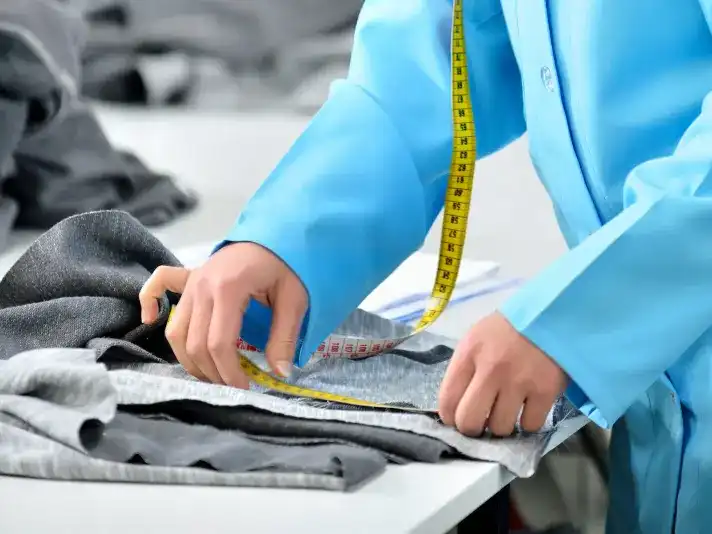
Some of the most difficult details to manufacture consistently are those designed to look natural or irregular. Ruching, draping, asymmetric pleats, lace placement, sequins, sculpted cups, bows, hand beading, decorative chains, and complicated cut-outs may depend heavily on individual operator judgment. One sample can look excellent while the same operation slowly changes across a production line.
Manufacturing control does not require those details to look mechanical. It requires boundaries that make intentional variation different from accidental inconsistency. Ruching can be controlled by finished length, gathering ratio, start and end points, and an approved visual standard. Lace motifs can use alignment references. Cut-outs can have finished edge measurements. Boning can have defined lengths and positions, while decorative trims can use marked attachment points.
Design Detail | Common Bulk Risk | Practical Production Control |
Ruching | Uneven density or left-right imbalance | Finished length, gathering ratio, marked placement |
Cut-outs | Exposure changes after grading | Size-specific opening dimensions and edge stability |
Corset construction | Cups or boning shift between units | Pattern references and fixed component positions |
Lace placement | Motifs appear inconsistent | Alignment points or placement map |
Sequins | Loss, scratching, bulky seam allowance | Seam preparation, protected edges, inspection checks |
The company’s documented development logic for halter, backless, strapless, corset, deep-V, ruched, cut-out, lace, mesh, and sequin products specifically considers stress points, bust coverage, back stability, stretch direction, lining, support trims, wearing safety, and bulk repeatability.
A useful test is whether an important visual result can be communicated to someone who did not make the first sample. If the answer depends only on “copy what the sample machinist did,” the method may still be too dependent on individual skill. When appearance can be translated into pattern marks, dimensions, construction instructions, reference samples, and QC checkpoints, the design is much closer to stable production.
How Do Cost and Timeline Affect Feasibility?
Cost and timing are part of feasibility because a dress must work as a commercial product, not only as a technical exercise. Fabric consumption, trims, sewing time, handwork, size range, material minimums, pattern complexity, sample revisions, testing, packaging, and delivery requirements can all make an otherwise manufacturable design unsuitable for its intended cost position or launch calendar.
Real Cost Drivers
The fabric visible from the outside is only one part of dress cost. A seemingly clean corset mini dress can contain lining, cups, boning, seam tape, internal elastic, zipper, hooks, labels, and several hidden structural pieces. The number of sewing operations can therefore be much higher than the simple exterior suggests, and the skill required for those operations can affect both cost and production capacity.
Fabric utilization also matters. Wide skirts and long dresses consume more material. Bias-cut panels often reduce cutting efficiency. Directional velvet, lace motifs, placement prints, and sequin fabrics can create additional waste because pattern pieces cannot be rotated or nested freely. Full lining, multiple skirt layers, ruffles, godets, and draping further increase fabric usage even when the base fabric price remains unchanged.
Manual work introduces another cost layer. Dense ruching, hand tacking, individually positioned rhinestones, complex lace alignment, narrow binding, elaborate pleats, and detailed pressing require additional handling time. Several colorways can create separate material allocations or dye lots, while a wide size range may require more pattern and grading work.
The documented Jinfeng Apparel quotation system evaluates fabric, trims, construction complexity, pattern work, sampling, cutting, sewing time, pressing, quality control, packing, wastage, testing, logistics, and order quantity instead of reducing garment price to fabric cost alone.
A useful quotation conversation therefore explains what is driving the number. When a brand understands whether cost is coming primarily from fabric, consumption, handwork, internal structure, trim development, or inefficient sourcing, it can make an informed decision about which features deserve protection and which can reasonably be adjusted.
Material MOQ and Sourcing
Garment MOQ and material MOQ are different constraints. A factory may be able to organize production for a particular garment quantity while the fabric mill, lace supplier, custom zipper producer, print house, or hardware supplier requires a different purchasing volume. This mismatch is especially common when custom colors, exclusive prints, special finishes, or branded components are involved.
Color can make the issue more complicated. Imagine a brand planning 800 dresses across four colors. From a sewing perspective, the total quantity appears meaningful. From a custom-dye supplier’s perspective, however, the project may represent four separate 200-piece color requirements. The economics and lead time can therefore be very different from producing 800 pieces in one color.
Collections sometimes create useful opportunities to consolidate material. Several dresses may share the same satin, mesh, lining, zipper, or hardware family. Total fabric purchasing can then become more efficient even though the garments are different. The opposite situation occurs when every style requires a separate specialty fabric or trim, creating highly fragmented sourcing despite a large total order.
When one component creates an unrealistic minimum, possible solutions include selecting a high-quality stock material, using an existing supplier color, sharing a fabric across several styles, replacing a custom trim, adjusting the order quantity, or reserving the exclusive component for a later production run. The correct decision depends on whether the material or trim is genuinely important to the customer’s perception of the finished dress.
Cost Control Without Weakening the Product
Good cost engineering begins by understanding the function of every expensive element. Removing a component simply because it costs money can create a product that meets the target price but fails in fit, appearance, comfort, or durability. Removing boning from a strapless bodice, for example, may reduce construction cost while increasing the likelihood that the dress slips during wear.
Better savings often come from less visible changes. A fully lined garment may sometimes use targeted lining if opacity and comfort remain acceptable. A custom decorative component can occasionally be replaced with an available option of similar visual scale. Complicated internal operations may be redesigned into a cleaner construction, while intelligent pattern placement can improve material utilization without changing the outer silhouette.
The company’s documented cost-management approach includes fabric substitution, construction simplification, structural optimization, trim replacement, cutting-layout planning, MOQ planning, color consolidation, and size-ratio planning as possible tools for controlling cost without automatically weakening brand-level appearance.
Timing works in much the same way. Stock fabric, confirmed trims, familiar construction, and clear technical specifications usually create fewer uncertainties. Custom dyeing, unusual trims, repeated design changes, complex embellishment, and unresolved fit decisions create additional dependencies. A style that is technically simple can therefore become slow when decisions remain open, while a complex style can progress efficiently when its specifications and approval process are disciplined.
Manufacturing speed is often less about rushing individual operations and more about preventing unnecessary stops between operations. A clear fabric approval prevents the pattern team from developing around the wrong material. A resolved closure avoids redesigning the back after the first sample. Accurate revision records prevent the same problem from reappearing in the PP sample. Removing those interruptions can matter more than saving a day at one isolated production stage.
When Is a Dress Ready for Sampling and Bulk Production?
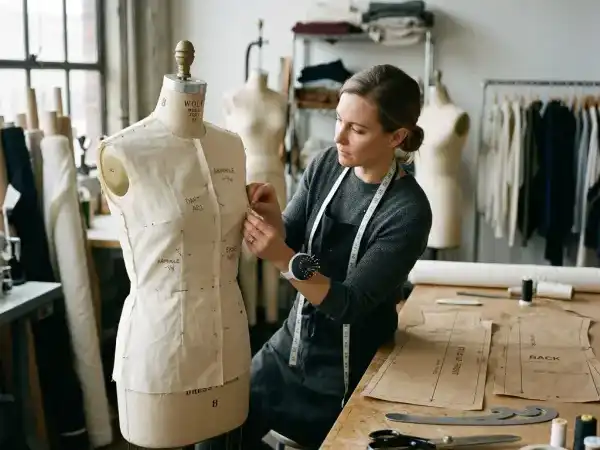
A dress is ready for sampling when its design intent, base size, material direction, critical measurements, construction concept, and test questions are sufficiently clear. It is ready for bulk production only after fit, materials, workmanship, trims, grading, measurements, and appearance have been approved and converted into production records that sewing and quality teams can reproduce consistently.
First Sample Readiness
The first sample should answer meaningful product questions rather than become a physical version of unresolved communication. Before pattern cutting starts, the team should normally understand the intended silhouette, base sample size, major dimensions, bust and waist position, neckline direction, garment length, coverage expectations, fabric direction, lining requirements, closures, and the important visual features that cannot be changed casually.
Not every question needs to be closed before the first sample. Some uncertainties are exactly what the sample is designed to test. The development team may want to compare two mesh weights, evaluate cup shape on the body, test whether one lining construction provides enough support, or decide the final slit position after walking and sitting are reviewed.
The difference is whether the uncertainty is deliberate. When the team knows that slit height is being tested, the sample provides useful evidence. When nobody realized that slit height was undefined, the sample merely reveals a communication problem. Treating sampling as a controlled experiment therefore produces much more useful feedback than asking the sample room to “make it first and see.”
A practical development record can separate details into approved, flexible, and test-required categories. Approved features form the current design standard. Flexible features give the technical team room to improve manufacturability or cost. Test-required points become explicit review items during fitting. That structure makes sample comments more precise and prevents important decisions from disappearing into informal messaging.
Fit and Revision Evidence
Sampling converts theoretical feasibility into physical evidence. Once the actual pattern, fabric, trims, lining, and construction come together, the development team can observe whether the neckline stays flat, the bust sits correctly, the armhole provides enough coverage, the waist falls in the intended position, the hip has sufficient movement, the zipper remains smooth, and the skirt behaves as expected.
Measurements remain essential, but a dress can fall inside its measurement tolerance and still look or feel wrong. A side seam may rotate. The back hem can rise. The neckline may gape when the wearer sits. The bust can appear flattened even when circumference is correct. These issues demonstrate why garment fitting combines dimensional checks with visual and movement-based evaluation.
The most productive sample discussion asks what caused the problem rather than only what looks wrong. A loose neckline might result from pattern shape, excessive fabric stretch, poor recovery, lining behavior, missing stabilization, or sewing tension. Reducing the neckline measurement without identifying the underlying cause can simply move the problem somewhere else.
Revisions should then become controlled technical information. Pattern corrections, measurement changes, fabric decisions, trim replacements, construction updates, and visual approval points should be incorporated into working records rather than remaining scattered across chat messages, photographs, and emails. This becomes increasingly important when several people participate in development and production because the person who solved the sample problem may not be the operator responsible for bulk sewing.
Jinfeng Apparel’s documented sample-revision process follows that principle by categorizing fit, fabric, workmanship, on-body effect, color, trims, design accuracy, measurements, details, labeling, packaging, and cost alignment, then converting approved changes into updated patterns, measurement records, fabric records, sewing instructions, QC checkpoints, and revised sample requirements.
PP Approval and Bulk Repeatability
A pre-production sample has a different purpose from an early development sample. The first sample asks whether the idea can work. A fit sample tests body proportion and comfort. Revised samples verify corrections. The PP sample should answer a more demanding question: whether the garment is now stable enough to become the reference for production.
By that stage, the production-intended fabric, trims, pattern, measurements, construction, colors, labeling requirements, and important workmanship details should be sufficiently controlled. If the team is still debating major silhouette, fabric, or structural decisions, development is not finished simply because the sample has been given a PP label.
Grading also deserves review before bulk cutting. Cut-out dimensions, neckline depth, strap position, cup shape, slit height, waist placement, and low-back coverage do not always scale through a size range using one mathematical rule. Some details need controlled grading so the visual and functional relationship to the body remains appropriate in smaller and larger sizes.
Production then requires an approved reference system. Depending on the project, this can include the PP or Golden sample, measurement chart, graded patterns, BOM, construction notes, trim specifications, color approvals, packing instructions, and defined quality checkpoints. The purpose is to stop important development decisions from being reinvented after fabric has already been cut.
The documented sampling system used by Jinfeng Apparel moves from requirement review and structure analysis through pattern development, fit checks, revision records, PP sample approval, and Golden sample sealing before custom womenswear enters bulk production. This type of record-based transition matters most on fashion-led garments where relatively small changes in a neckline, cut-out, ruching position, cup shape, or fabric behavior can create a visible difference across production.
The final feasibility question is therefore not whether the approved sample looks attractive on a mannequin or in a photograph. It is whether the approved result can move from the sample room through cutting, sewing, finishing, inspection, packing, and later repeat orders while retaining the decisions that made the sample successful.
A thoughtful dress feasibility review gives creative design a structure strong enough to survive the realities of manufacturing. It connects appearance with fabric behavior, pattern balance, construction, sourcing, cost, timing, grading, and production control before those factors become expensive surprises. For fashion brands, the value is not simply fewer technical problems; it is a better chance that the garment delivered in bulk still carries the proportions, fit, texture, and visual character that made the original design worth developing.
Share This Article :

Jerry Lee
Categories

Latest blogs
Table of Contents
Here, developing your OEM/ODM private label clothing collection is no longer a challenge—it’s an excellent opportunity to bring your creative vision to life.