 Skip to content
How Do Chinese Dress Factories Support Private Label Orders?

Your trusted Women’s Apparel Manufacturer from China

Private label dress production is not just about sewing a brand label into a finished garment. For a serious fashion brand, it is a full manufacturing system: design interpretation, pattern development, fabric matching, sample correction, measurement control, label placement, packaging, carton marks, SKU discipline and repeat-order records. This is why many growing womenswear brands look closely at Chinese dress factories before choosing a long-term production partner.
Chinese dress factories support private label orders by turning a buyer’s design direction, tech pack, sample or reference image into branded dresses ready for ecommerce, retail or wholesale distribution. The best factories handle sampling, fabric and trim sourcing, fit correction, custom labels, care labels, hangtags, barcode stickers, polybags, carton marks, QC checks and export delivery.
The real question is not “Can a factory add my label?” Almost any basic supplier can say yes to that. The better question is: “Can this factory protect my design, control the fit, manage the fabric risk, pack each SKU correctly and repeat the same quality when the order grows?” A brand once told us their first factory made beautiful samples but shipped cartons with mixed sizes and wrong barcode labels. That is where private label success is won or lost.
What Is a Private Label Dress Order?
Editorial image prompt: a clean studio scene showing branded women’s dresses on garment racks with custom neck labels, hangtags, care labels, barcode stickers and polybags arranged on a worktable, premium fashion factory atmosphere, natural light, realistic documentary style.
A private label dress order means a factory manufactures dresses that are sold under the buyer’s own brand name. The buyer controls the design direction, label system, packaging, size range and market positioning, while the factory supports sampling, fabric sourcing, production, quality control and branded delivery. It is different from ready-made wholesale because the product is built around the buyer’s brand standard.
Private Label in Real Production
In real dress manufacturing, private label is not only “putting a logo label on a dress.” That is the surface-level part. A true private label order covers the full identity of the garment: main label, size label, care label, hangtag, barcode sticker, polybag, carton mark, SKU code, packing method and sometimes even the way the garment is folded inside the bag.
For a women’s fashion brand, these details affect how the product is received by customers, warehouses and retail partners. A satin midi dress with the wrong care label may create customer complaints. A mesh bodycon dress with the wrong size sticker may cause warehouse picking errors. A party dress packed without barcode labels may delay ecommerce listing. These are not small mistakes when a brand is launching 10, 20 or 30 styles in one season.
Private label production gives the brand more control than ready-stock wholesale. The brand can define the fit, fabric hand feel, color tone, size range and packaging experience. The factory’s role is to turn that brand direction into a repeatable production process.
OEM, ODM and Private Label
Private label often works together with OEM or ODM production. OEM means the buyer provides more complete product information, such as tech pack, size chart, fabric requirement, trim details and packaging artwork. ODM means the buyer gives a design direction, reference image, sample or market idea, and the factory helps develop the style into a producible garment.
In dress manufacturing, many real orders sit between OEM and ODM. A buyer may provide a front-view reference photo and a preferred fabric, but still need the factory to adjust the neckline, waistline, lining length and zipper method. Another buyer may provide a full tech pack but ask the factory to recommend a better satin weight or replace an unavailable lace.
The private label part comes when the finished dress carries the buyer’s own brand system. Whether the style starts from a detailed tech pack or a reference sample, the final delivery must look and feel like the buyer’s branded product.
Who Uses Private Label Dress Factories?
Private label dress factories are usually used by established ecommerce brands, boutique fashion chains, DTC dress labels, occasionwear brands, sourcing companies, regional fashion retailers and brand groups. These buyers are not simply looking for “cheap dresses.” They need products that match their own fit, fabric standard, price positioning and customer expectations.
A boutique brand may need 8 styles for a seasonal drop, each with 3 colors and 5 sizes. A DTC partywear label may need bodycon, mesh, satin and sequin dresses with accurate size grading because return rates are closely linked to fit. A retail buyer may need each carton marked by style, color, size and purchase order number. A sourcing team may need production documentation, sample approvals and pre-shipment checks.
The more mature the buyer, the more important the factory’s process becomes. A private label factory must understand not only garment construction, but also launch schedules, SKU management, packing discipline and repeat-order consistency.
Private Label vs Wholesale
Wholesale is usually faster at the beginning, but it gives the buyer less control. Many buyers may purchase similar styles from the same supplier, so the product is harder to differentiate. Private label takes more preparation, but it helps a brand build product ownership.
With wholesale, the buyer often accepts the supplier’s fabric, fit, measurement, packaging and available colors. With private label, the buyer can define or adjust those details. The factory may still advise what is practical, but the final product is made around the buyer’s brand needs.
This difference matters in fast fashion because speed alone is not enough. A dress brand needs products that photograph well, fit consistently, arrive correctly packed and can be reordered when a style performs. Private label makes that possible because product data, patterns, fabric records, trims and packaging requirements can be stored for future production.
| Production Type | Buyer Usually Provides | Factory Usually Supports | Common Dress Order Example |
| OEM | Tech pack, size chart, fabric spec, trim details, label files | Pattern, sample, bulk production, QC, packing | 800 pcs satin midi dress based on buyer’s full tech pack |
| ODM | Reference photos, market direction, fabric preference, target price | Design adjustment, fabric advice, pattern, sample, production | 600 pcs resort maxi dress developed from reference images |
| Private Label | Brand labels, care labels, hangtags, barcode rules, packaging files | Branded finishing, SKU packing, carton marks, delivery support | 1,200 pcs multi-color party dress order under buyer’s brand |
| Ready Wholesale | Basic product choice from supplier catalog | Stock supply or minor label changes | Existing dress bought from inventory with limited customization |
How Do Factories Start Development?
Editorial image prompt: fashion development table with tech packs, fabric swatches, measuring tape, sample dress, laptop line sheet and pattern paper, Chinese womenswear factory sample room, professional but realistic, no people facing camera.
Factories start private label dress development by reviewing the buyer’s tech pack, reference photo, original sample, size chart, fabric direction, branding files and quantity plan. A professional factory checks whether the style is producible, which fabric works best, what risks may appear in fit or construction, and what must be confirmed before sampling and bulk production.
Required Buyer Files
A strong development process starts with clear information. The best file package includes front and back views, detail photos, a size chart, fabric preference, trim requirements, label artwork, packaging instructions, order quantity and target delivery date. Not every buyer has a complete tech pack, but every missing file creates a decision that must be clarified before production.
For example, a backless dress cannot be developed properly from only one front-view photo. A corset dress cannot be quoted accurately without knowing whether it needs boning, cups, lining and zipper type. A mesh dress cannot be sampled well without confirming transparency level, lining coverage and stretch direction.
Buyers do not need to prepare perfect factory documents from day one, but they do need to give enough direction for the factory to make professional judgments. A good factory will ask questions before sampling instead of guessing and creating a sample that looks close but fails in fit, cost or bulk production.
Style Review Before Sampling
Before a sample is made, the factory should review the style from a construction point of view. This review includes neckline shape, bust support, waist position, hip ease, skirt length, lining method, zipper placement, seam structure, fabric behavior and production difficulty.
This step is especially important for fast fashion dresses because many styles look simple in photos but become complicated in production. A satin slip dress may require careful bias cutting to avoid twisting. A bodycon dress may need stretch recovery control. A sequin mini dress may need seam comfort and needle damage control. A lace dress may require pattern placement, lining color matching and edge finishing.
A factory with real dress experience should identify the risk points before the buyer pays for multiple sample rounds. This saves time and prevents unrealistic expectations. The goal is not to make the design less creative, but to make it wearable, repeatable and suitable for the buyer’s price range.
Sample and PP Sample
Sampling is where the design becomes physical. The first sample checks the look, fabric, fit and construction. It may not be perfect, and that is normal. What matters is whether the factory can understand the buyer’s comments and correct the sample in a controlled way.
A useful sample comment is specific. Instead of saying “make the waist better,” the buyer can say “reduce waist circumference by 2 cm” or “raise waist seam by 1 cm.” Instead of “fabric feels wrong,” the buyer can say “need heavier satin with less shine” or “need softer mesh with better stretch recovery.” Clear comments shorten the revision cycle.
Before bulk production, the PP sample is the most important approval sample. It should reflect the confirmed fabric, color, trim, measurement, sewing method, label placement and key packaging details. Once the PP sample is approved, it becomes the factory’s production standard.
From Sample to Bulk
Moving from sample to bulk production requires more discipline than many new buyers expect. A sample can be made by one experienced sample maker. Bulk production involves cutting workers, sewing lines, QC staff, finishing workers and packing teams. The approved sample must therefore be translated into production instructions.
Before cutting bulk fabric, the factory should confirm fabric arrival, shade consistency, shrinkage risk, pattern grading, size ratio, label files, trim stock, packaging method and carton requirements. For multi-style orders, production planning also matters. A 20-style dress collection may need different lines for woven, knit, satin, mesh or sequin styles.
The strongest factories do not treat development and production as separate worlds. They connect sampling decisions to bulk production reality. That is why early review, PP approval and clear documentation matter so much in private label dress orders.
| Development Item | Practical Requirement | Why It Matters |
| Reference images | Front, back and detail views preferred | Reduces guessing in structure and finishing |
| Size chart | At least sample size measurements | Controls fit from the first sample |
| Fabric direction | Weight, stretch, opacity or hand feel reference | Prevents fabric mismatch and poor drape |
| Quantity plan | Style/color/size breakdown | Affects MOQ, cost and production scheduling |
| Branding files | Label, hangtag, barcode and packaging artwork | Avoids late-stage packing delays |
| Target delivery | Launch date or warehouse deadline | Helps plan sampling, fabric booking and bulk time |
| Price target | Approximate range if available | Helps factory suggest realistic fabric and construction |

Which Branding Details Can Be Customized?
Editorial image prompt: close-up flat lay of private label dress branding elements including woven labels, satin labels, care labels, hangtags, barcode stickers, SKU labels, branded polybags and carton mark sheet beside folded dresses, modern ecommerce fashion style.
Private label dress factories can customize woven labels, printed labels, size labels, care labels, hangtags, hang strings, barcode stickers, SKU labels, polybags, brand stickers, thank-you cards, cartons and carton marks. These details help the finished dress arrive as a brand-ready product for ecommerce, boutique, retail or warehouse distribution.
Label Types
Labels are the most visible part of private label branding, but they must be selected carefully. Common options include woven neck labels, satin labels, printed labels, heat-transfer labels, size labels and side seam care labels. Each option has a different effect on comfort, appearance and cost.
A woven label may feel more premium for occasionwear or boutique dresses. A heat-transfer label may be better for tight jersey dresses or bodycon styles because it reduces irritation at the back neck. A satin label can work well for delicate garments, but it must not scratch the wearer’s skin. Care labels are usually placed inside the side seam, but placement may need adjustment for sheer mesh, lace, backless or cut-out styles.
Label size also matters. A label that looks fine on a blazer may feel too large on a thin strap mini dress. A good factory checks label placement with garment structure before bulk sewing starts.
Care Labels and Market Details
Care labels are not only for washing instructions. They often include fiber content, size, country of origin, care symbols and sometimes importer or market-specific details. For dresses, care instructions should match the actual fabric and trim, not a copied template.
A satin dress, sequin dress, lace dress and cotton blend resort dress should not all use the same care label. If a garment has lining, contrast fabric or delicate trims, the label content should reflect that. Poor care instructions can lead to customer complaints, shrinkage, color bleeding or damage during washing.
Buyers should confirm care label content before bulk production. Once thousands of labels are sewn into garments, changing them becomes expensive and slow. A professional factory can help check the production side, but buyers should also confirm brand and market requirements with their own compliance or retail team.
Hangtags, Barcodes and SKU Labels
Hangtags help communicate brand image, but barcode and SKU labels help the product move through inventory systems. For ecommerce and retail buyers, SKU accuracy can be more important than the visual design of the hangtag.
A single dress style may have 4 colors and 6 sizes. That creates 24 SKU combinations. If a private label order includes 12 styles, the packing team may handle more than 200 style-color-size combinations. Without a clear SKU table, mistakes are easy: wrong barcode, wrong size sticker, wrong carton mark or mixed colors in one carton.
The buyer should provide barcode files, SKU codes, color names, size names and packing rules before production finishes. The factory should check that each label, hangtag and sticker matches the packing list. This is where private label production becomes operational, not just visual.
Packaging and Carton Marks
Packaging can include individual polybags, branded stickers, tissue paper, thank-you cards, carton labels, carton marks and warehouse receiving labels. The right packaging depends on the sales channel. Ecommerce brands often need barcode-ready individual packing. Boutique buyers may want better presentation. Retail buyers may require purchase order numbers, carton numbers and strict carton markings.
Packing should never be left until the last production week. If packaging artwork, barcode files or carton rules arrive late, shipment can be delayed even when the dresses are finished. For private label orders, packing is part of the product system.
A practical packing file normally includes style code, color name, size range, barcode number, polybag sticker position, carton quantity, carton mark format and warehouse guide if required. The more styles in one order, the more important this file becomes.
| Branding Detail | Common Specification | Practical Use |
| Woven label | Often 2–5 cm wide depending on design | Main brand identity inside garment |
| Size label | XS–XL, numeric or regional sizing | Helps warehouse and customer selection |
| Care label | Fiber content, washing method, origin info if required | Reduces care mistakes and complaints |
| Hangtag | Brand card, price tag or product info tag | Retail presentation and brand story |
| Barcode sticker | Style/color/size SKU code | Warehouse scanning and ecommerce listing |
| Polybag | Individual garment packing | Protects garment and supports fulfillment |
| Carton mark | PO, style, color, size, quantity, carton number | Receiving, sorting and shipment control |
How Are Fabric and Fit Controlled?
Editorial image prompt: sample fitting and fabric control scene in a women’s dress factory, measuring tape on satin and mesh dresses, fabric swatches, pattern paper, mannequin with fitted dress, QC checklist clipboard, realistic premium manufacturing look.
Fabric and fit are controlled through material review, fabric sourcing, sample development, measurement checks, size grading, fitting comments and PP sample approval. The factory must make sure the fabric supports the intended silhouette, the pattern works on the body, and the approved fit can be repeated across sizes, colors and bulk production.
Fabric Selection
Fabric selection affects almost every part of a dress: fit, drape, transparency, comfort, sewing difficulty, cost, MOQ and customer return risk. A beautiful fabric on a swatch may not work for the intended style. A lightweight satin may collapse in a corset dress. A thin mesh may need lining. A stiff lace may look premium but feel uncomfortable against the skin.
For private label dress brands, fabric should be chosen according to product purpose. Party dresses often need shine, stretch, structure or body-hugging performance. Resort dresses often need drape, breathability and print quality. Occasionwear needs better hand feel, lining comfort and finishing. Bodycon dresses need stretch recovery and measurement stability.
A professional factory should explain fabric trade-offs. Cheaper fabric can reduce cost, but it may increase return risk. Heavier fabric can improve drape, but it may increase unit price and shipping weight. Custom colors can improve brand identity, but they may require higher fabric MOQ and longer lead time.
Fit and Pattern Control
Fit starts with the pattern. The factory must translate the design into a shape that works on the body. For dresses, the most important control points are bust, waist, hip, shoulder, neckline, armhole, strap length, skirt length, slit height and hem balance.
The pattern must also match the fabric. A woven satin dress needs ease and clean seam control. A stretch bodycon dress may use negative ease, but the fabric must recover after wearing. A chiffon maxi dress needs balance in length and lining. A corset dress requires support, not just a tight waist.
Fit comments should be measurable. “Make it more flattering” is hard to produce. “Reduce waist by 1.5 cm,” “raise neckline by 1 cm,” “extend lining by 3 cm,” or “increase hip by 2 cm” gives the pattern team clear direction. Good fit control is built through sample review, technical comments and accurate revision.
Size Grading
Size grading expands the approved sample into the full size range. This process must keep the same design feeling across sizes. It is not simply adding the same measurement everywhere. Bust, waist, hip, length, strap position and armhole often need different grading logic.
This is especially important for dresses sold in the US, UK, Europe, Australia and Canada, because customer fit expectations differ by market. A mini dress that works for one region may be considered too short in another. A fitted party dress may need careful hip and bust grading to reduce returns. A wedding guest dress may need more comfort allowance because customers wear it for longer events.
Brands should provide their target size range and market before grading starts. If the buyer already has a fit standard, the factory should follow it. If not, the factory can help build a practical measurement base from the sample size.
Fabric MOQ and Color Planning
Fabric MOQ can shape the whole order plan. Even if a dress factory accepts production from a certain garment MOQ, fabric suppliers may have their own minimums for custom dyeing, custom weaving, custom printing, special lace, special sequin fabric or certified materials.
A practical way to control this is to plan fabrics across the collection. Instead of using one unique fabric for every style, a brand may use the same satin in several silhouettes, or one mesh quality across different colors and dress shapes. This can improve fabric usage, reduce sourcing complexity and support repeat orders.
For private label brands, color planning also matters. Too many colors at low quantities can increase cost and risk. A focused first order may perform better with fewer colors, clearer size ratios and stronger fabric consistency. Once a style sells well, the brand can expand colors or repeat the same fabric in new styles.
| Dress Type | Common Fabric | Key Fit Control Point | Common Production Risk |
| Bodycon dress | Jersey, rib, ponte, stretch mesh | Bust/waist/hip recovery | Overstretching, side seam twisting |
| Satin dress | Satin, stretch satin, crepe satin | Drape, zipper, neckline | Seam puckering, shine difference |
| Mesh dress | Stretch mesh, power mesh, lined mesh | Transparency and stretch direction | Lining mismatch, deformation |
| Lace dress | Lace, eyelash lace, lined lace | Pattern placement and comfort | Uneven lace edges, scratchy seams |
| Sequin dress | Sequin fabric, mesh base sequin | Seam comfort and needle control | Sequin loss, rough inside seams |
| Resort dress | Rayon, viscose, chiffon, linen blend | Length, waist, shrinkage | Fabric shrinkage, print direction |

How Is Bulk Quality Managed?
Editorial image prompt: garment quality control scene for private label dresses, inspectors checking measurements, sewing seams, labels and polybag barcodes on a clean production table, cartons with printed marks in background, realistic factory documentation style.
Bulk quality is managed through PP sample approval, incoming fabric inspection, cutting checks, sewing line inspection, measurement control, finishing review, label verification, packing checks and final shipment inspection. For private label orders, quality control must cover both the dress itself and the branded details that affect selling, warehousing and customer experience.
PP Sample Approval
The PP sample is the final standard before bulk production. It should represent the confirmed fabric, color, trims, construction, measurements, label placement and important packaging details. Once the PP sample is approved, it becomes the physical reference for the production line and QC team.
Buyers should review the PP sample carefully. This is the last practical moment to confirm whether the dress looks right, fits correctly, feels comfortable and matches the brand standard. If the neckline is slightly low, the lining is too short or the zipper does not sit flat, those issues should be corrected before bulk cutting.
Factories also use the PP sample internally. It helps sewing workers understand the garment, helps QC teams check workmanship and helps packing teams confirm label position. For private label production, the PP sample connects the buyer’s brand standard with factory execution.
In-Line Quality Checks
In-line quality checks happen during production, not only at the end. This is important because dress defects can multiply quickly once a sewing line starts. If zipper sewing is wrong on the first 30 pieces and nobody checks it, the same issue may appear on hundreds of pieces.
Common in-line checks include seam quality, stitch tension, zipper insertion, lining attachment, neckline shape, strap length, hem finish, symmetry and measurement points. For stretch garments, factories should check fabric tension and seam recovery. For satin garments, they should check puckering and pressing marks. For sequin or lace garments, they should check damage, placement and comfort.
In-line QC is practical because it corrects the process while production is still moving. Final inspection can catch defects, but it cannot efficiently rebuild a poorly controlled production line.
Measurement and Appearance
Measurement control is one of the most important parts of dress QC. A dress can look acceptable on a hanger but fail on body if bust, waist, hip or length is off. For fitted dresses, even 1–2 cm can affect comfort and appearance. For long dresses, small length differences can affect hem balance and customer satisfaction.
Factories usually check measurements against the approved size spec and tolerance. The most important points depend on style. A bodycon dress needs bust, waist, hip and length control. A maxi dress needs length, waist, lining and hem balance. A corset dress needs bust, waist, cup position and zipper control.
Appearance checks include stains, loose threads, twisting, seam puckering, uneven hems, poor pressing, shade differences and visible fabric defects. For private label brands, appearance is especially important because product photos create high customer expectations.
Label and Packing QC
Private label QC must include labels and packaging. A technically good dress with the wrong barcode is still a problem. A correct order quantity with mixed carton contents can still delay warehouse receiving. The QC team should verify main labels, care labels, size labels, hangtags, barcode stickers, polybags, carton marks and packing list accuracy.
For multi-style orders, packing QC should be treated as a separate control stage. Each style-color-size combination should match the SKU table. Carton quantity should match the packing list. Carton marks should show the correct style, color, size, quantity, PO number and carton number if required.
This is where many inexperienced suppliers fail. They focus on sewing but underestimate logistics details. A private label dress order is not finished when the garment is pressed. It is finished when the correct product, in the correct package, with the correct label, reaches the buyer’s warehouse in a usable condition.
How Should Brands Choose a Factory?
Editorial image prompt: sourcing manager reviewing private label dress factory documents, sample dresses, fabric swatches, QC checklist and packaging samples on a meeting table, professional B2B apparel sourcing mood, clean realistic photography.
Brands should choose a Chinese dress factory by checking product specialization, development ability, fabric knowledge, MOQ fit, sampling process, QC system, private label support, communication quality, NDA protection and repeat-order capability. The right factory should understand dresses as commercial products, not only as sewing tasks.
Factory Specialization
Not every clothing factory is a good dress factory. Dresses require specific experience in fit, fabric behavior, lining, drape, seam balance, zipper placement, bust support and size grading. A supplier that mainly makes basic T-shirts may not be the right partner for satin evening dresses, mesh party dresses or structured corset styles.
Brands should look for a factory that works with the product category they actually need. If the collection includes party dresses, occasionwear, bodycon dresses, lace dresses, sequin dresses, resort dresses, jumpsuits and sets, the factory should be able to explain how these categories are handled differently.
A useful question is: “Which styles do you make most often, and what are the hardest parts of producing them well?” A serious factory can answer with real production details. A weak supplier usually gives general answers like “we can make everything.”
MOQ and Order Fit
MOQ should match the buyer’s business stage and product plan. In custom dress manufacturing, MOQ is affected by fabric availability, color development, trims, construction complexity, packaging requirements and production schedule. A very low MOQ may sound attractive, but it may limit fabric options, increase unit cost or reduce factory attention.
For private label dress brands, a practical first production plan is often more important than chasing the lowest possible MOQ. Instead of launching too many styles with very small quantities, a buyer may choose fewer styles, stronger colors and clearer size ratios. This gives the factory more room to control quality and gives the buyer cleaner sales data.
A serious factory should be honest about MOQ. If custom dyeing, special lace, special sequin fabric or custom packaging requires higher minimums, that should be explained early. Clear MOQ discussion prevents surprises after sampling.
Communication and Protection
Good communication is a major part of supplier quality. A reliable factory should ask specific questions, confirm details in writing, track sample comments and explain risks clearly. If the factory only says “yes” to everything, the buyer should be careful. In dress production, not every design, fabric, cost and timeline can work together perfectly.
Private label orders also need design protection. Buyers may share tech packs, original samples, unreleased styles, packaging files, label artwork, pricing information and launch schedules. These materials should be treated as confidential. NDA support is important when a brand is developing seasonal collections or trend-sensitive styles.
Professional communication should feel practical, not theatrical. The factory should help the buyer understand trade-offs: where to spend, where to simplify, what affects lead time and what may create quality risk.
Repeat Order Ability
Repeat order ability is one of the clearest signs of a strong private label partner. A factory should keep records of patterns, measurements, fabric references, trim details, colors, labels, packaging and past production comments. Without these records, every reorder feels like starting again.
For fashion brands, repeat orders are where profit often improves. The first order builds the product and process. The second order should be faster, cleaner and more predictable. If a style performs well, the brand may want new colors, more sizes or a second production batch. A factory that has kept accurate records can support this much better.
Brands should ask how the factory manages previous patterns, fabric records and packaging files. The answer will reveal whether the supplier is built for one-time transactions or long-term brand cooperation.
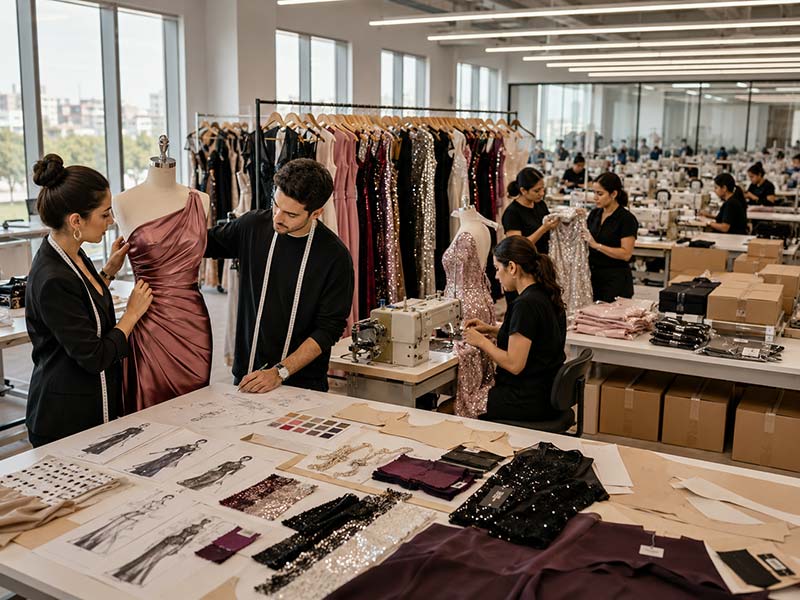
Start a Private Label Dress Project
A private label dress order works best when the buyer and factory treat it as a complete brand system, not just a sewing job. The dress must fit the target customer. The fabric must suit the design. The sample must guide bulk production. The labels must match the brand. The packaging must match the sales channel. The cartons must match the warehouse.
For brands that need custom dress manufacturing, OEM/ODM womenswear development, private label production, sample making, bulk production, QC, custom labels and export delivery, Jinfeng Apparel can review tech packs, reference images, sample photos, size charts, fabric direction, label artwork, target quantity and launch timeline.
To start a project, send your product files and order plan to info@jinfengapparel.com or contact Kelly by WhatsApp at +86 18929465598. A clear project review is usually the fastest way to know which fabric, construction, sample path, MOQ and production timeline are realistic for your private label dress order.
Share This Article :

Jerry Lee
Categories

Latest blogs


Table of Contents
Here, developing your OEM/ODM private label clothing collection is no longer a challenge—it’s an excellent opportunity to bring your creative vision to life.
