 Skip to content
Satin vs Crepe Back Satin: Which Fabric Is Better for Dresses?

Your trusted Women’s Apparel Manufacturer from China
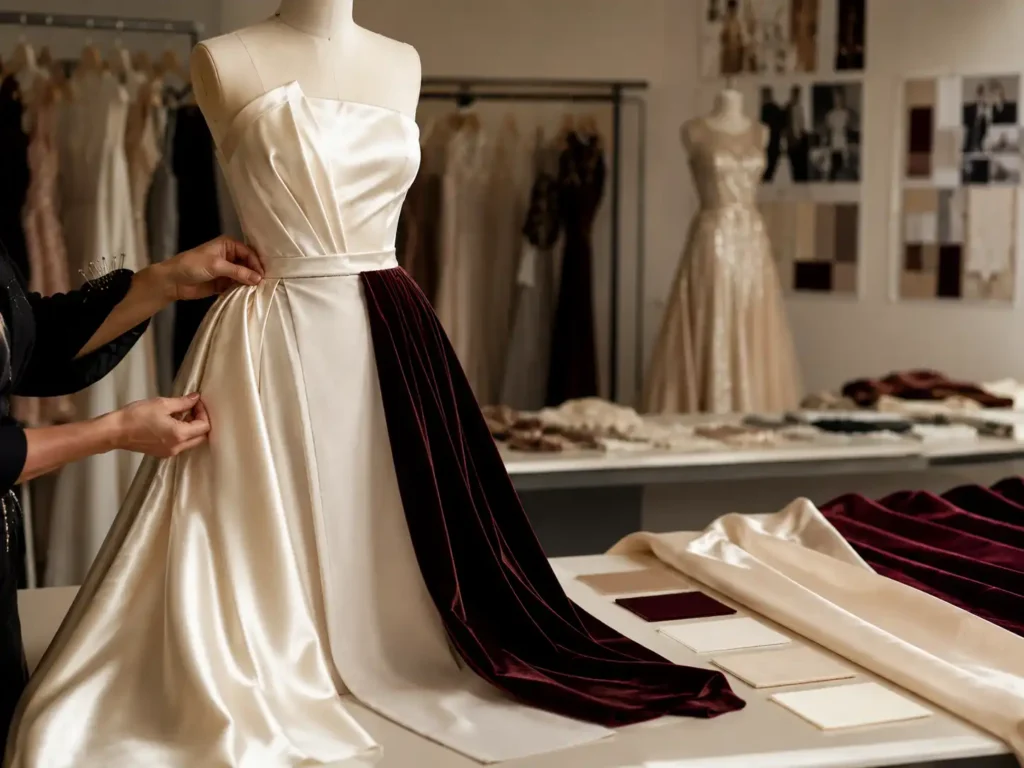
A satin dress can look effortless in a campaign image and still become one of the more demanding garments in a collection once it reaches development. A modest change in weight can turn a fluid slip dress into something stiff; a brighter finish can make the same dye shade photograph differently; and a fabric that looks beautiful on a hanger can expose zipper rippling, seam tension or lining shadows once it is fitted over the body. That is why the word “satin” by itself is rarely enough to make a confident fabric decision for a commercially produced dress.
Satin is the broader fabric family, while crepe back satin is a specific two-faced satin construction with a smooth, lustrous face and a textured crepe reverse. Neither is automatically better for dresses. The right choice depends on fabric weight, drape, opacity, stretch, surface reflection, silhouette, lining, construction and the consistency required for sampling and bulk production.
The difference becomes obvious when two dresses that looked almost identical on the cutting table reach the fitting room. One falls close to the body with a liquid, uninterrupted line; the other holds the waist more firmly, creates deeper folds and hides more of what sits underneath. Both may have been ordered as “satin.” For designers, sourcing teams and fashion brands, the useful question is not which name sounds more luxurious. It is which specification produces the dress you intended and can repeat that result across colors, sizes and future orders.
What Is Satin?
Satin is a weave-based fabric category rather than a single fiber. Its smooth, reflective face comes from longer yarn floats that expose more uninterrupted yarn at the surface. Polyester, acetate, silk, viscose blends and elastane blends can all be made in satin structures, so composition, weight, density, stretch and finishing determine how a particular satin actually behaves in a dress.
Satin Is a Structure, Not One Material
One of the most common sourcing mistakes is treating “satin” as if it describes one standardized cloth. It does not. A supplier can correctly label several fabrics as satin even when they have noticeably different weights, compositions, levels of shine and drape. This is why a request such as “champagne satin for a midi dress” is still too broad for serious development. The characteristic satin appearance comes mainly from the weave: longer yarn floats create a smoother face because fewer interlacing points interrupt the surface, allowing light to reflect more continuously across the cloth.
Fiber content then changes the personality of that surface. Polyester satin is widely used in commercial womenswear because it can offer a clean sheen, broad color options and stable repeat sourcing. Polyester-elastane satin adds stretch for fitted silhouettes, while acetate and silk-based satins may create a different hand, moisture response and price position. Even two polyester satins from different mills can feel unrelated if yarn size, density, finishing and GSM differ. In practice, the useful question is not simply whether a fabric is satin, but what kind of satin it is and what it will do after cutting, sewing, pressing, wearing, photographing and packing.
Common Satin Weights for Dresses
Fabric weight is one of the fastest ways to narrow down satin choices. Commercial dress satins commonly sit across a very wide range, from light qualities around 80-100 gsm to fuller constructions around 180-220 gsm or more. These numbers are not universal standards, and a mill may produce fabrics outside them, but they give development teams a practical language for discussing behavior. A satin near 90-120 gsm can feel fluid and attractive for slips and soft bias shapes, yet pale colors may need lining and seam allowances can show through more easily.
Once the fabric moves toward roughly 120-160 gsm, it usually develops more body and coverage, which can suit cocktail dresses, bridesmaid styles, ruched minis and fitted midi silhouettes while still retaining movement. Heavier satin can support pleats, sculpted skirts and formal construction, but it may overpower a pattern originally developed for a softer cloth. Weight should therefore be considered together with density, fiber, finish and pattern design. A fabric can be technically impressive and still be wrong if it holds a fold where the dress is supposed to fall freely.
Approx. Fabric Weight | Typical Behavior | Common Dress Uses | Main Checks |
80-100 gsm | Very fluid, lightweight, potentially sheer | Slip dresses, soft bias styles | Opacity, seam visibility, lining |
100-130 gsm | Fluid with moderate control | Bias midi, party dress, light eveningwear | Drape, zipper stability, snagging |
130-160 gsm | More body and coverage | Bridesmaid, cocktail, fitted midi | Seam bulk, lining, pressing |
160-220 gsm | Fuller and more structured | Formal dresses, sculpted silhouettes | Fold thickness, pattern balance, movement |
Shine, Drape and Opacity Work Together
Satin is often chosen because of shine, yet shine should never be judged by itself. A highly reflective cloth can look impressive on the roll but unforgiving once made into a fitted dress. Strong reflection exaggerates zipper waves, seam puckering, press marks and small changes in panel direction. The same reflection can make one dye shade appear lighter or darker depending on the angle of the body and the direction of the light. This is especially noticeable in champagne, blush, silver, pale blue and other colors used frequently in occasionwear.
Drape and opacity add two more layers. A soft satin can fall beautifully over the hip but offer little support around a gathered waist, while a firmer satin may hold pleats cleanly yet look stiff in a slip silhouette. Light colors can reveal lining transitions, lingerie or seam allowances even when a flat swatch appears opaque. A useful development check is to evaluate the cloth on a dress form or fitting body, not only on a table. Weight affects drape and opacity; finishing affects shine and hand; fiber and density influence recovery. The final garment responds to all of these variables at once.
Satin Names Can Be Misleading
Trade names help buyers and suppliers start a conversation, but they are not reliable enough to approve production. Terms such as silk-feel satin, bridal satin, premium satin, stretch satin, matte satin and Italian satin may mean different things in different markets. Some names describe composition, some describe intended use, and others are largely commercial labels. A design team that approves only a name may receive a fabric that is technically within the description but noticeably different from the sample that inspired the style.
The physical standard should therefore carry more authority than the marketing name. A useful approval record includes fiber content, nominal GSM, usable width, stretch direction, surface finish, intended face, color reference and a retained swatch. For repeat orders, supplier codes and bulk cutting references become equally important. If a successful dress returns six months later, the phrase “same satin as before” is not enough. A small change in weight or finish can alter hem movement, zipper flatness and photography. The name starts the search; the sealed swatch and garment sample define the actual product.
What Is Crepe Back Satin?
Crepe back satin is a two-faced satin fabric with a smooth, lustrous satin surface on one side and a textured, more matte crepe surface on the other. It is valued in dresses because those two surfaces create different visual effects within the same cloth, while many qualities also provide enough body for eveningwear, cocktail dresses, bridesmaid dresses and softly structured designs.

Two Surfaces, Two Visual Characters
The defining feature of crepe back satin is the contrast between its two faces. The satin side reflects light smoothly and delivers the polished appearance associated with eveningwear, wedding guest dresses and occasion collections. The reverse has a more granular or pebbled crepe surface that breaks up reflection and appears softer and more matte. Because these surfaces respond differently to light, the same dye color can look like two related shades even though both sides belong to the same piece of cloth.
That contrast is useful in design. A turned-back lapel, draped sash, cuff, collar, waistband or folded neckline can reveal the crepe side without introducing a second material. Designers may also reverse selected pattern pieces to create matte-versus-gloss blocking while keeping color continuity. Production teams, however, have to control the idea carefully. Every pattern piece should have a clearly defined face direction. If one panel is accidentally reversed or rotated, the difference may be subtle under factory lights but obvious in studio photography. The fabric rewards thoughtful use, but vague instructions can turn its flexibility into a visible bulk defect.
Is Crepe Back Satin Reversible?
Crepe back satin is reversible in the design sense because either surface can be intentionally used as the visible face. That does not mean a finished dress can automatically be worn inside out. Seams, labels, zipper construction, lining and internal finishing still determine whether the garment itself is reversible. The useful point is that the fabric gives a designer two legitimate visual surfaces from the same material, and this can create contrast without requiring a second cloth with a separate dye lot or hand feel.
The satin face may be used for the main dress body while the crepe side appears on a sash, collar, draped panel or fold. Another design may make the crepe surface dominant and reserve the satin face for an accent. This can be especially effective in minimalist eveningwear, where a subtle change in reflection adds depth without extra decoration. The visual difference should be tested under several lighting conditions because studio flash, daylight and warm retail lighting can make the two surfaces look more or less contrasted. Reversibility is a real design advantage only when orientation is specified and repeatable in production.
Crepe Back Satin and Satin Back Crepe
Crepe back satin and satin back crepe are often closely related trade terms, and in many sourcing conversations they may refer to the same type of two-faced cloth. The naming usually depends on which surface is considered the primary face. When the glossy side is meant to be visible, suppliers often call the material crepe back satin. When the textured crepe surface is intended as the outside, satin back crepe may be the preferred description. In practice, terminology varies across mills, converters and fabric markets.
That inconsistency is exactly why production instructions should describe the intended face rather than relying on a trade name alone. A note such as “use matte crepe surface as garment face; satin surface inside” is far more useful on a cutting floor than a label that different suppliers interpret differently. A sealed swatch can make the requirement even clearer. This matters especially when a style moves from sample room to bulk production or is reordered later. Names help sourcing teams find candidates; physical references and face-side instructions prevent a technically correct but visually wrong fabric from entering the garment.
Why Designers Use It
Crepe back satin is attractive when a dress needs elegance together with a little more control. Many qualities have a richer, slightly fuller hand than very lightweight satin, so they can form clean folds without feeling rigid. That makes them useful for evening gowns, bridesmaid dresses, cocktail styles, cowl details, asymmetric draping, ruching and softly structured skirts. The second surface also expands the design vocabulary without adding another fabric, which can simplify tonal matching when the collection needs a subtle matte and gloss contrast.
Still, crepe back satin should not automatically be treated as more luxurious or more suitable than regular satin. A light slip dress may look better in a softer satin with less body. A fitted dress may require elastane that a particular crepe back satin does not contain. A strongly sculpted style may need a heavier shell or additional internal support. The sensible decision is always functional: does this particular fabric create the desired silhouette, surface and movement? The double face is valuable when the design uses it; otherwise, it is simply one characteristic among several that need to be balanced.
How Do Satin and Crepe Back Satin Differ?
The main difference is that satin describes a broad family of smooth, lustrous fabrics, while crepe back satin specifically adds a textured crepe reverse. Crepe back satin often offers more surface versatility and may feel fuller, but actual shine, drape, opacity, stretch and weight depend on the individual fabric specification. Comparing real swatches is more reliable than choosing from the fabric name alone.
Shine and Surface Texture
The most obvious difference appears on the reverse side. Generic satin normally has a smooth or relatively plain back that is less lustrous than the face, while crepe back satin has a clearly textured crepe reverse. On the glossy face, however, the two fabrics may look surprisingly similar. That is one reason online photographs are not enough for a reliable decision. Yarn type, fabric density, finishing and color can change shine more dramatically than the trade name itself.
For a dress, surface reflection influences more than aesthetics. Highly reflective fabric emphasizes body contours and can make a clean hip line look polished, but it also magnifies seam waviness, pull lines and uneven pressing. A pale high-luster satin may appear brighter under flash than it does in natural light, while a darker, softer-finished satin can look more restrained. The matte reverse of crepe back satin gives designers a way to reduce reflection selectively on waistbands, folded details or contrast panels. The best comparison therefore looks at how each surface behaves on a curved garment, not just how bright it looks when the fabric is held flat.
Body, Drape and Weight
Crepe back satin is sometimes described as heavier than satin, but that comparison is misleading because satin itself covers an enormous weight range. A lightweight crepe back satin can still be softer than a dense bridal satin. What matters is the actual GSM, yarn construction and finish. At similar weights, some crepe back satins feel slightly more substantial because the crepe reverse contributes texture and body, while a very smooth satin may feel more liquid and collapse more readily into narrow folds.
Drape should be tested dynamically. Hold equal-sized swatches from one corner, form a soft cowl, gather the same width into the same seam length, and place each fabric over a curved mannequin. Those simple checks reveal whether the cloth forms rounded folds, sharp folds or almost no visible structure. For a bias slip dress, a softer continuous fall may be ideal. For a ruched cocktail dress, more body can make the gathering visible and controlled. The word “better” only makes sense after the silhouette is defined. A fabric that drapes beautifully for one style may ruin the proportion of another.
Opacity, Wrinkling and Snagging
Opacity is governed largely by weight, density, fiber, color and stretch, not by the words satin or crepe back satin. Light colors such as ivory, champagne, blush and pale blue deserve extra attention because they can reveal underwear, lining transitions or seam allowances that are invisible in black or navy. A flat swatch may look opaque but become more transparent when stretched across the bust or hip. This is why lining decisions should be tested in the actual garment rather than made from a fabric card alone.
Wrinkling and snagging are also important because the satin face contains longer surface floats. Those floats help create the smooth shine but can be caught by rough worktables, jewelry, damaged machine parts, fingernails or packaging hardware. Crepe texture on the reverse does not protect the glossy face from this risk. Wrinkles can be equally visible because reflected light emphasizes creases across large panels. Sensitive satin should therefore be protected from inspection through final packing. Surface damage often happens before the dress is worn, and once a pull or press mark appears on the face, it may be impossible to hide.
Side-by-Side Comparison
The comparison below is useful as a development starting point, not as a substitute for swatch approval. “Standard satin” can represent many constructions, while crepe back satin also varies by mill, fiber and finish. The practical value of the table is to show what changes most consistently: the reverse surface and the possibility of using two contrasting faces in one garment. For everything else, physical testing remains necessary because nominally similar fabrics can behave very differently once cut on bias, gathered, lined or sewn around a zipper.
Feature | Standard Satin | Crepe Back Satin | Practical Effect on Dresses |
Front surface | Smooth and lustrous | Smooth and lustrous | Both can create polished occasionwear |
Reverse surface | Usually duller, varies by type | Distinct textured crepe | Stronger matte/gloss design contrast |
Typical drape | Very wide range | Often fluid with some body | Must be checked by actual GSM and sample |
Design reversibility | Limited by construction | High | Both faces can become visible features |
Opacity | Depends on GSM, density and color | Depends on GSM, density and color | Pale colors often need extra testing |
Snag visibility | High on glossy face | High on glossy face | Careful handling is required |
Approval priority | Face, weight, drape and color | Both faces, weight, drape and orientation | Face direction should be documented |
Which Fabric Suits Each Dress?
The right fabric depends on the silhouette rather than the prestige of the fabric name. Lightweight satin often works well for soft slip and bias-cut dresses, while fuller satin or crepe back satin can suit evening, bridesmaid, cocktail and draped styles that need more body. Structured dresses require further testing because the shell, lining, interlining and internal support all affect the final surface.

Slip and Bias-Cut Dresses
Slip dresses expose fabric behavior more clearly than many other silhouettes because there are few structural elements to disguise poor drape. If the satin is too stiff, the dress can stand away from the waist and hip. If it is too thin, seam allowances, lingerie or lining edges may become visible. If it is too heavy, the garment can stretch vertically and place extra load on narrow straps or delicate necklines. A fluid satin in the lighter commercial dress range is often a useful starting point when the design calls for an almost liquid fall.
Bias cutting adds another layer because fabric cut around 45 degrees to the straight grain can stretch and mold more readily around the body. That creates the familiar soft movement of classic slip dresses, but it can also produce hem growth, side-seam distortion and changes in neckline balance after the garment hangs. Crepe back satin can work beautifully if the chosen quality is soft enough, but some versions have enough body to change the intended effect. A full sample is far more useful than a small swatch because the neckline, bust, hip and hem need to be observed together after the fabric has settled.
Evening and Bridesmaid Dresses
Evening and bridesmaid dresses need a balance between movement, coverage and repeatability. An evening dress may benefit from a richer crepe back satin when the designer wants deeper folds, a substantial hand or intentional use of both surfaces. A medium satin can work just as well when the desired effect is cleaner and more fluid. The correct choice depends on the proportion of the dress, the amount of draping, whether the garment is lined and how much surface reflection the collection can carry.
Bridesmaid programs add practical pressure because the same style may be produced across several colors and sizes. A fabric that looks excellent in burgundy may reveal more underneath in champagne. Shiny surfaces can also make dye-lot differences easier to notice, especially across large skirt panels. Color, opacity and lining should therefore be reviewed together. If a program includes pale shades, the shell should be checked against the final lining rather than an arbitrary white backing. For coordinated orders, consistency is often more commercially valuable than selecting the most dramatic satin from a swatch book.
Cocktail and Ruched Dresses
Cocktail dresses often benefit from satin with a little more body because the garment may contain ruching, gathering, draped waist details, short skirts or fitted panels that need visual definition. If the fabric is too light, gathers can collapse and look flat. If it is too heavy, the same gathering ratio can create thick seam allowances and a bulky waist. Crepe back satin can work well when its textured reverse gives the cloth a slightly fuller hand while the satin face keeps the dress polished.
Ruching should be tested using the actual pattern ratio rather than judged from a hand-scrunched swatch. Gathering 60 centimeters of cloth into 30 centimeters produces a different result from compressing 90 centimeters into the same seam length. Thickness becomes increasingly important as the ratio rises because multiple layers stack at the seam. The sample should be viewed from the front, side and back on a body. Satin reflection can make uneven gathering particularly obvious around the waist and hip, and a small pattern change may improve the result more effectively than changing the fabric entirely.
Structured and Corset Styles
Structured dresses need a different fabric conversation because the satin shell is only the visible layer of a larger system. Lining, interlining, cups, boning, elastic, waist stays, fusible support and seam placement all influence what the outer fabric looks like. Very lightweight satin can expose boning channels, cup edges and seam allowances, while a fuller satin may smooth the exterior but create extra bulk in curved seams. The ideal shell is the one that works with the internal structure rather than fighting it.
Crepe back satin may provide useful body for some corset-inspired or sculpted dresses, yet it still needs to be tested over the exact internal construction. The fitting should be reviewed under directional light because reflective cloth reveals transitions between reinforced and unreinforced areas very quickly. A fabric that appears luxurious on the roll may show every internal line once stretched over a structured bodice. For these styles, a manufacturer should evaluate the shell, lining and internal materials as one garment package. Selecting satin independently from the pattern and support system usually creates more sample revisions later.
How Do They Behave in Production?
Both satin and crepe back satin require disciplined production because reflective surfaces make small defects easy to see. Grain direction, cutting stability, needle condition, thread tension, zipper installation, pressing and packing all affect the finished appearance. Crepe back satin may offer more reverse-side texture, but its glossy face still needs the same careful handling and consistent surface orientation as other satin fabrics.
Cutting and Grain Direction
Cutting is one of the earliest places where satin quality can be lost. Smooth layers can shift during spreading, particularly when multiple plies are stacked, and a small movement can create mismatched panel dimensions even when the marker is correct. Bias components are even more sensitive because they stretch readily. Cutting teams therefore need stable laying methods, sharp equipment and clear handling rules rather than assuming that every woven satin behaves like a basic plain-weave fabric.
Direction matters visually as much as dimensionally. Satin reflects light differently depending on how it is oriented, so two panels cut in opposite directions can appear to be different shades after sewing even if they came from the same roll. One-way markers may increase consumption slightly, but that cost is often more acceptable than a finished dress with mismatched front and back panels. Crepe back satin adds another control point because the selected face must be identified for each pattern piece. If a design deliberately reverses some panels, those pieces should be clearly marked so the effect is repeated consistently across the order.
Sewing and Zipper Control
Satin sewing problems commonly appear as puckering, needle marks, shifting, stretched seams or visible tension lines. Because the surface is smooth and reflective, small construction defects remain visible rather than disappearing into texture. Machine settings should be established from a trial using the actual bulk fabric. Needle condition, thread type, stitch length, thread tension, presser-foot pressure and feed behavior can all change the surface. A setup that works on a medium polyester satin may not suit a lighter satin or an elastane blend.
Invisible zippers deserve particular attention. Zipper bulging can come from stretched seam edges, tape behavior, excessive tension, pattern imbalance or poor pressing. The seam should be checked on a mannequin or fitting body because a zipper can look perfectly flat on a table and ripple once it follows the curve of the back or hip. The same is true for crepe back satin: the reverse may have more grip against the feed mechanism, but the glossy exterior can still expose distortion. Trial seams and zipper samples are inexpensive compared with correcting hundreds of finished dresses.
Lining and Color Control
A lining should solve a specific problem rather than be added automatically. It may improve opacity, hide internal construction, reduce static, increase comfort or help the shell move more smoothly over the body. Pale satin often needs especially careful lining development because the lining color can change the apparent shade of the shell. Beige under champagne may look warmer than ivory, while a dark lining can make a pale shell appear dull or uneven. Stretch compatibility is also important; a stretch satin combined with a rigid lining can restrict movement and alter fit.
Color control is equally important because satin changes visually with light direction. Paper color references are useful, but they cannot reproduce the reflective behavior of the actual cloth. Physical lab dips and swatches should be reviewed in the target fabric, and larger programs should consider dye-lot variation before cutting. When several rolls are involved, shade grouping can reduce garment-to-garment differences. This matters in bridesmaid sets, matching looks and repeat orders where customers may compare pieces side by side. Color approval becomes much more reliable when surface shine, lining and lighting are considered together.
Pressing, Finishing and Packing
Pressing can transform a satin garment, but excessive heat, pressure or direct contact can also leave permanent shine changes and seam impressions. A mark that disappears visually on a textured crepe may remain obvious on a glossy panel every time the wearer moves. Finishing teams should therefore establish a tested temperature, steam level, pressure and pressing-cloth method for the actual production fabric. Heavy seam allowances and zippers may need special handling so their outline is not transferred through the shell.
Packing brings a different set of risks. Large satin panels can develop horizontal or diagonal fold lines when compressed in polybags or cartons for long periods. Sensitive surfaces can also snag against exposed hardware, zipper pulls or embellished neighboring garments. Protective tissue, deliberate folding and reasonable carton pressure can reduce these problems. In satin dress programs, final inspection should look beyond measurements and stitching to surface cleanliness, snags, panel direction, zipper flatness, press marks and fold quality. Jinfeng Apparel treats these points as part of product development and bulk control because a dress is judged by how it arrives, not only by how it left the sewing line.
How Should Brands Choose?
Brands should choose satin by translating the intended dress effect into measurable requirements. Composition, GSM, stretch, drape, opacity, shine, color, intended face, lining and garment construction should be approved before bulk production. A fabric is suitable only when it creates the desired silhouette and can be reproduced consistently across planned colors, sizes, production batches and repeat orders.

Approve the Fabric Specification
The fabric specification should be clear enough that another sourcing or production team could understand what was approved months later. At minimum, record fiber composition, nominal weight, usable width, stretch direction, surface finish, intended face, color reference and supplier code. If the fabric is custom dyed, the approved lab dip and bulk color reference should be retained as well. For crepe back satin, both surfaces should be confirmed because the reverse is part of the fabric identity and may become visible in the design.
Weight tolerance also deserves attention in repeat production. Mills manufacture within practical tolerances rather than producing every roll at an identical GSM, so the garment team should understand how much variation the style can accept before drape or fit changes. Stretch satin needs even more detail because “stretch” does not tell you whether movement is mainly crosswise, lengthwise or in both directions, nor does it describe recovery. The more precise the material record is, the easier it becomes to manage repeat orders without restarting the entire fabric discussion each season.
Compare Swatches as Garments
A small swatch card is useful for narrowing choices, but it cannot show how a full skirt hangs, how a side seam behaves on bias or how the fabric responds when gathered into a fitted waist. Strong fabric comparison uses larger cuts. Hang them vertically and compare fold depth. Gather the same width into the same finished length. Place each over light and dark backings. Stretch them over a curved form if the dress is fitted, and view the face under daylight, warm interior light and directional studio light.
For crepe back satin, handle the reverse as well. Texture can change grip, bulk and how the material feeds through a machine even when the reverse is not visible from the outside. The most useful test remains a representative garment sample because construction creates stresses that a swatch cannot reproduce. It does not need every final trim in the earliest stage, but it should include the neckline, bust, waist, hip, zipper and hem behavior that define the style. Fabric choice becomes much less subjective once those elements are evaluated together.
Approve Color Through the Fabric
Color does not exist separately from the cloth. A shade chosen on screen or from a paper reference will interact with fiber, luster, texture and lighting once it is dyed into satin. This is why physical lab dips and fabric swatches remain useful even when digital color communication is sophisticated. The same dye color can look different on the satin face and the crepe reverse because one reflects more light. If both surfaces will be visible in the finished dress, they should be reviewed together before approval.
Brands producing multiple colors should also test opacity separately. A construction that works well in black may need a different lining solution in ivory or pale pink. Lining color can subtly warm or cool the shell, and different colors can show folds and press marks at different intensities. Once bulk fabric arrives, comparing it with the approved physical reference before cutting is far cheaper than discovering a mismatch after assembly. For repeat orders, retaining fabric, color and garment standards also helps distinguish a genuine material change from the normal visual differences created by lighting and photography.
Decide Whether Substitution Is Safe
Replacing one satin with another can be straightforward or disruptive depending on what the original fabric is doing for the dress. The fact that both materials are called satin does not make them interchangeable. Start by identifying the function of the original cloth. Is it providing liquid bias drape, enough opacity to hide the lining, body for structured gathers, stretch for a fitted waist, or a crepe reverse that is intentionally visible? A substitute must perform those functions, not simply resemble the original in a folded swatch.
Compare composition, GSM, stretch, drape, shine, thickness, opacity and color, then sew a representative sample before approving the change. Supply stability is also part of the decision. A slightly less dramatic fabric that can be reproduced consistently across a large color program may be commercially safer than a beautiful quality available only from one small lot. When brands discuss satin development with Jinfeng Apparel, the most productive information is the intended silhouette, target market, color range, quantity and reference sample. That allows fabric selection to be evaluated as part of the garment rather than as an isolated sourcing choice.
Conclusion
Satin versus crepe back satin is not a contest with one permanent winner. Satin is a broad family, and crepe back satin is one particularly useful member of that family. A lightweight satin may be the better choice for a soft bias slip, while a fuller crepe back satin can bring stronger folds, more coverage and matte-versus-gloss design options to an evening or cocktail dress. The decision becomes reliable when weight, drape, opacity, stretch, face orientation, lining and construction are evaluated together in a garment sample rather than guessed from the fabric name.
For fashion brands, the most expensive satin mistakes rarely come from choosing a fabric that looks obviously bad. They come from choosing a fabric that looks close enough at the swatch stage but behaves differently once it is cut, fitted, colored, pressed and repeated in bulk. A careful approval process turns that uncertainty into something manageable. Once the exact fabric and garment standard are documented, future colors and repeat orders become easier to control, and the finished dress has a much better chance of looking the way the original design intended.
Share This Article :

Jerry Lee
Categories

Latest blogs
Table of Contents
Here, developing your OEM/ODM private label clothing collection is no longer a challenge—it’s an excellent opportunity to bring your creative vision to life.

