Skip to content

Embellished Dress Quality Control Checklist: What Should You Inspect Before Bulk Approval?

Your trusted Women’s Apparel Manufacturer from China
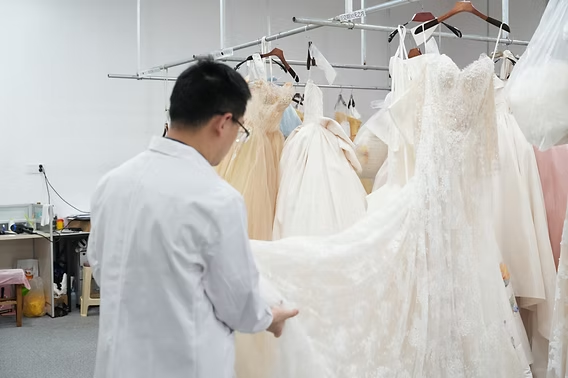
An embellished dress can look flawless on a showroom hanger and still become an expensive production problem once hundreds or thousands of pieces move through decoration, sewing, finishing, packing, and transport. The difficult failures are rarely limited to one missing sequin. More serious issues include rhinestone layouts that drift between production lots, beadwork that pulls a neckline out of shape, embroidery that puckers satin, rough sequin edges that scratch the underarm, and decorative weight that changes fit after the sample has already been approved.
An effective embellished dress quality control checklist should verify the approved sample, base fabric, decorative components, placement, symmetry, attachment security, garment measurements, construction, wearer comfort, finishing, labels, and packing. Inspection should begin before bulk production and continue through incoming materials, decoration, sewing, finished-garment review, and pre-shipment checks rather than depending on a single final inspection.
The useful question is not simply whether the dress looks good when it leaves the sewing line. It is whether the same design can be reproduced consistently across sizes, colors, operators, production days, and cartons. A dress may pass a quick visual check yet fail in wear because the armhole scratches, the front motif sits lower in one size, or the crystals loosen after ordinary handling. Good QC is designed to catch those problems while they are still inexpensive to correct.
What Should an Embellished Dress QC Checklist Cover?
An embellished dress QC checklist should cover the approved production reference, incoming fabrics and decorative trims, placement accuracy, attachment security, garment construction, measurements, fit, comfort, finishing, labels, and packing. The strongest system follows these controls from sample approval through bulk production because decoration can change the fabric, silhouette, wearability, and shipment condition of the finished dress.
Approved Production Standard
Quality control starts with a clear production target. A physical sample is important, but it should not be the only reference because a dress can pass through several sample rounds before bulk production begins. The approved version should be supported by the current tech pack, size chart, bill of materials, trim approvals, embellishment artwork, placement instructions, sewing details, and packing requirements. When a bead size, neckline depth, lining method, or motif position changes during development, the new decision needs to appear in the production documents rather than surviving only in a message thread.
For embellished styles, decorative information should be more precise than a note such as “add rhinestones to bodice.” The production team needs to know the approved component type, size, color, finish, orientation, motif dimensions, density, and attachment method where these details affect appearance. Placement is easiest to repeat when measured from stable garment landmarks such as center front, neckline seam, waist seam, princess seam, shoulder seam, or finished hem. These records give the sewing floor, decoration team, and final inspector the same reference and greatly reduce arguments over whether a visible difference is a defect or an approved change.
Incoming Materials
Incoming inspection should cover both the base garment materials and the decorative components. Fabric checks typically include color, width, hand feel, weight where specified, stretch direction, shrinkage requirements, visible damage, and lot consistency. Decorative materials may include sequins, beads, crystals, rhinestones, decorative chains, embroidery thread, appliques, lace trims, backing materials, linings, and the thread or adhesive system used to secure them. Each should be compared with an approved trim card, sample, or specification before a large quantity enters production.
Compatibility matters as much as appearance. A decoration that behaves well on ponte or velvet may create serious problems on stretch mesh or lightweight satin. Dense embroidery can pucker a smooth satin panel, heavy beadwork can stretch mesh, and hard-backed rhinestones can create uncomfortable pressure points on a bodycon dress. Mixed trim lots also deserve attention because two items sold under the same commercial color name may reflect light differently. Checking these differences before decoration begins is far cheaper than discovering them across finished dresses after pressing and packing.
Garment Construction
The decoration should never be inspected as if it were separate from the garment underneath it. A bead or stone can be securely attached and still create an unacceptable result if the added weight causes neckline sagging, side-seam twisting, uneven hem balance, or loss of stretch. Finished inspection therefore needs to include bust, waist, hip, length, neckline, straps, armholes, side seams, zipper, lining, slit height, and overall silhouette alongside the decorative surface.
Inspect the dress in more than one position. A flat-table review is useful for measuring motif placement and finding missing components, but hanging inspection reveals whether the embellished areas pull downward or distort drape. For fit-sensitive styles, a mannequin or fitting form helps show whether the front and back remain balanced and whether heavily decorated zones have become too rigid. In stretch dresses, compare the behavior of decorated and undecorated panels. If decoration creates a rigid island within an otherwise elastic garment, stress often collects around the edge of that area during dressing and movement.
Final Appearance and Packing
Final inspection should reconnect technical measurements with the way a customer actually sees the dress. Begin from normal viewing distance under consistent lighting to assess symmetry, shine, motif balance, color consistency, and overall cleanliness. Then move closer to inspect missing pieces, loose threads, damaged coatings, scratches, stains, visible adhesive, puckering, poor edge finishing, and fabric damage. A dress that looks acceptable at ten centimeters can still look visually unbalanced from two meters away, especially when the design uses mirrored motifs or concentrated crystal work.
Packing is also part of quality control because embellished surfaces can be damaged after production is finished. Dense beadwork, sequins, and rhinestones may rub against neighboring panels, create pressure marks on satin, or snag delicate mesh when folded. Packing instructions should control folding direction, protective separation where required, polybag size, hangtag placement, barcode, SKU, size identification, and carton arrangement. For export orders, the garment should reach the warehouse in the same condition that was approved during final inspection, not merely leave the factory that way.
QC Stage | Practical Items to Verify | Typical Failure to Prevent |
Approved standard | Latest sample, tech pack, BOM, trim approval, placement artwork | Bulk follows an outdated version |
Incoming materials | Fabric lot, sequin/bead/stone specification, lining, thread, visible damage | Wrong color, damaged trim, inconsistent lots |
Decoration process | Motif position, density, direction, attachment, symmetry | Missing, loose, shifted, or uneven decoration |
Sewing and assembly | Seam quality, zipper, lining, balance, decorated seam allowances | Bulging, twisting, scratching, excessive thickness |
Finished garment | Measurements, silhouette, comfort, appearance, pressing | Defects reach packing or shipment |
Packing | Folding, surface protection, labels, SKU, carton assortment | Abrasion, crushing, barcode or fulfillment errors |
Which Embellishments Need Special Quality Checks?
Sequins, beads, crystals, rhinestones, embroidery, and appliques need different quality checks because they do not fail in the same way. Sequins are sensitive to loss, orientation, and abrasion; beadwork adds thread and weight risks; rhinestones require placement and attachment checks; embroidery can create tension and puckering; and appliques add edge-security, alignment, backing, and finishing concerns.
Sequins
Sequin inspection should go beyond counting missing pieces. Confirm the approved size, shape, color, finish, orientation, density, and attachment method, then look for cracked or folded sequins, exposed thread, loose stitches, damaged coatings, and inconsistent decorative coverage. Directional or reversible sequins need special attention because a small orientation change can create a large visual difference in reflected light, even when the correct component has technically been used. Side-by-side comparison of several garments is often more effective than inspecting each dress alone.
High-movement areas deserve more scrutiny than large flat panels. Underarms, armholes, necklines, waist seams, side seams, zipper areas, sitting zones, and hems experience more bending, rubbing, pressure, and handling. These are common places for scratching, premature loss, and excessive seam bulk to appear. Sequin fabric can also complicate sewing: if too many sequins remain inside seam allowances, the seam may become hard, uneven, or difficult to press, and the zipper may no longer sit flat. The approved construction should therefore define whether sequins are cleared from certain seam allowances and how exposed edges are protected from the skin.
Beads and Crystals
Beaded decoration should be judged at both component level and motif level. Check bead or crystal size, shape, color, coating, transparency, shine, spacing, and arrangement against the approved reference. One slightly different component may not seem important in isolation, but repetition across a bodice can create a noticeably different surface. Large production runs should also be checked for lot consistency because reflective finishes often reveal shade or coating differences more strongly under photography, retail lighting, and evening light than under casual factory lighting.
Attachment structure matters. If several beads are connected along one thread path, a single failed anchoring point can release multiple components rather than one. Inspect knots, thread ends, anchoring points, local tension, and places where beadwork crosses seams or high-flex zones. Weight distribution should be evaluated by hanging the garment because dense beadwork can gradually pull lightweight mesh, distort cups, or change neckline balance. The inner surface needs equal attention. Rough knots, hard backs, or exposed thread ends near the underarm, neckline, waist, or side seam can make a visually beautiful dress uncomfortable after an hour of wear.
Rhinestones
Rhinestone QC should cover component specification, position, spacing, surface quality, and attachment security. Check for missing stones, incorrect sizes, wrong colors, chipped edges, dull or scratched surfaces, partial lifting, visible bonding residue, and irregular alignment. Structured motifs deserve tighter visual control than random scattered effects. A five-millimeter shift in a loose scatter may be invisible, while the same shift in a symmetrical center-front pattern can make the entire neckline look off-center.
Where rhinestones are bonded or heat applied, the application method needs validation on the actual base fabric. A process that works on stable woven material may not behave the same way on stretch mesh or fine satin. Too little attachment can lead to lifting during handling, while excessive heat or adhesive can stiffen the fabric, leave glossy marks, or discolor a delicate surface. Recheck rhinestones after pressing and finishing because those later operations can reveal weak attachment that was not obvious immediately after application. For dresses with large stone concentrations, also confirm that the added weight does not pull the fabric or interfere with the zipper and lining.
Embroidery and Appliques
Embroidery QC should cover motif position, size, thread color, stitch coverage, outline clarity, skipped stitches, loose thread, tension, backing, and puckering. Smooth, reflective fabrics such as satin make tension defects especially visible because even mild surface rippling catches light. Lightweight mesh and chiffon can also be affected by heavy stitch density or unsuitable backing, so the decorated area should be inspected both flat and hanging. Looking only at the front can miss bulky backing, exposed thread ends, or stiff areas that later irritate the wearer.
Appliques introduce another set of controls: motif orientation, edge security, overlap, alignment, symmetry, and transitions across seams. Lace appliques that cross princess seams or necklines should be reviewed as part of the complete garment construction, not as separate decorative patches. The edge must remain clean without creating thick, hard ridges against the body. More stitches are not automatically better; excessive density can damage fragile fabric or make the design feel rigid. The goal is stable decoration that preserves the intended drape, fit, softness, and visual balance of the dress.
How Do You Check Placement and Attachment?
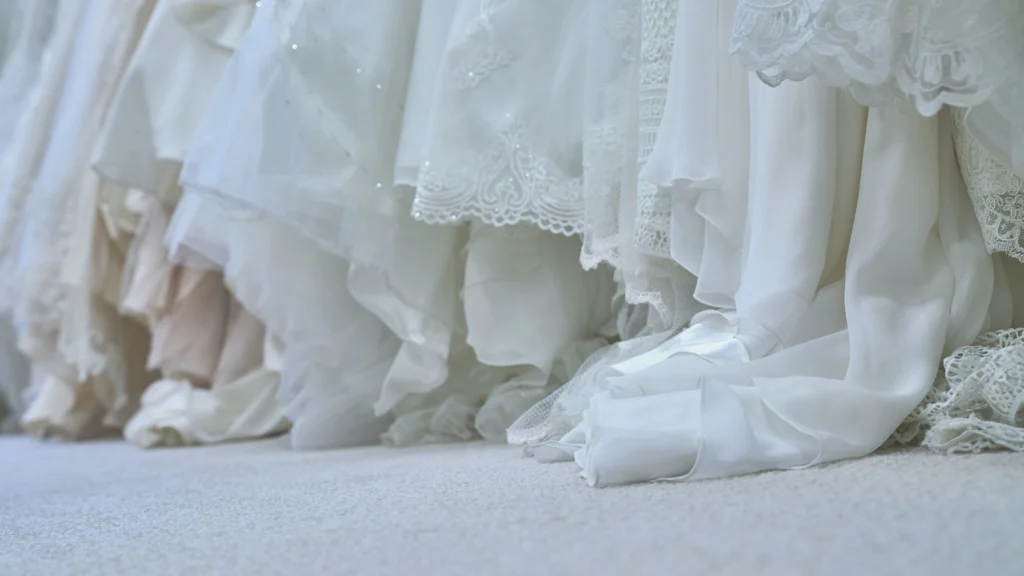
Placement and attachment should be checked as two separate controls. A decoration can be perfectly secure in the wrong location, or correctly positioned but too loose to survive normal handling. Inspectors should compare decoration with stable garment reference points, verify left-right balance, examine high-stress zones, and confirm that beads, sequins, stones, and appliques do not distort the fabric or create uncomfortable skin contact.
Placement Accuracy
Reliable placement control uses reference points that can be repeated by different operators. Center front, neckline seam, shoulder seam, princess seam, waist seam, side seam, and finished hem are usually better reference points than unfinished raw edges. For a centered bodice motif, the production record may specify its centerline, distance below the finished neckline, width, and relationship to the waist. Shoulder decoration may need measurements from both neckline and armhole, while scattered rhinestones may be controlled through a defined coverage zone, density, and exclusion area rather than coordinates for every stone.
Measurements should use the factory’s normal technical system, usually millimeters or centimeters, but the tolerance must come from the product specification rather than a generic rule. The visual effect determines how tight the control needs to be. A small shift may be harmless in a random scatter but obvious in a mirrored neckline. Depending on the order volume and construction, transparent templates, printed guides, laser positioning, marked patterns, or photo overlays can make placement more repeatable. The goal is not excessive measurement; it is removing unnecessary guesswork at the points that define the design.
Symmetry and Visual Balance
Symmetry should be checked both mechanically and visually. Start by aligning center front, shoulders, waistline, side seams, and hem, then compare left and right decorative areas with the approved sample or artwork. After the flat comparison, hang the dress and inspect it again from normal viewing distance. Reflective decoration can make one side appear heavier even when individual measurements are similar, particularly when crystals, metallic sequins, or beads catch light differently across a curved bodice.
Important symmetry zones include the neckline, bust, shoulders, sleeve motifs, waist panels, hips, mirrored side sections, and border decoration near the hem. Repeated asymmetry in the same place is more significant than one isolated irregularity because it often points to a production-system problem rather than random workmanship. The source may be a placement template, panel mark, cutting reference, or operator method. Correcting that root cause is more efficient than repairing finished pieces one by one. For larger orders, inspectors should compare multiple garments from different bundles, sizes, or production times to identify whether the shift is limited or systemic.
Attachment Security
Attachment checks should follow the actual construction. Sewn sequins need inspection for stitch security, missed attachment points, exposed thread, and loose ends. Hand-beaded motifs require checks on anchoring, connected bead runs, knot security, and local thread tension. Rhinestones require assessment for lifting, incomplete bonding, or weak sewn attachment where sewing is used. Appliques need secure edges without excessive stiffness, while decorative chains require special attention at end points because concentrated load can cause local failure.
High-stress areas deserve stronger sampling because attachment failure is not evenly distributed over a garment. The neckline, armhole, underarm, bust, waist, zipper area, hip, seat, and hem all experience different movement. Ask what happens when the wearer puts the dress on, raises an arm, sits down, or operates the closure. A decorative panel at center front may remain almost static, while the same trim placed around the armhole bends repeatedly. Practical inspection should reproduce that difference. Where formal pull or attachment testing is required, the test method, force, hold time, and acceptance criteria should come from the agreed customer or laboratory standard rather than an invented universal number.
Fabric Distortion and Comfort
A decoration can be securely attached yet still fail because it changes the garment around it. Inspect for puckering, stretched mesh, rippling satin, sagging necklines, twisted seams, stiffened areas, uneven hems, or excessive seam bulk where decorated panels join ordinary fabric. Hanging inspection is essential for heavier beadwork because gravity may reveal distortion that is invisible when the dress lies flat. For fitted garments, the relationship between decorated and undecorated stretch zones should also be reviewed so that the garment does not become unexpectedly rigid around the bust, waist, or hip.
Comfort requires deliberate checking. Run a hand along the inside of the neckline, armholes, underarms, straps, side seams, and any area where decoration approaches bare skin. Look for rough sequin edges, hard crystal backs, thread knots, stiff backing, or exposed ends. Lining can reduce these risks, but only when it remains in the correct position during movement. If the lining rolls away from an armhole or neckline, the protective benefit disappears. The QC decision therefore needs to consider the complete assembly rather than simply confirming that a lining layer exists.
High-Risk Area | Typical Embellishment Risk | Practical Inspection Method |
Neckline | Sagging, sharp contact, motif shift | Hang garment, compare neckline shape, inspect inside edge |
Armhole/underarm | Scratching, sequin loss, stiffness | Flex area, check lining coverage and rough edges |
Bust | Distortion, asymmetry, concentrated weight | Compare left-right motif and garment shape |
Waist | Stress, puckering, heavy trim load | Check seam flatness and attachment around movement |
Zipper | Blocked travel, bulging, caught decoration | Open and close the zipper through full travel |
Hip/seat | Pressure, rubbing, stretch restriction | Flex garment and inspect decoration perimeter |
Hem | Loss, snagging, uneven weight | Hang garment and check balance around full circumference |
How Do You Test Embellishment Durability?
Embellishment durability should be evaluated according to the component, attachment method, base fabric, garment use, and agreed test specification. Useful checks can include controlled handling, attachment-strength testing, flexing, rubbing, zipper operation, finishing review, and packing trials. A single universal pull-force number is not appropriate for every dress because sewn beads, bonded rhinestones, embroidery, appliques, and sequins behave very differently.
Attachment Strength
The first step in durability testing is defining the failure that must be prevented. For sewn decoration, the concern may be thread breakage, progressive component loss, loose anchoring, or excessive movement. For bonded rhinestones, the problem may be edge lifting or complete detachment. For embroidery, the risk can be broken thread, damaged base fabric, or distortion caused by excessive tension. A useful test records the failure mode rather than reducing every outcome to a simple pass-or-fail mark.
The method should be established during development and repeated when important variables change. Changing the base fabric, rhinestone supplier, adhesive, embroidery density, bead weight, or sequin attachment method can all alter performance. The base fabric must be judged together with the trim. A stone that remains attached while tearing the mesh around it is not a successful result. Where a formal pull test is specified, the required equipment, force, hold time, specimen method, and acceptance criteria should come from the agreed customer requirement or recognized test protocol. Avoid copying a number from another product because a heavy beaded evening dress and a lightweight sequin mini dress do not place the same load on their substrates.
Handling and Movement
Many failures appear through repeated low-level movement rather than one dramatic pull. During inspection, representative garments should be handled in ways that resemble dressing, fitting, folding, and ordinary wear. Open and close zippers, flex embellished armholes, move fitted waist and hip zones, manipulate skirt panels, and check whether adjacent decorative surfaces catch each other. After handling, inspect for loose components, broken threads, surface scratches, fabric snags, motif deformation, or local stretching around the embellishment perimeter.
Stretch garments deserve special attention because decoration may reduce elasticity exactly where the body needs movement. A mesh or jersey dress can expand substantially during dressing, while a dense rhinestone or bead panel may barely stretch. The resulting stress collects around the edge of the decorated zone and can produce fabric tearing, lifting stones, or permanent distortion. That is why flat inspection is not enough. The purpose of handling checks is not to imitate every movement a consumer might make, but to expose predictable construction weaknesses before the order is packed and shipped.
Pressing and Finishing
Decoration remains vulnerable after sewing is complete. Pressing introduces heat, moisture, and pressure, and each can affect decorative surfaces. Some metallic coatings can dull, some applied components can loosen, and dense embroidery can flatten or leave impressions on neighboring fabric. The approved pressing method should therefore be tested on the actual garment construction and communicated to production rather than left entirely to operator habit. After finishing, inspect shine, surface marks, component shape, attachment security, and local fabric distortion.
Finishing also includes thread trimming, cleaning, and preparation for packing. Aggressive trimming around beadwork can weaken anchor threads, while careless cleaning can catch delicate sequins or appliques. An embellished garment should be handled as a finished surface rather than as an ordinary basic dress at this stage. When a style has a high-risk decorative zone, such as a heavily beaded neckline or crystal-covered bust, adding a focused post-press inspection can be more effective than relying on the general final check alone. This is particularly important when multiple production lines or finishing teams handle the same order.
Packing Simulation
Packing creates a different set of mechanical stresses. Decorative surfaces can rub against themselves, concentrated stones can press into satin, and heavy beadwork can leave marks on neighboring panels. Before full packing begins, prepare a garment exactly according to the intended folding and packaging method, then inspect which surfaces contact each other. If hard components press directly against delicate fabric, change the fold or add approved separation material where necessary. Polybag size should also allow the garment to sit without excessive compression.
A simple packing trial can reveal problems that are difficult to predict on the sewing floor. Fold the garment, place it in the approved polybag, stack it in the intended carton arrangement, handle the package in a controlled way, and reopen it for inspection. The aim is not to reproduce every hour of air or sea freight; it is to identify obvious pressure, abrasion, snagging, or crushing risks before hundreds of cartons are closed. If a garment passes production QC but reaches the warehouse with scratched stones, flattened appliques, or damaged satin, the quality system has still failed.
What Defects Should Be Major, Minor, or Critical?
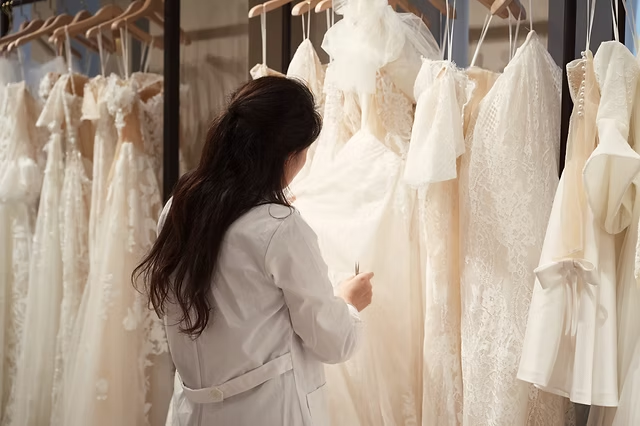
Defects should be classified by their effect on safety, function, appearance, approved design, and commercial acceptability rather than by the defect name alone. A missing rhinestone may be minor in a scattered pattern but major at the center of a symmetrical neckline. A sharp exposed component can require a much more serious classification because it affects wearer safety rather than appearance alone.
Common Embellishment Defects
A practical defect list becomes easier to use when problems are grouped by cause. Component defects include missing, broken, chipped, scratched, discolored, or incorrectly sized beads, sequins, crystals, and stones. Placement defects include shifted motifs, wrong orientation, asymmetry, uneven spacing, and incorrect decorative density. Attachment defects include loose stitches, unsecured thread ends, partially detached stones, weak bead anchoring, and open applique edges. Garment-effect defects include puckering, stretched mesh, twisted seams, sagging necklines, or restricted stretch. Finishing defects include stains, visible adhesive, heat marks, scratches, and packing damage.
Recording the category makes the inspection report more useful to production. “Decoration defect” says very little. “Five inspected units show sequin loss at the right waist seam after joining the side panel” points toward a seam-construction or handling problem that can be investigated. Location, quantity affected, size or color, production line, trim lot, and operation should be recorded when traceability is available. This makes the QC record useful for corrective action and repeat orders rather than merely serving as a final count of rejected garments.
Appearance and Wearability
Appearance defects need to be judged in the context of the design. Embellished party and occasion dresses are purchased partly because of their surface effect, so uneven shine, incorrect density, asymmetry, or motif displacement can be commercially important even when garment measurements remain within tolerance. Inspect from normal viewing distance first to assess overall balance, then move closer to check workmanship. This two-distance method separates defects that materially change the product from tiny irregularities that are difficult to see in normal use.
Wearability requires a different perspective. Check whether decoration scratches the neckline or underarm, blocks zipper travel, restricts stretch, adds excessive local weight, shifts the lining, creates hard seam zones, or catches on neighboring fabric. A crystal layout can be technically accurate but still be unacceptable if the backing makes the armhole too rigid. Clear descriptions help production teams correct the right issue. “The rhinestones are in position, but the stabilized area is restricting movement” is far more useful than a general comment that the quality is poor.
Major, Minor, and Critical
A critical defect generally involves an unacceptable safety or serious compliance risk. In embellished dresses, a sharp exposed component capable of cutting or injuring the wearer is more serious than a purely visual irregularity. A major defect materially affects appearance, fit, function, durability, or conformity with the approved standard. Examples can include an obviously shifted center-front motif, widespread sequin loss, a zipper that cannot operate because decoration obstructs it, or strong left-right asymmetry in a focal design area.
A minor defect is normally a limited workmanship deviation that does not materially affect use or overall saleability, although repeated minor defects can reveal poor process control. Exact definitions should be written for the style whenever possible, and AQL settings should come from the customer or inspection agreement. Do not assume that one commercial AQL value is universal for every brand, product, or market. The same visible flaw can be classified differently depending on location, design importance, safety, and agreed quality level, which is why photographs and style-specific examples are useful in the QC checklist.
Systemic Defects
The most valuable inspection decision is often recognizing when a problem is systemic rather than isolated. One missing sequin can be repaired. If ten garments lose sequins at the same waist seam, the real problem may be the seam construction, the way sequins are cleared from the allowance, operator handling, or the stitch method. Increasing the repair team does not solve that root cause. Production should identify where the defect is being created and correct the operation before more units pass through it.
The same logic applies to embroidery puckering, rhinestone displacement, bead-thread breakage, distorted mesh, or lining damage. Record the defect location, frequency, affected size, affected color, production line, operation, and material lot where possible. Patterns in the data can show whether the issue is tied to one operator, one bundle, one supplier lot, or the entire method. In large production runs, stopping a repeat defect after the first twenty affected pieces is far more valuable than discovering the same issue across two thousand finished garments at final inspection.
Classification | Typical Impact | Embellished Dress Example | Typical Disposition |
Critical | Safety or serious compliance risk | Sharp exposed metal or stone edge likely to injure wearer | Isolate affected goods and investigate immediately |
Major | Material effect on appearance, fit, durability, or function | Obvious motif shift, widespread sequin loss, blocked zipper | Rework or reject affected units according to agreement |
Minor | Limited workmanship deviation with low functional impact | Small non-prominent loose thread or minor edge cleanup | Repair where required and monitor |
Systemic process issue | Repeated defect indicates production-control failure | Same bead-loss point across multiple units | Correct root cause before production continues |
How Is Quality Controlled From Sample to Shipment?
Quality should be controlled as a continuous chain from development to shipment. The process should confirm fit, materials, decoration, construction, and packing before bulk production; inspect incoming materials; monitor decoration and sewing in line; compare finished garments with the approved reference; perform final inspection under the agreed plan; and protect embellished surfaces through packing and shipment preparation.
Before Bulk Production
Bulk production should begin only after the garment has reached a stable production standard. For embellished dresses, that usually means confirming fit, measurements, base fabric, lining, color, decorative component, motif, placement, attachment method, construction, closure, labels, packing, and any product-specific testing requirement. The latest physical sample and the latest documents must tell the same story. If the rhinestone size changes after the sample is approved but the BOM is not updated, bulk production can become inconsistent even when every department believes it is following instructions.
The PP sample is particularly important because it should represent the intended production method rather than remaining an open-ended development sample. Major changes to fit, materials, embellishment, or construction after PP approval weaken the production reference. For complex decoration, checking the first completed bulk units before the entire order moves forward can catch placement drift, seam bulk, abrasion, or unexpected distortion while corrective action is still manageable. Version numbers or clear approval dates on technical files are a simple but effective control, especially when several sample rounds have been completed.
Incoming and In-Line Control
Incoming QC prevents incorrect or unstable material from entering production. Base fabric, lining, decoration, thread, closures, and other trims should be checked against the approved references before cutting or application begins. Where reflectivity or color is important, compare multiple trim lots together under consistent lighting. A stone or sequin that appears acceptable alone may show obvious shade or finish variation when mixed with a second lot across the same garment.
In-line inspection then targets operations capable of creating repeated defects. For an embellished dress, these may include motif marking, bead application, sequin sewing, rhinestone placement, applique attachment, joining decorated panels, zipper installation, lining attachment, and edge finishing. Inspect first pieces carefully and react to repeated issues early. If the first group of garments shows the same neckline distortion, allowing the next thousand pieces to continue only increases repair cost. In-line QC should also confirm that operators are using the approved method; seemingly small shortcuts in stabilization, seam allowance handling, or attachment can change the behavior of mesh, satin, or heavy beadwork.
Bulk Consistency and Final Inspection
Final inspection should answer two questions at the same time: is each sampled garment acceptable, and is the production lot still consistent with the approved product? Measure according to the agreed size chart, then review front, side, and back appearance. Check neckline, straps, armholes, bust, waist, side seams, zipper, slit, lining, hem, and decorative surface. Close inspection is necessary, but side-by-side comparison of several garments often reveals lot differences more clearly.
Compare sequin color, rhinestone shine, bead density, motif height, embroidery tension, and overall silhouette across sampled units. If an AQL-based plan is used, the inspection level, sample size, defect categories, and acceptance limits should be agreed for the order rather than assumed. Critical decorative zones may justify additional focused inspection when the commercial or safety risk is high. Final inspection works best as confirmation that earlier controls were effective. If the final team is repairing large numbers of the same defect, the production system should be reviewed rather than treating mass repair as normal QC.
Packing and Shipment
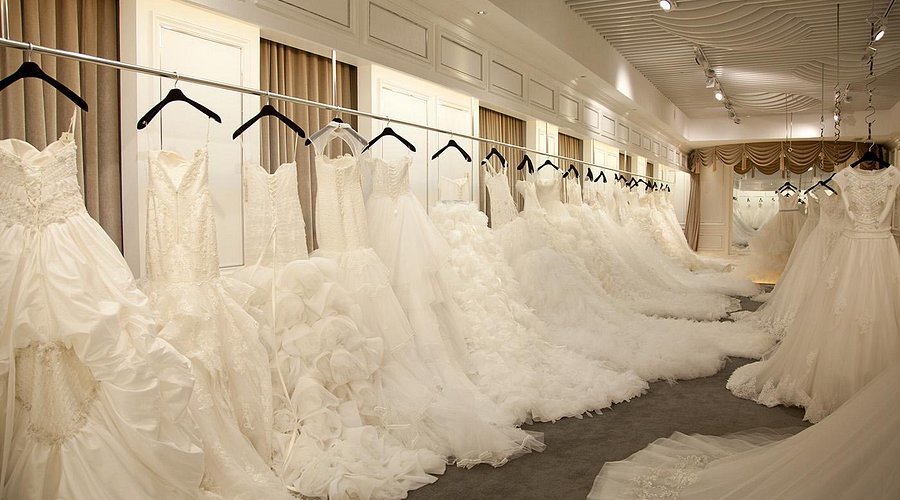
Packing is the final manufacturing operation for an embellished dress. Before bagging, confirm that the garment is clean, dry, correctly finished, and free from loose decorative components. Labels and tags must match the style, color, and size. Folding should prevent hard embellishments from pressing into delicate fabric or rubbing against another decorated surface. Dense beadwork, large rhinestones, or delicate sequin finishes may require an altered fold or approved separating material to reduce abrasion during transport.
At unit level, verify the garment against the correct barcode, SKU, size label, hangtag, and polybag. At carton level, confirm quantity, size ratio, color ratio, carton mark, and packing-list consistency. A useful shipment-control sequence is to complete final garment inspection, repair only approved defects, reinspect repaired units, pack according to the confirmed method, verify garment-to-SKU accuracy, and then check carton assortment before sealing. Retaining the approved sample, QC records, fabric and trim references, and packing information is especially valuable for repeat orders because the next production run can begin from a documented standard rather than rebuilding decisions from memory.
A reliable embellished-dress program does not depend on one final inspector finding every problem at the end. It builds control into the points where mistakes are created: material approval, sample sealing, placement setup, attachment, sewing, finishing, and packing. That approach protects both visual consistency and wearer experience while making corrective action faster when something does go wrong. For brands developing sequin, rhinestone, beaded, embroidered, or applique dresses, sharing a complete tech pack, embellishment artwork, approved trim references, size chart, and intended order structure gives the manufacturing team a much stronger basis for evaluating risk before bulk cutting begins. Jinfeng Apparel supports custom womenswear development from sampling through bulk production, quality control, private-label packing, and export coordination, making this kind of documented QC workflow practical for long-term dress programs.
Share This Article :

Jerry Lee
Categories

Latest blogs

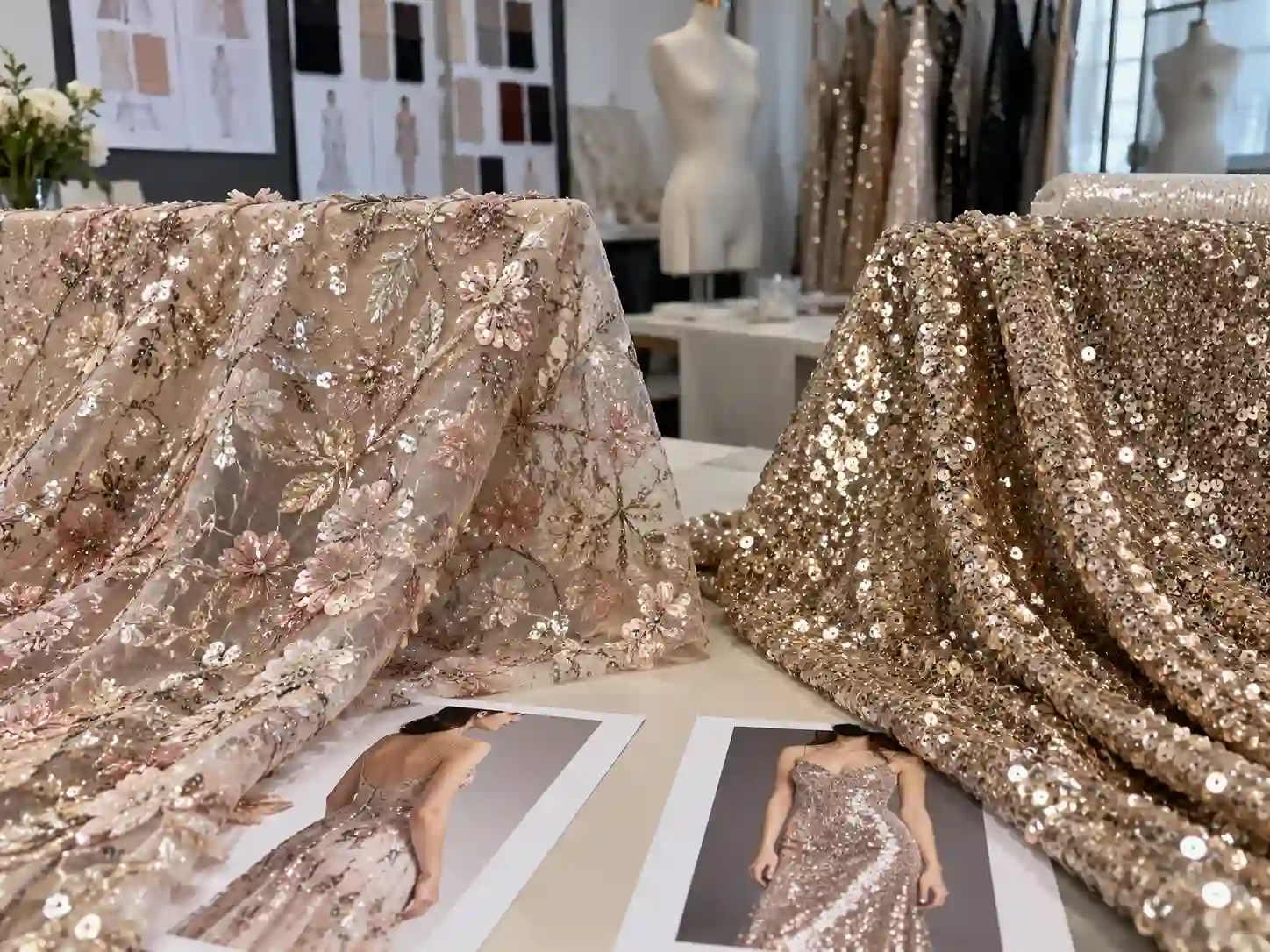
Table of Contents
Here, developing your OEM/ODM private label clothing collection is no longer a challenge—it’s an excellent opportunity to bring your creative vision to life.