
Drop-Waist Dress Trend: What Should Brands Consider Before Manufacturing?

Your trusted Women’s Apparel Manufacturer from China
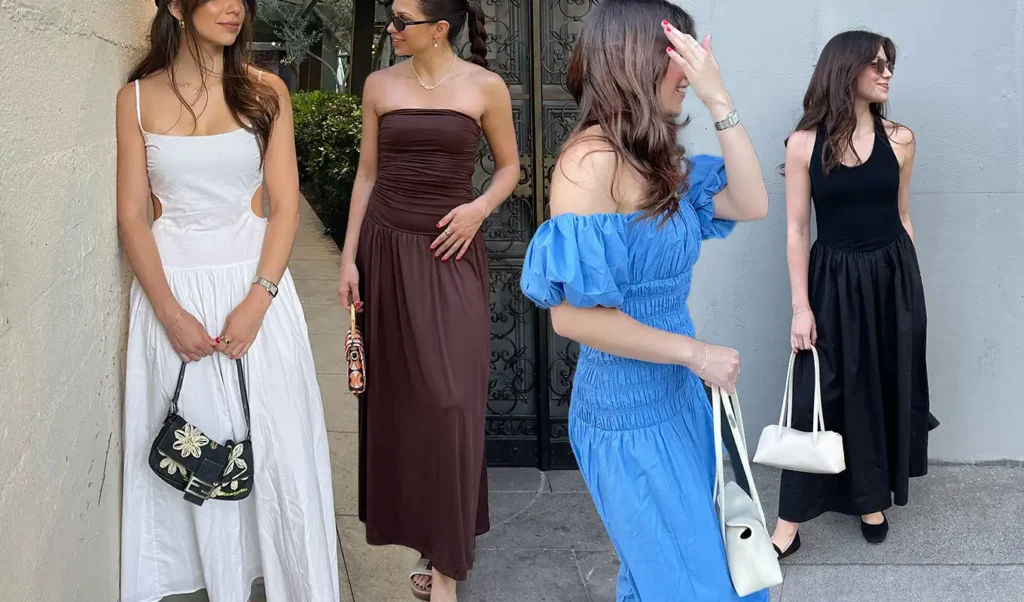
A drop-waist dress can look almost effortless in a runway photograph. The bodice simply appears longer, the waistline drops toward the hip, and the skirt begins lower than expected. Yet those few centimetres change far more than the silhouette. The garment now has to travel over a wider part of the body, skirt weight is supported from a different point, torso-length differences become more obvious, and a fit that looks polished while standing may behave very differently when the wearer walks or sits.
A commercially successful drop-waist dress requires coordinated control of waist placement, torso length, hip ease, skirt release, fabric behaviour, grading and bulk measurements. Brands should treat the lowered waist as a structural fit point rather than a decorative seam, validating it through fit samples, movement tests, graded-size review and a confirmed pre-production standard before the style enters bulk cutting.
The timing makes those technical questions especially relevant. Drop-waist silhouettes remain visible across 2026 fashion coverage, appearing in minis, maxis, cotton day dresses, knitted interpretations and more directional runway shapes rather than being confined to a literal flapper revival. ELLE, Marie Claire and Vogue have all continued to identify dropped waists as an active contemporary dress direction. The challenge begins after the moodboard, when an attractive proportion has to survive real bodies, multiple sizes and repeatable production.
What Is a Drop-Waist Dress?
A drop-waist dress places the main visual waist or bodice-to-skirt transition below the natural waist, generally toward the high-hip region. In manufacturing, the key issue is not simply how low the seam appears. The elongated upper section must pass over the hip comfortably, maintain the intended body proportion and release the skirt without pulling, riding upward or becoming unstable across different sizes.
What Defines a Drop Waist?
The easiest way to understand a drop waist is to look at where the garment stops behaving like a bodice and begins behaving like a skirt. In a conventional fitted dress, that transition normally happens near the natural waist, one of the narrower areas of the torso. In a drop-waist dress, the upper section continues farther down, which means the pattern must accommodate the increasing circumference between the waist, high hip and full hip before releasing the skirt.
That change makes the silhouette more technical than it first appears. The development team needs to control low-waist position, upper-body length, hip allowance, skirt starting point and side-seam balance together rather than treating each measurement separately. Jinfeng Apparel’s internal product knowledge identifies drop-waist placement, waist-to-hip proportion, body length, hip ease and skirt length as core control points for low-waist and drop-waist dresses.
Two dresses can therefore have a seam at approximately the same vertical position and still fit very differently. One might use a straight, relaxed upper body that barely follows the natural waist, while another may contour closely through the waist and upper hip before opening into volume. Both can read visually as drop-waist dresses, yet their pattern shaping, fabric requirements and movement allowance will be different.
The practical definition should consequently be based on the garment’s entire proportion rather than a single number. A development team should be able to explain where the seam sits, how closely the upper body follows the wearer, how much room exists through the hip and what kind of skirt release is intended. Once those relationships are clear, the silhouette becomes measurable and repeatable instead of depending on subjective comments such as “make it a little lower.”
How Is It Different From a Low-Waist or Basque Dress?
Drop waist, low waist and Basque waist are often grouped together in trend discussions, but they should not automatically be treated as the same construction. A classic drop waist usually creates an elongated torso before the skirt begins. A low-waist design may simply position a seam or waistband below the natural waist, while a Basque waist normally uses a shaped, curved or pointed line that extends lower at the centre front while maintaining stronger waist definition.
This distinction matters when a design moves from an inspiration image into a tech pack. A comment such as “lower waist” does not tell a pattern maker whether the seam should remain horizontal, curve around the high hip, dip at the centre front or create a long fitted torso with a sharply defined skirt join. The brand and manufacturer can interpret the same two words in completely different ways.
A more reliable specification combines drawings with garment measurements. Centre-front seam position, centre-back seam position, side-seam placement and the relationship between the drop seam and full hip create a much clearer technical reference. Reference photographs are still valuable, but camera angle, model height, posture and styling can make a seam appear considerably higher or lower than it actually is.
For brands working from runway or market references, this is where early technical discussion saves unnecessary sampling rounds. The objective is not to force every design into one terminology box. It is to agree on the shape that the customer should ultimately see and then convert that visual target into dimensions and pattern geometry that production teams can consistently follow.
Is the Drop-Waist Dress Still Trending?
The silhouette remains commercially relevant because current interpretations extend far beyond one historical reference. In 2026 fashion coverage, drop waists appear in streamlined maxis, everyday cotton dresses, knitted styles, fitted party dresses and more dramatic runway proportions. Marie Claire has described the shape across both wearable Spring 2026 dresses and broader Fall 2026 runway aesthetics, while Vogue has highlighted dropped waists among the season’s defining silhouette directions.
That breadth matters more to a product team than the simple fact that a silhouette appeared on a runway. Trends become commercially useful when they can be adapted to different customers, fabrics, occasions and retail price levels. A drop-waist concept can move from a structured cotton mini into a satin occasion dress, a soft resort midi or a more dramatic evening shape without losing its underlying proportion.
Those versions should not share one standard construction formula. A structured poplin dress may rely on controlled shaping and crisp skirt volume, while a stretch-satin party dress may use closer hip fit and stronger recovery. A fluid chiffon version may require lining and careful balance so the upper body does not appear heavy compared with the skirt. The trend label stays the same, but the engineering changes.
The stronger commercial question is therefore not simply whether drop waists are fashionable. A brand should decide whether the silhouette suits its own customer, styling language, price level and fit expectations. When that decision is clear, the manufacturer can translate the trend into a product that feels specific to the brand rather than a generic copy of whatever happens to be visible in the market.
How Does the Silhouette Affect Commercial Fit?
Lowering the waist changes how the wearer’s body is visually divided. If the seam drops too far, the torso can appear disproportionately long and the legs shorter. If the upper section becomes too tight through the high hip, the design may emphasise width instead of creating the clean elongated line the designer expected. Those effects are especially noticeable when the skirt is short or when the style uses a strong contrast between fitted and voluminous areas.
Mini dresses need particular care because changing the upper-body length can affect usable skirt coverage. If total garment length stays unchanged while the dropped section becomes longer, the visible skirt becomes shorter. A sample may still look convincing during a static fitting, but normal walking and sitting can quickly expose a length problem. Internal development guidance also identifies overly low waist placement, excessive upper-body length, tight hips and unstable skirt length as common low-waist concerns.
Commercial fit should therefore be judged as a complete silhouette rather than a collection of isolated measurements. The development team needs to see whether the torso still looks intentional, whether the wearer can sit comfortably, whether the skirt begins at a flattering point and whether the overall design remains recognisable when the garment moves instead of only when it is carefully arranged for a photograph.
The strongest result is rarely the dress with the lowest possible waist seam. It is the version where the dropped waist creates a fresh proportion without compromising comfort, coverage or repeatability. That balance is what allows a runway-inspired idea to become a garment that customers can actually wear, return to and potentially repurchase in new colours or seasonal fabric updates.
How Should the Drop Waist Fit?
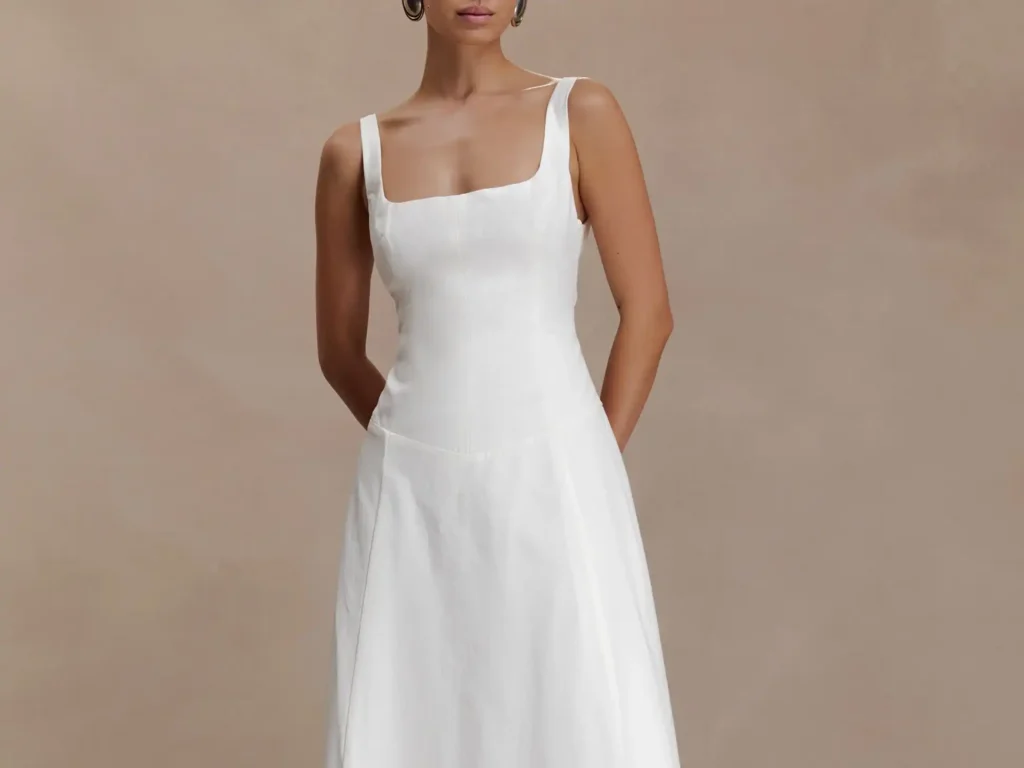
A well-fitted drop waist should sit at a deliberate, repeatable level while allowing enough room through the high hip for normal movement. The upper section should not pull upward, twist or collapse, and the skirt should release from the intended point without distorting the torso. Torso length, hip ease, skirt volume, fabric behaviour and grading all need to work together.
Where Should the Waistline Sit?
There is no universal rule stating that a drop waist must sit a fixed number of centimetres below the natural waist. The correct location changes with wearer height, torso length, hip depth, skirt length and the overall design. A deliberately extreme runway shape may sit very low, while a commercial mini dress may need a more moderate drop to protect leg proportion and everyday coverage.
A stronger development method uses several stable references rather than one visual guess. High shoulder point to drop seam, centre-front body length, centre-back body length and the seam location at the side provide a more complete picture. These measurements help turn comments such as “the waist feels slightly low” into an adjustment that a pattern maker can execute and verify in the next sample.
The seam also needs to be reviewed on a body because a line that appears straight on a flat pattern does not always appear straight when wrapped around the abdomen, hip and seat. Front and back balance can subtly move the apparent seam position, particularly in fitted styles or fabrics that closely follow body contours.
For that reason, development should always consider the consequence of any waistline adjustment. Lowering the seam by another 2 or 3 centimetres may affect skirt coverage, high-hip ease, zipper position and the amount of fabric hanging from the seam. The useful question is not simply whether the seam can be lowered, but whether the rest of the garment still works after it has been lowered.
How Much Hip Ease Is Needed?
Hip ease is one of the most important variables because the drop-waist bodice crosses an area that a normal bodice often avoids. The human body becomes wider below the natural waist, so a pattern that simply extends downward without adding appropriate shape or allowance may look clean while the wearer stands but become restrictive the moment she sits, takes a long step or bends.
Woven and stretch fabrics require different thinking. A woven style needs physical space created by its pattern because the material cannot extend significantly to create comfort. That allowance may be distributed through side shaping, darts, princess seams or a slightly more relaxed upper silhouette. Stretch garments can work closer to the body, but only when stretch and recovery remain stable enough to prevent the garment from growing during wear.
Internal low-waist development guidance specifically distinguishes these behaviours: woven fabrics require adequate sitting comfort, while stretch fabrics need control because repeated extension can pull the lowered waist farther down. This distinction is easy to miss when a stretch sample initially appears to “fit better” simply because the material is compensating for an overly aggressive pattern.
A useful fitting session therefore needs both measurements and movement. Horizontal drag lines, side-seam rotation, a waist seam that climbs toward the natural waist or a skirt that needs to be repeatedly pulled down all suggest that hip fit is not working as intended. These signals are more valuable than approving the sample solely because the garment closes and looks smooth for a few seconds.
Fit checkpoint | What to review | Common warning sign |
Drop position | Centre front, centre back and side level | Seam looks uneven on body |
High hip | Standing and seated fit | Horizontal pulling |
Full hip | Walking and sitting | Garment rides upward |
Side seam | Front-to-back balance | Seam rotates forward or backward |
Front body length | Seam position over abdomen | Front waist rises |
Back body length | Seat allowance | Back seam climbs |
Skirt length | Standing and movement coverage | Hem becomes too short |
Hem balance | Front, side and back views | Hem tilts after movement |
The table is most useful as a review framework rather than a universal tolerance chart. Actual tolerances should follow the brand’s approved specification, fabric behaviour and product category because a fitted stretch mini and a relaxed woven midi should not be judged against the same dimensional expectations.
How Should the Skirt Release?
The skirt release determines much of what makes a drop-waist dress visually distinctive. A long fitted upper body attached to a full gathered skirt creates a playful, dramatic proportion, while a lightly flared skirt produces a more understated shape. Even when both dresses share an identical drop point, the amount and placement of skirt volume can make them appear completely different on the body.
Construction method matters as much as total volume. Gathering spreads fullness continuously around the seam, pleats concentrate it at selected positions, and flared or circular patterns create volume without the same seam bulk. Each method affects the high hip differently. Heavy gathering positioned directly on the widest part of the hip can make the silhouette appear broader than intended, even if the garment technically fits.
Skirt weight also acts on the upper body. A full skirt made in substantial fabric pulls downward from the dropped seam, while lightweight stretch material may gradually lengthen under that load. Fluid fabrics can distort if the seam is unsupported, and highly structured fabrics can create excessive thickness where several layers meet. The chosen fabric and skirt construction therefore need to be tested as one system.
During fitting, front, side and back views are equally important. A skirt that looks balanced from the front may release too abruptly at the side or create excess volume over the seat. Small changes to seam shape, gather ratio or distribution can often improve the silhouette more effectively than simply reducing the entire skirt circumference.
How Do Body Proportions Affect Fit?
Two wearers with similar bust and hip measurements can have noticeably different torso lengths and waist-to-hip depths. A seam positioned at the same distance from the shoulder may therefore sit perfectly on one person and appear too low on another. Drop-waist styles expose these differences more clearly because the vertical proportion of the upper garment is one of the main design features.
Grading adds another layer. As garment sizes increase, circumference needs to increase, but the design also needs to preserve the visual relationship between the upper body, dropped seam and skirt. If horizontal measurements grow while the vertical proportions are handled poorly, larger sizes may appear much longer in the torso or tighter through the high hip than the approved base size.
Internal product guidance identifies inconsistent multi-size proportion and unstable low-waist placement as genuine bulk risks, with waist height, hip, front length, back length and skirt length all forming part of the relevant QC picture. That is a useful reminder that one attractive sample does not automatically prove the full size range.
For more proportion-sensitive designs, reviewing the graded pattern nest and confirming an additional size can be worthwhile before full production. The objective is not to force identical visual proportions onto every possible body. It is to make sure the style still reads as the same design and that the drop point does not change unpredictably simply because the pattern has moved several sizes away from the original fitting sample.
Which Fabrics Work Best?
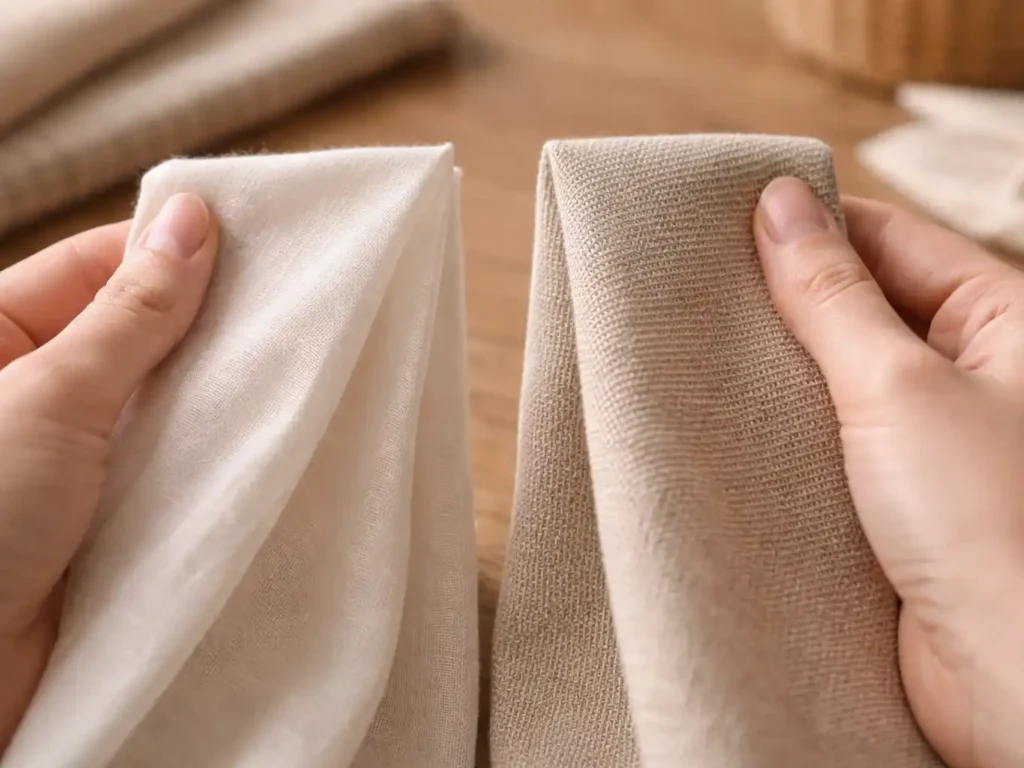
The most suitable fabric is the one that supports the intended drop-waist silhouette instead of fighting it. Structured wovens create cleaner geometry, fluid fabrics soften the transition and stretch fabrics allow closer hip fit but depend heavily on recovery. Weight, drape, stretch, transparency, shrinkage and seam behaviour should all be evaluated before the final pattern and skirt proportion are approved.
How Do Weight and Drape Change the Shape?
Fabric can turn one pattern into several very different dresses. Crisp cotton or poplin can hold an elongated torso cleanly and create a strong release into a gathered skirt. Satin gives softer movement and a more polished surface, but it also exposes puckering, drag lines and zipper distortion more readily. Ponte or Roma can support a close fit, while lightweight mesh often requires lining or internal support to maintain stability.
Material development therefore needs to go beyond colour and composition. Weight, width, hand feel, drape, stretch, transparency, shrinkage, snagging and the ability to behave consistently in bulk production are all relevant. Jinfeng Apparel’s documented material-development scope includes satin, stretch satin, mesh, jersey, ponte, Roma, crepe, chiffon, organza, denim, cotton blends, viscose and other commonly used womenswear fabrics, with those performance characteristics forming part of material evaluation.
A particularly important issue is the weight relationship between the upper body and skirt. A rigid fabric with substantial gathering may create a thick seam, while a lightweight flowing fabric can allow the skirt weight to pull on the torso over time. The sample therefore needs to be developed in fabric that behaves reasonably close to the planned bulk material.
Approving the pattern in one material and then changing to another with significantly different drape or stretch can effectively change the fit even if all paper measurements remain identical. Fabric substitution should therefore be treated as a development decision, not simply a sourcing decision made after the pattern has already been signed off.
Fabric type | Typical drop-waist effect | Key manufacturing concern |
Poplin / cotton blend | Crisp and architectural | Hip mobility and seam bulk |
Satin | Fluid and polished | Puckering, snagging and zipper waves |
Stretch satin | Fitted with sheen | Recovery and seam stretching |
Jersey | Soft and body-skimming | Growth and waist drift |
Ponte / Roma | Structured stretch | Compression and seam thickness |
Mesh | Lightweight and fitted | Transparency and stability |
Chiffon | Soft and flowing | Slippage and lining balance |
Denim | Firm and casual | Bulk around the dropped seam |
These fabric directions are practical starting points rather than fixed rules. Two satins with different weights and constructions can behave very differently, just as one jersey may recover quickly while another continues to grow after repeated wear. Physical testing of the actual bulk fabric remains more valuable than judging suitability by fibre content alone.
Do Stretch Fabrics Need Different Ease?
Stretch materials can make a close drop-waist silhouette feel easier to develop because they accommodate body variation more readily during an initial fitting. That convenience can hide problems, however. A fabric with generous stretch but weak recovery may gradually grow across the hip and in length, allowing the waist seam to move lower after the wearer has been sitting or walking for some time.
Recovery therefore deserves as much attention as maximum stretch. A fabric that expands 20 or 30 percent is not automatically suitable for a fitted style if it does not return close to its original dimensions after tension is removed. Direction also matters because many knits have different stretch characteristics across width and length, and inconsistent cutting direction can create side-seam twisting or uneven vertical growth.
The pattern needs to be developed around the actual material rather than an assumed category such as “stretch jersey.” A more stable ponte may support controlled negative ease, while a lightweight jersey could require a softer fit to avoid excessive pulling. Stretch satin brings another set of concerns because the glossy surface can make even slight tension or seam distortion highly visible.
During sample review, it is useful to separate pattern fit from fabric compensation. If a garment only becomes comfortable after switching to a much stretchier fabric, the development team should ask whether the original hip shape was too restrictive. A successful stretch dress should use the fabric’s elasticity intentionally rather than depend on it to rescue an unresolved pattern.
Which Woven Fabrics Need More Ease?
Non-stretch wovens rely on pattern shaping to create mobility. Poplin, denim, suiting fabrics and firmer satins cannot expand over the hip in the way that jersey can, so a close drop-waist upper body needs enough room for sitting, walking and dressing. The cleaner and more fitted the intended silhouette becomes, the more carefully that allowance needs to be distributed.
Standing fit can be misleading. A woven sample may lie beautifully against the high hip while the wearer remains upright, yet create sharp horizontal tension as soon as she sits. Simply adding several centimetres to total circumference is not always the best solution, because excess width can destroy the sleek visual line that made the design attractive in the first place.
Pattern shaping offers more precise options. Side seams, darts, panel seams or subtle changes to the location of the skirt release can create useful room without making the entire torso loose. A slight redistribution between front and back can also solve movement problems that initially look like a simple hip-circumference issue.
The closure should be considered at the same time. A fitted woven dress may measure correctly once it is on the body but still be difficult to put on if the zipper opening is too short or located where the wearer cannot pass the garment comfortably over the hip. True fit therefore includes dressing access, not only the measurements recorded after the zipper has finally been closed.
When Is Lining or Stabilisation Needed?
Lining is sometimes treated as a straightforward solution for opacity, but in a drop-waist dress it can perform several additional jobs. It may reduce friction over the hip, support a lightweight shell, protect the wearer from embellishment or help control a seam carrying skirt weight. The lining can also become the source of fit problems when its dimensions or stretch behaviour do not match the outer garment.
A lining that is too short may pull the shell upward, while a lining that is too narrow across the hip can restrict sitting even when the outer fabric appears loose enough. A rigid lining placed behind a stretch shell can effectively remove the stretch that the pattern was designed to use. For this reason, lining should be included in fitting and movement tests rather than added after the outer sample has already been approved.
Selective stabilisation may also be required. Zipper openings and lightweight dropped seams can benefit from appropriate support, particularly when a heavy or gathered skirt is attached below them. Too much reinforcement creates another problem because a hard, thick seam can become visible through satin, lightweight crepe or other smooth surfaces.
The decision should always answer a specific problem: transparency, garment weight, stretch, closure stability or wearer comfort. Lining and reinforcement work best when they quietly improve garment behaviour. If the customer can see the lining pulling, feel a hard ridge or notice that the shell moves differently from the inside layer, the construction needs further development.
How Should Patterns Be Developed?
A drop-waist pattern should be shaped around the body below the natural waist rather than created by simply extending a standard bodice. Development needs to control front and back balance, high-hip shape, skirt release, grading, closure placement and lining. The final pattern must reproduce both the intended visual proportion and the movement confirmed during sample fitting.
How Should the Drop Seam Be Shaped?
A horizontal seam drawn across a fashion illustration does not necessarily translate into a perfectly straight line on the flat pattern. The human body is three-dimensional, and abdominal projection, hip shape, seat volume and posture all affect how a line appears once fabric wraps around the body. Small pattern adjustments may be necessary simply to make the finished seam look visually level.
Front-to-back balance is particularly important. If the front pattern lacks sufficient length, the seam may climb around the abdomen even though the side measurement appears correct. If the back lacks length or width over the seat, the back seam can rise and pull the side seam out of position. These problems are often mistakenly treated as simple circumference issues.
The side seam is one of the most useful diagnostic references. In a balanced garment, it should remain reasonably stable when viewed from the side. A seam that consistently swings forward or backward suggests that the front and back pattern are not sharing the body volume correctly, even when the total hip measurement falls within specification.
Pattern development for this kind of garment requires control over low waist, hip, front length, back length and overall garment length. Jinfeng Apparel’s confirmed development resources include 7+ senior womenswear pattern makers, two sample rooms and 20+ sample machinists, allowing fit and construction issues to be reviewed through both paper patterns and physical samples.
How Should the Drop Point Grade Across Sizes?
Grading is often described as increasing or decreasing a base pattern, but the more useful objective is preserving the design relationship across the size range. A drop waist is a strong visual landmark, so its location needs to remain intentional as both circumference and vertical body dimensions change.
If vertical grading grows too aggressively, larger sizes can develop an excessively long torso before the skirt begins. If vertical growth is insufficient, the seam can appear progressively higher relative to the hip. Horizontal grading adds another challenge because increasing hip circumference changes how the garment travels around the body, which can affect the apparent position and curvature of the drop seam.
A proper grading review therefore looks at relationships rather than one measurement in isolation. High shoulder point to drop seam, natural waist to drop seam, centre-front and centre-back body length, high-hip circumference, full-hip circumference and drop-seam-to-hem length all contribute to the finished proportion.
The graded pattern nest should also be inspected visually before bulk cutting. Mathematical increments may appear logical in a measurement spreadsheet yet produce shapes that drift away from the intended silhouette. Internal low-waist product guidance specifically identifies inconsistent multi-size proportions and unstable low-waist positioning as risks worth controlling before production.
For styles where the lowered waist defines much of the product identity, checking at least one additional graded size can be particularly valuable. It is much easier to adjust a graded pattern before cutting begins than to discover after sewing that one end of the size range no longer looks like the approved design.
How Do Zippers Affect the Waist Seam?
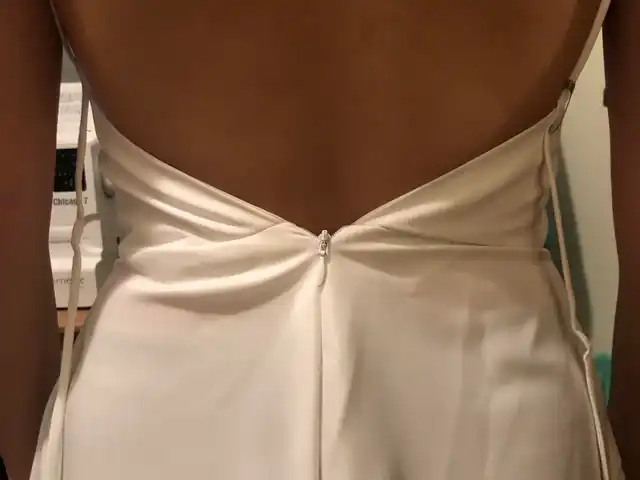
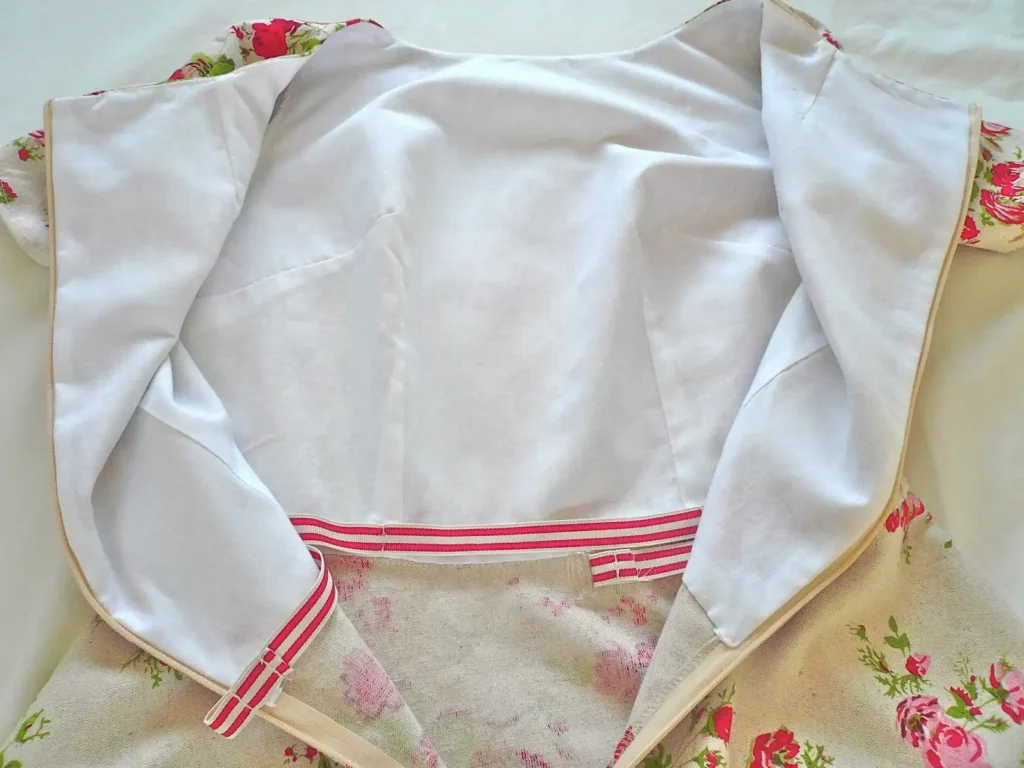
A zipper crossing a drop seam passes through an area where several construction layers may already meet. Bodice seam allowance, skirt seam allowance, lining and sometimes gathers or pleats can all accumulate near the same point. If that thickness is not controlled, an invisible zipper may bow outward, become difficult to close or produce a visible bump across the back or side of the dress.
Centre-back zippers are common because they maintain symmetry, but they run directly through the dropped seam. Side zippers can keep the back visually clean, yet they sit close to the curved hip and may experience greater strain during dressing and movement. Neither position is automatically correct; fabric, fit, silhouette and opening length need to be considered together.
Seam allowance management can make a substantial difference. Depending on the construction, layers may need careful trimming, grading or pressing before the zipper is applied. Smooth fabrics such as satin are particularly unforgiving because small areas of bulk or uneven tension can become visible under normal lighting.
Closure performance should therefore be reviewed on the wearer rather than only on the hanger. The zipper needs to open far enough for practical dressing, close without excessive force and remain flat after the wearer sits and stands. Documented sewing QC includes zipper flatness because function alone does not prove that the closure is visually acceptable in a fitted fashion garment.
How Does Lining Affect the Pattern?
A lining pattern should support the shell rather than mechanically copy every line of it. The lining still has to accommodate the same body, particularly around the high hip where the drop-waist upper section is most sensitive. If the lining is tighter, shorter or significantly less flexible than the shell, it can become the hidden layer that controls the fit instead of the outer pattern.
Movement allowance is therefore important. A fluid outer dress may need a lining that slides comfortably rather than locking rigidly to each seam. Strategic attachment points can help keep the lining in place without forcing both materials to behave identically. The correct approach depends on whether the garment is fitted, relaxed, transparent, stretch or heavily constructed.
Length is another frequent source of problems. On a mini dress, a small discrepancy can make the lining visible after movement. On a midi or maxi, a short or tight lining can lift the shell and disturb the hem even when the difference is not immediately obvious during a standing fitting.
Brands should approve lining fabric, colour, stretch, hand feel and attachment with the same care given to the shell. Changing the lining after fit approval can effectively change the garment because friction and extension may change. A drop-waist silhouette already depends heavily on vertical balance, so an uncontrolled second layer can undo work that was carefully resolved in the outer pattern.
How Should Samples Be Tested?
A drop-waist sample should be tested as a moving garment rather than a static display piece. Fit review needs to confirm seam position, torso length, hip ease, skirt release, side-seam balance, zipper and lining while the wearer stands, walks and sits. Revisions should be physically confirmed before PP approval so bulk production begins from one agreed product standard.
What Should a Fit Sample Check?
The first fitting should begin with the overall silhouette before the team becomes absorbed in minor sewing details. From the front, the drop seam should sit where the design intended and create the correct relationship between upper body and skirt. The side view should confirm that the garment follows the high hip cleanly, while the back view can reveal seat-related pulling that is easy to miss from the front.
Measurement review should support what the eye sees. Low-waist height, hip circumference, centre-front body length, centre-back body length, skirt length and hem balance provide a strong starting set for this silhouette. Internal low-waist QC guidance uses those same types of checkpoints, including side seam and overall upper-body proportion.
The team should also look for drag lines, side-seam rotation, distorted skirt release, zipper rippling and lining that becomes visible after movement. These symptoms help reveal whether the issue comes from circumference, vertical balance, construction or fabric performance.
Fit comments are most useful when they describe the observed problem before prescribing a solution. “Centre front drop seam rises approximately 1.5 cm on body” is more actionable than “add room.” The first comment gives the pattern maker a measurable condition to investigate, while the second can encourage a broad alteration that solves the wrong problem.
How Do Sitting and Walking Change the Fit?
A dress experiences substantially different forces during normal movement than during a standing fitting. When the wearer sits, the abdomen and hip require more room, the front body compresses and the skirt naturally moves upward. Because a drop-waist upper section crosses the hip, insufficient ease often causes the entire garment to climb toward the narrower natural waist.
Walking introduces repeated tension between the legs, skirt and upper body. A narrow skirt can pull upward, while a heavy full skirt can pull downward from the seam. Stretch fabrics may gradually extend, and soft fabrics cut off-grain can shift. A garment that returns to position after movement is far more reliable than one that requires the wearer to constantly pull it down or straighten the side seams.
A simple movement test can reveal many of these problems without specialised equipment:
- Stand naturally and record the initial seam and hem position.
- Walk at a normal pace for several metres.
- Sit in a standard chair without adjusting the dress.
- Move the legs naturally as appropriate for the style.
- Stand again without pulling the skirt or bodice.
- Recheck seam level, side seams and finished length.
Internal development notes identify side-seam twisting, skirt-length instability and fabric stretch affecting low-waist position as genuine risks in this product category. A static photo proves that a garment can look attractive for a moment. Movement testing gives a better indication of whether a customer will enjoy wearing it for several hours.
Which Sample Revisions Are Common?
Many drop-waist revisions are less about complicated workmanship and more about correcting proportion. An excessively low seam can make the torso appear heavy, while a tight high hip creates horizontal drag lines and causes the garment to ride upward. Too much ease creates the opposite problem, removing the clean elongated effect and leaving the upper body looking shapeless.
The skirt release is another common adjustment point. Full gathering attached directly around the widest part of the hip may add unwanted width, while a release positioned too low can make the skirt appear disproportionately small. Slightly raising, reshaping or redistributing the seam can improve the silhouette more effectively than dramatically changing the skirt itself.
Typical sample revisions include balancing front and back length, correcting side-seam rotation, adjusting hip ease, revising zipper length, reducing seam bulk, redistributing gathers, changing lining dimensions and reviewing finished skirt length after movement testing. Internal product guidance also identifies unnatural waist-to-hip transition and proportion changes caused by fabric stretch among common low-waist sample issues.
The most efficient revision addresses the source of the problem rather than the visible symptom. Adding overall dress length will not correct poor front balance, just as increasing the entire hip circumference will not necessarily fix a side seam that twists because the front and back pattern distribution is incorrect.
What Should Be Locked Before PP Approval?
Pre-production approval should represent a point where the main product decisions are already physically proven. The pattern version, shell fabric, lining, trims, zipper, skirt construction, grading and key measurements should all correspond with the sample being approved. If major fit or material questions are still open, the style is not genuinely ready for bulk production regardless of how urgently the launch calendar is approaching.
Different sample types also need clear roles. A first sample tests the initial interpretation, a fit sample validates body fit, a revised sample confirms corrections and a photo sample may prioritise campaign appearance. The PP sample becomes the production reference, while a retained Golden sample can provide an ongoing physical benchmark. Internal process rules distinguish these stages and specifically avoid treating the first sample as an automatic bulk standard.
Before bulk cutting, the product team should be able to identify one current version of the pattern, one approved measurement specification, one approved material set and one physical reference sample. Conflicting versions create unnecessary uncertainty on the production floor and make later defect analysis much harder.
PP approval is therefore more than an administrative signature. It converts development work into a repeatable production instruction. For a proportion-sensitive silhouette such as a drop waist, that clarity protects both the factory and the brand because the expected result has already been confirmed in fabric instead of being left to interpretation during bulk sewing.
How Is Bulk Production Controlled?
Bulk production is controlled by converting the approved sample into repeatable material, cutting, sewing and measurement checkpoints. For drop-waist dresses, particular attention should be given to fabric behaviour, drop height, high-hip fit, front and back body length, skirt length, side seams, zipper flatness and lining. Problems should be corrected during production rather than discovered only after all garments are finished.
What Should Cutting Control?
Cutting is one of the earliest stages where a correct sample can become an inconsistent bulk order. Before fabric is cut, the team needs to verify the approved pattern version, size breakdown, grain direction, stretch direction, face direction and relevant shade grouping. Errors introduced here often cannot be fully corrected by even highly skilled sewing operators.
Stretch fabrics deserve special attention because cutting direction directly influences garment behaviour. Panels cut with inconsistent stretch orientation can grow differently, twist side seams or change the vertical position of the dropped waist. In a design with a strong horizontal seam across the hip, those differences become visually obvious very quickly.
Printed, striped or directional fabrics introduce additional controls. Pattern placement and fabric direction should be considered around the low seam so the design does not appear accidentally broken or misaligned. Shade variation can also become more visible when bodice and skirt panels meet across a clear horizontal line.
Jinfeng Apparel’s documented cutting QC includes pattern version, panel direction, stripe or check matching, print placement, panel quantity, size bundling, fabric direction and stretch direction. These controls illustrate a broader manufacturing principle: once incorrect panels have been cut across a large quantity, the cost and time required to recover the order can rise dramatically.
How Are Waistlines Kept Consistent?
A dropped waist needs a defined measurement method because visual judgement alone is too subjective for bulk production. The approved specification should state where the seam is measured from, whether the reference is high shoulder point, centre-front neckline or another stable garment location, and how the garment is positioned during measurement.
Front and back should usually be considered separately. A garment can have an acceptable average drop depth while still sitting too high at the front and too low at the back. Side-seam length, hip circumference and overall body balance help explain whether the seam is genuinely stable rather than simply matching one isolated specification point.
The most relevant controls typically include centre-front body length, centre-back body length, low-waist height, high-hip or full-hip circumference, side-seam shape and finished skirt length. Internal low-waist guidance reflects this broader approach by checking front length, back length, hip, side seam, hem and upper-body proportion together.
Measurement frequency should reflect production risk. A new style made in unfamiliar stretch fabric may justify closer checking during early sewing than a well-established repeat order produced from a stable pattern and known material. The objective is not inspection for its own sake; it is detecting drift early enough that the production process can still be corrected efficiently.
Which Sewing Risks Matter Most?
The dropped seam can concentrate several sewing challenges in one area. The garment circumference is changing, the skirt may introduce significant fullness, the zipper can cross the seam, and the lining may be attached nearby. If different layers feed through the machine at different rates, the seam can stretch, ripple or twist even when every individual panel was cut correctly.
Gathering and pleating need consistent distribution because uneven fullness changes both appearance and garment balance. Stretch fabrics should not be pulled excessively during sewing, while satin and other smooth fabrics require controlled feeding to avoid puckering. Thick seam intersections around closures may need careful preparation before a zipper can sit flat.
Inline inspection is particularly useful for these problems because sewing methods can still be adjusted while production is underway. Waiting until final inspection may reveal hundreds of garments with the same distorted seam, while catching the issue after the first production bundles allows the line to correct tension, handling or seam preparation before the defect spreads.
Documented sewing QC includes stitch density, seam quality, seam allowance, symmetry, zipper flatness, lining attachment and related workmanship checks. For drop-waist production, those controls should be connected directly to the silhouette because a technically secure seam can still be unacceptable if it visibly waves, shifts position or changes the intended skirt release.
Which QC Points Matter Most?
Quality control is most effective when it follows the product through several stages rather than acting as a final sorting exercise. Incoming fabric, cutting, sewing, finished measurements, pressing and packing each influence whether the approved drop-waist proportion reaches the customer. A defect found during final inspection may actually have started with material behaviour or cutting direction several steps earlier.
The most useful QC points are those connected to how the style actually fits and looks. Drop-waist height, hip measurement, centre-front and centre-back body length, side-seam position, skirt length, zipper appearance, lining behaviour and overall hem balance deserve particular attention because small deviations can change the silhouette more noticeably than they would on a conventional natural-waist dress.
QC stage | Key checkpoint | Main risk controlled |
Incoming fabric | Weight, shrinkage, stretch and shade | Fit and length variation |
Cutting | Pattern version, grain and direction | Shape inconsistency |
Sewing | Seam allowance and drop seam | Uneven waist position |
Inline measurement | Front/back length and hip | Balance problems |
Zipper review | Flatness and operation | Bulging at seam |
Lining review | Length and attachment | Shell distortion |
Garment QC | Drop height and skirt length | Proportion variation |
Appearance review | Side seams and hem | Twisting and tilt |
Packing QC | Size and SKU identification | Distribution errors |
Jinfeng Apparel’s documented QC system covers incoming material inspection, cutting QC, sewing QC, garment inspection, pressing review, packing QC, AQL inspection and client-inspection support. The value of this staged system is traceability: when a waistline begins drifting, the team can investigate whether the source is fabric growth, cutting, sewing tension, measurement method or pattern version instead of simply rejecting finished garments.
Material and order structure also affect production planning. The confirmed standard MOQ for Jinfeng Apparel starts from 200 pieces per style and colour, subject to fabric availability, colour development, trims, construction complexity, packaging and schedule. Custom-dyed, custom-printed, lace, sequin and other specially developed materials can carry separate supplier-based minimums. For a trend-driven style, those variables are worth considering before the final fabric and colour range is locked.
Cost should be evaluated through the entire product rather than the waist seam alone. Fabric consumption, lining, skirt volume, zippers, trims, pattern development, sampling, cutting, sewing time, pressing, QC, packaging, wastage, testing and logistics can all influence the finished cost. The more useful form of cost engineering protects the elements customers actually notice—fit, fabric and silhouette—while simplifying details that add complexity without strengthening the finished garment.
The drop-waist dress trend is a good example of the difference between recognising a fashion direction and commercialising it successfully. A reference image can communicate mood and proportion, but it cannot by itself define hip ease, fabric recovery, graded seam position, lining behaviour or the production measurements needed to reproduce the same look across hundreds or thousands of garments.
For brands developing drop-waist mini, midi, resort, party or occasion dresses, the most reliable process starts by defining the intended silhouette clearly and then testing every decision against the wearer. The seam needs to sit in the correct place, the hip needs to move comfortably, the skirt needs to release naturally and the fabric needs to behave consistently enough for the approved sample to remain meaningful when production scales.
An experienced custom womenswear manufacturer can add the most value before bulk cutting, when pattern balance, material choice, grading and sample behaviour can still be changed without affecting an entire order. Jinfeng Apparel’s development system supports structure review, fabric and trim sourcing, pattern development, sampling, sample revision, PP and Golden sample control, bulk-production management and QC, helping translate fashion references into production-ready womenswear rather than treating an attractive image as a complete specification.
A well-developed drop-waist dress should therefore survive more than a photoshoot. It should remain balanced after sitting, walking and repeated wear; look recognisably consistent across the intended size range; and give production teams a clear standard they can reproduce. When those conditions are met, the trend becomes more than a seasonal visual idea—it becomes a practical product that can support a launch, a repeat order and potentially a broader dress collection.
Share This Article :

Jerry Lee
Categories

Latest blogs
Table of Contents
Here, developing your OEM/ODM private label clothing collection is no longer a challenge—it’s an excellent opportunity to bring your creative vision to life.

