 Skip to content
Babydoll vs Empire Waist Dresses: What Is the Difference?

Your trusted Women’s Apparel Manufacturer from China

Babydoll and empire-waist dresses are easy to confuse because both can move the visual waist upward and let the skirt fall away from the body. On a product page, the difference may seem like a matter of naming. In development, however, that naming affects pattern proportions, fabric choice, fit expectations, grading, and even how the finished dress photographs on different body types. A one-centimeter change at the raised seam, a heavier fabric, or a fuller gather can shift the whole impression from clean and elongated to playful and voluminous.
A babydoll dress is an overall silhouette, usually with a short upper body and freer skirt volume, while an empire waist primarily describes a waistline placed high near the under-bust. The two can overlap: a babydoll may use an empire waist, but an empire-waist dress can also be midi, maxi, fitted, fluid, casual, or formal. The clearest differences are bodice shaping, skirt fullness, length, and drape.
That is why the most useful comparison is not simply “Which name is correct?” but “What pattern and fabric choices create the look people expect from each name?” A dress can be technically high-waisted and still fail to read as either silhouette if the bust fit, seam balance, skirt sweep, lining, or length is wrong. The details below turn that visual distinction into practical decisions for shoppers, designers, product developers, and fashion brands.
What Is the Difference Between Babydoll and Empire Waist Dresses?
The simplest distinction is that an empire waist describes where the waistline sits, while a babydoll describes the overall silhouette. Babydoll dresses usually combine a raised seam with a short bodice and noticeably loose skirt. Empire-waist dresses can use the same high seam but vary widely in length, skirt volume, structure, and occasion, so the two categories overlap without being interchangeable.
What Defines Each Silhouette?
A babydoll is recognized by the relationship between its upper and lower sections rather than by one measurement alone. The bodice is usually visually compact, the natural waist is not strongly shaped, and the skirt releases volume relatively early. Mini and short lengths are common because they exaggerate the contrast between the shortened upper body and the free skirt, although longer interpretations can still retain a babydoll character when the high seam and loose volume remain dominant.
An empire waist is more precise as a construction term. It places the main waist seam high on the torso, commonly near the under-bust, and lets the garment continue from that point. The skirt can be narrow, softly flared, pleated, gathered, layered, or very full. That flexibility explains why empire-waist construction appears in casual sundresses, maternity-friendly fashion, bridesmaid dresses, occasionwear, and floor-length gowns rather than belonging to one specific style mood. For development teams, that distinction prevents a descriptive retail term from becoming an inaccurate pattern instruction.
Design Point | Babydoll Dress | Empire Waist Dress |
Primary definition | Overall silhouette | Waistline placement |
Typical waist position | Raised, often near under-bust | High, generally near under-bust |
Bodice proportion | Usually compact or shortened | Varies from soft to structured |
Skirt volume | Usually moderate to high | Low to high |
Common lengths | Often mini or short | Mini, midi, maxi, floor-length |
Visual direction | Airy, playful, relaxed | Elongated, fluid, refined |
Category overlap | Can use an empire waist | Can also be a babydoll |
Are They Ever the Same Dress?
Yes. A single dress can reasonably be described as both babydoll and empire-waist when it combines an under-bust seam with the short, loose, youthful proportions associated with babydoll styling. Retailers often use both labels because shoppers search by appearance rather than technical construction. That overlap is not an error; the problem starts only when a style name is treated as a complete technical specification for sampling or production.
A reference photo labeled “babydoll” still leaves important questions unanswered. The development team needs to know the intended seam height, front bodice length, bust ease, gather distribution, skirt sweep, hem length, neckline, sleeve proportion, and fabric behavior. Two patterns can share the same under-bust seam but look completely different when one uses a crisp cotton with heavy gathering and the other uses fluid viscose with a shaped, lightly flared skirt. A marked-up reference that shows seam, fullness, and length is usually more useful than adding more style names. That precision also reduces unnecessary sample revisions and conflicting comments between design, merchandising, and production teams.
Which Details Separate Them Most?
Five details usually decide which identity dominates: seam position, bodice proportion, skirt fullness, fabric drape, and finished length. The raised seam establishes the starting point, but the skirt often provides the strongest visual cue. Heavy fullness released immediately below the bust produces a stronger babydoll impression, while a smoother lower section creates the longer, more controlled line commonly associated with empire-waist dresses.
Fabric can reinforce or reverse that impression. Crisp poplin holds gathers away from the body, making even moderate fullness look pronounced. Viscose collapses into soft folds and can make the same skirt width appear slimmer. Chiffon adds movement but usually needs lining, while satin can shift a high-waist silhouette toward occasionwear. For this reason, experienced teams review silhouette, pattern, and material together rather than approving the shape from a flat sketch alone. Side-view photos and a moving fit sample often reveal these differences more clearly than a front-view campaign image. It also makes fabric substitution decisions safer when the original mill quality is unavailable for bulk.
How Do Babydoll and Empire Waist Dresses Fit Differently?
Babydoll dresses usually create more visible ease below the bust, while empire-waist dresses can keep the lower body much more controlled. The fit difference comes from how closely the bodice follows the bust, exactly where the raised seam lands, how much skirt fullness is released beneath it, and how the hem length balances the body. Small changes in these areas can noticeably change the silhouette.
How Does the Bodice Fit Change?
The upper body is where two apparently similar dresses often begin to behave differently. A typical babydoll may use a lightly shaped bodice, bust darts, elastic, smocking, or simple panel seams, but it usually does not depend on strong waist suppression. The fit should be controlled enough around the bust, neckline, and armholes to avoid looking oversized, then transition quickly into a freer lower body that gives the style its relaxed character.
Empire-waist dresses can require more deliberate bust shaping because the raised seam acts as a visible structural anchor. If the front bodice lacks enough bust depth, the center-front seam can ride upward even when the flat garment measures correctly. Strap length, neckline depth, armhole shape, front length, and under-bust measurement therefore need to be reviewed together. A few millimeters in one area can affect where the entire high-waist seam sits once the dress is worn. This is especially important when the same design is planned across several cup depths or extended sizes.
How Does Skirt Volume Affect Fit?
Skirt fullness determines whether the high seam feels soft and playful or clean and elongated. In commercial development, a mildly gathered skirt may begin around 1.3 to 1.6 times the finished seam width, while visibly fuller fashion silhouettes can reach roughly 1.8 to 2.2 times or more. These are working ranges rather than fixed rules, because fabric thickness, weave, drape, and intended styling can make the same ratio look very different.
A thin viscose can absorb generous gathering into narrow folds, while a crisp cotton of similar weight may stand away from the body and appear much fuller. Empire-waist styles often use a lower gather ratio, shaped panels, or gradual flare to preserve ease without building bulk directly beneath the bust. This is particularly useful when the design needs abdominal comfort but the brand does not want a rounded or overtly voluminous silhouette. The target look should therefore be checked on the actual shell fabric rather than estimated from muslin alone.

How Does Length Change Proportion?
Length changes the balance between the compact upper body and the skirt. A short babydoll exaggerates the high-waist effect because the skirt appears to begin early and finish quickly, leaving a large visual leg-to-dress ratio. This is one reason mini babydolls often feel youthful and energetic. The same high seam on a midi dress creates a calmer proportion, especially if the lower section is less gathered and falls closer to the body.
Maxi and floor-length empire styles demand more attention to weight and front-to-back balance. Longer skirts place more fabric mass below the raised seam, and bust projection can influence how the front hem hangs. Short dresses create a different risk: enough volume can cause the hem to lift during walking or sitting. For both silhouettes, length should be evaluated together with seam height, lining length, skirt sweep, and real movement rather than as an isolated measurement. These relationships become more important when a brand develops the same silhouette in both mini and maxi versions.
Which Silhouette Works for Different Body Proportions?
Neither silhouette is automatically better for a particular body type. A raised waist can lengthen the visual leg line and release pressure around the natural waist, but the result depends on torso length, bust projection, overall height, skirt volume, and desired waist definition. The best version is the one whose seam position, bodice depth, and fullness are adjusted for the target body rather than copied from a generic size rule.
Which Works Better for Petite Proportions?
Petite development is not simply a matter of shortening the hem. A raised seam can be helpful because it moves the visual break upward and can make the lower body appear longer, but the bodice must still leave enough space between neckline, bust apex, under-bust seam, and armhole. When that vertical space is compressed too aggressively, the dress can look as if it has been mechanically scaled down rather than proportionally redesigned for a smaller frame.
Babydoll styles for petite ranges often benefit from moderated skirt volume. A very wide hem, multiple ruffle layers, or heavy gathers may dominate the body even when the length is correct. An empire-waist version can keep the same high seam while using a smoother, more vertical skirt. In practice, petite fitting should review bodice depth, seam height, neckline depth, sleeve proportion, armhole position, total length, and hem sweep together so the original design character survives the size adjustment. A petite block may therefore need its own balance corrections instead of a simple scaled reduction from the regular block.
Which Works Better for a Fuller Bust?
A fuller bust does not rule out either silhouette, but it raises the importance of front length and under-bust shaping. If the pattern provides circumference without enough three-dimensional depth, the bust can pull the front bodice upward and distort the high seam. That may create a raised center-front hem, a neckline that opens more than intended, or a seam that looks level on the table but curves noticeably when worn.
Babydoll silhouettes can feel comfortable because the lower body does not need to follow the natural waist, yet heavy gathering directly beneath a fuller bust can add visual mass in the same area. Empire-waist designs can reduce that effect by shaping the bodice more carefully and controlling front fullness. Wider straps, adjusted armholes, stable lining, strategic darts, or panel seams may also improve support. The right solution depends on the neckline, fabric, target size range, and desired visual effect rather than on one body-shape label. Fit comments are most useful when they describe the exact pulling, gaping, seam movement, or coverage problem instead of saying only that the dress feels wrong.
How Should Extended Sizes Be Developed?
Extended sizing requires more than increasing every measurement by the same percentage. Bust projection, back width, armhole coverage, strap position, seam height, lining dimensions, and skirt fullness do not always scale at the same rate. The under-bust seam is especially sensitive because it is a strong visual landmark. If grading pushes that seam too high or too low in larger sizes, the silhouette can lose the proportion that made the base sample successful.
A practical extended-size review checks whether the front bodice has enough depth, the seam remains level, the neckline offers intended coverage, the lining moves comfortably, and the skirt keeps the desired amount of fullness without becoming disproportionately wide. The pattern team may also grade gather quantity differently from body circumference. The goal is not to make every size mathematically identical; it is to preserve the same design intention, movement, and visual balance across the size range. Reviewing at least one additional fit size before bulk can expose proportion shifts that are not obvious from digital grading alone.
Which Fabrics Work Best for Each Dress?
Babydoll dresses usually work best in fabrics that create light or controlled volume, while empire-waist dresses can use a broader range of fluid, structured, or stretch materials. Fabric weight, stiffness, transparency, recovery, and lining determine whether fullness stands away from the body or falls vertically. The best fabric is therefore the one that supports the intended silhouette, not simply the one most commonly associated with the style.
Which Fabrics Suit Babydoll Dresses?
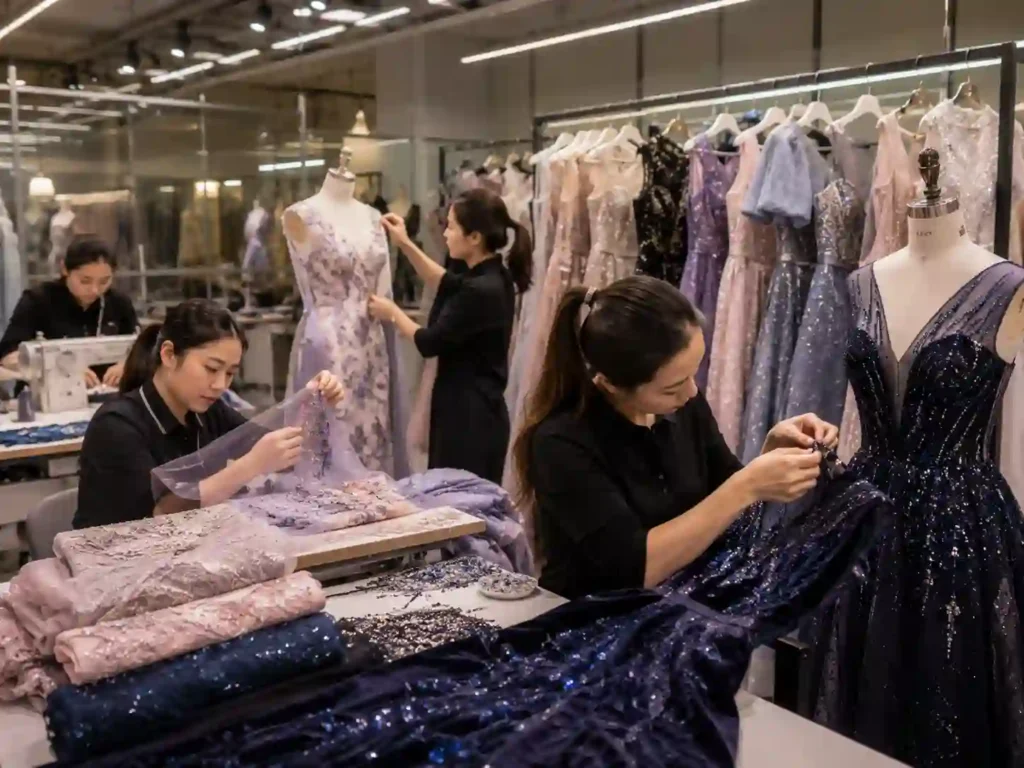
Babydoll dresses often perform well in lightweight to medium-light materials because the skirt needs enough freedom to move without becoming heavy beneath the raised seam. Cotton poplin creates a crisp, more architectural version in which gathers, puff sleeves, and ruffles remain clearly defined. Rayon and viscose create a softer result because their folds collapse closer to the body. Chiffon adds float and movement, while linen blends produce a relaxed shape with more body and surface texture.
Light satin can move a babydoll from casual daywear toward a dressier direction, although the combination of shine and gathering requires care because seam bulk becomes more visible. Soft knits can create comfortable interpretations but may reduce the crisp contrast between bodice and skirt. In practice, the fabric should be selected at the same time as the intended gather ratio, hem sweep, and lining. Changing material after pattern approval can alter the silhouette enough to require another fit or balance review. Even within one fiber family, finishing treatments can change stiffness and shrinkage enough to alter the approved silhouette.
Which Fabrics Suit Empire Waist Dresses?
Empire-waist construction is especially compatible with materials that create a clean fall from the high seam. Chiffon is useful for soft midi, maxi, bridesmaid, and event styles because it provides movement without placing excessive weight on the bodice. Satin offers a more polished surface and can emphasize the long vertical line, but it also exposes seam puckering, tension, and pressing marks more readily. Viscose and soft crepe-like woven fabrics suit less formal versions where fluidity is more important than structure.
Jersey can work well when comfort, stretch, or maternity-friendly ease is part of the design brief, but the pattern must account for stretch direction and recovery. A highly elastic bodice can allow the seam to move differently on the body than a woven version. The important question is not whether a fabric is technically suitable for an empire waist; it is whether its weight, drape, stretch, and surface behavior support the intended level of refinement, coverage, and movement. Sampling the actual production-quality fabric is especially valuable when the skirt is long, layered, or cut with directional grain.
How Do Gathering and Lining Change the Result?
Gathering compresses extra fabric into a shorter seam, so thickness matters as much as GSM. A thin viscose can tolerate generous gathering because it folds into a compact seam, while a textured cotton of similar weight may become bulky. If lining, elastic, piping, or multiple bodice layers meet at the same seam, thickness increases quickly. That added bulk can make the under-bust line feel stiff or visually heavy, especially in a design intended to look soft.
Lining is equally influential. It can add opacity, reduce static, improve comfort, and stabilize delicate shell fabrics, but an unsuitable lining can restrict movement or flatten the outer skirt. A lining that is much narrower than the shell may stop a babydoll skirt from opening naturally, while a lining that is heavier than chiffon can pull the dress downward. Shell fabric, lining weight, lining length, gather quantity, and attachment method should therefore be tested as one system during sampling. A short movement test during sampling can quickly show whether the lining and shell are working together or fighting each other.
Fabric | Typical Working Weight | Babydoll Behavior | Empire-Waist Behavior |
Chiffon | 50-90 gsm | Light, floating fullness | Strong vertical drape |
Rayon/viscose woven | 100-160 gsm | Soft gathers, low projection | Fluid everyday skirt |
Cotton poplin | 100-150 gsm | Crisp, visible volume | More structured appearance |
Linen blend | 120-190 gsm | Relaxed but defined | Casual structured drape |
Lightweight satin | 80-150 gsm | Dressier soft volume | Strong for occasionwear |
Jersey | 160-220 gsm | Relaxed, less crisp | Comfortable stretch direction |
How Are Babydoll and Empire Waist Dresses Constructed?
Both silhouettes are built around the relationship between the bust and the raised seam, but successful construction depends on more than placing a horizontal line under the bust. Pattern makers must balance front and back bodice length, bust shaping, skirt fullness, lining, neckline, armholes, and hem level. Because the seam is visually prominent, even small fit errors can change the intended silhouette and become obvious in bulk production.
How Is the Raised Seam Positioned?
The raised seam should be referenced to body measurements rather than guessed from a fashion sketch. Bust apex, under-bust level, front body length, side seam height, and strap position all influence where the seam appears once the garment is worn. A sample can look correct on a hanger yet show a curved center front when the bust pulls the bodice upward. For that reason, seam placement needs to be evaluated on a body or appropriate dress form, not only against flat pattern dimensions.
Visually sensitive areas often need small correction steps during fitting. Adjustments of roughly 0.5 to 1.0 cm around neckline, strap length, high-seam position, or front bodice balance can be noticeable even though they appear minor on paper. Final tolerances should always follow the approved tech pack and fabric behavior rather than a generic rule. The key is to keep the seam intentional and level while preserving adequate bust room, comfortable armholes, and the correct overall bodice proportion. The correction should then be reflected in both the pattern and measurement chart so the visual change remains reproducible.
How Is Skirt Fullness Controlled?
Fullness can be created with gathers, pleats, flare, shaped panels, tiers, or combinations of these methods. Gathers create immediate softness and are strongly associated with babydoll styling. Pleats organize volume into clearer folds. Shaped panels fit more smoothly into the raised seam and then widen gradually toward the hem, which is useful when an empire-waist dress needs movement without obvious bulk directly beneath the bust.
Distribution matters as much as total volume. Equal gathering across the entire front can create a rounded abdominal profile, while reducing center-front fullness and moving more volume toward the sides or back can produce a cleaner line. For production, phrases such as “make the skirt fuller” are too subjective. The approved pattern or construction sheet should record seam lengths, gather zones, pleat positions, panel dimensions, hem sweep, and symmetry expectations so the silhouette can be repeated consistently across sewing lines and production batches. This documentation also helps when repeat orders move to another line or when the same pattern is reused in a new fabric.
How Are Samples Reviewed Before Grading?
A fit sample converts visual preferences into measurable decisions. It should be assessed from the front, side, and back, with attention to seam level, bust coverage, neckline position, strap balance, skirt volume, hem level, and movement during walking and sitting. Side views are especially important because they reveal whether bust projection is pulling the front seam upward or whether excessive volume is pushing the skirt away from the body in a way that was not visible in the original sketch.
Grading should begin only after the base sample is stable. If the under-bust seam is too high, the neckline is unstable, or the lining restricts the skirt, grading simply multiplies the problem across sizes. Jinfeng Apparel’s documented development resources include 7+ senior womenswear pattern makers, two sample rooms, and 20+ sample machinists, with fit controls covering bust, under-bust, high waist, length, neckline, straps, armholes, lining, and other critical points. Those controls are especially relevant to raised-waist silhouettes. A stable base sample reduces later arguments about whether a bulk issue came from grading, sewing, or an unresolved original fit problem.
Review Point | What to Check | Typical Development Action |
Raised seam | Level, height, front/back balance | Raise, lower, or rebalance front bodice |
Bust | No pulling, gaping, or compression | Adjust darts, panels, depth, or ease |
Straps/armholes | Bodice stays at intended height | Shorten, lengthen, reposition, reshape |
Skirt fullness | Balanced front, side, and back | Redistribute gathers or revise panels |
Hem | Level during wear and movement | Correct front/back length or sweep |
Lining | Does not restrict shell | Increase sweep, change length or material |
Grading | Silhouette holds across sizes | Adjust grade rules by measurement point |
Which Dress Should Fashion Brands Develop?
Fashion brands should choose the silhouette that best supports the collection’s customer, occasion, fabric direction, price architecture, and visual identity. Babydoll dresses are strong for relaxed, feminine, resort, brunch, and youthful assortments, while empire-waist construction can stretch from casual daywear to midi, maxi, bridesmaid, and occasionwear. The strongest product decision starts with the intended fit and selling context, not with the style label alone.
Which Fits Casual and Occasion Collections?
Babydoll dresses naturally support collections built around ease, femininity, and visible movement. Floral prints, cotton blends, puff sleeves, ruffles, lace trims, tie details, and short lengths make the silhouette easy to position for brunch, vacation, resort, spring-summer, and lifestyle assortments. Its volume also reads clearly in ecommerce imagery, which can be commercially useful. The risk is that a dramatic sample may photograph well from one angle but feel shapeless or overly wide during real wear.
Empire-waist construction covers a wider occasion range because the same raised seam can be combined with very different materials and skirt shapes. A soft woven mini can remain casual, a chiffon midi can suit weddings or summer events, and a satin maxi can move into eveningwear. That versatility makes the empire line useful for brands building families of related silhouettes across several drops. Babydoll, by contrast, is usually a stronger statement shape that depends more heavily on maintaining its intended volume and proportion. That broader use can make the empire line particularly useful when a collection needs visual continuity across several price and occasion tiers.
How Should Brands Brief the Manufacturer?
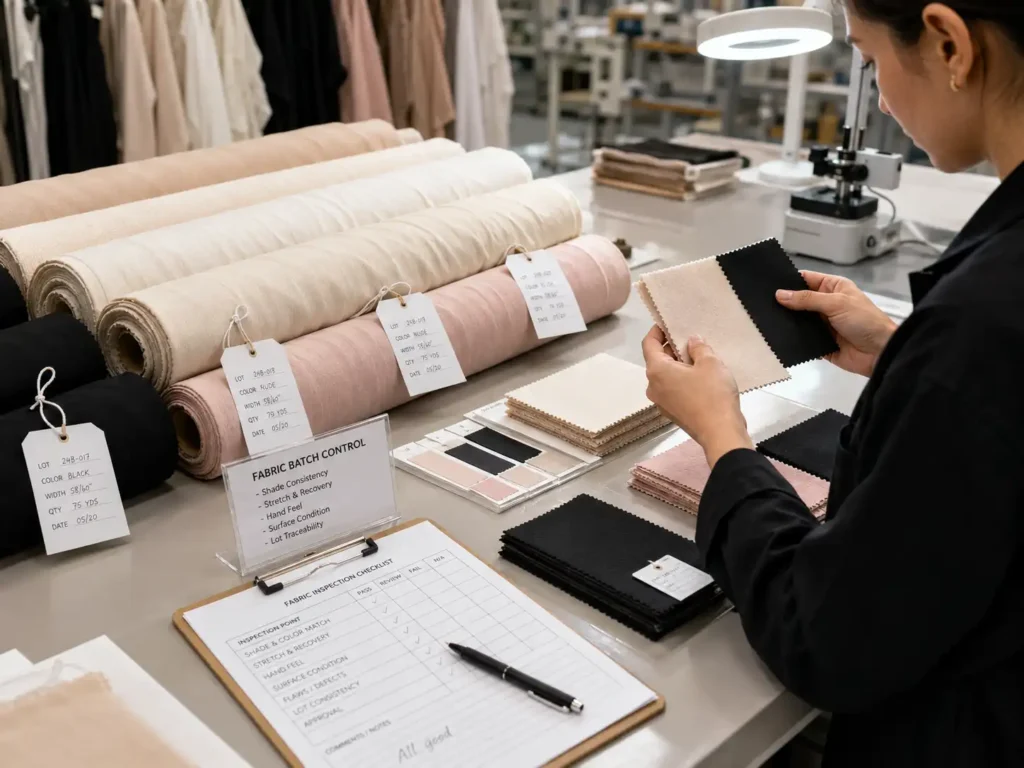
A strong development brief replaces ambiguous style language with measurable information. A reference image marked “babydoll” communicates mood, but it does not specify how far the seam sits below the bust, whether front and back gathers are equal, how wide the skirt should be, or how closely the bodice should fit. The brief becomes much more useful when it includes front and back sketches, finished length, seam-position reference, bust and under-bust measurements, neckline depth, sleeve or strap details, and the intended skirt construction.
Fabric and customer information belong in the same brief. The team should know the outer fabric, lining direction, size range, target market, fit-model measurements where available, expected colorways, trims, labels, and packaging requirements. A physical reference sample can be valuable when volume and drape are difficult to communicate digitally. Jinfeng Apparel can start development from tech packs, reference photos, original samples, sketches, line sheets, size charts, fabric swatches, or trim requirements, but those inputs still need to be translated into controlled specifications before bulk production. Clear priority notes also help the development team understand which details are non-negotiable and which may be adjusted for cost, fabric availability, or construction.
What Should Be Approved Before Bulk Production?
The approved sample should become an objective production reference rather than a general visual suggestion. Before bulk cutting, the brand and manufacturer should agree on the raised-seam position, bust fit, fabric, color, skirt volume, lining, finished length, construction method, measurement tolerances, labeling, and packing. Visually sensitive areas such as neckline depth, strap length, high-seam position, and short hem length often require tighter practical control than large circumferences, although the final tolerance must reflect fabric behavior and the brand’s own specification.
For babydoll styles, gather distribution and skirt balance deserve particular attention because a modest increase in fullness can make the dress look substantially bulkier. For empire-waist styles, seam level and front-bodice balance are usually more critical because the eye follows the high horizontal line immediately. Jinfeng Apparel’s current objective fact base records custom womenswear development, sampling, bulk production, quality control, private-label packing, and long-term production support, with MOQ starting from 200 pieces per style and color subject to fabric, trim, construction, and scheduling conditions. Photographing and retaining the approved sample details can also support repeat orders, color extensions, and future factory-line handovers.
Conclusion
Babydoll and empire-waist dresses are best understood as overlapping design ideas rather than two rigid, mutually exclusive categories. The empire waist tells you where an important horizontal seam is positioned; the babydoll tells you more about how the whole dress feels in proportion, volume, and styling. Once fabric, bust shaping, skirt fullness, length, and lining enter the equation, two dresses that begin from almost the same high-waist concept can become completely different products.
For shoppers, this makes it easier to recognize what they are actually seeing. For fashion brands, the distinction is even more practical: a successful sample depends on measurable seam placement, controlled volume, appropriate fabric behavior, stable fit across sizes, and a clear approval standard before bulk production. When those details are defined early, a manufacturer can reproduce the intended silhouette far more consistently, whether the collection calls it babydoll, empire waist, or a hybrid of both.
Share This Article :

Jerry Lee
Categories

Latest blogs
Table of Contents
Here, developing your OEM/ODM private label clothing collection is no longer a challenge—it’s an excellent opportunity to bring your creative vision to life.

