 Skip to content
How Corset Construction Affects Dress Cost: What Fashion Brands Should Know Before Sampling

Your trusted Women’s Apparel Manufacturer from China

A corset dress can look simple in a campaign photo: a clean neckline, a shaped waist, a smooth bust line and maybe a lace-up back. But inside the garment, the construction story is much more complex. A basic dress can rely on fabric, seams, zipper and finishing. A corset dress has to shape the body, hold the bust, stabilize the waist, control the neckline and still look clean after movement, sitting, packing and customer try-on. That is why two dresses that look similar on a website can carry very different production costs.
Corset construction affects dress cost because it adds structure, materials, pattern work, sewing operations, fit testing and quality control. Boning, cups, lining, anti-slip tape, lace-up panels and size grading all increase development time and bulk-production risk. The more functional the support, the higher the cost.
For fashion brands, the useful question is not simply, “Why is this dress more expensive?” The better question is, “Which construction details protect the product value, and which details can be simplified without damaging fit?” A well-built corset dress can lift the perceived value of a collection. A weak one can create gaping necklines, rolling seams, poor bust shape, zipper waves, broken boning and avoidable returns.
What Is Corset Construction in Dresses?
Corset construction in dresses means the bodice is built with support details such as boning, cups, reinforced lining, shaped seams, waist control or lace-up adjustment. It is not only a design look. It affects pattern making, fabric choice, sewing sequence, fit testing, size grading, quality control and final production cost.
A close-up editorial photo of a corset dress bodice on a dress form, showing inner lining, boning channels, cups, seam lines and zipper construction, clean factory background, realistic garment development scene, professional fashion manufacturing photography.
Core Parts
A corset dress is usually defined by its structured bodice. The skirt may be simple, but the upper body often carries the real cost. Common parts include boning channels, plastic or steel boning, shaped cups, lining, interlining, reinforced seams, zipper support, anti-slip tape and sometimes a lace-up back.
Not every corset dress includes all of these parts. Some styles use only decorative corset seams to create a visual effect. Others need real support, especially strapless, sweetheart, low-back, lace-up or occasionwear styles. This difference is important because a decorative corset detail may only add several sewing operations, while a functional corset bodice changes the entire production process.
For buyers and product teams, the first question should not be, “Is this a corset dress?” It should be, “How much support does this dress need?” A party mini dress, a bodycon mesh dress and a satin wedding guest dress may all use corset-inspired design, but their internal structure and cost can be very different.
Fashion vs Support
In modern womenswear, many corset dresses are fashion corsets rather than traditional waist-training corsets. Their purpose is to create a sculpted look, flatter the bust and define the waist while remaining comfortable enough for parties, dinners, weddings, events and ecommerce customers.
A fashion corset can be light. It may use 4-6 plastic bones, soft cups and a simple lining. A more supportive corset may need 8-12 bones, better cup shaping, reinforced neckline control, stronger lining and a more stable back closure. The stronger the function, the more time and cost the garment requires.
This is why reference photos can be misleading. Two dresses may both show vertical corset seams, but one may be only visual while the other may be engineered to hold the bust without a bra. From the outside, the difference may not be obvious. On the body, it is immediately noticeable.
Common Structures
Corset dress construction can be grouped by support level. This helps brands understand why quotations vary and why a factory may ask more questions before giving a final price.
| Corset Construction Type | Typical Support Level | Common Details | Cost Impact |
| Decorative corset seams | Low | Panel lines, topstitching, visual boning effect | Low to medium |
| Light boned bodice | Medium | 4-8 plastic bones, lining, simple cups | Medium |
| Built-in cup corset | Medium to high | Cups, boning, reinforced neckline, lining | Medium to high |
| Strapless corset dress | High | Anti-slip tape, stronger cups, stable boning, zipper support | High |
| Inner corset structure | High | Hidden support layer, multiple linings, waist control | High |
The cost rises as the structure becomes more functional. A visual corset effect mainly affects sewing appearance. A functional corset affects fit, comfort, balance, customer confidence and return risk.
Design Intent
A good corset dress starts with clear design intent. Is the dress made for a short selling cycle and trend-driven price point? Is it a hero style for an ecommerce campaign? Is it designed for prom, occasionwear, wedding guest collections or evening events? The answer changes the structure.
If the design is price-sensitive and trend-led, the structure can often be simplified. If the design is strapless, low-back, heavy satin, lace-up or made for occasionwear, support should not be reduced too aggressively. A weak corset may look fine on a hanger but fail on the body.
The smartest brands define the support level before sampling. That allows the supplier to choose suitable boning, lining, cup type and sewing methods from the beginning. It also reduces sample revisions and keeps the final cost closer to the first quotation.
How Does Structure Raise Cost?
Structure raises cost because it adds materials, labor, sewing operations, fit risk and inspection points. Boning channels, cups, lining, anti-slip tape, lace-up backs and reinforced seams all take time to place correctly. In corset dresses, small errors can affect comfort, body shape and customer returns.
A production table with corset dress pattern pieces, boning strips, cups, lining fabric, zipper and sewing notes arranged neatly, with a technician checking construction details, realistic garment factory setting.
Boning Channels
Boning channels are one of the clearest cost drivers. Each channel must be positioned, sewn, checked and finished. On a simple fitted dress, the bodice may need darts, side seams and a zipper. On a corset dress, the bodice may require multiple vertical support lines to hold shape and prevent collapse.
A light corset may use 4-6 bones. A more structured bodice may use 8-12 bones. More channels mean more sewing time, more marking work and more quality-control points. The stitching must be straight and balanced from left to right. If one channel is crooked, the whole bodice can look uneven, especially on satin, mesh, lace or solid-colored fabrics.
The cost is not only the boning material. It includes channel preparation, stitching, insertion, end securing, trimming, pressing and inspection. In bulk production, those steps must be repeated consistently across sizes and colors. That is why a few extra boning channels can create a noticeable cost difference.
Built-In Cups
Built-in cups change the pattern more than many brands expect. Once cups are added, the bodice is no longer a flat fabric shell. The pattern has to control cup volume, bust point, underbust curve, neckline height and side coverage.
Soft cups are usually easier and more cost-friendly than molded cups. Removable pads may be simple, but they can shift during wear. Sewn-in cups create a cleaner look, but they must be placed accurately. For strapless, sweetheart and bustier dresses, cup shape is especially important because the customer may wear the dress without a bra.
Cup-related problems are common during sampling. The bust may look too flat, too high, too wide or too exposed. Fixing that may require cup replacement, pattern correction, neckline adjustment or lining changes. Those revisions add time, but they often prevent bigger problems in bulk production.
Lining Layers
Lining is one of the biggest hidden cost areas in corset construction. A simple dress may use one thin lining or no lining. A corset dress often needs a stronger bodice lining, partial interlining, cup lining or reinforcement around the bust and waist.
The lining helps hide seams, protect the skin from boning, improve opacity and support the outer fabric. In satin, mesh, lace or chiffon, lining also affects how smooth the dress looks on the body. Poor lining can create wrinkles, twisting, bulk, roughness or visible seam shadows.
Every extra layer must be cut, matched, sewn and pressed. If the outer fabric stretches but the lining does not, the dress may feel tight or distort. If both layers stretch too much, the bodice may lose support. The best lining plan is usually not the thickest one. It is the lightest structure that still gives coverage, comfort and stability.
Closures and Support
Corset dresses often put extra pressure on closures. A normal invisible zipper may be enough for a loose dress, but a tight corset bodice needs better zipper support. If the back seam is under tension, the zipper can wave, jam or look uneven.
Lace-up backs also add cost. They may require eyelets, loops, cords, reinforced stitching and a modesty panel. These details improve adjustability and create a strong corset look, but they take time to align and test. Eyelets must be pressed securely. Loops must be evenly spaced. The modesty panel must sit flat and not twist.
Anti-slip tape is another small but practical support detail for strapless styles. It helps the neckline stay in place. But it must be stitched with controlled tension. If it is applied too tightly, the neckline can pucker. If it is too loose, it will not perform well.
| Structure Detail | Why It Adds Cost | Common Risk If Underbuilt |
| Boning channels | Extra marking, stitching, insertion and inspection | Bodice collapse, uneven shape |
| Built-in cups | Pattern shaping, placement and fitting work | Flat bust, gaping or poor support |
| Reinforced lining | Extra cutting, sewing and pressing | Weak support, visible seam shadows |
| Anti-slip tape | Additional trim and tension-controlled sewing | Strapless neckline slipping |
| Lace-up back | Eyelets, cord, panel and alignment work | Weak lacing, uneven back fit |
| Stronger zipper | Better closure stability and back support | Wavy zipper or closure failure |
Structure raises cost because it turns a dress into a fitted support system. A small construction shortcut may not show on the hanger, but it often appears during wear.
Which Materials Add Cost?
Materials add cost when they improve support, appearance, durability or comfort, or when they are difficult to cut and sew. In corset dresses, key cost drivers include boning type, cup type, lining quality, outer fabric behavior, zipper strength, lace placement, eyelets and specialty trims.
A flat-lay of corset dress materials including satin fabric, lace, mesh, plastic boning, spiral boning, molded cups, lining swatches, eyelets, zipper and lace-up cord, shot in a clean apparel sourcing studio.
Boning Options
Boning material affects both price and performance. Plastic boning is widely used in fashion corset dresses because it is lightweight, flexible and more cost-friendly. It works well for visual shaping and light support, especially in party mini dresses and trend-led styles.
Stronger synthetic boning or spiral steel boning provides better support, but it costs more and requires more careful handling. The ends must be secured properly so they do not damage the fabric or poke through the lining. Stronger boning can also make a dress feel less flexible, so it is not always the best choice for every style.
The right choice depends on the product promise. A stretch mesh club dress may only need light boning. A strapless satin dress needs more stability. A premium occasion dress may require stronger internal support. Overbuilding raises cost and may reduce comfort. Underbuilding can hurt fit, customer confidence and reviews.

Outer Fabrics
Outer fabric has a major influence on corset cost. Satin gives a premium look, but it shows wrinkles, seam tension and pressing marks easily. Mesh can look modern and light, but it needs careful lining and seam control. Lace adds value, but placement and cutting may take more time. Sequin fabric can slow sewing and increase needle damage.
Stable fabrics often make production easier. Very thin, slippery or stretchy fabrics may need extra reinforcement to hold a corset shape. Heavy fabrics may pull the bodice down and require stronger structure. Transparent fabrics need lining choices that protect coverage without ruining the intended look.
Brands sometimes choose fabric based only on a reference photo. That can be risky. The same corset dress in stretch satin, non-stretch satin, lace, mesh or sequin fabric may require different lining, boning, cup and seam treatment. Fabric behavior should be reviewed before the quotation is fixed.
Lining and Interlining
Lining quality affects comfort, opacity and structure. A low-cost lining may reduce material cost, but it can feel rough, twist during wear or fail to support the bodice. A better lining can make the garment smoother, more stable and more comfortable.
Interlining may be needed when the outer fabric is too soft to hold shape. For example, a thin satin bodice may need reinforcement around the cups and waist. A lace corset may need a stable base layer. A mesh corset may need selective lining to preserve transparency while keeping the bust area wearable.
The challenge is balance. Too little lining makes the dress weak. Too much lining makes it bulky, hot or stiff. In commercial production, targeted reinforcement often works better than heavy structure everywhere.
Trims and Hardware
Trims can quietly increase cost. Zippers, eyelets, hooks, cords, cups, elastic, tape, binding and labels all need to be sourced, tested and sewn. In corset dresses, these trims are often under tension, so quality matters.
A zipper on a tight corset dress needs to close smoothly and lie flat. Eyelets must not pull out. Lace-up cords should not fray easily. Cups should not fold or shift. Anti-slip tape should not irritate the skin. Even thread and seam quality matter because fitted bodices carry more stress than loose garments.
For private-label orders, trim consistency also matters across colors and batches. If one color uses a different zipper quality, eyelet finish or lining tone, customers may notice. The approved sample should lock these details before bulk production.
Material / Trim | Common Use | Typical Cost Impact | Practical Note |
Plastic boning | Light fashion corset styles | Low to medium | Good for visual shaping, limited support |
Strong synthetic boning | Better shape retention | Medium | Useful for strapless or structured bodices |
Spiral steel boning | High-support styles | High | Better support, higher handling requirement |
Soft cups | Basic bust shaping | Low to medium | Common in party and mini dresses |
Molded cups | Cleaner bust shape | Medium to high | Better shape, more fitting sensitivity |
Anti-slip tape | Strapless neckline control | Low to medium | Small cost, useful for wearability |
Eyelets and lacing | Lace-up corset backs | Medium | Adds adjustability and visible detail |
The wrong material choice can create false savings. A cheaper trim may reduce the unit price slightly, but if it damages fit, comfort or durability, the product cost comes back through returns, complaints and lost repeat orders.
How Does Fit Affect Cost?
Fit affects cost because corset dresses must control the bust, waist, neckline and torso more precisely than regular dresses. Cup shape, size grading, sample revisions and PP sample approval all add development work. A small fit error can make the dress uncomfortable, unstable or unwearable.
A technical fitting session for a corset dress on a mannequin and fit model, showing measurement tape, pinned bodice, cup position checking and pattern notes, professional womenswear development room.
Cup Shape
Cup shape is one of the hardest parts of corset dress development. A cup must match the neckline, bust position, target size range and desired support level. If the cup is too shallow, the bust may look compressed. If it is too deep, the neckline may gape. If it sits too high or too low, the whole dress can look wrong.
This becomes more sensitive in strapless, sweetheart, deep V and low-back designs. These styles cannot hide poor cup placement. The dress must shape the bust while still feeling secure. For larger sizes, the support requirement usually increases. For smaller sizes, the cup may need to look natural without extra bulk.
Sampling is where these issues are solved. A first sample proves the concept. A fit sample corrects body balance. A PP sample confirms the standard before bulk production.
Bust and Waist Ratio
Corset dresses are built around body proportions. Bust, underbust, waist, high hip and torso length all matter. If the waist is too tight, the zipper may pull or the customer may not sit comfortably. If the bust is too loose, the neckline may gape. If the torso length is wrong, the bodice may ride up or fold.
This is why grading is more complex than simply increasing every measurement. A corset dress in size XS and XL may need different cup behavior, bone length and neckline control. The pattern must scale while keeping the same visual shape.
Different markets also have different fit expectations. A US-focused ecommerce brand, a UK occasionwear label and an Australian resort-party brand may use different size charts and customer fit preferences. A supplier should not grade a structured corset dress like a loose A-line dress.
Sample Revisions
Corset dresses often need more sample revisions than simple dresses. The first sample may show that the design is possible, but it may not yet fit correctly. The second sample may correct bust shape, waist tension, neckline height, lining behavior or zipper balance. The PP sample then locks the production standard.
Revisions cost time and money, but they can prevent larger bulk-production problems. If a corset dress goes into production with an unstable neckline or poor cup shape, every piece may carry the same defect. Fixing the problem after cutting or sewing is far more expensive than correcting it during sampling.
Brands can reduce revisions by sending clear information at the beginning: target fabric, size chart, support level, cup preference, lining expectation, fit model size and front-side-back reference photos. General comments like “make it better” do not help much. Specific comments lead to faster corrections.
PP Sample Control
A PP sample is especially important for corset dresses because it becomes the production reference. It should confirm fabric, lining, cups, boning placement, zipper, stitching, measurements, labels, packing and overall appearance.
For corset styles, the PP sample should be checked on both hanger and body. A dress may look clean on a hanger but gap at the neckline. It may fit the bust but feel too tight at the waist. It may close properly in size S but create problems in larger sizes.
Once the PP sample is approved, the factory can create operation standards for production. Workers know where the boning sits, how the cup should be placed, how the lining should be attached and what measurements must be controlled. This reduces confusion and keeps bulk goods closer to the approved sample.
Fit Area | Common Working Tolerance in Bulk | Why It Matters |
Bust width | About +/- 0.5-1.0 cm | Affects cup comfort and neckline stability |
Waist width | About +/- 0.5-1.0 cm | Controls tightness and zipper tension |
Cup height | About +/- 0.3-0.7 cm | Changes bust position visibly |
Top edge length | About +/- 0.5 cm | Affects gaping or tightness |
Side seam length | About +/- 0.5-1.0 cm | Affects bodice balance |
Zipper length | About +/- 0.5 cm | Affects back fit and closure |
These are common working references, not universal rules. Final tolerance depends on fabric, size range, construction method and the brand’s quality standard.
How Does Bulk Production Change Cost?
Bulk production changes cost because corset details must be repeated accurately across many pieces, sizes and colors. Sewing speed is slower, QC points increase, trims must stay consistent and measurement control becomes stricter. Higher quantity can improve unit efficiency, but complexity still requires careful production management.
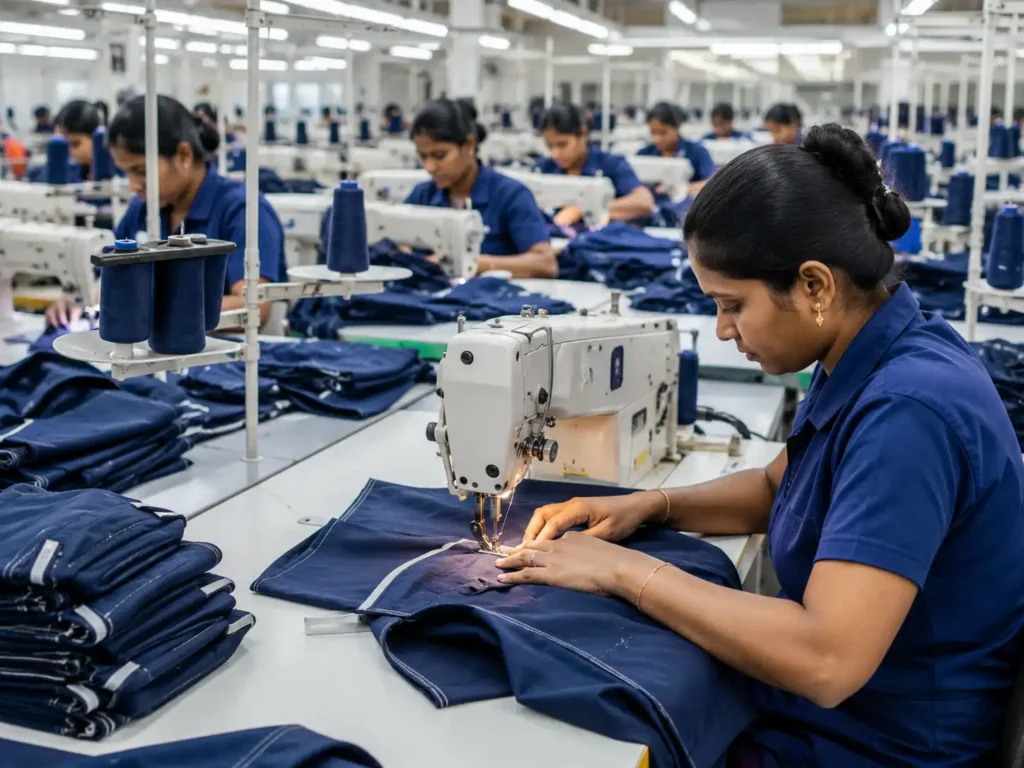
A realistic garment production line sewing corset dress bodices, with workers checking boning channels, cups, zipper alignment and finished measurements, clean fast fashion womenswear factory environment.
Sewing Repeatability
One corset sample can be made slowly by a skilled sample maker. Bulk production is different. The same structure must be repeated hundreds or thousands of times without losing shape, balance or comfort.
Corset sewing requires stable operation steps. Boning channels must stay straight. Cups must sit symmetrically. Zippers must lie flat. Necklines must not stretch out. Lining must not twist. These details slow production because workers need more care than they would with a basic loose dress.
Repeatability is often the real test of a supplier. A low quotation may look attractive, but if the factory does not allow enough time for accurate sewing and checking, quality problems may appear in bulk. For structured dresses, production speed should be realistic.
Size and Color Risk
Corset dresses become more difficult when the order includes many sizes and colors. Size grading affects cup position, bone length, waist tension and neckline control. A size S sample does not automatically prove that size XL will fit well.
Colors also matter. Black can hide some wrinkles and seam tension. Ivory, champagne, red or light satin may reveal every pressing mark or puckering line. Mesh and lace colors often require careful lining selection. A nude lining under black mesh creates a different effect from the same lining under ivory mesh.
When brands develop multiple colorways, the factory must check whether zippers, cups, cords, eyelets and linings match each color. If substitutions are needed, they should be approved before bulk production. Otherwise, one color may look more premium than another.
QC Checkpoints
Quality control for corset dresses should be more detailed than for simple dresses. It should include measurements, appearance, construction and wearability-related checks. A garment can meet basic width measurements but still fail because the bust is uneven or the neckline gaps.
Important QC points include cup symmetry, boning position, top edge tension, zipper smoothness, lining comfort, seam balance, eyelet strength and final pressing. For strapless dresses, neckline stability should be checked carefully. For lace-up styles, the lacing gap and modesty panel should be consistent.
In bulk production, QC should start before the final inspection. Fabric inspection, trim checking, first-piece approval, inline checking and final inspection all help prevent repeated defects. The later a corset defect is found, the more expensive it becomes to repair.
Quantity and Unit Price
Order quantity affects unit cost because development, setup and production preparation can be spread across more pieces. A corset dress has more setup work than a simple dress, so very low quantities often carry a higher unit cost. As quantity increases, some fixed costs become more efficient.
However, higher quantity does not remove construction difficulty. A 3,000-piece corset dress still needs accurate sewing, stable trims and strict QC. In fact, mistakes become more expensive at higher volumes. If the PP sample is wrong, the problem is repeated across every piece.
For brands, the better strategy is to confirm structure and fit before scaling. A first production can validate the product. Repeat orders can then run more efficiently because the pattern, fabric, trims and sewing process are already known. This is especially useful for seasonal collections and ecommerce brands that repeat successful styles.
| QC Checkpoint | What to Inspect | Common Problem |
| Cup position | Height, symmetry, shape | Uneven bust or visible cup edge |
| Boning channels | Straightness, length, end finish | Twisting, poking, crooked lines |
| Top edge | Tension, gaping, anti-slip tape | Loose neckline or puckering |
| Zipper | Smooth closing, flat back seam | Wavy zipper or tight closure |
| Lining | Comfort, twist, seam coverage | Bulk, pulling, rough inside |
| Lace-up back | Eyelet strength, cord length, panel | Uneven lacing or weak hardware |
These checks add labor, but they help protect the brand from returns, complaints and inconsistent customer reviews.
How Can Brands Control Cost?
Brands can control corset dress cost by defining the support level early, simplifying non-essential details, choosing fabrics that work with the structure, limiting unnecessary trims and preparing clear development documents. The goal is not to remove quality, but to spend money where fit and product value matter most.
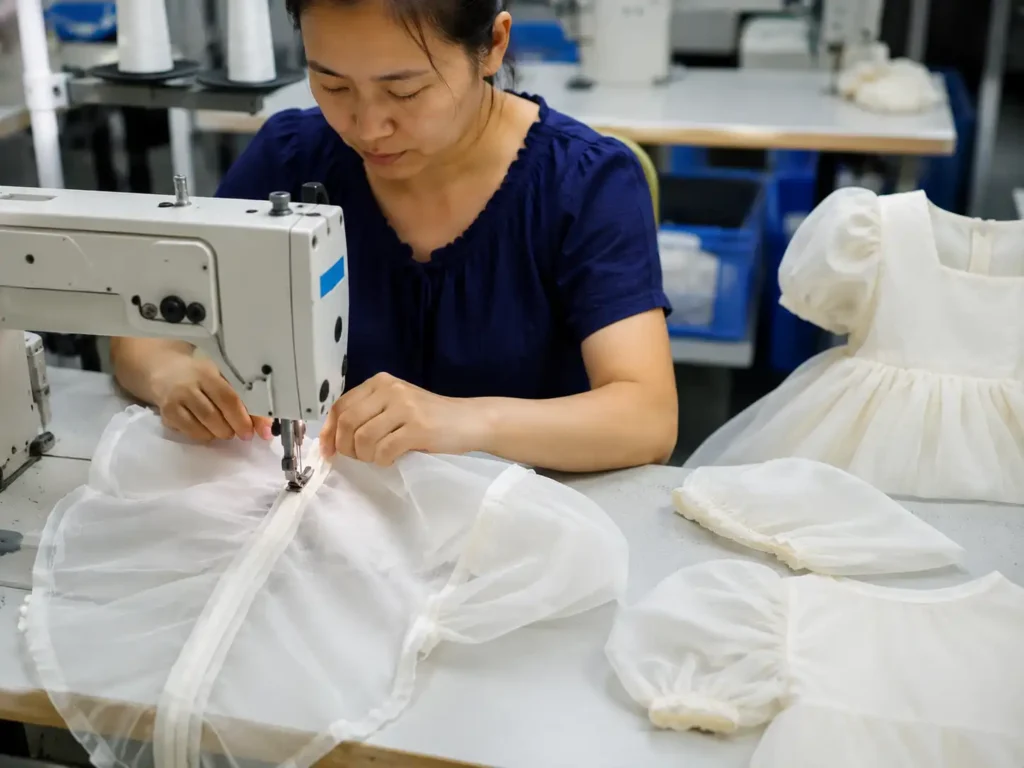
A professional product development meeting showing a corset dress tech pack, fabric swatches, cost sheet, sample bodice and measurement chart on a desk, with sourcing and design team reviewing cost-control options.
Define Support Level
The fastest way to control cost is to define the support level before sampling. A dress that only needs a corset look can be built differently from a dress that must support the bust without a bra. If this is not clear, the factory may quote one version while the brand expects another.
A simple classification helps. Visual corset details are suitable for trend styles. Light boning works for many mini dresses and club dresses. Built-in cups are useful for bustier shapes. Stronger internal support is better for strapless satin, prom, evening or occasionwear styles.
When support level is clear, the supplier can recommend a structure that fits the retail price. This prevents overbuilding price-sensitive styles and underbuilding premium styles. Both mistakes can hurt the brand.
Simplify Wisely
Cost can often be reduced without damaging the design. For example, the brand may reduce the number of boning channels, use partial lining, simplify the lace-up back, choose soft cups instead of molded cups or remove trims that do not improve fit.
But simplification has limits. Removing anti-slip tape from a strapless style may create wearability problems. Using weak lining in a light satin corset may create wrinkles. Reducing boning too much may cause the bodice to collapse. The best simplification keeps the product stable while removing unnecessary complexity.
A practical rule is simple: protect anything that affects fit, comfort or customer confidence. Simplify anything that is decorative but not essential to the product promise.
Choose Practical Fabrics
Fabric choice is one of the best cost-control tools. A stable fabric can reduce the need for heavy reinforcement. A medium-weight satin may perform better than a very thin satin. A stretch fabric may work well for fitted bodycon styles. Lace can be used as panel detail instead of full-body coverage.
Brands should also consider fabric availability and MOQ from fabric suppliers. Custom-dyed colors, special lace, unusual sequins or narrow-width fabrics may increase cost. If a color is not available in stock fabric, the fabric supplier’s minimum may affect the whole order plan.
A fabric should be judged by appearance, sewing behavior, wearing comfort and production stability. The cheapest fabric per meter may not produce the cheapest finished dress if it creates more wastage, sewing difficulty or QC problems.
Send Better Files
Better input creates better quotations. A factory can estimate more accurately when the brand sends a tech pack, reference photos, size chart, fabric direction, color plan, order quantity, support requirement, label details and packaging needs.
For corset dresses, the most useful information includes cup type, boning count, lining expectation, zipper type, lace-up detail, anti-slip tape requirement and target size range. If the brand does not know the exact structure, it should say what effect it wants: light corset look, moderate bust support or strong strapless support.
Clear files reduce guessing. Less guessing means fewer sample revisions, fewer price changes and fewer production delays. For structured garments, good preparation is not paperwork for its own sake. It is one of the simplest ways to control cost and protect the final product.
Brand Decision | Cost-Control Option | What to Watch |
Support level | Choose visual, light, medium or strong support | Do not underbuild strapless styles |
Boning count | Use only the channels needed for shape | Keep left-right balance clean |
Cups | Choose soft, molded or removable cups by market need | Check fit across size range |
Fabric | Use stable fabric with suitable weight | Avoid fabrics that need heavy correction |
Lining | Use targeted reinforcement | Avoid bulk and twisting |
Color plan | Consolidate colors where possible | Check trim and lining match |
Documents | Send tech pack and clear references | Reduces quotation changes |
Final Thoughts
Corset construction affects dress cost because it changes the dress from a simple sewn garment into a fitted support system. The added cost comes from boning, cups, lining, trim selection, pattern correction, sample revisions, sewing accuracy, QC standards and bulk-production consistency. The goal for brands is not to avoid these costs completely. The goal is to understand which costs create real product value.
A corset dress is often a high-impact style in a collection. It photographs well, shapes the body and works across partywear, clubwear, occasionwear, prom, wedding guest and evening categories. But it also exposes weak manufacturing quickly. Poor structure leads to slipping, gaping, twisting, cup problems, zipper waves and inconsistent sizing.
For custom corset dress development, prepare your tech pack, reference photos, target fabric, size range, color plan, quantity and private-label requirements before requesting a quotation. Jinfeng Apparel can review the structure, suggest fabric and construction options, prepare sampling details and help turn a corset dress concept into a production-ready garment with a better balance of cost, fit and brand-level appearance.
Share This Article :

Jerry Lee
Categories

Latest blogs

Table of Contents
Here, developing your OEM/ODM private label clothing collection is no longer a challenge—it’s an excellent opportunity to bring your creative vision to life.

