 Skip to content
Corset Dress Sample Review Checklist: How to Check Fit, Cups, Boning and PP Approval

Your trusted Women’s Apparel Manufacturer from China

A corset dress sample can look convincing on a hanger and still be several revisions away from production. The visible silhouette is only the outer layer of the problem. Underneath it, cup position, upper-bust tension, under-bust shaping, boning placement, lining behavior, waist suppression, closure tension and fabric recovery are interacting at the same time. A small change in one area can shift the balance somewhere else: moving a cup can alter neckline tension, tightening the waist can pull a zipper into waves, and changing from a soft development fabric to a firmer production fabric can make boning channels suddenly visible. That is why a serious sample review should never be reduced to a quick visual check or a list of measurements taken off the body.
A corset dress sample should be reviewed against the latest tech pack, measurement specification, approved materials and previous comments. Check bust and waist fit, cup position, boning, neckline stability, side seams, lining, closures, workmanship and movement. Record every issue clearly, then decide whether the sample is approved, needs revision, or is ready to proceed to a PP sample.
The most useful review happens when the team treats the sample as evidence, not as a mood. Picture a corset mini dress that looks nearly perfect from the front: the waist is sharp, the cups are symmetrical and the neckline photographs well. Then the fit model walks across the room, sits down and stands again. One side seam has moved forward, the upper edge has dropped slightly, the zipper starts to ripple at the waist and one cup no longer sits where it did at first. Nothing about that problem is unusual in structured womenswear. What matters is whether the review process catches it before the sample becomes the reference for hundreds or thousands of garments.
What Should Be Ready Before Sample Review?
Before reviewing a corset dress, confirm the sample stage, latest technical documents, style and revision number, sample size, material status and previous comments. The fitting loses value when the garment and the documents beside it represent different development versions, or when temporary cups, boning, lining or closures are mistaken for final production components.
Confirm the Sample Stage
The first question is not whether the dress looks attractive; it is what the current sample is supposed to prove. A first sample is usually about design interpretation, basic proportions and construction direction. A fit sample moves the focus toward body balance, upper-bust contact, cup placement, waist shaping and wearing behavior. A revised sample should prove that earlier comments were actually corrected. A PP sample carries a much higher burden because it is expected to represent the intended bulk materials, trims, measurements and construction closely enough for production planning.
A disciplined team therefore raises the approval standard at each step rather than using one generic checklist from beginning to end. An early sample can still contain provisional components if everyone knows what they are. A PP sample should not hide major unknowns behind the phrase ‘production will fix it.’ For structured corset, strapless, lace, mesh, sequin and evening styles, more than one revision is common when fit-sensitive elements interact. Jinfeng Apparel’s documented development flow follows First Sample -> Fit Sample -> Revised Sample -> PP Sample -> Golden Sample, with structurally complex styles commonly requiring more revision work than simple dresses.
Sample Stage | Main Review Purpose | What Should Usually Be Confirmed |
First Sample | Design and construction direction | Silhouette, major pattern lines, structure, feasibility |
Fit Sample | Body fit and balance | Bust, upper bust, waist, neckline, side seams, movement |
Revised Sample | Correction verification | Previous comments, updated pattern, structural changes |
PP Sample | Production readiness | Final materials, trims, measurements, workmanship, labels |
Golden Sample | Bulk reference | Approved physical standard linked to controlled documents |
Use the Latest Technical Package
A fitting session becomes unreliable the moment someone opens an outdated measurement sheet. The sample should be reviewed against one controlled technical version, normally including the current measurement specification, tolerance, BOM, construction information, approved material references and previous fit comments. If a tech pack is being used, its revision number or issue date should be easy to identify. The purpose is simple: every person in the review should be talking about the same garment, the same materials and the same intended correction.
Corset dresses make version control especially important because a small technical change can affect several visible results. A new cup can change bust projection and neckline height. A stiffer boning material may sharpen the waist but become more visible through the shell. A lining with different stretch can alter how the outer fabric settles. A different zipper tape or construction can change tension around the back or side seam. The technical package should therefore answer practical questions before fitting starts: which cup is approved, which boning is intended, whether the lining is final, what changed after the last sample, and which comments should already be closed.
Check Version and Material Status
Before the model puts on the dress, identify whether every major component is final, provisional or substituted. This is a small administrative step, but it prevents one of the most expensive sample-review errors: approving performance that belongs to a temporary component rather than the material that will actually be used in production. A development sample cut in a softer shell may lie smoothly over the boning, while a firmer bulk fabric may expose every channel. A temporary foam cup may create a completely different bust shape from the approved cup.
Record the style number, sample revision, sample size, color, shell fabric, lining, cups, boning, closure, anti-slip tape and any decorative trims. If a component is substituted and directly affects fit or structure, the team can approve the direction but should not pretend the final behavior has already been proven. This distinction is particularly important when a brand is moving quickly toward a launch date, because schedule pressure tends to turn provisional decisions into assumed approvals unless the status is written down clearly.
- Style number and sample revision
- Sample size and color
- Shell and lining status
- Cup and boning status
- Zipper or closure status
- Anti-slip and decorative trim status
Review Previous Comments First
Every new sample should begin with the last fitting report rather than a completely fresh opinion. If the previous sample had a low cup position, unstable neckline and zipper waviness, those three points should be checked before the team gets distracted by new aesthetic ideas. Each earlier comment should be marked as corrected, partially corrected, not corrected or replaced by a new issue. That simple discipline makes the development history visible and prevents the same defect from surviving several sample rounds under slightly different wording.
Corset revisions often create trade-offs, which is another reason to keep a comment trail. Raising a cup may improve bust support but reduce upper-edge coverage. Increasing waist suppression can sharpen the front silhouette while increasing zipper tension. Stiffening the internal structure can improve stability but make the boning more visible through a smooth satin shell. A useful review therefore asks not only whether the last comment disappeared, but also whether the correction created a new imbalance somewhere else. The goal is controlled improvement, not simply fewer notes on the page.

How Do You Check Fit and Measurements?
Check a corset dress in two layers: measure the garment against the approved specification, then evaluate how those measurements behave on the body. Bust, upper bust, under bust, waist, neckline, side seams and vertical balance need to be read together because a garment can fall within tolerance and still fit poorly when structure or volume is distributed incorrectly.
Measure Before Judging the Look
Measure the sample before relying on visual impressions. A fit model’s posture, bust distribution and body proportion can influence what the garment appears to be doing, while actual measurements provide an objective starting point. Record the sample value beside the approved specification and tolerance rather than writing a simple ‘OK.’ For a corset dress, the most useful points often include full bust, upper bust, under bust, waist, center-front length, center-back length, side length, neckline depth, hip when the skirt is fitted and total garment length.
The numbers should support the fit decision rather than replace it. Jinfeng Apparel’s documented pattern-development work covers bust, upper bust, under bust, waist, hip, front and back length, neckline depth and other fit-sensitive points. Its development resources include 7+ senior womenswear pattern makers, 2 sample rooms and 20+ sample machinists. That scale is relevant because structured fit is rarely solved by one measurement alone; the team needs to understand how several points interact and how a change to one section affects the rest of the bodice.
Fit Point | What to Record | What to Observe on Body |
Full Bust | Actual vs approved spec | Compression, overflow, empty space |
Upper Bust | Actual vs approved spec | Gaping, edge pressure, stability |
Under Bust | Actual vs approved spec | Cup support and band position |
Waist | Actual vs approved spec | Even shaping and breathing comfort |
Center Front | Actual length | Cup and neckline vertical position |
Side Seam | Position and length | Forward/back swing, twisting |
Neckline | Depth and width | Contact, rolling, exposure |
Dress Length | Total length | Ride-up, hem balance, proportion |
Read Bust and Waist Together
Corset fit is not a matter of making the bust fit and then making the waist tight. The two areas are linked by the internal structure. If the waist is reduced aggressively without enough shaping through the bust, the bodice may pull downward. If the bust area is too generous, the neckline may gape even when the waist looks sharp. If the cup projection is wrong, the full-bust circumference can match the specification while the wearer still has empty space, overflow or pressure in the wrong place.
During fitting, look at how the volume is distributed rather than only at the tape-measure result. The bust should sit naturally in the intended cup position instead of being pushed sideways or upward merely because the bodice is tight. The under-bust area should support without creating a hard horizontal ridge. Waist shaping should look controlled from front, side and back rather than appearing narrow only in a front photograph. For commercial partywear, occasionwear and clubwear, the garment still has to be wearable for hours, so visual shaping and physical comfort have to be judged together.
Watch Neckline and Side Seams
The neckline and side seams often expose imbalance before the measurement sheet does. A clean neckline should follow the intended design line without standing away from the body, rolling outward or cutting sharply into the upper bust. Check it from the front, side and three-quarter view. One side may behave differently because of asymmetric sewing, cup placement or internal tension, and those differences can disappear in a straight-on photograph if nobody looks closely.
Follow the side seam from the underarm toward the hem. It should remain close to its intended position rather than swinging strongly forward or backward. A forward-moving seam may indicate that the front needs more room, the back has too much width, or the bust structure is pulling the bodice off balance. A backward seam may point to the opposite distribution. On a corset dress, the lining and boning can also shift the seam, so the correction should follow the cause rather than simply redrawing the side seam. Check center front, cup level, waistline, zipper alignment and back balance at the same time.
Test Real Movement
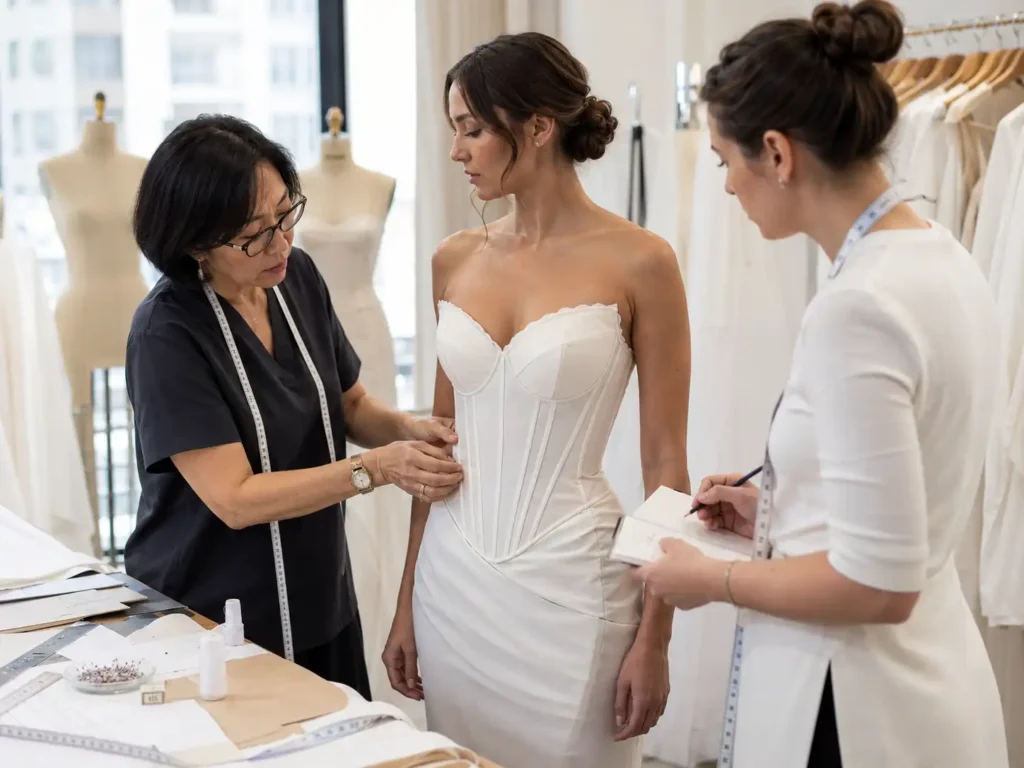
A corset dress should be fitted on a moving person, not only on a still model. After the normal standing inspection, ask the wearer to sit, stand again, walk, turn, raise the arms naturally and bend slightly. The aim is not an extreme stretch test; it is to reproduce the movements that happen during an evening, event, dinner or normal social setting. Watch whether the bodice travels downward, whether the bust stays inside the cup, whether the neckline opens away from the body and whether the waist becomes sharply uncomfortable once the wearer sits.
For strapless and low-neck designs, repeat the movement more than once because gradual migration matters. A garment can appear secure for the first thirty seconds and then settle lower after repeated motion. Corset development records at Jinfeng Apparel identify cup shape, boning, bust pads, anti-slip control and waist shaping as core sample priorities, while strapless styles add upper-bust stability and zipper behavior. Those points are useful because they describe a system: grip, support, balance and closure tension have to work together, not simply pass separate visual checks.
Which Corset Structures Need Review?
Review cups, boning, structural lining, anti-slip components and closures as one support system. Check their position, symmetry and behavior under normal body tension. A corset structure is not acceptable simply because every component is present; each element must support the intended silhouette without causing distortion, slippage, pressure points, visible ridges or inconsistent fit.
Check Cup Position and Shape
Cup placement can determine the entire front silhouette of a corset dress. Start with height: the lower cup edge should sit where the pattern intends the under-bust support to be, while the upper edge should create the correct coverage. A cup that sits too low can make the bust appear unsupported, while a cup placed too high can distort the neckline or push the bust into an unnatural position. Spacing matters as well, because two correctly sized cups can still look wrong when they sit too far apart or too close together.
Compare the left and right cups for height, spacing and projection. Look for empty pocketing, crushing, overflow, diagonal wrinkles from the cup edge and an uneven transition into the neckline. In one documented Jinfeng Apparel project for an anonymous UK designer label, 6 corset mini, structured mini and strapless styles totaling about 4,800 pieces went through development around cup shape, boning position, bust coverage, anti-slip control and waist shaping. Cup and boning placement were revised before PP and Golden Sample approval. The point is not the order size; it is that apparently small structural positions were important enough to control before production.
- Cup height and under-bust position
- Center-front cup spacing
- Left-right symmetry
- Bust containment and projection
- Smooth transition into neckline
- No empty pocketing, crushing or overflow
Review Every Boning Channel
Boning should reinforce the bodice rather than become a visible or physical defect. Check every channel against the approved pattern or construction reference, including left-right symmetry, channel width, boning length and end position. A bone that finishes in the wrong place can press into the underarm, waist or hip. A channel that is slightly crooked can distort a smooth shell even when the garment’s overall measurements are correct.
Inspect from both inside and outside. From inside, look at stitching, channel width, end finishing and alignment. From outside, look for ridges, sharp ends, buckling, waviness or shell show-through. More rigid boning is not automatically better; stiffness has to suit the shell, lining, pattern and intended silhouette. A firm structure beneath thin satin may become visually obvious, while very soft boning may not stabilize a strapless neckline. The company’s product knowledge base specifically treats cup shape, boning, support and comfort as corset-specific controls rather than generic fitted-dress details.
Test Lining and Anti-Slip Control
In a structured corset dress, lining is part of the engineering rather than just a hidden finishing layer. It affects skin comfort, internal friction, opacity and how the shell sits over cups and boning. Check whether the lining lies smoothly through the bust and waist, whether it pulls against the shell, and whether its stretch behavior is compatible with the outer fabric. A lining that stretches much more than the shell can shift during wear; one that is too rigid can increase pressure or drag the outer fabric out of position.
For strapless or low-neck designs, anti-slip tape should be tested during movement rather than approved from visual placement alone. It needs enough body contact to improve stability without showing above the neckline or creating excessive irritation. Anti-slip tape should not be used to disguise a fundamentally incorrect upper-bust fit. If the bodice circumference, cup position or pattern balance is wrong, stronger grip may simply create more pressure while the garment still sits incorrectly. The review should therefore ask whether the component is doing its intended job or compensating for an unresolved pattern problem.

Check Closures Under Tension
A zipper that operates perfectly when the dress lies flat may behave very differently when the bodice is under normal wearing tension. Close the garment on the fit model and operate the zipper more than once. It should move smoothly without unreasonable force, and the surrounding shell should remain as flat as the construction allows. Watch for horizontal pull lines, zipper waviness, opening distortion, top-edge misalignment and excess strain at the waist.
Do not assume that every closure symptom is caused by the zipper itself. Excessive waist suppression, inaccurate seam allowance, shell-to-lining tension, incorrect zipper installation or an unbalanced back pattern can produce similar effects. Hooks and eyes should line up without twisting, and lace-up backs should close symmetrically without pulling one side of the garment higher than the other. Jinfeng Apparel’s technical records preserve zipper construction, lining attachment, boning position, cup position and anti-slip tape position as controlled data, which is exactly the level of detail needed when a sample becomes a production reference across several sizes.
How Do You Check Materials and Workmanship?
Check materials for both specification accuracy and behavior inside the corset structure, then inspect seams, trims, symmetry, pressing and internal finishing under realistic wearing tension. The right fabric name or color is not enough; shell, lining, cups, boning and closures must behave compatibly if the approved sample is going to translate reliably into bulk production.
Evaluate Fabric Behavior
Begin by comparing the shell with the approved fabric reference. Check surface appearance, weight, hand feel, stretch direction, recovery, color and general stability. For satin, velvet or other light-sensitive materials, rotate the garment under normal room light and inspect it from more than one angle because directional sheen can exaggerate panel differences, pressing marks and seam irregularities. A fabric can match the requested color and still be unsuitable for the structure if it behaves differently from the material used when the pattern was developed.
The next question is how the fabric performs under concentrated tension. A structured bodice loads the shell around the bust, waist, zipper and boning channels. A fabric that stretches too easily may relax after wear, while a very firm shell requires more exact shaping and closure control. Lightweight satin can reveal boning and seam allowances; lace overlays can expose alignment errors; mesh can distort around neckline edges. Treat the material as part of the construction system, not as a separate aesthetic choice. A good-looking swatch is only useful if its actual behavior supports the approved silhouette and the intended production method.
Match Lining and Trims
Turn the garment inside out and compare internal components with the approved BOM or development record. The lining should sit smoothly around cups and boning channels without creating bulk or fighting the shell. Check whether its stretch, hand feel, opacity and recovery make sense for the outer fabric. Then confirm the cup type, boning, zipper type and length, hooks, anti-slip tape, decorative lace, hardware, thread and other fit-sensitive trims.
Temporary trims should be clearly identified. If the development sample uses one cup while the PP sample will use another, the team should not finalize bust shape based on the temporary component. The same applies to boning stiffness and closure construction. Jinfeng Apparel’s retained trim records include zipper type, zipper length, zipper color, cup type, boning type and anti-slip tape together with other garment and private-label components. That kind of record is useful because it allows the team to distinguish an aesthetic substitution, which may be harmless, from a functional substitution that changes fit and needs another confirmation.
Inspect High-Stress Sewing
Corset construction concentrates stress at particular seams, so workmanship inspection should start where several layers, curves or structural components meet. Pay close attention to cup seams, side-front seams, waist seams, boning channels, zipper openings and any junction where the shell, lining and internal support are stitched together. Look for skipped stitches, broken stitches, uneven tension, seam puckering, twisted channels, raw edges, bulky intersections, inconsistent seam allowance and opening under stress.
The useful production question is not only whether one sample looks clean, but whether the sewing method can be repeated consistently. A sample machinist can sometimes make a complicated construction look excellent by slowing down, hand-correcting and adjusting each section individually. Bulk production needs a method that can be taught, checked and repeated. Corset structure is recorded in the company’s development facts as a higher-complexity construction because built-in cups, boning, anti-slip tape and structural lining increase sewing and fitting demands. If the sample depends on constant manual rescue, the operation or specification may need to be simplified or documented more clearly before release.
- Skipped or broken stitches
- Uneven stitch tension
- Seam puckering
- Twisted boning channels
- Bulky seam intersections
- Inconsistent seam allowance
- Stress opening at zipper or waist
Judge Symmetry and Finish
Finish the workmanship review by stepping back from the close-ups and looking at the whole dress again. Compare cup height, cup shape, neckline level, boning position, waistline, side seams, straps when present, decorative placement and hem balance. Corset dresses magnify asymmetry because the eye naturally follows the neckline curves and vertical structure. A few millimeters of visual difference in cup height can be more noticeable than a similar difference at the hem of a loose dress.
Then inspect pressing and surface quality after the garment has been worn during fitting. Look for shine marks, seam impressions, wrinkles, puckering, stains, loose threads and handling damage. Turn the garment inside out once more and feel the areas that sit directly against the body. Internal edges, cup attachment and boning channels should be clean enough for prolonged wear. A corset dress can look polished from the outside and still fail the wearing test because rough channel ends or bulky seam allowances rub the skin. Appearance and comfort should therefore be checked together before the sample is considered finished.
How Should Sample Revisions Be Recorded?
Record revisions as specific, traceable actions rather than subjective reactions. Classify the problem, mark its exact location with consistent photographs, add measurements where relevant and state what must change. On the next sample, close every previous comment formally. This creates a usable development history and prevents the same defect from being interpreted differently by design, technical, pattern and production teams.
Separate Observation From Cause
‘Cup looks wrong’ is an observation, not yet a technical correction. Before instructing the pattern or sample team, decide whether the issue is primarily measurement, fit, pattern, construction, fabric, trim, workmanship or appearance. Several causes can produce the same symptom. A neckline that stands away from the body might come from excess upper-bust width, excessive neckline length, cup position, insufficient structural tension or lining that pulls differently from the shell.
The same discipline applies to a waist that feels too tight. The actual waist measurement may be below specification, the pattern may suppress too much at one seam, the boning may be unnecessarily rigid, or the waistline may sit at the wrong vertical position for the wearer. A useful comment names the visible problem and the direction of correction. For example, ‘Right cup sits lower than left; correct cup placement and recheck neckline level after revision’ gives the pattern team something actionable. Vague reactions such as ‘weird,’ ‘not flattering’ or ‘needs to look better’ can start a discussion, but they should not be the final technical instruction.
Use Consistent Photo Evidence
Take the same basic photographs at each major sample round so the team can compare like with like. A practical record includes front, back, left side, right side, a three-quarter view when useful, inside construction and close-ups of specific issues. The garment should be allowed to sit naturally. If someone holds the neckline closed or smooths a twisted seam before the photograph is taken, the image no longer documents the actual fit.
Mark problem areas with arrows or circles and keep annotations short. When a measurement controls the correction, reference the exact point of measure in the written note rather than relying on the image alone. Before-and-after pictures are particularly helpful for difficult fit issues because they let the team see whether a revision improved the silhouette instead of debating it from memory. This becomes even more useful when brand, technical and factory teams are working across different time zones; a marked side-view photo of a cup rotating outward communicates much more precisely than a message saying the cup is ‘not perfect.’
Convert Opinions Into Actions
Fashion development will always contain subjective language because the product still has to look attractive, but subjective reactions should be translated before they reach the technical team. ‘Make the waist more snatched’ is a styling goal, not a complete correction. ‘Cup needs more shape’ does not say whether the cup should be higher, deeper, narrower, wider or simply moved. Turn the reaction into controllable actions such as reducing excess at upper bust, raising cup position, correcting cup spacing, rebalancing the side seam or changing the closure tension.
Where a dimension controls the change, record it through the approved measurement or pattern-revision process. Not every fashion decision can be reduced to one number; visual balance still requires experienced judgment. The standard should be that the person making the next sample understands what must change and how success will be checked. Clear instructions reduce interpretation gaps, make revision rounds easier to compare and create a stronger record for PP approval. They also make it easier to identify whether a recurring problem is a pattern issue, a sewing issue or a material issue rather than repeatedly changing several things at once.
Close the Revision Loop
The next sample should contain a documented response to every open comment from the previous round. Use a simple closure status such as corrected, partially corrected, not corrected or new issue introduced. The last category matters because structured revisions often create trade-offs. A corrected neckline can change bust pressure; a raised cup can affect underarm coverage; stronger waist shaping can increase closure strain. Without explicit closure, teams can mistake movement for progress and carry hidden issues toward PP sampling.
Version control becomes more valuable as the style becomes more structural. Jinfeng Apparel’s development records preserve first pattern, revised pattern, PP pattern and bulk-production pattern, together with lining patterns, cup positions, boning positions and revision notes. That approach also offers a practical way for a fashion brand to evaluate a manufacturing partner. The important question is not whether the first complex sample is perfect. It is whether comments are understood, translated into controlled changes, checked on the next sample and eventually closed without reopening the same defect in a different form.
Is the Sample Ready for Production?
Move a corset dress forward only when the required fit, measurements, materials, trims and construction are sufficiently confirmed for that stage. Major structural issues should not be left for bulk production. The final review should end with a written decision: approved, approved with minor comments, revise and resubmit, or redevelop before the style is released.
Decide Whether to Resample
Another revised sample is justified when the remaining issue can materially change fit, comfort, appearance or production repeatability. Typical reasons include an incorrect cup position, a change of cup type, altered boning, unstable neckline, unresolved waist shaping, major measurement failure, a shell or lining change, a new zipper construction or open structural comments from the previous round. The question is not whether the team wants another sample; it is whether the unresolved variable needs physical proof before production.
Minor finishing corrections can sometimes be documented and controlled without a complete new development cycle, depending on the product and the brand’s approval system. Structural changes are different. Moving a cup, changing boning or altering upper-bust fit can affect several other parts of the garment, so the revised combination normally needs to be seen and fitted. Jinfeng Apparel’s documented process requires style structure, core measurements, fabric, color, trims and workmanship to reach an appropriate level of confirmation before PP sampling. Resampling adds time, but approving an unproven structural change can move a much larger problem into bulk.
Review the PP Sample Differently
A PP sample is not simply a cleaner version of the development sample. Its job is to demonstrate that the style is ready to be translated into repeatable production under the agreed material and technical conditions. At this point, the review should be stricter: final silhouette, fit, critical measurements, cup type and placement, boning, shell, lining, zipper, anti-slip components, sewing construction, labels, trims, finishing and all previous revisions should be checked together.
If a critical component is still temporary, record that status rather than assuming the final bulk version will behave the same. Schedule pressure is one of the main reasons samples are approved too early; the launch date is approaching, several rounds have already been completed and everybody wants to move on. That pressure is commercially understandable, but it does not remove structural risk. The company’s documented development sequence places PP confirmation before bulk preparation and uses the Golden Sample as the final approved physical reference, which creates a clear point at which development decisions are expected to stop changing casually.
Lock the Bulk Standard
Once the garment is approved, convert the decision into a controlled production package. A physical sample alone is not enough because production teams need to know exactly what makes that sample correct. The approved garment should be linked to the final pattern, size specification, grade rules, BOM, fabric and trim references, sewing instructions, QC checkpoints and packing requirements. This is the bridge between a successful sample-room garment and repeatable bulk production.
For a corset style, the package should make cup type and position, boning type and position, closure construction, anti-slip components and structural lining impossible to guess. The same principle applies to measurements and grading. If the fit sample was only checked in one size, the final grade rule must still be controlled before the style is produced across a wider size range. Jinfeng Apparel’s documented bulk-control system uses PP and Golden Sample confirmation together with patterns, BOM, fabric and trim records, measurement files, production instructions, QC checklists and packing instructions to reduce sample-to-bulk differences.
Bulk Control Item | What Should Be Locked | Main Risk if Unclear |
Approved Sample | PP / Golden reference | Bulk differs from approved appearance |
Pattern | Final version and revision | Fit inconsistency |
Size Spec | POMs and tolerances | Measurement variation |
Grading | Approved grade rules | Size-to-size fit problems |
Fabric | Approved quality and color | Fit, hand-feel or shade change |
Cups | Type, size, placement | Bust-shape inconsistency |
Boning | Type, length, position | Support and comfort variation |
Closure | Type, length, construction | Zipper waves or failure |
BOM | Final trims and components | Wrong materials in bulk |
Sewing Method | Critical construction details | Line-to-line variation |
QC Checklist | Critical checkpoints | Defects missed during inspection |
Packing | Fold and protection method | Creasing or surface damage |
Give the Sample a Clear Status
Every sample review should end with one unambiguous status. ‘Approved’ means the style has met the required criteria for the next stage. ‘Approved with minor comments’ means small, non-structural corrections remain and the team has documented how they will be controlled. ‘Revise and resubmit’ means an issue affecting fit, measurement, construction, comfort or appearance still requires another physical sample. ‘Redevelop’ means the underlying pattern or structure is not working well enough for an ordinary correction round.
Avoid conclusions such as ‘almost there,’ ‘basically okay’ or ‘factory can fix it in bulk.’ Those phrases do not tell production what has actually been approved. A strong corset dress sample review connects the creative idea to a garment that can be repeated at scale. It protects the silhouette the designer wants while forcing the team to confront cup position, boning pressure, upper-bust tension, zipper behavior, lining compatibility, measurement control and revision history before those details become expensive production problems.
A useful corset dress sample is not necessarily the first one that looks impressive in a fitting-room photograph. It is the version in which the pattern, measurements, internal support, shell fabric, lining, trims and technical records finally tell the same story. Once those elements are aligned, the sample stops being an experiment and becomes a dependable production reference. For brands developing structured dresses, that disciplined approval process protects fit consistency, reduces avoidable bulk corrections and creates a clearer foundation for repeat orders, new colors and future styles built from the same proven structure.
Share This Article :

Jerry Lee
Categories

Latest blogs
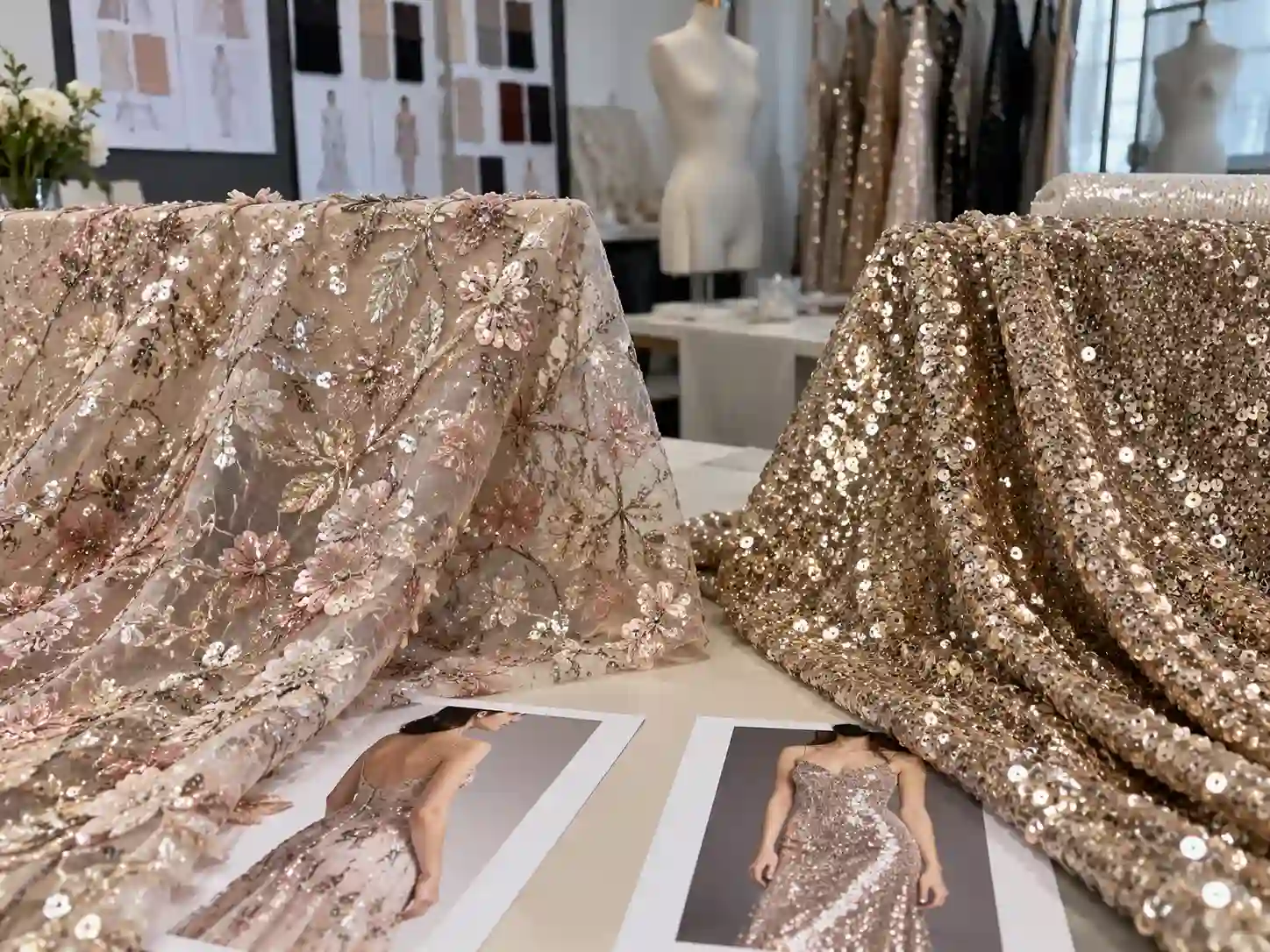
Table of Contents
Here, developing your OEM/ODM private label clothing collection is no longer a challenge—it’s an excellent opportunity to bring your creative vision to life.

