Skip to content

Choosing between China and Vietnam for dress manufacturing looks straightforward when the comparison begins with labor rates or an FOB quotation, but those numbers rarely tell the whole commercial story. Dresses are unusually sensitive to fabric behavior, fit, construction accuracy, trim availability, sample revisions, pressing, and packaging. A satin mini dress with a fitted waist, a corset dress with boning and cups, or a lined mesh occasion dress can turn a seemingly small sourcing decision into several weeks of development work. For established fashion brands, the better manufacturing country is therefore not automatically the country with the lower sewing rate. It is the country, region, and factory combination that can turn the approved design into consistent bulk production with the fewest avoidable delays, substitutions, rework cycles, and communication gaps.
China is usually stronger for development-heavy dress collections that need deep fabric access, specialized trims, frequent sampling, complex construction, and multi-style coordination. Vietnam can be highly competitive for stable specifications, larger consolidated runs, and programs planned well in advance. The best choice depends on total landed cost, product complexity, material origin, launch timing, quality control, and the factory’s actual dress specialization.
dollar, but the fabric has to be imported, the approved zipper is unavailable, and one extra sample round pushes the launch back. Another supplier looks more expensive on the first spreadsheet yet solves the fabric, fit, and trim issues within the same manufacturing cluster and reaches bulk production earlier. By the time freight, markdown risk, and replenishment are included, the “higher” quotation may have produced the lower commercial cost. The rest of this comparison focuses on that practical decision rather than a simple country-versus-country ranking.
What Is the Difference Between China and Vietnam Dress Manufacturing?
China and Vietnam are both major apparel manufacturing bases, but their supply chains are structured differently. China generally offers deeper integration across fabrics, trims, pattern development, sampling, specialist processing, and multi-style production. Vietnam has a highly capable export garment sector and performs especially well when specifications are stable, materials are planned early, and production volumes justify efficient line allocation.
How Do Their Manufacturing Ecosystems Differ?
The most important difference is not the sewing machine; it is the network surrounding the sewing machine. A dress factory depends on fabric mills, dye houses, printers, lace suppliers, zipper vendors, elastic suppliers, cup and boning makers, pattern rooms, sample rooms, pleating and embroidery workshops, testing providers, packaging vendors, and freight partners. In China’s established apparel clusters, many of these functions are geographically and commercially close to one another. That density makes it easier to compare fabrics, replace a trim, test a different lining, or move a revised pattern into another sample without rebuilding the entire sourcing route. The advantage becomes more noticeable when a collection is still changing rather than when every specification has already been locked.
Vietnam has built an impressive export apparel industry, but a greater share of its textile and clothing value chain still depends on imported inputs. The WTO’s textiles and clothing sector profile reported that foreign value added represented 64.2% of Vietnam’s textile and clothing exports in 2022, compared with 10.9% for China. That does not mean Vietnamese manufacturers cannot source effectively; many do. It means material origin and supplier coordination deserve closer attention, especially when the design relies on specialized satin, stretch mesh, lace, sequins, custom-dyed linings, or unusual accessories. For a simple repeat dress, that difference may barely be visible. For a new occasionwear collection with several unresolved components, it can influence both calendar time and the number of decisions a sourcing team must manage.
| Manufacturing indicator | China | Vietnam | Practical effect for dress programs |
| 2025 textile and apparel exports | US$293.77B | About US$46B | Both are major exporters, but China’s ecosystem operates at much larger scale |
| Foreign value added in textile/clothing exports, 2022 | 10.9% | 64.2% | Vietnam is more dependent on cross-border inputs |
| Material and trim depth | Very broad domestic network | Strong, but more input-dependent in some categories | Affects alternatives, MOQ, and development speed |
| Multi-style flexibility | Strong across specialist clusters | Strong with appropriate planning and factory selection | Important for seasonal fashion collections |
| Stable high-volume sewing | Strong | Strong | Factory specialization matters more than nationality |
The export figures above come from China’s National Textile and Apparel Council and Vietnam industry reporting based on VITAS information; the value-added comparison comes from the WTO sector profile. These figures should be read as indicators of supply-chain structure rather than as a prediction that any individual factory in one country will outperform a factory in the other.
How Do Their Production Models Differ?
China contains a wide range of production models, from small specialist fashion units to very large export plants. That variety allows a collection to be divided according to product structure. A stretch bodycon style can be routed to a knit-focused line, a woven satin dress to a unit experienced with slippery fabrics, and a corset dress to a team accustomed to cups, boning, lining, and structured bodices. Vietnam also has sophisticated specialist factories, particularly among export suppliers serving established international brands, but the operational advantage is often greatest when product specifications, fabrics, and order quantities are clear enough to support efficient planning.
The difference is easier to understand through order architecture. A 12,000-piece order of one dress in two colors and six sizes creates only 12 style-color-size combinations. A different 12,000-piece order containing 12 styles, four colors, and six sizes creates 288 combinations before barcode, label, carton, and destination requirements are added. The total volume is identical, yet the second program requires far more pattern control, BOM management, material booking, cutting plans, operator changeovers, inspection standards, and SKU coordination. Large fashion brands should therefore compare manufacturing systems by the kind of complexity they can absorb, not simply by the maximum number of pieces a factory says it can sew each month.
Are the Differences the Same for Dresses and Basic Apparel?
No. Dresses expose manufacturing weaknesses faster than many basic garments because fit, fabric behavior, and visible construction are tightly connected. A small measurement variation in a loose T-shirt may not materially change the product. The same variation in a fitted mini dress can shift the waistline, reduce bust coverage, change armhole comfort, or distort the intended silhouette. Bias-cut satin can twist if grain control is poor. Mesh can lose neckline stability when stretch direction is wrong. Lace may need motif matching. Sequins can interfere with seam allowances and pressing. A corset dress adds internal structure that may not be visible from the outside but directly affects comfort and shape.
For that reason, a country-level comparison should always be filtered through the dress category. A highly efficient factory that specializes in basic knit garments may be the wrong choice for structured occasionwear, even if it operates in a strong manufacturing country. Conversely, a specialist Vietnamese womenswear factory can outperform a general Chinese apparel plant on the exact style it understands best. The practical question is not whether China or Vietnam is “better at clothing.” It is which manufacturing ecosystem gives the brand access to the materials, technicians, sample capacity, sewing skills, and production controls required by the particular dress collection being developed.
Which Country Offers Better Total Cost for Dresses?

Vietnam can offer lower labor costs in some programs, but lower sewing cost does not automatically mean lower finished dress cost. Brands should compare fabric, trims, development, MOQ, sample revisions, cutting efficiency, rework, quality control, freight, duties, and launch timing. For fashion dresses, the lowest quotation and the lowest risk-adjusted landed cost are often different numbers.
Is Vietnam Always Cheaper Than China?
Vietnam is frequently described as the lower-cost alternative to China, but the statement becomes unreliable when it is used as a rule for dresses. Direct sewing labor is only one part of the cost structure. A garment that requires imported satin, separate trim sourcing, more courier shipments, extra sample rounds, or additional handling can lose part of the labor advantage before bulk production starts. The reverse is also possible. If a Vietnamese factory already has the approved material network, understands the construction, and can run a large stable order efficiently, the program can be commercially very competitive. The country label alone does not tell the sourcing team which situation applies.
Consider an illustrative corset-style satin dress. Factory A saves US$1.00 per piece in sewing conversion, but the preferred satin is not available within its established network. The fabric requires additional sourcing, the first substitute changes drape, and a second sample is needed after the lining and boning are revised. Factory B charges more for conversion but has acceptable satin, lining, cups, boning, and zipper options already available through known suppliers. The final cost difference is no longer the original US$1.00. Once sampling, courier charges, delay risk, and production confidence are included, the second option may be the more economical program even though its first quote was higher.
What Makes Up the Real Dress Manufacturing Cost?
A useful dress cost sheet begins with construction rather than country. Main fabric is often the largest cost component, but actual consumption depends on garment length, fabric width, pattern shape, grain direction, print placement, nap, and cutting yield. A directional satin, velvet, large repeat print, or lace with motif placement can create more waste than a non-directional fabric. Circular skirts, deep ruffles, bias panels, and asymmetric shapes also raise consumption. Trims then add another layer: linings, cups, boning, elastic, invisible zippers, hooks, hardware, appliques, rhinestones, and branded labels can all materially change the unit price.
Development and quality costs are equally important. One additional sample round may involve pattern revision, new fabric allocation, trim replacement, sample sewing, internal review, client comments, and another courier shipment. A construction issue discovered during in-line inspection is usually cheaper to correct than the same issue found after thousands of finished dresses are packed. The best cost comparison therefore separates predictable manufacturing inputs from avoidable risk. Experienced sourcing teams usually prefer a supplier that can explain each major price driver and identify cost-saving alternatives without weakening fit, fabric performance, or brand-level quality.
| Cost layer | Typical cost drivers | What to compare between countries and factories |
| Main material | Fabric price, width, consumption, cutting yield, lining | Local availability, substitution options, material MOQ |
| Trims and structure | Zippers, cups, boning, elastic, lace, hardware | Supplier depth, setup cost, custom component MOQ |
| Development | Pattern, sample, fitting, revision, PP sample | Number of cycles and response time |
| Conversion | Cutting, sewing, finishing, pressing | Labor efficiency and style specialization |
| Quality | In-line control, measurement, final inspection | Prevention system, not just final sorting |
| Logistics | Inland transport, freight, customs, duty | Destination-specific landed cost |
| Risk cost | Rework, delays, missed launch, airfreight upgrades | Probability and financial impact, not only quoted price |
How Do MOQ and Order Structure Affect Cost?
MOQ is not one number because several suppliers can impose minimums at the same time. A garment factory may accept 300 pieces, while the selected fabric requires a higher custom-dye minimum. A lace mill, zipper supplier, molded hardware maker, print house, or packaging converter may have separate thresholds. A lower garment MOQ is useful only when the rest of the product can be sourced economically at the same scale. For this reason, established brands should ask for an MOQ map that identifies which component is creating the minimum and whether a stock-supported substitute can reduce the requirement without changing the intended product.
Order fragmentation also affects cost. Six thousand units of one black dress can run very differently from six thousand units divided among 20 styles, four colors, and six sizes. The second program creates hundreds of SKU combinations, more changeovers, more cutting markers, more label sets, and more opportunities for packing mistakes. Jinfeng Apparel, for example, uses a documented starting MOQ of 200 pieces per style/color, with the actual requirement depending on fabric availability, color development, trims, construction complexity, packaging, and production schedule. That structure is designed for brands with real sampling and bulk-production plans rather than no-MOQ or ready-stock business.
How Do Tariffs and Freight Change Landed Cost?
FOB price should never be treated as the final sourcing cost. A practical comparison includes inland transport, export handling, international freight, insurance, duty, customs charges, destination handling, working capital, and the financial effect of delays. Trade agreements can improve the economics of some Vietnam-origin programs, but preferential treatment depends on product classification, material origin, the exact rules of origin, and the destination market. Brands should verify the current tariff treatment for the specific HS code and supply chain rather than relying on a general statement that one country is always cheaper to import from.
Freight and timing can erase an apparent factory saving surprisingly quickly. A dress collection that misses a resort launch, graduation season, holiday campaign, retailer delivery window, or influencer shoot may create a larger margin loss than the difference between two manufacturing quotations. The same is true when a late production schedule forces a switch from sea freight to air freight. The most useful sourcing model is therefore not “factory price plus shipping.” It is factory cost plus materials, duty, freight, financing, quality risk, and launch risk. That is the number that should be compared across China and Vietnam.
Which Country Is Better for Complex Dress Development?
China often has an advantage when dress development requires frequent pattern corrections, multiple fabric options, specialized trims, complex construction, and several styles moving simultaneously. Vietnam can also produce sophisticated dresses through capable specialists. For technically demanding fashion, the decisive factor is how quickly the factory converts design changes into controlled patterns, samples, BOMs, sewing instructions, and repeatable bulk standards.
Which Is Better for Pattern and Fit Development?
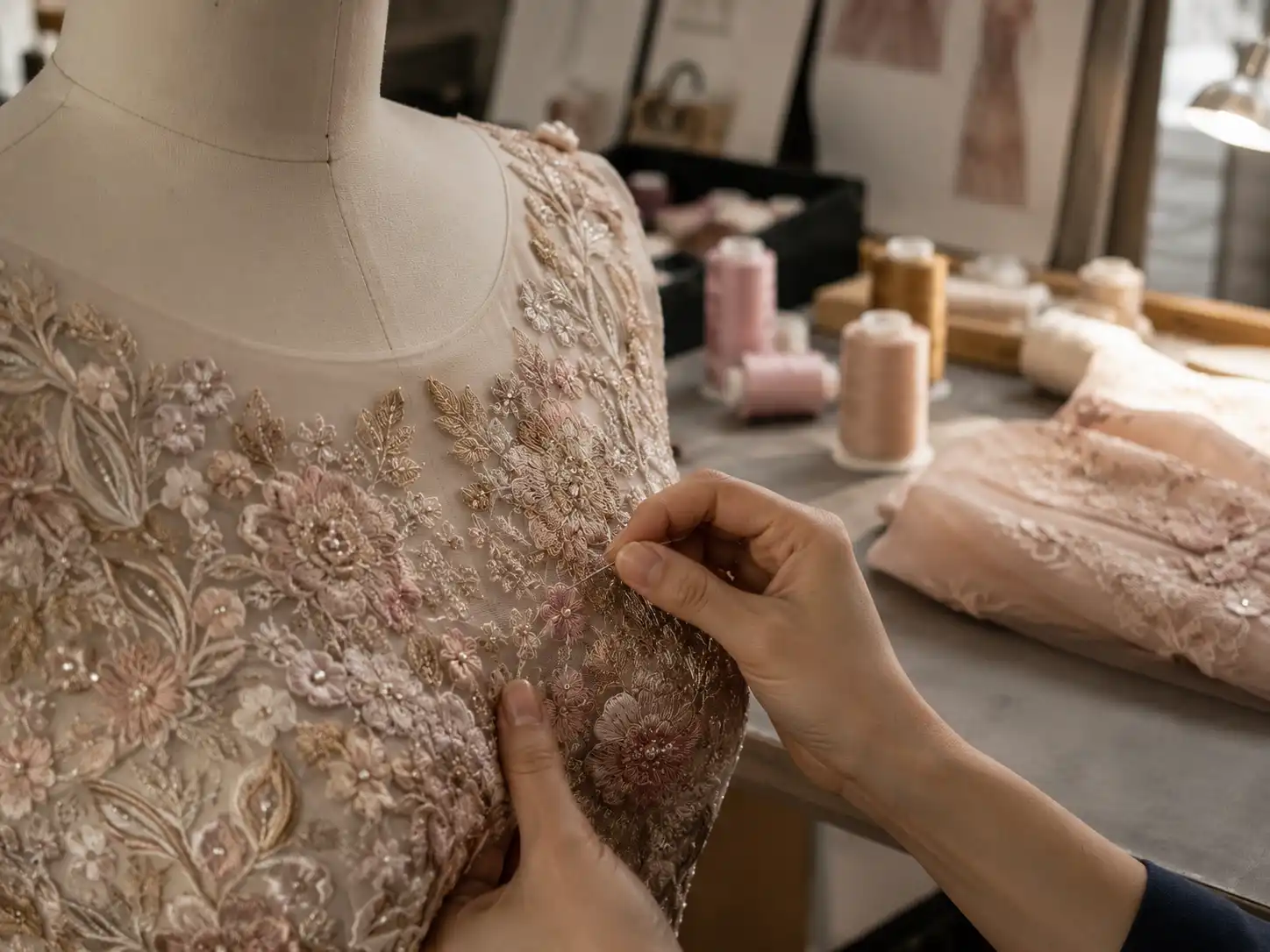
Pattern development is one of the most underestimated parts of dress sourcing because the final customer sees only the finished silhouette, not the technical corrections behind it. Bust volume, waist position, hip ease, neckline depth, armhole shape, shoulder angle, strap placement, center-front length, center-back balance, skirt sweep, and slit height all influence one another. Correcting one measurement without considering the rest can create new problems. Tightening the waist can introduce diagonal drag lines from the bust. Shortening straps can raise the neckline and alter armhole comfort. Adding hip ease can change how the skirt hangs below the waist.
A strong sample room therefore works through cause and effect rather than simply editing isolated numbers. The development team should record what changed, why it changed, whether the pattern was revised, and whether the change affects cost or lead time. Jinfeng Apparel’s documented process, for example, reviews bust-waist-hip proportion, length, straps, armholes, necklines, and slit position, then converts approved bulk-relevant corrections into updated patterns, size charts, BOMs, fabric approvals, trim approvals, sewing instructions, and QC checkpoints. That type of version control matters because a beautiful revised sample has little commercial value if the final corrections never reach the cutting and sewing teams.
Which Is Better for Structured and Fashion-Driven Dresses?
Structured dresses place more pressure on product engineering than their external appearance suggests. A corset dress can contain cups, boning, lining, seam reinforcement, underbust shaping, zipper stabilization, elastic, grip tape, and several curved seams that must work together. Boning that is too rigid can make the garment uncomfortable; boning that is too soft may fail to hold the intended silhouette. A cup that works in the sample size can become inappropriate after grading if the technical team does not manage size transitions carefully. Similar hidden engineering appears in strapless, backless, cut-out, and deep-neckline dresses where stability has to be created without changing the visual design.
Other fashion details create their own production risks. Ruching must be distributed consistently so bulk garments match the approved sample. Pleats have to maintain width and direction through pressing. Cut-outs need edge stability. Bias sections must hang without twisting. Long slits require reinforcement and consistent positioning. China’s dense specialist network can be useful during this development phase because pattern teams, sample technicians, and trim suppliers can react quickly when a component needs to change. Vietnam can be equally competitive once the structure is mature and the chosen factory has proven experience with that construction. Development-heavy and execution-heavy products should not be evaluated with the same sourcing logic.
Which Is Better for Satin, Mesh, Lace, and Sequin Dresses?
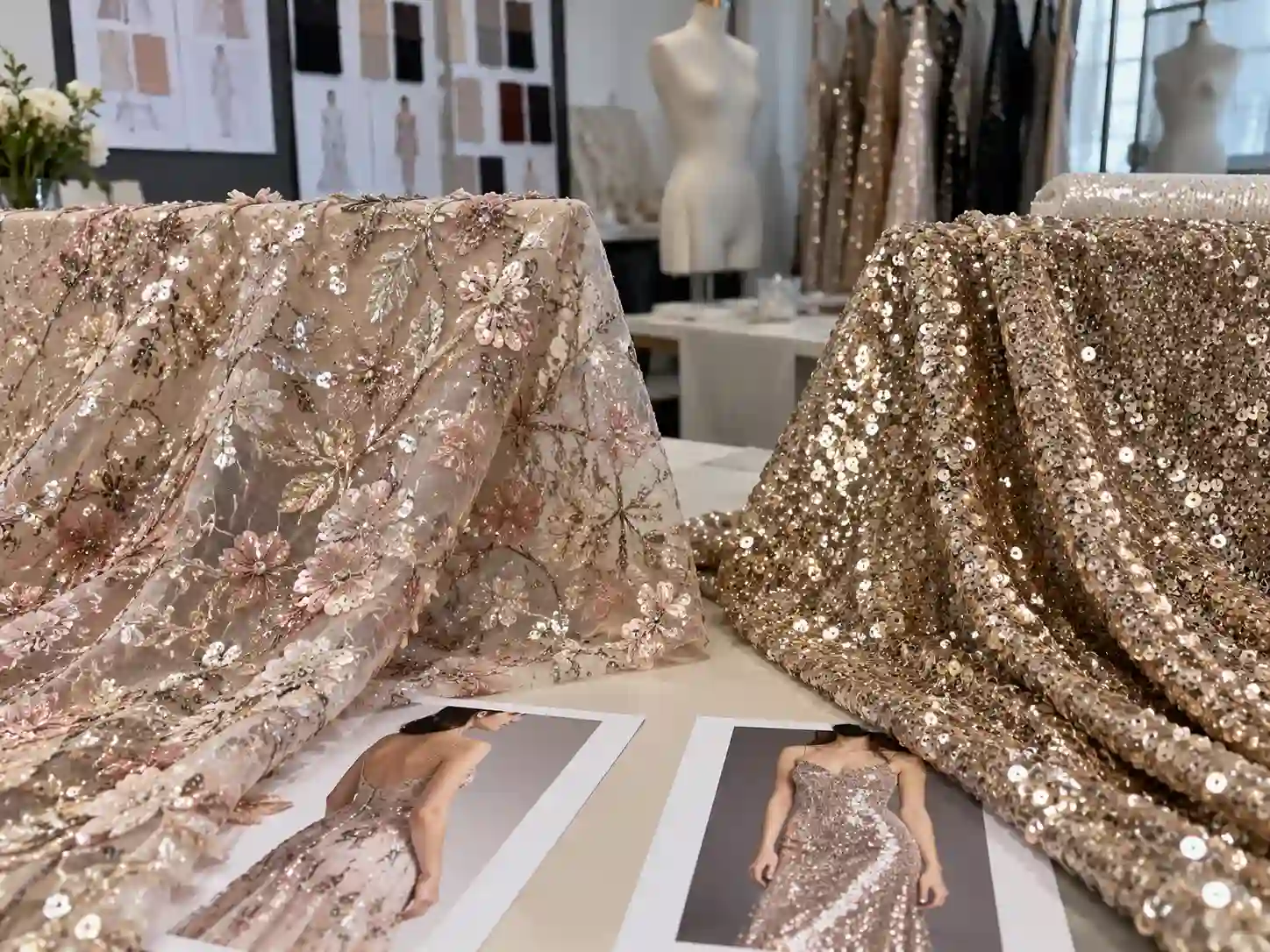
The fabric often determines how difficult a dress is to manufacture. Satin can reveal needle marks, seam puckering, shine-direction differences, pressing damage, and zipper distortion. Mesh introduces transparency, stretch direction, recovery, seam stability, and lining-placement issues. Lace may require motif matching, scallop placement, careful seam positioning, and strategic lining. Sequin fabrics complicate cutting, needle choice, seam allowance preparation, operator handling, pressing, and surface protection during packing. Two factories can both say they “make dresses” while having very different levels of competence with these materials.
Material decisions should therefore be tied to measurable product behavior. Teams can compare fabric weight, width, stretch percentage, recovery, opacity, drape, shrinkage, hand feel, and shade consistency before approving bulk. A 105 gsm satin and a 125 gsm satin may look similar in a swatch but behave differently in a fitted style. A mesh with high stretch but weak recovery may fit the first time and lose shape after wear. Jinfeng Apparel’s confirmed range includes satin, mesh, lace, sequin, corset, party, occasion, mini, midi, and maxi dresses, so these material-to-construction checks are part of the type of development work the company is set up to handle.
How Important Are Sample Revisions Before Bulk Production?
Sample revision is not evidence that development failed; it is often the process that prevents bulk failure. The risk comes from uncontrolled revisions rather than from the existence of revisions. A professional program usually moves through a first sample, fit and construction review, revised sample, material and trim approval, PP sample, and a final approved reference or Golden sample before bulk production. Each stage should have a clear purpose. If every sample remains open to major design changes, the project never reaches a stable production standard and the probability of wrong-version production rises sharply.
Version control is especially important in dress development because many changes are visually small but technically significant. Lowering a neckline by 12 mm, shortening straps by 8 mm, changing lining opacity, moving a slit, replacing a zipper, or modifying boning can all affect the final product. Jinfeng Apparel’s documented workflow requires important changes to be transferred into updated pattern, size chart, measurement records, BOM, fabric and trim records, sewing instructions, packaging instructions, and QC checklists instead of remaining only in email or chat messages. When comparing factories in either country, ask how revisions are recorded, released, and linked to the PP sample. That answer is usually more useful than a promise of an unusually fast first sample.
How Do Fabric Sourcing, MOQ, and Lead Times Compare?
China generally provides greater sourcing density for fashion fabrics, trims, processing, and rapid material substitution, while Vietnam performs strongly when material specifications are stable and sourcing has been planned early. Fabric availability can influence MOQ and calendar time more than sewing capacity. Brands should compare garment MOQ, upstream material minimums, sample timing, revision timing, bulk production, and logistics as one connected supply-chain schedule.
Which Country Has the Stronger Fabric and Trim Supply Chain?
China’s textile scale remains one of its most important advantages for fashion dresses. In 2025, China exported about US$142.58 billion in textiles alone, in addition to its finished apparel exports. That upstream scale matters because a dress development team does not only need a garment factory; it may need a fabric mill, dye house, printer, lace supplier, zipper maker, cup supplier, boning source, embroidery workshop, label converter, and packaging vendor. In major Chinese sourcing clusters, a large share of those resources can be accessed through established domestic networks, making alternatives easier to compare when the first material does not work.
Vietnam’s textile industry continues to expand, and capable garment factories often maintain strong supplier relationships. The key issue is not whether suitable fabrics exist in Vietnam; many do. The issue is how quickly an equivalent alternative can be sourced when the approved option fails a fit, drape, opacity, color, MOQ, or lead-time requirement. For a repeat style using a stable mill program, the answer may have little effect on production. For a new dress collection using several specialized materials, the difference in supplier density can become commercially meaningful. Brands should therefore evaluate material sourcing as part of product development rather than treating it as a purchasing step that happens after the design is complete.
How Does Fabric Availability Affect Sampling Speed?
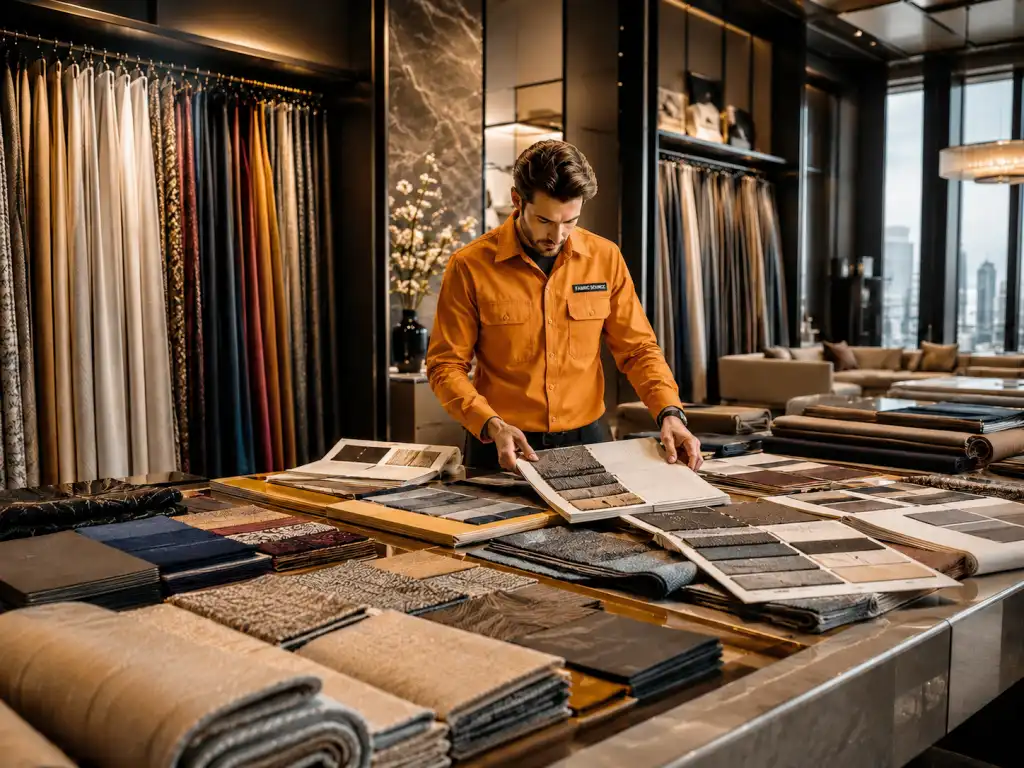
Sampling begins before sewing. The factory first needs to confirm fabric construction, composition, weight, width, stretch, recovery, hand feel, drape, opacity, color, shrinkage expectations, available stock, MOQ, and replenishment possibility. A sample room may technically sew a dress in one or two working days, but the project does not have a two-day sample lead time if the correct fabric takes ten days to arrive. This is why sourcing teams should separate actual sample-room sewing time from the complete development calendar.
The same dependency appears during revisions. Imagine that the first mesh-and-satin sample fits correctly, but the mesh is too transparent and the satin is too stiff. The pattern may not need major changes, yet the development cannot move toward PP approval until replacement materials are found and tested. A supplier with several comparable materials in its established network can move quickly. A supplier that needs to restart international sourcing may add courier time, new minimums, and another round of approval. Jinfeng Apparel is based in Guangdong’s apparel supply-chain region and uses an integrated workflow covering pattern development, fabric and trim sourcing, sampling, bulk production, quality control, private-label packing, and export coordination, which is particularly relevant when product development and material decisions overlap.
How Do MOQs Compare for Dress Programs?
There is no meaningful national MOQ for China or Vietnam because minimums are created by the economics of each factory, mill, component supplier, and finishing process. A factory may offer a relatively flexible garment minimum while a custom-dyed satin, specialty lace, exclusive print, molded buckle, or branded packaging component requires a much larger quantity. This is why a single number advertised as “our MOQ” can be misleading for fashion dresses. The more customized the material package becomes, the more likely an upstream supplier rather than the sewing factory will determine the practical minimum.
A useful sourcing conversation separates garment MOQ, stock-fabric availability, custom-dye minimums, printing minimums, lace or sequin minimums, trim setup quantities, label quantities, and packaging minimums. Standard components can often reduce the threshold without weakening the final product. Custom components should be justified by their visible value to the customer. Jinfeng Apparel’s standard starting point of 200 pieces per style/color is a good example of how garment MOQ should be qualified: fabric availability, custom colors, trims, construction, packaging, and production scheduling can all raise the actual requirement for a specific design. Mature sourcing teams plan these constraints before approving the final style rather than discovering them after the sample is complete.
Which Country Is Better for Fast Fashion Lead Times?
The fastest country is not necessarily the one quoting the shortest bulk production time because sewing is only one part of the launch calendar. A realistic sequence runs from design review through fabric sourcing, pattern development, first sample, client comments, revision, PP sample, material booking, cutting, sewing, finishing, QC, packing, and international logistics. A five-day delay in material approval can matter more than a three-day difference in sewing. A second unnecessary sample round can matter more than a slightly slower production line.
Brands should track three clocks separately: development lead time, bulk-production lead time, and door-to-warehouse lead time. A supplier quoting 25 days for bulk after a 45-day development process creates a 70-day manufacturing journey before freight. Another supplier might quote 32 days for bulk but need only 25 days to reach production approval, giving a shorter total calendar. China’s dense material and development ecosystem can be valuable during the uncertain early stages, while Vietnam can perform extremely efficiently once specifications and materials are stable. Fast fashion speed comes from removing waiting time between decisions, not from pressuring sewing lines to move unrealistically fast.
How Do Quality Control and Bulk Production Compare?
China and Vietnam can both produce high-quality dresses. Quality depends more on factory specialization, approved standards, material control, operator skill, version control, and inspection discipline than on country reputation. Complex dresses need quality checkpoints before and during production because final inspection cannot economically repair errors that have already been repeated across hundreds or thousands of finished garments.
How Should Dress Quality Be Compared?
“Premium quality” is not a production instruction. A pattern maker, sewing operator, QC inspector, and packing team all need measurable standards. For a fitted dress, the specification may include bust, waist, hip, center-front length, center-back length, neckline depth, strap length, armhole, waistline position, and slit height. Brands often use tighter tolerances on dimensions that strongly affect appearance or function and broader tolerances on less sensitive measurements, but the exact limits should be agreed in the size specification rather than assumed from general industry practice.
Visual standards matter just as much. Satin should be reviewed for puckering, zipper flatness, shine direction, pressing marks, and surface damage. Mesh needs correct stretch direction, seam stability, controlled transparency, and consistent lining placement. Sequins require secure attachment, surface protection, and comfortable seam allowances. Corset dresses need balanced boning, symmetrical cups, stable necklines, and neat internal construction. The useful question is therefore not whether “China quality” is better than “Vietnam quality.” It is whether the selected factory can convert the approved sample into written, measurable, teachable standards that remain stable throughout the production run.
How Is Quality Controlled During Bulk Production?
Waiting until final inspection is one of the most expensive ways to manage garment quality. If a neckline construction error is discovered after 3,000 pieces are finished, inspection has identified a problem that is already costly. Finding the same issue after the first 30 pieces can allow the sewing method, machine setting, operator instruction, or pattern detail to be corrected before the defect spreads. This is why experienced production teams treat quality control as a sequence of prevention points rather than as one inspection event at the end.
| QC stage | Main checks for dresses | Problems it can prevent |
| Incoming material | Shade, defects, width, stretch, trims, approved references | Wrong fabric lots, trim mismatch, visible defects |
| Cutting | Grain, nap direction, panel accuracy, matching, bundle control | Twisting, asymmetry, shade mixing, pattern errors |
| First piece / line setup | Construction method, machine settings, key measurements | Repeated sewing defects across the line |
| In-line inspection | Seam quality, dimensions, zipper, lining, ruching, symmetry | Large-scale rework late in production |
| Finished garment | Appearance, measurements, closures, workmanship | Defective units reaching packing |
| Pressing and packing | Shine, creases, shape, labels, SKU, barcode, carton | Damage or identification errors after sewing is complete |
Jinfeng Apparel’s documented quality scope follows the same prevention logic, covering fabric and trim inspection, cutting inspection, sewing-stage checks, measurement review, finished-garment appearance, pressing, packaging, and pre-shipment inspection. Its quality boundary also states that necessary QC should not be removed simply to obtain a lower price. For brands assessing suppliers in either country, actual checklists, measurement reports, in-line records, PP approvals, and Golden samples are much stronger evidence than a website claim of “strict quality control.”
Which Country Handles Multi-Style Production Better?
Multi-style production is primarily a coordination problem. A factory may have enough equipment to produce 100,000 garments per month, but that capacity does not automatically mean it can manage 30 dress styles with different fabrics, linings, trims, patterns, grading rules, labels, and delivery dates. Every additional style competes for pattern makers, sample technicians, material approvals, cutting tables, skilled operators, finishing teams, and QC attention. The management system must prevent one style’s components, instructions, or sample version from contaminating another.
A 12-style collection in four colors and six sizes already creates 288 style-color-size combinations. If each combination has a unique SKU label and barcode, the finishing team is managing 288 identification references before destination-specific carton marks are included. Jinfeng Apparel’s documented production structure includes 6 owned women’s fashion factories, 10+ long-term satellite production partners, 18+ sewing lines, 6+ flexible production lines, 2 sample rooms, 7+ senior pattern makers, 20+ sample machinists, 15+ QC inspectors, and 12+ merchandisers, with regular monthly capacity listed at 100,000+ pieces. The meaningful point is not the number alone; it is the ability to allocate different styles by fabric, construction, complexity, and delivery schedule while maintaining common technical and quality standards.
Which Country Should Fashion Brands Choose?
China is usually the stronger fit for development-heavy, material-intensive, technically complex, multi-style dress collections, while Vietnam can be highly competitive for stable specifications, consolidated quantities, and well-planned production programs. Some larger brands benefit from using both. The best decision matches product complexity, order architecture, launch timing, landed cost, and supply-chain risk to the manufacturing system rather than choosing by reputation alone.
When Is China the Better Choice?
China becomes especially attractive when the difficult part of the project happens before and around bulk sewing. Collections containing satin, mesh, lace, sequins, structured bodices, custom trims, frequent fit adjustments, and many styles require continuous interaction between sourcing, pattern development, sample making, and production. The country’s textile depth and dense supplier clusters can shorten the path between a technical problem and a workable alternative. This is particularly valuable for trend-led womenswear, where the first fabric, first trim, or first sample is not always the final production choice.
China is worth prioritizing when a program contains multi-style seasonal collections, complex fit, corsetry, delicate woven fabrics, mesh and lace construction, decorative components, custom colors, repeated sample rounds, fast material substitution, or frequent bestseller replenishment. However, choosing China does not remove the need for factory-level due diligence. A plant that specializes in basic sportswear may still be a poor partner for occasion dresses. Country selection gives access to an ecosystem; supplier selection determines whether the brand actually benefits from that ecosystem. The strongest Chinese partner is usually the one whose sample room, materials network, sewing skills, quality system, and order-management model match the exact dress category.
When Is Vietnam the Better Choice?
Vietnam becomes particularly attractive when a product is already well engineered. A repeat dress with a stable pattern, validated grading, approved fabric, standardized trims, fixed packaging, and predictable annual volume does not require the same development flexibility as a new fashion capsule. In that situation, line efficiency, capacity allocation, repeatability, and commercial terms can carry more weight. Vietnam’s export apparel base is experienced with international production requirements, and capable specialist factories can deliver sophisticated products when the category and technical package fit their strengths.
Programs that deserve a serious Vietnam comparison include mature repeat styles, larger consolidated quantities, stable material programs, long-term capacity bookings, and products where current trade arrangements create a genuine destination-specific landed-cost advantage. It is still important to confirm material origin, factory specialization, lead-time assumptions, and tariff qualification rather than applying a generic “Vietnam is cheaper” model. A 30,000-piece repeat program and a 30-style trend capsule should not automatically be allocated to the same country because the operational problem is different. Vietnam can be an excellent manufacturing base when the product is designed and planned to use its strengths.
Do You Need One Country or a China+1 Strategy?
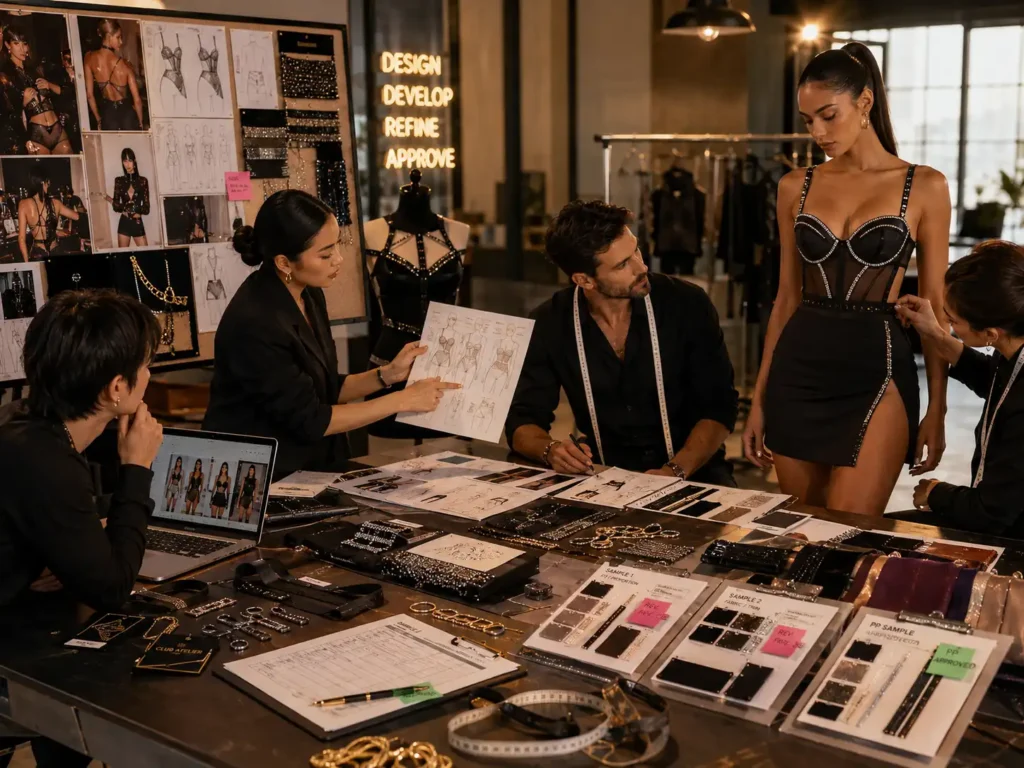
For larger sourcing organizations, China versus Vietnam does not need to be an either-or decision. A China+1 structure can keep development-heavy, material-intensive, or fast-changing products in China while allocating stable repeat programs to Vietnam after specifications are mature. Another model divides production by category. Some brands duplicate strategically important products in both locations so they can shift capacity when factory congestion, tariffs, logistics, or geopolitical conditions change. This can improve resilience, but only when the organization has enough volume and management capacity to support the additional complexity.
Diversification also creates cost. Two-country sourcing can require duplicate supplier approval, additional PP samples, more color matching, separate quality systems, extra production visits, more logistics coordination, and more complicated origin documentation. A brand should identify the risk it is actually trying to reduce before adding another country. If the concern is capacity, create a capacity backup. If the concern is tariff exposure, model tariffs by HS code and destination. If the concern is fabric security, investigate material origin. A China+1 strategy is useful when it solves a defined operational risk; it is less useful when it simply makes the supplier list longer.
What Should You Verify Before Choosing a Dress Manufacturer?
The country decision ends where factory due diligence begins. A credible dress manufacturer should be able to show relevant product experience, pattern capability, sample-room organization, fit-correction methods, material sourcing, revision controls, realistic MOQ, production planning, quality checkpoints, private-label execution, export coordination, and repeat-order records. Ask who owns each step. If the sample is wrong, who diagnoses the cause? If a fabric fails, who proposes alternatives? If a key measurement drifts during production, who stops the line? If the brand reorders six months later, which pattern, BOM, fabric record, and Golden sample will be used?
Jinfeng Apparel is one example of a Guangdong-based manufacturing model designed around this type of dress development. Its confirmed scope includes OEM, ODM, private-label production, pattern and sample development, fabric and trim sourcing, bulk production, quality control, packaging, export coordination, NDA-based cooperation, repeat-order support, and seasonal collection development. The company is positioned for global and mid-to-large apparel clients rather than ready-stock, dropshipping, or no-MOQ business. That does not mean every China-based project should automatically move to Jinfeng; it means brands evaluating a development-intensive dress program can use these capabilities as a practical due-diligence checklist when deciding whether a supplier is equipped for long-term production.
Conclusion
China and Vietnam are both serious dress manufacturing options, and the strongest sourcing decision rarely comes from declaring one country universally superior. China tends to offer an advantage when product development is complex, materials are still moving, multiple styles must be coordinated, and the collection benefits from a dense upstream supply chain. Vietnam can be very competitive when specifications are stable, volumes are consolidated, the factory has the right specialization, and material and trade planning are completed early. The most useful comparison is therefore not labor cost versus labor cost. It is the complete path from design approval to saleable inventory: fabric, fit, sample revisions, MOQ, line allocation, QC, freight, duty, launch timing, and repeat-order reliability. Brands that compare those variables before placing bulk orders are far more likely to build a sourcing structure that remains efficient when the collection grows.