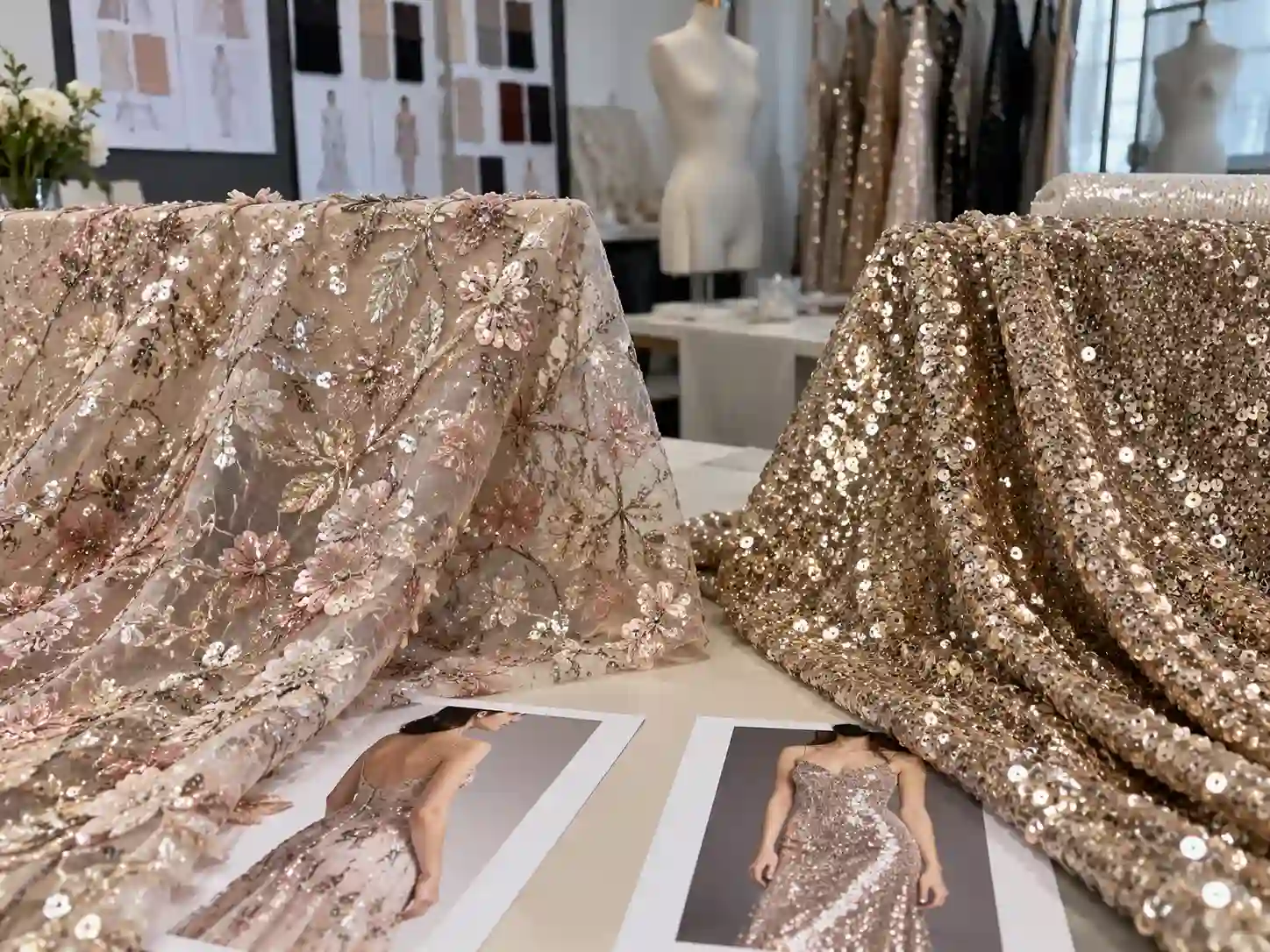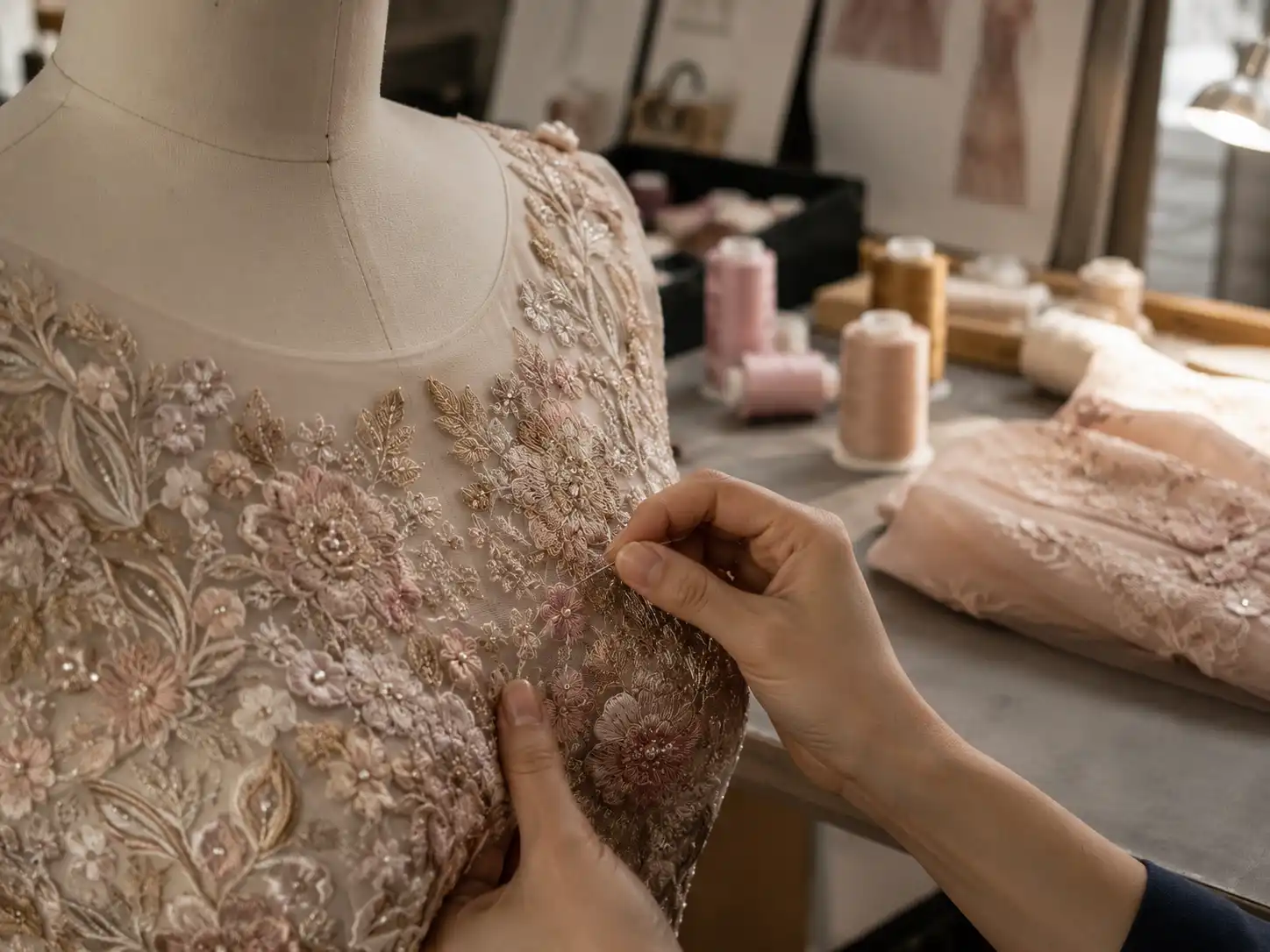
Choosing between China and Portugal for dress manufacturing looks simple until a real collection reaches the costing table. Portugal can be attractive because production is closer to European markets, factory visits are easier for European teams, and a Made-in-Europe origin can support premium positioning. China can be attractive because of its large textile ecosystem, broad fabric and trim availability, specialist processes, and ability to coordinate complex multi-style production at scale. The useful comparison starts only after those broad country reputations are translated into the needs of a specific dress line.
China is usually the stronger option when a dress program depends on broad fabric and trim sourcing, technically varied styles, specialist processes, scalable production, or competitive manufacturing economics. Portugal can be the stronger option when European proximity, shorter regional logistics, easier factory access, and European-origin positioning create enough commercial value to justify higher production costs. The best choice depends on the dress category, fabric, volume, destination market, launch calendar, and replenishment model.
A sourcing team can save several dollars on the sewing quote and still lose much more through wrong fabric, repeated sample rounds, late delivery, markdowns, or poor bulk consistency. It can also pay a premium for nearby European production without gaining much if critical fabrics and trims still need to arrive from Asia. The question worth answering is therefore not which country is “better” in the abstract, but which manufacturing system gives a particular collection the best balance of product execution, landed cost, speed, scale, and risk.
What Are the Key Differences Between China and Portugal?
China and Portugal represent two different dress-manufacturing models. China is stronger in supply-chain depth, material variety, specialist processes, production scale, and multi-style coordination. Portugal is stronger in European proximity, shorter regional logistics, easier physical access for EU teams, and Made-in-Europe positioning. The better choice depends on dress complexity, material sourcing, order structure, destination market, launch timing, and replenishment requirements.
What Is China Best Known for in Dress Manufacturing?
China’s strongest advantage is not simply lower labor cost. For fashion dresses, the more important advantage is the density of the surrounding supply chain. A dress factory rarely works alone. It may depend on woven and knit fabric suppliers, dye houses, printers, lace suppliers, elastic manufacturers, zipper makers, bra-cup suppliers, boning suppliers, label factories, packaging companies, embroidery workshops, pleating specialists, and finishing operations. When many of those resources sit within one industrial region, development decisions can be made faster and alternatives can be found without rebuilding the entire sourcing route.
The scale behind that ecosystem is substantial. According to the China National Textile and Apparel Council, China exported about US$293.77 billion of textiles and apparel in 2025, including roughly US$151.18 billion of garments and US$142.58 billion of textiles. Those figures do not prove that every Chinese factory is suitable for fashion dresses, but they help explain the breadth of upstream materials, specialist processes, production capacity, and export services available to international brands. The practical advantage grows when a collection uses several fabrics, colors, constructions, and finishing methods rather than one standardized basic style.
This becomes especially useful when a range contains materially different products. A single seasonal line may include a stretch-mesh mini dress, a bias-cut satin midi, a structured corset style, a lace occasion dress, and a printed resort maxi. These garments may share one brand identity, but their manufacturing needs are different. They require different fabric behavior, pattern logic, lining decisions, zipper and trim specifications, sewing methods, pressing control, and inspection points. A supplier that can coordinate those variables within one managed network reduces the number of handoffs the brand has to control directly.
The limitation is equally important. China’s scale creates a very wide quality spectrum. A factory that performs well on simple jersey dresses may struggle with corsetry, bias-cut satin, hand-applied embellishment, or delicate lace placement. A brand should therefore treat China as a large manufacturing ecosystem, not as one uniform quality level. The best results come from matching the product to a factory that already understands the relevant fabric, silhouette, construction, grading, and production rhythm.
What Is Portugal Best Known for in Dress Manufacturing?
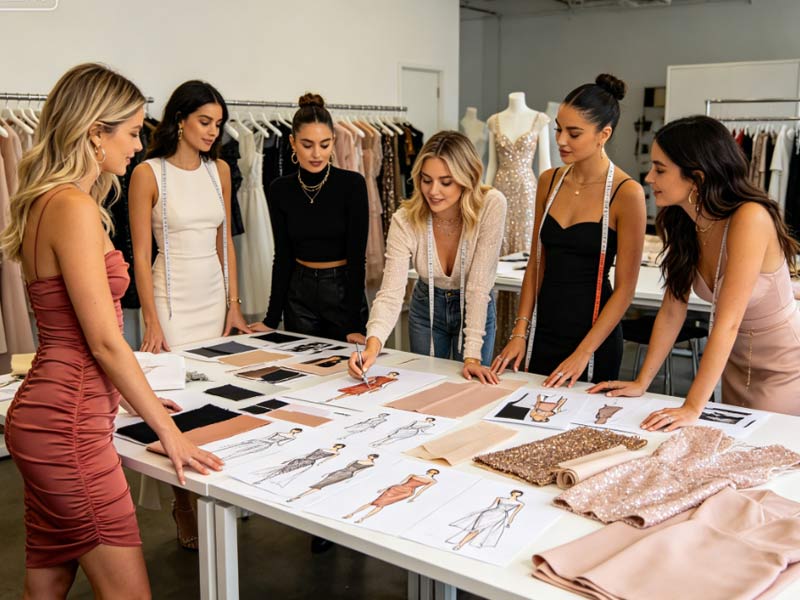
Portugal competes from a different position. Its textile and apparel sector is much smaller than China’s, but it is tightly connected to European fashion sourcing and has a strong export orientation. AICEP reports that Portugal’s textile and clothing industry includes more than 12,000 companies, employs more than 120,000 people, exports over 80% of its production, and reaches more than 140 countries. That makes Portugal more than a niche craft location; it is an established European manufacturing base with a meaningful textile and apparel infrastructure.
For brands whose design, merchandising, or distribution teams are based in Europe, geography can have direct operational value. Samples, lab dips, salesman samples, and finished garments travel shorter distances. Product teams can visit factories more easily for fittings, production reviews, or troubleshooting. Intra-European transport can also reduce the time between final inspection and warehouse receipt. These advantages matter most when the commercial model depends on quick decisions, closer production oversight, or responsive replenishment rather than only on the lowest possible unit cost.
There is also a positioning dimension. “Made in Portugal” can support a premium or European-origin story when country of origin genuinely matters to the brand’s retail strategy, wholesale customers, or end consumers. That value should not be treated as automatic, but it can be commercially relevant. Portugal’s textile exports also remain active: AICEP reported EUR1.44 billion in textile and related exports for the first quarter of 2026, with knit apparel at EUR566.5 million and non-knit apparel at EUR274.7 million during that period.
The main constraint is sourcing breadth. A Portuguese factory may make a beautiful garment, yet if the selected mesh, custom trim, molded cup, sequin fabric, or packaging component still needs to come from Asia, some of the expected speed advantage can disappear before sewing begins. Portugal is strongest when local or regional material availability, factory capability, and the destination market reinforce one another rather than pulling the supply chain in different directions.
Which Differences Matter Most for Dress Brands?
Dresses expose production weaknesses faster than simple basics because fabric behavior, body proportion, pattern engineering, construction, and finishing interact continuously. A garment can match a technical drawing but still fit badly. It can pass flat measurements and still twist on the body. Satin can show seam puckering after pressing, mesh can lose stability when lining tension changes, and a corset can look correct from the front while failing at bust shape or waist balance. These are product-system problems, not country-label problems.
For that reason, country comparison should focus on operating variables that affect the actual garment. Fabric access determines whether development starts with the right material. Pattern skill determines whether the design becomes wearable. Sample revision determines whether comments turn into measurable changes. Bulk control determines whether the approved fit survives grading and production. Replenishment capability determines whether the same fabric, color, trims, measurements, and finish can be reproduced months later without resetting the entire project.
| Manufacturing Factor | China | Portugal | Practical Importance for Dresses |
| Textile ecosystem | Very broad and highly diversified | Smaller but established European cluster | Affects how quickly suitable fabrics, trims, and alternatives can be found |
| Production scale | Very large | Smaller overall | Matters for large programs, multi-style launches, and volume expansion |
| EU market proximity | Low | Very high | Influences sample travel, factory access, freight time, and EU distribution |
| Material specialization | Extensive across many categories | Strong in selected textile categories | Important for satin, mesh, lace, knits, linings, and specialty materials |
| Specialist processes | Widely available across major clusters | Available but supplier-dependent | Relevant to pleating, embroidery, embellishment, printing, and structured dresses |
| European-origin value | Limited | Strong | Useful where origin supports premium positioning or merchandising |
| Multi-style coordination | Strong with an integrated partner | Depends on factory size and network | Critical for seasonal collections with many styles, colors, and SKUs |
| Factory access from Europe | More difficult | Easier | Helpful for fittings, approvals, audits, and troubleshooting |
The most useful sourcing question is therefore not whether China or Portugal offers “better quality.” It is whether the available supplier can manage the exact interaction of fabric behavior, pattern development, construction, grading, sample revisions, bulk standards, packaging, and delivery required by the collection. A technically demanding dress exposes a poorly matched manufacturer quickly, while a simpler style made from stable materials may place much more weight on location, price, and logistics.
How Do Dress Manufacturing Costs Compare?
China will often offer lower ex-factory economics, especially for larger volumes, material-intensive collections, or styles that depend on Asian fabrics and specialist processes. Portugal can offset part of its higher production cost through European proximity, easier regional transport, and lower inventory exposure for EU programs. The right comparison is not sewing price alone; it is landed cost per acceptable, saleable dress delivered to the required warehouse on time.
Which Country Has Lower Factory Costs?
For many programs, China begins with a structural cost advantage because its supplier network is large, sourcing options are broad, and production overhead can be spread efficiently across meaningful volumes. However, the gap between China and Portugal is not a fixed percentage. A simple unlined knit dress and a boned occasion dress with custom satin, lining, molded cups, invisible zipper, and detailed finishing are economically different products, even if both are described as “dresses” on a line sheet.
The biggest mistake in cost comparison is assuming that every quotation covers the same scope. One supplier may quote FOB with labels, final pressing, inspection, and individual polybags included. Another may quote cut-make-trim only. A third may include basic packaging but exclude custom labels, testing, or special finishing. Before comparing countries, the brand should normalize the quotation into the same commercial structure so that fabric, trims, pattern work, sampling, cutting, sewing, specialist processes, finishing, QC, labels, packaging, and shipping terms are visible.
China tends to become more competitive as the collection gains complexity because many material and process alternatives can be sourced inside the same national manufacturing ecosystem. Portugal can remain commercially attractive when the required textiles are readily available in Europe, the volumes suit the factory’s scale, and the additional production cost purchases faster regional response or higher country-of-origin value. Neither advantage can be judged accurately without looking at the actual style, material list, and order quantity.
Price should also be tested at more than one volume. Sample development, pattern work, fabric minimums, cutting setup, production-line preparation, and packaging setup are distributed differently across a 300-piece order and a 5,000-piece order. A country that looks expensive at one volume may become more competitive at another, while a low headline price can disappear once small color splits and material minimums are introduced.
What Determines the Cost of a Dress?
The retail image often hides most of the manufacturing cost. Two black midi dresses can look almost identical online while requiring very different fabric consumption, sewing minutes, internal structure, handling skill, and inspection effort. A simple design may use one fabric, one zipper, a basic label set, and standard packaging. A structured occasion style may add lining, interfacing, cups, boning, elastic, hooks, multiple fabric panels, delicate surface materials, and far more sewing and pressing time.
The biggest cost drivers are usually fabric type and consumption, number of layers, construction complexity, fit precision, special processes, color development, size range, packaging, order quantity, and delivery urgency. Custom-dyed satin can introduce mill minimums and approval time. Placement lace can increase cutting waste. Sequins can slow sewing and inspection. A bodycon silhouette can require tighter fit control than a loose resort dress. Retail-ready barcode or SKU packing adds handling that is easy to overlook in a basic factory quote.
| Cost Driver | Lower-Complexity Condition | Higher-Complexity Condition | Typical Commercial Effect |
| Main fabric | Stock fabric, standard shade | Custom dye, specialty hand feel, unique construction | Higher material cost, MOQ, and approval time |
| Fabric layers | Single layer | Fully lined, double-layered, structured | More consumption and sewing operations |
| Fit structure | Relaxed silhouette | Corset, fitted bust, bodycon, shaped waist | More pattern work and tighter tolerances |
| Internal components | Minimal | Cups, boning, interfacing, elastic support | More sourcing and assembly steps |
| Surface detail | Plain | Lace placement, sequins, embroidery, beading | More handling, labor, and inspection |
| Pattern matching | Not required | Placement print, stripes, lace motifs | Higher cutting waste and control requirements |
| Color program | Stock shades | Several custom-developed colors | Dye minimums, lab dips, and approval work |
| Size program | Narrow size range | Broad grading or extended sizes | More pattern and measurement control |
| Packaging | Standard polybag | Retail-ready or ecommerce-ready SKU packing | More components, checks, and handling |
| Delivery | Standard schedule | Urgent production or partial air shipment | Higher operating or freight cost |
Cost control should not be confused with removing what makes the dress work. Replacing one satin with a technically similar alternative can be sensible if drape, sheen, opacity, and sewing behavior remain acceptable. Removing necessary interfacing from a structured neckline simply to hit a target price can create returns, weak photography, and inconsistent bulk. The most useful cost engineering protects the brand-level appearance while simplifying hidden complexity where the customer will not notice a negative difference.
Jinfeng Apparel’s documented quotation logic follows that broader approach. Its costing model considers fabric, trims, construction, sampling, pattern work, cutting, sewing time, pressing, QC, packing, wastage, logistics, and project-specific testing or certification, while cost optimization can include fabric substitution, construction simplification, trim alternatives, cutting-layout improvements, MOQ planning, color consolidation, and size-ratio planning. This is a practical benchmark for comparing quotations rather than focusing on one headline factory price.
How Does Landed Cost Change the Comparison?

The lowest ex-factory quote can become the more expensive sourcing decision after the rest of the supply chain is added. The commercially useful number is the cost of putting an acceptable, saleable garment into the required warehouse on the required date. That means production price should be considered together with sample allocation, freight, insurance, customs duty, brokerage, inspection, local delivery, expected rework, and the financial effect of committing inventory earlier than necessary.
For an EU-based business, Portugal has a structural customs and logistics advantage. The Council of the European Union states that EU member states do not impose customs duties internally on goods traded between them, while goods imported from outside the EU enter a common external tariff area before moving freely inside the union. This does not make Portuguese manufacturing automatically cheaper, but it changes the landed-cost equation for dresses being distributed into Germany, France, Spain, Italy, the Netherlands, or other EU markets.
China can still remain economically stronger after freight and import costs when the manufacturing difference is large enough or when the collection depends on materials already sourced in China. Moving garment assembly to Europe does not remove Asian input costs if the satin, lace, cups, hardware, or packaging still travel from Asia before production begins. That is why the material map should be considered together with the sewing location rather than treated as a separate procurement discussion.
Inventory timing also changes the comparison. A longer supply chain normally requires earlier commitments and a larger forecast window. That is manageable for stable evergreen programs, but it is more dangerous for trend-sensitive partywear or occasion styles. The cost of a late fashion product is not just freight; it can include markdowns, missed campaign dates, weaker sell-through, and cash tied up in the wrong sizes or colors.
Is Portugal Worth the Higher Production Cost?
Portugal is worth paying more for when the premium buys something commercially useful. That might be shorter European replenishment, easier factory access, faster sample movement, reduced customs friction inside the EU, lower inventory exposure, or stronger Made-in-Europe positioning. A higher factory price can be rational if it improves the economics of the whole program rather than simply changing the country named on the label.
The useful question is not whether an extra EUR3 or EUR5 per dress sounds expensive. The question is what that additional cost purchases. If it allows a profitable occasion style to be replenished while demand is still active, reduces stock committed before launch, or supports a higher-margin premium positioning, the premium may be justified. If the same key materials still require long lead times from Asia and the final delivery improvement is small, the higher factory cost may add little commercial value.
Established brands often reach different answers across one assortment. A European capsule collection may suit Portugal because origin and regional speed matter. A high-volume partywear program may suit China because material breadth, specialist processes, and scale dominate the economics. A stable core dress may be placed where the fabric and repeat-order system are most reliable. Manufacturing should therefore be evaluated at style and collection level instead of becoming a permanent country preference.
Which Country Offers Better Speed and Flexibility?
Portugal has a natural logistics advantage for European destinations, while China can be extremely responsive when the required fabrics, trims, development resources, and production capacity already exist within its manufacturing ecosystem. Real speed is determined by the complete timeline – material approval, pattern development, sample revision, bulk production, QC, and freight – rather than by sewing time or geographic distance alone.
How Fast Can Samples Be Developed?
Sampling speed is often discussed too casually. A factory may promise that it can “make the sample quickly,” but sewing is only one part of development. Before the machine starts, someone must interpret the tech pack or reference garment, evaluate construction, select fabric, source trims, create or adjust the pattern, define internal support, and establish measurements. A first sample sewn in a few days is not useful if it uses the wrong stretch, wrong lining weight, wrong cup shape, or a pattern that cannot be graded reliably.
Fashion dresses also reveal problems that a flat sketch cannot show. A neckline may gape, the waist seam may sit too high, a corset may flatten rather than shape the bust, a slit may open too far during movement, or a satin skirt may twist because the grain is incorrect. These are development issues, not simple sewing defects. The real measure of sample speed is therefore the number of days and revision rounds required to reach a sample that is both visually approved and production-ready.
A disciplined sample sequence can separate different decisions rather than asking one prototype to solve everything. The first sample proves construction and basic silhouette. A fit sample checks body proportion and measurement relationships. A revised sample confirms corrections. A photo-ready or salesman sample can support internal selling or campaign preparation. The PP sample locks final production details, while the Golden sample provides a physical reference for production and QC.
Jinfeng Apparel’s documented development process uses these stages, including first samples, fit samples, revised samples, photo-ready samples, salesman samples, PP samples, and Golden samples. Client comments are translated into updated patterns, measurement charts, BOMs, sewing instructions, QC checklists, and packing requirements before bulk production. That type of version control matters more than advertising the shortest first-sample date because a fast but inaccurate sample only moves the delay into the next round.
How Do Bulk Lead Times Compare?
Bulk lead time becomes much clearer when it is separated into several clocks. The material clock covers sourcing, custom color, printing, trim development, and arrival. The approval clock covers lab dips, strike-offs, revised samples, labels, packaging, and the PP sample. The factory clock covers cutting, sewing, special processes, in-line inspection, pressing, finishing, final inspection, and packing. The transport clock begins only after the product is actually ready to leave the factory.
Portugal can have a meaningful advantage in the transport clock for continental European destinations. Regional road freight is fundamentally different from intercontinental sea freight, and physical access for production teams is easier. China can have an advantage in the material clock when the needed satin, mesh, lace, trims, zippers, cups, labels, and finishing processes are already available in the surrounding sourcing network. In some projects, this upstream advantage can offset part of the longer international transport route.
This is why comparing a “30-day production” promise in Portugal with a “40-day production” promise in China is not enough. If the Portuguese factory waits five weeks for an imported fabric, the closer factory may still deliver later. If the Chinese factory has the fabric in stock but no sewing capacity for a month, supply-chain depth does not solve the scheduling problem. Lead time must be mapped as a sequence of dependencies rather than a single number.
A professional production calendar should work backward from the required launch or warehouse date. Jinfeng Apparel’s documented project timeline tracks fabric approval, trim approval, pattern development, first samples, revision dates, PP approval, bulk material arrival, cutting, sewing, in-line QC, finishing, packing, inspection, shipment, and estimated warehouse arrival. That milestone-level structure is a useful benchmark for comparing factories in either country because it shows where delays can actually occur.
Which Country Is Better for Repeat Orders?
Repeat orders reward suppliers that preserve technical information. The first production run contains dozens of decisions that are easy to lose: final fabric article, approved color, lining, zipper specification, thread, elastic, cup shape, boning width, measurement tolerance, pattern version, label placement, carton ratio, and QC comments. If those records are incomplete, the second order can slowly drift away from the first even when everyone believes they are reproducing the same dress.
For replenishment programs, the useful production assets are not only physical samples. They include the approved pattern, graded measurement chart, fabric reference, color standard, BOM, trim specification, sewing instruction, Golden sample, label artwork, QC checklist, packing specification, and carton rules. When those records are preserved, repeat production can begin from an approved technical baseline rather than from memory, old emails, or photographs of a previous shipment.
China can be particularly effective when a bestseller scales materially because the upstream material network and production system can support larger repeats. Portugal can be especially attractive for European replenishment when the same materials remain available regionally and shorter transport helps inventory reach the market sooner. Neither advantage works if the original fabric disappears, the pattern version is unclear, or the factory cannot recreate the approved finishing standard.
Jinfeng Apparel’s documented repeat-order process retains PP and Golden sample references, patterns, BOMs, fabric information, trim details, packing requirements, and QC records. That approach reflects a broader principle that applies in both countries: a repeat order becomes faster only when the first order created a reliable technical record that can be reused without restarting development.
How Does Location Affect Speed to Market?
Location matters most when demand information arrives late. If a company commits its full seasonal order several months before launch, saving a few days in regional transport may be less valuable than lowering production cost. If the brand launches frequently, tracks sales by SKU, and replenishes winning dresses while a trend is still active, transport time can become far more valuable. The importance of geography therefore changes with the commercial model, not just the distance shown on a map.
A more useful metric is total market response time: the time between deciding to produce and having sellable inventory available. That period includes demand confirmation, material availability, factory scheduling, production, inspection, transport, customs where applicable, and warehouse receiving. Portugal can compress the final stages for EU distribution. China can compress material search, special-process coordination, and scale-up when the required resources are already concentrated in its apparel ecosystem.
Shipment strategy can also be mixed. A planned production run may move mainly by sea to protect margin, while a limited quantity travels by air to support launch timing or replenish a high-margin bestseller. A Portugal program may use regional road transport to serve European warehouses quickly. The fastest method is not always the most profitable, and the cheapest transport method is not always the best commercial decision if it causes a trend-sensitive product to miss its selling window.
Experienced teams therefore assign a financial value to time. Airfreighting a low-margin dress can destroy the intended economics. Waiting several extra weeks for a highly profitable occasion style can destroy the sales opportunity instead. There is no universal “fastest country.” There is only the production and logistics route that reaches the market quickly enough without damaging the product margin or quality standard.
How Do Quality and Dress Capabilities Compare?

Quality depends more on factory specialization and process control than on nationality. China and Portugal both have capable dress manufacturers, but their production ecosystems differ. A strong supplier should prove that it can manage pattern engineering, sensitive fabrics, structured construction, grading, sample revisions, bulk consistency, and inspection. For dresses, the decisive test is whether the approved sample can be reproduced reliably across sizes, colors, quantities, and repeat orders.
Which Country Is Better for Complex Dresses?
Complex dresses reward manufacturing systems with strong technical development. A fitted corset mini dress may combine bust shaping, molded cups, boning, interfacing, waist suppression, zipper tension, lining ease, neckline stability, seam allowance control, and grading across several sizes. A bias-cut satin dress creates a completely different challenge because grain direction, panel growth, seam distortion, pressing temperature, and hem settling can affect the final garment even when the original pattern is technically correct.
Mesh introduces stretch, transparency, edge stability, and lining-tension issues. Lace introduces motif placement, seam joining, cutting waste, and delicate handling. Sequins create needle, cutting, seam, abrasion, and finishing problems. These are not small decorative differences; they change production methods, labor time, defect risk, and the type of technicians needed during development and bulk manufacturing. A factory that understands one category well may still be a poor match for another.
China’s advantage is the breadth of specialist factories and supporting processes available across its major apparel clusters. A company developing many technically different styles can often keep more of those processes inside one regional sourcing network. Portugal also has experienced technical producers, and a highly specialized Portuguese factory can easily outperform a poorly selected Chinese supplier on the right product. The correct comparison is therefore not “China for volume, Portugal for quality,” because that simplification ignores factory specialization.
Technical questions reveal capability much faster than generic claims. Ask how a corset is stabilized, how a bias-cut hem is allowed to settle, how mesh recovery is evaluated, how lace placement is controlled, or how sequin seam allowances are cleaned. A capable dress manufacturer should describe a method, the approval point, and the QC concern rather than simply replying that the style is possible.
How Do Fabric and Trim Options Compare?
Fabric is often the point where the China-versus-Portugal decision becomes much clearer. China’s enormous textile base provides commercial access to polyester satin, chiffon, mesh, lace, jersey, ponte, rayon blends, linings, sequin fabrics, printed fabrics, coated textiles, specialty knits, elastics, interlinings, cups, zippers, decorative hardware, labels, and packaging. The China National Textile and Apparel Council reported about US$142.58 billion in textile exports for 2025, which illustrates the size of the upstream network supporting garment production.
Portugal also has a deeply export-oriented textile sector, but its strengths are concentrated differently. AICEP describes an industry with more than 12,000 companies, over 120,000 workers, and more than 80% of production exported. Portuguese capabilities in knits, technical textiles, innovation, selected woven fabrics, and sustainability-oriented material development can be particularly attractive when those material families fit the dress collection and the brand values European sourcing.
The real material comparison should ask whether the required fabric already exists in the country, whether the correct hand feel and weight can be achieved, what the supplier’s MOQ is, whether the color can be repeated, whether the material can meet market-specific documentation or testing needs, and whether the same article will still be available for replenishment. A beautiful first sample made from one-off deadstock is not necessarily a successful commercial development if the brand cannot buy the same material again.
It is also useful to request a preferred fabric and a commercially acceptable alternative during development. That gives the product team room to respond if the first material has a high minimum, long dye lead time, unstable color, poor stretch recovery, or cost that no longer fits the target margin. Material flexibility is one of the most practical ways to protect both launch timing and gross margin without compromising the intended look of the dress.
How Is Dress Fit Controlled?
Fit control begins with the pattern, but it does not end there. Women’s dresses often depend on relationships between measurements rather than individual measurements alone. Bust circumference may be correct while the bust apex sits too low. Waist circumference may pass specification while the waistline is positioned too high. Hip measurement may be technically correct but the garment can still pull because the production fabric has less stretch or different recovery than the material used during initial sampling.
Critical points vary by silhouette, but they frequently include bust, under-bust, waist, high hip, full hip, front length, back length, shoulder width, armhole depth, neckline opening, strap length, torso length, skirt length, slit height, sleeve opening, and hem sweep. Structured dresses may also require cup placement, boning position, neckline stability, lining ease, and zipper behavior to be checked together rather than separately.
Fabric properties must be built into the fitting decision. A pattern developed in four-way stretch power mesh cannot simply be transferred to a low-stretch woven satin because the garment may share the same visual idea while requiring completely different ease, seam placement, support, and closure construction. The sample process should therefore combine numerical measurement with visual fitting on the intended body or approved fitting standard.
Jinfeng Apparel’s documented development resources include two sample rooms, 7+ senior women’s pattern makers, and 20+ sample machinists, with fit correction covering areas such as bust, waistline, hip, dress length, straps, neckline, and slit placement. These are the kinds of technical capabilities worth investigating when comparing factories in either country, because the quality of a dress line is usually decided during pattern and sample development long before final inspection.
How Is Bulk Quality Kept Consistent?
Bulk quality is created before bulk production begins. A factory cannot reliably inspect quality into a garment if the production standard was never fully defined. The approved pattern version, measurement chart, fabric, color, trims, lining, construction, stitch details, labels, packaging, tolerances, and critical QC points should all be clear before the main order reaches the cutting table or sewing line.
For serious dress programs, the PP sample and Golden sample are particularly useful controls. The PP sample represents the final pre-production configuration and should reflect the intended production material, color, trims, labels, construction, and measurements. The Golden sample becomes the physical benchmark against which production, quality inspection, repeat orders, and any later dispute can be compared. If large structural changes continue after PP approval, the risk of document and sample mismatch rises quickly.
Inspection should then happen throughout production rather than waiting until finished garments are packed. Incoming fabric can be checked for color, hand feel, weight, defects, stretch, print, lace quality, or sequin damage. Cutting should control pattern version, grain direction, stretch direction, motif placement, shade variation, and panel count. In-line sewing inspection can catch dimension and construction problems while they are still economical to correct, and final inspection verifies appearance, measurements, labels, packing, and quantity.
Jinfeng Apparel’s documented bulk process covers fabric confirmation, trim confirmation, size-chart confirmation, PP approval, incoming material inspection, fabric relaxing where required, cutting, cut-panel checking, sewing, in-line inspection, pressing, finishing, garment inspection, packing, final inspection, and AQL or client inspection where required. Production is controlled against PP samples, Golden samples, production orders, sewing instructions, BOMs, and QC checklists. This process-based evidence is more useful than any supplier simply claiming to offer “strict quality control.”
How Do MOQ, Logistics, and Risk Affect the Decision?
MOQ, logistics, customs, material minimums, compliance, confidentiality, and supply-chain concentration can change the sourcing decision even when product quality appears comparable. China often becomes more attractive as style count, component complexity, and volume increase. Portugal can become more attractive for EU-focused programs where regional movement and European origin create measurable value. Mature sourcing strategies may also divide production between countries rather than forcing every style into one location.
How Do MOQs Compare?
A garment factory’s MOQ is only one of several minimums that influence a dress program. A sewing factory may accept 200 pieces, but the selected mill may require much more fabric for a custom color. A custom zipper, branded hardware item, woven label, printed polybag, lace design, or specialty trim may each have its own production minimum. This is why a headline claim such as “MOQ 50” or “MOQ 100” does not necessarily tell a sourcing team how small the complete commercial order can actually be.
The useful way to evaluate MOQ is to separate garment MOQ, fabric MOQ, color MOQ, trim MOQ, and packaging MOQ. Garment MOQ reflects the sewing factory’s production threshold. Fabric and color minimums come from mills or dye houses. Trim minimums can apply to zippers, hardware, cups, elastics, labels, or decorative parts. Packaging minimums may apply to printed bags, custom cartons, hangtags, inserts, or other branded materials. The highest relevant minimum can become the real constraint for a particular style.
China’s supplier density can provide more alternatives when one component has an inconvenient minimum, but many mills and specialist factories are also optimized for meaningful production volume. Portugal is often associated with more flexible European manufacturing, but exact minimums still vary by factory, fabric, construction, and component source. Country-level averages are therefore much less useful than a component-by-component MOQ map for the actual dress.
For a concrete manufacturer-specific reference, Jinfeng Apparel’s verified starting MOQ is 200 pieces per style/color, with the final requirement depending on fabric availability, custom color development, trims, construction complexity, packaging, and production scheduling. Custom woven labels, special fabrics, custom trims, and printed packaging may have separate supplier minimums. The commercially useful MOQ is not simply the smallest number available; it is the quantity at which sourcing efficiency, factory setup, inventory risk, and target margin remain balanced.
How Do Tariffs and Logistics Affect the Decision?
Logistics changes according to the destination market, so a country comparison that ignores the final warehouse is incomplete. For an EU business, Portugal has a clear structural advantage because goods traded between EU member states are not subject to internal customs duties. Goods made in China enter the EU from outside the customs union and must follow import procedures and the applicable tariff treatment before they can circulate freely inside the union. That distinction directly affects landed cost, paperwork, and timing.
For a UK company, the calculation changes because the UK is outside the EU customs territory. For a U.S. company, the calculation changes again. Duties should therefore be confirmed using the actual HS classification, country of origin, destination, and current trade rules at the time the order is planned. Static country-level percentages can become outdated or misleading, especially when trade policies change or garment classifications differ according to fiber content and construction.
Transport mode should also be matched to product economics. Sea freight generally suits planned volume where margin protection is more important than rapid replenishment. Air freight can make sense for launch quantities, urgent replenishment, or high-margin styles, but its cost can quickly remove an ex-factory advantage. Regional road freight from Portugal to European destinations can offer a different balance of cost and speed, especially when warehouse intake is already set up for intra-European movements.
Shipment strategy does not need to be all-or-nothing. Some fashion businesses split a production order so that a limited quantity moves quickly to support a launch while the balance follows by a lower-cost route. The relevant number is therefore the cost of having the correct inventory in the warehouse on the required date, not simply the cost quoted at the factory gate.
How Do Compliance and IP Protection Affect the Choice?
Compliance is product-specific and market-specific. A dress sold in the United States, United Kingdom, European Union, Canada, or Australia may face different fiber-labeling, care-labeling, chemical, flammability, packaging, or testing requirements. Country of manufacture does not automatically guarantee compliance, and a supplier’s historical experience in one market does not remove the need to review the requirements for the actual product being developed.
The same caution applies to sustainability certifications and material claims. A certificate should be checked against the company named on it, the certificate scope, the validity period, the relevant factory or material supplier, and the product or transaction in question. A factory saying that it “uses certified fabric” does not mean that every fabric in every order carries the same certification. Evidence should be tied to the specific sourcing route rather than displayed as a generic marketing badge.
Confidentiality should also be treated as an operating control rather than a reassuring sentence on a website. Brands should establish who can access tech packs, patterns, measurement charts, packaging artwork, unpublished samples, launch schedules, target prices, and order information. Sample photography, showroom use, and handling of branded overruns or rejects should follow agreed rules, particularly for products that have not yet launched publicly.
Jinfeng Apparel’s documented policy supports NDA-based cooperation and protection of tech packs, samples, patterns, trims, private-label details, unpublished designs, and order information. Its content rules also prohibit unverified blanket certification claims and require certifications and testing to be considered by project, supplier, batch, and certificate scope. Those practices are useful benchmarks when assessing manufacturing partners in either China or Portugal.
Is Dual-Country Sourcing a Better Strategy?
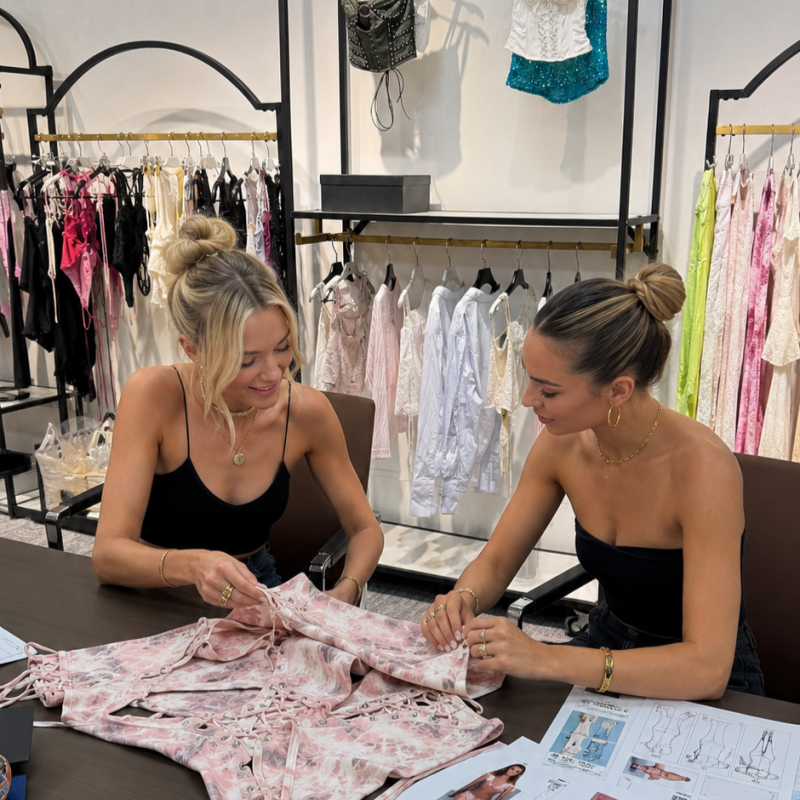
For a company with sufficient volume and management capability, China and Portugal do not have to be mutually exclusive. A dual-country strategy can allocate products according to their economics instead of forcing every style into one sourcing philosophy. Complex, material-intensive, larger-volume, or multi-SKU collections may be produced in China, while selected European-market capsules or faster-response programs may be produced in Portugal.
Another model separates base production and responsive production. A planned seasonal quantity can be placed where cost, materials, and scale are strongest, while a nearer source handles selected replenishment. A third model separates markets, using one production base for European inventory and another for North American, Asian, or global distribution. These approaches can reduce dependence on one geography, but they also create more technical and managerial work.
Dual sourcing introduces consistency risks. The same pattern interpreted by two factories can produce different garments. Fabrics with the same nominal composition can have different weight, stretch, recovery, drape, and shade. Stitch density, pressing, lining tension, seam allowance, grading, and finishing can all change the appearance. If the same style is produced in two countries, both suppliers need tightly controlled technical packages, approved material standards, measurement tolerances, construction details, and comparable physical references.
Diversification is useful when it reduces a real supply risk or creates a measurable commercial advantage. It is not automatically useful when it simply doubles the number of suppliers a brand has to manage. The most practical approach is to score each style by margin, complexity, material origin, forecast confidence, volume, replenishment need, destination, and country-of-origin value before deciding whether one country or a mixed sourcing model is more appropriate.
Which Country Should You Choose for Dress Manufacturing?
Choose China when the collection needs extensive fabric and trim sourcing, technically varied product development, specialist processes, scalable capacity, multi-style coordination, and competitive production economics. Choose Portugal when European proximity, shorter regional logistics, easier physical access, and European-origin positioning create enough value to justify the manufacturing premium. For many established fashion companies, the strongest decision is made by product group rather than by country alone.
When Is China the Better Choice?
China becomes particularly strong when the order is operationally complicated. Imagine a seasonal range containing more than 20 styles across satin, lace, mesh, jersey, printed woven fabric, and sequins. Several styles need custom colors, some need cups and boning, others require special printing, lace placement, or trim development, and the collection contains multiple sizes and colorways. If successful styles may later require substantial repeats, the sourcing problem becomes much larger than simply finding sewing capacity.
China is usually worth serious consideration when the collection uses many fabrics and trims, custom materials or colors are important, several products need specialist construction, multiple styles must be developed in parallel, production may scale after launch, or unit economics leave limited room for a European manufacturing premium. It can also be useful when the brand wants one development partner to coordinate several upstream suppliers rather than managing separate fabric, trim, pattern, sewing, finishing, and packaging vendors directly.
The Chinese supplier still has to prove that it can manage the product. Brands should look for evidence of dress specialization, pattern capability, fabric sourcing, fit correction, sample revision, PP-sample discipline, bulk documentation, QC, private-label packing, and repeat-order control. A large factory network without consistent project management can create as many problems as it solves, particularly when different styles or production units interpret standards differently.
Jinfeng Apparel provides one example of the type of Guangdong manufacturing model that can suit this work. The company has focused on custom women’s fashion since 2008 and operates six owned women’s fashion factories while working with more than 10 long-term satellite production partners. Its documented model supports multi-style, multi-fabric, multi-color, multi-size, and multi-batch production, with development, sampling, QC, private-label packing, and export coordination integrated into the production process rather than treated as separate services.
When Is Portugal the Better Choice?
Portugal becomes more compelling when geography directly supports the commercial model. A European fashion company may value being able to reach a factory quickly, receive physical samples without intercontinental transit, move finished stock through regional transport, and merchandise a European country of origin. For a premium dress collection, those advantages can justify a higher factory cost when they reduce inventory exposure, improve response time, or strengthen the positioning of the product.
Portugal is especially worth investigating when the main warehouse and customer base are inside the EU, the required fabrics are available regionally, the volumes fit the selected factory’s scale, and replenishment speed has meaningful financial value. The country’s textile and apparel industry is export-focused rather than purely domestic, and its established cluster can support brands looking for European production with practical access to technical textile and garment-making capabilities.
Proximity should still be tested rather than assumed. A Portuguese garment factory may rely on imported satin, special lace, branded hardware, cups, zippers, embellishments, or packaging. If those components require long inbound lead times, the final sewing location does not automatically create a short total production cycle. The sourcing team should ask where each critical material originates, how long it takes to replenish, and whether the supplier has realistic alternatives if one input is delayed.
Portugal is strongest when production location, material availability, and destination market all reinforce one another. When the factory, materials, finishing resources, and European customers are regionally aligned, the higher ex-factory cost can buy real commercial speed and supply-chain simplicity. When those elements are not aligned, the premium should be questioned rather than accepted because of geography alone.
Which Country Fits Your Dress Category?
The product itself should have more influence on the decision than broad assumptions about national manufacturing. A basic jersey dress mainly depends on stretch, recovery, grading, sewing efficiency, and price. A structured occasion dress adds pattern complexity, internal support, lining, and tighter fit control. A satin bias dress depends heavily on grain, cutting, seam behavior, pressing, and hem settling. A mesh bodycon style depends on stretch recovery and lining tension, while a sequin dress introduces fragile surface materials, additional handling, and more inspection risk.
| Dress Program | Main Technical Pressure | China Tends to Fit When | Portugal Tends to Fit When |
| Jersey or knit dresses | Stretch, recovery, grading, sewing efficiency | Volume and fabric breadth matter | EU proximity and suitable regional knit supply matter |
| Satin slip dresses | Grain, drape, seam puckering, hem stability | Many satin options or larger programs are required | Premium EU production and suitable satin sourcing align |
| Corset dresses | Cups, boning, bust shaping, pattern precision | Broad component and specialist sourcing is needed | A proven structured-garment specialist is available |
| Mesh bodycon dresses | Stretch, transparency, lining tension | Power-mesh and trim options are central | Required technical knit is available regionally |
| Lace occasion dresses | Motif placement, lining, delicate handling | Material variety and scalable production are priorities | Premium European positioning adds value |
| Sequin party dresses | Cutting, needle control, embellishment damage, QC | Specialist fabric and process availability is important | A proven specialist factory can execute the style |
| Resort collections | Print, drape, color, seasonal timing | Multi-style material sourcing matters | European response time matters more |
| Large multi-style programs | Coordination, SKU control, capacity, repeats | Scale and ecosystem depth are priorities | Program volume fits the supplier network |
| EU-focused premium capsules | Origin, short logistics, responsive quantities | Cost or material sourcing still dominates | European production value is commercially meaningful |
A fabric-heavy fashion collection and a locally sourced premium capsule may reasonably end up in different countries even when they belong to the same brand. The same principle can apply inside a single collection. A high-volume mesh bestseller may remain in China because its material, lining, elastic, and production method are stable there, while a smaller European capsule may move to Portugal because the higher unit cost is offset by shorter logistics and stronger origin positioning.
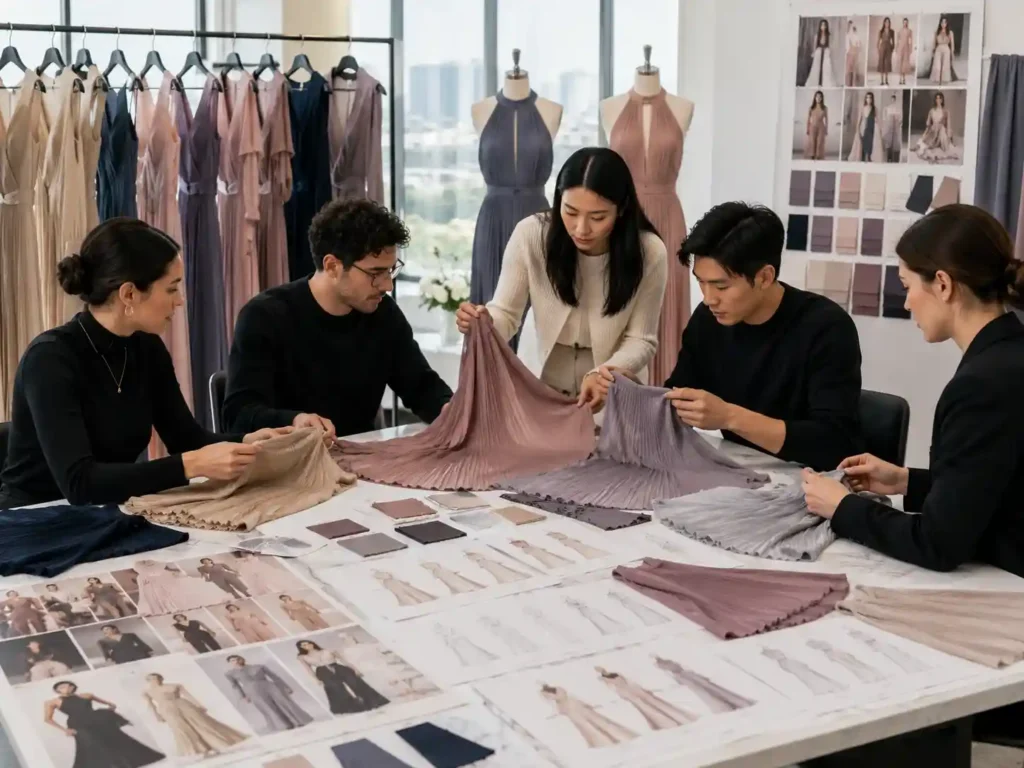
Good sourcing is rarely ideological. It is a series of product-level decisions that should be revisited when volume, fabric, market, margin, or launch timing changes. The sourcing route that worked for one season may not remain optimal once the product mix or customer geography changes, which is why experienced teams compare the actual collection rather than treating manufacturing country as a permanent brand identity.
What Should You Ask Before Choosing a Manufacturer?
Once the shortlist reaches individual factories, country-level advantages move into the background and supplier-level evidence becomes more important. Start with materials. Ask whether the proposed fabric is stock, made to order, or custom dyed; confirm composition, usable width, weight where relevant, stretch behavior, color availability, MOQ, and repeat-order availability. Ask what alternative the supplier would propose if the preferred fabric becomes unavailable or no longer fits the target price.
Then move to technical development. Ask who develops the pattern, who reviews fit, how revisions are recorded, which measurements are treated as critical, and how the technical file changes after each approved sample. A serious dress supplier should be able to explain how sample comments become pattern corrections, measurement updates, BOM changes, sewing instructions, and QC points rather than relying on verbal communication alone.
Production questions should be equally specific. Ask what must be approved before bulk cutting, how material issues are handled, which stages receive in-line inspection, whether client or third-party inspection can be supported, and how labels, barcodes, SKU stickers, cartons, and warehouse requirements are checked. Also ask what records remain after shipment, because a supplier that cannot explain its repeat-order documentation may struggle to reproduce the same dress six months later.
For larger programs, document control becomes especially important. Jinfeng Apparel’s documented project records can include tech packs, line sheets, size charts, pattern versions, revision logs, fabric and trim approvals, BOMs, production orders, sewing instructions, QC checklists, PP sample comments, Golden sample records, label artwork, packing instructions, SKU tables, packing lists, shipping documents, and after-shipment feedback. That level of traceability is a useful benchmark regardless of whether a dress is produced in Guangdong or Portugal.
China and Portugal can both produce excellent dresses, but they create value in different ways. China’s case is strongest when a collection needs a large, interconnected fashion supply chain capable of handling varied fabrics, trims, technically different styles, production volume, and repeat orders. Portugal’s case becomes stronger when European proximity, regional logistics, factory accessibility, and manufacturing origin have enough commercial value to justify a higher production cost. Neither advantage should be accepted as a stereotype; each should be tested against the actual product and market.
The best sourcing decision begins with the dress rather than the country. Define the fabric, construction, fit tolerance, color count, size range, order volume, launch date, replenishment model, destination market, target margin, packaging requirements, and quality standard first. Then calculate the manufacturing system around those requirements. Once that information is visible, China versus Portugal becomes a measurable production decision about which route can deliver the right garment, at the right standard, at the right landed cost, within the commercial window that matters to the brand.