
How to Reduce Material Waste in Dress Design

Your trusted Women’s Apparel Manufacturer from China
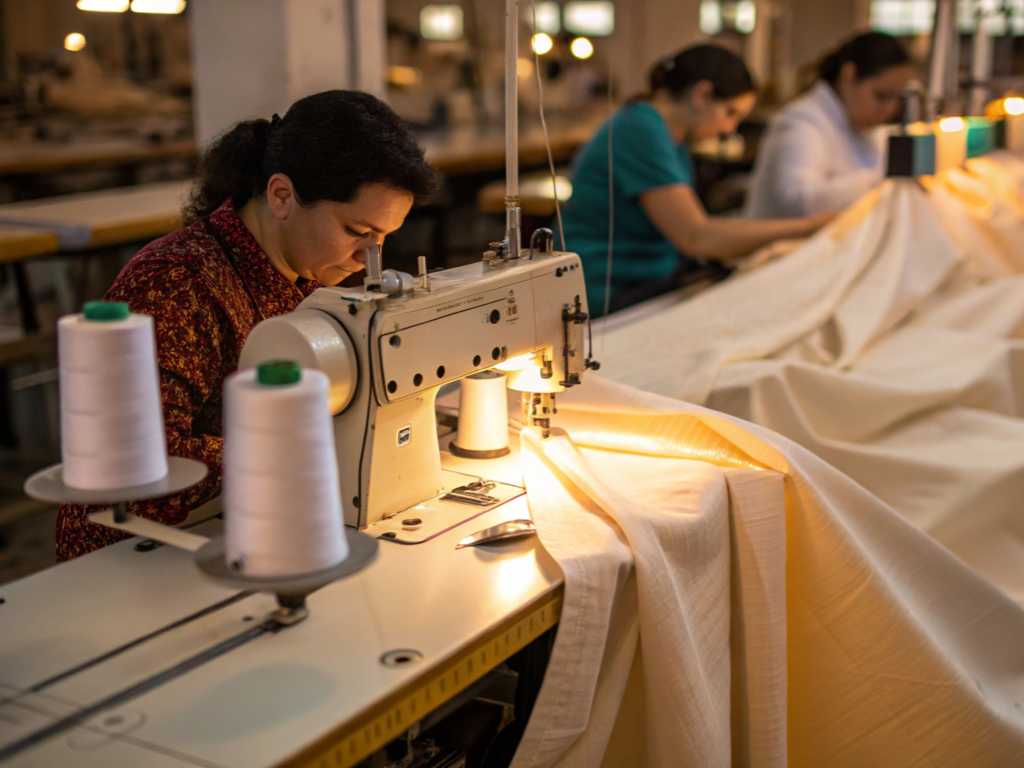
Material waste in dress design is not only an environmental issue. For fashion brands, it is also a margin issue, a sampling issue, a production planning issue, and sometimes a launch-delay issue. A dress can look beautiful in a sketch, but if the panel shapes fight against the fabric width, the print direction, the stretch direction, or the cutting layout, the real cost appears later on the cutting table. Many brands only notice the problem after the sample round, when fabric consumption is higher than expected and the target price no longer works.
The practical way to reduce material waste in dress design is to control waste before fabric is cut. Brands can lower waste by planning silhouettes, seam lines, fabric width, print direction, size grading, sampling rounds, and marker layout together from the beginning. The goal is not to make every dress simple; it is to make every design more production-aware.
Imagine a satin occasion dress that looks strong online but wastes too much fabric because of one dramatic asymmetric panel. A weak supplier simply follows the sketch and sends a higher cost later. A stronger development partner asks whether the same visual effect can be achieved with cleaner panel division, smarter seam placement, or a better fabric width. That is where waste reduction becomes real.
What Causes Material Waste?
A realistic fashion design studio scene showing a dress tech pack, fabric swatches, paper patterns, cutting markers, measuring tape, and small offcuts on a clean worktable, modern womenswear development mood, natural lighting.
Material waste in dress design usually starts before fabric reaches the cutting table. It comes from unclear design files, poor fabric-width planning, inefficient pattern shapes, repeated samples, late fit changes, unsuitable trims, overdeveloped colorways, and production decisions made without marker efficiency in mind. The earlier a brand controls these details, the easier it is to reduce waste without weakening the dress design.
Design Decisions
Most fabric waste is not created by one careless cutter. It is created by a chain of small decisions that look harmless during design but become expensive in production. A sketch may include a wide ruffle, deep asymmetric hem, oversized sleeve, bias-cut skirt, and contrast lining. Each detail may look attractive on screen, but each one changes fabric consumption, cutting direction, sewing time, and defect risk.
In dress development, the highest-waste designs are often the ones where the designer thinks only about the front-view photo. Dresses are three-dimensional products. The bust curve, waist position, hip shape, hem balance, lining, and fabric movement all affect how much material is needed.
A waste-aware design process does not mean removing all beautiful details. It means asking practical questions earlier: Does this ruffle add selling value? Can the same look be created with a narrower panel? Does this cut-out require extra reinforcement? Does the skirt sweep need to be that wide for the target market? These questions protect both creativity and profit.
Unclear Tech Packs
An unclear tech pack is one of the most common causes of avoidable material waste. When measurement points, seam details, fabric references, lining notes, trim placement, and construction requirements are missing, the manufacturer must make assumptions. Assumptions lead to sample corrections. Sample corrections lead to extra fabric use, extra trims, extra shipping, and longer development cycles.
For dress styles, the risk is higher than for basic tops because fit and structure are more sensitive. A small change in bust allowance, waist seam height, strap length, hip curve, or skirt length can affect the whole garment. If these points are not defined clearly, one sample may turn into three or four rounds.
A good tech pack should not be complicated for the sake of looking professional. It should make decisions clear. At minimum, it should include front and back views, size chart, fabric direction, lining requirement, seam standard, closure details, trim details, label placement, colorways, and expected order quantity.
Fabric Mismatch
Fabric mismatch creates waste because the same dress design behaves differently in different materials. A satin dress, mesh dress, lace dress, jersey dress, and chiffon dress may share a similar sketch, but they cannot always share the same pattern logic. Satin shows tension and seam pulling. Mesh stretches and may distort. Lace may require motif placement. Chiffon can shift during cutting. Jersey needs stretch recovery control.
When the design team chooses fabric only by visual mood, the factory may later discover problems in cutting, sewing, or fitting. The dress may require more seam allowance, extra lining, extra reinforcement, or a second sample. This is why fabric planning should happen before the design is fully locked.
For fashion brands, the safest approach is to confirm fabric width, stretch direction, transparency, shrinkage, print direction, weight, and hand feel before sampling. If a substitute fabric is used for the first sample, the bulk fabric should still be tested before production approval.
Waste Source | Typical Waste Range | Why It Happens | Practical Control Point |
Cutting offcuts | Often 8%-20% depending on style | Inefficient pattern nesting, wide panels, irregular shapes | Review marker efficiency after sample pattern |
Extra sample fabric | 1-3 sample rounds common | Fit changes, unclear tech pack, wrong fabric choice | Confirm measurements and fabric before sampling |
Unused color fabric | Varies by color plan | Too many colorways or weak sales forecast | Start with core colors and planned ratios |
Rejected panels | Usually preventable | Print mismatch, wrong grainline, fabric flaws | Define cutting direction and inspection standard |
Trim waste | Often overlooked | Late trim changes or over-ordering | Lock trims before PP sample |
Bulk rework | High cost risk | Production begins before final approval | Use PP sample as production standard |
Late Changes
Late design changes are expensive because they happen after materials, patterns, samples, or bulk fabric have already been prepared. A neckline change may require new facing pieces. A skirt length change may alter fabric consumption. A lining change may affect transparency, sewing sequence, and costing. A zipper change may require different seam construction.
In fast fashion, speed is important, but speed without discipline creates waste. The best brands separate creative exploration from production approval. During early development, ideas can move quickly. Before sampling and production, decisions should become tighter.
A practical rule is to freeze key points before PP sample: fabric, color, size spec, construction, trims, label placement, packaging, and measurement tolerance. After that, changes should only happen when there is a strong reason. This keeps development flexible at the right stage and controlled when production risk becomes high.
Which Designs Waste Less?
A clean fashion illustration board comparing efficient dress silhouettes, including slip dress, A-line dress, fitted knit dress, modular skirt panels, and high-waste ruffle examples, with fabric width guides and subtle cutting layout lines.
Designs waste less when their silhouette, panel shape, fabric direction, and construction details work naturally with cutting efficiency. Clean lines, balanced panels, controlled volume, repeatable components, and fabric-width-aware design usually reduce waste. High-waste details can still be used, but they should create clear visual or commercial value.
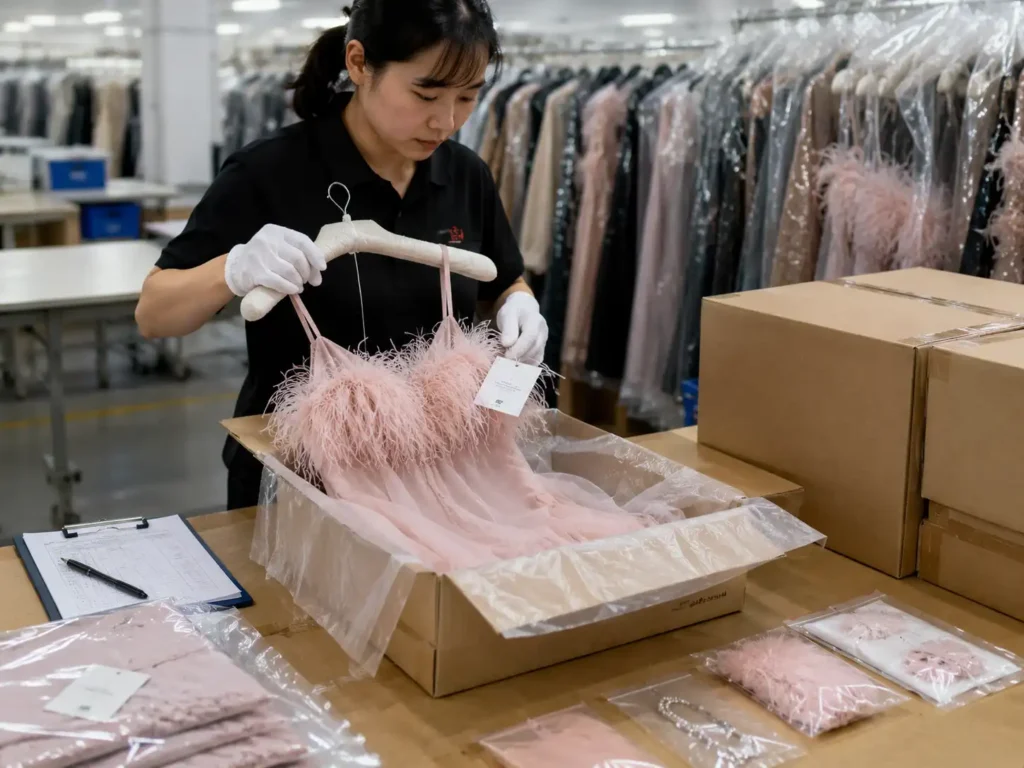
Efficient Silhouettes
Some dress silhouettes naturally use fabric more efficiently because their panels are easier to place on the marker. Straight mini dresses, simple slip dresses, fitted knit dresses, clean A-line dresses, sheath dresses, and some two-piece sets are usually easier to optimize than full-circle skirts, dramatic high-low hems, oversized sleeves, and heavily layered gowns.
That does not mean efficient silhouettes must look boring. Many commercial dresses use simple base shapes with strong styling details: a clean bodycon dress with a special neckline, a slip dress with lace trim, a midi dress with a controlled side slit, or a mini dress with shaped bust seams. These styles can still feel fashionable while keeping fabric consumption under control.
A practical design habit is to separate the selling point from the background structure. If the selling point is the neckline, keep the skirt cleaner. If the selling point is a dramatic hem, simplify the bodice. This keeps the product focused and helps reduce unnecessary material use.
High-Waste Details
Certain design details often increase material consumption. Ruffles, flounces, pleats, long ties, wide sashes, puff sleeves, godets, oversized bows, double layers, bias-cut panels, and large asymmetric pieces can all push up fabric usage. Some details also increase hidden waste because they require matching, reinforcement, or more careful cutting.
For example, a ruched dress may need extra fabric length to create the gathered effect. A corset dress may need lining, interlining, boning channels, and more precise panel cutting. A lace dress may require motif placement so the finished garment looks balanced. A sequin dress may need directional cutting and extra handling to avoid damaged edges.
The question is not whether these details are good or bad. The question is whether they help the garment sell. If a detail increases fabric consumption by 10% but makes the dress significantly more desirable, it may be worth keeping. If it only adds complexity without improving perceived value, it should be redesigned.
Print Direction
Prints and surface effects are powerful in women’s fashion, but they often reduce cutting efficiency. Solid fabrics usually give the pattern maker more flexibility. Directional prints, stripes, checks, border prints, velvet, sequins, and some lace fabrics limit how panels can be placed. The more restrictive the direction, the more fabric may be needed.
A floral print may not require perfect matching for a casual resort dress, but a stripe dress with mismatched side seams can look cheap. A border-print maxi dress may look beautiful, but each skirt panel may need to be placed in a specific part of the fabric. This reduces marker freedom.
Before approving a print, brands should ask three questions: Is the print directional? Does it need matching at seams? Does the design require a specific motif placement? If the answer is yes, the fabric consumption estimate should be reviewed before bulk ordering. This avoids surprise cost increases after sample approval.
|
Design Feature |
Waste Risk |
Common Impact |
Better Planning Method |
|
Straight mini dress |
Low |
Easier marker nesting |
Use clean panels and shared blocks |
|
Bias-cut slip dress |
Medium to high |
Higher fabric use due to diagonal cutting |
Use bias only where drape is necessary |
|
Full ruffle skirt |
High |
Extra fabric length and cutting pieces |
Reduce ruffle width or use partial placement |
|
Directional stripe |
Medium to high |
One-way cutting and seam matching |
Confirm matching standard before sampling |
|
Lace scallop edge |
High |
Placement restrictions |
Use scallop only on visible edges |
|
Sequin fabric |
Medium to high |
Directional cutting and edge cleaning |
Simplify panel shapes |
Modular Design
Modular design helps reduce waste by reusing proven pattern logic across multiple styles. A brand can use one fitted bodice block for several dresses, then change neckline, sleeve, hem length, fabric, or trims. A skirt block can become mini, midi, or maxi. A sleeve block can be adapted across a seasonal collection.
This approach is common among strong fashion brands because it saves development time and improves size consistency. It also reduces waste from repeated trial-and-error. Instead of building every new dress from zero, the team develops from blocks that already fit the body and work in production.
The risk is sameness. If modular design is too obvious, the collection may feel repetitive. The solution is to reuse technical structure, not visual identity. A satin occasion dress, mesh party dress, and printed resort dress can share parts of the same internal pattern logic while looking completely different to the customer.
How Do Patterns Reduce Waste?
A close-up view of dress pattern pieces arranged on fabric marker paper, showing balanced panels, seam lines, size grading marks, and fabric width measurement, professional pattern-making table in a womenswear factory.
Patterns reduce waste by translating design ideas into efficient, wearable, production-ready shapes. Good pattern work improves fabric nesting, controls seam placement, supports size grading, avoids unnecessary panels, and reduces sample corrections. A strong pattern does not simply save fabric; it protects fit, appearance, cost, and bulk consistency at the same time.
Pattern Shapes
Pattern shape has a direct impact on fabric waste. Large irregular panels are harder to nest. Balanced left and right pieces usually cut more efficiently. Long curved panels, oversized flounces, and unusual asymmetric shapes often create more offcuts. Straight edges, shared seam lines, and controlled panel divisions usually improve fabric usage.
In dress design, pattern efficiency must still respect the body. A garment cannot be designed only as a flat puzzle. Bust shaping, waist curve, hip allowance, armhole depth, and skirt movement all matter. If the pattern saves fabric but creates a poor fit, the brand may lose more through returns, bad reviews, or unsellable stock.
The best pattern makers look for the middle ground. They protect the design’s visual effect while improving the structure behind it. Sometimes moving one seam, splitting one large panel, or adjusting a skirt flare slightly can reduce consumption without changing the look of the dress on the customer.
Marker Efficiency
Marker efficiency is the percentage of fabric used by the garment pattern pieces during cutting. In simple terms, higher marker efficiency means less waste. Many woven dress styles may land somewhere around 75%-88% marker efficiency depending on silhouette, fabric width, size ratio, direction, and print restrictions. Complex occasionwear, lace, sequins, and bias-cut styles may be lower.
Brands do not need to calculate every marker themselves, but they should understand the concept. If two dress designs look similar but one needs much more fabric, marker efficiency may be the reason. A small difference in fabric consumption can matter across a bulk order. For example, saving 0.08 meters per dress across 2,000 pieces means around 160 meters of fabric saved before considering cutting defects or reserve fabric.
Marker efficiency should be reviewed after the sample pattern is ready and before bulk fabric purchasing. At that point, the pattern is real enough to estimate properly, but the brand still has time to adjust the design if needed.
Seam Placement
Seams can make a dress more efficient when used intelligently. A large front panel may waste fabric because it is too wide to nest well. Dividing it with princess seams, side panels, waist seams, or yoke seams may improve both fit and cutting layout. Seam placement can also help shape the bust, waist, and hip more accurately.
However, seams are not free. Every seam adds sewing time, quality control points, and possible defect risks. A poorly placed seam can make a satin dress pucker, a mesh dress stretch, or a bodycon dress twist. More seams can also make the garment look less premium if they are not part of the design language.
For production-ready dress design, seam placement should answer four questions: Does it improve fit? Does it support the design? Does it help cutting efficiency? Can it be sewn consistently in bulk? If a seam does not help at least one of these areas, it may only add complexity.
|
Pattern Factor |
Typical Effect on Waste |
Typical Effect on Quality |
Production Note |
|
Balanced left/right panels |
Reduces waste |
Improves consistency |
Easier for bulk cutting |
|
Bias-cut panels |
Increases consumption |
Improves drape |
Best for selected style areas |
|
Large asymmetric panels |
Increases offcuts |
Can create strong design effect |
Needs early consumption review |
|
Princess seams |
Can improve nesting |
Improves bust and waist fit |
Useful for fitted dresses |
|
Too many small pieces |
Mixed effect |
Higher sewing risk |
Avoid unless visually necessary |
|
Shared pattern blocks |
Reduces development waste |
Improves repeat fit |
Strong for seasonal collections |
Size Grading
Size grading affects waste more than many brands realize. A dress that cuts efficiently in sample size may become less efficient when graded across XS to XL or beyond. Larger sizes require wider and longer panels. If the size ratio is not planned well, the marker may become less efficient during bulk production.
For fitted dresses, grading also affects fit risk. Bodycon dresses, corset dresses, structured bodices, and slim satin dresses need careful grade rules because bust, waist, hip, strap, and length changes must remain balanced. Poor grading can create bulk size inconsistency and rejected garments.
Brands should provide realistic size ratios based on sales data rather than guessing. If the order is mainly S and M, the marker plan differs from an order with heavy L and XL demand. A factory cannot optimize well if the size ratio keeps changing late in the process. Confirming the size breakdown before bulk cutting helps reduce both waste and production confusion.

How Can Fabric Planning Help?
A fabric sourcing and planning desk with rolls of satin, chiffon, lace, mesh, jersey, and sequin fabric labeled by width and color, beside a dress specification sheet and bulk production planning notes.
Fabric planning helps reduce waste by connecting design, fabric width, material behavior, color strategy, order quantity, and production schedule before sampling and bulk purchase. When fabric decisions are made early, brands can avoid overbuying, wrong substitutions, inefficient cutting, repeated samples, and leftover rolls that cannot be reused.
Fabric Width
Fabric width is one of the simplest but most important waste-control details. A pattern developed for 150 cm wide fabric may not cut efficiently on 110 cm fabric. A maxi dress, wide skirt, puff sleeve, or large ruffle may require more fabric if the panel cannot fit across the available width.
Common apparel fabrics may come in widths such as 110 cm, 135 cm, 145 cm, 150 cm, or 160 cm, depending on supplier and fabric type. The difference looks small on paper, but it can change consumption significantly. A 5 cm or 10 cm width difference may determine whether two panels can sit side by side in the marker.
Brands should confirm the actual bulk fabric width before final costing. Sampling fabric and bulk fabric should not be assumed identical. If the bulk supplier changes, consumption should be checked again. This is especially important for satin, chiffon, lace, mesh, printed woven fabric, and custom-developed materials.
Fabric Behavior
Fabric behavior affects waste because cutting and sewing are not only about shape. They are about movement, stability, shrinkage, transparency, stretch, and recovery. Chiffon can shift during spreading. Satin can show tension marks. Mesh may stretch unevenly. Lace may need careful motif positioning. Sequin fabric may require directional control. Jersey may grow or shrink after handling.
A brand may choose fabric based on color and touch, but a manufacturer must also consider how it behaves in bulk. If the fabric is unstable, more allowance, testing, inspection, or panel rejection may be needed. That increases waste even when the design looks simple.
A practical method is to test risky fabrics before final approval. Check shrinkage, stretch recovery, colorfastness, transparency, hand feel after washing or steaming, and cutting stability. Even a small test can prevent a larger mistake later. Fabric that behaves consistently is usually easier to control in production.
|
Fabric Type |
Common Dress Use |
Waste Risk |
Planning Check |
|
Satin |
Slip, evening, party dresses |
Medium |
Direction, pulling, seam tension |
|
Chiffon |
Maxi, resort, layered dresses |
Medium to high |
Slippage, transparency, lining |
|
Lace |
Occasion, wedding guest, party dresses |
High |
Motif placement, edge use, lining |
|
Mesh |
Club, bodycon, cut-out dresses |
Medium |
Stretch direction, transparency |
|
Sequin |
Party, cocktail, statement dresses |
High |
Direction, cutting damage, seam bulk |
|
Jersey / Knit |
Bodycon, casual, fitted dresses |
Medium |
Stretch recovery, shrinkage, torque |
|
Rayon / Viscose |
Resort, summer dresses |
Medium |
Shrinkage, relaxation, print stability |
Color Planning
Color planning can quietly create fabric waste. A brand may want eight colors because the dress looks promising, but each color may require separate fabric purchasing, dyeing, lab dips, trims, labels, packaging stickers, and inventory planning. If some colors underperform, leftover rolls remain.
For first production, many brands reduce waste by focusing on fewer, stronger colors. Core colors such as black, ivory, navy, brown, red, or seasonal neutrals often carry more predictable demand depending on the category. Trend colors can still be developed, but they should be tied to a launch plan, campaign, or confirmed buyer interest.
Colorway decisions should also consider fabric supplier MOQ. If custom dyeing requires a higher minimum, splitting the order into too many colors can weaken efficiency. In many cases, one strong color with a clean size ratio performs better than several small color lots that create leftover fabric and production complexity.
Trim Planning
Trims are small, but they create real waste when they are changed late. Zippers, buttons, hooks, elastics, boning, lace trims, shoulder straps, metal rings, labels, hangtags, drawcords, and packaging materials all need planning. If the dress design changes after trims are ordered, the original trims may no longer work.
Trim waste is common in corset dresses, adjustable-strap dresses, lace-up backs, embellished party dresses, and private-label collections. A zipper length may change after fit correction. A button color may not match the final fabric. A lace trim may look good in photos but fail during sewing. A label may be placed incorrectly if the packaging direction is unclear.
The best control point is before PP sample. By then, the brand should approve fabric, trims, labels, construction, and packaging together. This keeps the PP sample meaningful and reduces the chance of bulk production using outdated materials.
How Does Sampling Cut Waste?
A sample review session in a womenswear factory showing a fit sample on a mannequin, measurement tape, correction notes, approved fabric swatches, and a pre-production sample checklist.
Sampling cuts waste when every sample round has a clear job: testing fit, checking fabric, confirming construction, reviewing cost, or approving production. Waste increases when samples are made from vague references, unclear comments, wrong materials, or changing decisions. A disciplined sample process reduces rework before bulk production begins.
Fit Samples
Fit samples are one of the most useful tools for reducing waste because they catch problems before bulk cutting. A dress can look correct in a flat photo but fail on the body. Common issues include tight bust, loose waist, pulling hip, twisting side seam, deep armhole, unstable strap, uneven hem, poor lining tension, or uncomfortable zipper placement.
Fit issues are not just comfort problems. They can create waste if they are discovered late. If bulk panels are already cut and the waistline is wrong, the correction may be impossible or expensive. If the bust fit fails in a corset dress, the whole production may need rework.
A good fit sample review should include body photos, flat measurements, comments by measurement point, and clear correction values. Instead of saying make it better, the brand should say raise neckline 1.5 cm, reduce waist 2 cm, or increase hip 1 cm each side. Clear corrections reduce unnecessary sample rounds.
Fabric Samples
Fabric samples help prevent waste caused by poor material decisions. A design may be approved in one fabric, but the final production fabric may behave differently. This is especially risky when the sampling fabric is only a substitute. A satin with slightly different weight may change drape. A mesh with different stretch may change fit. A lace with different motif size may change placement.
Before bulk production, brands should confirm whether the sample fabric and bulk fabric are identical or only similar. If they are different, the manufacturer should review the pattern, lining, sewing method, and consumption again. This is not overcautious. It is basic risk control.
Fabric sampling should also check real-life use. Does the fabric wrinkle too easily? Is it too transparent under light? Does the color shift after steaming? Does it recover after stretching? Does it feel comfortable against skin? These questions matter because unsellable garments are the most expensive form of waste.
PP Sample
The PP sample is the final production reference. It should show the approved fabric, color, trims, lining, construction, measurements, stitching, labels, hangtags, packaging, and finishing. If the PP sample is not accurate, bulk production starts without a clear standard.
For dress manufacturing, the PP sample is especially important for styles with structured bodices, corset seams, lace placement, sequin fabric, mesh panels, cut-outs, ruching, pleats, slits, lining, or private-label packaging. These details are difficult to control if the standard is only described in messages.
A PP sample should not be approved casually. The brand should check measurements, fit, appearance, fabric direction, seam quality, label placement, packaging method, and any special detail. Once approved, the factory should follow it as the production benchmark. This reduces rejected garments, repeated corrections, and unnecessary material use.

Sample Records
Sample records reduce waste across future orders. When a brand keeps clear notes on pattern changes, measurement updates, fabric issues, trim approvals, fit comments, and final production standards, the next development round becomes faster and cleaner.
This matters most for brands that develop seasonal dress collections. A successful mini dress block can be reused for a new neckline. A proven bodycon fit can support new fabrics. A popular satin dress can become a midi, maxi, or long-sleeve version. Reusing proven records reduces sample fabric use and avoids repeating old mistakes.
Manufacturers that support long-term cooperation can help maintain these records. Pattern files, measurement charts, fabric references, color notes, trim details, packing methods, and previous correction history all become part of the brand’s production knowledge. Over time, this lowers communication cost and improves bulk consistency.
How Do Manufacturers Support Brands?
A modern custom dress manufacturing floor in Guangdong showing pattern makers, fabric inspection, sewing lines, QC measurement, private-label packaging, and sample-to-bulk production coordination for fashion brands.
Manufacturers support waste reduction by reviewing design feasibility, fabric suitability, pattern efficiency, sampling accuracy, cutting plans, QC standards, leftover use, and repeat-order records. A strong manufacturer does not only produce garments. It helps brands make dress designs more scalable, cost-aware, consistent, and realistic for bulk production.
Early Review
The best time for a manufacturer to reduce waste is before the first sample is made. At that stage, the design is still flexible. The factory can review the sketch, reference image, tech pack, fabric idea, size range, and target quantity, then flag areas that may cause high consumption or production risk.
This early review is especially useful for dresses with wide hems, bias cuts, cut-outs, lace panels, sequins, corset structures, lining, or directional prints. The manufacturer may suggest a seam adjustment, fabric alternative, lining change, trim replacement, or construction method that keeps the appearance close to the original idea while reducing waste.
A good manufacturer does not simply reject difficult designs. It explains the trade-off. Some design details are worth the extra material because they create strong selling value. Other details add cost without improving the product. A practical factory helps the brand tell the difference.
Production System
Waste control becomes stronger when the manufacturer has a coordinated production system. Dress development involves design interpretation, pattern making, fabric sourcing, trim sourcing, sample making, sample revision, bulk production, QC, packaging, and delivery. If these steps are disconnected, waste increases.
A manufacturer with owned production units, stable satellite partners, and internal project management can match styles to suitable production lines. For example, a stretch bodycon dress should not be handled the same way as a lace occasion dress or a chiffon resort maxi dress. Different fabrics and structures require different skills.
For mid-to-large fashion clients, production matching is important. Multi-style orders often include satin dresses, mesh dresses, knit dresses, jumpsuits, sets, and skirts in one seasonal collection. If the manufacturer can organize development and production by style type, the brand gets better consistency and fewer material mistakes.
Leftover Use
Leftover fabric can sometimes be reused, but it needs realistic planning. Large leftover rolls may support repeat orders, photo samples, accessories, replacement panels, or small capsule styles. Medium offcuts may be used for straps, bindings, covered buttons, pocketing, fabric swatch cards, or internal tests. Very small scraps may only be suitable for recycling or disposal depending on local options.
Brands should be careful with sustainability claims. Saying we reuse all leftovers sounds good, but it is rarely realistic for every fabric. Sequins, damaged lace, unstable mesh, shaded dye lots, and tiny irregular scraps may not be usable in visible garment parts. Honest tracking is better than exaggerated claims.
A practical approach is to classify leftovers by fabric type, color, size, and quality. Then the brand and manufacturer can decide what is suitable for reuse, what should be stored for repeat production, and what should be separated for recycling or responsible disposal.
Long-Term Fit
Long-term cooperation reduces waste because the manufacturer learns the brand’s fit, fabric preferences, construction standards, size rules, packaging expectations, and launch rhythm. When every order starts with a new supplier, the same mistakes often repeat. When the same capable team supports multiple collections, the learning stays inside the production process.
This is especially valuable for dress brands because fit memory matters. A brand may prefer a certain waist position, bust shape, skirt length, lining feel, or bodycon compression. Once these preferences are recorded, new styles can be developed faster with fewer sample rounds.
For brands building seasonal collections, long-term cooperation also supports fabric continuity, trim standardization, pattern block reuse, repeat orders, and multi-batch production. Waste reduction becomes less about one isolated style and more about building a smarter development system over time.
Final Thoughts
Reducing material waste in dress design is not about making every dress plain, cheap, or overly simple. It is about making better decisions earlier. A beautiful dress can still have ruffles, lace, satin, mesh, sequins, cut-outs, corset structure, and dramatic shape. But every design detail should earn its place. The fabric should be chosen with the pattern in mind. The pattern should be built with the cutting layout in mind. The sample should be reviewed with bulk production in mind. The manufacturer should understand not only how to make the dress, but how to make it repeatable, profitable, and brand-ready.
For fashion brands, the most practical waste-control question is this: before approving a new dress, have the design, fabric, pattern, size range, colorways, trims, and production plan been checked together?
Jinfeng Apparel is a Guangdong-based custom women’s fashion manufacturer supporting OEM, ODM, private-label, and custom dress production for global fashion brands and mid-to-large apparel clients. Since 2008, the company has supported brands with pattern development, fabric sourcing, sample making, bulk production, quality control, private-label packaging, and export delivery. Its production system includes 6 owned women’s fashion factories and more than 10 long-term satellite production partners, with MOQ starting from 200 pcs per style/color depending on fabric availability, color development, trims, construction complexity, and production schedule.
If your team is developing a new dress collection, send your tech pack, reference photos, sample images, size chart, fabric ideas, target quantity, and launch plan. Jinfeng Apparel can review the design from a manufacturing perspective, identify waste-risk areas, suggest fabric and pattern adjustments, and prepare a professional custom dress production quotation.
Share This Article :

Jerry Lee
Categories

Latest blogs


Table of Contents
Here, developing your OEM/ODM private label clothing collection is no longer a challenge—it’s an excellent opportunity to bring your creative vision to life.

