Skip to content

A commercial dress collection is not just a group of beautiful styles—it is a structured production system designed to sell, scale, and repeat profitably in real market conditions. Many fashion ideas fail not because the designs are weak, but because the collection is built without understanding production logic, cost boundaries, fabric constraints, and SKU balance. A successful collection always sits at the intersection of creativity and manufacturing discipline. It must satisfy visual appeal while also surviving costing, sampling, and bulk production realities.
In real development practice, planning a dress collection means answering several practical questions early: how many styles can a factory realistically produce in one cycle, which fabrics are stable for bulk production, how to distribute price points across SKUs, and how to avoid over-designing styles that cannot pass sampling efficiently. Without this structure, even strong design ideas often collapse during production stages.
A commercial dress collection is a structured seasonal product range designed for market performance, not just aesthetics. It balances hero styles, basic repeat styles, fabric feasibility, pricing tiers, and production capacity to ensure smooth sampling, stable bulk manufacturing, and predictable sell-through rates.
One real-world scenario explains this clearly: a new brand once launched 18 dress styles in a single season based purely on design inspiration. Only 7 styles successfully passed sampling without revision delays. Eventually, only 4 styles entered bulk production on time. The issue was not creativity—it was lack of structured collection planning. This is exactly why collection planning must start from production logic, not design impulse.
The following sections break down how a professional commercial dress collection is built step-by-step, from strategy to factory execution.
What Defines a Commercial Dress Collection?
A commercial dress collection is defined by its ability to move from design concept into repeatable, cost-controlled, and production-stable garments that can be manufactured at scale without structural disruption. Unlike purely creative fashion sets, a commercial collection must survive three real-world constraints: fabric availability, factory efficiency, and market pricing structure.
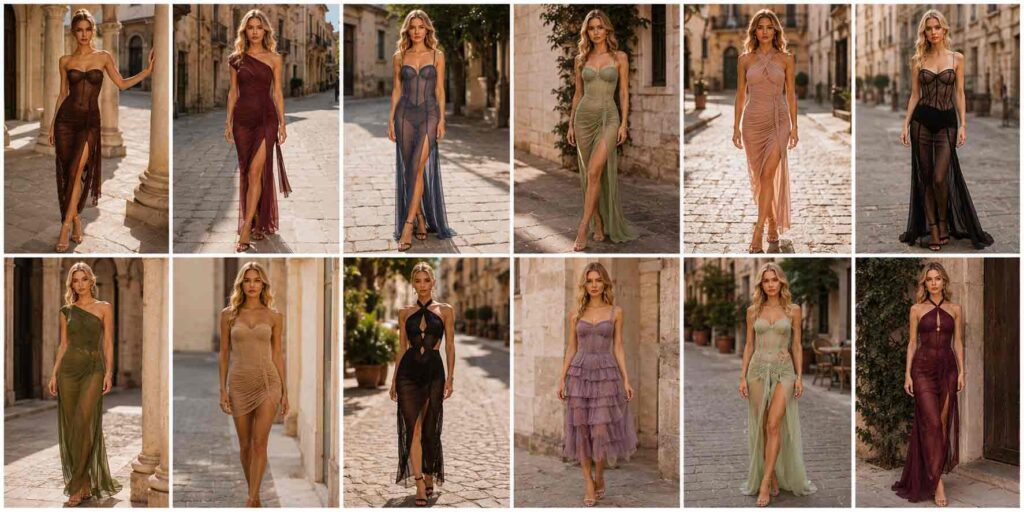
In production practice, a collection is considered commercial only when each style has a confirmed execution path: measurable costing within target retail margin, stable fabric sourcing (not speculative or seasonal-only materials), and construction methods that can be repeated across multiple size runs without variation issues. If even one of these elements fails, the entire collection loses commercial reliability.
Core Structural Elements of a Commercial Dress Collection
A functional commercial dress collection is not built randomly. It follows a structured SKU architecture designed to balance risk, cost, and market coverage.
| Element | Purpose | Typical Ratio |
|---|---|---|
| Hero Dresses | High-impact designs for visual identity | 15–25% |
| Core Dresses | Stable, repeatable best-sellers | 45–60% |
| Entry Dresses | Lower price, volume-driven styles | 15–25% |
| Experimental Styles | Trend testing, limited production | 5–10% |
Hero pieces usually carry stronger design complexity such as draping, corsetry, or mixed fabrics, while core dresses rely on stable silhouettes like slip dresses, bodycon, or midi cuts. Entry styles focus on simplified construction for cost efficiency. Without this structure, collections tend to either become visually strong but commercially unstable, or overly basic with weak differentiation.
How Many Styles Typically Form a Commercial Collection?
Collection size is directly linked to production capacity and sampling bandwidth. In real manufacturing environments, the following ranges are commonly used:
| Brand Stage | Typical SKU Range | Reasoning |
|---|---|---|
| Startup Label | 6–10 styles | Lower sampling risk, faster validation |
| Growth Brand | 10–18 styles | Balanced testing + revenue scaling |
| Established Label | 15–25 styles | Full seasonal coverage |
However, increasing SKU count without improving production structure often leads to delays. For example, when a 20-style collection enters sampling simultaneously, factories typically experience 20–35% longer lead time due to fabric switching, pattern adjustments, and QC workload fragmentation.
A more stable approach is sequencing: 30% quick-turn styles first, followed by medium complexity, then high complexity designs.
What Defines Market-Ready Collection Structure?
A market-ready commercial collection is not only about design completion—it must pass four production checkpoints before launch:
- Cost Stability Check
Each style must sit within ±10–15% of target cost range. Anything above this threshold often indicates fabric or construction mismatch. - Fabric Availability Confirmation
Fabrics must be available in bulk without long lead-time dependency. Seasonal or limited-stock fabrics increase production risk by 25–40%. - Construction Repeatability Test
Stitching, lining, and shaping must remain consistent across at least 2–3 sample rounds. - Production Line Compatibility
Styles should align with factory production lines (light woven, heavy structured, knit-based). Mixing incompatible structures slows output efficiency by up to 30%.
How Commercial Collections Differ From Non-Commercial Design Sets
Many design collections fail in production because they are built as visual portfolios rather than manufacturing systems.
| Factor | Commercial Collection | Non-Commercial Collection |
|---|---|---|
| Fabric choice | Sourced from stable supply chain | Trend-driven or rare fabrics |
| Cost control | Pre-calculated before sampling | Adjusted after sampling |
| Style complexity | Balanced across SKUs | Overloaded on hero pieces |
| Production logic | Factory-aligned workflow | Design-first sequencing |
| Scalability | Designed for repeat orders | One-time production focus |
In real production cycles, commercial collections are evaluated not by creativity alone, but by how efficiently they move through sampling, costing, and bulk production without structural friction. A collection that cannot scale efficiently loses commercial value even if individual designs perform well visually.
How Do You Build a Collection Strategy?
A collection strategy starts with defining how the dress line will perform in real market conditions, not how it will look in design form. The first step is positioning clarity: price range, wearing scenario, and product role inside the full assortment. Without this foundation, later decisions on fabric, silhouette, and costing become inconsistent.
In production reality, most stable dress collections begin with a defined retail corridor, for example $39–$69 for fast fashion or $79–$129 for elevated mid-market positioning. This single decision influences fabric selection, stitching complexity, trim usage, and even factory allocation.
How Is Market Position Translated Into Product Direction?
Market positioning directly controls design behavior. A lower price range forces simplified construction, fewer pattern panels, and standardized fabrics. A higher price range allows structured silhouettes, heavier fabrics, and multi-layer construction.
Typical translation logic:
| Position Level | Fabric Type | Construction Level | Example Dress Style |
|---|---|---|---|
| Entry Level | Jersey / Poly blends | Simple seams | Basic bodycon dress |
| Mid Level | Chiffon / Crepe / Satin blends | Moderate shaping | Ruched midi dress |
| Premium Level | Heavy satin / structured lace | Complex construction | Corset evening dress |
When positioning is unclear, factories often receive mixed-style collections that combine low-cost fabrics with high-complexity construction, which leads to sampling instability and cost overruns.
How Is SKU Structure Planned Before Design Starts?
SKU structure defines how many styles belong to each product function. A commercial dress collection cannot be built as random designs; it must follow a controlled ratio between traffic styles, core styles, and hero styles.
A practical SKU distribution model:
- 20–25% Hero styles (high visual impact, campaign pieces)
- 45–55% Core styles (stable daily sellers)
- 20–30% Entry styles (volume-driven, cost-efficient)
This structure ensures that production lines are not overloaded with high-complexity garments, which typically increase lead time by 15–30% when not balanced properly.
How Is Fabric Strategy Aligned With Collection Planning?
Fabric strategy is one of the strongest cost drivers in dress collections. A structured approach is used before sketch finalization:
| Fabric Type | Risk Level | Production Stability | Usage Purpose |
|---|---|---|---|
| Jersey / Rib Knit | Low | High stability | Basic dresses |
| Chiffon / Polyester blends | Medium | Moderate stability | Midi / flow dresses |
| Satin / Velvet | Medium-High | Sensitive handling | Occasion dresses |
| Lace / Embellished fabric | High | High variation risk | Hero pieces only |
A strong collection limits high-risk fabrics to 10–20% of total SKUs to avoid production delays and inconsistency in bulk output.
How Is Pricing Logic Embedded Into Strategy?
Pricing is not adjusted after sampling—it is built into the collection structure from the beginning. Each style must sit within a controlled margin range before production starts.
Typical margin planning logic:
- Fabric cost: 25–40% of total cost
- Labor cost: 20–35%
- Trims and finishing: 10–20%
- Logistics buffer: 5–10%
If a style exceeds target cost by more than 10–15%, it is usually redesigned before sampling to avoid downstream production waste.
How Is Design Direction Controlled for Production Efficiency?
Design direction is not purely aesthetic—it is a control system that ensures styles remain manufacturable. In real production planning, design teams and factories usually align on three constraints:
- Panel count per garment (fewer panels = faster production)
- Stitching complexity level (affects labor cost and defect rate)
- Fabric compatibility (avoids shrinkage or tension issues)
For example, increasing panel structure from 4 to 8 panels can raise sewing time by 25–40%, directly impacting both cost and delivery schedule.
How Are Dress Styles Selected for a Commercial Range?
Dress style selection in a commercial range is driven by production feasibility, sales predictability, and SKU balance rather than purely design preference. Each style must justify its place in the collection through measurable contribution: revenue potential, fabric stability, and manufacturing efficiency.
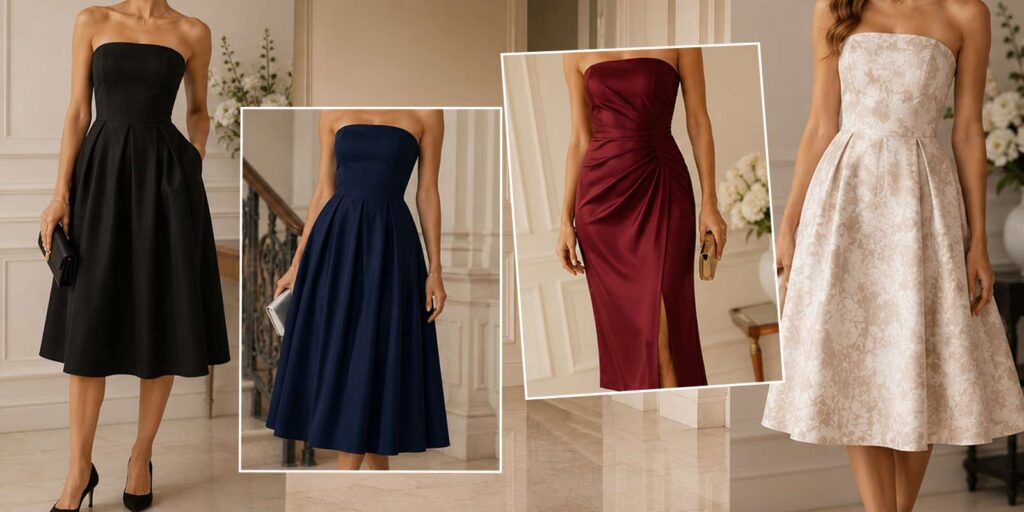
In real production planning, selection begins after positioning and pricing are locked. Every design is filtered through a practical lens—whether it can be sampled quickly, produced consistently, and sold repeatedly without structural risk in manufacturing.
A commercially viable range is usually built around three layers:
- Stable core dresses for predictable output
- Trend-reactive pieces for seasonal relevance
- High-impact hero styles for visual identity and marketing focus
Without this layering, collections often become unbalanced, leading to production delays or uneven sell-through performance.
What Dress Categories Form a Balanced Commercial Range?
A structured commercial dress range usually includes multiple functional categories, each serving a specific production and market role.
| Dress Category | Production Role | Risk Level | Example Styles |
|---|---|---|---|
| Bodycon Dresses | High-frequency sellers | Low | Rib knit mini, ruched midi |
| Slip Dresses | Seasonal core items | Low-Medium | Satin slip, bias-cut dress |
| Maxi Dresses | Volume stabilizers | Medium | Chiffon flowy dress |
| Structured Dresses | Hero / branding pieces | High | Corset, boned bodice dress |
| Trend Dresses | Short lifecycle styles | Medium-High | Cut-out, asymmetrical designs |
A balanced collection avoids overloading structured or trend-heavy styles. In many production cases, exceeding 25–30% high-complexity dresses increases sampling time by 20–40% due to construction variability.
How Do Trend Inputs Convert Into Manufacturable Styles?
Trend inspiration from runway shows or social platforms cannot be directly translated into production styles without filtering. The conversion process removes elements that increase cost volatility or construction difficulty.
Typical filtering logic includes:
- Removing excessive layering that increases sewing time
- Adjusting extreme silhouettes into wearable proportions
- Replacing unstable fabrics with production-safe alternatives
- Simplifying structural details like draping or pleating
For example, a runway dress with complex multi-layer draping may be simplified into a single-layer ruched design using stretch satin to ensure stable bulk production. This adjustment often reduces production defect rates by 15–25%.
How Is Fabric Compatibility Used in Style Selection?
Fabric behavior plays a central role in whether a style enters the final collection. Some designs look strong visually but fail in bulk production due to instability in stretch, shrinkage, or seam tension.
Fabric-to-style matching typically follows these rules:
| Fabric Type | Suitable Styles | Avoided Styles |
|---|---|---|
| Jersey Knit | Bodycon, casual dresses | Structured corset dresses |
| Satin | Slip, evening dresses | High-stretch fitted cuts |
| Chiffon | Maxi, layered dresses | Tight silhouette dresses |
| Lace | Occasion dresses | High-friction daily wear |
| Velvet | Winter structured styles | Lightweight summer styles |
In practice, fabric mismatch is one of the top causes of sampling repetition, often increasing development cycles by 1–2 additional rounds when not controlled early.
How Is SKU Balance Maintained During Style Selection?
SKU balance ensures production efficiency and prevents bottlenecks during manufacturing. Style selection must align with factory capacity, not exceed it.
A common balanced structure used in production planning:
- 30% simple construction styles (fast production, low risk)
- 50% moderate complexity styles (core revenue drivers)
- 20% high complexity styles (hero and campaign pieces)
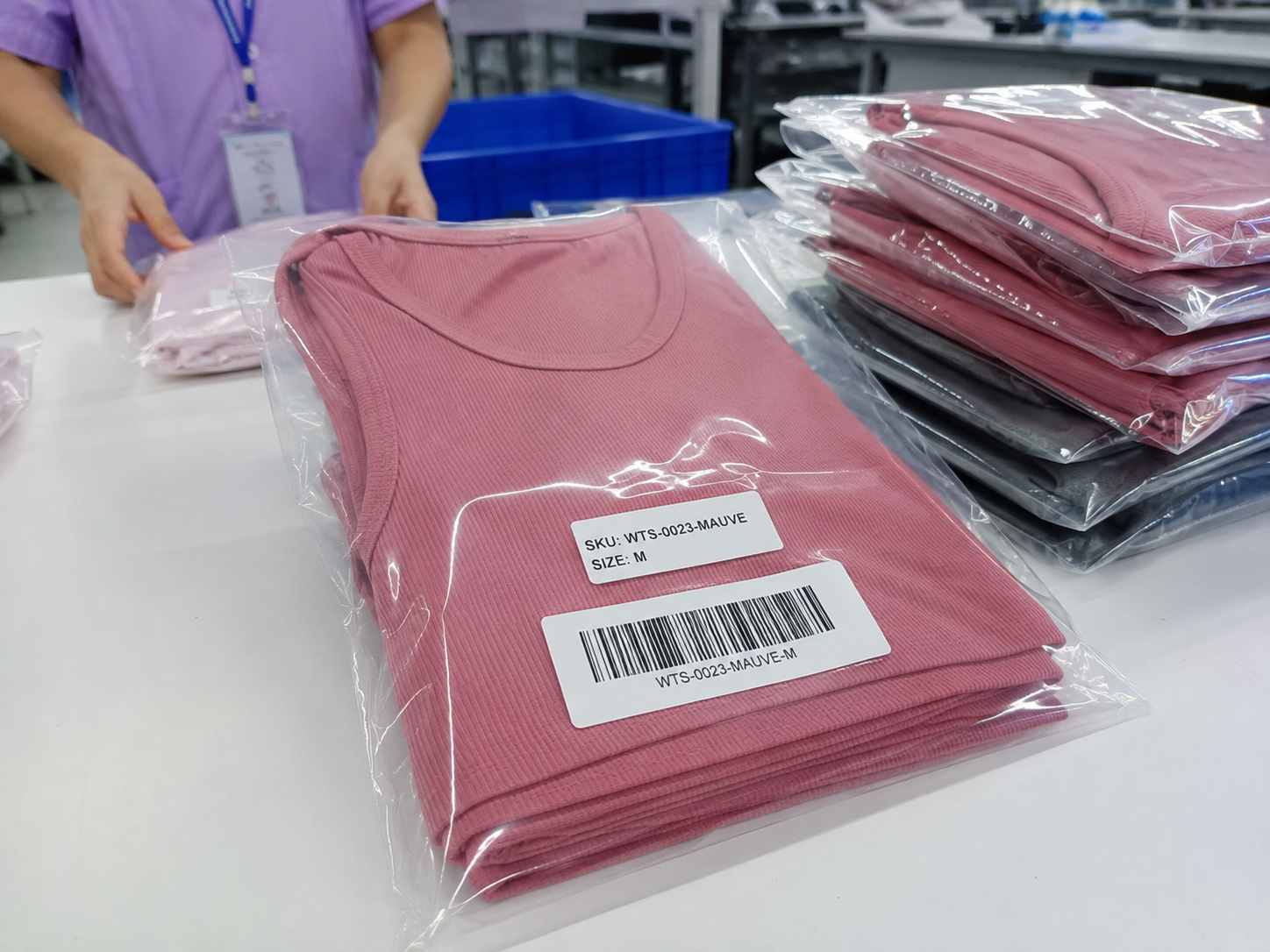
When high-complexity styles exceed this ratio, factories typically experience reduced line efficiency, sometimes lowering output by up to 25% due to switching between different construction requirements.
Why Selection Discipline Determines Collection Performance
Dress style selection is not a creative final step—it is a production control mechanism. Every chosen style directly impacts sampling speed, bulk consistency, and cost stability.
Collections with disciplined selection logic tend to achieve:
- 30–50% fewer sampling revisions
- More stable bulk production timelines
- Higher repeat production probability across seasons
Strong commercial ranges are built by filtering, not expanding. The most effective collections are often those where every selected dress style has a clear production role, controlled fabric risk, and measurable contribution to overall SKU balance.
How Do You Ensure Production Feasibility Before Sampling?
Production feasibility is the stage where a dress design is checked against real manufacturing conditions before any sample is cut. It focuses on whether the garment can be produced consistently at scale without unexpected cost spikes, fabric failure, or construction instability.
In real factory workflows, feasibility is confirmed through four checkpoints: fabric stability, construction complexity, cost alignment, and production capacity match. When these four elements are not validated early, sampling cycles often increase by 1–3 rounds, leading to 15–35% longer development time.
A feasible design is not the most creative one, but the one that can move from pattern to bulk production with minimal correction.
How Is Fabric Feasibility Evaluated Before Sampling?
Fabric is the first and most critical filter. Even a well-designed dress fails if fabric behavior is unstable during cutting or sewing.
Fabric evaluation typically includes:
| Fabric Test | Purpose | Risk If Ignored |
|---|---|---|
| Shrinkage test | Ensures size stability after wash | Size inconsistency in bulk |
| Stretch recovery | Confirms fit retention | Deformed silhouette |
| Color fastness | Checks dye stability | Color bleeding in production |
| Seam slippage | Tests stitching durability | Seam tearing during wear |
In production practice, around 20–30% of sampling issues come from fabric mismatch rather than design error. For example, satin with low recovery often causes fitting deviations in bodycon dresses, requiring pattern adjustments after first sample review.
How Is Construction Complexity Controlled Before Sampling?
Construction complexity determines how easily a design can move through sewing lines. Before sampling, each style is evaluated based on panel count, stitching difficulty, and finishing requirements.
| Complexity Level | Panel Structure | Production Impact |
|---|---|---|
| Low | 2–4 panels | Fast production, low defect rate |
| Medium | 5–8 panels | Balanced cost and time |
| High | 9+ panels | Slower output, higher QC attention |
When a collection contains more than 30% high-complexity styles, factories often experience 20–40% longer sewing cycles due to line switching and operator adjustment time. Reducing unnecessary panel segmentation is one of the fastest ways to stabilize production speed.
How Is Cost Feasibility Calculated Before Sampling?
Cost feasibility is evaluated before sampling to prevent redesign later. Each garment is estimated using material consumption, labor time, and trim complexity.
A typical cost breakdown structure:
| Cost Component | Range in Dress Production |
|---|---|
| Fabric | 25–40% |
| Labor | 20–35% |
| Trims & accessories | 10–20% |
| Logistics & overhead | 5–10% |
A key rule used in production planning: if estimated cost exceeds target by more than 10–15%, the design must be adjusted before sampling. Waiting until after sampling often leads to rework cycles and wasted development cost.
How Does MOQ Influence Feasibility Decisions?
Minimum order quantity (MOQ) directly affects whether a style is viable for production. Some fabrics, trims, or construction methods require higher MOQ due to supplier constraints or machine setup requirements.
Common MOQ impact scenarios:
- Specialized lace or embroidery may require 300–500 pcs per style
- Custom trims often increase MOQ due to production batching
- Complex dye processes may require fabric minimums per color batch
If a style cannot align with MOQ thresholds, factories typically recommend simplifying design elements or switching materials to maintain production efficiency.
How Is Production Capacity Matched With Style Planning?
Even feasible designs fail if production capacity is overloaded. Each factory line has limitations based on garment complexity and daily output rate.
Typical capacity allocation:
| Style Type | Daily Output per Line | Production Behavior |
|---|---|---|
| Basic dresses | 120–180 pcs/day | Stable, high efficiency |
| Mid complexity | 80–120 pcs/day | Balanced output |
| High complexity | 40–70 pcs/day | Slow, QC intensive |
When too many high-complexity styles enter production simultaneously, line efficiency can drop by up to 25%, leading to delayed shipment schedules.
Why Feasibility Control Determines Final Production Success
Feasibility control is the stage that prevents production failure before it begins. It reduces sampling repetition, stabilizes costing, and ensures smoother bulk manufacturing.
Collections that pass feasibility checks before sampling typically achieve:
- 30–50% fewer sample revisions
- More predictable lead times
- Lower defect rates in bulk production
In real manufacturing environments, strong feasibility control is often the difference between a delayed seasonal launch and a stable, on-time collection rollout.
How Is a Collection Transformed Into Production Plan?
Transforming a dress collection into a production plan means converting design intent into a structured manufacturing schedule that controls sampling order, fabric allocation, sewing line planning, and delivery sequencing. At this stage, creativity is no longer the focus; execution efficiency becomes the priority.
In real production environments, a collection is broken down into measurable units: fabric groups, complexity levels, and production batches. Without this conversion, factories face overlapping workflows, delayed sampling, and unstable bulk output. A structured production plan ensures each dress style enters manufacturing at the right time, with the right resources, and in the correct sequence.
How Is the Production Workflow Structured From Design to Execution?
A commercial dress collection follows a fixed transformation pipeline before entering bulk production.
| Stage | Output | Key Control Point |
|---|---|---|
| Design Finalization | Approved style list | Cost + feasibility confirmation |
| Tech Pack Creation | Technical instruction file | Measurement + construction accuracy |
| Sampling Order | Physical prototypes | Fabric + pattern validation |
| Sample Review | Approved / revised sample | Fit + cost alignment |
| Bulk Scheduling | Production calendar | Capacity + delivery timing |
Each stage acts as a filter. A weak tech pack or incomplete sampling review often leads to 20–40% additional correction time during bulk production.
How Is Sampling Sequenced Across Multiple Dress Styles?
Sampling is not executed randomly. Styles are grouped based on complexity and fabric type to reduce switching time and material waste.
Common sequencing logic:
- Phase 1: Basic dresses (jersey, simple seams, low-risk patterns)
- Phase 2: Mid complexity styles (ruched, layered chiffon, mixed fabrics)
- Phase 3: High complexity dresses (corset, structured, heavy trims)
This sequencing reduces production disruption by 15–30%, especially in factories handling multiple SKUs in parallel. Starting with high-risk styles often slows the entire sampling pipeline due to repeated adjustments in machine setup and fabric handling.
How Is Fabric Allocation Managed During Production Planning?
Fabric allocation is one of the most sensitive parts of production planning because it directly affects both timing and cost control.
| Fabric Type | Allocation Priority | Risk Level | Planning Strategy |
|---|---|---|---|
| Jersey / Knit | High priority | Low risk | Assigned to early production |
| Chiffon | Medium priority | Medium risk | Balanced batch scheduling |
| Satin | Controlled allocation | Medium-high risk | Reserved for stable lines |
| Lace / specialty fabrics | Limited allocation | High risk | Scheduled last in sequence |
In practice, fabric shortages or delayed sourcing can slow down production by 10–25%. For this reason, stable fabrics are always locked first before high-risk materials are introduced into the production timeline.
How Is Production Capacity Distributed Across Multiple Styles?
Each factory line has a defined output capacity depending on garment complexity. Production planning ensures styles are distributed based on their workload weight.
| Style Complexity | Line Capacity per Day | Allocation Rule |
|---|---|---|
| Basic dresses | 120–180 pcs | High volume allocation |
| Medium dresses | 80–120 pcs | Balanced allocation |
| Complex dresses | 40–70 pcs | Limited allocation |
When capacity is not balanced, factories often experience bottlenecks at sewing or finishing stages. Overloading complex styles can reduce overall efficiency by up to 25%, especially during peak seasonal production.
How Is Quality Control Embedded Into Production Planning?
Quality control is not only a final inspection stage—it is integrated into the production plan from the beginning.
Key control checkpoints include:
- Pre-production sample approval before bulk cutting
- Inline inspection during sewing process
- Mid-line measurement verification for size consistency
- Final random inspection before packing
When QC is not embedded into scheduling, defect rates can increase by 8–15% due to inconsistent handling across different production stages.
Why Production Transformation Determines Collection Stability
The transformation from collection to production plan defines whether a season runs smoothly or experiences repeated delays. Without structured planning, even well-designed collections face fabric mismatches, capacity overload, and inconsistent quality outcomes.
Strong production planning delivers measurable improvements:
- 25–40% reduction in sampling repetition
- More stable bulk production timelines
- Lower defect rates across multi-style orders
In practical manufacturing environments, successful collections are not defined by design volume, but by how precisely each style is positioned inside a controlled production system.
What Makes a Commercial Dress Collection Successful in Market?
A successful commercial dress collection is defined by how consistently it converts production output into sell-through performance without destabilizing cost structure or inventory balance. Success is not measured by design variety or initial launch response, but by sustained performance across sales cycles, reorder behavior, and production efficiency.
In real industry practice, a collection is considered successful when it maintains stable sell-through above 70% within the first season, achieves repeat orders on core styles, and keeps return rates under controlled thresholds. Even visually strong collections fail if they cannot sustain production consistency or require excessive discounting to clear inventory.
What Sales Performance Metrics Define Collection Success?
Sales performance is the most direct indicator of whether a dress collection works in real market conditions. The key metrics are not only revenue-based but also structure-based.
| Metric | Healthy Benchmark | Meaning in Production Terms |
|---|---|---|
| Sell-through rate | 70–85% | Strong demand alignment |
| Repeat order rate | 20–40% | Stable core styles |
| Return rate | Below 8–12% | Fit and quality consistency |
| Discount dependency | Below 25% | Healthy pricing structure |
Collections that rely heavily on discounting usually indicate misalignment between production cost structure and market positioning. This often traces back to weak SKU planning or inconsistent fabric selection during development.
How Does SKU Structure Influence Market Performance?
SKU structure directly affects how smoothly a collection performs after launch. A balanced structure ensures demand is distributed across multiple dress categories instead of concentrated on a few styles.
A stable commercial range typically follows:
- 20–30% high-impact styles for visibility
- 40–50% core repeat styles for revenue stability
- 20–30% entry styles for volume support
When collections over-rely on high-impact designs, sell-through becomes unstable due to higher pricing and production complexity. On the other hand, overly basic ranges often lack differentiation and fail to sustain repeat orders.
What Role Does Production Consistency Play in Market Success?
Production consistency is one of the most underestimated success factors. Even strong designs lose market performance if bulk production varies in fit, stitching quality, or fabric behavior.
| Production Factor | Impact on Market Outcome |
|---|---|
| Size consistency | Reduces return rate |
| Fabric stability | Maintains customer satisfaction |
| Stitching uniformity | Supports brand perception |
| Color accuracy | Prevents post-launch complaints |
In practice, inconsistent production can increase return rates by 10–18%, which directly reduces overall profitability even if initial sales are strong.
How Do Repeat Orders Shape Long-Term Collection Value?
Repeat orders are a strong indicator of structural success in dress collections. Styles that generate repeat production usually share common characteristics: stable fabrics, simple construction logic, and consistent fit performance across sizes.
Core styles that receive repeat orders often contribute 30–50% of total production volume over multiple cycles. These styles become operational anchors for factories, allowing smoother capacity planning and lower sampling risk in future seasons.
Without repeat order contribution, collections remain one-time production events with limited scalability.
How Does Factory Capability Affect Collection Success?
Factory capability directly influences whether a collection maintains consistency across multiple SKUs and production batches. Strong production systems reduce sampling errors, improve lead time accuracy, and stabilize bulk output.
Key capability factors include:
- Pattern accuracy across size grading
- Fabric sourcing stability
- Multi-line production coordination
- QC standard enforcement across batches
Factories with weak coordination often introduce 15–25% variability in output timing, which affects launch schedules and seasonal alignment.
Why Collection Structure Determines Long-Term Market Stability
A successful commercial dress collection is not defined by individual standout pieces but by system stability across design, production, and sales flow. When SKU structure, fabric selection, costing discipline, and production planning are aligned, collections maintain predictable performance across seasons.
Collections with strong structural planning typically achieve:
- Higher sell-through consistency across seasons
- Lower return rates due to stable fit and fabric control
- More efficient production cycles with fewer delays
- Stronger reorder behavior from core styles
In real production environments, long-term success is driven less by design novelty and more by repeatable execution systems that keep every collection stable from sampling to bulk delivery.
Conclusion
Building a commercial dress collection requires more than design creativity—it requires manufacturing intelligence, cost control discipline, and production system alignment. Without these elements, even strong ideas fail during sampling or bulk execution.
Jinfeng Apparel supports global fashion brands with structured OEM/ODM dress development, covering fabric sourcing, pattern development, sampling, and bulk production with stable quality systems and scalable capacity. Whether developing a first seasonal collection or expanding an established product line, the focus remains on turning design concepts into reliable commercial output.
For brands planning a new commercial dress collection, inquiries for custom OEM/ODM development are welcome. Detailed tech pack review, sampling feasibility analysis, and production planning support are available to ensure each style is manufacturable, scalable, and market-ready.