Skip to content

In modern fashion development, the most expensive mistakes rarely happen in bulk production—they happen before the first stitch is made. A sampling request that looks simple on the surface can hide hundreds of technical decisions: fabric weight behavior, seam stability, elasticity recovery, lining structure, and even how the garment will sit under movement. When any of these are missing, the sampling stage becomes a cycle of guesswork instead of engineering.
A strong development request is not a mood board or a reference image collection. It is a structured production instruction that allows a manufacturer to interpret design intent without distortion. When it is done correctly, sampling becomes fast, predictable, and cost-efficient. When it is unclear, even experienced factories may produce multiple revisions before alignment is achieved.
A dress development request for sampling review should include design sketches, fabric specifications, construction details, measurements, and finishing requirements. It must clearly define silhouette, sizing logic, trims, and production expectations so manufacturers can evaluate feasibility before sampling begins.
A designer once sent a “simple” satin dress idea with only one reference image. The final sample came back three times, each version slightly different in drape and waist tension. Only after a full technical breakdown was added did the design stabilize. That moment reflects a key truth in apparel development: clarity is not documentation—it is production speed.
What Is a Dress Development Request for Sampling Review?
A dress development request for sampling review is a structured production instruction used to translate a design idea into a manufacturable sample. It defines how a garment should be built before any fabric is cut, covering design intent, fabric selection, measurement logic, and construction requirements. In practice, it acts as the first technical agreement between design direction and factory execution, ensuring both sides interpret the same product in the same way.
Unlike a simple reference image or mood board, a proper sampling request removes ambiguity. It tells the factory not only what the dress should look like, but also how it should behave in real wear—how it stretches, how it drapes, how it fits different body points, and how it should be constructed internally.

A complete sampling request typically includes measurable and testable information. When structured correctly, it can reduce sampling revisions by 30–60% and shorten development time by 7–15 days depending on complexity.
A dress development request for sampling review is a structured document that includes design sketches, fabric specifications, construction details, size standards, and finishing requirements. It allows manufacturers to evaluate feasibility and produce accurate first samples with reduced revision cycles.
Key Components of a Sampling Request
| Category | What It Includes | Why It Matters |
|---|---|---|
| Design Input | Sketches, reference images, silhouette notes | Defines visual direction and garment structure |
| Fabric Specification | Composition, GSM, stretch ratio, texture | Controls drape, fit, and comfort performance |
| Measurement Data | Size chart, grading rules, garment measurements | Ensures consistent fit across sizes |
| Construction Details | Seams, lining, stitching, closures | Determines durability and structural stability |
| Finishing Requirements | Hem, pressing, thread color, trims | Impacts final quality perception |
Design Input as Production Foundation
Design input is the starting point of every sampling process. It typically includes flat sketches, inspiration images, and detail breakdowns such as neckline shape, waist positioning, sleeve construction, and garment length. However, in real manufacturing, visual references alone are not enough. A factory interprets design through measurable structure, not aesthetic intent.
For example, two dresses with similar silhouettes may require completely different pattern engineering depending on whether the waist is fixed, elasticated, or boned. Without clear design input, the sampling team must make assumptions, which often leads to variation in fit and proportion. Strong design input reduces these interpretation gaps and ensures the first sample aligns closely with expectation.
Fabric Specification as Performance Control
Fabric specification is one of the most critical elements in sampling accuracy. It determines how the garment behaves under tension, movement, and repeated wear. Key data points include composition (e.g., polyester, viscose, spandex blend), weight (GSM), elasticity percentage, and surface texture (matte, satin, ribbed, structured).
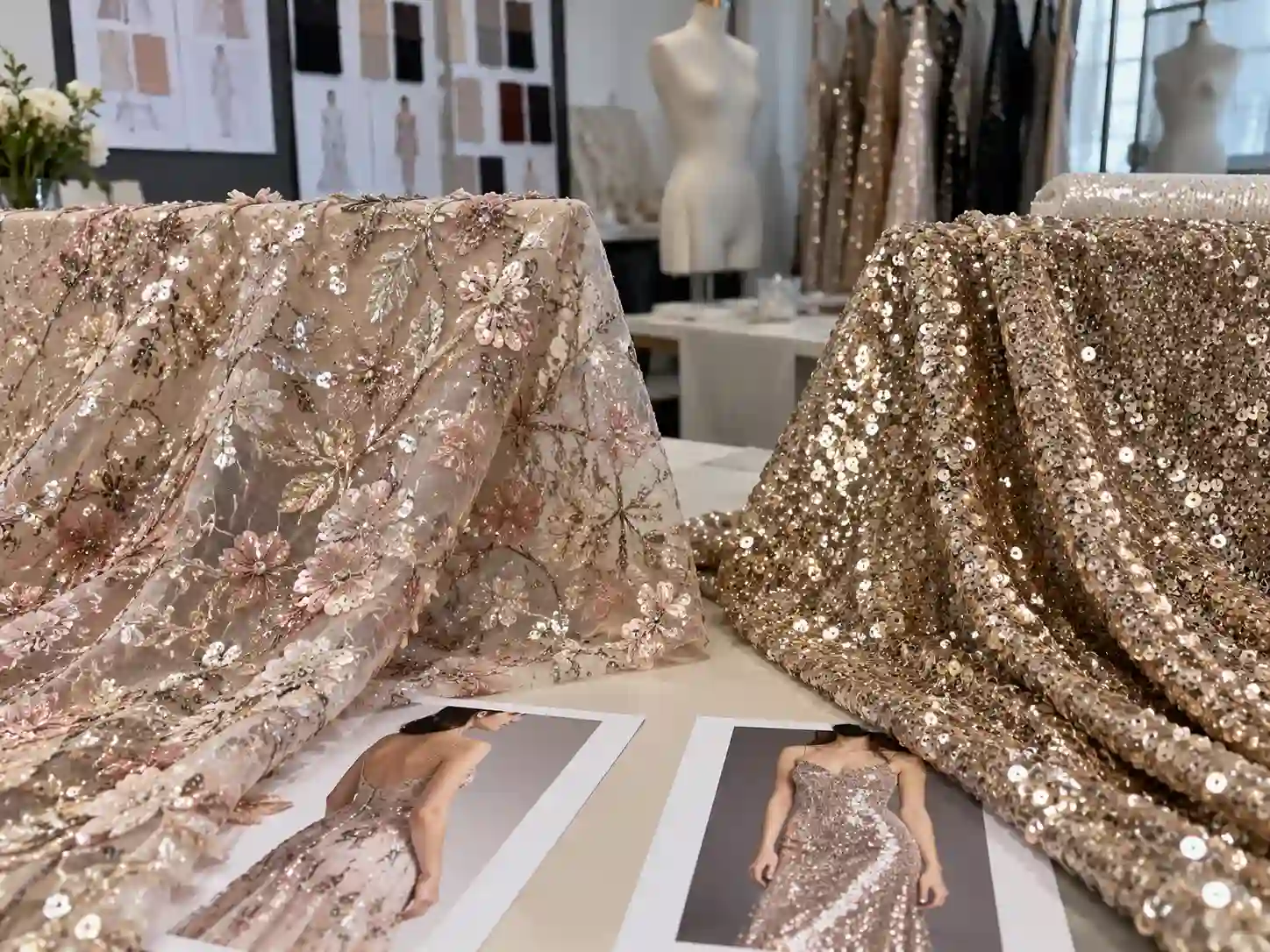
For instance, a satin fabric at 180 GSM will drape more fluidly than a 240 GSM satin, which creates a heavier and more structured silhouette. If this detail is missing, factories may select visually similar but functionally different materials, leading to unexpected results in fit and movement.
In structured production systems, fabric specification errors account for approximately 25–35% of first-sample revisions.
Measurement System and Fit Accuracy
Measurement data defines how a garment is scaled across sizes and how the sample is validated. A complete measurement system includes body measurement references (bust, waist, hip) and garment measurements (flat lay dimensions, seam-to-seam lengths, and tolerance ranges).
One common issue in sampling is providing only body measurements without garment construction logic. This forces pattern makers to estimate ease allowance, which directly affects fit consistency. A well-defined measurement system typically includes:
- Standard size range (e.g., XS–XL or 2–12 US sizing)
- Grading increments (e.g., 2 cm per size at waist)
- Fit intention (tight, regular, relaxed)
- Tolerance range (±1 cm to ±2 cm depending on category)
Without this structure, grading errors often appear during bulk production, not just sampling.
Construction Details and Structural Integrity
Construction details define how the dress is physically assembled. This includes seam type (overlock, flatlock, French seam), closure system (invisible zipper, exposed zipper, buttons), lining strategy, and reinforcement zones.
For example, a corset-style dress requires internal boning and structured interfacing to maintain shape. A slip dress may require bias-cut panels and lightweight lining to achieve fluid movement. These decisions cannot be inferred from images alone.
Missing construction details often lead to re-sampling cycles, especially in complex categories such as eveningwear or bodycon dresses. Industry observation shows that unclear construction logic can increase sampling rounds by 1–2 additional cycles.
Finishing Standards and Quality Expectations
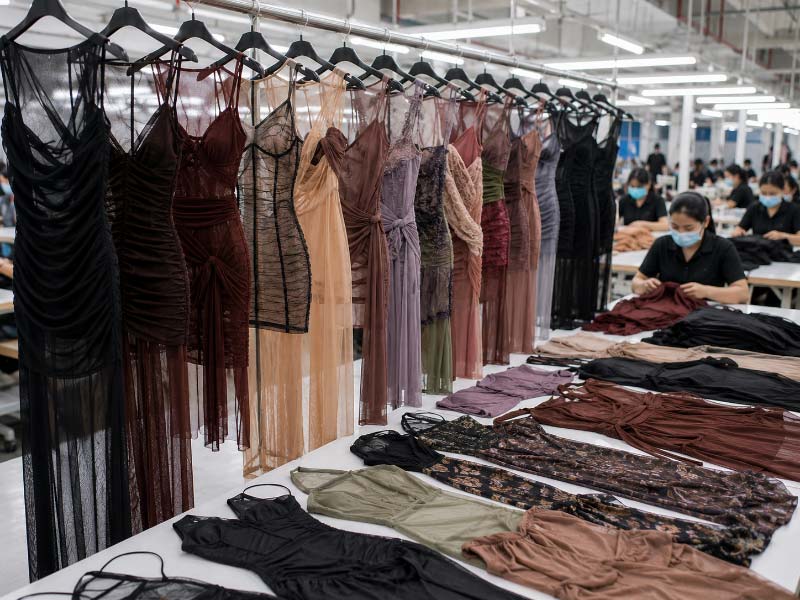
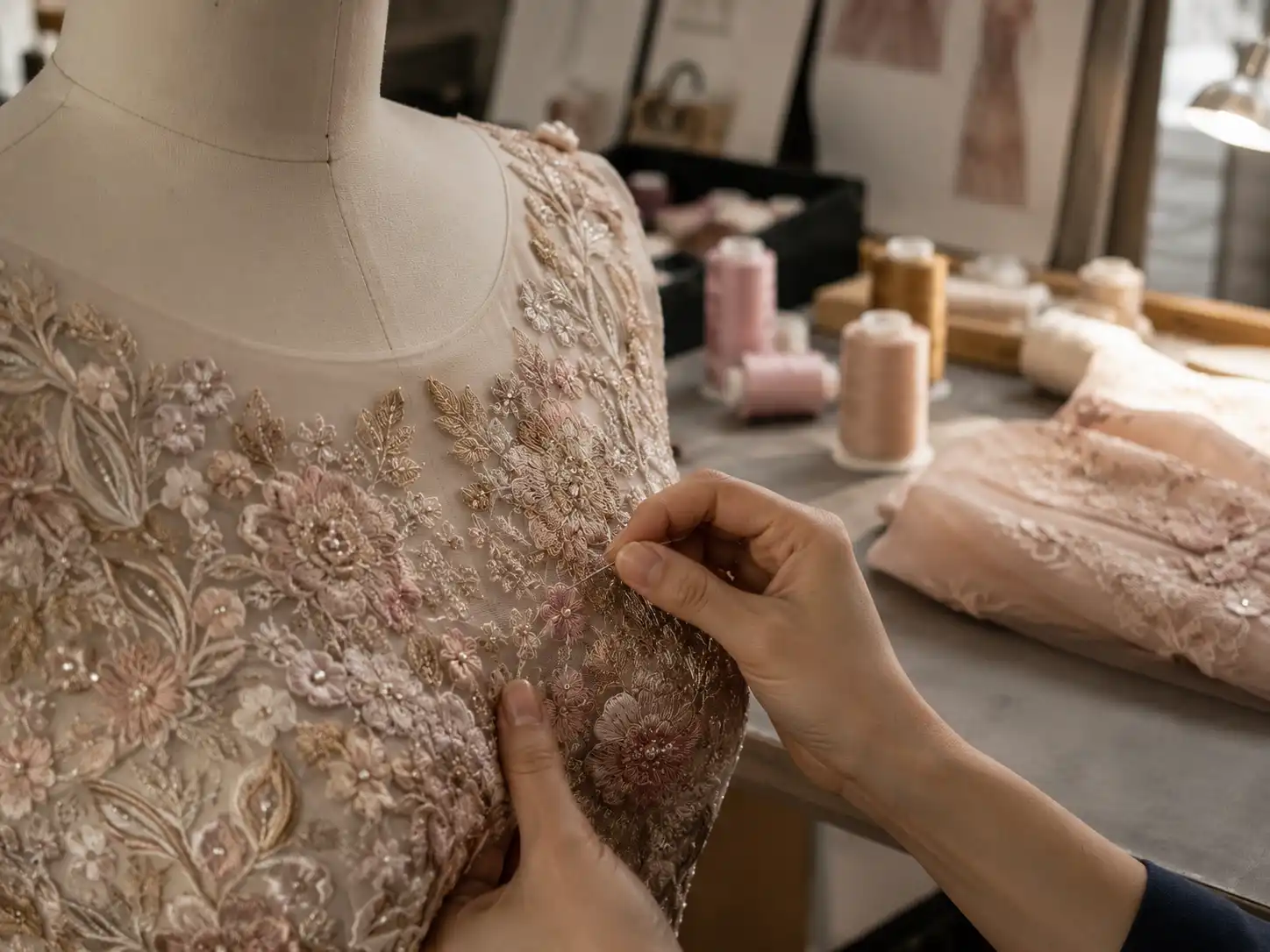
Finishing defines the final visual and tactile quality of the garment. It includes hemming method, pressing standards, thread color matching, and trim placement.
Although finishing details may appear minor, they significantly influence perceived value. For example, a narrow rolled hem versus a double-fold hem can change the entire visual weight of a skirt. Similarly, improper pressing direction can distort garment silhouette after production.
In premium womenswear manufacturing, finishing accuracy contributes to nearly 25–30% of final product perception in retail environments.
What Information Should Be Included in a Sampling Request?
A complete sampling request is the operational backbone of dress development. It converts design thinking into production logic, allowing a factory to evaluate feasibility, prepare materials, and build a sample without repeated clarification. In women’s dress manufacturing, missing even one critical data point—such as fabric weight or zipper type—can shift the entire fit outcome and trigger multiple revision rounds.
A well-prepared request does not need to be long, but it must be structured. It should answer five core production questions: what the garment looks like, what it is made of, how it is constructed, how it should fit, and how it should be finished. When these five areas are clearly defined, sampling accuracy increases significantly and development time becomes more predictable.
A sampling request should include design specifications, fabric details, construction instructions, measurement charts, trim requirements, and quality standards. These elements allow manufacturers to evaluate feasibility and produce accurate samples with fewer revisions and faster approval cycles.
Core Information Structure for Sampling Requests
| Section | Required Data | Impact on Sampling |
|---|---|---|
| Design Specification | Sketch, silhouette, style reference | Defines visual structure and proportion |
| Fabric Information | Composition, GSM, stretch, texture | Controls drape, fit, and comfort |
| Construction Details | Seams, lining, closure, structure | Determines durability and stability |
| Measurement Data | Size chart, grading rules, tolerance | Ensures consistent fit across sizes |
| Trim & Finishing | Zipper, buttons, hem, stitching | Impacts final appearance and quality |
| Production Notes | Quantity, timeline, cost target | Aligns feasibility and planning |
Design Specification and Visual Structure
Design specification is the foundation of every sampling request. It includes flat sketches, front/back views, and detailed close-ups of key areas such as neckline, waist shaping, sleeve design, and hem length. These visuals define the garment’s structural identity before pattern making begins.
However, in production reality, visuals alone are not enough. Two dresses with similar silhouettes may require entirely different pattern logic depending on seam placement or internal support. For example, a ruched bodycon dress needs controlled tension points, while a slip dress relies on bias cutting for natural drape. Without structured design input, interpretation becomes subjective, increasing the risk of inconsistency in the first sample.
Strong design specification reduces ambiguity and eliminates unnecessary revisions at early stages, especially in complex categories like corset dresses or eveningwear.
Fabric Information and Material Behavior
Fabric specification directly influences garment performance. A complete fabric section should include composition (e.g., 95% polyester, 5% spandex), weight (GSM), elasticity level, weave type, and surface finish.
Fabric behavior changes significantly with small variations. For example:
- 180 GSM satin → softer drape, fluid movement, lighter silhouette
- 240 GSM satin → structured shape, reduced flow, more formal appearance
Without this level of detail, factories may substitute materials based on visual similarity rather than functional equivalence, resulting in unexpected fit and movement differences.
In real sampling cycles, fabric-related mismatches account for roughly 25–35% of revision requests, making this section one of the most critical in the entire document.
Construction Details and Internal Structure
Construction details define how a dress is physically assembled. This includes seam type, stitching method, lining strategy, reinforcement zones, and closure systems.
Examples of key construction decisions:
- Seam type: overlock vs French seam for durability or refinement
- Closure: invisible zipper vs exposed zipper for aesthetic impact
- Lining: full lining vs partial lining depending on fabric transparency
- Support structure: boning, interfacing, elastic support zones
In structured garments like corset dresses or structured mini dresses, internal construction often matters more than external appearance. If these details are not defined early, manufacturers must interpret intent, which often leads to structural revision in later samples.

Measurement Data and Fit Logic
Measurement data ensures that a sample can be scaled into production consistently. It includes both body measurements and garment measurements, with clear grading rules across sizes.
A complete measurement set usually includes:
- Standard size range (XS–XL or numeric sizing system)
- Bust, waist, hip reference points
- Garment flat measurements (chest width, waist width, length)
- Grading increments (e.g., +2 cm per size at waist)
- Tolerance range (±1 cm to ±2 cm depending on garment type)
A common issue in sampling is providing only body measurements without garment construction logic. This forces pattern makers to estimate ease allowance, which directly affects fit consistency. Clear measurement logic ensures the sample represents final production behavior accurately.
Trim Details and Finishing Requirements
Trim and finishing details define the final visual quality of the garment. These include zipper type, button specification, thread color, hem construction, and label placement.
Although often underestimated, finishing can change the perceived value of a garment significantly. For example, a narrow baby hem creates a lighter aesthetic, while a double-fold hem increases structure and weight.
Common finishing requirements include:
- Hem type (rolled hem, double-fold, raw edge finish)
- Thread matching (tone-on-tone vs contrast stitching)
- Label placement (neck, side seam, back waist)
- Pressing standard (flat press vs shaped press)
In premium womenswear categories, finishing quality can account for nearly 25–30% of final retail perception.
Production Notes and Commercial Alignment
Production notes align sampling with real manufacturing conditions. This includes expected order volume, target price range, delivery timeline, and quality expectations.
These factors directly influence material sourcing and production planning. For example, a low-cost target may require fabric substitution or simplified construction, while a tight timeline may limit sourcing options and increase dependency on in-stock materials.
Key production alignment points:
- Expected quantity range (pilot vs bulk order scale)
- Target cost range per unit
- Development timeline expectations
- Quality level requirement (standard vs premium finishing)
Clear production notes ensure that sampling decisions are aligned with eventual bulk manufacturing conditions, reducing the gap between sample outcome and production reality.
How Do Manufacturers Review a Sampling Request?
Manufacturers review a sampling request through a structured evaluation process that checks whether a design can be accurately transformed into a physical garment with stable quality, cost control, and repeatable production results. The review is not based on visual impression alone. It is a technical assessment that combines fabric behavior, construction feasibility, measurement logic, and production risk.
In real dress manufacturing, the purpose of this review is to prevent sampling failure before fabric is cut. A strong design may still be rejected or adjusted if material behavior or construction logic introduces instability in bulk production. The review stage is where creativity is translated into manufacturable structure.
When information is complete, approval can happen within 24–72 hours. When key data is missing, clarification cycles may extend development by 5–10 working days.
Manufacturers review sampling requests by checking design feasibility, fabric stability, construction logic, measurement accuracy, and production risk before approving sampling. The goal is to ensure the design can be produced consistently from sample to bulk production with minimal revision.
Review Framework Used in Manufacturing Evaluation
| Review Area | What Is Checked | Outcome |
|---|---|---|
| Design Feasibility | Silhouette, structure complexity | Approve / Adjust / Reject |
| Fabric Stability | GSM, stretch, shrinkage risk | Confirm sourcing or replace |
| Construction Logic | Seam type, internal structure | Simplify or validate |
| Measurement Accuracy | Grading rules, tolerance | Adjust size system |
| Production Risk | Cost, time, defect probability | Proceed or revise |
Design Feasibility Evaluation
Design feasibility is the first checkpoint in sampling review. The focus is not whether the design looks attractive, but whether it can be constructed with stable and repeatable results.
Manufacturers analyze silhouette complexity, panel structure, and construction difficulty. A simple A-line dress may pass immediately, while a corset dress with internal boning or asymmetric draping may require adjustments before sampling begins.
Key evaluation points include:
- Number of pattern panels required
- Structural support needs (boning, interfacing, elastic control)
- Symmetry and balance of design lines
- Feasibility of achieving intended silhouette in bulk production
In practice, highly complex designs often require simplification at this stage to avoid repeated sampling cycles later.
Fabric Stability and Material Control
Fabric evaluation focuses on whether selected or proposed materials can perform consistently during cutting, sewing, and wear testing.

Manufacturers check:
- GSM consistency across batches
- Stretch recovery rate (important for bodycon and knit dresses)
- Shrinkage behavior after washing or steaming
- Dye stability and color fastness
- Availability in required quantity and lead time
A common production issue occurs when reference fabric is visually correct but structurally unstable. For example, low-quality satin may look similar to premium satin but behave differently under tension, causing seam distortion or uneven drape.
If fabric risk is high, manufacturers may recommend alternative materials before sampling begins.
Construction Logic Assessment
Construction logic determines how the garment will physically hold its shape and durability over time. This stage evaluates whether design intent aligns with technical assembly methods.
Manufacturers review:
- Seam type selection (overlock, flatlock, French seam)
- Lining structure (full lining, partial lining, no lining)
- Closure system (invisible zipper, buttons, hooks)
- Reinforcement zones (waist, bust, slit, shoulder areas)
For example, a fitted mini dress with high stretch fabric may require elastic reinforcement at waist seams, while a structured evening dress may require interfacing layers for stability.
When construction logic is unclear, factories often request clarification before cutting samples to avoid structural failure.
Measurement and Fit Validation
Measurement review ensures that sizing logic is consistent and scalable across all sizes. This is one of the most critical steps in preventing bulk production errors.
Manufacturers verify:
- Body measurement reference accuracy
- Garment measurement completeness
- Grading rule consistency across sizes
- Fit intention clarity (tight fit, regular fit, relaxed fit)
- Tolerance allowance for production variation
A frequent issue is missing garment-level measurements, which forces pattern makers to estimate ease allowance. This often leads to inconsistent fit across sizes during bulk production.
In structured review systems, clear grading logic can reduce fit-related revisions by up to 40%.
Production Risk and Cost Alignment
Production risk evaluation connects sampling decisions with real manufacturing constraints such as cost, timeline, and defect probability.
Manufacturers analyze:
- Material cost feasibility against target price range
- Labor complexity and sewing time per garment
- Probability of defects during bulk production
- Delivery timeline feasibility based on fabric sourcing
- Scalability of design for repeated production
For example, a dress requiring complex hand finishing or multi-layer stitching may increase labor cost by 20–35%, which must be aligned with pricing expectations before sampling proceeds.
If risk level exceeds acceptable thresholds, manufacturers may suggest design simplification or alternative construction methods.
What Are Common Mistakes in Writing a Sampling Request?
A sampling request often determines whether a dress development process moves smoothly or enters repeated revision cycles. In real manufacturing practice, most delays and cost increases do not come from production itself, but from incomplete or unclear sampling instructions. When key technical details are missing or inconsistent, factories are forced to interpret intent, which increases deviation between expectation and final sample.
The most common mistakes fall into four areas: unclear visual direction, missing fabric data, weak construction definition, and incomplete measurement logic. Each of these creates specific risks that directly affect sample accuracy, cost, and lead time.
Common mistakes in sampling requests include unclear reference images, missing fabric specifications, incomplete construction details, and inaccurate measurement charts. These issues lead to repeated sampling, higher cost, and inconsistent garment outcomes during production.
Key Mistakes Overview
| Mistake Type | Typical Issue | Production Impact |
|---|---|---|
| Visual Clarity | Only reference images provided | Misinterpretation of design intent |
| Fabric Information | No GSM or composition data | Incorrect material selection |
| Construction Gaps | Missing seam/lining details | Structural instability |
| Measurement Errors | No grading rules | Size inconsistency in bulk |
| Finishing Missing | Undefined trims or hems | Low-quality appearance |
Over-Reliance on Reference Images
One of the most frequent issues in sampling requests is using only images as communication input. While images help define visual direction, they do not explain internal structure, fabric behavior, or construction logic.
For example, a satin mini dress shown in a reference image may appear simple, but the real construction could include hidden boning, lining layers, or reinforced seams. Without technical clarification, factories interpret based on experience, which leads to variation in fit, drape, and structure.
In production practice, image-only communication increases sampling revision cycles by 1–2 rounds on average. This adds both time and cost pressure, especially in seasonal collections where deadlines are fixed.
Missing Fabric Specification Data
Fabric omission is one of the highest-risk mistakes in sampling preparation. Without clear information such as composition, GSM, elasticity, or texture, material selection becomes interpretative.
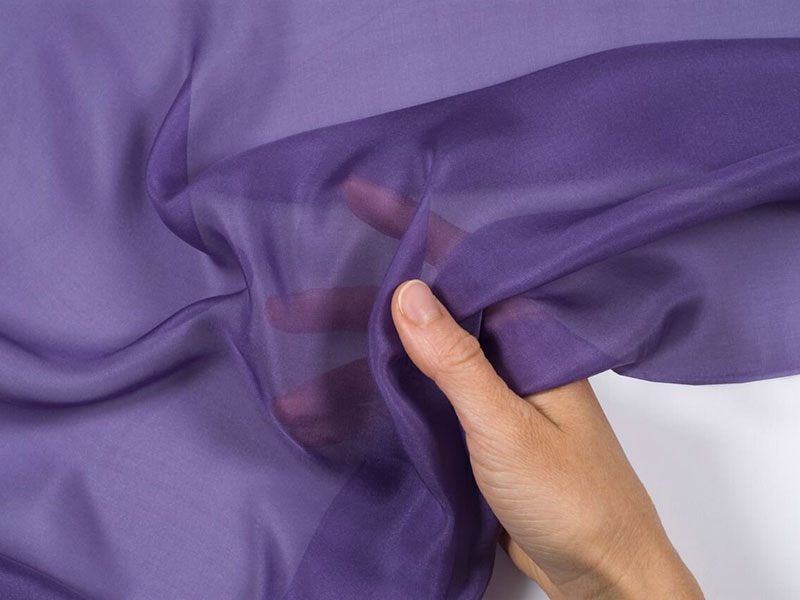
A common example is satin substitution. Two satin fabrics may look identical visually but behave differently:
- 180 GSM satin → fluid drape, softer silhouette
- 240 GSM satin → structured shape, reduced movement
When fabric data is missing, factories may select available alternatives that visually match but function differently, leading to unexpected fit changes after sewing.
Industry observation shows that 25–35% of first-sample issues are related to fabric mismatch or incorrect substitution.
Incomplete Construction Instructions
Construction logic defines how a garment is physically assembled, yet it is often the most overlooked section in sampling requests.
Missing details such as seam type, lining structure, or closure method force pattern makers to make assumptions. For fitted dresses, especially corset or bodycon styles, small construction differences can significantly change final silhouette.
Common missing elements include:
- No indication of zipper type (invisible vs exposed)
- No lining requirement defined
- No reinforcement zones specified
- No seam finishing instructions
These gaps often lead to structural instability and require re-sampling after the first prototype is reviewed.
Weak Measurement and Grading Logic
Measurement issues are another major source of inconsistency between sample and bulk production. A frequent mistake is providing body measurements without garment measurements or grading rules.
Without clear garment logic, pattern makers must estimate ease allowance, which directly affects fit accuracy across sizes.
Standard issues include:
- Missing flat garment measurements
- No grading increments between sizes
- No tolerance range defined
- No clear fit intention (tight/regular/relaxed)
In structured production systems, unclear grading logic can increase size-related revisions by up to 40%.
Missing Finishing and Trim Specifications
Finishing details are often underestimated but have a direct impact on garment quality perception. When these are not defined, factories default to standard finishing methods, which may not match design intent.
Common omissions include:
- Hem type not specified (rolled, folded, raw edge)
- Thread color not defined
- Label placement missing
- Pressing standard unclear
In womenswear categories, finishing contributes nearly 25–30% of perceived retail value, meaning small inconsistencies can significantly affect final product positioning.
Lack of Production Context
Another critical mistake is ignoring production constraints such as cost range, order quantity, or timeline expectations. Without this information, factories may develop samples that are not aligned with bulk production reality.

For example:
- A high-cost design may be sampled using premium materials, but later rejected due to target price mismatch
- A tight timeline may require fabric substitution that affects quality consistency
Clear production context helps align sampling decisions with final manufacturing conditions, reducing redesign risk at later stages.
How Can a Sampling Request Be Optimized for Faster Approval?
A sampling request is not only a communication document—it directly controls how fast a dress moves from concept to physical sample. In real production workflows, approval speed depends on one key factor: how much interpretation is required from the factory side. The less interpretation needed, the faster the approval.
Optimization is not about adding more content. It is about structuring the right information in a way that aligns with production logic. When design input, fabric data, construction rules, and measurement systems are clearly defined, sampling review can be completed in 24–72 hours. When unclear, the same process can extend to 7–12 days due to clarification loops.
A sampling request is optimized for faster approval by using structured design input, complete fabric specifications, clear construction instructions, standardized measurement charts, and aligned production expectations. Clear documentation reduces interpretation time and accelerates sample approval.
Optimization Framework for Faster Sampling Approval
| Optimization Area | What to Improve | Impact on Approval Speed |
|---|---|---|
| Design Structure | Use clear sketches + detail breakdown | Reduces interpretation time by 30–40% |
| Fabric Data | Add GSM, composition, stretch ratio | Prevents material confirmation delays |
| Construction Logic | Define seams, lining, closures | Avoids technical clarification cycles |
| Measurement System | Include grading rules + tolerances | Improves first-sample accuracy |
| Production Context | Add MOQ, cost range, timeline | Aligns feasibility before sampling |
Standardized Design Structure for Clarity
A structured design layout removes ambiguity from the beginning. Instead of relying on scattered images or verbal explanations, a clear sampling request uses organized visual and written breakdowns.
Effective structure includes:
- Front, back, and side sketches
- Zoom-in details for neckline, waist, and hem
- Notes on silhouette intention (tight, structured, flowy)
- Key style references with labeled elements
When design input is standardized, pattern makers can directly convert visuals into technical blocks without assumptions. In production systems, structured design input can reduce clarification questions by up to 50%.
Complete Fabric Specification for Material Stability
Fabric optimization focuses on eliminating guesswork in material selection. Every fabric behaves differently under tension, stitching, and movement, even if visually similar.
A complete fabric specification should include:
- Composition (e.g., polyester/spandex ratio)
- GSM weight range
- Elasticity percentage (if stretch fabric)
- Surface texture (matte, satin, ribbed, textured)
- Color standard reference (Pantone or physical swatch)
Without these details, factories may select substitute materials that visually match but behave differently in production. For example, small GSM differences can change drape, structure, and seam stability significantly.
Clear fabric specification typically reduces material confirmation delays by 2–5 working days.
Construction Clarity for Zero-Interpretation Sampling
Construction clarity determines how efficiently a garment is built in the sampling stage. The goal is to remove all interpretation from internal structure decisions.
Optimized construction details include:
- Seam type definition (overlock, French seam, flatlock)
- Lining structure (full, partial, none)
- Closure system (invisible zipper, buttons, hooks)
- Internal reinforcement points (boning, elastic, interfacing)
- Stitch density or finishing requirements
In complex garments such as corset dresses or structured mini dresses, unclear construction is one of the leading causes of re-sampling. Clear instruction at this stage can reduce sampling cycles by 1 full round on average.
Measurement System with Built-In Grading Logic
A fast approval process depends heavily on measurement clarity. Without grading logic, pattern makers must estimate size scaling, which increases inconsistency risk.
Optimized measurement systems include:
- Standard size range definition (XS–XL or numeric system)
- Garment flat measurements (not only body measurements)
- Grading increments per size step (e.g., +2 cm waist per size)
- Fit classification (tight / regular / relaxed)
- Tolerance allowance (±1–2 cm depending on category)
When grading logic is clearly defined, size-related revision risk drops significantly. Industry experience shows up to 40% reduction in fitting corrections during sampling.
Production Context Alignment for Faster Feasibility Check
Manufacturers review sampling requests faster when production context is clearly defined. This allows immediate feasibility judgment without back-and-forth clarification.
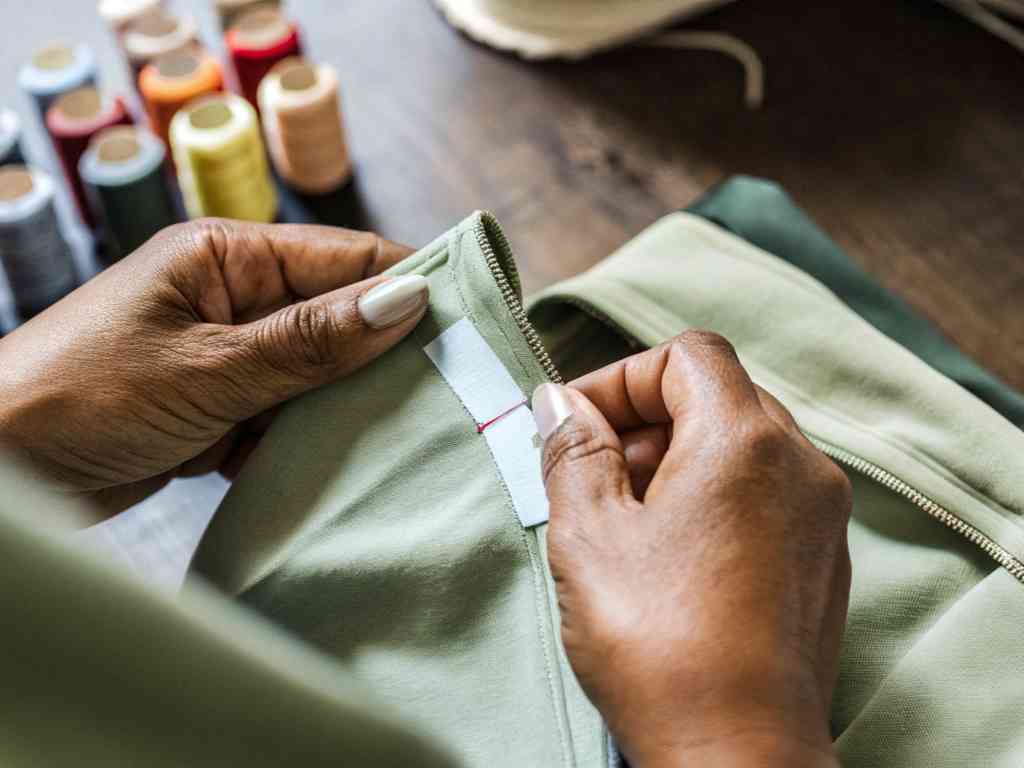
Key production inputs include:
- Expected order quantity range
- Target price per unit (FOB expectation range)
- Required delivery timeline
- Quality level expectation (standard / premium / runway-level)
For example, a high-detail dress with premium finishing cannot be evaluated accurately without understanding target price range. Similarly, tight deadlines may limit fabric sourcing options.
When production context is included early, feasibility decisions can be completed within 24–48 hours instead of multiple review cycles.
What Questions Do Manufacturers Expect Before Starting Sampling?
Before sampling begins, manufacturers evaluate a set of critical questions to confirm whether a dress project is technically feasible, commercially realistic, and production-ready. These questions are not administrative—they directly determine fabric sourcing decisions, pattern strategy, cost structure, and production timeline.
In real garment development, missing answers at this stage is one of the main reasons sampling gets delayed or revised later. Clear alignment before cutting fabric can reduce sampling cycles by 30–50% and prevent unnecessary redesign during development.
Manufacturers expect clear answers on quantity, target price, delivery timeline, fabric direction, quality standard, and design complexity before starting sampling. These inputs determine feasibility, cost control, and production planning.
Key Pre-Sampling Question Framework
| Question Area | Core Information Needed | Production Decision Impact |
|---|---|---|
| Order Volume | Estimated MOQ or test quantity | Fabric sourcing & cost level |
| Price Target | Target FOB range per unit | Material & construction choice |
| Timeline | Sampling + bulk schedule | Production priority planning |
| Fabric Direction | Material type or reference | Supplier selection & stability |
| Quality Level | Standard or premium finish | QC standard definition |
| Design Complexity | Structure level & details | Pattern engineering approach |
Production Quantity and Scaling Strategy
Manufacturers first evaluate expected order quantity because it directly affects production planning and fabric sourcing strategy. A small pilot order (e.g., 50–100 pcs per style) requires different material sourcing compared to bulk production above 1,000 pcs.
Key considerations include:
- Minimum order expectation per style or color
- Pilot production vs long-term scaling potential
- Color breakdown expectations
- Size ratio distribution (e.g., XS–XL percentage split)
Low-volume sampling often requires flexible fabric sourcing, while scalable orders allow factories to negotiate better raw material pricing and secure stable supply chains.
Without clear quantity planning, factories cannot accurately calculate cost or allocate production resources.
Target Price Range and Cost Structure
Price expectation defines every technical decision in sampling, from fabric selection to stitching complexity. Even small changes in material or construction can significantly affect final cost.
Manufacturers evaluate:
- Target FOB price range per unit
- Acceptable cost flexibility (+/- tolerance range)
- Price positioning (entry, mid-range, premium)
- Cost sensitivity level for design elements
For example, a dress targeted under $12 FOB may require simplified lining and reduced panel complexity, while a $25+ FOB dress allows structured construction and premium finishing.
Without price guidance, sampling may be developed at a cost level that is not aligned with final production planning, leading to redesign or material substitution later.
Timeline Expectation and Production Scheduling
Timeline clarity determines how sampling is scheduled within factory capacity. Different urgency levels directly affect fabric sourcing, pattern allocation, and sewing line prioritization.
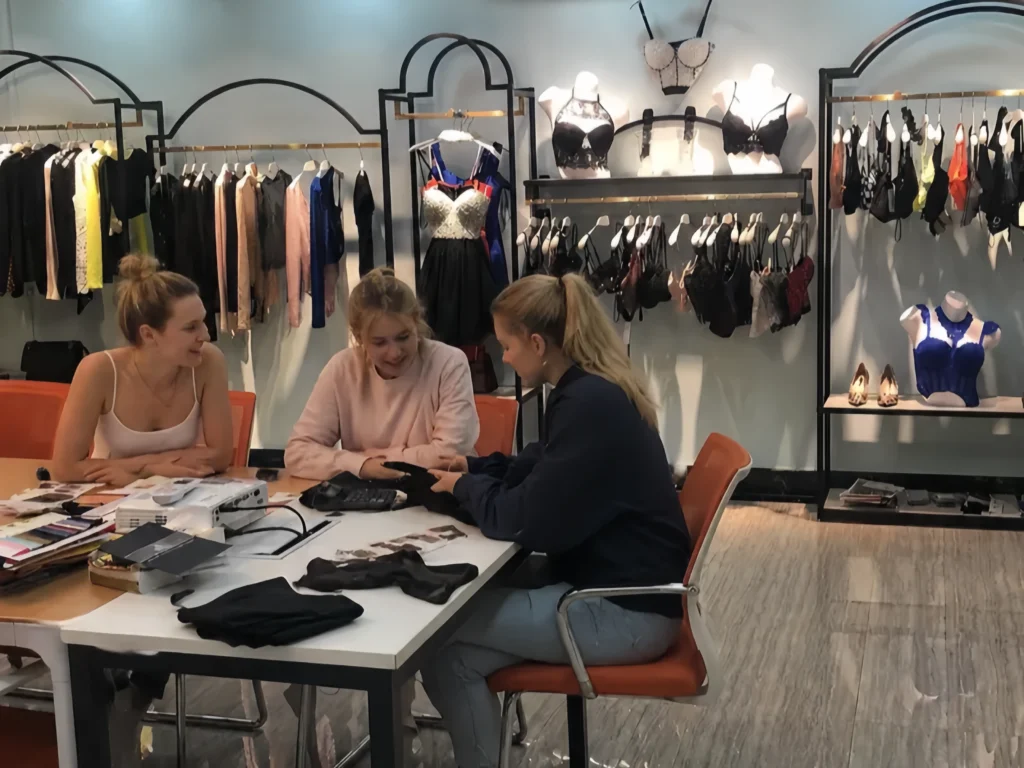
Manufacturers typically check:
- Sample delivery deadline (standard vs urgent)
- Bulk production deadline expectations
- Seasonal launch timing (spring/summer, holiday collections)
- Flexibility for revision cycles
For example, a standard sampling cycle may take 7–10 days, while urgent development can be compressed to 3–5 days if materials are available. However, faster timelines often limit fabric options and increase risk of substitution.
Clear timeline expectations allow factories to plan capacity and reduce bottlenecks in development flow.
Fabric Direction and Material Stability
Fabric direction is one of the most critical inputs before sampling begins. It determines sourcing strategy, cost level, and garment performance.
Manufacturers look for:
- Specific fabric type (satin, chiffon, knit, lace, etc.)
- Reference fabric samples or swatches
- Stretch requirement (elastic or non-stretch)
- Weight preference (light, medium, heavy GSM range)
- Texture and surface finish expectations
Fabric ambiguity often leads to substitution risk. Even visually similar materials can behave differently in drape and seam stability. For example, two satin fabrics may differ significantly in stiffness and recovery, affecting final silhouette.
Clear fabric direction reduces material sourcing time by 2–5 days and significantly improves first-sample accuracy.
Quality Standard and Finishing Expectation
Quality expectation defines the level of detail applied during sampling and bulk production. It directly impacts stitching precision, finishing methods, and inspection standards.
Manufacturers evaluate:
- Standard vs premium finishing requirement
- Stitch density and reinforcement expectations
- Internal structure requirement (lining, boning, interfacing)
- Visual finishing level (clean seams, invisible details, pressed structure)
In womenswear production, finishing contributes up to 25–30% of perceived garment value. Without clear quality direction, factories may default to standard finishing methods that may not match design positioning.
Design Complexity and Technical Risk Level

Design complexity determines how much engineering effort is required during pattern making and sampling.
Manufacturers assess:
- Number of panels in garment construction
- Presence of draping, ruching, or asymmetry
- Structural elements (corset, boning, multi-layer design)
- Fabric behavior challenges (stretch, transparency, instability)
For example:
- Simple slip dress → low risk, fast sampling
- Structured corset dress → high risk, multiple validation steps
- Multi-layer evening gown → extended sampling cycle required
Higher complexity increases revision probability and may require simplified adjustments before sampling begins.