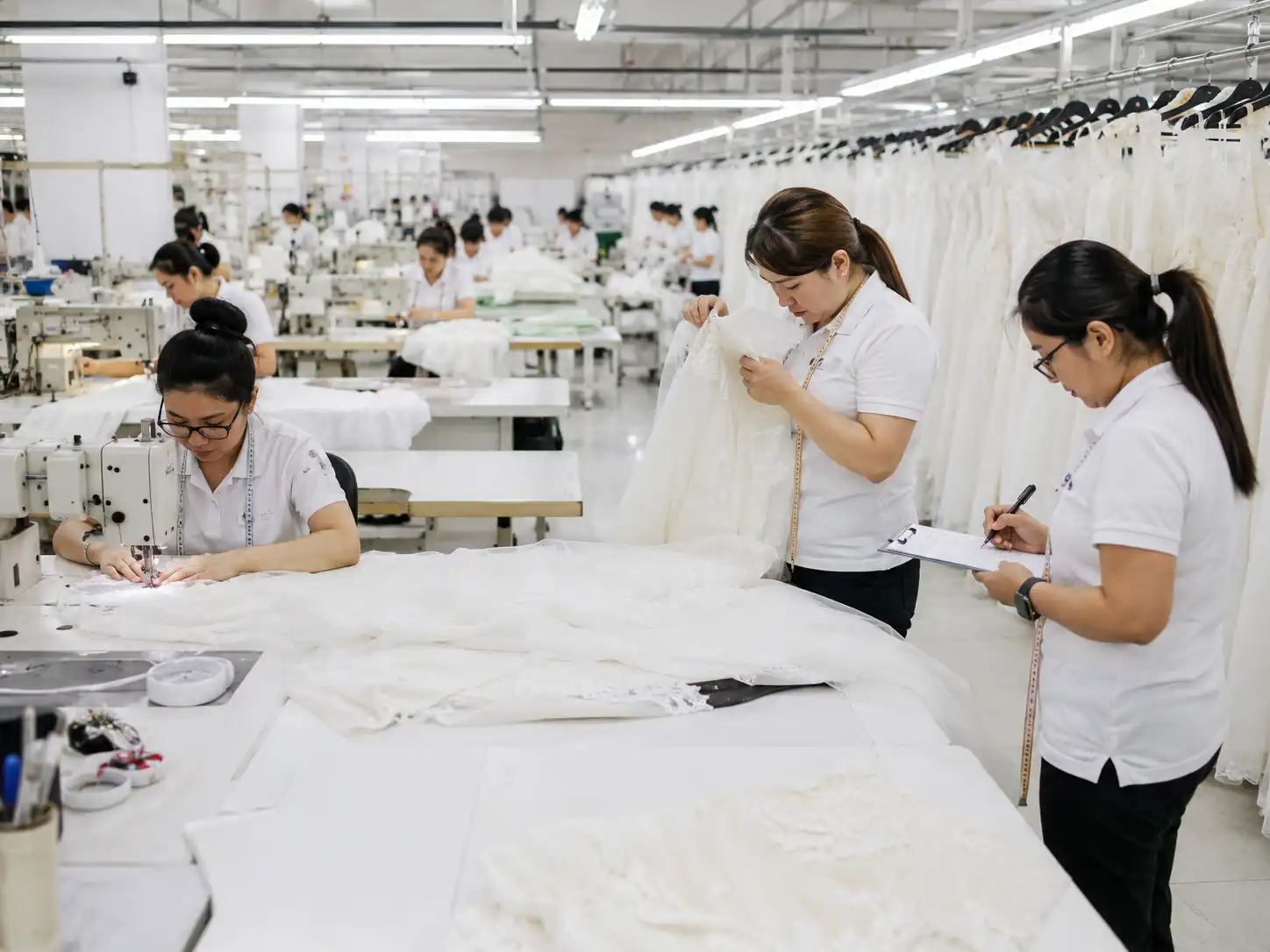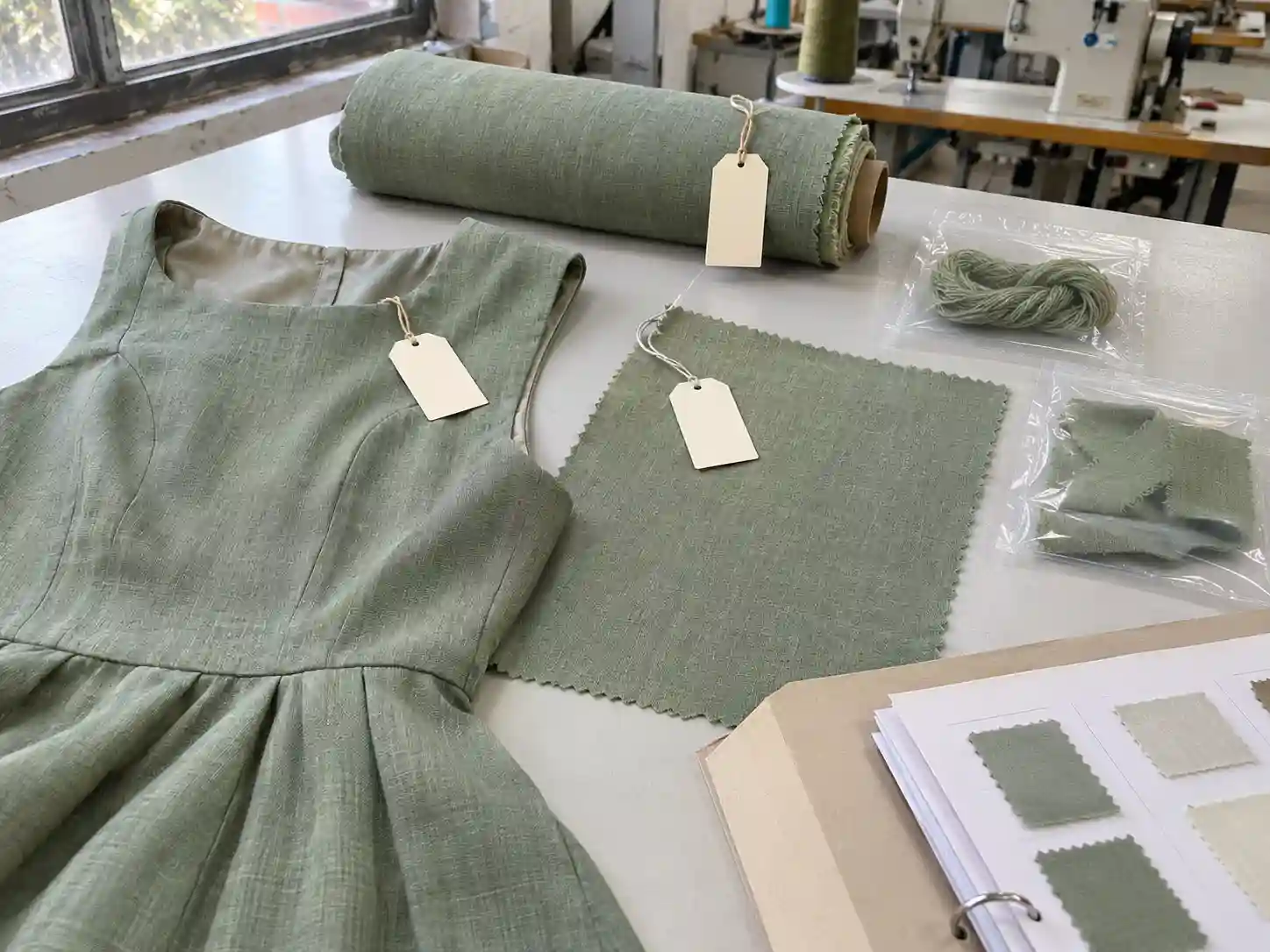

A finished dress represents much more than the fabric, pattern, and sewing operations used to make it. Its final appearance depends on dozens of details working together, from accurate measurements and balanced seams to fabric condition, lining construction, decorative attachments, and packaging. A garment can look attractive on a production table but still create problems when customers try it on, when retailers display it, or when warehouse teams receive the shipment. This is why final inspection deserves the same attention as product development and bulk production.
Final dress inspection is the quality assessment of completed dresses before shipment. It verifies measurements, fit, stitching, fabric appearance, construction, functional trims, labels, and packaging against approved samples and specifications. Inspectors identify defects, classify their severity, examine representative garments, and determine whether the production lot meets agreed acceptance requirements or needs correction and reinspection before delivery.
At Jinfeng Apparel, a Guangdong-based custom womenswear manufacturer, final inspection is part of a wider quality-control system covering incoming materials, cutting, sewing, in-line checks, garment finishing, packing, and AQL inspection. The process is particularly important for satin, lace, mesh, sequin, bodycon, corset, and other dresses with delicate materials or complicated construction. Understanding what gets checked and how inspection decisions are made helps fashion brands protect product consistency before finished garments leave the factory.
What Is Final Dress Inspection?
Final dress inspection is the last major quality assessment of completed dresses before shipment approval. It compares finished garments with approved samples, measurement specifications, construction requirements, and packing instructions. The purpose is to identify nonconformities, verify product consistency, and determine whether the order can proceed to delivery or requires corrective action.
When Does Final Inspection Take Place?
Final dress inspection takes place after the main manufacturing and finishing operations have been completed. By this stage, dresses should have passed through cutting, sewing, thread trimming, pressing, garment-level checks, and the relevant packing preparations. The inspection should examine products in a condition that represents what the customer will actually receive, rather than an unfinished version of the production order.
Timing is important because certain defects only become visible after garment construction is complete. A satin dress might pass sewing inspection but develop unwanted shine marks during pressing. A lined maxi dress might have correct outer measurements but show an uneven lining length after hanging. Similarly, a dress with securely attached decorative details during sewing could develop loose sequins or damaged embellishments during subsequent handling.
Jinfeng Apparel manages quality through several connected stages, including incoming material inspection, cutting QC, sewing QC, in-line inspection, finished-garment inspection, pressing review, packing QC, AQL inspection, and customer inspection support. These stages help identify problems at different points rather than depending entirely on the final inspection to discover every manufacturing issue.
For pre-shipment random inspection, the production lot must be sufficiently complete and available for representative sampling. The exact completion and packing conditions should be agreed with the customer or inspection provider before the inspection date. Inspecting too early may leave unfinished operations unchecked, while waiting until every carton is completely sealed can create unnecessary unpacking and repacking work.
The practical objective is to allow enough time for inspection, correction, reinspection when necessary, and final shipment preparation without compromising the agreed delivery schedule.
How Does It Differ from In-Line QC?
In-line quality control and final inspection serve different purposes, even though they examine some of the same garment features. In-line QC identifies problems while dresses are being manufactured, allowing production teams to correct issues before they affect a larger quantity. Final inspection evaluates completed garments and determines whether the finished production lot meets the agreed requirements.
Consider an order of 1,200 fitted dresses. During sewing, an inspector notices that several side seams are becoming twisted. The problem might originate from fabric stretch direction, uneven feeding, or incorrect handling during assembly. Correcting the sewing method immediately can prevent the defect from spreading to the remaining production quantity.
If the same problem is discovered only during final inspection, the factory may need to identify the affected garments, separate defective pieces, and determine whether repairs are possible. What could have been a relatively simple adjustment during manufacturing may become a much larger rework operation.
The responsibilities of the main quality-control stages can be distinguished as follows:
Incoming material QC: Checks fabric color, weight, hand feel, width, shrinkage, surface defects, lining, trims, and packaging materials.
Cutting QC: Verifies pattern versions, panel quantities, fabric direction, stretch direction, print placement, and size bundling.
Sewing and in-line QC: Examines stitch quality, seam allowances, zipper installation, lining attachment, symmetry, and construction details.
Finished-garment QC: Checks measurements, appearance, garment structure, fit-related details, pressing, and functional components.
Final inspection: Evaluates the completed lot against the agreed inspection plan and acceptance criteria.
Packing QC: Verifies labels, barcodes, folding methods, carton quantities, size ratios, and shipping marks.
These activities complement one another. Individual garment checks during finishing do not automatically replace AQL inspection, and passing an AQL inspection does not eliminate the need for appropriate production-stage controls.
For brands developing several collections each year, combining early defect prevention with documented final verification provides a more dependable way to maintain product consistency across repeated orders.
Which Approved Standards Are Used?
Final inspection requires clear reference standards because quality cannot be judged consistently without knowing what the approved garment should look like. A factory and its customer need to agree on the intended measurements, fabric, construction, appearance, trims, and packing requirements before production begins.
The most important references generally include the approved pre-production sample, Golden Sample, technical pack, measurement chart, grading rules, fabric and trim approvals, sewing instructions, labeling artwork, and packing specifications. Together, these materials establish the physical and written standards used to evaluate finished garments.
For example, a deliberately asymmetric skirt hem should not be rejected simply because its two sides have different lengths. That shape may be an essential part of the approved design. However, an unintentionally uneven hem on a symmetrical satin evening dress should be assessed against the relevant measurement and workmanship requirements.
The same principle applies to materials. Linen naturally has a different surface character from smooth satin, while lace patterns and sequin arrangements have their own visual characteristics. Inspectors must distinguish acceptable material characteristics from unintended production defects rather than applying identical appearance standards to every dress.
At Jinfeng Apparel, approved PP samples and Golden Samples provide important references for garment construction and bulk-production consistency. Customer-approved technical packs establish requirements for measurements, design details, materials, trims, labeling, and packaging.
The inspection agreement should also define defect classifications, measurement tolerances, sampling procedures, and acceptance criteria. When these details are established before production, the factory and customer have a shared basis for resolving quality questions without relying entirely on subjective opinions.
What Does Final Dress Inspection Check?
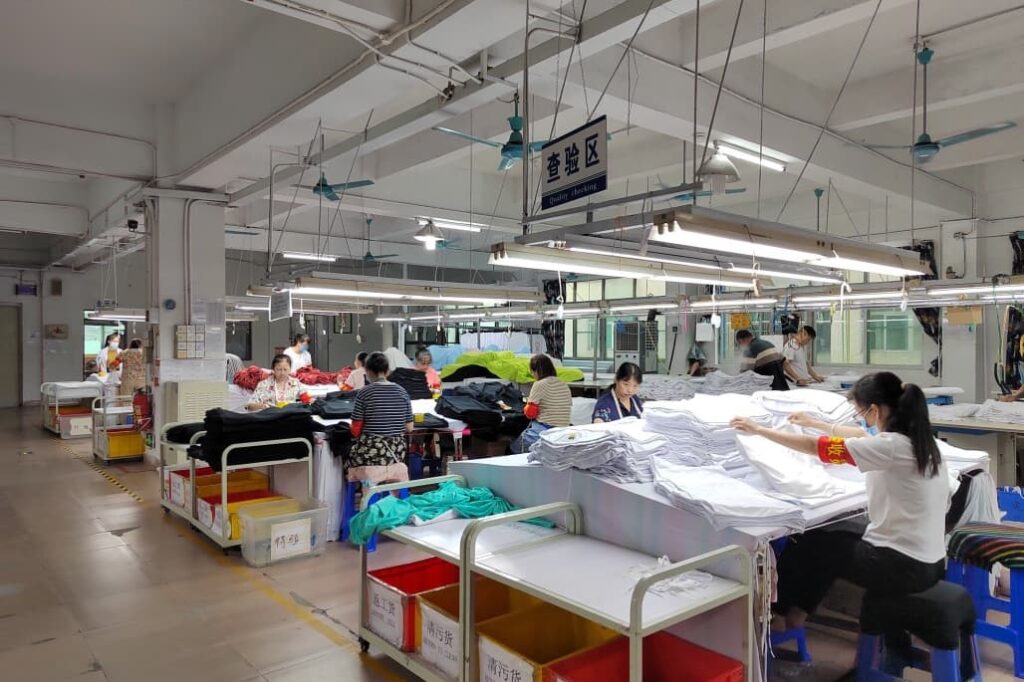
Final dress inspection examines measurements, stitching, garment construction, fabric condition, visual appearance, functional components, finishing, labels, and packaging. Inspectors compare these details with approved samples and technical specifications, focusing on defects that could affect fit, durability, comfort, appearance, or retail acceptance.
Are Measurements Within Tolerance?
Measurement accuracy is one of the most important parts of final dress inspection because it directly affects fit consistency. A dress may have attractive fabric and excellent stitching, but customers can still experience problems if the bust, waist, hip, strap, or overall length measurements differ significantly from the approved specifications.
Inspectors normally measure garments on a flat, suitable surface using defined points of measurement. The dress should be positioned consistently without unnecessary stretching, pulling, or distortion. This is particularly important for elastic knits, mesh panels, stretch satin, and fitted silhouettes because different measuring techniques can produce misleading results.
At Jinfeng Apparel, measurement inspection includes bust, upper bust, waist, hip, shoulder width, strap length, sleeve length, dress length, slit height, hem circumference, and other dimensions appropriate to the garment.
The following figures are the company’s documented internal reference tolerances. They are not universal industry limits, and the customer’s approved technical pack takes priority.
| Measurement Point | Internal Reference Tolerance | Main Quality Concern |
| Bust circumference | ±1.0 cm | Chest fit and shaping |
| Waist circumference | ±1.0 cm | Waistline accuracy |
| Hip circumference | ±1.5 cm | Comfort and silhouette |
| Shoulder width | ±0.8 cm | Shoulder balance |
| Shoulder strap length | ±0.5 cm | Neckline positioning |
| Dress length | ±1.0 cm | Hem position |
| Maxi dress length | ±1.5 cm | Full-length balance |
| Sleeve length | ±1.0 cm | Sleeve positioning |
| Slit height | ±1.0 cm | Design and coverage |
| Hem circumference | ±1.5 cm | Skirt shape and fullness |
Suppose the approved waist measurement of a dress is 72 cm with a tolerance of ±1 cm. The acceptable reference range would be 71–73 cm. A measured result of 73.5 cm exceeds the upper limit by 0.5 cm and needs to be evaluated according to the agreed defect classification and inspection rules.
A measurement outside tolerance does not automatically mean that the entire production lot must be rejected. The inspector needs to consider the applicable acceptance criteria, the number of affected garments, and whether the deviation is isolated or repeated across multiple sizes.
Repeated deviations deserve particular attention. If several dresses in the same size have oversized waists, the underlying issue may involve pattern grading, cutting accuracy, fabric behavior, or inconsistent sewing rather than individual workmanship.
Measurement inspection should therefore identify both individual nonconforming garments and patterns that indicate a wider production problem.
Are Seams, Linings, and Trims Correct?
Seams, linings, and trims determine how well a dress maintains its intended shape, performs during wear, and preserves its approved appearance. Final inspection should examine these components as part of the finished garment rather than treating them as separate decorative details.
Seam inspection covers stitch formation, alignment, seam allowances, thread tension, loose threads, puckering, and visible irregularities. Areas exposed to movement or stress deserve particular attention, including fitted waist seams, armholes, side seams, zipper openings, shoulder straps, and skirt openings.
A seam may appear straight when laid flat but distort when the garment is worn. Inspectors should therefore consider construction, fabric behavior, and the intended silhouette. Stretch bodycon dresses require seam elasticity compatible with the fabric, while structured evening dresses rely on stable seams to maintain their shape.
Linings introduce another set of inspection requirements. A lining should provide the intended coverage and comfort without pulling the outer fabric, creating unwanted folds, or extending visibly below the hem unless the design requires it. Excessively tight linings can also restrict movement or change the way the outer dress hangs.
Functional trims need to be checked as well. Concealed zippers should operate smoothly without catching the lining. Buttons and hooks should remain securely attached. Adjustable straps should hold their position, while boning and support components should not create uncomfortable pressure points.
Jinfeng Apparel’s garment inspection includes zipper operation, lining attachment, strap positioning, decorative trim security, lace alignment, and corset-construction checks. These details are especially important for premium occasionwear, where small construction differences can change the way a carefully fitted dress sits on the body.
Are Fabric, Color, and Finishing Acceptable?
Fabric inspection continues after garment assembly because cutting, sewing, pressing, and handling can introduce new defects. A fabric that passes incoming inspection may still develop pulls, stains, shine marks, or distortion during production and finishing.
Inspectors should examine both the overall appearance and the individual fabric surfaces. The most appropriate checks depend on the material. Satin needs attention to snags, color variation, surface marks, and pressing damage. Chiffon and mesh require careful inspection for holes, stretched areas, and seam distortion. Lace requires checks for damaged motifs, incorrect pattern alignment, and poorly finished edges.
Sequined garments should be examined for missing decorations, insecure attachments, exposed backing fabric, and damage caused during sewing or handling. Velvet requires attention to pile direction and pressure marks, while stretch fabrics need appropriate checks for recovery and distortion.
Color consistency is equally important. Two dresses may individually appear acceptable but show noticeable shade differences when placed together. Fabric batch differences, directional materials, and inconsistent pressing can all contribute to visible variation.
Jinfeng Apparel’s quality-control process examines color differences, stains, holes, loose threads, fabric damage, pressing results, and style-specific appearance problems.
Inspection lighting and garment positioning should remain consistent. Comparing one dress under warm showroom lighting and another under strong daylight can produce misleading judgments about color.
Finishing quality also matters. Pressing should improve garment presentation without flattening intended textures, stretching delicate sections, or creating unwanted shine. Pleats, gathers, ruffles, and draped areas should maintain the appearance established by the approved sample.
Visual inspection cannot establish every fabric performance characteristic. Shrinkage, colorfastness, composition, and other technical properties may require laboratory testing or separate verification when specified by the customer.
Are Labels and Packaging Accurate?
Labels and packaging are sometimes treated as secondary details, but errors in these areas can interrupt the customer’s receiving and distribution process. A correctly manufactured dress can still create serious problems if its barcode does not match the intended SKU or its size sticker identifies the wrong product.
Final packing inspection should verify that the physical dress, sewn-in label, hangtag, barcode, polybag, and carton information all describe the same item. The inspection must also confirm the approved packing method and quantity.
For example, a brand may order black, navy, and burgundy dresses in four sizes. If the shipment contains the correct overall quantity but the cartons have incorrect color-size assortments, warehouse inventory records may become inaccurate.
For a hypothetical order of 1,200 dresses packed at 20 pieces per carton, the expected quantity would be 60 cartons. Inspectors should verify both the total quantity and the detailed assortment specified in the packing list.
Jinfeng Apparel’s packing QC covers woven labels, care labels, hangtags, barcodes, size stickers, polybags, folding methods, carton marks, and packing ratios.
Packaging materials should also protect the product. Satin may show fold marks, sequins may suffer abrasion, and delicate decorations can become distorted if excessive pressure is applied during packing.
Destination-market labeling requirements should be considered where applicable, particularly for fiber composition, care information, origin marking, and other regulated product information.
A correct shipment is not simply one containing the right number of dresses. Each garment must be correctly identified, appropriately protected, and packed according to the approved order requirements.
Which Dress Defects Matter Most?
The most important dress defects are those affecting safety, fit, function, appearance, or compliance with approved specifications. Common problems include incorrect measurements, twisted seams, faulty zippers, visible linings, uneven hems, stains, holes, and insecure decorations. Their severity depends on the defect’s location, visibility, effect on wearability, and the customer’s agreed acceptance criteria.
Which Defects Affect Fit and Shape?
Fit defects can be difficult to identify through visual inspection alone. A dress might look symmetrical on a table but become uncomfortable, restrictive, or distorted when worn. These problems often originate from pattern inaccuracies, inconsistent grading, incorrect fabric direction, or sewing operations that change garment dimensions.
For fitted dresses, inspectors should examine the relationship between bust, waist, hip, and overall length measurements. A small difference in one area can affect the entire silhouette. An incorrectly positioned waist seam may cause a fitted dress to pull upward, while unequal side seams can make the garment twist around the body.
Bodycon dresses require particular attention to fabric elasticity and recovery. If the outer fabric stretches differently from the lining, the dress may become uncomfortable or develop unwanted wrinkles. Side-seam twisting and hem movement are also important indicators of construction consistency.
Corset and strapless dresses present additional challenges. Their fit depends on accurate cup positioning, boning placement, upper-bust measurements, and support components. A garment may meet its basic circumference measurements while still failing to provide the intended support.
Jinfeng Apparel examines dress-specific fit risks, including strap length, waistline placement, bust shaping, lining tightness, skirt balance, and corset construction.
Fit evaluation should distinguish between isolated defects and repeated problems. If the same deviation appears across multiple garments of one size, further investigation may be needed to determine whether the approved pattern, size grading, or production method was followed correctly.
Which Defects Affect Appearance?
Appearance defects influence how customers perceive the quality of a dress before they even try it on. Visible problems may include stains, snags, uneven stitching, distorted pleats, mismatched lace, misplaced prints, damaged embellishments, and inconsistent hemlines.
The seriousness of an appearance defect depends partly on its position. A small mark on the front of a smooth satin bodice may be immediately noticeable, while a similar mark inside a concealed seam allowance may have little effect on the finished appearance.
Inspectors should also assess symmetry. Shoulder straps, sleeve openings, waist seams, gathering positions, and decorative details need to match the approved design. However, intentional asymmetry should never be mistaken for defective workmanship.
For example, a ruched party dress may have deliberately irregular folds. The inspection should determine whether the gathering follows the approved design and whether repeated garments maintain a consistent overall appearance.
Color variation deserves careful examination. Two fabric batches can produce dresses that look acceptable individually but noticeably different when displayed next to each other. Such differences may affect retail presentation or the consistency of an online product listing.
Jinfeng Apparel checks garment appearance against approved samples, including fabric condition, pressing results, color consistency, decorative placement, and overall finishing quality.
An effective inspection does not reject every natural material variation. Instead, it distinguishes acceptable characteristics of the approved fabric from unintended manufacturing defects that reduce the quality of the finished product.
Which Defects Affect Function and Safety?
Functional defects interfere with the normal use of a dress. Examples include zippers that jam, hooks that detach, straps that slip, seams that open, and closures that cannot be fastened properly.
These defects may seem small when viewed individually, but their effect on the person wearing the garment can be significant. A concealed zipper that repeatedly catches the lining may make an otherwise attractive dress difficult to put on. A loose strap adjuster may cause the neckline to shift unexpectedly.
Safety-related problems require particular attention. Sharp trim edges, exposed or damaged boning, hazardous detachable components, and potential needle fragments may create risks that go beyond ordinary appearance defects.
Inspectors should examine the garment’s intended function and consider the relevant product safety requirements. Safety-related nonconformities should not be treated as ordinary cosmetic imperfections.
A practical defect classification system normally distinguishes three categories:
Critical defects: Unacceptable safety hazards or other serious nonconformities identified in the inspection agreement.
Major defects: Problems that substantially affect appearance, performance, usability, or important product specifications.
Minor defects: Less significant deviations that do not materially affect ordinary use, such as a removable loose thread or a small finishing imperfection within the agreed classification.
These examples are not universal classifications. Their final severity depends on the approved defect catalogue, product specifications, and applicable requirements.
Jinfeng Apparel supports defect classification and corrective action for garment-construction, functional, appearance, and packaging problems. Where a defect suggests a wider safety or manufacturing issue, the affected goods require appropriate investigation before shipment decisions are made.
Which Fabrics Need Special Checks?
Fabric-specific inspection is essential because the same manufacturing operation can affect different materials in very different ways. A pressing temperature suitable for one fabric may damage another, while a seam construction that works well on stable woven fabric may cause distortion in an elastic material.
For this reason, a general garment checklist should be supplemented with inspection points that reflect the approved dress material and construction.
| Dress Material or Style | Common Quality Risks | Priority Inspection Points |
| Satin | Snags, shine marks, shade variation | Surface, color, pressing, zipper |
| Chiffon | Holes, seam slippage, uneven drape | Seams, lining, hem balance |
| Lace | Damaged motifs, mismatched patterns | Pattern alignment, edges, holes |
| Mesh | Distortion, holes, transparency | Stretch, coverage, neckline |
| Sequin fabric | Missing sequins, rough edges | Decoration security, lining |
| Bodycon knit | Twisting, poor recovery | Stretch, side seams, measurements |
| Corset construction | Boning movement, cup imbalance | Support structure, fit, closures |
| Maxi dress | Uneven hem, incorrect lining length | Overall length, hem, slit height |
A satin slip dress, for example, needs close inspection of fabric sheen, surface damage, seam puckering, and drape. Excessive pressure during pressing can leave visible marks that are difficult to remove without affecting the fabric.
A lace dress presents different problems. The inspector may need to check whether lace motifs align correctly across seams, whether edges are securely finished, and whether the underlying lining provides the approved coverage.
For sequin dresses, the inspection should consider missing decorations, loose attachments, exposed seam allowances, and the possibility of decorations rubbing against the wearer’s skin.
Jinfeng Apparel’s documented QC system includes these material-specific checks for satin, lace, mesh, sequins, bodycon dresses, and corset styles.
The key is to establish inspection priorities before production begins. A checklist becomes much more useful when it reflects the actual ways a particular fabric or dress construction can fail.
How Is Final Dress Inspection Performed?
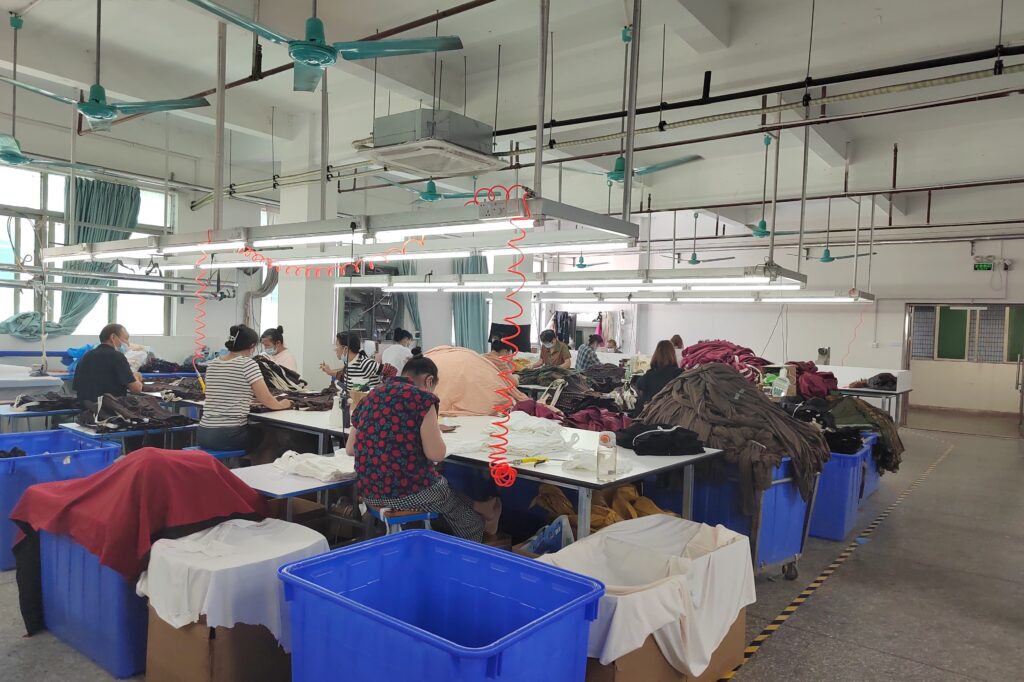
Final dress inspection follows a documented sequence: confirm the inspection lot and approved specifications, select representative garments, examine construction and appearance, verify measurements, test functional components, check labels and packaging, and record defects. Inspectors compare their findings with agreed acceptance criteria before reporting whether the lot can be accepted or requires corrective action.
How Are Inspection Samples Selected?
Sample selection begins by identifying the production lot. This means establishing exactly which garments are included in the inspection decision. A shipment may contain multiple styles, fabric batches, colors, sizes, and production origins, so the lot definition needs to reflect the agreed inspection procedure.
Random sampling is intended to reduce selection bias. Inspectors should not rely only on garments conveniently placed near the top of cartons or pieces chosen by production staff. The selection procedure must follow the approved plan and provide appropriate access to the defined lot.
Consider an illustrative shipment of 2,400 dresses comprising four colors and five sizes. If all inspected pieces come from one color, the results may fail to reveal problems concentrated in other colors or fabric batches.
However, simply dividing the sample equally among every color and size is not automatically statistically correct. The sampling plan may require separate inspection lots, stratification, or another defined selection method. The correct approach depends on the inspection objectives and the agreed rules.
Sample sizes should be established before inspection results are known. Selecting additional garments only after discovering a defect can change the statistical meaning of the inspection unless the plan specifically allows that procedure.
Jinfeng Apparel supports AQL inspection and customer-appointed third-party inspections for custom womenswear orders.
For complex orders involving multiple factories or separate manufacturing batches, lot identification is especially important. Clear records of where selected garments originated can help distinguish isolated quality problems from defects affecting a wider portion of production.
How Are Finished Dresses Checked?
An effective inspection follows a consistent sequence so that important garment details are not overlooked. Before examining the dress, the inspector should verify the style number, color, size, approved sample, technical requirements, and relevant customer inspection instructions.
The garment is then examined in a way that allows its construction and appearance to be assessed properly. Inspectors may begin with the front and back surfaces before checking the neckline, shoulder area, waist seams, side seams, closures, lining, and hem.
Visible construction details should be compared with the approved sample. Functional components should be operated to confirm that they work as intended. The finished garment should also be checked for stains, loose threads, damage, pressing marks, and other finishing problems.
A structured dress inspection may include the following checks:
Appearance: Fabric condition, color consistency, cleanliness, symmetry, and finishing.
Construction: Stitching, seam allowances, lining attachment, closures, and decorative components.
Measurements: Approved points of measurement, size identification, and applicable tolerances
Function: Zipper operation, fastening security, strap adjustment, and other required functions.
Packaging: Labels, SKU details, barcode accuracy, folding, and carton information.
When fitting is a significant quality requirement, the customer may specify additional mannequin or on-body assessment. Such checks should use agreed procedures and appropriate size references rather than subjective impressions.
Jinfeng Apparel’s garment-level inspection addresses measurements, appearance, construction, pressing, closures, linings, and labels.
Consistency is more important than speed. Repeatedly following the same inspection method helps inspectors detect recurring problems and makes findings easier to compare across sizes, colors, and production batches.
How Are Measurements Verified and Recorded?
Measurement verification should use the same points of measurement and garment positioning described in the approved technical pack. This is particularly important for dresses with elastic fabrics, asymmetric construction, complex bodices, or layered skirts.
For a conventional woven dress, inspectors may lay the garment flat and measure the relevant dimensions using a suitable measuring tape. The fabric should be positioned without unnecessary pulling or distortion, and measurement techniques should remain consistent between inspectors.
Stretch garments require extra care. If one inspector measures a bodycon dress while stretching the waist and another measures it relaxed, their readings may differ even when the garments are identical. The technical specification should therefore define the required measurement condition.
Suppose a brand approves a dress with a bust circumference of 90 cm and a tolerance of ±1 cm. The acceptable measurement range is 89–91 cm. If an inspected dress measures 91.4 cm, it exceeds the upper specification limit by 0.4 cm. The inspector should record the actual measurement, identify the deviation, and apply the agreed defect classification or disposition procedure.
Measurements should be documented numerically. Statements such as “slightly oversized” are less useful than a specific reading accompanied by the approved tolerance.
A complete inspection report should identify the purchase order, style numbers, colors, size range, lot quantity, inspection date, sampling method, approved references, and relevant inspection findings. Defect records should include descriptions, classifications, affected quantities, and photographs where appropriate.
Jinfeng Apparel maintains records covering material inspection, cutting checks, in-line inspection, measurement verification, garment inspection, rework, packaging, AQL inspection, and customer feedback. These records help connect final findings with production activities and make future corrective actions more effective.
How Does AQL Sampling Work?
AQL sampling evaluates a defined production lot by inspecting selected units under an agreed statistical sampling plan. The plan establishes the sample size and acceptance or rejection criteria based on factors such as lot quantity, inspection level, AQL value, and sampling procedure. It supports lot acceptance decisions without requiring every garment to undergo the same final random inspection.
What Are Critical, Major, and Minor Defects?
Defect classification determines how inspection findings are evaluated. The categories critical, major, and minor represent different levels of nonconformity, and each category may have its own acceptance requirements.
A critical defect normally involves an unacceptable safety hazard or another serious issue defined by the inspection agreement. An example could be an exposed sharp component capable of injuring the wearer. Certain regulatory nonconformities may also require critical treatment, depending on the applicable rules.
A major defect substantially affects the garment’s intended use, appearance, performance, or important product specifications. A zipper that cannot close, a significant measurement deviation, or a highly visible fabric defect may be classified as major.
A minor defect is generally a less significant deviation that does not materially affect ordinary use. Examples may include a removable loose thread or a small finishing imperfection outside prominent garment areas.
Defect classification should not rely solely on the physical size of the problem. A tiny sharp object may be much more serious than a large but harmless cosmetic variation.
For occasionwear, classifications should address the risks of the specific construction. A loose decorative component, displaced boning, or defective fastening may have different consequences depending on the dress design.
Jinfeng Apparel supports AQL inspections that distinguish critical, major, and minor defects according to customer requirements.
Inspectors should apply the agreed defect catalogue consistently. When a problem falls outside the established categories, the issue should be documented and clarified rather than classified arbitrarily.
How Are AQL Sample Sizes Determined?
AQL sample sizes are determined using the applicable sampling standard and the agreed inspection conditions. The lot size, inspection level, inspection type, and sampling scheme influence how many units must be examined.
AQL should not be interpreted as a fixed percentage of garments that can be defective. The sampling tables establish acceptance and rejection numbers for the selected plan. These numbers are not interchangeable with a simple percentage allowance for the entire shipment.
The current international reference is ISO 2859-1:2026, published in January 2026. It covers acceptance sampling by attributes and includes single, double, and multiple sampling arrangements, together with provisions for normal, tightened, reduced, and skip-lot inspection. The applicable edition and inspection plan should be agreed before inspection.
General Inspection Level II is commonly encountered in apparel inspection arrangements, but it should not be assumed to apply automatically to every production order.
AQL values such as 2.5 for major defects and 4.0 for minor defects are also familiar in apparel quality discussions. These are examples of possible contractual settings, not universal requirements or automatic acceptance limits for every dress order.
For a hypothetical 1,000-piece dress order, the inspector first confirms whether all 1,000 garments belong to the same inspection lot. The approved inspection level and sampling table are then used to determine the sample quantity.
The inspector should not choose a sample size simply because it is convenient or because an unrelated online example uses that number.
For multi-style or multi-color shipments, the lot definition is especially important. A large shipment containing several distinct dress styles may require separate sampling decisions to avoid concealing concentrated defects.
What Determines Pass or Fail?
The pass-or-fail decision is based on the agreed inspection plan and the number of defective units found in each relevant category. The inspector compares the observed results with the acceptance and rejection numbers specified by that plan.
The acceptance number, often written as Ac, identifies the maximum number of nonconforming units permitted in the sample for the particular inspection criterion. The rejection number, Re, identifies the count at which the lot is rejected under the applicable plan.
For example, consider an illustrative inspection sample in which the inspector identifies zero critical defective units, three major defective units, and four minor defective units. Those observations alone are insufficient to determine whether the order passes. The inspector must also know the approved sample size, AQL values, inspection conditions, and corresponding acceptance and rejection numbers.
Different combinations of these factors can lead to different decisions, even when the observed defect counts are identical.
An important distinction is that a sampled garment may contain more than one defect. Depending on the agreed procedure, the inspection may classify defective units, nonconformities, or both. The counting method must match the sampling plan.
AQL 2.5 does not simply mean that 2.5% of the shipment may be defective without consequences. It is an index used to select an acceptance sampling plan with defined statistical characteristics.
Passing an AQL inspection also does not establish that the entire shipment is defect-free. Sampling provides evidence for a lot-level decision while leaving a residual risk that defective units remain among uninspected garments.
For this reason, AQL results should be considered alongside in-line quality records, garment-level inspection findings, and any relevant testing or customer-specific requirements.
Is AQL the Same as Full Inspection?
AQL inspection is not the same as inspecting every garment. AQL sampling examines a selected portion of the defined production lot, while a full inspection evaluates every unit for the characteristics included in the inspection scope.
Both approaches have advantages and limitations. Sampling can reduce inspection effort while providing a structured basis for lot acceptance. It is particularly useful when the order quantity is large and the manufacturing process has already included appropriate preventive quality controls.
Full inspection can be appropriate when a customer requires every garment to be examined, when certain defects demand individual verification, or when a production issue makes additional screening necessary. However, full inspection is not a guarantee of perfect quality. Human error, inspection conditions, and limitations in the chosen test methods can still cause defects to be missed.
A dress may also undergo several types of inspection within the same production order. For example, the finishing team may check each garment for loose threads and visible stains, while a separate final inspection team performs random sampling to evaluate the completed lot.
Jinfeng Apparel’s quality-control process covers finished-garment checks and supports customer-requested AQL sampling. The two activities should be documented separately because their purposes and acceptance procedures are different.
Certain quality characteristics require additional methods. A visual inspection cannot reliably determine fabric fiber composition, colorfastness, or dimensional stability after washing. Laboratory testing or other specified verification may be necessary.
A dependable inspection arrangement therefore combines process controls, appropriate material testing, finished-garment assessment, and statistical sampling where required.
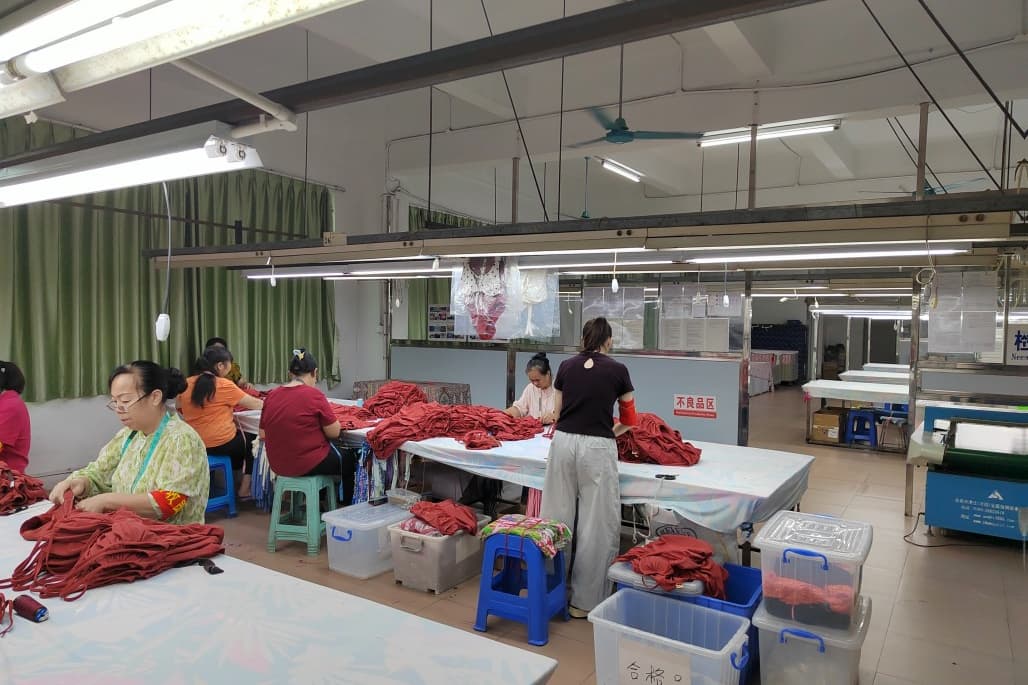
What Happens After Final Inspection?
After final dress inspection, the findings are reviewed against the agreed acceptance criteria. Conforming orders may proceed toward shipment approval, while defective garments may require repair, cleaning, sorting, replacement, or reinspection. Serious or repeated problems can lead to shipment being held. Inspection records and corrective actions are retained to support traceability and more consistent future production.
How Are Failed Dresses Corrected?
Corrective action depends on the type of defect, the fabric involved, the affected quantity, and whether the garment can be restored to the approved standard.
Some problems are straightforward to correct. Loose threads can often be trimmed, mild pressing problems may be resolved through controlled re-pressing, and incorrect barcode stickers can be replaced and verified.
Other defects require more extensive work. A faulty zipper may need repair or replacement, while a lining that extends below the intended hem may require alteration. Measurements outside the approved tolerance may need garment-level correction, sorting, or customer review.
Not every defect can be repaired successfully. A severe snag in satin, a damaged lace motif, or a hole in delicate mesh may leave a visible trace even after attempted repair. In such cases, removing the affected garment from the acceptable quantity may be more appropriate.
Jinfeng Apparel’s documented defect-handling process covers trimming, pressing correction, zipper repair, lining correction, label replacement, barcode verification, carton repacking, and the separation of unacceptable garments.
| Inspection Finding | Illustrative Quantity | Corrective Action | Verification |
| Loose threads | 12 dresses | Trim and clean | Appearance recheck |
| Zipper puckering | 6 dresses | Repair affected seams | Zipper and appearance check |
| Waist outside tolerance | 4 dresses | Assess and correct or segregate | Remeasure |
| Incorrect size labels | 20 dresses | Replace labels | Match garment to SKU |
| Wrong carton assortment | 2 cartons | Unpack and repack | Recount and verify |
The quantities are hypothetical and demonstrate corrective-action documentation rather than actual factory defect rates.
More important than the number of repairs is whether the underlying cause has been addressed. If numerous dresses show the same zipper problem, correcting individual garments without reviewing the sewing method may allow the defect to recur.
For larger production orders, corrective action should therefore include both treatment of affected garments and investigation of repeated manufacturing faults.
When Is Reinspection Required?
Reinspection may be required when the original lot fails the agreed acceptance criteria or when corrective work creates uncertainty about whether the finished goods now meet the approved requirements.
The reinspection scope should reflect the nature and distribution of the problem. A minor finishing issue affecting a clearly identified group of garments may require focused verification, while a widespread construction problem may require a broader reassessment.
For example, if an inspection identifies repeated oversized waist measurements, the factory should investigate whether the problem is limited to one size, one cutting batch, or the entire production lot.
Correcting only the dresses originally sampled does not demonstrate that all similar defects have been removed. Other units may contain the same problem.
When a statistical sampling plan is used, the reinspection procedure should follow the agreed rules. A failed AQL inspection cannot simply be converted into a passing result by repairing the original defective samples and ignoring the remaining lot.
The customer may require a fresh random inspection, expanded screening, or verification of corrective actions before shipment approval.
Jinfeng Apparel supports customer inspection, third-party inspection, and pre-shipment verification. The company’s quality-control records provide a basis for reviewing original findings and subsequent corrections.
Reinspection should also confirm that repair work has not introduced new defects. Replacing a zipper, for instance, should not create visible puckering, fabric damage, or a change in the garment’s dimensions.
A successful corrective process resolves the identified problem and provides reasonable evidence that the affected goods meet the approved acceptance requirements.
How Are Packing and Shipment Approved?
Packing and shipment approval require more than confirmation that the garments look acceptable. The finished products must also match the customer’s approved purchase order, size assortment, labeling instructions, packaging specifications, and shipping documentation.
A useful final verification compares three sources of information: the physical garments, the actual packed cartons, and the approved order records.
Consider a hypothetical order containing 1,200 dresses across three colors, with 400 pieces per color. If the approved carton quantity is 20 pieces, the shipment would require 60 fully packed cartons.
The inspector should verify that the total quantity is correct and that each carton contains the required style, color, size, and SKU assortment.
Carton marks should accurately identify the contents, including purchase-order information, style numbers, carton references, and other details required by the customer.
Barcode verification is particularly important for retail and ecommerce operations. A correct product with an incorrect barcode may create receiving errors, inventory discrepancies, or difficulties during order fulfillment.
Jinfeng Apparel’s packing QC covers label accuracy, barcode application, polybag specifications, folding, carton marking, color-size ratios, carton quantities, and shipment preparation.
Before final shipment release, unresolved inspection findings should be reviewed according to the agreed authorization process. A manufacturer’s internal approval does not automatically replace a customer’s required third-party acceptance or written release.
The final objective is consistency: the garments, packaging, cartons, and shipment documentation should all correspond to the same approved order.
How Are QC Records Maintained?
Quality-control records provide a traceable history of how a dress order was manufactured, inspected, corrected, and released. They are especially valuable for brands that produce seasonal collections, repeat successful styles, or manufacture similar garments across multiple production batches.
Jinfeng Apparel maintains records covering incoming materials, fabric batches, cutting, in-line inspection, measurements, finished-garment checks, corrective actions, packing, AQL inspection, customer inspections, and post-shipment feedback.
These records help determine where a problem originated. If a repeat order develops unexpected color variation, the production team can examine fabric approvals, batch information, and earlier inspection findings.
If a particular size repeatedly shows measurement deviations, reviewing historical patterns, grading files, and QC measurements may reveal whether the issue is related to design specifications or manufacturing consistency.
The value of these records extends beyond individual shipment approval. They allow manufacturers and fashion brands to preserve agreed quality expectations between production cycles.
For example, a brand producing a successful corset dress in several seasonal colors should not need to rediscover its original cup-positioning, boning, or fit requirements with every repeat order. Retained production references make those expectations easier to reproduce.
Jinfeng Apparel supports long-term brand cooperation, seasonal collection development, and repeat production while retaining relevant pattern, fabric, trim, measurement, and packing information.
Confidentiality is also important. Inspection records may contain unpublished designs, technical specifications, product photographs, or commercially sensitive production information. Such materials should be handled according to the agreed confidentiality requirements.
Final dress inspection is most valuable when it connects the approved design, actual production quality, corrective decisions, and delivery records. A reliable process helps brands understand not only whether an order passed inspection, but also how the manufacturer controls recurring risks and maintains consistency across future collections.
For fashion brands developing custom dresses, discussing quality expectations during sampling and pre-production approval can make final inspection more predictable. Clear measurement tolerances, agreed defect classifications, documented construction standards, and defined packing requirements reduce uncertainty when the finished garments are ready for shipment.
At Jinfeng Apparel, quality control is not limited to the last stage of production. It connects material selection, product development, pattern accuracy, sewing, garment finishing, packing, and final inspection. This integrated approach helps transform an approved dress design into a finished product that is more consistent, easier to verify, and better prepared for retail or ecommerce delivery.
Frequently Asked Questions
What Is Included in a Final Dress Inspection Checklist?
A final dress inspection checklist normally includes garment identity, measurements, stitching, seams, lining, fabric appearance, color consistency, functional trims, pressing quality, labels, and packaging. The exact checks depend on the dress style and material. A satin evening dress needs close attention to snags and pressing marks, while a corset dress requires additional checks of boning, cups, support components, and closures. The checklist should always reflect the approved technical pack and sample.
What Is the Difference Between Final Dress Inspection and Pre-Shipment Inspection?
Final dress inspection focuses on checking completed dresses against their approved product specifications. Pre-shipment inspection is a broader inspection activity that may include garment quality, order quantities, carton contents, labels, packaging, and shipment readiness. In many apparel orders, final garment checks form part of a pre-shipment inspection. However, the exact scope depends on the customer’s requirements and the inspection provider’s agreed procedure.
What AQL Is Commonly Used for Dress Inspection?
AQL values such as 2.5 for major defects and 4.0 for minor defects are frequently encountered in apparel inspection arrangements, but they are not mandatory values for every order. The appropriate plan depends on the agreed inspection standard, lot size, inspection level, defect classification, and acceptance criteria. Critical defects may have separate zero-acceptance requirements. Brands should confirm all AQL settings before production rather than assume that one combination applies universally.
Does Passing AQL Inspection Mean Every Dress Is Defect-Free?
No. AQL inspection uses statistical sampling to evaluate a production lot, so only selected garments are examined during the final random inspection. Passing the inspection means the observed results satisfy the acceptance criteria of the agreed sampling plan. It does not prove that every uninspected garment is free from defects. Preventive QC, garment-level checks, appropriate testing, and effective corrective action remain important parts of a complete quality-control system.
What Are the Most Common Defects Found During Final Dress Inspection?
Common defects include incorrect measurements, uneven hems, twisted side seams, zipper puckering, loose threads, fabric stains, holes, color variation, visible linings, and insecure decorative components. Different materials create different risks. Satin may develop snags or pressing marks, lace may have damaged motifs, mesh may become distorted, and sequin garments may lose decorations. Inspection priorities should therefore reflect the fabric, construction, and intended use of each dress style.
What Happens If a Dress Order Fails Final Inspection?
When an order fails final inspection, the manufacturer and customer review the findings and determine the appropriate corrective action. Depending on the defect, affected dresses may need repair, cleaning, replacement, sorting, or removal from the acceptable quantity. Reinspection may then be required to verify the corrected goods. Serious or repeated problems can lead to shipment being held until the agreed acceptance requirements have been satisfied.