Skip to content

Resort Dress Trends 2027: What Styles, Colors, Fabrics and Details Will Define the Season?

Your trusted Women’s Apparel Manufacturer from China
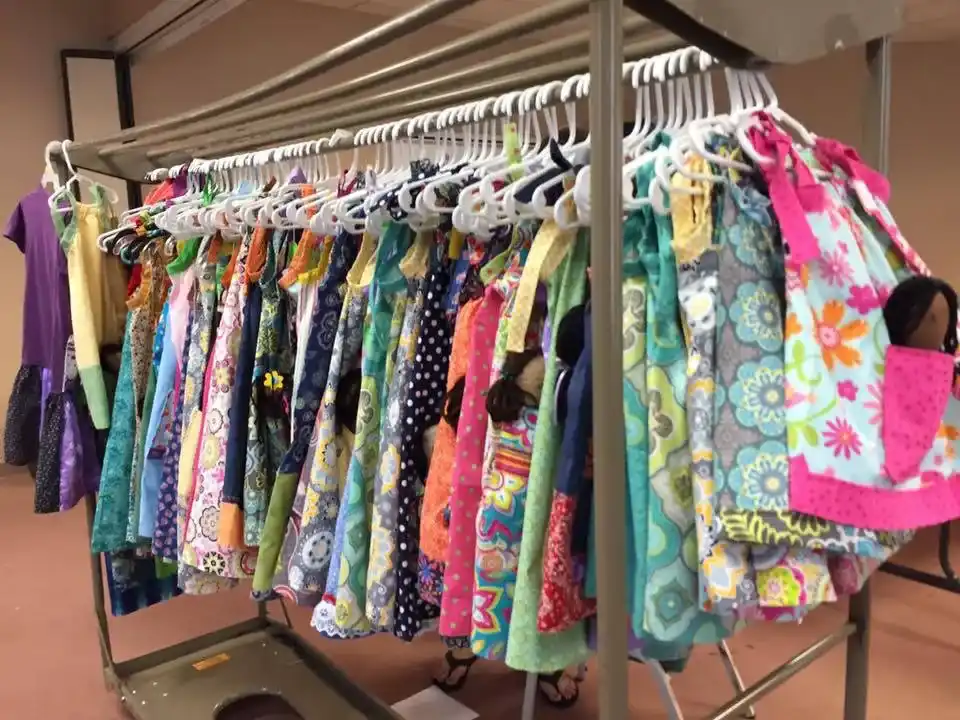
Resort fashion once had an easy visual formula: a tropical print, a loose maxi dress, flat sandals and a destination backdrop. Resort 2027 is becoming much harder to reduce to one image. Current collections are mixing vacation ease with sharper city dressing, fluid evening silhouettes, lingerie references, lowered waists, transparent layers, sculptural flowers and richer transitional colors. That shift reflects how people actually travel today. A resort dress may be packed for Mallorca or Bali, worn to dinner the same evening, photographed outdoors the next morning and then return home as part of a normal summer wardrobe. For designers and fashion brands, that makes the category more interesting but also more demanding. A beautiful dress must now balance visual impact with movement, coverage, packing, heat, fit and repeat wear. The strongest Resort 2027 ideas are therefore not simply dramatic runway moments; they are recognizable design signals that can survive real life.
The defining Resort Dress Trends for 2027 include fluid maxi and column silhouettes, renewed drop waists, halter and bandeau necklines, sheer layering, bias-cut shapes, dimensional florals, richer earthy colors, bright accents and artistic prints. The most relevant styles combine clear seasonal newness with practical comfort, secure fit and enough versatility to move naturally from daytime resort settings to dinners, destination events and city wear.
That combination of fashion and usefulness is what makes Resort 2027 worth watching closely. A dress may initially attract attention because of its silhouette, neckline or print, but the product that stays in a customer’s wardrobe is usually the one that also works when she walks, sits, travels and styles it in more than one setting. The difference between a short-lived image and a strong commercial dress often lies in details that are almost invisible until the garment is actually worn.
What Are the Key Resort Dress Trends for 2027?
Resort 2027 is being shaped by fluid silhouettes, lower waistlines, elongated columns, halter and bandeau necklines, sheer layering, expressive color and dimensional surface details. Rather than choosing between simplicity and decoration, many collections combine an easy base silhouette with one memorable feature, allowing dresses to feel directional without becoming difficult to wear or overly dependent on a single vacation setting.
Function Meets Fantasy
One of the clearest changes in Resort 2027 is the way practical dressing and decorative fashion are appearing in the same garment. Current collections do not suggest that customers must choose between an easy vacation dress and something visually memorable. Instead, designers are adding one or two expressive ideas—an unusual waistline, a rosette, transparent layering, a sculptural drape or an unexpected color—to silhouettes that remain recognizable and relatively easy to style. Vogue’s Resort 2027 overview reflects this mix of function, tactile interest, romantic decoration and stronger material expression.
This matters because resort dresses are rarely worn for only a few minutes. They may move through airports, hotels, restaurants, warm streets and outdoor events during the same trip. A dramatic neckline still needs to remain stable when the wearer moves. A long skirt has to allow a natural stride. A sheer layer needs a deliberate lining strategy. The most convincing 2027 trends are therefore the ones that create a visible reason to buy without turning the garment into something the customer constantly has to adjust.
A strong example is the return of dimensional floral details. A single rosette positioned at a shoulder, neckline or waist can make a simple dress feel noticeably newer without requiring heavy embellishment across the entire garment. The same logic applies to draping and asymmetry. One carefully engineered fold can give a familiar maxi a different identity, while keeping the overall product easy to understand in an ecommerce image and relatively straightforward to style.
Newness Through Proportion
Much of the newness in Resort 2027 comes from changing familiar proportions rather than inventing completely unfamiliar dress categories. Drop waists visually lengthen the torso. Column dresses reduce excess volume and create a long vertical line. Bias cuts follow the body without the compressed appearance of traditional bodycon construction. Halter and bandeau necklines expose the shoulders while allowing the skirt or body of the dress to remain fluid.
This approach has strong commercial logic because customers can recognize the product immediately while still seeing something different from previous seasons. A maxi remains a maxi, but a lower waist, asymmetric drape, sheer upper layer or narrower skirt can change its character. A slip dress becomes newer through neckline shape, print placement or hip construction rather than through excessive detailing.
Australian Fashion Week Resort 2027 showed this clearly through narrow columns, floating sheer whites, burgundy and reddish-brown tones, high halters, asymmetric draping and watercolor-like gradients. The repeated signals were not about one uniform trend; they were about elongation, movement, transparency, controlled exposure and more thoughtful use of color.
Resort 2027 Signal | How It Appears | Practical Translation | Main Development Risk |
Drop waist | Lowered seam or elongated torso | Mini, midi or maxi with lower waist placement | Waist-to-hip proportion across sizes |
Column shape | Long, narrow silhouette | Clean maxi or slim midi | Restricted stride or seat ease |
Halter neckline | Open shoulder and back | Day-to-night maxi or midi | Neck pressure and bust security |
Bandeau shape | Minimal upper-body coverage | Strapless midi or maxi | Downward movement and support |
Sheer layering | Chiffon, lace, organza or mesh | Lined body with transparent sections | Unplanned exposure |
Rosettes | Gathered or constructed flowers | Shoulder, neckline or waist detail | Shape recovery after packing |
Gradient print | Diffused or watercolor color | Statement maxi or slip dress | Placement consistency |
Deep brown tones | Burgundy, plum, mahogany | Transitional resort palette | Dye-lot variation |
Trend Signals That Travel
Resortwear is also becoming less geographically literal. The category no longer needs to look as if every customer is dressing for the same tropical island. Zimmermann’s Resort 2027 collection, for example, moved between vacation-ready cotton poplin, silk georgette, drop-waist dresses and more formal pieces, reflecting the fact that resort customers often move between warm destinations and city environments rather than dressing for a single setting.
That broader definition gives brands more room to create useful collections. A resort capsule does not need twelve variations of the same printed beach maxi. It can include a relaxed day dress, a slim column, a printed halter, a light dinner dress and one or two more directional styles used for campaign imagery. The group still reads as resort because the common language comes through fabric weight, movement, exposed shoulders, color, drape and ease rather than one repeated silhouette.
For Restless Sleepers has pushed this idea particularly far by presenting resort dressing as something that can move from city to shore and from morning into evening. Lightweight cottons, cotton-silk blends, voile, shirt dresses and long halter shapes are considered in relation to heat and daily movement rather than only traditional resort glamour. This more flexible interpretation is likely to have lasting value because it gives customers more reasons to wear the product after the holiday has ended.

Which Silhouettes Will Define Resort Dresses in 2027?
Fluid maxis, slender column dresses, bias-cut shapes, drop-waist dresses and softly body-skimming silhouettes are defining Resort 2027. Halter, bandeau, strapless and open-back necklines add seasonal impact. The most successful versions preserve elongated proportions and visual lightness while providing enough movement, bust stability, hip ease and practical coverage for real-world wear.
Fluid Maxis and Columns
The maxi remains central to resortwear because few silhouettes communicate movement and destination dressing as efficiently. What is changing is its construction. Resort 2027 is moving beyond the assumption that a maxi must be wide, tiered and obviously bohemian. Narrow columns, asymmetric drapes, bias-cut slips and long halter shapes are giving the category a cleaner and more sophisticated appearance.
At Australian Fashion Week, slender columns appeared in forest green, turquoise, dusty pink and saturated blue, using draping, chiffon, ruching and fringe to prevent the vertical silhouette from feeling rigid. The effect was long and controlled rather than oversized, proving that a resort dress can retain movement without depending on excessive skirt volume.
From a product-development perspective, a column dress looks simple but exposes pattern mistakes quickly. The narrower the line becomes, the more visible twisting, side-seam movement, seat restriction and uneven hems will be. A woven column needs enough ease to sit and walk naturally, while a stretch column requires sufficient recovery so that the garment does not bag around the seat or knees after several hours of wear.
Long dresses also need to be assessed in motion. Hem sweep, slit height and fabric weight all influence stride. A maxi that looks excellent when the model stands still may become inconvenient when she climbs stairs or walks quickly. If the skirt is intentionally narrow, a back or side slit can restore movement, but the slit position then becomes an important coverage and fit decision rather than merely a decorative detail.
Drop Waists and Necklines
Drop waists are one of the clearest proportion changes for Resort 2027. Chanel, Tory Burch, Zimmermann and other collections have interpreted lowered waist placement in different ways, connecting the season to 1920s references without requiring literal historical reproduction. The important effect is visual: lowering the waist can make the torso appear longer and create a completely different relationship between bodice and skirt.
A drop waist affects far more than the location of one seam. It changes where fullness begins, how fabric falls over the upper hip and how long the torso appears. Moving the seam only a few centimeters can make the same pattern look noticeably more youthful, relaxed or elongated, especially when the lower section introduces volume.
The challenge becomes more technical when the style is graded into several sizes. The position that looks balanced on a sample-size body does not always translate automatically to a broader size range because hip circumference, torso length and body proportion change. Front, side and back fitting should therefore be assessed together rather than treating the lowered waist as a decorative line that can simply be scaled proportionally.
Halter and bandeau necklines introduce a different structural problem. A conventional sleeved dress uses the shoulder to stabilize much of the garment. A halter transfers more tension toward the neck, underarm and upper back, while a bandeau or strapless bodice must resist downward movement. Halter construction in particular needs to consider neck pressure, bust coverage, underarm exposure and back stability as one connected system.
Movement and Fit
The most useful way to evaluate a Resort 2027 silhouette is to stop treating fit as a static front-view exercise. A resort customer walks, sits, turns, reaches, climbs stairs and may wear the same dress for several hours in warm weather. Each movement can expose problems that remain invisible in a traditional fitting photograph.
With halters, strap length and underarm shape influence security. A small change in strap length can move the entire neckline lower on the bust. With open-back dresses, the side seams and waist often carry more responsibility for keeping the front stable. With drop waists, the seam needs to sit cleanly over the upper hip without creating pulling or unnecessary volume.
Column dresses need stride testing, bias dresses need twisting and length checks, and bandeau styles should be tested for downward movement. Sheer layered dresses deserve particular attention because the shell and lining may separate while walking, revealing considerably more than they do when the wearer stands still.
Brands that already have successful fit blocks can work more efficiently by adapting them rather than rebuilding every trend from zero. A proven bodice can receive a new neckline. A familiar maxi block can accept a lower waist, new slit or different skirt treatment. Trend details can change rapidly, but the underlying fit language of a successful brand should usually remain more stable.
Which Colors and Prints Are Trending for Resort 2027?
Resort 2027 combines deeper earthy colors with familiar warm-weather brightness. Burgundy, mahogany, reddish brown, ivory, white and black sit beside lemon yellow, acid green, turquoise, blue and softer pastels. Florals remain relevant, but gradients, watercolor effects, abstract artwork and dimensional botanical treatments are giving collections stronger alternatives to conventional tropical prints.
Earthy Neutrals and Brights
One of the more interesting 2027 changes is that warm-weather dressing is becoming darker without necessarily becoming visually heavy. Burgundy, plum, tobacco and reddish brown are appearing as credible resort colors rather than being reserved automatically for autumn or winter.
Australian Fashion Week Resort 2027 identified burgundy and reddish brown as important new neutral directions, with mahogany, plum and related colors appearing across fluid dresses and separates. In contrast, Tory Burch used lemon yellow and acid green to demonstrate that high-energy color still has a strong place in the season. The result is not a replacement of brights but a broader palette in which brighter tones coexist with deeper, more sophisticated shades.
This combination creates useful merchandising flexibility. A darker color can extend a resort dress into city wear, dinners or transitional-season selling, while a vivid color can carry campaign imagery and provide instant recognition online. The same silhouette can therefore perform different commercial roles simply through color.
Fabric should always be considered at the same time. Burgundy satin reflects light differently from burgundy rayon. Lemon chiffon feels softer and more translucent than lemon cotton. White remains powerful because it communicates warm-weather freshness immediately, but lightweight white fabrics expose seam allowances, lining transitions and undergarments more readily in strong daylight.
Florals, Gradients and Graphics
Florals are not disappearing from resortwear, but they are being challenged by more varied approaches to surface design. Botanical ideas are becoming larger, more dimensional and more deliberately positioned rather than appearing only as conventional all-over prints.
Cecilie Bahnsen’s Resort 2027 collection enlarged embroidered rose motifs until they became both texture and image, while Dior has used three-dimensional floral forms and chiffon rosettes to create a more sculptural interpretation of the same broader theme. These examples show that flowers can function as construction and surface treatment rather than only as printed artwork.
At a more commercial level, a floral can feel new through scale, placement or negative space. An oversized bloom concentrated near the hem creates a different effect from a dense small repeat. A border motif can frame a long dress without covering the whole surface, while a single engineered flower across the bodice can become the product’s defining image.
Gradients and watercolor treatments are another meaningful direction. Australian Resort 2027 collections used diffused transitions through sage, tan, pink, lavender, blue, terracotta and copper tones, providing a softer alternative to sharply repeated motifs. These effects suit resortwear particularly well because they suggest movement and atmosphere without tying the garment to one specific destination.
Building a Color Story
A strong resort collection does not need every trend color. Trying to include all of them usually weakens the overall assortment because the products begin competing rather than supporting one another.
A more practical approach is to divide colors into different roles. Core shades provide continuity and can appear across several silhouettes. Seasonal shades refresh the range while remaining relatively wearable. Statement colors and prints provide campaign impact and can be used more selectively.
For an illustrative 12-style capsule, a brand might place four or five styles across a core neutral family, three or four in seasonal shades, and reserve the remaining styles for stronger prints or accent colors. That is not an industry rule or market-share recommendation; it is simply a useful way to prevent every product from carrying the same visual intensity.
Color planning also affects repeat orders. Solid fabrics are often easier to replenish than complicated engineered prints because artwork, base fabric, color approval and placement introduce additional variables. If a silhouette has strong repeat-order potential, developing at least one commercial solid alongside a more directional print can make the product easier to extend into additional deliveries or future seasons.
The best color stories also connect several silhouettes. When a burgundy halter dress, ivory maxi and watercolor midi share related undertones, the assortment feels intentional even though the individual garments are different. That cohesion matters particularly online, where customers usually encounter a collection as a visual grid before reading any detailed product description.
Which Fabrics and Details Matter Most in 2027 Resort Dresses?
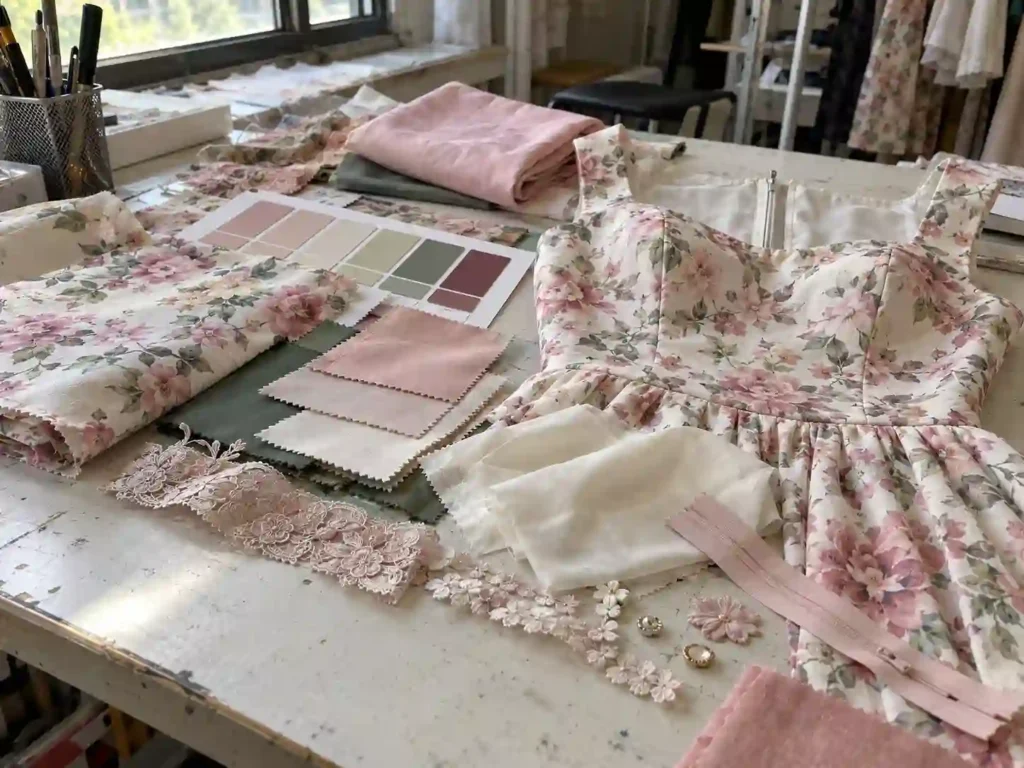
Resort 2027 favors fabrics that create movement, lightness and surface interest, especially chiffon, rayon, viscose, linen, printed wovens, lightweight satin, lace, organza, tulle and selective mesh. The important consideration is not simply softness. Transparency, shrinkage, wrinkle recovery, lining, print direction, drape and packing behavior determine whether the fabric remains attractive after travel and repeated wear.
Lightweight Fabrics
Resortwear places unusual pressure on fabric because appearance and comfort are equally visible to the customer. The material has to create the intended silhouette, but it may also need to perform in heat, survive folding, recover after travel and remain comfortable when worn for long periods.
Chiffon continues to work well for fluid maxis, layered skirts and ruffles because relatively little weight can create significant visible movement. Its main challenge is transparency. A chiffon dress that looks beautifully light in photography still needs deliberate decisions about lining length, shell opacity and seam finishing.
Rayon and viscose are useful when the design needs softer, more natural drape. They work particularly well for wrap dresses, printed maxis and relaxed halter silhouettes. Their dimensional behavior deserves attention, however, because shrinkage or relaxation can change finished length and fit, especially in longer dresses.
Linen delivers one of the clearest premium-resort signals because breathability, texture and natural irregularity suit the category well. The trade-off is wrinkling. The goal is usually not to make linen behave like a crisp synthetic fabric but to control excessive distortion while accepting some relaxed surface texture as part of the product’s character.
Light satin moves resortwear toward dinner and occasion use. Its reflective surface can make a simple slip or halter feel more polished, but it also exposes pressing marks, seam puckering, snagging and grain inconsistency quickly. Fabric selection therefore needs to be evaluated on the specific material and construction rather than on fiber names alone.
Fabric | Typical Resort Strength | Main Risk | Important Development Check |
Chiffon | Light movement and layered maxis | Transparency and hem imbalance | Shell and lining opacity |
Rayon | Soft printed day and maxi dresses | Shrinkage and creasing | Wash or steam response |
Viscose | Fluid, skin-friendly drape | Dimensional and hand-feel variation | Bulk fabric comparison |
Linen | Breathable premium daywear | Wrinkle and shrinkage | Packing and pressing recovery |
Printed woven | Strong visual storytelling | Direction and placement | Cutting orientation |
Light satin | Elevated day-to-night dressing | Snagging, shine and creasing | Grain and pressing control |
Mesh | Transparent layering | Holes and unstable edges | Opacity, stretch and seam finish |
Lace | Romantic overlays | Motif alignment and exposure | Placement and lining |
Sheer Layers and Linings
Sheer dressing is one of the season’s most visible directions, but commercial transparency is usually more controlled than runway transparency. Chiffon, lace, organza, tulle and mesh are increasingly used to create depth, movement and selective exposure rather than turning the entire dress into one transparent layer.
The first development question should be simple: what is intentionally visible? A transparent sleeve over bare skin is straightforward. A sheer skirt over a short lining needs more judgment because the lining creates a strong visible break across the leg. A transparent bust panel needs to be considered in relation to underwear, body movement and photography.
Light colors amplify these issues. White, cream and pale pastel fabrics may appear significantly more transparent outdoors than they do under indoor fitting-room light. For ecommerce-focused products, testing only under studio lighting is therefore not enough. Direct daylight can reveal lining edges, seam allowances and coverage problems that otherwise remain hidden.
Lining needs to support the outer fabric rather than overpower it. A heavy lining under chiffon can destroy movement, while a narrow lining beneath a wide shell can restrict walking. The lining color can also materially change how the outer layer appears.
Mesh shows why broad fabric labels are not enough. Internal fabric references used for resort development place common garment mesh around 40–120 gsm, with transparency, stretch and lining requirements varying considerably within that range. A specification that simply says “mesh” therefore leaves too many product decisions unresolved.
Texture Without Excess
Resort 2027 contains plenty of decoration, but one of its more useful commercial lessons is that visual richness does not require covering the entire garment.
Rosettes are a strong example. Dior has used chiffon floral forms, while Tory Burch has worked with gathered rosettes and embroidered ribbon. Alberta Ferretti has also explored floral impressions through spiraling seams and ruching rather than relying solely on applied embroidery. These examples demonstrate how garment construction itself can become decoration.
This approach is especially useful when a brand wants high perceived design value without unnecessary weight. A seam can spiral around the hip, a gathered panel can form a flower, or controlled ruching can provide texture while simultaneously shaping the body.
Fringe, pleating, embroidery and layered ruffles can achieve similar results when they are used selectively. The important design decision is identifying which detail carries the product. If long fringe is the hero element, the neckline can stay quieter. If the shoulder holds a large flower, adding another dominant detail at the waist may reduce rather than increase visual impact.
Decoration also needs to survive logistics. A rosette that looks perfect on a dress form may flatten in a polybag. Fringe can tangle, organza can crease sharply, and beads positioned under the arm can irritate the wearer. A useful development sample therefore needs to be evaluated after folding and packing, not only immediately after sewing.
Which Resort 2027 Trends Are Most Wearable and Commercial?
The most wearable Resort 2027 trends include fluid maxis, refined columns, halter dresses, controlled drop waists, lightweight layering, artistic prints and selective texture. They create visible newness without forcing uncomfortable styling. Commercial strength improves when a dress has secure coverage, reasonable travel performance, day-to-night versatility and enough pattern stability to support additional colors or repeat orders.
Day-to-Night Utility
Commercial resort dressing increasingly sits between traditional categories. A dress may not be purely beachwear, cocktail, casual or evening. That ambiguity can be useful because it gives the customer more opportunities to wear the product.
A printed halter maxi can work for lunch with flat sandals and for dinner with jewelry. A slim black column can be styled for a city restaurant before or after a holiday. A white linen midi can cover sightseeing, breakfast and a relaxed social event without looking out of place in any of them.
Small construction choices create much of that flexibility. A cleaner neckline can make a casual fabric feel more polished. Adjustable straps can improve fit for different bodies. A more thoughtful lining can move a sheer dress from beach-only styling toward dinner wear. A well-positioned slit can improve movement while retaining an elongated silhouette.
The strongest commercial styles make a second and third wearing occasion easy to imagine. When customers immediately understand several possible uses for one dress, the product can feel more valuable because it is not dependent on a single trip or event.
This is also why Resort 2027 is moving away from highly literal destination dressing. The more successfully a product works after the customer has returned home, the more durable its commercial value becomes.
Travel Performance
Resortwear has one practical challenge that many other dress categories can partly ignore: a significant proportion of the product is likely to spend time folded.
That makes packing behavior part of product quality. Rayon, viscose and linen can crease. Satin may develop pressure lines. Structured organza flowers can flatten. Long chiffon skirts can become compressed at the hem, while decorative fringe may tangle.
None of these characteristics automatically make a material unsuitable. The important issue is understanding the behavior before launch and designing around it.
A useful development simulation is straightforward. The approved sample can be folded using the intended commercial packing method, left under realistic pressure and then reopened for review. The team can assess where creases form, whether dimensional decoration recovers, whether fringe requires manual attention and whether the garment would need significant steaming before wear.
This is not a replacement for formal laboratory testing, but it answers a practical customer-experience question. Resort/Vacation product-development records also identify easy packing, wrinkle behavior, folding recovery, long-dress movement, transparency and shrinkage as relevant control points for this category.
Heat matters as well. Lightweight cottons, voile, rayon, viscose and linen are not merely aesthetic choices; they influence how a garment feels in warm destinations. A dress can look completely appropriate for resortwear and still perform poorly commercially if the material becomes unpleasant after an hour in high temperatures.
Retail Risk and Repeatability
Fashion-forward and commercial are not opposites. Commercial success often comes from placing fashion risk in the right part of the garment.
A highly unusual print can sit on a familiar silhouette. A new drop waist can be introduced first in a manageable solid fabric. A dimensional flower can be attached to an otherwise clean slip. This allows the customer to understand most of the product immediately while still seeing something worth noticing.
Fit tolerance is another consideration. Strapless and bandeau dresses can create strong imagery but offer less room for fit error. Complicated cut-outs create similar risk because their position changes relative to the body as sizes increase. An adjustable halter or wrap silhouette may tolerate more body variation while still looking directional.
Repeatability matters because the commercial value of a strong dress does not end with the initial order. If a style performs well, the brand may want a second color, another print or an additional delivery. The underlying pattern and construction should therefore be stable enough that the product can be repeated without beginning the entire development process again.
A balanced collection can contain several roles at once: a few highly directional image-makers, fashion-led commercial styles and dependable shapes intended for broader volume. The exact mix varies by brand and price point, but defining those roles before sampling helps prevent every product from being judged by the same commercial standard.

How Do Brands Turn Resort 2027 Trends Into Production-Ready Dresses?
Brands turn Resort 2027 ideas into reliable products by identifying the essential design feature, validating fabric behavior, developing the pattern, testing fit in movement, approving the correct pre-production sample and creating product-specific QC checkpoints. Transparency, shrinkage, print direction, neckline stability, hem balance, packing and size consistency should be resolved before bulk production rather than discovered after garments are completed.
Edit Before Sampling
The biggest mistake at the start of trend development is treating the reference image as a complete specification.
A runway photograph may contain a low waist, an unusual neckline, transparent bodice, sculptural floral detail and oversized skirt all at once. The development team first needs to determine which element actually creates value for its customer.
If the drop waist is the central idea, the neckline can be simplified. If the gradient print is the main selling feature, the silhouette may remain cleaner. If customers are responding to floral texture, a localized rosette may capture the effect without reproducing every complex detail from the original inspiration.
This editing process protects both design identity and development efficiency. It also helps with costing because the team can distinguish essential elements from details that add complexity without creating enough perceived value.
Fabric should then be evaluated against the desired visual behavior. A silhouette that depends on fluid drape needs a material capable of producing it. A bandeau requiring strong hold cannot be built successfully from every lightweight material without added structure. A heavily gathered flower can distort very fine chiffon if the method of attachment is not considered early.
The production brief therefore needs more than a sketch. Length, waist position, neckline, back exposure, transparency, lining, print direction, closure and the hero detail should all be understood before development moves too far.
Fit and PP Approval
Sampling exists to replace assumptions with physical evidence. The first sample shows whether the design concept and pattern work together. A revised or fit sample addresses proportion and construction problems. A photo or salesman sample may focus on presentation, while the pre-production sample establishes the materials, measurements, construction and finishing expected in bulk production.
Those stages should not be treated as interchangeable. A beautiful photo sample can include individual adjustments that would be unrealistic to repeat across thousands of garments. Before production, those adjustments need to become stable pattern or construction instructions.
Resort dresses deserve particular attention around neckline stability, straps, underarm coverage, waist placement, lining length and hem balance. Fit sessions should include sitting and walking rather than only static front, side and back views. Bias garments should be allowed time to settle before final hem approval, while halters and bandeaus need movement testing to confirm that the neckline stays where it is intended.
Version control becomes even more important when a collection contains multiple styles. One documented European resortwear project developed with Jinfeng Apparel included 15 chiffon, rayon and printed resort-dress styles totaling around 18,000 pieces. The project required control of fabric transparency, maxi hem balance, print direction, shrinkage and packing creases, with first, revised, salesman and PP sample stages used before production.
Development Gate | Primary Decision | What Should Be Confirmed | Risk If Left Until Bulk |
Trend edit | What makes the style new? | Hero feature and target customer | Unfocused or over-designed sample |
Fabric review | Can the material deliver the effect? | Drape, opacity, stretch, shrinkage, wrinkles | Fit changes after substitution |
First sample | Does the design work physically? | Proportion and basic construction | Major correction later |
Fit revision | Can the wearer move comfortably? | Bust, waist, hip, strap, neckline, hem | Fit complaints or returns |
PP sample | Can production repeat the garment? | Final fabric, trims, measurements and finish | Bulk differs from approved sample |
Bulk QC | Is production consistent? | Product-specific measurement and visual checks | Variation between units |
Packing review | Does the dress arrive well? | Fold, crease, embellishment and hem recovery | Poor customer first impression |

QC for Resort Dresses
Quality control is most effective when it follows the actual risk profile of the product. A chiffon maxi does not need exactly the same priorities as a structured satin bandeau. The chiffon style requires more attention to transparency, lining length, seam puckering and hem balance, while the bandeau needs stronger control of upper-edge stability, zipper behavior and bust fit.
Printed styles require print-direction checks, especially where motifs are large or directional. Engineered gradients need additional attention because the visual transition should remain reasonably consistent as pattern pieces change across sizes.
Rayon and viscose products require dimensional awareness because shrinkage or relaxation can affect both fit and length. Long dresses amplify small dimensional changes because the difference becomes more visible over a floor-length silhouette.
Halter styles should be checked for strap symmetry and attachment security as well as final length. Backless dresses need stable side seams and upper edges. Sheer garments need deliberate lining checks, while light colors require stronger cleanliness control because handling marks are easier to see.
Woven resort-dress production controls commonly include waist position, hem balance, lining length, zipper flatness, print direction, panel direction and bulk measurement consistency.
Final inspection should also include presentation after packing. Long hems should not be crushed unnecessarily, dimensional flowers should retain their shape, fringe should not become heavily tangled and delicate satin surfaces should be protected from rough contact. The garment the customer receives is not the one hanging perfectly beside the production line; it has already been folded, packed, shipped and stored, so that journey deserves to be considered part of product quality.
Resort 2027 is not pointing toward one uniform dress. Its strongest direction is a shared attitude: lighter, more adaptable clothing with enough design character to feel worth noticing. Drop waists, columns, halters, fluid maxis, transparency, rosettes, gradients and richer color stories give designers a wide set of visual tools, but the longer-lasting opportunity lies in how those ideas are translated into garments people genuinely want to wear.
A successful resort dress brings trend relevance, fit, fabric, movement and real-life use together. The important decisions often happen long before the customer sees the final product: selecting a fabric that supports the silhouette, correcting a neckline before grading, controlling print orientation, confirming lining under daylight, balancing a maxi hem and testing how the garment looks after packing. When those details are resolved early, Resort 2027 can deliver something more valuable than a seasonal fashion image—a dress that feels current when it launches and remains useful long after the holiday ends.
What are the biggest Resort Dress Trends for 2027?
The strongest Resort Dress Trends for 2027 include fluid maxi dresses, elongated column silhouettes, lower waistlines, bias-cut shapes, halter and bandeau necklines, transparent layering, dimensional floral details and artistic prints. Color is also becoming broader, with burgundy, mahogany and softer earthy tones appearing beside white, citrus shades, blues and pastels. The overall direction favors visual freshness without sacrificing movement, comfort or versatility.
Are maxi dresses still in style for Resort 2027?
Yes. Maxi dresses remain one of the most important resort categories, but the silhouette is becoming more varied. Alongside full and flowing skirts, Resort 2027 is introducing narrower columns, bias-cut maxis, halter silhouettes, asymmetric draping and layered transparent constructions. The key change is that a maxi no longer needs obvious bohemian volume to feel resort-ready; cleaner and more elongated shapes are increasingly relevant.
What colors are trending for Resort Wear in 2027?
Resort 2027 color ranges from deep, sophisticated neutrals to energetic summer accents. Burgundy, plum, mahogany and reddish brown are becoming stronger alternatives to conventional resort neutrals, while white, ivory and black remain important foundations. Lemon yellow, acid green, blue and turquoise provide brighter accents. Many collections also use pastel shades and watercolor-like transitions, allowing brands to mix seasonal freshness with colors that can continue into city and transitional dressing.
Are floral resort dresses still trending in 2027?
Floral dresses remain relevant, but the way flowers are used is changing. Conventional all-over prints now sit beside oversized botanical motifs, border prints, embroidery, rosettes and three-dimensional floral construction. This gives brands more ways to use a familiar resort theme without making every dress look traditionally tropical. Florals with unusual scale, placement or texture are particularly effective when a collection needs recognizable femininity with a more contemporary visual identity.
What fabrics work best for Resort Dresses in 2027?
Chiffon, rayon, viscose, linen, lightweight satin, printed woven fabrics, lace, organza, tulle and selected mesh constructions are all useful for Resort 2027. The best choice depends on the silhouette and wearing situation. Chiffon gives movement, rayon and viscose provide fluid drape, linen offers breathability, and satin creates a more polished dinner look. Transparency, shrinkage, wrinkles, lining and packing behavior should always be checked before bulk production.
How should brands develop a Resort 2027 dress collection?
A strong development process begins by identifying which trend features matter most to the intended customer rather than copying every element from runway references. Fabric behavior should then be validated before the pattern is finalized, followed by first samples, fit revisions and a pre-production sample that establishes the bulk standard. Product-specific QC should focus on neckline stability, transparency, print direction, shrinkage, hem balance, movement and packing according to the design.
What makes a Resort 2027 dress commercially wearable?
A commercially wearable Resort 2027 dress usually combines one clear fashion message with a familiar and comfortable wearing experience. The trend signal may come from a drop waist, halter neckline, gradient print or rosette, while the rest of the garment provides secure coverage, comfortable movement and understandable styling. Dresses become more valuable when customers can imagine wearing them across several situations, such as resort lunches, dinners, destination events and everyday summer occasions.
Share This Article :

Jerry Lee
Categories

Latest blogs

Table of Contents
Here, developing your OEM/ODM private label clothing collection is no longer a challenge—it’s an excellent opportunity to bring your creative vision to life.