Skip to content

Finding a long list of dress factories is not difficult. Search engines, trade fairs, sourcing platforms, social media, and referrals can produce dozens of names in an afternoon. The difficult part is deciding which factories deserve access to your technical files, sample budget, launch calendar, and future order volume. A polished website may hide weak pattern capability, while an inexpensive quotation may exclude the lining, structure, inspection, or packaging your collection actually requires.
To build a reliable dress manufacturer shortlist, define the product and commercial requirements first, identify factories with relevant dress experience, verify their production model, compare pattern and sample capability, review quality and compliance evidence, normalize quotations, and score every candidate against the same weighted criteria. Only the strongest candidates should proceed to paid samples, audits, or pilot production.
Consider two factories quoting the same satin cocktail dress. One returns a price within an hour and says production is easy. The other asks about fabric weight, lining, bust support, zipper construction, seam puckering, pressing, shade direction, and carton packing before confirming cost and lead time. The first response feels faster. The second reveals a team already thinking about the defects that can ruin a launch. A disciplined shortlist helps you recognize that difference before a deposit is paid.
What Should You Define Before Shortlisting Manufacturers?
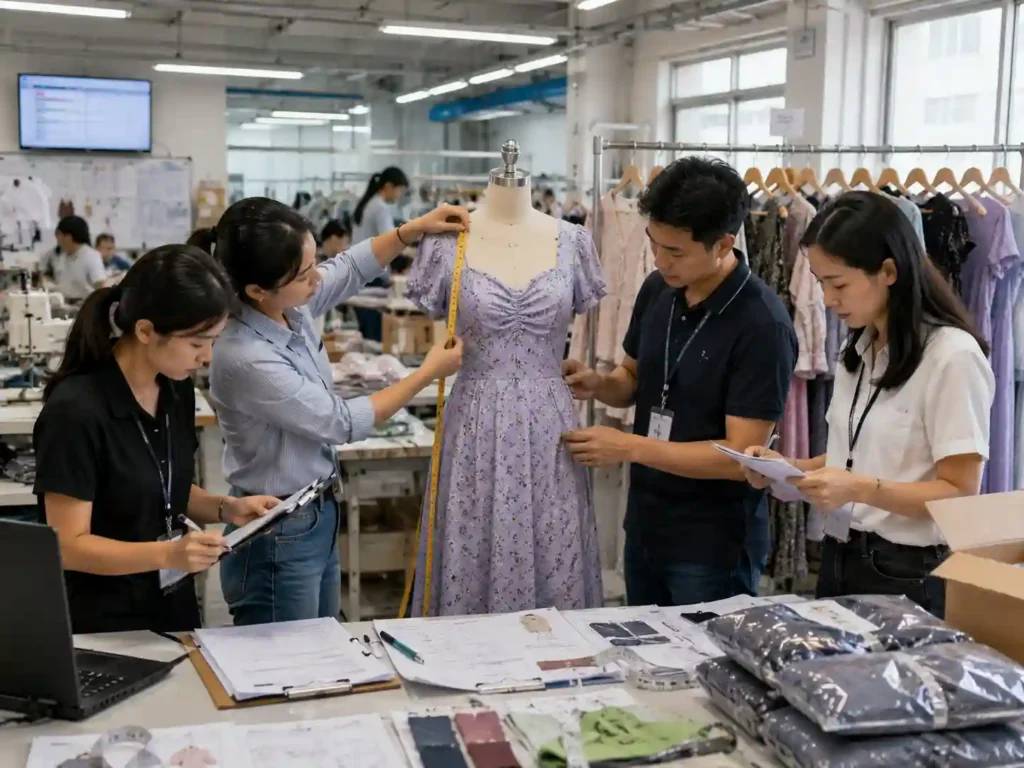
A reliable shortlist begins with a controlled sourcing brief. Define the dress categories, fabrics, construction, size range, order quantity, quality level, target cost, development support, packaging, and delivery window before comparing factories. Without this baseline, suppliers will make different assumptions, making their prices, MOQs, lead times, and capability claims impossible to compare fairly.
Product Scope
“Women’s dresses” is too broad to function as a useful manufacturing brief. A factory that performs well with rib-knit bodycon styles may have little experience with bias-cut satin, fully lined chiffon, boned corsetry, lace placement, or sequin eveningwear. Divide the collection into practical manufacturing groups, such as stretch fitted dresses, lightweight woven dresses, structured occasionwear, embellished party dresses, and resort styles. This makes it easier to identify which skills, machinery, sample teams, and quality controls each group requires.
The shortlist should be built around the most technically demanding commercial styles, not the easiest basic pieces. A stretch-mesh mini dress depends on recovery, negative ease, lining compatibility, and elastic seams. A satin slip dress requires grain control, fine seam construction, pressing discipline, and shade consistency. A structured evening dress may involve cups, boning, interlining, reinforced closures, and several lining layers. When a supplier cannot explain the risks in these core styles, it should not be selected merely because it can produce simpler products.
| Requirement | What to Define | Practical Reason |
| Dress category | Mini, midi, maxi, bodycon, corset, occasionwear, resort, party | Identifies the relevant production specialization |
| Fabric | Composition, weight, stretch, finish, color, lining and opacity | Changes cost, sewing method, MOQ and lead time |
| Construction | Boning, cups, underwire, ruching, pleats, draping, cut-outs | Reveals pattern and sewing difficulty |
| Sizing | Target market, base size, full range and grading rules | Affects fit blocks, pattern balance and consumption |
| Order structure | Units per style, color, size and delivery batch | Determines line efficiency and material planning |
| Quality | Tolerances, workmanship standard and inspection method | Prevents suppliers from pricing different quality levels |
| Branding | Labels, hangtags, barcode, bags, inserts and carton marks | Adds separate development and packing controls |
| Timing | Sample deadline, approval date, ex-factory date and ship date | Tests whether the overall calendar is realistic |
Technical Baseline
A complete tech pack is ideal, but early qualification can begin with a disciplined product brief. Give every manufacturer the same information about silhouette, fabric, lining, internal structure, trims, measurements, colors, size range, quantities, labels, packaging, inspection expectations, and delivery destination. The goal is not to lock every design decision too early. It is to prevent one supplier from pricing a basic interpretation while another prices the fully developed garment you actually intend to sell.
Separate fixed requirements from flexible preferences. A secure strapless neckline, opaque coverage, target skirt length, or required measurement tolerance may be fixed. The exact fiber blend or trim source may remain open if an alternative achieves the required drape, recovery, appearance, durability, and cost. This distinction invites useful technical input without allowing the product to drift away from the intended design. It also helps experienced manufacturers suggest practical fabric or construction changes while keeping the collection commercially recognizable.
Commercial Boundaries
Define order quantities by style and color rather than presenting only the total collection volume. Three thousand garments split across fifteen styles and four colors create a very different workload from three thousand units of one style in two colors. Color changes, small cutting bundles, multiple size ratios, separate labels, and repeated line setups reduce efficiency. Manufacturers need this detail to evaluate material minimums, line allocation, labor content, and realistic delivery dates.
Provide a sensible target-cost range when one exists, but avoid forcing a number that can only be reached through silent quality reductions. Clarify whether sampling, pattern development, fabric testing, third-party inspection, labels, packaging, freight, and duties are expected inside or outside the quoted price. Establish unacceptable conditions before discussions begin, including unapproved subcontracting, unclear payment entities, missing pre-production approval, or production schedules that leave no inspection time. These boundaries prevent enthusiasm about a low opening quote from weakening the final decision.
Service Model
Determine whether the project needs detailed OEM execution, broader ODM development, or a combination of both. In a controlled OEM program, the brand may provide the tech pack, measurement chart, fabric specification, artwork, labels, and packing instructions. The manufacturer then reviews feasibility, develops samples, prepares bulk production, controls quality, and supports delivery. This model works best when the technical information is complete and the factory is expected to execute rather than reinterpret the design.
An ODM-supported project may begin with sketches, reference garments, photographs, a line sheet, mood board, target retail price, or general collection direction. The factory may need to recommend fabrics, develop patterns, refine fit, source trims, and convert the concept into repeatable production instructions. Private-label requirements also matter because main labels, care labels, hangtags, barcode stickers, branded bags, inserts, and carton marks add approval steps and supplier minimums. A factory should only remain under consideration when its normal service structure matches the work the collection still requires.
Which Manufacturers Belong on the Longlist?
A manufacturer belongs on the longlist when there is credible initial evidence that its dress specialization, development capability, order structure, production model, market experience, and commercial conditions match the planned collection. Search rankings, directories, trade shows, referrals, and attractive product photographs can identify candidates, but each candidate still needs basic verification before receiving confidential files or a detailed RFQ.
Sourcing Channels
Use several discovery channels because each reveals a different part of the market. Search engines can identify manufacturers with detailed product, fabric, process, and factory information. Trade fairs make it possible to inspect samples and discuss materials directly. Industry referrals may provide useful history about communication, delivery, or repeat orders. Directories and sourcing platforms can broaden coverage, particularly when filtered by region, product specialization, order size, and production model.
A practical search may begin with twenty to thirty names, then remove obvious mismatches before detailed quotation work begins. Record where each supplier was found, its claimed product categories, factory or office location, typical order size, main export markets, sampling services, and available business or audit information. The discovery source is only a starting point. A referral may concern a different product, a trade-show sample may be specially prepared, and an online profile may be outdated. Every lead still needs project-specific qualification.
Dress Specialization
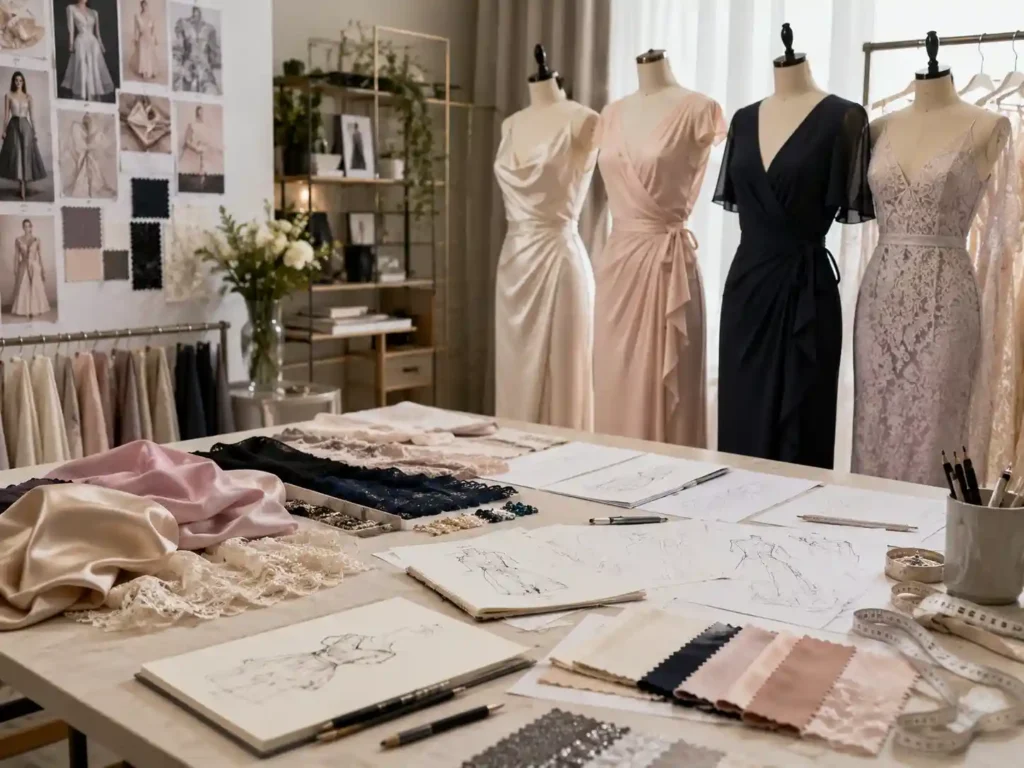
The strongest candidates can describe what they produce regularly and where their limits begin. Broad statements such as “all garments available” provide little evidence. Ask which dress categories, fabrics, construction methods, size ranges, and order structures appear most often in the factory’s production calendar. Look for examples that share the technical demands of your collection rather than examples that merely look similar in photographs.
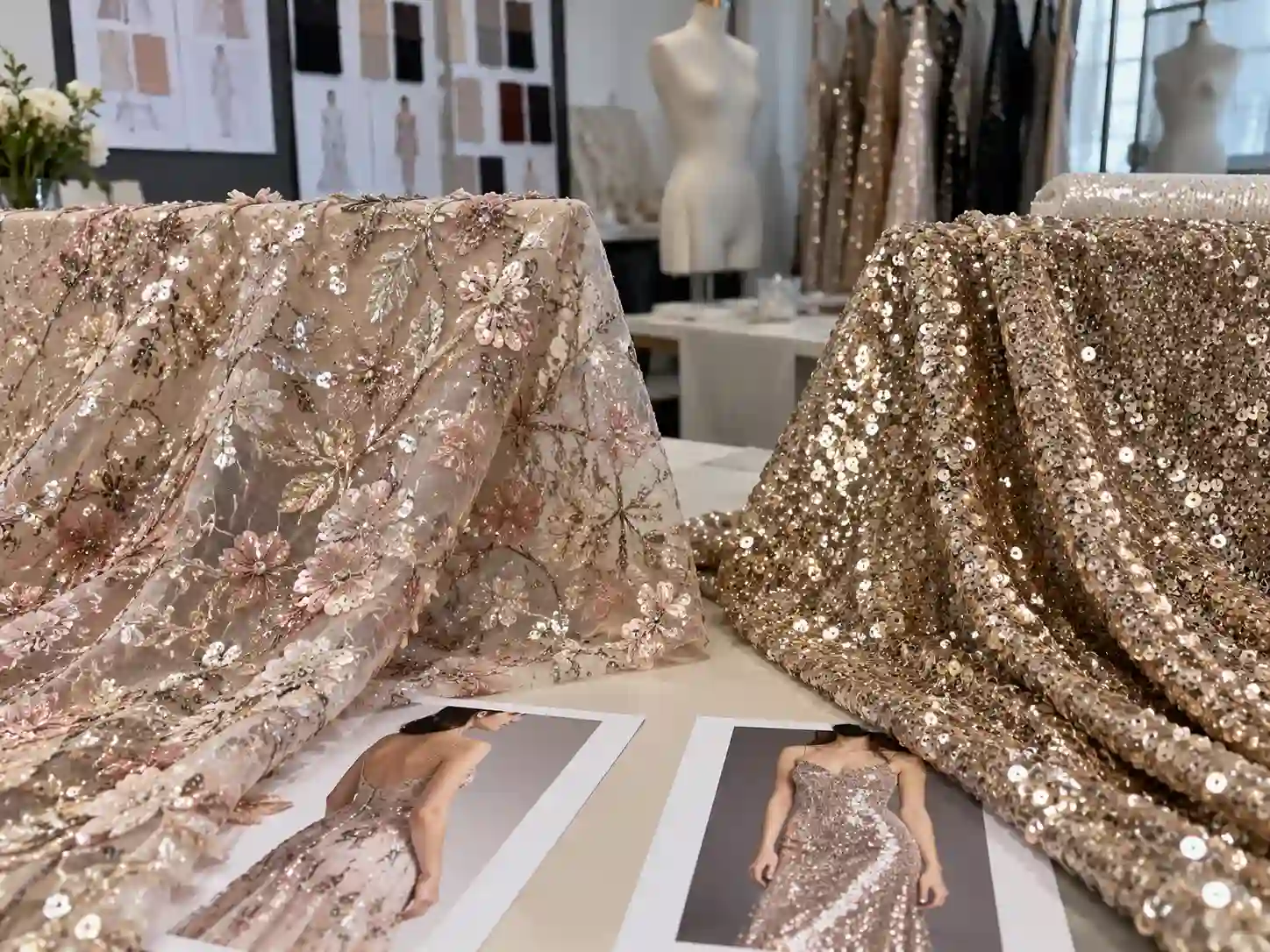
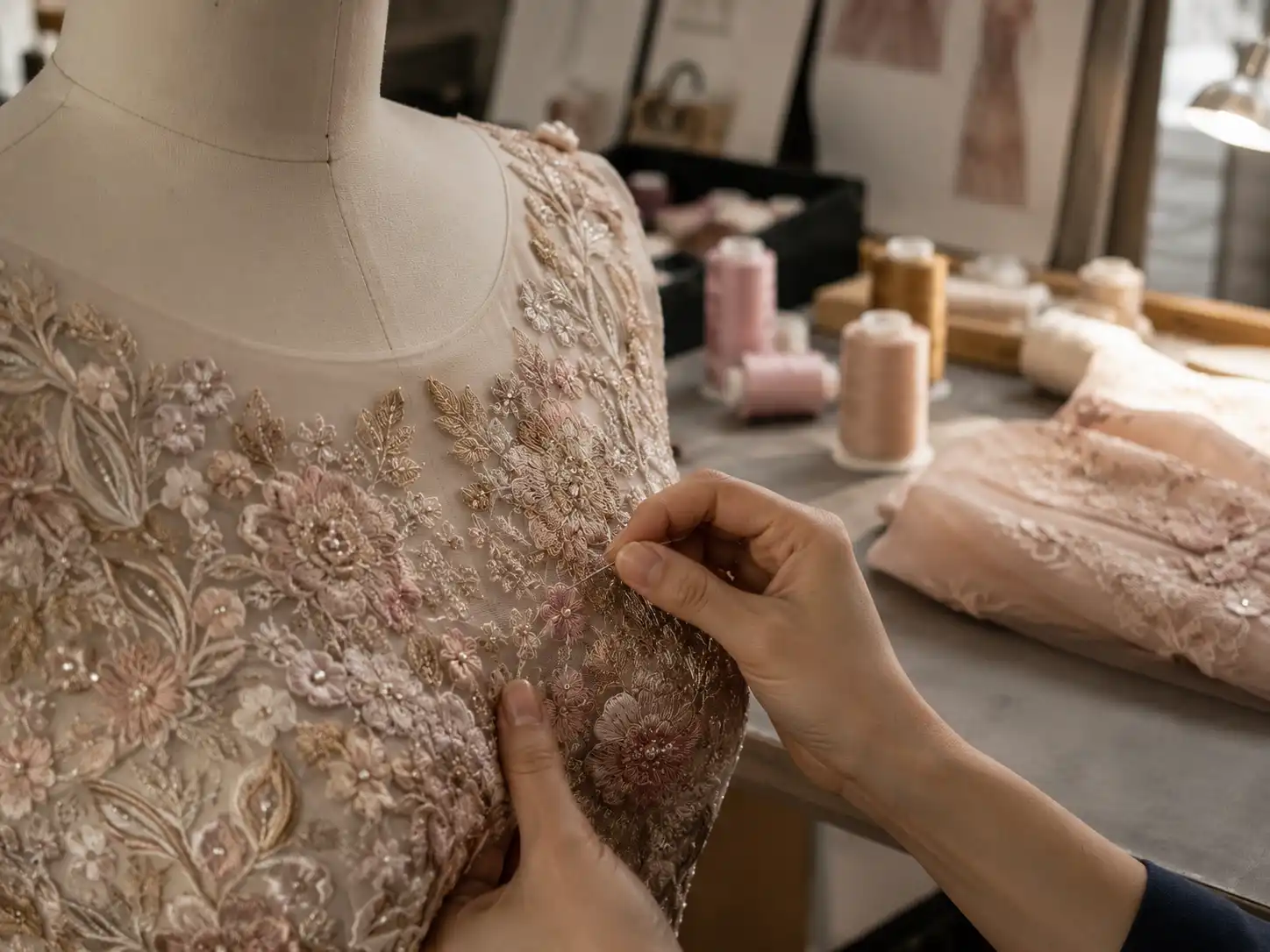
A simple satin camisole dress does not prove capability in a fully lined satin corset dress. Lace trim on a day dress does not demonstrate full motif placement, scalloped edge control, or matched panels. A sequined showroom sample does not prove stable bulk production unless the team can explain seam preparation, needle control, sequin removal at allowances, operator safety, inspection, and protective packing. Genuine specialists usually ask detailed questions before making confident promises, because they understand that visual similarity alone does not define manufacturing difficulty.
Production Model
Identify how each supplier actually operates. Common structures include one owned factory, several specialized owned factories, a core facility supported by long-term production partners, or a sourcing office coordinating external factories. None of these structures is automatically superior. A specialized network can manage different fabrics and dress categories effectively, while a well-run sourcing office may provide strong material access and technical coordination. The decisive issues are transparency, control, and accountability.
Confirm which legal entity will receive the order, where samples will be developed, where bulk cutting and sewing are expected to take place, and which processes will be outsourced. Ask who controls technical files, approves first production pieces, conducts inline inspection, and remains responsible when defects or delays occur. A manufacturer that cannot identify the intended production location or explain relationships among its sales company, factory documents, payment account, and shipping entity should not move forward without stronger verification.
Initial Qualification
Use a short qualification form before sending confidential designs or requesting extensive costing. Ask about normal MOQ by style and color, typical sample stages, sample lead time, relevant fabrics, production locations, main export markets, quality checkpoints, current capacity, and whether subcontracting is used. The purpose is not to demand perfect answers. It is to see whether the team understands the questions, checks internally when necessary, and gives information that remains consistent across later conversations.
Warning signs include quoting a complex dress from one photograph without discussing fabric or structure, promising every delivery date immediately, changing MOQ or capacity figures in separate messages, displaying certification logos without documents, avoiding questions about sample rooms or pattern teams, and pressuring for payment before specifications are reviewed. Language differences can cause imperfect wording, so one weak response is not always decisive. The greater concern is a repeated pattern of vague, conflicting, or unsupported answers.
How Do You Compare Dress-Making Capability?
Compare dress-making capability through relevant product experience, pattern engineering, sample-room performance, fabric handling, construction control, collection management, and the ability to reproduce an approved garment across all sizes and quantities. The best factory is not the one advertising the widest product range, but the one whose strongest technical capabilities match the most difficult and commercially important styles in your collection.
Product Capability
Build a category-specific capability matrix instead of asking whether a factory can “make dresses.” Stretch fitted styles require control of recovery, negative ease, seam elasticity, and measurement stability. Satin styles require grain alignment, fine seams, careful pressing, and protection from snagging. Chiffon and layered maxi dresses depend on stable cutting, lining compatibility, and balanced hems. Corset and strapless styles rely on internal support, accurate bust shaping, and secure necklines.
Ask each manufacturer to classify relevant categories as regular production, occasional production, or outside its preferred scope. Honest boundaries are valuable because they reveal how the factory allocates skilled teams and avoids unsuitable work. For mixed collections, determine whether separate production units or long-term specialist partners handle knits, lightweight wovens, occasionwear, and embellishment. One project-management team can coordinate several production strengths, but approval records, workmanship standards, and quality control must remain consistent across every facility.
| Dress Type | Capability to Verify | Frequent Bulk Risk |
| Bodycon and jersey | Stretch patterning, recovery, elastic seams and measurement control | Size instability, twisting and seam breakage |
| Satin slip and cocktail | Grain direction, fine sewing, zipper handling and pressing | Puckering, snagging, shade variation and shine marks |
| Chiffon and layered maxi | Stable cutting, lining, narrow hems and balance | Layer movement, transparency and uneven hems |
| Corset and strapless | Cups, boning, neckline support and fit engineering | Neckline collapse, discomfort and poor bust support |
| Lace occasionwear | Motif placement, matching, edge finishing and lining | Holes, mismatched joins and visible seam allowances |
| Mesh and cut-out | Stretch direction, transparency, support and seam stability | Distortion, tearing and exposed construction |
| Sequin and embellished | Seam preparation, specialist sewing, inspection and protection | Sequin loss, scratching, needle damage and heavy seams |
| Structured woven dresses | Pattern shape, interlining, closures and pressing | Poor balance, rigid fit and distorted silhouettes |
Pattern and Fit
Pattern capability is one of the clearest differences between an average sewing factory and a dependable dress-development partner. Commercial fit depends on details that product photographs cannot show: bust point, waist position, hip ease, neckline security, armhole balance, strap placement, zipper tension, skirt hang, and movement comfort. A dress can match the flat measurement chart yet still gape, twist, pull, ride upward, or feel uncomfortable when worn.
Ask who creates the base pattern, who attends fittings, how comments are translated into pattern changes, and how the full size range is graded. Fabric behavior must be part of the discussion. Woven satin and stretch satin may look similar but need different ease, support, seam handling, and grading decisions. Larger size ranges also require more than adding the same amount to every measurement. Bust, shoulder, armhole, waist, hip, and length proportions must remain balanced, especially in corset, bodycon, halter, strapless, and fitted occasion styles.
Sample Development
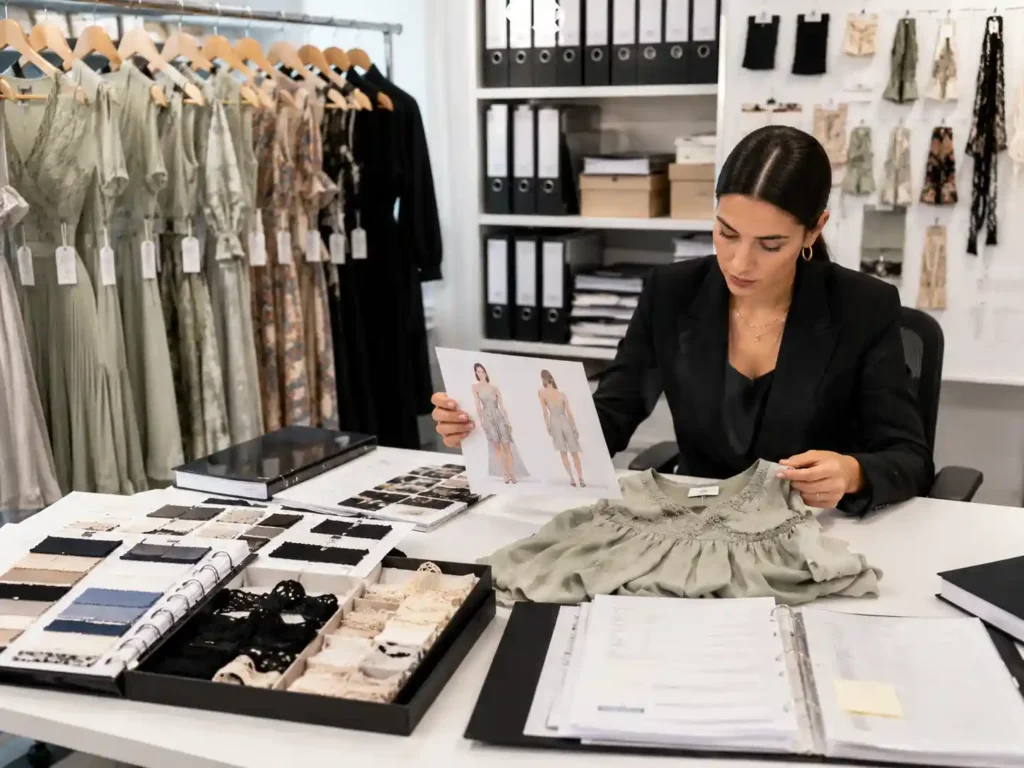
A strong sample room turns design information into a testable production standard. Depending on the project, the sequence may include a first prototype, fit sample, revised sample, photo sample, size-set sample, pre-production sample, and final approved reference. Not every style needs every stage, but each sample should answer a defined question. A photo sample may prioritize appearance, while a pre-production sample must confirm bulk materials, construction, measurements, labels, and workmanship.
For many custom dress projects, a first sample may require roughly seven to fifteen business days after complete information and suitable materials are available. Complex corsetry, custom fabric, special embellishment, or incomplete specifications can extend that range. Evaluate fit accuracy, material suitability, symmetry, measurement compliance, comfort, pressing, and response to revision comments. Important corrections should appear in an updated sample or documented production standard. Statements such as “we will fix it in bulk” create unnecessary risk when the corrected result has not been physically verified.
Collection Control
Multi-style collections introduce information risk alongside sewing risk. A program containing twelve styles, three colors, and six sizes already creates 216 style-color-size combinations before barcode, label, packing, and shipment variations are counted. The factory needs a controlled method for tech-pack versions, measurement updates, pattern revisions, fabric approvals, trim approvals, sample comments, labels, size ratios, production schedules, and inspection records.
Ask to see an anonymous example of the supplier’s tracking system. Each revision should show a date, version number, approver, and clear description of what changed. File names such as “latest” or “final final” are not reliable controls. Strong merchandising and production teams can explain who owns each approval and how updates reach pattern, cutting, sewing, finishing, quality, and packing departments. This discipline is particularly important when several lines or factories work on one collection and a small file error could affect hundreds of garments.
How Do You Verify Quality, Compliance and Capacity?
Verify quality through controls from incoming materials to final packing, verify compliance through current evidence connected to the actual production site, and verify capacity through a style-specific line plan rather than a single monthly number. A reliable manufacturer should show how standards are defined, communicated, inspected, corrected, and maintained during first orders, repeat production, and peak-season schedules.
Quality Controls
Final inspection alone cannot protect a dress order because many defects become expensive or impossible to correct after completion. Fabric shade, stretch recovery, cutting direction, print placement, seam puckering, neckline stability, zipper distortion, and incorrect labels must be controlled where they enter the process. A practical system covers incoming material inspection, cutting checks, first-piece approval, inline sewing inspection, measurement verification, finishing, packing, and final shipment inspection.
The checklist should reflect the product rather than using one generic form for every garment. Satin needs checks for snagging, seam appearance, shade direction, and pressing marks. Lace needs motif placement, hole detection, edge control, and lining review. Mesh needs transparency, stretch, and seam-stability checks. Corset dresses require support, symmetry, channel placement, and secure necklines. When defects are found, the record should identify the affected quantity, root cause, corrective action, responsible operation, and reinspection result instead of relying on informal repair.
| Stage | Checks | Dress-Specific Risks |
| Incoming material | Shade, width, weight, stretch, defects, hand feel and shrinkage | Color variation, low recovery, snagging and transparency |
| Cutting | Grain, direction, placement, notches, layers and bundle control | Twisted seams, uneven prints and mismatched panels |
| First piece | Measurements, construction sequence and workmanship | Repeating an incorrect method across the sewing line |
| Inline sewing | Stitching, seam shape, symmetry and operation control | Puckering, uneven ruching and unstable necklines |
| Measurement | Critical points by size, color and production lot | Fit inconsistency and grading errors |
| Finishing | Pressing, thread cleaning, stains, shape and appearance | Shine marks, distortion and poor drape |
| Packing | Labels, barcodes, size, color, assortment and carton marks | Wrong SKU, wrong ratio and retail rejection |
| Final inspection | Quantity, workmanship, measurements and packing integrity | Shipment-level acceptance and claim risk |
Bulk Reproduction
The central quality question is not whether the factory can make one attractive sample. It is whether the approved standard can be repeated across the full quantity, size range, color range, and production period. Before cutting, the approved garment should be supported by the final pattern, measurement chart, fabric and trim approvals, construction details, labels, packing instructions, and written sample comments. These records must be available to production and quality teams, not kept only in the sales office.
For complex styles, review the first production pieces or a small pilot quantity before the full line continues. This stage can reveal problems caused by production-speed sewing, larger cutting bundles, pressing, operator interpretation, or bulk material behavior. Confirm that the pattern is locked, shade lots are separated, critical measurements are checked during sewing, repaired garments are reinspected, and the approved sample remains available on the line. Good samples produced by the most skilled sample machinist do not guarantee bulk consistency without operation training and early inline control.
Compliance Evidence
Compliance requirements depend on the destination market, product, retailer, material, and internal policy. A long list of certificates is less useful than a small set of current documents that clearly cover the production site and activity involved in the order. Review the company or factory name, address, issue date, expiration date, issuing organization, audit scope, and any open corrective actions. A report belonging to a related facility does not automatically cover the location making your garments.
Relevant evidence may include business registration, factory audit reports, social-compliance records, quality-management documents, fiber-content and care-label information, fabric or chemical testing, restricted-substance declarations, flammability testing, traceability records, or retailer-specific approvals. Confidentiality also deserves verification before unpublished designs are shared. An NDA can cover tech packs, samples, patterns, measurements, material selections, packaging artwork, quantities, costs, and launch dates. Ask how digital files and physical samples are stored, accessed, returned, or destroyed rather than accepting a general promise of secrecy.
Capacity Validation
Capacity is style-specific and time-specific. A network may produce more than 100,000 garments in a normal month, but that figure does not prove that a particular line can complete five thousand structured dresses within four weeks. Ask which production unit is proposed, how many operators will be assigned, the expected daily output after line balancing, current bookings, material-ready dates, cutting and sewing windows, finishing time, inspection allowance, and the backup plan if the line falls behind.
Daily output should be estimated from the actual construction. A straightforward knit dress may run at several times the volume of a lined corset dress or embellished evening style. For multi-style orders, determine whether styles will run sequentially or in parallel. Parallel production shortens the calendar but requires stronger coordination and simultaneous material readiness. Sequential production simplifies supervision but may extend delivery. Reconfirm capacity after sample approval because several weeks may pass between initial qualification and bulk booking, allowing factory loading to change materially.
How Should You Compare MOQ, Cost and Lead Time?
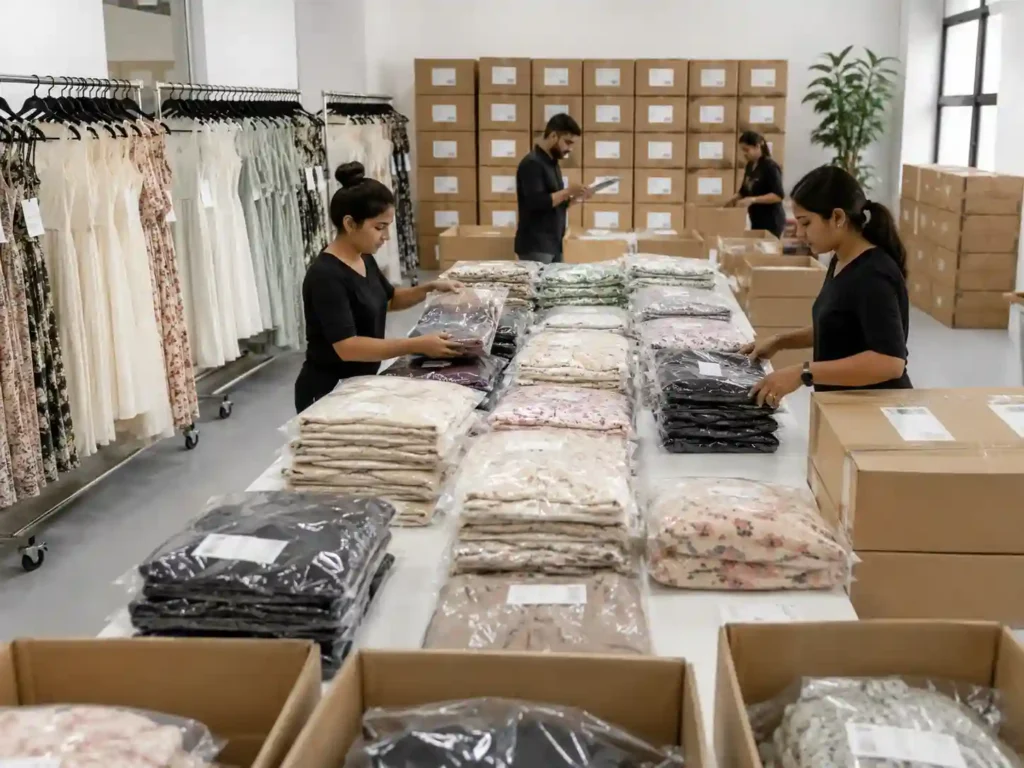
Compare MOQ, price, and lead time only after each factory receives the same specifications and commercial assumptions. Review material minimums, construction scope, development charges, packaging, testing, payment terms, and every stage of the delivery calendar. A low price or short promise has little value when it depends on omitted details, unapproved substitutions, unrealistic output, or a schedule with no inspection allowance.
Comparable RFQs
Every finalist should receive one controlled RFQ package. When one factory receives a reference photograph, another receives a detailed tech pack, and a third receives an original sample, the resulting prices do not describe the same garment. Include drawings or clear images, fabric composition and weight, stretch, lining, internal structure, construction, measurements, size range, quantity by style and color, labels, barcodes, packaging, inspection expectations, delivery destination, trade terms, and required dates.
Ask each supplier to state assumptions, exclusions, quotation validity, and the point at which price can change. One factory may include anti-static lining while another assumes a basic polyester lining. One may include barcode application, while another treats it as a separate packing charge. Pattern development, custom print screens, trim molds, testing, and packaging setup should be identified as one-time or recurring costs where possible. When assumptions differ, normalize and reissue the comparison instead of selecting the lowest number from incompatible offers.
Material Minimums
Garment MOQ and material MOQ are separate calculations. A factory may accept 200 pieces per style and color using an available fabric, while a mill or dye house may require a larger quantity for custom weaving, dyeing, printing, lace, sequins, or special finishes. If a dress consumes 1.8 meters and the order contains 200 pieces, gross fabric demand may be roughly 390 to 420 meters after practical allowances, depending on width, marker efficiency, shrinkage, and construction.
When the fabric supplier requires 800 or 1,000 meters, the collection must absorb the difference through higher garment quantity, shared fabric across several styles, a stock color, a small-lot surcharge, reserved excess for a repeat order, or an alternative material. Color and size fragmentation also reduce efficiency. An order of 1,200 pieces divided among six colors and eight sizes creates many small bundles and repeated line changes. A credible manufacturer explains these consequences before confirmation instead of agreeing immediately and introducing substitutions or surcharges later.
Total Cost
The lowest garment price is not always the lowest commercial cost. Compare the unit price with sample charges, material surcharges, labels, packaging, testing, inspection, freight, duties, repairs, replacements, relabeling, airfreight caused by delay, and returns caused by fit or quality problems. A difference of less than one dollar per piece can look important across several thousand units, yet it can disappear quickly when the lower-priced supplier creates a higher defect rate or misses a launch window.
Cost optimization should be explained as an engineering decision rather than hidden downgrading. Practical options include changing fabric weight, selecting a similar stock material, simplifying an internal construction, consolidating colors, adjusting a trim, improving marker efficiency, or changing packaging. Every option should state its likely effect on appearance, fit, durability, MOQ, and delivery. A useful quotation does not simply present one price; it shows which product choices are driving cost and where savings can be achieved without weakening the elements customers notice and value.
Lead-Time Reality
Break the calendar into technical review, fabric and trim sourcing, first sample, fit comments, revision, pre-production approval, material booking, cutting, sewing, finishing, inspection, packing, and shipping. For many custom dresses, a first sample may take approximately seven to fifteen business days once complete information and suitable materials are available. Bulk production may often require around twenty-five to forty-five days after final approval and material readiness, while complex occasionwear or custom materials can require longer.
These ranges are planning references rather than universal promises. Custom dyeing, printing, exclusive lace, special hardware, public holidays, peak-season loading, repeated revisions, and delayed label approvals can all extend the schedule. The factory should show dependencies and decision deadlines. Production cannot begin safely merely because a deposit has been paid when color, fabric, measurements, labels, or the pre-production sample remain open. A reliable plan also reserves time for inspection and correction instead of finishing sewing on the day the shipment must leave.