Skip to content

An A-line dress can look almost effortless on a hanger, which is exactly what makes it demanding to manufacture well. The silhouette has fewer obvious details to distract the eye, so an incorrect waist position, a twisted side seam, an unstable zipper, or an uneven hem becomes immediately visible. The garment must also move naturally without losing the clean line that defines the style.
An A-line dress is manufactured by converting a design into a balanced production pattern, selecting fabric that creates the intended structure or movement, making and fitting samples, approving construction details, cutting bulk fabric, sewing in a controlled sequence, and checking measurements, hem balance, lining, workmanship, labels, packing, and delivery readiness.
For a fashion team, the difficult part is rarely producing one attractive sample. The real test is repeating the approved silhouette across several colors, a full size range, and thousands of garments without allowing the bust, waist, flare, length, or finish to drift. A small seam difference can seem harmless at one panel, yet the same difference repeated through a multi-panel skirt can change the hem circumference and the way the entire dress hangs. The following process shows where that consistency is built.
What Defines an A-Line Dress?
An A-line dress follows the upper body through the shoulders and bust, then widens progressively toward the hem. Its final shape depends on where the flare begins, how volume is distributed, the dress length, the fabric’s weight and drape, and whether shaping comes from darts, princess seams, panels, or a separate waist seam.
Shape and Proportion
The A-line silhouette is not created by simply adding width to two side seams. The upper portion must first establish the intended shoulder, bust, waist, and upper-hip fit. Only after those points are stable can the pattern maker decide where the garment begins opening toward the hem. Some styles stay close to the body until the upper hip, while others widen from the natural waist or directly below the bust.
Flare may be distributed through side seams, princess seams, center panels, godets, pleats, or several shaped sections. Adding all the volume at the sides often creates a dress that looks wide in profile but visually flat from the front. Spreading the width across several seams usually produces a rounder and more controlled silhouette, especially on midi and maxi dresses where small imbalances become more noticeable.
Proportion also needs to match the product category. A restrained office dress, a softly moving resort maxi, and a structured occasion dress can all be described as A-line, yet they require different ease, flare ratios, internal support, and pressing methods. The technical description should therefore define the fit above the hip, the flare starting point, and the intended hem width rather than relying only on the silhouette name.
Length and Flare
Dress length changes how much flare is practical and how that flare behaves during wear. A mini dress needs careful control around the hip and seat. If it is too narrow, the garment may ride upward while walking or sitting. If it is too wide, the side hems can lift and create more exposure than the design intended, even when the flat measurements appear correct.
Knee-length and midi dresses need enough hem width for a comfortable stride while preserving a clean line. A maxi or floor-length style needs additional attention to vertical balance because a small difference near the waist can become clearly visible at the hem. Long panels may also grow unevenly when parts of the pattern sit closer to the bias grain, especially in rayon, chiffon, or soft satin.
There is no universal hem circumference that suits every A-line dress. The appropriate width depends on garment size, length, fabric stiffness, panel count, customer movement, footwear, and visual direction. A useful fit session therefore includes standing, walking, turning, sitting, and checking the dress from the front, side, and back rather than judging it only on a hanger or flat table.
Construction Details
Necklines, sleeves, pockets, closures, and linings can change the manufacturing method more than their visual size suggests. A sleeveless armhole needs to sit close enough to prevent gaping without cutting into the wearer. A deep neckline may require stabilization tape, a facing, concealed mesh, or a full bodice lining, and each solution changes thickness, sewing sequence, and fit.
Princess seams are useful because they distribute shaping through the bust, waist, and skirt. They also create long curved seams that must be cut, matched, and fed accurately. A small sewing difference can twist the lower panel or disturb the hem. Waist seams offer another way to separate bodice fit from skirt volume, but both circumferences must match precisely or the seam may ripple after pressing.
Side-seam pockets add function but can pull the skirt outward when the pocket bag is too heavy or anchored incorrectly. Invisible zippers need a stable seam area, while lightweight fabrics may require support tape. Linings affect opacity, comfort, static, and internal appearance. These elements need to be resolved during development because adding them after the main pattern is approved often changes fit and cost.
Related Silhouettes
A-line, fit-and-flare, skater, trapeze, and shift dresses are often grouped together in online merchandising, although their upper-body fit and skirt construction are not identical. Clear terminology matters during development because the wrong interpretation can produce a technically competent sample that still misses the brand’s intended proportion, waist emphasis, or movement.
| Silhouette | Upper-Body Fit | Flare Point | Typical Volume | Main Pattern Focus |
| A-line | Fitted or semi-fitted | Bust, waist, or upper hip | Moderate and progressive | Balanced flare and clean side seams |
| Fit-and-flare | Clearly fitted | Usually natural waist | Medium to full | Strong waist definition and skirt attachment |
| Skater | Fitted | Waist | Full and active | Short length, coverage, and circular movement |
| Trapeze | Relaxed | Shoulder or upper bust | Wide and loose | Shoulder balance and controlled overall volume |
| Shift | Straight or lightly shaped | Minimal flare | Low | Ease, length, and clean vertical lines |
A fit-and-flare dress normally creates a stronger contrast between the bodice and skirt, often through a waist seam, gathered construction, or circular skirt. A classic A-line style can have a smoother transition and may not emphasize the waist as strongly. The most useful specification identifies where the widening begins, how closely the upper body should fit, and how the fabric should behave in motion.
How Is an A-Line Pattern Developed?
An A-line pattern is developed by translating a tech pack, sketch, sample, or reference image into balanced pattern pieces. The pattern maker establishes the base fit, controls bust and waist shaping, distributes flare, corrects front-to-back balance, and grades the approved pattern into multiple sizes without losing the original proportions or movement.
Development Inputs
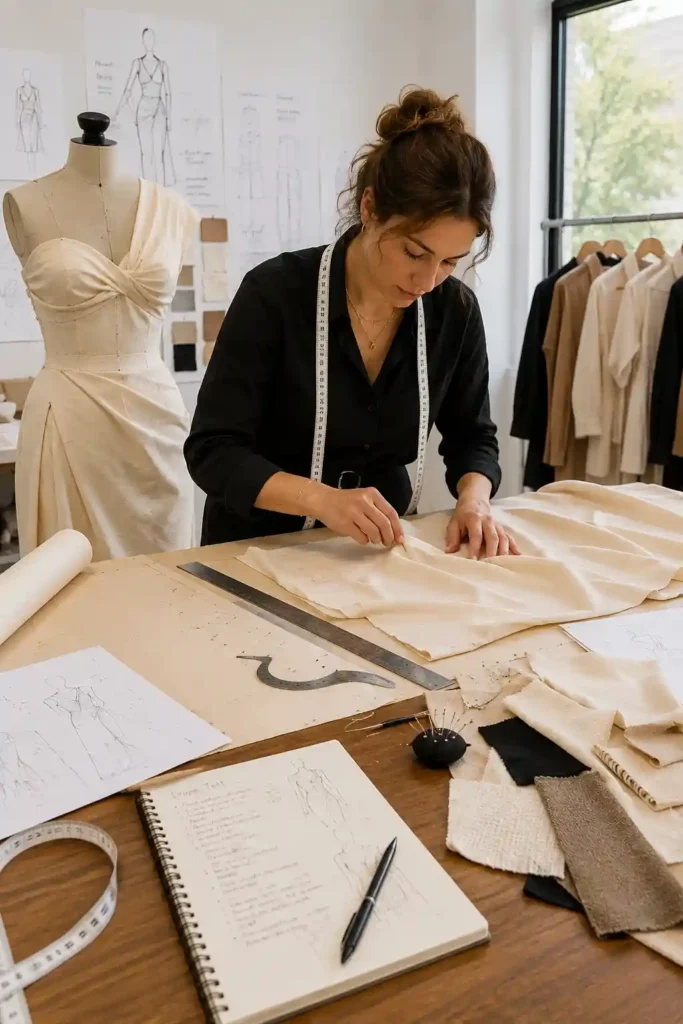
Reliable pattern development begins with specific commercial and technical information. A complete tech pack may contain front and back drawings, finished garment measurements, construction details, fabric information, trim references, label positions, and packaging requirements. Many collections begin with less, such as a photograph, sketch, original garment, or line sheet, which means the development team must identify and record the assumptions that cannot be seen.
A useful starting package identifies the base size, full size range, intended customer, dress length, fit level, waist position, neckline depth, closure type, shell composition, stretch direction, lining, and hem shape. The target selling market also matters because each brand has its own fit block and customer expectations. Generic size labels such as small or medium are not precise enough to control product development.
Reference garments can provide valuable clues about construction and fit, but they need careful measurement. A worn or washed dress may have changed from its original dimensions, and previous alterations are not always visible. Before the first sample is cut, the pattern maker should confirm whether shaping comes from darts, seams, elastic, stretch, or internal structure, because these methods can look similar in photographs while performing very differently in production.
Dart and Ease Control
Darts and shaping seams convert flat fabric into a three-dimensional garment. In an A-line dress, shaping may come from a side bust dart, waist dart, shoulder dart, princess seam, curved panel, or controlled stretch. The placement determines how the garment sits over the bust and how smoothly it transitions into the waist and skirt.
Ease is the difference between body measurements and finished garment measurements. Semi-fitted woven dresses often begin with roughly 4 to 8 cm of total bust ease and a similar working range at the hip, although these figures are only development references. The approved amount must reflect the brand’s fit block, fabric flexibility, lining, sleeve shape, closure, and intended customer experience.
Too little bust ease creates horizontal tension, armhole pulling, or drag lines toward the waist. Too much ease can make the neckline gape and weaken the upper silhouette. Insufficient hip ease limits sitting and walking, while excessive hip ease can make the dress look straight rather than intentionally A-line. The lining must be reviewed at the same time because a non-stretch lining can become the true restriction inside a slightly flexible shell.
Flare and Balance
Flare can be introduced through side-seam extension, slash-and-spread development, dart transfer, or shaped panels. Side-seam extension is efficient for moderate volume, but large extensions can make the skirt appear wide at the sides and flat at the front. Slash-and-spread methods distribute width through several areas, while dart transfer can convert upper shaping into movement below without changing the fitted section.
Panelled construction provides greater control for midi, maxi, formal, or mixed-fabric dresses. The pattern maker can place more volume at the front, side, or back according to the design. Panels also support lace placement, color blocking, or printed sections, although they create more seams that must be matched and pressed accurately.
Hem balance is checked on a dress form or fit model because bust projection, posture, shoulder angle, waist position, and seat shape all affect visible length. Fluid fabrics can continue to drop after sewing, especially near bias-influenced areas. In many sample rooms, rayon, chiffon, and soft satin skirts are allowed to hang for approximately 12 to 24 hours before final leveling, with the exact period confirmed through material testing.
Size Grading
Grading expands or reduces the approved base pattern into the complete size range. It is not a simple percentage enlargement because bust, waist, hip, shoulder width, neckline, armhole depth, dress length, and flare change at different rates. The flare point must remain visually consistent, and larger sizes need enough hem width for movement without becoming disproportionately full.
| Measurement Point | Common Working Tolerance | Main Risk if Uncontrolled |
| Bust circumference | ±1.0-2.0 cm | Tightness, gaping, or inconsistent fit |
| Waist circumference | ±1.0-1.5 cm | Weak waist definition or closure problems |
| Hip circumference | ±1.0-2.0 cm | Restricted movement or excess volume |
| Total dress length | ±1.0 cm | Uneven retail presentation and styling |
| Front/back balance | About 0.5-1.0 cm | Rising front, dragging back, or tilted hem |
| Hem circumference | ±2.0-3.0 cm | Inconsistent flare across bulk garments |
| Shoulder width | ±0.5 cm | Neckline and armhole distortion |
| Zipper alignment | About ±0.3-0.5 cm | Uneven top edge or mismatched waist seam |
These ranges are common commercial references rather than universal limits. A brand can require tighter or wider tolerances according to fabric, size, garment length, and quality level. A broad size range also benefits from fitting more than one size, because a pattern that performs well in the base size can develop neckline, armhole, balance, or proportion problems at the smallest and largest ends of the range.
Which Fabrics and Trims Are Used?
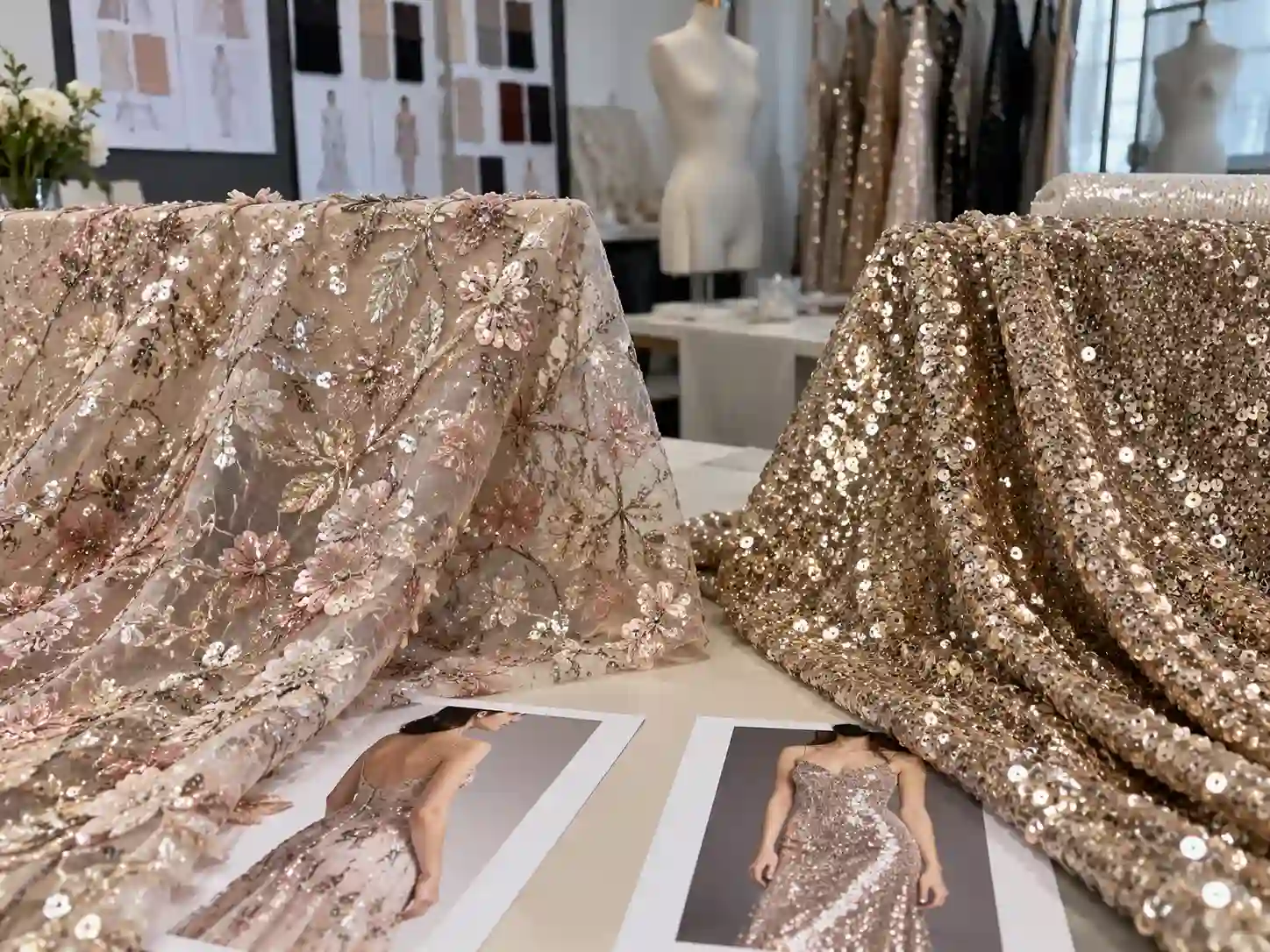
A-line dresses can be produced in cotton, poplin, denim, suiting, crepe, satin, chiffon, rayon, linen blends, lace, and stable knit fabrics. The correct choice depends on the required structure, movement, opacity, season, care method, and price. Linings, zippers, tapes, interfacing, and labels must remain compatible with the shell fabric.
Structured Fabrics
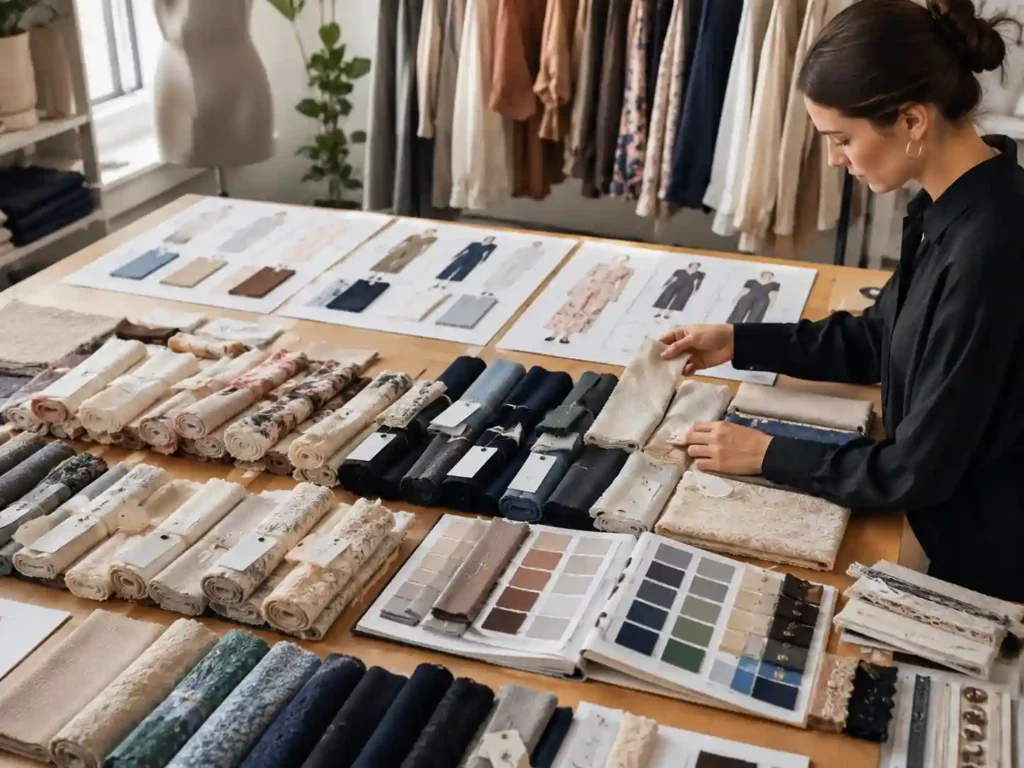
Structured fabrics hold the skirt away from the body and make the A-shaped outline visible even when the wearer is standing still. Cotton twill, poplin, denim, taffeta, suiting, heavier crepe, and stable ponte are common choices for office dresses, daywear, uniform-inspired styles, and sculpted occasion pieces. Their body can support a clean silhouette, but it also exposes pattern and sewing errors more clearly.
Denim and heavy cotton can create bulky intersections where side seams, pockets, waist seams, and zippers meet. Taffeta holds volume but may show needle marks or hard pressing lines. Suiting can produce a refined fall while requiring carefully selected interfacing around necklines, pockets, or closures. Stable ponte offers comfort and shape, although its stretch and recovery must match the pattern ease.
Selecting the stiffest fabric rarely produces the strongest product. Excessive rigidity can reduce sitting comfort, make the hem feel mechanical, and create deep packing creases. The development team should evaluate seam appearance, pressing temperature, surface marking, edge thickness, and movement in the finished garment rather than deciding from a small fabric swatch alone.
Fluid Fabrics
Chiffon, georgette, rayon, viscose, lightweight crepe, and soft satin are chosen when the design needs movement rather than fixed volume. These fabrics react visibly to walking and turning, which makes them popular for resortwear, occasion dresses, printed collections, and long summer styles. They often need more pattern width than crisp fabrics to create the same visible degree of flare.
Fluid materials introduce practical production risks. Chiffon can shift during spreading and cutting. Rayon may change dimensions after relaxation or washing. Satin can show seam puckering, needle damage, surface scratches, and changes in shine direction. Long panels can also stretch after sewing when parts of the skirt sit closer to the bias grain, leaving one area lower than another.
The sewing team should avoid pulling these fabrics through the machine and should control thread tension, needle size, seam type, and handling between operations. The lining needs to move with the shell. A stiff lining can suppress the desired drape, while a clingy lining can create static and cause the outer skirt to gather around the legs.
Linings and Trims
Linings are selected for opacity, comfort, static control, durability, and care compatibility. A dress may be fully lined, lined only through the bodice, or use a shorter skirt lining. Transparent shells may need a double layer or a carefully chosen lining color, while stretch shells generally need linings with compatible stretch so the inner layer does not restrict movement.
Invisible zippers are common because they preserve a clean seam line. Lightweight or loosely woven fabrics may need narrow support tape or interfacing along the zipper opening. Interfacing also stabilizes necklines, facings, waistbands, button areas, and pockets, but it must not make the finished dress visibly stiff or create a different shrinkage response from the shell.
Elastic, hooks, buttons, snaps, shoulder tapes, hanging loops, bra keepers, and decorative trims should be tested in the actual construction. Labels also affect comfort and appearance. A heavy woven label can irritate the wearer or pull on a delicate lining, while a heat-transfer label needs adhesion and wash testing. Trim approval is therefore part of product engineering, not simply a final branding decision.
Fabric Testing
Fabric approval combines visual judgment with technical checks. The shell must perform during cutting, sewing, pressing, wearing, cleaning, and packing. Weight is useful, but it does not describe the complete behavior of a material. Fiber, weave or knit structure, finish, thickness, stretch, recovery, and surface friction can make two fabrics with similar GSM figures behave very differently.
| Material | Illustrative Weight Range | Typical A-Line Effect | Key Production Check |
| Chiffon | 40-90 GSM | Light, flowing, and often transparent | Slippage, opacity, edge finish, and hem drop |
| Soft satin | 80-180 GSM | Fluid shape with surface shine | Snagging, puckering, shade direction, and pressing |
| Poplin | 100-160 GSM | Crisp and clean volume | Shrinkage, seam appearance, and crease recovery |
| Crepe | 120-220 GSM | Controlled drape with texture | Seam slippage, surface marking, and color consistency |
| Linen blend | 130-220 GSM | Natural structure and relaxed movement | Shrinkage, wrinkling, and yarn variation |
| Denim | 180-350 GSM | Strong and architectural silhouette | Bulk, wash effect, color transfer, and needle choice |
| Ponte | 250-380 GSM | Stable stretch and smooth outline | Stretch recovery, seam waving, and size consistency |
Many brands target dimensional change within approximately 3 percent after the specified care process, although the approved limit must match the fiber, product category, and destination market. Other useful checks include usable width, shade variation, colorfastness, pilling, abrasion, seam slippage, tearing strength, stretch recovery, print registration, opacity, snagging, and surface defects. Passing a laboratory test does not replace roll inspection because technically acceptable fabric can still contain stains, holes, weaving faults, or visible shade differences.
How Are Samples Made and Approved?
Sampling converts the pattern, fabric, trims, and construction instructions into a wearable garment. Each version is reviewed for silhouette, fit, movement, measurements, workmanship, cost, and repeatability. Bulk production should begin only after the final pattern, material, construction, labels, packing, and approved reference sample have been clearly confirmed.
First Sample
The first sample tests whether the design can become a practical garment. It may use substitute fabric or temporary trims when final materials are not available, but it must be close enough to expose structural problems. The review covers the overall silhouette, bust and waist position, hip ease, neckline, armholes, shoulder balance, flare, hem level, zipper function, lining, pockets, and movement.
A sample can appear attractive on a hanger while failing during wear. The front hem may rise over the bust, side seams may swing forward, the neckline may gape, or the skirt may feel restrictive when sitting. These issues should be recorded through measurements, photographs, and written comments, with the reviewer separating design preference from actual fit or construction defects.
Comments need to be measurable. A direction such as reduce the waist by 2 cm total or lower the center-front neckline by 1 cm is more reliable than a general request to make the dress tighter or more open. The development team should also assess cost at this stage because added lining, interfacing, seam binding, handwork, or difficult pressing can change the production price even when the external appearance remains similar.
Fit Testing
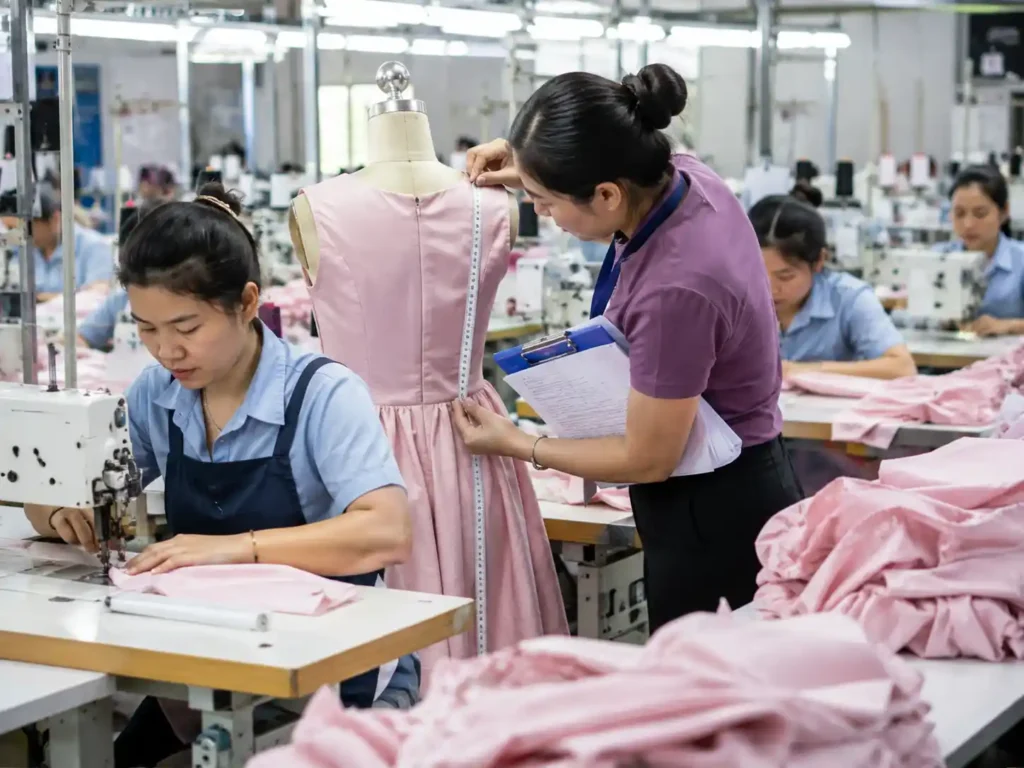
Fit testing combines flat measurement, dress-form assessment, and fitting on a person whose measurements are close to the brand’s base-size chart. The model’s actual measurements should be recorded so that comments can be separated from body-shape differences. The garment is observed from the front, side, and back while the wearer stands naturally rather than holding a pose that hides drag lines or changes the hem level.
A practical fit session includes walking, sitting, standing, turning, raising the arms, reaching forward, using the closure, and placing the hands in pockets. Short dresses require coverage checks during movement, while sleeved styles need arm mobility testing. Formal and maxi dresses should be evaluated with the intended footwear because a sample fitted barefoot may become too short when styled with heels.
Fit affects more than comfort. It influences product photography, online size guidance, return rates, customer reviews, and repeat-order consistency. A measurement can fall within tolerance while the garment still feels wrong because balance, fabric stretch, lining restriction, or movement has not been evaluated. The strongest approval combines numbers with real wear testing.
Revision Control
Sample corrections begin by tracing the visible problem to its actual cause. A gaping neckline can result from excess neckline length, an incorrect shoulder slope, too much bust ease, unstable fabric, or missing stabilization. Taking in the neckline without checking the cause may create a new issue at the armhole or bust. Each correction should therefore be linked to the pattern, specification, and construction record.
Common A-line problems include a front hem that rises, side seams that swing forward, a rippling waist seam, zipper waves, exposed lining, restricted movement, or uneven flare. Fluid panels may grow after sewing, while structured panels can reveal feeding differences. The revised sample must confirm that the correction solved the original problem without changing another approved area.
Version control prevents the factory, customer, and inspection team from working from different references. Every sample should carry a version number, pattern reference, material status, comment date, and approval status. Altering only the physical sample is not enough because bulk production follows technical documents. An approved correction must be transferred to the pattern, measurement sheet, construction instructions, and trim record.
Production Approval
A pre-production sample should represent the materials, workmanship, measurements, labels, and construction planned for bulk. Any temporary substitute needs to be recorded clearly. Approval covers the final pattern, graded sizes, tolerances, shell, lining, color, print, zippers, buttons, elastic, interfacing, stitching, care instructions, hangtags, barcodes, folding method, polybags, carton marks, and required testing.
| Sample Stage | Main Purpose | Typical Approval Points |
| First sample | Confirm design interpretation | Shape, structure, and initial measurements |
| Fit sample | Correct wearability | Bust, waist, hip, balance, and movement |
| Revised sample | Verify corrections | Pattern changes and problem resolution |
| Photo sample | Support campaign or sales work | Appearance, color, and camera-ready finish |
| Size-set sample | Review graded sizes | Fit and proportions across the range |
| Pre-production sample | Confirm bulk standard | Final fabric, trims, labels, and construction |
| Approved reference sample | Control production and inspection | Workmanship, measurements, and visual comparison |
The sealed sample is a valuable physical reference, but it does not replace the specification. A sample can change after handling, storage, or repeated fitting, and internal details are not always visible. The strongest production standard combines the approved garment with drawings, measurement sheets, construction notes, trim cards, color references, and a clear written authorization to begin bulk cutting.
How Are A-Line Dresses Cut and Sewn?
Bulk production begins with fabric inspection, relaxation, shade grouping, spreading, and marker planning. Approved pattern pieces are cut, numbered, bundled, and sewn through a controlled operation sequence. Linings, zippers, necklines, armholes, seams, and hems are completed according to the approved construction before pressing and inspection.
Fabric Preparation
Fabric should be checked before it reaches the cutting table. The receiving team confirms the material code, color, roll quantity, width, visible condition, and supplier information against the purchase order and approved swatch. Some materials also need relaxation after being unrolled because knit, rayon, stretch fabric, and tightly wound woven goods can change dimensions when roll tension is released.
Relaxation may require several hours or a full day depending on the material and test results. Rolls are grouped by shade because differences are especially visible in solid dark colors, satin, velvet, and fabrics with directional shine. Panels from noticeably different shade groups should not be combined in one garment, even when both rolls are technically within the approved color range.
During spreading, operators control grain direction, face direction, nap, print orientation, edge alignment, layer tension, fabric width, and lay height. The material must remain flat without being stretched. A correctly shaped pattern can still produce the wrong garment when the spread is under tension. Defects should be marked so the marker and cutting teams can avoid them without losing traceability.
Marker and Cutting
The marker arranges all pattern pieces within the usable fabric width. It must balance fabric efficiency with grainlines, direction, print placement, lace motifs, size ratios, and shade control. A-line dresses often consume more fabric than straighter styles because the lower sections are wide, and one-piece fronts, full linings, broad sleeves, or directional prints can reduce marker efficiency further.
Rotating pieces may save fabric in suitable materials, but it can create visible color or shine differences in satin, velvet, brushed surfaces, or one-way prints. Once the marker is approved, cutting equipment is selected according to material and layer height. Critical areas include necklines, armholes, bust curves, waist joins, zipper openings, pockets, long side seams, and curved hems.
Cut panels are checked for shape, notches, drill marks, completeness, and visible defects. Numbering keeps pieces from the same fabric layer together and reduces within-garment shade variation. Bundles are organized by style, color, size, and production group, with special attention to small facings, straps, loops, pocket bags, and binding pieces that are easy to mix or lose.
Sewing Sequence
The operation sequence protects the material, controls important fit points early, and reduces unnecessary handling. A common woven A-line dress begins with fusing support areas, sewing darts or princess seams, preparing pockets and straps, assembling shell panels, and building the lining. Shoulder seams, necklines, armholes, sleeves, side seams, waist joins, and closures are then completed in an order suited to the construction.
- Fuse required neckline, zipper, pocket, or waist support areas.
- Sew and press darts, princess seams, or shaped panels.
- Prepare pockets, straps, sleeves, facings, and decorative components.
- Assemble the outer shell and the lining as controlled subassemblies.
- Join shoulders and finish the neckline and armholes.
- Attach sleeves where required and close side seams.
- Join bodice and skirt when the design has a separate waist seam.
- Install the zipper or other closure and check seam alignment.
- Secure the lining at approved internal points and finish raw edges.
- Allow fluid skirts to settle before completing shell and lining hems.
Critical measurements can be checked before later operations make correction difficult. Waist width, panel symmetry, neckline shape, and seam alignment should not wait until the dress is completely finished. The best route is not simply the fastest route; it makes quality visible early enough to correct a problem without dismantling a nearly completed garment.
Zippers, Linings, and Hems
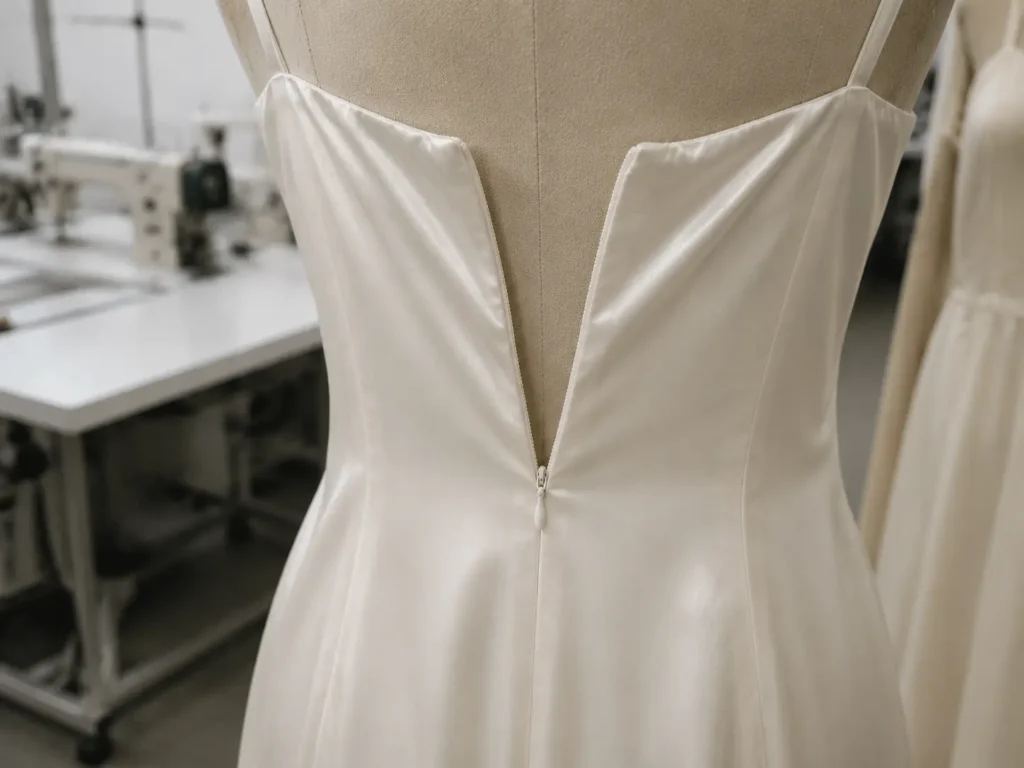
Invisible zippers are widely used because they maintain a clean A-line silhouette. The zipper seam needs to remain stable during sewing, and lightweight satin, chiffon, loosely woven fabric, or bias-influenced seams may require narrow support tape. The zipper should align across waist seams, prints, and panel joins, while both sides of the top edge finish at the same height.
The lining is usually assembled separately and attached at the neckline, armholes, waist, zipper, or selected internal points. Curved edges need trimming, clipping, and understitching so the lining rolls to the inside. If the seam allowance remains too wide, the edge can look thick. If the lining is attached too tightly, it can pull the outer garment upward or restrict movement.
Hem construction depends on fabric, price level, and appearance. Options include narrow double-turn hems, baby hems, blind hems, overlocked and turned hems, faced hems, bias-bound finishes, coverstitched knit hems, or supported hems using horsehair braid. Wide curved hems require careful feeding, and fluid skirts may need settling before leveling. The lining is usually shorter than the shell and should remain hidden while walking and sitting.
How Are Bulk Quality and Delivery Controlled?
Bulk quality is controlled through fabric inspection, cutting verification, inline sewing checks, measurement audits, finishing review, and final packing inspection. A-line dresses require particular attention to waist position, side-seam direction, flare symmetry, hem level, lining length, zipper smoothness, shade consistency, labels, and appearance after folding or hanging.
Pre-Cutting Control
Pre-cutting inspection prevents one material or technical error from affecting the entire order. The quality team confirms that the received fabric matches the approved standard in color, hand feel, weight, usable width, surface, stretch, and finish. The team also verifies the correct pattern version, graded size set, marker, order ratio, cut quantity, lining, and major trims before authorizing the first lay.
Print and directional requirements need to be settled before cutting. One-way florals, stripes, checks, satin shine, velvet nap, and lace motifs can affect both marker planning and consumption. The exact matching points should be defined because matching every motif may be unnecessary, while ignoring the center front, waist seam, or other highly visible areas can make the dress appear poorly engineered.
Cutting-room records should connect each lay to its fabric roll, shade group, marker, size ratio, pattern version, and quantity. This traceability helps the team find the source if shade or measurement issues appear later. Skilled sewing cannot correct panels cut from the wrong pattern, stretched fabric, or mixed shade groups, so reliable bulk control begins before the first stitch.
Inline Inspection
Inline inspection identifies repeated problems while garments are still moving through production. Inspectors check important operations at the start of the line and continue reviewing work during sewing so one error does not spread through a large quantity. Key points include dart position, seam allowance, stitch balance, neckline stability, armhole shape, waist measurement, zipper installation, pocket placement, lining attachment, puckering, and panel symmetry.
For many woven dresses, stitch density commonly falls around 8 to 12 stitches per inch, depending on fabric weight, seam type, thread, and appearance. Fine fabrics may need a shorter stitch with a finer needle and thread, while heavier materials need settings suited to their thickness. The approved machine setup should come from sewing trials rather than a generic number applied to every material.
Measurements are also taken at semi-finished stages. Checking the waist before the zipper is installed or reviewing neckline symmetry before the lining is closed makes correction easier. Inspectors should record defect types and frequency because repeated problems usually indicate a process issue, such as incorrect machine tension, weak operation instructions, unstable fabric, inconsistent pressing, or unsuitable handling between workstations.
Final Inspection
Final inspection confirms that garments match the approved measurements, workmanship standard, color, labeling, and packing requirements. A-line dress checkpoints normally include bust, waist, hip, shoulder, armhole, total length, waist position, hem circumference, side-seam direction, lining length, closure function, and visual symmetry. Inspection should compare the bulk product with both the specification and the approved reference sample.
Many apparel programs use statistical sampling based on an AQL plan rather than measuring every point on every garment. AQL 2.5 for major defects and AQL 4.0 for minor defects are commonly referenced commercial levels, although the customer’s own inspection standard takes priority. Premium, high-risk, or tightly controlled programs may use stricter limits, larger samples, or additional one-hundred-percent checks for selected features.
Major concerns can include measurements outside tolerance, open seams, broken stitches, a damaged zipper, severe shade difference, twisted side seams, an uneven hem, exposed lining, incorrect labels, prominent stains, holes, or missing components. Minor issues can include loose threads, small internal stitch irregularities, or light pressing marks. Decisions should follow the agreed standard rather than an inspector’s personal preference.
Packing and Inquiry Preparation
Packing affects how the dress looks when it reaches a distribution center, studio, store, or end customer. Before packing, garments are trimmed, pressed, checked, and passed through any required metal-detection process. Labels, hangtags, size stickers, barcodes, and care instructions are matched to the order, while the folding method protects the neckline, zipper, sleeves, and hem.
Structured or formal dresses may need tissue, shaped folding, garment bags, or hanging delivery. Lightweight styles can often be folded, but excessive carton compression should be avoided. Satin, velvet, sequins, and delicate lace may require surface protection. Carton assortments, style codes, purchase order numbers, quantities, destination details, and shipping documents should remain consistent from the packing line to dispatch.
A useful manufacturing inquiry includes the design or tech pack, reference images, target fabric, base measurements, size range, color plan, estimated quantity, label and packing requirements, destination market, launch date, and any testing standard. Clear information allows the development team to assess construction risks, sample requirements, material availability, lead time, and cost with fewer assumptions.
Jinfeng Apparel has focused on custom women’s fashion manufacturing since 2008 and supports pattern development, fabric sourcing, sampling, bulk production, quality control, private-label packing, and export coordination. Its production system includes six owned womenswear factories, more than ten long-term satellite production partners, eighteen-plus sewing lines, two sample rooms, seven-plus senior pattern makers, twenty-plus sample machinists, and fifteen-plus quality inspectors, with standard custom production starting from 200 pieces per style and color.