Skip to content

A dress can look profitable in a quotation and become expensive by the time it reaches the warehouse. The gap is rarely caused by sewing alone. It comes from fabric minimums, repeated samples, missing trims, quality repairs, urgent freight, customs handling, late launches, returns, and stock that must be discounted. That is why the China-versus-Portugal decision should never be reduced to a labor-cost comparison or a simple argument about European quality. The real question is which production system fits the dress, the selling market, the launch calendar, and the amount of commercial risk the brand can carry.
China is generally stronger for broad fabric access, complex dress construction, scalable capacity, and cost engineering. Portugal is often stronger for European proximity, shorter regional transport, and European-origin positioning. The better choice depends on total landed cost, order volume, product complexity, target market, compliance needs, and reorder speed.
Consider two brands developing the same satin midi dress. One chooses the lower quotation but approves the lining, zipper, and shell fabric in separate rounds, then pays for air freight after the launch date slips. The other pays more per unit, keeps development tightly controlled, and receives a smaller shipment before the campaign begins. Six months later, the second program may have produced the stronger margin. The pages that follow compare China and Portugal through the decisions that actually shape a dress program, from pattern development and fabric behavior to inspection, shipping, inventory, and repeat production.
What Is the Main Difference Between China and Portugal?
China offers a larger, more integrated apparel ecosystem with extensive materials, specialist processes, and scalable production. Portugal provides a smaller European manufacturing network with closer access to EU markets and stronger regional-origin value. Neither country is automatically better; the practical advantage depends on the dress category, production volume, destination, and factory capability.
Manufacturing Models
China’s dress-manufacturing model is built around dense production clusters, wide supplier choice, and the ability to separate work by technical specialty. A single collection may involve a fabric mill, dye house, print supplier, lace vendor, zipper producer, label workshop, pattern room, sewing factory, pleating unit, embellishment team, packing facility, and freight partner located within the same regional network. This is useful when a style changes during development because alternative fabrics, trims, and processes can often be tested without rebuilding the supply chain from the beginning.
Portugal operates through a smaller and more concentrated European textile-and-apparel system. Many factories work closely with regional mills, knitting facilities, dyeing and finishing companies, and technical centers. The scale is narrower, but communication can be direct and production can sit closer to European design teams and warehouses. This structure can suit brands that value controlled programs, regional sourcing, and shorter physical distances. The limitation appears when a dress requires novelty mesh, molded cups, decorative hardware, specialty sequins, or low-cost custom trims that may not be available locally.
The key difference is therefore not simply large versus small. China gives a brand more routes to solve material, capacity, and process problems, while Portugal can reduce the number of logistical steps between factory and European market. A strong sourcing decision asks which model supports the actual product. A jersey day dress, a bias-cut satin gown, and a hand-embellished corset dress do not place the same demands on a factory, even when all three are sold under the same label.
Supply-Chain Integration
Supply-chain integration becomes most valuable when the approved plan stops working. A pale champagne satin may look correct on a swatch but appear darker once placed over the lining. A concealed zipper may create rippling in a lightweight side seam. A lace motif may not align across a larger size range. In a dense Chinese cluster, the factory may compare several linings, zipper tapes, interlinings, and lace widths within days. The commercial advantage is not only a lower material price; it is the availability of workable alternatives before the schedule collapses.
Portugal can also offer coordinated sourcing, especially where the garment factory has long relationships with local mills and finishers. However, the word integrated should be tested rather than accepted. Some factories sew in-house while importing fabric, outsourcing printing, or sending embroidery and pleating to external specialists. The same is true in China. Brands should ask which steps are performed internally, which are subcontracted, how far the partners are from the factory, and who owns final quality responsibility. A supplier map is more useful than a general claim about vertical integration.
Integration should also be judged by record keeping. Reorders are easier when the factory retains approved patterns, grading rules, fabric references, color standards, trim codes, stitch details, labels, packing instructions, and inspection findings. Without those records, even a large local supplier base cannot guarantee consistency. The safest production network is the one that combines material access with disciplined technical control, clear accountability, and documented repeat-order procedures.
| Comparison Area | China | Portugal |
| Supply-chain scale | Broad national and regional network with many specialist suppliers | Smaller, concentrated European network with closer regional links |
| Fabric access | Extensive woven, knit, satin, chiffon, lace, mesh, sequin, print, and trim options | Strong selected European fabrics, knits, jersey, finishing, and certified-material programs |
| Complex process access | Wide availability of embroidery, pleating, embellishment, molded components, and custom trims | Good specialist capability, although some fashion components may be imported |
| Production scale | Suitable for multi-style programs and medium-to-large repeat volume | Often strongest for controlled small-to-medium programs and selected larger orders |
| Logistics advantage | Global export infrastructure and multiple international routes | Shorter road delivery and easier visits for many European brands |
| Main commercial strength | Range, scalability, and cost engineering | EU proximity, regional responsiveness, and origin positioning |
Market Proximity
Portugal has an obvious geographic advantage for brands whose main warehouse and retail network are in continental Europe. Finished garments can usually move by road, sample parcels travel quickly, and factory visits require less time and cost. Shorter physical distance can support later order decisions, smaller delivery drops, and faster action when a launch date changes. It also reduces dependence on long ocean schedules, port congestion, and extended customs clearance, which can be important for eventwear, graduation, holiday, and wedding-season collections.
China remains practical for global programs, but the schedule must include international freight and import procedures from the beginning. Sea freight can be economical when production is approved early, while air freight can recover lost time at a much higher cost. Long dresses, structured bodices, protective tissue, and presentation boxes can create high chargeable volume, so emergency air shipping may remove a meaningful part of the original unit-cost advantage. The right comparison is warehouse delivery, not the date cartons leave the factory.
For brands selling in the United States, Canada, Australia, the Middle East, or several regions at once, Portugal’s EU proximity may be less decisive. A business with warehouses on two continents should calculate freight, duties, handling, and delivery time to each location. The most convenient country for the head office is not necessarily the most efficient country for the inventory network. Market proximity matters only when it is connected to the actual flow of goods.
Country Versus Factory
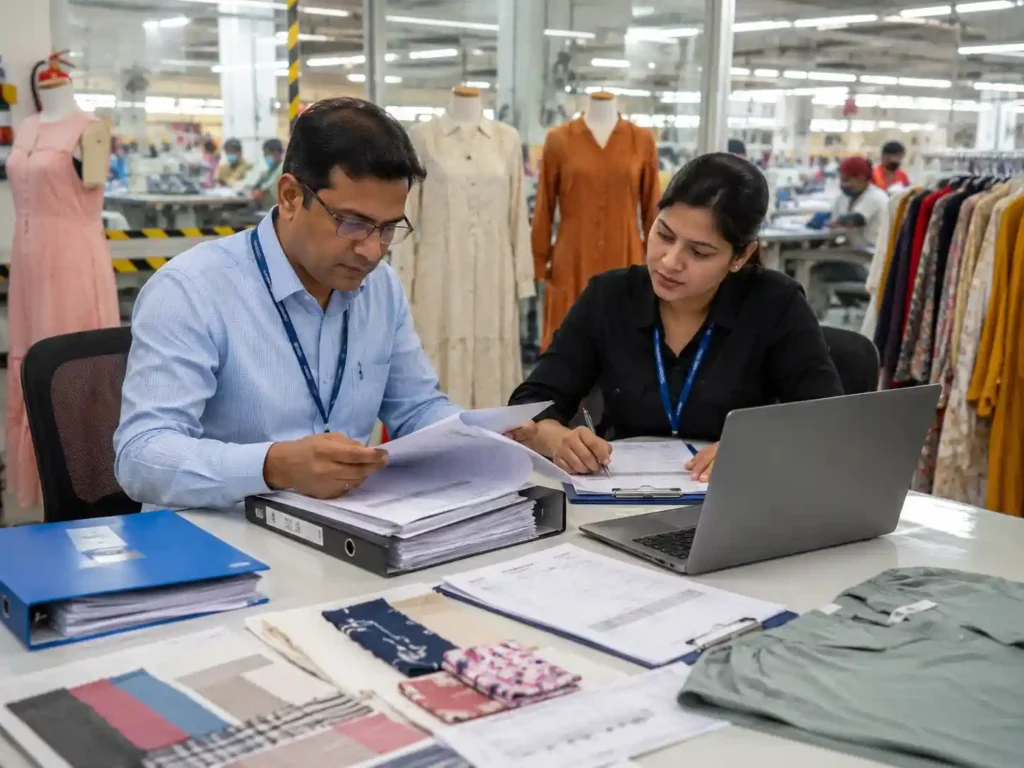
Country-level comparisons help narrow a search, but they cannot approve a manufacturer. Dress quality is shaped by the people who interpret the tech pack, correct the pattern, choose the fabric, test the sample, control cutting, manage sewing, inspect measurements, and protect the finished surface during packing. A factory that performs well with T-shirts may struggle with bias-cut satin. A strong tailoring workshop may still lack experience with stretch mesh, boning, or dense sequins. The same risk exists in both China and Portugal.
Evidence should match the intended product. A brand planning a corset mini dress should ask for inside-out photographs of similar bodices, examples of cup and boning construction, fitting records, and measurement-control methods. A chiffon maxi program should examine hem leveling, seam slippage, lining balance, and packing. A multi-style collection should be assessed through capacity allocation and production tracking rather than a single attractive sample. Relevant proof is more valuable than a long list of unrelated garments.
The strongest supplier is usually the one that explains limitations early. Professional manufacturers question unsuitable fabric, unstable measurements, unrealistic tolerances, weak seam choices, and deadlines that ignore material preparation. They also show where subcontracting occurs and how quality is controlled outside the main building. A polished country-of-origin story cannot replace that operational honesty. The decision should finish at factory level, even when it begins with a comparison between countries.
Which Country Offers Better Dress Manufacturing Costs?
China usually offers a lower factory cost for material-intensive, trim-heavy, or scalable dress programs. Portugal often carries a higher unit price but may reduce European freight, customs handling, delivery time, and inventory exposure. The useful comparison is total landed cost per accepted sellable garment, not the sewing price or factory quotation alone.
Unit Cost Structure
Dress quotations are shaped by fabric consumption, lining, trims, construction time, special processes, finishing, quality requirements, packaging, and factory overhead. Labor matters, but it is only one line in the calculation. A full maxi dress, layered chiffon skirt, or bias-cut style can use several times the fabric of a fitted mini dress. A design that looks simple from the front may contain an inner bodice, shaped cups, boning, fusible support, concealed closures, and several lining panels that make production far more demanding.
China often has stronger purchasing leverage across polyester satin, chiffon, stretch mesh, lace, lining, elastics, zippers, cups, boning, labels, and fashion trims. It also offers more alternative qualities at different price points. That breadth makes cost engineering easier when a brand needs to preserve the appearance while adjusting weight, composition, finish, or construction. The risk is that low quotations can be built on vague material assumptions. A price has little value until fabric composition, GSM, width, finish, color method, lining, and trim specification are clear.
Portuguese quotations commonly reflect higher regional labor, energy, and operating costs, but that does not automatically mean the product is better or less profitable. The value may come from European material access, shorter regional transport, easier supervision, or a country-of-origin story that supports retail pricing. Brands should request the same information from both countries: main-fabric consumption, lining consumption, trim cost, special-process charges, sewing cost, testing, inspection, labels, packaging, and the Incoterm used. Only then are the quotations describing the same garment.
Total Landed Cost
A factory price becomes commercially meaningful only after development, freight, duties, customs handling, inspection, storage, financing, and quality loss are included. The simplest internal measure is total landed cost divided by accepted sellable units. This avoids the common mistake of dividing by the ordered quantity even when part of the shipment requires repair, replacement, discounting, or rejection. A low quotation can therefore create a high real cost when quality recovery and urgent logistics are added later.
Consider a simplified example. An order of 2,000 dresses lands at a total cost of $40,000, which appears to equal $20 per unit. If 100 garments need repair before sale, only 1,900 units are immediately available. The effective cost becomes about $21.05 per sellable dress before repair labor, replacement packaging, or delayed revenue is added. This example does not predict a normal defect rate; it simply shows why accepted units matter when different suppliers are compared.
Portugal may reduce some European import and transport steps, while Chinese production may deliver a stronger factory price and broader material choice. Exact customs treatment depends on product classification, fiber composition, knitted or woven construction, origin, destination, and current regulations. It should be checked through official customs channels for the selling market. General apparel percentages are not reliable enough for a final sourcing decision, especially when several dress categories are included in one collection.
| Cost Element | What to Confirm | Common Risk |
| Garment price | EXW, FOB, FCA, or delivered basis; exact fabric and trim assumptions | Comparing prices based on different terms or specifications |
| Development | Pattern, sample, revision, courier, and approval costs | Underestimating pre-production spending |
| Material minimums | Unused fabric, custom color, print, lace, trim, and packaging commitments | Hidden stock or small-lot surcharges |
| Testing and inspection | Who pays, what is tested, and whether external inspection is required | Late compliance or service charges |
| Freight and customs | Chargeable weight, route, classification, duty, VAT, and clearance | A low factory price becoming expensive at arrival |
| Quality loss | Repair, replacement, discounting, and rejected quantity assumptions | Calculating cost against ordered units instead of sellable units |
| Inventory carrying cost | Storage period, financing, insurance, and markdown exposure | Lower unit cost creating larger cash and stock risk |
MOQ and Material Commitments
The garment factory’s stated MOQ is only the first minimum. Fabric mills, dye houses, printers, lace suppliers, zipper vendors, hardware producers, label printers, and packaging companies may each impose their own quantities. A factory might accept 300 dresses per color, while a custom-dyed satin supplier requires enough fabric for 800 or 1,000 garments. The unused material must still be purchased, stored, reassigned, or written off, which changes the real financial commitment.
China often provides more stock-supported fabrics and trims, making moderate orders practical when the brand can accept existing colors and available qualities. Custom weaving, dyeing, printing, and hardware development are widely available, but upstream minimums still apply. Portugal may offer smaller sewing runs in some factories, yet European mill minimums or small-lot surcharges can raise the cost. A low garment MOQ does not help when the selected fabric creates a much larger commitment.
Every quotation review should separate the minimum per style, color, fabric, custom print, custom-dyed shade, trim finish, private-label component, and packaging format. It is also useful to ask for the minimum economically efficient quantity. A factory may technically accept a small order, but the setup, cutting, line change, and inspection cost can make the unit price commercially weak. The best MOQ is the quantity the brand can sell at full margin, not the smallest number a factory is willing to sew.
Inventory and Margin Risk
China often becomes more attractive when sales data is reliable, volume is stable, and the brand can plan early. Larger orders spread sampling, pattern, material, and setup costs across more units. The danger appears when a business orders too deeply simply to reach a lower price. Unsold dresses absorb cash, warehouse space, insurance, and markdown risk. A garment that is cheap to produce but difficult to sell is not a cost-saving decision.
Portugal can reduce inventory exposure for European brands when a factory supports smaller controlled runs and quicker regional replenishment. A higher unit cost may still create a better result if more stock sells at full price and less capital remains trapped in slow inventory. For example, a $24 landed dress ordered in a disciplined quantity can outperform an $18 dress ordered at twice the realistic demand. The result depends on retail price, full-price sell-through, return rate, markdown depth, and the speed at which a winning style can be repeated.
Experienced teams therefore look beyond gross margin percentage and consider cash productivity. They ask how much money must be committed, how long it remains tied up, and how much full-price revenue it produces. China may be the stronger choice for proven core styles and large repeats. Portugal may be stronger for regional capsules or uncertain demand. Neither answer is universal because cost is a relationship between production, inventory, time, and sales rather than a number printed on a quotation.
How Do Sampling, Lead Times, and Reorders Compare?
Portugal often provides shorter physical transit to European markets, while China can solve material and trim problems quickly through a broader supplier base. Sampling and production speed depend more on product complexity, approval discipline, material readiness, and reserved capacity than on country alone. Reorders move fastest when patterns, fabrics, trims, measurements, and packing records are retained.
Sample Development
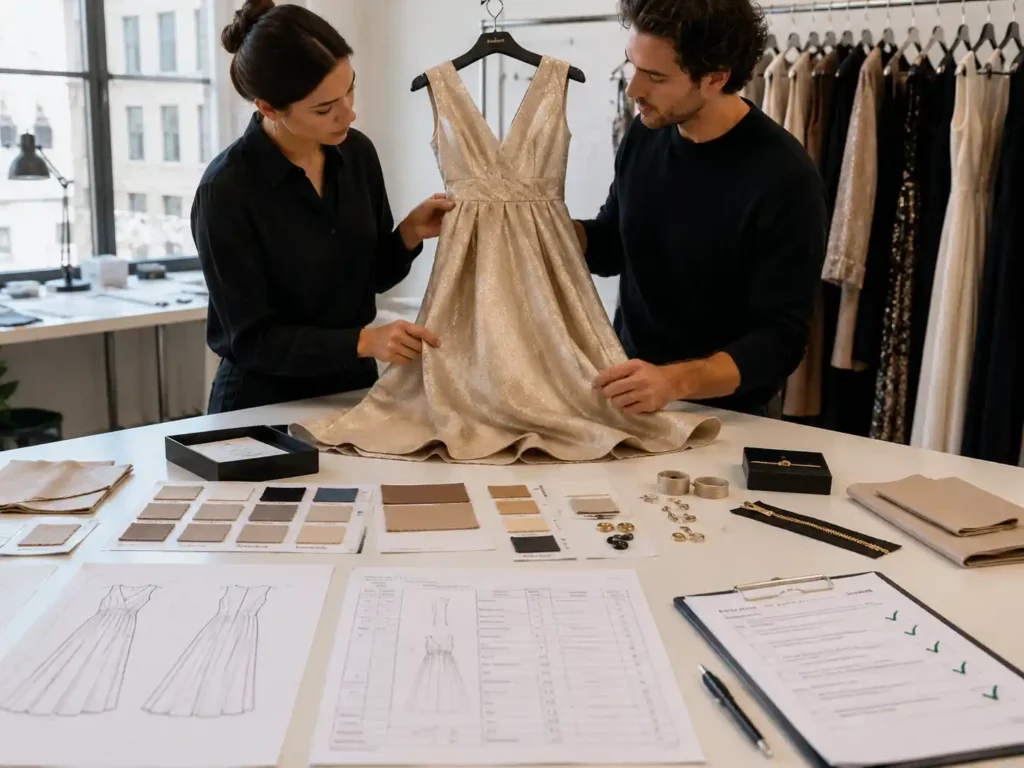
A realistic sampling schedule begins after the factory receives usable information. A clear tech pack, measurement chart, fabric direction, construction notes, reference garment, and target market can save more time than choosing the nearest supplier. Simple jersey or woven dresses may move quickly, while bias-cut satin, lace placement, structured busts, corsetry, draping, asymmetrical hems, and hand embellishment need more testing. The first sample is often a technical experiment, not a finished sales sample.
A practical sequence usually includes technical review, material sourcing, pattern development, first sample, fit review, revised sample, color and trim approval, pre-production sample, grading check, and bulk approval. Not every style needs every stage, but skipping fit or pre-production confirmation can transfer unresolved problems into mass production. Portugal’s proximity helps European teams move physical samples and reference garments quickly. China can offset distance through broad material sourcing, digital pattern communication, video fitting, and consolidated sample shipments.
The greatest delays often come from fragmented approvals. A brand approves the shell fabric, then changes the lining, then moves the zipper, then adjusts the neckline after photography. Each decision can change fit, balance, construction, and cost. Faster development comes from reviewing the garment as one connected system. Fit, fabric, lining, trims, labels, and packing should be discussed together, with one written revision list issued after each sample round.
Bulk Production
Bulk lead time should be measured from final approval and material readiness, not from the first email. A factory cannot responsibly cut production fabric while measurements, colors, labels, or packaging remain unresolved. The critical path usually runs through material booking, custom color or print development, pre-production approval, fabric inspection, cutting, sewing, inline correction, finishing, final inspection, packing, booking, and delivery. Any late change can move several later dates at once.
For early planning, many fashion programs allow roughly one to three weeks for stock material confirmation, several weeks for custom dyeing or printing, one to two weeks for a first sample after material readiness, and three to six weeks for bulk production after approval. Complex occasionwear, dense embellishment, peak-season capacity, or repeated changes can extend those ranges. These are planning windows rather than guarantees, and each factory should issue a style-specific calendar after reviewing the actual construction.
The largest schedule variable is frequently fabric rather than sewing. A factory may have an open production line but no approved lace, matching lining, or correct zipper tape. Brands should request a critical-path calendar that names the responsible party for every approval. The document should show material deadlines, sample dates, cutting, sewing start, inline inspection, final inspection, packing, transport booking, and expected warehouse arrival. A calendar without ownership is only a list of hopes.
| Production Stage | China Planning Range | Portugal Planning Range |
| Stock fabric and trim confirmation | About 3-10 working days | About 5-15 working days |
| Custom color, print, or specialty material | About 15-35 days | About 20-45 days |
| First sample after materials are ready | About 7-15 days | About 7-15 days |
| Revised sample | About 5-10 days | About 5-10 days |
| Bulk production after approval | About 25-45 days | About 20-40 days |
| Final inspection and packing | About 2-7 days | About 2-7 days |
| Typical sample courier to continental EU | Often 3-7 days | Often 1-3 days |
| Finished-goods transport to continental EU | Sea often 25-40 days port-to-port; air is faster at higher cost | Road delivery often about 2-7 days |
Launch Timing
Portugal offers a practical advantage when finished goods must reach European warehouses quickly. Road transport can support closer-to-market production, later buying decisions, and smaller replenishment drops. This is valuable when a collection is tied to weddings, graduation, festivals, holidays, or campaign dates that cannot move. The commercial benefit is not simply shorter travel; it is the ability to make some decisions with more recent sales information and less stock already committed.
China requires a longer logistics buffer for sea freight, but it can still support fast fashion when development and approvals are disciplined. Strong programs work backward from the retail launch date through warehouse processing, customs, inland delivery, international freight, final inspection, bulk production, material preparation, and sample approval. Air freight can recover time, but it should be treated as an exception. Full skirts, long hems, tulle volume, protective packing, and presentation boxes create high chargeable volume that can make emergency transport expensive.
A style delivered two weeks late may miss the period when customers are actively searching for it. This matters more in occasionwear than in a stable basic category. Sourcing teams should therefore compare calendar risk alongside price. The best production route is the one that reaches the warehouse with enough time for quality checks, product photography, content preparation, allocation, and any unexpected repair, rather than the route that merely leaves the factory earliest.
Repeat Orders
A reorder should move faster than the first production, but only when the product records are complete. The factory needs the approved pattern, grading rules, measurement tolerances, fabric code, color reference, trim specification, sewing method, label files, packing instructions, inspection findings, and the final approved sample. If these records are scattered through emails or held by one individual, the repeat can become another development project.
China’s supplier depth can make reorders efficient when the same materials remain available. The risk is that fast-moving fashion fabrics may be discontinued or replaced by a similar quality with different weight, shine, stretch, or color. Physical swatches and new bulk-lot approval remain important. Portugal can perform well where mills and garment factories maintain stable regional relationships, although specialty fabrics may be produced in scheduled runs rather than continuously.
Repeat-order planning should begin during the first order. The brand should ask how long patterns and samples are retained, whether unused fabric can be stored, how new dye lots are approved, whether the same production unit will handle the repeat, what quantity triggers a new material minimum, and how quickly capacity can be reserved. A reorder is fastest when the technical and commercial decisions have already been preserved, not when the warehouse reports that stock has reached zero.
Which Country Handles Complex Dresses Better?
China generally has the broader supplier base for dresses involving several fabrics, corset structures, specialist trims, embellishment, and scalable production. Portugal can deliver excellent workmanship through the right specialist factory, particularly for premium European collections. Performance depends on pattern engineering, fabric handling, sample development, skilled operators, and quality control rather than the country label alone.
Satin and Chiffon
Satin exposes weak production control quickly. Its smooth surface highlights seam puckering, needle marks, uneven pressing, zipper rippling, and inconsistent grain direction. Panels cut in opposite light directions can appear to be different shades even when they come from the same roll. Bias-cut pieces can lengthen while hanging, which may create an uneven hem after sewing. A capable manufacturer controls face direction, marker layout, needle size, tension, pressing temperature, handling marks, bias growth, and protective packing.
China provides broad access to polyester satin, stretch satin, charmeuse, duchess satin, and many blended alternatives at different weights and price points. This makes it easier to adjust drape, shine, stretch, and cost without abandoning the design. Portugal may offer strong access to selected European fabrics and premium qualities, but the brand should verify whether the satin is local or imported, what the minimum is, and whether the exact quality can be repeated. The country of sewing does not guarantee the origin or continuity of the fabric.
Chiffon creates different risks. It moves during cutting, can slip at seams, shows puckering, and requires careful lining and hem balance. Full skirts and long panels may relax differently after sewing, so the dress often needs to hang before final leveling. Factories without chiffon experience may cut too many layers at once or use unsuitable seam methods, creating inaccurate panels that cannot be repaired cleanly. The right factory should show evidence of cutting control, seam testing, opacity decisions, lining length, and final hem measurement.
Lace and Mesh
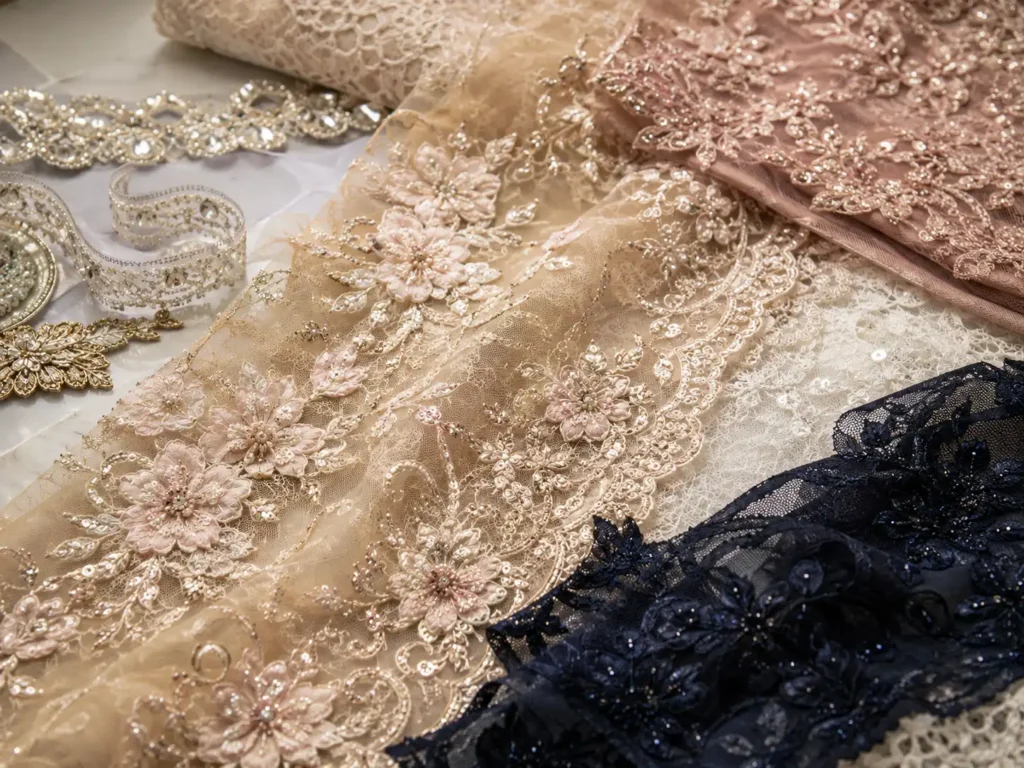
Lace and mesh require design decisions before they require sewing. The development team must decide where motifs begin and end, whether visible seams should match, how scalloped edges are used, where transparency is acceptable, and whether the lining stretches with the outer material. These choices affect fabric consumption, grading, labor, and the appearance of every size. A factory that simply places the pattern for lowest consumption may destroy the intended symmetry or leave motifs in awkward positions.
China offers a wide range of synthetic, embroidered, corded, stretch, and novelty laces, which helps when a brand needs a similar visual effect at a controlled price. The challenge is continuity because trend-led lace can have a short market life. Portugal can be attractive when the program depends on European lace, regional traceability, or closer mill collaboration, although imported materials may increase cost and lead time. In both countries, the approved swatch should be linked to a supplier code and production lot rather than a general description such as floral stretch lace.
Stretch mesh requires recovery testing as well as visual approval. A sample may fit correctly for ten minutes and become longer or looser after several hours of wear. The factory should test stretch direction, recovery, seam behavior, lining compatibility, neckline stability, and load around closures. For lace and mesh, the most revealing sample review is often inside out. It shows reinforcement, lining joins, seam bulk, edge treatment, and whether the structure supports the surface rather than merely looking attractive on a mannequin.
Structured and Embellished Styles
Corset dresses, underwired bodices, padded cups, and boned panels need pattern engineering rather than decorative styling. Bust point, neckline, waist, back closure, cup shape, and boning position work as one system. Moving a seam or cup by one centimeter can change support, cleavage, comfort, and zipper tension. China often has an advantage in access to molded cups, boning, channels, underwires, hook-and-eye tape, elastics, and small hardware. Portugal can produce excellent structured garments, but the selected factory must prove specific corsetry experience.
Embellished dresses introduce another layer of risk. Sequins can break needles or cut thread, beads can scratch skin, dense embroidery can create seam bulk, and motif placement can shift between sizes. Handwork may vary between operators unless the factory uses placement guides and approved workmanship samples. Protective packing is also part of production because finished surfaces can snag, rub, or lose pieces during transport. A beautiful sample does not prove that hundreds or thousands of garments can be repeated at the same standard.
Before bulk approval, brands should define acceptable variation in placement, symmetry, loose threads, missing pieces, skin contact, and surface damage. Full-size artwork or placement templates are more reliable than small reference images. The factory should also explain how embellishment affects grading, seam allowance, pressing, metal detection, repair, and carton packing. Complex dresses succeed when the development, sewing, finishing, and inspection teams agree on one measurable standard before the first production bundle reaches the line.
Multi-Style Collections
A factory that makes one strong sample may still struggle with a twenty-style collection. Multi-style programs require capacity planning, shared fabric management, consistent fit blocks, grading control, trim allocation, production tracking, and coordinated approvals. China is well suited to collections that contain several fabric categories because satin dresses can move to one unit, stretch bodycon styles to another, and embellished occasionwear to a specialist line. The advantage disappears when those units are not controlled by one accountable management team.
Portugal’s smaller production structure can support close collaboration and strong visibility, but line availability becomes important when many styles must ship together. A technically capable factory may not have enough skilled operators during peak season. The brand should ask how styles are grouped, which work is subcontracted, whether the same pattern team supports all factories, and how measurements, color, labels, packing, and final inspection remain consistent across the collection.
A useful production matrix lists the style number, material, assigned unit, color and size quantity, sample status, material arrival, cutting date, sewing date, inspection date, packing date, and shipment group. This turns a collection into visible work rather than a collection of promises. Complexity is created not only by difficult construction but also by the number of SKUs, approvals, suppliers, and deadlines moving at the same time. The country with the larger capacity is helpful only when the program is managed as one connected system.
Are Quality, Compliance, and Supply Risks Different?
Quality is not guaranteed by either country. Portugal benefits from EU proximity and a European regulatory environment, while China offers deeper capacity and supplier choice. Brands still need to verify factory systems, material documentation, testing scope, subcontracting, traceability, inspection procedures, and recovery plans in both locations. Country reputation is useful context, not a substitute for evidence.
Quality Control
Effective quality control begins before sewing. Fabric should be checked for shade, width, surface defects, stretch, shrinkage, and directional behavior. Trims should be approved for color, function, finish, and compatibility. Patterns, measurements, seam methods, and the pre-production sample should be confirmed before cutting. During production, first-output review and inline inspection are more valuable than waiting for the final day because they can correct a method before the same fault spreads through the order.
Final inspection remains important, but it cannot repair a systemic problem. If a neckline is stretched by the sewing process, checking finished goods only identifies the damage. The factory must change handling, stabilizing, machine settings, or operator method while production is still running. Measurement control should also match the garment. A fitted corset dress normally needs tighter attention at bust, waist, cup, and back length than a loose resort dress. One generic tolerance sheet should not be copied across every product.
Quality language should be measurable. Good stitching is subjective, while requirements for no open seams, no skipped stitches, balanced gathering, controlled puckering, correct zipper function, agreed measurement tolerance, and clean pressing are easier to inspect. Brands should request sample inspection reports, inline records, final findings, and corrective-action examples. The strongest factory is not the one that claims zero problems. It is the one that finds issues early, identifies the cause, documents the correction, and prevents recurrence.
Compliance and Traceability
Manufacturing in Portugal does not automatically make a dress compliant, and manufacturing in China does not prevent compliance. The company placing the garment on the market remains responsible for understanding fiber labeling, chemical restrictions, product safety, care information, packaging, environmental claims, and market-specific documentation. Requirements can change, so the final compliance plan should be checked against current official rules in the destination market rather than copied from an old order or another product category.
A practical traceability file may include supplier identity, fiber composition, fabric lot, dye or print reference, finishing information, trim composition, care-label wording, country of origin, test reports, certification scope, transaction documents where relevant, production date, batch code, and packing records. This information becomes increasingly important when retailers request product data, when sustainability claims are reviewed, or when a quality issue must be traced back to a specific material lot.
Certificates should be verified by legal factory name, address, scope, issuing body, validity, and product relevance. A fabric-mill certificate does not automatically cover the garment factory or the finished dress. A test report for one color or fabric lot may not cover every variation. Portugal can offer easier access to some European documentation and regional suppliers, while experienced Chinese manufacturers can build equally disciplined files. The deciding factor is whether evidence follows the actual materials and production route used for the order.
Design Protection

Dress development exposes sensitive information months before launch. Tech packs, measurement charts, original samples, artwork, pattern files, fabric choices, prices, quantities, labels, packaging, launch dates, and campaign samples should be protected through both agreements and daily procedures. An NDA is useful, but it cannot replace access control, visitor rules, sample handling, secure file storage, approved subcontracting, and clear ownership of patterns and development work.
China’s larger supplier network can increase exposure when fabric, trims, embroidery, pleating, labels, and packing move through several workshops. Centralized project management and approved partner lists are therefore important. Portugal’s smaller network may feel more visible, but the same questions still apply. Who can view the brand name? Can the factory display samples to visitors? What happens to rejected labels, excess packaging, unused fabric, overproduction, and damaged samples? Who owns the pattern after development is paid?
Responsible factories should also avoid unauthorized copying. Reference images can guide proportion, construction, mood, or market direction, but the final product should be developed around the client’s own brand identity and legal rights. The safest relationship is one where confidentiality, intellectual property, subcontracting, photography, sample disposal, and record retention are discussed before the first sample is made. Protection is strongest when it is part of the workflow rather than a document signed after a problem appears.
Supply Continuity
China and Portugal present different continuity risks. China offers broad alternative capacity and material choice, which can help when one supplier fails or a line becomes full. At the same time, long-distance freight, customs changes, port disruption, geopolitical tension, and dependence on international transport can affect delivery. Portugal reduces distance for many European brands, but its smaller specialist base can become tight in peak seasons, and some fabrics or trims may still depend on imported inputs.
A useful risk review looks beyond the main factory. It checks the number of approved material sources, dependence on one production unit, peak-season line availability, replacement lead time, financial stability of key suppliers, customs routes, backup transport, quality-recovery procedures, ownership of patterns, and access to technical records. A supplier with several sewing lines but one unique fabric source may be less resilient than a smaller factory with two fully approved alternatives.
Dual-country sourcing can reduce geographic exposure, but it also creates technical risk when two manufacturers interpret fit, color, construction, and inspection differently. Diversification works only when both suppliers use the same approved measurements, physical color standards, material tests, sewing specifications, and final inspection criteria. A second country is not automatically a backup. It becomes a backup after development, sample approval, material planning, and capacity have been completed before the primary supply chain is disrupted.
Which Country Should Your Dress Brand Choose?
Choose China when the collection needs broad materials, complex construction, scalable volume, and strong cost engineering. Choose Portugal when European proximity, shorter regional delivery, and European-origin value justify a higher unit cost. A hybrid strategy can work when products are allocated by complexity, volume, launch timing, and market rather than by country reputation alone.
When China Fits
China is often the stronger option for a broad fashion-dress collection that combines different fabrics, trims, and construction methods. It is particularly practical when the program includes satin, chiffon, mesh, lace, sequins, corset structures, custom prints, molded components, specialist hardware, or several private-label elements. A dense supplier network gives the development team more ways to match a target look, adjust cost, and scale production after a style proves successful.
The country also fits brands that expect medium or high repeat volume, develop several styles at the same time, require both woven and stretch production, need custom colors or trims, or ship to multiple global markets. The main requirement is calendar discipline. Longer international transport must be built into launch planning, and late approvals should not be allowed to force routine air freight. China works best when product decisions are made early enough to use its cost and capacity advantages rather than paying to recover lost time.
The right Chinese partner is not the factory with the lowest first quote. It is the manufacturer with relevant dress pattern makers, experienced sample machinists, clear fabric and trim sourcing, transparent production allocation, measurable quality control, and reliable repeat-order records. A technically strong supplier should be willing to explain material minimums, construction risks, capacity limits, inspection points, and the route from approved sample to finished shipment.
When Portugal Fits
Portugal is often attractive for brands whose principal warehouse and customer base are in Europe. Shorter regional transport can support later order decisions, smaller delivery drops, frequent factory visits, and faster replenishment. The country may also support a product story built around European production, regional craftsmanship, and selected European materials. A higher unit price can be commercially sensible when it contributes to premium retail positioning or reduces the amount of uncertain inventory committed before launch.
Portugal may fit especially well when the collection is carefully focused, the selected factory has proven expertise in the exact category, and the business values visibility over maximum supplier variety. It can also suit programs where road delivery reduces the risk of missing a fixed European retail date. However, European production should not be treated as an automatic quality guarantee. Pattern development, fabric handling, measurement control, line capacity, subcontracting, and repeat availability still need to be reviewed in detail.
Origin claims should also be built on evidence. Brands should confirm where the shell fabric, lining, lace, zippers, labels, and packaging are made when European sourcing forms part of the marketing message. A dress sewn in Portugal may contain imported components, just as a dress made in China can use European fabric. The commercial value of origin comes from a transparent and accurate story, not from assumptions about every item in the bill of materials.
| Decision Factor | Favor China When… | Favor Portugal When… |
| Target market | Sales are global or distributed across several regions | Most inventory is delivered into the EU |
| Order volume | Medium-to-large production and scaling are expected | Smaller controlled drops are commercially preferable |
| Fabric range | Many fashion fabrics, trims, and alternatives are needed | Selected European materials support the product story |
| Dress complexity | Several structures, trims, or specialist processes are involved | The selected factory has proven expertise in the exact category |
| Cost model | Factory economics and material options are critical | Short logistics and lower inventory exposure justify higher unit cost |
| Launch timing | The brand can approve early and plan international freight | Late decisions and rapid EU delivery are important |
| Origin value | Product, quality, and price matter more than European origin | European origin supports pricing and communication |
| Reorders | Larger repeats can be forecast and materials can be reserved | Smaller regional replenishment is required |
| Risk strategy | Broad supplier alternatives and scalable capacity are valuable | Regional visibility and shorter transport are priorities |
Hybrid Sourcing
A hybrid strategy assigns products according to commercial logic instead of placing the entire collection in one country. Portugal may handle European capsule collections, regional replenishment, products built around European origin, or time-sensitive deliveries. China may handle high-volume core dresses, complex satin and mesh styles, sequin occasionwear, corset construction, custom trims, global programs, and larger repeats. This division can improve flexibility when each product is matched to the strongest production environment.
The strategy becomes difficult when specifications are not standardized. Two factories can produce noticeably different versions of the same approved design if they use different fit blocks, seam methods, color references, pressing standards, or measurement tolerances. Both suppliers should work from the same controlled tech pack, physical standards, approval process, and final inspection criteria. The brand also needs a clear rule for which country owns future reorders when a style moves between regions.
Hybrid sourcing is most effective when it is planned before capacity is needed. Backup patterns, material alternatives, and sample approvals should be prepared while the main supply chain is stable. Moving a complex dress after a disruption can take longer than expected because the second factory must relearn the construction. Geographic diversification reduces risk only after technical duplication has been completed, not when a second factory name is added to a supplier list.
Final Selection
The final choice should be made through a weighted decision matrix rather than personal preference. A European occasionwear label may give more weight to launch speed, regional delivery, origin value, and small replenishment. A global online fashion business may prioritize material choice, scalable capacity, custom development, and production economics. Each factory can be scored from one to five across relevant dress experience, pattern capability, fabric sourcing, sample accuracy, cost transparency, MOQ fit, capacity, quality control, compliance support, delivery reliability, design protection, and repeat readiness.
Country should be one line in that matrix, not the entire answer. China is generally the more versatile manufacturing base for brands that need broad material access, complex development, and scalable production. Portugal is often the more convenient regional option for European brands that value proximity, controlled inventory, and European-origin positioning. The stronger result comes from the supplier that can turn the design into a repeatable, compliant, commercially successful garment within the real launch calendar.
Before confirming an order, compare a similar sample, a transparent costing, a style-specific calendar, production allocation, material sources, inspection procedures, and repeat-order records. Visit where practical, or use a detailed virtual factory review and independent inspection. The decision is ready only when the brand understands what will be made, where