Skip to content

A polished 3D dress can create a dangerous sense of certainty. The silhouette looks balanced, the fabric seems to move naturally, the print sits exactly where the designer intended, and the virtual model can turn without exposing an obvious problem. Yet none of those visual signals proves that the physical dress will feel comfortable, hang evenly after relaxation, survive sewing, or remain consistent across a production run. The technology is valuable, but the approval decision can still be incomplete.
3D dress sampling can shorten early development, improve communication, and remove obvious pattern or proportion errors, but it cannot fully verify fabric hand, real-body comfort, sewing behavior, internal support, embellishment weight, or bulk-production consistency. For fit-sensitive and construction-sensitive dresses, the safest process combines digital review with an actual fit sample and a final pre-production reference made in the intended materials.
The real limitation is not that virtual sampling is unreliable. The problem begins when teams ask a digital garment to answer questions it was never designed to settle. Picture a satin gown that falls perfectly on screen, only for the first physical sample to arrive with twisted side seams, a rippled zipper, a collapsing bust, and a hem that grows after hanging overnight. The render may have been useful; the approval boundary was simply drawn in the wrong place.
What Can 3D Dress Sampling Confirm?
3D dress sampling can confirm overall silhouette, proportion, garment length, panel placement, colorways, print positioning, and obvious pattern imbalance. It is most useful before physical sampling, when teams need to compare design options quickly. It cannot independently confirm hand feel, comfort, sewing quality, internal support, or reliable bulk-production repeatability.
Silhouette and Proportion
A well-prepared 3D sample gives the design and technical teams a shared view of the dress before fabric is cut. It can reveal whether the waistline sits too high, whether a mini length weakens the intended proportion, whether the skirt needs more sweep, or whether a fitted bodice visually overpowers a soft lower section. Comparing these options digitally is faster than ordering a separate physical sample for every small visual decision.
The strongest use cases are decisions that depend mainly on shape and proportion. A team can compare a 78 cm mini dress with an 82 cm version, move a waist seam by 15 mm, widen a sleeve opening, or reduce the volume of a gathered skirt. Those changes can be reviewed from the front, side, and back, allowing the team to reject weak directions before sample-room time and material are committed.
Color and Detail Placement
Digital sampling is also effective for color combinations, print scale, artwork placement, lace panels, cutouts, pockets, buttons, and color blocking. A motif that looks balanced on a flat CAD may become crowded around a gathered waist or disappear into a curved side panel. Viewing the design on a body-shaped form gives a more realistic understanding of how decorative elements relate to the garment rather than to a flat rectangle.
This stage is particularly useful for reviewing print direction across adjoining panels, the distance between an embroidery and a neckline, the visual width of a waistband, and whether a cutout exposes more skin than intended. These checks can prevent avoidable development rounds, but they do not prove that a factory can cut, match, embroider, or sew those details within production tolerances using the selected materials.
Pattern Balance
One of the most useful technical applications of 3D sampling is early pattern-balance review. A pattern may match the measurement chart and still hang poorly. The front hem can rise, the side seam can swing forward, the back neckline can stand away from the body, or drag lines can appear around the bust and hip. Simulation gives an experienced pattern maker an earlier opportunity to identify where the pattern relationship needs correction.
That advantage depends on professional interpretation. A stiff digital fabric may exaggerate imbalance, while an unrealistically soft material can hide it. Pattern balance should therefore be reviewed with seam walking, grain direction, finished measurements, and knowledge of the intended fabric. The screen helps locate the question, but it does not replace the pattern maker’s responsibility to confirm the technical cause.
What 3D Cannot Approve
The boundary between visual confirmation and production approval must be explicit. A virtual dress can show what the product is expected to look like, but it cannot prove what the wearer will feel or what the sewing line will encounter. Surface abrasion, zipper waviness, cup support, seam bulk, lining comfort, elastic recovery, pressing marks, and packaging creases are physical outcomes that remain outside a visual approval alone.
Approval language should therefore be specific. A note such as “3D silhouette, neckline shape, skirt volume, and print scale approved” is safer than the vague phrase “sample approved.” The first statement records the decisions actually made. The second can be misread as permission to start bulk production even though fit, materials, workmanship, and construction have not yet been physically verified.
| Development Question | 3D Can Support | Physical Confirmation Still Needed |
| Is the silhouette balanced? | Yes | Final drape in the nominated fabric |
| Is the dress length appropriate? | Yes | Length after sewing and fabric relaxation |
| Is the print positioned correctly? | Yes | Cutting, matching, and production placement |
| Does the neckline look stable? | Partly | Movement, coverage, and security |
| Is the dress comfortable? | No | Fit-model feedback and wear testing |
| Will the zipper lie flat? | Partly | Actual sewing and pressing trial |
| Will the lining pull the shell? | Partly | Complete layered sample |
| Can the design be repeated in bulk? | No | PP sample and production controls |
The table separates visual decisions from physical proof. A company may approve color, proportion, or detail placement digitally while still holding fit, material, workmanship, and production authorization for a later stage. This prevents an attractive render from being treated as a complete manufacturing approval standard.
How Accurate Is Fabric Simulation?
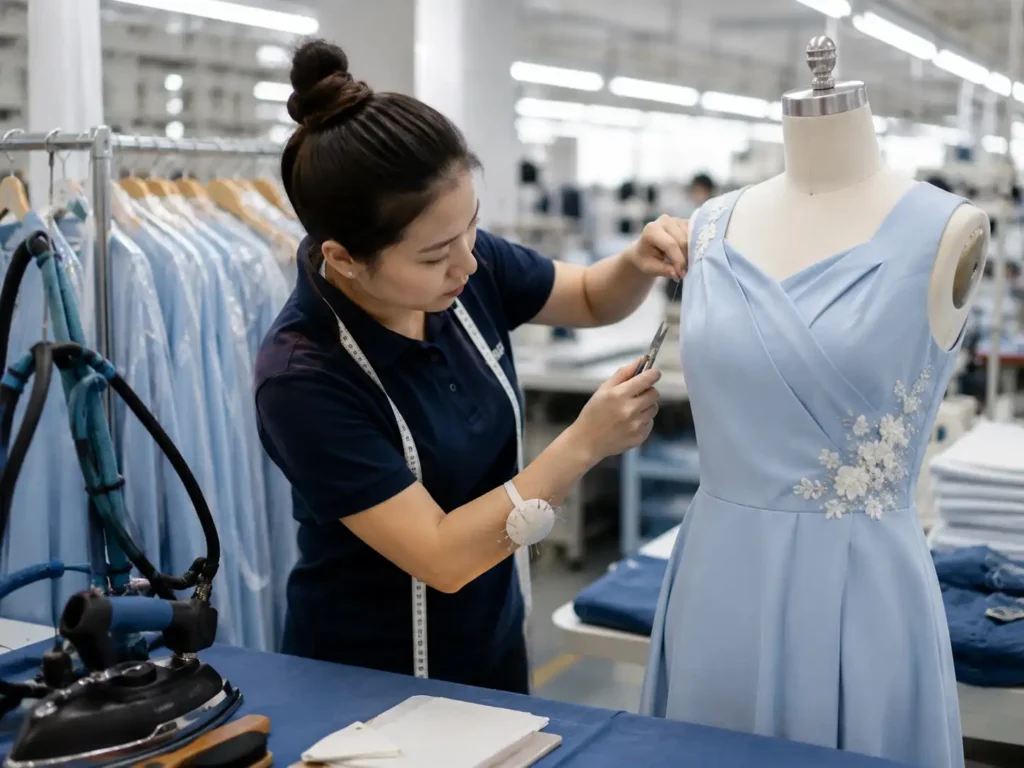
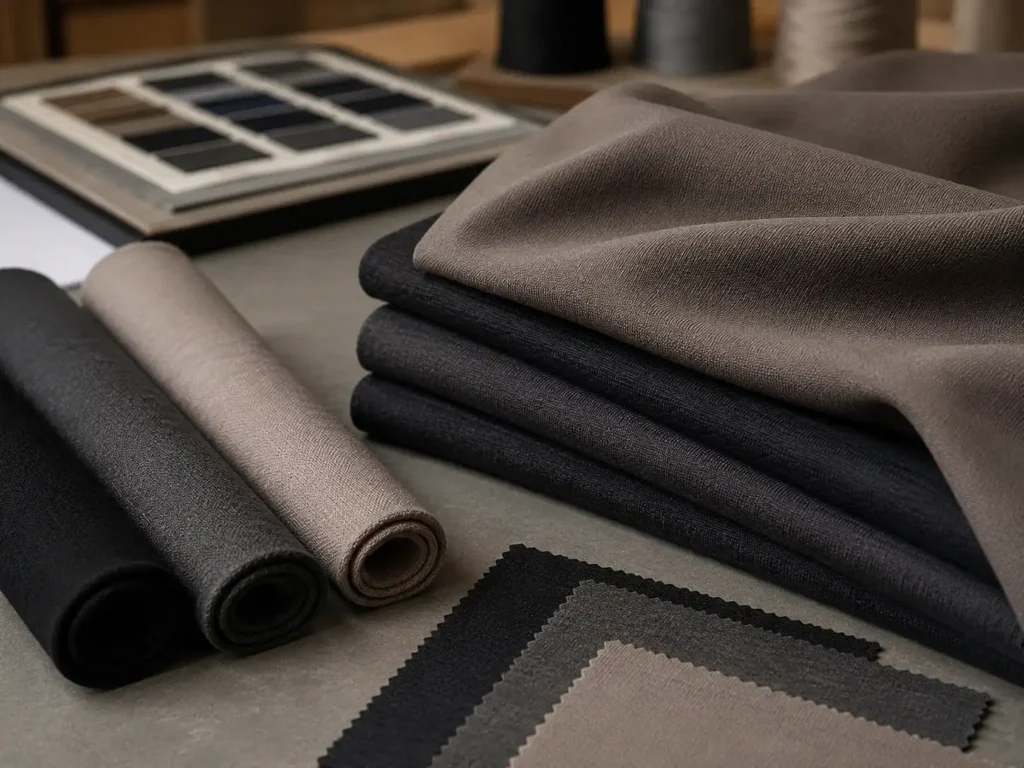
Fabric simulation is useful when the actual material has been measured and the digital settings reflect its weight, stretch, bending, thickness, friction, and recovery. Accuracy falls when teams rely on a generic preset or judge a material by appearance alone. For drape-sensitive dresses, the nominated production fabric should always be tested physically before final approval.
Physical Data Matters
Fabric behavior is not determined by fiber content or a supplier name alone. Two polyester satins can share a similar composition and weight yet behave differently because of weave density, yarn type, finishing, surface friction, and bending resistance. A believable digital result requires the material file to reflect the characteristics that actually control how the dress stretches, folds, slides, recovers, and settles around the body.
The most important inputs commonly include mass per square meter, thickness, warp and weft extension, bias behavior, bending resistance, shear, friction, and recovery after stretching. A difference of 20 to 30 gsm can visibly change a skirt’s fold size, while a jersey with 35 percent horizontal stretch will not fit or recover like a visually similar jersey with 60 percent stretch. These differences matter most when the style depends on close fit or fluid drape.
Difficult Fabric Categories
Lightweight, elastic, open-structure, directional, and embellished fabrics are harder to simulate because their behavior changes with handling and construction. Chiffon can respond to static, finishing, and layer interaction. Satin combines fluid drape with a slippery surface and directional shine. Stretch mesh changes transparency as it extends, while lace varies according to motif density and the proportion of open areas within the structure.
Velvet introduces pile direction and pressure marks, and sequin fabric combines a flexible base with rigid decorative components that add local weight and stiffness. A digital texture may reproduce the appearance of these materials without reproducing every physical consequence. For this reason, fabric names such as “satin,” “mesh,” or “lace” are not sufficient technical descriptions for approval. The exact supplier reference and tested behavior remain important.
Layers and Internal Components
The visible outer fabric is only one part of many dresses. Linings, cups, boning, fusible support, elastic, tapes, zippers, and reinforcement can change the way the garment fits and hangs. A strapless dress may look smooth in a shell-only simulation but become more rigid after molded cups, waist stay tape, interlining, silicone elastic, and a heavy center-back zipper are added to the construction.
Layer interaction also matters in tulle skirts, double-layer mesh dresses, lace overlays, and lined chiffon garments. The outer layer may move freely while the lining catches, shortens the stride, or pulls the shell off grain. Accurate modeling is possible only when the full construction is represented. A virtual file that omits hidden components is not simulating the actual product that will reach production.
Material Approval
A dependable material approval process separates visual selection from technical confirmation. A fabric can pass for color and surface appearance while failing on stretch recovery, shrinkage, transparency, snagging, or sewing performance. Before a drape-sensitive dress reaches final sampling, the team should confirm the supplier reference, composition, usable width, gsm, directional stretch, recovery, shrinkage, color consistency, surface defects, and pressing behavior.
Stretch should be recorded numerically rather than described only as low, medium, or high. If a 10 cm test section extends to 14 cm, the working extension is approximately 40 percent. Recovery must then be checked after release, because high extension without stable recovery can produce bagging at the seat, waist, or elbows. These simple records make the virtual and physical development stages easier to compare.
| Fabric Type | Common Working Weight | Main Physical Check |
| Chiffon | 55-90 gsm | Transparency, layer movement, and hem balance |
| Satin | 80-180 gsm | Twisting, snagging, puckering, and zipper behavior |
| Stretch mesh | 70-160 gsm | Compression, transparency, and recovery |
| Jersey | 140-260 gsm | Growth, directional stretch, and shape retention |
| Lace | 70-220 gsm | Motif placement, joining, and seam bulk |
| Sequin fabric | 180-450+ gsm | Added weight, scratching, and thick seams |
| Velvet | 180-320 gsm | Pile direction, shade, and pressure marks |
These ranges are practical industry references rather than fixed specifications. Fabric construction, finishing, supplier variation, embellishment density, and test method can shift the values significantly. The bulk fabric reference should always take priority over a generic material category when the dress depends on controlled drape, stretch, or surface quality.
Can 3D Sampling Prove Dress Fit?
3D sampling can identify likely fit problems, but it cannot fully prove that a dress is comfortable, secure, and suitable for movement. The result depends on the avatar, pattern, fabric data, and interpretation of tension maps. Physical fit models remain essential for checking pressure, neckline security, strap stability, mobility, and the way the garment feels over time.
Avatar Limitations
A digital avatar can match a size chart and still fail to represent the range of bodies found within that size. Two women can share the same bust, waist, and hip circumferences while having different shoulder slopes, bust projection, torso length, abdominal shape, hip distribution, or posture. Those differences can change neckline behavior, waist position, side-seam direction, and the amount of fabric required across the front and back body.
The issue becomes more visible in fitted products. A strapless bodice may stay secure on one body but slide on another. A bodycon dress can match the hip measurement while leaving excess fabric at the lower back. A deep-V neckline may look controlled on a smooth avatar but open during movement. Reliable avatar setup should therefore consider high bust, underbust, front and back waist length, shoulder angle, bust point, hip depth, and posture rather than relying only on three circumferences.
Tension and Strain Maps
Tension and strain maps are useful diagnostic tools because they show where fabric is under load or extending over the body. They can help locate an overloaded side seam, a tight armhole, compressed bust area, or high-tension hip. The colors, however, do not create an automatic pass-or-fail decision. Compression can be intentional in shaping garments, while a low-tension area can still gape or hang badly.
The map is also only as reliable as the fabric data and avatar behind it. If the virtual jersey stretches more than the production fabric, the dress may appear comfortable even though the real sample restricts movement. If digital recovery is unrealistically strong, the simulation may hide length growth or bagging. Fit maps should be reviewed with intended ease, pattern measurements, visible wrinkles, seam direction, fabric tests, and human feedback.
Comfort and Movement
A dress is not worn in a static front-facing pose. The wearer walks, sits, bends, reaches, turns, and may remain in the garment for several hours. A digital simulation can show basic collision and movement, but it cannot reproduce every sensation. A fit model can report that a zipper edge rubs, a strap feels insecure, a lining catches when sitting, or an underbust seam presses uncomfortably after repeated movement.
A practical fit session should include relaxed standing, normal walking, sitting in a chair, raising both arms, reaching forward, turning the torso, bending at the waist, and climbing one or two steps. The technician should observe riding, twisting, coverage, breathing restriction, neckline opening, and armhole pressure. The closer the style sits to the body, the less safe it is to replace this human evidence with a static visual review.
Fit Tolerances
Measurement tolerances are necessary because textiles and sewing processes naturally create small variation. The correct allowance depends on the style, fabric, measurement location, and brand standard. A structured corset dress generally needs tighter control than a loose chiffon maxi, while a stretch bodycon style may require special attention to recovery and measurement method so that operators do not stretch the garment during inspection.
Typical working references may place fitted bust, waist, and hip measurements around plus or minus 1.0 cm, strap length and neckline depth around plus or minus 0.5 cm, and dress length around plus or minus 1.0 to 1.5 cm. These figures are not universal rules. The agreed specification should identify how each point is measured, whether the garment is relaxed, and which dimensions are critical to fit or coverage.

Which Dresses Are Hardest to Simulate?
Corset dresses, ruched styles, bias-cut garments, layered sheer dresses, and heavily embellished designs are among the hardest to approve through 3D alone. Their final performance depends on internal structure, fabric relaxation, elastic tension, added weight, layer interaction, and sewing technique. These variables are difficult to predict fully without making and wearing a physical sample.
Corset and Strapless Styles
Corset and strapless dresses rely on an internal support system rather than the outer pattern alone. The bodice may contain cups, boning, fusible layers, waist tape, silicone elastic, lining, and reinforced closures. If these components are simplified or omitted, the simulation may show an attractive outer silhouette without proving that the finished dress will support the bust, stay in position, or remain comfortable during movement.
Small changes can have a large effect. Moving a cup, underbust seam, or top edge by only 5 to 10 mm may alter coverage and pressure. Common physical failures include a center front that stands away from the body, boning that ends at an uncomfortable point, a rolling top edge, zipper rippling, or a bodice that slides when the wearer raises her arms. The fit sample should therefore contain the intended support materials rather than only a simplified shell.
Ruching and Elastic Control
Ruching depends on the relationship between shell length, gathering ratio, elastic length, stitch method, and fabric recovery. A digital sample can show the intended fold pattern, but it may not predict how consistently those folds can be sewn across a production run. For example, a 60 cm side seam gathered onto 40 cm of elastic creates a nominal ratio of 1.5 to 1, while reducing the elastic to 36 cm increases compression and can shorten the garment more than expected.
Physical review should check finished gathered length, left-right symmetry, fold distribution, elastic recovery, seam strength, bulk at joining points, and garment length after stretching or steaming. Pleats create a similar challenge because their stability depends on fabric memory, pressing temperature, pleat depth, and whether they are stitched, heat-set, or left soft. A perfectly regular digital pleat can relax quickly in the real material.
Bias-Cut and Fluid Dresses
Bias-cut dresses are difficult because woven fabric behaves differently when cut at roughly 45 degrees to the grain. The bias direction allows extension and fluid drape, but it also creates instability. Side seams can twist, necklines can stretch, zippers can distort, and the front or back can grow unevenly after hanging. These effects may develop gradually rather than appearing immediately after the sample is sewn.
A bias-cut sample may need to hang for 24 to 48 hours before the hem is finalized, depending on the fabric and construction. This waiting period allows the garment to settle under gravity. The risk is especially high with lightweight satin, rayon, viscose, and other fluid wovens. Grain markings, panel direction, stay stitching, handling instructions, and hem timing should be recorded before the style is released to production.
Layered and Embellished Dresses
Layered dresses combine materials that may move at different speeds. A light tulle overlay can float above a heavier lining, while a lace shell may catch or shift against the layer beneath it. If the layers are joined without enough consideration for their separate behavior, the lining can pull the shell, the hem can become uneven, or the outer layer can twist around the body during wear.
Embellishments create another set of mechanical changes. Sequins, beads, stones, and appliques add weight, local stiffness, seam bulk, and possible skin contact. A rendered surface can show sparkle and placement without representing every attached component as physical geometry. For these dresses, the team needs to review drag, scratching, seam thickness, reinforcement, and packaging protection using the actual materials rather than relying only on the visual result.
| Dress Type | Main Simulation Risk | Required Physical Check |
| Corset dress | Internal support may be simplified | Cup shape, pressure, and bodice stability |
| Ruched dress | Fold density may look too uniform | Elastic ratio, symmetry, and recovery |
| Bias-cut dress | Time-dependent growth can be missed | Hanging, twisting, and final hemming |
| Tulle dress | Layer volume may be overstated | Movement and lining balance |
| Sequin dress | Weight and stiffness may be understated | Drag, scratching, and seam bulk |
| Lace overlay dress | Motif and layer movement may differ | Placement and lining interaction |
| Stretch mesh dress | Compression and transparency vary | Coverage, recovery, and neckline control |
The more a dress depends on hidden support, elastic control, bias behavior, added surface weight, or multiple moving layers, the less suitable it is for digital-only approval. In these styles, physical sampling is not simply a traditional habit; it is the stage where the design is tested as a wearable and manufacturable product.

What Limits 3D Sampling in Practice?
The practical limits of 3D sampling usually come from incomplete inputs, inconsistent operator skill, weak version control, and a poor connection between the digital file and factory execution. Software cannot compensate for an incorrect pattern, untested fabric, missing lining, or outdated tech pack. A reliable workflow requires clear ownership, controlled revisions, and physical production checks.
Input Quality
A 3D file is not an independent product specification. It is the result of several inputs working together, including the pattern pieces, finished measurements, fabric properties, avatar dimensions, grain direction, internal construction, trims, and simulation settings. If one of those inputs is wrong, the result may still look convincing while representing a garment that no longer matches the current technical plan.
A common failure occurs when the 3D pattern is revised but the measurement chart is not. Another occurs when the brand changes the fabric after virtual approval while the original material settings remain attached to the file. The approval package should therefore identify the exact pattern version, fabric reference, sample size, avatar, measurement chart, and revision date so that every team is evaluating the same product.
Operator Experience
3D apparel software requires more than visual design skill. The operator needs to understand pattern cutting, fabric behavior, fit, and garment construction. A drag line may come from insufficient bust shaping, an incorrect shoulder slope, wrong fabric stretch, poor sleeve pitch, avatar posture, or a mismatched seam relationship. The value of the simulation depends on identifying the real cause rather than simply making the screen image look smoother.
An experienced technician investigates the relationship among pattern, material, body, and construction. An inexperienced user may change the pose, soften the fabric, or adjust pressure until the wrinkle becomes less visible. The strongest development teams combine fashion judgment, pattern-making, fabric testing, sewing knowledge, fit analysis, production feasibility, and software operation. The quality of the interpretation often matters more than the visual sophistication of the render.
Version Control
Digital development can create more versions rather than fewer unless the workflow is controlled. Pattern files, 3D files, tech packs, comments, measurement charts, fabric references, and bills of materials may be updated at different times. A neckline can change in the simulation while the sewing construction remains old, or a new fabric can be selected without updating the digital properties used for fit review.
A practical naming system should include the style number, sample stage, size, revision number, and date. The approval record should also state the scope of approval and any open points. A sentence such as “Rev03 silhouette, neckline shape, skirt volume, and print scale approved; fit, fabric hand, internal construction, and final color remain subject to physical approval” gives the factory a much safer instruction than a general approval message.
Hidden Production Risks
Simulation does not reproduce every factory condition. Needle size, stitch density, machine tension, presser-foot pressure, operator handling, cutting accuracy, pressing temperature, fabric shade, and packing pressure can change the final garment. Seam puckering, skipped stitches, zipper waviness, lining exposure, uneven gathering, heat marks, sequin loss, or measurement variation may remain invisible until the actual production method is tested.
These risks are managed through sewing trials, sample-room review, pre-production meetings, in-line checks, and final inspection. For a complex dress, the most valuable physical sample is not always the prettiest one; it is the sample that exposes how the material behaves during cutting, assembly, pressing, hanging, and packing. Digital approval can reduce early uncertainty, but process control determines whether the approved result can be repeated across the order.
When Are Physical Samples Still Needed?
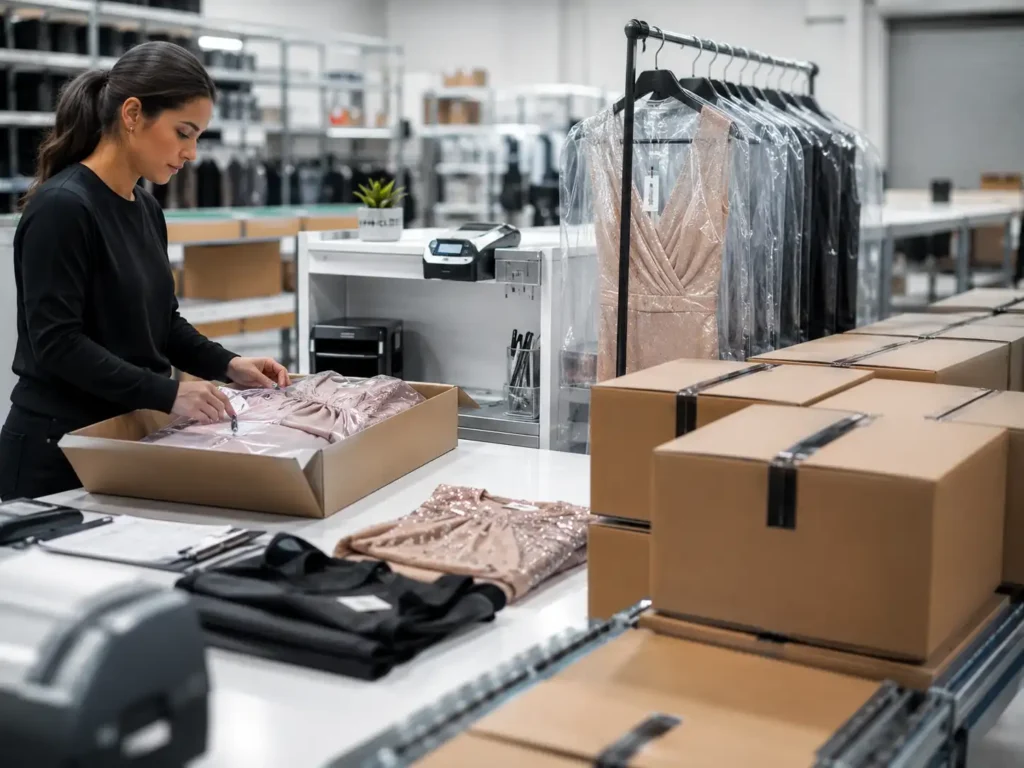
Physical samples are required whenever the decision involves fit, comfort, fabric hand, internal structure, workmanship, movement, or bulk reproducibility. A fit sample confirms the body relationship, a revised sample verifies corrections, and a pre-production or Golden Sample establishes the final manufacturing standard. 3D can reduce unnecessary sample rounds, but it should not replace essential production evidence.
Fit and Revised Samples
A physical fit sample is essential whenever the design depends closely on the body. Bodycon, corset, strapless, deep-V, low-back, cutout, and fitted jumpsuit styles all require human review of bust support, waist position, hip ease, shoulder balance, strap stability, armhole coverage, neckline security, side-seam direction, front-back length, and movement. These questions cannot be settled fully by a static view or a color map.
When the first fitting produces meaningful changes, a revised sample should be made. A correction on paper does not prove that the complete garment has improved because adjustments interact. Shortening a strap can raise the neckline, reduce armhole depth, and increase bust pressure at the same time. The revised sample confirms that the original problem was solved without creating a new issue elsewhere in the construction.
Pre-Production Samples
A pre-production sample should use the intended bulk materials, trims, construction, labels, and workmanship whenever practical. Its purpose is different from an early development sample. The development sample asks whether the design and pattern can work; the PP sample asks whether the factory is ready to produce the approved garment with the real materials and the final manufacturing method.
The review should cover bulk fabric quality, approved color, final pattern, finished measurements, lining, support, zippers, fasteners, seam construction, hem method, embellishment placement, labels, care information, pressing, and packaging. A substitute fabric can be useful for early pattern work, but it cannot serve as final evidence for a fabric-sensitive style. Changing from a stable mock-up to fluid satin, stretch mesh, or sequin fabric can alter both fit and workmanship.
Golden Sample Control
The Golden Sample is the sealed physical standard used by production, quality control, and packing teams. It should represent the approved fabric, color, measurements, construction, trims, labels, pressing, and finished appearance. A controlled sample is normally linked to the style number, size, color, pattern version, material references, approved measurement chart, approval date, and responsible approvers.
The physical reference does not replace written specifications. It works together with the tech pack, bill of materials, construction sheet, and tolerance table. During bulk inspection, garments should be compared with the Golden Sample for silhouette, workmanship, color, detail placement, pressing, and packaging, while measurements are checked against the approved specification. This combination reduces subjective judgments such as “close enough to the sample.”
Hybrid Sampling Workflow
The most reliable process does not force a choice between digital and physical sampling. It assigns each tool to the decisions it can support best. 3D is efficient for concept comparison, proportion review, early pattern correction, and color or artwork decisions. Physical sampling remains the stronger evidence for fabric behavior, body fit, comfort, internal construction, sewing quality, and production repeatability.
For brands developing custom dresses, Jinfeng Apparel can review tech packs, reference images, original samples, size charts, fabric requirements, and private-label details before recommending a practical sample sequence. The company’s documented development resources include 7+ senior womenswear pattern makers, 2 sample rooms, 20+ sample machinists, and 15+ QC inspectors, supported by 6 owned factories and 10+ long-term satellite production partners. Projects generally start from 200 pieces per style and color, depending on materials, construction, and production planning.
| Development Stage | Primary Decision | Best Evidence |
| Concept review | Is the design direction right? | Sketches and 3D visualization |
| Pattern review | Are proportion and seams balanced? | 3D simulation and pattern checks |
| Fabric review | Does the material suit the style? | Physical swatch, test data, and drape review |
| Fit sample | Is the dress wearable and balanced? | Physical fitting on the target body |
| Revised sample | Were the corrections successful? | Updated physical sample |
| PP sample | Are final materials and methods approved? | Complete physical pre-production sample |
| Golden Sample | What standard must bulk match? | Sealed reference garment and specifications |
| Bulk inspection | Is production consistent? | Measurement checks and reference comparison |
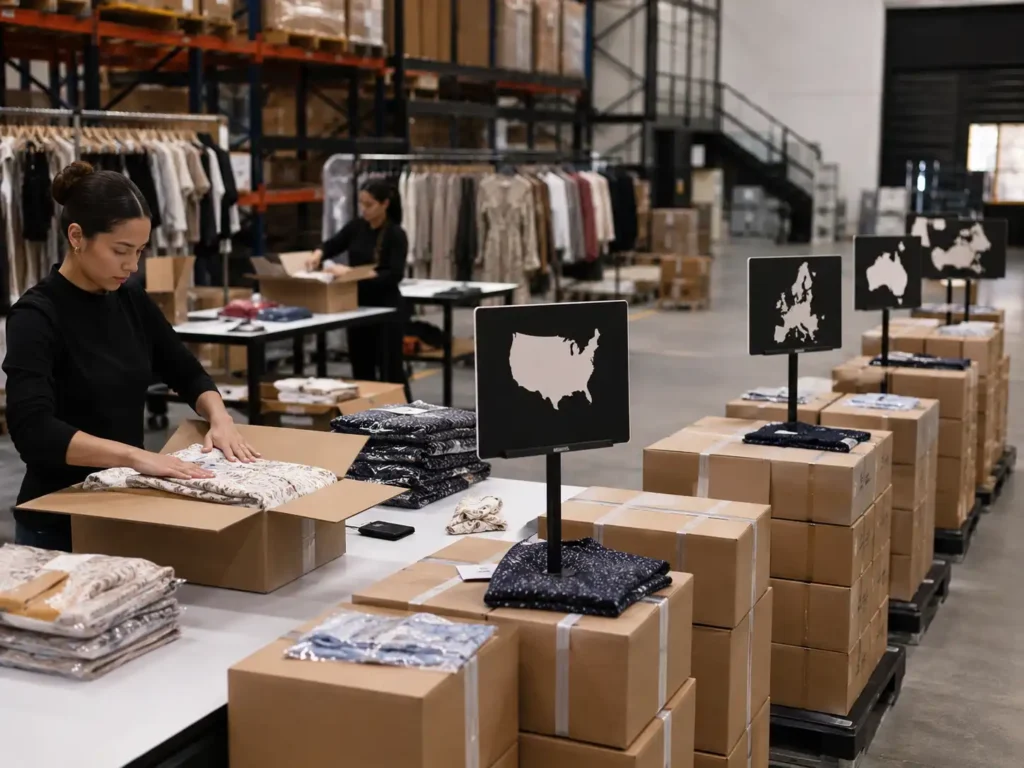
A hybrid workflow protects speed without confusing speed with proof. Brands can remove avoidable early sample rounds digitally, then reserve physical sampling for the decisions that affect wearability, workmanship, and commercial risk. To discuss a custom dress project, send Jinfeng Apparel the design files, sample references, quantities, target market, and required launch schedule for a development and manufacturing review.
Send your tech pack, reference images, original sample, size chart, target quantity, fabric requirements, private-label details, and launch schedule to info@jinfengapparel.com. The development team can review the dress structure, identify which decisions can be handled digitally, define the physical sample stages, and prepare a quotation based on the actual materials and construction.