 Skip to content
Zipper and Closure Development
Develop closure systems around the garment—not as isolated trim components.
Jinfeng Apparel integrates closure selection, trim sourcing, garment structure, sample validation, sewing construction and bulk quality control into custom womenswear development.
- 6 core closure directions:regular zippers, invisible zippers, metal zippers, buttons, snaps and hooks
- 2 sample roomsfor development, revision, PP samples and production validation
- 20+ sample machinistssupporting complex womenswear construction
- 15+ QC inspectorssupporting material, sewing and finished-garment control
- Closure specifications are reviewed against fabric behavior, garment fit, wearing pressure and production repeatability.
Development Capacity Behind Every Closure Decision
2 Sample Rooms
7+ Senior Pattern Makers
20+ Sample Machinists
15+ QC Inspectors
18+ Sewing Lines
100,000+ Monthly Capacity
Closure Problems Fashion Teams Meet in Real Production
Zipper Bulging
Difficult Opening
Color Mismatch
Excess Hardware Weight
Weak Top Closure
Sample-Bulk Drift
Closure Systems for Custom Womenswear Development

Invisible Zippers

Regular Zippers

Metal Zippers
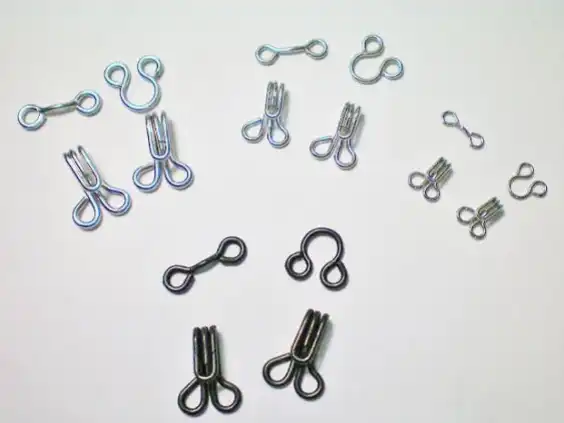
Hook and Eye

Buttons
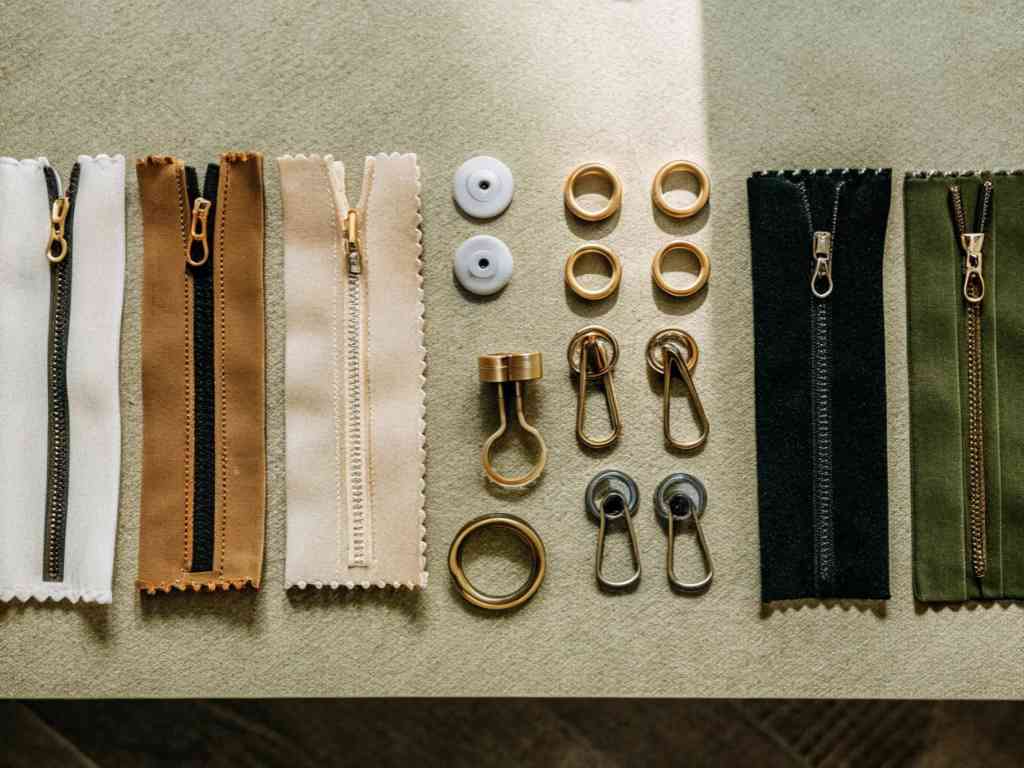
Snaps
Match Closure Construction to the Garment
A suitable closure should support dressing access, garment fit and visual balance without creating avoidable bulk or pressure. The matrix below shows common development directions rather than fixed rules; final specifications are confirmed after reviewing fabric, pattern, size range and construction.
| Womenswear Style | Common Closure Direction | Main Development Focus | Typical Risk |
|---|---|---|---|
| Satin Mini / Midi Dress | Invisible zipper | Flat seam, tape color, lining clearance | Bulging or visible ridge |
| Bodycon Dress | Invisible or suitable coil zipper | Stretch tension, hip access, seam stability | Distorted side/back seam |
| Corset Dress | Zipper + hook and eye | Bust pressure, boning position, top security | Excess zipper strain |
| Strapless Dress | Concealed zipper + support closure | Upper-bust stability, opening position | Neckline instability |
| Skirt | Side or center-back zipper | Waist alignment, waistband structure | Uneven waist seam |
| Jumpsuit | Back/side zipper or button structure | Dressing access, waist and crotch balance | Restricted entry |
| Shirt Dress | Buttons / selected zipper details | Placket stability, buttonhole quality | Gaping or weak attachment |
| Denim / Structured Style | Metal or visible zipper | Hardware weight, finish, reinforcement | Fabric distortion |
| Matching Set | Zipper, hook or button by piece | Top/bottom consistency, color matching | Mixed trim appearance |
| Evening Dress | Concealed closure combination | Fit tension, lining, finish quality | Difficult dressing |
Fabric Behavior Changes the Closure Engineering
A closure never works independently from the fabric around it. Surface texture, thickness, stretch, transparency, recovery and drape influence zipper selection, reinforcement, sewing tension, lining and pressing. Jinfeng’s fabric system includes satin, stretch satin, lace, mesh, power mesh, jersey, ponte, crepe, velvet, sequin, chiffon, denim, suiting and other major womenswear materials.
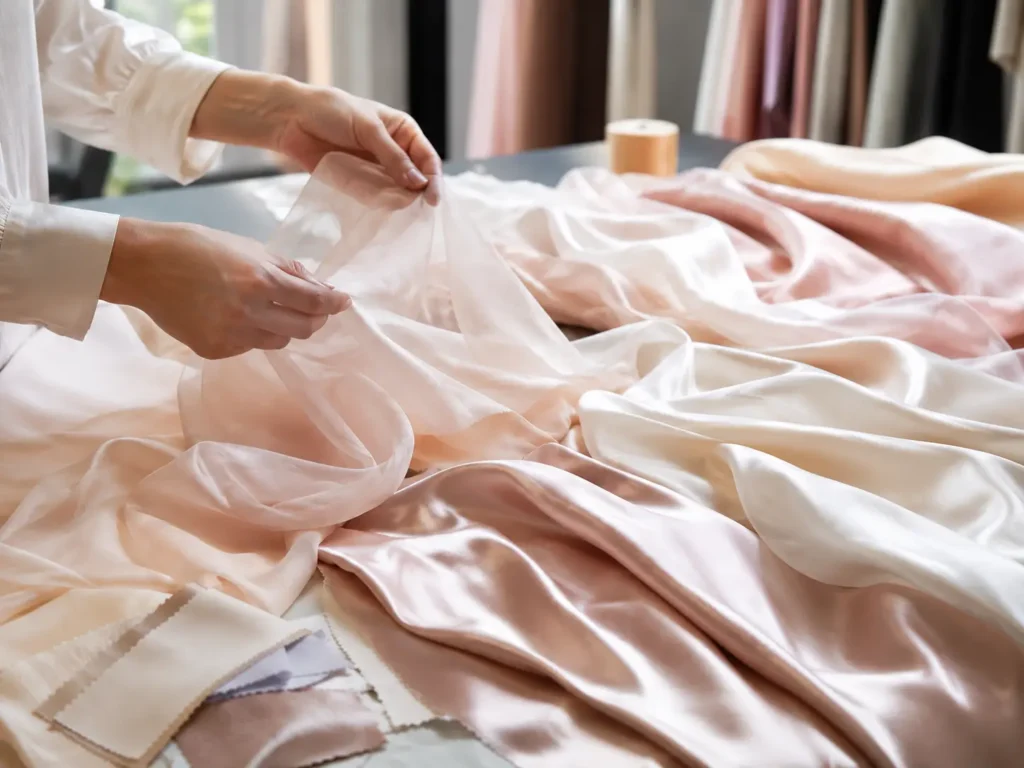
Satin Needs Flatness Without Surface Damage
Satin exposes closure problems quickly because light travels across the garment surface. A small ridge beside a zipper can become much more visible under studio photography, store lighting or movement. Development therefore begins with more than simply selecting an invisible zipper.
Fabric behavior: Satin weight, drape, surface sheen and snag sensitivity influence how much support the zipper area needs. A very lightweight satin may react poorly to a closure that is too stiff or heavy, while a fitted stretch satin dress may create body tension around the waist and hip.
Color relationship: Zipper tape, thread, lining and shell fabric need to be viewed together. The same nominal color can look different when satin changes appearance with grain and light direction. Approved references should be retained for bulk comparison and future color repeats.
Construction control: Seam allowance, zipper position, lining attachment and pressing need to produce a continuous surface rather than a hard vertical line. Excess stretching during sewing can create waviness, while aggressive pressing may mark or glaze the fabric.
Wear test: The opening must remain easy enough for dressing while preserving the intended fitted silhouette. On bodycon or occasion styles, fit pressure around the zipper line is reviewed together with waist and hip measurements rather than being treated as an isolated trim issue.

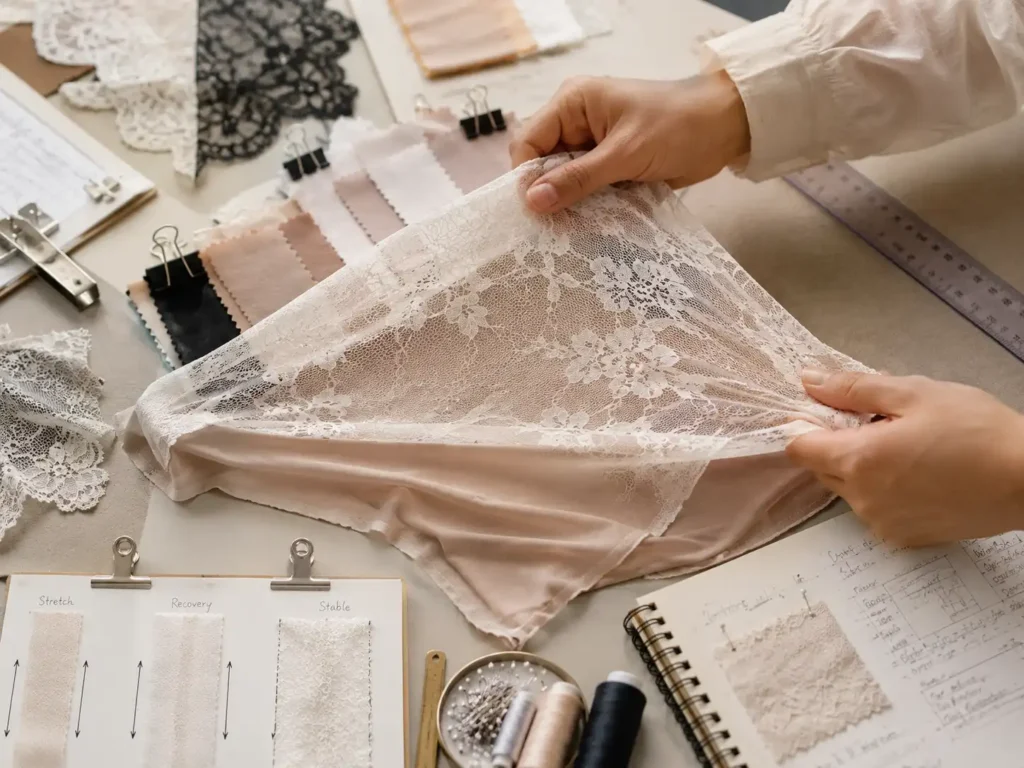
Mesh and Lace Need Local Stability
Mesh and lace bring a different problem: the surrounding material may be softer, more open or more elastic than the closure tape. A structurally sound zipper can still distort the garment if the seam beside it lacks stability.
Transparency: Visible zipper tape, reinforcement layers or lining edges can show through mesh. Placement needs to account for what will be visible from the outside, especially in cut-out, sheer-panel and illusion designs.
Stretch behavior: Power mesh and stretch mesh can extend considerably during dressing. The zipper seam generally needs enough control to prevent the opening edge from growing independently from the zipper length. Excessive restriction, however, can create an abrupt rigid line beside a flexible garment.
Lace surface: Lace motifs and open areas affect seam placement. A closure line cutting through a dominant motif may produce an uneven visual result, while textured lace can interfere with smooth zipper movement when allowance control is poor.
Lining relationship: The closure, shell and lining should be checked as one layered construction. Lining must provide coverage without being caught in the zipper or creating extra bulk near the opening.
Sampling is especially valuable because transparency, stretch and motif behavior are difficult to judge from trim and fabric swatches alone.
Stretch Fabrics Need Controlled Body Tension
Bodycon garments create constant tension around the closure during dressing and wear. Jersey, ponte, power mesh and stretch satin also recover differently, so zipper construction has to work with body measurements rather than simply follow a standard length.
Fit pressure: Bust, waist and hip measurements determine how much load reaches the closure. If the garment is excessively tight around the hip while the zipper area remains rigid, the side or back seam can twist or pull away from the body.
Opening length: A zipper needs enough opening length for entry without unnecessarily extending into areas where the silhouette should remain flexible. Jumpsuits add another consideration because the opening must accommodate both upper body and hip entry.
Seam stability: Controlled reinforcement may be needed around the closure so the seam does not stretch while sewing. Reinforcement should not create a thick edge that becomes visible from the outside.
Sample fitting: Fit review should include front, side and back views, opening and closing several times, sitting or walking where relevant, and inspection of the zipper line after the garment returns to a relaxed state.
Jinfeng’s fit process checks bust, waist, hip, length and other product-specific measurements before bulk approval rather than relying only on a static hanger view.
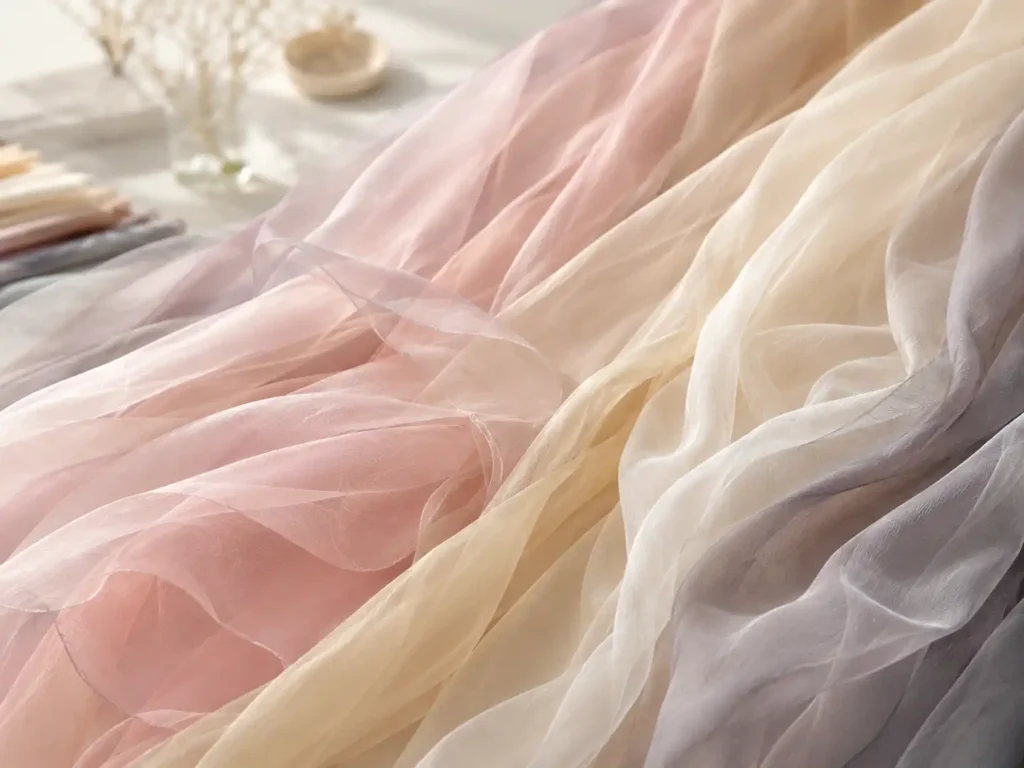
Lightweight Wovens Need Weight Balance
Chiffon, light crepe and other soft wovens can be visually distorted by a closure that is substantially heavier than the surrounding garment.
A technically strong component is not automatically the best option when fabric movement is part of the design.
Closure tape, slider and any attached hardware add local weight.
On an airy skirt or fluid dress, excess weight may pull a side seam downward, create a hard center-back line or change how the hem hangs.
Seam treatment matters equally. Lightweight material can pucker if stitching tension, seam allowance or reinforcement is excessive. A concealed opening should therefore be tested with the real fabric or a material close enough in weight and behavior to provide useful development information.
Lining can improve stability but creates another interface around the opening. The lining should move freely without being trapped in the zipper, extending outside the garment or forming a thick internal fold.
For fluid styles, the development goal is not maximum closure strength in isolation. The goal is enough opening security while preserving drape, proportion and visual softness.
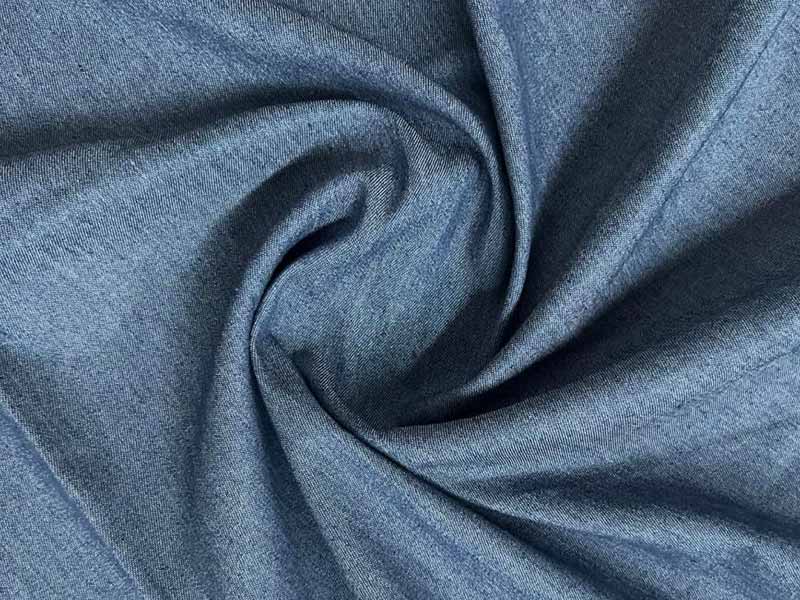
Denim and Suiting Can Carry Stronger Hardware
Denim and structured suiting provide more support for visible metal zippers, larger sliders and heavier hardware. Greater material strength does not remove the need for balance, especially when hardware is positioned close to skin or used as a major design feature.
Metal teeth color and plating can change the overall direction of a garment. Bright polished finishes create a different effect from darker or muted finishes, so hardware should be reviewed beside the shell fabric, buttons and other metal accessories.
Reinforcement near the opening needs enough strength for repeated wear. Waist seams, pockets, front openings and structured panels can concentrate pulling force near zipper ends. Stitching method and seam allowance should distribute rather than concentrate load.
If a garment includes washing or finishing processes, hardware appearance and surrounding fabric behavior need to be evaluated together. The closure should remain functional while the final garment retains the intended balance.
A heavier zipper is therefore chosen because the design and structure support it—not simply because visible hardware appears more premium.

Sequin and Embellished Fabrics Need Clearance
Sequin, rhinestone and heavily embellished fabrics create mechanical interference around closure lines.
Decorative elements can catch in teeth, scratch skin, thicken seam allowances or prevent the opening from lying flat.
Before sewing the zipper, the closure zone may require controlled preparation so bulky decoration does not remain directly inside the seam.
Edge protection and lining become especially important because trimmed embellishment areas can leave uncomfortable or abrasive surfaces.
The zipper opening should also be considered during pattern placement.
A dense sequin motif running directly across center back may need a different handling method than a scattered motif. When style architecture allows it, placement can reduce unnecessary bulk while preserving the visual design.
Finished garments should be opened and closed repeatedly during inspection, while surrounding decoration is checked for snagging and loose elements. Packing also matters because pressure on a rigid puller or heavily decorated closure area can mark neighboring fabric during transit.
Invisible Zipper Development for Clean Dress Lines
Invisible zippers are widely used across dresses, skirts and jumpsuits, yet poor execution is immediately visible on fitted and reflective fabrics. Development focuses on specification, structural placement and installation rather than assuming all concealed zippers behave the same way.

Select Length and Position Around the Garment
Zipper position changes dressing access and construction. A center-back invisible zipper works with a different seam structure from a side opening.
Waist seams, fitted hips, bust shaping, lining and garment length all influence the final opening.
A zipper that is too short can make the garment difficult to put on even when every body measurement is technically correct.
Excess length can create unnecessary stiffness or extend into an area where the garment should remain flexible.
For fitted dresses, body measurements are reviewed together with the opening.
Bust, waist and hip pressure can affect how smoothly the zipper closes, especially when the garment uses stretch fabric, corset support, heavy ruching or multiple lining layers.
Waist seam alignment is another key point. On a fitted midi or cocktail dress, a visible height difference at the zipper can make an otherwise well-made garment look poorly assembled. Seam matching is therefore checked before the zipper installation is finalized.
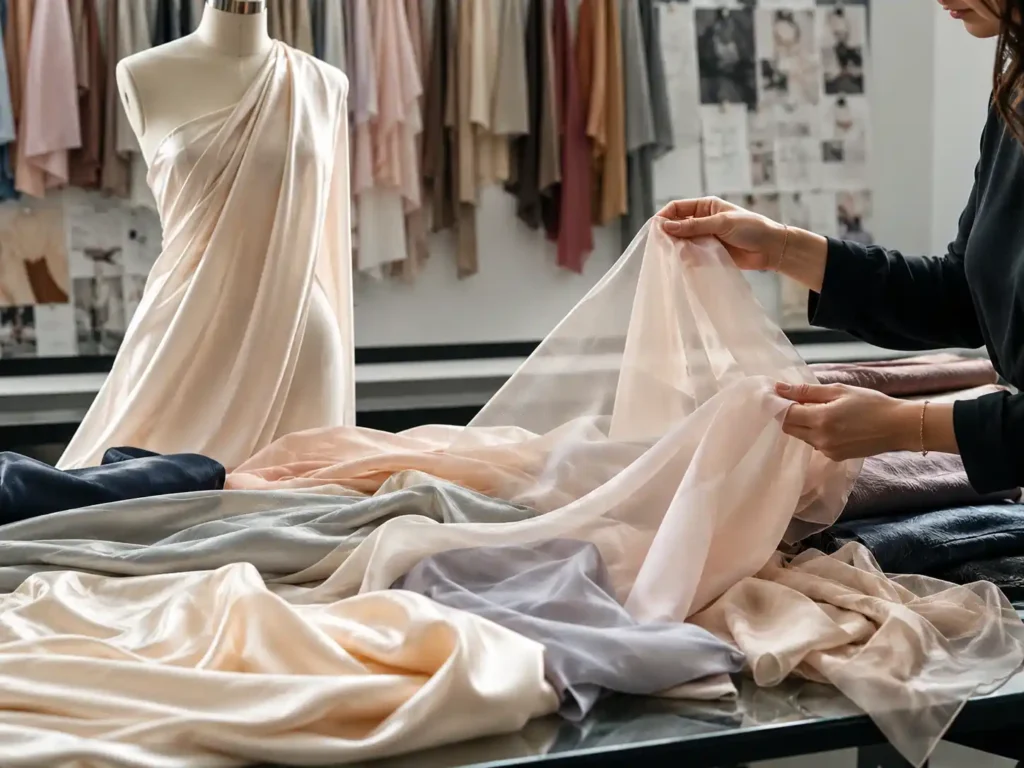
Control Flatness on Satin and Fitted Styles
Invisible zipper flatness depends on several interacting variables: shell fabric stability, zipper stiffness, sewing tension, seam allowance, reinforcement, pattern fit and pressing.
If the shell stretches during sewing while the zipper tape remains stable, the finished seam can develop waves. If pattern tension around the waist or hip is excessive, the zipper line may bow outward when worn even though it appears flat on a table.
Satin makes the issue more visible because light highlights minor changes in surface angle. Jinfeng therefore checks zipper flatness together with satin weight, lining, waist-hip fit and pressing during sample development.
The goal is not to force the zipper seam completely rigid. A finished garment should preserve the intended body line without creating a hard strip down the back or side.
Inspection should include the garment hanging naturally, lying flat and being worn where fit sensitivity requires it. Opening and closing function also needs to remain smooth after lining and final finishing are completed.

Secure the Top Without Overloading the Zipper
The top of an invisible zipper can become a concentrated stress point on corset, strapless, bodycon and evening styles.
A correctly positioned hook and eye may help secure the top edge before the zipper carries the full opening force.
Placement needs to work with the neckline or upper-back structure. A hook that sits too close to skin may scratch; one positioned too far from the edge may pull the garment out of alignment.
Stitching needs enough reinforcement for repeated use without producing an obvious lump on the outside.
Corset and strapless styles add internal structure such as boning, cups, anti-slip tape and lining. The hook, zipper and those support elements should be considered as one system. A closure solution cannot compensate for incorrect upper-bust fit or poorly positioned boning.
For bulk production, hook specification, position and stitching method need to remain consistent with the approved sample rather than being left to individual sewing interpretation.
Metal Zippers as Functional Design Components
Metal zippers can become a visible part of the fashion language on denim, structured mini dresses, skirts, jumpsuits and utility-inspired womenswear. Development requires stronger attention to weight, finish, skin contact and structural reinforcement than a concealed zipper.

Balance Hardware Weight with Fabric Structure
A metal zipper adds physical weight along a seam.
Denim, suiting and other structured fabrics can usually support more hardware than lightweight satin, chiffon or soft jersey, but final suitability still depends on placement.
A center-front zipper distributes weight differently from a long center-back zipper. A short visible zipper at a neckline creates another loading condition.
Pattern shape and reinforcement need to support the hardware without producing sagging or seam distortion.
The slider also matters. A large puller may suit the visual concept while increasing movement and impact against the garment.
For close-fitting styles, hardware should be checked during sitting and movement so the design does not create uncomfortable pressure.
Development therefore starts from the complete garment: fabric weight, silhouette, zipper length, opening position, intended styling and wearing environment.
Metal hardware should strengthen the design rather than become an unnecessary engineering burden.
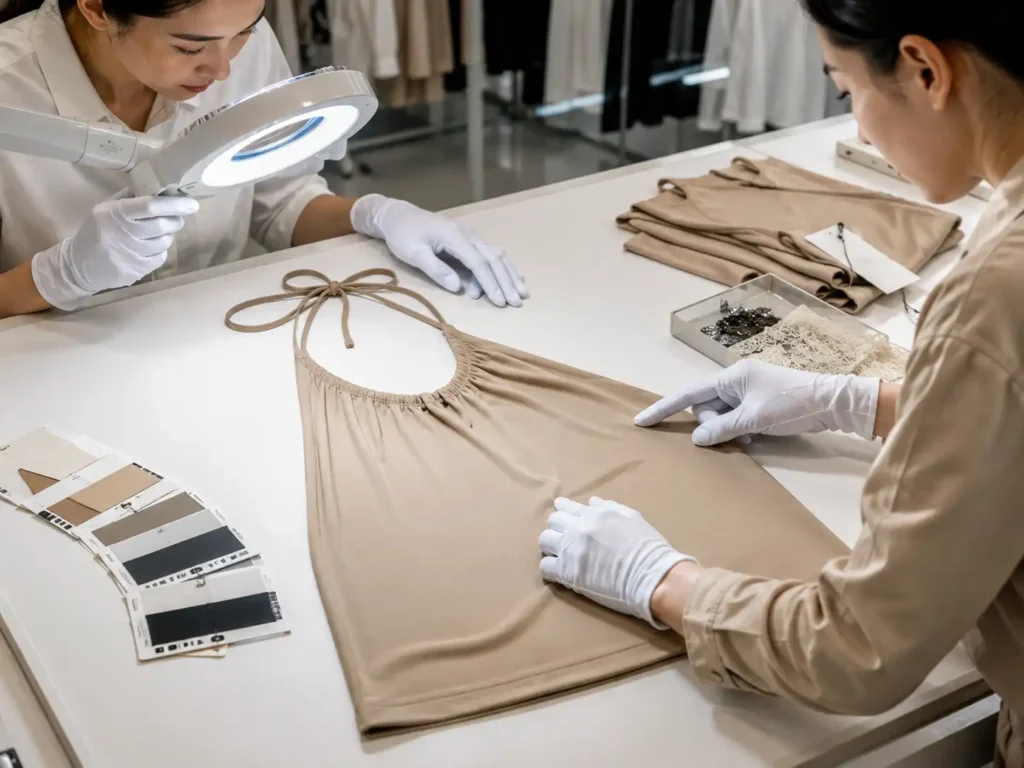
Coordinate Teeth, Puller and Surface Finish
Metal teeth and slider finish can become prominent visual elements. Gold-tone, silver-tone, darker finishes and other project-specific directions should be reviewed beside the shell fabric and any additional metal components.
A garment using zipper hardware, buttons, strap adjusters or decorative chains may look inconsistent when the metal finishes compete. The development team therefore needs a coherent trim direction rather than approving each component separately.
Custom-looking pullers or special finishes can also affect sourcing conditions, minimum component quantities, cost and development timing. Those variables should be identified before the collection is too far into sampling.
Where a special trim direction creates commercial or timeline pressure, alternative components can be reviewed to preserve the overall brand-level appearance without adding unnecessary production risk.
The final approved combination should be documented so bulk sourcing and repeat orders can call back the same closure reference as closely as supply conditions allow.

Check Skin Contact and Wear Movement
Visible metal hardware often sits closer to skin than its appearance suggests.
Side zippers, neckline openings and short fitted silhouettes can position teeth, slider or puller against the body during movement.
Sharp contact points, heavy pullers and exposed internal edges require review before approval. Lining, zipper guards or construction changes may help where the design allows.
Movement testing is especially useful for fashion jumpsuits, fitted mini dresses and skirts because sitting, walking and bending change the pressure around openings. A zipper that feels comfortable while standing may become intrusive during movement.
Garment inspection should therefore evaluate both visual finish and wear function.
Teeth alignment, slider movement, attachment, surface condition and neighboring fabric should remain stable after normal opening and closing.
Metal zipper development works best when aesthetics, engineering and wearing experience are assessed at the same time.
Hooks, Buttons and Snaps Complete the Closure System
Hook and Eye Control
Button Development
Snap Development
Closure Placement Starts with Garment Structure
A closure line changes how a garment is entered, fitted, supported and sewn. Jinfeng reviews opening location alongside pattern structure so the closure supports silhouette and wearing function rather than interrupting them.

Center-Back Closures and Body Balance
Center back is common for fitted dresses because it offers a direct opening through the torso and waist.
A centered zipper, however, sits on one of the most visually sensitive lines of the garment.
Waist seams, darts, princess lines and back neckline shape need to meet accurately on both sides. If the garment is fitted through the hip, tension distribution can affect zipper flatness and the way the back seam follows the body.
Lining attachment must remain controlled so lining does not catch in the zipper or pull the outer fabric inward. Neckline finishing and any top hook should also align with the center-back structure.
Pattern review matters before sewing begins. When a garment is too tight around the waist or hip, adjusting only the zipper installation rarely solves the underlying issue. Fit, seam allowance and closure construction should be corrected together.

Side Closures Need Clean Seam Integration
Side zippers can preserve a clean center back and are common in dresses and skirts where styling requires an uninterrupted rear silhouette. Side placement introduces its own engineering demands because the opening may cross the waist, sit near the underarm or follow a curved hip area.
The zipper should not pull the side seam toward the front or back when worn. Seam tension needs to remain balanced, especially on bodycon and bias-sensitive fabrics.
For sleeveless or fitted dresses, the top of a side zipper may sit close to the arm or skin. Top-stop position, seam finishing and lining clearance should avoid irritation.
If the zipper crosses a waistband, the upper and lower waist seams need to meet at the same level. Even a small misalignment can become visually obvious on a structured skirt or matching set.
Side placement can therefore be elegant, but only when pattern, fit and sewing accuracy are planned around the opening from the beginning.

Corset Closures Work with Internal Support
Corset and bustier-inspired dresses combine external appearance with internal engineering. Zipper position can interact with cups, boning, lining, anti-slip tape and waist shaping.
A back zipper placed beside boning needs enough clearance so rigid support does not interfere with slider movement or create excess thickness near the tape. Top closure security also matters because strapless silhouettes place more pressure around the upper bust.
Closure strain should not be solved by simply adding stronger hardware. Upper-bust measurement, waist compression, cup shape and boning position may require correction first. A zipper works best when the garment itself is correctly balanced around the body.
Sample fitting is therefore central to closure approval on corset styles. Front, side and back views, upper-bust stability and opening function need to be reviewed before PP standards are fixed.

Waist Closures Depend on Waistband Engineering
Skirts, tailored sets and some jumpsuits use closures directly through a waistband. Waistband width, interlining, seam structure, elasticity and body ease determine whether the opening lies cleanly.
A rigid waistband with inadequate ease can place continuous stress on the zipper or hook. A soft waistband without enough support can roll, twist or distort around the closure.
Interlining may provide local stability, but its weight and adhesion need to suit the shell fabric. Excess stiffness can create a visible block around an otherwise fluid garment.
Waist measurement should be checked against the approved size chart, while closure positioning is reviewed for comfort and symmetrical appearance. The completed opening should close without forcing the waistband ends together or leaving a visible gap.
Specify Color, Length and Hardware Before Bulk

Color Matching

Length and Opening
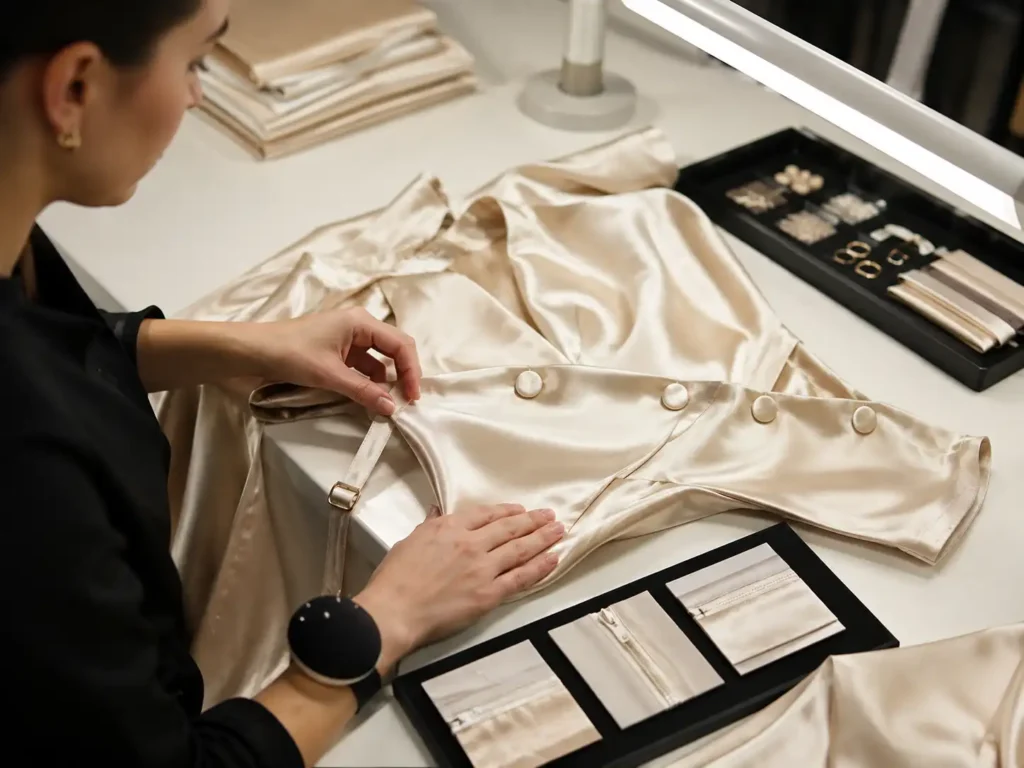
Puller and Finish

Alternative Sourcing
From Design Brief to Approved Closure Specification
01 Design Review
02 Structure Review
03 Closure Direction
04 Trim Sourcing
05 Sample Validation
06 Approval to Bulk
Sampling Turns Closure Ideas into Production Standards
A trim swatch can show color and material, but only a garment sample reveals whether the closure works with real fabric, fit and construction. Jinfeng uses staged sampling to convert closure decisions into production-ready standards.
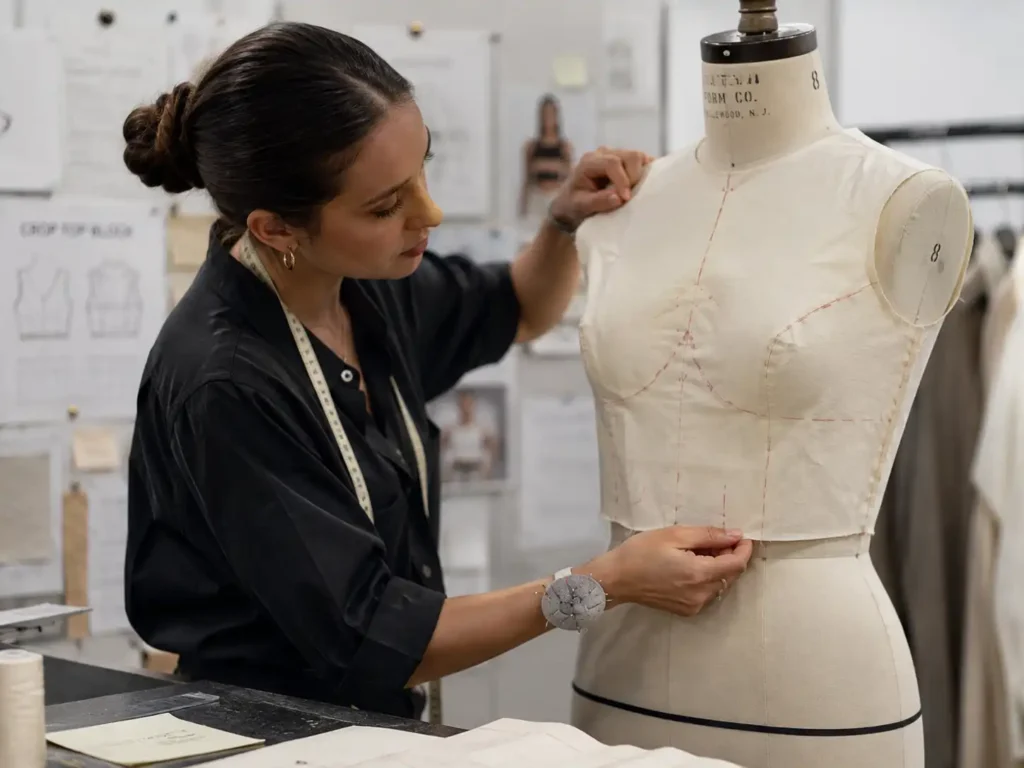
First Samples Identify Structural Problems Early
A first sample validates design structure, fabric direction, basic pattern, construction feasibility and preliminary trim matching.
Closure work at this stage should answer foundational questions: Is the opening in the correct position? Is the zipper long enough for dressing? Is the hardware too heavy? Does the opening distort the silhouette?
First sample approval is not treated as automatic bulk approval.
Early samples are allowed to reveal problems because the purpose is to test the development direction.
For regular dresses, a typical internal sampling reference is around 10–15 days, while complex corset, sequin, lace or mesh styles commonly require around 15–25 days, depending on structure, fabric availability and special trims.
Custom materials or unusual closure components can extend the cycle, so timing is confirmed by project rather than promised as a fixed universal lead time.

Revised Samples Convert Feedback into Measurable Changes
Closure feedback should be specific enough to become production information. “The zipper does not look right” is not enough. Useful revision notes identify whether the concern involves length, position, flatness, color, slider function, garment tension, hook location, lining interference or visual finish.
Jinfeng can revise patterns, size charts, BOM, fabric records, trim records, sewing instructions and QC checklists when a change affects bulk production. Changes should not remain only in email or messaging history.
Simple dresses and skirts commonly move through a first sample plus one revised sample. Medium-complexity garments may need one or two revisions. Corset, strapless, evening, sequin, lace and mesh designs often require around two revisions after the first sample, depending on the actual structure.
Each revision should reduce uncertainty rather than simply produce another physical garment.

PP and Golden Samples Lock Bulk Direction
The PP sample confirms the final combination of fabric, trims, measurements, construction and packing requirements before bulk preparation.
Closure specifications should already be resolved enough for production teams to execute them consistently.
Approval points can include zipper type, length, color, placement, hook specification, button or snap reference, sewing method, seam alignment and any product-specific QC requirement.
The Golden sample becomes the highest-priority physical reference for production comparison, inspection and future repeat programs. Jinfeng’s sample system separates first, fit, revised, photo, salesman, PP and Golden samples because each stage answers a different development question.
A controlled transition into bulk requires more than a message saying “sample approved.” Pattern files, BOM, trim records, sewing standards and QC checkpoints need to reflect the final approval.
Sewing Quality Determines the Final Closure Appearance
High-grade trim cannot compensate for poor installation. Closure sewing controls seam shape, alignment, comfort and durability, so production workmanship receives the same attention as component selection.
Keep Zipper Tape and Seam Alignment Controlled
Zipper tape should enter the seam without twisting, uncontrolled stretching or uneven feed.
On lightweight or slippery fabrics, small differences in handling can create visible waves beside the zipper.
Seam allowance has to remain consistent enough for the closure to sit at the intended depth. If one side is sewn differently from the other, center-back and side-seam balance can shift even when the zipper itself is straight.
Waist seams, horizontal panel lines and design seams should meet across the opening. Alignment is especially visible on fitted dresses, color-block styles and skirts with structured waistbands.
The sewing team also needs to manage fabric bulk near zipper ends and transitions. Ruching, lining, boning channels and embellished fabric can create thick points that affect slider movement.
Inline inspection catches alignment problems before the entire order is completed, reducing the risk of repeating the same installation error across a large production run.
Protect Lining and Internal Construction
A closure often passes through more layers than the exterior suggests. Shell fabric, lining, facing, interlining, corset layers or reinforcement can all meet near an opening.
Lining needs enough clearance to move without catching in zipper teeth. If attached too tightly, it may pull the outside seam inward or restrict the zipper. If left uncontrolled, loose lining can become trapped during dressing.
Corset and structured garments create additional internal complexity. Boning channels should not interfere with zipper movement, while cup and support structures need enough distance from the opening to prevent bulk concentration.
Finishing inside the garment also affects comfort. Rough seam edges, exposed hardware or poorly controlled ends can create irritation even when the outside looks clean.
Workmanship therefore needs inspection from both sides of the garment. A polished exterior combined with careless internal construction is not an acceptable closure standard for premium womenswear.
Secure Hooks, Buttons and Snaps at Load Points
Small closures often carry concentrated force. Hook-and-eye stitching at the top of a fitted zipper, a button at a waistband or a snap on a structured front can fail quickly when attachment does not match expected load.
Reinforcement should be appropriate to the surrounding fabric. Too little support can allow the component to pull out; too much rigid reinforcement can show through lightweight fashion fabrics.
Buttonholes require clean sizing and finishing so the button passes without excessive force while staying secure during wear. Button position should also maintain placket or waistband alignment.
Snaps require controlled installation pressure. Soft materials may need additional support, while structured fabrics may require a different post or attachment approach according to the selected component.
Final inspection includes visual position, attachment stability and repeated opening function rather than checking only whether all components are present.

Finish and Press Without Creating New Defects
Pressing can improve the zipper area or damage it. Heat, pressure and fabric sensitivity need to be considered together, particularly for satin, velvet and synthetic fashion materials.
A closure seam may appear wavy directly after sewing but respond well to controlled finishing. Excessive pressing, however, can flatten texture, create shine, mark zipper tape or leave hard seam impressions.
Metal hardware also requires care during finishing so contact with heat or pressing surfaces does not damage surrounding fabric.
Garments should be checked again after pressing because final surface behavior can differ from the unfinished sewing stage. Zipper smoothness, seam flatness and symmetry should remain acceptable once the garment has cooled and returned to its natural shape.
The aim is a closure area that looks integrated into the garment rather than an added component sitting on top of the design.
Closure Quality Control Runs from Trim Arrival to Packing
Closure QC needs multiple checkpoints because different defects become visible at different stages. Jinfeng’s quality system includes incoming material QC, sewing QC, in-line inspection, garment inspection, pressing review, packing QC and project-based inspection support.
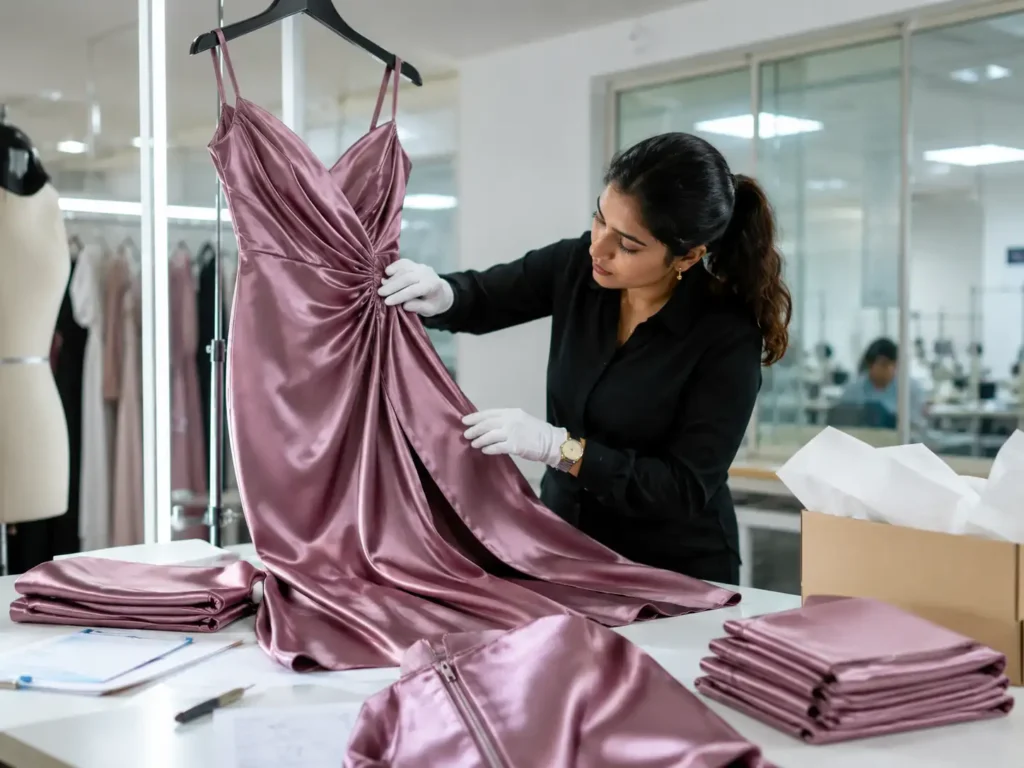
Incoming Trim QC Confirms the Starting Standard
Incoming inspection compares received components with approved project information before bulk sewing consumes them.
For zippers, checks can focus on specification, color, quantity, visible condition and opening function. Buttons, hooks and other closure components are checked against their confirmed references and intended application.
Color deserves particular attention when shell fabric, lining and zipper tape need close visual matching. Bulk fabric color should be available for comparison where required, because a component approved from a screen image alone may not provide enough information.
If material differences are found before production, sourcing or replacement decisions can be handled without dismantling completed garments. Early interception is significantly more efficient than correcting the same trim problem after thousands of pieces are assembled.
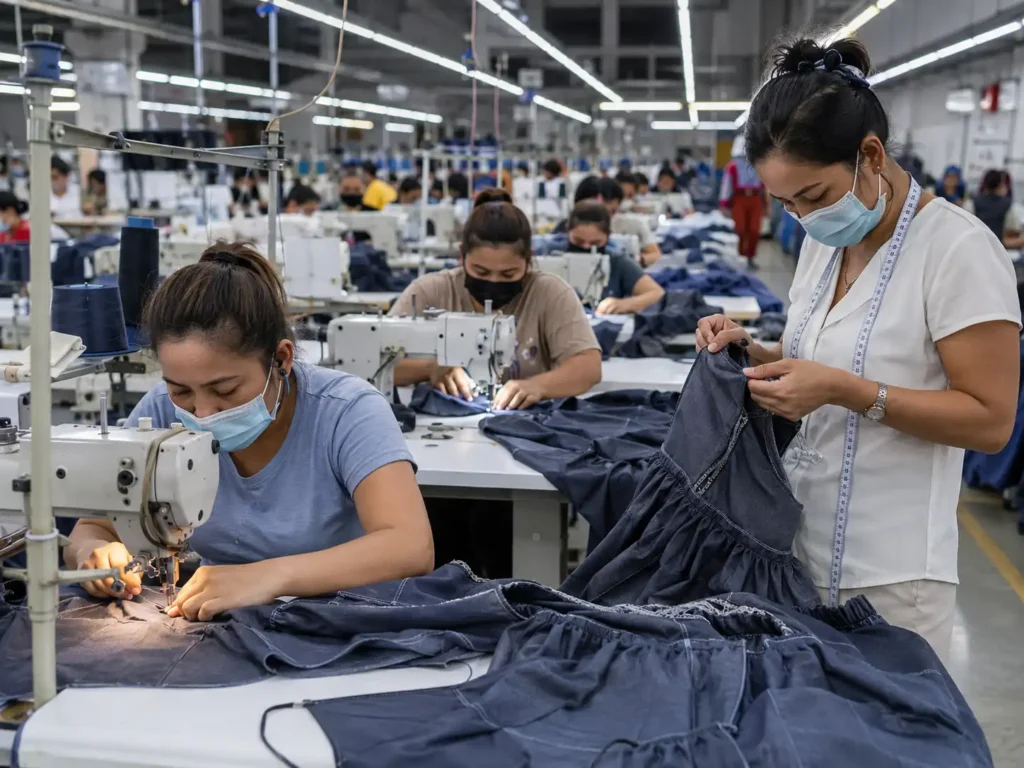
Inline Sewing QC Stops Repeated Installation Errors
Inline inspection focuses on problems while garments are still moving through production. Closure-related checks can include zipper alignment, seam flatness, waist matching, stitching quality, hook position and interaction with lining.
A recurring zipper wave found early can trigger a review of sewing handling or fit pressure before the issue spreads across the remaining production quantity. The same logic applies to misaligned waist seams or weak hook attachment.
Production problems are therefore handled as a feedback loop: identify, classify, communicate, correct, recheck and record. A closure defect does not become acceptable simply because the selected zipper is technically within specification.
Large multi-style programs also need style-specific standards. A satin invisible zipper, denim metal zipper and corset closure should not share one generic inspection checklist.

Finished Garment Inspection Adds Wear Function
After sewing, closure review moves beyond isolated seam quality. The completed garment should open and close through the intended range while preserving silhouette and comfort.
Inspection can evaluate zipper smoothness, slider position, exterior flatness, seam matching, hook engagement, button security and whether lining or nearby fabric interferes with operation.
Fit-sensitive garments may require additional attention around waist, hip, upper bust or other load zones. A zipper that works perfectly on a hanger may react differently when the garment is under body tension.
Defects are assessed alongside product-specific risk. Satin requires surface and pressing attention; mesh requires transparency and stability control; corset dresses require closure security together with structural fit.

Packing Review Protects the Finished Closure
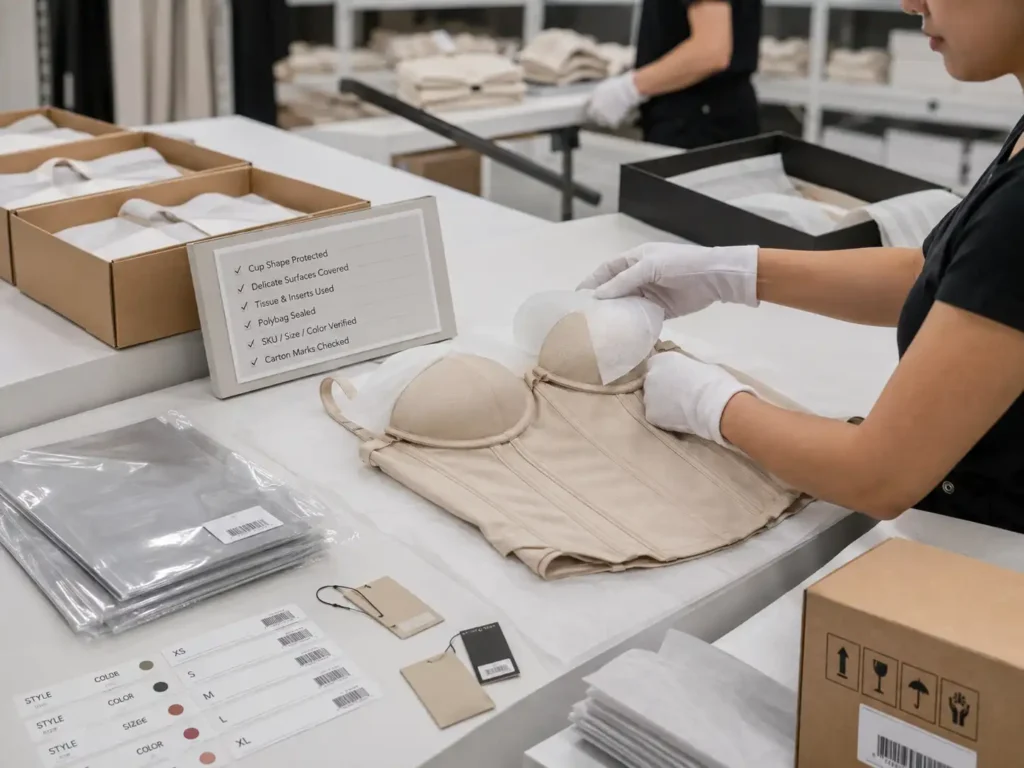
Closure quality can be damaged after sewing if packing creates pressure or abrasion. Heavy metal pullers can press against delicate satin, while embellished garments may place rough surfaces against zipper areas during folding.
Packing method should consider garment structure, hardware and fabric sensitivity. Final folding should not force a rigid closure into an unnatural bend or create avoidable marks around finished seams.
Labels, SKU information and packing instructions also need to match the correct style and color so closure variants do not become mixed during shipment preparation.
For larger programs, final inspection requirements can follow agreed brand standards, AQL requirements or client-appointed inspection arrangements where applicable. AQL remains a sampling method rather than a substitute for the production-stage controls already completed.
Diagnose Closure Failures Before They Scale
Visible closure defects often have more than one possible cause. Effective correction starts by separating component problems from fit, fabric, pattern, sewing and finishing problems.
| Closure Problem | Possible Cause | Development / Production Response |
|---|---|---|
| Invisible zipper bulges outward | Fabric stretches, zipper too rigid, fit pressure, sewing distortion | Review fabric behavior, seam stability, pattern tension and installation |
| Zipper feels difficult to close | Misalignment, fabric caught, excessive body tension | Inspect component, sewing line and garment measurements |
| Waist seam does not meet | Uneven installation or panel alignment | Reset seam reference and control zipper sewing sequence |
| Zipper tape color looks wrong | Trim color differs from bulk fabric | Reconfirm approved trim and bulk fabric reference |
| Metal zipper pulls garment down | Hardware too heavy for structure | Review zipper weight, length and reinforcement |
| Slider or teeth touch skin | Placement or internal protection inadequate | Adjust construction, lining or protective finish |
| Hook opens under tension | Position, attachment or garment fit issue | Review hook strength, stitching and body pressure |
| Button pulls fabric | Weak local reinforcement or incorrect fit | Reinforce attachment zone and review garment tension |
| Snap damages soft fabric | Component or attachment method unsuitable | Re-evaluate fabric compatibility and reinforcement |
| Lining catches in zipper | Insufficient lining clearance | Correct lining attachment and inspect finished opening |
| Closure changes between sample and bulk | Trim data not fully transferred | Lock BOM, trim record and production instructions |
| Repeat order color differs | New dye or trim batch | Reconfirm current fabric and trim reference before production |
Transfer Every Approved Closure Detail into Bulk
Final Pattern
BOM and Trim Record
Sewing Instruction
PP and Golden Sample
QC Checklist
Repeat-Order Record
A Closure Case from a US Occasionwear Program
An anonymized U.S. occasionwear program shows how closure development connects fabric, fit, sampling and bulk control. Brand identity, tech packs, color references and unpublished designs remain protected.

12 Styles and 20,000 Pieces
An anonymous U.S. occasionwear brand developed a 12-style satin mini and midi dress program totaling around 20,000 pieces with Jinfeng Apparel. The collection used matte satin, stretch satin and lightweight lining, with construction details including ruching, invisible zippers, lining, slits and adjustable straps.
Invisible zipper quality became one of the major production concerns because satin surface reflection made even minor seam distortion highly visible. The program also needed stable appearance across several colors rather than treating each style as an isolated sample.
The development challenge therefore combined four factors:
- satin color consistency;
- invisible zipper flatness;
- lining comfort;
- repeatable bulk appearance across multiple colors.

Zipper Flatness Required More Than a Trim Change
The response did not focus only on replacing one zipper with another. Satin weight, lining color, zipper specification and waist-hip fit were reviewed together because each could influence how the closure appeared on the body.
A fitted satin dress can create zipper bulging when the fabric is unstable around the seam, when waist or hip tension is excessive, when installation stretches the shell, or when the selected zipper structure is too dominant for the fabric.
Sample development therefore linked closure review with pattern correction. Waist-hip fit was adjusted while zipper specification and lining direction were confirmed. The objective was a clean back or side line under real garment tension rather than merely achieving smooth movement on an unfinished sample.
The project followed First Sample → Revised Sample → PP Sample → Golden Sample before bulk production.
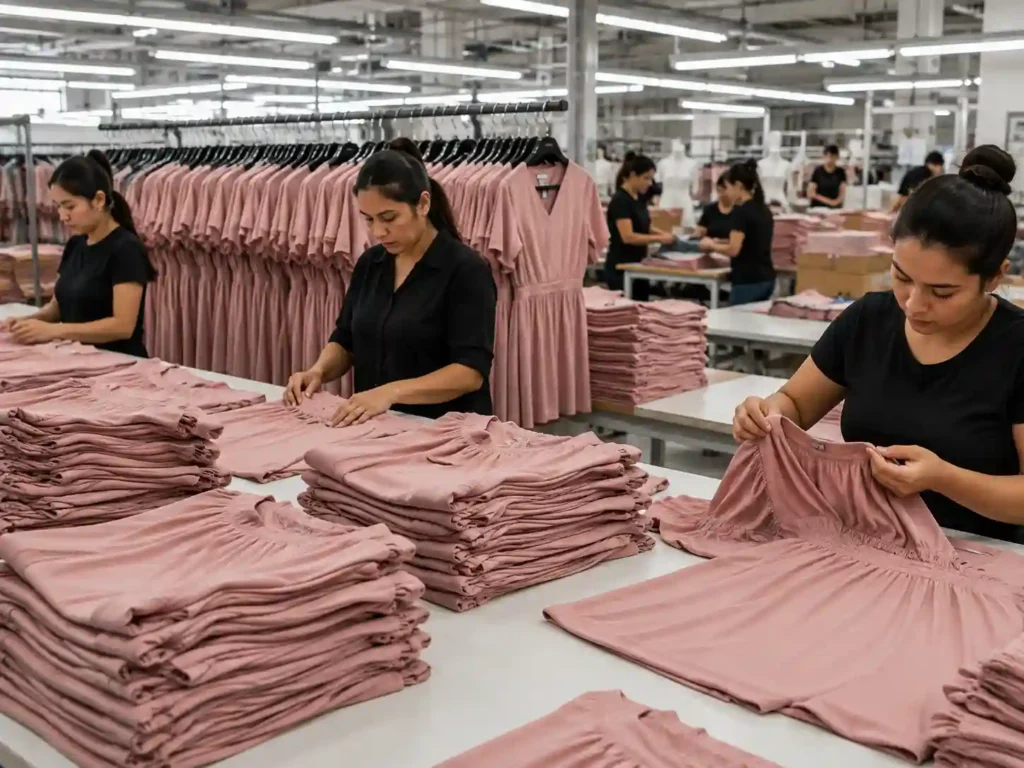
Bulk QC Focused on Color, Zipper and Pressing
After approval, bulk control concentrated on the known risk areas rather than applying a generic dress checklist. Zipper appearance, satin color difference and pressing received focused attention during production.
A closure standard was meaningful only when the approved zipper specification was combined with the agreed shell fabric, lining, waist-hip balance and finishing method. Bulk inspection therefore compared garment execution with approved references rather than judging zipper function in isolation.
The program was completed according to the project schedule and later continued into additional color repeats.
Repeat colors still require current fabric and trim confirmation because new dye lots or supplier batches can introduce variation. Historic records help accelerate the review, but new production is not assumed to be identical without checking.
Zipper and Closure Frequently Asked Questions
Jinfeng reviews zipper specification together with fabric stability, pattern tension, seam allowance, sewing handling, lining and pressing. Satin and fitted dresses receive particular attention because small zipper ridges become visually obvious. If bulging appears during sampling, the cause is diagnosed before bulk rather than assuming a stronger zipper alone will solve the problem.
Selection considers satin weight, stretch, sheen, lining, garment fit, opening position and desired visual finish. Invisible zippers are common for clean dress lines, but length, tape color, stiffness and installation need to match the actual garment. Sample validation is used before the final trim direction enters bulk production.
Zipper color is reviewed against the selected fabric and approved color direction. Jinfeng can retain zipper, thread, lining and fabric color records for production and repeat-order reference. New fabric or trim batches may still require reconfirmation because material batches can produce visible differences.
Hooks are often useful at zipper tops, waist closures and fitted structures where localized pressure needs additional security. Corset, strapless, bodycon and evening dresses are common examples. Position, stitching strength, skin comfort and interaction with boning or upper-bust structure are reviewed before approval.
Yes. A revised sample may include changes to zipper position, length, type, hooks, buttons or other trims when fitting or construction review identifies a better direction. Bulk-relevant changes are transferred into updated BOM, trim records, sewing instructions and QC documents before PP approval.
Timing depends on garment complexity, fabric and trim availability. Regular dress samples commonly use an internal planning reference of around 10–15 days, while complex corset, sequin, lace or mesh designs often require around 15–25 days. Special hardware or custom material development may extend the cycle.
Control can include incoming trim QC, sewing QC, in-line inspection, finished garment review, pressing review and packing QC. Checks vary by product and may cover color, specification, opening function, seam flatness, alignment, attachment, comfort and interaction with fabric or lining.
Yes. Special zipper colors, custom-looking hardware, uncommon trims or supplier-specific components can introduce separate sourcing quantities and development timing. Trim requirements are therefore reviewed early enough to evaluate availability, alternatives, cost and the production schedule before final approval.
Jinfeng retains project information such as pattern files, fabric records, zipper type, length and color, button or hook specifications, sewing instructions and QC points. Repeat orders can call back those records while current fabric batches, trim availability and updated requirements are reconfirmed.
Jinfeng supports NDA-based cooperation and does not publicly disclose protected brand names, tech packs, patterns, unpublished styles, labels, packaging files or proprietary project information without permission. Case information is presented in anonymized form when authorization for public identification is not available.

Send Your Zipper and Closure Development Project
A strong closure direction starts with enough information to understand the garment around it.
Send Jinfeng Apparel your design files and development requirements so the team can review the opening position, fabric behavior, fit pressure, trim direction, sampling needs and bulk production considerations together.
For an efficient initial review, include as much of the following information as available:
- Product type: dress, skirt, jumpsuit, matching set or other womenswear
- Reference image or tech pack
- Size chart, especially for fitted or structured garments
- Fabric direction: satin, mesh, lace, jersey, ponte, denim, suiting or another material
- Preferred closure: invisible zipper, metal zipper, hook, button, snap or reference hardware
- Closure position: center back, side seam, front, waistband or another opening
- Quantity per style and color
- Color direction
- Special puller or hardware reference, where relevant
- Target launch or delivery window
- Private-label and packing requirements
- Known problems from previous samples, such as zipper bulging, difficult opening, seam mismatch or hardware discomfort


