Skip to content
Workwear Dress Manufacturer
Custom office, professional, and business-casual dresses developed for established fashion brands, retail programs, and multi-style womenswear collections.
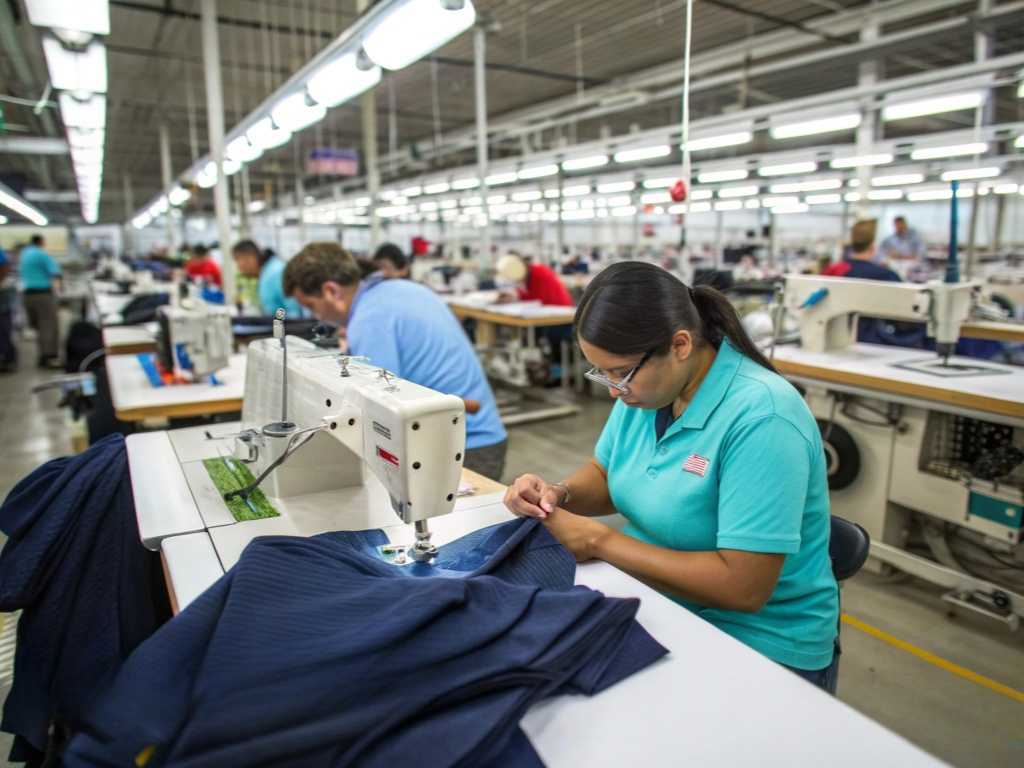
Jinfeng Apparel develops workwear dresses that combine a polished silhouette with reliable movement, coverage, shape retention, and size consistency. Our team supports fabric sourcing, pattern engineering, sample revision, bulk manufacturing, quality control, private-label packing, and export coordination from Guangdong, China.
- MOQ starts from 200 pieces per style and color.
- Current collection programs commonly include 10–30 coordinated styles.
- Total quantities for established brand programs commonly range from 20,000 to 80,000 garments.
- Workwear development is supported by 7+ senior pattern makers and 20+ sample machinists.
- Every approved style moves into production through confirmed patterns, measurements, materials, trims, and PP sample references.
Workwear Dress Development Supported by a Structured Team
Professional office dresses require more than clean sewing. The fabric must recover after sitting, the waist must remain correctly positioned, the armhole must allow movement, and the finished garment must retain a polished shape across multiple sizes.
Since 2008
2 Sample Rooms
Two sample rooms support pattern development, first samples, fit samples, revised samples, photo-ready samples, PP samples, and golden samples.
Different sample purposes remain clearly separated so a photo sample is not incorrectly treated as a bulk-production standard.
7+ Pattern Makers
More than seven senior pattern makers support women’s dress development.
Pattern reviews focus on bust shaping, dart position, waist placement, hip ease, shoulder balance, armhole depth, sleeve mobility, skirt length, slit position, and lining proportion.
20+ Sample Machinists
15+ QC Inspectors
200 PCS Per Style/Color
Fashion Workwear Dresses, Not Industrial Work Clothing
Fashion Workwear Dresses
- Professional visual balance
- Wearable neckline coverage
- Controlled skirt and slit length
- Sitting and walking comfort
- Fabric recovery and wrinkle behavior
- Consistent measurements across sizes
- Retail-ready private-label presentation
Outside Our Product Scope
Jinfeng Apparel does not position its workwear category around:
- Flame-resistant clothing
- High-visibility clothing
- Construction garments
- Industrial protective clothing
- Safety coveralls
- Medical uniforms
- Protective equipment
- Ready-stock office clothing
Our manufacturing model centers on custom women’s fashion development, professional sampling, bulk production, private-label delivery, and long-term collection support.
Built for Established Workwear and Womenswear Programs
Global Fashion Brands
Premium Ecommerce Brands
Officewear Labels
Fashion Retailers
Sourcing and Buying Teams
Private Label Programs
Workwear Dress Risks We Control Before Bulk Production
Polished but Uncomfortable
Poor Bust-Waist-Hip Balance
Excessive Wrinkling
Sample and Bulk Mismatch
Inconsistent Size Grading
Missed Launch Windows
Custom Workwear Dress Styles for Modern Collections

Sheath Dresses
- Bust, waist, and hip measurements
- Dart position and symmetry
- Side-seam alignment
- Zipper flatness
- Back slit construction
- Lining length
- Pressed silhouette

Shirt Dresses
- Collar and collar-stand symmetry
- Placket straightness
- Button and buttonhole alignment
- Sleeve and cuff measurements
- Waist seam placement
- Pocket symmetry
- Hem level

Wrap Dresses
- Neckline position
- Front overlap
- Tie length and strength
- Waist placement
- Skirt opening
- Side-seam balance
- Hem shape

Tailored Midi Dresses
- Dress length by size
- Waist and hip balance
- Vent height
- Shoulder symmetry
- Seam shaping
- Lining movement
- Pressing marks

A-Line Office Dresses
- Bodice measurements
- Waist seam level
- Skirt symmetry
- Pocket opening
- Hem circumference
- Lining coverage
- Side-seam hang

Ponte Work Dresses
- Fabric recovery
- Pilling risk
- Seam stretch
- Measurement stability
- Surface marks
- Hem waviness
- Shape retention
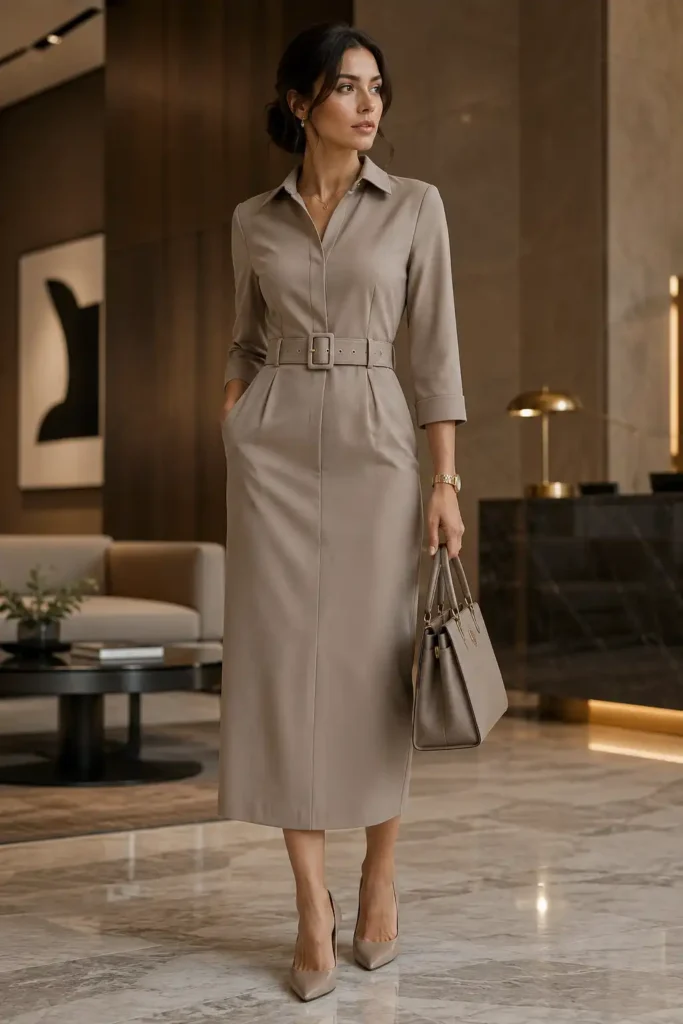
Structured Knit Dresses
- Stretch and recovery
- Neckline stability
- Shoulder length
- Seam growth
- Waist distortion
- Hem shape
- Size consistency
Develop Complete Workwear Collections, Not Isolated Styles
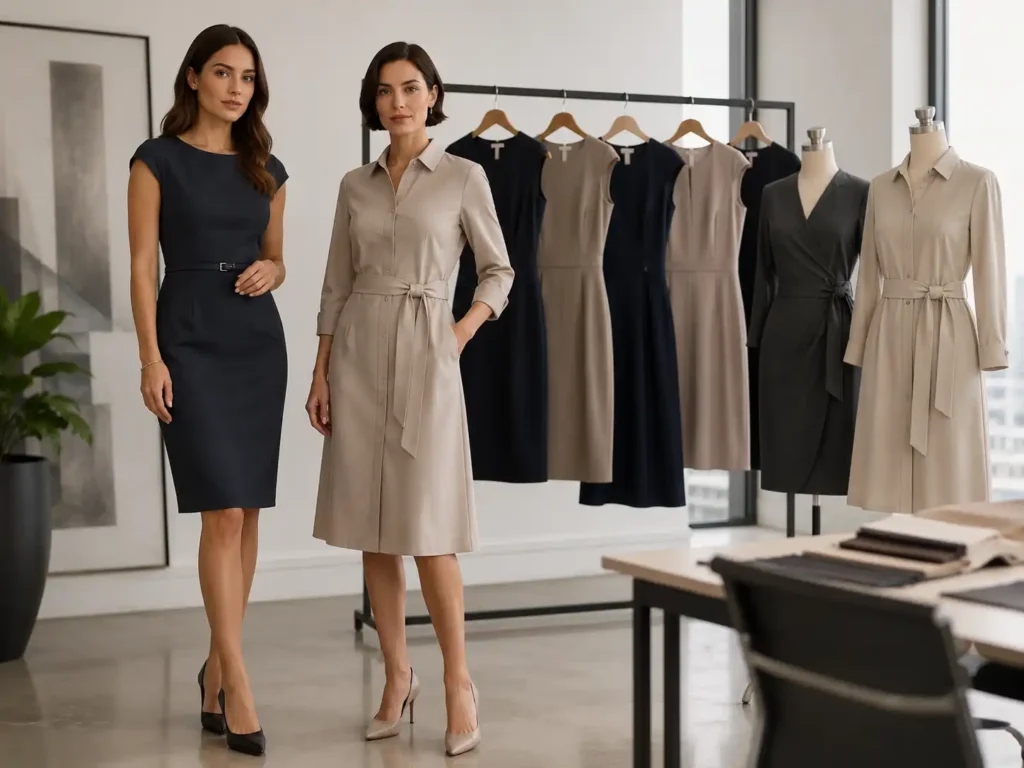
Core Office Collection
- Longer selling life
- Stable material sourcing
- Clear size ratios
- Repeatable color standards
- Consistent private-label packing
- Reliable replenishment records

Business Casual Collection
Business-casual programs combine polished appearance with softer construction and easier movement.
Suitable directions include belted dresses, soft shirt dresses, knitted midis, relaxed wraps, skirts, tops, and coordinated sets.
The range can share fabric groups, trims, colors, and labels to improve collection consistency and simplify production management.

Travel Workwear Collection
Travel-focused workwear requires crease control, easy movement, packing recovery, fabric opacity, and adaptable styling.
Ponte, compact knits, selected crepes, and stable stretch wovens can support the category.
Garments should be reviewed after folding, sitting, and movement simulations rather than assessed only on a dress form.

Office-to-Evening Collection
Office-to-evening dresses need restrained daytime proportions with enough visual interest for dinners, presentations, events, or social settings.
Controlled necklines, refined drape, subtle surface interest, and well-positioned slits can create the required transition.

Seasonal Workwear Drop
Seasonal drops may introduce warm-weather viscose blends, cotton blends, lightweight crepe, short sleeves, or breathable linings.
Colder-season programs may use ponte, compact knits, heavier crepe, suiting, long sleeves, and deeper colors. Material lead time, launch date, and climate should be confirmed before sampling.
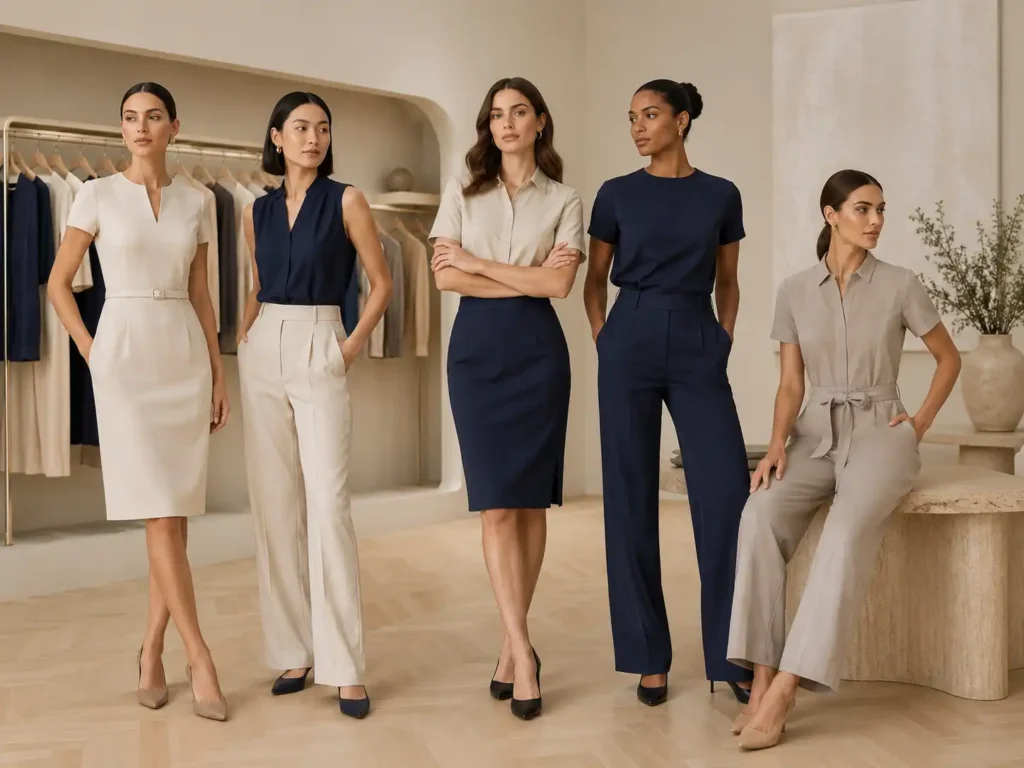
Coordinated Workwear Capsule
Match Each Workwear Dress to Its Wearing Scenario
| Wearing Scenario | Recommended Styles | Fabric Direction | Fit Priorities | Production Control |
|---|---|---|---|---|
| Daily Office | Shirt, A-line, ponte, soft-tailored midi | Cotton blend, crepe, ponte, structured jersey | Arm movement, waist comfort, sitting ease | Placket, hem, pocket, measurement control |
| Client Meetings | Sheath, tailored midi, belted dress | Stretch suiting, compact crepe, double knit | Bust-waist-hip balance, shoulder line | Dart position, zipper, vent, pressing |
| Business Travel | Ponte, structured knit, wrap dress | Recovery-focused knit, crease-resistant woven | Movement, folding recovery, adjustable fit | Pilling, stretch recovery, seam stability |
| Conferences | Midi, A-line, shirt dress | Breathable structured fabric | Long sitting periods, coverage, pocket function | Length, slit, neckline, lining |
| Office-to-Evening | Tailored midi, refined wrap, subtle draped dress | Crepe, soft suiting, controlled sheen | Daytime coverage, evening movement | Drape, neckline, slit, final pressing |
| Warm-Climate Workwear | Short-sleeve shirt, lightweight midi, sleeveless sheath | Viscose blend, cotton blend, lightweight crepe | Breathability, opacity, armhole coverage | Shrinkage, transparency, lining, colorfastness |
Fabrics Selected for Structure, Movement, and Recovery
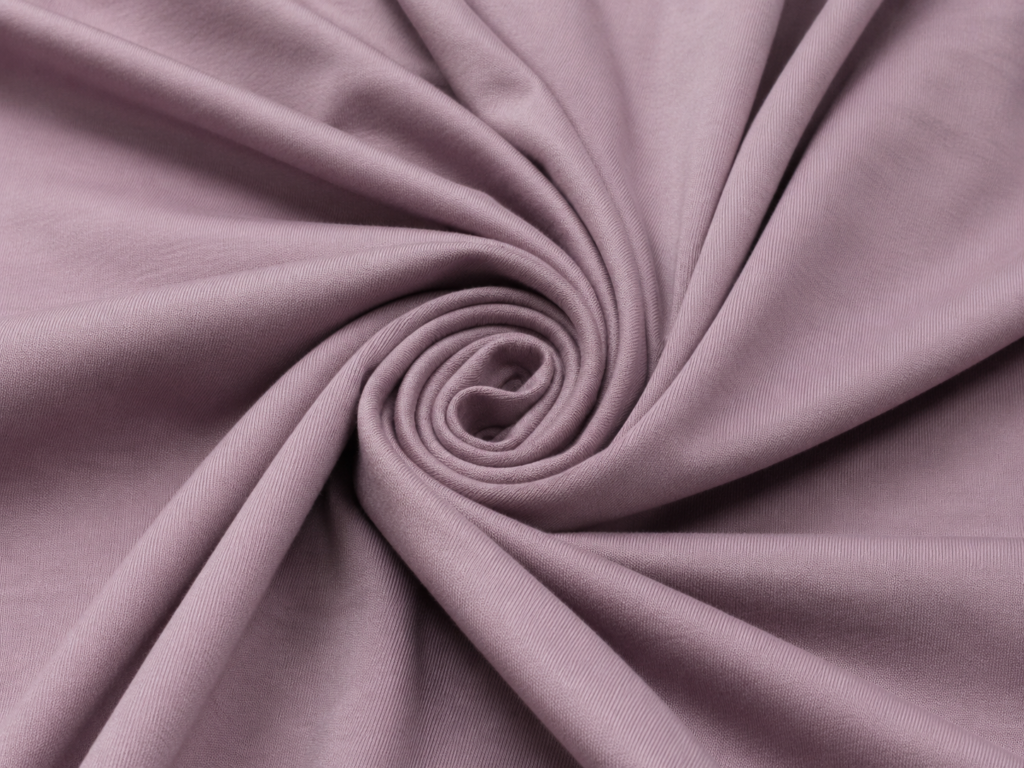
Stretch Suiting
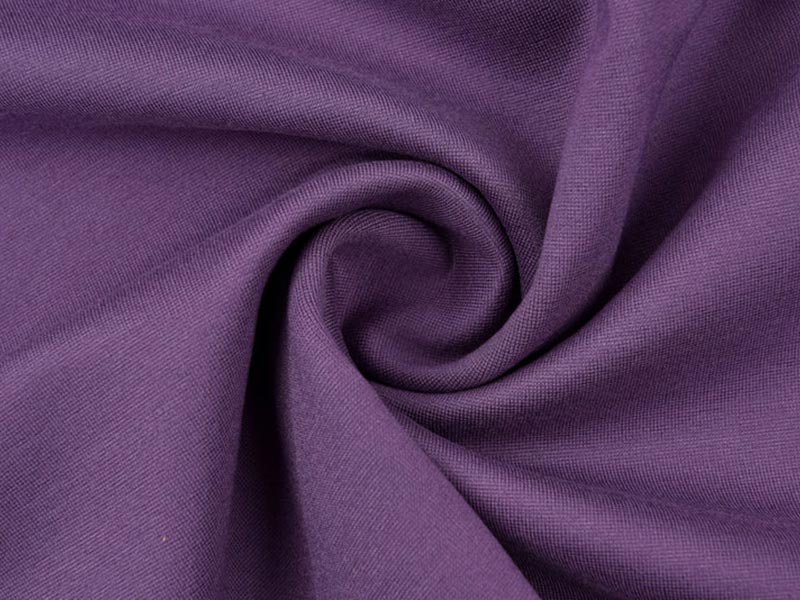
Ponte Knit

Structured Jersey

Crepe
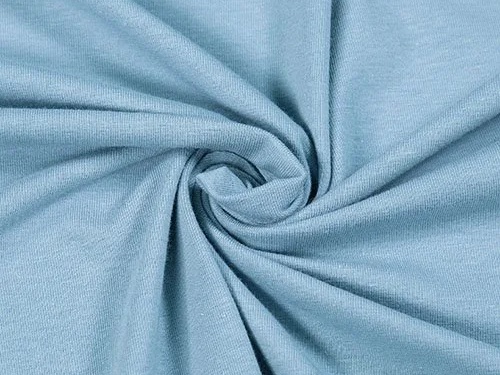
Cotton Blends
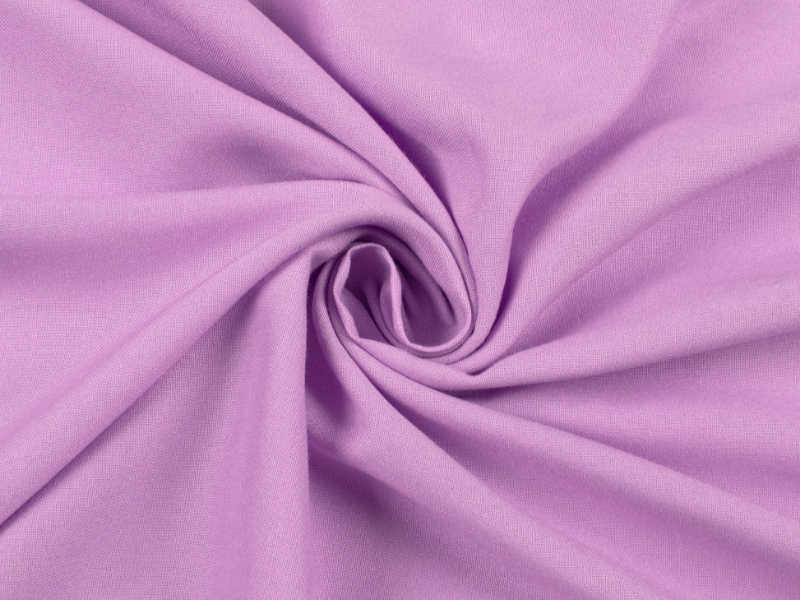
Viscose Blends

Lightweight Twill

Lining Fabrics
Workwear Fabric Selection Matrix
| Fabric Direction | Structure | Movement | Wrinkle Behavior | Opacity | Main Risks | Suitable Workwear Styles |
|---|---|---|---|---|---|---|
| Stretch Suiting | High | Controlled stretch | Medium to good | Usually good | Pressing shine, seam impression, recovery variation | Sheath, tailored midi, blazer dress |
| Ponte | Medium to high | High | Good when quality is stable | Good | Pilling, heat marks, excessive tightness | Ponte dress, fitted midi, structured knit dress |
| Structured Jersey | Medium | High | Good to medium | Varies | Cling, seam growth, hem waviness | Soft sheath, travel dress, office knit |
| Crepe | Medium | Medium | Medium to good | Varies | Snagging, transparency, lot variation | Wrap, A-line, belted, office-to-evening |
| Cotton Blend | Medium | Medium | Medium | Usually good | Shrinkage, puckering, colorfastness | Shirt dress, summer office dress |
| Viscose Blend | Soft to medium | Medium | Medium | Varies | Shrinkage, skew, transparency | Wrap, soft shirt dress, relaxed midi |
| Lightweight Twill | Medium to high | Low to medium | Medium | Good | Pressing marks, stiffness, puckering | Utility office dress, structured shirt dress |
| Lining Fabric | Supporting layer | Must match outer fabric | Depends on quality | Adds coverage | Static, restriction, shrinkage mismatch | Sheath, tailored midi, light-color dresses |
Fit and Pattern Engineering for Professional Dresses
Workwear fit must remain polished during standing, sitting, walking, reaching, and repeated wear. Pattern engineering connects the brand’s visual direction with movement, size consistency, and manufacturable construction.
Bust Shaping and Dart Control
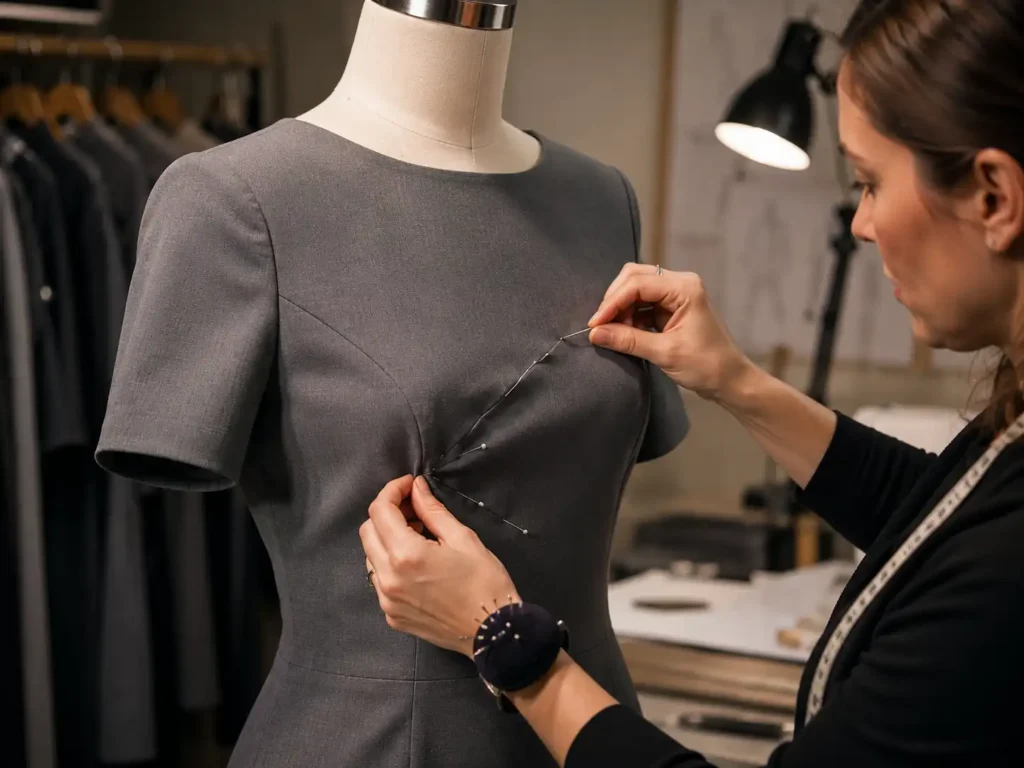
Bust fit affects neckline position, armhole comfort, front length, waist level, and side-seam balance. A dress can match the stated bust circumference and still fit poorly if dart intake, dart direction, bust point, cup allowance, or front length are incorrect.
During sampling, our pattern team reviews:
- Bust circumference
- Front chest width
- Bust-point location
- Dart direction and length
- Princess-seam shaping
- Neckline contact
- Armhole gaping
- Button-placket opening
- Front waist position
Shirt dresses receive additional review at the bust placket because incorrect button spacing or insufficient front width can cause gaping. Sheath dresses may require dart or princess-seam corrections to keep the waist and side seams vertical.
Waist and Hip Balance
Professional dresses often require visible waist definition without excessive compression. Waist fit cannot be assessed separately from ribcage, high hip, full hip, back-waist length, and fabric stretch.
Our development review covers:
- Natural waist position
- Front and back waist level
- Waist seam angle
- High-hip progression
- Full-hip ease
- Side-seam shape
- Abdominal allowance
- Seat allowance
- Sitting comfort
- Lining tension
For fitted woven dresses, adequate hip and sitting ease is essential. For stretch styles, negative ease must correspond with fabric recovery rather than an assumed percentage.
Shoulder and Arm Mobility
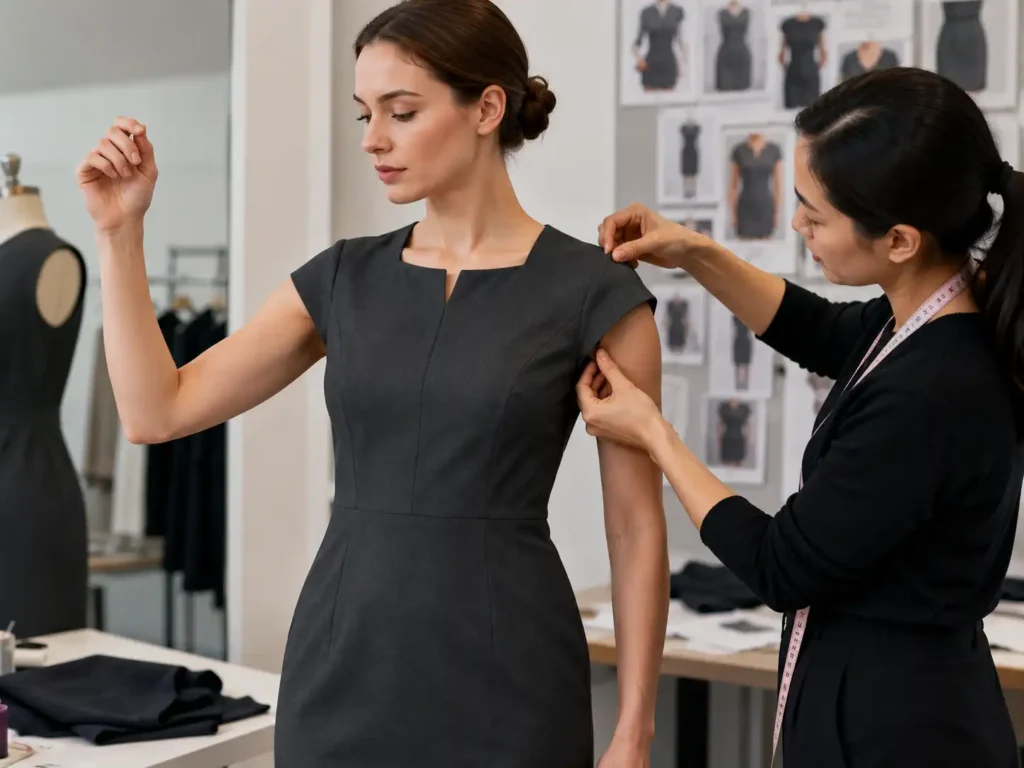
Restricted shoulder or sleeve movement can make an otherwise polished dress unsuitable for long working days. Mobility depends on shoulder width, armhole depth, sleeve cap, bicep width, back width, front chest width, fabric stretch, and seam construction.
Sample fittings include:
- Arm raised forward
- Arm raised sideways
- Reaching across the body
- Sitting with arms forward
- Jacket or layer compatibility
- Sleeve opening comfort
- Armhole coverage
An oversized armhole does not automatically improve movement. Excess depth can expose undergarments, distort the bodice, and pull the garment upward when the arm moves.
Dress Length, Hem, and Slit Control
Workwear length should suit the brand’s market and intended setting. Dress length is reviewed from the high shoulder point or agreed reference point, with separate attention to front and back balance.
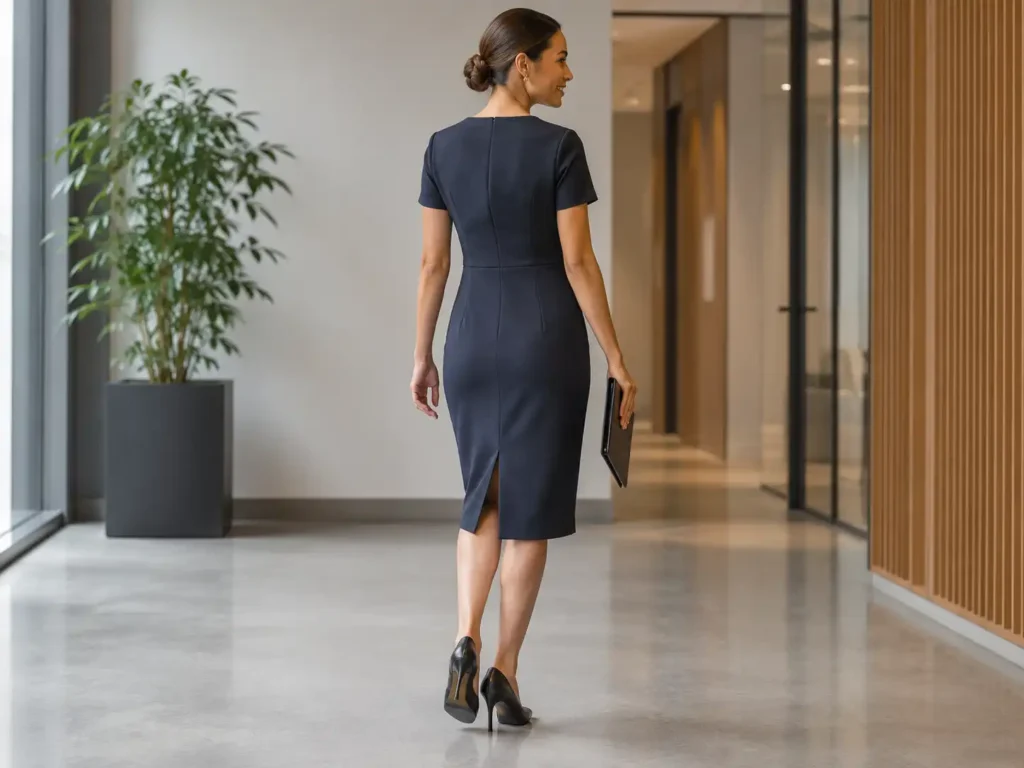
Slits and vents are checked for:
- Standing coverage
- Sitting coverage
- Walking stride
- Stair movement
- Reinforcement
- Lining opening
- Size-to-size progression
- Symmetry
- Bulk-production measurability
A slit should not be graded mechanically without considering dress length and target proportions. Petite, regular, tall, and extended-size programs may require separate length strategies.
Measurement and Size Grading Built Around Real Bodies
Size grading is not a simple enlargement of the base pattern. Every measurement influences nearby areas, and professional dresses expose grading errors quickly because the silhouettes are often structured or close to the body.
Body Measurements and Garment Measurements
Body measurements describe the wearer.
Garment measurements describe the finished product.
The difference between them creates wearing ease, design ease, or negative ease.
A clear size specification should identify:
- Measurement point
- Measurement method
- Finished garment value
- Tolerance
- Grade increment
- Fabric condition
- Whether the measurement is relaxed or stretched
Photographs or diagrams reduce disagreement about measurement methods.
Core Workwear Measurements
Common control points include:
- Bust
- Waist
- High hip
- Full hip
- Shoulder width
- Front chest
- Back width
- Armhole depth
- Bicep
- Sleeve length
- Back-waist length
- Dress length
- Hem sweep
- Slit height
- Belt position
- Lining length
Each style uses a different measurement priority. A wrap dress needs overlap and tie placement controls, while a shirt dress requires placket, collar, cuff, and button-position measurements.
Base Size and Grade Rules
The base size establishes silhouette and fit.
Grade rules then determine how the pattern changes across the range.
Our team reviews whether:
- Bust, waist, and hip increments match the target market
- Shoulder width grows at an appropriate rate
- Armholes become neither too deep nor too tight
- Sleeve openings remain wearable
- Dress length increases appropriately
- Dart and seam positions remain visually balanced
- Slit height remains proportionate
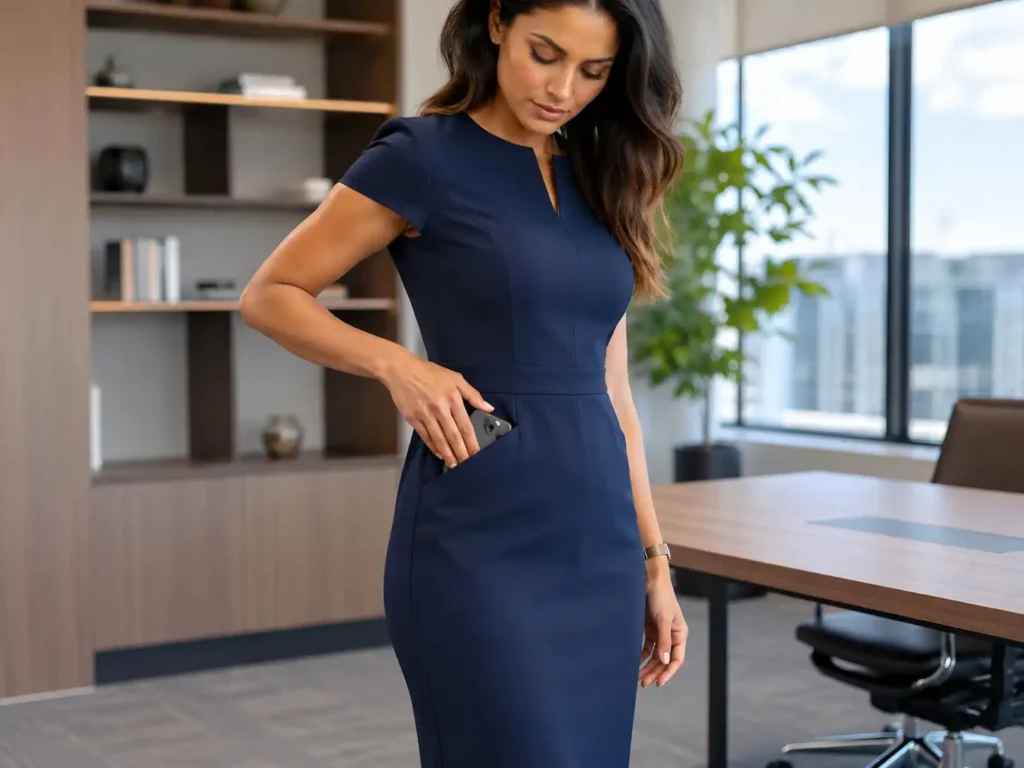
- Pockets remain accessible
- Waist details remain aligned
XS–XL Programs
A 200-piece style can be divided across sizes such as XS–XL when the size ratio is commercially and operationally reasonable. The brand should provide the planned ratio before bulk cutting.
Excessive fragmentation increases cutting bundles, size-label management, measurement checks, packing complexity, and carton breakdown requirements.
Petite, Tall, and Extended Sizes
Petite and tall sizing require more than changing overall dress length. Torso length, waist position, sleeve length, armhole depth, pocket position, slit height, and skirt proportion may also need adjustment.
Extended-size development may require separate fit review for bust shaping, upper arm, abdomen, hip, seat, shoulder, and neckline. A separate fit sample may be recommended where base proportions differ significantly.
Workwear Dress Details That Influence Fit and Quality

Neckline Coverage
Bust Darts

Waist Seams
Functional Pockets

Front Plackets

Concealed Zippers
Back Slits
Sleeve Structures
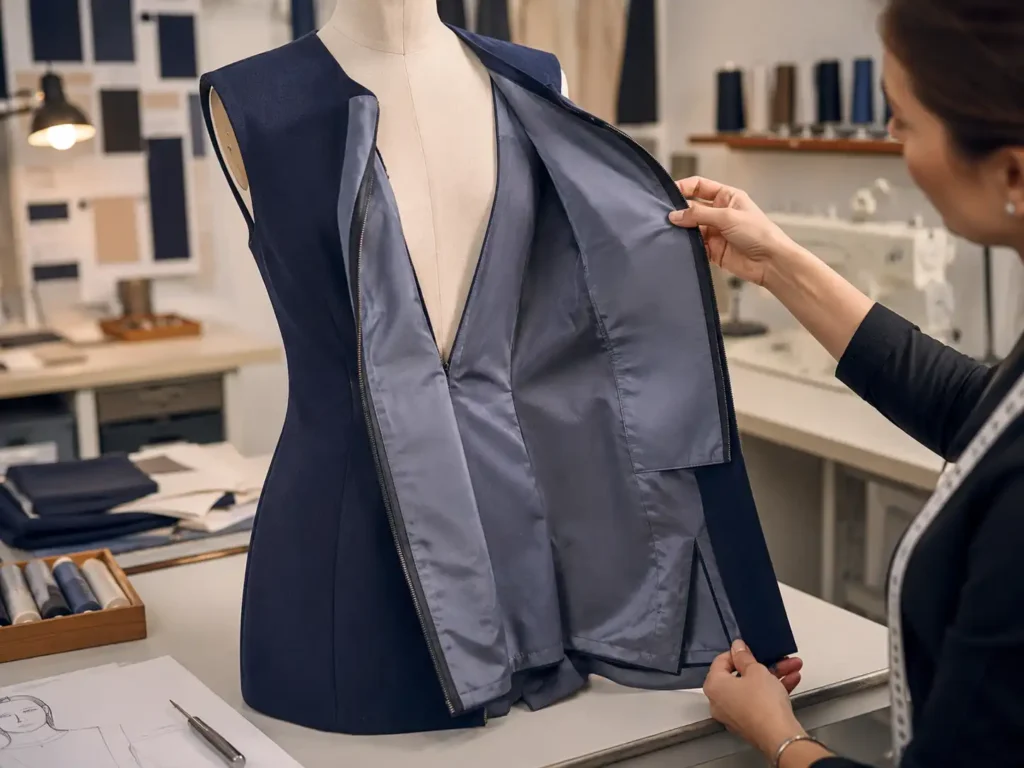
Lining Construction
Comfort, Movement, and Coverage Tested During Development
Sitting Comfort
Arm Movement
Walking Ease
Breathability
Opacity and Coverage
Static and Skin Comfort
- Assess Wear Comfort
- Request Fit Review
Tech Pack and Production Feasibility Review
Accurate development begins with organized inputs. Jinfeng Apparel can review tech packs, reference samples, sketches, line sheets, measurement charts, fabric directions, and packaging instructions before sampling.
Information Needed for Review
For a useful project assessment, provide as many of the following items as possible:
- Tech pack or reference images
- Front, back, and detail views
- Original sample, when available
- Fabric preference or physical swatch
- Color list and Pantone references
- Target quantity by style and color
- Planned size range
- Measurement chart
- Construction notes
- Label and packing requirements
- Destination market
- Target launch date
- Testing or inspection requirements
A single image can support an initial discussion, but it cannot establish a final bulk quotation without fabric, construction, quantity, size, and packing information.
Cost and Production Review
Quotation planning considers:
- Fabric and lining consumption
- Trim cost
- Pattern and sample development
- Cutting complexity
- Sewing time
- Pressing requirements
- Quality-control workload
- Packing materials
- Expected wastage
- Testing or certification
- Logistics terms
Cost control focuses on protecting the intended brand-level appearance rather than removing essential quality features.
Workwear Dress Sample Development in Six Controlled Stages
Project Review
Fabric Direction
Pattern Development
First Sample
Fit Review
Revised Sample
The revised sample applies approved pattern, measurement, material, trim, and construction changes. Additional revision may be needed when major fabric or structure changes are introduced.
From Revised Sample to PP and Golden Sample
A successful bulk order depends on controlling the transition from development to production. Approved fit must be converted into final patterns, grade rules, specifications, sewing instructions, and measurable QC points.
Pattern Correction Before Bulk
For a useful project assessment, provide as many of the following items as possible:
- Tech pack or reference images
- Front, back, and detail views
- Original sample, when available
- Fabric preference or physical swatch
- Color list and Pantone references
- Target quantity by style and color
- Planned size range
- Measurement chart
- Construction notes
- Label and packing requirements
- Destination market
- Target launch date
- Testing or inspection requirements
A single image can support an initial discussion, but it cannot establish a final bulk quotation without fabric, construction, quantity, size, and packing information.
PP Sample Approval
The PP sample is the final pre-production reference. Approval should cover:
- Style structure
- Final pattern
- Base measurements
- Grade rules
- Fabric
- Color
- Lining
- Trims
- Stitching
- Label placement
- Hangtag placement
- Packing method
Unresolved changes should not remain informal. Any approved adjustment must be recorded and transferred into the specification and production instructions.
Bulk Workwear Dress Production in Nine Visible Steps

Material Receiving
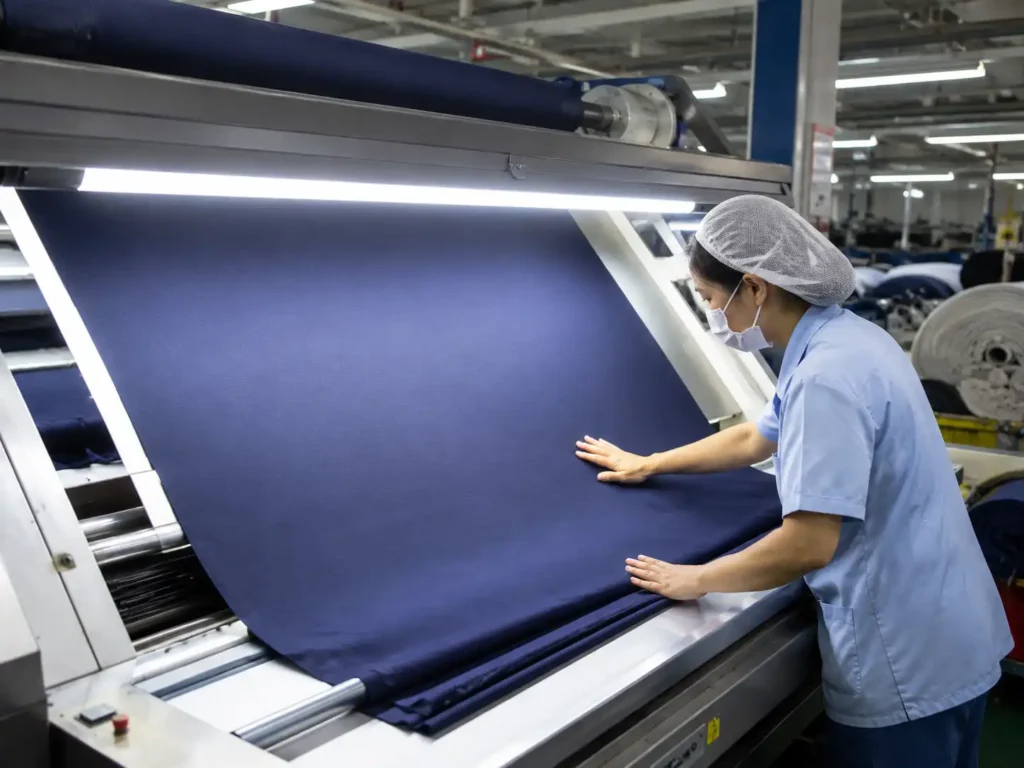
Fabric Inspection
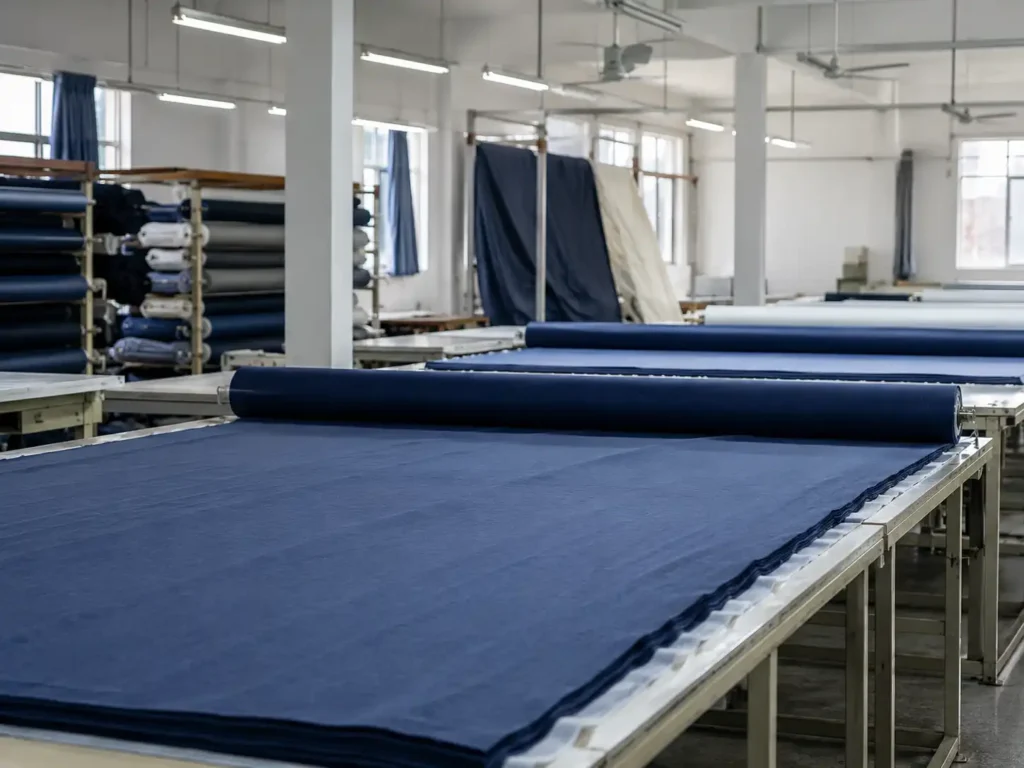
Fabric Relaxation
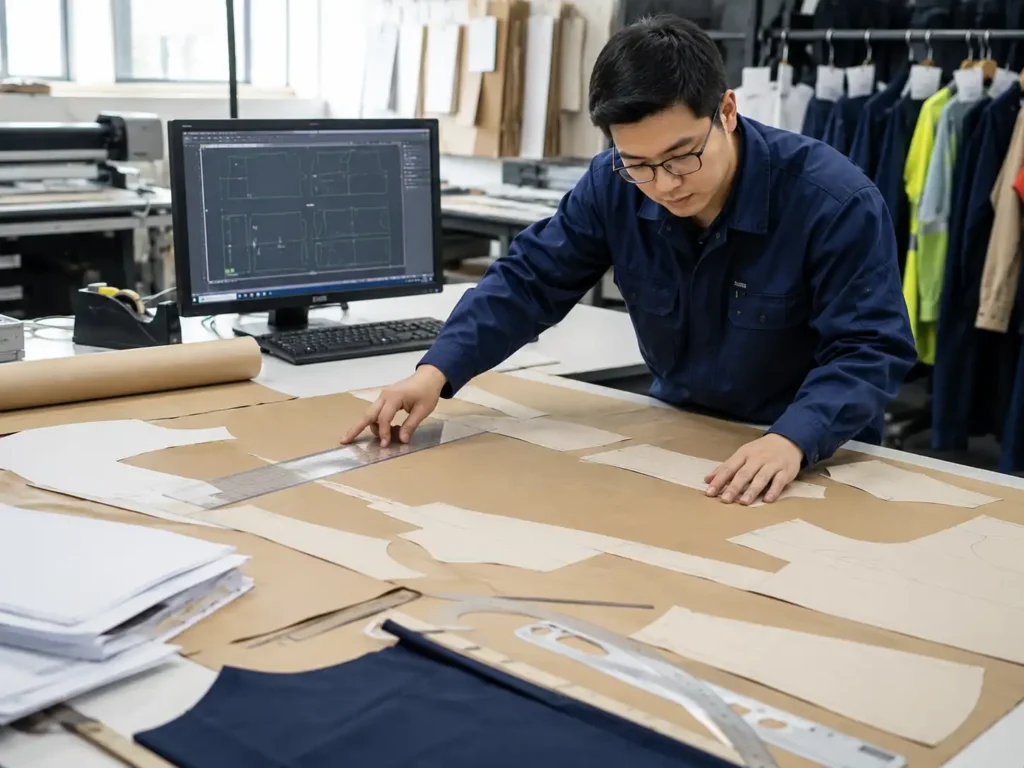
Pattern and Marker
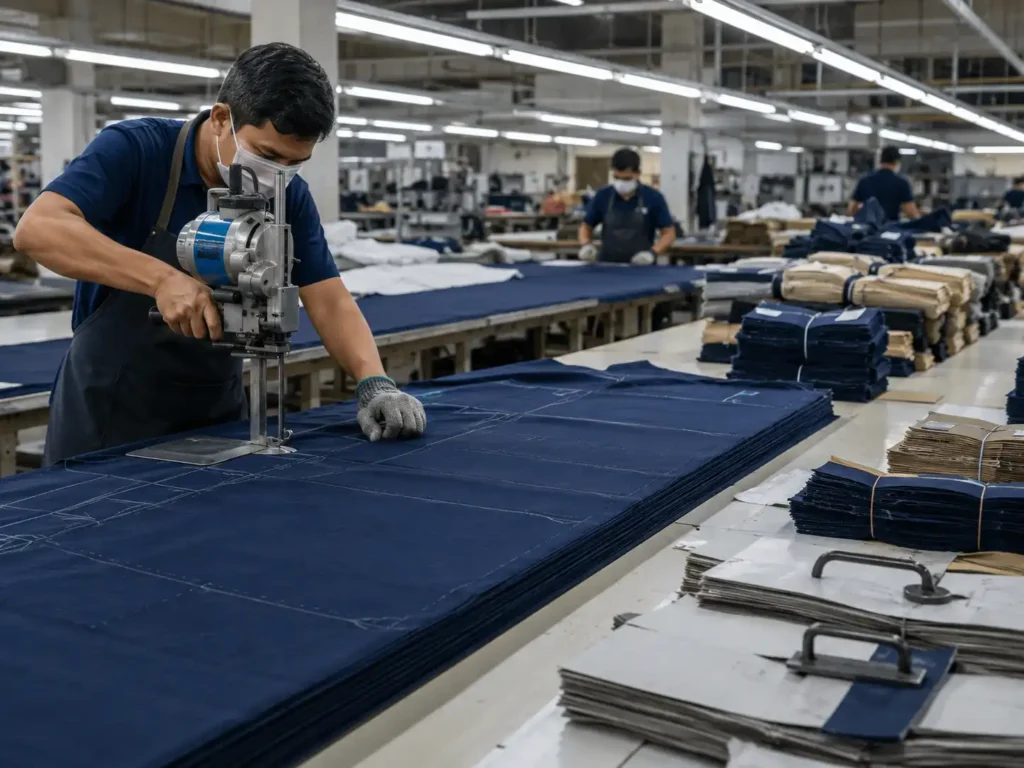
Cutting
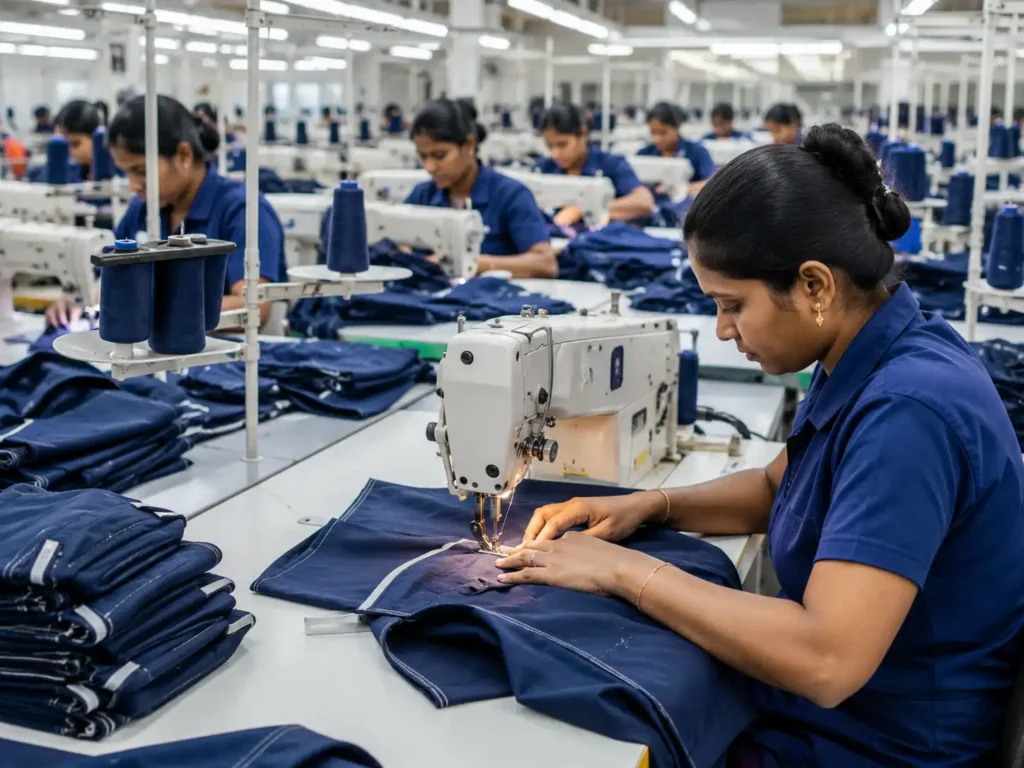
Sewing
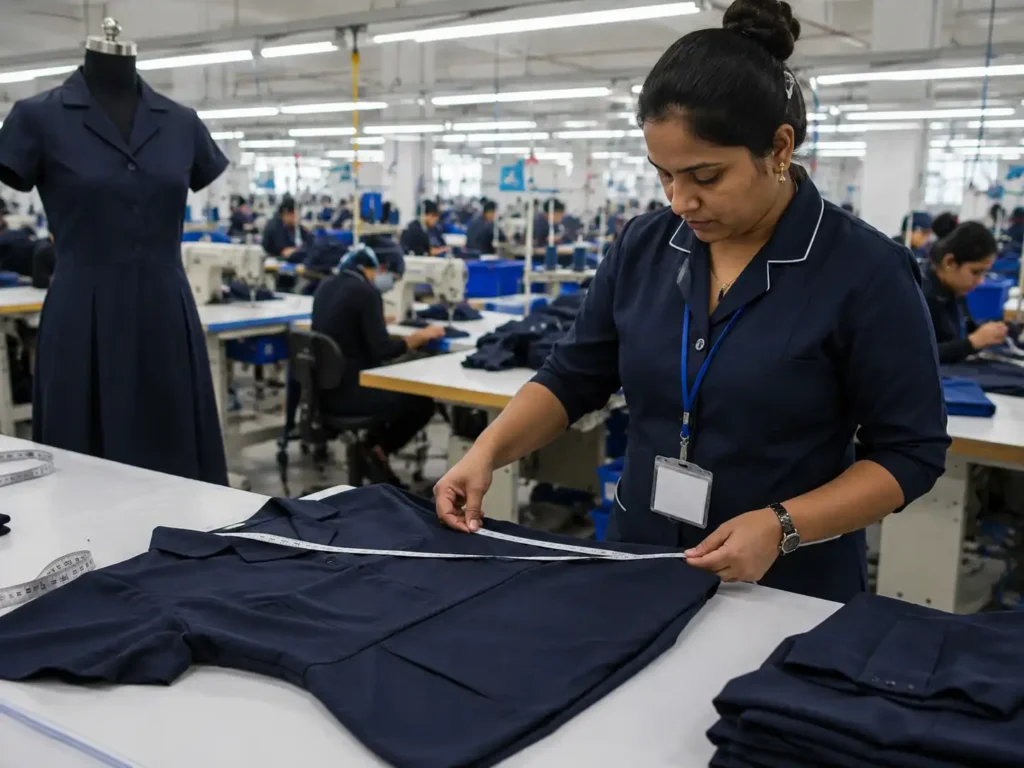
Inline Inspection

Pressing and Finishing
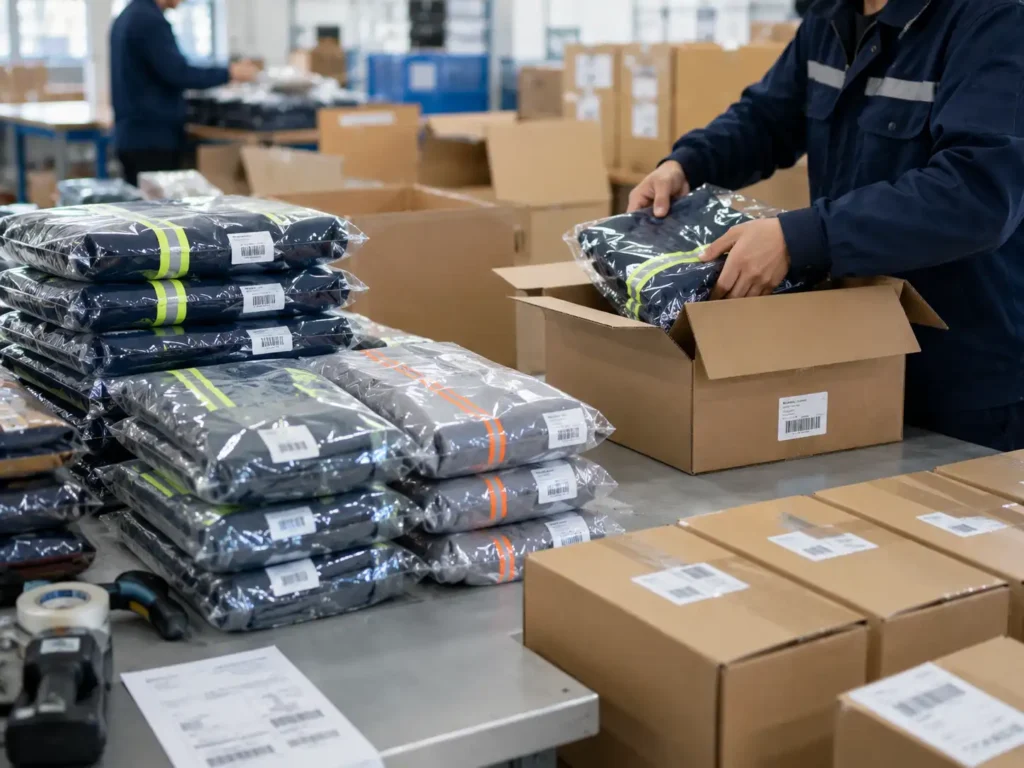
Final Packing
Pressing, Finishing, and Durability Control
Seam Pressing
Shape Retention
Wrinkle Recovery
Pilling Control
Closure Strength
Care Label Accuracy
Testing and Compliance Support Based on Project Needs
Fabric Information
Shrinkage Review
Colorfastness Review
Needle and Metal Control
Audit Documentation
Third-Party Inspection
Private Label and Retail-Ready Workwear Packing
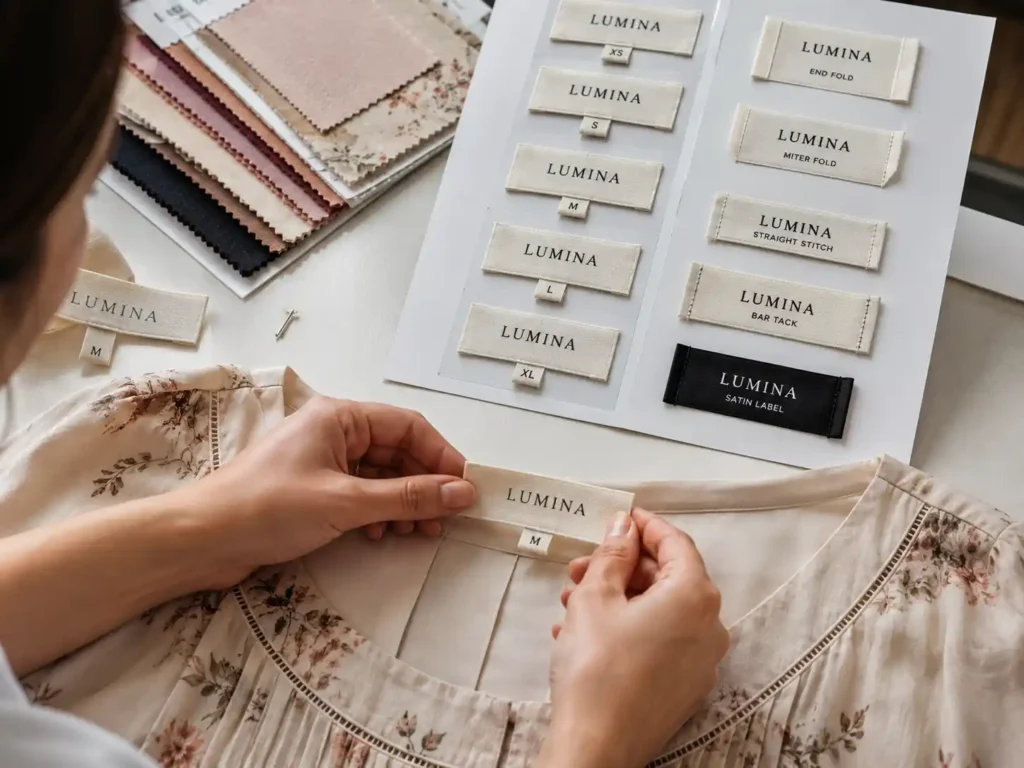
Main Labels
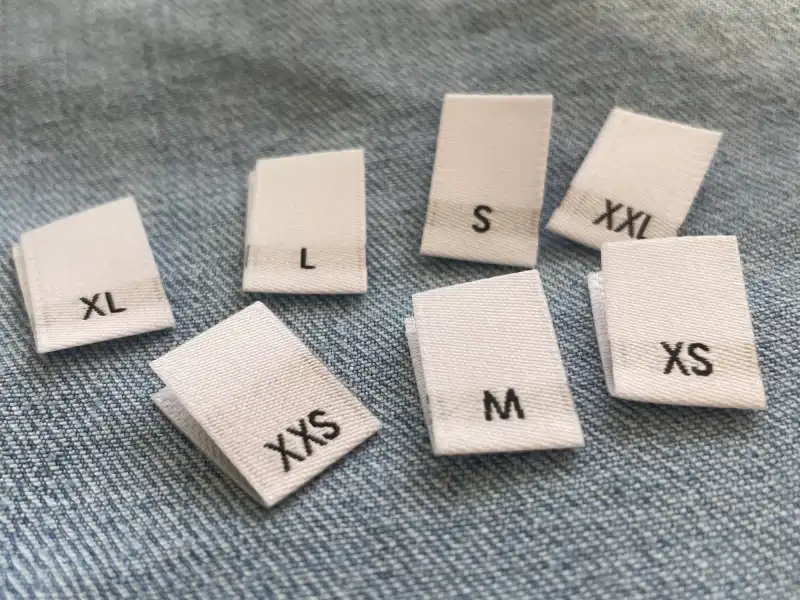
Size Labels
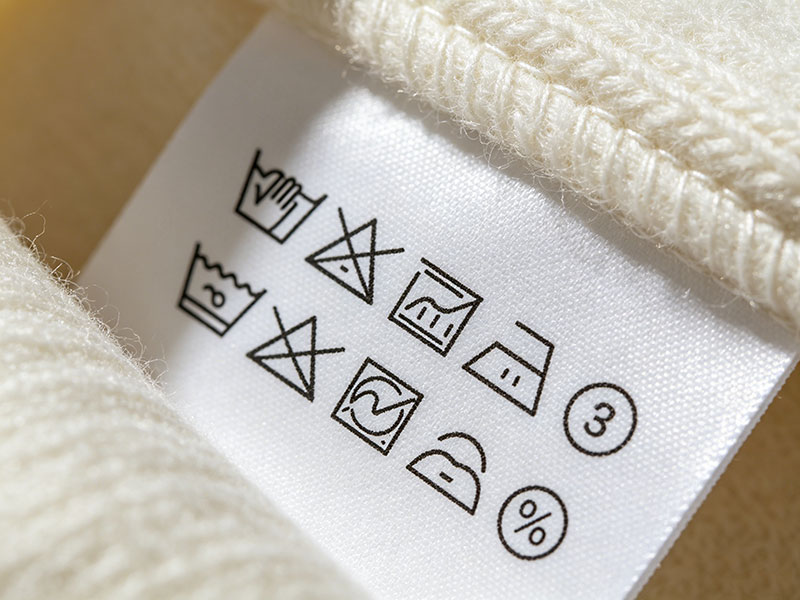
Care Labels

Hangtags
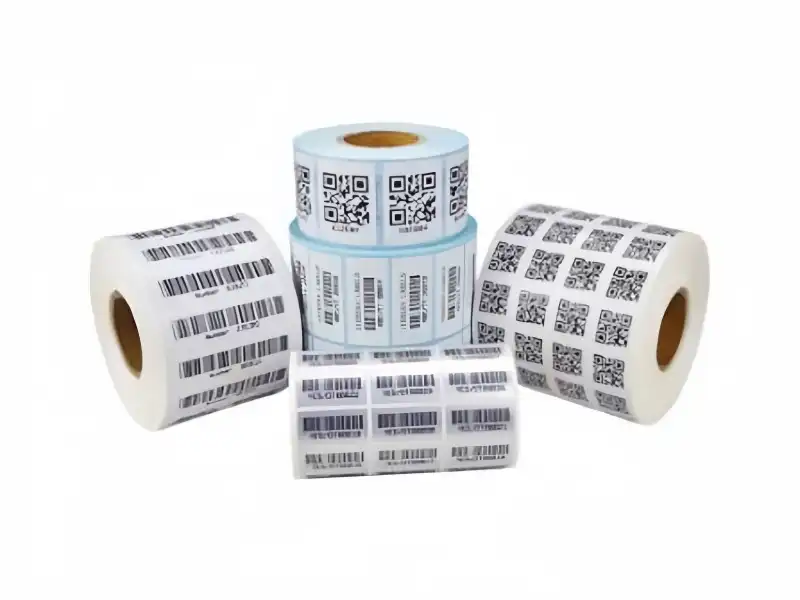
Barcode and SKU Labels

Polybags and Cartons
NDA Protection and Long-Term Production Records
Design Protection
- Brand identity
- Tech packs
- Line sheets
- Reference samples
- Patterns
- Measurement charts
- Material plans
- Unreleased styles
- Label artwork
- Packaging artwork
- Quantity information
- Price information
- Launch calendars
Production Records
- First and revised patterns
- PP pattern
- Bulk-production pattern
- Grade rules
- Fabric details
- Trim details
- Sewing instructions
- Label positions
- Packing instructions
- QC points
- Shipment records
Repeat and Seasonal Support
Long-term programs may include:
- Repeat colors
- New colors
- Fabric substitutions
- Updated lengths
- Seasonal sleeves
- Coordinated styles
- Additional sizes
- Multi-batch production
- Replenishment
- New-season collections
Any material or structural change is reviewed before an old pattern is reused.
Workwear Dress Programs Managed at Collection Scale
The following anonymous project profiles reflect the order sizes, style counts, manufacturing challenges, and production structures common to established brand programs. Brand identities and proprietary designs remain confidential.
United States Premium Ecommerce Workwear Collection

Project Scope
- Market: United States
- Brand type: Premium ecommerce womenswear
- Styles: 18
- Total quantity: 42,000 garments
- Size range: XS–XL
- Color count: 4 core colors
- Main products: Sheath dresses, ponte midis, shirt dresses, belted dresses
- Main fabric groups: Ponte, stretch suiting, compact crepe
Initial Challenge
The collection used several fitted silhouettes but lacked one unified fit standard. Bust shaping, waist position, hip ease, armhole depth, and dress length varied between style references. The brand also required consistent product photography and size information across all 18 styles.
Development Response
Styles were grouped by silhouette and fabric behavior. One measurement framework was created for fitted woven dresses, another for ponte and structured knits, and a separate structure for shirt dresses.
The sample sequence prioritized six hero styles before the remaining twelve. Fit comments were converted into measurable pattern corrections. Bust darts, waist level, armholes, sleeves, slits, belts, and lining lengths were locked before PP approval.
Production Control
- Three fabric groups managed separately
- Five-size grading reviewed by silhouette
- PP approval required for all 18 styles
- Cutting bundles separated by style, color, and size
- Measurement QC focused on bust, waist, hip, dress length, and slit height
- Barcodes and polybag stickers checked against SKU data
Result
All 18 styles moved into bulk production with approved patterns, measurement files, material records, label placement, and packing instructions. The production program was packed by style, color, and size ratio for ecommerce receiving.
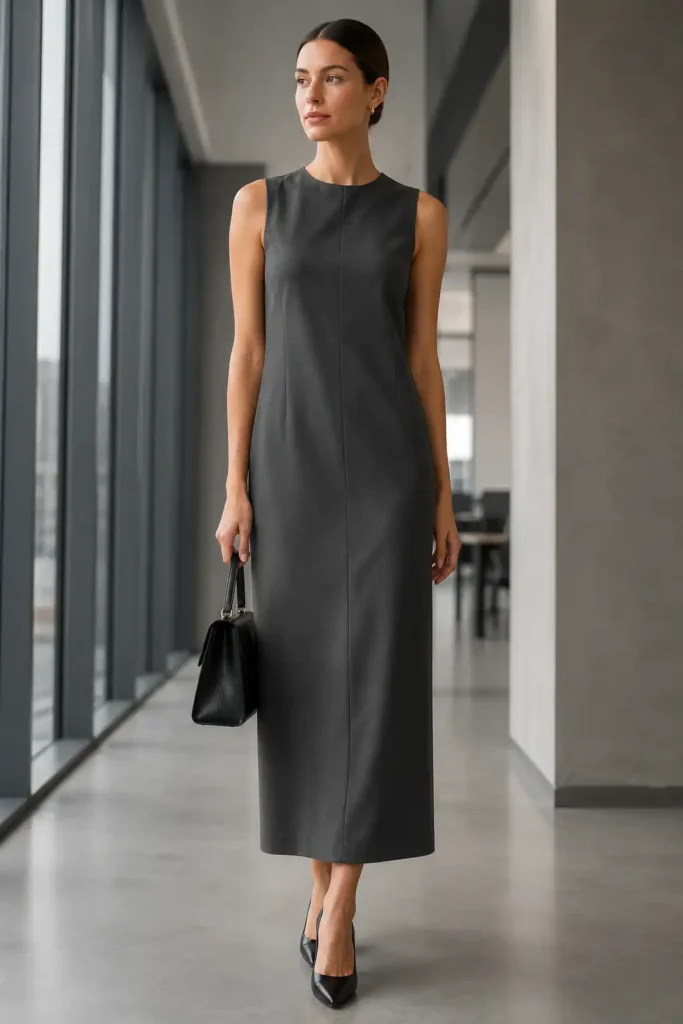
United Kingdom Officewear Label
Project Scope
- Market: United Kingdom
- Brand type: Established officewear label
- Styles: 12
- Total quantity: 24,000 garments
- Size range: UK 6–16
- Delivery plan: 2 production waves
- Main products: Tailored midi dresses, wrap dresses, A-line office dresses
- Main fabric groups: Stretch suiting, crepe, lining
Initial Challenge
The collection required structured silhouettes with comfortable sitting and walking movement.
Several initial references used narrow skirts, deep back vents, and close waist measurements. The brand also required consistent modesty standards across all sizes.
Development Response
Fit review concentrated on hip and seat ease, back-waist length, skirt sweep, vent height, neckline coverage, sleeve mobility, and lining openings.
Dress lengths and slit heights were not graded by one fixed increment; proportions were adjusted according to the approved size range.
Fabric options were reviewed for structure, stretch recovery, opacity, and pressing behavior. Lining was matched according to outer-fabric stretch and color.
Production Control
- Twelve styles divided into two launch waves
- Base-size and graded measurement checks
- Back vents reinforced and measured
- Lining length checked against outer dress
- Pressing reviewed for seam shine
- Main labels, care labels, and hangtags verified before packing
Result
The program was delivered in two planned waves, allowing the first product group to enter the brand’s launch schedule while the second group completed final packing and inspection.
Australian Work-to-Evening Collection
Project Scope
- Market: Australia
- Brand type: Modern work-to-evening womenswear brand
- Styles: 26
- Total quantity: 68,000 garments
- Size range: AU 6–16
- Color count: 5 seasonal colors
- Main products: Refined wrap dresses, tailored midis, structured knit dresses, shirt dresses
- Main fabric groups: Lightweight crepe, structured jersey, suiting blends
Initial Challenge
The brand required garments suitable for warm-weather offices, meetings, commuting, dinners, and events. Several colors used light tones, making transparency, lining, sweat visibility, and surface marks important concerns.
Development Response
Materials were reviewed for breathability, opacity, drape, recovery, colorfastness, and lining compatibility. Light-color garments received extra coverage checks under natural and indoor lighting.
Neckline depth, armhole coverage, skirt overlap, slit height, and sitting movement were reviewed during sample fittings. Photo-ready samples and PP samples were managed as separate approval stages.
Production Control
- Twenty-six styles grouped by fabric and construction
- Five-color material and trim records
- Light-color opacity inspection
- Structured-knit recovery checks
- Lining and outer-fabric shade matching
- Multi-size packing by SKU and carton ratio
Result
The 26-style collection entered production with separated fabric groups, approved color references, confirmed coverage standards, and SKU-based packing instructions for a 68,000-garment program.
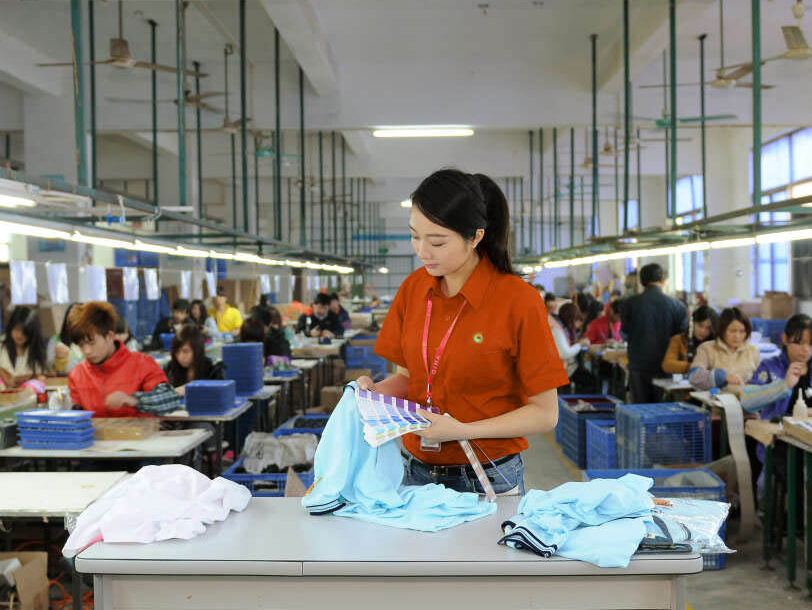
Why Fashion Brands Evaluate Jinfeng Apparel
| Advantage Category | Details |
|---|---|
| Women’s Dress Specialization | Core manufacturing scope centers on dresses, skirts, jumpsuits, matching sets, tops, and private-label womenswear. Workwear development benefits from relevant pattern, fit, fabric, and finishing experience. |
| Pattern and Fit Control | Seven or more senior pattern makers support bust, waist, hip, shoulder, sleeve, length, slit, lining, and grading corrections across woven and knit dress structures. |
| Structured Sampling | Two sample rooms and more than twenty sample machinists support first samples, fit samples, revised samples, photo-ready samples, PP samples, and golden samples. |
| Multi-Style Coordination | Six owned women’s fashion factories and more than ten long-term satellite production partners allow styles to be allocated according to fabric, construction, complexity, quantity, and delivery schedule. |
| Process-Based QC | More than fifteen QC inspectors support incoming material, cutting, sewing, measurement, finished-garment, label, and packing checks. |
| Private-Label Delivery | Main labels, size labels, care labels, hangtags, barcodes, polybags, size stickers, cartons, and carton marks can be integrated into the approved production program. |
| Confidential Development | NDA support and design-protection procedures cover tech packs, samples, patterns, materials, unpublished styles, labels, packaging, quantities, and launch information. |
| Repeat-Order Records | Patterns, measurement files, fabrics, trims, production instructions, QC points, and packing requirements can be retained for future production and collection extensions. |
Workwear Dress Manufacturing Questions
MOQ starts from 200 pieces per style and color. One style in two colors generally requires 200 pieces per color. Special fabrics, custom colors, printing, trims, labels, packaging, or supplier minimums may increase the requirement.
Yes. Tech packs, measurement charts, construction notes, BOM information, artwork, color references, and packing instructions can be reviewed before pattern development and quotation.
Yes. Reference images can start an initial assessment. More information will be required for accurate development, including fabric direction, measurements, quantity, colors, size range, construction, and packaging.
Our range includes sheath dresses, shirt dresses, wrap dresses, tailored midi dresses, A-line office dresses, ponte dresses, structured knit dresses, belted dresses, and office-to-evening styles.
Common directions include stretch suiting, ponte, structured jersey, crepe, cotton blends, viscose blends, lightweight twill, and suitable lining fabrics. Final selection depends on silhouette, movement, climate, opacity, care, cost, and brand positioning.
The pattern team reviews bust shaping, dart position, front length, waist placement, high hip, full hip, side-seam balance, seat ease, fabric stretch, and lining tension through sample measurement and fit comments.
Yes. A style meeting the MOQ can be divided across a planned size range such as XS–XL. A reasonable size ratio and approved grade rules are required before bulk cutting.
Yes, subject to project review. Separate pattern adjustments or fit samples may be recommended because torso length, waist position, shoulder, sleeve, armhole, dress length, slit, and body proportions can differ from the core range.
Yes. Development can balance professional coverage with refined drape, waist shaping, controlled slits, subtle surface interest, and comfortable movement for after-work settings.
Sample stages can include first sample, fit sample, revised sample, photo-ready sample, salesman sample, PP sample, and golden sample. The required route depends on project purpose and complexity.
No. The first sample primarily validates design, fabric, pattern, structure, construction, and initial fit. Approved revisions and a PP sample are required before bulk production.
Key approvals include final pattern, grade rules, measurements, PP sample, fabric, color, lining, trims, labels, packaging, quantity breakdown, size ratio, and delivery instruction.
Inspection can cover incoming materials, cutting, sewing, measurements, fit-related points, finished appearance, pressing, labels, barcodes, polybags, packing ratios, and cartons.
Yes. Private-label support can include main labels, size labels, care labels, hangtags, barcode stickers, size stickers, polybags, inserts, cartons, and carton marks.
Yes. Appointed inspection arrangements can be coordinated when standards, timing, booking details, reporting requirements, and responsibilities are confirmed before inspection.
Yes. NDA-based cooperation and design-protection procedures can cover tech packs, patterns, samples, materials, labels, packaging, quantities, prices, and launch plans.
Yes. Approved patterns, measurement files, fabric references, trim details, sewing instructions, QC points, and packing records can be retained. Material availability and any design changes must be reviewed before repeat production.
Provide product images or a tech pack, fabric direction, quantity by style and color, size range, measurement chart, color plan, construction details, label and packaging requirements, destination, launch date, and trade terms.

Start Your Workwear Dress Manufacturing Project
A complete submission allows our product development, pattern, material, production, QC, and packing teams to assess the program with greater accuracy.
Please include:
- Brand or company name
- Tech pack, line sheet, original sample, or reference images
- Workwear dress types
- Target fabrics or fabric swatches
- Quantity for each style and color
- Planned size range and size ratio
- Measurement charts
- Color references
- Main label, care label, and hangtag requirements
- Barcode and SKU information
- Packing instructions
- Target destination
- Required launch date
- Testing or inspection requirements
- Preferred trade and delivery terms