Womenswear Supplier Upgrade Partner for Fashion Brands

Move established womenswear programs into stronger development, sampling, bulk control, private-label delivery and repeat-order management.

  • Since 2008, Jinfeng Apparel has supported fashion brands with custom dresses, skirts, jumpsuits, matching sets and private-label womenswear.
  • 6 owned women’s fashion factories and 10+ long-term production partners support multi-style brand programs and controlled factory allocation.
  • 2 sample rooms, 7+ senior pattern makers and 20+ sample machinists help rebuild fit, fabric and construction standards before bulk production.
  • 100,000+ pieces of monthly capacity, 18+ sewing lines, 6+ flexible lines, 15+ QC inspectors and 12+ merchandisers support structured execution.
  •  

Manufacturing Capacity Behind a More Reliable Supplier Upgrade

A stronger supplier relationship depends on more than available sewing space. Development depth, production allocation, merchandising follow-up, quality control and packing coordination must work as one operating system.

Since 2008

Long-term womenswear manufacturing experience helps the team recognize risks before they become bulk-production problems. Product reviews consider fabric behavior, fit balance, construction difficulty, trim suitability, target price and repeat-order potential. The aim is not to promise every request immediately, but to establish a production route that can be sampled, approved and reproduced.

6 Owned Factories

Six owned women’s fashion factories provide a direct manufacturing base for woven dresses, knit womenswear, party styles, jumpsuits, sets and related products. Factory allocation is made by product structure, material type, order volume and workmanship requirement rather than assigning every style to the same production unit.

10+ Production Partners

More than ten long-term satellite production partners add specialist capacity for different product groups and seasonal peaks. Partner factories are used within a managed production structure, with product files, quality requirements, packing instructions and inspection points coordinated by Jinfeng Apparel instead of leaving each unit to interpret the order independently.

2 Sample Rooms

Two sample rooms support concurrent development for multiple styles, fabrics and launch programs. Separate sample capacity allows pattern review, first sample construction, revision work, PP preparation and photo-ready sample needs to move without placing every development task into the same queue.

100,000+ Monthly

Regular monthly capacity of more than 100,000 pieces supports established brand programs that may include numerous styles, colors and delivery batches. Capacity is still reviewed by product mix because a structured corset dress, sequin evening style and simple jersey dress consume very different amounts of material preparation, sewing time and QC attention.

15+ QC Inspectors

More than fifteen QC inspectors support incoming material checks, cutting control, in-line sewing inspection, garment measurement, finishing review and packing verification. Quality decisions are tied to approved samples, measurement files, workmanship requirements and product-specific risk points rather than a generic final inspection checklist.

Built for Fashion Brands Outgrowing Their Current Supplier

Supplier upgrades usually begin when a brand’s product complexity, order volume, launch frequency or quality expectations exceed the operating level of its current manufacturing base.

Established Fashion Brands

Suitable programs already have a defined market position, sales channels, product architecture and bulk-production plan. The brand may be adding more complex dresses, increasing style count, tightening quality requirements or preparing seasonal launches across several categories. Jinfeng Apparel can review existing product records, preserve approved elements and rebuild areas where fit, fabric, construction, production visibility or repeat-order consistency remain weak.

Sourcing and Vendor Teams

Procurement and vendor-management teams often need a qualified second source before reducing dependence on an underperforming supplier. They require clear manufacturing boundaries, factory information, MOQ logic, sample development, quality checkpoints, packing control and documentation support. Jinfeng Apparel can enter through a selected product group or controlled order, allowing performance to be measured before a broader transfer is considered.

Product and QA Teams

Product developers and quality teams focus on details that determine whether a design survives bulk production: bust and waist balance, fabric stretch, lining coverage, trim placement, graded measurements, PP approval, workmanship standards and packing accuracy. Jinfeng Apparel converts feedback into updated patterns, measurement charts, construction notes, QC points and repeat-order records so the same problem is not discussed from the beginning every season.

Signs Your Current Womenswear Supplier Is Limiting Growth

A supplier may still deliver garments while quietly increasing development cost, launch risk and internal workload. Repeated patterns of failure show where stronger manufacturing control is needed.

Samples Miss Design

Reference images and tech packs may be followed mechanically without reviewing how the fabric, silhouette and construction interact. The result is a sample that contains the requested features but misses the intended proportion, drape or brand look. A better process checks design intent, pattern balance, fabric direction, support structure and production feasibility before the first sample is cut.

Fit Problems Repeat

Recurring bust gaping, unstable waistlines, tight hips, incorrect skirt lengths, twisting side seams or unsafe necklines usually indicate that feedback is being patched rather than converted into a corrected pattern. Fit comments should update the pattern, measurement chart, grade rules and next sample requirements, creating a traceable standard for bulk production.

Fabric Direction Weak

A fabric can match the requested color and still fail the garment. Satin may wrinkle or snag, mesh may be too transparent, lace may not place evenly, jersey may lose recovery and sequin fabric may scratch the wearer. Supplier upgrading requires fabric decisions based on drape, stretch, width, weight, lining, sewing behavior, wastage and QC risk.

Bulk Differs From Samples

When approved samples are not translated into PP standards, production instructions and measurement checkpoints, bulk garments can drift in shape, handle, trim placement, pressing and finishing. Sample-to-bulk consistency depends on final patterns, confirmed materials, approved workmanship, graded measurements and clear inspection criteria rather than visual memory.

Updates Stay Unclear

A production team that only reports when a delay has already happened leaves no time to protect the launch calendar. Material arrival, cutting, sewing, in-line inspection, finishing, packing and shipment preparation should have agreed reporting points. Early visibility allows the brand to adjust photography, warehouse bookings, freight plans or split deliveries before options disappear.

QC Starts Too Late

Final inspection cannot reverse every problem. Wrong shade, unstable stretch, incorrect grain direction, poor lace placement or repeated construction defects must be found earlier. A stronger quality system begins with materials and cutting, continues through sewing and measurements, and closes with garment, pressing and packing checks.

Packing Errors Reach Warehouses

Correct garments can still become an expensive warehouse problem when size labels, care labels, barcodes, polybags, SKU stickers, carton marks or size ratios are wrong. Private-label packing should be controlled through approved files, placement instructions, scan checks, carton plans and final packing verification before shipment.

Reorders Lose Consistency

Repeat orders should not rely on people remembering a previous production run. Patterns, fabric references, color records, trim specifications, sewing notes, measurement files, packing instructions and QC findings need to be retained. Any change in fabric weight, stretch, lining or construction must be reassessed before the old pattern is reused.

Is Jinfeng the Right Supplier Upgrade for Your Brand?

Clear project boundaries protect development quality and shorten the path to a useful quotation. Jinfeng Apparel is structured for brands with defined products, professional sampling needs and real production plans.

Strong Project Fit

The strongest fit includes fashion brands, sourcing teams and apparel groups with tech packs, reference garments, design files or a clear collection direction. Programs may involve seasonal collections, multiple styles, private-label packing, repeat orders or supplier diversification. The standard MOQ starts from 200 pieces per style and color, subject to fabric availability, custom color, trims, construction complexity, packaging and production schedule.

Outside Core Scope

The manufacturing model is not designed for ready-stock wholesale, one-piece fulfillment, personal orders or projects built only around the lowest possible price. Professional sampling, material approval, pattern correction and PP confirmation require clear responsibility from both sides. Special fabric, custom dyeing, placement print, branded packaging or certified material can carry separate supplier MOQs and development timing.

Eight Criteria for Evaluating a Better Womenswear Supplier

A serious supplier comparison should measure how each candidate converts design files into repeatable commercial garments. Unit price alone cannot reveal development risk, management cost or bulk-production stability.

Evaluation AreaWhat to VerifyEvidence to Request
Product SpecializationExperience with fashion dresses, skirts, jumpsuits, sets and the materials used in the brand’s assortment.Relevant samples, product risk notes and category-specific QC points.
Development CapabilityAbility to review structure, fabric suitability, fit balance, trims, cost impact and production feasibility.Marked sample comments, pattern revision notes and material recommendations.
Sampling ControlClear route from first sample through fit revisions, photo samples, PP sample and Golden Sample where required.Sample schedule, revision record and approval checklist.
Bulk ConsistencyTranslation of approved samples into final patterns, graded measurements, construction files and production standards.PP sample, size chart, workmanship standard and bulk measurement plan.
Quality ManagementControls covering incoming materials, cutting, sewing, measurements, finishing, packing and corrective action.QC checklist, in-line records, measurement report and packing inspection.
Production VisibilityAgreed progress updates for materials, cutting, sewing, inspection, packing and shipment preparation.Milestone report format, risk notice process and responsible contact.
Private-Label ControlManagement of labels, hangtags, barcodes, polybags, carton marks, SKU mapping and warehouse requirements.Approved packing file, barcode sample and carton plan.
Repeat-Order RecordsRetention of patterns, fabrics, trims, construction, measurements, packing and quality findings.Reorder checklist, revision history and material comparison record.

What We Review Before Taking Over Existing Styles

Existing programs do not always need to restart from a blank sheet. Approved information can be retained, while missing or unreliable standards are rebuilt under a controlled review.

Existing Tech Pack

The development team reviews sketches, construction callouts, measurements, stitching notes, trim details, label positions and packing instructions. Conflicts between drawings and specifications are identified before sampling. When the file reflects an old production method, revised recommendations are separated from the original requirement so the brand can approve each change.

Approved Sample

A physical approved sample can reveal proportion, hand feel, stretch, lining, support, trim placement and workmanship details that drawings cannot fully show. Jinfeng Apparel compares the garment with available files, records measurable standards and notes any feature that may be difficult to reproduce because the original material or construction source is unavailable.

Pattern and Measurements

Existing patterns and graded measurement charts can shorten redevelopment when they are accurate and compatible with the selected fabric. The team checks bust, waist, hip, length, neckline, straps, armholes, slit, lining and other critical points. Changes in stretch, weight or structure may require a new pattern assessment instead of direct reuse.

Fabric and Trims

Fabric swatches, supplier details, composition, weight, width, stretch, color references, zippers, cups, boning, elastics and decorative trims help reproduce the intended product. Availability, dye lot, supplier MOQ and lead time are checked. When the original source cannot be used, replacement options are compared for appearance, performance, cost and pattern impact.

QC and Defects

Return reasons, inspection reports, measurement failures, production photos and warehouse complaints provide valuable evidence. Problems are grouped by material, pattern, workmanship, finishing, packing or communication. Each category is converted into a prevention point for sampling, PP approval, production instructions or inspection rather than being treated as an isolated complaint.

Labels and Packing

Woven labels, size labels, care labels, hangtags, barcode files, polybag artwork, SKU stickers, carton marks and size ratios are reviewed together. The objective is to preserve brand presentation while preventing scanning errors, wrong label placement, mixed sizes or incorrect carton configurations during the supplier transition.

A Controlled Transition from Your Current Womenswear Supplier

Moving production should reduce risk, not create another uncontrolled development cycle. Jinfeng Apparel uses staged technical review, sample rebuilding and measured production validation before a wider transfer.

Audit the Existing Product Standard

File and garment review: The transition begins with the most reliable available evidence: approved garments, tech packs, measurement charts, patterns, fabric swatches, trim samples, packing files and defect records. Each source is compared because the approved garment may not fully match the old tech pack, while production notes may contain changes that were never returned to the master file.

Risk classification: Issues are separated into design intent, fit, fabric, trims, construction, workmanship, quality control, packing and schedule management. A satin dress with pulling at the side seam requires a different solution from a mesh style with insufficient lining coverage or a jumpsuit with an incorrect crotch length. Classification prevents one general comment from being applied to unrelated problems.

Preserve what works: Supplier upgrading should not erase every successful element. Approved proportions, best-selling colors, proven fabrics, established labels and warehouse packing rules can be retained when evidence supports them. Only uncertain, inconsistent or commercially weak areas are reopened, reducing unnecessary sampling cost and protecting the brand’s established product identity.

Define acceptance standards: Before a new sample is made, the brand and Jinfeng Apparel align on target fit, fabric direction, construction method, measurement priorities, private-label requirements and intended production quantity. A clear acceptance standard gives every later approval a measurable basis and prevents the process from becoming an endless sequence of subjective revisions.

Rebuild the Sample and PP Baseline

Technical development: Reference information is converted into a working pattern, material plan, trim specification and sample instruction. The pattern team checks bust, waist, hip, neckline, straps, armholes, length, slit, lining, support and movement according to the garment type. Fabric width, weight, stretch, drape and transparency are reviewed because the same pattern can behave differently after a material change.

Structured revisions: Sample feedback can arrive through marked photos, fitting notes, measurement comments, videos or returned garments. Each change is recorded and translated into an updated pattern, measurement chart, construction note or material decision. A revision is not considered closed until the next sample or PP review confirms that the correction has been carried through.

PP approval: Bulk production should not begin from an uncertain first sample. The PP sample confirms the final pattern, approved fabric and color, trims, workmanship, labels, packing direction and key measurements. Complex programs may also use a Golden Sample as a physical comparison standard for production and final inspection.

Timeline by complexity: A simple first sample commonly requires around 7-10 days after materials and information are ready. Standard fashion dresses often need about 10-15 days, while corset, lace, mesh, sequin, evening or multi-structure styles may require 15-25 days. Material sourcing, custom trims, revisions and approval response can extend the schedule, so dates are confirmed style by style.

Validate Bulk Before Scaling

Controlled entry: A brand can begin with selected styles, one product category or a second-source order rather than moving the entire assortment immediately. The first bulk program measures how well approved standards survive material booking, cutting, sewing, in-line inspection, finishing, packing and shipment preparation.

Milestone visibility: Material arrival, cutting start, sewing progress, in-line quality findings, finishing, packing and shipment readiness are assigned reporting points. When a risk appears, the update should include the cause, affected styles or quantities, proposed action and expected decision date. Early information is more useful than a polished explanation after the launch plan has already been damaged.

Performance review: After the initial production, the brand can compare fit stability, measurement results, workmanship, packing accuracy, communication speed and delivery execution against the previous supplier. Findings become the operating baseline for the next order, not just a one-time score.

Scale by evidence: A broader transfer can follow when sample development, PP control, bulk quality and packing performance are proven. Additional styles are grouped by fabric and construction so capacity expands without losing the control established during the first program.

Upgrade Without Moving Every Style at Once

A phased supplier strategy lets brand teams measure performance while protecting active sales programs. The entry route can match the current risk level and internal approval process.

Second-Source Validation

Jinfeng Apparel can be evaluated as a second source for selected repeat styles or new seasonal developments. The comparison should use the same tech pack, material direction, size chart and quality expectations. Performance can then be measured across sample interpretation, revision handling, quotation clarity, production updates, QC evidence, packing and shipment coordination.

Category-Based Transfer

Brands often move the category causing the highest development burden first. Satin, mesh, lace, bodycon, corset, jumpsuit or private-label programs may be separated from simpler products and assigned to a supplier with stronger category control. The transfer becomes a targeted operating improvement rather than a complete supply-chain disruption.

Phased Production Scaling

A controlled production quantity can establish the first commercial benchmark before more styles are added. Later phases may expand color count, size range, product categories or delivery batches. Each expansion uses confirmed patterns, material records, QC notes and packing files from the previous phase, preserving learning instead of restarting communication.

Womenswear Categories We Can Upgrade and Produce

Jinfeng Apparel focuses on fashion-led womenswear where fabric behavior, proportion, construction and private-label presentation directly affect commercial results.

Party and Occasion

Party, cocktail, evening, graduation and wedding-guest dresses require more than decorative fabric. Development must balance visual impact, movement, comfort, lining, support, closure and wear safety. Sample review focuses on bust coverage, waist position, skirt balance, slit height and trim placement, while bulk QC checks shade, surface damage, measurements, workmanship, pressing and presentation.

Bodycon and Corset

Bodycon and corset styles depend on controlled stretch, recovery, support and body proportion. Pattern development reviews upper bust, under bust, waist, hip, neckline, cup position, boning, anti-slip support and hem length. Bulk risks include twisting, seam waviness, unstable compression, visible lining, uncomfortable trims and size inconsistency after handling or washing.

Satin and Chiffon

Satin demands control over shine direction, snagging, wrinkling, seam tension, pressing and shade consistency. Chiffon requires careful cutting, lining, hem balance, print direction and transparency review. Both categories benefit from fabric-specific sample approval because a visual swatch alone cannot show how the finished garment will drape, move or recover from packing.

Mesh Lace Sequin

Mesh, lace and sequin products carry distinct surface and comfort risks. Mesh requires transparency, stretch and lining control; lace requires placement, joining and edge protection; sequin fabric requires direction, shedding, seam comfort and wastage planning. Jinfeng Apparel develops each material around its actual construction rather than applying one generic sewing method.

Jumpsuits and Sets

Jumpsuits combine bodice fit, waist placement, crotch length, rise, hip ease, leg balance and closure access in one garment. Matching sets require top-to-bottom proportion, shared color standards, size pairing and coordinated packing. Development considers how pieces are worn separately and together, supporting stronger merchandising without losing fit consistency.

Private-Label Collections

A private-label collection may combine dresses, skirts, fashion tops, jumpsuits and sets under one launch calendar. Jinfeng Apparel coordinates patterns, materials, trims, labels, barcodes, packaging and factory allocation across the assortment. The goal is a coherent branded delivery, not a group of unrelated garments produced under different standards.

Rebuilding Product Standards Before Bulk Production​

A supplier upgrade succeeds when product intent becomes measurable production information. Pattern, fit, fabric, trims and approvals must connect before the first bulk panel is cut.

Structure and Feasibility Review

Read the full product: A garment is reviewed as a connected system. Neckline depth affects support and lining; fabric stretch affects pattern dimensions; ruching affects consumption and seam tension; a high slit affects movement and wear safety; heavy trims affect drape and reinforcement. Looking at features separately often creates a sample that is technically assembled but commercially wrong.

Check manufacturability: Construction methods are assessed for repeatability across the intended order quantity and size range. Hand-applied details, placement lace, multiple mesh layers, corset channels, concealed support, sharp cut-outs or complex draping may be achievable, but each feature changes labor, wastage, inspection and production timing. Early review gives the brand a chance to preserve the visual priority while adjusting weak or costly details.

Align target price: Target cost is discussed together with fabric, lining, trims, construction and order structure. A lower-cost substitute is useful only when it preserves the product’s selling point. The development team separates features that create brand value from details that add cost without improving fit, appearance or durability.

Set the approval route: Before sampling, the project defines which elements need fabric approval, trim approval, fit review, photo confirmation, PP approval or physical return. Clear approval ownership reduces late changes and allows the launch calendar to be built around real decision points.

Pattern and Fit Correction

Core measurements: Pattern review centers on bust, upper bust, under bust, waist, high or low waist, hip, shoulder, strap length, neckline drop, armhole, sleeve, skirt length, slit height, hem sweep, lining length and crotch length where relevant. Measurements are selected by product risk rather than using the same checklist for every style.

Fit feedback conversion: Comments such as “too loose at the bust” or “hip line looks wrong” are converted into measurable pattern changes. Photos, pin locations, body measurements and garment measurements help distinguish a pattern issue from fabric stretch, seam tension or incorrect wearing position. The revised pattern and measurement chart are updated together so the correction remains visible during grading and QC.

Grading control: A strong base size does not guarantee a stable full size range. Grade rules are reviewed around bust, waist, hip, neckline, armhole, strap, length and support details. Structured corset products, deep necklines, low-waist designs and jumpsuits may need non-linear grading decisions to maintain proportion and coverage across sizes.

Fit and production balance: A garment must look right while remaining sewable, measurable and repeatable. The pattern team works with sample machinists and merchandisers to ensure that corrections can be transferred into construction notes, bulk measurements and inspection points rather than existing only on the fitting sample.

Sample Revision and PP Approval

First sample purpose: The first sample tests design structure, material direction, pattern proportion, construction feasibility and cost logic. It is not automatically the production standard. A brand receives more useful development when the first sample is judged against defined priorities instead of expecting every visual and fit detail to be final immediately.

Revision discipline: Feedback is organized by fit, fabric, color, trims, workmanship, appearance, measurements and packing. Each item is marked as accepted, revised, pending approval or requiring a new sample. The approach avoids losing small but important comments across long email chains.

PP lock: The PP sample confirms the final combination of pattern, fabric, color, trims, construction, measurements, labels and packing. Production files are updated before material cutting. Where a Golden Sample is used, it remains the physical comparison reference for workmanship, appearance and final inspection.

No blind bulk start: Jinfeng Apparel does not recommend pushing an unresolved sample directly into production. When fabric, fit, support, measurements or packing remain open, the risk is recorded and closed before bulk. Delaying a weak approval by a few days is usually less expensive than repeating the same error across thousands of garments.

Fabric and Fit Risks We Review Before Production

Complex womenswear materials can create failures long before final inspection. Each material needs its own pattern, sewing, finishing and packing controls.
Satin Direction
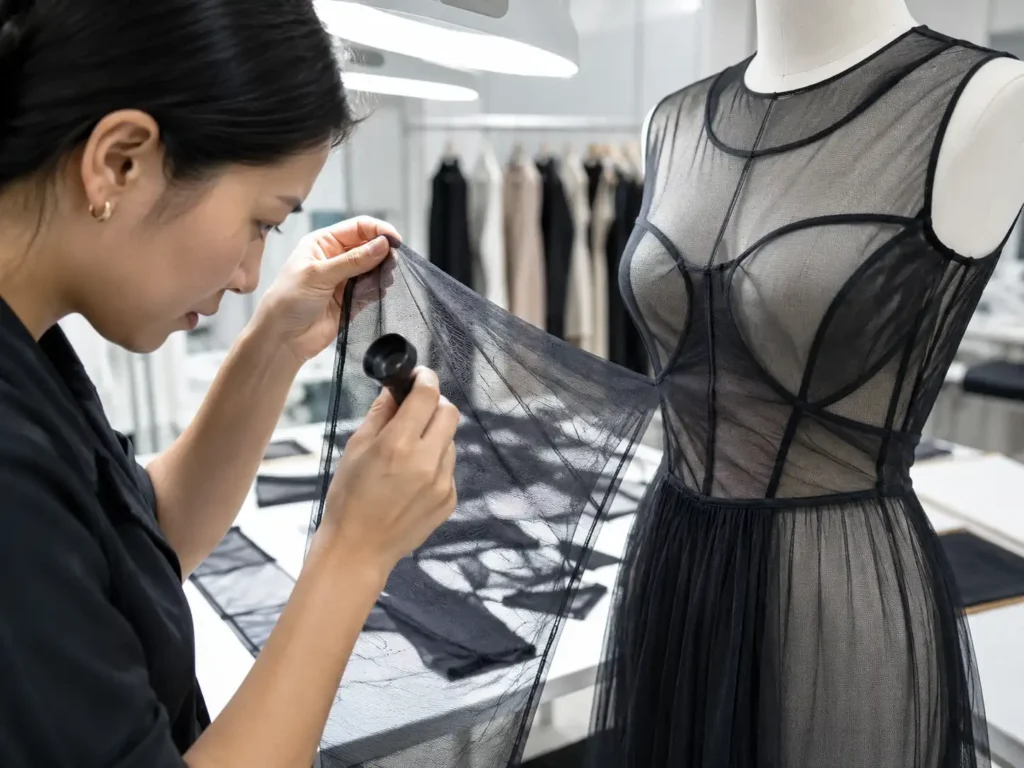
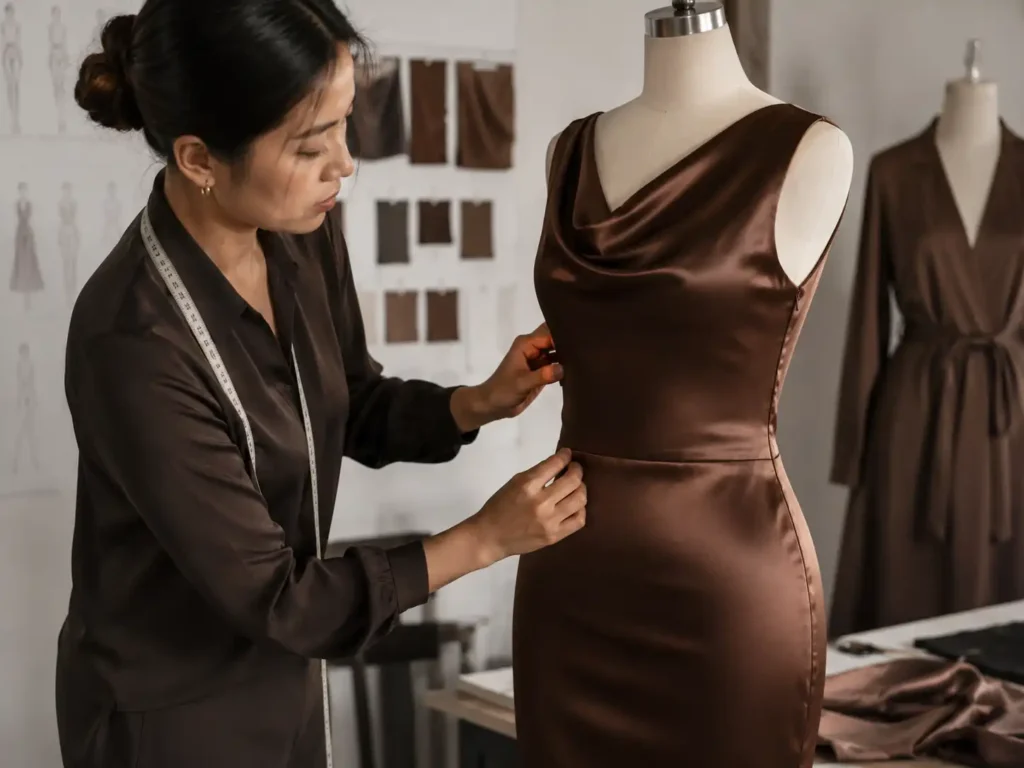
Satin is checked for face direction, shine consistency, snagging, wrinkling, seam puckering, pressing response and color variation. Pattern pieces must follow an agreed direction because mixed orientation can create visible shade differences under retail lighting. Sample review confirms drape, lining, closure and seam tension. Bulk control includes surface protection during cutting, sewing, pressing and packing, with careful folding to reduce permanent creases.

Mesh Transparency

Mesh development begins with stretch direction, recovery, transparency, lining coverage and seam comfort. Power mesh used for shaping behaves differently from decorative soft mesh. Pattern dimensions may need adjustment after the final material is chosen. QC checks holes, runs, uneven stretch, exposed seam allowances, lining length, neckline coverage and color consistency. Layer count and placement must be confirmed before bulk to prevent unexpected opacity changes.

Lace Placement

Lace requires review of motif scale, usable width, edge design, repeat, joining method, direction and damage risk. Placement decisions affect both appearance and fabric consumption. Samples confirm whether motifs align across the bodice, seams, cups, sleeves and hem. Bulk inspection checks broken threads, holes, uneven joining, mismatched placement, visible lining and edge fraying. Delicate lace also needs protective handling during finishing and packing.

Sequin Comfort

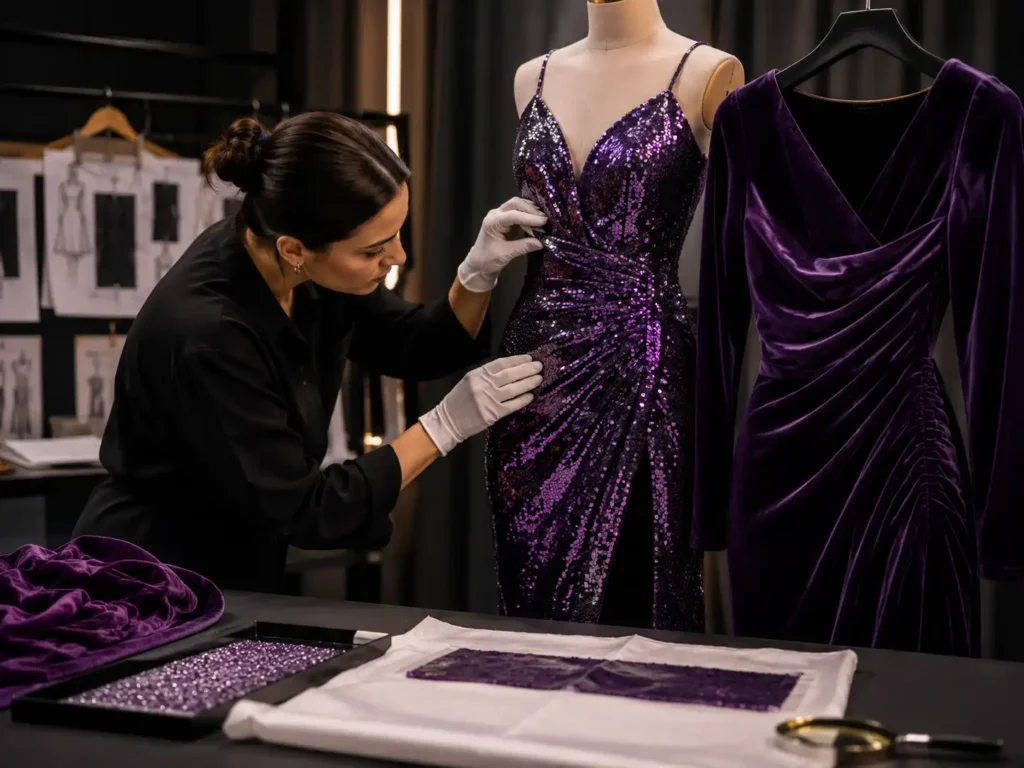
Sequin fabric is evaluated for base cloth, sequin direction, shedding, scratch points, seam bulk, needle damage, lining and wastage. Areas touching the underarm, neckline or inner leg may need cleaning, binding or material changes. Production teams require clear placement and handling instructions because reversing direction or cutting through dense decoration can change both appearance and durability. Final QC includes surface loss, loose decoration and wearer-contact risk.

Bodycon Recovery

Bodycon products depend on controlled stretch and recovery rather than stretch alone. Fabric is reviewed along length and width, then matched to the intended compression and size chart. Pattern and sewing control focus on bust, waist, hip, side seams, neckline, hem and lining. QC checks twisting, waviness, seam popping, measurement stability and visible distortion. A fabric that feels soft can still fail when it does not recover after wear.

Corset Balance

Corset and bustier styles require balanced support from cups, boning, lining, seam shape, closure, anti-slip elements and waist structure. Pattern development reviews upper bust, under bust, cup position, neckline, center front, side seam and back closure. Sample fitting must confirm support without painful pressure or gaping. Bulk checks include boning length and placement, symmetry, cup shape, closure alignment, seam strength and lining coverage.

Scaling Multi-Style Womenswear Orders with Controlled Production

Established brand orders often combine many styles, materials, colors, sizes and delivery priorities. Production control comes from intelligent grouping and factory allocation, not from sending every SKU into one queue.

Factory Allocation by Product Type

Match factory to risk: Woven satin dresses, stretch bodycon styles, structured corset garments, lace occasionwear, jumpsuits and matching sets are not assigned by convenience alone. Each product is reviewed for fabric type, construction difficulty, workmanship requirement, quantity, launch date and inspection needs. Production is then allocated to an owned factory or long-term partner with suitable experience.

Keep one standard: Different production units still work from coordinated patterns, BOM information, construction notes, measurement files, approved samples, QC checkpoints and packing instructions. Merchandising and quality teams maintain the project standard across units so factory specialization does not become inconsistent interpretation.

Plan specialist operations: Products containing placement lace, dense sequins, boning, cups, metal trims, multi-layer mesh or complex pressing may need additional preparation and inspection time. These operations are identified before line booking to prevent them from becoming unplanned bottlenecks after cutting.

Protect confidentiality: Production files are shared according to operational need. Brand identity, unpublished designs, labels, packaging and commercial information remain controlled under the agreed confidentiality process, including NDA-based cooperation when requested.

Multi-Style Production Planning

Program scale: A mature brand program may contain 10-30 styles and 20,000-80,000 pieces in total. The order is not treated as one uniform block. Styles are grouped by fabric family, construction, trim dependency, launch priority, size range and packing route so decisions can be made at the correct product level.

Material booking: Fabric and trims are reviewed for stock status, color availability, supplier MOQ, development lead time, shade control and replacement risk. Standard zippers and common trims may move quickly, while metal zippers, custom colors, special lace, sequins, certified materials or branded packaging require earlier confirmation. Material readiness becomes part of the production plan, not a separate purchasing task.

Approval gates: Pattern, sample, fabric, color, trims, labels and packing approvals are tracked by style. A style that is ready can move forward without allowing unresolved styles to enter bulk prematurely. The method protects launch timing while keeping quality decisions visible.

Capacity balance: Eighteen-plus sewing lines and six-plus flexible production lines support multi-style programs, but capacity is allocated according to labor content and risk. A 1,000-piece simple jersey style and a 1,000-piece corset sequin dress cannot be planned as equal line loads. Production planning reflects actual work content.

Repeat and Multi-Batch Production

Record retention: Confirmed patterns, graded measurements, fabric references, trim specifications, color records, construction notes, label files, packing instructions, QC findings and shipment details are retained for future use. Reorders can begin from verified information instead of rebuilding the entire product history.

Recheck changed variables: A repeat order still requires review when fabric weight, stretch, color source, lining, trims, label information, packing, size ratio or target market changes. The previous pattern may need adjustment if the new material behaves differently. Efficient reorders come from controlled comparison, not blind reuse.

Split production and delivery: Large programs can be divided into production or shipment waves according to launch dates, warehouse needs and material readiness. Air and sea freight combinations, customer-nominated forwarders and project-based DDP assessment can be reviewed where appropriate. Packing lists, carton marks and commercial documents are prepared around the confirmed shipment route.

Build a long-term baseline: After each production, quality findings, material performance, packing accuracy and delivery results are added to the product record. The next order benefits from a stronger baseline, supporting faster replenishment and fewer repeated discussions.

Quality Control That Starts Before Final Inspection

Premium womenswear quality is built through connected control points. Each stage protects the next one, and every finding should lead to correction, rechecking and prevention.
QC StageControl FocusTypical Records
Incoming MaterialsFabric shade, surface defects, width, hand feel, stretch, trims, labels and packing materials.Inspection notes, approval swatches, defect photos and supplier records.
Cutting ControlGrain direction, satin face, print direction, lace placement, panel accuracy, size bundling and damage.Cutting checklist, placement reference and bundle identification.
In-Line SewingConstruction method, seam quality, support elements, trim placement, symmetry and repeated defects.In-line report, marked photos and corrective-action follow-up.
Measurement CheckProduct-specific points such as bust, waist, hip, length, straps, neckline, slit, lining and crotch.Measurement report by size and tolerance review.
Garment ReviewAppearance, workmanship, surface damage, pressing, closure function, comfort and sample comparison.Garment checklist, sample comparison and repair record.
Packing InspectionLabels, care information, barcode, SKU, polybag, folding, size ratio, carton mark and quantity.Packing file, scan check, carton plan and final packing photos.
Corrective ClosureIssue classification, affected quantity, repair method, reinspection and prevention for later production.Before-and-after evidence, closed action list and repeat-order note.


Clear Production Updates for Cross-Border Brand Teams

Production visibility should focus on decisions and risk, not a stream of repetitive messages. Agreed milestones give brand teams enough information to protect launch and warehouse plans.

Material Arrival

Updates confirm which fabrics, linings, trims, labels and packing materials have arrived, which remain open and whether any shade, quality or supplier issue affects the schedule. When a replacement is proposed, the comparison should cover composition, weight, stretch, hand feel, appearance, cost and pattern impact before approval.

Cutting Status

Cutting updates identify styles and colors released, quantities prepared, placement requirements and any issue found during spreading or panel inspection. Satin direction, print orientation, lace placement, sequin direction and size bundling are reviewed before cut panels move into sewing.

Sewing Progress

Sewing reports show which styles are on line, which operations require attention and whether early workmanship findings have been corrected. Progress is considered against actual construction difficulty, not only piece count. Complex structures may need a slower start while operators and QC align on the approved method.

In-Line QC

In-line findings highlight repeated defects before the full quantity is completed. Reports can include marked photos, measurement checks, affected operations, corrective action and reinspection status. Early closure reduces the amount of rework and prevents the same problem from continuing across several sizes or colors.

Packing Confirmation

Before full packing, labels, hangtags, barcodes, polybags, folding, size ratios, carton marks and warehouse instructions are checked against approved files. A packing confirmation protects finished garments from being mixed, mislabeled or prepared for the wrong sales channel.

Shipment Readiness

Final readiness updates combine inspection status, packed quantity, carton information, commercial invoice, packing list, freight route and forwarder coordination. Express, air, sea, EXW, FOB, CIF, DAP and project-based DDP options can be reviewed according to destination and program needs.

Improving Product Cost Without Removing Brand Value

Cost control works best when the team understands which features drive sales and which details add expense without strengthening fit, appearance or durability.

Material Alternatives

Fabric cost is influenced by composition, weight, width, stretch, drape, shine, transparency, dyeing, printing, certification, MOQ, wastage and supplier stability. Jinfeng Apparel can compare alternatives by appearance and performance rather than price alone. A substitute is recommended only after considering whether it changes the pattern, lining, pressing, sewing behavior or final brand presentation.

Construction Optimization

Ruching, multiple layers, large hems, corset channels, hand-applied decoration, placement lace, special closures and complex internal support increase fabric use and labor. Construction can sometimes be simplified through cleaner seam routes, revised layering, trim replacement or more efficient support placement. Features central to the design remain protected while low-value complexity is challenged.

Order Planning

Color count, size ratios, fabric sharing, trim sharing, packaging quantities and delivery waves affect unit cost. Consolidating similar materials across a collection, planning realistic quantities per style and color, and confirming private-label needs early can reduce small material orders, excess development and repacking. Cost improvement comes from planning the whole program, not forcing one operation to absorb every saving.

Private-Label Packing Built for Retail and Ecommerce Delivery

A supplier upgrade is incomplete when finished garments arrive with incorrect labels, unreadable barcodes or warehouse-unfriendly cartons. Brand presentation and logistics accuracy are controlled together.

Main Size Labels

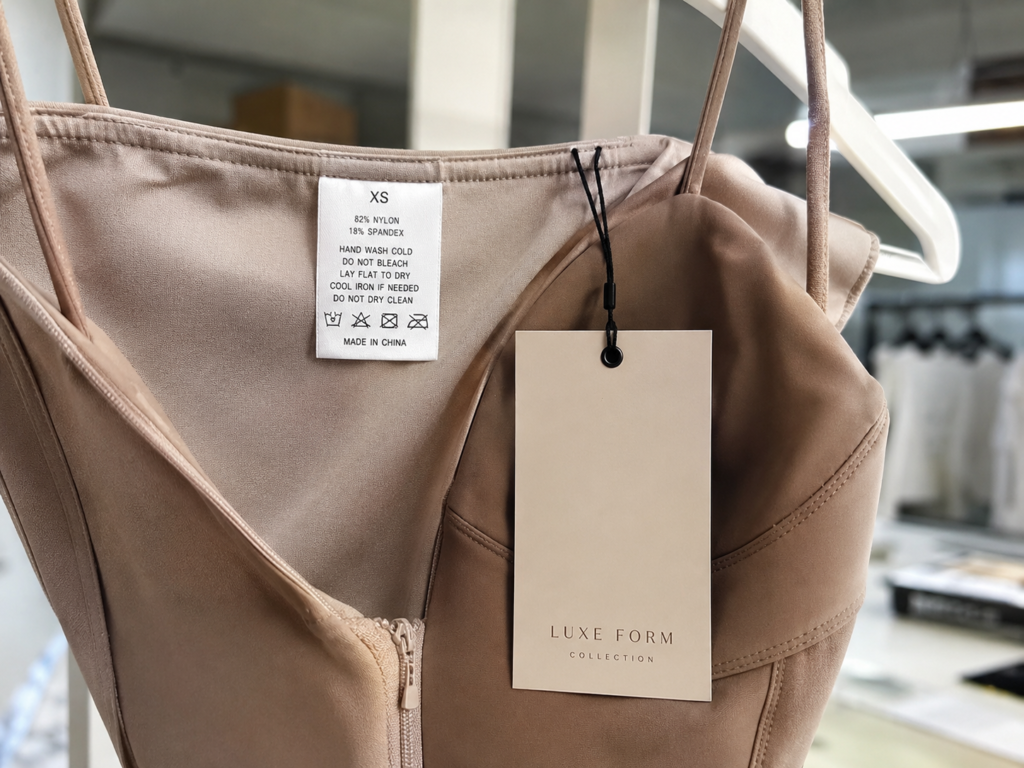
Main labels and size labels are checked for artwork, material, color, wording, dimensions, placement, stitch method and size mapping. Sample approval confirms appearance and wearer comfort. Bulk control prevents reversed labels, wrong sizes, inconsistent placement or visible stitching that weakens the garment finish.

Care Labels

Care labels require accurate fiber content, care symbols, country information, language and brand-specific wording supplied or approved by the brand. Placement must remain readable without irritating the wearer or showing through delicate fabric. Final responsibility for market-specific legal wording is confirmed with the brand or its compliance adviser.

Hangtags Attachments

Hangtags, strings, pins, seals and decorative attachments are reviewed for artwork, print quality, placement and security. Attachment methods are selected to avoid damaging satin, mesh, lace or delicate surfaces. Bulk packing checks style, color, size and barcode alignment before garments are folded.

Barcode SKU Labels

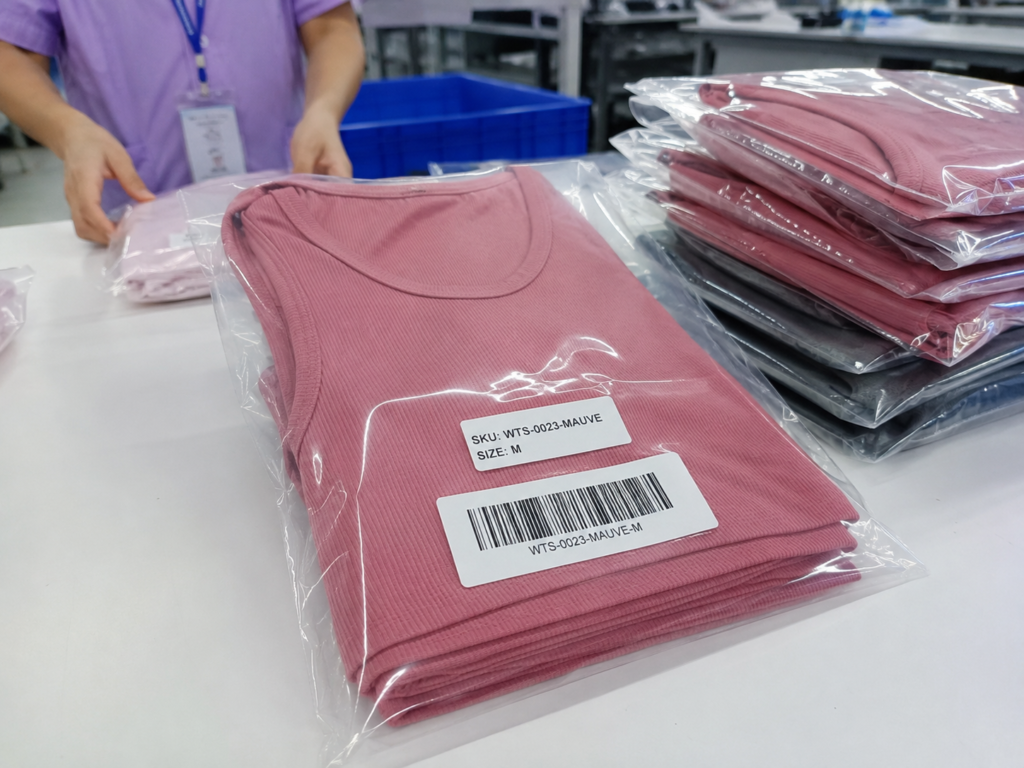
Barcode and SKU control connects garment identity with warehouse receiving. Files are mapped by style, color and size, then checked for print clarity, location and scan performance where required. A controlled master list reduces mixed labels and prevents one packaging error from affecting several sales channels.

Polybags Folding

Polybags, warning text, ventilation, tissue, folding boards and garment folds are selected according to fabric and channel. Chiffon, satin, embellished garments and structured products need different handling. Packing trials help control creasing, surface damage, compression and inconsistent retail presentation.

Carton Size Ratios

Carton marks, carton dimensions, quantities, size ratios, mixed-carton rules and destination labels are prepared from approved packing instructions. Final verification compares physical cartons with the packing list and shipment route, reducing receiving delays and costly warehouse sorting.

Brand Protection and Supplier Qualification Support

Established brands need product confidentiality and accurate qualification information. Claims are confirmed against the actual factory, material source, document scope and project requirement.

NDA Design Protection

Jinfeng Apparel supports NDA-based cooperation for tech packs, samples, patterns, measurements, fabric plans, trims, labels, packaging, quantities, target prices and unpublished designs. Confidential files are used for development and production coordination. Brand names, logos, unlaunched products and commercial terms are not presented publicly without written authorization.

Factory Audit Support

Factory profiles, production process information, QC procedures, packing flow and available audit-related documents can be reviewed according to the factory proposed for the order. Sedex-related, BSCI-related or other qualification requirements must be confirmed against current records and the actual production unit rather than assumed across every factory in the network.

Material Documentation

OEKO-TEX, GOTS, GRS, organic or recycled material resources can be explored by fabric type, supplier, color, batch, certificate scope, validity, MOQ and lead time. Certified material is not treated as ordinary stock fabric. Claims and supporting documents are reviewed by project before the brand uses them in product or marketing information.

Compare Different Womenswear Supplier Models Before You Switch

Every supplier model has a place. The right upgrade depends on how much product development, manufacturing control, transparency and long-term record management the brand requires.

Stock Wholesaler

A stock wholesaler is useful when speed and existing inventory matter more than product ownership or custom development. Options are limited to available styles, colors and sizes. Pattern control, material selection, sample revisions, brand-exclusive construction and repeat-order consistency are usually outside the central service model.

General Factory

A general factory may offer direct production and competitive sewing capacity, but development depth varies greatly. Brand teams should verify pattern capability, fabric knowledge, sample revision, PP control, multi-stage QC, packing management and repeat-order records rather than assuming every direct factory provides the same technical support.

Trading Supplier

A trading supplier can provide wide sourcing access and category flexibility. The main questions are factory transparency, quality responsibility, technical ownership, subcontracting control and how production standards are transferred between factories. Strong trading partners can add value, but the operating model must be visible.

Development-Led Partner

A development-led manufacturing partner combines product review, material direction, pattern and sampling, bulk allocation, QC, private-label packing and repeat-order records. The model is suited to brands seeking lower communication cost and stronger product continuity, provided the supplier’s actual factories, capabilities, boundaries and documents are verified.

Representative Supplier-Upgrade Program for a U.S. Fashion Brand

The following anonymized program structure illustrates how a mature brand can transfer selected womenswear styles without exposing brand identity, commercial terms or unpublished design information.

Incoming Program and Supplier Gaps

Order structure: The program contained 18 styles and 46,800 pieces across an XS-XL size range. The assortment included eight party and occasion dresses, four bodycon styles, three satin or mesh dresses and three jumpsuits or matching sets. Five color families and multiple private-label packing requirements created a real need for coordinated material, sample, production and SKU control.

Existing issues: The previous production base had delivered saleable garments, but several problems kept returning: inconsistent waist and hip measurements, unstable satin pressing, mesh lining changes between samples and bulk, uneven label placement, delayed progress reporting and incomplete records for repeat styles. The brand wanted a second-source route before deciding how much production to move.

Transfer scope: Eight higher-risk styles were selected for the first phase instead of transferring all 18 immediately. The brand supplied approved samples, tech packs, old measurement charts, fabric swatches, barcode files, packing instructions and a defect summary. Jinfeng Apparel separated reliable standards from points requiring redevelopment.

Confidentiality: Brand identity, labels, tech packs, order references and unpublished garments remained protected. The project was managed through product files and internal style references, allowing technical work and production planning without public disclosure.

Sample Rebuild and Production Preparation

Technical review: The first eight styles were reviewed for fabric, fit, construction and packing. Bodycon products required updated stretch and recovery assessment; satin styles needed revised pressing and seam-tension control; mesh products required confirmed lining coverage; a jumpsuit needed waist and crotch correction. Each issue was assigned to pattern, material, sewing or packing action.

Sampling sequence: Simple revisions were prepared within the standard 7-15 day range after materials were ready, while structured and mixed-material styles followed the 15-25 day route. Feedback was recorded through measurement comments, marked photos and revised pattern notes. Final PP samples confirmed pattern, fabric, trims, workmanship, labels and packing.

Order planning: After the first eight styles passed the agreed review, the remaining ten styles entered development using the same approval discipline. The 46,800-piece order was organized by fabric family and construction rather than style number alone. Production allocation separated stretch products, soft wovens and structured or embellished garments.

Quality plan: Product-specific QC points were written into the production file. Satin checks covered surface damage, direction, seams and pressing; mesh checks covered holes, transparency, stretch and lining; bodycon checks focused on recovery, twisting and bust-waist-hip measurements; jumpsuit checks included rise, crotch, waist placement and movement.

Bulk Control and Repeat-Order Framework

Two production waves: The order was prepared in two production waves aligned with product readiness and the brand’s launch sequence. Styles with approved materials and PP standards moved first, while later styles remained outside bulk until their open issues were closed. The approach protected the launch without forcing unresolved products into production.

Packing control: Main labels, size labels, care labels, hangtags, barcodes, polybags, size ratios and carton marks were linked to a master SKU file. Packing confirmation occurred before full packing, and carton information was checked against the shipment documents and receiving requirements.

Program review: The brand could evaluate the new supplier route across sample interpretation, revision discipline, production visibility, QC findings, packing accuracy and shipment coordination. The objective was not to claim a perfect first order, but to create a measurable operating baseline for later allocation decisions.

Reorder records: Patterns, measurements, approved fabrics, trim details, construction notes, label files, packing instructions and quality findings were retained by style. Future replenishment could begin from the approved record, while any material or design change would trigger a focused reassessment instead of a full restart.

See the Development and Production Control Behind Each Order

Authorized process visuals should prove how product standards move from material and pattern decisions into production, inspection and packing. Attractive garment photos alone cannot show manufacturing control.
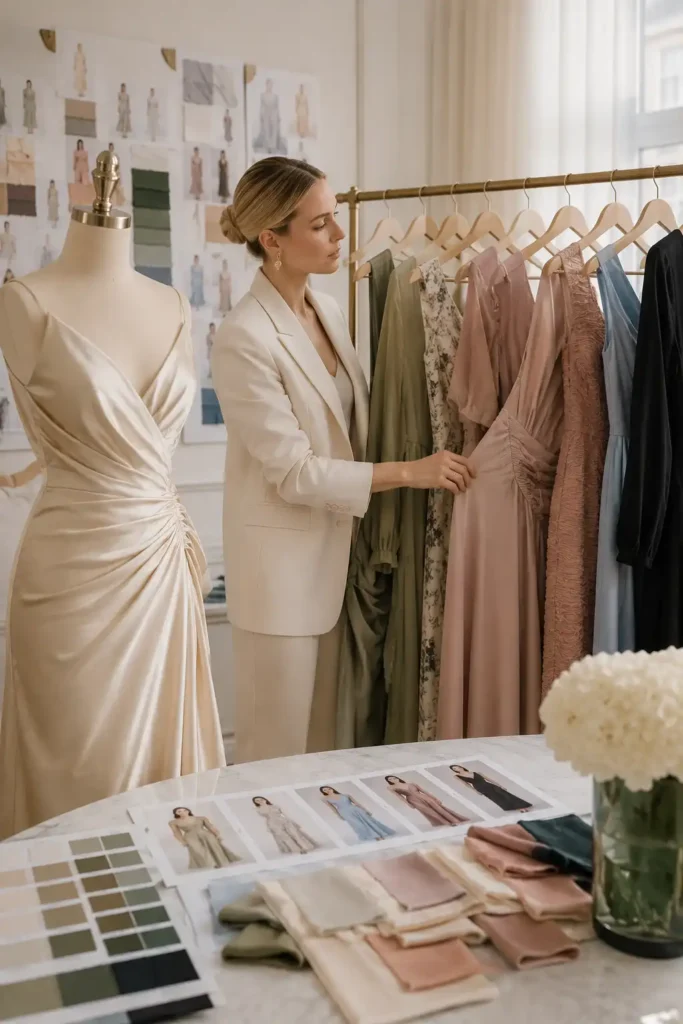
A professional fashion design team discussing custom dress development with fabric swatches, sketches, mood boards, and a dress sample on a mannequin.

Fabric Review

Fabric swatches, color references, stretch direction, transparency, lining, trim compatibility and supplier information are reviewed before the final pattern and sample route are confirmed. Visual evidence can include swatch comparison, shade references, material notes and approved trim combinations while keeping confidential brand artwork outside the image.

Pattern Development

Pattern work translates the garment idea into controlled bust, waist, hip, neckline, strap, length, slit, lining and support dimensions. Process visuals can show pattern review, measurement marking or revision notes without exposing client-identifiable design files. The accompanying caption should explain which fit risk is being controlled.

Sample Making

Sample construction proves whether the selected pattern, material, trims and sewing method can create the intended garment. Useful visuals include controlled sample-room work, internal measurement, marked fit corrections and workmanship details. Captions should connect the image with the decision being made, not simply state that a sample is being sewn.

Bulk Sewing

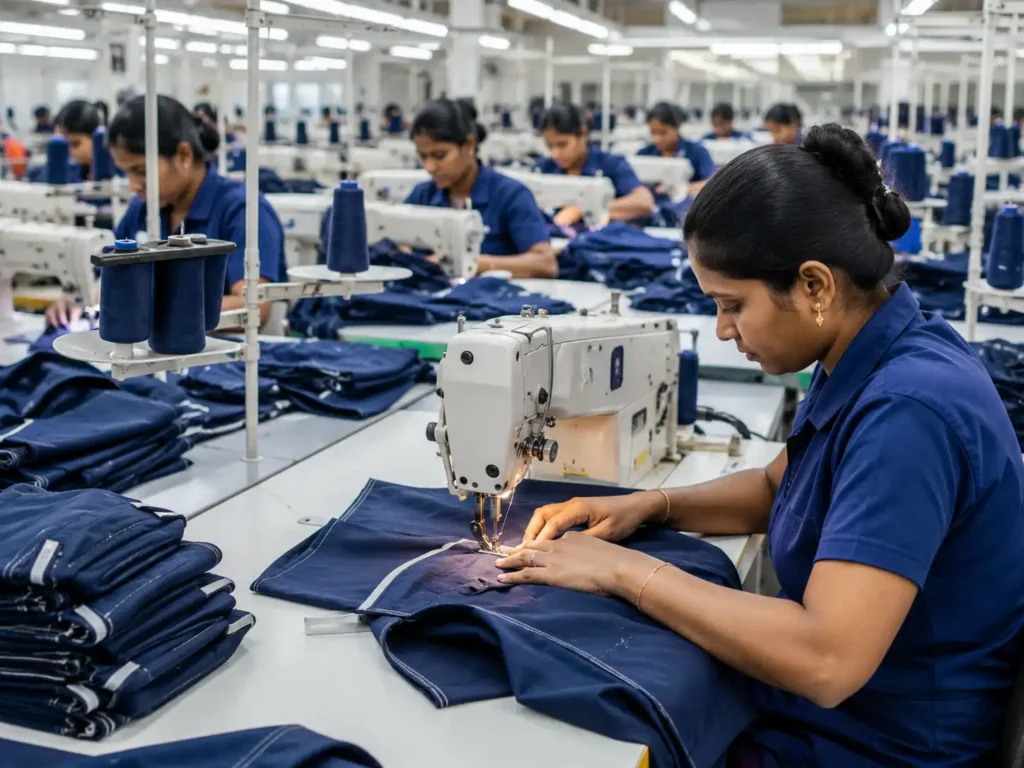
Production visuals should show the transition from approved standard to controlled execution. Suitable scenes include bundle identification, operation guidance, in-line construction review and product-specific sewing. Images should be authorized and selected so confidential labels, brand names and unpublished design details are protected.

QC Inspection

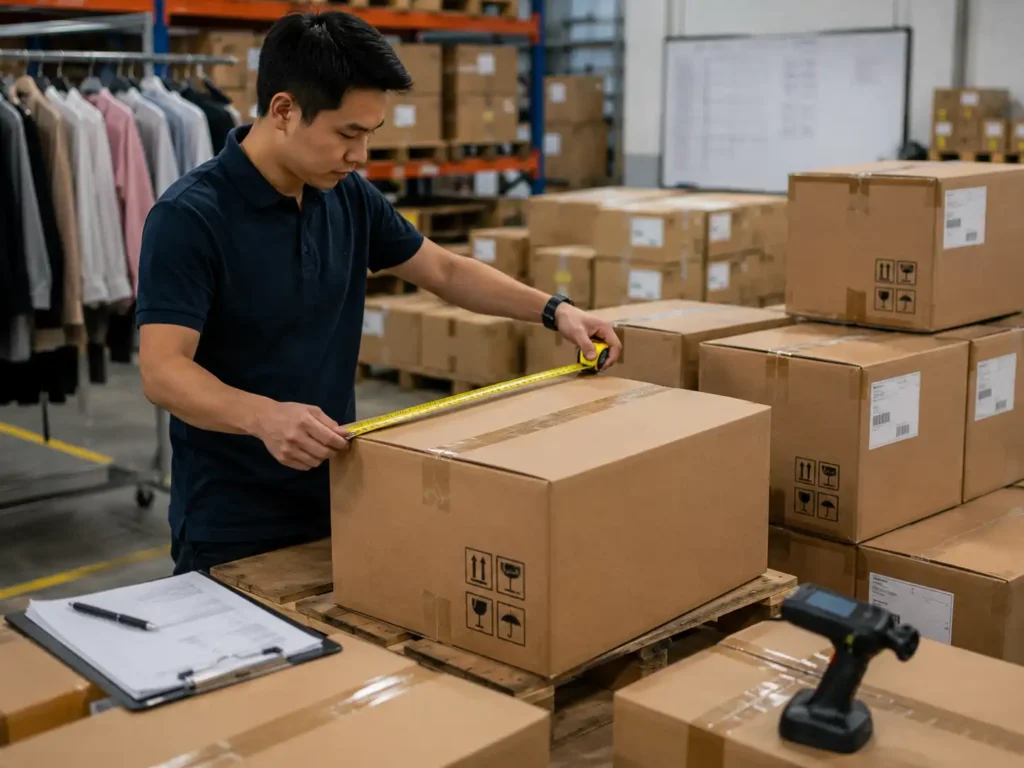
Measurement, workmanship, surface, closure, pressing and packing checks provide stronger evidence than generic factory photos. A QC visual should identify the stage and control point, such as checking waist measurement, satin surface, lace placement, boning position, barcode accuracy or carton quantity.

Packing Cartons

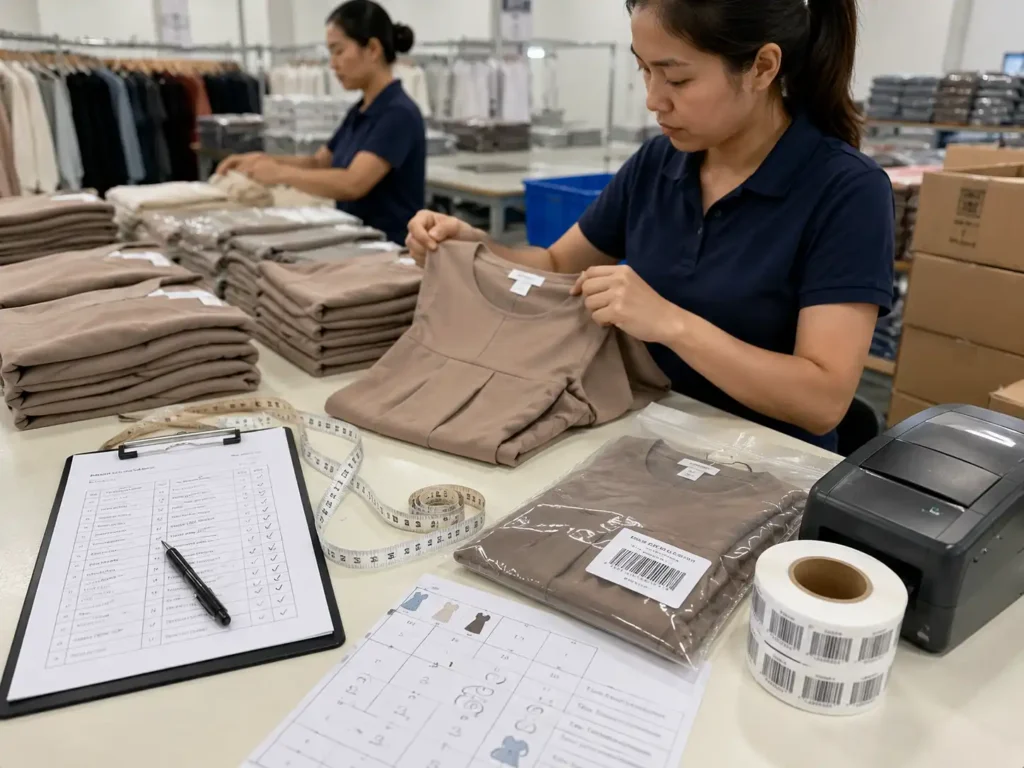
Packing visuals can demonstrate label review, barcode scanning, folding, polybag preparation, size-ratio control and carton-mark verification. The purpose is to show that brand delivery requirements remain part of production control until goods are handed to the forwarder, not an afterthought after sewing is complete.

Frequently Asked Questions About Upgrading Womenswear Suppliers

Yes. Existing tech packs, approved garments, patterns, measurement charts, fabric swatches, trim samples and packing files can be reviewed. Reliable standards are retained, while unclear or inconsistent areas are rebuilt through material, pattern, sample and PP confirmation. A physical sample and complete product file usually reduce redevelopment time.
Useful information includes product images or tech packs, approved samples, target quantity by style and color, size range, fabric and trim requirements, historical defect notes, labels, barcodes, packing instructions, launch date and destination market. Complete files support a more accurate feasibility review, quotation and sampling plan.
Yes. A physical garment can provide fit, hand feel, construction, support, trim placement and workmanship information that may not appear in the tech pack. Jinfeng Apparel measures and records the sample, compares it with available files and identifies any feature that cannot be reproduced without a material or process change.
Not always. Existing patterns can be reused when they are accurate, compatible with the approved fabric and supported by reliable measurement information. A new assessment is needed when fabric stretch, weight, lining, neckline, support, length, grading or construction changes. Blind pattern reuse can carry old problems into a new production run.
Comparison uses the approved garment or reference sample, measurement chart, photos, construction notes and brand feedback. Differences are recorded by fit, fabric, color, trims, workmanship, appearance, measurement and packing. Each point is marked for approval, correction or further sampling so changes remain traceable.
Yes. Many established brands prefer a controlled second-source route. Selected styles, one product category or a repeat order can be used to evaluate sampling, communication, PP control, production visibility, QC, packing and delivery. Broader allocation can follow after the initial performance is reviewed.
The standard MOQ starts from 200 pieces per style and color. Final requirements depend on fabric stock, custom dyeing, print, trims, construction complexity, certified materials, private-label packaging and production schedule. One style split into several colors must be assessed by color because material and production minimums are not always interchangeable.
Simple first samples commonly require about 7-10 days after information and materials are ready. Standard fashion dresses often require around 10-15 days. Corset, lace, mesh, sequin, evening or multi-structure styles may require 15-25 days. Material sourcing, custom trims, revisions and approval timing can extend the schedule.
Approved samples are translated into final patterns, graded measurements, fabric and trim standards, construction notes, QC checkpoints and packing instructions. A PP sample is confirmed before bulk production. Complex or important programs may also use a Golden Sample as the physical comparison reference for production and inspection.
Yes. Jinfeng Apparel supports multi-style, multi-fabric, multi-color, multi-size and multi-batch programs through six owned factories, ten-plus long-term production partners, eighteen-plus sewing lines and six-plus flexible lines. Styles are grouped and allocated by material, construction, risk, quantity and launch priority rather than treated as one uniform order.
Main labels, size labels, care labels, hangtags, barcode files, SKU stickers, polybags, folding, carton marks and size ratios are reviewed under approved packing instructions. Barcode and SKU mapping should be supplied by the brand or confirmed jointly. Packing is inspected before shipment against the approved master file.
Yes. Jinfeng Apparel supports NDA-based cooperation and protects tech packs, samples, patterns, measurements, material plans, labels, packaging, quantities, target prices and unpublished designs. Brand names, logos, order information and confidential files are not published without written authorization.
Repeat orders begin by reviewing the previous pattern, measurements, fabric, trims, color, construction, labels, packing, QC findings and shipment record. Any change in material weight, stretch, lining, design, size ratio or destination is assessed before production. Confirmed records reduce repeated development while preserving necessary technical checks.
Factory and audit-related information can be reviewed according to the actual production unit proposed for the order. OEKO-TEX, GOTS, GRS, organic or recycled material resources are confirmed by fabric type, supplier, batch, certificate scope, validity, MOQ and lead time. No document is assumed to cover every factory or product automatically.

Start Your Womenswear Supplier Upgrade Review

Send Kelly the information already available for the program, even when the current file set is incomplete. Jinfeng Apparel will first review product fit, material and construction risk, MOQ, sampling needs, factory allocation, quality requirements, private-label packing and launch timing. The first response can then identify what is usable, what requires confirmation and which styles are suitable for a controlled second-source or transfer program.

  • Reference images, tech packs, line sheets or approved garment photos
  • Target quantity by style and color, plus the planned size range
  • Fabric, lining, trims, labels, barcode and packing requirements
  • Current supplier problems, inspection findings or return reasons
  • Target sample date, launch window, destination and preferred freight route
  • NDA request before confidential product files are shared
Tell Us About Your Dress Project

Share your product details, estimated quantity and development requirements. Our team will review your project and provide practical OEM/ODM production feedback.

Premium Women’s Apparel Production for Fashion Brands

From dress sample development to bulk production, JF Apparel supports fashion brands with confidential OEM/ODM manufacturing, reliable quality control and scalable production support.

START YOUR DRESS PROJECT

Ready to Develop Your Next Dress Collection?

Share your design concept, product requirements or sourcing plans with our team. We’ll review your project and provide practical feedback on development, materials, MOQ and production.

7-10 Days

Sample Development

200 PCS

Starting MOQ

Fast Response

Professional Follow-Up