
Womenswear Manufacturer for Seasonal Launch Calendars
Seasonal womenswear manufacturing planned around sample approvals, campaign deadlines, warehouse receiving dates and controlled bulk delivery.
- Seasonal programs commonly contain 10-30 styles and 20,000-80,000 total pieces, requiring coordinated rather than isolated production decisions.
- Two sample rooms and 20+ sample machinists support parallel first samples, revisions, photo samples and PP samples across a collection.
- Six owned factories and 10+ long-term production partners allow product allocation by fabric, construction, quantity and launch priority.
- 100,000+ pieces of monthly capacity support multi-style dress, skirt, jumpsuit, matching-set and private-label womenswear programs.
Production Resources Behind Your Seasonal Launch
Since 2008
Six Owned Factories
Ten Plus Partners
Two Sample Rooms
Twenty Sample Machinists
Twelve Merchandisers
Built for Brands Working Against Real Launch Dates
Calendar-Led Fashion Programs
- Seasonal dress and occasionwear collections
- Resort, graduation, wedding-guest and holiday programs
- Multi-style private-label womenswear
- Premium ecommerce and retail-ready orders
- Repeat colors, restocks and seasonal extensions
Structured Project Requirements
- Clear product brief or line sheet
- Sampling and bulk production plan
- Quantity by style and color
- Target sample and receiving dates
- Fabric, trim and private-label requirements
- Decision makers available for approvals
A Launch Date Is More Than Shipping
A launch calendar contains several deadlines serving different commercial teams. Treating factory shipment as the only date leaves photography, merchandising, ecommerce, wholesale, warehouse and marketing teams exposed. Jinfeng Apparel separates each milestone so approval delays can be identified before they become final delivery problems.
Development and Marketing Dates Need Separate Control
A first sample date supports product review, while a photo sample date supports campaign production. A PP sample date locks the final manufacturing standard. A warehouse receiving date allows goods to enter inventory before the public launch. Combining these dates into one general promise creates confusion because every milestone requires a different product status.
For a seasonal collection, the calendar may include line-sheet confirmation, fabric swatch approval, first sample dispatch, fit comments, revised sample review, campaign sample delivery, PP sample approval, bulk material arrival, production start, inline inspection, final QC, packing completion, shipment departure and warehouse receiving. Each item carries an owner and an approval condition. A missed photo sample can delay content creation even when bulk production remains on schedule. A late PP approval can consume factory capacity reserved for the order. Late barcode artwork can hold finished goods in the packing area.
Jinfeng Apparel therefore begins with milestone separation. Marketing samples can be prioritized without treating them as the bulk standard. Final production cannot rely on an unapproved photo sample. Private-label files are requested early enough to avoid holding completed garments. The calendar records both target dates and decision dependencies, creating a more useful plan than a single estimated completion date.
Warehouse Receiving Drives the Final Working Deadline
The commercial launch often occurs after products reach a fulfillment center, retail warehouse or appointed logistics partner. Factory shipment must therefore be planned backward from the required receiving window. Freight mode, route, customs handling, carton data and warehouse booking requirements can change the available production time.
A brand planning sea freight requires an earlier production release than a brand using air freight. Split shipment may protect hero styles or campaign quantities while the remaining range follows the standard route. Warehouse labels, carton marks, packing lists and SKU data must be correct before dispatch because receiving errors can delay inventory availability even when the cargo arrives on time.
Jinfeng Apparel coordinates packing and export information according to the agreed trade and logistics arrangement. Express, air and sea options can be evaluated with EXW, FOB, CIF, DAP or DDP structures according to route feasibility and project requirements. Final customs classification and import procedures remain subject to confirmation by the importer, forwarder or customs broker.
Calendar planning becomes more reliable when production completion, shipment departure and warehouse receiving are treated as three separate milestones.
Planning Backward from Your Launch Window
Backward planning begins with the warehouse or commercial deadline and identifies the latest acceptable date for every earlier approval. The framework below is a planning model; final timing depends on style count, fabric availability, sample complexity, approval speed, packing and freight route.
| Commercial Milestone | Required Manufacturing Status | Main Control Questions |
|---|---|---|
| Public launch | Inventory available for sale | Has stock entered the required channel and passed receiving checks? |
| Warehouse receiving | Correct cartons, labels and documents delivered | Are booking, barcode, carton mark and packing-list requirements confirmed? |
| Shipment departure | Cargo released after final inspection | Are freight mode, route, volume, weights and shipping documents ready? |
| Packing completion | Finished garments packed by SKU and ratio | Are labels, barcodes, polybags, carton quantities and marks approved? |
| Final QC release | Bulk garments meet approved requirements | Are measurements, workmanship, appearance and packing checks complete? |
| Bulk completion | All planned styles completed or staged | Are high-priority styles separated for staged release where required? |
| Production start | Materials, files and standards ready | Are fabric, trims, final pattern, size chart, PP sample and production instructions locked? |
| PP sample approval | Final production standard confirmed | Are fit, measurements, fabric, trims, construction, labels and packing accepted? |
| Revised sample approval | Development risks resolved | Have pattern, fabric, trim and workmanship comments been converted into updated files? |
| First sample review | Structure and direction validated | Does the garment meet the intended silhouette, fit and material behavior? |
| Project kickoff | Commercial and technical inputs reviewed | Are style count, quantity, launch dates, market, size range and private-label needs clear? |
Womenswear Programs Across the Fashion Calendar

Spring Summer Collections

Resort Collections
Resort programs combine visual impact with packability. Maxi dresses, vacation sets, halter styles, backless silhouettes and printed pieces require attention to drape, hem balance, coverage, travel creasing and color grouping.
Campaign samples may be needed well before bulk delivery, so photo-ready pieces and PP samples should remain separate in the schedule.

Graduation Collections

Wedding Guest Programs

Festival Drops

Holiday Party Collections

Vacation Drops

Office Evening Capsules
Build a Balanced Collection, Not Isolated Styles
A seasonal range performs as a commercial assortment, not as a collection of unrelated samples. Manufacturing planning improves when silhouettes, fabrics, colors, price levels and launch priorities are organized before development begins.
Assortment Architecture Controls More Than Design
A line sheet should show how mini, midi and maxi lengths work together; how dresses connect with skirts, tops, jumpsuits and matching sets; and which products act as visual hero pieces versus reliable commercial styles. Product grouping also affects manufacturing. Several styles sharing a satin quality, lining, zipper family or label package can be sourced and controlled more efficiently than a range built from unrelated materials.
Color strategy influences minimums, cutting plans, shade control and SKU complexity. Five styles in two coordinated colors may be easier to manage than two styles in eight colors, even when total quantity is similar. Size ratios also change cutting and packing requirements. A six-size program with separate ratios for fitted dresses and relaxed resort styles should not be treated as one universal breakdown. The range plan should show quantity by style, color and size before material booking begins.
Jinfeng Apparel supports assortment review from a manufacturing perspective. The team can identify technically demanding styles, shared fabric opportunities, trim consolidation, potential material substitutions and products requiring early samples. Commercial decisions remain with the brand, while manufacturing feedback helps protect development time, cost alignment and production feasibility.
Hero Styles and Commercial Styles Need Different Scheduling
A hero style may carry campaign value, complex construction and a higher sample priority, while a commercial style may carry more units and require stable repeatability. Both are important, but their calendars should differ.
A corset lace dress may need earlier pattern and fit work. A ponte bodycon dress may move faster through sampling but require careful grading and stretch control across sizes. A printed resort maxi dress may depend on print approval and fabric shrinkage before the final pattern is locked.
A strong launch plan therefore groups products by risk and commercial role. High-risk styles enter development first. Campaign styles receive photo-sample deadlines. High-volume styles receive early material and capacity review. Products using custom color, print, lace or branded hardware receive longer sourcing windows. Repeatable core products retain pattern, BOM, color, trim and QC records for future restocks.
The result is not a promise that every style follows the same duration. The result is a calendar built around real dependencies. Brands gain clearer decisions on which items can launch together, which styles need an earlier start and where staged delivery may protect the commercial plan.
Build a Balanced Collection, Not Isolated Styles
A seasonal range performs as a commercial assortment, not as a collection of unrelated samples. Manufacturing planning improves when silhouettes, fabrics, colors, price levels and launch priorities are organized before development begins.
Assortment Architecture Controls More Than Design
A line sheet should show how mini, midi and maxi lengths work together; how dresses connect with skirts, tops, jumpsuits and matching sets; and which products act as visual hero pieces versus reliable commercial styles. Product grouping also affects manufacturing. Several styles sharing a satin quality, lining, zipper family or label package can be sourced and controlled more efficiently than a range built from unrelated materials.
Color strategy influences minimums, cutting plans, shade control and SKU complexity. Five styles in two coordinated colors may be easier to manage than two styles in eight colors, even when total quantity is similar. Size ratios also change cutting and packing requirements. A six-size program with separate ratios for fitted dresses and relaxed resort styles should not be treated as one universal breakdown. The range plan should show quantity by style, color and size before material booking begins.
Jinfeng Apparel supports assortment review from a manufacturing perspective. The team can identify technically demanding styles, shared fabric opportunities, trim consolidation, potential material substitutions and products requiring early samples. Commercial decisions remain with the brand, while manufacturing feedback helps protect development time, cost alignment and production feasibility.
Hero Styles and Commercial Styles Need Different Scheduling
A hero style may carry campaign value, complex construction and a higher sample priority, while a commercial style may carry more units and require stable repeatability. Both are important, but their calendars should differ.
A corset lace dress may need earlier pattern and fit work. A ponte bodycon dress may move faster through sampling but require careful grading and stretch control across sizes. A printed resort maxi dress may depend on print approval and fabric shrinkage before the final pattern is locked.
A strong launch plan therefore groups products by risk and commercial role. High-risk styles enter development first. Campaign styles receive photo-sample deadlines. High-volume styles receive early material and capacity review. Products using custom color, print, lace or branded hardware receive longer sourcing windows. Repeatable core products retain pattern, BOM, color, trim and QC records for future restocks.
The result is not a promise that every style follows the same duration. The result is a calendar built around real dependencies. Brands gain clearer decisions on which items can launch together, which styles need an earlier start and where staged delivery may protect the commercial plan.
Information Needed for a Workable Production Calendar
Target Launch Date
Warehouse Date
Line Sheet
Tech Packs
Style Quantities
Fabric Direction
Size Color Plan
Packing Requirements
Keeping Multi-Style Collections Structured and Traceable

Style Grouping
- Style number and product category
- Launch or drop assignment
- Commercial priority
- Construction risk
- Required sample type

Fabric Grouping
- Main fabric and lining
- Color and batch reference
- Custom dye or print status
- Shrinkage or testing requirement
- Fabric arrival milestone

Sample Priority
- Campaign sample deadline
- First sample status
- Revision count
- PP sample status
- Approval owner

Revision Tracking
- Version number and date
- Comment category
- Required correction
- File updated
- Approval status

PP Approval
- Final pattern and size chart
- Approved fabric and trim card
- Sewing instruction
- Label placement
- Packing standard

Production Allocation
- Factory and line assignment
- Planned cutting date
- Planned sewing window
- QC milestone
- Packing and release sequence
Samples Planned Around Commercial Milestones

First Development Sample

Revised Fit Sample

Photo Ready Sample

PP and Golden Sample
Fabric and Trim Decisions Control the Calendar

Stock Fabric Availability
- Confirm stock quantity and batch
- Review color and hand feel
- Check width and usable yield
- Record approved reference

Custom Color Development
- Lab dip or color strike-off
- Main fabric and lining coordination
- Supplier MOQ and lead time
- Bulk shade control

Printed Fabric Timing
- Artwork and repeat size
- Strike-off approval
- Print direction
- Shrinkage and cutting yield

Lace and Sequin Sourcing
- Motif and usable width
- Edge and placement plan
- Sequin attachment security
- Lining and comfort review

Custom Trims
- Specification and color
- Supplier MOQ
- Development sample
- Durability and comfort

Private Label Materials
- Artwork and language
- Label placement
- Barcode and SKU data
- Polybag and carton requirements
Every Approval Becomes a Production Standard
Seasonal programs fail when approved comments remain scattered across email, spreadsheets and chat messages. Jinfeng Apparel converts each decision into controlled pattern, measurement, material, construction, label, packing and QC records before bulk release.
Version Control Protects Multi-Style Programs
Every sample receives a clear version and approval status. The record shows what changed, why it changed, which file was updated and whether the next sample can begin. Pattern corrections, bust-waist-hip changes, length adjustments, strap changes, neckline depth, slit height, fabric replacement, trim changes and sewing improvements are tracked by style.
The same control applies to materials. An approved satin color, lace motif, mesh quality, zipper, bra cup, label or polybag becomes a named reference. If the supplier batch changes, the new batch requires review rather than inheriting approval automatically. A repeat order using a new color or fabric also requires confirmation because material behavior can change the fit and manufacturing method.
A collection-level status sheet can show first sample, revised sample, photo sample, PP sample, fabric approval, trim approval, label approval, packing approval and production readiness. The structure gives product development, sourcing and merchandising teams a common view of pending decisions.
Sample Approval Transfers into Bulk Production
The handover to production includes more than the physical garment. Final files must include the approved pattern, graded measurements, fabric reference, trim card, BOM, construction method, label placement, packing standard and QC checkpoints. Production teams need exact information on seam type, lining coverage, zipper method, support structure, elastic tension, decorative attachment and finishing.
Before cutting, a pre-production review checks whether materials, patterns, samples and instructions agree. Conflicts are raised before bulk work begins. For example, a tech pack may show one zipper length while the approved sample uses another. A size chart may remain unchanged after the waistline was corrected. A hangtag file may show an outdated style number. Closing these gaps before production protects both calendar and quality.
Golden-sample and production records are retained for repeat orders. Pattern, fabric, color, trim, measurement, sewing, label, packing and QC notes allow faster reactivation, while new fabric batches, colors and seasonal changes still receive review. Repeatability comes from controlled records, not from assuming the next order is identical.
Capacity Allocated by Product and Launch Priority
Capacity planning is more than counting sewing lines. Jinfeng Apparel reviews style structure, material readiness, quantity, workmanship, QC and commercial priority before assigning each product to a factory and production window.
Product-to-Factory Matching
Six owned factories and more than 10 long-term production partners provide a flexible manufacturing network, but capacity is allocated by technical fit. Soft woven resort dresses, stretch bodycon products, lined satin occasionwear, lace garments, sequin party pieces, corset structures, jumpsuits and matching sets do not require identical skills or line balance.
The allocation review examines fabric type, cutting behavior, sewing time, required equipment already available within the matched unit, finishing, pressing, quality risk and order quantity. No unverified equipment claims are needed; product competence is demonstrated through structure, process and control. Styles sharing fabric or construction may be grouped, while highly complex pieces receive dedicated planning.
Monthly capacity of 100,000+ pieces provides a base for multi-style orders, supported by 18+ sewing lines and 6+ flexible lines. Actual commitment depends on the confirmed calendar, material status, style complexity and existing bookings. Capacity is reserved only after commercial and technical requirements are sufficiently clear.
Peak Season Planning Without Blind Promises
Graduation, wedding, resort and holiday programs often overlap with broader market peaks. Complex products need earlier preparation because lace, sequins, custom colors, special trims, PP approvals and private-label packaging can consume time before sewing starts. A late request may still be reviewed, but feasibility depends on stock materials, approved patterns, available lines, quantity, QC and freight options.
Jinfeng Apparel can evaluate staged production, priority-style release, air and sea combinations, or multi-batch delivery where commercially useful. These options are not substitutes for missing approvals. Rush handling is considered only after fabric, trims, PP status, line capacity, quantity, packing and shipping route are checked.
The most reliable approach is early reservation tied to real project milestones. Material booking, sample approval, production start, QC window, packing and freight dates should be visible before peak capacity is committed. Brands gain a schedule built around actual readiness instead of an attractive promise disconnected from production conditions.
Production Progress Managed Through Defined Milestones
Materials Received
Pre Production Review
Cutting Control
Sewing Start
Inline Inspection
Finishing Control
Garment Inspection
Packing Verification
Shipment Preparation
Quality Gates Integrated into the Calendar
Quality control is scheduled throughout development and production. Early gates prevent defects from moving forward; final gates confirm garments, packing and shipment data before release. AQL inspection is a sampling method and is not presented as 100% inspection.
| Quality Gate | Main Checks | Calendar Protection | Release Condition |
|---|---|---|---|
| Fabric and trim approval | Color, weight, width, hand feel, stretch, drape, transparency, trims | Prevents unsuitable materials from entering samples or cutting | Approved reference and quantity confirmed |
| Sample measurement review | Bust, waist, hip, length, strap, armhole, neckline, slit, inseam | Stops fit problems from being multiplied in grading and bulk | Updated pattern and measurement file approved |
| PP sample approval | Final fit, fabric, trims, construction, labels and packing | Locks the production standard before line booking and cutting | PP approval and final files complete |
| Incoming material inspection | Shade, defects, quantity, width, batch, print or motif | Finds supply problems before cutting consumes material | Accepted material or corrective action completed |
| Cutting inspection | Direction, nap, print, lace placement, shade, size bundle | Prevents repeated orientation and size errors | Cutting records and first bundle accepted |
| Inline sewing inspection | Structure, seams, zipper, lining, symmetry, decoration, measurements | Corrects workmanship before defects spread through the order | Corrective action verified on line |
| Finished garment inspection | Appearance, measurements, workmanship, pressing, cleanliness | Confirms products meet approved standards before packing | Inspection result accepted |
| Packing inspection | Labels, barcodes, SKU, ratio, folding, polybag, carton mark | Prevents warehouse and inventory errors after arrival | Packing files and sample cartons approved |
| AQL or appointed inspection | Sampling by agreed inspection level or appointed standard | Provides an independent or client-defined release checkpoint | Inspection passed or rework and reinspection completed |
Packing Prepared for Retail and Warehouse Receiving

Woven and Size Labels
- Brand artwork and color
- Size range and label mapping
- Placement and sewing method
- Quantity by SKU

Care Labels
- Fiber content
- Care symbols and wording
- Language and market
- Placement and size mapping
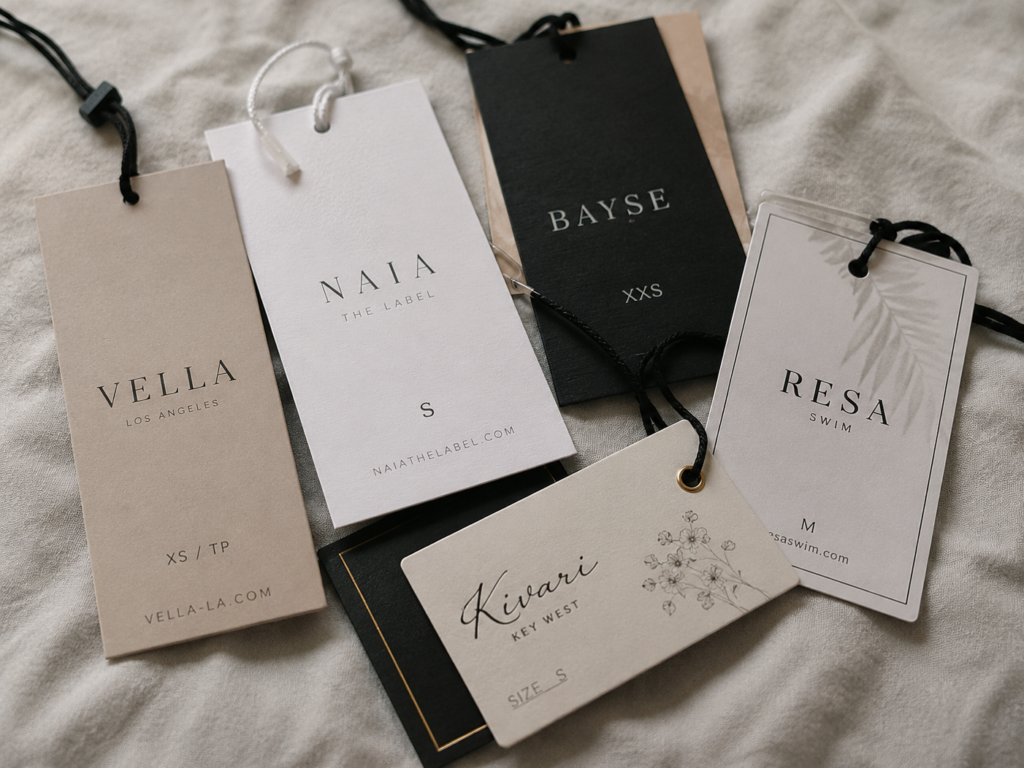
Hangtags
- Artwork and print finish
- Style or price data
- Attachment method
- Quantity and spare allowance
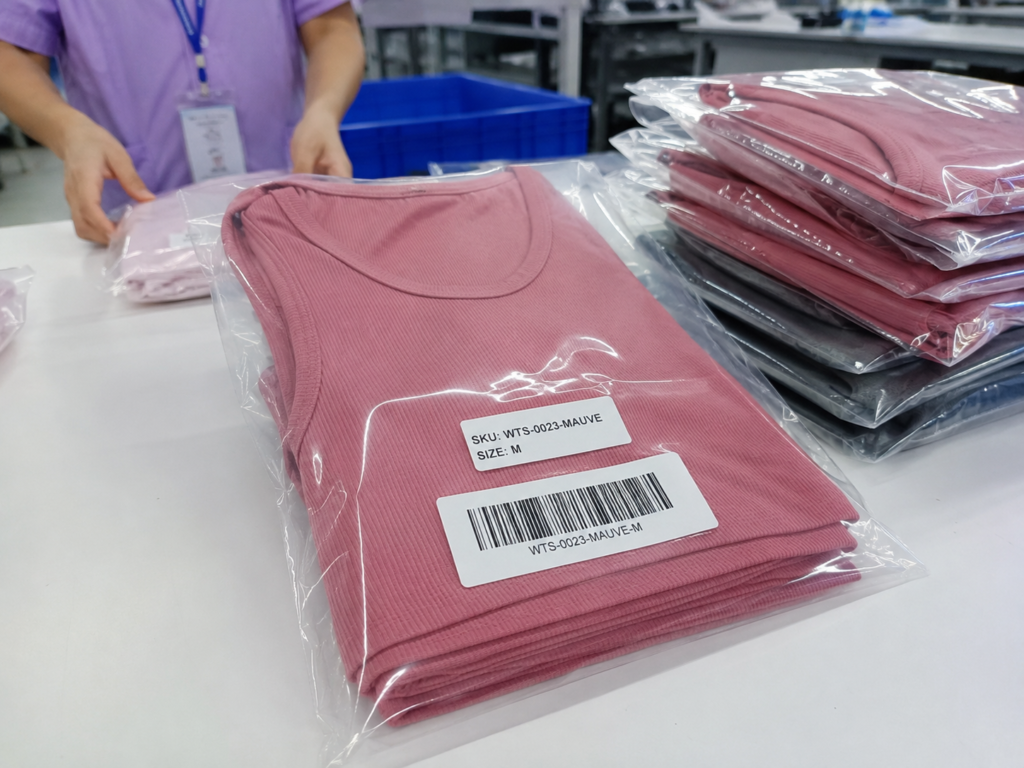
Barcode and SKU Labels
- Scan verification
- Style-color-size match
- Correct placement
- Packing-list alignment
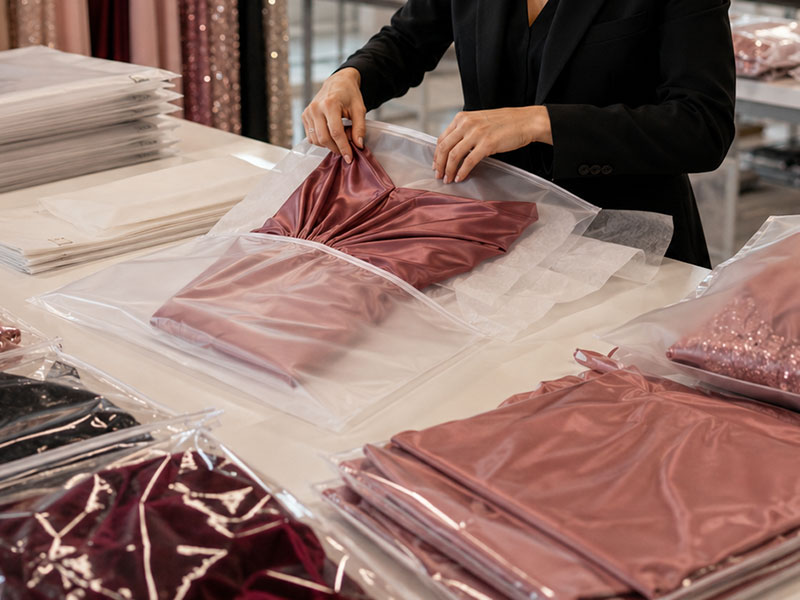
Polybags
- Bag dimensions and thickness
- Logo or warning print
- Folding method
- Barcode placement
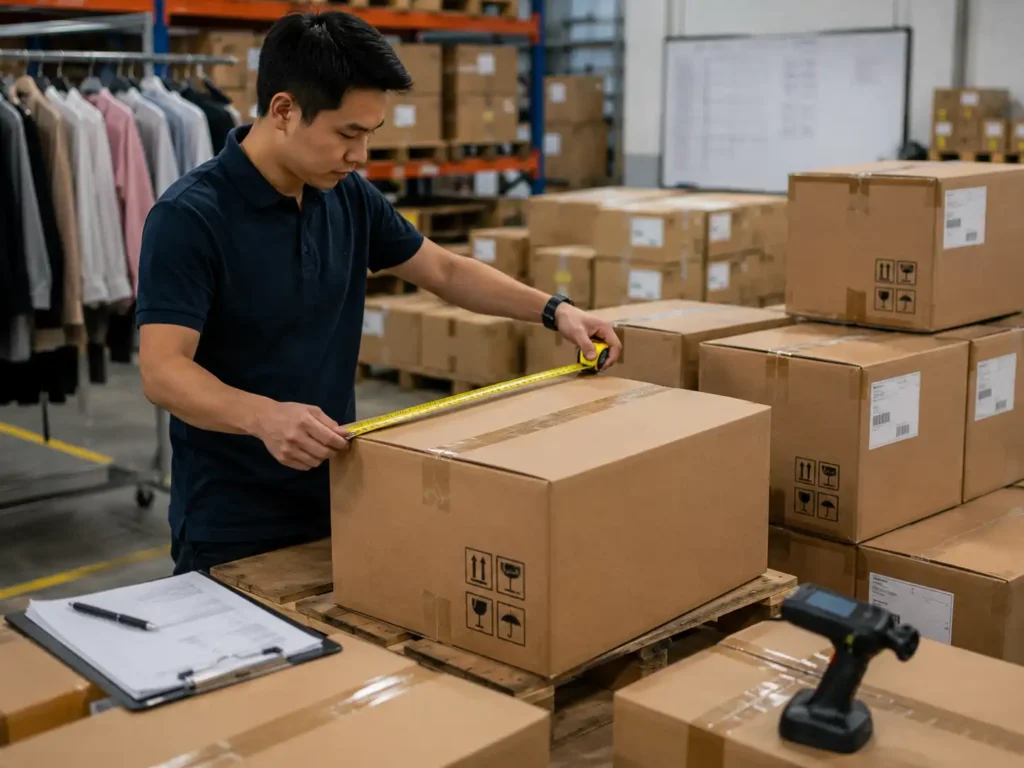
Cartons and Marks
- Carton ratio and numbering
- Dimensions and weights
- Shipping marks
- Warehouse labels
Freight Planning Around Warehouse Receiving Dates
Production completion, freight departure and warehouse receiving are separate milestones. Jinfeng Apparel prepares packing and shipment data so logistics decisions can be made from actual quantities, routes, volumes and commercial priorities.
Choose Freight by Commercial Priority
Express is suitable for samples, approval pieces and small urgent quantities. Air freight can protect a launch window for priority styles or campaign stock. Sea freight offers better unit economics for planned bulk delivery but requires a longer calendar. Split shipment can place urgent hero styles on air while core volume follows by sea, subject to cost and operational review.
The best option depends on destination, quantity, carton data, required receiving date and importer arrangements. Jinfeng Apparel can coordinate with the brand’s appointed forwarder and provide commercial invoice, packing list, carton information, product description, composition and shipment details. Final freight quotation, customs classification and import clearance should be confirmed with the appropriate logistics and customs parties.
Freight planning should begin before the final week. Large programs need provisional carton estimates, destination details and route decisions early enough to reserve suitable shipping capacity. Final carton count, dimensions, gross weight and net weight are confirmed after packing.
Build Warehouse Requirements into Packing
Retail and fulfillment warehouses may require carton labels, ASN-related data, PO references, SKU stickers, specific packing ratios or delivery appointments. Missing or incorrect information can delay receiving even when goods arrive at the destination. Warehouse instructions should therefore enter the project file before labels and cartons are produced.
The packing list records style, color, size, pieces per carton, carton number, gross weight, net weight, dimensions and total quantity. Carton marks and labels should align with the packing list. Barcode scans and SKU checks are performed before sealing where required. Brands with several drops can request style or delivery grouping to simplify receiving and launch allocation.
Jinfeng Apparel supports EXW, FOB, CIF, DAP and DDP structures according to route feasibility and project review. Trade terms, freight payer, forwarder, document responsibilities and receiving party should be clear before shipment release. A transparent logistics responsibility matrix prevents production teams, forwarders and warehouse teams from working with different assumptions.
Calendar Risks Reviewed Before Commitment
Incomplete Development Files
- Missing POM or size chart
- Unclear material specification
- Conflicting style details
- Unapproved label or packing data
Custom Material Lead Time
- Lab dips and strike-offs
- Supplier MOQ
- Certificate or batch scope
- Bulk shade approval
Approval Delays
- Sample comment deadline
- Color approval deadline
- PP signoff
- Packaging artwork cutoff
Fit and Construction Risk
- Pattern stability
- Support structure
- Stretch and recovery
- Lining and coverage
Peak Capacity Pressure
- Factory allocation
- Material booking
- QC window
- Packing window
Freight and Receiving Risk
- Route and trade term
- Carton data
- Warehouse labels
- Receiving appointment
Seasonal Launch Case with 18 Coordinated Styles
An anonymized seasonal program shows how a multi-style order can be structured around campaign samples, PP approval, bulk allocation, packing and staged delivery. Figures are presented as a representative brand program within Jinfeng Apparel’s regular 10-30 style and 20,000-80,000 piece order range.
Program Data and Development Plan
The collection contained 18 womenswear styles and 46,800 total pieces across dresses, skirts, two matching sets and fashion jumpsuits. Five fabric families were used: stretch satin, chiffon, soft crepe, power mesh and a printed rayon base. The range covered six sizes, three delivery groups and twelve principal color-SKU groups. Hero products included a corset satin mini, a one-shoulder mesh midi and a printed rayon maxi.
Development began with a line-sheet and risk review. Styles were grouped into three tracks. Track A covered campaign hero products requiring early photo samples. Track B covered high-volume commercial dresses with fit and grading priority. Track C covered supporting skirts, sets and jumpsuits sharing materials with the main collection. Fabric swatches and available trims were reviewed during the first two weeks, while custom color and print approvals followed separate supplier milestones.
Ordinary dresses moved through first samples in approximately 10-15 days. More complex corset, mesh and one-shoulder products followed a 15-25 day reference window. Most styles required a first sample, one revised sample and a PP sample. A smaller group required an additional fit check because the final fabric changed stretch or drape. Photo samples were scheduled ahead of PP approval for six campaign styles and clearly recorded as marketing samples rather than bulk standards.
Bulk, QC and Delivery Control
The working calendar covered 15 weeks from technical kickoff to staged dispatch. Weeks 1-2 focused on file review, fabric direction and sample priorities. Weeks 2-5 covered first samples and campaign pieces. Weeks 5-7 covered revisions, fit corrections and material approval. PP standards were locked by week 8 for the first production group, with later styles following once their final materials were confirmed.
Bulk production was allocated by construction and fabric family rather than placing all styles on one line. The first group contained campaign-led satin and mesh styles, the second group contained commercial crepe dresses and sets, and the third group contained printed rayon maxi dresses and jumpsuits. Cutting, inline inspection, finished-garment checks and packing were tracked separately for each group.
Quality attention included satin shade and snagging, mesh transparency and lining, corset support, zipper flatness, printed fabric direction, rayon shrinkage, maxi hem balance, label placement, barcode mapping and carton ratios. A staged dispatch plan released priority styles first while the remaining volume completed standard packing and shipment preparation. Final records retained approved patterns, measurements, fabric references, trims, labels, packing and QC notes for repeat colors and the next seasonal extension.
Repeat Orders After the First Seasonal Launch
Pattern Records
Fabric References
Trim Records
Measurement Files
Packing Records
QC Notes
Why Brands Use Jinfeng for Seasonal Programs
Product-Led Development
Traceable Project Control
Flexible Manufacturing Base
Frequently Asked Questions About Seasonal Launch Manufacturing

Build Your Next Seasonal Launch Calendar
Send your line sheet, tech packs, reference images or original samples for an initial project review. Kelly and the Jinfeng Apparel team will examine product structure, fabric direction, sample requirements, style quantities, private-label needs and target receiving dates before proposing the next development steps. A useful review starts with enough information to identify dependencies rather than offering a date based on one product image.
Please prepare:
- Company and brand information
- Product line sheet or tech packs
- Quantity per style and color
- Target size range and color plan
- Fabric, lining and trim direction
- Campaign, sample and PP deadlines
- Required warehouse receiving date
- Private-label and packing instructions
- Destination and preferred trade term
- File upload for artwork, packaging and warehouse guides


