
Womenswear Factory for Multi-Batch Brand Orders
Structured production for multi-style collections, scheduled releases, repeat orders, bestseller replenishment, and private-label delivery.
- Built for brand programs containing 10-30 styles and total order plans commonly ranging from 20,000 to 80,000 pieces.
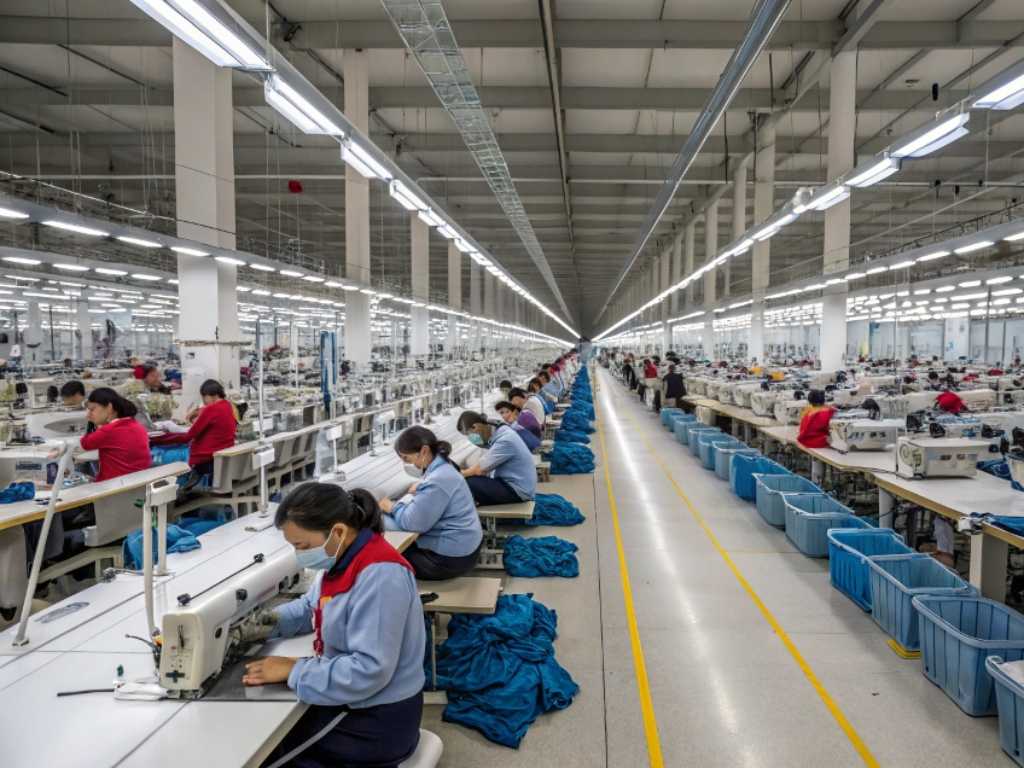
- 6 owned women’s fashion factories and 10+ long-term satellite production partners support style-specific production allocation.
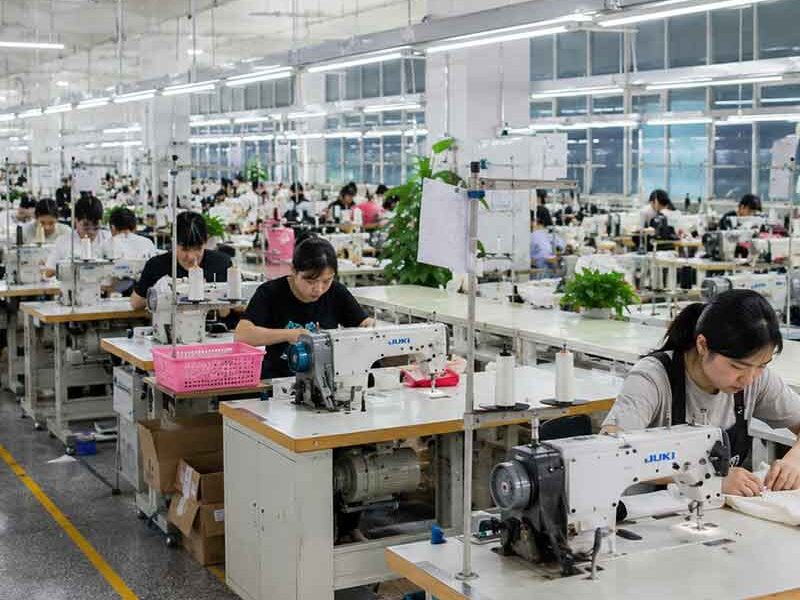
- 18+ sewing lines, including 6+ flexible production lines, help separate priority launches, main production, and later replenishment batches.
- 100,000+ pieces of regular monthly capacity are planned by fabric readiness, construction complexity, style priority, and confirmed delivery windows.
Production Resources for Scheduled Brand Orders
Since 2008
Six Owned Factories
Ten-Plus Partners
Eighteen-Plus Lines
Six Flexible Lines
Monthly Capacity
Is Jinfeng the Right Production Fit?
Best Fit For
- Multi-style seasonal collections
- Planned first and repeat batches
- Bestseller replenishment programs
- Private-label retail or ecommerce packing
- Multi-color and multi-size production
- Long-term development and production calendars
Production Boundaries
- MOQ starts from 200 pieces per style and color
- Material supplier minimums may raise the order requirement
- New fabrics and colors require renewed confirmation
- Every repeat batch remains subject to QC
- Delivery dates are confirmed after material and sample review
- Final quotations follow confirmed construction and packing details
Where Multi-Batch Womenswear Orders Lose Control
Fabric Lot Changes
Fit Version Drift
Capacity Gaps
Workmanship Variation
SKU Packing Errors
Shipment Confusion
Six Ways Brands Structure Multi-Batch Production
Scheduled Production Waves
First Batch Replenishment
Launch Priority Groups
Regional Market Batches
Warehouse Delivery Batches
Air and Sea Split
A Structured Factory Network, Not Random Outsourcing
Multi-batch programs need stable responsibility across development, production, QC, packing, and delivery. Jinfeng Apparel combines owned factories with long-term production partners, while project files and approval standards remain centrally coordinated.
Owned Factory Control for Core Womenswear Programs
Six owned women’s fashion factories form the core production base. Allocation begins with garment engineering rather than open capacity alone. A stretch bodycon dress needs different handling from a woven satin gown; a corset dress requires more structural control than a simple A-line silhouette; a jumpsuit adds waistline, rise, and component-matching risks that do not exist in a single-layer skirt.
Production planning reviews fabric behavior, lining, closures, trims, support structure, seam construction, finishing, color count, size ratio, order volume, and target delivery. The selected factory receives the approved pattern, measurement chart, BOM, sewing instructions, approved sample standard, packing file, and QC checkpoints. A style does not move to bulk merely because fabric has arrived. PP approval, material confirmation, and production readiness must align.
Owned-factory control is especially valuable when a collection contains several related styles. Pattern families, fabric groups, shared trims, and repeated construction details can be organized together, while higher-risk pieces receive separate handling. Batch planning can then distinguish priority styles, main volume, and later replenishment without treating the whole order as one undifferentiated quantity.
- Product-specific factory assignment
- Approved file release before production
- Batch-level material and capacity planning
- In-line and finished-garment inspection
- Private-label packing and carton coordination
- Repeat-order records retained for future runs
Long-Term Partners Add Specialized and Flexible Capacity
More than ten long-term satellite production partners support specialized workmanship and flexible capacity. The role of a partner factory is not to replace production control. A partner is selected when product type, fabric handling, construction method, order schedule, or capacity balance makes the match appropriate.
Before production allocation, Jinfeng Apparel reviews whether the partner has suitable experience for the garment category. Delicate mesh and lace work, sequined surfaces, structured corsetry, stretch garments, lightweight printed resort styles, and multi-piece sets create different sewing and finishing requirements. Production information must be complete enough for the line to reproduce the approved standard without relying on verbal explanation.
The same project files used for owned-factory production follow the assigned partner: approved pattern and grading, measurement tolerance, fabric and trim records, sewing method, sample comments, QC checklist, labels, packing, carton marks, and shipment instructions. Jinfeng Apparel’s merchandisers and QC team coordinate progress and inspection against the approved sample and written requirements.
- Long-term relationships instead of last-minute sourcing
- Category and workmanship matching
- Shared PP and Golden sample references
- Centralized production and packing instructions
- Batch-specific QC and shipment records
- Clear responsibility for revisions and approvals
Central Coordination Keeps Every Batch Connected
A multi-factory network only becomes useful when information remains controlled. Jinfeng Apparel manages projects through requirement confirmation, timeline planning, fabric and trim tracking, sample-version records, production updates, QC feedback, packing confirmation, shipment arrangement, and after-shipment feedback.
Every style should have a clear status: material pending, pattern in development, sample under review, revision required, PP approved, bulk scheduled, sewing in progress, QC in progress, packed, or shipped. Batch dates are linked to the styles included, the production unit assigned, and the destination required. Changes to fabric, color, trim, measurements, labels, or delivery are recorded before the next production step.
Communication can use email, WhatsApp, WeChat, video meetings, Excel files, PDF tech packs, annotated photos, sample videos, and production progress sheets. The goal is not constant messaging. The goal is a decision trail that prevents an old comment, wrong label artwork, or outdated size file from entering a later batch.
- One project lead for consolidated communication
- Clear approval points before bulk release
- Independent batch status and shipment files
- Recorded changes instead of memory-based execution
- After-shipment feedback added to repeat-order records
- NDA-based handling for sensitive brand information
How Womenswear Styles Are Assigned for Production
Style allocation is based on fabric behavior, construction risk, finishing requirements, size control, and batch timing. The matrix below shows how different womenswear groups require different production and inspection priorities.
| Product Group | Main Materials | Production Risks | Allocation Focus | Batch Control |
| Satin occasion dresses | Satin, stretch satin, lining | Snagging, shade variation, seam impressions, pressing marks | Woven dress unit with satin handling experience | Shade record, cut direction, pressing standard |
| Mesh and lace dresses | Mesh, power mesh, lace, lining | Transparency, holes, motif position, seam distortion | Delicate-fabric sewing unit | Material inspection, lining coverage, workmanship check |
| Bodycon dresses | Jersey, ponte, stretch mesh | Recovery, negative ease, seam twisting, measurement drift | Stretch womenswear unit | Fit standard, relaxation control, finished measurement |
| Corset dresses | Boning, cups, underwire, lining | Bust balance, support, zipper stress, comfort | Structured dress unit | PP approval, Golden sample, support-point inspection |
| Jumpsuits and sets | Woven or stretch fabrics | Waistline, rise, component pairing, size matching | Multi-piece garment unit | Component control, size-pair verification, packing check |
| Resort collections | Rayon, chiffon, printed woven | Print direction, shrinkage, transparency, wrinkling | Lightweight woven unit | Fabric lot record, print placement, packing method |
Planning Capacity Across Multiple Production Windows
A multi-batch calendar starts before cutting. Style readiness, fabric status, PP approval, sewing capacity, QC, packing, and freight must be visible together. A date becomes reliable only when the conditions behind it are also confirmed.
Build the Calendar from Style Readiness
A line sheet may contain 10-30 styles, but every style rarely reaches approval on the same day. Capacity planning begins by separating styles into readiness groups. One group may use stock satin and an existing base pattern; another may need a custom color, lace placement approval, or several fit corrections. Treating both groups as equally ready hides the real critical path.
The planning file should identify style number, product group, fabric source, color count, size range, sample status, revision status, PP approval, planned quantity by batch, target ex-factory date, transport method, and destination. Hero styles and launch-critical colors receive a clear priority marker. Styles with unresolved fabric or fit decisions remain outside the locked production window until the missing approval is completed.
A useful calendar also separates client decision dates from factory action dates. Late comments, changed color plans, new packaging artwork, or delayed payment can move the production start even when sewing capacity remains available. Clear dependencies help both sides see whether a delay came from development, material, approval, production, QC, packing, or freight.
- Group styles by actual readiness
- Lock priority SKUs before secondary styles
- Record every approval dependency
- Match production windows to confirmed materials
- Keep room for inspection and packing
- Review freight cutoffs before ex-factory dates
Reserve Lines Around Fabric and Construction Families
Production becomes more stable when similar garments are grouped around fabric and construction. Satin styles can share handling and pressing standards. Stretch bodycon styles can follow a consistent relaxation and measurement routine. Corset pieces can be assigned to teams familiar with cups, boning, underwire, support tape, and zipper stress. Jumpsuits and matching sets need component and size-pair control.
Grouping does not mean every related style enters the same batch. A 30-style program may create several sub-groups: priority campaign dresses, main commercial dresses, structured occasion styles, and replenishment candidates. The sewing plan then considers estimated sewing minutes, color changes, size ratio, special operations, finishing time, and inspection workload.
Later batches should not be promised as open-ended capacity. A forecast can be discussed early, but a firm line window requires a confirmed style list, quantity, material plan, and decision date. When a bestseller emerges, the retained production records reduce setup work, while fabric and line availability still determine the achievable restart date.
- Allocate by construction family
- Avoid unnecessary line switching
- Protect specialist operations
- Separate forecast capacity from confirmed capacity
- Recheck material supply for every repeat
- Preserve setup information for faster restarts
Protect QC, Packing, and Freight Time
Sewing completion is not the same as shipment readiness. Every production batch still needs finished-garment inspection, measurement checks, pressing review, thread cleaning, label and barcode verification, packing, carton counting, carton marks, and shipping documents. High-volume programs can create a bottleneck after sewing when finishing and packing capacity are ignored.
Jinfeng Apparel has 15+ QC inspectors and 30+ finishing and packing workers. Their workload must be included in the calendar, especially when several batches close in the same week. Destination-specific packing increases the work because each warehouse may require a different label, carton mark, size ratio, or packing list.
Air and sea splits also need separate close dates. Air cartons may require earlier inspection and documentation, while sea quantities continue through production. A client-nominated forwarder can be used, or a factory-recommended forwarder can support the shipment. Commercial invoice, packing list, bill of lading or air waybill, carton marks, HS code support, and warehouse labels are prepared according to the agreed shipping arrangement.
- Reserve time after sewing
- Plan QC by batch
- Separate warehouse packing rules
- Confirm air and sea quantities early
- Prepare independent carton records
- Align ex-factory dates with freight cutoffs
Sample Priorities That Protect the Launch Calendar
Launch Date
Hero SKU
Fabric Readiness
Pattern Complexity
Photo Sample
Bulk Dependency
One Approved Standard for Every Production Batch
Approved Pattern
- Final pattern version
- Grading and size relationship
- Approved seam and balance corrections
- Notes for fabric-specific adjustments
Measurement Files
- Size range and size ratio
- Points of measurement
- Allowed tolerance
- Finished-garment measurement record
BOM and Trims
- Supplier and specification references
- Color and size information
- MOQ and lead-time notes
- Approved substitutions, if any
Color References
- Main fabric shade
- Lining and trim relationship
- Dye-lot or production-lot record
- New-color approval status
Sewing Instructions
- Construction method
- Special operation sequence
- Approved visual standard
- Risk points for in-line inspection
Packing and QC
- Private-label artwork version
- Warehouse-specific instructions
- Inspection findings and corrections
- Shipment and after-shipment notes
Controlling Fabric and Color Across Repeat Batches
A repeat order can follow an approved garment standard, but fabric and color availability must be confirmed again. Material changes affect drape, fit, sewing, pressing, transparency, shrinkage, appearance, MOQ, cost, and delivery.
Reconfirm Original Fabric Availability
The first question is whether the original fabric remains available from the same supplier and specification. Stock can be sold out, a new production lot may be required, or a mill may have changed minimum quantities. Satin, stretch satin, mesh, lace, jersey, ponte, chiffon, rayon, velvet, sequin fabric, and printed woven materials all present different repeat risks.
A retained swatch and BOM provide a comparison standard, but they do not remove the need for renewed inspection. The new lot is reviewed for color, hand feel, weight, width, stretch, recovery, drape, transparency, sheen, wrinkle behavior, shrinkage, and surface condition according to the garment. For a bodycon dress, stretch and recovery can alter fit. For satin, sheen and seam impressions matter. For lace, motif and base color matter. For chiffon or mesh, transparency and lining relationship matter.
Material readiness also affects capacity. A sewing window should not be locked against an unconfirmed fabric date. When the original fabric is unavailable, Jinfeng Apparel can review alternatives, but the replacement must be evaluated for pattern, sample, cost, MOQ, and timing before bulk production.
- Verify supplier and specification
- Compare new lot with approved reference
- Review garment-specific performance
- Reconfirm MOQ and lead time
- Retest fit when fabric behavior changes
- Update the BOM before production
Control Shade Across Shell, Lining, Thread, and Trims
Color is a system rather than a single fabric swatch. Shell fabric, lining, zipper tape, thread, elastic, cups, boning channels, lace trim, buttons, hooks, straps, labels, and decorative components may sit next to each other on the finished garment. A small mismatch can become visible under photography, retail lighting, or movement.
For custom-dyed material, lab-dip approval should be linked to the exact color name and style group. Bulk material is reviewed against the approved standard, while separate dye lots are identified and managed. Cutting plans should avoid mixing noticeably different lots within the same garment or selling unit. For light colors, lining coverage and transparency receive additional attention. For black, navy, ivory, white, red, and bright fashion colors, trim relationships are checked rather than assumed.
New color development also requires private-label review. Care-label content may remain the same, but SKU, barcode, hangtag, polybag sticker, carton mark, and warehouse information often change. Color approval therefore connects development, production, QC, packing, and logistics.
- Match all visible components
- Identify and separate dye lots
- Confirm lining under the shell
- Update color-specific SKU files
- Inspect bulk under consistent lighting
- Retain a reference for the next run
Reassess Patterns When Fabric Changes
Using the same pattern with a new fabric is not an automatic repeat order. A pattern developed for woven satin may not behave correctly in stretch satin. A bodycon shape in ponte may require different negative ease when moved to jersey or power mesh. A rayon resort dress may shrink or relax differently from a polyester crepe version. A lace overlay can change seam bulk and neckline stability.
The review considers stretch direction, recovery, weight, drape, shrinkage, thickness, friction, opacity, pressing response, and seam behavior. Changes can affect bust shaping, waist position, hip ease, neckline, straps, armholes, back coverage, slit stability, hem balance, lining, zipper installation, and support components. A new fit or PP sample may be needed before production.
Cost also changes with material width, consumption, wastage, cutting direction, matching requirements, sewing difficulty, pressing, and QC. Jinfeng Apparel can suggest alternatives or construction adjustments, but the final choice should protect brand-level appearance rather than chase a lower material price that creates fit or quality problems.
- Review stretch and recovery
- Check shrinkage and drape
- Recalculate consumption and wastage
- Update pattern or construction where needed
- Make a new approval sample when required
- Reconfirm quotation and production timing

Keeping Fit Stable from Batch to Batch
Fit consistency comes from an approved pattern, clear measurements, controlled fabric behavior, accurate cutting, in-line checks, and finished-garment inspection. A repeat order still requires measurement and workmanship control.
Lock the Approved Fit Standard
Jinfeng Apparel develops womenswear patterns around bust, waist, hip, length, neckline, strap, armhole, back coverage, slit, lining, stretch, support, comfort, and movement. The final pattern is not merely the latest file in a folder. It should correspond with the approved sample, measurement chart, comments, fabric, and construction.
Different garment groups require different fit priorities. Bodycon dresses rely on negative ease, stretch recovery, side-seam balance, and hem control. Corset and strapless dresses need upper-bust security, cup position, boning, anti-slip structure, zipper support, and neckline stability. Jumpsuits add torso length, waistline, rise, hip ease, and sitting movement. Maxi and floor-length dresses need hem balance and movement while preventing drag or uneven length.
When a pattern change is approved, old versions should not remain available for uncontrolled production use. The revision record notes the changed measurement or construction, the reason, the approval status, and any effect on grading or fabric consumption.
- Match pattern, sample, and size chart
- Record every approved fit correction
- Remove outdated bulk instructions
- Preserve style-specific measurement points
- Link the pattern to the correct fabric
Control Fabric Relaxation, Cutting, and Sewing
A stable pattern can still produce unstable measurements when the fabric is handled differently. Stretch knits and power mesh may need relaxation before cutting. Slippery satin can move during spreading and sewing. Lace motifs may require position control. Chiffon and lightweight rayon can distort. Velvet and sequins can require directional cutting and additional care.
Cutting checks confirm layer alignment, grain, direction, notches, component count, and shade grouping. Sewing checks focus on operations that can pull or release measurements: necklines, armholes, side seams, waist seams, zippers, elastic, gathering, ruching, straps, lining, and hems. Pressing must shape the garment without stretching edges, flattening texture, or leaving seam impressions.
Material and workmanship controls are linked. A later batch should use the same approved method unless the new fabric lot or production condition requires a documented adjustment.
- Relax relevant fabrics before cutting
- Control grain and directional layouts
- Check high-risk seams during sewing
- Keep shade lots separated
- Avoid uncontrolled pressing stretch
- Record approved method changes
Measure Every Batch Against the Final Chart
Repeat production does not remove the need for measurement inspection. In-line measurements identify drift before a full batch is finished. Final-garment checks confirm key points after sewing and pressing. The inspection plan can focus on the measurements most likely to affect fit and returns.
For dresses, common points include bust, waist, hip, body length, skirt length, strap length, armhole, neckline depth, slit height, and hem sweep. Jumpsuits may add shoulder-to-waist, torso length, front and back rise, inseam, and leg opening. Sets require component matching by size and color. The approved tolerance should be realistic for the fabric and construction rather than copied from an unrelated garment.
When a measurement moves outside tolerance, the response depends on cause and production stage. Sewing adjustments, pressing correction, sorting, rework, or pattern review may be required. Findings are added to the QC record so later batches begin with the known risk.
- Use style-specific measurement points
- Inspect during sewing and after pressing
- Compare with the approved sample
- Record out-of-tolerance findings
- Apply corrective action before packing
- Feed results into the next production run

Quality Control Applied to Every Production Batch

Incoming Fabric
- Compare with approved reference
- Identify lot differences
- Separate unsuitable material
- Record production risk before cutting

Trim Verification
- Confirm specification and color
- Check function and comfort
- Verify artwork versions
- Prevent wrong components entering the line

Cutting QC
- Protect directional fabrics
- Control shade by bundle
- Prevent missing components
- Keep style, color, and size traceable

Sewing Inspection
- Neckline, strap, zipper, waist, and side seam
- Ruching, pleats, lining, slit, and hem
- Corset support and cup position
- Seam quality on delicate or stretch materials

Measurement Check
- Use garment-specific points
- Track repeated deviations
- Correct before packing
- Retain results for repeat production
Workmanship Review
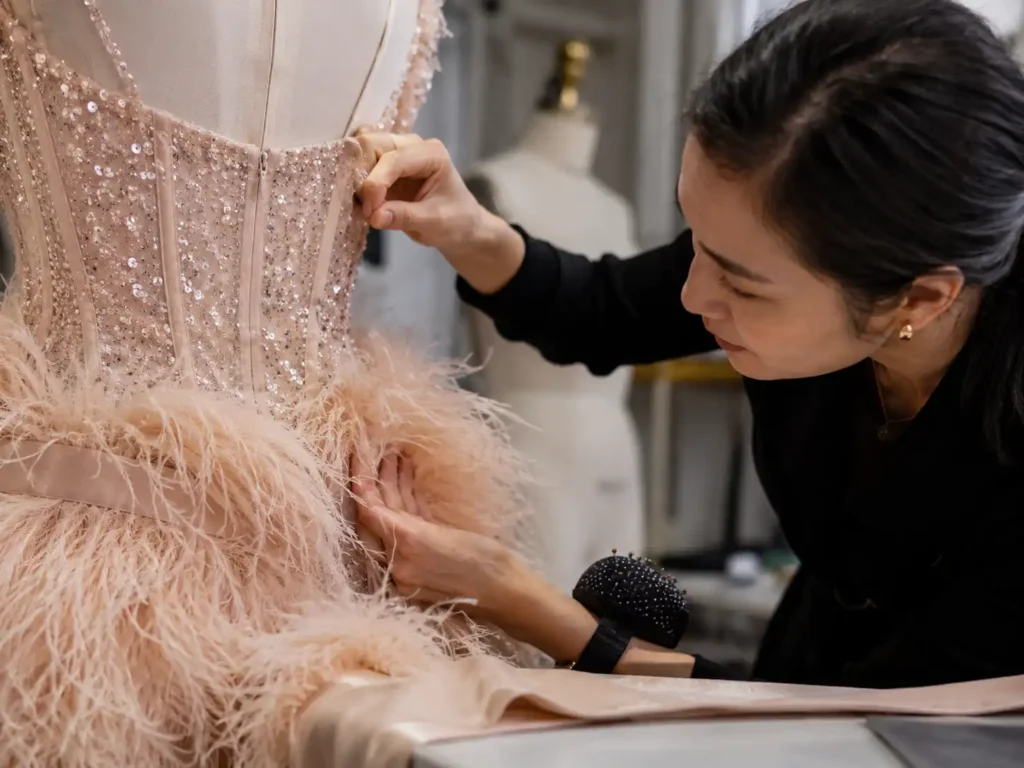
- Compare with PP or Golden sample
- Review visible details
- Sort and rework when needed
- Record recurring defects

Pressing Review
- Match fabric-specific temperature and handling
- Protect satin, velvet, lace, and sequins
- Check hem balance and silhouette
- Review garments before packing

Packing QC
- Match the current artwork version
- Verify style, color, and size
- Confirm warehouse instructions
- Reconcile carton totals before shipment
Packing Accuracy for Multi-Style Brand Programs
Woven and Size Labels
Care Label Versions
Hangtags
Barcode and SKU
Polybag and Warehouse Labels
Carton Marks and Lists
Delivery Plans Built Around Brand Priorities
Launch Priority
Style Group
Color Group
Regional Market
Warehouse Destination
Air and Sea Split
From First Batch to Bestseller Replenishment
Sample Approval
First Production
Market Launch
Repeat Review
Replenishment
Approved bestsellers can move into a new production window after material and capacity confirmation. Retained files reduce repeated development work while QC remains active.
Seasonal Extension
MOQ and Cost Planning Across Production Batches
MOQ starts from 200 pieces per style and color. Fabric, color development, trims, construction, size split, packing, production schedule, inspection, and separate shipments can change the final order structure and cost.
| Order Structure | General Evaluation | Main Reason |
|---|---|---|
| One style, one color, 200 pieces | Can be reviewed | Meets the regular starting unit before material-specific requirements |
| One style, two colors, 200 pieces each | Can be reviewed | Each color reaches the regular style/color starting point |
| One style, two colors, 100 pieces each | Normally below regular MOQ | The total does not satisfy the requirement for each color |
| Four styles, 50 pieces each | Not a regular production structure | Quantity is fragmented across separate patterns and sewing setups |
| One style, 600 pieces split into two deliveries | Can be evaluated | Style/color MOQ is met; extra QC, packing, and freight may apply |
| Repeat style with unavailable original fabric | Requires new review | Replacement material can change MOQ, fit, cost, and timing |
| Custom print or custom-dyed fabric | Project evaluation required | Mill MOQ and color development may exceed garment MOQ |
| 20,000-80,000 pieces across 10-30 styles | Suitable for structured planning | Requires style grouping, material planning, batch calendar, QC, and packing control |
Clear Project Control Across Every Batch
Project Kickoff
Timeline Confirmation
Sample Tracking
Material Updates
Production and QC
Packing and Shipment
Brand Protection and Verifiable Factory Evidence
NDA and Design Protection
- NDA can be arranged before sensitive files are shared
- Project files are used for development, production, QC, packing, and delivery
- Anonymous case material excludes identifying details
- Unreleased collections are not used for public promotion without authorization
Factory Review Support
- Actual production unit confirmed before bulk
- Available records reviewed by project
- Client or nominated inspection support
- Process photos and production evidence where permitted
Project-Based Compliance
- No unsupported certification claims
- Material certificates checked for scope and validity
- Testing requirements confirmed before production
- Compliance cost and timing added to the project plan
A Multi-Batch Womenswear Program in Practice
A representative anonymized U.S. occasionwear program shows how a 10-30 style order can be divided without losing fit, material, QC, packing, or delivery control. Figures below reflect a realistic brand-order structure while protecting identifying information.

Order Profile and Batch Design
The program contained 18 styles and 46,800 pieces across satin dresses, mesh and lace occasion dresses, corset styles, fitted jumpsuits, and coordinated sets. Six core colors were used across four material families, with a size range from XS to 3XL. Quantities varied by expected sales level rather than being divided evenly.
The brand planned three release windows. Batch 1 contained 12,600 pieces across eight campaign and launch-critical styles. Batch 2 contained 19,200 pieces across the main commercial assortment. Batch 3 contained 15,000 pieces for later-season styles and confirmed replenishment. The order was split by readiness and commercial priority, not merely by equal dates.
Sample development was grouped by purpose. Hero styles and the highest-volume base patterns entered first. Structured corset pieces received additional fit review before PP approval. Satin and mesh families were reviewed as separate material groups. The final plan created one approved production standard for each style, including pattern, measurements, BOM, color reference, sewing instructions, label files, packing, QC checklist, and Golden sample.
- 18 styles
- 46,800 total pieces
- 3 planned production batches
- 4 material families
- XS-3XL size range
- 2 freight methods

Production, Quality, and Delivery Control
Batch 1 was released only after the priority styles had approved PP samples and confirmed fabric. The 12,600-piece launch group moved through independent cutting, sewing, measurement, workmanship, pressing, packing, and pre-shipment checks. A smaller urgent quantity was separated for air freight, while the remaining cartons followed the planned sea shipment.
Batch 2 used the same approved patterns and construction files but required a new check of bulk fabric lots and trim colors. One satin lot showed a visible shade shift under consistent lighting, so the material was separated before cutting and the affected quantity was reassigned after color review. The intervention prevented mixed shade within the same selling group.
Batch 3 included later-season styles plus replenishment of two strong sellers. The original pattern, size chart, BOM, sewing notes, packing files, and QC findings shortened the restart. Original fabric availability was reconfirmed, and one color required a new dye-lot approval. The replenishment styles retained their barcode structure, while carton marks changed for a second warehouse.
- 12,600 pieces in the launch batch
- 19,200 pieces in the main batch
- 15,000 pieces in the later and replenishment batch
- Independent QC release for each batch
- Air and sea split for launch protection
- Two warehouse packing instructions

Commercial Result and Repeat-Order Value
The program avoided the common mistake of waiting for all 18 styles to reach the same status. Priority styles launched first, the main assortment followed on its own production window, and replenishment used retained technical and packing records rather than restarting development from zero.
The most valuable outcome was not a single fast shipment. The brand gained a repeatable production structure. High-volume styles had clear production files, later colors could be reviewed against known fit and construction, and replenishment decisions could be made with visibility into fabric and line availability. Packing and warehouse requirements were also preserved for future runs.
A multi-batch model works well when the first order is treated as the beginning of a production record, not an isolated transaction. Jinfeng Apparel supports the progression from sample and launch to repeat order, new color, new fabric, bestseller replenishment, seasonal collection, and annual development planning.
- Faster repeat review through retained files
- Lower risk of outdated pattern use
- Earlier identification of fabric-lot differences
- Independent packing control by warehouse
- Clearer capacity discussion for replenishment
- Better continuity across seasonal programs
Frequently Asked Questions About Multi-Batch Orders

Plan Your Multi-Batch Womenswear Program
Send the information needed to evaluate style allocation, sample priorities, material risks, MOQ, production windows, QC, packing, and delivery. A complete line sheet or tech-pack package allows Jinfeng Apparel to review the program as a coordinated collection rather than a series of disconnected styles.
Please include:
- Style images, tech packs, original samples, or line sheet
- Quantity by style, color, and planned batch
- Fabric direction and any approved material references
- Size range, size ratio, and measurement charts
- Priority styles and campaign or launch dates
- Required sample types and approval sequence
- Woven labels, care labels, hangtags, barcodes, and polybags
- Warehouse destinations, carton rules, and freight preference
- Testing, audit, inspection, or compliance requirements
- Target dates for first delivery and later replenishment


