
Women’s Two-Piece Set Manufacturer for Fashion Brands
Coordinated womenswear development where the top, bottom, fit, fabric, color, sizing, and retail packing are managed as one product system.
- Paired fit control: Bust, waist, hip, crop length, waistband height, rise, skirt length, and trouser balance are reviewed together.
- Dedicated development resources: 2 sample rooms, 7+ senior pattern makers, and 20+ sample machinists support first samples, revisions, PP samples, and golden-sample standards.
- Scalable production structure: 6 owned women’s fashion factories, 10+ long-term production partners, 18+ sewing lines, and 100,000+ pieces of monthly capacity.
- Clear order planning: MOQ starts from 200 pieces per style/color, subject to fabric, color, trim, construction, packing, and production schedule.
Manufacturing Scale for Coordinated Set Programs
Since 2008
Six Owned Factories
Ten-Plus Partners
Two Sample Rooms
Fifteen-Plus QC
Twelve-Plus Merchandisers
Built for Established Fashion Brand Programs
Global Womenswear Brands
Fast Fashion Brands
Premium Ecommerce Brands
Sourcing and Buying Teams
Product Development Teams
Private Label Programs
Two-Piece Set Risks We Control
Development Risks
- Fit interaction: Top length, waist position, rise, hip ease, hem line, and movement are checked as a complete look.
- Material interaction: Weight, drape, stretch direction, transparency, lining, and surface shine are reviewed before sampling.
- Commercial interaction: Each garment should work as a set and, where intended, remain wearable as a separate item.
Bulk Production Risks
- Color control: Pantone, physical standards, lab dips, swatches, lighting, dye lot, lining color, and print color are reviewed.
- Pairing control: Top and bottom size, color, style number, SKU, and component count are verified before sealing.
- Repeat control: Pattern, measurement, fabric, trim, label, packing, and QC records remain available for future orders.
Custom Two-Piece Set Categories
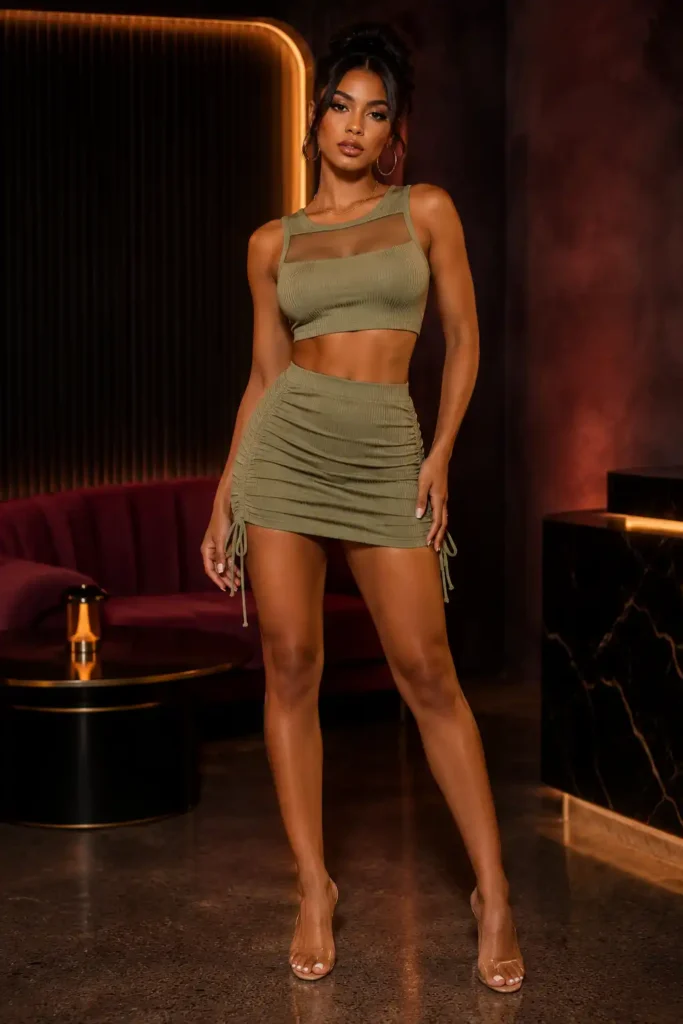
Crop Top Skirt Sets

Corset Skirt Sets

Blouse Trouser Sets

Shirt Shorts Sets

Halter Matching Sets

Knit Matching Sets

Blazer Trouser Sets

Resort Co-Ord Sets

Party Two-Piece Sets
Collections Built Around Coordinated Sets

Party and Going-Out

Resort and Vacation
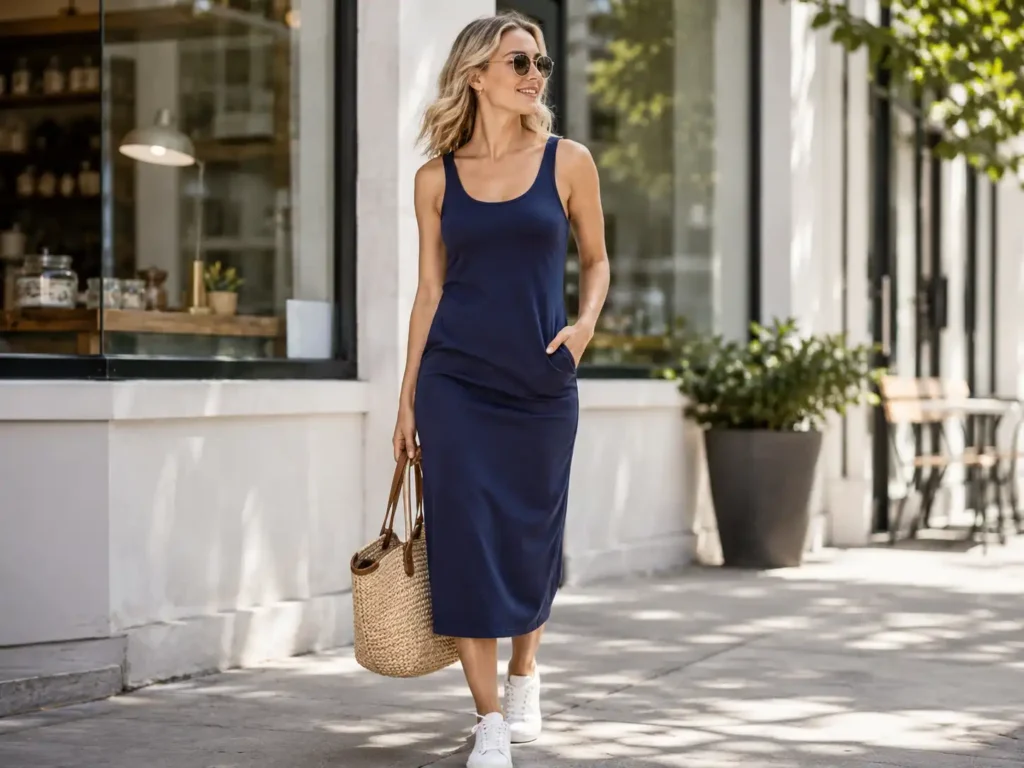
Casual Daywear

Office and Tailoring

Knit and Lounge
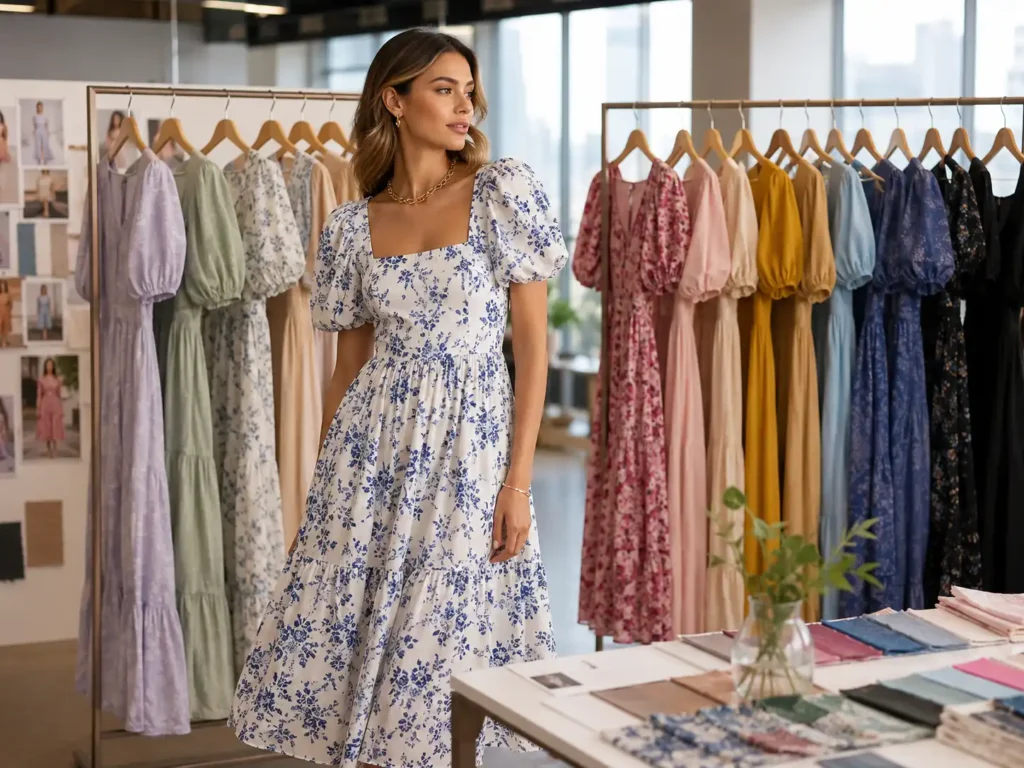
Seasonal Fashion Drops
From Brand Brief to Feasible Product
A reliable quotation and sample plan start with enough information to judge structure, materials, quantity, sizing, private-label requirements, and launch timing. Early review prevents unrealistic commitments and reduces repeated changes later.
What to Send for Review
A complete tech pack is ideal, yet development can also begin from reference images, sketches, an original sample, a line sheet, or a combination of files. Useful information includes front and back views, key measurements, size range, fabric preference, color plan, target quantity per style/color, trims, labels, packing, target market, target price position, and launch date. For a coordinated set, both components must be shown. A top image without a clear bottom reference leaves the waist connection, proportion, sizing, and SKU structure open to interpretation.
- Style information: Technical drawing, reference image, original sample photos, construction notes, and intended wearing occasion.
- Commercial information: Quantity by style/color, planned size range, sales channel, launch calendar, and expected repeat potential.
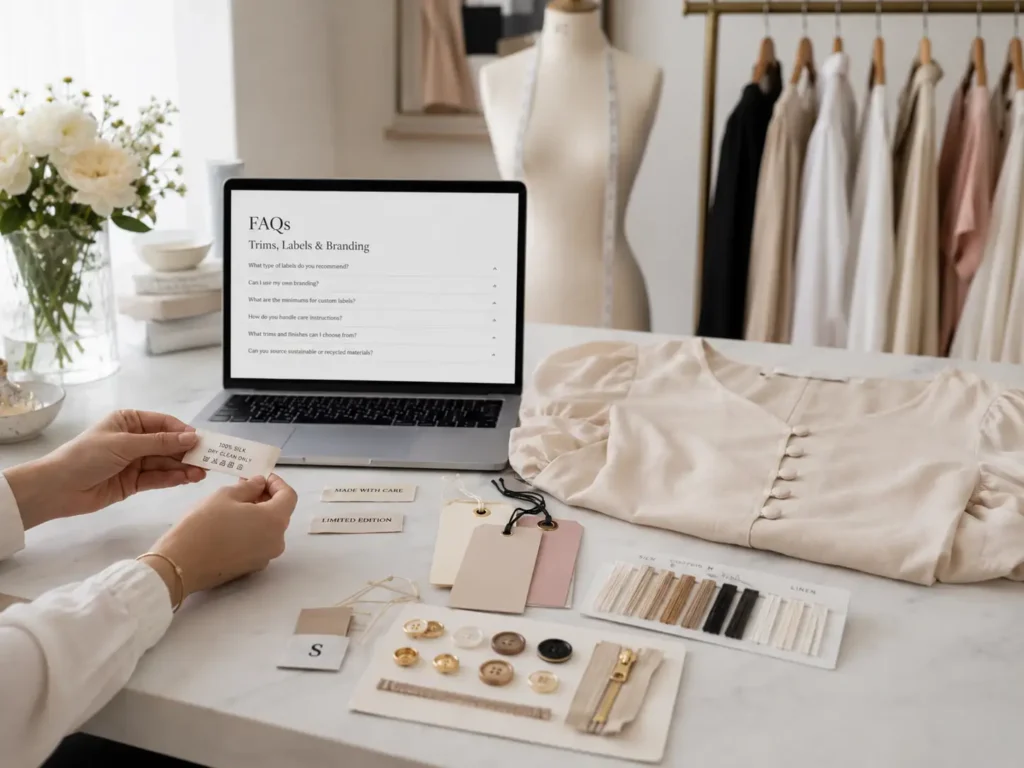
- Branding information: Woven label, care label, hangtag, barcode, SKU, polybag, carton, carton mark, and warehouse label requirements.
What Jinfeng Reviews First
The first review separates visible design intent from production requirements. Pattern makers and development staff examine neckline stability, bust coverage, crop length, waistband position, hip and rise, skirt or trouser balance, lining need, zipper choice, decoration placement, and seam feasibility.
Fabric direction is reviewed against drape, stretch, transparency, weight, recovery, shrinkage, surface shine, and print behavior.
Quantity and color information are checked against the standard MOQ of 200 pieces per style/color and any separate material or packaging requirements.
What the Initial Feedback Covers
Initial feedback can identify the likely development route, material questions, fit risks, possible trim alternatives, MOQ conditions, private-label inputs, and information still needed before a confirmed quotation. Final pricing cannot be locked from a single image when fabric, construction, sizing, or packing remains undefined. Once materials, trims, workmanship, quantities, and packaging are confirmed, the project can move into a more accurate sample and bulk plan.

Engineering the Top-to-Bottom Proportion
The strongest two-piece sets are built around the space, line, and movement between both garments. Jinfeng develops each component separately, then checks them together so the coordinated look survives grading, motion, and bulk production.
Top Length and Waist Position
A crop top can finish above, at, or below the intended visual waist. Even a 10-20 mm change can alter the exposed midriff, the perceived leg length, and the balance of the full look. High-rise skirts or trousers often need a shorter top to maintain a clean gap, while low-rise bottoms require careful exposure control and a longer visual torso. The pattern review considers front length, back length, side seam, bust volume, hem shape, waistband width, rise, and garment settling after wear. Stretch fabrics may shorten or lengthen visually when tension changes, so measurements are checked on-body rather than judged only when laid flat.
Bust, Waist, and Hip Balance
The top and bottom do not use the same fit logic. Bust and upper-bust measurements control neckline security and chest coverage. Under-bust and waist measurements influence corset or fitted top support. The bottom is governed by waist, high hip, full hip, front rise, back rise, thigh, skirt sweep, or trouser leg shape. A set can carry the same size label while each component follows its own grade rules. Jinfeng reviews both patterns together to prevent a fitted top being paired with an unexpectedly loose waist, or a comfortable upper body being combined with restrictive hip ease.
Visual Center and Design Continuity
Neckline, shoulder line, top hem, waistband, slit, pocket, print placement, and leg or skirt shape create a shared visual center. Matching does not always mean identical detail.
A satin corset top may need a cleaner skirt, while an oversized printed shirt may require a quieter trouser shape. The aim is controlled continuity: aligned color story, compatible proportions, balanced detail density, and repeatable placement. Where stripes, checks, florals, lace motifs, or cut-outs are involved, direction and scale are reviewed across both garments before cutting.
Movement and Separate Wearability
Static fitting can hide several problems. Raising the arms may pull a crop top upward; sitting can cause a waistband to roll; walking may reveal excessive slit opening; a halter neckline may loosen; wide-leg trousers may drag after the waistband settles. Full-set fitting covers front, side, back, walking, sitting, and arm movement. When the merchandising plan allows separate sales, each garment is also reviewed alone for hem finish, label placement, styling flexibility, and size logic. A commercially strong set should perform as one coordinated outfit without making either component feel unfinished on its own.
Fabric Systems for Coordinated Sets
Fabric selection influences fit, color, cost, MOQ, sewing method, pressing, wash behavior, and retail appearance. Jinfeng reviews the complete fabric system, including main fabric, contrast fabric, lining, interlining, elastic, trims, and any batch-sensitive surface effects.
Fabric-to-Set Direction
| Set Direction | Recommended Fabrics | Main Development Controls | Bulk Risks to Manage |
|---|---|---|---|
| Party and occasion sets | Satin, stretch satin, mesh, lace, sequin, crepe | Shine direction, bust support, lining, zipper flatness, edge comfort | Snagging, dye-lot shade, seam puckering, decoration damage |
| Bodycon and knit sets | Jersey, rib knit, ponte, stretch mesh, polyester-spandex | Stretch direction, recovery, neckline return, waist tension, grade rules | Growth, twisting, seam waving, wash-size change |
| Resort and printed sets | Rayon, viscose, chiffon, linen blend, printed woven | Drape, print direction, transparency, shrinkage, hem balance | Batch variation, print mismatch, twisting, packing creases |
| Tailored sets | Suiting, crepe, ponte, denim, structured woven | Shoulder, interlining, waistband, rise, crease, pressing | Bubbling, shine marks, shape collapse, shade variation |
| Casual woven sets | Cotton blend, denim, twill, lightweight woven | Ease, shrinkage, pocket shape, seam stability, wash care | Puckering, torque, color transfer, dimension change |
| Mixed-fabric sets | Satin plus mesh, lace plus woven, knit plus woven | Color compatibility, stretch balance, seam method, lining transition | Different shrinkage, different shade response, unstable joining seams |
Material Approval Before Sampling
A fabric swatch should be reviewed for color, weight, handfeel, stretch, recovery, drape, transparency, surface shine, print clarity, and suitable alternatives. Changing fabric during sampling can require pattern, lining, workmanship, cost, MOQ, and timeline reassessment. Stock fabrics often support the standard production threshold, while custom dyeing, custom printing, certified materials, special lace, sequins, or developed fabrics may follow supplier-specific minimums and lead times.
Testing by Market and Project
Testing can be arranged according to target market, product risk, and brand requirements. Common items include fiber composition, shrinkage, color fastness, pH, formaldehyde, azo, pilling, and strength. Testing scope, laboratory, sample size, cost, and schedule are confirmed for the actual material and production batch. Certification is not assumed across every color, supplier, or order; supporting documents are reviewed against the fabric being used.

Color, Print, and Dye-Lot Consistency
Two pieces placed side by side make shade variation more visible than a single garment. Color control therefore begins before cutting and continues through paired inspection, finishing, packing, and repeat-order review.
Color Approval Standards
Color is reviewed against the agreed reference rather than a phone screen alone. Relevant inputs can include Pantone number, physical standard, lab dip, fabric swatch, natural-light photo, indoor-light photo, lining color, print color, surface shine, and approval record. Satin and velvet may appear different when the pile or shine direction changes, even within an acceptable dye lot. The material approval should define both the target color and the viewing condition used for confirmation.
Batch Grouping and Cutting Control
Top and bottom panels are preferably grouped from the same approved fabric batch. Cutting teams track color, direction, print orientation, and component allocation so parts from separate lots are not mixed casually. Placement prints, stripes, checks, and large motifs need additional marker planning. When two different fabrics are used, the goal shifts from identical shade to an approved visual relationship under the intended lighting and styling context.
Repeat Orders and New Color Lots
Pattern and color records make reorders faster, but a new fabric lot still requires review. Old and new batches can vary in shade, handfeel, weight, stretch, or shine. Jinfeng checks available references, supplier records, physical swatches, and bulk color approval before restarting production. New colorways, new linings, or new prints are treated as controlled changes rather than automatic copies of the original order.
Construction Details Across Both Pieces

Bust and Neckline Support
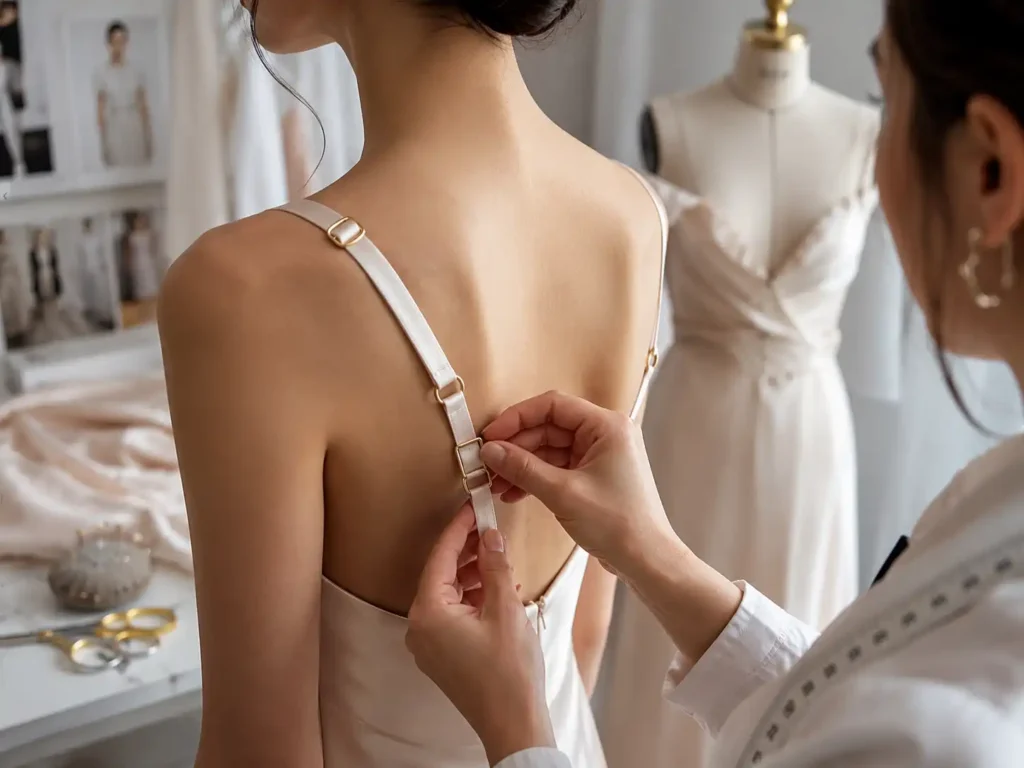
Straps and Shoulder Shape

Lining and Coverage
Zippers and Openings

Hem and Slit Control

Decorative Detail Placement
Waistbands, Closures, and Hidden Support
The waistband is the physical and visual connection between most two-piece tops and bottoms. Width, stability, comfort, rise, closure, and interaction with the top hem must be resolved before bulk production.
Waistband Structure
A clean waistband can be shaped, straight, contoured, faced, elasticated, partially elasticated, or supported with fusible interlining. Selection depends on fabric weight, stretch, silhouette, and intended fit. Structured satin or suiting often needs controlled interlining and pressing, while lightweight resort fabrics may use a softer internal finish. Knit sets require elastic recovery and seam stability. Width and stiffness are checked against the crop top length so the waist area does not appear heavy, roll during wear, or create an unintended gap.
Closures and Wearing Sequence
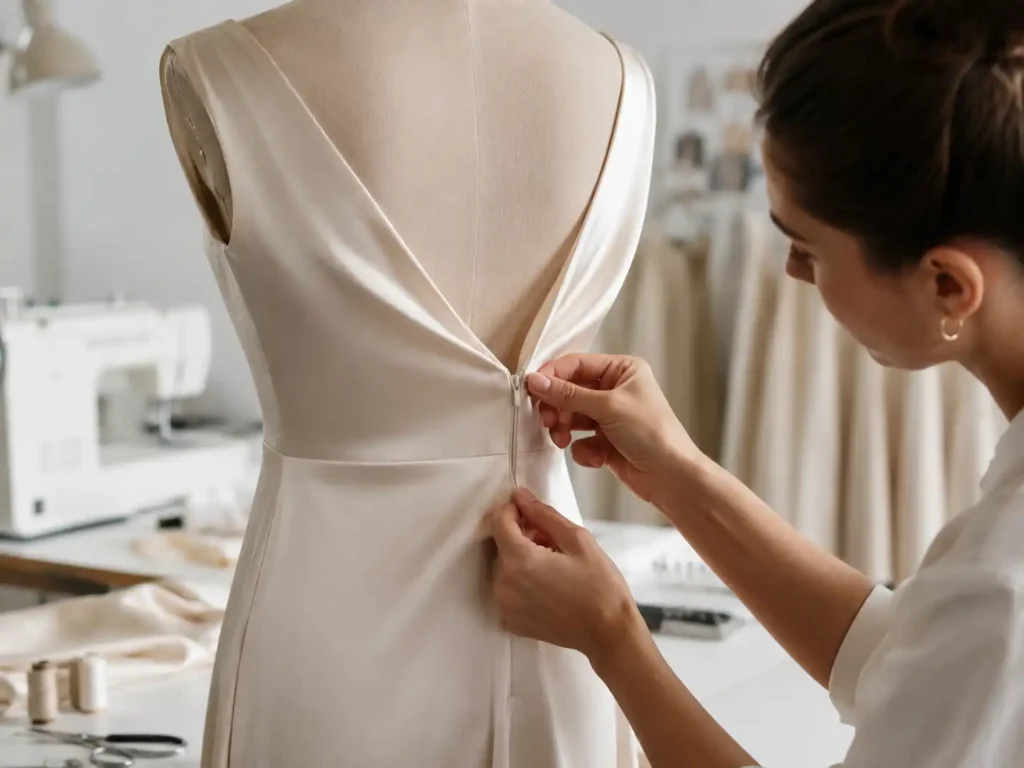
Side zippers, center-back zippers, fly fronts, hooks, buttons, elastic backs, drawcords, and hidden closures change both appearance and ease of dressing. Two closures placed directly above each other can create bulk or discomfort. Jinfeng reviews opening position, zipper length, tape color, hook placement, stress points, seam allowance, reinforcement, and how the wearer puts on each component. For corset sets, the top support system and skirt closure must work together without competing at the same center-back point.
Comfort, Rolling, and Bulk Stability
Waist fit is checked through standing, sitting, walking, and bending. Common risks include rolling, gaping, twisting, pinching, zipper waves, fusible bubbling, elastic tunneling, and waistband edges showing through a fitted top.
Measurement points include waist circumference, high hip, waistband height, front rise, back rise, zipper length, and seam alignment. Corrective comments are recorded in the pattern and construction files before PP approval.

Paired Sampling and Fit Correction
Sampling establishes the commercial standard for both garments. Jinfeng uses paired fitting, measurement review, documented revisions, material confirmation, and PP locking to reduce the gap between approved development samples and bulk production.
Sample Types and Priorities
The development system can support first samples, fit samples, revised samples, photo-ready samples, salesman samples, PP samples, and golden samples. The correct sample type depends on the project stage. A photo sample may prioritize approved appearance for campaign preparation, while a PP sample must represent final fabric, color, construction, trims, labels, and packing direction closely enough to guide bulk production. For 10-30 style collections, sample priority is set by launch importance, fabric readiness, complexity, photo date, and bulk risk instead of pushing every style through one queue.
Revision Rounds by Complexity
A normal style commonly follows one first sample and one revised sample. Medium-complexity styles may require one or two revised samples.
Corset, strapless, evening, sequin, lace, mesh, and other complex structures often need around two revision rounds after the first sample, subject to the actual construction and design changes. If the fabric, structure, or design is replaced substantially, the style is reassessed as a new sample route. Repeated changes can affect cost and timing, so comments are consolidated before each revision.
Timing Depends on Material Readiness
A universal sample promise is unreliable because material and trim readiness can dominate the schedule. Ordinary zippers often require around 3-10 days to source or develop, while special zipper requirements may require 7-25 days. Printed polybags commonly require 7-20 days. Boning specifications may require 5-15 days. Fabric dyeing, printing, lace, sequins, special colors, or custom trims can create separate critical paths. Jinfeng confirms sample timing after reviewing style complexity, fabric availability, trim development, size chart, and required sample type.
Full-Set Fitting and PP Lock
The top and bottom are fitted together from front, side, back, and movement views. Key measurements include bust, upper bust, under bust, waist, high waist, hip, top length, strap length, armhole, neckline depth, waistband height, rise, skirt length, slit height, inseam, and hem width. Corrections are transferred into the pattern, measurement chart, workmanship, and revision record. PP approval locks fabric, color, trims, measurements, construction, labels, hangtags, polybags, carton marks, and packing method before production handover.
Grading, Size Pairing, and SKU Logic
A coordinated set needs two independent grading systems and one shared retail logic. Size labels may match, yet bust, waist, hip, rise, length, stretch, and ease often require different increments across the two garments.
Independent Grading, Coordinated Fit
The top is graded through bust, upper bust, under bust, shoulder, armhole, strap, neckline, waist, and length. The bottom is graded through waist, high hip, full hip, rise, thigh, inseam, skirt length, slit, and hem. Grade rules are reviewed against the silhouette and fabric behavior rather than copied mechanically. A fitted corset top and bias-cut skirt, for example, cannot share the same proportional increase even when both carry sizes XS through XL.
Size Pairing Decisions
Most retail sets pair the same labeled size, such as M top with M bottom. Some programs allow mixed sizing, separate-item sales, or distinct top and bottom stock. The decision affects SKU structure, hangtags, barcodes, inventory, packing, website presentation, and return handling. Jinfeng follows the approved merchandise model and keeps top and bottom style numbers, size codes, and packing instructions clear before bulk production.
A Numeric Example
A program with 1 set style, 4 colors, and 5 sizes creates 20 sellable set SKUs. Because each set contains 2 garments, production and packing must track 40 component combinations before the final set is assembled. Across 15 styles, the same structure can expand to 300 set SKUs and 600 garment components. Clear SKU files, barcode validation, size pairing, and carton allocation prevent avoidable warehouse errors at scale.
MOQ, Quotations, and Cost Drivers
Two-piece set pricing combines the material, construction, labor, finishing, quality, and packing requirements of both garments. A useful quotation separates visible design goals from the cost drivers needed to reproduce them reliably.
MOQ by Style and Color
The standard MOQ starts from 200 complete sets per style/color under suitable material and construction conditions.
One style in three colors therefore normally begins at 600 sets. Twelve styles in two colors at the standard threshold create a 4,800-set program.
|
Custom-dyed, custom-woven, printed, certified, lace, sequin, special-trim, or custom-packaging requirements may carry separate supplier minimums.
The total order quantity cannot replace a material minimum attached to one specific color or style.
What Builds the Unit Cost
- Main materials: Fabric weight, width, consumption, cutting direction, lining, interlining, contrast materials, shrinkage allowance, and wastage.
- Construction: Corset support, ruching, pleating, lace placement, sequins, handwork, print placement, waistband structure, pockets, and closures.
- Development: Pattern work, sample making, revisions, material trials, workmanship validation, and PP preparation.
- Bulk execution: Cutting, sewing time, pressing, inspection, rework allowance, finishing, set pairing, and packing.
- Private label: Labels, hangtags, barcode stickers, SKU labels, polybags, inserts, cartons, carton marks, and warehouse requirements.
- Schedule and logistics: Material lead times, production allocation, testing, inspection windows, split shipments, and delivery method.
Cost Optimization Without Losing the Look
Cost can be adjusted through fabric alternatives, lining decisions, trim substitution, construction simplification, decoration weight, marker efficiency, color consolidation, size ratios, packing choices, or shipment planning.
The objective is to protect the selling silhouette and visual identity rather than remove essential structure. Final pricing is locked only after fabric, trims, measurements, construction, quantities, labels, packing, and schedule are confirmed.


From PP Approval to Bulk Production
Bulk consistency depends on the quality of the handover. Approved patterns, materials, measurements, workmanship, labels, packing, and QC points are transferred into production records before cutting begins.
Production Handover Package
- Final pattern: Approved top and bottom pattern files with revision status and grade rules.
- Measurement standard: Size chart, tolerances, critical measurement points, and full-set fit notes.
- Material standard: Fabric reference, color approval, dye-lot requirements, lining, trims, and approved alternatives.
- Construction standard: Sewing instructions, seam methods, support, edge finish, pressing, decoration, and closure details.
- Branding standard: Label artwork, placement, hangtag, barcode, SKU, polybag, carton, and warehouse instructions.
- Quality standard: Inspection checkpoints, approved sample, defect priorities, measurement control, and packing verification.
Factory and Line Allocation
Styles are assigned according to fabric category, product structure, complexity, quantity, and schedule. Knit, stretch, woven, tailored, satin, mesh, lace, and complex support structures do not follow one production route. Jinfeng uses 6 owned factories, 10+ long-term production partners, 18+ sewing lines, and 6+ flexible lines as a structured system. Allocation is confirmed against the actual style rather than assuming every facility is suitable for every product.
Launch and Delivery Planning
Delivery planning begins from the target launch, campaign, warehouse, or retail receiving date and works backward through material booking, sample approval, PP lock, cutting, sewing, inline checks, finishing, final inspection, packing, and shipment preparation. Complex fabrics, custom colors, special trims, testing, or private-label packing need earlier locking. Multi-style orders may use phased production and two or more shipment windows when it reduces launch risk or supports priority SKUs.
Set-Specific Quality Control
Quality control covers each garment separately and the complete set together. The inspection structure follows material, cutting, sewing, measurement, finishing, pairing, labeling, packing, and shipment preparation rather than relying only on a final visual check.
| QC Stage | Top Controls | Bottom Controls | Full-Set Controls |
|---|---|---|---|
| Material inspection | Color, weight, stretch, recovery, surface, defects | Color, weight, stretch, recovery, surface, defects | Same approved batch, coordinated handfeel, lining and trim match |
| Cutting review | Pattern, grain, direction, print, component count | Pattern, grain, direction, print, component count | Color-lot grouping, motif relationship, component traceability |
| Inline sewing | Neckline, bust, straps, armholes, closures, support | Waistband, hip, rise, zipper, slit, pockets, hems | Proportion, shared details, color appearance, workmanship alignment |
| Measurement | Bust, waist, length, strap, neckline, armhole | Waist, hip, rise, skirt/trouser length, slit, inseam | Same labeled size, approved visual gap, coordinated grade balance |
| Finishing | Pressing, seam appearance, decoration, stains, threads | Pressing, crease, hem, decoration, stains, threads | Shade under viewing light, complete pair, balanced presentation |
| Packing check | Label, size, style, barcode, component identity | Label, size, style, barcode, component identity | Correct pair, no missing piece, shared SKU, polybag and carton accuracy |
Measurement and Tolerance Control
Critical points are selected according to the style rather than copied from a generic checklist. Bust, waist, hip, top length, strap length, armhole, neckline, waistband height, rise, skirt length, slit, inseam, and hem can all affect the paired appearance. Out-of-tolerance findings are reviewed for pattern, sewing, pressing, material, or measurement-method causes before corrective action.
Packing Error Prevention
Set-level packing verifies style number, color, size, top component, bottom component, labels, hangtags, barcode, SKU, polybag, quantity, and carton allocation. Multi-color and multi-size orders are checked against the approved SKU list. Barcode scanability and label placement are reviewed before warehouse delivery preparation, helping prevent wrong-size pairs, missing garments, repeated labels, or carton mismatches.
Private Label and Retail-Ready Packing
Woven and Size Labels
Care and Fiber Labels
Hangtags and Strings
Barcode and SKU Labels
Polybags and Inserts
Cartons and Warehouse Marks
Capacity, Delivery, and Repeat Orders
Large fashion programs require more than nominal factory capacity. Jinfeng combines product allocation, merchandising follow-up, QC coverage, finishing, packing, and record management to support initial production, phased delivery, and future reorders.
Multi-Style Production Structure
The production system includes 6 owned women’s fashion factories, 10+ long-term satellite production partners, 18+ sewing lines, 6+ flexible lines, 12+ merchandisers, 15+ QC inspectors, and 30+ finishing and packing workers. Monthly capacity exceeds 100,000 pieces across the overall product mix. Capacity is allocated by style, fabric, complexity, quantity, and timing; one complex corset or sequin program does not receive the same output assumption as a simpler knit or woven set.
Phased Delivery for Launch Priorities
For a 10-30 style collection, production can be grouped by material family, approval status, hero SKU, and warehouse need. An initial delivery may cover campaign-critical or early-launch styles, followed by a second batch for remaining colors or more complex products. Air and sea options, packing completion, inspection windows, and warehouse receiving dates are reviewed as part of the delivery plan rather than after production finishes.
Repeat-Order Records
Jinfeng can retain pattern records, measurement files, fabric references, color notes, trim cards, workmanship instructions, label files, packing requirements, carton methods, golden-sample references, and historical QC notes. Reorders can start more efficiently from a proven standard, while new fabric lots, colors, packaging artwork, quantities, and delivery conditions still receive confirmation before production.

Two-Piece Set Project Cases

US Fast Fashion Program
- Development control: Styles were grouped by knit, satin, and woven construction, then prioritized by campaign date and technical risk.
- Fit control: Top length, waistband height, bust, hip, skirt length, and trouser rise were reviewed in full-set fittings.
- Bulk control: Fabric lots, paired size codes, SKU labels, and complete-set packing were included in the QC and packing instructions.
- Delivery structure: The program moved through two planned delivery windows so campaign-critical styles reached the warehouse first.

UK Partywear Collection
- Sampling route: The complex styles followed a first sample and approximately two revision rounds before PP approval.
- Material control: Satin shine direction, mesh transparency, lining color, lace placement, and sequin skin contact were confirmed before bulk cutting.
- Workmanship control: Boning position, cup alignment, edge finish, slit height, waistband stability, and decoration attachment were defined in production files.
- Packing control: Top and bottom components, shared set SKU, hangtags, barcodes, and polybag identity were checked before carton allocation.

Australian Resort Assortment
An Australian resortwear brand developed a 21-style collection totaling 48,000 complete sets.
Products included printed shirts with wide-leg trousers, halter tops with maxi skirts, and camisoles with shorts in rayon, viscose, chiffon, and linen blends. Five sizes and six print families created significant material, shrinkage, print-direction, and packing complexity.
- Fabric preparation: Drape, transparency, shrinkage, print clarity, and color relationship were reviewed before sample approval.
- Pattern control: Shoulder ease, halter security, waistband position, trouser rise, hem sweep, and maxi length were adjusted by style family.
- Production grouping: Print and fabric families were allocated in controlled groups to reduce shade, handfeel, and direction variation.
- Shipment plan: The collection was split into coordinated batches aligned with launch timing and warehouse receiving priorities.
Frequently Asked Questions
Start Your Two-Piece Set Project
Send your development files to Kelly for an initial project review. The strongest starting package includes both garments, quantity by style/color, fabric direction, intended size range, color or print plan, private-label requirements, target market, and launch date. Jinfeng Apparel will review product structure, fit interaction, material conditions, MOQ, sample route, production risks, branding, packing, and the information needed for a more accurate quotation. Clear inputs allow pattern, fabric, sampling, and bulk planning to begin from the same commercial goal.
- Reference files: Tech pack, sketch, line sheet, original sample photos, front and back images, or construction notes.
- Order plan: Styles, colors, quantity per style/color, size range, target launch, and expected delivery structure.
- Material direction: Fabric type, color standard, print, lining, trims, stretch, handfeel, and testing requirements.
- Brand delivery: Woven labels, care labels, hangtags, barcodes, SKU labels, polybags, cartons, carton marks, and warehouse labels.


