 Skip to content
Wide Leg Jumpsuit Manufacturer
Custom wide-leg jumpsuit development for fashion brands that require controlled fit, clean drape, reliable bulk production and retail-ready private label delivery.
Jinfeng Apparel develops wide-leg jumpsuits from reference image, original sample, sketch or tech pack. Every project is reviewed as a connected upper-body and trouser structure, with attention to torso length, waist placement, front and back rise, hip ease, inseam, leg opening and closure access. The goal is not only a visually strong sample, but a repeatable production standard that can move through size grading, PP approval, bulk sewing, measurement control, finishing and branded packing.
- Medium-complexity jumpsuit first-sample reference: 12-18 days after fabric, trim and development details are confirmed.
- Revised sample or PP sample reference: normally 7-15 days, depending on comments, material changes and construction updates.
- MOQ starts from 200 pcs per style/color, subject to fabric, color, trim, construction and packing requirements.
- Fit review covers the connected torso, rise, waist, hip, thigh, inseam and wide-leg proportion rather than checking isolated flat measurements.
Manufacturing Capacity for Scalable Jumpsuit Programs
Since 2008
6 Owned Factories
10+ Production Partners
2 Sample Rooms
7+ Pattern Makers
15+ QC Inspectors
Built for Established Fashion and Retail Programs
Global Fashion Brands
Premium Ecommerce Labels
Occasionwear Programs
Resortwear Collections
Sourcing Teams
Private Label Groups
Wide Leg Jumpsuit Styles We Develop

Long Sleeve Draped
- Best suited to modest occasionwear, workwear and autumn collections.
- Key risk: restricted arm movement, back drag lines and waist displacement.

Pleated Wide Leg
Pleats add volume without relying only on a wider leg opening. Pleat depth, fold direction, hip release and fabric thickness determine whether the leg hangs cleanly or builds bulk at the waist. Soft woven crepe, lightweight suiting and pleated polyester can work well.
Marker planning must respect grain and paired symmetry. Sampling confirms whether pleats open during walking, remain balanced at side view and return cleanly after pressing and packing.
- Best suited to event, elevated daywear and editorial collections.
- Key risk: excessive waist bulk, uneven pleats and distorted leg balance.

Utility Wide Leg
- Best suited to casual, street and transitional collections.
- Key risk: heavy pocket drag, hardware distortion, wash shrinkage and twisted legs.

Stretch Knit Wide Leg
- Best suited to travel, lounge, body-conscious and day-to-night collections.
- Key risk: growth, bagging, side-seam torque and uneven hem drop.

Tailored Wide Leg
- Best suited to office, contemporary retail and day-to-evening collections.
- Key risk: rigid upper body combined with insufficient sitting and stride allowance.

Satin Occasion Jumpsuit
- Best suited to party, wedding guest and evening edits.
- Key risk: shine mismatch, zipper waves, drag lines and visible press marks.

Halter Resort Jumpsuit
Halter styles shift support toward the neck and upper chest, so neckline depth, bust coverage, neck pressure and back opening need controlled balance.
Rayon, viscose, crepe and linen blends can create a relaxed wide-leg drape. The pattern must prevent the upper body from pulling upward when the wearer sits or raises her arms. Strap length, facing, neckline stabilization and back closure are developed with the torso length rather than treated as separate details.
- Best suited to resort, vacation and summer capsule programs.
- Key risk: neck strain, side exposure, low armhole coverage and a lifted crotch.

Strapless Structured Jumpsuit
- Best suited to occasion, prom, party and premium evening collections.
- Key risk: bodice slipping, cup displacement, zipper strain and limited torso movement.
Product Direction for Different Fashion Markets

Party and Occasion

Resort and Vacation

Office to Evening

Premium Ecommerce

Club and Eventwear

Retail Collections
Fabric Options That Build the Right Drape
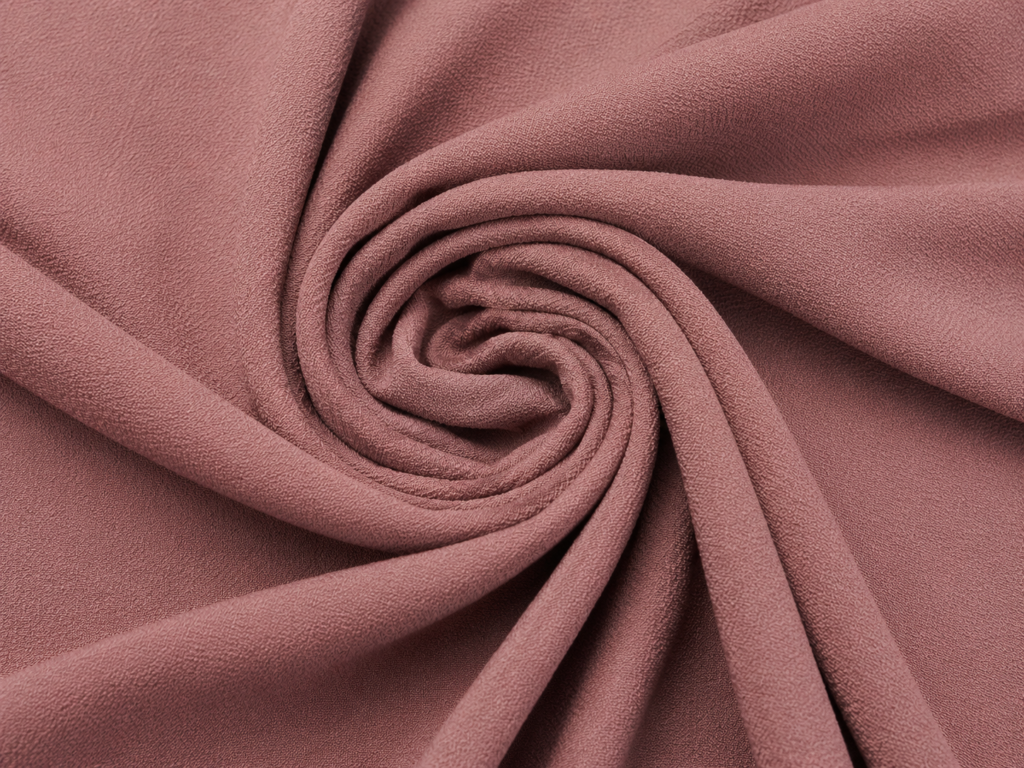
Woven Crepe
Woven crepe is a dependable direction for tailored, occasion and office wide-leg jumpsuits.
Many projects are reviewed around 170-260 GSM, depending on yarn, weave and stretch. It offers body, drape and a relatively controlled surface, but heavier crepe can add waist bulk and lighter crepe may require lining. Sampling checks seam slippage, pressing response, opacity, stretch recovery where applicable and whether the leg falls vertically without clinging.
- Review: GSM, opacity, recovery, seam slippage and pressing marks.
- Suitable for: tailored, wrap, long-sleeve and occasion silhouettes.
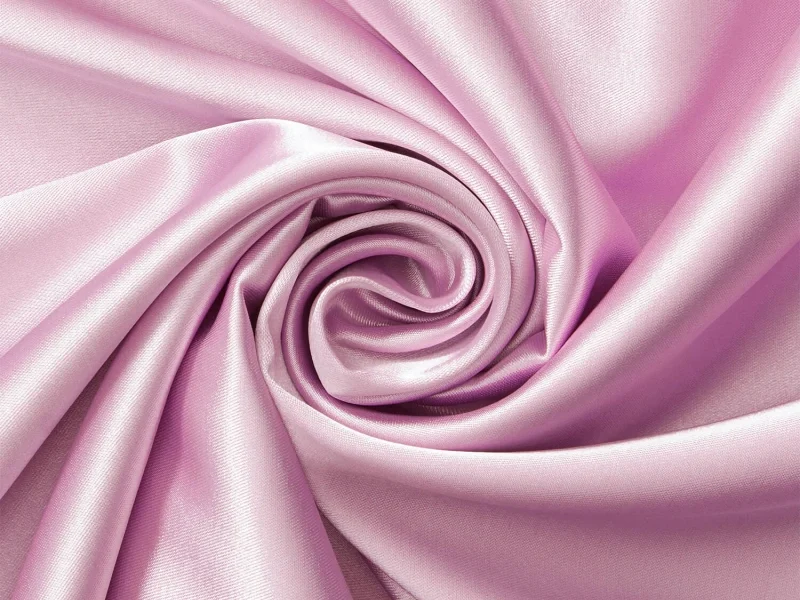
Stretch Satin
- Review: face direction, snagging, color shade, recovery and zipper ripple.
- Suitable for: occasion, wedding guest, party and photo-led programs.

Rayon and Viscose
- Review: shrinkage, skew, colorfastness, print repeat and hang drop.
- Suitable for: resort, vacation, wrap and relaxed halter silhouettes.

Linen Blends
- Review: wrinkle level, shrinkage, slub consistency, opacity and seam strength.
- Suitable for: resort, utility, summer tailoring and natural-texture collections.

Suiting Fabrics
- Review: fusibility, pressing response, seam bulk, stretch and crease retention.
- Suitable for: tailored office, formal and city collections.

Ponte Knit
- Review: recovery, weight, spirality, width and seam stabilization.
- Suitable for: body-conscious, travel, evening and structured knit directions.

Jersey and Rib
- Review: stretch percentage, recovery, torque, growth and seam appearance.
- Suitable for: lounge, travel, casual and soft body-conscious styles.

Lightweight Denim
- Review: wash shrinkage, shade, torque, hardware, seam bulk and color transfer.
- Suitable for: casual, workwear-inspired and street collections.
Critical Measurements for Wide Leg Jumpsuit Fit
A connected one-piece garment cannot be approved by bust, waist and hip alone. The table links core measurements with the commercial failure they prevent, the fitting action used during development and the production control required after PP approval.
| Measurement Point | Commercial Risk | Sample Review | Bulk Control |
|---|---|---|---|
| HPS to Waist | Waist seam sits too high or low and changes body proportion. | Front, side and back balance on the fit model. | Final pattern, size chart and waist-seam measurement. |
| HPS to Crotch | Upper body pulls, sags or restricts sitting. | Standing, sitting, raised-arm and forward-reach tests. | Key-point measurement against PP and Golden sample. |
| Front Rise | Front crotch pulls or creates excess folds. | Profile view, walking and seated posture. | Pattern version and tolerance check by size. |
| Back Rise | Seat feels tight, back waist drops or crotch hangs. | Sitting, bending and rear-view balance. | Back-rise measurement and seam-shape check. |
| Bust and Armhole | Gaping, compression or exposed side area. | Natural posture plus arm movement. | Bust, armhole and neckline measurement audit. |
| Waist and Hip | Restricted movement, twisting or weak silhouette. | Walking, sitting and side-seam balance. | Waist/hip measurements and paired-panel control. |
| Thigh Ease | Leg binds during stride even when hip fits. | Long-step and stair-movement test. | Thigh width by size and seam allowance control. |
| Inseam and Outseam | Incorrect finished length or uneven side balance. | Fit with intended footwear and fabric drop. | Size-specific length check after pressing. |
| Leg Opening | Silhouette looks narrow, uncontrolled or uneven. | Front and side drape review while walking. | Paired-leg measurement and hem symmetry. |
| Closure Opening | Difficult dressing or zipper strain. | Full dress and undress test. | Zipper length, opening, function and reinforcement. |
Balancing Torso Length, Crotch and Movement
The strongest wide-leg silhouette still fails when the body feels compressed, the waist shifts or the wearer cannot sit comfortably. Fit development therefore connects vertical measurements, circumference, closure access and movement rather than approving a static front view.
Torso Length Controls the Entire One-Piece Balance
HPS-to-crotch is a central reference because it links the upper body to the trouser section. Too little length pulls the neckline, armhole, waist and crotch upward; too much length creates a dropped waist, loose back and low seat. The correction cannot be made by adding length at one random seam. Pattern review considers where the wearer needs length: upper chest, back length, waist-to-hip section, front rise or back rise. A wrap front, halter neck, long sleeve or strapless bodice may react differently even when the total HPS-to-crotch number is similar. Fit photos are reviewed from front, side and back, followed by sitting and raised-arm tests. Approved adjustments are transferred into the pattern, measurement chart and grade rule so bulk sizes do not repeat the original imbalance.
Front and Back Rise Need Separate Decisions
A single combined crotch measurement can hide an incorrect curve. Front rise controls the front waist-to-crotch path, while back rise must accommodate seat depth and sitting posture. When front rise is too short, diagonal pulling and discomfort appear at the front; when back rise is short, the back waist can drop and the seat seam becomes strained. Excess length creates folds and a dropped appearance. The pattern maker reviews crotch shape, hip angle, thigh ease and fabric stretch together. Woven crepe, satin, linen blend and ponte require different ease because they recover differently.
After the first fit, comments should identify the exact area and amount of change rather than using broad notes such as “make the crotch better.”
Movement Testing Protects Wearability and Returns
Fit approval includes more than standing posture. The wearer should sit on a standard chair, take a long stride, raise both arms, reach forward, bend slightly and complete a full dressing and undressing cycle.
These actions reveal hidden tension in the back, armhole, waist, rise and closure. The leg must move freely without pulling the waist downward, while the wide hem should not tangle during a normal stride.
Closure testing confirms that the wearer can access the zipper, snaps or neck fastening without damaging the garment.
Any correction is checked again after pressing because heat, hanging and fabric weight can change the final drop. Movement notes become measurable production instructions wherever possible.

Design Details We Develop and Control

Neckline and Support
- Control points: neck drop, edge tension, coverage and symmetry.
- Risk: gaping, rolling, exposure and distorted front balance.

Straps and Halter Ties
- Control points: length, width, hardware, reinforcement and comfort.
- Risk: uneven bust height, neck pressure, slipping and broken attachment.

Sleeves and Armholes
- Control points: armhole depth, bicep, sleeve pitch and shoulder balance.
- Risk: restricted reach, underarm exposure, sleeve torque and back pulling.

Waistbands and Belts
- Control points: position, finished width, tension, loop placement and buckle fit.
- Risk: rolling waistbands, uneven ties, dropped waist and distorted side seams.

Pleats and Gathers
- Control points: depth, direction, position, release and pressing.
- Risk: uneven volume, bulky waist, collapsed pleats and mismatched legs.

Pockets
- Control points: placement, opening, bag size, reinforcement and visibility.
- Risk: gaping, drag, show-through, torn openings and asymmetric hips.

Zippers and Closures
- Control points: length, opening access, stabilization, color and function.
- Risk: difficult dressing, zipper waves, broken stops and seam strain.

Lining and Internal Finish
- Control points: lining ease, length, attachment, support and skin comfort.
- Risk: restricted movement, visible lining, twisting, heat discomfort and pulling.
Pattern Development Across Sizes and Heights
Jinfeng Apparel develops US, UK, EU, AU and alpha-size patterns according to the brand size chart, base size, grade rules, fabric stretch and fit preference. Wide-leg jumpsuits need connected grading because vertical and circumference changes influence one another.
Base Size and Grade Rule Alignment
Development normally begins from the nominated base size rather than an assumed universal medium. The pattern team compares bust, waist, hip, HPS-to-waist, HPS-to-crotch, front rise, back rise, thigh, inseam and leg opening with the target fit. Alpha sizing such as XS-XL can be supported, while extended sizing follows the supplied chart and grade philosophy. Circumference growth alone is not enough. Larger sizes may need added front or back rise, adjusted armhole coverage, stronger bust support and a different waist-to-hip distribution. Smaller sizes may need reduced torso length and carefully controlled neckline depth. The final grade rule is approved as a system, not a list of unrelated increments.
Petite and Tall Length Planning
Petite and tall versions require more than shortening or lengthening the inseam. A tall wearer may need added upper-body length, rise depth and sleeve length before any trouser extension.
A petite wearer may need reduced HPS-to-waist, waist-to-crotch and neckline depth so the garment does not hang low on the body. The ratio depends on target market data and the brand block. Separate length versions can share design language while using distinct vertical specifications. When a program includes regular, petite and tall fits, sample priority should start with the regular base, followed by the length variant carrying the highest commercial importance.
Extended Size Fit and Support
Extended-size development should protect mobility and visual proportion.
Bust support, armhole coverage, waist placement, seat depth, thigh ease, closure access and strap width are reviewed against fabric stretch and garment weight. A strapless or deep-V style may need stronger internal support, while a soft resort jumpsuit may need more controlled neckline and armhole coverage. Wide legs should remain balanced with the body rather than expanding at the same rate as every circumference.
Fit-model comments, movement tests and measurement tolerances should be recorded by size range. Jinfeng Apparel can work with brand-specific extended charts rather than imposing a generic plus-size block.

Wide Leg Jumpsuit Sample Development
Sampling converts a concept into a production-ready standard. The development route covers reference review, material direction, pattern engineering, fit verification, revision records, PP approval and Golden sample control. Timelines begin after essential materials and instructions are confirmed.
Project Input and Feasibility Review
A project can start from a tech pack, reference photo, sketch, original sample, line sheet or a combination of materials. The development team reviews silhouette, neckline, torso structure, waist position, rise, leg shape, fabric behavior, trims, size range, target quantity, target launch and private label requirements. Missing information is identified before pattern work begins. When a reference image depends on an unsuitable fabric or hidden internal structure, alternative recommendations are discussed early. Early feasibility review reduces repeated samples caused by incompatible materials, unrealistic openings or unsupported bodice construction.
First Sample and Fit Review
A medium-complexity jumpsuit first sample is normally referenced at 12-18 days after confirmed fabric, trims and development instructions. The first sample is used to verify structure, not treated automatically as the final bulk standard. Internal checks cover core measurements, symmetry, seam construction, closure function, standing balance and basic movement. Fit photos or video can be prepared for review before courier dispatch when appropriate. Brand comments should identify exact measurements, locations and visual targets. General comments are translated into measurable pattern or construction changes by the development team.
Revised Sample and PP Approval
Revised samples and PP samples are normally referenced at 7-15 days, depending on the number of corrections, material changes and trim readiness. A revised sample confirms selected updates; a PP sample confirms the final production standard using approved fabric, color, trims, labels and construction.
Late changes after PP approval can affect cost, schedule, material consumption and quality risk, so the approval record should be complete. Key projects may use a Golden sample sealed for production, QC, repeat orders and dispute reference.
Production Files After Approval
Approved comments are converted into controlled files rather than left in chat history. The production package may include the final pattern, size chart, grade rule, BOM, fabric approval, trim approval, sewing instruction, pressing notes, QC checklist, label placement, folding method, barcode detail and packing instruction. Version control is essential when several samples or colors are developed in parallel. A production team should receive one approved standard, not multiple conflicting samples. Repeat orders can then restart from recorded pattern, fabric, trim and packing references subject to current material confirmation.
Workmanship That Holds the Wide Leg Silhouette
Wide-leg jumpsuit workmanship must preserve upper-body support, waist balance, crotch strength, leg symmetry and clean finishing. The sewing plan is developed around fabric behavior and load points instead of applying one generic construction to every style.
Upper Body Structure and Edge Control
Necklines, armholes, straps and bodice edges receive stabilization suited to the fabric. Stay tape, clear elastic, fusing, facing or lining may be used according to design and stretch. Stitch length, needle size and seam method are tested on the approved fabric because satin, crepe, ponte and viscose react differently. Strap and halter attachment points are reinforced without creating visible bulk. Wrap fronts and deep necklines need clean overlap and controlled edge tension. Internal cups, boning or elastic should remain secure and comfortable. Bulk inspection compares edge shape and pair symmetry against the approved sample.
Waist Seam, Crotch and Load-Bearing Areas
The waist seam connects two garment systems and can carry tension from both the bodice and trouser section. Seam allowance, reinforcement and elastic or waistband construction are selected according to garment weight and movement. Crotch seams require adequate stitch security, smooth curvature and compatible stretch. Over-tight sewing can cut into the fabric; loose construction can open under sitting stress. Bar tacks or reinforcement may be added at pocket openings, zipper ends and stress points. Inline checks focus on seam shape, skipped stitches, puckering, balance and whether the garment retains approved ease after sewing.
Paired Legs, Pleats and Hem Balance
Both legs must be cut, sewn and pressed as a matched pair. Grain direction, print orientation, pleat depth, inseam length, outseam length and leg opening are controlled from cutting onward. A small mismatch at the waist can grow into visible rotation at the hem.
Wide legs also reveal uneven feed, side-seam torque and pressing distortion. Pleats are notched and pressed according to the approved direction. Finished hems are checked on a level surface and, where fabric drop is significant, after a hanging period. Measurement alone is combined with front and side visual review.
Finishing, Pressing and Pack Recovery
Pressing shapes the final silhouette and can also damage fabric when temperature or pressure is unsuitable. Satin needs protection from shine marks; viscose and linen blends need controlled moisture and relaxation; ponte requires seam flattening without stretching. Loose threads, chalk, oil, needle marks and surface contamination are removed before final inspection. Folding method is selected to reduce deep creases across the bodice, waist and wide leg. Carton compression should not destroy the approved drape. Pack-recovery checks confirm that the garment can be steamed or hung back into the intended shape after transport.
From Design Review to Retail-Ready Delivery

Project Review

Fabric Direction

Pattern Development

First Sample
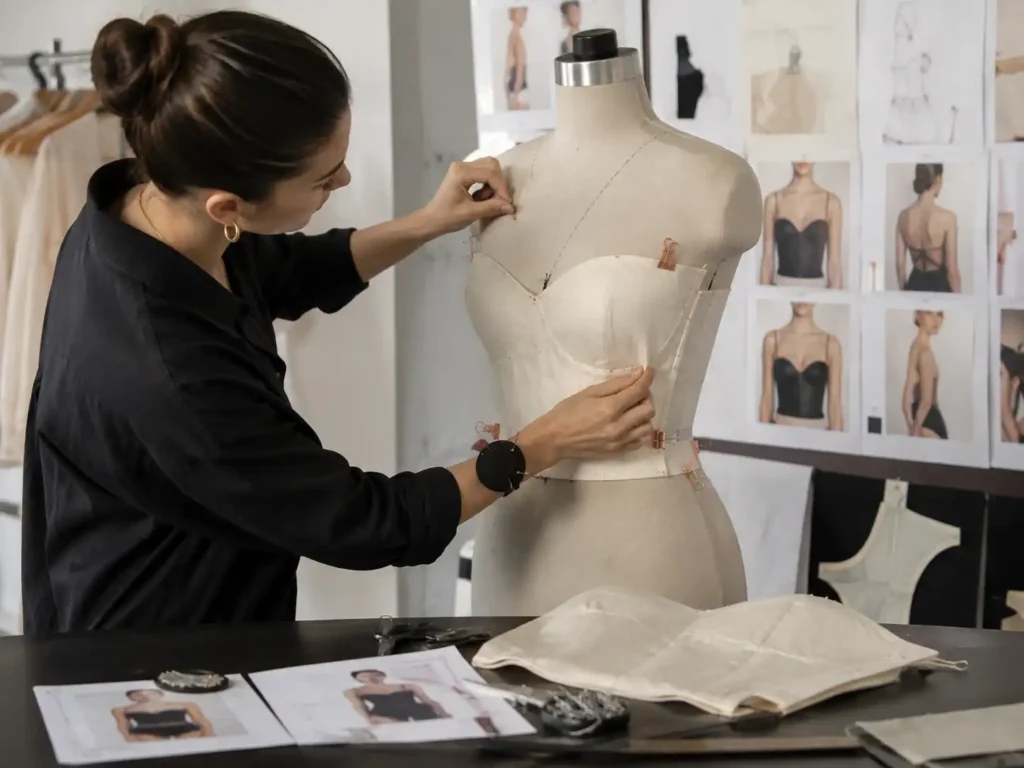
Fit Revision

PP Approval

Bulk Production
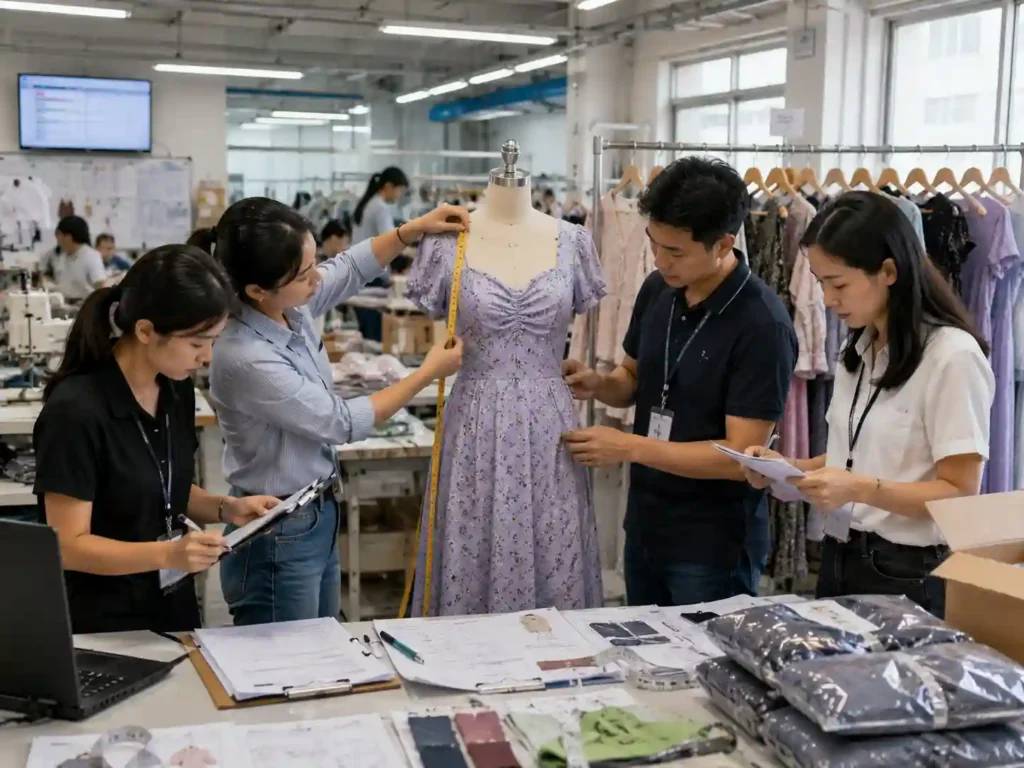
Quality Control

Packing and Delivery
Quality Control for Fit and Bulk Consistency
Inspection follows the approved PP sample, Golden sample where used, size chart, BOM, sewing instruction and packing standard. Wide-leg jumpsuit QC gives extra attention to connected vertical measurements, rise comfort, paired-leg symmetry, fabric drape and closure function.
| Control Stage | Main Checks | Wide-Leg Focus | Records |
|---|---|---|---|
| Incoming Fabric | Color, GSM, width, defects, hand feel, stretch, shrinkage and lot separation. | Drape, recovery, opacity, face direction and approved batch. | Fabric inspection and approval record. |
| Cutting | Marker, grain, shade grouping, notches, pair count and panel defects. | Matched legs, pleat notches, direction and left-right pairing. | Cutting check and bundle identification. |
| Inline Sewing | Seams, stitch security, zipper, pockets, straps, lining and reinforcement. | Waist balance, crotch shape, leg torque and stress points. | Inline report and correction follow-up. |
| Measurement | Approved key points by size and tolerance. | HPS-to-waist, HPS-to-crotch, rise, hip, thigh, inseam and opening. | Measurement report by inspection sample. |
| Appearance | Symmetry, puckering, stains, shine marks, pressing and loose threads. | Front-side-back balance, pleat equality and hem level. | Finished garment appearance check. |
| Function | Zipper, snaps, hooks, adjusters and belt hardware. | Dressing access, closure strain and movement comfort. | Function test record. |
| Labels and Packing | Main label, size label, care label, hangtag, barcode, polybag and folding. | Correct style-color-size match and crease protection. | Packing audit and carton record. |
| Final Inspection | Quantity, workmanship, measurements, appearance and packing under agreed AQL. | Critical fit points and paired-leg consistency. | Final inspection report or third-party coordination. |
OEM, ODM and Private Label Support
OEM Development
ODM Development
Private Label Delivery
Private label support covers main labels, size labels, care labels, hangtags, barcode stickers, polybags, tissue, warning text, carton marks and packing ratios.
Artwork, language, fiber content and placement are confirmed before production. Labels and packing are checked against style, color, size and PO information so retail and warehouse requirements remain aligned.
MOQ, Cost and Quotation Factors
Garment MOQ
Fabric MOQ
Construction Cost
Trim Development
Size and Color Mix
Schedule and Delivery
Support for Multi-Style Brand Programs
Style Clustering
Sample Priority
Colorway Control
Size Architecture
Factory Allocation
Split Delivery and Reorder
Wide Leg Jumpsuit Production Cases

US Premium Ecommerce Program

Australian Resort Collection
Program scale: 14 styles and 28,800 pcs for a resort and vacation drop. Five wide-leg jumpsuits represented 9,200 pcs in viscose twill, linen-viscose blend and a custom placement print.
The main risks were shrinkage, print position, side-seam torque and excessive wrinkling after carton packing. Fabric relaxation and shrink tests were completed before final pattern release. The print style used controlled marker placement at the front bodice and upper leg, while the linen blend received revised seam allowance and pressing instructions. A hanging check was added before final hem approval because the fluid viscose continued to drop after sewing.
The packing trial compared two folding methods and selected the option with fewer waist and thigh creases. Bulk inspection tracked fabric lot, shrink reference, print placement, inseam, leg opening, hem level and carton ratio. Delivery was grouped by launch priority, allowing campaign styles to move first while later colors completed final packing. Main result: controlled length and print placement across three fabric behaviors. Commercial value: resort drape preserved after transport and steaming.

US Occasionwear Group
Why Fashion Brands Choose Jinfeng Apparel
Reliable manufacturing comes from linked decisions rather than isolated claims. Product knowledge, documented approvals, suitable factory allocation, quality follow-up and design protection help established brands move from sample development into stable production.
Product-Specific Development, Not Generic Sewing
Wide-leg jumpsuits receive dedicated review of torso length, front and back rise, waist, hip, thigh, inseam, opening, closure access and movement. Fabric selection is tied to the intended drape and occasion. Pattern comments are converted into measurable files, reducing the gap between a visually attractive sample and a scalable production standard. The same product-specific approach is applied to tailored, resort, occasion, stretch and utility directions rather than forcing every style through one block or sewing route.
Manufacturing Resources Matched to the Product
Six owned womenswear factories and more than ten long-term satellite partners provide options for mixed programs. Factory allocation considers fabric, construction, workmanship, quantity and schedule. Two sample rooms, 7+ senior pattern makers, 20+ sample machinists and 15+ QC inspectors support the transition from development to bulk. The value of the network is not the number alone; it is the ability to place different styles in suitable production units while maintaining approved documentation and inspection priorities.
Clear Approval and Production Records
First samples, revised samples, PP samples and Golden samples have different roles. Approved comments are transferred into patterns, size charts, BOMs, sewing instructions, QC checklists and packing instructions. A single approved production package prevents informal comments from circulating as conflicting standards. The same records support repeat orders, seasonal extensions and investigation when an exception occurs. Brands receive a clearer basis for internal approval and vendor management.
NDA and Unreleased Design Protection
Jinfeng Apparel supports NDA-based cooperation and protects tech packs, samples, patterns, material plans, trim details, private label files, quantities, pricing and unreleased designs. Client names and unpublished styles are not used in marketing without authorization. Anonymous process cases can be shared without revealing protected identity or proprietary files. Access to project information is limited to the teams involved in sales, development, pattern, sampling, production, QC, packing and delivery coordination.
Prepare Your Wide Leg Jumpsuit Project
Files and Details to Send
Send the information already available. A complete tech pack is helpful but not mandatory when a clear original sample, sketch or reference is provided. Early quantity and timing information allows the development team to evaluate material supply and sampling priority.
- Reference image, sketch, line sheet, original sample or tech pack.
- Target quantity per style and color.
- Preferred fabric, hand feel, stretch or drape direction.
- Size range and base-size measurements.
- Color plan, print artwork and trim direction.
- Private label, barcode and packing requirements.
- Target launch or required delivery window.
What Our Team Reviews
The review focuses on whether the intended look can be produced consistently at the planned order scale. Risks and alternatives are discussed before sampling so the development route has a clear purpose.
- Torso, waist, rise, hip, thigh, inseam and leg-opening balance.
- Fabric suitability, availability, MOQ, shrinkage and production risk.
- Neckline support, closure access, lining and internal construction.
- Sample type, expected sample timing and revision route.
- Estimated cost drivers and possible material or construction alternatives.
- Factory allocation, production sequence, QC focus and packing needs.
Wide Leg Jumpsuit Frequently Asked Questions

Start Your Wide Leg Jumpsuit Project
Send Kelly the design information already available for an initial project review. A tech pack gives the clearest starting point, while a reference image, original sample or line sheet can also be evaluated when the intended fit, quantity and material direction are explained. Our team will review the wide-leg silhouette, torso and rise requirements, fabric drape, internal support, sample route, MOQ, cost drivers, private label needs and production planning. The reply will identify missing information and the next workable step rather than offering an unsupported price from an image alone. For a faster assessment, include the points below in the message or uploaded files.
- Reference image, sketch, original sample or tech pack.
- Quantity per style/color and expected number of styles.
- Fabric preference, color plan and target hand feel.
- US, UK, EU, AU or brand-specific size range.
- Label, hangtag, barcode, polybag and carton requirements.
- Target launch date or preferred delivery window.


