Dress Manufacturer for Wholesale-to-Retail Fashion Brands

Custom dress development and bulk production built around line sheets, retail calendars, margin targets, SKU accuracy and repeatable delivery.

Jinfeng Apparel supports established fashion brands selling through boutiques, specialty retailers, department-store programs, showroom accounts, brand-owned stores and online channels. Development starts with the collection plan, fabric direction and target cost, then moves through pattern work, sales samples, PP approval, bulk production, QC, retail packing and shipment coordination.

  • Program planning for 10-30 styles and 20,000-80,000 pieces per order.
  • 100,000+ pieces of monthly capacity across 6 owned factories and 10+ long-term production partners.
  • 2 sample rooms, 7+ senior pattern makers and 20+ sample machinists for parallel development.
  • MOQ starts from 200 pieces per style/color, subject to material, trim and construction requirements.

Manufacturing Capacity for Multi-Style Retail Dress Programs

Large wholesale-to-retail programs need more than sewing capacity. They need enough development bandwidth, clear factory allocation and disciplined control across styles, colors, sizes, labels and delivery waves.

Since 2008

Jinfeng Apparel has focused on custom womenswear development and production since 2008, supporting overseas fashion brands with pattern development, fabric sourcing, sample making, bulk production, private-label packing and export coordination.

6 Owned Factories

Six owned women’s fashion factories provide a stable manufacturing base for woven dresses, stretch styles, occasionwear, skirts, jumpsuits and matching sets. Product type, fabric behavior and workmanship requirements guide factory allocation.

10+ Production Partners

More than ten long-term satellite production partners add specialized support for complex fabrics, seasonal volume and replenishment. Partner allocation remains managed through approved standards, project files, PP samples and QC checkpoints.

100,000+ Monthly Capacity

Monthly capacity above 100,000 pieces supports seasonal launches, core replenishment and multi-batch delivery. Available capacity is confirmed against product complexity, fabric readiness, launch dates and current line loading before an order is scheduled.

2 Sample Rooms

Two dedicated sample rooms handle first samples, fit samples, revised samples, photo-ready samples, salesman samples, PP samples and Golden sample sealing for multi-style collection development.

18+ Sewing Lines

More than eighteen sewing lines, including flexible production resources, allow production managers to separate satin, mesh, lace, sequin, knit and standard woven programs instead of forcing every style through one production method.

Built for Established Wholesale and Retail Fashion Programs

Jinfeng Apparel works best with brands that manage structured collections, wholesale accounts, retail calendars, defined quality standards and repeat-order plans.

Best Program Fit

A strong fit includes fashion brands, boutique chains, specialty retail labels, department-store suppliers, brand groups, sourcing teams and private-label programs with clear line sheets, seasonal quantities, sales-sample requirements and bulk delivery dates. The manufacturing model supports multi-style development, brand-specific sizing, private labels, retail packing, warehouse documents and ongoing replenishment.

Operating Model

Production is built around custom development rather than open-stock purchasing. Each program begins with product scope, expected quantities, fabric direction, target market, target cost, size structure, private-label requirements and delivery timing. That structure allows quotations, samples, production allocation and QC standards to reflect the brand’s actual retail plan.

What Wholesale-to-Retail Dress Production Really Requires

A wholesale collection becomes commercially usable only when product development, cost, sales samples, bulk consistency, labeling and warehouse delivery work together.

Sellable Collection

A sellable line needs a balanced assortment rather than unrelated samples. Hero styles, dependable core shapes, price-point options and supporting products should be planned around a clear season. Fabric grouping, color stories and size architecture influence both product identity and manufacturing efficiency. Jinfeng reviews the full line sheet before sampling so development priorities remain connected to the intended retail assortment.

Retail-Ready Execution

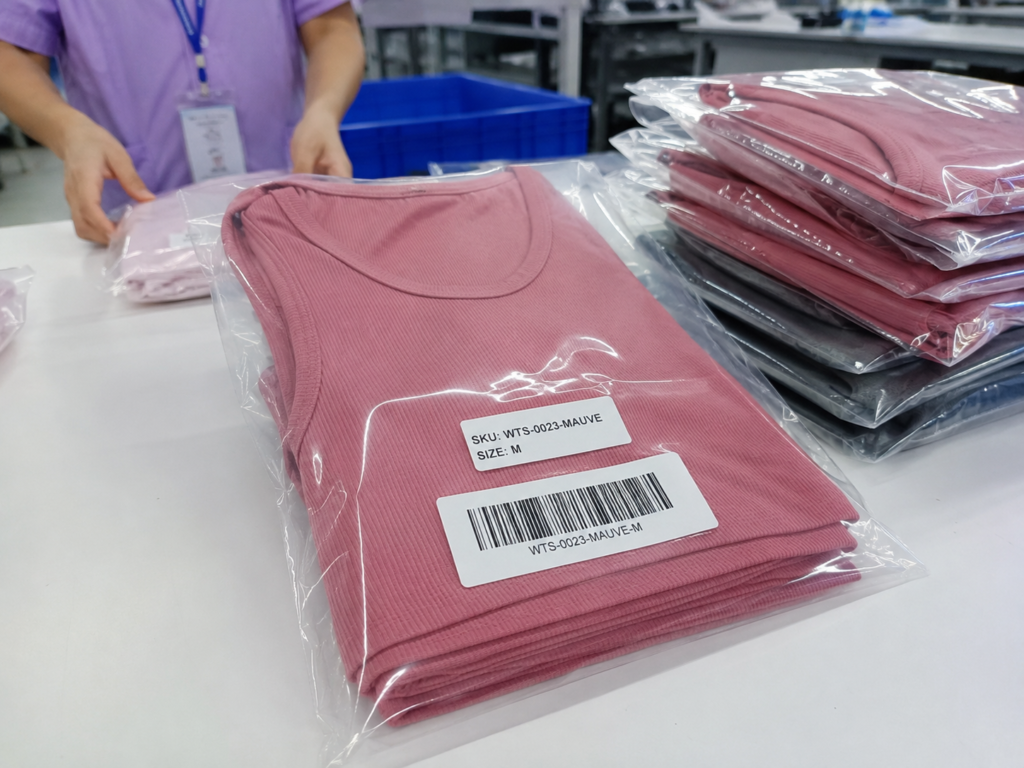
Finished dresses must arrive as identifiable commercial units. Style numbers, size labels, care labels, hangtags, barcode stickers, SKU references, color stickers, polybags, carton marks and packing lists must match the purchase order. Packing accuracy protects warehouse receiving, store allocation and inventory control. Garment quality alone cannot compensate for mixed labels or incorrect carton breakdowns.

Where Retail Dress Programs Lose Margin and Time

Many expensive failures happen between a strong concept and a finished retail order. Early risk review prevents avoidable cost, delay and assortment disruption.

Margin Compression

A design can look commercially attractive while carrying hidden cost in fabric consumption, lining, boning, trim application, sewing time, pressing, packing or testing. Quoting without full construction review creates late price increases or forces quality reductions after sales commitments have already been made.

Sample-Bulk Gaps

Sales samples may look excellent because extra time was spent on a few pieces. Bulk production fails when the approved standard is not translated into a BOM, production pattern, sewing instruction, measurement tolerance, trim approval and QC checklist. The PP sample and Golden sample must remain the production reference.

SKU Confusion

Ten to thirty styles can quickly become dozens of style-color-size combinations. Errors often appear in labels, barcodes, size stickers, color stickers, packing ratios and carton marks rather than in the garment body. A clear SKU table and carton-level reconciliation are required before shipment.

Missed Retail Windows

Late fabric, repeated sample revisions, delayed PP approval and unplanned packaging can push a collection beyond the warehouse receiving date. A realistic calendar works backward from the retail launch and includes sample priorities, fabric arrival, bulk production, QC, packing and transit time.

Fit-Related Returns

A sample size that fits one model does not prove the full size run. Grade rules, stretch behavior, bust-waist-hip balance, strap length, armhole coverage, lining length and garment length need to be checked across the planned size range before bulk cutting.

Unstable Reorders

Reorders become risky when the original fabric, dye lot, zipper, lining, thread color or packing material is unavailable. Historical records reduce uncertainty, but every new batch still requires availability and consistency checks before production starts.

Where Retail Dress Programs Lose Margin and Time

Many expensive failures happen between a strong concept and a finished retail order. Early risk review prevents avoidable cost, delay and assortment disruption.

Margin Compression

A design can look commercially attractive while carrying hidden cost in fabric consumption, lining, boning, trim application, sewing time, pressing, packing or testing. Quoting without full construction review creates late price increases or forces quality reductions after sales commitments have already been made.

Sample-Bulk Gaps

Sales samples may look excellent because extra time was spent on a few pieces. Bulk production fails when the approved standard is not translated into a BOM, production pattern, sewing instruction, measurement tolerance, trim approval and QC checklist. The PP sample and Golden sample must remain the production reference.

SKU Confusion

Ten to thirty styles can quickly become dozens of style-color-size combinations. Errors often appear in labels, barcodes, size stickers, color stickers, packing ratios and carton marks rather than in the garment body. A clear SKU table and carton-level reconciliation are required before shipment.

Missed Retail Windows

Late fabric, repeated sample revisions, delayed PP approval and unplanned packaging can push a collection beyond the warehouse receiving date. A realistic calendar works backward from the retail launch and includes sample priorities, fabric arrival, bulk production, QC, packing and transit time.

Fit-Related Returns

A sample size that fits one model does not prove the full size run. Grade rules, stretch behavior, bust-waist-hip balance, strap length, armhole coverage, lining length and garment length need to be checked across the planned size range before bulk cutting.

Unstable Reorders

Reorders become risky when the original fabric, dye lot, zipper, lining, thread color or packing material is unavailable. Historical records reduce uncertainty, but every new batch still requires availability and consistency checks before production starts.

Dress Categories Built for Seasonal Retail Assortments
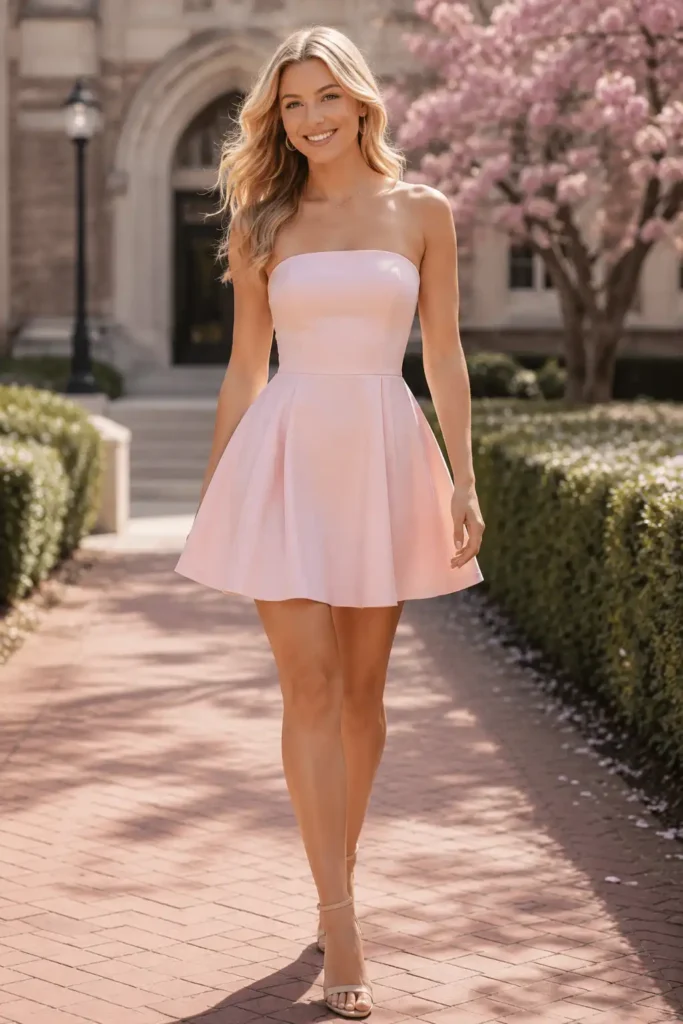
A wholesale dress line needs clear product roles. Each category carries different fabric, fit, workmanship, pricing and quality-control requirements.

Mini Dresses

Mini dresses support party, club, graduation and fashion-led assortments. Development focuses on safe finished length, sitting coverage, waist position, hem stability and lining length. Bodycon minis require controlled stretch and recovery; woven minis need enough movement without losing the intended silhouette. Bulk QC checks garment length, side seam balance, zipper flatness and left-right symmetry.

Midi Dresses

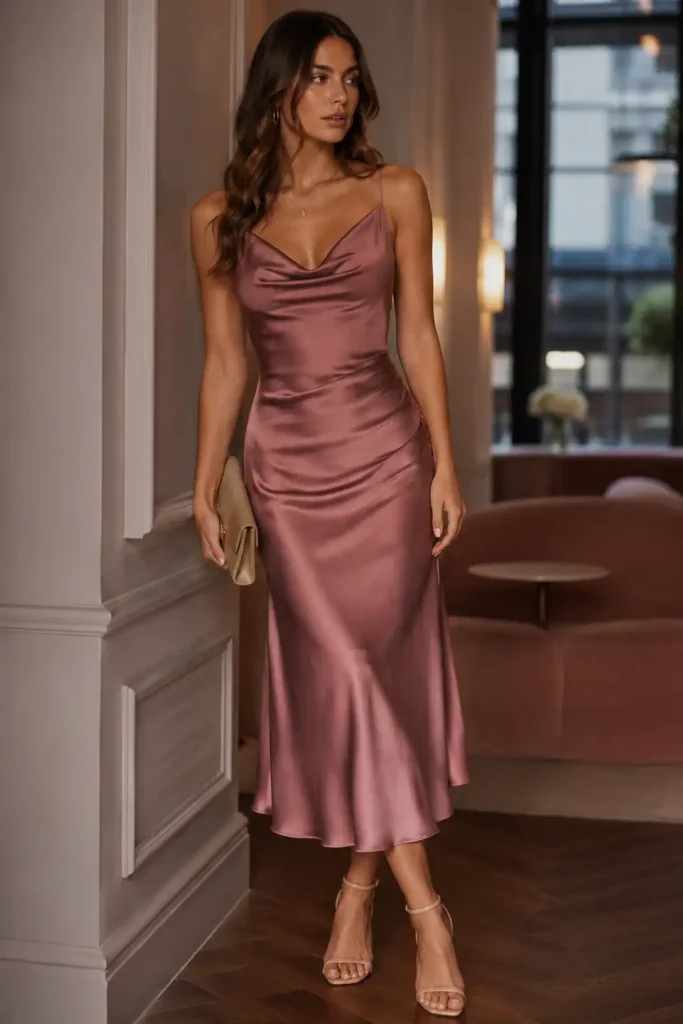
Midi styles often become dependable retail core products because they work across occasion, office-to-evening and cocktail collections. Waist position, skirt proportion, slit height and hem balance determine whether the shape looks modern or visually heavy. Satin and soft-woven versions also require pressing control so the garment reaches the retailer without harsh creases or distorted seams.

Maxi Dresses

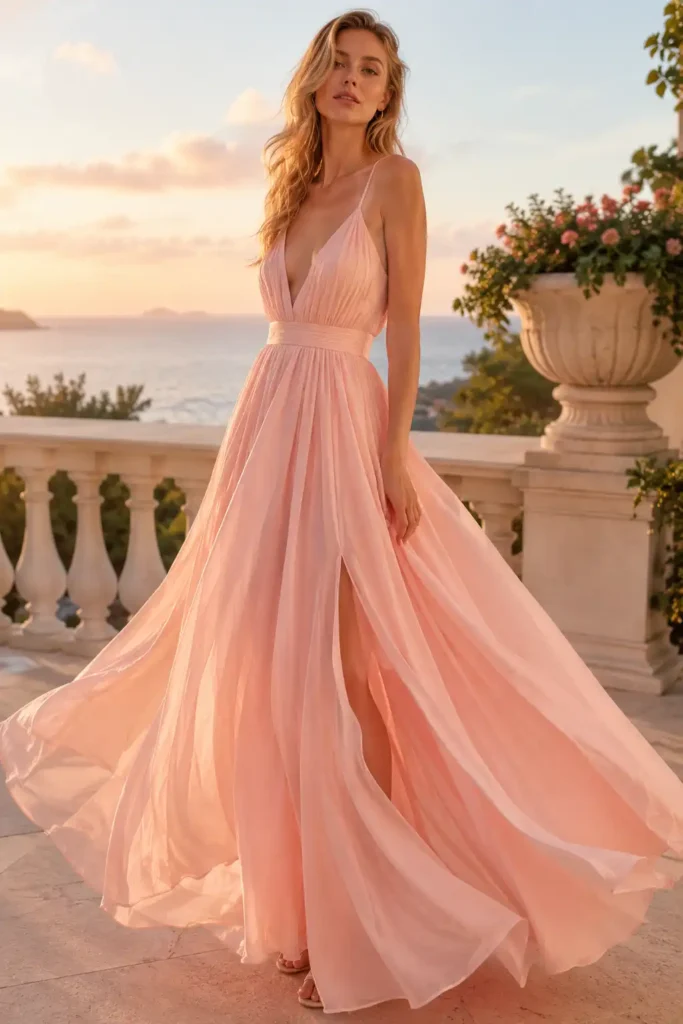
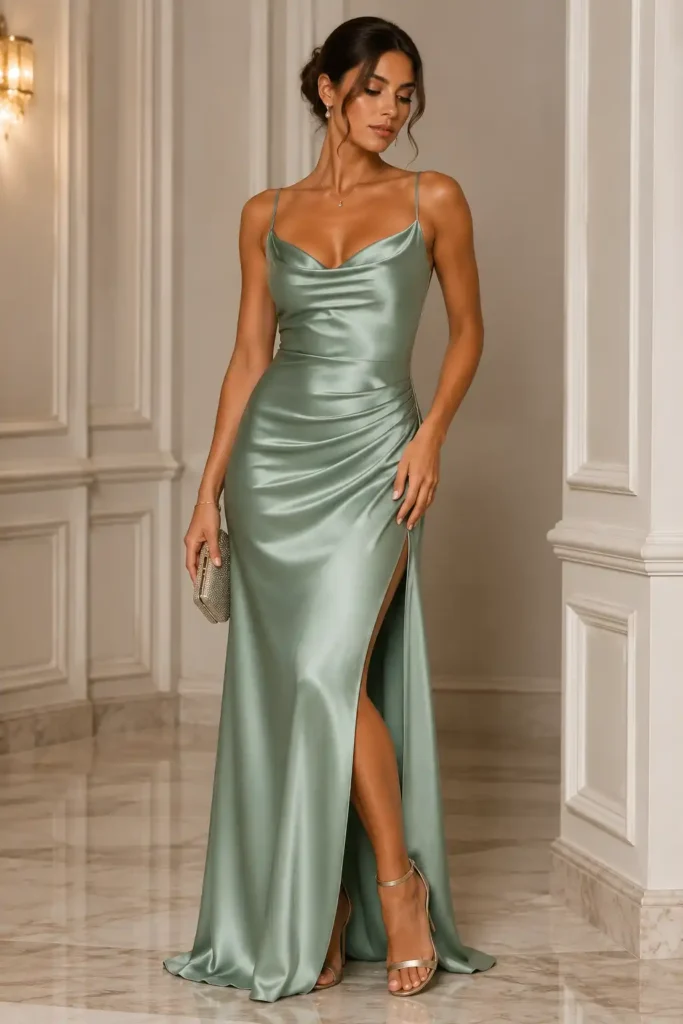
Maxi and floor-length dresses need precise total length, lining relationship and hem sweep. Uneven hems, fabric growth and packing creases become visible on long silhouettes. Chiffon, satin, rayon and mesh maxi styles are checked for drape, transparency, movement, slit coverage and front-back balance before bulk approval.

Party Dresses

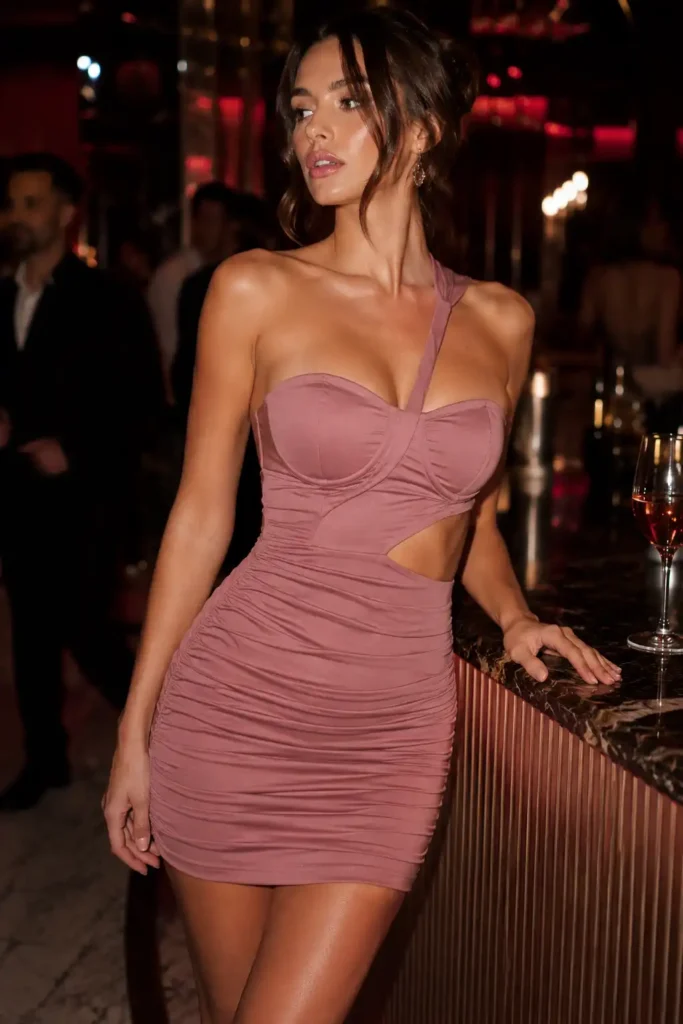
Party programs combine visual impact with wearable construction. Ruched panels, cut-outs, backless structures, embellishment, stretch mesh and fitted silhouettes must remain secure during movement. Development reviews bust support, closures, lining comfort, reinforcement and trim attachment so the final dress works beyond a studio photograph.

Occasion Dresses

Cocktail, wedding-guest and event dresses often require refined fabric handfeel, color consistency, clean internal construction and dependable sizing. Satin, chiffon, lace and crepe need different pattern ease, lining and pressing methods. Color groups and delivery timing are especially important when retail demand is tied to wedding or event seasons.

Bodycon Dresses

Bodycon fit depends on the relationship between fabric stretch, recovery and pattern reduction. Excessive negative ease causes strain and size complaints; insufficient recovery creates bagging at the waist, hip or seat. Measurement control must account for fabric behavior, not only flat garment dimensions.

Corset Dresses

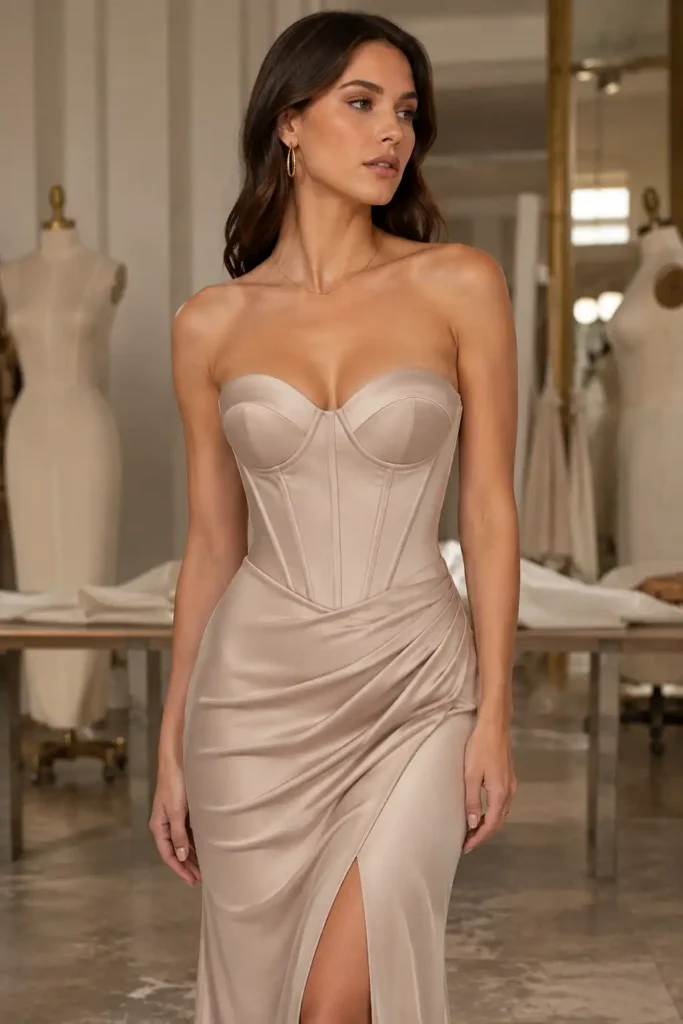
Corset and bustier structures require disciplined control over cup shape, boning position, neckline security, waist suppression, seam alignment and closure strength. Sample fitting should evaluate movement, not only front-view appearance. Bulk production needs placement guides and consistent seam allowances to prevent asymmetric cups or unstable necklines.

Fabric-Led Dresses

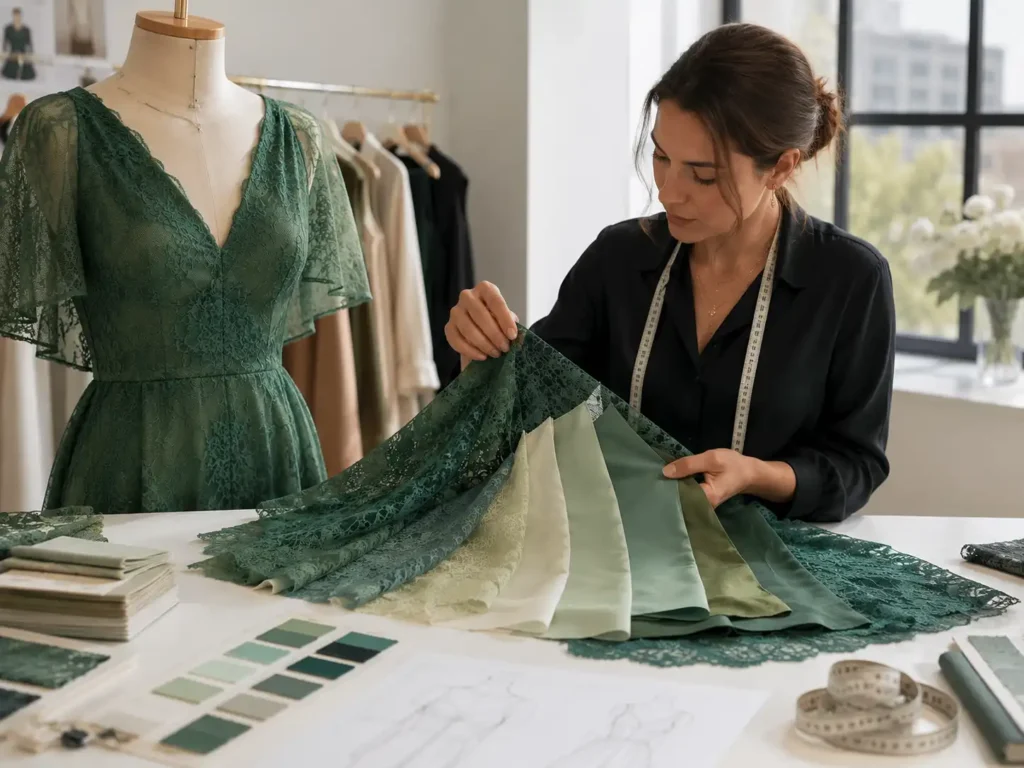
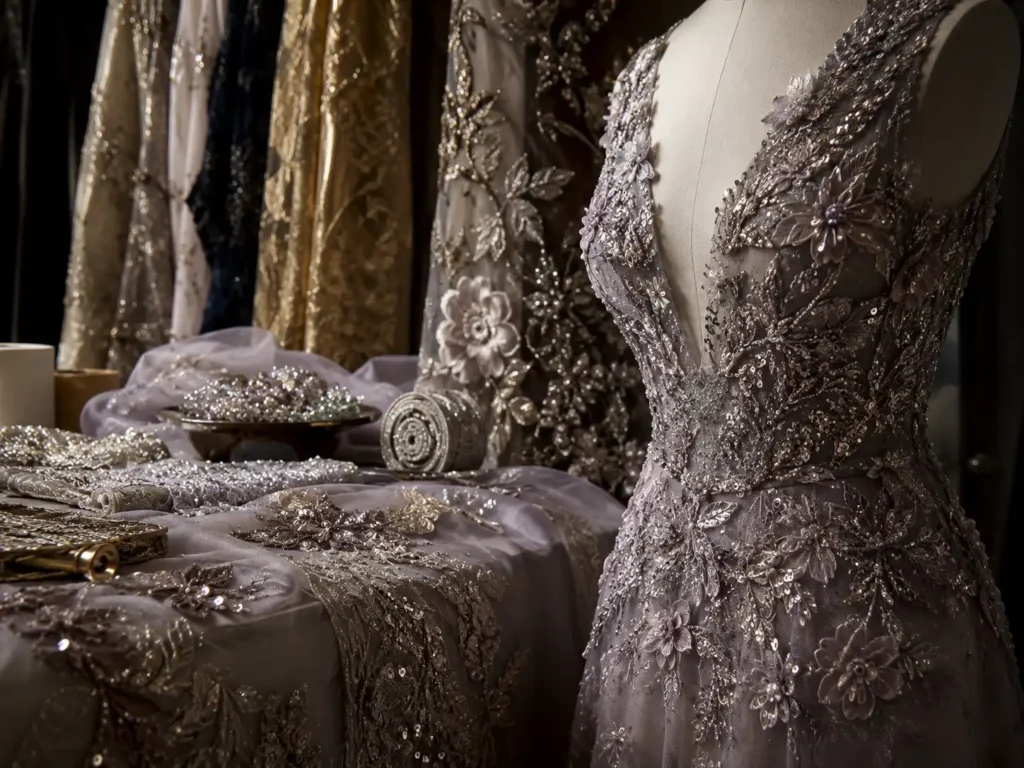
Satin, mesh, lace, sequin and chiffon each require specialized handling. Satin exposes seam tension and pressing marks; mesh reveals transparency and recovery; lace requires motif placement and clean joins; sequin fabric affects seam bulk and comfort; chiffon requires stable cutting, lining and hem finishing. Factory allocation follows the dominant material risk.

Build a Collection Architecture That Production Can Follow

A clear assortment structure allows design, merchandising, development and production teams to work from the same priorities.

Planning AreaBrand DecisionJinfeng ControlRetail Impact
Style PriorityIdentify hero, core and supporting stylesSample queue and production priorityKey products reach sales and launch dates first
Fabric GroupsDecide shared and unique materialsFabric tracking, batch control and consumption reviewBetter cost control and fewer material delays
Color StoryDefine core colors and seasonal accentsSwatch, lab dip, lining and trim color coordinationConsistent presentation across the range
Size StructureConfirm base size, range and ratioGrade-rule review, measurement plan and packing ratioMore reliable fit and store allocation
Launch WavesSeparate first launch, follow-up and replenishmentProduction and shipment wave planningReduced timing pressure and better inventory flow
SKU DataConfirm style, color, size and barcode structureLabel, polybag, carton and packing-list matchingCleaner warehouse receiving and stock accuracy

Cost Engineering Without Weakening Retail Presentation

Wholesale-to-retail margins depend on a garment cost that supports both brand economics and retail presentation. Cost control begins with product engineering, not a late request for a lower price.

Build the Quote from the Garment

Jinfeng quotations consider fabric cost and consumption, lining, trims, pattern work, sample development, cutting, sewing time, pressing, QC, packing, wastage, testing, logistics requirements and reasonable factory margin. A fitted corset dress with boning, cups and multiple panels cannot be costed like a simple slip dress even when both use the same outer fabric.

Quantity matters, but volume alone does not erase construction work. Multiple colors create separate fabric, cutting, label, SKU and packing control. A broad size range may require additional grading and measurement attention. Retail-specific labels, hangtags, barcode stickers and warehouse requirements also need to be included in the commercial calculation from the beginning.

Protect the Product Elements Shoppers Notice

Cost reduction should not remove the features carrying the visual and fit value. Fabric handfeel, drape, opacity, color, neckline stability, bust support, zipper flatness, lining coverage and clean pressing influence retail perception and return risk. A lower-cost substitute is acceptable only when the sample still supports the intended silhouette and brand positioning.

For satin, a thinner substitute may increase cling and seam show-through. For bodycon dresses, weaker recovery may create bagging after wear. For lace, a flatter motif may remove the premium effect. For sequin dresses, reducing lining or reinforcement may create discomfort or trim loss. Material alternatives therefore require side-by-side evaluation rather than price comparison alone.

Use Engineering Levers with Controlled Trade-Offs

Cost can often be improved through fabric substitution within an approved performance range, construction simplification, trim replacement, reduced color fragmentation, shared materials across several styles, cutting-layout improvement, size-ratio planning and packaging tier decisions. Each change should be recorded so the revised price remains connected to an exact product standard.

A commercially sound option may preserve the visible outer fabric while simplifying an internal facing, replace a custom trim with a close stock alternative, group several styles under one lining quality, or move non-priority colors into a later production wave. The aim is not the lowest possible FOB. The aim is a garment that reaches the required price without creating avoidable quality, fit or delivery risk.

Move from Line Sheet to Approved Production Samples

Sampling separates a design idea from a production-ready dress. Each sample type has a different commercial purpose and approval standard.

Line Sheet Review

Style numbers, reference images, target fabrics, colors, quantities, launch priorities and target cost are reviewed together. Missing details are listed before pattern work begins so development is not driven by assumptions.

Pattern Development

The base pattern translates the design into proportion, ease and construction. Bust, waist, hip, length, armhole, neckline, straps, slit and lining are reviewed against the brand’s size chart and fit direction.

First Sample

The first sample tests the overall silhouette, fabric direction, construction and technical feasibility. It is not expected to solve every detail, but it should reveal the main fit, material and workmanship risks early.

Fit Sample

Fit review turns comments into pattern actions. Feedback should identify measurement changes, balance issues, coverage, movement, support and proportion. Photos and comments are linked to the correct sample version.

Revised Sample

A revised sample confirms whether pattern, fabric, trim and construction comments were executed correctly. Changes are recorded in a revision log to prevent old specifications from returning later.

Sales Sample

Salesman or showroom samples support wholesale appointments, line presentations and account selling. Visual finish, color and fit need to represent the intended bulk product because orders may be placed against these samples.

Photo-Ready Sample

Photo samples require accurate fabric, color, silhouette and detail because campaign imagery influences sell-in and retail demand. Any difference between photo sample and bulk specification should be documented before marketing use.

PP and Golden Sample

The PP sample confirms production fabric, trims, construction, measurements, labels and finishing. After approval, a Golden sample and production file provide the reference for sewing, in-line inspection, final QC and repeat-order comparison.

Control Fabric, Fit and Size Before Bulk Cutting

Fabric behavior and pattern balance determine whether a dress looks correct across the intended size range, survives wear and remains consistent in bulk production.

Drape and Handfeel

Drape affects skirt movement, waist definition, seam behavior and perceived quality. Satin, chiffon, rayon, crepe, jersey and suiting fabrics create different silhouettes even at similar weights. Fabric selection is reviewed against the reference image, construction and intended retail price. A replacement fabric should be sampled when its weight, surface, stretch or fall could alter the pattern.

Stretch and Recovery

Stretch direction and recovery are critical for bodycon dresses, mesh panels, stretch satin and fitted jumpsuits. Two-way and four-way stretch behave differently in bust, waist and hip areas. Pattern ease must reflect the actual fabric, while bulk fabric is checked for comparable recovery so sizing does not change from one lot to another.

Transparency and Lining

Mesh, chiffon, lace, light satin and pale colors require coverage review under normal light, strong studio light and movement. Lining length, color, stretch and attachment points influence modesty, comfort and drape. White, ivory, pale pink and light yellow styles often need more careful lining selection than dark colors.

Shrinkage and Relaxation

Rayon, viscose, cotton, linen and knit fabrics can change after relaxation, pressing or washing. Fabric relaxation and project-specific testing help determine whether the pattern or care instruction needs adjustment. Bulk measurement standards should reflect the confirmed fabric behavior rather than assume every lot remains unchanged.

Size Grading

A strong sample size does not guarantee a strong XS-XL range. Grade rules should protect neckline coverage, armhole depth, strap length, bust support, waist position, hip ease, slit height and garment length. Plus, petite or tall ranges need separate evaluation rather than simple proportional scaling.

Measurement Tolerance

Bulk production requires an agreed tolerance by measurement point, product type and fabric behavior. Stretch garments and structured woven dresses do not use identical logic. Bust, waist, hip, length, straps, armholes, neckline, slit and lining measurements are checked against the approved chart, with out-of-tolerance garments corrected or separated.

Workmanship Details That Protect Retail Quality

Construction quality is visible in how a dress sits, moves, closes, presses and survives handling. Small sewing differences can create large fit and presentation problems.

Neckline and Bust Control

Strapless, corset, deep-V, halter and backless styles require secure neckline shaping. Cup position, boning, elastic, stay tape, facing, lining and seam tension must work together. Development checks coverage and movement, while bulk production uses placement references to maintain left-right symmetry and consistent support.

Zipper Installation

Zipper waviness or arching commonly appears on satin, bodycon, corset and fitted midi dresses. Zipper stiffness, seam tension, fabric stretch, back-body pattern shape and seam allowance all contribute. Installation method and pressing are tested during sampling, then checked during in-line QC and final garment inspection.

Ruching and Gathering

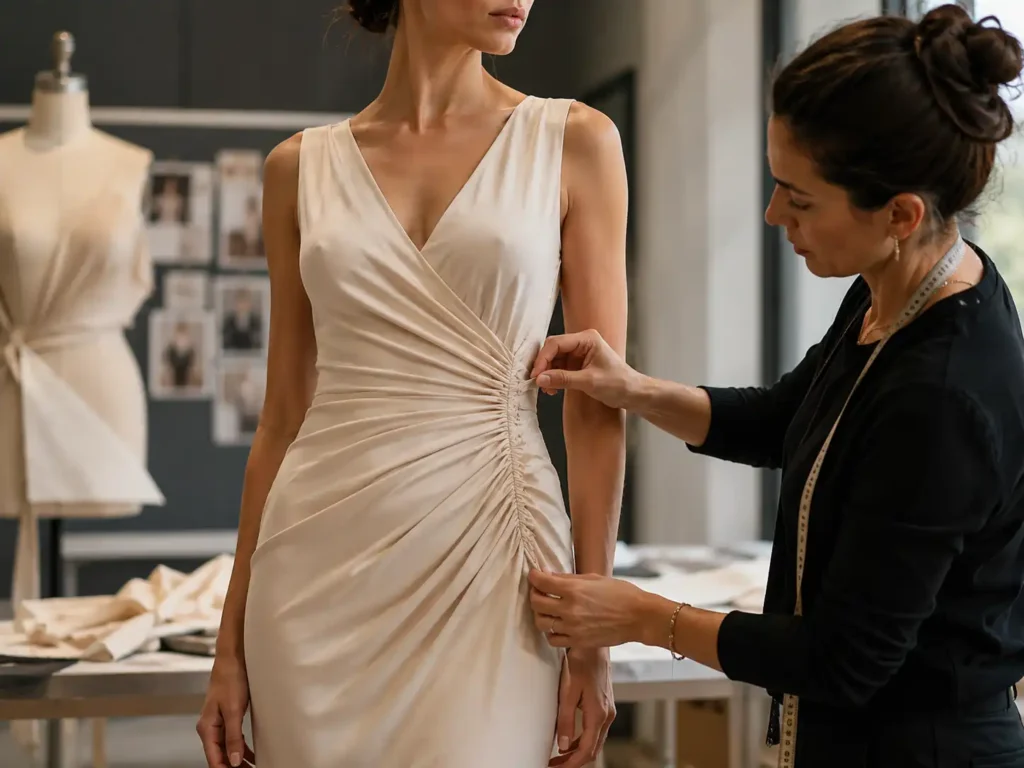
Ruching can visually shape the waist and hip, but uneven gathering creates left-right imbalance and inconsistent garment length. Production instructions define gather ratio, start and end points, seam placement and attachment method. Each side is compared for symmetry before finishing.

Lining and Internal Finish

A lining should support the garment without pulling, twisting or showing below the shell. Lining pattern, shrinkage, length, color, attachment points and slit relationship are confirmed during development. Internal seams, binding, overlock, facing and boning channels are selected according to fabric weight and wearing comfort.

Hems and Slits

Mini, midi, maxi and floor-length dresses carry different hem risks. Chiffon hems can wave; satin hems show pressing marks; stretch hems can tunnel; long skirts can become uneven after hanging. Slit height, reinforcement and lining relationship are checked for walking comfort, sitting coverage and symmetry.

Embellishment Security

Sequins, beads, rhinestones, lace appliques and decorative trims require attachment standards, seam-clearance planning and comfort review. Heavy decoration may need reinforcement or backing. Sharp edges and exposed thread ends are checked so the garment remains wearable and suitable for retail handling.

Assign Every Style to the Right Production Team

Multi-style programs remain stable when factory and line allocation follow product risk, not convenience. Jinfeng uses a managed network rather than treating every sewing line as interchangeable.

Product-Based Factory Allocation

Woven fashion dresses, stretch bodycon styles, occasionwear, corset structures and matching sets require different production strengths. Production managers review the dominant construction, fabric, order quantity and finish standard before assigning a factory. Complex mesh, lace or sequin work is directed toward teams familiar with those materials, while stable repeat styles can move to lines designed for consistent volume.

Allocation also considers the relationship between styles. Several dresses using the same satin, lining or zipper can be grouped for material control, but identical fabrics do not automatically mean identical sewing methods. A bias-cut slip dress, corset mini and ruched midi may share satin while requiring different pattern, handling and inspection standards.

Multi-Style Scheduling

Programs containing 10-30 styles are divided by launch priority, fabric readiness, pattern complexity, sample approval and order quantity.

Hero products may begin development first, while shared fabric groups are coordinated to reduce material delays.

Production starts only after the applicable PP standard, material status and packing requirements are confirmed.

A production schedule tracks material arrival, cutting, sewing, in-line QC, finishing, pressing, packing and final inspection by style. The project team reports risks early instead of hiding them inside a single promised delivery date.

Split production or shipment waves can be used when priority styles need earlier warehouse arrival.

Plan MOQ Across Styles, Colors and Size Ratios

Jinfeng’s regular MOQ starts from 200 pieces per style/color. Material availability, custom colors, trims, construction and packing can raise the required quantity.

Style-Color Planning

MOQ applies to each style and each color rather than the total collection alone. A 200-piece order in one color can be divided across an agreed size range. Two colors normally require 200 pieces in each color. A line sheet with many styles should therefore show expected quantity by style and color, not only the total seasonal volume.

Size-Ratio Planning

XS-XL production can be divided within the confirmed style-color quantity. The ratio should reflect sales data, target market and retail account needs. Extremely fragmented size quantities increase cutting, sorting, measurement, labeling and packing complexity. Extended, petite, tall or plus-size ranges are evaluated against their own grade rules and product requirements.

Material MOQ

Stock fabrics and standard trims usually offer more flexibility than custom-dyed fabrics, exclusive prints, special lace, sequin bases, custom hardware or bespoke packaging. Fabric mills and trim suppliers may set their own minimums. Material MOQ is reviewed before the garment order is confirmed so unused stock and late cost changes are avoided.

Collection-Level Review

For a 10-30 style collection, Jinfeng reviews which styles can share materials, which colors should be prioritized, where custom development is necessary and whether production waves are appropriate. Commercially strong core colors can launch first, followed by new colors or fabric extensions after sales data is available.

Typical Development and Delivery Planning Reference

Timing depends on style complexity, fabric and trim availability, revision speed, approval timing, quantity, testing, packing and transport. The ranges below support early planning and are confirmed after project review.

StageTypical Planning RangeApproval or Output
Project and quotation review2-4 working daysFeasibility notes, quotation basis and missing-information list
First development sample7-15 working days after key materials are confirmedFirst sample, measurements and development comments
Revision sample5-10 working daysUpdated pattern, revised sample and revision record
Sales or photo sample7-12 working daysPresentation-ready sample built to the confirmed specification
PP sample7-12 working days after production materials are readyProduction standard covering fabric, trims, fit and construction
Bulk production30-45 days after PP approval and material readinessCut, sewn, finished and inspected bulk order
Final QC and packing3-7 working daysInspection result, packing confirmation and carton data
Freight transitConfirmed by route and destinationExpress, air, sea or split-shipment plan

Protect Sample-to-Bulk Consistency at Every QC Stage

Quality control follows the product from incoming materials through packing. Inspection priorities change with the fabric, silhouette, construction and retail requirement.

Incoming Material QC

Fabric is reviewed for color, width, handfeel, surface defects, stretch, recovery, shade variation and visible damage. Trims are checked for specification, color and function. Dye lots are separated when necessary, and lining, zipper and thread colors are compared with the approved standard.

Cutting QC

Fabric relaxation, marker direction, grain, print placement, lace motif, nap and panel identification are reviewed before cutting. Cut components are checked for quantity and visible defects. Accurate cutting is especially important for satin, stripe, print, lace, bias-cut and asymmetric styles.

Sewing In-Line QC

In-line inspection checks seam quality, construction sequence, stitch consistency, gathering, panel alignment, zipper installation, neckline security, lining attachment and trim placement. Problems are corrected during production rather than left for the final inspection stage.

Measurement QC

Measurements are checked against the approved size chart and tolerance. Critical points include bust, waist, hip, garment length, strap length, armhole, neckline depth, slit height, lining length and jumpsuit crotch length. Stretch behavior and fabric relaxation are considered when readings are reviewed.

Final Garment QC

Finished garments are checked for overall appearance, symmetry, fit-related construction, stains, loose threads, pressing, closure function, embellishment security, label accuracy and visible defects. Product-specific checks are added for corset, mesh, lace, sequin, chiffon and satin styles.

Packing and AQL Support

Packing QC verifies garment-to-label matching, size, color, hangtag, barcode, SKU sticker, polybag, carton quantity and carton mark. Client inspection and third-party AQL inspection can be supported according to the agreed project requirement. Inspection standards and sample size are confirmed before the inspection date.

Deliver Branded Dresses Ready for Retail Handling

Retail packing turns a finished garment into an identifiable SKU that can move through a warehouse, store network or online fulfillment system.

Brand and Size Labels

Woven, satin, printed or heat-transfer brand labels can be developed from approved artwork. Size labels must match the garment and size chart. Placement, folding method, color, dimensions and sewing method are confirmed before bulk application.

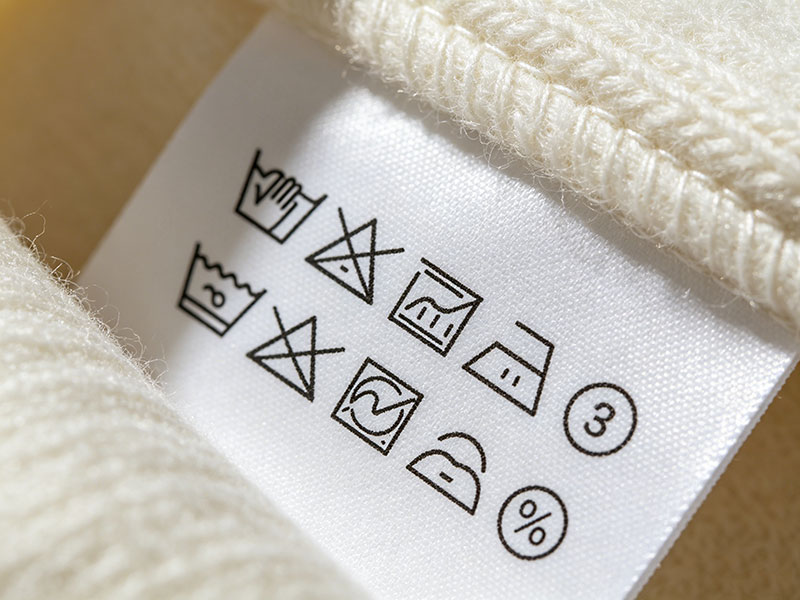
Care Labels

Care labels carry composition, care instructions, country-of-origin information and other required details provided or approved by the brand. Artwork, language, material, placement and size are checked before production. Final legal content remains subject to the destination market and brand compliance review.

Hangtags and Price Tags

Hangtags, hang strings and retailer-provided price tags are attached according to the packing instruction. Style number, size, color, barcode and product information are checked against the SKU file. Placement should protect the garment and remain easy for retail handling.

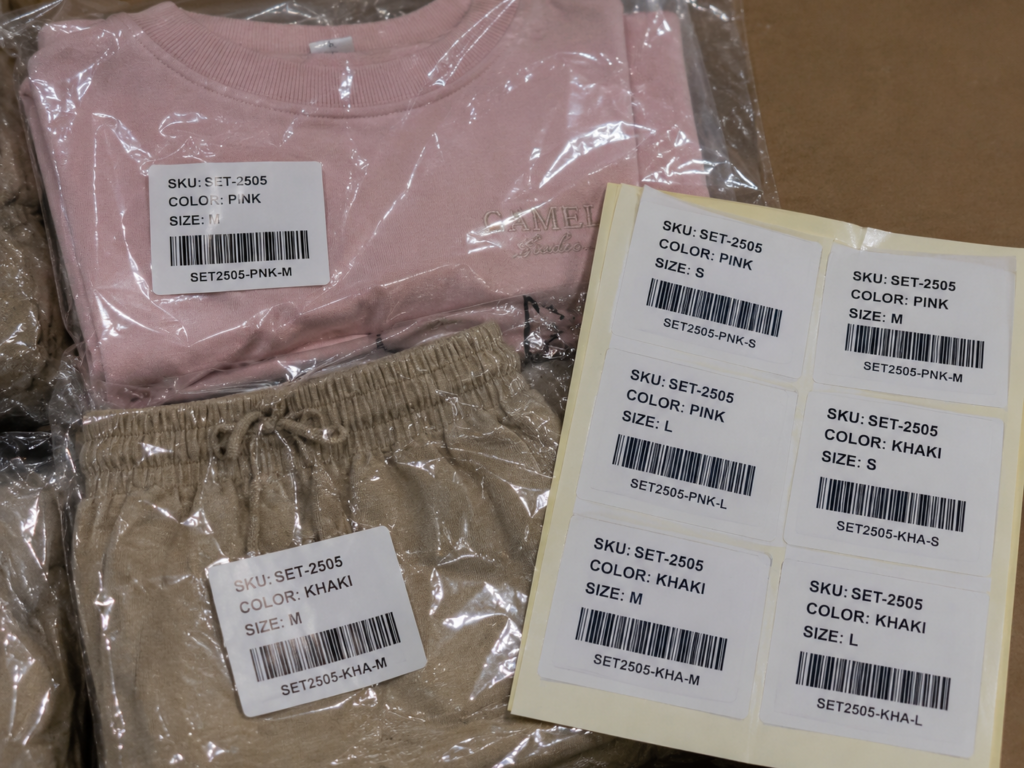
Barcode and SKU Labels

Barcode stickers must be readable and linked to the correct style-color-size combination. SKU labels, size stickers and color stickers are reconciled with the purchase order and packing list. Scan checks can be arranged when barcode data and format are supplied.

Individual Polybags

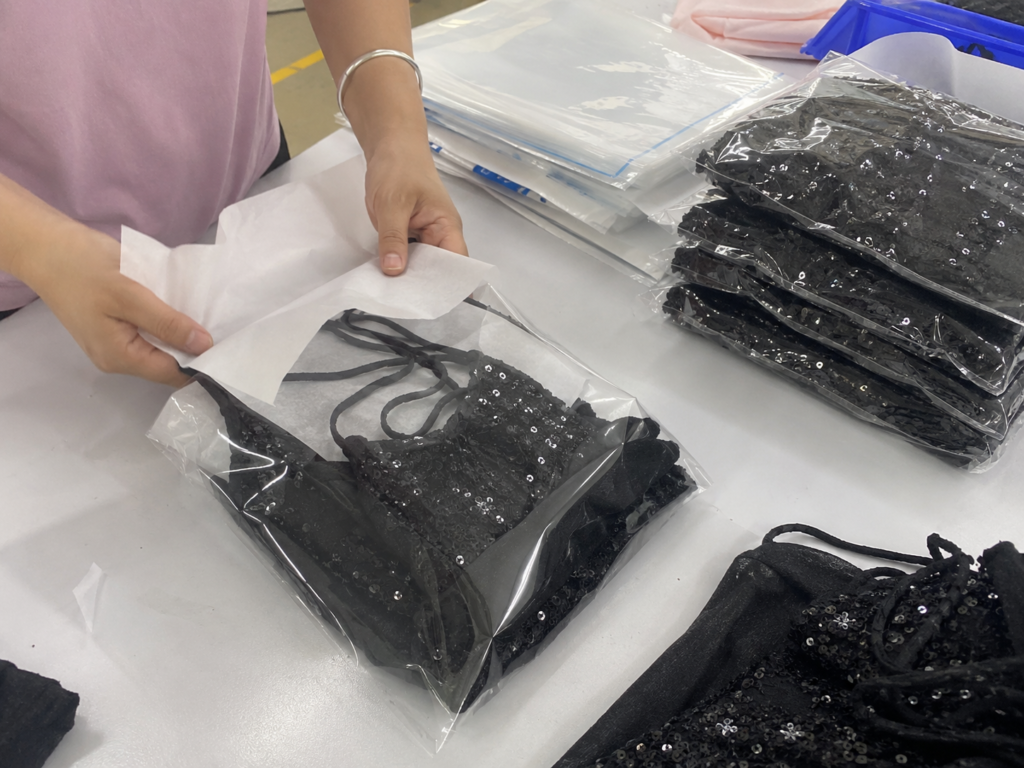
Each dress can be folded, labeled and packed in an individual polybag or approved branded packaging. Bag size, warning text, ventilation, sealing, folding method and garment protection are selected according to product length, embellishment and warehouse requirements.

Cartons and Warehouse Marks

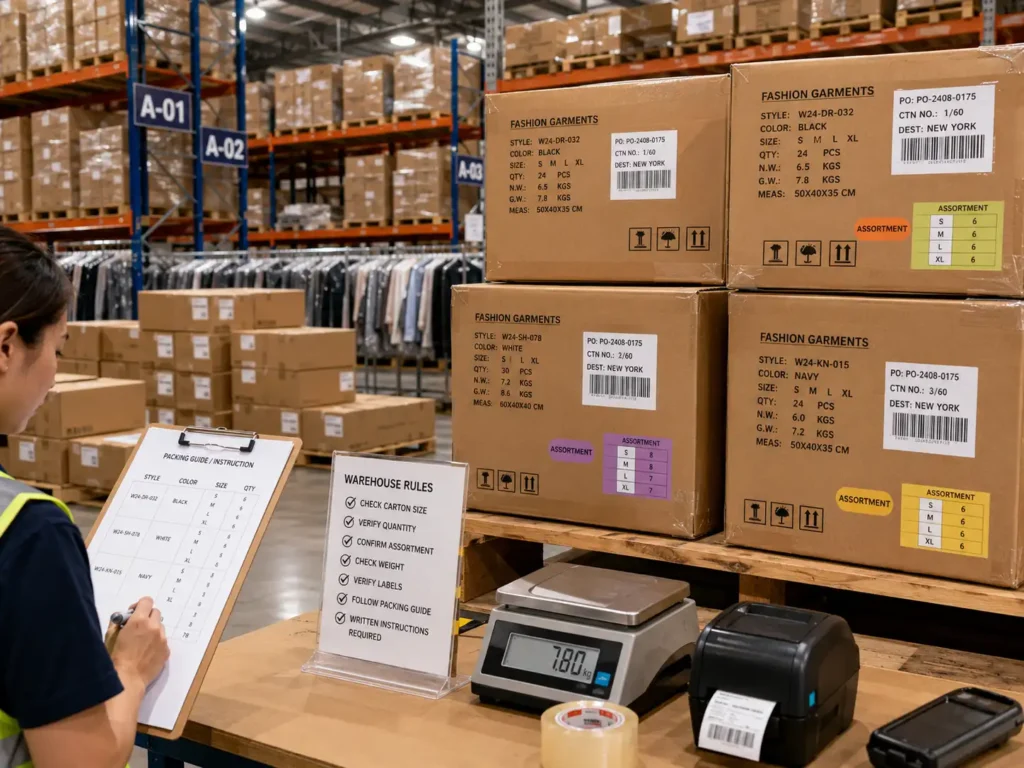
Carton marks can include PO, style, color, size, quantity, carton number, destination and warehouse information. Carton-level checks compare contents with the packing list. Dimensions, gross weight, net weight and carton count are prepared for shipment coordination.

Prepare Accurate Documents and Flexible Shipment Plans

Retail orders need commercial documents, carton data and logistics instructions that match the physical goods. Errors can delay clearance, warehouse receiving and account allocation.

Commercial Documents

Jinfeng can prepare commercial invoices, packing lists, carton breakdowns and shipment information based on the confirmed order. Product descriptions, quantities, values, Incoterms and carton data are reviewed with the shipping plan. Certificate-of-origin support can be evaluated by request.

Carton-Level Data

Packing lists can show style, color, size, quantity and carton distribution. Carton marks, dimensions, gross weight, net weight and carton count support freight booking and warehouse preparation. Mixed-size or mixed-color cartons follow the approved packing instruction.

Forwarder Coordination

Orders can move through client-nominated forwarders or factory-recommended logistics resources. EXW, FOB, CIF, DAP and DDP by project can be evaluated according to destination, shipment type and commercial requirements. Final routing and customs responsibility should be confirmed before booking.

Express and Air Freight

Samples, urgent sales pieces, priority SKUs or launch-critical quantities can move by express or air freight. Faster transport does not replace production planning, but it can protect a retail date when selected quantities have higher commercial priority.

Sea Freight

Sea freight suits planned bulk orders with sufficient transit time. Factory completion, final inspection, booking, cutoff, sailing and warehouse receiving dates should be built into the retail calendar rather than treated as one delivery estimate.

Split and Multi-Batch Delivery

Priority styles or initial quantities can ship by air while the main order moves by sea. Programs may also be divided by launch wave, product group, destination or replenishment need. Packing and documentation remain separated clearly for each shipment.

Build Faster and More Consistent Repeat-Order Programs

Repeat production should preserve the approved product while recognizing that fabrics, colors, trims, costs and schedules can change between batches.

Records Kept for Reorders

Jinfeng can retain approved pattern versions, size charts, grade rules, BOM records, fabric details, color records, trim references, sewing instructions, Golden samples, QC notes, label files, packing instructions and carton-mark requirements. These records support faster review and stronger consistency for core styles, seasonal carryovers and bestsellers.

Items Reconfirmed Before Release

Every repeat order reconfirms fabric availability, dye lot or color, lining, zipper, thread, trims, labels, packaging, quantity, size ratio, price, production schedule and delivery plan. A full new sample may not be necessary when every element remains unchanged and records are complete. New fabric, new color, fit changes, construction changes or new packaging normally require an appropriate color, revision or PP approval.

Wholesale-to-Retail Dress Manufacturer Case Studies

A representative program shows how assortment planning, sample priority, production control and retail packing work together across a large seasonal order.

Program Scope and Commercial Requirements

An established US occasionwear brand prepared a seasonal line for wholesale accounts, selected specialty retailers and its own online channel. The program covered 18 dress styles and 42,600 finished pieces across 32 style-color combinations. Sizes ran from XS to XL, with ratios adjusted by historical sell-through. Six fabric families included satin, stretch satin, mesh, lace, crepe and structured knit.

Nine hero SKUs required sales samples first for showroom appointments and campaign production. The remaining styles followed in grouped sample waves. The brand supplied line sheets, reference garments, size charts, target FOB positions, label artwork, barcode data, wholesale delivery windows and warehouse packing instructions. Several styles shared outer fabrics and linings, but construction ranged from corset minis and ruched midis to occasion maxis and bodycon dresses.

Development and Production Control

Jinfeng grouped the 18 styles by fabric behavior, pattern complexity and launch priority. Satin and stretch-satin styles were separated because their pattern ease and zipper behavior differed. Mesh and lace products moved through transparency, lining and seam-placement reviews. Corset styles received cup, boning, neckline and closure checks before sales-sample approval.

A sample tracker recorded first sample, fit comments, revised sample, sales-sample status and PP approval by style. Eight priority products reached sales-sample approval in the first development wave, while shared trims and labels were reviewed centrally. Production files included approved patterns, BOM records, size charts, grade rules, measurement tolerances, sewing instructions, label placement, barcode references and packing requirements.

Retail Packing and Delivery Outcome

Bulk production was divided across suitable sewing teams, then tracked through material arrival, cutting, sewing, in-line QC, finishing, pressing, packing and final inspection. Carton-level control matched style, color, size, barcode and carton mark data with the packing list. The order used individual polybags, hangtags, barcode stickers, size-color labels and warehouse-specific carton marks.

Delivery was arranged in two waves. Priority occasion styles moved first to protect the earliest retail intake, while the remaining assortment followed under the main freight plan. Pattern, fabric, color, trim, QC and packing records were retained for the brand’s replenishment program. The operational result was not simply 42,600 dresses shipped; the result was a controlled assortment that could be sold, received, allocated and repeated under one documented standard.

Frequently Asked Questions for Retail Dress Programs

No. Jinfeng Apparel develops and manufactures custom dresses from line sheets, tech packs, reference garments or approved design directions. The service covers fabric sourcing, pattern development, sampling, PP approval, bulk production, QC, private-label packing and shipment coordination for established fashion programs.

The regular MOQ starts from 200 pieces per style/color. The final requirement depends on fabric availability, custom color development, trims, construction complexity, packaging and production scheduling. Each color is evaluated separately because fabric purchasing, cutting, labels, SKU control and QC are managed by color.

Yes. Multi-style collections can be grouped by fabric, pattern complexity, trims, sample priority and launch date. A sample tracker and revision log record progress by style. Programs containing 10-30 styles benefit from clear hero-SKU priorities and complete line-sheet information before sampling begins.

Yes. The two sample rooms support first samples, fit samples, revised samples, salesman samples, photo-ready samples, PP samples and Golden sample management. The required sample type, quantity, fabric standard and deadline should be confirmed at project launch.

Yes. Target cost is reviewed against fabric, lining, trims, construction, sewing time, pressing, QC, packing, testing and quantity. Cost options may include approved material substitution, construction adjustment, trim alternatives, shared materials, color consolidation or packing changes without weakening the intended retail appearance.

Yes. Jinfeng can develop US, UK, EU, AU and alpha-size ranges from the brand’s size chart, base size, grade rule, target market, fabric stretch and fit preference. Extended, plus, petite or tall ranges require dedicated evaluation rather than simple proportional scaling.

Yes. Packing can include brand labels, size labels, care labels, hangtags, barcode stickers, SKU labels, size-color stickers, individual polybags and carton marks. The brand should provide approved artwork, barcode data, SKU mapping and warehouse instructions before bulk packing begins.

Yes. Client inspection and third-party AQL inspection can be coordinated according to the project requirement. The inspection standard, sample size, timing, location and reporting format should be agreed before the final inspection date. QC also covers incoming materials, cutting, in-line sewing, measurements, finished garments and packing.

Yes. Multi-batch and split shipment can be planned by launch wave, priority style, quantity, destination or transport mode. Express, air, sea and air-sea combinations can be evaluated. Each shipment requires a clear packing list, carton data, commercial documents and warehouse identification.

Repeat orders use stored patterns, size charts, BOM records, fabric and color references, trims, sewing instructions, Golden samples, QC notes and packing files. Fabric batch, color, trim availability, quantity, price and schedule are reconfirmed before release. Changes may require a color sample, revised sample or PP sample.

Prepare Your Dress Program for Project Review

Send enough commercial and technical information for an accurate review.

A line sheet or tech pack should show style references, expected quantity by style and color, size range, fabric direction, target market, target FOB position, sales-sample deadline, bulk delivery window, label requirements and retail packing instructions. Reference garments, measurement charts, barcode files and warehouse guides can be uploaded with the inquiry.

Kelly coordinates the first review with the development, costing and production teams. The response can cover missing information, style complexity, fabric and trim direction, MOQ fit, sample plan, cost basis, capacity and timing risks. A structured review is designed to establish a workable development and production path before sample work begins.

  • Company and brand information
  • Line sheet, tech pack or reference images
  • Quantity by style, color and size
  • Fabric and trim preferences
  • Target market and target cost
  • Sales-sample and bulk deadlines
  • Private-label and barcode files
  • Warehouse, packing and freight requirements

Tell Us About Your Dress Project

Share your product details, estimated quantity and development requirements. Our team will review your project and provide practical OEM/ODM production feedback.

Premium Women’s Apparel Production for Fashion Brands

From dress sample development to bulk production, JF Apparel supports fashion brands with confidential OEM/ODM manufacturing, reliable quality control and scalable production support.

START YOUR DRESS PROJECT

Ready to Develop Your Next Dress Collection?

Share your design concept, product requirements or sourcing plans with our team. We’ll review your project and provide practical feedback on development, materials, MOQ and production.

7-10 Days

Sample Development

200 PCS

Starting MOQ

Fast Response

Professional Follow-Up