White Dress Manufacturer for Global Fashion Brands
Jinfeng Apparel develops white dresses for established fashion labels that need reliable opacity, clean color matching, precise fit and repeatable bulk execution. Development covers fabric and lining selection, pattern engineering, sample revisions, PP approval, production control, private-label packing and export coordination from Guangdong, China.
- 7 white-tone directions managed across shell fabric, lining, thread, zipper and trims: optical white, pure white, soft white, warm white, ivory, cream and off-white.
- Standard first samples generally require 10-15 days; complex corset, lace, mesh, sequin or structured styles generally require 15-25 days after material direction is confirmed.
- MOQ starts from 200 pcs per style/color, with material, trim, construction and private-label requirements reviewed before quotation.
- White-garment review covers opacity, shade alignment, stain risk, seam visibility, lining length, pressing marks and clean packing before shipment.
Manufacturing Capacity Behind White Dress Programs
Since 2008
6 Owned Factories
10+ Production Partners
2 Sample Rooms
7+ Pattern Makers
15+ QC Inspectors
Built for Established White Dress Programs
Fast Fashion Brands
Premium Ecommerce
Occasionwear Labels
Resortwear Collections
Retail Programs
Sourcing Teams
Where White Dress Production Commonly Fails

Unexpected Transparency
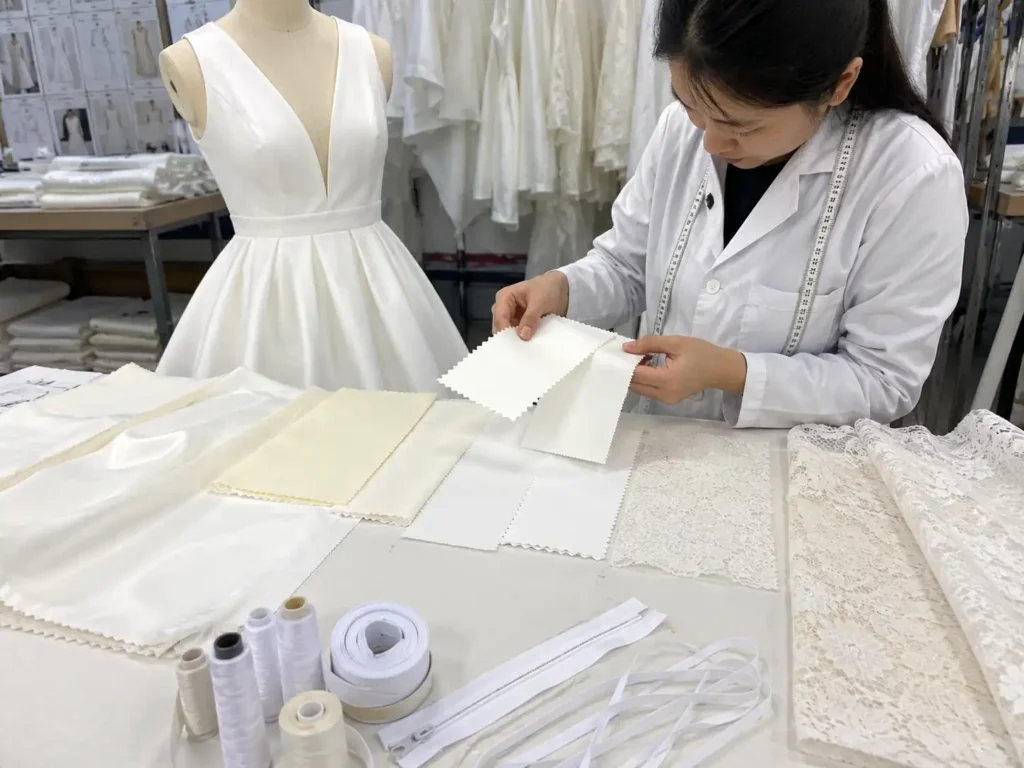
Mismatched White Tones
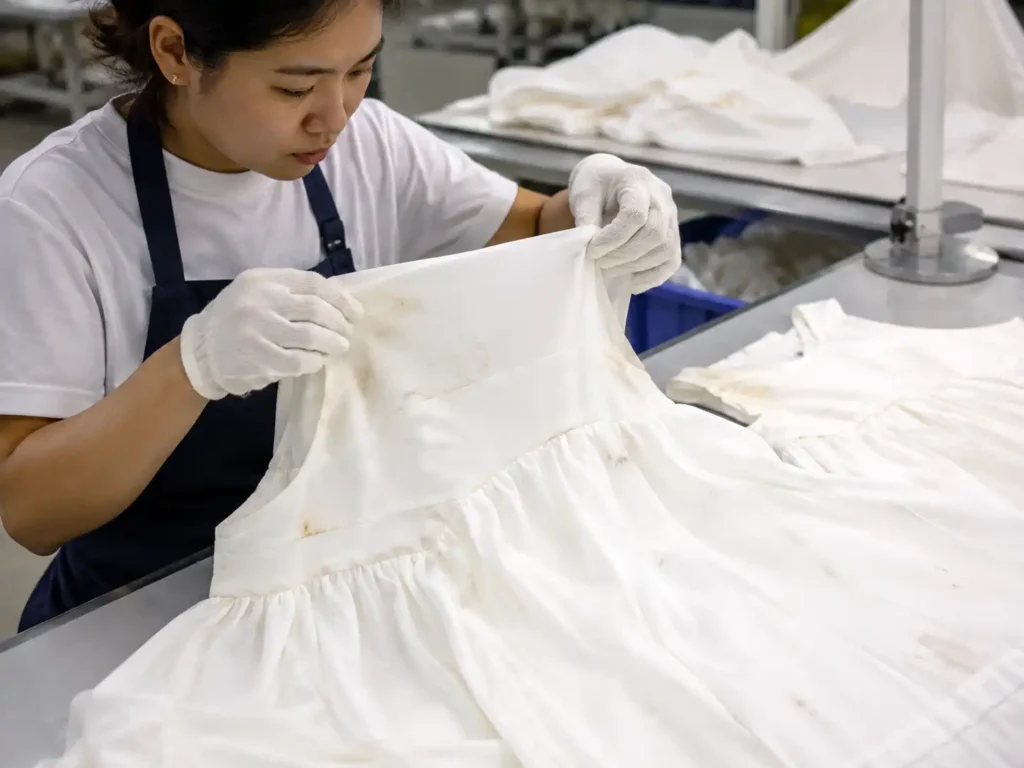
Stains and Yellowing
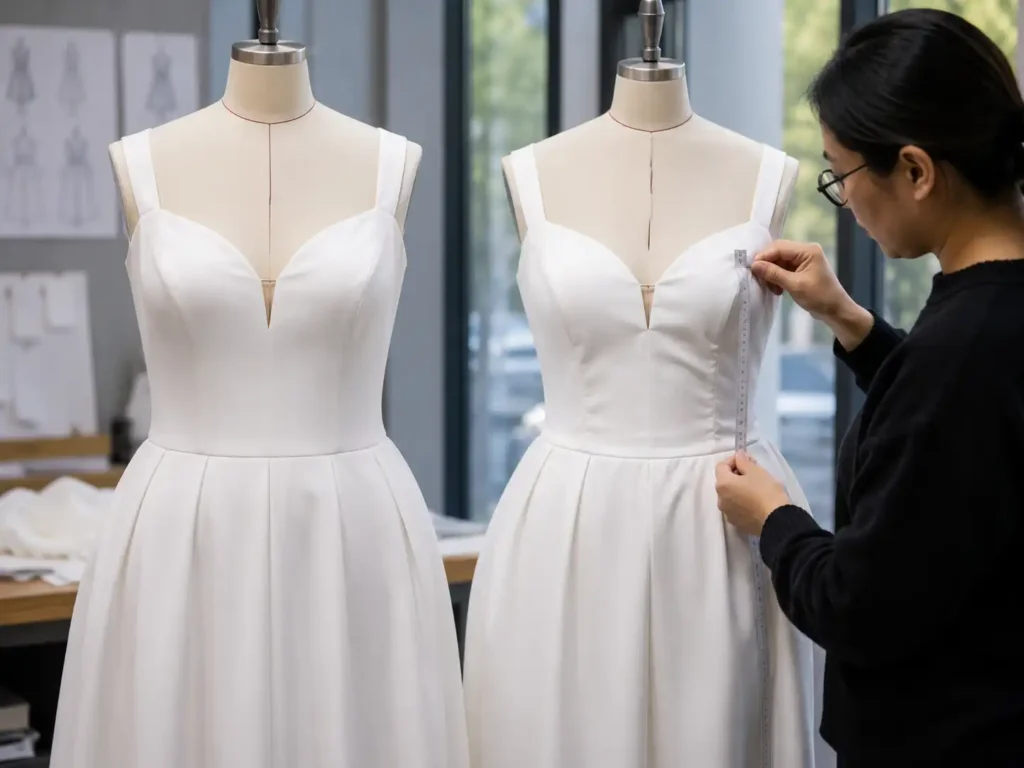
Sample-Bulk Fit Drift
White Dress Styles We Develop and Manufacture

White Mini Dresses
- Typical focus: bust coverage and safe hem length
- Common risk: lining ends too high
- Bulk check: total length and side balance

White Midi Dresses
- Typical focus: waist-to-hip proportion
- Common risk: slit or lining misalignment
- Bulk check: hem circumference and pressing
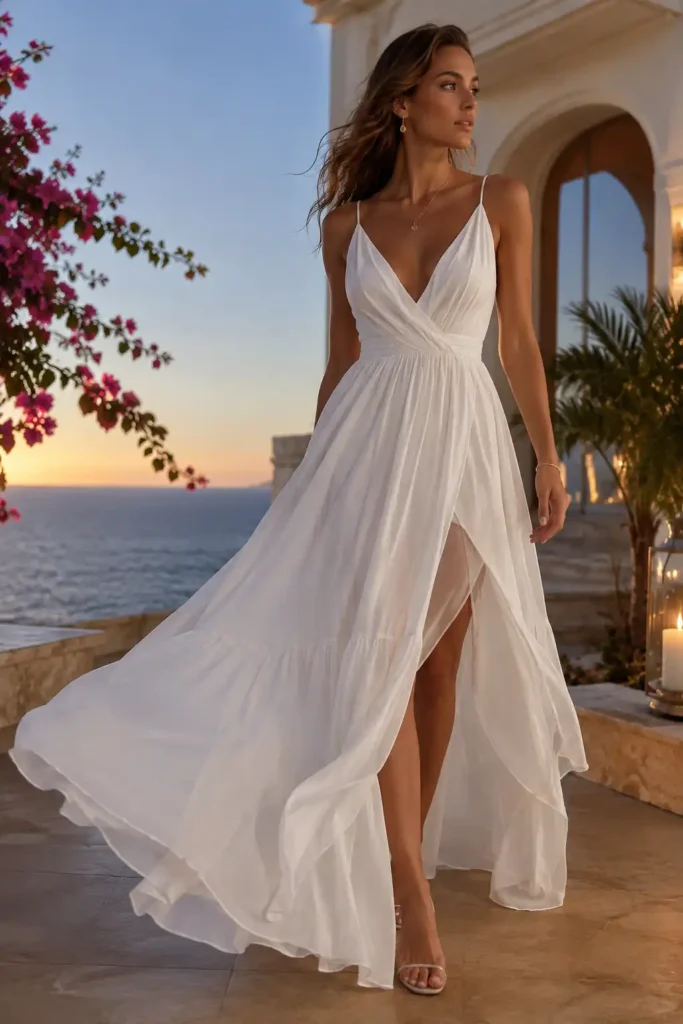
White Maxi Dresses
- Typical focus: drape and walking comfort
- Common risk: uneven hem after hanging
- Bulk check: total length and panel direction

White Bodycon Dresses
- Typical focus: stretch opacity
- Common risk: side seam twisting
- Bulk check: recovery and measurement tolerance
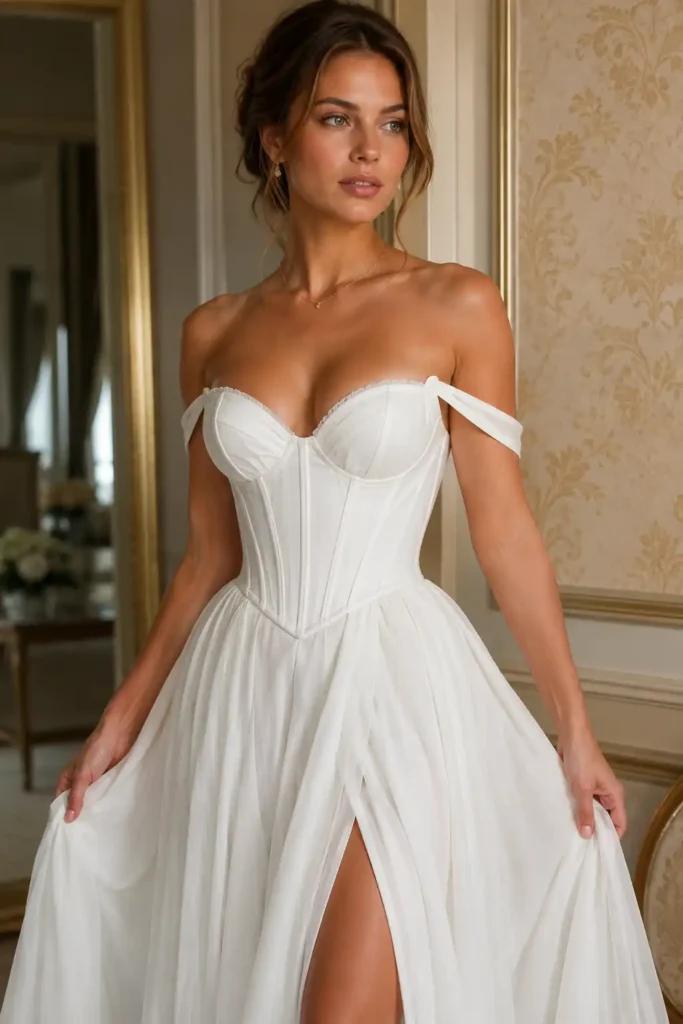
White Corset Dresses
- Typical focus: bust support and waist shaping
- Common risk: internal structure showing through
- Bulk check: boning ends and cup symmetry

White Party Dresses
- Typical focus: photo-ready finish
- Common risk: trim shade mismatch
- Bulk check: embellishment and clean handling

White Graduation Dresses
- Typical focus: youthful proportion and coverage
- Common risk: season missed by late approval
- Bulk check: shade, size and clean packing
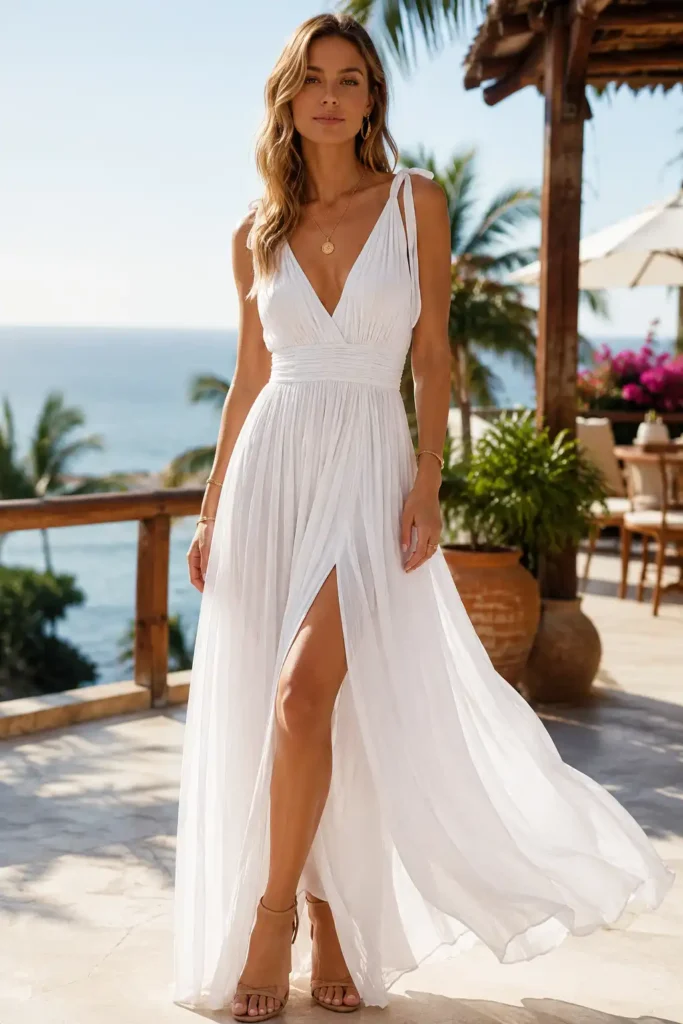
White Resort Dresses
- Typical focus: travel-friendly drape
- Common risk: transparency and folding creases
- Bulk check: shrinkage, hem and packing method
White Dresses for Distinct Retail Occasions

Graduation

Summer Resort

Cocktail Party
Structured mini, fitted midi and asymmetric styles require sharp fit, controlled shine and clean closures. Satin, crepe, lace and mesh combinations must remain visually unified in white.

Bridal Events

Vacation Brunch

Contemporary Essentials
White Fabrics and Linings Selected by Product Use
| Fabric Direction | Best Uses | Main White-Dress Risks | Recommended Controls |
|---|---|---|---|
| Satin / Stretch Satin | Slip, party, corset, occasion | Shine variation, snagging, zipper rippling, undertone mismatch | Directional cutting, surface inspection, matching lining, low-pressure pressing |
| Chiffon | Maxi, resort, graduation, layered styles | Transparency, seam show-through, panel movement, uneven hem | Layer planning, compatible lining, hanging review, balanced hemming |
| Lace | Occasion, mini, romantic, corset detail | Motif mismatch, holes, visible seam joins, lining color conflict | Placement planning, symmetry control, edge inspection, lining approval |
| Mesh / Power Mesh | Bodycon, cut-out, party, illusion panels | Stretch transparency, holes, neckline distortion, lining exposure | Stretch-direction review, coverage mapping, reinforcement, recovery testing |
| Crepe | Midi, cocktail, formal, structured daywear | Warm/cool shade variation, pressing marks, seam puckering | Batch approval, seam method review, controlled pressing, appearance inspection |
| Cotton Poplin | Mini, shirt, summer, fit-and-flare | Transparency, shrinkage, wrinkling, seam shadow | Fabric density check, shrinkage test, lining assessment, packing method |
| Linen Blend | Resort, vacation, relaxed maxi | Natural slubs, wrinkling, shrinkage, uneven transparency | Defect standard agreement, wash testing, pattern ease, travel-friendly packing |
| Jersey / Ponte | Bodycon, casual, fitted midi | Opacity loss under stretch, recovery failure, twisting | GSM and stretch review, recovery check, grain control, measurement QC |
How We Control White Dress Transparency
Opacity should be approved under conditions close to real wear. A flat fabric swatch cannot reveal every risk created by stretch, skin contrast, seam layers, pockets, slits or photography lighting.
Map Coverage Before Pattern Finalization
Coverage planning starts by identifying the areas most likely to become transparent: bust, side bust, waist, hip, seat, pocket position, slit opening and any region where the fabric stretches over the body. The same outer fabric may need full lining in one silhouette, partial lining in another and double-layer self-fabric in a bodycon style. Coverage is reviewed together with seam placement because a dark seam allowance or pocket bag can become visible even when the main panel appears opaque.
- Compare single-layer, double-layer and lined constructions before confirming the sample route.
- Check relaxed and stretched fabric states, especially for jersey, ponte, mesh and stretch satin.
- Review under natural daylight, indoor light and strong photography light when a style is intended for ecommerce campaigns.
- Confirm whether white, ivory, nude or matching-tone lining provides the intended visual result without changing the brand aesthetic.
Balance Coverage, Drape and Comfort
Adding lining is not automatically the best answer. A heavy woven lining can destroy the movement of chiffon, while a rigid lining can fight the recovery of stretch fabric. Lining composition, weight, stretch, color, length and attachment points must match the shell. For long or slit dresses, lining length is reviewed against walking movement and slit height. For corset or bustier styles, internal structure is covered so cups, boning channels and seam allowances do not create visible shadows through the white shell.
- Soft woven lining supports non-stretch satin, crepe and lightweight woven dresses.
- Stretch lining supports bodycon, mesh and knit silhouettes without restricting movement.
- Partial lining can preserve lightness in resort styles while protecting key coverage zones.
- Sample approval records should specify lining material, shade, length and attachment method for bulk reference.
Controlling White, Ivory and Cream Shade Consistency
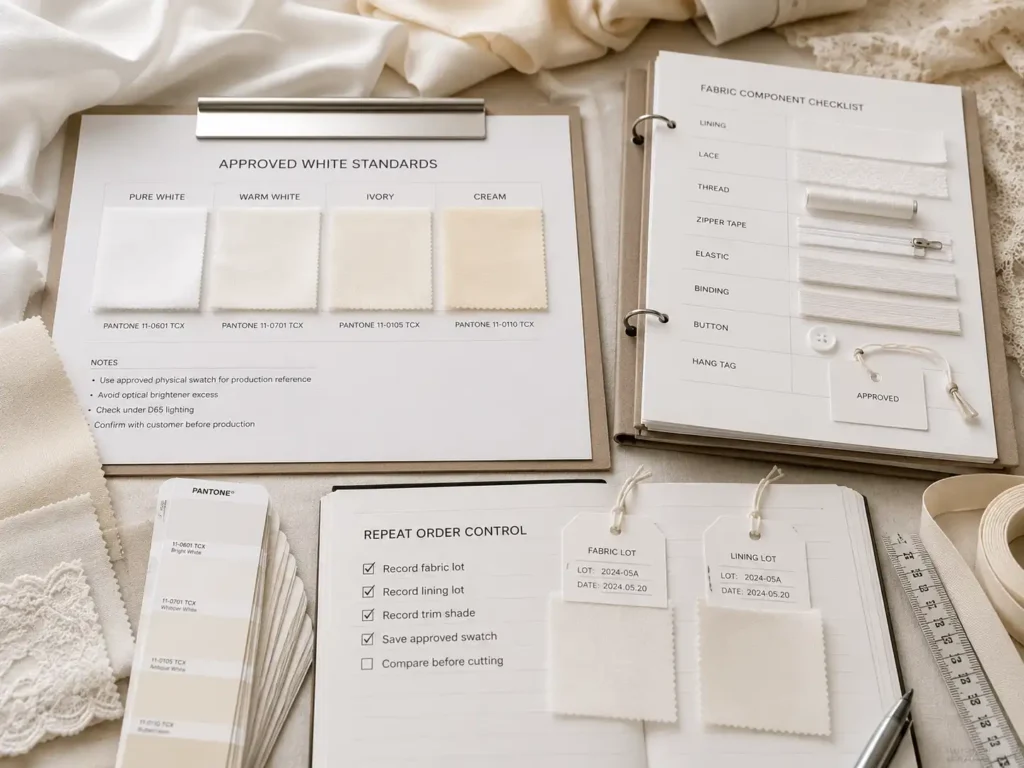
Define the Target White
- Lock shell-fabric reference
- Record approved undertone
- Confirm lighting for review
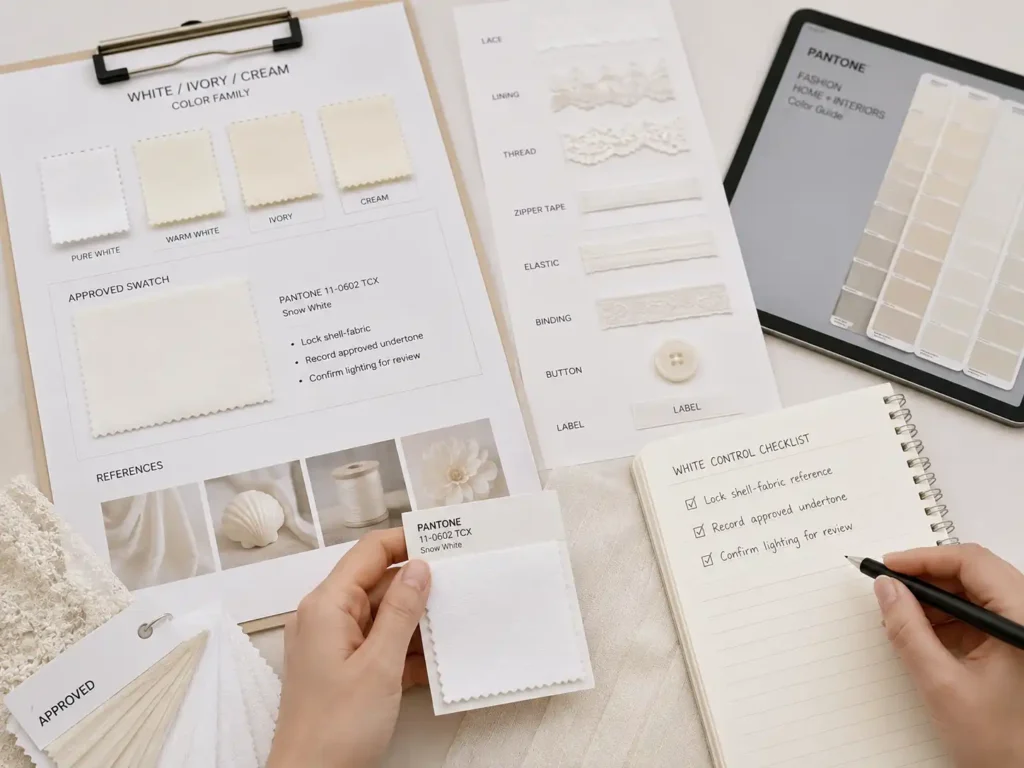
Match Every Component
- Check trim beside shell
- Review stitched sample
- Avoid dark internal labels
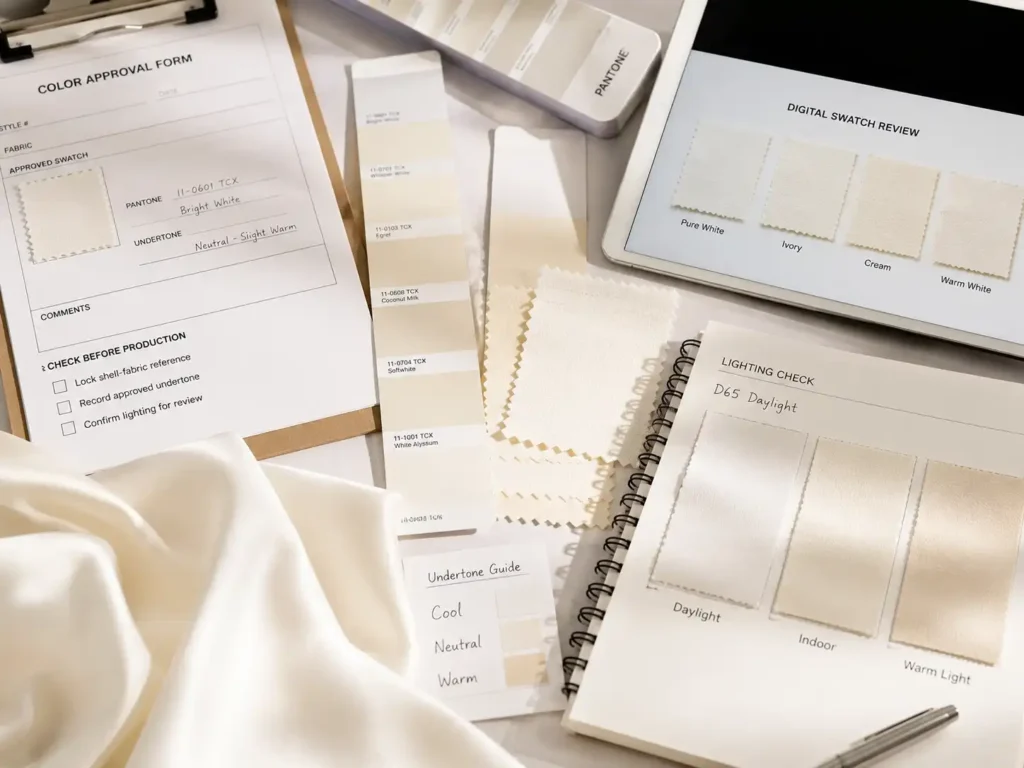
Protect Repeat Orders
- Retain approved references
- Compare new fabric lots
- Flag unavoidable shade shifts
Pattern and Fit Development for White Dresses
White emphasizes every line created by the pattern, lining and internal construction. Fit development must control proportion, coverage and movement before size grading begins.
Fit Points That Shape Commercial Results
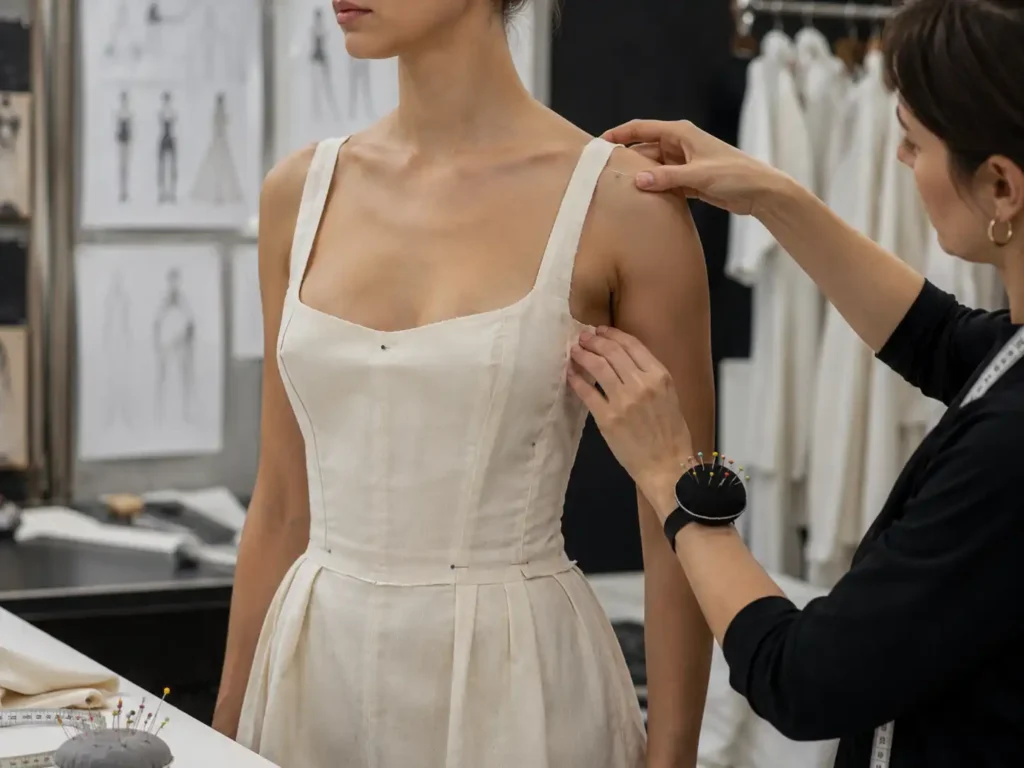
Bust, waist and hip measurements define the overall silhouette, but white dresses also expose smaller fit errors. Neckline gaping, low armholes, loose straps, zipper bulging, twisted side seams and short lining can create strong visual contrast against skin. Pattern review therefore includes neckline depth, shoulder or strap position, bust shaping, waist location, hip ease, total length, slit height and lining behavior. Structured styles add cup shape, boning position, grip tape and closure tension to the review.
- Mini styles: hem coverage, sitting coverage and front-to-back balance.
- Bodycon styles: stretch percentage, recovery, undergarment lines and side-seam stability.
- Corset styles: cup symmetry, upper-bust security, boning ends and waist shaping.
- Maxi styles: hanging length, walking ease, slit relationship and hem balance.
From Base Size to Full Size Range
An approved base-size sample does not guarantee consistent fit from XS to XL or across extended sizing. Grade rules are reviewed by body zone rather than applying one uniform increase. Bust shaping, neckline width, armhole depth, strap length, waist position, hip ease, slit height and total length may require different increments. Production bundles are separated by size, and measurement checks use the approved specification and tolerance points before packing.
- Standard size groups can be planned from XS-XL with a commercial size ratio supplied by the brand.
- Petite, tall or extended-size development requires separate assessment of proportions and consumption.
- Size labels, barcode data and carton breakdown must match the approved size ratio.
- Fit comments are transferred into pattern, measurement and construction records rather than left only in messages.
White Dress Details Requiring Precise Execution

Invisible Zippers
- Match tape undertone
- Control seam tension
- Inspect closure smoothness

Cups and Boning
- Protect boning ends
- Check cup symmetry
- Cover internal channels
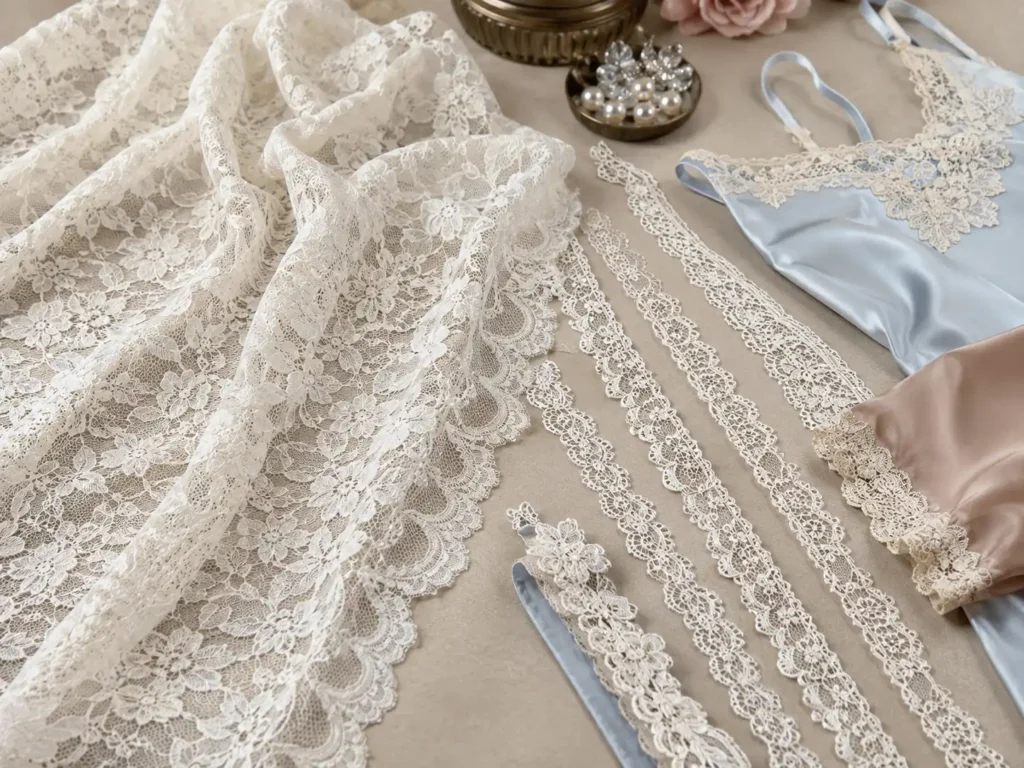
Lace Placement
- Plan focal motifs
- Match left and right
- Inspect damaged areas

Ruching and Draping
- Lock gathering ratio
- Control bulk thickness
- Check symmetry
Straps and Hardware
- Reinforce attachment
- Check hardware coating
- Confirm strap length

Labels and Trims
- Use compatible placement
- Avoid show-through
- Verify label information
From White Dress Concept to Approved PP Sample
Sample development converts the design reference into a production standard. White styles receive additional review for light behavior, lining, internal visibility, clean handling and shade coordination before bulk approval.
Development Stages and Typical Timing
Jinfeng Apparel can begin from a tech pack, reference image, original sample, sketch or line sheet. Standard dress first samples generally require 10-15 days after essential specifications and material direction are confirmed. Simple constructions may be completed in about 7-10 days. Corset, strapless, lace, mesh, sequin and evening styles generally require 15-25 days or a project-specific schedule because material sourcing, support structure and surface handling need more validation.
- First sample: verifies overall structure, fabric direction and initial proportions.
- Fit sample: focuses on body measurements, neckline, straps, waist, hip, length and movement.
- Revised sample: incorporates approved comments into the pattern, measurement file and construction details.
- Photo-ready or salesman sample: prepared for campaign, selling or internal range review when required.
- PP sample: locks bulk fabric, trims, measurements, workmanship, labels and packing direction.
- Golden sample: retained as the physical reference for production and final QC.
White-Specific Sample Approval
Approval should not rely only on front-view photographs.
The sample is reviewed under different lighting, on-body stretch and movement.
The team checks whether the lining edge is visible, whether seam allowances cast shadows, whether cups or boning appear through the shell, whether the zipper line remains flat, whether the fabric changes tone beside the lining and whether pressing creates shine or yellow marks.
Approved changes are documented before PP confirmation.
- Provide fit comments with clear measurement or visual references.
- Confirm the final white tone through physical material references whenever possible.
- Approve lining length and coverage together with slit and hem design.
- Do not release bulk cutting before PP details are locked.
White Dress Bulk Production Workflow
Files and Order Lock
Fabric Approval
PP Confirmation
Pre-Production Review
Cutting Control
Sewing and Inline QC
Finishing Review
Packing Verification
Shipment Release
Clean Handling Standards for White Garment Production

Material Storage
- Covered storage
- Batch identification
- No direct floor contact

Cutting Surfaces
- Clean table review
- Compatible marking method
- Panel-face protection

Sewing Stations
- Oil-point inspection
- Clean machine contact
- Covered work in progress

Work-in-Process Protection
- Protected transfer
- Separated bundles
- Avoid dark material contact

Pressing Control
- Clean soleplate
- Fabric-specific temperature
- Pressing mark inspection

Packing Protection
- Final stain check
- Clean packaging materials
- Dry carton loading
White Dress Quality Control Checkpoints
Inspection standards combine garment measurements, workmanship, appearance and packing accuracy. White-dress checkpoints focus on risks that can remain hidden until strong light, wear or warehouse handling exposes them.
| QC Stage | White Dress Inspection Points | Reference Standard |
|---|---|---|
| Incoming Fabric | White tone, batch consistency, width, stains, snags, holes, opacity and surface damage | Approved swatch, fabric standard and order requirements |
| Cutting | Panel direction, shade grouping, marking cleanliness, defect avoidance and bundle identity | Marker, pattern, size and shade records |
| Sewing | Seam appearance, puckering, oil marks, zipper line, lining, cups, boning and thread shade | PP sample and construction specification |
| Measurements | Bust, waist, hip, neckline, strap, armhole, total length, lining length and slit height | Approved size chart and tolerance |
| Garment Appearance | Transparency, symmetry, shape, seam shadows, lining exposure, stains and trim matching | Golden sample and white-specific checklist |
| Pressing | Shine, yellowing, water spots, hard creases, distortion and uneven hems | Fabric-specific finishing standard |
| Packing | Correct labels, barcode scan, size/color identity, polybag, carton mark and cleanliness | Packing instruction, SKU file and carton breakdown |
Pressing, Finishing and Packing Without Marks
Final appearance can be damaged after sewing is complete. White dresses need finishing methods that preserve color, shape, drape and surface quality through warehouse handling and international transport.
Pressing Must Follow Fabric Behavior
Satin can develop shine and hard fold lines; chiffon can distort under pressure; lace can flatten; synthetic fabrics can yellow or glaze at excessive temperature. Finishing instructions therefore consider fiber content, surface texture, garment structure and internal support. Pressing is checked around zippers, bust seams, waist seams, boning channels, pleats, ruching and hems, where uneven pressure can make white fabric look darker or more reflective.
- Use fabric-appropriate temperature, steam and pressure rather than one setting for all styles.
- Protect high-risk surfaces and test sensitive materials before full finishing.
- Allow long dresses to hang before final hem review when fabric behavior requires it.
- Reinspect for stains, shine, water spots and shape distortion after pressing.
Packing Must Protect the Approved Finish
Folding method, polybag dimensions, tissue protection, carton density and shipment mode affect arrival condition.
Corset dresses should not be compressed in a way that bends cups or boning. Satin should avoid hard folds across visible areas. Lace, embellishment and hardware should be isolated from shell surfaces that may snag or mark. Carton loading is checked so garments remain clean, dry and correctly identified by style, color and size.
- Align folding with garment structure and warehouse requirements.
- Protect hardware, embellishment and structured bodices from direct pressure.
- Use correct barcode, size sticker, color sticker and SKU label on each unit.
- Verify carton condition, carton marks and size-color quantity before release.
MOQ, Size Planning and Cost Drivers
MOQ Structure
- 200 pcs/style/color starting point
- Material MOQ checked separately
- Custom components may increase minimums
Size and Color Ratio
- Provide size breakdown
- Confirm grade rules
- Match labels and cartons
Construction Cost
- Review labor-intensive details
- Protect key visual features
- Simplify hidden complexity where suitable
Schedule and Packing
Urgent material sourcing, photo-ready samples, split shipments, printed packaging, testing and warehouse-specific labels affect cost and lead time. Early confirmation allows better allocation of fabric, sample priority, production capacity and freight method.
- Share target launch date
- Confirm packing scope
- Plan air/sea split when needed
Private Label and Retail-Ready White Dress Packing
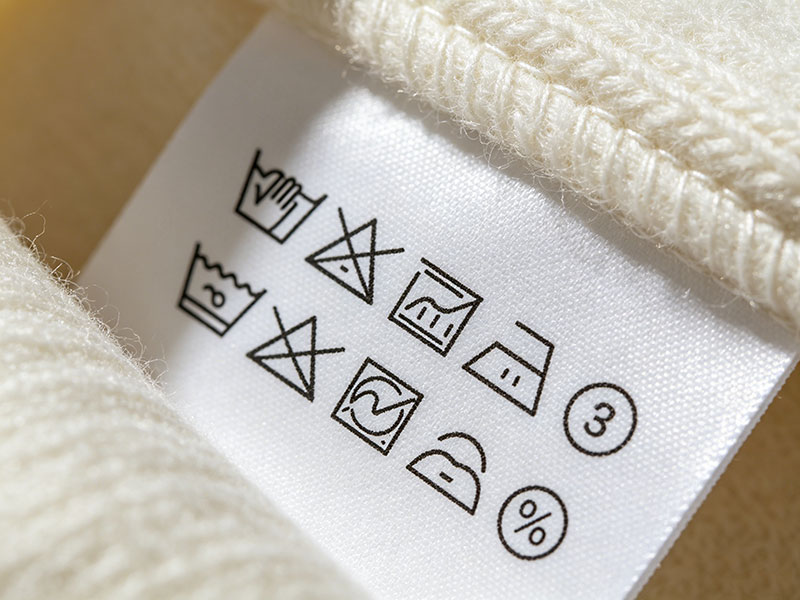
Garment Labels
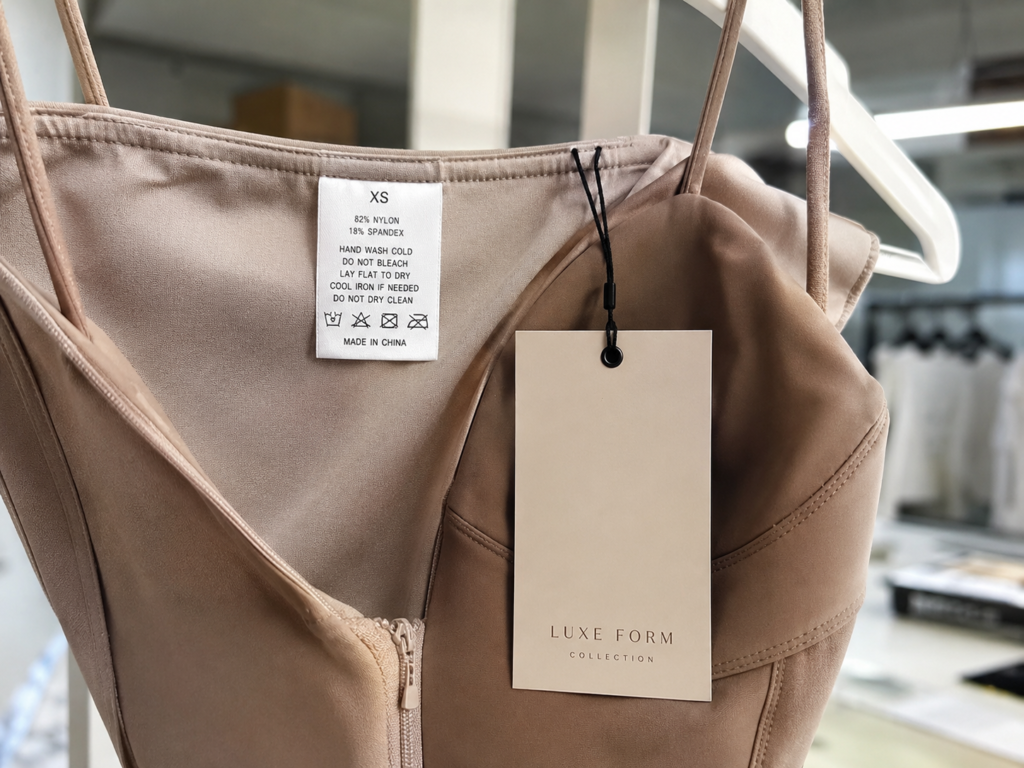
Hangtags and Strings
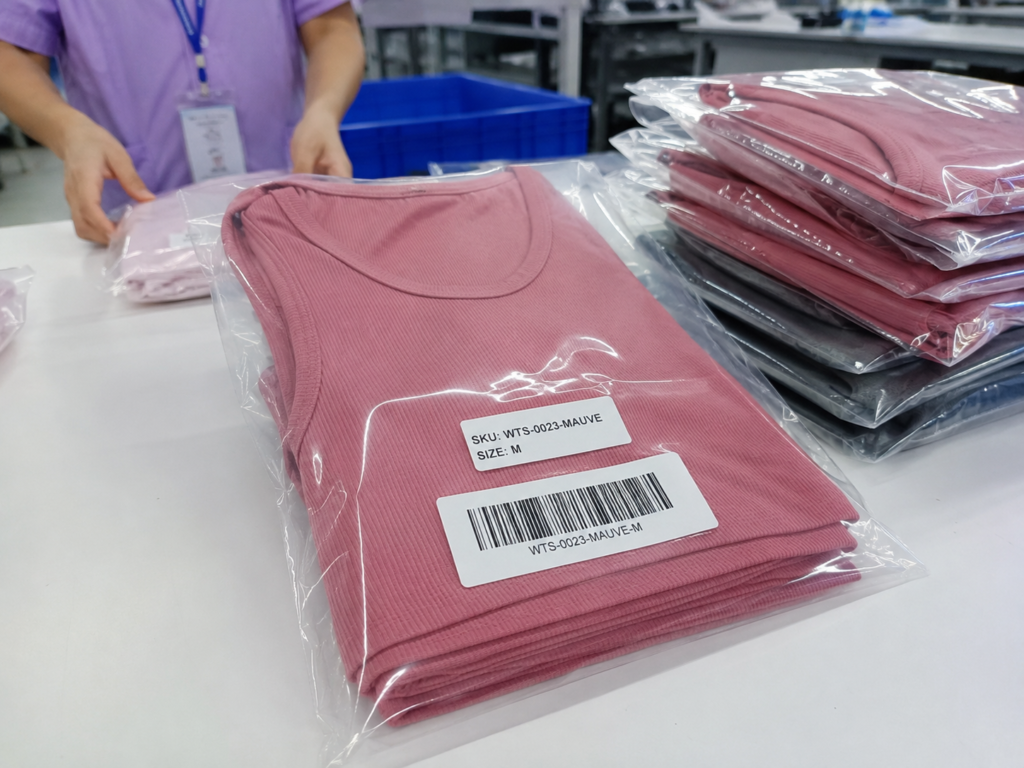
Barcode and SKU
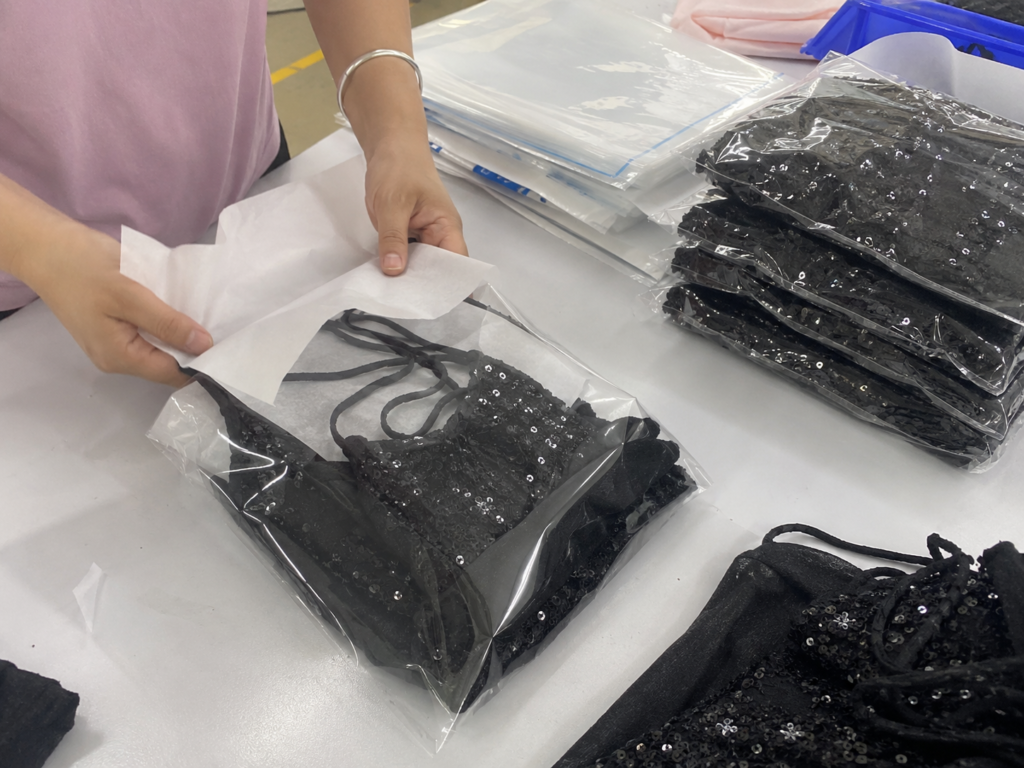
Individual Polybags
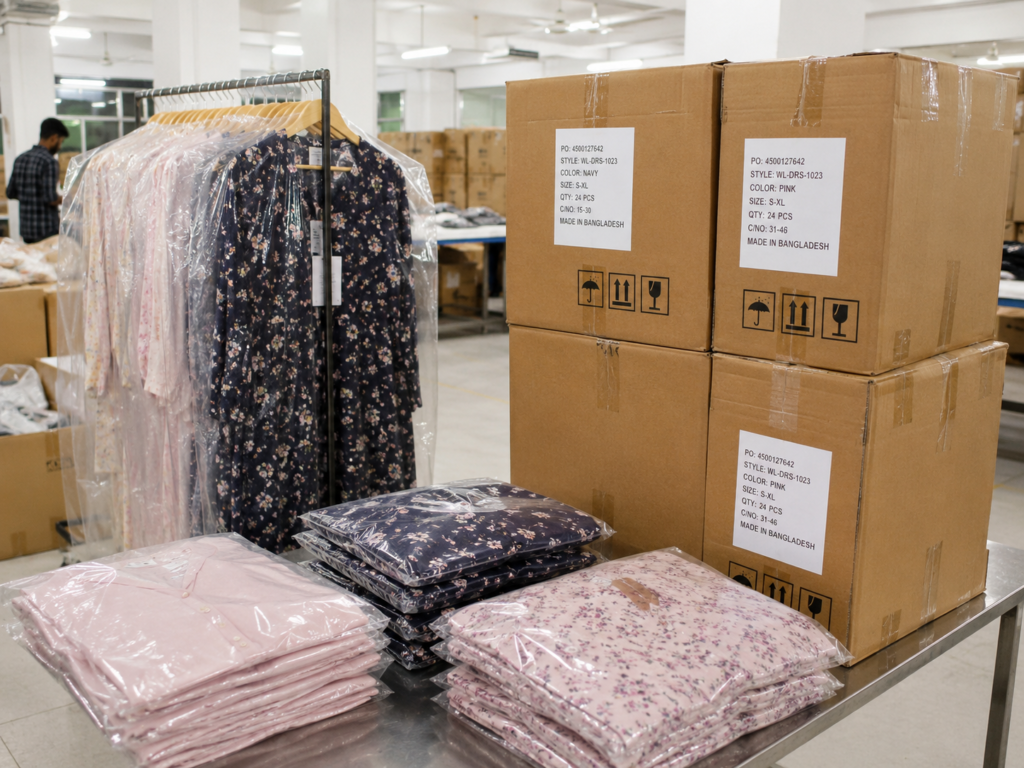
Carton Management

File Protection
Launch Planning and Export Delivery Support
Samples and Urgent Units
Bulk Freight Planning
Trade and Documents
Private Label and Retail-Ready White Dress Packing
Case 1: White Occasionwear Collection Development
Project Scope
A premium occasionwear brand developed a white dress collection for graduation, wedding events and formal celebrations.
- Collection size: 18 dress styles
- Product categories: white satin dresses, lace dresses, chiffon maxi dresses, crepe midi dresses and corset styles
- Materials: satin, chiffon, lace, crepe, mesh and structured lining
- Construction details: fitted bodices, elegant necklines, layered skirts and structured silhouettes
- Requirement: premium appearance with reliable coverage and clean finishing
Development Challenges
White occasionwear requires strict control because every construction detail becomes visible.
Key challenges included:
- Preventing transparency under photography lighting
- Matching white, ivory and cream tones
- Controlling lining visibility
- Maintaining clean zipper lines
- Protecting pressing quality on white surfaces
Manufacturing Approach
The development team controlled white garments through material and construction planning.
Key controls included:
- White tone approval across shell, lining and trims
- Opacity testing under different lighting
- Lining length and coverage adjustment
- Bust, waist and hip fitting review
- PP sample approval before bulk production
Additional attention was given to:
- Corset support
- Cup placement
- Lace positioning
- Invisible zipper construction
- Final garment presentation
Manufacturing Value
The collection achieved a premium occasionwear appearance by combining fabric selection, lining engineering, fit control and clean production handling.
Case 2: White Resort and Summer Dress Collection
Project Scope
A resortwear brand developed a lightweight white dress collection for vacation and summer markets.
- Collection size: 15 dress styles
- Product categories: white linen dresses, chiffon dresses, cotton dresses, relaxed maxi dresses and vacation styles
- Materials: linen blends, chiffon, rayon, viscose and lightweight woven fabrics
- Construction details: relaxed silhouettes, flowing skirts, halter styles and breathable designs
- Requirement: lightweight feeling with comfortable coverage
Development Challenges
The collection needed to balance softness, breathability and opacity.
Main challenges included:
- Avoiding excessive transparency in lightweight fabrics
- Maintaining natural fabric movement
- Controlling wrinkles after transportation
- Preventing uneven hems on long dresses
- Matching natural white and warm white tones
Manufacturing Approach
The project focused on lightweight fabric and travel-friendly construction.
Key controls included:
- Selecting suitable lining based on fabric weight
- Reviewing transparency under natural light
- Adjusting shell and lining length
- Testing hem balance after hanging
- Confirming packing methods before shipment
Additional production controls:
- Fabric shrinkage review
- Color batch comparison
- Clean handling standards
- Wrinkle protection during packing
Manufacturing Value
The collection maintained a relaxed resort aesthetic while achieving commercial wearability, controlled coverage and export-ready presentation.
Case 3: White Private Label Multi-Style Collection Program
Project Scope
An established fashion brand required a complete white dress assortment covering different retail occasions.
- Collection size: 30 dress styles
- Production scale: 60,000+ pieces
- Product categories: white mini dresses, bodycon dresses, corset dresses, midi dresses, maxi dresses and party styles
- Materials: satin, chiffon, lace, mesh, jersey, ponte and cotton blends
- Requirement: consistent quality across multiple SKUs, colors and delivery schedules
Development Challenges
The main challenge was maintaining consistency across many different white dress categories.
Key risks included:
- Different fabric behaviors between styles
- Multiple white shade directions
- Separate lining requirements
- Size grading consistency
- Private-label packing accuracy
Manufacturing Approach
The collection was organized by product structure and risk level.
Structured White Dress Group
Focused on:
- Corset construction
- Cup and boning placement
- Neckline stability
- Internal structure protection
Manufacturing Value
The program demonstrated that successful white dress production requires both manufacturing capacity and detailed control of fabric, color, fit, finishing and retail delivery.
Repeat Orders and Seasonal White Collections
Retained Product Records
Reorder Material Review
Collection Expansion
White Dress Manufacturer Frequently Asked Questions
MOQ starts from 200 pcs per style/color. Fabric availability, custom dyeing, lace, trims, structure, packaging and schedule may raise the required quantity. A mixed total across many styles or colors does not automatically meet the per-style, per-color starting point.
Shell density, stretch, lining material, lining shade, lining length, seam placement and body coverage are reviewed during sampling. Checks should include relaxed and stretched fabric states under natural, indoor and photography lighting before PP approval.
Yes, material direction can be developed from an approved swatch, Pantone reference, original sample or lab dip. Shell fabric, lining, thread, zipper and trims are visually reviewed together because different textures can make equal dye values appear different.
Standard first samples generally require 10-15 days after essential details and material direction are confirmed. Simple styles may require about 7-10 days. Corset, strapless, lace, mesh, sequin and evening styles generally require 15-25 days or a project-specific schedule.
A reference photo can be evaluated for structure, fabric direction, measurements, trims and production risk. Final bulk pricing cannot be confirmed from a photo alone; quantity, size range, materials, construction, labels, packing and delivery requirements still need clarification.
Common directions include satin, stretch satin, chiffon, lace, mesh, power mesh, crepe, cotton poplin, linen blends, rayon, viscose, jersey, ponte, organza and tulle. Final availability, MOQ, shade, certificate scope and lead time are confirmed by project.
Clean handling covers material storage, cutting surfaces, machine contact points, work-in-process protection, pressing surfaces, final stain inspection and packing materials. Prevention is applied through the workflow rather than leaving all cleanliness checks to the final stage.
Yes. Support can include woven labels, care labels, size labels, hangtags, hang strings, barcode stickers, SKU labels, polybags, cartons, carton marks and warehouse labels. Artwork, data and packing instructions should be supplied before final packing approval.
Yes. Multi-style programs can be grouped by fabric, construction, trim family, launch priority and production allocation. Clear style lists, quantity plans, sample priorities and delivery windows are required to coordinate large seasonal assortments.
DDP can be reviewed by destination, shipment type and available forwarder solution. Express, air, sea, air-sea split, EXW, FOB, CIF and DAP are also available for project evaluation. No single trade term is assumed for every country or order.

Start Your White Dress Manufacturing Project
Kelly and the project team can evaluate style complexity, fabric and lining direction, opacity risk, shade requirements, size range, MOQ fit, sampling route, private-label scope and launch timing before a formal quotation or sample plan is prepared.
Complete information helps the team identify technical risks early and reduces repeated questions during development.
- Tech pack, line sheet, sketches, reference images or original sample photos
- Target quantity per style/color and proposed size ratio
- Preferred white tone, fabric, lining and trim direction
- Fit standard, measurement chart and key construction notes
- Main label, care label, hangtag, barcode, polybag and carton requirements
- Photo sample date, launch date, warehouse destination and preferred shipment plan
- Any testing, audit-document or NDA requirements relevant to the project