 Skip to content
Waistline Position Development
Production-ready waistline placement for dresses, skirts, jumpsuits and matching sets, developed for global fashion brands and structured apparel programs.
- 7+ senior pattern makers translate high, natural, dropped, corset and seam-defined waistlines into controlled production patterns.
- 2 sample rooms and 20+ sample machinists support fit, revised, PP and Golden samples before bulk release.
- Control covers center-front, side-seam and center-back levels, torso balance, waist ease, fabric response, grading and fit-sensitive QC.
- MOQ starts at 200 pcs per style/color, subject to fabric, color, trim, construction, packing and production requirements.
Built for Structured Womenswear Development
Fashion Brand Programs
Seasonal dress collections need a consistent silhouette across several products, fabrics, colors and size ranges. Jinfeng develops waist placement for mini, midi and maxi dresses, bodycon and corset styles, skirts, jumpsuits and matching sets. Brand blocks, approved garments, tech packs or reference images can establish the starting direction. Pattern comments are recorded so a natural waist, raised waist, dropped waist or shaped seam remains intentional across later revisions, production colors and repeat orders.
Technical Development Teams
Scaled Production Programs
What Waistline Position Development Controls
Waistline position development defines where the garment establishes its visual and structural waist, then converts the chosen position into pattern points, sample evidence, grade rules and inspection standards. The work affects proportion, comfort, movement, fabric fall and bulk repeatability.

Position Is a Pattern Decision
A waistline cannot be controlled by naming a style “high waist” or “low waist” in a sketch. The development team needs a repeatable location from the approved garment or pattern reference. Depending on the design, the position may be established by a waist seam, shaped panel, waistband, elastic channel, wrap tie, corset edge, cut-out boundary or the narrowest part of a continuous silhouette. Front, side and back levels must be considered separately because body length, bust shaping, shoulder slope and hip curve can change how a horizontal line appears on the body.
The selected position also changes surrounding pattern geometry. Raising a waist seam can shorten the bodice, alter dart placement, move ruching, change zipper length and increase the skirt section. Dropping the line can affect high-hip ease, seat coverage, pocket or cut-out placement and the relationship between torso and skirt length. Jumpsuits add another dependency: waist placement, torso length and crotch depth must work together so the garment remains comfortable when standing, walking and sitting.
Jinfeng records the intended waist type, reference point, base size, measurement method and fit preference before a pattern is approved. Pattern work then links visual intention with a cuttable and sewable structure rather than leaving proportion to operator judgment.

Placement Must Survive Production
An attractive fit sample is only the first proof. Production-ready waist placement must remain stable after material changes, size grading, cutting, sewing, pressing and packing. Stretch jersey may pull a seam upward; satin can reveal puckering or zipper tension; bias-cut fabric can settle after hanging; lining may restrict the outer shell; corset structure can change the apparent waist when boning or cup position moves. Each material and construction route requires its own review before bulk cutting.
Approved comments therefore move into a controlled file set. The final pattern establishes seam shape and balance. The measurement chart identifies relevant points of measure and tolerances. Grade rules define how vertical and horizontal relationships change across the size range. The PP sample confirms production materials and construction. A Golden sample provides an appearance and workmanship reference. QC instructions identify where waist level, circumference, symmetry, seam position and garment balance require measurement or visual comparison.
The commercial result is not a promise of identical bodies or zero manufacturing tolerance. The result is a documented standard that reduces avoidable variation, gives production teams a clear reference and allows brand teams to judge samples, bulk garments and repeat orders against the same approved logic.
Waistline Types and Development Priorities
Different waistlines create different proportions and construction risks. Position must be chosen with the target silhouette, body block, fabric, closure, internal support and size range in mind. The matrix below defines the main development priorities before sampling begins.
| Waistline Type | Position and Visual Effect | Development Control | Relevant Styles |
|---|---|---|---|
| Empire Waist | Sits below the bust and lengthens the lower body. | Underbust level, bust support, front length, skirt release, lining and side-seam balance. | Maxi dresses, occasion dresses, maternity-friendly silhouettes and soft resort styles. |
| High Waist | Sits above the natural waist and creates a longer-leg proportion. | HPS-to-waist length, bust-to-waist shaping, side level, ease and skirt attachment. | Mini dresses, fit-and-flare dresses, A-line styles and raised-waist skirts. |
| Natural Waist | Follows the brand’s approved natural-waist reference. | Front and back torso length, waist seam level, circumference, dart or panel balance and movement ease. | Midi dresses, cocktail dresses, office dresses, skirts and tailored sets. |
| Dropped Waist | Sits below the natural waist and extends the bodice toward the high hip. | Low-waist depth, high-hip ease, seat coverage, seam curvature, skirt proportion and zipper placement. | Y2K dresses, low-waist minis, column dresses, two-piece looks and clubwear. |
| Basque or V Waist | Forms a shaped point or curve below the natural waist. | Center-front depth, left-right symmetry, seam walking, boning or interfacing, skirt joining and edge grading. | Corset dresses, occasionwear, formal dresses and sculpted party styles. |
| Corset Waist | Uses structured shaping to define or compress the waist. | Cup and boning position, underbust relation, waist tension, closure strength, lining and comfort. | Bustier dresses, strapless dresses, structured minis and evening styles. |
| Elastic or Wrap Waist | Uses controlled flexibility rather than a fixed seam position. | Elastic length, recovery, casing level, tie position, overlap, distributed gathers and finished waist measurement. | Resort dresses, wrap dresses, jumpsuits, soft sets and relaxed day dresses. |
Why Waistlines Fail During Development
Sits Too High
- Review HPS-to-waist and center-back length.
- Check bust accommodation and strap tension.
- Refit after fabric or lining changes.
Sits Too Low
- Check natural and intended waist references.
- Review skirt weight and garment suspension.
- Confirm standing, walking and sitting positions.
Tilts or Breaks
- Compare front, side and back reference levels.
- Walk joining seams and check notches.
- Inspect zipper, pressing and seam tension.

Six Variables Behind Stable Waist Placement
Torso Length
Front and back torso lengths determine where a waist seam meets the body. Bust volume can require more front length, while back shape and shoulder slope affect center-back level. A single side-seam measurement cannot describe the full balance. Development starts with an agreed reference origin, base size and target position, followed by center-front, side and center-back comparison.
- HPS or neckline reference
- Front and back length
- Side-seam level
- Brand fit block
Bust-Hip Balance
Waist placement sits between two major volumes. Insufficient bust room may pull the front line upward; inadequate high-hip ease may push a dropped waist upward or create drag lines. Corset and bodycon styles add controlled tension. Pattern shaping, darts, princess seams, panels, ruching and negative ease must support the intended curve without forcing the line away from its approved position.
- Bust and underbust relation
- Waist circumference and ease
- High-hip and hip depth
- Side-seam continuity
Fabric Behavior
Stretch, recovery, drape, weight, shrinkage and bias movement can all change waist placement. Jersey may grow during wear, satin can slip during cutting, rayon may shrink, and a heavy skirt can pull a soft bodice downward. Jinfeng reviews fabric direction and sample behavior before finalizing the pattern. Material replacement triggers a new fit-risk check when mechanical behavior changes.
- Stretch direction and recovery
- Drape and garment weight
- Shrinkage or relaxation
- Lining compatibility
Seam Structure
A waist can be created by a horizontal seam, shaped panel, waistband, elastic casing, corset edge, basque point, cut-out or wrap overlap. Each route transfers load differently. Interfacing, boning, seam allowance, zipper position, notches, elastic length and lining attachment influence stability. Construction is approved with the pattern because an apparently small sewing change can alter fit, tension and visual balance.
- Seam shape and joining length
- Support and interfacing
- Closure position
- Lining attachment
Ease and Movement
Static fit is not enough. Sitting, walking, raising the arms and bending can move a garment along the body. Jumpsuits are especially sensitive because waistline, torso length and crotch depth interact. Bodycon dresses require controlled negative ease, while woven dresses need enough wearing ease. Fit review records movement problems before the final pattern and tolerance are released.
- Standing and sitting balance
- Arm and torso movement
- Negative or positive ease
- Rise and crotch comfort
Market and Sizes
Target market, brand block, sample size, model profile and full size range guide the development route. US, UK, EU and AU size conventions are not interchangeable labels. Petite, tall and extended-size programs may require separate vertical proportion rules. Jinfeng asks for the brand’s size chart and fit preference before grading so the waistline follows the intended market rather than a generic factory block.
- Base size and fit model
- Size chart and grade rules
- Petite or tall strategy
- Target market preference
Waistline Measurement and Specification Framework
Measurement language must be agreed before comments become pattern changes. A marked diagram should show the reference origin, measuring route and garment state. Jinfeng links each waist-related point with the pattern, sample size, tolerance and production inspection method.
| Point of Measure | Agreed Definition | Risk When Unclear | Production Use |
|---|---|---|---|
| HPS to Waist | From the agreed high-point shoulder reference to the waist seam or approved waist level along the specified route. | Front waist may sit high or low; bust shaping can be misread. | Base-pattern balance, fit review and vertical grading. |
| Center-Back Neck to Waist | From the agreed back-neck reference to the center-back waist position. | Back waist can dip, rise or pull against a zipper. | Back-pattern length and center-back inspection. |
| Center-Front Waist Level | Vertical position of the seam, point or narrowest line at center front. | Basque points, ruching or front panels can move visibly. | Pattern marking, sample comparison and shaped-seam control. |
| Side-Seam Waist Level | Position where the waist line intersects the side seam on both sides. | Waist can tilt or break between front and back. | Seam walking, notch alignment and inline QC. |
| Center-Back Waist Level | Position at the zipper, back seam, elastic channel or shaped panel. | Back line may sag, peak or wave after closure insertion. | Zipper setup, back balance and final inspection. |
| Finished Waist Circumference | Measured at the approved seam, waistband or specified narrowest level, with stretch state defined. | Garment may feel tight, loose or migrate during wear. | Size chart, ease control and measurement QC. |
| Waist-to-Hip Depth | Vertical distance from waist reference to high hip or full hip using the agreed route. | Dropped waist and fitted skirts can lose proportion or comfort. | Panel shaping, high-hip ease and grade rules. |
| Torso Length and Rise | Bodice length plus rise or crotch relationship for jumpsuits and rompers. | Waist may look correct while the garment pulls or drops during movement. | Jumpsuit pattern balance and movement fitting. |
| Waist Position Tolerance | Permitted variation by style, material, seam type and client standard. | Inspectors may accept inconsistent garments or reject workable production. | PP approval, inline checks, final QC and AQL criteria when required. |
From Design Intent to Approved Waistline

Review the Fit Brief
- Input: files, fit preference and quantity plan
- Decision: development route and key risks
- Output: clarified waistline brief

Establish Pattern Position
- Input: approved brief and size standard
- Decision: front, side and back levels
- Output: first development pattern

Review Fabric and Structure
- Input: fabric and trim direction
- Decision: pattern or support adjustment
- Output: material-aware construction route

Make and Fit Sample
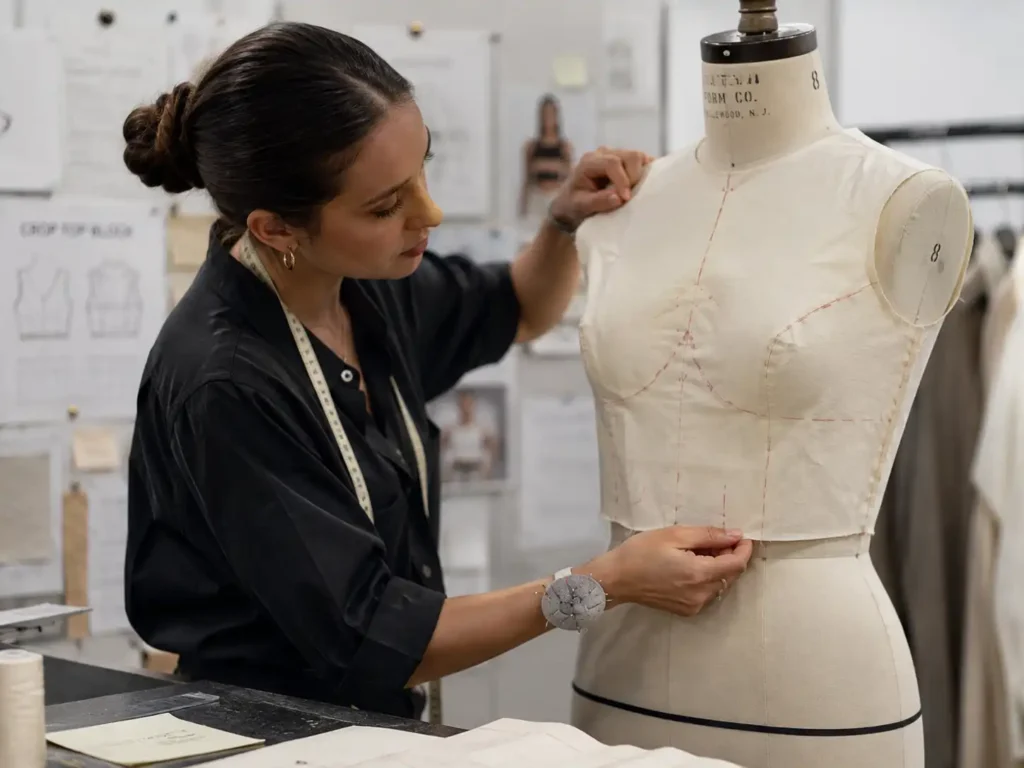
The first or fit sample tests proportion on the body. Jinfeng reviews waist level, circumference, side balance, bust and hip relationship, skirt fall, zipper behavior and movement. Brand teams can send front, side and back fitting photos, measured differences and marked detail images. A normal dress first sample commonly takes about 10–15 days; complex corset, strapless, lace, mesh or sequin styles commonly require about 15–25 days, depending on material readiness.
- Input: first pattern and available materials
- Decision: approve or revise
- Output: fit evidence and correction list

Correct and Record
- Input: marked feedback and measurements
- Decision: correction scope
- Output: revised pattern and sample record

Grade and Lock Standard
- Input: approved fit and final materials
- Decision: production release
- Output: graded pattern, PP and QC standard
Samples That Produce Clear Fit Decisions
First and Fit Sample
- Review front, side and back views.
- Measure agreed waist-related POMs.
- Mark visual and comfort priorities.

Revised Sample
- Use one consolidated comment list.
- Identify design changes separately from fit corrections.
- Confirm the new pattern version.

PP Sample
The pre-production sample confirms the final production route. Fabric, color, lining, trims, construction, waist position, measurements, labels and packing direction should be locked before approval. PP samples commonly require about 7–15 days when final materials are ready. Major structural changes after approval can affect material purchasing, pattern files, production timing and price, so unresolved waistline questions should return to fit review before bulk cutting is authorized.
- Confirm final production materials.
- Sign off measurements and tolerances.
- Release only the approved version.

Golden Sample
- Production and workmanship reference
- Measurement and appearance comparison
- Repeat-order continuity
Fabric and Construction Change Waistline Behavior
Stretch and Recovery
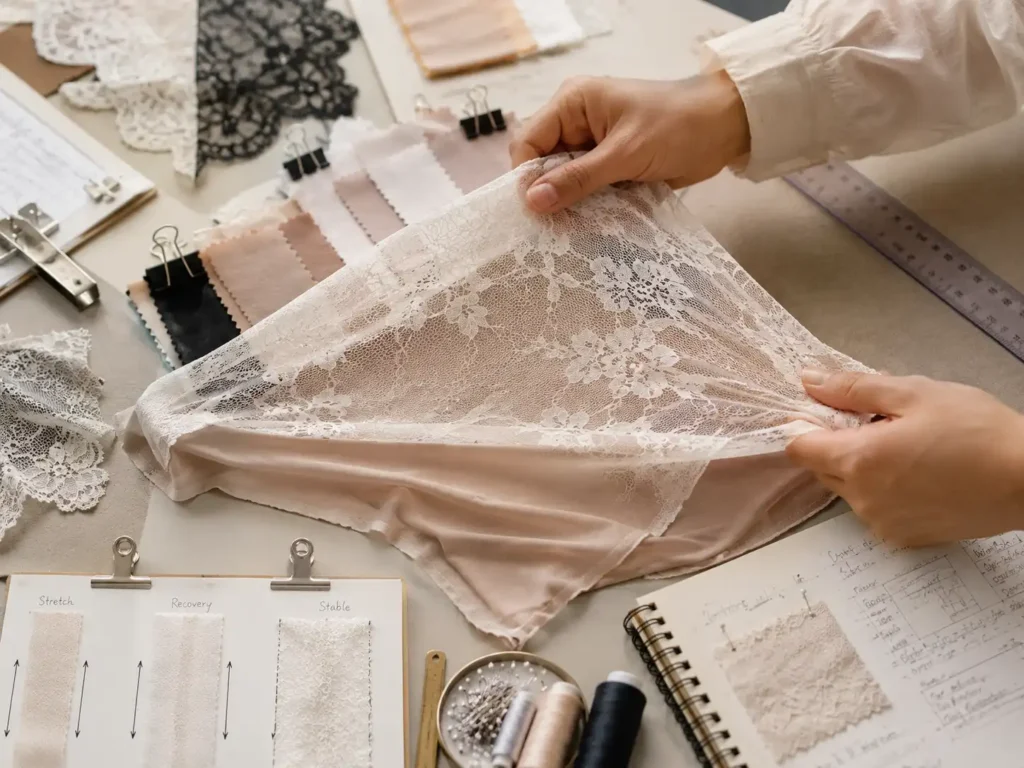
- Stretch percentage and direction
- Recovery after wear or handling
- Negative ease by silhouette
- Lining stretch compatibility

Drape and Bias
Satin, chiffon, crepe, rayon and bias-cut structures can settle, twist or lengthen after cutting and hanging. A waistline may appear level in flat inspection but change once the garment is suspended on the body. Fabric weight and skirt sweep can also pull the bodice downward. Pattern direction, relaxation, seam stabilization, lining and final pressing are reviewed as one system. Revised fit evidence may be required after switching fabric weight or construction direction.
- Grain and bias direction
- Hanging and settling behavior
- Skirt weight and sweep
- Pressing and seam stability

Corset and Shaped Seams
Corset, bustier, basque and V-waist styles depend on internal support and exact joining geometry. Cup position, underbust level, boning, waist tension, zipper or lace-up closure and top-edge stability influence where the shaped waist appears. Jinfeng walks curved seams, checks left-right symmetry and reviews support placement during sampling. A visually small point shift may require changes to several pattern panels, lining pieces and boning channels before grading.
- Cup and underbust relationship
- Boning and closure position
- Shaped-seam symmetry
- Comfort under controlled tension

Waistband and Lining
Waistbands, elastic channels, interfacing and lining can stabilize or distort the intended line. A rigid waistband may roll when high-hip ease is insufficient. Elastic can gather unevenly when casing or finished length is not controlled. Lining can pull the outer shell upward when its pattern or stretch differs. Jinfeng confirms waistband width, interfacing, elastic recovery, seam allowance, zipper position, lining attachment and finished waist measurement before production instructions are issued.
- Waistband width and support
- Elastic length and recovery
- Interfacing compatibility
- Lining ease and attachment
Grading Waist Position Across Size Ranges
Grading must preserve proportion rather than enlarge every point mechanically. Waist circumference, vertical position, shaped seams, torso balance and surrounding details need coordinated rules across the approved range. Base-size approval remains the starting point, not the final proof.

Base Size and Grade Rules
Jinfeng begins with the brand’s approved base size, measurement chart and fit preference. Horizontal grades control waist, bust and hip increments; vertical grades control bodice length, waist level, armhole, neckline, slit and garment length. Shaped lines need extra attention because a basque point, cut-out edge, corset panel or curved seam can distort when each coordinate is moved independently. Pattern pieces are walked after grading so joining lengths, notches and left-right symmetry remain compatible.
Selected size-set reviews can focus on sizes carrying the greatest risk rather than repeating every sample stage without purpose. Bodycon and stretch styles require recovery and circumference checks. Corset and strapless styles require support and upper-body review. Jumpsuits require torso, waist and crotch relationships. Maxi and midi styles require vertical proportion and hem balance. Measurement tolerances are defined by product, material and client standard rather than applying one allowance to every POM.
The final graded nest, size chart, grade rule and inspection points must share the same version before cutting begins. A correct base sample cannot compensate for unclear edge-size rules.
Before release, the team also checks whether pockets, belts, tabs, embroidery, prints or seam intersections must track the graded waist. Coordinated movement keeps decorative elements aligned with the functional pattern instead of creating a second, conflicting visual waistline.
Petite, Tall and Extended Sizes
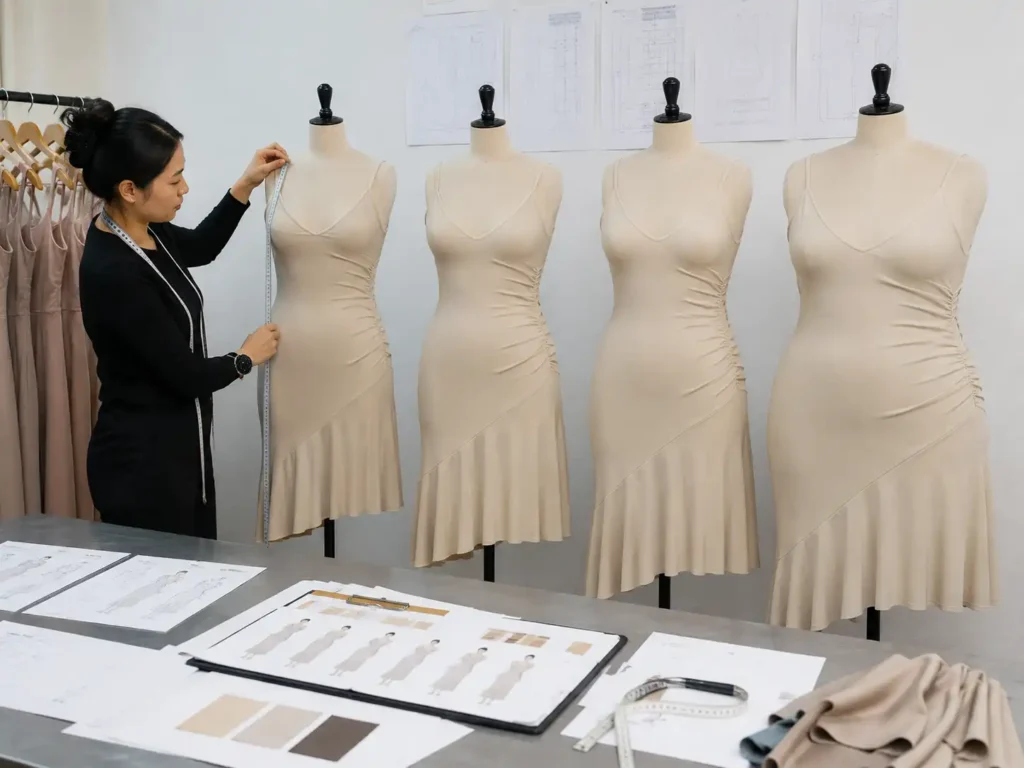
Petite and tall development is not a simple hem adjustment. Waist placement may need to move with shoulder-to-waist length, bust level, armhole, strap length, slit height and overall torso proportion. A tall jumpsuit may require more body rise as well as a lower vertical waist reference. A petite maxi may need coordinated changes to bodice, skirt, lining and slit so the silhouette remains balanced rather than merely shorter.
Extended-size development also requires proportion review instead of automatic scaling. Bust support, underbust relation, waist placement, high-hip ease, waistband stability, strap width and movement can require revised rules or dedicated fit evidence. The chosen approach depends on brand block, target market, size span, fabric and product structure.
Jinfeng records any separate block or rule set clearly and links it to selected sample evidence, measurement tolerances and QC instructions. The objective is consistent design intent across the size offer while respecting changes in body proportion, support and comfort.
When one block cannot serve the complete range cleanly, the transition point is agreed before costing and sampling. Separate nests, revised component proportions and targeted size-set checks are then documented as part of the development plan, giving production and inspection teams an unambiguous standard for each range.
Lock Waistline Standards Before Bulk Cutting
Sample approval becomes commercially useful only when every accepted correction reaches the final pattern, size chart, production instruction and QC plan. Jinfeng uses a controlled handover so approved waist placement is not lost between the sample room and sewing line.

Pattern and Specification Lock
Before bulk release, the team confirms the final pattern version, base-size measurements, grade rules, fabric, lining, trims, seam allowance, construction method and waist-related tolerances. Fit photographs or comments are not treated as the production file.
Any approved change to waist height, seam shape, ease, elastic length, boning, zipper, ruching or adjoining panels must be reflected in the formal pattern and specification set.
The PP sample brings the file set and physical garment together. Brand approval should confirm the final waist position from front, side and back, finished circumference, comfort, surrounding proportions and material behavior. Label and packing direction may also be locked at the same stage. If final fabric differs from the fit sample in stretch, weight, shrinkage or drape, a renewed risk review determines whether additional sample evidence is needed.
After approval, later structural changes are handled as controlled changes because they can affect purchased materials, pattern pieces, labor, production timing and cost. Version discipline protects both sides from producing to different instructions.
Release status is recorded against the approved sample date and file set. Superseded patterns, measurements and comments are withdrawn from active production use, while open points remain visible until written approval closes them. The result is one executable standard rather than several partially approved references.

Production and QC Handover
The production package carries the final pattern, size chart, grade rules, material references, trim information, construction instructions, PP comments and QC checkpoints. For waistline-sensitive styles, key controls may include center-front, side and center-back level, waist circumference, shaped-seam symmetry, zipper flatness, elastic recovery, lining relation and garment balance. A Golden sample provides a physical comparison when required.
Factory allocation follows fabric, construction and order complexity. During cutting, pattern version, grain direction, shrinkage and shaped pieces are checked before bundles enter sewing. Inline inspection looks for seam migration, uneven joining, zipper tension, asymmetric shaping or incorrect elastic distribution before the issue spreads through a production lot. Final measurement and appearance checks compare finished garments with the approved standard and client quality requirements.
Repeat orders call back the saved pattern, measurements, material references, construction notes and Golden sample. New colors or fabric lots are still reviewed because material behavior can change even when the style number remains unchanged.
QC feedback is routed back to pattern, technical and production owners when a recurring deviation appears. The team can then separate isolated workmanship from a tolerance, construction or material cause, apply corrective action at the right stage and verify the correction before remaining quantities continue.
Fit-Sensitive Quality Control for Waistlines

Pattern Version Check
- Final pattern identification
- Approved size chart and grade rule
- Notch and seam compatibility
Material Lot Review
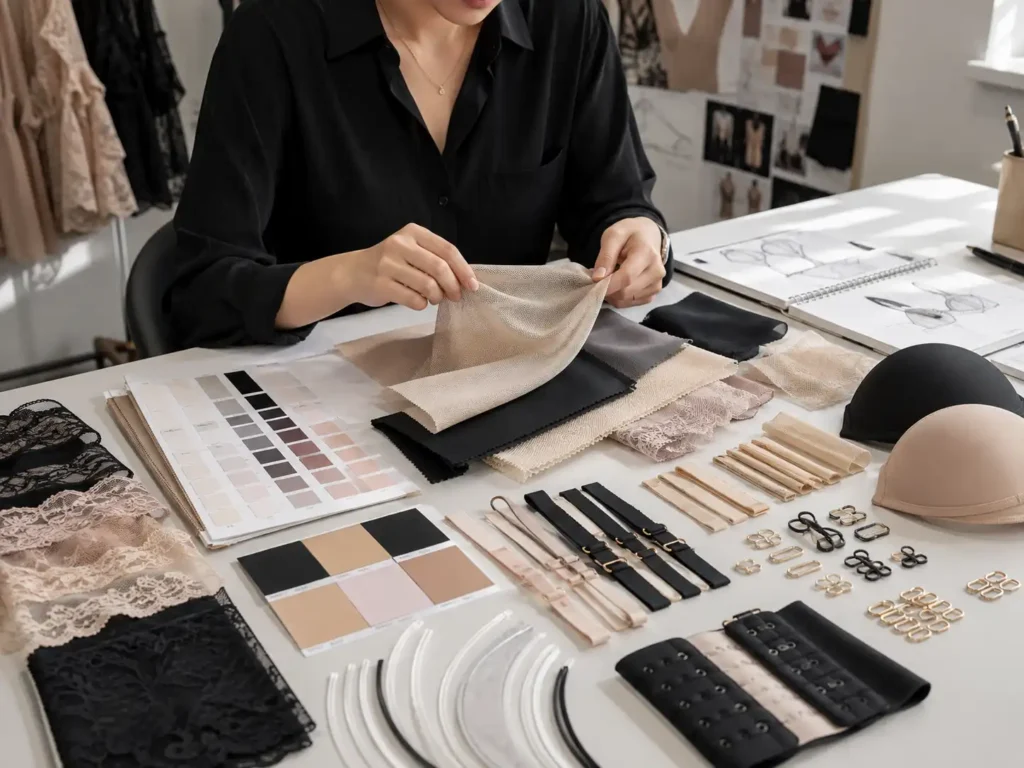
- Stretch and recovery comparison
- Shrinkage or relaxation risk
- Lining and elastic compatibility

Cutting Control
- Grain and stretch direction
- Shaped-panel symmetry
- Size and bundle separation

Inline Waist Check
- Center-front, side and back balance
- Seam, zipper and elastic behavior
- Corrective action before repetition

Measurement QC
- Agreed POM diagram
- Style-specific tolerance
- Size and color records

Final Balance Review
- Visual and measurable comparison
- Pressing and packing condition
- Client inspection requirements
Development Capacity Behind Better Waistlines
7+ Pattern Makers
2 Sample Rooms
Scalable Manufacturing
15+ QC Inspectors
How to Qualify a Waistline Development Manufacturer
Pattern Ownership
- Named pattern responsibility
- Version-controlled corrections
- Production-pattern release
Fit Evidence
- Fit and movement views
- Measured sample review
- Clear approval record
Grading Logic
- Base size and size chart
- Vertical and horizontal rules
- Edge-size validation
Material Judgment
- Fabric behavior review
- Lining and support relation
- Change-risk assessment
Sample-to-Bulk Handover
- PP approval and file lock
- Production instruction package
- Physical reference standard
Quality Evidence
Ask for genuine, properly anonymized evidence: pattern review, sample-room work, measurement diagrams, inline checks and final comparison records. Inspectors should know which waist-related points matter for each product. Broad quality claims without defined POMs, tolerances, sample standards or corrective action offer little protection for a scaled program.
- Fit-sensitive QC points
- Measurement and appearance records
- Client or third-party requirements
Case: 20,000-Piece US Occasionwear Program

Development Challenge
Key project data:
- 12 styles across satin mini, midi and wedding-guest directions
- Around 20,000 pieces across several production colors
- Matte satin, stretch satin and light lining
- Ruched waist, invisible zipper, slit and adjustable strap details
- First sample, revised sample, PP sample and Golden sample stages

Control and Result
Control sequence:
- Correct waist-hip balance in the approved pattern
- Lock satin, lining and zipper specifications
- Confirm PP and Golden sample standards
- Inspect color, zipper, waist balance and pressing during bulk
- Retain approved records for new-color repeats
Download Waistline Development Tools
Waistline Development Brief
The brief should capture product type, target market, base size, size range, waistline type, measurement reference, desired visual proportion, fabric, lining, closure, support, quantity and launch window. A front, side and back sketch area allows brand teams to mark the intended level and any shaped points. Completing the brief before sampling reduces assumptions and gives pattern, sample and merchandising teams one shared project direction.
Included sections:
- Waist type and reference level
- Base size and target size range
- Fabric, lining and construction
- Quantity, color and schedule inputs

Fit Feedback Photo Guide
A file-naming sequence keeps every view tied to the correct style, size, sample stage and fitting round.
Included sections:
- Required fitting angles
- POM and garment measurement notes
- Marked detail-photo examples
- Consolidated revision priorities
Waistline Position Development Frequently Asked Questions
Waistline position development defines where a garment establishes its visual or structural waist and converts the choice into pattern geometry, sample evidence, measurements, grade rules and QC points. Work can involve a seam, waistband, elastic channel, corset edge, basque point, wrap tie, cut-out or the narrowest part of a continuous silhouette.
Jinfeng supports empire, high, natural, dropped, basque, V-shaped, corset, elastic, wrap and waistband-defined waists across dresses, skirts, jumpsuits and matching sets. Suitability depends on silhouette, fabric, support, closure, size range and production quantity. The exact route is confirmed from a tech pack, reference, approved garment or development brief.
Useful inputs include a tech pack or reference images, front and back views, base size, size chart, intended waist type, fabric direction, lining, closure, support details, color plan, quantity per style/color and launch window. Fit photographs, an approved garment or an existing pattern can improve accuracy when transferring a proven brand fit.
The method depends on product structure. Common controls include HPS-to-waist, center-back neck-to-waist, center-front waist level, side-seam level, center-back level, finished waist circumference and waist-to-hip depth. Jumpsuits may also require torso length and rise. Every method should be shown on an agreed POM diagram.
A normal dress first sample commonly takes about 10–15 days. Complex corset, strapless, lace, mesh or sequin styles commonly take about 15–25 days. Revised and PP samples commonly take about 7–15 days. Timing depends on complete files, fabric availability, special trims, pattern complexity and response speed.
Yes. Stretch, recovery, weight, shrinkage, drape, bias movement and lining behavior can move the apparent or finished waist. A replacement with different mechanical properties may require pattern correction, revised ease, a new tolerance or renewed sample evidence. Material approval should include behavior, not only color and handfeel.
Jinfeng reviews both horizontal and vertical grade rules. Waist circumference, bodice length, seam position, shaped points, high-hip depth and surrounding details must preserve the approved proportion. Selected edge sizes may require size-set samples or measurement review, especially for structured, bodycon, jumpsuit, petite, tall or extended-size programs.
A revised sample is usually recommended when waist height, major pattern points, fabric behavior, corset support, shaped seams, cut-outs, jumpsuit torso length or construction changes materially. Minor non-structural updates may use partial evidence when risk is low, but the decision depends on product complexity, brand approval rules and bulk consequences.
Control starts with the final pattern, size chart, grade rules, PP sample, material references and production instructions. Cutting checks confirm pattern and direction. Inline inspection reviews seam level, symmetry, zipper, elastic and lining behavior. Final QC combines agreed measurements with front, side and back appearance against the PP or Golden sample.
MOQ starts at 200 pcs per style/color. Final suitability depends on fabric availability, color development, trims, construction complexity, size range, packing and production schedule. Custom-dyed fabric, exclusive prints, special lace, sequins, certified materials or custom trims may carry separate supplier minimums that are reviewed before quotation.

Send Your Waistline Development Brief
Share the files needed to evaluate proportion, pattern route, sampling scope and production fit. Jinfeng Apparel can begin from a tech pack, reference images, sketch, approved garment or existing sample, but an effective review also needs target market, base size, size range, intended waist type, fabric direction, quantity per style/color and launch window.
Kelly coordinates the first review with the relevant development team and returns the points that need confirmation before quotation or sampling. Clear inputs allow the team to distinguish a visual styling request from a pattern correction, material issue, grading risk or bulk-control requirement. For waistline-sensitive projects, include front, side and back references plus any measured differences from an existing sample.
For an initial technical assessment, identify the decision carrying the greatest uncertainty—position, fit, fabric, construction, grading or production consistency—so review priorities remain focused. Production MOQ starts at 200 pcs per style/color and remains subject to material, color, trim, construction, packing and scheduling conditions.
Please prepare:
- Tech pack, reference images, sketch or approved garment details
- Base size, size chart, target market and size range
- Intended waist type and marked front, side and back position
- Fabric, lining, closure, support and trim direction
- Quantity by style/color, color plan and launch window
- Fit photos, measured differences or current sample comments when available


