
Velvet Holiday Dress Collection Manufacturer
Private-label velvet collections engineered for holiday launches, partywear drops and winter occasionwear programs.
Jinfeng Apparel develops velvet mini, midi, maxi, bodycon, corset, cocktail and evening dresses for fashion brands planning coordinated holiday collections. Work begins with a reference image, original sample, line sheet or tech pack, followed by velvet selection, pattern review, first samples, fit corrections, PP approval, bulk production, garment inspection, private-label packing and export delivery. Production control focuses on nap direction, shade appearance, pile pressure, seam marks, zipper flatness, pressing and packing recovery rather than treating velvet like an ordinary woven fabric.
- Collection scale: structured support for 10-30 styles and seasonal order programs commonly planned between 20,000 and 80,000 pieces.
- Velvet sourcing: polyester velvet, spandex velvet, crushed velvet and knit velvet, commonly selected within an overall 180-350 gsm project range.
- Development resources: 2 sample rooms, 7+ senior pattern makers and 20+ sample machinists for parallel style development and revisions.
- Production framework: 6 owned womenswear factories, 10+ long-term production partners and more than 100,000 pieces of monthly capacity across the manufacturing network.
- Order entry: MOQ starts from 200 pieces per style and color, subject to fabric availability, color development, trims, construction and production scheduling.
A Development System Built for Seasonal Dress Programs
A holiday collection needs more than available sewing capacity. Multiple silhouettes must move through fabric approval, pattern development, sampling, revision and bulk handover without losing version control. Jinfeng Apparel combines dedicated sample resources, a women’s fashion production network and project-based quality management so a collection can be divided by fabric behavior, pattern difficulty, launch priority and finishing requirements.
Since 2008 | 2 | 7+ | 20+ | 15+ | 100,000+ |
Women’s fashion manufacturing | Sample rooms | Senior pattern makers | Sample machinists | QC inspectors | Pieces monthly capacity |
Built for Established Fashion and Occasionwear Programs
Global Fashion Brands
Occasionwear Labels
Premium Ecommerce Teams
Fashion Retailers
Product Development Teams
Private Label Programs
Risks That Can Derail a Velvet Holiday Collection
Wrong Velvet Choice
Mixed Nap Direction
Sample-Bulk Drift
Pressure and Shine
Collection File Confusion
Missed Launch Window
Build a Commercial Velvet Holiday Dress Collection
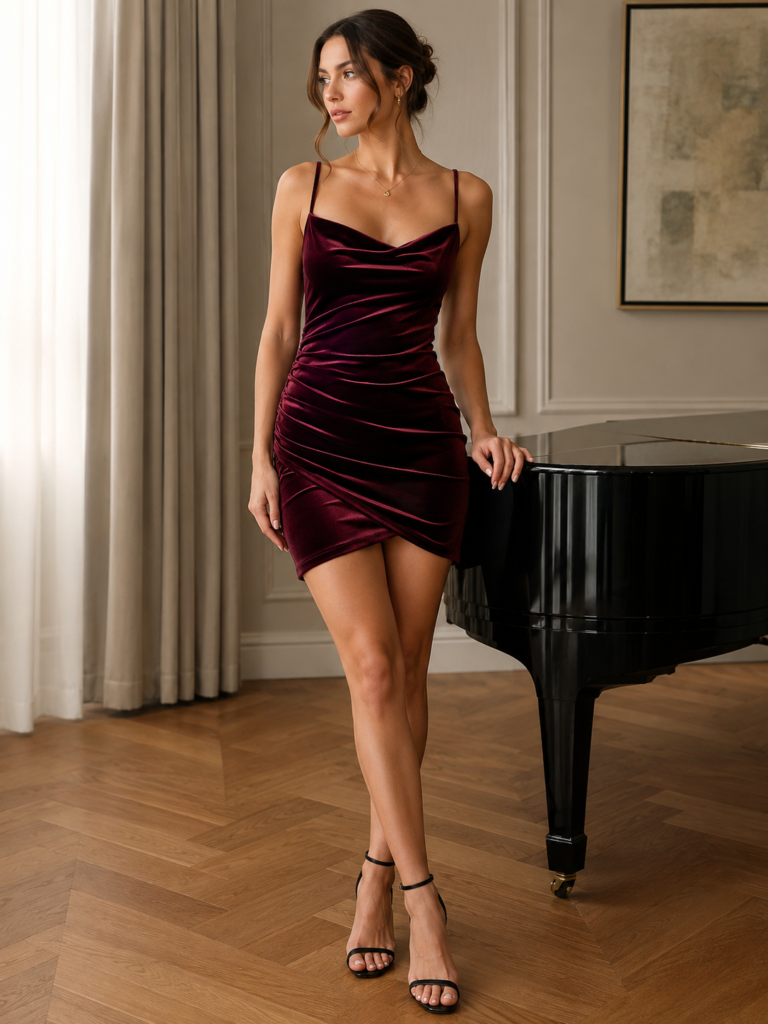
Velvet Mini Party Dress

Long-Sleeve Velvet Mini

Velvet Bodycon Midi
Velvet Corset Dress
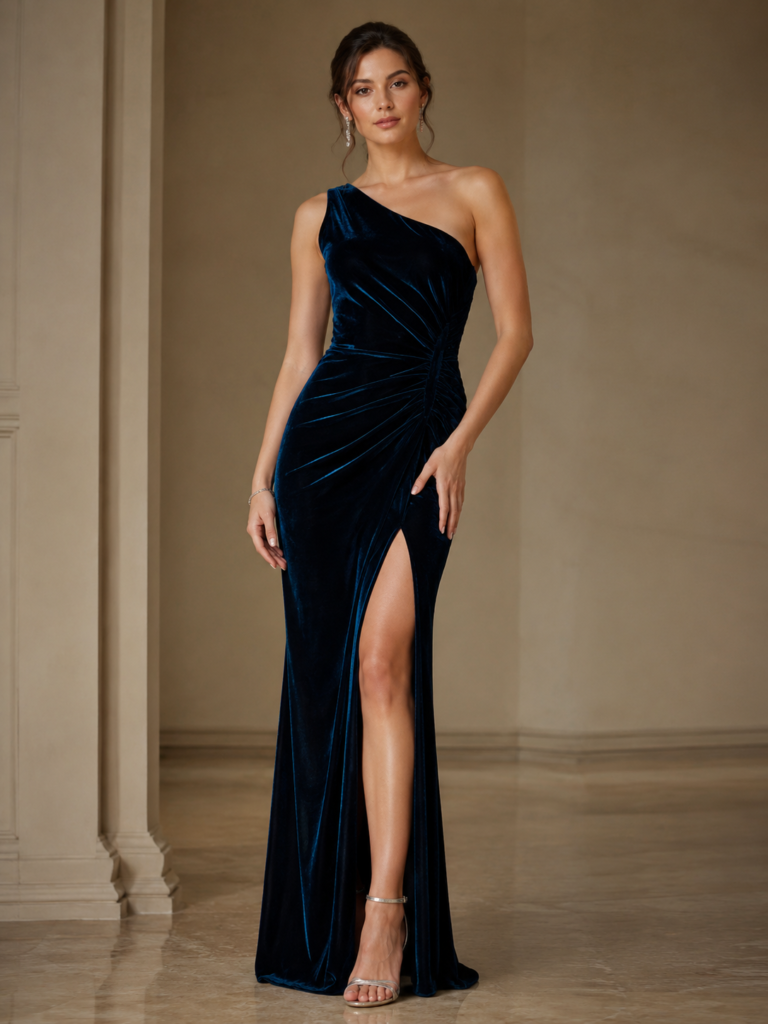
One-Shoulder Velvet Dress
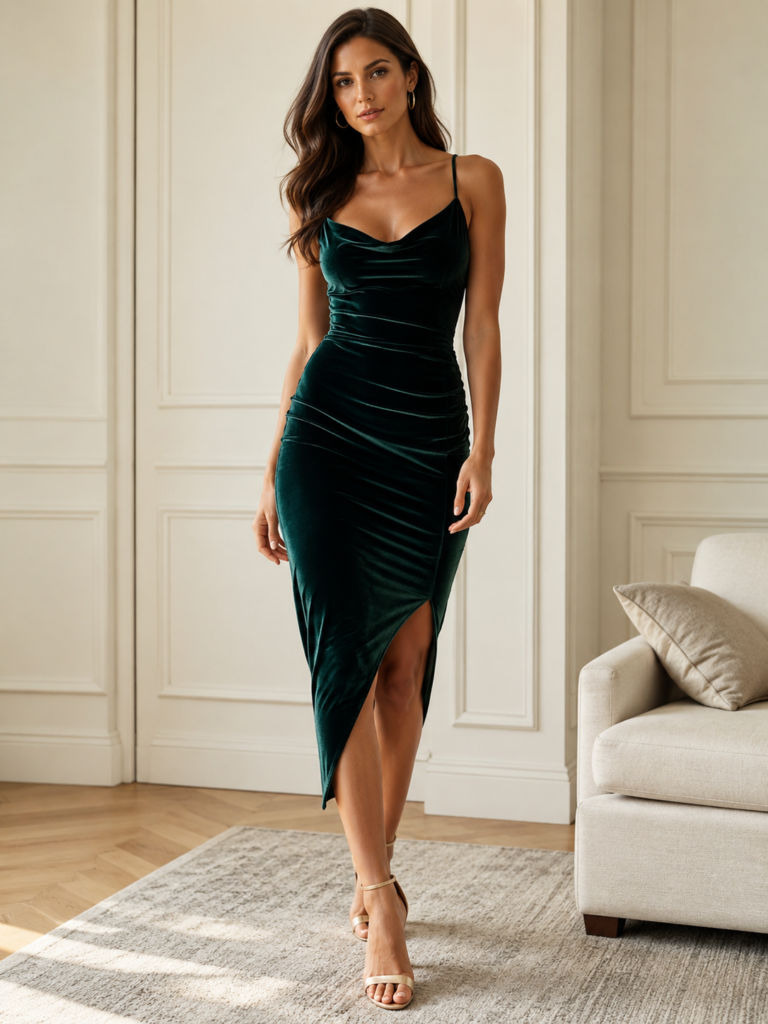
Velvet Cocktail Dress

Velvet Evening Maxi

Embellished Holiday Dress
Choose Velvet by Weight, Stretch and Structure
Velvet selection should begin with garment behavior rather than color alone. Jinfeng Apparel commonly works with polyester velvet, spandex velvet, crushed velvet and knit velvet within an overall 180-350 gsm range. Final specifications depend on silhouette, lining, size range, target hand feel, trim weight and commercial price. Swatch approval should include natural light, indoor light, touch, stretch and pressure-recovery review before the first pattern is finalized.
| Velvet Direction | Common Project Band | Stretch | Best-Fit Products | Sampling Focus | Bulk Control |
|---|---|---|---|---|---|
| Polyester velvet | About 220-350 gsm | Low to medium | Cocktail, A-line, structured mini, evening dress | Drape, seam bulk, neckline and zipper behavior | Nap direction, shade appearance, pressing and carton pressure |
| Spandex velvet | About 180-300 gsm | Medium | Bodycon, ruched mini, fitted midi, off-shoulder | Recovery, negative ease, lining stretch and ride-up | Chest-waist-hip measurements, side seams and hem stability |
| Knit velvet | About 200-320 gsm | Medium | Soft fitted dresses, long sleeves, draped silhouettes | Twist, recovery, shoulder and sleeve mobility | Relaxation, stretch direction, seam balance and size stability |
| Crushed velvet | About 180-300 gsm | Varies | Party mini, club dress, statement styles | Surface consistency, pattern placement and lighting | Texture appearance, shade grouping and packing recovery |
| Heavy velvet | About 280-350 gsm | Low | Formal maxi, structured cocktail, winter evening | Weight, support, seam thickness and hem hang | Panel alignment, seam impression, hanger support and shipping pressure |
| Lighter velvet | About 180-230 gsm | Low to medium | Draped mini, soft midi, sleeve styles | Transparency, cling, lining and drape control | Puckering, lining balance, press marks and surface snagging |
Plan Holiday Colors Without Bulk Shade Surprises
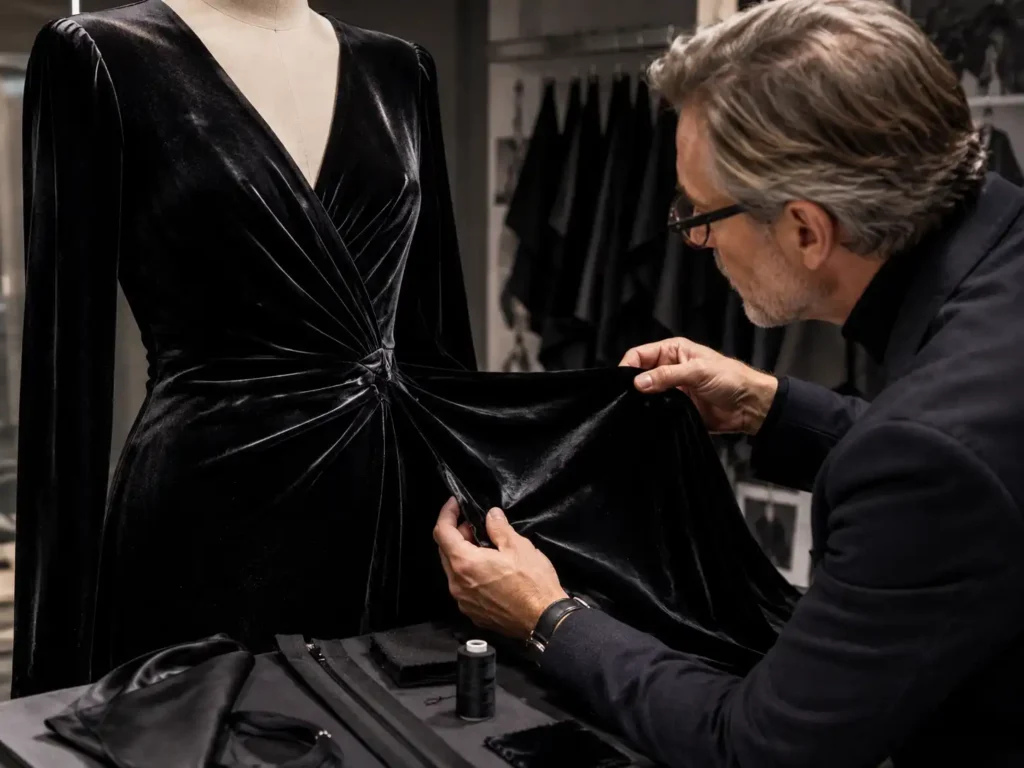
Black Velvet
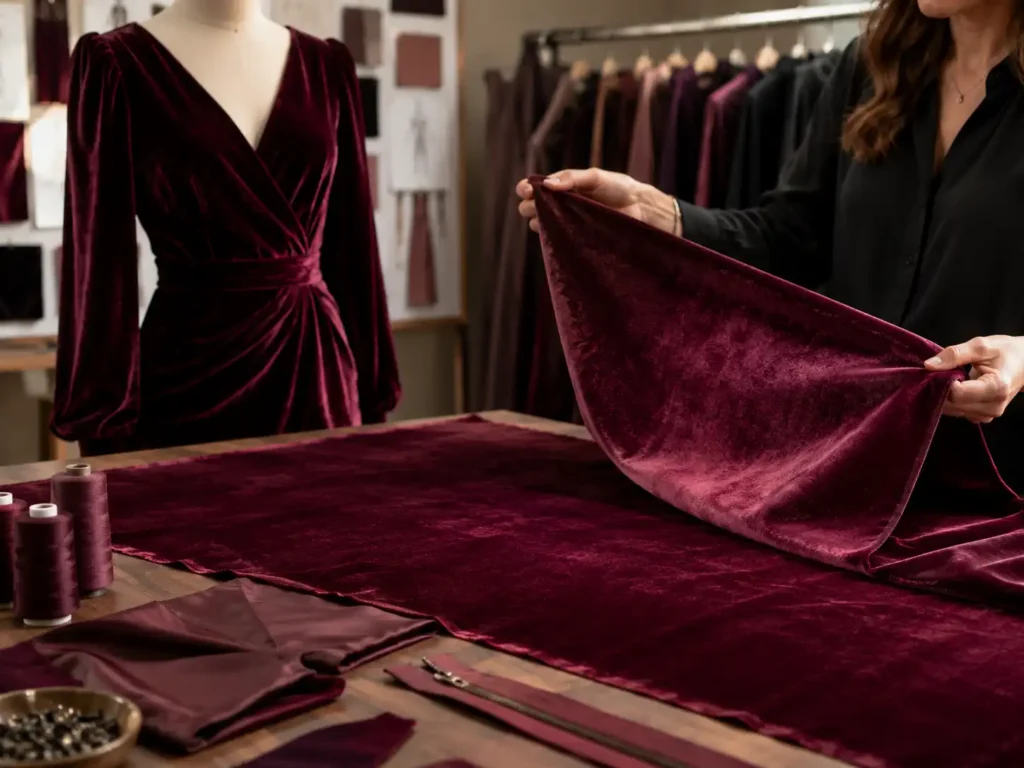
Burgundy Velvet

Emerald Velvet
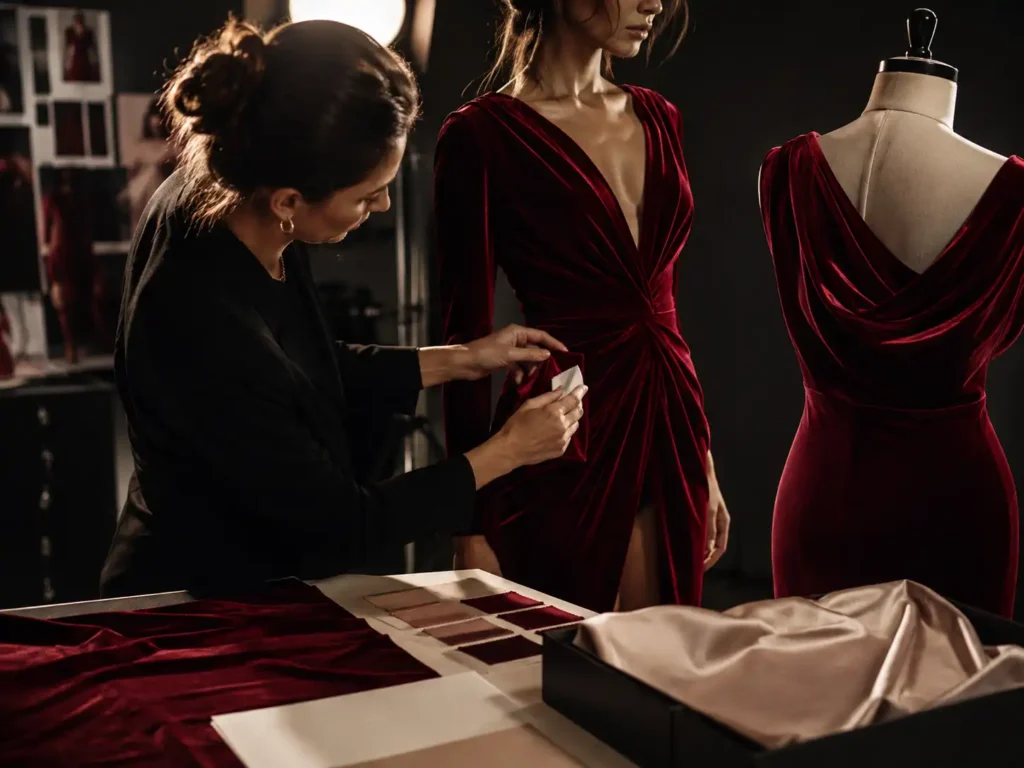
Deep Red Velvet
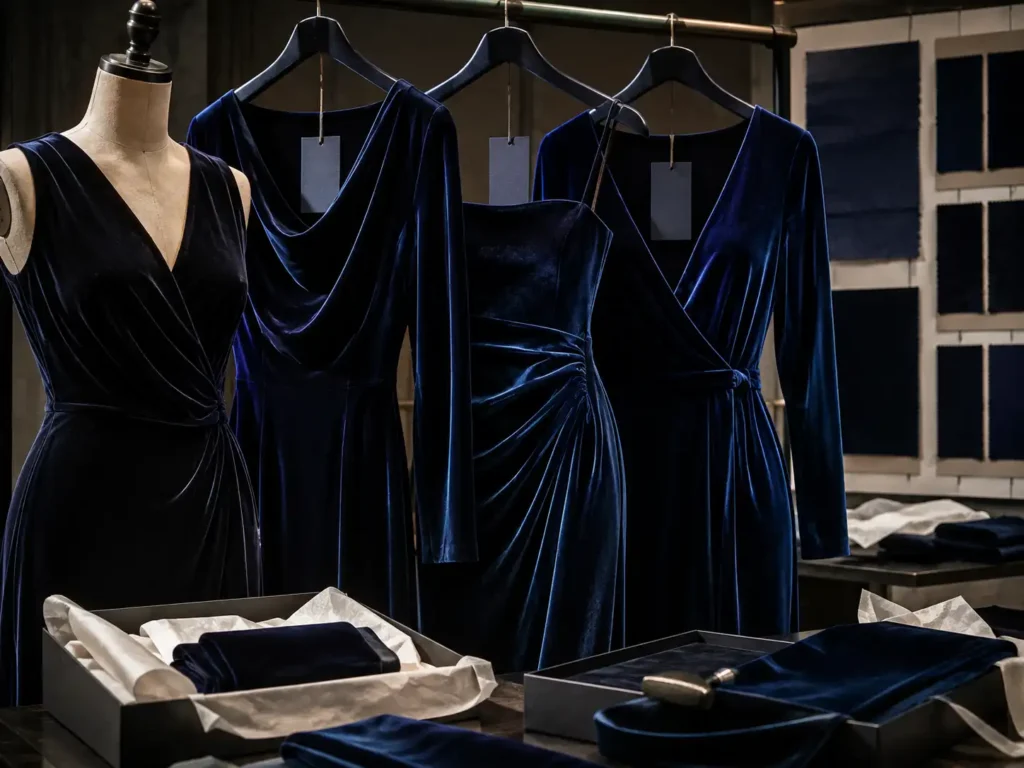
Navy Velvet
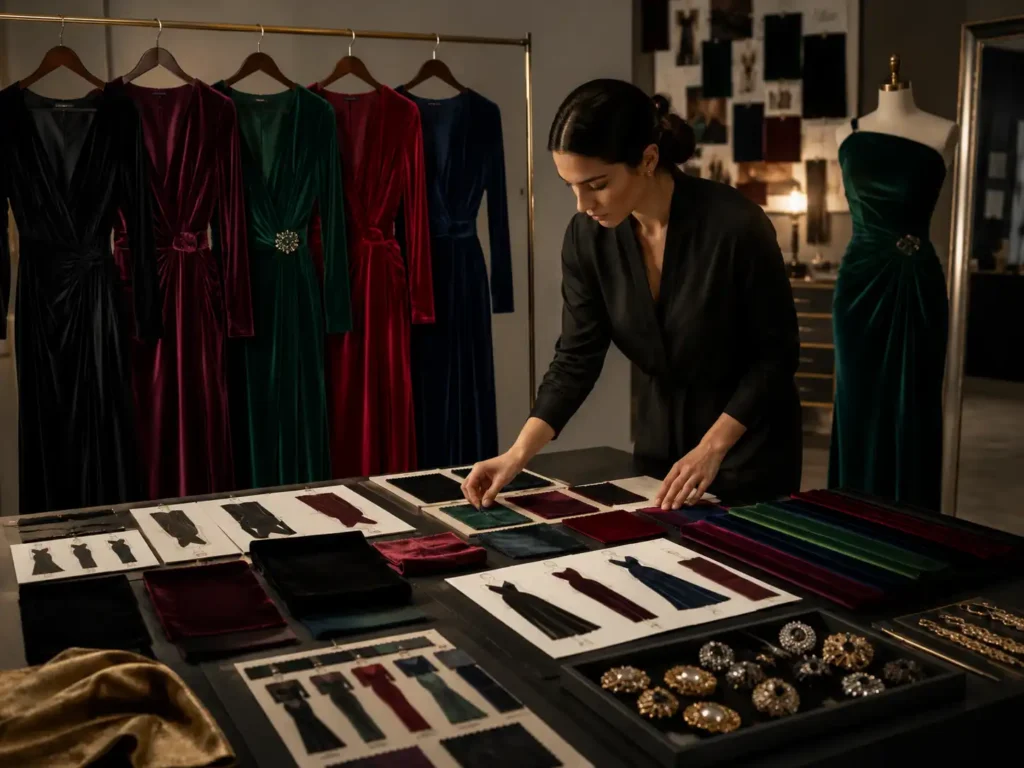
Mixed Jewel Tones
Engineer Fit for Every Velvet Silhouette
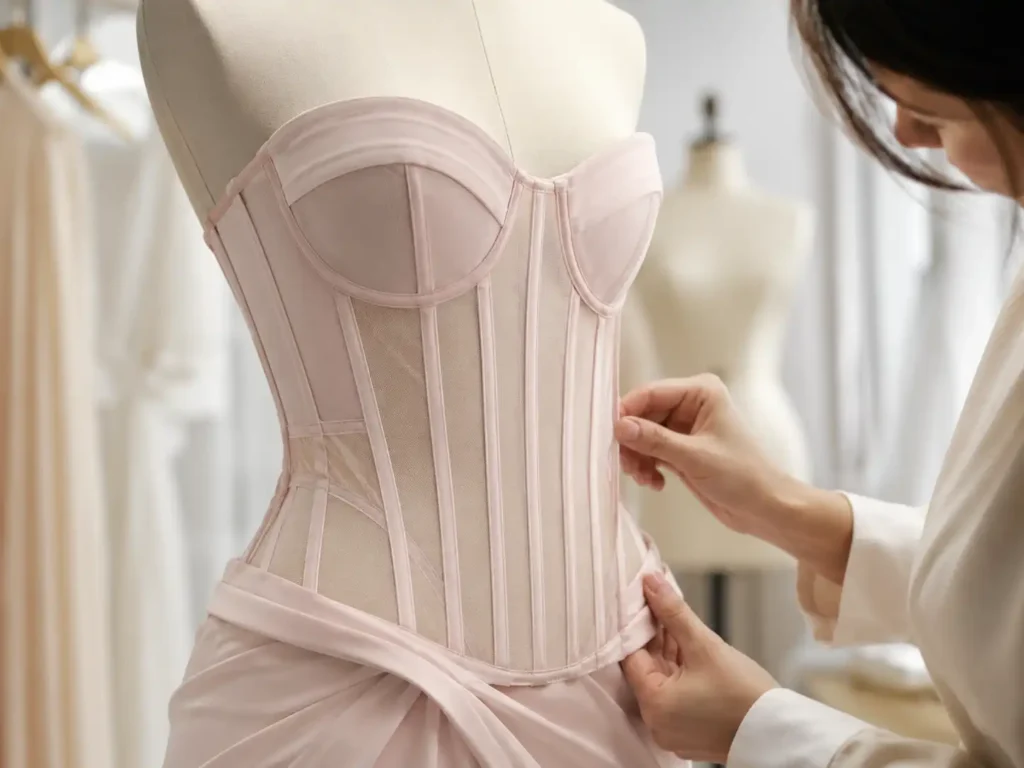
Velvet changes the way a pattern behaves. Weight can pull a neckline downward, pile friction can reduce movement, and stretch can relax after wear. Fit approval therefore needs silhouette-specific checks rather than one generic size standard. Jinfeng Apparel reviews brand size charts, grade rules and client-defined tolerances, then measures the control points most likely to affect wear, photography and returns.

Bodycon Fit
Corset Structure
Strapless Security

One-Shoulder Balance

Draped Silhouette

A-Line Structure
Control Holiday Details Before They Reach Bulk
Holiday design value often comes from details that look simple in a sketch but change construction, cost and inspection. Ruching alters pattern length and seam control. Boning changes lining and zipper bulk. Rhinestones add weight and require packing protection. Slits affect movement and exposure. Jinfeng Apparel tests the high-risk detail in samples, records the approved method and carries the same requirement into the sewing instruction and QC checklist.

Ruching and Draping

Bows and Statement Shapes

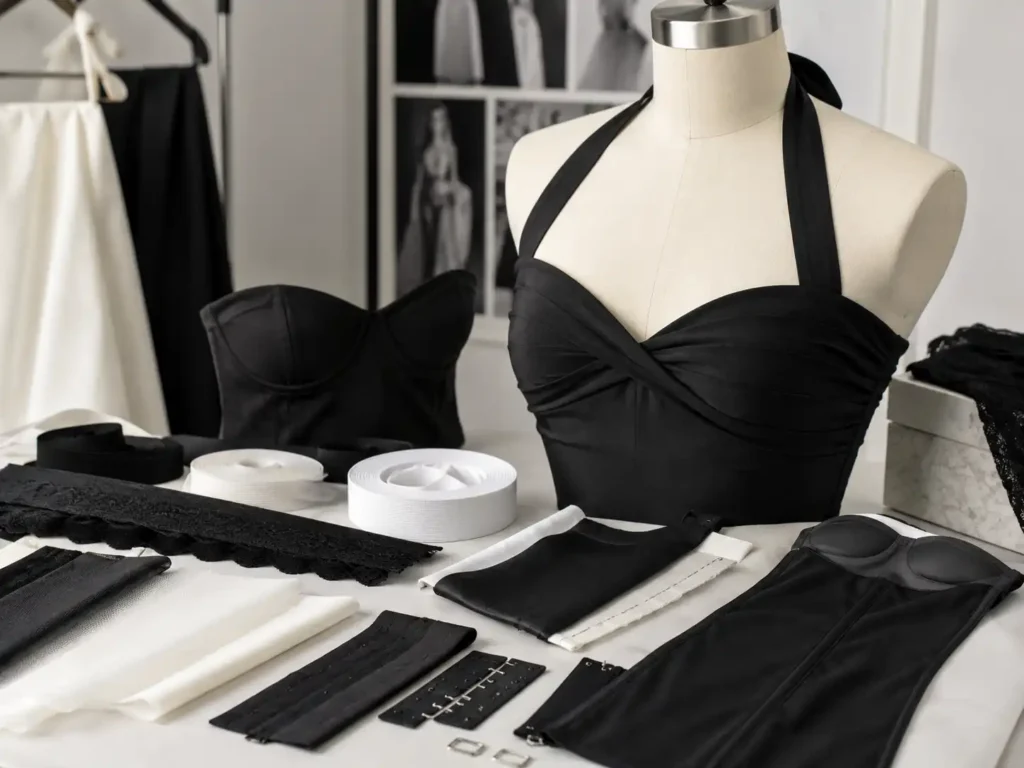
Boning and Bra Cups

Rhinestones and Sequins

Slits and Cut-Outs

Zippers and Closures
Sew, Line and Press Velvet Without Surface Damage
Velvet workmanship depends on controlled feeding, balanced seam construction, careful handling and low-pressure finishing. A clean sample can still become unstable in bulk when sewing tension, bundle stacking or pressing methods change between operators. Jinfeng Apparel translates the approved construction into process instructions and inspection points so surface quality is protected through every production stage.

Sewing Stability
Pile and backing may feed at different rates, creating seam creep, twisting or puckering. Stitch length, thread tension, seam allowance and feeding method are tested according to the fabric. Curved seams, princess panels, side seams and waist joins receive close attention because uneven movement can distort fit as well as appearance.
Lining Compatibility
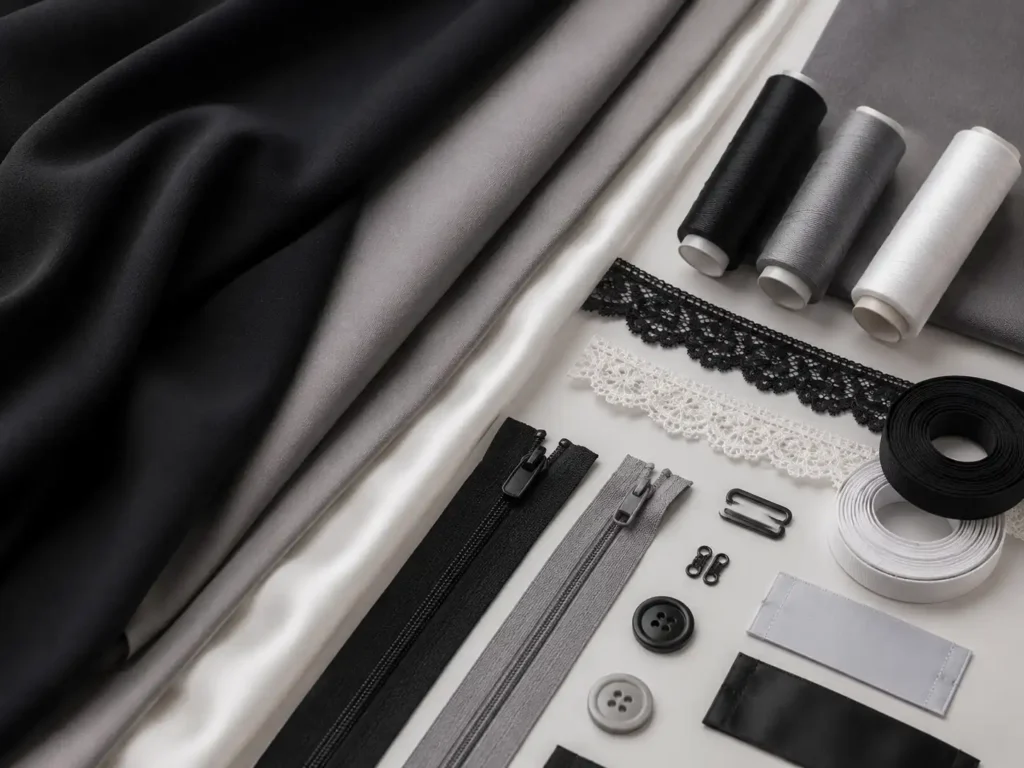
Lining should support comfort, opacity and structure without restricting stretch or pulling the outer shell. Stretch bodycon styles need compatible movement, while structured cocktail dresses may require firmer support. Lining length, attachment points and color are confirmed in samples so the inside construction does not change outer drape.

Zipper Flatness
The zipper area combines fabric layers, seam allowances, lining and closure tension. Bulk at the waist or hip can create waves, while pile may catch in the teeth. The approved method defines seam stabilization, zipper length, top finishing and pressing limits. Inspection checks operation, flatness and surrounding surface condition.
Edge and Hem Finish
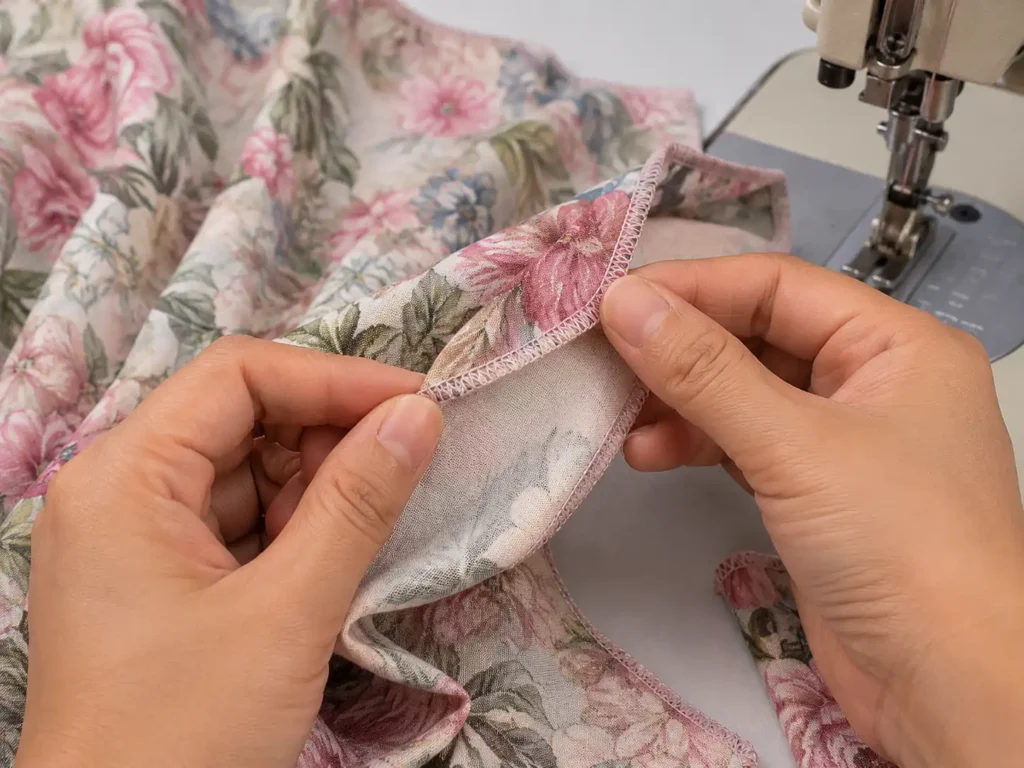
Necklines, armholes, slit edges and hems must remain clean without over-compression. Some styles use facing, binding or narrow hem structures; others require lining turn-up or hand finishing. The selected method should protect the silhouette and avoid a hard ridge that reads through velvet under light.

Pressing Discipline
High heat, hard pressure or direct iron contact may flatten pile and create shine. Finishing uses controlled steam and support appropriate to the fabric. Garments are allowed to cool before stacking or packing. Pressing staff follow the approved sample and surface standard rather than forcing velvet into a flat woven appearance.
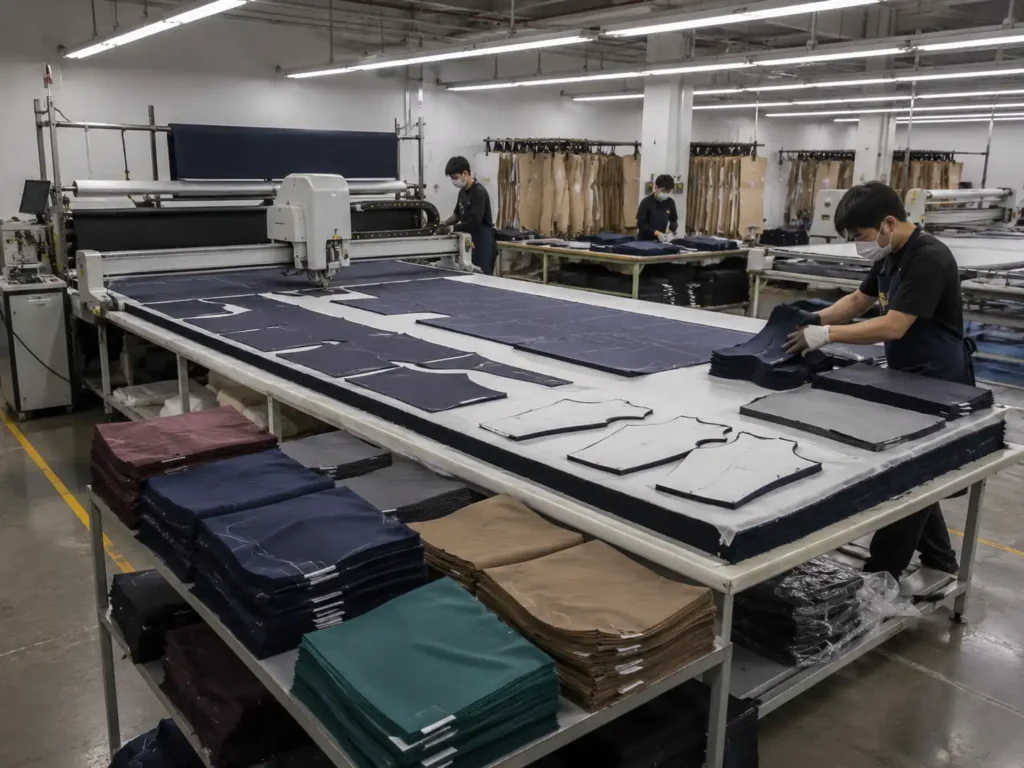
Handling Between Operations
Cut pieces and finished sections should not remain under heavy bundles for long periods. Hangers, trays, tissue or reduced stacking may be used according to style. Embellished and structured pieces require additional separation. Handling control prevents damage that cannot be repaired by final steaming.
Move from Reference Image to Approved Velvet Sample
Project Review
Swatch Approval
Pattern Development
First Sample
Fit and Revision
PP and Golden Sample
Work Backward from the Holiday Launch Date
T-22 to T-18 Weeks
Confirm style list, quantity direction, target price, size range, key colors, hero SKUs, campaign needs and destination. Jinfeng Apparel reviews feasibility, velvet direction, structural risks and quotation inputs before development starts.
T-18 to T-15 Weeks
Approve swatches, lining direction and major trims. First sample waves are grouped by launch priority and complexity. A working allowance of about 10-15 business days may be planned for initial samples after required materials are ready.
T-15 to T-12 Weeks
Complete fit comments, pattern correction, design-detail adjustment and photo-sample priorities. Material changes are closed before PP development whenever possible so bulk costing and consumption remain stable.
T-12 to T-10 Weeks
Approve PP or Golden samples, bulk fabric, color, trims, size chart, measurement tolerance, label files and packing instructions. Production planning can only be reliable after these connected approvals are complete.
T-10 to T-4 Weeks
Run bulk production, incoming inspection, cutting, sewing, in-line checks, garment measurement, finishing and packing. Order volume and style complexity determine the exact production window. Large 20,000-80,000 piece programs may be divided by style group and shipment priority.
T-4 Weeks to Arrival
Complete final inspection, client or third-party inspection when required, packing-list verification and shipment booking. Air, sea or combined transport is selected by destination, launch urgency, cost and available forwarder schedule.
Run Multi-Style Holiday Production with Controlled Allocation
Jinfeng Apparel operates 6 owned women’s fashion factories and works with more than 10 long-term satellite production partners across the Guangdong apparel supply region. More than 100,000 pieces of monthly capacity support multi-style, multi-color and multi-batch programs, while allocation decisions are based on product structure and fabric behavior rather than simply placing every style on the first available line.

Development Capacity
Two sample rooms, 7+ senior pattern makers and 20+ sample machinists support parallel development. Samples can be grouped by velvet type, structure and launch priority, reducing delays caused by moving all styles through one sequence.

Merchandising Control
A team of 12+ merchandisers supports material follow-up, sample status, production documents, approvals, packing information and shipment coordination. Major changes are translated into updated files before they reach bulk production.

Production Grouping
Stretch bodycon, structured corset, draped cocktail and embellished evening styles can be assigned to production resources with suitable experience. Shared standards for materials, measurements, finishing and packaging connect the groups.
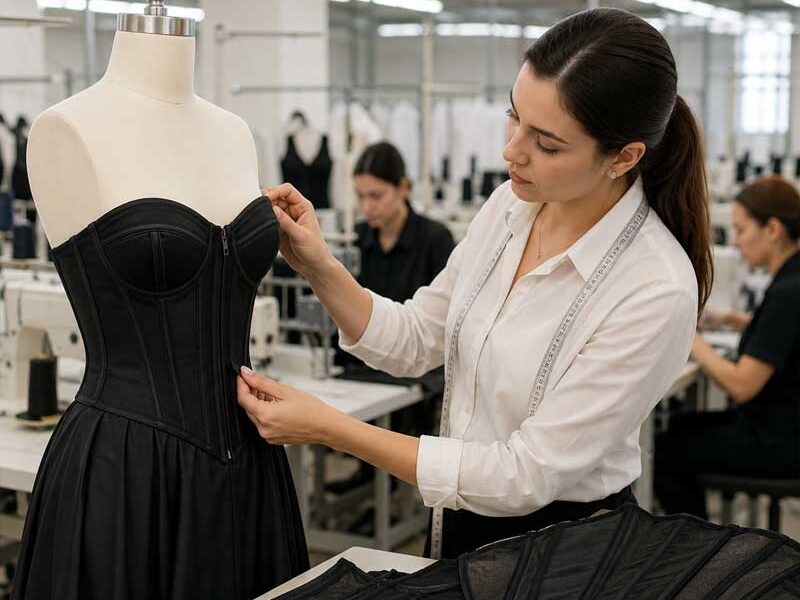
Quality Coverage
A 15+ person QC team supports incoming material inspection, cutting review, sewing checks, in-line measurement, garment inspection, pressing review, packing QC, AQL inspection and client inspection coordination.

Finishing and Packing
More than 30 finishing and packing workers support thread cleaning, appearance review, pressing, label checks, folding, polybagging, barcode work, carton packing and shipment preparation. Velvet handling instructions are added according to style and surface risk.

Repeat-Order Records
Patterns, size charts, BOMs, fabric references, trim details, packing requirements, QC records and Golden samples can be retained for replenishment and future seasons. Repeat production is still reviewed for material availability and shade differences rather than assumed to be identical automatically.
Velvet-Specific Quality Control Before Shipment
Velvet inspection must evaluate surface direction and pressure response as well as normal garment measurements and workmanship. Jinfeng Apparel builds project QC around incoming material, cutting, sewing, finishing and packing. Client standards, approved samples and agreed measurement tolerances remain the release basis. The control matrix below shows how visible velvet risks are connected to each production stage.
| QC Stage | Main Checks | Typical Risk | Control Evidence |
|---|---|---|---|
| Incoming fabric | Composition, weight, stretch, hand feel, pile, shade, stains, pressure marks and lot identity | Lot variation, crushed pile, visual shade difference or incorrect stretch | Material inspection record, approved swatch and roll/lot identification |
| Cutting | Nap direction, marker direction, grain, size, panel symmetry, bundle marks and lot separation | Reversed panels, mixed lots, wrong pattern version or visible shade patch | Cutting instruction, bundle labels and first-cut review |
| Sewing | Seam balance, feeding, zipper flatness, lining, boning, trim placement and symmetry | Puckering, seam creep, pile caught in zipper, uneven ruching or bulky joins | In-line inspection, sewing instruction and approved sample comparison |
| Measurement | Bust, waist, hip, length, strap, sleeve, armhole, slit and hem points selected by style | Size inconsistency, riding, poor support or incorrect grade progression | Approved size chart, tolerance standard and measurement record |
| Finishing | Surface recovery, pressing, lint, shine, stains, loose threads and trim security | Permanent pressure shine, flattened pile, uneven drape or damaged embellishment | Finishing checklist and visual review from several light angles |
| Packing | Labels, barcode, SKU, folding, protective layers, polybag, carton pressure and carton mark | Crushed surface, wrong SKU, trim damage or warehouse receiving error | Packing instruction, packing QC and carton verification |
| Final release | Appearance, function, measurements, quantity, packing and inspection status | Mixed defects reaching shipment or unresolved deviations | Final inspection or AQL record and shipment approval |
Private-Label Packing That Protects Velvet in Transit
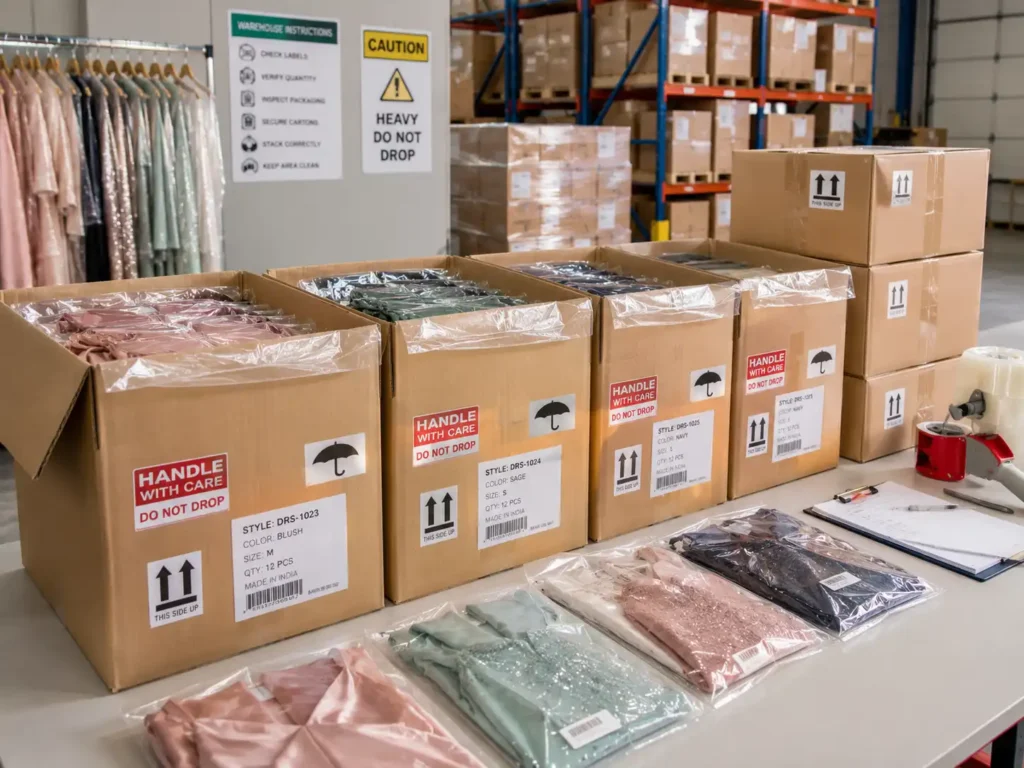
Private-label packing must satisfy brand, warehouse and garment-protection requirements at the same time. Velvet can leave the finishing area in good condition and arrive with visible pressure lines when folding, polybag dimensions, carton quantity or concentrated trim pressure are not considered. Jinfeng Apparel links garment approval with a style-specific packing instruction before final packing begins.

Brand Label Set
Main labels, size labels, care labels, country-of-origin information, hangtags and spare components are checked against approved artwork and placement. Label attachment should not pull or mark the velvet surface around the neckline or side seam.
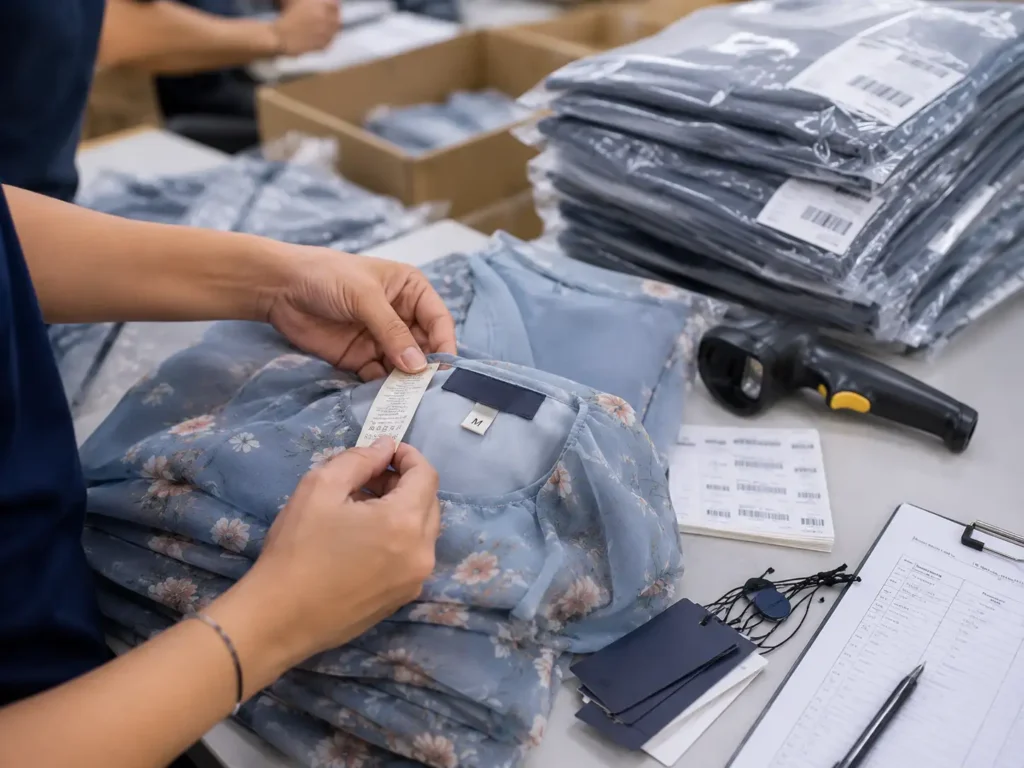
Barcode and SKU Control
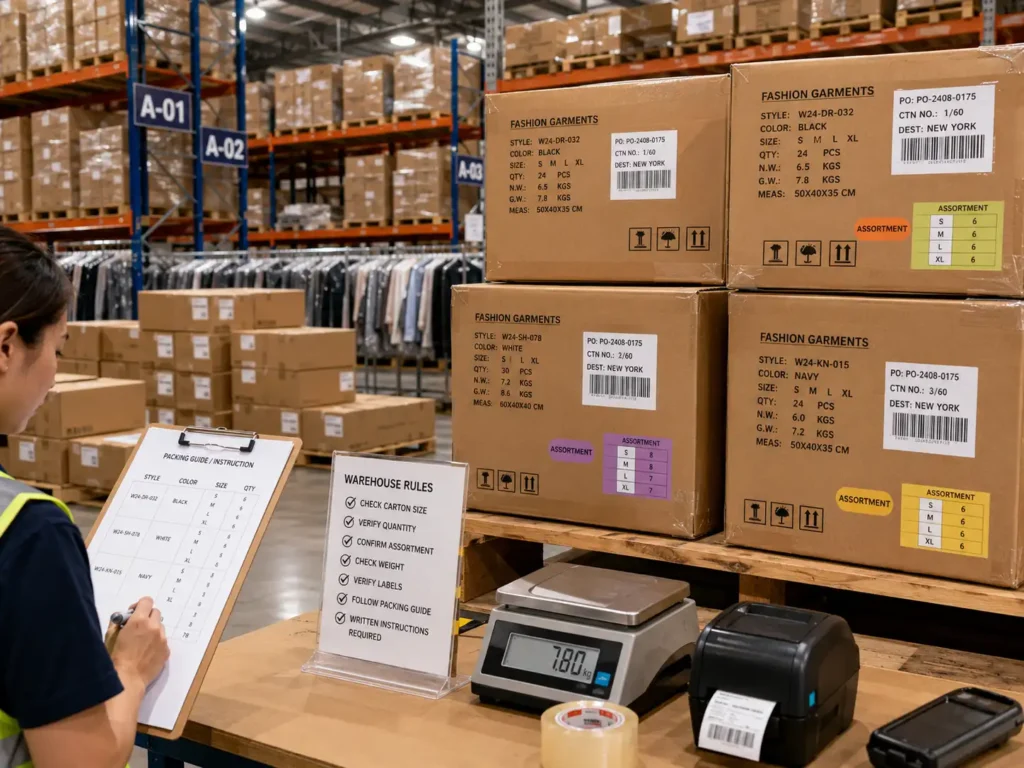
Each style-color-size combination is matched to its barcode, SKU sticker, polybag label and carton information. Multi-style programs require scan-ready accuracy and clear separation so the warehouse receives the intended assortment.
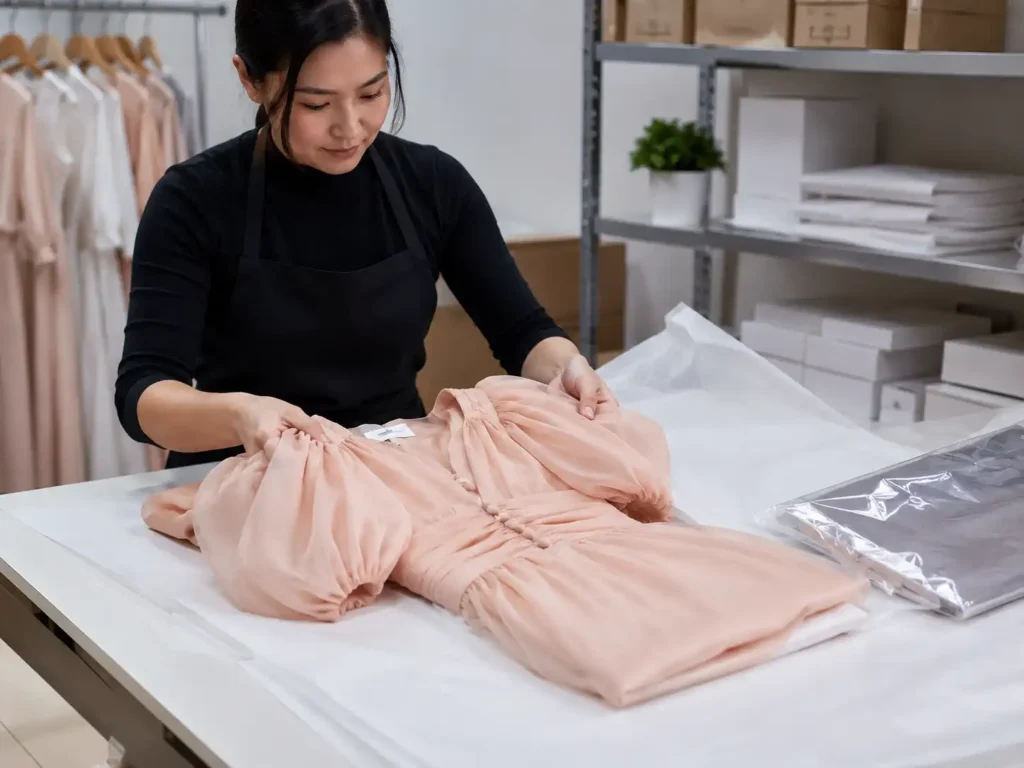
Folding Method
Fold lines are positioned away from heavily visible bodice areas, structured cups, bows and dense embellishment where possible. Tissue or protective layers may be used according to design. Garments are fully cooled after pressing before they enter bags.
Carton Pressure
Carton quantity and dimensions are reviewed to avoid excessive compression. Heavy structured dresses and embellished styles may need fewer pieces per carton than simple stretch minis. The goal is stable shipping without treating velvet as a highly compressible basic garment.

Recovery Review
Packed samples or trial cartons can be opened after a defined period to review pile recovery, fold lines, trim shape and garment presentation. Findings guide final folding, tissue, polybag and carton decisions before the full order is packed.
Warehouse Documents
Packing lists, carton marks, size-color ratios, gross and net weights, carton dimensions and shipment references are prepared for brand, warehouse, forwarder and finance coordination. Requirements are confirmed before packing rather than corrected after cartons are sealed.
MOQ and Quotation for Multi-Style Velvet Collections
Information Needed for Quotation
- Reference images, original samples, line sheets or tech packs for every proposed style.
- Quantity by style and color, plus expected size range and size ratio.
- Preferred velvet type, weight, stretch direction, color standard and lining requirement.
- Boning, cups, zippers, bows, rhinestones, sequins, embroidery or other trim details.
- Main label, size label, care label, hangtag, barcode, polybag and carton requirements.
- Required sample type, campaign date, warehouse arrival date, destination and trade term.
Main Cost Drivers
Velvet weight and width affect consumption, while one-way nap cutting can increase usage.
Full skirts, long sleeves, maxi lengths and large bows add material.
Corset structure, ruching, draping, double layers, special lining, hand-applied decoration and protective packing add labor or trims.
Cost can be managed through fabric alternatives, construction refinement, shared materials across styles, color consolidation, size-ratio planning and split-shipment decisions without weakening the collection’s intended visual level.
NDA, Material Documentation and Brand Protection
Design Protection
Material Documents
Audit and Inspection Support
Representative Holiday Collection Programs at Brand Order Scale

US Holiday Partywear Program
Premium Ecommerce Velvet Capsule
Multi-Market Occasionwear Collection
Velvet Holiday Dress Frequently Asked Questions

Discuss Your Velvet Holiday Collection with Kelly
Send Kelly your style list, reference images, tech packs or original sample details for a structured project review.
Jinfeng Apparel will examine velvet suitability, pattern and construction risk, sample priorities, MOQ fit, material preparation, private-label requirements and the schedule needed to move from development into bulk production. Clear information at the beginning allows a faster and more useful response than a single image without quantity, size or launch details.
- Company or brand name, target market and intended sales channel.
- Style images or tech packs, planned style count and hero SKUs.
- Quantity by style and color, plus size range and size ratio.
- Preferred velvet, color direction, lining, trims and embellishment details.
- Required sample type, campaign date and target warehouse arrival date.
- Main labels, care labels, hangtags, barcode, polybag and carton requirements.
- Destination, nominated forwarder or preferred trade term when available.


