Skip to content

Underwire Dress Construction
Structured cup support for fashion dresses, developed from pattern engineering and fit validation through PP approval and repeatable bulk production.
- 2 sample rooms for structured womenswear development
- 7+ senior pattern makers for bodice, cup and fit correction
- 20+ sample machinists for complex dress sampling and revisions
- MOQ starts from 200 pcs per style/color, subject to fabric and trim requirements
What Underwire Dress Construction Really Means
Support Is a System
Construction Must Survive Production
Anatomy of a Production-Ready Underwire Bodice

Cup Shape

Underwire

Wire Channel

Boning Lines

Lining Structure

Closure System
Underwire Dress Styles We Develop

Corset Mini Dresses

Bustier Midi Dresses

Strapless Underwire Dresses

Bodycon Underwire Dresses

Party and Club Dresses

Evening and Occasion Dresses

Cup Development Before the Wire Is Chosen
Cup development sets the foundation for every later decision. A wire can follow a correct cup base, but it cannot create cup volume or repair an incorrect bust shape. Development therefore starts with the intended silhouette, body proportion, neckline and support level before component selection.
- Cup Base and Bust Root
Cup base width should reflect the body area the dress is designed to contain. A base that is too narrow can create pressure and side spill; a base that is too wide can flatten the bust or push structure toward the underarm. For a fashion dress, the base also has to work with side seams, boning, neckline and center-front design lines. - Projection and Apex Position
Projection determines whether the cup looks rounded, lifted, shallow or more natural. Apex position affects how the garment reads from the front and side. A visually attractive flat sample can still fail when the apex sits too high, too low or too far outward on a fit model. Fit photographs should therefore include front, side and three-quarter views. - Molded and Cut-and-Sew Cups
Molded cups can give a clean surface and faster assembly once the correct shape is approved, while cut-and-sew cups allow more pattern control and style-specific seaming. The choice affects lining, seam bulk, wire compatibility and grading. High-shine fabrics may reveal cup edges or internal seam ridges that are less visible under textured materials. - Cup Position in the Bodice
Cup placement must be established against center front, underbust, side seam, neckline and waist. Small shifts can change exposure, cleavage position or symmetry. Approved position should be transferred into the final pattern and production instruction rather than left to sewing judgment.
Selecting and Positioning the Underwire
Wire selection should follow the approved cup and intended fit. Fashion dresses often use underwire differently from bras because the outer bodice, boning, lining and closure also contribute to support. A suitable wire therefore needs the correct width, curvature, length and termination position for the garment architecture.
- Width and Curvature
A narrow wire may compress the bust root or feel sharp at the sides. An excessively wide wire can reach into the underarm and reduce lift. Curvature must follow the lower cup edge closely enough to support it without forcing the cup into a different shape. Wire samples are best reviewed against the actual cup pattern rather than chosen from a generic component list. - Center-Front Position
Low-plunge styles may require shorter or lower center wire geometry, while sweetheart and fuller-coverage bodices can support a higher center-front structure. Center height also affects neckline stability and the available space for seam allowance, lining and channel closure. - Side Termination
The outer wire end should finish where support is useful without pressing into the side body. Side seam position, cup width, armhole shape and boning can all change the acceptable end point. Fit review should include arm movement and seated posture, not only standing photography. - Wire Consistency in Bulk
Once approved, wire reference should be controlled by shape, length, finish and intended size use. Mixing similar-looking wires can change fit even when garment measurements remain within tolerance. Component identification and trim approval records reduce the risk of size or batch substitution during production.


Building a Stable Underwire Channel
The channel is a small construction area with a large effect on comfort and repeatability. Its job is to hold the wire in the intended curve without excessive movement, twisting or exposed ends. Channel sewing must also stay visually clean when the bodice uses satin, mesh, lace or other sensitive fabrics.
- Channel Width and Allowance
A channel that is too tight can restrict insertion, distort the wire or create pressure points. Excessive space allows the wire to move and can produce inconsistent cup shape. Allowance should account for the wire body, covering material, seam construction and the final closed end. - Stitch Line Control
Parallel stitching needs stable spacing around the cup curve. Uneven stitch lines can change channel width, especially near the center front and side cup where the curve becomes sharper. Operators need a clear sewing reference rather than visually estimating the path on every garment. - End Protection
Wire ends require enough containment to reduce the chance of migration or skin contact. The solution depends on garment construction and component type, but the production standard should define where the wire stops, how the end is secured and how much closed channel remains beyond the wire. - Channel Symmetry
Left and right channels should mirror one another in position and shape. Symmetry checks are especially important on exposed corset-style seam lines, low necklines and light-colored satin where small differences are visible on body and in product photography.
Boning, Lining and Internal Support Work Together

Boning

Support Lining

Interlining

Straps, Back and Anti-Slip
Fabric Compatibility for Underwire Dress Construction
Fabric affects how internal structure looks, feels and behaves in production. The same cup-and-wire system can produce very different results under satin, mesh, lace or stretch fabric, so material selection should be confirmed before the final pattern and PP sample are locked.
| Fabric Direction | Structural Behavior | Recommended Internal Support | Main Manufacturing Risk |
|---|---|---|---|
| Structured Satin | Clean surface with moderate body | Cup + wire + support lining + controlled boning | Puckering, seam ridges, snagging, press marks |
| Stretch Satin | More movement and body contour | Cup + wire + stable support layer + controlled stretch | Distortion, recovery variation, cup edge show-through |
| Mesh / Power Mesh | Sheer and flexible | Cup + wire + selected support mesh or lining | Transparency, seam tension, stretch imbalance |
| Lace | Decorative with variable strength | Cup + wire + backing or lining | Motif shift, seam distortion, edge weakness |
| Structured Woven | Strong foundation for corset shapes | Cup + wire + boning + selective interlining | Excess rigidity, visible seam bulk |
| Stretch Woven | Balanced fit with limited stretch | Cup + wire + graded support lining | Recovery differences, neckline growth |

Pattern Engineering Around the Bust Structure
Cup pieces alone do not determine fit; underbust shape, center front, side panel, waist, back tension, strap position and skirt connection all influence where the cup and wire settle on body.
- Underbust and Cradle Shape
The underbust seam establishes the lower cup position and helps distribute support into the torso. If the seam is too loose, the structure may float away from the body. If it is too tight or incorrectly curved, the wire can feel restrictive even when the cup volume is correct.
- Center Front and Neckline
Deep V, plunge, sweetheart and straight necklines place different demands on center-front stability. Pattern work must provide enough support for the intended neckline while preserving the visual openness of the design. A low neckline that relies on excessive tension can gape, distort or pull the cup inward.
- Side Panel and Underarm
Side-body shape controls bust containment and affects wire termination. Too little side coverage can expose the cup or create spill; excessive coverage can move the seam into the underarm and reduce comfort. Side boning and zipper placement also need space without crowding the wire channel.
- Waist and Back Tension
Waist shaping and back closure influence the full support loop around the torso. A well-shaped front can still fail if the back is too loose, the waist is over-reduced or the zipper area stretches. Pattern correction should consider the bodice as a 360-degree structure.
Fit Validation Before Production Approval
Underwire structure must be validated on body because pressure, movement and visual balance cannot be judged from flat measurements alone. Fit review should confirm support without forcing the wearer into one rigid posture.
- Standing Fit
Check cup fill, cup edge, center-front position, wire line, neckline, underarm coverage, waist and overall symmetry. The bodice should sit in the intended location without the wearer constantly pulling it up or adjusting the cups. - Side and Three-Quarter Fit
Side views reveal projection, side spill, wire-end position and whether boning remains straight. Three-quarter views are especially useful for evaluating cup symmetry and how the neckline transitions into the side body. - Seated Comfort
Structured dresses can feel acceptable while standing and become uncomfortable when seated. Underwire pressure, center-front height, waist compression and boning ends should be reviewed in sitting posture for occasion, party and evening styles intended for several hours of wear. - Movement Review
Arm lift, walking and normal torso rotation help expose gaping, strap movement, cup shift and side pressure. Movement review is also important for bodycon and stretch styles because the outer fabric can pull against a relatively stable internal cup structure.
A fit sample should generate clear revision notes: location, amount, reason, affected pattern piece and whether the change alters cup, wire, lining, trim or sewing instruction. Complex structured samples are commonly evaluated in a longer development window than ordinary dresses; Jinfeng’s confirmed sampling reference for complex styles is generally 15-25 days when material readiness supports the schedule, with special components reviewed by project.
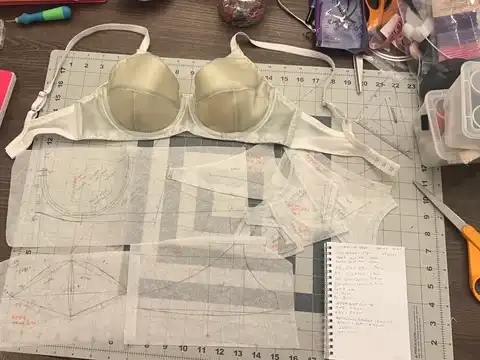
Size Grading for Cups, Wires and Bodices
Grading an underwire dress is not a single proportional enlargement. Garment circumference, cup geometry, neckline, strap position and component sizing may need different rules. The goal is to preserve the intended support and appearance across the brand’s size range, not simply increase every dimension by the same amount.
| Grading Area | What Changes | Main Risk if Over-Simplified | Production Control |
|---|---|---|---|
| Cup Base | Width and lower cup curve | Wire mismatch, side pressure | Approved graded cup pattern |
| Cup Projection | Volume and apex position | Flattening or excess cup volume | Fit review by representative sizes |
| Underwire | Shape/length may change by size | Same wire used across unsuitable sizes | Size-specific trim reference |
| Underbust | Circumference and seam curve | Floating cup or compression | Measurement + fit check |
| Strap / Neckline | Position, length and coverage | Gaping or excessive exposure | Grade rule + photo review |
| Bodice / Waist | Torso balance and tension | Support changes across sizes | Measurement QC against size chart |
Workmanship Details That Decide the Final Fit

Cup Seam Control

Channel Sewing

Boning Channels

Lining Attachment

Closure Installation

Final Pressing
Sampling an Underwire Dress Step by Step
First Sample
Fit Sample
Revised Sample
Photo-Ready Sample
PP Sample
Golden Sample
PP Approval and Golden Sample Lock the Structure
PP Approval
Golden Sample Standard

Turning an Approved Sample Into Repeatable Bulk
Bulk production begins with a controlled handover, not with a verbal instruction to copy the sample. Final pattern, graded size chart, BOM, cup and wire references, trim card, sewing instruction, approved photos, QC checkpoints and packing requirements need to move into the production file together.
- Final Pattern and Grade Rules
The final pattern should reflect every approved fit correction. Cup pieces, channel lines, boning positions, neckline, side seams and closure areas need clearly identified size versions so cutting and sewing teams are not choosing among obsolete revisions. - BOM and Trim Control
BOM should identify shell, lining, cups, wires, boning, zipper or closure, straps, labels and packaging. Size-specific components need clear mapping. Similar-looking trims should not be substituted without review because a different wire curve or cup density can alter the approved fit. - Sewing Instruction
Production notes should define assembly order and critical control points: cup orientation, channel path, wire insertion, end security, boning placement, lining attachment and closure tension. Clear instructions reduce dependence on operator memory. - Production and QC Handover
Jinfeng’s confirmed production system includes 6 owned women’s fashion factories, 10+ long-term satellite production partners and 100,000+ pcs regular monthly capacity. Structured orders are allocated according to product construction and production planning rather than treated like basic dresses. Production timing is confirmed after PP approval, material readiness, quantity, packaging and delivery requirements are clear.
QC Points for Underwire Dress Production
Quality control for structured dresses needs component and fit checkpoints in addition to ordinary garment inspection. A dress can pass general measurement review and still fail because the cup, wire or channel sits differently from the approved sample.
- Cup and Wire Symmetry
Left and right cup position, apex, underbust line and wire curve should be compared visually and against approved construction references. Obvious asymmetry is especially visible on sweetheart, plunge and strapless designs. - Channel and Wire Security
Check channel width, stitch continuity, wire end containment and whether the wire has twisted or migrated. Any exposed or sharp-feeling end requires correction before finishing. - Boning and Internal Support
Boning should remain in the intended seam or channel, with protected ends and no twisting. Lining should cover internal support cleanly without creating pressure points or visible distortion. - Measurement and Fit-Critical Points
Bust, underbust, waist, neckline depth, strap length, side seam and dress length should be measured according to the approved size chart. Fit-sensitive styles benefit from representative garment review across sizes, not only inspection of the base size. - Closure and Surface Finish
Zipper flatness, hook placement, lace-up tension, neckline smoothness and pressing quality affect the final bodice position. Satin and other smooth fabrics require special care because pressing marks and seam ridges are visible under direct light. - Packing Protection
Structured cups should be packed in a way that reduces crushing and deformation. Folding method, tissue support or other protection is selected according to product construction and client packing requirements.

Common Underwire Dress Failures and Their Controls
Neckline Gaping
Wire Pressure
Cup Distortion
Channel Twisting
Bodice Sliding Down
Size Inconsistency
Frequently Asked Questions About Underwire Dress Construction
Yes. Development can begin from a tech pack, reference image, original sample, line sheet or sketch. More complete information – especially target quantity, fabric direction, size chart and internal support requirements – allows a more accurate structure review before sampling.
No. Boning depends on silhouette, fabric, neckline, support level and closure. Some styles rely more on stable lining and body fit; corset, strapless and highly structured styles often benefit from planned boning support.
Not automatically. Adjacent sizes may sometimes share a wire when fit validation supports it, while other ranges need size-specific components. Cup base, underbust and wire geometry should be reviewed together.
Complex structured samples commonly fall within a 15-25 day development reference when materials are ready. Custom cups, special underwire, unusual trims, fabric sourcing or multiple revisions can extend the schedule, so timing is confirmed by project.
Jinfeng Apparel’s standard MOQ starts from 200 pcs per style/color. Special fabric, custom-dyed material, unique underwire, cups, trims or packaging may have separate supplier minimums that need confirmation before quotation.
Yes, but the support system changes with fabric behavior. Satin can reveal internal ridges and press marks, while mesh may require support lining or power mesh and careful transparency control.
Comfort is reviewed through wire shape, width, end position, channel construction, cup compatibility and fit testing. Standing fit alone is not enough; seated posture and normal arm movement can reveal pressure points.
Fabric, color, cup, wire, boning, lining, measurements, construction, closure, labels and packing should be confirmed. Structural changes after PP approval can affect cost, material purchasing and production timing.
Yes. Private-label production can include woven labels, size labels, care labels, hangtags, barcode stickers, SKU labels, polybags and carton marks, subject to packaging supplier requirements.
Send the tech pack or reference image, target style count, quantity per style/color, size range, fabric preference, cup or underwire specification if available, label/packing requirements and target launch timing. Fit comments or existing sample photos are useful when the project is correcting a previous construction.

Start Your Underwire Dress Development Review
Underwire dresses are best evaluated before sampling begins, when cup direction, support structure, fabric, size range and component requirements can still be adjusted without disrupting bulk planning. Jinfeng Apparel supports established fashion brands and mid-to-large apparel programs with pattern development, structured sampling, fit correction, component sourcing, PP approval, bulk production control, QC and private-label finishing.
For a useful first review, send the information already available. A complete tech pack is helpful but not the only starting point. Reference images, an original sample, a line sheet or structured fit comments can also be reviewed when the production plan is clear.
- Tech pack, reference image or original sample photos
- Target styles and quantity per style/color
- Size range and size chart
- Fabric and lining direction
- Cup, underwire or boning specifications if available
- Private-label and packing requirements
- Target sample or launch timing