Skip to content

Summer dresses sell fast, but they also fail fast. I often see buyers order the “pretty” styles first, then get stuck with slow colors, wrong fabric weights, or fits that do not match the weather. When that happens, discounts start early and the season feels short.
The best types of summer dresses are the ones that match heat, movement, and lifestyle. In wholesale, I usually build a mix of 8–12 core types like sundresses, wrap dresses, shirt dresses, maxi dresses, and slip dresses, then I add 2–4 trend types like cut-out or one-shoulder styles. I keep fabrics light, breathable, and stable in bulk.
I remember one season where we made too many tight bodycon summer dresses for a coastal market. The photos looked hot, but customers wanted airflow. After that, I always start from climate and daily use, not only Instagram.
Sundress
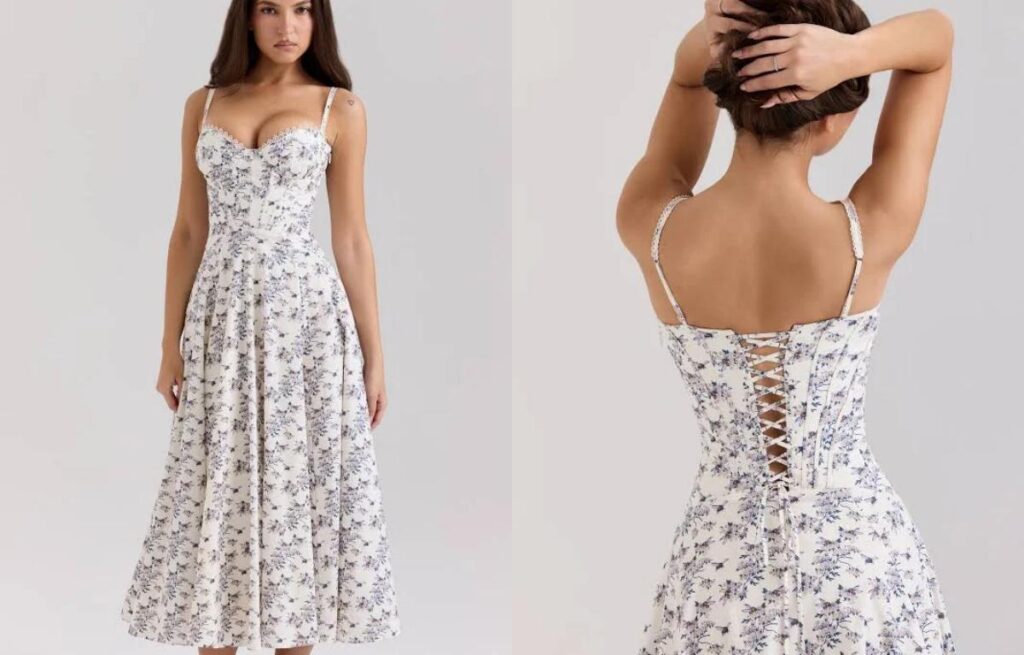
What are the core types of sundress silhouettes that sell best every year?
Sundress demand stays stable, but the exact silhouette changes with trends. I keep a few “always” shapes, then I add one or two trend shapes per drop.
The core sundress silhouettes are A-line sundress, fit-and-flare sundress, smock sundress, wrap sundress, slip sundress, and tiered sundress. These cover most body shapes and occasions, and they let buyers tell different style stories with the same summer fabric group.
The six core sundress types I use for wholesale
- A-line sundress: safest, easy fit, clean look
- Fit-and-flare sundress: more shaped waist, more feminine
- Smock sundress: comfort-first, flexible sizing
- Wrap sundress: adjustable waist, good for curves
- Slip sundress: minimal and trendy, higher fabric quality need
- Tiered sundress: boho and vacation, volume story
A quick “when to use what” table
| Sundress Type | Best Customer Need | Best Occasion | Main Risk |
|---|---|---|---|
| A-line | everyday easy | casual, brunch | can look plain |
| Fit-and-flare | defined waist | date, events | bust fitting |
| Smock | comfort fit | daily, travel | can look boxy |
| Wrap | flexible sizing | work-to-weekend | gaping |
| Slip | sleek minimal | vacation, night | sheerness + snag |
| Tiered | boho volume | beach, resort | bulky seams |
How do I choose fabric for a sundress so it feels cool and does not turn sheer?
This is where professionalism shows up. A sundress fabric must handle sun, sweat, washing, and photos. If the fabric fails, no design detail can save it.
For a sundress, I pick fabric by breathability, opacity under sunlight, shrinkage control, and how it drapes on an A-line skirt. I use cotton poplin for crisp shapes, viscose for flowy movement, and linen blends for a natural resort look. For light colors, I plan lining or I increase fabric weight to avoid see-through issues.
Fabric options and the exact “why”
- Cotton poplin: breathable and structured, good for clean bodices
- Cotton slub/voile: airy, but needs opacity checks
- Viscose/rayon: great drape, feels cool, but shrinkage is real
- Linen blend: premium summer story, but wrinkles are part of the look
- Seersucker: airflow and texture, good for easy sundresses
- Lightweight denim/chambray: casual and durable, slightly warmer feel
The sundress fabric tests I run before bulk
- Sunlight test: I hold fabric over hand in outdoor light
- Flash test: I check sheerness with phone flash
- Sweat mark test: I drop water and watch dry marks
- Shrinkage test: I wash, dry, and measure again
- Twist test: I check if the fabric skews after wash
A practical fabric matching table
| Target Look | Best Fabric | Best Sundress Type | Extra Notes |
|---|---|---|---|
| Crisp and clean | cotton poplin | A-line, shirt-style sundress | needs pressing control |
| Soft and flowy | viscose | wrap, tiered | pre-shrink is key |
| Resort natural | linen blend | maxi sundress, tiered | manage wrinkles in photos |
| Textured casual | seersucker | smock | easy care story |
| Durable casual | chambray | A-line | good for repeat reorders |
How do I engineer the bodice and straps so customers do not complain about fit?
Most sundress complaints come from the top half. Skirts are forgiving. Bodices are not. Straps, neckline, and bust shaping decide comfort and reviews.
I engineer a sundress bodice by choosing the right support level: simple darted bodice for clean looks, smocked back for flexible sizing, or structured bust cups for stronger shape. I reduce complaints by using adjustable straps, stable neckline finishing, and clear grading rules for bust and underarm fit.
The three bodice systems I use most
- Darted bodice (woven): clean, premium, but needs accurate bust grading
- Smocked back bodice: wider fit range, fewer returns, faster selling
- Bust cup or underwire look: best for “shaped” styles, highest sampling care
Strap systems and what they change
- Adjustable spaghetti straps: best for fit flexibility
- Wide straps: better bra coverage and comfort
- Tie straps: cute and adjustable, but slower sewing
- Halter straps: strong summer vibe, but neck pressure risk
Fit failure points I watch in sampling
- Armhole gaping when sizes go up
- Neckline gaping on V or sweetheart shapes
- Strap length too short after wash shrinkage
- Bust apex not aligned with target size model
- I fit test on at least two bust types, not only one model
- I check sitting, walking, and reaching movement
- I hang test 24 hours to see if neckline stretches
- I do one wash test before approving strap length
How do prints, colors, and styling details affect sundress sell-through?
Sundress is a photo product. Color and print do heavy marketing work. But they also bring risks like shade mismatch, busy visuals, and transparency.
Sundresses sell fastest in light, happy colors and small-to-medium prints, especially florals and gingham. I control sell-through by keeping 1–2 hero prints, 2 solids for repeat sales, and one “safe” neutral. I also place prints carefully so the bodice looks balanced and the waist seam does not look messy.
Print choices that usually perform well
- Small floral: everyday, easy on many body shapes
- Gingham: classic summer story, stable demand
- Stripe: looks clean, but needs panel matching
- Ditsy print: Gen Z friendly, but can feel busy if overdone
Trim details that lift perceived value
- Button-front: adds function and styling, but needs spacing control
- Ruffles: romantic, but can add bulk
- Lace trim: sweet look, but must be soft and stable
- Tie-front: trendy, but must not gape at bust
A simple “drop plan” that avoids randomness
| Role in Drop | Color/Print | Quantity Logic | Best Sundress Types |
|---|---|---|---|
| Core | white/black/solid | higher | A-line, smock |
| Fashion | seasonal colors | medium | wrap, tiered |
| Hero | floral/gingham | lower | fit-and-flare, maxi |
What are the production and QC risks for sundresses, and how do I prevent them?
Sundress production looks easy, but summer exposes problems. Heat and light reveal sheerness. Washing reveals shrinkage. Movement reveals strap weakness.
The main sundress risks are sheerness, shrinkage, strap breakage, neckline gaping, uneven hems, and color fading. I prevent them by locking fabric tests early, reinforcing stress points, setting tight measurement tolerances on the bodice, and checking garments under strong light before packing.
The top QC points by area
- Bodice: bust width, underarm, neckline stability
- Straps: bar tacks, slider strength, seam allowance security
- Waist seam: thread tension so it does not pucker
- Skirt: hem balance and seam twisting
- Lining: attach points that do not pull the outer fabric
Common factory issues and the fixes I use
- Uneven hem after hanging
- I hang test panels and I correct grain before cutting bulk
- Smocking overstretch
- I set stretch ratio rules and test on the real fabric
- Button-front gaping
- I adjust button spacing and add hidden snap at bust level
- Viscose shrinkage on reorders
- I pre-shrink and I keep shrinkage records by lot
Packaging checks that protect satin-like and light fabrics
- I avoid high-heat pressing that creates shine
- I add tissue where folds create hard creases
- I check if color transfers when packed tight
Maxi Dress
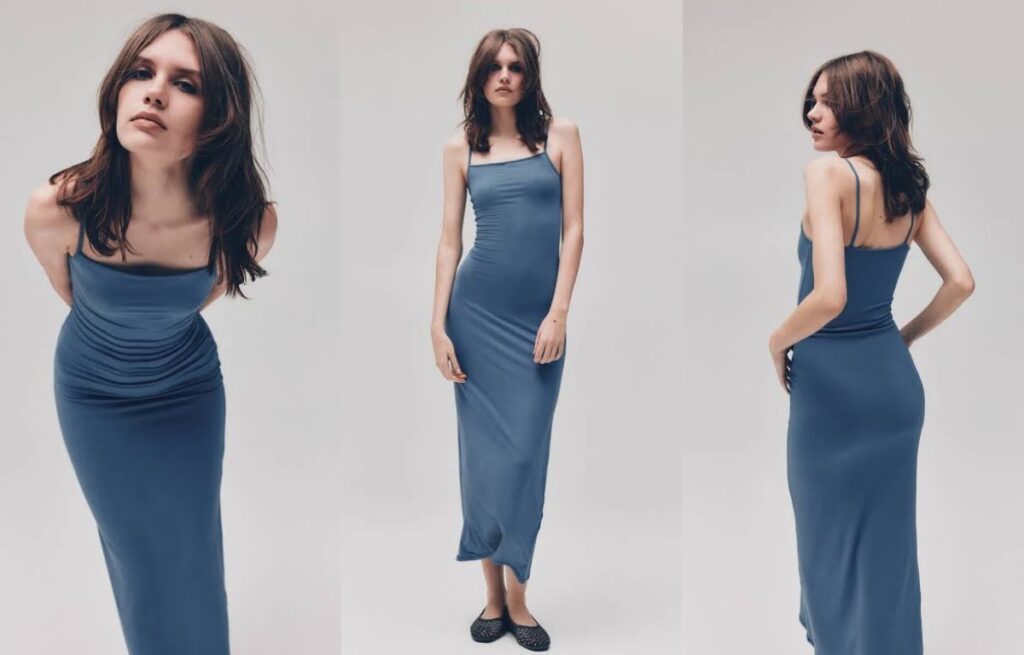
What is a maxi dress, and why is it a summer best-seller?
Many buyers define maxi as “long.” I define it as “long with movement.” If the dress looks long but moves poorly, it will not repeat.
A maxi dress is a full-length dress that usually falls at or near the ankle. It becomes a summer best-seller because it gives sun coverage, looks elegant in photos, and works for casual, vacation, and event use. The key is comfort: airflow, walking ease, and stable fit.
What makes a maxi different from a midi in real wear
- More fabric area, so heat and cling risk is higher
- Longer hem, so hem balance and length tolerance matter more
- Bigger skirt sweep, so print and drape read stronger
- Higher chance of dragging or tripping if length control is weak
What are the most popular types of maxi dress for summer collections?
I do not treat “maxi” as one style. I break it into types, because each type needs different fabric and construction. This also helps Emily position them across casual and “occasion” pages.
The most popular maxi dress types for summer include tiered maxi, wrap maxi, slip maxi, shirt maxi, smock maxi, A-line maxi, fit-and-flare maxi, halter maxi, off-shoulder maxi, one-shoulder maxi, strapless maxi, cut-out maxi, backless maxi, button-front maxi, and high-slit maxi. In wholesale, I usually lead with tiered, wrap, and smock for volume sales.
The “safe core” maxi types
- Tiered maxi (best for boho and easy fit)
- Smock maxi (comfort and size flexibility)
- Wrap maxi (adjustable waist, good for curves)
- Shirt maxi (smart casual, stable demand)
- A-line maxi (clean shape, broad market)
The “marketing hero” maxi types
- Cut-out maxi (high click, higher return risk)
- Backless maxi (vacation story, bra issues)
- Strapless maxi (support and slipping risk)
- One-shoulder maxi (eventwear, fit sensitivity)
How do I choose the right fabric for a maxi dress without making it too hot or too sheer?
This is the most important technical part. A maxi dress uses more fabric than a mini, so small fabric mistakes become big comfort problems.
For summer maxi dresses, I choose fabrics based on breathability, drape, and opacity under sunlight. I often use viscose/rayon for flow, cotton poplin for structure, and light crepe for balanced movement. I avoid heavy satin and thick polyester when the target market is hot and humid, unless the style is eventwear.
Fabric behavior I test before I approve
- Airflow: I check if the fabric traps heat on skin
- Opacity: I test in outdoor light and phone flash
- Drape: I check skirt swing while walking
- Shrinkage: I wash once and measure again
- Wrinkle: I crush in hand and see recovery
Good fabric matches by maxi type
| Maxi Dress Type | Best Fabric Options | Why it works | Main risk |
|---|---|---|---|
| Tiered maxi | viscose, cotton voile | light and flowing | shrinkage |
| Smock maxi | viscose, cotton | comfort and easy fit | sheerness |
| Shirt maxi | cotton poplin, light twill | crisp and stable | wrinkling |
| Slip maxi | satin, bias crepe | premium drape | snag + static |
| Wrap maxi | viscose crepe | movement and tie control | gaping |
| A-line maxi | poplin, crepe | clean silhouette | stiffness |
My “hot weather” warning list
- Fabric is smooth but does not breathe
- Fabric clings when static builds
- Fabric shows sweat marks easily
- White and pastel colors go sheer in sun
How do I control maxi dress length, hem sweep, and walking ease across sizes?
Length is a silent quality issue. Many brands lose reviews because the maxi drags or becomes “not maxi” after washing. I treat length like a core spec, not a flexible idea.
I control maxi length by setting a clear HPS (high point shoulder) measurement for each size, then I lock shrinkage allowance and hem turn-up rules. I also control hem sweep so the dress is wide enough for steps, but not so wide that it feels heavy. For slit maxis, I set slit height based on movement and modesty level.
Length control rules I use
- I define maxi target: ankle-length vs floor-length
- I set tolerance tighter than casual tops, because 2 cm is visible
- I add shrinkage allowance for viscose and cotton
- I test hang and stretch on bias-cut pieces for 24 hours
Hem sweep and movement logic
- Narrow sweep: cleaner look, less fabric cost, but can restrict walking
- Wide sweep: better movement, but heavier feel and more heat
- Tiered skirts: sweep grows fast, so tier width must be controlled
| Spec Item | Why it matters | What I check in fitting |
|---|---|---|
| HPS length | defines true maxi | standing + walking |
| Skirt sweep | defines stride comfort | stairs + long steps |
| Slit height | defines mobility | sit + step test |
| Waist drop | affects proportion | front mirror check |
| Strap adjustment | reduces returns | tighten/loosen range |
How do I pick necklines and back designs that reduce returns for maxi dresses?
Maxi dresses are often purchased for travel and events. That means long wear time. If straps hurt or the back does not work with bras, customers complain fast.
To reduce returns, I choose supportive necklines like square neck, V-neck with stay tape, or smocked backs for flexible fit. For trend designs like backless or strapless, I add internal support such as grip tape, boning, or hidden elastic. I also prefer adjustable straps for most daywear maxis.
Neckline choices and what they solve
- Square neck: stable for larger bust, clean photos
- V-neck: flattering, but needs anti-gap stitch or snap
- Cowl neck: premium, but needs stabilization so it does not grow
- Halter: strong summer vibe, but neck stress must be reinforced
Back designs and fit range
- Smocked back: best for flexible sizing
- Tie back: adjustable but more labor
- Zipper back: clean look, but fit is stricter
- Backless: high click, but bra solutions are limited
What are the biggest production and QC risks for maxi dresses, and how do I prevent them?
Maxi dresses fail in bulk from small issues that become large at scale: shade differences across panels, uneven hems, twisted seams, and shrinkage that changes length.
The biggest risks are uneven hem balance, panel twisting, shade variation, shrinkage, and strap breakage. I prevent them by controlling fabric inspection, cutting direction rules, hem measurement checks on hangers, and inline QC for stress points like straps, ties, and side seams.
Failure points by maxi type
- Tiered maxi: tier mismatch, bulky joins, uneven gathers
- Wrap maxi: gaping, tie breakage, waist seam stretching
- Slip maxi: seam puckering, fabric shading, length growth on bias
- Shirt maxi: placket ripple, button spacing, collar stand issues
QC checkpoints I run in bulk
- I measure length on hanger after 24-hour hang
- I check hem evenness on a flat table and on body form
- I inspect fabric shading roll by roll before cutting
- I pull-test straps and tie points for strength
- I check opacity under strong light for light colors
Packing and shipping checks that protect reviews
- I avoid high heat pressing that creates shine or marks
- I use tissue and low-pressure folding to reduce hard creases
- I suggest steaming guidelines for the buyer’s warehouse
Midi Dress
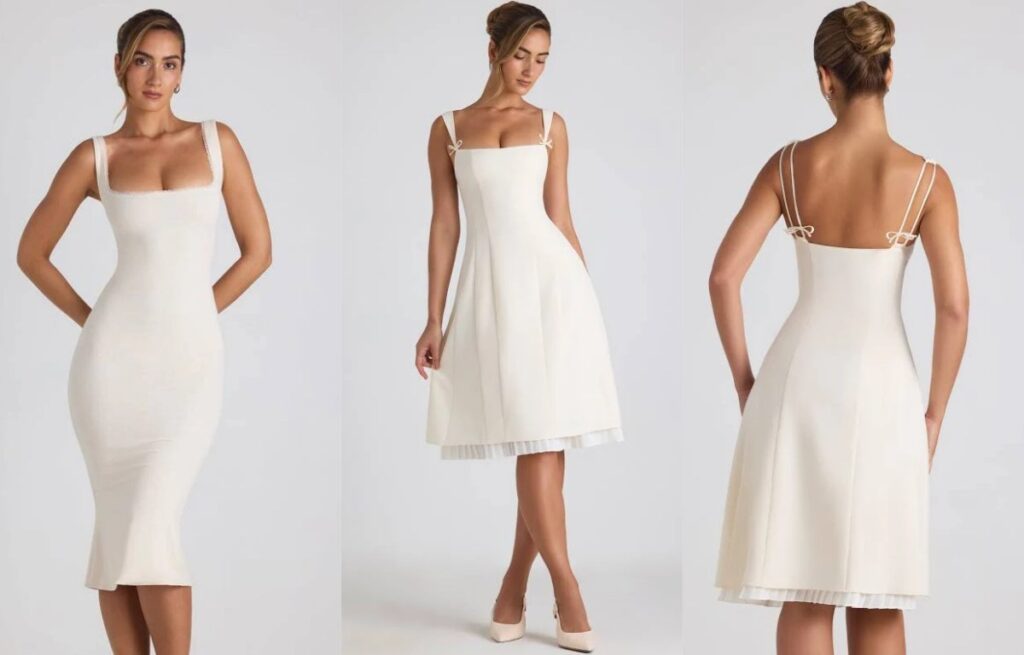
What exactly is a midi dress, and why does it sell better than mini or maxi in many markets?
People define “midi” differently, and that can cause fit complaints. I always define it with a measurable rule, not a vibe.
A midi dress is a dress with a hem that typically falls between the knee and ankle, most often around mid-calf. It sells well because it feels wearable for daily life, it suits casual to semi-formal occasions, and it reduces exposure and movement worries that customers often have with minis and some maxis.
Where midi length performs best
- Australia and coastal markets: breathable and easy for day-to-night
- North America: strong “clean and classy” styling demand
- UK and Western Europe: practical length for city wear
The three main reasons midis reorder well
- Better coverage, so fewer “regret returns”
- Easier styling with flats, sneakers, and sandals
- More flexible for different ages and body types
Which types of midi dress are most popular for summer collections?
I do not treat “midi” as one style. The silhouette matters. A fitted midi sells differently than a relaxed midi, even if the hem is the same.
The most popular summer midi dress types include A-line midi, wrap midi, shirt midi, slip midi, smock midi, tiered midi, fit-and-flare midi, bodycon midi, and bias-cut midi. In wholesale, I usually lead with A-line, wrap, shirt, and smock midis because they fit more customers and have lower return risk.
My “core vs trend” midi list
- Core: A-line midi, wrap midi, shirt midi, smock midi
- Fashion: slip midi, bias-cut midi, corset midi, cut-out midi
- Event: one-shoulder midi, satin midi, lace-trim midi
A quick selection table
| Midi Type | Best Customer Need | Best Summer Fabric | Risk Level |
|---|---|---|---|
| A-line midi | easy fit + movement | poplin, viscose | Low |
| Wrap midi | adjustable waist | viscose, crepe | Medium (gaping) |
| Shirt midi | smart casual | poplin, linen blend | Medium (buttons) |
| Smock midi | comfort | viscose, cotton | Low |
| Slip/bias midi | sleek look | satin, bias crepe | High (snag/fit) |
| Tiered midi | boho | viscose, voile | Medium (bulk seams) |
How do I choose the “right” midi hem placement so it flatters more body types?
This is a technical topic that sounds simple. But midi length can cut the leg line in an unflattering place. That is why some customers say “midi makes me look shorter.”
I choose midi hem placement by testing it on at least two height ranges and checking where the hem hits the calf. A mid-calf hem can shorten the leg visually, so I often adjust hem up slightly, add a slit, or reduce skirt volume to improve the line. I also keep consistent length grading across sizes.
The hem zones I work with
- Below knee: more elongating, more “workwear” feel
- True mid-calf: classic midi, but can shorten the leg
- Above ankle: more “maxi-lite,” strong for resort markets
My practical fit tricks for better leg line
- Add a side slit or front slit for walking ease and length illusion
- Use a higher waist seam to lift proportions
- Keep hem sweep controlled so it does not look heavy
- Use vertical details like seams, buttons, or stripe direction
What I test during sampling
- Walking steps on stairs and curbs
- Sitting comfort and knee bend
- Wind lift behavior in light fabrics
- Hem balance on hanger and on body
Which fabrics work best for summer midi dresses, and how do I prevent sheerness and cling?
Midi dresses cover more leg, so fabric heat and airflow matter more than in minis. Also, longer skirts can cling to the body when humidity rises.
For summer midi dresses, I use breathable woven fabrics like cotton poplin, cotton voile with lining, viscose challis, rayon crepe, and linen blends. To prevent sheerness and cling, I test opacity in sunlight, choose the right GSM, add lining or a slip layer for light colors, and control static with finishing choices.
Fabric performance rules I use
- Crisp fabrics (poplin): keep A-line shape and look clean
- Fluid fabrics (viscose): move well, but need shrinkage control
- Linen blends: breathable, but wrinkles must match the brand vibe
- Satin: looks premium, but summer comfort depends on weight and lining
Sheerness prevention checklist
- I check the fabric over a dark underlayer in outdoor light
- I avoid thin white fabrics without lining
- I use tighter weave or higher GSM for pale colors
- I consider double-layer skirt panels for very light prints
Cling and static control
- I avoid ultra-light polyester for humid markets
- I use lining with smooth hand feel when needed
- I keep skirt shape slightly away from the body for comfort
How do I engineer fit for a midi dress to reduce returns in wholesale?
Returns usually come from bust fit, waist comfort, and strap behavior. Midi length does not save a dress if the top fails.
I engineer midi dress fit by choosing a bodice strategy first: structured (darts/princess seams), flexible (smocking/elastic), or adjustable (wrap/ties). Then I lock measurement tolerances, add support at neckline and straps, and run fit tests on multiple body shapes before bulk.
Bodice strategies and when I use them
- Darts/princess seams: premium fit, best for woven A-line midis
- Smocked back: widest fit range, best for fast drops
- Wrap bodice: flexible waist, but needs gaping control
- Elastic waist: comfort, but must not twist or roll
The top fit failure points and my fixes
- Bust gaping on V-neck wrap
- I add hidden snap + stay tape
- Strap slipping
- I add adjusters and reinforce strap anchors
- Waist seam digging
- I check elastic width and recovery, and I soften seam allowance
- Armhole gaping
- I adjust armhole curve and add facing stability
Measurement control I recommend
| Area | Why it matters | Common tolerance approach |
|---|---|---|
| Bust | main return driver | tighter control than hip |
| Waist | comfort and silhouette | stable elastic spec |
| Length | midi perception | strict control per size |
| Hem sweep | movement and look | control flare consistency |
How do I choose the best midi dress details for summer trends without raising production risk?
Trends change fast, but production problems stay. I like details that add newness while keeping the base pattern stable.
I add trend value to midi dresses using low-risk details like square necklines, subtle cut-outs with stable bindings, tie straps, puff sleeves with breathable fabrics, and small prints. I avoid high-risk changes like extreme backless cuts or heavy embellishment unless the order quantity supports extra QC and sampling time.
Low-risk trend upgrades
- Square neck + princess seams
- Tie straps with hidden reinforcement
- Button-front with correct spacing rules
- Side slit for movement and modern look
- Small floral or stripe prints for content
Higher-risk trend upgrades
- Deep cowl neck without stabilization
- Large cut-outs on woven with no support
- Strapless midis without inner structure
- Heavy lace trims on very light fabrics
Mini Dress
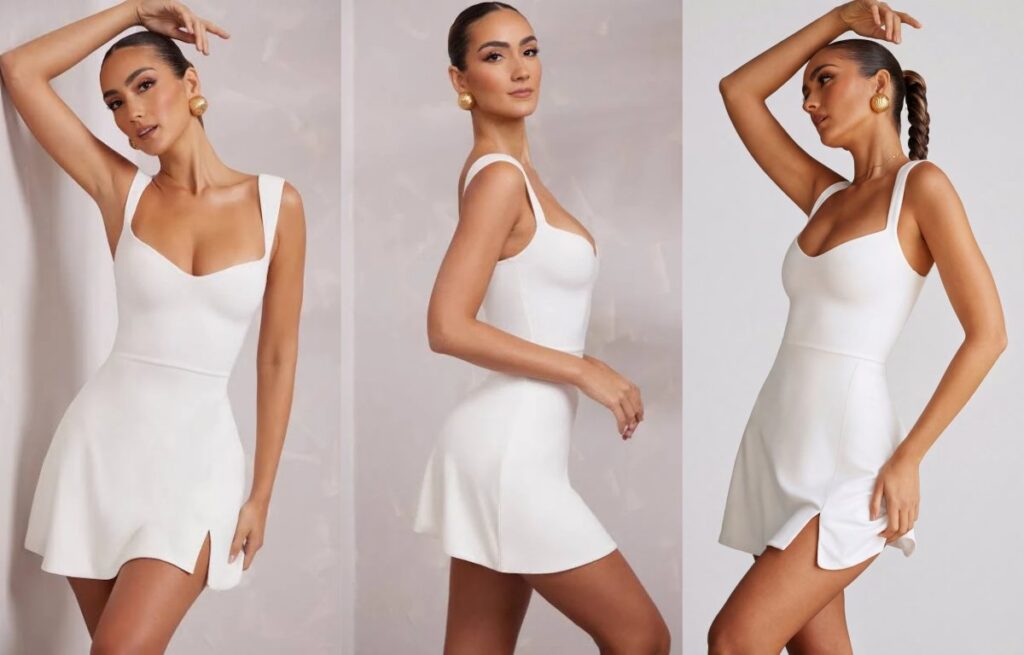
Which types of mini dress sell best in summer collections?
When I build mini dresses for a boutique buyer, I do not pick only one silhouette. I group them by occasion. This helps the buyer merchandise and helps me plan fabric and trims.
The best-selling summer mini dress types usually include A-line mini, fit-and-flare mini, bodycon mini, wrap mini, shirt mini, smock mini, slip mini, halter mini, off-shoulder mini, and cut-out mini. I choose the mix based on the buyer’s climate, customer comfort level, and the brand’s photo style.
Everyday mini types (lower return risk)
- A-line mini: easy movement, forgiving fit
- Smock mini: wide fit range, summer comfort
- Shirt mini: clean look, easy styling
Going-out mini types (higher click rate)
- Bodycon mini: sexy, but more size sensitivity
- Cut-out mini: trend heat, but fit complaints are common
- Slip mini: premium vibe, but fabric quality must be strong
Quick assortment table I use
| Mini Type | Best Use | Best Customer Mood | Risk Level |
|---|---|---|---|
| A-line | daily | cute + easy | Low |
| Smock | daily | comfy | Low |
| Shirt | day-to-night | clean | Medium |
| Wrap | date | flattering | Medium |
| Bodycon | party | sexy | High |
| Cut-out | party | bold | High |
| Slip | event | minimal | High |
How do I set the “right” mini length so it feels cute but still wearable?
Length is the number one mini dress complaint. Most buyers talk about “short.” Customers talk about “I can’t move.” I solve this with clear length targets and tolerance rules.
I set mini length by defining the target wearer activity and then locking a finished-garment length range with tight tolerance. For most commercial minis, I keep the hem at a wearable point that allows sitting and walking without constant pulling. I also adjust length by size so larger sizes do not become unintentionally shorter.
Length decisions I make early
- I decide if it is a “true mini” or a “short above-knee”
- I decide if the brand wants a nightlife look or everyday look
- I decide if the skirt needs built-in shorts or not
- If I grade only width, larger sizes become too short in real wear
- If I grade length slightly, comfort improves and returns drop
- If the buyer refuses length grading, I suggest a more A-line sweep
Movement tests I do on the fit sample
- Sit test: chair, car seat, and bar stool
- Step-up test: one stair step and a big stride
- Bend test: pick up a bag from the floor
- Wind test: fan + light fabric to check fly-up risk
A practical mini wearability checklist
- Hem does not ride up after 10 steps
- No flash risk when sitting naturally
- Side seam stays vertical and does not twist
- Customer can wear normal underwear or planned shapewear
Which fabrics work best for a summer mini dress, and which ones cause complaints?
In summer, mini dresses show more leg, so the top part must feel light. But if the fabric is too light, the dress becomes sheer and unstable. I balance hand feel with structure.
The best summer mini dress fabrics are breathable and stable: cotton poplin, cotton slub, viscose challis, rayon crepe, light linen blends, and certain jerseys with good recovery. The fabrics that cause the most complaints are overly thin white viscose, low-quality satin, and jerseys that lose shape, because they create sheerness, cling, and ride-up.
Fabric matching by mini type
- A-line / shirt mini: poplin, light twill, linen blend (clean shape)
- Smock mini: viscose, cotton voile (soft comfort, but needs opacity control)
- Wrap mini: crepe and challis (drape without bulk at tie)
- Bodycon mini: jersey with strong recovery (no bagging at seat)
- Slip mini: satin with good face quality (snag and static control needed)
Heat and sweat reality checks
- I test if the fabric shows sweat marks in mid colors
- I test if light colors go sheer under sunlight
- I test if the fabric clings to the body with static
- I test shrinkage for rayon and linen blends
Opacity control options I offer buyers
- Full lining for light colors
- Half lining only in skirt
- Double layer at bust only
- Slightly heavier GSM in the same fiber family
How do neckline, straps, and back details affect fit and returns on mini dresses?
Mini dresses already feel “exposed.” If the top also feels unsafe, customers panic. So I treat the top as the safety system.
Neckline and strap design decide whether a mini dress feels secure. For low-return minis, I use adjustable straps, stable necklines like square or modest V, and I add hidden support like elastic, grip tape, or inner facing. For backless or halter minis, I accept higher return risk and I strengthen stress points.
Neckline choices and what they do
- Square neck: stable, good for bigger bust
- V-neck: flattering, but needs anti-gape control
- Cowl: premium, but must be stabilized or it collapses
- High neck: safer, but can feel warm in peak summer
Strap and back engineering
- Adjustable straps reduce complaints the most
- Halter needs stronger stitch and better lining at neck
- Smocked back increases size flexibility
- Backless needs hidden elastic and clean finishing
Common fit failures I prevent
- Armhole gaping when customer lifts arms
- Strap slipping due to wrong angle
- Bust riding up because the waist is too loose
- Back neckline stretching out after hanging
Mini dresses are short, so the hem and side seams are always in view. If the hem waves, the dress looks cheap. If the zipper ripples, customers think it is low quality. I build a tight QC plan.
To make mini dresses look premium, I control hem stability, seam straightness, and fit symmetry. I use clean finish methods, reinforce stress points, and run inline QC on length tolerance and visual checks under strong light. For knits, I also test recovery to avoid bagging after wear.
Key construction choices by fabric
- Woven minis: clean facing, invisible zipper done flat, stable hem
- Knit minis: coverstitch or twin needle with correct stretch, no popping seams
- Lined minis: tack lining properly so it does not twist
Hem and finish details that matter most
- Even hem width and consistent stitch distance
- No shine marks from over-pressing
- No puckering near zipper or darts
- Clean seam finishing so it feels good on skin
QC checkpoints I use in production
- First article: measure length, bust, waist, armhole
- Inline: check 1 out of every set number of pieces for hem wave
- Final: check shade, stains, loose threads, and symmetry
- Pack: fold method to reduce creasing on the front
Mini dress risk table
| Risk | Why it happens | How I control it |
|---|---|---|
| Ride-up | fabric too soft or fit too tight | better recovery fabric + pattern balance |
| Sheerness | light GSM and light colors | lining or heavier GSM |
| Hem wave | wrong hem method or pressing | correct hem spec + low heat |
| Gaping | neckline/armhole not stabilized | facing + stay tape + fit test |
| Size returns | grading not balanced | adjust grade + wearable ease |
A-Line Dress
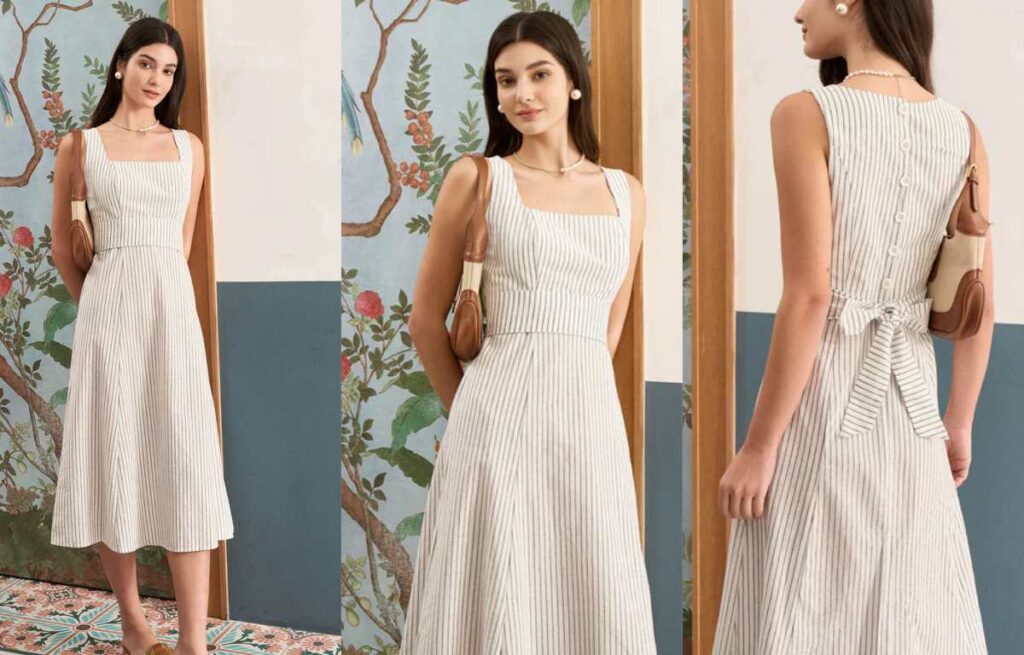
What exactly is an A-line dress, and what makes it different from other summer dress types?
In summer, the customer wants airflow and comfort, but she still wants a clean shape. This is where A-line wins.
An A-line dress fits closer at the bodice and gradually widens toward the hem, forming an “A” shape. It differs from a bodycon dress because it does not cling to the hips, and it differs from a fit-and-flare dress because the flare is usually more controlled and less “bouncy.” In summer, that balance feels breathable and flattering.
How I explain the silhouette in production terms
- Bodice: controlled ease at bust and armhole
- Waist: natural, empire, or high hip placement
- Skirt: gradual flare, measured by hem sweep and panel shape
- Key feeling: movement without volume overload
A-line vs similar styles
| Style | Main Shape | Summer Benefit | Main Risk |
|---|---|---|---|
| A-line | gradual flare | easy fit + airflow | wrong drape = stiff look |
| Fit-and-flare | fitted waist + strong flare | “cute” and youthful | can feel costume-like |
| Shift | straight | maximum comfort | can look boxy |
| Wrap | adjustable waist | flexible sizing | gaping at bust |
Why does an A-line dress sell so well in summer collections?
When a buyer like Emily plans a summer drop, she needs a style that works for many customers without heavy fitting issues. A-line is one of the most reliable options.
A-line dresses sell well in summer because they are easy to wear in heat, they look good in photos, and they cover many occasions like brunch, travel, office summer, and casual events. They also reduce fit complaints compared with tight dresses, so they often deliver better repeat orders.
The demand drivers I see every year
- Breathable silhouette for hot weather
- Waist definition without discomfort
- Easy to style with sandals, sneakers, or heels
- Works with solids, stripes, and florals
- Friendly for small size ranges and broader size curves
Where A-line performs best by channel
- E-commerce boutique: strong photo silhouette and low “try-on regret”
- Resort and vacation edits: movement and comfort
- Work summer: clean shape in poplin or crepe
How do I choose the best A-line dress variations for summer?
“A-line dress” is not one SKU. The neckline, sleeve, and length choices decide the customer and the return rate. I always design from the selling scene first.
For summer, I choose A-line variations by matching neckline and sleeve to bra-wearability and heat, then I set length based on the buyer’s market. Midi A-lines are the safest for repeat sales, mini A-lines are best for trend spikes, and maxi A-lines work best for vacation stories with soft drape fabrics.
My most-used summer A-line variants
- Spaghetti strap A-line: light and trendy, but needs adjustable straps
- Square neck A-line: stable fit, better for fuller bust
- Halter A-line: strong vacation vibe, but neck stress needs reinforcement
- Short sleeve A-line: better sun coverage, more “daily”
- Smocked-back A-line: best fit flexibility for online sales
Length selection rules I use
- Mini: best for youth markets, but walking comfort matters
- Midi: best cross-market seller, easiest to reorder
- Maxi: best for resort, but heavy fabrics ruin the look
Which fabrics work best for a summer A-line dress, and why do some fabrics fail?
This is the technical core. Many A-line problems come from fabric behavior, not the pattern. Summer adds sunlight, sweat, and movement, so the wrong fabric gets exposed fast.
The best fabrics for summer A-line dresses balance breathability, opacity, and drape. I often use cotton poplin for crisp A-lines, viscose for soft swing, and light crepe for stable movement. Fabrics fail when they are too stiff for the skirt sweep, too thin for light colors, or too unstable in shrinkage, which changes length and fit after washing.
Fabric behavior I check before sampling
- Drape: does the skirt flow or stand out?
- Opacity: can I see through it in sunlight?
- Recovery: does neckline and armhole hold shape?
- Shrinkage: does length drop after wash?
- Wrinkle: does it look messy after sitting?
Fabric-to-A-line matching table
| Fabric | Best A-line Look | Best Season Use | Main Risk | My fix |
|---|---|---|---|---|
| Cotton poplin | crisp, clean | daily + work summer | wrinkles | accept or use blend |
| Viscose/rayon | soft swing | resort + casual | shrinkage | pre-shrink + allowance |
| Linen blend | airy texture | premium resort | heavy wrinkles | set expectation in photos |
| Poly crepe | stable drape | all-around | heat comfort | choose breathable blend |
| Chiffon | romantic flow | events | sheerness | lining plan |
Common fabric mistakes I stop early
- Using stiff twill for a “floaty” summer story
- Using thin white fabric without lining
- Ignoring viscose shrinkage and ending up with short hems
- Choosing shiny fabric that shows sweat marks easily
How do I engineer fit and pattern specs for an A-line summer dress to reduce returns?
A-line reduces hip fit risk, but it can still fail at bust, armhole, and waist placement. These are the places I control with pattern discipline.
I reduce returns by controlling bust ease, armhole gape, waist position, and hem balance across sizes. I also set movement allowance so customers can sit and walk in heat without the dress riding up. For online brands, I prefer smocked backs or adjustable straps to widen fit tolerance.
Key spec points I lock in the first approved sample
- Bust: enough ease for breathing, no gaping at neckline
- Armhole: no side-bra show, no underarm pinch
- Waist: sits where the target customer expects it
- Skirt sweep: wide enough for movement, not so wide it looks bulky
- Length: consistent after wash and steam
Pattern details that matter more than buyers expect
- Dart position relative to bust apex
- Neckline shape and facing width
- Grain direction on skirt panels
- Pocket placement so it does not pull the skirt
A “return risk” checklist I use
- Strap slip test on a moving body
- Sitting test for hem riding
- Sunlight test for sheerness
- 24-hour hang test to see if neckline grows
What are the main production and QC risks for summer A-line dresses?
In bulk, the A-line shape can drift. Small measurement shifts change the silhouette. Summer fabrics also make defects more visible.
The main risks are uneven hems, seam twisting, neckline stretching, shade variation in light colors, and shrinkage that changes length. I manage these by testing fabric early, controlling cutting alignment, using stay tape on sensitive necklines, and running inline QC on hem balance and key measurements.
High-risk areas by construction
- Bias or curved necklines: can grow and wave
- Light fabrics: show puckering and needle marks
- Tiered A-lines: tiers can misalign and add bulk
- Button-front A-lines: placket ripple and button spacing issues
QC points I require in bulk
- Measurement tolerance on bust, waist, and length
- Hem inspection on hanger, not flat only
- Shade check under daylight before packing
- Random wash test from production line
Packaging for summer A-lines
- I avoid over-pressing that creates shine
- I fold to protect neckline shape
- I keep moisture control for humid shipping routes
Wrap Dress
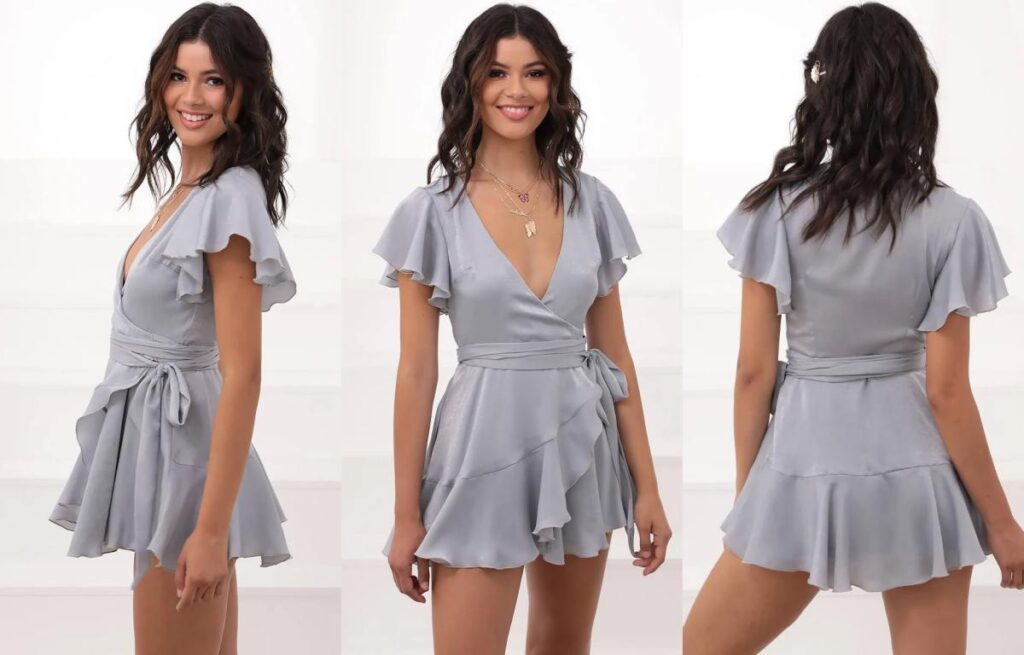
What is a wrap dress, and why is it one of the most important types of summer dresses?
When Emily asks me for “summer dresses that fit more customers,” wrap is always on the shortlist. It is a style that can look casual or elevated based on fabric and print.
A wrap dress is a dress where the front panels overlap and wrap across the torso, then tie at the waist or side seam. It is important for summer because it adjusts across small weight changes, works for day-to-night styling, and gives a breathable fit compared with tighter silhouettes.
The main wrap dress variants I see in wholesale
- True wrap: fully openable, tied to close
- Faux wrap: wrap look, fixed construction
- Wrap + snap: true wrap with a hidden closure for security
- Wrap + button: added inner button at waist to prevent shifting
Why buyers keep reorder wrap dresses
- Fit flexibility reduces size complaints
- Flattering shape works on many body types
- Easy to refresh with new prints each drop
Which wrap dress types sell best in summer, and how do I choose the right one?
Not every wrap dress is summer-friendly. Some wrap patterns trap heat. Some fabrics cling. I choose based on climate, customer lifestyle, and the buyer’s marketing angle.
The best summer wrap dress types include short-sleeve wrap, sleeveless wrap, flutter-sleeve wrap, midi wrap, maxi wrap, and wrap sundress styles. I choose the type by matching sleeve coverage and hem length to the market, then I set the overlap depth and tie placement so the dress stays closed during walking and sitting.
Wrap types and when I use them
- Sleeveless wrap: hottest climates, simplest fit
- Flutter sleeve wrap: hides bra line, still airy
- Short sleeve wrap: more daywear and office friendly
- Midi wrap: most stable for volume sales
- Maxi wrap: vacation story, higher fabric consumption
A fast selection table I use
| Market need | Best wrap type | Fabric direction | Main risk |
|---|---|---|---|
| Everyday casual | midi wrap | viscose, crepe | gaping at bust |
| Vacation resort | maxi wrap | rayon challis | hem dragging, shifting |
| Work summer | short sleeve midi | cotton poplin light | stiffness, wrinkle |
| Party/night | satin wrap | satin/crepe | cling + slip |
How do I engineer wrap dress overlap so it does not open or flash in real wear?
This is the technical core. If overlap is wrong, the product is dead. Customers do not want to babysit a dress. They want to move.
I engineer wrap dress overlap by controlling the inner panel width, wrap angle, and tie position, then I test coverage in motion. I also add a hidden snap or inner button when the target customer wants daily wear, because it reduces gaping without changing the wrap look.
Overlap rules I use in pattern review
- I increase overlap for mini lengths because walking opens the hem
- I stabilize the neckline edge with stay tape on bias areas
- I keep the waist tie pulling force balanced, so it does not twist the skirt
- I grade overlap with size, not as a fixed rule, because larger sizes need more coverage
Motion tests I require in sampling
- 10 steps forward and 10 steps up stairs
- Sit, cross legs, stand up
- Raise arms, twist torso
- Simulate wind by swinging skirt lightly
Anti-gap options and when I use them
- Hidden snap at bust: best for V-neck gaping
- Inner button at waist: best for shifting skirt overlap
- Small clear elastic at neckline: best for soft fabrics
- Modesty panel insert: best for deep V designs
A coverage checklist table
| Area | What I measure | What can go wrong | My fix |
|---|---|---|---|
| Bust | neckline opening in motion | gaping | snap + stay tape |
| Waist | tie pull alignment | twisting | move tie point + reinforce |
| Skirt | overlap at hem while walking | flashing | widen inner panel |
| Side seam | tie anchor strength | tearing | bar tack + interfacing |
Which fabrics work best for summer wrap dresses, and which ones cause the most returns?
Wrap is a drape product. Fabric behavior decides whether the dress feels breathable and whether it stays in place. I do not choose fabric only by cost.
The best fabrics for summer wrap dresses are viscose/rayon challis, lightweight crepe, and soft cotton blends, because they drape and breathe. The fabrics that cause the most returns are clingy thin jersey, shiny low-quality satin, and unstable bias-cut fabrics without stabilization, because they shift and open during wear.
Fabric choices I use and why
- Viscose challis: soft movement, strong print story, but needs shrinkage control
- Rayon crepe: better recovery, less cling, good for day-to-night
- Cotton poplin: crisp wrap shape, better for workwear looks, but wrinkles
- Linen blend: great for resort, but buyer must accept wrinkles
Fabric risk points for wrap dresses
- Shrinkage changes overlap coverage
- Low recovery causes neckline stretching over time
- Too much slip makes the tie loosen and the skirt shift
- Sheerness makes overlap look messy in sunlight
Fabric + wrap type matching table
| Wrap type | Best fabric | Why it sells | Main QC risk |
|---|---|---|---|
| Casual midi wrap | viscose challis | airy + prints | shrinkage |
| Work midi wrap | cotton poplin | clean shape | wrinkles |
| Vacation maxi wrap | rayon crepe | flow + photos | hem growth |
| Night wrap | satin crepe | shine + drape | snag + slip |
How do I construct wrap dress ties and waist seams so they survive bulk wear?
Ties are a small part, but they carry the whole garment. If ties twist, fray, or tear, the dress feels cheap. For online reviews, this is a killer.
I build strong wrap dress ties by reinforcing tie anchors, using stable turn-back widths, and choosing the right finishing method for the fabric. I also control waist seam strength and stitch specs, because the tie pull force is repeated every wear. In bulk, I add pull tests on tie points.
Tie construction options I use
- Self-fabric tie: clean look, but needs enough thickness to avoid twisting
- Belt tie with interfacing: more stable, better for heavier fabrics
- Separate sash with loops: easier wearing, but adds parts and labor
Reinforcement details that matter
- Interfacing patch at tie anchor
- Bar tack at high-stress ends
- Clean finishing at tie tip to prevent fray
- Seam allowance management to reduce bulk at side seam
A simple pull-test standard I use internally
- Pull tie with steady force 10 times
- Check for stitch popping or fabric tearing
- Check tie tip fraying after rubbing
How do I reduce sizing complaints for wrap dresses when the buyer sells online?
Wrap is adjustable, but sizing still matters. Many customers do not tie at the same spot. Some want more bust coverage. Some want more skirt overlap.
I reduce sizing complaints by offering adjustable features and clear measurement communication. In production, I use flexible waist positioning, add inner closures, and ensure strap or sleeve designs support bra-friendly wear. For online buyers, I recommend listing bust and overlap guidance, not only waist.
Pattern features that reduce returns
- Adjustable tie path with two tie holes or tie points
- Inner waist button for security
- Smocked back panel for a wider fit range
- Slightly higher waist seam for comfort on sitting
What I ask buyers to show in product photos
- Side view to show overlap
- Sitting pose to prove coverage
- Close-up of hidden snap/button if used
- Video of walking to show movement
Shift Dress
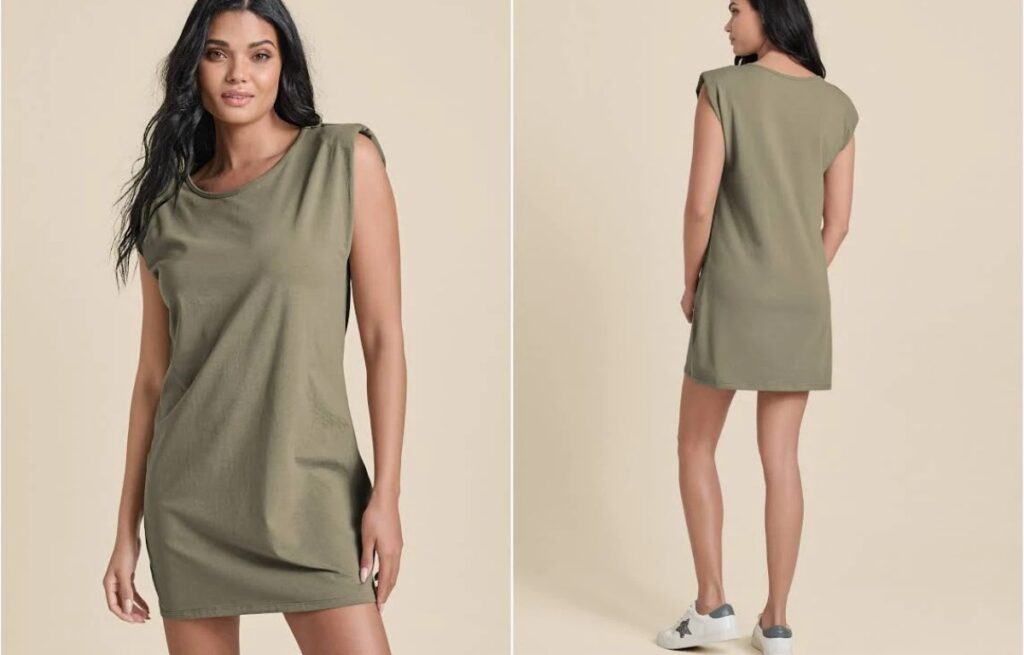
Why is the shift dress one of the most important types of summer dresses?
In hot weather, many customers want space between the fabric and the body. That is why shift dresses can win, especially for casual daywear and travel.
Shift dresses are important in summer because they offer airflow, easy sizing, and fast styling. They also work across many markets because the silhouette is not tied to one body shape. For wholesale buyers, shift dresses reduce fit complaints compared to tight styles, and they can be repeated in new colors and prints each drop.
What shift dresses do better than many summer silhouettes
- They feel cooler because they do not cling at the waist
- They fit a wider range of body types with fewer pattern changes
- They style easily with sandals, sneakers, or layering pieces
- They support repeat sales because the base pattern can stay the same
Where shift dresses usually sell best
- Coastal and warm cities
- Resort and travel edits
- “Work summer” capsules with a clean look
- Minimalist brands that need simple shapes
What are the key shift dress variations for summer, and how do I choose the right one?
Many people say “shift dress” like it is one item. I break it into practical variations because each version needs different fabric and QC focus.
The key summer shift dress variations include mini shift, midi shift, sleeveless shift, cap-sleeve shift, T-shirt shift, collar shift, pocket shift, and structured shift. I choose the right one by looking at the buyer’s customer lifestyle, heat level, and how formal the brand wants to look.
The most commercial shift dress variations
- Sleeveless mini shift: best for Gen Z and vacation
- Cap-sleeve shift: better for everyday wear and less bra exposure
- T-shirt shift (knit): comfort-first, fast repeat
- Collar shift (woven): smart casual and work-friendly
- Pocket shift: functional and “easy sell” in product pages
Quick selection table for buyers
| Shift Type | Best Use | Best Fabric Direction | Main Risk |
|---|---|---|---|
| Sleeveless mini | casual + vacation | cotton, viscose | armhole gaping |
| Cap sleeve | everyday | poplin, rayon crepe | sleeve bite |
| Collar shift | work summer | poplin, linen blend | wrinkling |
| Knit T-shirt shift | lounge | cotton jersey | cling + heat |
| Structured shift | event casual | jacquard, heavier weave | stiffness |
What fit and pattern details make a shift dress look expensive instead of boxy?
This is the biggest difference between a premium shift and a cheap one. The silhouette is simple, so the pattern must be sharp.
A shift dress looks expensive when the shoulders sit clean, the neckline stays flat, and the armholes give comfort without gaping. I also control the bust shaping through small darts or subtle paneling, even if the dress still reads “straight.” This keeps the fit relaxed but not sloppy.
Shoulder and neck: the “first impression” zone
- Shoulder width: too wide makes the dress droop
- Shoulder slope: wrong slope causes drag lines and wrinkles
- Neckline shape: too open causes strap and bra issues
- Neck facing depth: too shallow makes it roll out
Armhole engineering for summer comfort
- Armhole depth: too low shows bra and causes gaping
- Armhole curve: too tight bites, too loose looks messy
- Binding vs facing: binding can look clean, but needs skill to avoid waves
Hem and side seam balance
- Side seam must hang straight, or the dress twists
- Hem must be level after hanging 24 hours
- Side slits can improve walking ease for midi shifts
Pattern tools I use to avoid “boxy”
- Small bust dart or hidden shoulder dart
- Slightly shaped side seam, not fully straight
- Back yoke or small center back seam for control
- Correct grade rules so larger sizes do not balloon
Which fabrics work best for a summer shift dress, and which ones create problems?
Fabric is half the silhouette. The wrong fabric turns a shift dress into a stiff rectangle or a clingy tube.
The best fabrics for summer shift dresses are breathable, stable, and not too clingy, such as cotton poplin, cotton slub, linen blends, viscose, rayon crepe, and light twill. Problem fabrics include very thin jersey that clings, shiny satins that show every wrinkle, and low-quality viscose that shrinks or pills quickly.
Fabric performance goals for shift dresses
- Breathability: comfort in heat
- Opacity: especially for light colors
- Drape: enough movement so it does not look stiff
- Recovery: neckline and armhole must hold shape
Fabric-to-shift matching table
| Fabric | Best Shift Use | Why it works | Main risk |
|---|---|---|---|
| Cotton poplin | collar shift, classic shift | clean shape | wrinkles |
| Linen blend | resort shift | cool + textured | wrinkles + shrink |
| Viscose | casual shift | soft drape | shrinkage |
| Rayon crepe | day-to-night | hides wrinkles better | snag risk |
| Light twill | structured shift | premium body | heat in hot markets |
| Jersey knit | T-shirt shift | comfort | cling + sweat marks |
My “summer sunlight” checks
- I check sheerness outside under sun
- I check cling by walking and sitting test
- I do one wash test for shrink and twist
- I test wrinkle recovery after packing fold
How do I position shift dresses in a summer collection, and what details drive conversion online?
Shift dresses can look “plain” on a product page if the styling is weak. I plan the details that help conversion without ruining production efficiency.
I position shift dresses as the easy everyday hero in a summer drop. To drive conversion, I add one clear feature like pockets, contrast binding, statement buttons, or a clean cut-out back. I also keep photos focused on fit at shoulder and armhole, because that is where shoppers judge quality fast.
Details that add value without heavy risk
- Side pockets with clean topstitch
- Contrast binding on neckline/armhole
- Statement button at back keyhole
- Small side slit for movement
- Belt option (removable) to widen styling
Details that increase risk fast
- Heavy ruffles on armholes (can wave)
- Deep armholes (bra exposure complaints)
- Extreme oversized shoulders (hang issues)
- Very thin light colors without lining
A practical merchandising plan
| Role in drop | Recommended shift styles | Why it sells |
|---|---|---|
| Core | sleeveless mini, cap sleeve | broad appeal |
| Fashion | contrast binding, pocket shift | content-friendly |
| Premium | structured woven shift | higher perceived value |
What are the main production and QC risks for shift dresses, and how do I control them in bulk?
The shift dress needs clean finishing. If stitching waves, it shows. If the side seam twists, it shows. If the neckline flips, it shows.
The main QC risks are neckline rippling, armhole gaping, seam twisting, uneven hems, and fabric shrinkage. I control them by locking pattern measurements early, using stable facing or binding methods, testing fabric shrinkage before bulk cutting, and running inline checks on shoulder and armhole measurements.
QC checkpoints I set in the tech pack
- Shoulder width tolerance and seam allowance rules
- Armhole depth and armhole curve measurement points
- Neck opening measurement tolerance and facing depth
- Hem length tolerance and side seam balance check
- Pocket placement tolerance (if added)
Bulk controls I use on the factory floor
- Hang test: 24-hour hang to see twist and drop
- Light check: sheerness under strong light
- Pressing control: avoid shine and distortion
- Random carton check: size set consistency
Shirt Dress
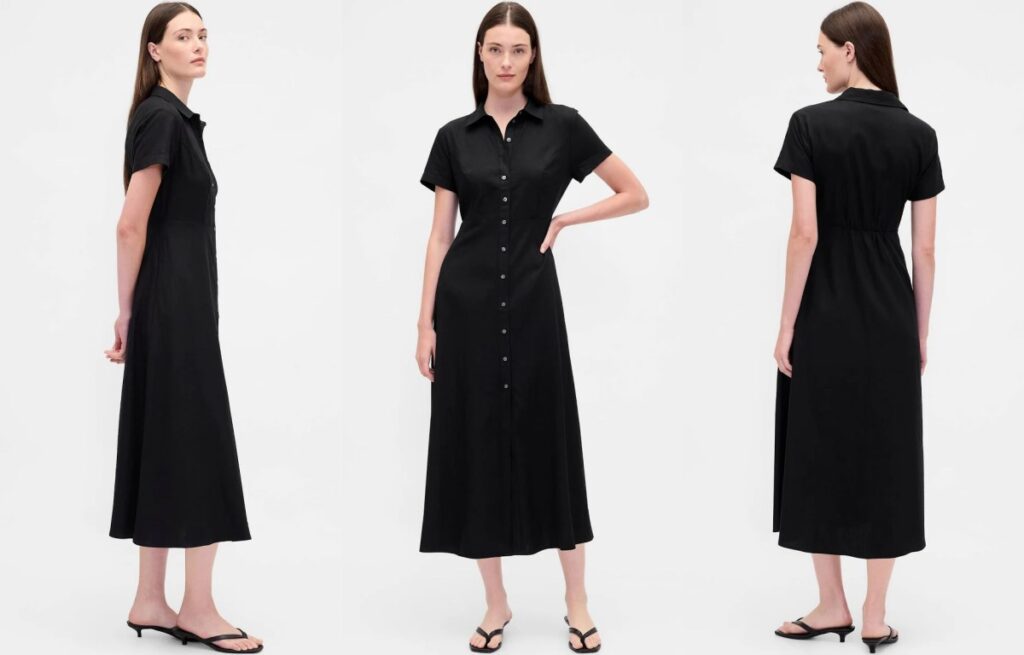
Why is the shirt dress one of the most important types of summer dresses?
A strong shirt dress gives buyers an “easy outfit” that works for many occasions. It also fits a wide age range. That makes it stable for reorders, even when trend pieces slow down.
The shirt dress matters in summer because it is breathable, versatile, and easy to style. It can sell as casual daywear, office-ready, vacation-ready, or even as a beach cover-up. For wholesale, it is a core style that supports consistent sales across different customer segments.
Where shirt dresses win in summer
- Office to weekend: looks clean without feeling formal
- Travel: easy layering and quick styling
- Boutique editing: good base for prints and belts
- Reorders: the silhouette stays relevant longer than “hot trend” cuts
What are the main types of shirt dress styles for summer collections?
When a buyer says “shirt dress,” I never assume one shape. There are many types, and each one needs a different fabric and fit approach.
The main summer shirt dress types include classic straight shirt dress, belted shirt dress, A-line shirt dress, tiered shirt dress, wrap-front shirt dress, shirt maxi, shirt midi, mini shirt dress, oversized boyfriend shirt dress, utility shirt dress, and shirt dress with cut-out or open back details.
My most commercial summer set
- Classic straight midi shirt dress
- Belted A-line shirt dress
- Tiered shirt dress in light viscose
- Oversized mini shirt dress as cover-up
- Shirt maxi for resort story
A fast “type vs risk” table
| Shirt Dress Type | Best Use | Best Fabric Direction | Main Risk |
|---|---|---|---|
| Classic straight | core, repeat | poplin, light twill | bust button gap |
| Belted A-line | feminine core | poplin, viscose | waist fit range |
| Tiered | fashion casual | viscose, voile | tier alignment |
| Oversized | cover-up | cotton, linen blend | looking too boxy |
| Utility | trend + function | twill light, ripstop | stiffness + heat |
Which fabrics work best for a summer shirt dress, and what tests do I run before bulk?
For summer, the wrong fabric choice kills the shirt dress. A fabric that is too stiff looks like a uniform. A fabric that is too light becomes sheer and shows pockets and placket.
The best fabrics for summer shirt dresses are cotton poplin, cotton slub, light twill, viscose, Tencel/lyocell, and linen blends. Before bulk, I test opacity in sunlight, shrinkage after wash, wrinkling after folding, and placket stability after pressing, because these points decide customer reviews.
Fabric choices and what they do
- Cotton poplin: crisp shape, clean collar, strong commercial option
- Viscose: softer drape, better movement, but shrinkage control is critical
- Lyocell/Tencel: smooth, cool hand feel, premium casual
- Linen blend: strong summer story, but must accept wrinkles
- Seersucker: breathable texture, hides wrinkles, great for casual
My practical pre-bulk test list
- Opacity test on white and light colors
- Shrinkage test (wash + dry method aligned with care label)
- Wrinkle recovery test (fold 1 hour, then hang 30 min)
- Colorfastness test for darks and brights
- Button and seam strength check for stress points
Fabric-to-style matching table
| Fabric | Best Shirt Dress Type | Why it works | Main watch-out |
|---|---|---|---|
| Poplin | classic, belted | holds structure | can wrinkle |
| Viscose | tiered, relaxed | flows and feels cool | shrinkage |
| Lyocell | premium midi | soft + clean drape | seam slippage risk |
| Linen blend | resort maxi | breathable story | wrinkles |
| Seersucker | casual mini | airflow + texture | limited “formal” look |
This is the biggest technical issue on shirt dresses. If the placket fails, the whole dress looks cheap, even if the fabric is good.
I prevent placket gaping and rippling by controlling bust ease, button spacing, interfacing strength, and placket width. I also align placket grain properly, choose the right fusing for the fabric weight, and add hidden security options like an internal snap at the bust for sizes that need it.
Why gaping happens
- Not enough bust ease in the pattern
- Button spacing too wide at the bust point
- Weak interfacing that collapses after wash
- Fabric that stretches on the placket edge
My engineering rules for stable plackets
- I choose interfacing based on fabric weight, not price
- I keep consistent placket width and topstitch distance
- I add one extra button near the bust if needed
- I test “sit + reach” movement during fitting
Small fixes that reduce returns fast
- Hidden snap between buttons at bust
- Slightly larger buttons for better hold on thick fabrics
- Better button placement map for larger sizes
- Reinforced buttonholes with correct density
How do I fit and grade a shirt dress for real customers, not only sample size?
This is where many bulk orders break. A shirt dress must look good in photos, but it must also stay closed on different bodies. Summer buyers also want comfort, not only shape.
I grade shirt dresses by protecting key points: bust circumference, shoulder width, armhole, and button placement. I also adjust waist and hip ease based on whether the style is straight, belted, or A-line. For summer comfort, I keep enough movement ease and I avoid tight armholes that trap heat.
Key measurement points I protect
- Bust: controls button gap and comfort
- Shoulder width: controls collar sit and sleeve hang
- Armhole depth: controls movement and airflow
- Sleeve bicep: controls comfort in heat
- Dress length: must match market and styling
Belted vs non-belted grading logic
- Belted: needs wider fit range and belt length planning
- Non-belted: needs cleaner side seam shaping and stable hip ease
A grading risk table I use internally
| Area | What goes wrong | What customers say | My fix |
|---|---|---|---|
| Bust | button gap | “It opens” | add ease + button plan |
| Armhole | too tight | “I can’t move” | adjust armhole + bicep |
| Collar | stands up | “Feels weird” | fix collar stand height |
| Waist seam | off position | “Looks bulky” | adjust waist placement |
| Hem | uneven hang | “Looks cheap” | balance pattern + QC |
Premium does not always mean complicated. For shirt dresses, premium is about clean lines and consistent finishing. Customers notice it fast because the style is “simple.”
A premium summer shirt dress uses clean topstitching, stable collar and cuffs, smooth placket finishing, and thoughtful details like functional pockets and a removable belt. I also choose trims that match the fabric story, because shiny cheap buttons can ruin a good garment.
Premium detail options that still scale in bulk
- Self-fabric belt with clean belt loops
- Side slits for walking ease on midi/maxi
- Roll-tab sleeves for styling flexibility
- Patch pockets for utility looks
- Covered buttons for a softer premium look
Trim choices that matter more than people think
- Button material and sheen level
- Thread color match consistency
- Fusible quality and wash durability
- Label placement to avoid neck irritation
What QC checkpoints do I use for shirt dresses before shipment?
Shirt dresses have many “straight line” elements. That means any small sewing issue is easy to see. I prefer to catch problems early, not after packing.
My key QC checkpoints are placket straightness, buttonhole strength, collar symmetry, sleeve balance, seam twist, and shrinkage results. I also check opacity for light colors and I verify that the dress hangs evenly after 24 hours on a hanger.
The bulk issues I see most often
- Placket rippling after pressing
- Buttonholes with weak density that tear
- Collar points not matching
- Pocket placement uneven
- Size spec drifting after wash shrinkage
A simple QC checklist I run
- Measure 5 pcs per size for bust, shoulder, length
- Pull test on buttons and belt loops
- Check placket alignment on a flat table
- Hang test overnight for hem balance
- Light test for sheerness under strong light
Slip Dress
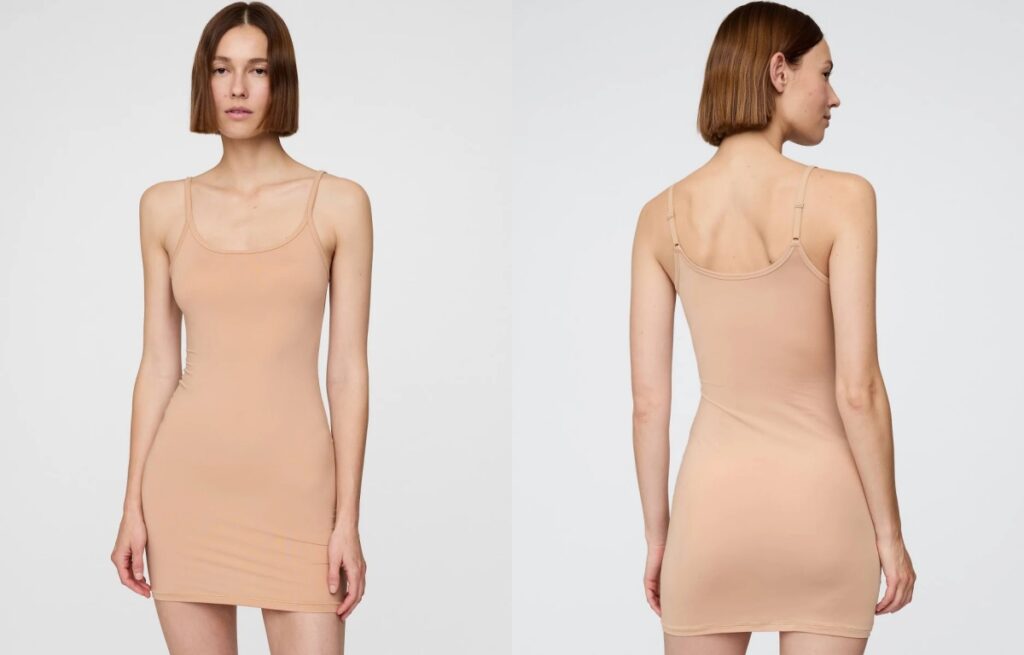
What slip dress types sell best in summer, and how do I build a profitable wholesale range?
When a buyer says “slip dress,” she often means three different products: a casual daytime slip, a vacation slip, and a night-out slip. If I mix them without a plan, the line looks messy.
The best-selling slip dress types for summer are the classic straight slip, bias-cut slip, cowl-neck slip, lace-trim slip, and back-detail slip. In wholesale, I usually carry 2 core slip silhouettes for reorders and add 1–2 trend versions like cut-out or asymmetric straps for marketing, so the collection stays stable and still feels new.
Core slip dress types I treat as “safe sellers”
- Straight slip (clean lines, easy grading)
- Bias-cut slip (best drape, premium look)
- Cowl-neck slip (high perceived value)
- Midi slip (most wearable, best reorder rate)
Trend slip dress types that create content
- Lace-trim slip (romantic, holiday crossover)
- Backless or tie-back slip (vacation story)
- Slit slip (movement + sex appeal)
- Cut-out slip (high click rate, higher return risk)
A simple range map I use
| Range role | Goal | Slip dress types | Quantity strategy |
|---|---|---|---|
| Core | reorder stability | straight, midi bias | deeper buy |
| Fashion | seasonal newness | cowl, slit | medium buy |
| Hero | marketing heat | backless, cut-out | limited buy |
Which fabrics work best for slip dresses in summer, and what quality risks should I expect?
Most slip dress problems are fabric problems. If fabric is wrong, no pattern can save it. The dress either clings, goes sheer, snags, or twists after wash.
The best summer slip dress fabrics are mid-weight satin, bias crepe, viscose blends, and lightweight knits with good recovery. I choose fabric by testing drape, opacity, snag resistance, seam slippage, and color shading. For bulk, polyester satin and poly crepe give the most stable consistency, while viscose feels cooler but needs strict shrinkage control.
Fabric options I use often
- Polyester satin: stable supply, strong shine, higher snag risk
- Poly crepe: better texture, less snag, premium drape
- Viscose/rayon: cooler hand feel, but shrinkage and shade drift
- Stretch satin: better fit, but neckline needs stabilization
- Rib knit: casual slip, but can show body lines and heat
Quality risks and what they look like
- Snagging: tiny pulls on the face after accessories
- Seam slippage: seam opens under tension at hip or bust
- Shading: panels look different under light
- Static cling: skirt sticks to legs in dry climates
- Sheerness: light colors show underwear under flash
My fabric test checklist for slip dresses
- I hang fabric for 24 hours to see bias growth
- I do a quick snag test with a ring and zipper pull
- I wash once to check shrinkage and twist
- I check sheerness outside in sunlight
- I compare fabric rolls for shade under LED and daylight
How do neckline, strap, and bias cutting change fit and return rates for slip dresses?
This is where slip dress returns come from. Customers do not complain “it is bias-cut.” They complain “it slides,” “it gaps,” or “my bra shows.” The details decide comfort.
Necklines and straps control stability, and bias cutting controls drape but also growth. I reduce returns by using adjustable straps, stabilizing the neckline edge, and controlling bias stretch with pattern balance and pre-hanging panels before hemming. I also choose cup shaping based on bust range, not only sample size.
Neckline types and their fit behavior
- Straight neckline: most stable, easiest to support with facing
- Cowl neckline: premium, but can collapse or gape without stay tape
- V-neck slip: flattering, but needs anti-gap control
- Scoop neckline: softer look, but can widen over time
Strap engineering that matters
- Adjustable straps reduce size complaints
- Wider straps reduce digging and bra issues
- Strap anchor reinforcement prevents tearing
Bias cut: why it looks great and why it fails
- It creates natural drape without heavy seams
- It can grow in length and width after hanging
- It can twist if grain is not balanced
Pattern controls I use for bias slips
- I balance front/back panel grain to reduce twist
- I pre-hang panels before final hem
- I control hem sweep so it does not “flare weird”
- I set tolerance rules for length growth
Slip dresses are “minimal,” so every stitch shows. If seams pucker or hems wave, the garment looks cheap. Premium comes from invisible work.
I make slip dresses look premium by choosing clean seam finishes, stable neckline construction, and a hem method that matches fabric weight. I also control pressing temperature and packing to avoid shine marks and hard wrinkles. For wholesale, I prefer French seams or clean overlock with top-quality thread and correct needle choice.
Seams: the inside must look as good as the outside
- French seams: best for light satin and crepe, premium feel
- Narrow overlock + edge stitch: faster, but needs tight QC
- Lining: improves opacity and comfort, but increases cost and heat
Hem choices that keep the skirt clean
- Narrow double-fold hem: stable, but can create ridges on thin satin
- Rolled hem: best for light fabric, but needs skilled operators
- Blind hem: clean outside, but not always stable on slippery satin
Pressing and packing rules I enforce
- Low heat and press cloth to avoid shine
- No heavy steam on some satins to avoid water marks
- Controlled folding lines, or it creases permanently
How do I price and plan MOQs for slip dresses without overbuying risky styles?
Slip dresses look like a simple SKU, but they carry hidden risks: fabric wastage on bias, higher defect rates from snags, and more returns on cowl and backless styles. I plan quantities based on risk.
I plan slip dress MOQs by using one stable base pattern for multiple colors, then I limit high-risk details like cowl neck and backless cuts to smaller test quantities. I also set clear fabric standards early, because fabric changes later can shift fit and length, especially for bias styles.
What raises cost in slip dresses
- Bias cutting and fabric consumption
- Higher-grade satin with better snag resistance
- Lace trim and extra finishing
- Lining and clean internal construction
A practical MOQ strategy I recommend
| Slip type | Risk level | MOQ approach | Why |
|---|---|---|---|
| Straight midi slip | Low | higher MOQ | stable fit, easy reorder |
| Bias-cut slip | Medium | medium MOQ | length growth needs control |
| Cowl slip | Medium-high | test MOQ | neckline stability varies |
| Backless/cut-out | High | small MOQ | higher return risk |
Smock Dress
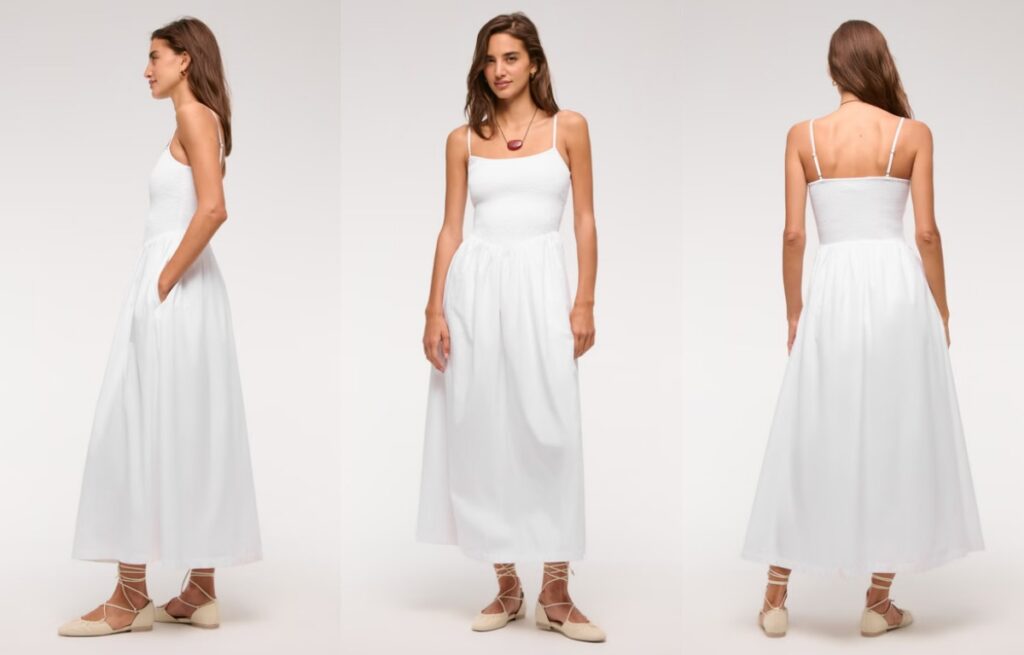
What exactly is a smock dress, and how is it different from a tiered dress or a shift dress?
Many people mix these names. I separate them clearly, because it affects pattern, cost, and QC checks.
A smock dress uses gathers or shirring at one or more horizontal seams to create volume and comfort. A tiered dress focuses on multiple skirt tiers for volume, and a shift dress is a straight, minimal shape with little gathering. Smock dresses are more forgiving in fit, while shift dresses rely more on accurate bust and hip measurements.
The common smock dress structures I see
- Shirred bodice smock: elastic shirring creates stretch and shape
- Empire seam smock: seam under bust with gathered skirt
- Yoke smock: yoke panel on top with gathered body
- Tiered smock: smock fit with visible tiers, more volume
Quick visual comparison
| Style | Key Construction | Fit Feel | Main Risk |
|---|---|---|---|
| Smock dress | gathers/shirring | flexible and airy | can look boxy |
| Tiered dress | multiple tier seams | playful volume | bulk at seams |
| Shift dress | straight silhouette | clean and simple | size sensitivity |
Which smock dress variations sell best in summer?
Smock dresses sell because they solve heat and comfort. But not every variation sells the same. I pick versions based on climate and the buyer’s customer lifestyle.
The best-selling smock dress variations are midi smocks with a defined chest seam, mini smocks with puff sleeves for trend appeal, and shirred-bodice smocks for wide size tolerance. For most boutique drops, I suggest 2–3 smock shapes: one everyday solid, one print, and one “detail” version with sleeves or trim.
My most repeatable smock shapes
- Midi empire smock (everyday, widest audience)
- Shirred bodice midi (best size flexibility)
- Mini puff sleeve smock (Gen Z energy, high content value)
- Square neck smock (clean, structured look)
- Halter smock (vacation story, but smaller audience)
My simple wholesale planning table
| Smock Type | Target Customer Use | Best Season Window | Return Risk |
|---|---|---|---|
| Shirred bodice midi | daily casual | long summer | low |
| Mini puff sleeve | weekend + trend | early-mid summer | medium |
| Square neck midi | casual smart | mid-late summer | low |
| Halter smock | vacation | peak summer | medium |
What fabrics work best for smock dresses, and what fabric mistakes hurt sales?
This is where I see most “cheap-looking” smock dresses. Smock styles need air, but they still need structure so they do not collapse.
The best fabrics for smock dresses are breathable woven fabrics with controlled shrinkage, like cotton poplin, cotton voile, viscose challis, and linen blends. I avoid overly thin fabric for light colors unless I add lining, because smock volume can make sheerness worse. I also avoid stiff fabrics that make the dress stand out like a tent.
Fabric selection rules I use
- For crisp, clean smocks: cotton poplin or cotton-linen
- For soft, flowy smocks: viscose/rayon challis or crepe
- For “premium texture”: dobby, seersucker, or broderie (with lining plan)
Common fabric mistakes I stop early
- Viscose with uncontrolled shrinkage (sizes change after wash)
- Thin white voile with no lining (sheer under sunlight)
- Stiff poplin with too much volume (looks boxy)
- Low-quality blends that pill at underarm or side seam
Fabric-to-detail matching table
| Fabric | Best Smock Detail | Why it works | Main QC Focus |
|---|---|---|---|
| Cotton poplin | square neck, clean seams | holds shape | wrinkling |
| Viscose challis | tiered smock | drapes well | shrinkage |
| Linen blend | sleeveless midi | summer texture | seam slippage |
| Seersucker | mini smock | airy and textured | stripe alignment |
| Broderie | puff sleeve | premium look | lining + fray |
This is the real question for wholesale. Smock dresses can be easy sellers, but they can also look like low-end loungewear if I do not control proportions and details.
I make a smock dress look premium by controlling volume placement, improving neckline shape, using better trims, and tightening sewing quality. I also use consistent topstitching, better elastic specs for shirring, and clean finishing inside so the garment feels good up close, not only in photos.
Proportion controls that change the look fast
- Raise or lower the empire seam by 1–2 cm to flatter the bust
- Reduce skirt width slightly to avoid a “tent” shape
- Add side shaping or subtle paneling without losing comfort
- Adjust sleeve volume so it looks intentional
Details that upgrade perceived value
- Square neck with facing (clean line)
- Covered buttons or a small placket
- Lace/crochet trim in limited areas
- Contrast topstitch in tonal thread
- Functional pockets with clean reinforcement
- Neckline lies flat with no gaping
- Armhole is clean and comfortable
- Hem is even and not twisting
- Gather is balanced left-to-right
- No loose threads around shirring rows
What are the main production and QC risks for smock dresses, and how do I control them in bulk?
Smock dresses look easy, so people underestimate QC. In bulk, the biggest risk is inconsistency. If one carton has tighter shirring, it fits like a different size.
The main risks are uneven gathers, inconsistent shirring stretch, seam puckering, shrinkage, and hem imbalance. I control them by locking elastic and stitch specs, using stretch tests on shirred panels, washing fabric for shrinkage before cutting when needed, and running inline checks on the first 50 pieces of every color.
Shirring control is the heart of smock QC
- Elastic thread type and thickness must be fixed
- Machine tension must be standardized by line
- Row count and row spacing must be consistent
- The shirred panel must hit a target stretch range
A simple stretch target method I use
- I measure shirred panel width relaxed
- I stretch it to a set pull force by hand gauge method
- I record the maximum comfortable width
- I reject panels that fall outside the range
The most common bulk defects and causes
- Wavy seam under shirring
- cause: tension mismatch and feeding issues
- Random “tight” bodices
- cause: elastic thread lot changes or operator settings
- Twisted side seams
- cause: fabric grain drift during cutting
- Uneven hem
- cause: poor relaxation time before hemming
Inline QC checkpoints that actually work
- Check 5 pcs per size from first bundle
- Check shirring stretch on 3 random pcs per hour
- Hang test 24 hours to see if seams drop
- Measure length after steam to confirm stability
How do I price and plan MOQ for smock dresses without killing margins?
Smock dresses can be cost-friendly, but details like puff sleeves, trims, and lining can change cost fast. I separate base cost from “upgrade cost” so the buyer sees where money goes.
I plan MOQ and pricing by choosing one base smock pattern and running multiple colors or prints on it. I keep core versions simple for margin, then I add one upgraded version with trims or sleeves for marketing. This gives buyers a stable reorder path and lowers development cost per style.
Cost drivers I explain clearly
- Lining (especially for white and light pastels)
- Extra tiers (more cutting and sewing time)
- Puff sleeves (more fabric consumption)
- Trims like lace or crochet (material + sewing minutes)
- Special fabrics like broderie (waste + QC)
A simple drop plan that works
| Version | Target Role | Fabric | Detail Level |
|---|---|---|---|
| Core solid | steady sales | cotton poplin | low |
| Print version | freshness | viscose | medium |
| Upgrade hero | marketing | broderie + lining | high |
Tiered Dress
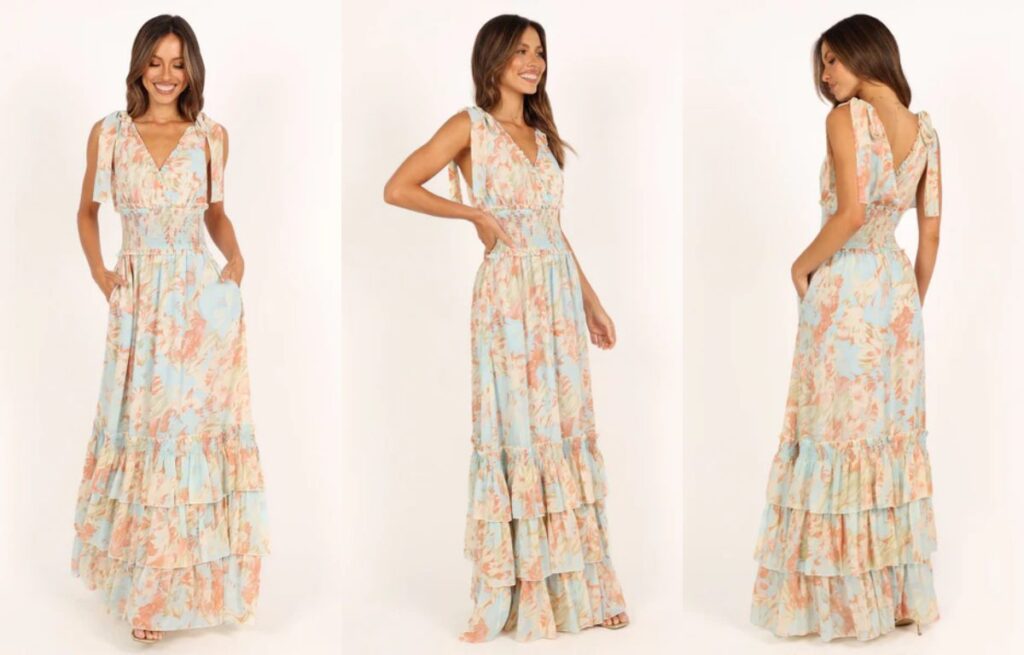
What are the main types of tiered dresses for summer collections?
When buyers say “tiered dress,” they can mean several different constructions. I always label the tier logic first, because it decides cost, fit, and how the dress photographs.
The main types of tiered dresses include 2-tier and 3-tier sundresses, tiered midi dresses, tiered maxi dresses, smocked bodice tiered dresses, shirt-style tiered dresses, ruffle-tier dresses, and bias-influenced soft tier dresses. Each type uses different tier counts, gather ratios, and fabrics to hit a specific summer mood.
Common tiered dress styles I produce
- 2-tier mini: quick trend item, lower fabric use
- 3-tier midi: most commercial for boutiques
- 4-tier maxi: strong resort story, higher fabric cost
- Smocked bodice + tiers: best fit range, lower return risk
- Shirt dress + tiers: smart casual look, higher sewing complexity
- Ruffle tier: romantic and boho, higher trim time
How I choose tier count
- Fewer tiers: cleaner, more premium, less “costume” risk
- More tiers: more movement, more boho, higher bulk risk
How do tier height and gather ratio change the silhouette and sales performance?
This is the core technical skill. Tiered dresses are not “add a ruffle.” The proportions decide whether it looks flattering or heavy.
Tier height controls where volume starts, and gather ratio controls how much the skirt expands. In summer, I keep the first tier calmer and I add volume gradually. If I push too much gathering at the waist or high hip, the dress looks wide and causes returns.
Tier height: where I place the “volume start”
- High tier seam (near underbust): babydoll feel, youthful, higher “pregnant look” risk
- Natural waist tier seam: safest for broad customers
- Low hip tier seam: elongates torso, but can restrict movement if too tight
Gather ratio: the math behind the look
I treat ratio like a control dial.
- 1.3–1.6x: subtle flare, more premium, less bulk
- 1.7–2.2x: boho movement, most common commercial tiered looks
- 2.3–3.0x: very full, dramatic, higher fabric and sewing time, higher bulk risk
A practical ratio guide I use
| Tier Position | Typical Ratio Range | Visual Effect | Risk |
|---|---|---|---|
| Bodice to tier 1 | 1.2–1.5x | clean transition | low |
| Tier 1 to tier 2 | 1.5–2.0x | balanced volume | medium |
| Tier 2 to tier 3 | 1.6–2.2x | strong movement | medium |
| Final tier to hem | 1.7–2.5x | maxi drama | higher hem twist |
What I do to avoid the “bulky tent” look
- I reduce gathers at the front waist area
- I shift volume to lower tiers for maxi styles
- I choose lighter fabric and avoid thick seams
- I use shaping in bodice so the top stays fitted
Which fabrics work best for tiered summer dresses, and which ones fail in bulk?
Fabric choice decides if tiers hang clean or stick out. It also decides if seam joins become heavy, and whether the dress wrinkles too much in shipping.
The best fabrics for summer tiered dresses are breathable and light, like viscose, cotton voile, cotton poplin (for cleaner tiers), linen blends, and light crepes. Fabrics that often fail are heavy cotton, stiff twill, and low-quality rayon that shrinks unpredictably or pills after wash.
Fabric behavior checklist for tiers
- Drape: helps tiers fall instead of “standing out”
- Shrinkage control: protects tier length consistency
- Wrinkle profile: affects customer satisfaction after shipping
- Sheerness: decides lining or double layer needs
- Seam bulk: decides if tiers look clean
Fabric selection by tiered dress type
| Tiered Type | Best Fabrics | Why | Main Risk |
|---|---|---|---|
| 3-tier midi | viscose, light crepe | best drape + movement | shrinkage |
| 2-tier mini | poplin, voile | clean shape | sheerness |
| 4-tier maxi | viscose challis, chiffon (lined) | flowing resort look | hem twist |
| Shirt + tier | poplin | collar + placket hold | wrinkling |
| Smocked + tier | voile, rayon | comfort fit | seam stretch |
Bulk failure patterns I watch
- Rayon that shrinks more in one direction, causing uneven tiers
- Poplin that wrinkles hard, causing negative reviews
- Voile that goes sheer under sunlight, causing returns
How do I engineer tier seams so they look clean and do not twist?
Tier seam quality is the difference between boutique and cheap. Customers may not name the problem, but they feel it when the skirt hangs unevenly.
I engineer tier seams by controlling grain direction, notch matching, and seam finishing. I also balance the gather distribution so the seam does not pull to one side. For light fabrics, I use narrow seams and clean finishing to reduce bulk, and I test hanging for 24 hours before final approval.
Grain and panel rules I use
- I keep each tier cut on straight grain for stability
- I avoid mixing grain directions across tiers
- I mark CF and side seams clearly for alignment
- I use notches at quarter points to distribute gathers evenly
Seam finishing options and when I use them
- French seam: premium, best for voile and rayon, slower
- Overlock + topstitch: commercial, good balance of cost and look
- Binding finish: premium look, good for sheer fabrics, higher labor
How I distribute gathers like a pro
- I keep fewer gathers at CF for a cleaner front
- I add more gathers toward side seams for movement
- I avoid “clumps” by using notch-based section gathers
A tier seam QC checklist I run
- Check tier seam straightness on hanger
- Check if one side seam pulls forward
- Measure tier lengths at CF and side seam
- Check seam bulk and “ridge” under light
How do I handle lining, opacity, and comfort for tiered summer dresses?
Tiered dresses are often made in light fabrics, and that creates opacity and comfort problems. I do not solve it with heavy lining, because that kills the summer feel.
I handle opacity by using the lightest lining that meets the “no show-through” standard, or I use partial lining only in the skirt. For very light colors, I sometimes double-layer the first tier instead of full lining. I also keep seams soft so customers do not feel scratchy joins.
Lining strategies that keep it breathable
- Partial skirt lining to mid-thigh for mini/midi
- Full skirt lining for chiffon and very light colors
- Double layer only on top tiers for targeted opacity
- Separate slip lining for premium capsules
Comfort details that reduce complaints
- Soft thread and clean seam finishing
- No bulky seam allowances at tier joins
- Elastic that does not bite for smocked bodices
- Tag and label placement away from tier seams
What are the main QC risks for tiered dresses in bulk, and how do I prevent rework?
Tiered dresses look easy until bulk. The most common problems come from fabric behavior and measurement drift across sewing lines.
The main QC risks are uneven tier lengths, twisted side seams, inconsistent gather density, shrinkage differences between rolls, and visible seam bulk. I prevent them by doing shrinkage tests, setting strict cutting markers, using notch controls for gathers, and running inline checks on the first 30–50 pieces per color.
My bulk control plan
- Pre-production: wash test and hang test
- Cutting: marker control and tier panel length checks
- Sewing: gather distribution by sections, not by “eye”
- Finishing: steam rules to avoid stretching bias areas
- Packing: fold method that reduces tier seam creasing
A defect-to-fix table I use
| Defect | Likely Cause | Fix |
|---|---|---|
| Hem looks higher on one side | shrinkage or grain drift | recheck grain + pre-shrink |
| Tier seam waves | over-tension while sewing | adjust feed + reduce tension |
| Gather clumps | no notch control | add quarter notches + guide |
| Bulky tier joins | wide seam + heavy finish | narrow seam + cleaner finish |
| Side seam twists | mixed grain or uneven tier lengths | cut control + alignment marks |
Fit-and-Flare Dress
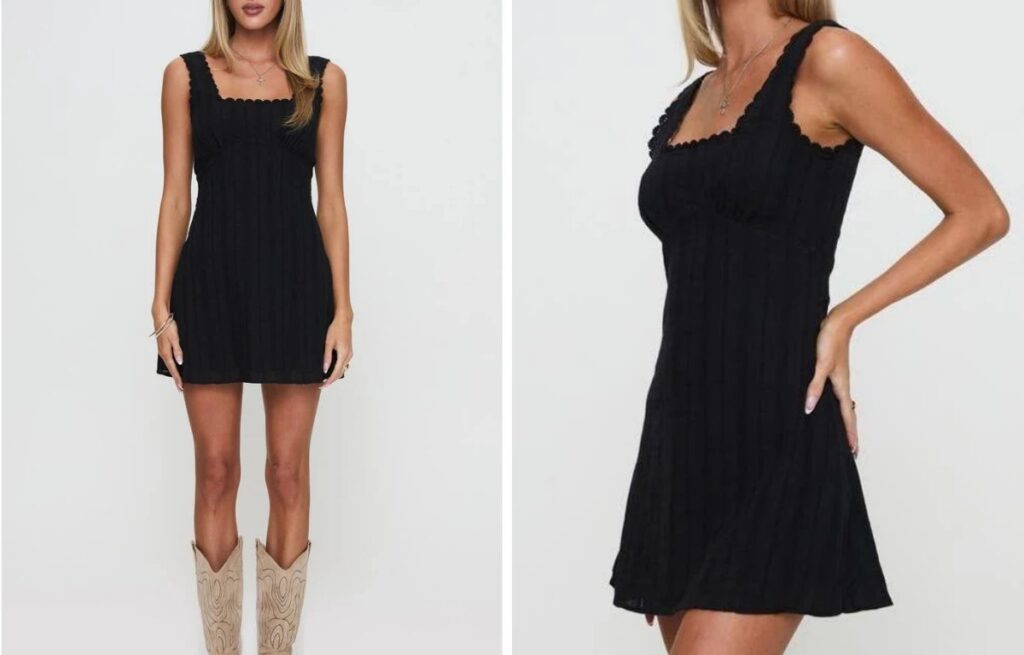
What is a fit-and-flare dress, and how is it different from an A-line dress?
Many buyers mix these two terms. That causes wrong sampling notes and slow revisions. I keep the difference simple, because factories need clear targets.
A fit-and-flare dress has a more fitted bodice and a stronger skirt flare that starts clearly at the waist. An A-line dress can be looser through the torso and may flare more gradually from the waist or high hip. Fit-and-flare feels more “hourglass,” while A-line feels more “easy.”
The silhouette signals I use
- Fit-and-flare: defined waist seam, shaped bust, wider hem sweep
- A-line: softer waist shaping, smaller flare, often fewer bodice seams
Why the difference matters in bulk
- Fit-and-flare needs tighter fit control and better support materials
- A-line can tolerate more size variation with fewer returns
Which summer occasions and customers does a fit-and-flare dress serve best?
I pick fit-and-flare when the customer wants “cute” and “snatched” at the same time. It is also a safe summer dress for photos because it moves well.
Fit-and-flare works best for brunch, daytime events, summer parties, and vacation dinners. It suits customers who want waist definition but do not want a tight skirt. For boutiques, it is a strong mid-price item that can be repeated in prints, solids, and different sleeve shapes.
Strong selling angles for boutique brands
- “Waist defining, but easy to walk”
- “Flattering for many body shapes”
- “Day-to-night with a shoe change”
Where it can struggle
- Very humid markets if fabric is too heavy
- Customers who hate fitted bust areas
- Very minimalist brands if the skirt volume feels too “girly”
How do I choose the best fabrics for a summer fit-and-flare dress?
Fabric is the real engine of this style. In summer, the wrong fabric creates heat and bulk. The right fabric creates swing, comfort, and clean photos.
For summer fit-and-flare dresses, I use breathable woven fabrics with enough body to hold the waist shape but not so much stiffness that the skirt feels heavy. Cotton poplin, cotton-linen blends, rayon crepe, and light ponte are common. I choose fabric weight based on skirt volume and the buyer’s target price.
Fabric behavior I test first
- Breathability and sweat mark risk
- Opacity under sunlight and flash
- Wrinkle behavior for shipping
- Shrinkage after wash and steam
- Recovery at waist seam and neckline
Fabric options and the best use cases
| Fabric | Best look | Best season use | Main risk | My fix |
|---|---|---|---|---|
| Cotton poplin | crisp, clean | everyday summer | wrinkles | accept story or enzyme wash |
| Cotton-linen blend | resort vibe | hot climates | heavy wrinkles | looser fit + styling |
| Rayon/viscose crepe | soft swing | prints + movement | shrinkage | pre-shrink + allowance |
| Stretch woven | fitted bodice comfort | party styles | seam damage | reinforced stitch + QC |
| Light ponte knit | smooth and stable | transitional summer | warmth | keep skirt volume lower |
A fabric mistake I stop early
- Using a thick satin or heavy twill for large flare skirts in peak summer
This is the professional part. Fit-and-flare looks “simple,” but it needs real pattern engineering. Most returns come from bust fit and waist seam issues.
A premium fit-and-flare needs correct bust shaping, stable waist seam support, and a balanced skirt that hangs evenly. I focus on dart placement, neckline stabilization, zipper installation, and hem sweep consistency. If these are right, the dress keeps its shape after wear and photos well on different bodies.
Bust shaping: the most sensitive area
- Dart angle must point to bust apex, but not hit it directly
- Princess seams look premium, but increase sewing time
- For larger bust grading, I widen and deepen darts instead of only adding length
Waist seam: the structure line
- I reinforce the waist seam with stay tape when fabric is soft
- I avoid weak seam allowances on high-tension waists
- I control seam matching for prints so the waist line looks clean
Skirt balance: swing without chaos
- I check hem sweep to avoid “too wide” that flips up in wind
- I control grain direction so panels do not twist
- I test walking steps, sitting, and stairs before I approve PPS
A practical pattern checklist I follow
- Bodice fit test on two sizes, not only the sample size
- 24-hour hanger test to see if neckline grows
- Zipper stress test with quick pull cycles
- Hem drop check after steam and hang
How do I adjust fit-and-flare for different body shapes without creating too many SKUs?
Buyers want one style to fit many customers. I can do that, but I need smart pattern choices, not “make it bigger everywhere.”
I make fit-and-flare more inclusive by using adjustable features like smocked backs, tie straps, and elasticated waist panels. I also choose necklines that reduce gaping and I grade the bust with controlled dart changes. This keeps the core silhouette while lowering return risk across sizes.
Low-risk inclusive features
- Smocked back panel for fit range
- Adjustable straps for shoulder length differences
- Hidden snap at V-neck for gaping control
- Slightly higher armholes to reduce bra exposure
Risky features in summer
- Heavy boning in low-price tiers
- Tight sleeves that trap heat
- Very deep sweetheart neckline without support
A quick “fit strategy” table
| Target customer | Best neckline | Best back detail | Best skirt volume |
|---|---|---|---|
| Broad market | square / modest V | smocked or zipper | medium flare |
| Trend-forward | cowl / deep V | tie back | high flare |
| Eventwear | sweetheart | structured bodice | medium-high flare |
What are the key QC risks for wholesale fit-and-flare dresses, and how do I prevent them?
Fit-and-flare has clear failure points. When they fail, the silhouette collapses. I prevent that by building QC around stress areas, not only measurements.
The main QC risks are bust gaping, zipper waves, waist seam popping, uneven hems, and skirt panel twisting. I prevent them with stable sewing specs, correct zipper methods, waistband reinforcement when needed, and inline checks on skirt balance and seam strength.
Common defects and the real root cause
- Waist seam popping: wrong SPI or weak seam allowance
- Zipper waviness: fabric stretching during install
- Hem unevenness: panel grain mismatch or hanging without hem drop check
- Twisting skirt: incorrect panel cutting or inconsistent feed
QC points I require before shipment
- 100% check on zipper function for the first bulk run
- Random pull test at waist seam and strap anchors
- Visual check on hem balance on hanger
- Print alignment check at waist seam for printed styles
Packing notes that reduce complaints
- Use tissue to reduce hard crease at skirt flare
- Avoid overheating during final press
- Carton test for wrinkle recovery on arrival
Bodycon Dress
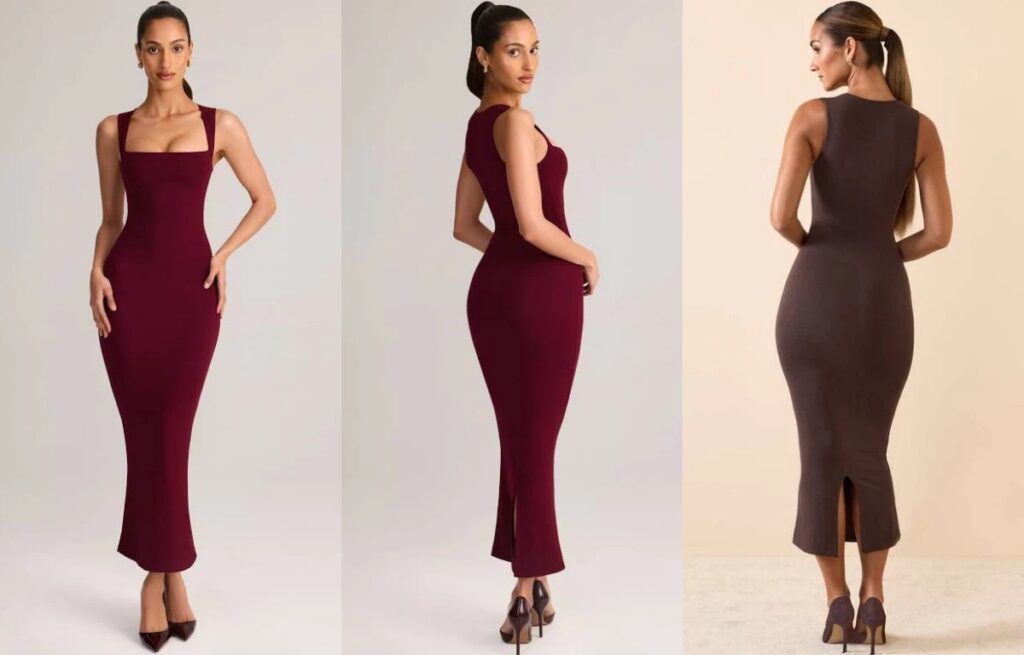
What is a bodycon dress, and why does it behave differently in summer?
A bodycon is not just “tight.” It is a stretch engineering product. In summer, heat, sweat, and sunlight make every weakness show up faster.
A bodycon dress is a close-fitting dress designed to follow the body using stretch fabrics. In summer, it behaves differently because thinner knits can turn sheer, heat increases cling and discomfort, and sweat can highlight color changes. This is why I treat summer bodycon as fabric-first, not design-first.
What customers notice first in summer bodycon
- Sheerness in daylight and under phone flash
- Rolling edges at neckline, hem, and armhole
- Ride-up while walking
- Sweat marks on mid-tone colors
- Fabric twisting after wash
Why returns are higher than other summer dresses
- Fit tolerance is small
- Stretch recovery varies by roll
- Bra compatibility matters more
What are the most popular types of bodycon dress for summer collections?
I do not sell one bodycon. I sell a bodycon system. Different necklines and lengths change who can wear it, and how often they wear it.
The most popular summer bodycon types include mini bodycon, midi bodycon, maxi bodycon, rib-knit bodycon, seamless bodycon, ruched bodycon, cut-out bodycon, one-shoulder bodycon, halter bodycon, strapless bodycon, spaghetti strap bodycon, square-neck bodycon, scoop-neck bodycon, cowl bodycon, long-sleeve mesh bodycon, and slip-style bodycon.
Core bodycon types for repeat sales
- Rib-knit midi bodycon (everyday, less see-through risk)
- Square-neck bodycon (bra-friendly and stable neckline)
- Scoop-neck mini bodycon (simple trend staple)
- Seamless bodycon (clean look, fewer seam issues)
Trend bodycon types that spike clicks
- Cut-out bodycon (high return risk, high content value)
- Ruched bodycon (more forgiving fit, still sexy)
- One-shoulder bodycon (event vibe, needs support)
A quick “where it sells” view
| Bodycon Type | Best Use | Customer Promise | Main Risk |
|---|---|---|---|
| Rib midi | daily wear | comfy + flattering | heat if GSM too high |
| Ruched | party + photos | hides tummy lines | ruching inconsistency |
| Cut-out | social content | bold + sexy | returns + fit limits |
| Strapless | vacation | clean shoulders | slipping |
Which fabrics are best for a summer bodycon dress, and how do I set the right GSM?
If I only say “poly spandex,” it is not enough. Buyers need numbers and behavior. GSM and recovery decide whether it feels premium or cheap.
For summer bodycon, I prefer rib knits and interlock knits with good recovery, usually in the 220–320 GSM range depending on the silhouette. For lighter looks, I use 180–220 GSM but I add self-lining or double layers in key zones. I avoid low-recovery knits that bag out at knees and hips.
Knit options I use most
- Rib knit (cotton blend or poly blend): hides lines, better opacity
- Interlock: smooth face, stable stretch, premium basics
- Ponte (light): structured, but can feel warm in peak summer
- Seamless tubular knit: clean look, but sizing control is strict
- Mesh + lining combos: fashion-forward, higher cost and QC
How I choose GSM by style
- Mini bodycon: 200–280 GSM (needs movement, avoid heavy heat)
- Midi bodycon: 220–320 GSM (stability is more important)
- Cut-out: 240–320 GSM (edges must hold shape)
- Strapless: 280–340 GSM + internal support (or it slides)
Stretch and recovery specs I check
- Stretch % in width and length
- Recovery after 30 minutes
- Bagging risk after sitting test
- Spiral twist after wash
A fabric decision table I use in sampling
| Fabric | Summer Feel | Opacity | Best Bodycon Types | Red Flag |
|---|---|---|---|---|
| Rib knit (poly) | cool | medium-high | core midi, mini | shiny cheap face |
| Rib knit (cotton blend) | breathable | medium | basics | shrinkage |
| Interlock | smooth | high | premium basics | heat if too heavy |
| Seamless | clean | medium | minimal styles | size inconsistency |
| Mesh + lining | airy | depends | party | seam show-through |
How do I pattern and fit a bodycon dress so it flatters without riding up?
This is the part most factories rush. If the pattern is “too straight,” the dress climbs. If the hip is too tight, the hem moves upward with every step.
I fit a bodycon by balancing three zones: bust, waist, and hip, then I set the hem circumference to allow stride without pulling. I also control negative ease based on fabric stretch, and I stabilize necklines and armholes so they do not gape or roll. A good bodycon should stay in place after 20 steps and a sit-stand test.
The fit logic I use (simple but strict)
- Negative ease is not random
- high stretch fabric = less negative ease
- low stretch fabric = more negative ease, but higher return risk
- Hip and thigh room decide ride-up
- if hip is tight, hem climbs
- Length must match movement
- a midi that is too tight at knee will walk up
Key pattern details that change comfort
- Armhole shape: too open = gaping, too tight = chafing
- Neckline curve: too flat = rolling, too deep = bra exposure
- Back rise (for seamless): wrong rise causes twist
- Side seam angle: wrong angle increases spiral twist
My fit tests before approval
- 20-step walk test
- Sit and stand 5 times
- Raise arms test (neckline stability)
- Flash photo test (opacity)
- Heat test: wear 10 minutes under warm light
How do I handle lining, opacity, and “see-through” risk for summer bodycon?
If a bodycon is see-through, the buyer loses trust fast. I do not treat this as a “maybe.” I treat it as a spec.
I manage opacity by choosing the right GSM, adding self-lining or partial lining, and controlling stretch so the fabric is not over-extended on body. For light colors, I often use double-layer front and back panels, or a full inner slip layer. I also test under sunlight and phone flash, not only factory lights.
Opacity methods I use in bulk
- Self-lining at bust and hip zones
- Full lining for light colors and mesh looks
- Double-layer front panel for tummy smoothing
- Power mesh panels for shaping (only if comfort is acceptable)
Colors that need extra control
- White, ivory, lemon, baby pink
- Light grey marl
- Bright red (can show underwear lines)
A quick opacity control table
| Method | Cost Impact | Comfort | Best For | Risk |
|---|---|---|---|---|
| Heavier GSM | medium | warmer | basics | heat complaint |
| Self-lining | medium | good | mini/midi | sewing bulk |
| Full lining | higher | mixed | light colors | cling + static |
| Power mesh | higher | tighter | shaping | return risk |
What are the biggest production and QC risks for bodycon dresses, and how do I prevent them?
Bodycon is sensitive. Small sewing and fabric problems become big on body. My QC focus is about stretch stability and seam durability.
The biggest risks are seam popping, uneven stretching, rolling edges, twisting seams, pilling, and shade variation across rolls. I prevent them by locking fabric lots, using stretch stitches and correct needles, testing recovery, and doing inline checks on measurements and seam elasticity.
Sewing specs that protect stretch
- Stretch stitch or coverstitch on hems
- Overlock with correct differential feed
- Elastic reinforcement on strapless necklines
- Bar tacks at strap anchors and cut-out stress points
Common defects and root causes
- Wavy seams: too much tension, wrong feed
- Seam popping: wrong stitch type or needle
- Twisting: off-grain cutting or fabric torque
- Pilling: low-quality yarn or abrasion risk
- Shine marks: overheating during pressing
QC checkpoints I run
- Fabric roll inspection for torque and shade
- First 10 pcs measurement audit
- 1-hour hang test to see length growth
- Random pull test on seams
- Packing fold test for crease recovery
How do I price and plan a summer bodycon line for wholesale buyers like Emily?
Emily wants speed, trend alignment, and quality that protects her brand. Bodycon can be a hero category, but only if the line has a clear structure.
I plan bodycon lines with 3 core basics, 2 fashion updates, and 1 hero statement style per drop. I keep core colors stable for reorders, and I use trend colors for limited runs. For pricing, I separate the base fabric cost from lining, trims, and special constructions like ruching or cut-outs, so margins stay predictable.
A sample 6-style bodycon drop plan
- Core: rib midi, square-neck mini, scoop-neck midi
- Fashion: ruched mini, cowl midi
- Hero: cut-out midi or one-shoulder maxi
My pricing drivers checklist
- GSM and fiber blend
- Lining coverage
- Seam method (coverstitch, seamless, etc.)
- Special details (ruching, cut-outs, hardware)
- Testing needs (colorfastness, pilling)
T-Shirt Dress
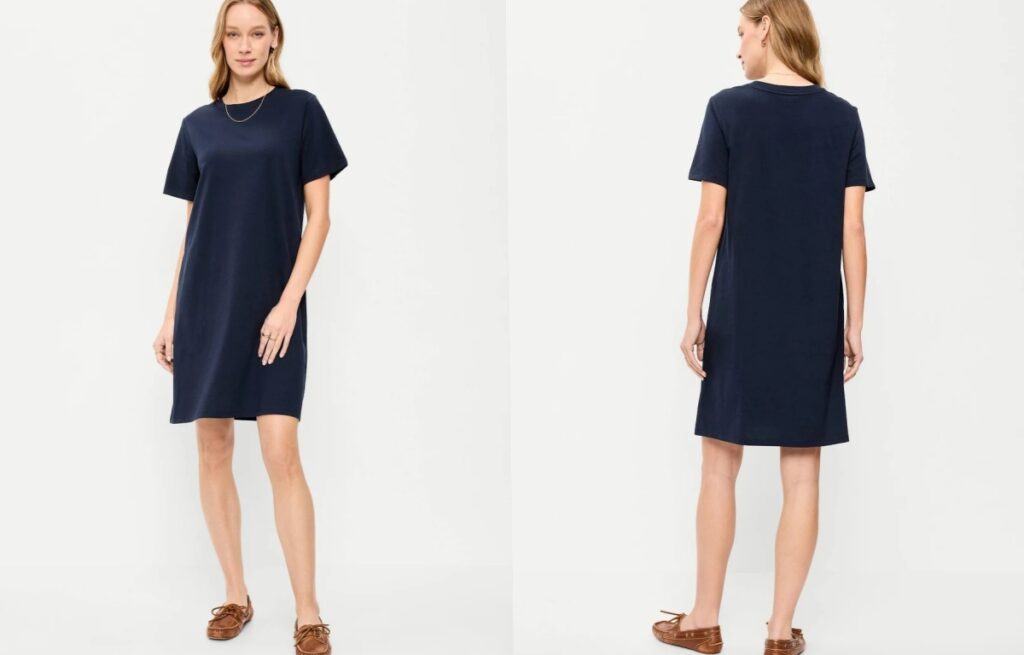
What is a T-shirt dress, and why is it a key type of summer dress?
In summer, customers want airflow, quick styling, and low effort. A T-shirt dress solves that problem, but only if the knit behaves.
A T-shirt dress is a knit dress built from T-shirt construction logic, usually with jersey fabric, a crew or V neckline, and short sleeves. It is a key type of summer dress because it offers comfort, easy sizing, and fast styling, so it performs well for daily wear, travel, and casual work settings.
Where T-shirt dresses sit in a summer collection
- Core basics for steady sales
- A fast add-on for accessories and sandals
- A “blank canvas” for prints and branding
The buyer benefit in wholesale
- Simple construction and faster sampling
- Easier size range than fitted woven dresses
- Higher reorder potential when the fabric is stable
What are the most popular T-shirt dress silhouettes for summer, and who do they fit best?
Many people think a T-shirt dress is always straight. I offer multiple shapes, because customer bodies and styling goals are different.
The most popular T-shirt dress silhouettes are straight, relaxed A-line, oversized, body-skimming, and belted. Straight and relaxed A-line are the safest for wholesale. Oversized sells well for street styling. Body-skimming works for night looks but raises fit sensitivity.
5 silhouettes I use most in bulk
- Straight tee dress: clean, easiest grading
- Relaxed A-line tee dress: more movement, more flattering on hips
- Oversized tee dress: trend-driven, needs strong fabric hand feel
- Body-skimming tee dress: higher returns risk, needs better recovery
- Belted tee dress: more shape, but belt loops add work and cost
A quick silhouette table for buyers
| Silhouette | Visual goal | Best customer use | Risk level |
|---|---|---|---|
| Straight | clean basic | daily casual | Low |
| Relaxed A-line | flattering | errands, travel | Low |
| Oversized | street | Gen Z styling | Medium (fit comments) |
| Body-skimming | sexy casual | day-to-night | Medium-high |
| Belted | shaped waist | casual work | Medium (details) |
Which jersey fabrics are best for a summer T-shirt dress?
This is the core of professional development. Two T-shirt dresses can look the same, but the fabric decides the real value.
The best summer T-shirt dress fabrics are cotton jersey for breathability, cotton-spandex jersey for shape retention, and modal or viscose blends for softer drape. I select fabric by GSM, stretch recovery, pilling resistance, and shrinkage behavior. For wholesale stability, I usually target 180–240 GSM depending on the silhouette.
Fabric options and what they actually do
- 100% cotton jersey
- Pros: breathable, familiar hand feel
- Risks: shrinkage, neckline growth, pilling on lower grades
- Cotton-spandex jersey
- Pros: better recovery, cleaner shape
- Risks: heat feel can increase if GSM is too high
- Modal/cotton blends
- Pros: softer, more premium drape
- Risks: can grow if recovery is weak
- Viscose/spandex jersey
- Pros: very soft and fluid
- Risks: can show cling and sweat marks more
GSM guidance I use (not a strict rule)
- 160–180 GSM: light, but can go sheer in light colors
- 180–220 GSM: most commercial, good for straight and A-line
- 220–260 GSM: better for oversized shapes, but watch heat comfort
Tests I run before I approve fabric
- Shrinkage after wash and tumble dry simulation
- Pilling check on inner thigh rub area
- Spirality check to prevent twisting seams
- Stretch recovery at neckline and hem
How do I engineer fit, neckline, and sleeve details to reduce returns?
This is where “basic” becomes “professional.” Most returns happen at the neck, shoulder, and hip. Customers feel these points fast.
I reduce T-shirt dress returns by stabilizing the neckline, balancing shoulder slope, and planning enough hip ease for walking and sitting. I also control sleeve opening and sleeve length, because tight sleeves make the whole dress feel small even if the body is relaxed.
Neckline engineering decisions
- Rib neckband width and stretch ratio matter
- I add back neck tape for stability in better programs
- I avoid deep V unless I control gaping with shape and tape
Shoulder and armhole decisions
- Shoulder seam placement controls “slouch” vs “clean”
- Armhole depth controls airflow but also bra coverage
- Sleeve opening must match the target customer’s comfort
Ease targets I use as a thinking tool
- Straight tee dress: moderate ease at bust and hip for comfort
- A-line tee dress: more ease at hip hem sweep for movement
- Body-skimming tee dress: controlled ease + high recovery fabric
Fit risk table
| Fit issue | What causes it | How I fix it |
|---|---|---|
| Neckline waves | weak rib, wrong stretch ratio | adjust rib %, add tape |
| Side seams twist | fabric spirality | preshrink + spirality test |
| Dress rides up | too tight hip | add hip ease or A-line |
| Sleeves feel tight | small sleeve opening | increase opening + grade rule |
| Hem flips | wrong hem stitch tension | adjust coverstitch settings |
How do I develop a T-shirt dress for wholesale: sampling, grading, and tech pack details?
T-shirt dresses should be fast, but not sloppy. I keep the process simple and repeatable, so reorders stay consistent.
In wholesale development, I lock one base block, then I create 2–3 silhouettes from it, like straight, A-line, and oversized. I define clear grading rules for knit stretch, and I write tech pack specs for neckband ratio, stitch type, and wash testing. This is how I keep consistency across drops.
My practical development workflow
1) Choose target silhouette and size range
2) Select fabric and run shrinkage + pilling checks
3) Sample 1: fit and silhouette only
4) Sample 2: finalize neckline, sleeve, and stitch settings
5) PPS: approve bulk fabric, bulk trims, and final measurements
Tech pack details I never skip
- Neckband width and rib quality
- Neckband stretch ratio target
- Stitch type and SPI for shoulder seams
- Hem stitch method (coverstitch or twin needle)
- Wash test method and allowable shrinkage
- Measurement tolerance by point
Knit grading notes I use often
- I grade shoulder and sleeve carefully, not only body width
- I keep neckline opening stable across sizes
- I adjust hem sweep more for A-line and oversized
What colors, prints, and branding options work best on a summer T-shirt dress?
A T-shirt dress is a canvas. But not every print works on knit, and not every color is safe in summer.
For summer T-shirt dresses, I focus on stable core colors (black, white, heather grey, navy) and add 1–2 seasonal colors. For prints, I prefer simple placement graphics or small repeats, because large all-over prints can distort on stretch knit. For branding, I use woven labels, heat transfers, or small embroidery depending on target price.
Print and branding options
- Screen print: clean for volume, good for bold graphics
- Digital print: flexible, but color consistency needs control
- Embroidery: premium look, but adds weight and can distort jersey
- Heat transfer: fast, but wash durability must be tested
Summer color risks I watch
- White: sheerness and yellowing
- Light pastels: sweat marks and dye stability
- Dark colors: heat feel and lint attraction
What are the common QC issues for T-shirt dresses, and how do I control them in bulk?
Bulk knit production can look fine until wash and wear. So I build QC around what customers will do at home.
The common QC issues are twisting seams, uneven shrinkage, pilling, neckline stretching, and wavy hems. I control them with fabric testing, clear sewing specs, inline measurement checks, and random wash tests from bulk. I also check shade consistency, because knit dye lots can shift.
QC checks I run during production
- Measure after relaxation (knit needs rest)
- Check neck seam stretch and recovery
- Inspect coverstitch for skipped stitches and waviness
- Compare panels for shading under daylight
- Random wash test from bulk cutting rolls
Bulk packing and finishing notes
- I avoid over-pressing jersey
- I use folding that prevents permanent creases
- I add size stickers that do not leave glue marks
Halter Dress
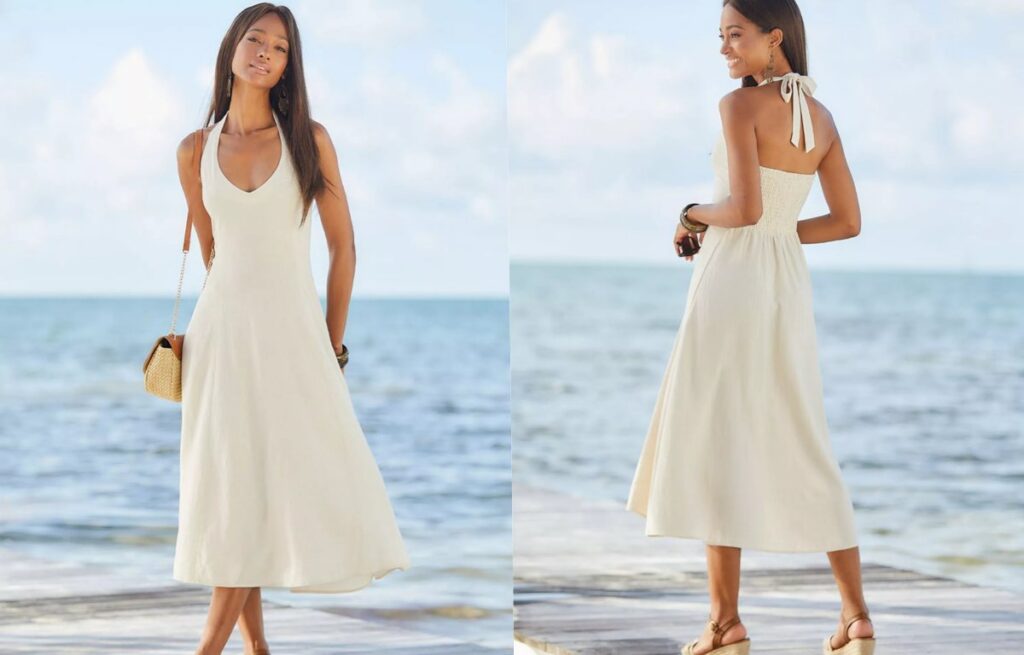
Which types of halter dress sell best in summer, and what occasions do they cover?
Halter is not one style. It is a neckline system. I use different halter types for different occasions, because the support and comfort needs change a lot.
The best-selling halter dress types for summer usually include classic tie-neck halter, high-neck halter, plunging halter, halter with open back, halter maxi, halter mini, halter midi, halter wrap dress, halter slip dress, and halter fit-and-flare. Together, they cover beach, vacation, day casual, and night-out demand.
My most-used halter types in wholesale drops
- Classic tie-neck halter: adjustable, easy fit range
- High-neck halter: clean and modern, good for bigger bust support when engineered well
- Plunging halter: sexy and high content value, but higher returns risk
- Open-back halter: resort and party, needs clean finishing
- Halter wrap: flexible waist fit, but watch gaping
Occasion mapping
| Occasion | Best Halter Type | Why it works |
|---|---|---|
| Beach/resort | open-back halter maxi | airy, photo-friendly |
| Daily summer | high-neck halter midi | stable and wearable |
| Party/night | plunging halter mini | strong “going out” look |
| Wedding guest | halter satin midi/maxi | elevated and polished |
How do I engineer a halter dress so it supports the bust and does not hurt the neck?
This is the technical core. If I do not engineer support, the neck becomes the bra. Then comfort fails fast.
I engineer halter support by moving load away from the neck and into the bodice. I add structure through underbust seaming, inner elastic, cups, or lining, and I choose strap width and angle that reduce pressure. For heavier skirts, I use stronger waist anchoring so the neck is not carrying the dress weight.
- The skirt weight pulls downward
- The bodice transfers that pull to the neckline
- If the bodice is weak, the neck tie takes the load
Support systems I choose from
- Underbust seam + elastic: low-cost, strong stability for daywear
- Inner shelf bra (knit lining): good for casual jersey halters
- Built-in cups: good for woven party styles, but size sensitivity is higher
- Boning + waist stay: best for satin or formal halter dresses
- Smocked back panel: improves fit range without complex grading
Strap engineering that reduces neck pain
- Wider straps (2–4 cm) for heavier fabrics and larger bust ranges
- Soft edge finish so the strap does not cut skin
- Correct strap angle so it does not slide to the sides
A quick “support level” table I use
| Halter Use | Typical Fabric | Recommended Support | Main risk if missing |
|---|---|---|---|
| Casual day | cotton/viscose | underbust elastic + lining | gaping + discomfort |
| Vacation maxi | chiffon/viscose | waist anchoring + wider straps | neck pull |
| Party satin | satin | cups + boning or strong lining | slipping + returns |
| Jersey bodycon | jersey | shelf bra lining | bounce + strap stretch |
Which fabrics work best for halter dresses in summer, and which ones cause problems?
Many people pick fabric by look. I pick by heat, movement, and how the fabric behaves at the neckline and bias areas.
The best summer fabrics for halter dresses are breathable and stable: cotton poplin for structured halters, viscose for flowy halter maxis, linen blends for resort looks, and light crepe for day-to-night styles. Fabrics that cause problems include heavy satin, very slippery charmeuse, and low-recovery knits that stretch at the neck.
Fabric recommendations by halter type
- Poplin/twill light: high-neck halter, fit-and-flare halter
- Viscose/rayon: open-back halter maxi, tiered halter
- Chiffon (lined): wedding guest halter maxi
- Satin/crepe satin (lined): formal halter midi/maxi
- Jersey with good recovery: casual halter bodycon
Fabric risks I watch closely
- Slippery satin: neckline can shift and expose too much
- Thin viscose: can pull and distort at the neck tie
- Stretch knit with poor recovery: straps grow after wear
- Linen: wrinkles quickly, so customer expectation must match
What I test before bulk
- Neckline stretch growth after hanging 24 hours
- Slippage at strap seam under pull test
- Sheerness under sunlight and phone flash
- Shrinkage for viscose and cotton bases
How do I control fit issues like gaping, side boob, and back exposure in halter dresses?
This is where reviews are won or lost. Halter dresses are very sensitive to posture and bust shape. I aim for fit stability across real bodies, not only a sample model.
I control halter fit by shaping the neckline curve, stabilizing the edge, and adding adjustability. For gaping, I use stay tape or hidden elastic along the neckline. For side exposure, I adjust armhole angle and add side panels or higher coverage. For open backs, I add a back band or tie system that holds the bodice to the body.
Common fit problems and my fixes
- Bust gaping
- Fix: stay tape, hidden snap, or slightly higher center front
- Side boob exposure
- Fix: reshape armhole, add side dart or side panel
- Neck tie slipping loose
- Fix: better tie length, grippy tie fabric, or hardware stopper
- Back riding down
- Fix: back band, elastic channel, or smocked back
Pattern points I check in sampling
- CF neckline depth vs coverage
- Strap attachment point distance from bust apex
- Armhole depth and side seam angle
- Back neckline height and tension line
A practical “coverage control” table
| Target Look | Coverage Level | Best Halter Pattern Choice | Return risk |
|---|---|---|---|
| Everyday | medium-high | high-neck + back band | low |
| Sexy | low-medium | plunging + inner support | high |
| Resort | medium | open-back + adjustable ties | medium |
| Formal | medium | halter + structured bodice | medium-high |
How do I manufacture halter dresses with fewer defects in bulk?
Halter dresses fail at stress points and edges. I focus production control on strap seams, neckline finishing, and consistent measurements.
I reduce halter dress defects by reinforcing the neck strap attachments, using stable neckline finishing, and running inline QC on strap symmetry and neckline stretch. I also standardize hardware and ties, because small differences in tie length change fit and comfort.
Construction methods that help
- Clean facing or lining at neckline instead of a raw fold
- Bar-tacks at strap attachment points
- Soft edge binding to prevent skin irritation
- Controlled topstitch tension to avoid waviness
Inline QC checks I run
- Strap length pair matching
- Neckline edge measurement and stretch test
- Back band length consistency
- Stitch security at tie channels
- Hanging test to see if the neckline grows
Packaging rules that protect shape
- Avoid tight folding that creases the neckline edge
- Use tissue to protect satin and delicate trims
- Keep ties neatly bundled to avoid twisting
Off-the-Shoulder Dress
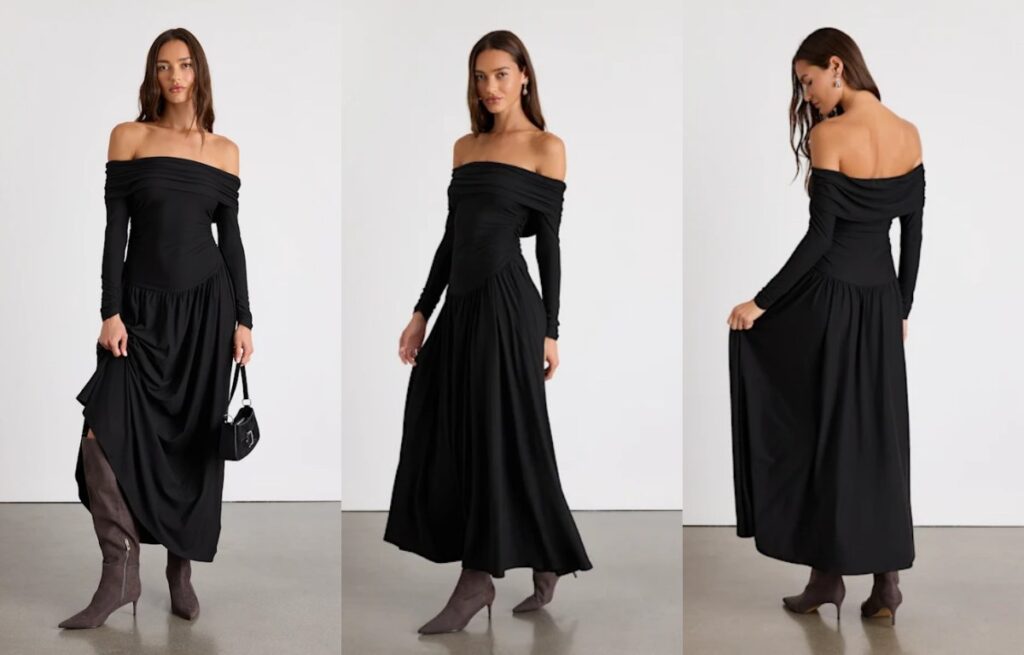
What types of off-the-shoulder dresses sell best in summer collections?
Off-the-shoulder is not one style. Buyers often mix “Bardot,” “cold shoulder,” and “strapless with sleeves.” I separate them because each one needs different engineering.
The best-selling off-the-shoulder summer types include Bardot off-shoulder, elastic neckline sundress, off-shoulder maxi, off-shoulder midi, off-shoulder mini, off-shoulder wrap dress, off-shoulder smock dress, off-shoulder fit-and-flare, ruched off-shoulder bodycon, and off-shoulder tiered dress. I pick the type based on the buyer’s customer lifestyle and heat level.
Core commercial types
- Bardot off-shoulder midi (stable, wide audience)
- Off-shoulder smock (easy fit, low return risk)
- Off-shoulder maxi (vacation story, strong photos)
High content, higher risk types
- Ruched bodycon off-shoulder (fit sensitivity)
- Off-shoulder wrap (gaping and tie control)
- Off-shoulder mini (movement and “slip” risk)
A quick type selection table
| Customer use | Best off-shoulder types | Why it sells |
|---|---|---|
| everyday | smock, midi sundress | comfort + easy care |
| vacation | tiered maxi, fit-and-flare | movement + photos |
| party | ruched bodycon, wrap | “sexy” silhouette |
How do I keep an off-the-shoulder neckline from slipping down?
This is the biggest technical point. Customers judge the product in 10 seconds. If it slips, they will not wear it again.
I prevent slipping by combining correct elastic specification, neckline shape, and internal stabilization. I often use two elastic zones (top edge and mid sleeve), add soft grip tape for event styles, and stabilize the seam so satin-like fabrics do not stretch out during wear and shipping.
The neckline “grip system” I build
- Elastic channel: holds position with controlled stretch
- Neckline seam stabilization: prevents growth and waves
- Sleeve cap placement: controls how sleeves pull on neckline
- Weight balance: prevents skirt weight from dragging bodice down
Elastic choices and what they change
- Braided elastic: stable, good for channels, less twisting
- Knitted elastic: softer, better comfort, but can stretch out faster
- Clear elastic: best for clean edges, but needs skilled sewing to avoid wave
Elastic spec rules I use in sampling
- I test stretch recovery after 10 pulls
- I avoid “too tight” elastic that leaves marks on skin
- I control seam allowance so the channel does not roll
- I check elastic join placement away from CF for comfort
Stabilization options by price level
- Entry: elastic channel + stay tape on seam
- Mid: double elastic zones + better recovery elastic
- Premium: grip tape + light boning or inner facing support
How do I design sleeves so customers can move their arms comfortably?
Many off-shoulder dresses look fine on a mannequin. The failure shows when the customer drives, eats, dances, or lifts arms for photos.
I design sleeves by managing the underarm curve, sleeve volume, and the sleeve’s connection point to the bodice. I also add ease to the bicep and I avoid tight sleeve bands that pull the neckline down. For woven fabrics, I often use a softer sleeve shape or add smocking for flexibility.
Mobility problems I see most
- Sleeve band too tight at upper arm
- Armhole curve too shallow, causing restriction
- Sleeve seam placed too far out, creating drag
- Heavy sleeve fabric pulling neckline down
Pattern solutions that work
- Wider sleeve opening with soft elastic, not hard tight elastic
- Raglan-style off-shoulder variation for comfort
- Smocked sleeve band for flexible grip
- Short puff sleeve with controlled volume to reduce drag
My movement test routine
- Raise arms above head 5 times
- Reach forward like grabbing a steering wheel
- Sit and stand 10 times
- Walk 30 steps and check neckline position
- Take a phone photo with arms up and twist torso
Which fabrics work best for off-the-shoulder dresses in summer, and why?
Fabric choice decides comfort. It also decides if the neckline stretches out and becomes wavy after hanging.
For summer off-the-shoulder dresses, I prefer breathable woven fabrics with controlled stability, like cotton poplin, cotton slub, viscose challis, rayon crepe, and light linen blends. For softer romantic looks, I use chiffon with lining. I avoid very heavy fabrics that drag the neckline and trap heat.
Fabric choices by style direction
- Casual: cotton poplin, cotton dobby, rayon challis
- Resort: viscose, linen blend, lightweight woven with texture
- Event: chiffon layered, satin-like woven with stabilization
Fabric risk checklist
- Shrinkage for viscose and cotton
- Sheerness in light colors
- Wrinkle behavior for linen blends
- Bias growth if neckline is cut on bias
- Slippage at seams for very smooth fabrics
Fabric + style matching table
| Off-shoulder type | Best fabrics | Why it fits |
|---|---|---|
| smock off-shoulder | viscose, cotton voile | comfort + airflow |
| Bardot midi | poplin, rayon crepe | stable neckline |
| tiered maxi | viscose, chiffon lined | movement + photos |
| ruched bodycon | stretch jersey | mobility + hold |
How do I control fit, grading, and size consistency for off-the-shoulder dresses?
This is where wholesale buyers get hurt. Off-shoulder has more sensitivity across sizes because the neckline must sit in a specific place on the body.
I control fit by locking neckline position points, setting elastic stretch ratios for each size, and testing at least two fit models. I also keep grading rules consistent for sleeve circumference and upper bust, because those decide whether the dress stays up. If the buyer wants fewer returns, I recommend smocking or adjustable features.
Key measurements I track tighter than normal
- Upper bust circumference (more important than full bust here)
- Sleeve/bicep circumference at the elastic band
- Neckline edge length before elastic insertion
- Side seam length balance so neckline does not tilt
Elastic grading logic I use
- I do not grade elastic length 1:1 with garment
- I set a stretch ratio range and keep it consistent
- I label elastic cut lengths per size in the sewing SOP
Features that widen fit range
- Smocked back panel
- Adjustable ties at center front or back
- Hidden side zipper for cleaner fit with less stretch needed
What are the most common QC failures for off-the-shoulder dresses, and how do I prevent them?
This style has a clear “pass or fail” moment. If the neckline waves, slides, or twists, the customer notices immediately.
The most common QC failures are wavy necklines, twisted elastic channels, uneven sleeve tension, seam puckering, and color/print distortion at gathers. I prevent them with strict elastic handling rules, controlled pressing, consistent stitch specs, and a movement-based fit check during pre-production approval.
QC checkpoints I add to bulk production
- Neckline lay-flat test on table and on hanger
- Elastic channel twist check at 5 random pcs per line
- Sleeve band stretch recovery check
- Seam puckering check under strong light
- Final wear test: walk + sit + raise arms
Sewing SOP rules that reduce defects
- Do not over-stretch elastic while attaching
- Keep even feeding on both fabric and elastic
- Use stay tape on neckline seams for unstable fabrics
- Press with low heat and use a press cloth to avoid shine
Strapless Dress
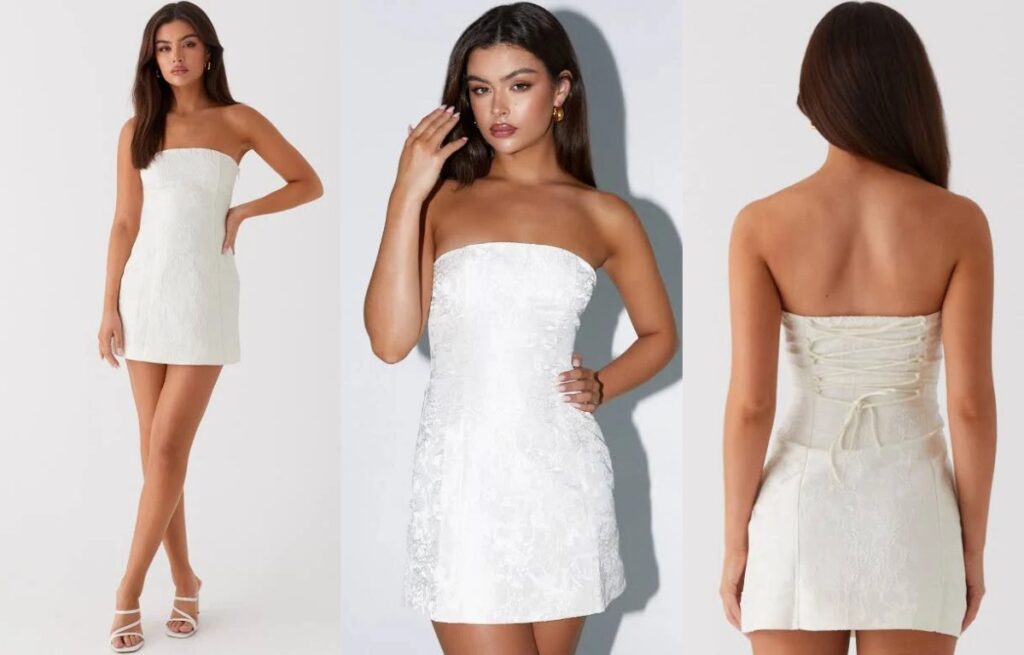
What is a strapless dress, and why does it sell so well in summer?
Strapless dresses are not new. They come back every summer because they show skin, feel light, and photograph well. They also match holiday styling and eventwear stories.
A strapless dress is a dress with no shoulder straps, so the bodice must stay up using internal tension, structure, and grip. It sells well in summer because it looks clean, highlights shoulders and collarbones, and pairs easily with sandals and vacation styling.
Summer moments where strapless dresses perform well
- Vacation and resort content
- Beach club and party edits
- Summer weddings as guest outfits
- “Tan line” styling for warm climates
The real reason buyers love it
- High click rate on product pages
- Easy to style in ads and short videos
- Strong capsule item for a summer drop
What are the most common types of strapless dresses for summer collections?
I do not treat strapless as one category. There are different strapless types, and each one needs different support and fabric behavior.
The most common strapless summer dress types are tube dress, bandeau dress, strapless A-line, strapless fit-and-flare, strapless bodycon, strapless maxi, strapless midi, corset strapless, bustier strapless, sweetheart strapless, straight-neck strapless, ruched strapless, smocked strapless, tiered strapless, and strapless high-slit dresses.
Safer strapless types for mass market
- Smocked strapless midi
- Ruched strapless bodycon with strong elastic
- Strapless A-line in stable woven with inner grip
- Corset-style strapless with built-in structure
Higher-risk strapless types
- Very light chiffon strapless without structure
- Strapless maxi with heavy hem weight
- Minimal straight-neck satin with no inner frame
How do I engineer the bodice so a strapless dress does not slip in heat?
This is the core technical problem. In summer, sweat reduces friction. Skin gets slippery. If the bodice relies only on tightness, customers feel squeezed and still complain.
To stop slipping, I use a mix of grip, structure, and fit control. I add silicone elastic or grip tape at the top edge, I build an internal support layer, and I distribute tension through the bust and waist instead of only at the top line. I also test movement and sweat conditions during fitting.
The three-layer logic I use
- Outer fashion layer: what customers see
- Support layer: power mesh or firm lining that holds shape
- Comfort layer: soft lining where it touches skin
Grip options and when I use them
- Silicone elastic at top edge: best for woven strapless bodices
- Clear elastic: good for rouching, less “sticky” feel
- Grip tape: good for corset styles, must be skin-safe
Structure options that actually work
- Boning at side seams and princess seams
- Underbust seam reinforcement for sweetheart shapes
- Inner waist stay to stop downward slide
- Light cups or foam for shape control
A practical slip test I run
- 20-step walk test
- Sit and stand test
- Arm raise test
- “Warm room” test with light sweating
- 10-minute hang test on body to check top edge roll
Which fabrics work best for summer strapless dresses, and which ones create problems?
In strapless dresses, fabric is not only visual. Fabric is part of the support system. A fabric that stretches too much will creep down. A fabric that is too stiff will gap.
The best fabrics for summer strapless dresses are stable woven cotton blends, poplin, light twill, textured dobby, and stretch fabrics with strong recovery like ponte-lite or quality rib. Slippery fabrics like satin or very light viscose are harder, because they slide and lose structure unless I add strong internal support.
Fabric behavior I check before sampling
- Stretch recovery after 10 pulls
- Top edge curl tendency
- Drape vs body hold
- Sheerness in sunlight
- Sweat mark visibility
Fabric recommendations by strapless type
| Strapless Type | Best Fabric Direction | Why it works | Main risk |
|---|---|---|---|
| Tube / bandeau | rib knit, compact jersey | elastic hold | heat + cling |
| Corset / bustier | structured satin + strong lining | clean shape | shine + heat |
| Strapless A-line | poplin, dobby, light twill | holds flare | gaping if too stiff |
| Ruched bodycon | stretch mesh + lining | hides fit issues | snagging |
| Strapless maxi | viscose blend + inner stay | flow + comfort | weight pull-down |
The fabrics that cause the most returns
- Thin satin with no inner frame
- Loose jersey with poor recovery
- Very soft viscose with heavy skirt volume
- Linen with no top edge stabilization
How do I pattern strapless dresses for different bust sizes without ruining grading?
This is where “one fit sample” lies. Strapless fit changes a lot between sizes. If I grade it like a normal dress, larger sizes slide and smaller sizes gap.
I pattern strapless dresses by controlling the top edge curve, adding bust shaping, and using size-specific support rules. For larger sizes, I increase internal support, widen the back panel for grip, and adjust cup shaping. For smaller sizes, I reduce top edge gape and keep the neckline flatter.
Pattern points that decide fit
- Top edge angle at side seam
- Center front height vs underarm height
- Bust dart or princess seam shape
- Waist seam position and tightness
- Back panel height and stretch
Grading rules I often apply
- I do not scale neckline height linearly across all sizes
- I increase boning length and strength in larger sizes
- I increase seam allowance for more stable stitching at top edge
- I adjust elastic length ratio by size, not one ratio for all
Size range strategy that reduces risk
- Offer two bust blocks for the same style (standard + fuller bust)
- Use smocking or adjustable back lacing to increase fit tolerance
- Add optional removable straps for some markets
Customers judge strapless dresses fast. If the top edge rolls, if the lining peeks, or if the boning pokes, they return it. I focus on inside build quality.
A premium strapless dress has clean top edge finishing, stable inner support, and comfortable boning and lining. I control stitch tension, use proper seam finishes, and add reinforcements at stress points. In QC, I test slip resistance, top edge roll, and wear comfort, not only measurements.
Construction details I insist on
- Clean facing or fully lined bodice
- Understitching to stop lining roll-out
- Boning channels that do not twist
- Soft boning tips and bar tacks at ends
- Waist stay for structured styles
Finishing choices by fabric
- Woven: facing + grip elastic + inner mesh
- Knit: clean elastic encasement, avoid bulky seams
- Satin: protect from shine marks, use pressing cloth
Inline QC checks I run in bulk
- Top edge measurement consistency
- Elastic tension consistency
- Boning placement and length accuracy
- Stitch skipping on slippery fabrics
- Comfort check for poking and scratch feel
How do I position strapless dresses in a summer wholesale drop to reduce returns and increase sell-through?
This is the commercial side. Strapless dresses bring attention, but they can also bring higher return rates if I sell them as “everyday.”
I position strapless dresses as hero pieces for vacation and events, then I balance them with safer summer dress types in the same drop. I also use clear fit language, model movement videos, and size guidance. In wholesale, I recommend 1–2 strapless styles per 10-dress drop unless the brand is strongly party-focused.
My recommended strapless mix
- 1 safer strapless: smocked midi or ruched tube
- 1 structured strapless: corset or bustier mini/midi
- Optional: 1 statement strapless maxi if the market is resort-heavy
Product page details that reduce returns
- “Grip tape at top edge” callout
- “Fully lined bodice” callout
- Bust measurement guidance and bra suggestions
- Video showing walk, sit, and arm raise
Empire Waist Dress
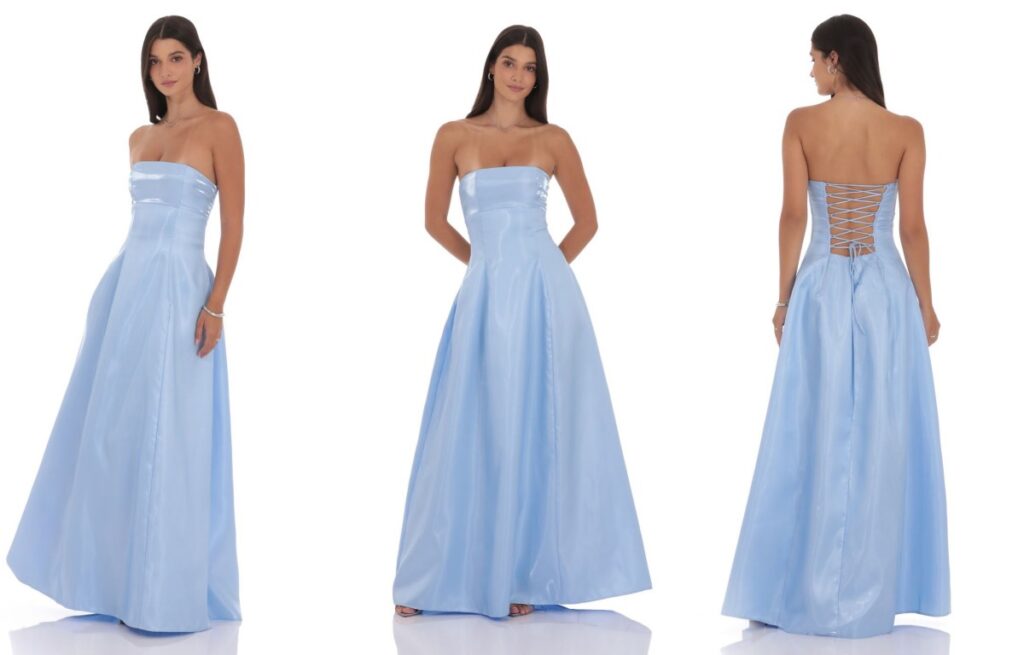
What exactly is an empire waist dress, and how is it different from an A-line or fit-and-flare?
Many buyers use these words together, but they are not the same. If I do not define the structure, the sample stage becomes slow and confusing.
An empire waist dress has a waist seam placed under the bust, and the skirt falls from that seam. An A-line dress flares from the natural waist or high hip, and a fit-and-flare dress usually has a fitted bodice with a stronger flare from the natural waist. Empire waist is mainly about seam placement and bust support, not only skirt shape.
The simple structure difference
- Empire: underbust seam controls shape
- A-line: skirt geometry controls shape
- Fit-and-flare: bodice shaping + waist seam control shape
What empire waist does to the silhouette
- It visually lengthens legs
- It reduces focus on the stomach area
- It can make the bust look fuller if neckline is open
What are the most common types of empire waist summer dresses?
If I only make one empire dress, it limits the buyer’s merchandising. I prefer to create a small “empire story” with different lengths and necklines.
The most common empire waist summer dress types include empire midi, empire maxi, empire mini, smocked-back empire, tiered empire, puff-sleeve empire, spaghetti-strap empire, halter empire, square-neck empire, sweetheart empire, wrap-bodice empire, button-front empire, and maternity-friendly empire dresses.
The safest sellers for most boutiques
- Square-neck empire midi
- Spaghetti-strap empire mini
- Smocked-back empire midi/maxi
- Tiered empire maxi for vacation
The higher-risk but high-content styles
- Sweetheart empire with cups
- Corset-look empire bodice
- Halter empire with open back
How do I engineer bust fit for an empire waist dress so it works across sizes?
This is the most important technical part. Most empire returns come from the bust. If the bust fails, the underbust seam rides up and the whole dress looks cheap.
I engineer bust fit by choosing the right shaping method (darts, cups, princess seams, or elastic casing), then I lock the underbust seam position using body measurements and fit tests. I also grade the bust volume carefully, because empire placement that works in S can be too high or too low in XL.
Bust shaping options and when I use them
- Bust darts
- Best for: simple day dresses
- Risk: dart point placement shows under thin fabrics
- Princess seams
- Best for: more fitted bodice and better lift
- Risk: print mismatch and sewing time
- Built-in cups
- Best for: “no bra” marketing
- Risk: high return rate if cup volume is wrong
- Elastic underbust casing
- Best for: flexible fit and comfort
- Risk: can look casual, not premium
Underbust seam placement rules I use
- I place the seam based on bust apex and underbust line, not “standard spec only”
- I check the seam after the garment hangs 24 hours
- I test sitting and arm lifting, because the bodice shifts
What I check on fit models
- Does the seam stay under bust when walking?
- Does the neckline gape when bending?
- Does the skirt pull forward because the front bodice is too short?
- Does the back ride up because the straps are too tight?
Bust fit tolerance table I use in tech packs
| Area | What I control | Why it matters |
|---|---|---|
| Bust circumference | tight tolerance | controls gaping and support |
| Bust apex position | correct placement | prevents “pointy” look |
| Underbust seam | stable and level | prevents riding up |
| Strap length | adjustable or graded | prevents pull and back lift |
Which fabrics make an empire waist dress feel like “summer,” not sticky or heavy?
Empire waist is about airflow, so fabric matters more than usual. If I pick a fabric that clings, the dress loses its main benefit.
For summer empire waist dresses, I prefer breathable woven fabrics like cotton poplin, cotton voile, viscose/rayon, and linen blends. For dressier drops, I use light crepe or chiffon with lining. I avoid heavy satin and thick jersey unless the buyer wants a night-out product, because they reduce airflow and show sweat.
Fabric behavior I test before bulk
- Breathability and hand feel on skin
- Opacity in sunlight for light colors
- Shrinkage for viscose and cotton
- Wrinkle behavior for linen blends
Fabric-to-style matching
- Cotton poplin: square-neck empire midi, button-front empire
- Viscose: tiered empire maxi, wrap-bodice empire
- Cotton voile: soft mini empire, vacation prints
- Chiffon: event-style empire maxi with lining
Lining strategy that keeps it cool
- Partial lining in bodice only for casual
- Full skirt lining only for very light chiffon
- Use breathable lining, not stiff “plastic feel” lining
How do I handle gathers, tiers, and volume so the empire waist dress does not look bulky?
Many empire dresses go wrong here. The underbust seam is high, so gathers can create too much volume too early. Then the dress looks like a tent.
I control volume by limiting gather ratio at the underbust seam, choosing tier placement carefully, and using fabric weight to manage drape. If the buyer wants a tiered empire maxi, I keep the first tier calmer and I add volume lower on the skirt, so the body still looks balanced.
Gather ratio rules I use
- Calm gather (commercial): 1.3x–1.6x skirt to seam
- Full gather (boho): 1.8x–2.3x, but only with light fabric
- If fabric is heavier, I reduce gather ratio fast
Tier planning rules
- First tier seam should sit below hip area, not right at belly
- More tiers = more seam bulk, so I use narrower seam allowances
- I avoid thick topstitch on every tier for lightweight looks
How I stop the skirt from pulling forward
- I add front length if bust projection is high
- I balance side seam grain to reduce twisting
- I check hem drop after hanging overnight
What are the main production and QC risks for empire waist dresses?
Empire waist dresses look simple, but they are sensitive. Small sewing errors show fast because the seam line is near the chest and sits in photos.
The main risks are seam waviness at underbust, neckline gaping, strap breakage, uneven gathers, and size grading that shifts seam placement. I reduce these risks by stabilizing the underbust seam, controlling sewing tension, approving a pre-production sample after hang testing, and adding inline QC on seam level and bust measurements.
Risk points by construction area
- Underbust seam: waviness and weak seam strength
- Neckline edge: stretching during sewing
- Straps: pull force and stitch reinforcement
- Gather seam: uneven distribution and puckering
My QC checklist for bulk
- Underbust seam level on hanger and on body
- Strap pull test and adjuster quality
- Measurement check for bust + front length
- Wash test for shrinkage and seam distortion
- Light test for sheerness under flash
A practical “buyer-friendly” checklist
- Choose at least one smocked-back empire for fit range
- Use adjustable straps on at least half the styles
- Keep one midi and one maxi for merchandising
Backless Dress
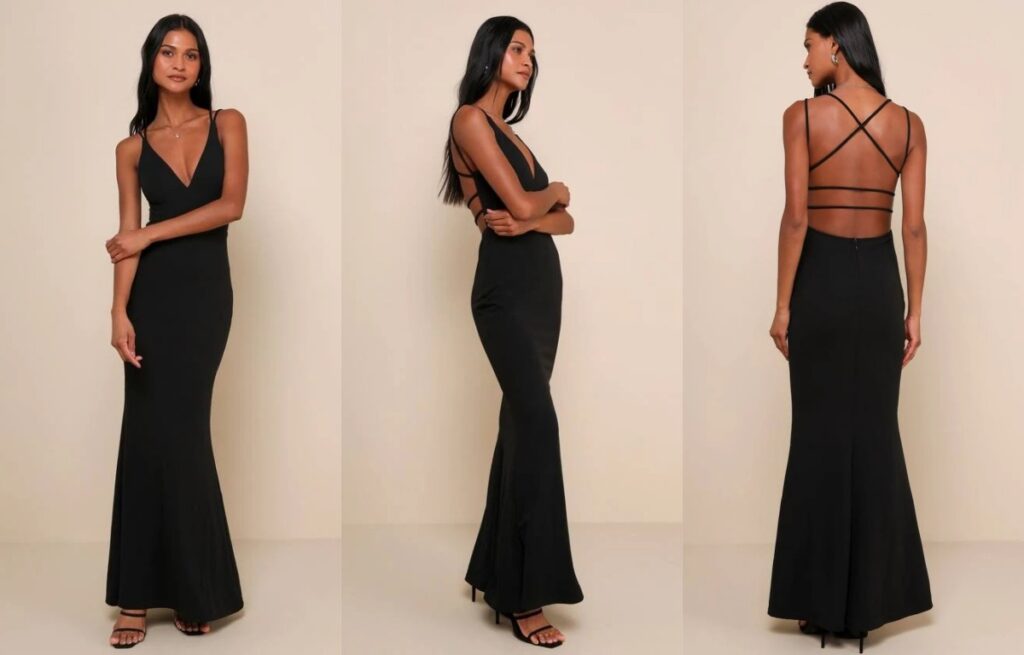
What counts as a backless dress, and what are the main backless styles in summer collections?
Many buyers use “backless” as one word, but the back shape changes everything. It changes bra options, comfort, and how the dress must be built.
A backless dress is any dress where the back opening removes standard bra coverage. The most common styles are deep V-back, low scoop back, open-back with strap, crisscross backless, halter backless, cowl back, cut-out back, tie-back, and fully open-back slip dresses. Each one needs a different support plan.
Common backless types and what they mean
- Deep V-back: sexy and clean, but needs strong shoulder stability
- Low scoop back: easier than V-back, but can still show bra band
- Open-back with horizontal strap: better security and less slipping
- Crisscross backless: strong hold, but strap length must be precise
- Halter backless: stable for bust, but neck load can hurt
- Cowl back: premium look, but needs weight control to avoid sagging
- Cut-out back: trend-driven, but seam finishing must be clean
- Tie-back: adjustable, but slower sewing and more variability
A quick comfort ranking I use
| Backless Style | Security | Bra Compatibility | Return Risk |
|---|---|---|---|
| Open-back with strap | High | Medium | Low |
| Crisscross backless | High | Low | Medium |
| Low scoop back | Medium | Medium | Medium |
| Deep V-back | Low–Medium | Low | High |
| Cowl back | Low–Medium | Low | High |
| Tie-back | Medium–High | Low | Medium |
How do I choose the right backless dress style for my target customer and selling channel?
Backless dresses sell differently on Instagram vs a brand’s own site. Emily’s customer wants trend, but she also wants fast decisions. If the product page creates confusion, conversion drops.
I choose backless styles by matching the “wow level” to the customer’s real life. For everyday summer drops, I use open-back-with-strap, low scoop, or small cut-out backs. For party and holiday capsules, I add deep V-back, cowl back, or fully backless slips, but I keep quantities tighter and I add more internal support.
The questions I use before I design
- Is this dress for daytime or night?
- Does the customer wear a bra daily?
- Is the fabric clingy or structured?
- Is the target market hot and humid?
- Is the dress for photos or long wear?
A practical selection map
- Daywear backless: cotton/viscose, open-back with strap, cut-out back
- Resort backless: maxi, halter backless, tie-back
- Night-out backless: satin slip, deep V-back, crisscross
- Event backless: fitted bodice, structure, cleaner back edges
What construction and support systems make a backless dress stay up?
This is the core technical part. If I remove the back, I remove the “anchor.” I must rebuild the anchor in other ways.
A backless dress stays up when I create support from the front bodice and straps, then I lock the garment to the body using elastic, grip tape, internal bands, or hidden shapewear panels. I also control stretch direction and seam strength at strap points, because backless failures usually start at the strap and neckline.
The four support “tools” I use most
1) Front bodice structure
- Lined bodice with stable lining
- Light fusing at neckline edge
- Built-in cups or cup pocket
- Princess seams or darts that actually shape the bust
2) Strap engineering
- Adjustable straps for size flexibility
- Wider straps for heavier fabrics and larger bust
- Strong strap elastic recovery test
- Reinforced strap tabs with bar tack
3) Internal anchoring
- Underbust elastic (hidden) to stop sliding
- Waist stay (a thin internal band) to hold the bodice position
- Clear elastic at back opening edge
- Hidden hook-and-eye at side seam for extra security
4) Edge control and friction
- Silicone grip tape at top edge for strapless-backless looks
- Clean finish binding to prevent rolling
- Stabilizer tape on bias edges to prevent stretching out
Where each support tool fits best
| Problem | What the customer feels | My best fix |
|---|---|---|
| Dress slides down | “I keep pulling it up” | underbust elastic + grip tape |
| Neckline gapes | “I can’t bend forward” | neckline stay tape + cup support |
| Straps slip | “It keeps falling” | adjustable straps + better elastic |
| Back edge flips | “It looks messy” | clean binding + correct tension |
| Bust feels flat | “No shape” | cups + shaping seams |
Which fabrics and patterns work best for summer backless dresses?
Fabric choice decides how safe the backless shape is. Some fabrics look sexy but behave badly in heat and sweat.
For summer backless dresses, I prefer fabrics with controlled drape and stable recovery, like viscose crepe, poly crepe, cotton poplin for structured shapes, and heavier satin for night styles. I avoid very slippery lightweight satin for deep backless cuts unless I add strong lining and internal anchoring.
Fabric behavior rules I follow
- Slippery face + open back = needs more internal structure
- Bias cut + open back = needs stay tape and hang test
- Very light fabric = higher transparency and cling risk in heat
- Knit backless = comfortable, but must have strong recovery or it bags out
Best fabric matches by style
- Deep V-back slip: medium-weight satin + lining + underbust elastic
- Cut-out cotton backless: poplin + facing + stable seams
- Cowl back maxi: crepe or satin with enough weight to drape, not droop
- Halter backless: fabric must handle neck stress, so avoid weak weaves
Pattern decisions that change outcomes
- Strap angle: wrong angle increases slipping
- Back opening curve: too flat causes gaping at sides
- Side seam shaping: controls how the front holds the bust
- Hem sweep: too wide can pull the bodice with movement
How do I reduce return rates for backless dresses with clear fit communication?
Backless dresses need better product pages. If the customer does not know how it should fit, they guess. Then they return it.
I reduce returns by labeling the support level, bra options, and fit notes clearly. I also size-test the style on two body types, then I add simple wear instructions like “adjust straps first” and “built-in cups included.” In wholesale, these small notes protect reviews.
Fit notes I recommend for product pages
- Support level: light / medium / strong
- Bra compatibility: none / sticky bra / low-back bra
- Adjustable straps: yes/no
- Lining: fully lined / bodice lined / unlined
- Best for cup range: small–medium or medium–full (if tested)
A simple “customer guidance” block I like
- Step 1: adjust straps so neckline sits flat
- Step 2: check underbust band is snug, not tight
- Step 3: move arms and sit down to confirm stability
- Step 4: if needed, use fashion tape at neckline edge
What are the main QC risks in bulk production for backless dresses?
Backless dresses fail in small details. If finishing is rough, the open back shows it. If measurements drift, the dress slides.
The main QC risks are stretched necklines, weak strap attachments, uneven back edges, puckered facings, and shade variation between lining and shell. I prevent these by controlling cutting direction, using stay tape on bias edges, reinforcing stress points, and doing movement tests during PPS and inline QC.
Inline QC checkpoints I set
- Strap pull test and bar tack check
- Back edge measurement and symmetry
- Neckline flatness after hanging 24 hours
- Stitch tension to avoid puckering on satin
- Lining show-through at back edge
Packing and pressing rules I give factories
- Low heat and press cloth for satin
- Do not crush cups during packing
- Fold along safe lines so back edge does not crease
- Add tissue to protect shiny fabric faces
Crochet/Knitted Summer Dress
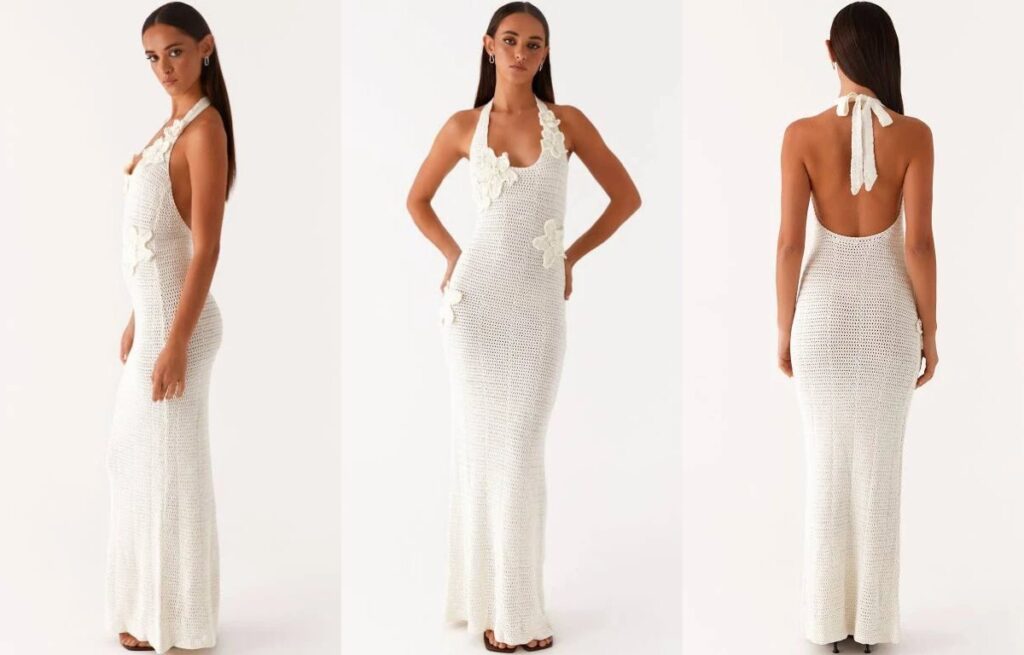
What counts as a crochet/knitted summer dress, and how is it different from a woven summer dress?
Many buyers group crochet and knit together. In production, they behave very differently from woven dresses. They stretch, they relax, and they change after wear.
A crochet/knitted summer dress is built from loop-based construction, either by crochet-like open stitches or knitting structures like jersey, rib, or pointelle. Compared with woven dresses, these dresses have more stretch and comfort, but they also have higher risk in growth, snagging, and sheerness, so I need stronger control on yarn and stitch specs.
Where crochet/knit summer dresses show up most
- Beach cover-ups and resort drops
- Festival and boho capsules
- Body-hugging mini and midi looks
- Layering pieces over swimwear
The key difference in one sentence
- Woven dress: shape comes from pattern pieces
- Knit/crochet dress: shape comes from stitch + tension + yarn behavior
What are the most common types of crochet/knitted summer dress styles?
I like to separate knit summer dresses by use case. This helps buyers avoid confusion between “wearable day dress” and “swim cover-up.”
Common crochet/knitted summer dress styles include: open-stitch cover-up maxi, crochet mini bodycon, rib-knit midi, pointelle slip-style knit dress, polo-collar knit dress, halter knit dress, off-shoulder knit dress, cut-out knit dress, button-front knit dress, and scallop-edge crochet dress. Each one needs different stitch density and lining strategy.
My practical style buckets
- Cover-up focus: open stitch, looser fit, high airflow
- Daywear focus: tighter stitch, more coverage, stronger recovery
- Night-out focus: bodycon fit, higher stretch, better lining choices
A quick style-to-risk table
| Style | Best Use | Main Risk | My control point |
|---|---|---|---|
| Open-stitch maxi cover-up | beach/resort | too sheer | stitch density + placement |
| Crochet mini bodycon | festival/night | snagging | yarn twist + snag test |
| Rib-knit midi | daywear | growth | recovery test + elastic |
| Pointelle slip knit | summer casual | transparency | lining or slip plan |
| Button-front knit | day-to-night | placket waving | stabilizer tape |
How do I choose stitch structure and gauge for summer comfort and coverage?
This is the professional part. Two dresses can look similar in photos, but behave completely differently because of gauge and stitch type.
I select stitch structure and gauge by balancing airflow, coverage, and stability. For cover-ups, I use open stitches and accept transparency. For daywear, I tighten gauge and use rib or stable jersey structures. I also define stitch count, width, and length tolerance in the tech pack, because knit variation is common across bulk runs.
Stitch structures I use and what they do
- Jersey knit: smooth, can curl at edges, needs finishing
- Rib knit: better recovery, better body fit, can feel heavier
- Pointelle: breathable, feminine, but can look sheer
- Mesh crochet: high airflow, best for cover-ups
- Shell/scallop crochet: decorative edge, needs stable tension
Gauge decisions that change everything
- Loose gauge: lighter feel, higher growth risk, more sheerness
- Tight gauge: more coverage, more stability, less “handmade” look
The specs I always write for knit/crochet
- Stitch count or gauge reference
- Finished garment measurements after relax
- Allowed growth range after hang test
- Weight target (gsm or garment weight)
- Edge finish method (binding, facing, scallop)
What yarns work best for crochet/knitted summer dresses, and what problems do they cause?
Yarn choice decides hand feel, pilling, and how the dress behaves in heat. Many “cheap” knit dresses fail because the yarn is wrong, not because the pattern is wrong.
For crochet/knitted summer dresses, I prefer cotton, cotton blends, viscose blends, or performance blends that feel cool and have controlled pilling. I avoid overly fuzzy yarns that pill fast, and I avoid yarns that absorb too much water if the dress is for beach use.
Yarn options and my real-world view
- Cotton: breathable and natural, can get heavy when wet, can grow
- Viscose/rayon: soft and drapey, can pill if low quality, can shrink
- Linen blend: cool hand feel, but can feel scratchy if not softened
- Acrylic: cheap and stable, but can feel hot and plastic
- Polyamide blends: better strength and recovery, good for bodycon
The tests I run on yarn-based dresses
- Pilling test (especially on viscose blends)
- Snag test with jewelry and bags
- Wet weight test for beach styles
- Wash shrink and growth test
A yarn selection table I use
| Yarn | Best Style Use | Pros | Cons |
|---|---|---|---|
| Cotton | cover-up, daywear | breathable, natural | can grow, heavy when wet |
| Cotton/nylon | bodycon knit | better recovery | higher cost |
| Viscose blend | soft midi | drape, soft | pilling risk |
| Linen blend | resort | cool feel | scratch risk |
| Acrylic blend | budget | stable | heat comfort risk |
How do I handle sheerness, lining, and “wearability” without killing the crochet look?
This is where buyer expectations differ. Some markets accept a see-through cover-up. Some want a wearable street dress. I plan this early because it changes cost and production steps.
I manage sheerness by choosing the right stitch density, adding partial lining, or building a 2-piece set plan like dress + slip. I do not hide the crochet texture. I only add coverage where the customer needs confidence, like bust and hip zones.
Coverage strategies that work
- Separate slip in matching tone for daywear
- Built-in lining panel only in front and back body
- Double-layer knit at bust area
- Strategic stitch density changes by zone
Where I add coverage first
- Bust area to avoid nipple show-through
- Hip and seat area to reduce “see everything” complaints
- Front body for lighter colors
A practical coverage decision table
| Target Use | Acceptable Sheerness | Best Strategy |
|---|---|---|
| Beach cover-up | high | open stitch, no lining |
| Resort day dress | medium | slip included |
| City daywear | low | partial lining + tighter gauge |
| Night-out | medium | bodycon + slip optional |
What are the production and QC risks for crochet/knitted summer dresses in bulk?
Knit and crochet are sensitive. Small tension changes can make size drift. If the factory does not control relaxation time, measurements are not stable.
The main bulk risks are size growth, inconsistent gauge, seam waving, pilling, snagging, and distortion after wash. I reduce them by setting gauge standards, relaxing garments before measurement, using consistent linking/seaming methods, and testing wash performance before I confirm bulk production.
The most common failure points I see
- Length grows after hanging
- Waist becomes loose after 2 wears
- Armholes stretch and lose shape
- Edges curl or scallops flip
- Color shading between yarn dye lots
QC steps I insist on
- 24-hour hang test before final measurement
- Wash test with measurement before/after
- Random gauge check during knitting
- Pull test at straps and neckline
- Snag check on surface with accessories
Tech pack details that prevent arguments later
- How to measure (relaxed vs stretched state)
- Tolerance rules for knit (usually wider than woven)
- Garment weight target
- Yarn count and blend details
- Care label that matches real behavior
How should I price and plan MOQs for crochet/knitted summer dresses for wholesale buyers?
Knit costs are different from woven costs. The time is in knitting and linking, not only sewing. If the buyer expects woven pricing, the deal fails.
I price crochet/knitted summer dresses by separating yarn cost, knitting time, and finishing cost. For open crochet looks, manual work can raise cost quickly. For machine knits, I can scale better, but I still need stable yarn supply and dye lots. I usually suggest fewer colors per style to protect lead time.
Cost drivers I explain to buyers
- Yarn blend and yarn count
- Stitch complexity and openwork details
- Linking and finishing time
- Lining or slip add-on cost
- Quality testing and reject rate
A simple MOQ strategy I like
- 1–2 core colors (black, ecru) for reorder safety
- 1 seasonal color for freshness
- Same yarn across multiple styles to consolidate supply