Skip to content

Many buyers like chiffon dresses, but many still choose styles with weak sell-through. That often leads to overlap, poor fit feedback, and slow stock movement.
I see chiffon dresses as a wide category that includes everyday, romantic, occasion, and trend-led styles. The most useful types of chiffon dresses usually include maxi, A-line, wrap, tiered, babydoll, off-shoulder, halter, slip, and pleated styles.
When I review chiffon dresses, I do not only look at the shape. I also study drape, layering, transparency, and how the fabric moves in real wear.
Which Everyday Chiffon Dress Styles Usually Sell Best?
Some chiffon dresses look soft and simple, but only a few work well as steady sellers. I usually start with the most wearable shapes.
The best everyday chiffon dress styles are A-line dresses, wrap dresses, shirt dresses, midi dresses, and tiered dresses because they balance comfort, movement, and easy styling across different ages and markets.
Common everyday chiffon styles
- A-line chiffon dress – easy shape and broad appeal
- Wrap chiffon dress – flattering and flexible fit
- Shirt chiffon dress – light and polished look
- Midi chiffon dress – practical and wearable
- Tiered chiffon dress – soft volume and movement
Why these styles work
| Style | Main value | Risk point |
|---|---|---|
| A-line | Easy fit and feminine shape | Needs good drape |
| Wrap | Adjustable waist effect | Bust control matters |
| Shirt | Clean casual look | Can lose shape if too soft |
| Midi | Easy daily wear | Length balance is important |
| Tiered | Romantic volume | Can look bulky if over-layered |
These styles sell well because chiffon naturally adds softness. But the design must control that softness, or the dress starts to look messy instead of refined.
Which Chiffon Dress Styles Feel More Romantic or Fashion-Forward?
Chiffon often performs best when it creates movement and emotion. That is why many trend-led dresses use it.
The most romantic and fashion-forward chiffon dress styles include babydoll dresses, off-shoulder dresses, slip dresses, ruffle dresses, asymmetrical dresses, and puff-sleeve dresses. These styles work because chiffon adds lightness, texture, and visual softness.
Typical trend and romantic styles
- Babydoll chiffon dress
- Off-shoulder chiffon dress
- Slip chiffon dress
- Ruffle chiffon dress
- Asymmetrical chiffon dress
- Puff-sleeve chiffon dress
Deeper style analysis
| Style | Strong point | Main challenge |
|---|---|---|
| Babydoll | Youthful and soft | Volume control |
| Off-shoulder | Romantic neckline | Fit stability |
| Slip | Elegant drape | Lining is essential |
| Ruffle | Visual movement | Too much detail can look cheap |
| Asymmetrical | Fashion edge | Pattern balance |
| Puff-sleeve | Strong silhouette | Sleeve proportion |
I do not treat these styles as safe basics. I treat them as image builders. They usually attract attention first, but they need better control in design.
A chiffon babydoll dress, for example, can look fresh and easy. But if the gathering starts too high, the shape can lose definition. A ruffle chiffon dress can look premium when the ruffle placement is clean. If the ruffles are excessive, the dress can look noisy and harder to sell.
Which Chiffon Dress Styles Work Best for Parties, Weddings, or Formal Wear?
Chiffon is one of the strongest fabrics for occasion dresses because it moves well and creates a soft, dressed-up effect.
The best chiffon dresses for parties, weddings, and formal wear are maxi dresses, halter dresses, off-shoulder dresses, pleated dresses, empire-waist dresses, and one-shoulder dresses because these styles highlight chiffon’s flow, layering, and elegance.
Strong occasion chiffon styles
- Maxi chiffon dress – long and fluid
- Halter chiffon dress – light and elegant
- Pleated chiffon dress – refined texture
- Empire-waist chiffon dress – soft and elongating
- One-shoulder chiffon dress – modern occasion feel
- Off-shoulder chiffon dress – romantic event look
What makes these styles work
| Style | Best feature | Key concern |
|---|---|---|
| Maxi | Strong movement | Hem and lining control |
| Halter | Elegant upper body line | Neck comfort |
| Pleated | Premium texture | Pleat stability |
| Empire-waist | Soft shape | Can look too sweet |
| One-shoulder | Modern statement | Support balance |
The professional part is not only in the silhouette. It is also in how chiffon is handled. Occasion chiffon dresses usually need better layering, cleaner seams, and stronger lining choices than casual styles.
I always check whether the outer chiffon floats well over the lining. If the lining is too heavy, the dress loses lightness. If the lining is too thin, the dress may feel cheap or too transparent. This balance is one of the biggest quality signals in chiffon occasionwear.
How Do I Compare 20+ Types of Chiffon Dresses Without Overlapping My Collection?
When I build a chiffon dress range, I need a clear system. Without one, I end up choosing too many similar styles.
I usually compare chiffon dresses by length, silhouette, and layering effect. This helps me separate everyday styles, trend styles, and occasion dresses while keeping the full collection more balanced.
Common types of chiffon dresses
A-line, wrap, shirt, midi, maxi, tiered, babydoll, off-shoulder, halter, slip, pleated, empire-waist, one-shoulder, puff-sleeve, asymmetrical, ruffle, smock, tunic, high-low, fit-and-flare, cape-style, and boho chiffon dresses.
My comparison method
| Factor | Examples | Why it matters |
|---|---|---|
| Length | Mini, Midi, Maxi | Defines use and season |
| Silhouette | A-line, straight, empire, wrap | Affects fit and styling |
| Layering | Single layer, tiered, pleated, ruffled | Changes visual weight |
This structure helps me avoid picking five dresses that all solve the same need.
For example, a tiered midi chiffon dress and a ruffle chiffon maxi dress may both look romantic, but they sell for different reasons. One is often easier for daily wear. The other is often better for occasion or statement styling. That difference matters a lot when I plan a full dress line.
Chiffon Maxi Dress
Many buyers love chiffon dresses, but many still choose styles based only on photos. That often leads to weak fit, poor movement, and the wrong product mix.
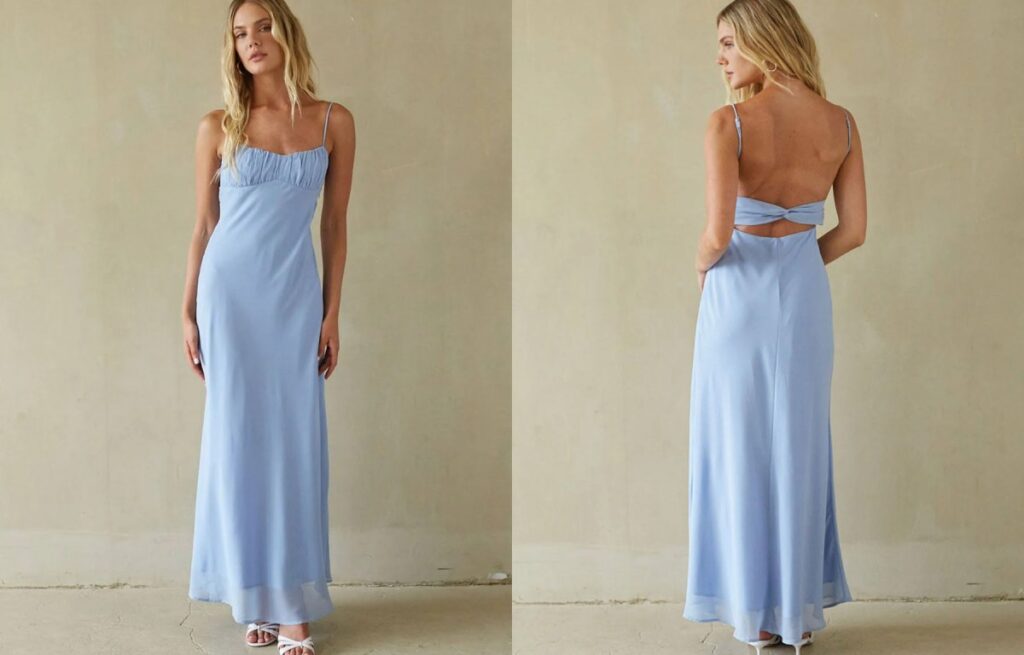
I see chiffon dresses as a wide category that includes mini, midi, maxi, wrap, tiered, A-line, off-shoulder, halter, slip, empire waist, and ruffle styles. Among them, the chiffon maxi dress stands out for its elegant length, soft drape, and strong value in occasion and resort wear.
When I review chiffon dresses, I pay more attention to movement, layering, and transparency control. That is where chiffon either looks premium or looks cheap.
What Are the Most Common Types of Chiffon Dresses?
Not every chiffon dress serves the same purpose. I usually sort them by silhouette, length, and styling mood.
The most common chiffon dress types include chiffon maxi dresses, mini dresses, midi dresses, wrap dresses, A-line dresses, tiered dresses, off-shoulder dresses, halter dresses, slip dresses, and empire waist dresses. Each type creates a different balance of softness, coverage, and movement.
Common chiffon dress styles
- Chiffon maxi dress – long and fluid
- Chiffon mini dress – light and youthful
- Chiffon midi dress – balanced and versatile
- Chiffon wrap dress – adjustable and flattering
- Chiffon A-line dress – easy and feminine
- Chiffon tiered dress – more volume and texture
- Chiffon off-shoulder dress – romantic look
- Chiffon halter dress – clean upper body line
- Chiffon slip dress – soft and minimal
- Chiffon empire waist dress – gentle shape and comfort
Why this category needs careful analysis
| Style | Main value | Risk point |
|---|---|---|
| Maxi | Elegant movement | Needs lining control |
| Mini | Fresh and trendy | Can look too light |
| Midi | Easy to wear | Needs balanced proportion |
| Wrap | Flexible fit | Front coverage issue |
| Tiered | Strong visual texture | Too much bulk |
I do not judge chiffon dresses only by shape. I also study how the fabric falls, how much volume it creates, and how transparent it becomes under light.
Why Is the Chiffon Maxi Dress So Popular?
The chiffon maxi dress keeps returning because it solves both fashion and function. It looks special, but it still feels wearable.
I think the chiffon maxi dress is popular because it combines graceful length, soft movement, and strong occasion appeal. It works well for weddings, vacations, parties, and spring-summer collections, while still offering a feminine and elevated look.
Why the chiffon maxi dress performs well
1. It creates movement easily
Chiffon is light by nature. In a maxi length, that lightness becomes more visible. The hem moves with walking, wind, and body motion. That gives the dress emotional value, not just visual value.
2. It fits many styling moods
A chiffon maxi dress can feel romantic, modest, resort-led, or formal. Small design changes can shift the whole mood:
- ruffles make it softer
- halter necklines make it cleaner
- tiers make it more casual
- pleats make it more refined
3. It raises perceived value
Long chiffon dresses often look more expensive than they are. The length adds drama. The fabric adds softness. Together, they help the style feel premium in photos and in real wear.
My deeper view on why this style works
I do not think the success of a chiffon maxi dress comes from length alone. It comes from the relationship between length, transparency, and layer control.
A maxi dress uses more fabric. That can be a strength or a problem. If the chiffon is too flat, the dress may look lifeless. If the chiffon is too stiff, the hem loses its graceful effect. If the lining is too short or too heavy, the dress can look unbalanced.
That is why I always review three things together:
| Factor | What I check | Why it matters |
|---|---|---|
| Outer chiffon | Drape and softness | Decides movement quality |
| Lining | Length and weight | Decides wearability |
| Silhouette | Volume balance | Decides whether it flatters |
This is also why some chiffon maxi dresses sell very well online, while others get ignored. The successful ones have visible movement, clean layering, and a clear body line without looking heavy.
Which Chiffon Maxi Dress Styles Usually Sell Best?
A chiffon maxi dress is not just one style. I usually divide it into several commercial directions.
The best-selling chiffon maxi dress styles are wrap maxi dresses, tiered maxi dresses, halter maxi dresses, off-shoulder maxi dresses, empire waist maxi dresses, and pleated maxi dresses. These versions offer the best mix of elegance, comfort, and visual impact.
Strong commercial chiffon maxi dress styles
- Wrap chiffon maxi dress – better waist definition
- Tiered chiffon maxi dress – soft volume and movement
- Halter chiffon maxi dress – cleaner neckline focus
- Off-shoulder chiffon maxi dress – romantic occasion use
- Empire waist chiffon maxi dress – relaxed and flattering
- Pleated chiffon maxi dress – more texture and structure
My style comparison
| Style | Best feature | Main challenge |
|---|---|---|
| Wrap maxi | Easy shaping | Bust coverage |
| Tiered maxi | Rich movement | Volume control |
| Halter maxi | Elegant top line | Neck comfort |
| Off-shoulder maxi | Strong feminine look | Stability in wear |
| Empire waist maxi | Broad fit appeal | Can look too soft |
| Pleated maxi | Premium texture | Pleat consistency |
The best seller depends on market position. Wrap and empire waist versions usually feel safer. Off-shoulder and halter versions often work better for events and visual merchandising.
What Technical Details Make a Chiffon Maxi Dress Look More Premium?
This dress category looks simple from far away, but the technical details decide the real quality. I focus on these details very early.
The most important premium details in a chiffon maxi dress are drape quality, lining choice, seam neatness, hem finish, layer balance, and volume control. These points shape how elegant, wearable, and valuable the dress feels.
Fabric drape
A good chiffon maxi dress needs flow, not collapse. I want the fabric to move softly without clinging too much.
Lining balance
The lining should support the dress, not fight it. If it is too short, the dress can look unfinished. If it is too thick, the outer chiffon loses lightness.
Hem finish
The hem is easy to ignore, but very important in maxi dresses. A poor hemline becomes obvious because of the length and movement.
Volume placement
Too much volume near the waist can make the dress feel bulky. Too little volume can make the maxi silhouette look flat.
| Detail | Good result | Common problem |
|---|---|---|
| Drape | Soft and fluid | Stiff or lifeless |
| Lining | Smooth and balanced | Heavy or visible |
| Hem | Clean and even | Wavy or twisted |
| Seams | Light and neat | Puckering |
| Layers | Airy but controlled | Too bulky |
I always believe chiffon maxi dresses need more technical discipline than many buyers expect. The fabric is light, but that does not make the product easy. Light fabric shows mistakes faster.
How Do I Choose the Right Chiffon Maxi Dress for My Collection?
The right choice depends on the customer, the use occasion, and the selling channel. I never choose this style by trend alone.
I choose a chiffon maxi dress by checking silhouette, transparency control, lining quality, and target occasion first. When these points match the customer and brand position, the dress becomes much easier to sell and repeat.
My simple selection method
- Choose wrap or empire waist styles for broader fit appeal
- Choose halter or pleated styles for a cleaner premium look
- Choose tiered styles for softer casual or resort collections
- Choose off-shoulder styles for romantic occasion wear
- Choose lighter, softer chiffon when movement is the main selling point
I always remind myself that a chiffon maxi dress is not only about beauty. It is about how beauty performs in real wear, in photos, and across size ranges.
Chiffon Midi Dress
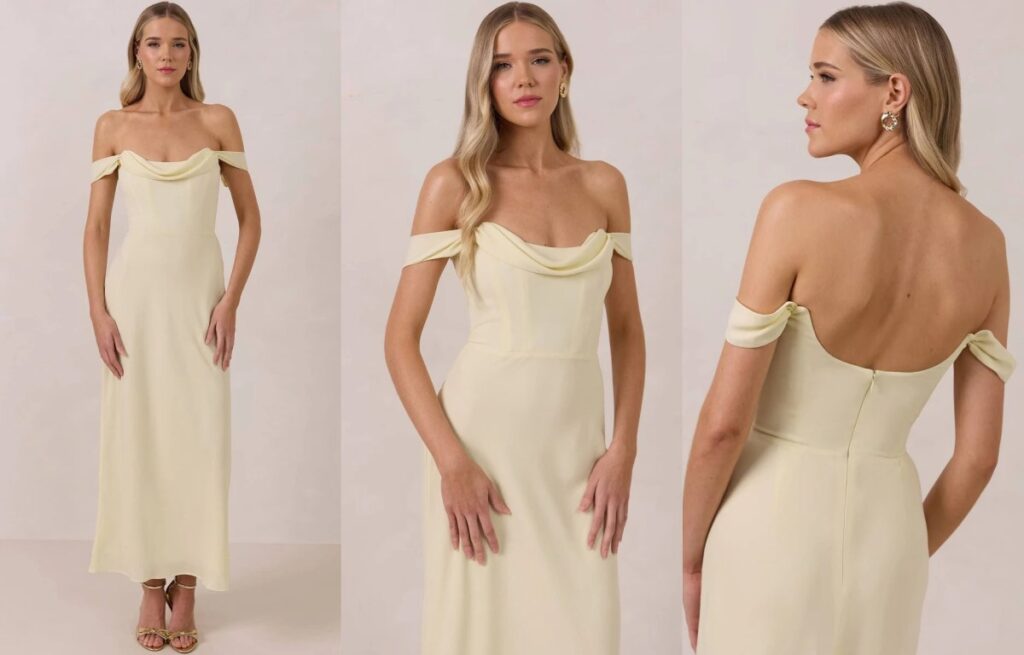
Many buyers love chiffon dresses, but many still choose styles by photo only. That often leads to weak assortment planning and poor fit expectations.
I see chiffon dresses as a wide category that includes casual, romantic, occasion, and trend-driven styles. When I focus on a chiffon midi dress, I pay most attention to drape, layering, transparency, and silhouette because these points decide both style value and wearability.
When I build a chiffon dress range, I do not judge by softness alone. I look at movement, lining, and how the shape performs on real bodies.
What Are the Most Common Types of Chiffon Dresses?
Chiffon dresses may look similar at first, but each style serves a different wearing need. I always group them before I review them commercially.
The most common chiffon dress types include A-line, maxi, midi, wrap, tiered, babydoll, off-shoulder, halter, shirt, slip, empire waist, ruffle, pleated, and asymmetrical styles. Each type creates a different balance of softness, movement, and body shape.
Common chiffon dress styles
- A-line chiffon dress – balanced and flattering
- Chiffon midi dress – practical and elegant
- Maxi chiffon dress – more fluid and dramatic
- Wrap chiffon dress – adjustable and feminine
- Tiered chiffon dress – more volume and movement
- Babydoll chiffon dress – youthful and light
- Off-shoulder chiffon dress – romantic look
- Halter chiffon dress – cleaner shoulder line
- Pleated chiffon dress – texture and shape
- Asymmetrical chiffon dress – more fashion-driven
Why these styles matter
| Style | Main strength | Risk point |
|---|---|---|
| A-line | Easy fit | Can look basic |
| Midi | Broad wearability | Length balance matters |
| Maxi | Strong movement | Can feel heavy with layers |
| Wrap | Flexible waist fit | Bust control matters |
| Tiered | Soft volume | Too much bulk |
| Pleated | Refined texture | Pleat setting quality |
I do not see chiffon as one single fashion story. I see it as a fabric family that behaves differently depending on cut, lining, and volume.
Why Is the Chiffon Midi Dress So Popular?
Some chiffon styles feel too formal. Some feel too young. The midi version often sits in the middle, which is why I see it perform well in many markets.
I think the chiffon midi dress is popular because it combines movement, coverage, and styling flexibility. It feels more polished than a mini dress and more practical than a maxi dress, so it works well for daily wear, events, and seasonal transitions.
Why I rate the chiffon midi dress highly
1. It has stronger commercial balance
A chiffon midi dress can move across more occasions than many other lengths. It can work for brunch, holiday, office styling, dinner, and semi-formal events.
2. It gives softness without too much drama
A maxi chiffon dress creates stronger movement, but it can feel too dressed up. A midi length keeps the soft romantic effect while staying easier to wear.
3. It suits more age groups
I often see the chiffon midi dress appeal to a wider customer range because it feels feminine without looking too exposed or too formal.
My deeper analysis of why it sells
| Factor | Why it helps |
|---|---|
| Midi length | Easier for daily styling |
| Chiffon drape | Creates light movement |
| Layer potential | Works in more seasons |
| Better coverage | Supports wider customer appeal |
| Occasion flexibility | Increases repeat demand |
The real strength of a chiffon midi dress is not just beauty. It is range. It solves more than one styling problem, so it often earns a more stable place in a collection.
What Design Details Make a Chiffon Midi Dress Look Better?
A chiffon midi dress can look premium or weak very quickly. The difference usually comes from the technical details, not the basic sketch.
The key details that improve a chiffon midi dress are lining quality, tier balance, sleeve shape, waist placement, hem finish, and fabric transparency control. These points affect comfort, movement, and the final visual value of the dress.
The details I study first
Lining
Chiffon is often sheer, so lining is not optional in most cases. A good lining improves comfort, reduces transparency issues, and supports cleaner drape.
Waist placement
The wrong waist position can distort the whole dress. In a midi silhouette, waist placement matters even more because the eye reads the full vertical proportion.
Sleeve and shoulder design
Puff sleeves, flutter sleeves, or sleeveless shapes can completely change the tone of the same dress. I always check if the upper body detail matches the softness of chiffon.
Hem movement
A chiffon midi dress should move lightly, not drag or twist. Hem finish and panel balance affect this more than many buyers expect.
Premium detail check
| Detail | Good result | Common issue |
|---|---|---|
| Lining | Smooth and supportive | Cling or heaviness |
| Waist seam | Balanced proportion | Body line looks off |
| Sleeve shape | Soft and intentional | Over-designed silhouette |
| Hem | Fluid movement | Uneven fall |
| Transparency control | Elegant lightness | Cheap-looking sheerness |
A weak chiffon midi dress usually fails in one of two ways. Either it becomes too plain and loses charm, or it adds too many ruffles and layers and becomes visually heavy.
How Do I Compare a Chiffon Midi Dress with Other Chiffon Styles?
I never review a chiffon midi dress in isolation. I compare it with mini, maxi, wrap, and tiered versions to understand its real role in a collection.
I compare a chiffon midi dress by wearability, styling range, movement, and fit tolerance. In most cases, it offers the best balance between elegance and practicality, while mini styles feel younger and maxi styles feel more occasion-led.
Comparison by style role
| Style | Best use | Main limitation |
|---|---|---|
| Chiffon mini dress | Youthful and playful looks | Narrower wearing occasions |
| Chiffon midi dress | Balanced daily and event use | Needs precise length control |
| Chiffon maxi dress | Formal and dramatic styling | Less practical for daily wear |
| Chiffon wrap dress | Adjustable feminine fit | Bust fit varies more |
| Chiffon tiered dress | Strong volume effect | Can add bulk |
My deeper comparison logic
I see the chiffon midi dress as the middle point between ease and elegance. That is its real strength.
A mini chiffon dress creates a lighter and younger mood, but it does not always feel versatile enough for broader retail use. A maxi chiffon dress creates stronger visual movement, but it often depends more on occasion demand. The midi version sits between them. That makes it easier to repeat across seasons and markets.
I also find that the chiffon midi dress gives better control over proportion. It allows soft movement without overwhelming petite customers, and it usually feels more stable in styling than very short or very long silhouettes.
How Should I Choose the Right Chiffon Midi Dress for My Collection?
A chiffon midi dress only works when the design, fabric, and customer all match. I always choose it with clear commercial logic.
I choose the right chiffon midi dress by checking silhouette, lining, transparency, occasion use, and target customer age. When these points align, the dress becomes more wearable, easier to style, and more reliable in sell-through.
My selection method
- Choose A-line or wrap midi styles for broader appeal
- Choose pleated or tiered versions for stronger movement
- Choose soft lining to keep comfort and drape balanced
- Choose controlled transparency for a more premium result
- Choose simple upper-body design if the skirt already has volume
I do not choose a chiffon midi dress just because it looks romantic. I choose it because it can turn softness into real commercial value.
Chiffon Mini Dress
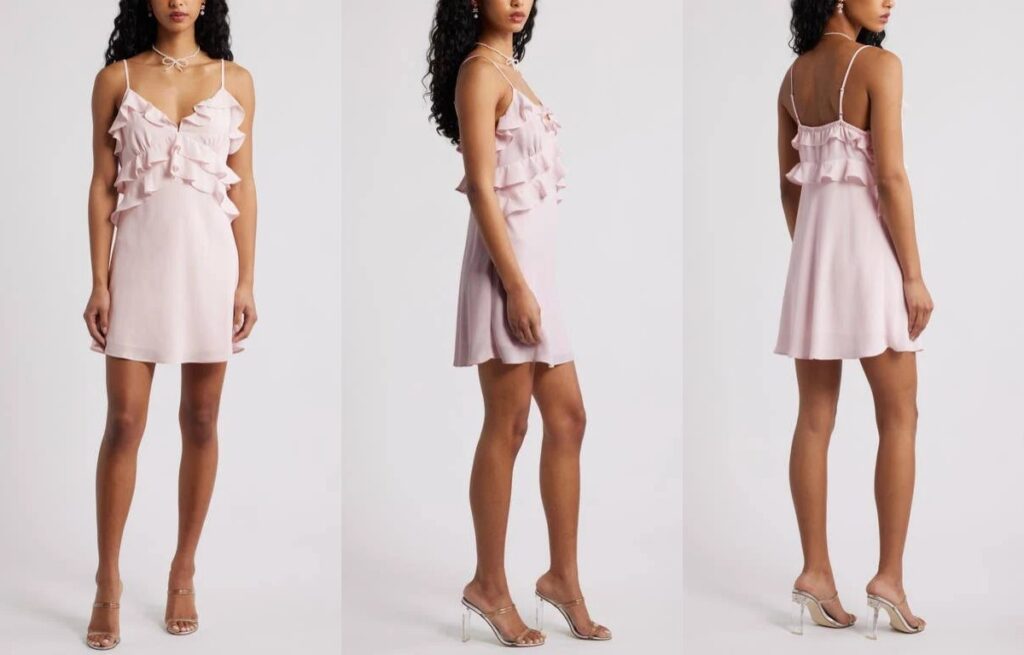
Many buyers love chiffon dresses, but many still choose styles by photo only. That often causes weak fit, poor drape, and lower sell-through.
I see the chiffon mini dress as one of the most important chiffon dress styles because it combines light weight, movement, and strong visual appeal. It sits between casual, romantic, and party dressing, so it works well across many fashion collections when the fabric and silhouette are right.
When I review chiffon dresses, I never look at style names alone. I look at length, layering, transparency, and how the fabric moves on the body.
What Are the Main Types of Chiffon Dresses I Should Know?
Chiffon dresses cover much more than one soft feminine look. I usually sort them by length, silhouette, and use.
The most common chiffon dress styles include mini, midi, maxi, wrap, tiered, A-line, slip, off-shoulder, halter, smock, ruffle, babydoll, empire waist, asymmetrical, one-shoulder, shirt, body-skimming, pleated, kaftan, fit-and-flare, and high-low dresses. Each style creates a different level of movement, coverage, and trend appeal.
Common chiffon dress types
- Chiffon mini dress
- Chiffon midi dress
- Chiffon maxi dress
- Wrap chiffon dress
- Tiered chiffon dress
- A-line chiffon dress
- Slip chiffon dress
- Off-shoulder chiffon dress
- Halter chiffon dress
- Babydoll chiffon dress
Why this category needs structure
| Style type | Main strength | Main risk |
|---|---|---|
| Mini | Youthful and light | Needs lining balance |
| Midi | Most versatile | Can look plain |
| Maxi | Elegant movement | Can feel bulky |
| Wrap | Waist definition | Fit shift at bust |
| Tiered | Volume and romance | Too much fabric weight |
I treat chiffon as a fabric story first. The dress shape matters, but the success usually depends on how the chiffon behaves in motion and light.
Why Is the Chiffon Mini Dress So Popular?
This style stays popular because it is easy to style and easy to update with small design changes.
The chiffon mini dress is popular because it feels light, feminine, and visually dynamic. It works for spring and summer, photographs well, and adapts easily to ruffles, tiers, smocking, puff sleeves, and printed surfaces without losing its soft identity.
What drives its appeal
1. It creates instant movement
Chiffon is naturally fluid. In a mini length, that movement becomes more visible and more playful.
2. It fits many trend directions
A chiffon mini dress can look romantic, sexy, casual, or vacation-ready. The same base category can serve different customers.
3. It performs well in visual selling
This style often works well in e-commerce because movement, lightness, and volume show clearly in photos and short videos.
The deeper reason it works
I think the real strength of the chiffon mini dress is contrast. The short length feels youthful. The chiffon surface feels soft. The result is a style that can look bold without looking too heavy.
That is also why design balance matters. If I add too many ruffles, too much transparency, or too much sleeve volume, the dress can lose shape and start to look busy instead of refined.
What Are the Main Types of Chiffon Mini Dresses?
Not all chiffon mini dresses solve the same need. I usually divide them by silhouette and styling mood.
The main types of chiffon mini dresses include wrap styles, babydoll styles, tiered styles, smocked styles, ruffle styles, off-shoulder styles, halter styles, slip-inspired styles, and long-sleeve boho styles. Each type changes the dress’s fit, age feel, and selling purpose.
Key chiffon mini dress types
| Type | Style effect | Best use |
|---|---|---|
| Wrap mini | Feminine and flattering | Day-to-night wear |
| Babydoll mini | Soft and youthful | Trend casual |
| Tiered mini | More volume and movement | Resort and spring |
| Smocked mini | Flexible fit | Easy online selling |
| Ruffle mini | Romantic surface detail | Boutique fashion |
| Off-shoulder mini | More skin exposure | Vacation and party |
| Halter mini | Clean shoulder line | Summer edits |
| Long-sleeve mini | Balanced coverage | Transitional season |
My buying view on each type
A wrap chiffon mini dress usually has broad appeal because it defines the waist and feels easy to wear. A babydoll style is more trend-sensitive. It can sell fast, but it can also age out faster.
A smocked chiffon mini dress often works better for online channels because it gives more size flexibility. A tiered mini dress gives stronger movement, but I watch fabric bulk carefully because too many layers can make the lower body look heavier.
This is why I do not treat all chiffon mini dresses as one category. The dress may share the same fabric family, but the fit logic is completely different.
What Technical Details Make a Chiffon Mini Dress Look Better?
This is the part many people skip. A chiffon mini dress can look beautiful in concept but fail badly in wear.
The most important technical details in a chiffon mini dress are lining quality, transparency control, hem movement, seam cleanliness, sleeve balance, and volume placement. These details decide whether the dress feels premium, wearable, and commercially strong.
Core technical points I always check
Lining control
Chiffon is sheer, so lining is not optional in most mini dresses. I check lining length, color match, and how the lining moves under the shell.
Volume placement
Extra gathers can add romance, but too much volume near the waist or hip can distort the silhouette. This matters even more in mini lengths because the proportion is shorter and more exposed.
Hem behavior
A chiffon hem should move lightly and evenly. If the hem twists or collapses, the whole dress looks cheaper.
Sleeve-to-body balance
Big sleeves can create great fashion value, but only when the body shape stays clean. If both sleeve and skirt are overbuilt, the dress loses focus.
Technical review table
| Detail | Good result | Common problem |
|---|---|---|
| Lining | Smooth coverage | Visible cling or mismatch |
| Hem | Soft movement | Uneven shape |
| Seams | Clean and flat | Puckering |
| Gathering | Controlled volume | Overfull silhouette |
| Transparency | Soft and tasteful | Too revealing |
My deeper analysis
I think chiffon mini dresses succeed when they manage tension well. This dress type always sits between softness and control. If it is too soft, it looks flimsy. If it is too controlled, it loses the airy quality that makes chiffon attractive.
That is why proportion matters more than many buyers expect. In a maxi chiffon dress, extra layers can still look graceful. In a mini chiffon dress, those same layers can make the shape look inflated. So I reduce unnecessary fullness and focus on cleaner lines.
I also pay attention to print scale. Large prints can overwhelm a mini dress because there is less surface area. Smaller florals, soft abstracts, or spaced motifs usually work better because they support the lightness of chiffon instead of fighting it.
How Do I Choose the Right Chiffon Mini Dress for My Collection?
I only choose this style after I match it with the customer, season, and channel.
I choose the right chiffon mini dress by checking silhouette, lining, print or color direction, and customer lifestyle. A strong option should feel light and feminine, but it also needs enough structure to fit well and sell repeatedly.
My simple selection method
- Choose wrap or smocked styles for broader fit appeal
- Choose tiered or ruffle styles for stronger visual movement
- Choose long-sleeve minis for transitional seasons
- Choose soft prints or solid tones for easier commercial use
- Choose clean lining and controlled gathers for a more premium result
I do not buy this category on trend alone. I buy it when the movement, proportion, and wearability all work together.
Chiffon A-Line Dress
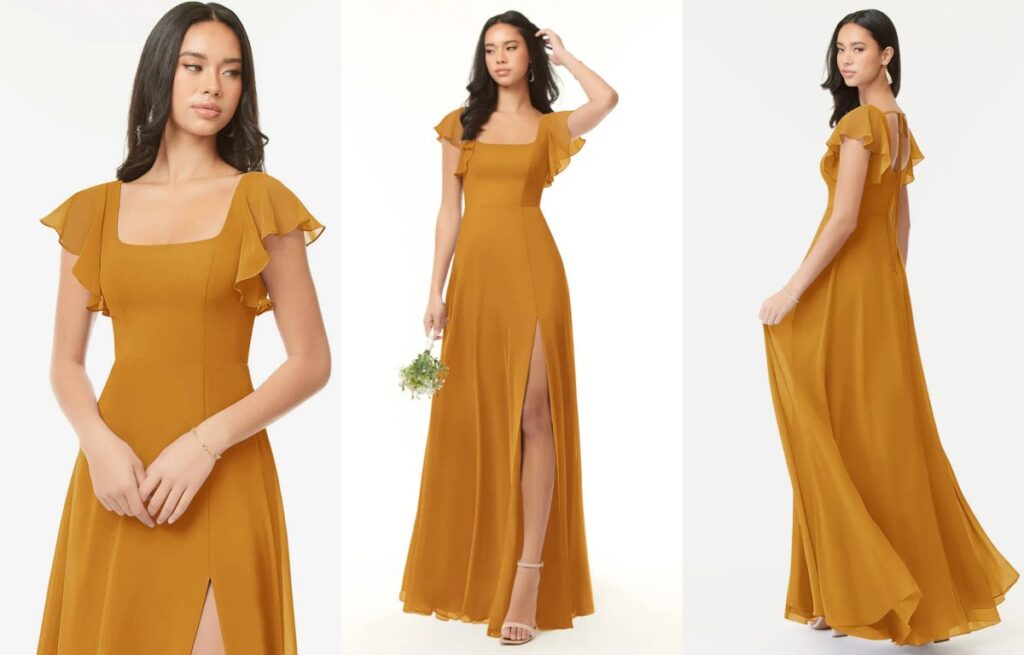
Many chiffon dresses look beautiful in photos, but not every silhouette sells well. Buyers often struggle to choose styles that balance elegance, comfort, and market demand.
A chiffon A-line dress is a dress that fits the upper body and gradually widens toward the hem, forming a soft “A” shape. When made with chiffon fabric, this silhouette creates a light, flowing look that works well for casual wear, events, and feminine fashion collections.
When I evaluate this style, I do not just look at appearance. I focus on how chiffon interacts with the A-line structure and how that affects drape, comfort, and production quality.
What Defines the Structure of a Chiffon A-Line Dress?
Understanding the structure is the first step to judging whether the design will work.
A chiffon A-line dress is defined by a fitted or semi-fitted bodice and a gradually widening skirt. This shape distributes fabric evenly from the waist or bust line, allowing chiffon to create natural movement and a flattering silhouette for many body types.
Key structural elements
- Fitted bodice – provides shape and support
- Gradually widening skirt – creates the A-line effect
- Lightweight chiffon layers – enhance flow and movement
- Defined waistline – improves body proportion
Structure comparison
| Feature | Function | Impact on design |
|---|---|---|
| Bodice fit | Controls upper body shape | Determines elegance |
| Skirt flare | Creates A-line silhouette | Improves comfort |
| Fabric weight | Affects movement | Influences visual softness |
A well-designed A-line structure works especially well with chiffon because the fabric naturally supports soft expansion rather than tight shaping.
Why Is Chiffon Ideal for A-Line Dresses?
Fabric choice determines whether the silhouette looks elegant or cheap.
Chiffon works well for A-line dresses because it is lightweight, semi-sheer, and fluid. These qualities allow the skirt to move freely, creating soft volume without adding heavy structure.
Key fabric advantages
1. Natural drape
Chiffon falls smoothly from the waistline. This allows the A-line skirt to expand naturally instead of appearing stiff.
2. Lightweight volume
Unlike heavy fabrics, chiffon can create a full skirt without feeling bulky. This is important for comfort and wearability.
3. Visual softness
The slightly sheer texture of chiffon softens the silhouette and adds a romantic look.
Fabric behavior analysis
| Fabric property | Effect on A-line dress |
|---|---|
| Lightweight | Improves comfort and movement |
| Semi-sheer | Adds depth with layering |
| Soft drape | Enhances feminine silhouette |
| Breathability | Better for warm seasons |
However, chiffon also requires careful construction. Without proper lining or pattern balance, the dress can look uneven or too transparent.
Which Chiffon A-Line Dress Styles Are Most Popular?
The A-line silhouette appears in many chiffon dress variations. Each version targets a different customer mood.
Popular chiffon A-line dress styles include mini A-line dresses, midi A-line dresses, tiered chiffon A-line dresses, wrap A-line dresses, and off-shoulder chiffon A-line dresses. These variations maintain the classic silhouette while adapting to different occasions and trends.
Common chiffon A-line variations
- Mini chiffon A-line dress – youthful and playful
- Midi chiffon A-line dress – elegant and versatile
- Tiered chiffon A-line dress – adds layered volume
- Wrap chiffon A-line dress – adjustable and flattering
- Off-shoulder chiffon A-line dress – romantic style
Style comparison
| Style | Key appeal | Typical use |
|---|---|---|
| Mini A-line | Youthful energy | Casual or summer |
| Midi A-line | Balanced elegance | Daily fashion |
| Tiered A-line | Rich texture | Trend collections |
| Wrap A-line | Flexible fit | Boutique retail |
| Off-shoulder A-line | Feminine detail | Events or parties |
I often see midi A-line chiffon dresses perform best because they balance elegance, comfort, and everyday usability.
What Design Details Improve the Quality of a Chiffon A-Line Dress?
The silhouette alone does not guarantee quality. Small technical details often decide whether the dress feels premium.
Key design details that improve a chiffon A-line dress include proper lining, balanced skirt panels, clean waist seams, controlled gathering, and stable neckline construction. These elements ensure the dress maintains both structure and fluid movement.
Important technical elements
Lining construction
Chiffon is often sheer, so lining is essential. A good lining improves comfort and prevents transparency.
Panel balance
A-line skirts often use multiple panels. Even panel distribution ensures the hem falls smoothly.
Waistline structure
A clear waist seam helps control the transition between bodice and skirt.
Quality evaluation table
| Detail | Good result | Common issue |
|---|---|---|
| Lining | Smooth and comfortable | Transparency |
| Panel cutting | Balanced drape | Uneven hem |
| Waist seam | Clean silhouette | Bulky transition |
| Hem finish | Light and flowing | Twisted edges |
In my experience, poor panel cutting is one of the biggest problems in chiffon dresses. If the fabric grain is incorrect, the skirt may twist or hang unevenly.
How Do I Choose the Right Chiffon A-Line Dress for My Collection?
Choosing the right style requires matching design, fabric, and customer expectations.
I select chiffon A-line dresses by evaluating silhouette balance, fabric weight, lining quality, and intended occasion. When these elements align, the dress becomes both visually attractive and commercially practical.
My practical selection approach
- Choose midi A-line styles for broader market appeal
- Use tiered designs when targeting trend-driven collections
- Select soft matte chiffon for a more premium look
- Ensure proper lining for comfort and coverage
I always test how the skirt moves when worn. If the dress flows naturally while walking, the design usually works.
Chiffon Wrap Dress
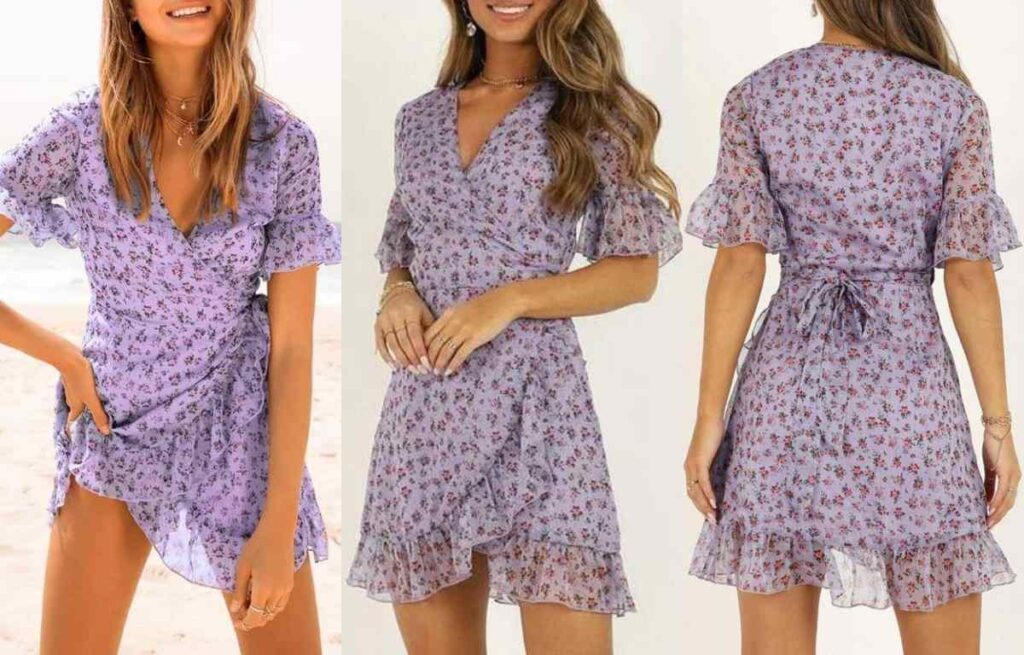
Many buyers like chiffon dresses because they look light and elegant. But if I choose the wrong style, the dress can feel weak, see-through, or hard to sell.
I see chiffon dresses as a wide category that includes wrap, maxi, slip, A-line, tiered, off-shoulder, halter, smock, and ruffle styles. Among them, the Chiffon Wrap Dress stands out because it balances softness, fit flexibility, and strong commercial appeal.
When I review chiffon dresses, I do not only look at the outer shape. I also check drape, lining, volume, and how the fabric moves on the body.
What Are the Most Popular Types of Chiffon Dresses?
Not all chiffon dresses serve the same purpose. I usually group them by silhouette, occasion, and fit effect.
The most popular chiffon dress types include chiffon wrap dresses, maxi dresses, A-line dresses, slip dresses, tiered dresses, ruffle dresses, smock dresses, halter dresses, and off-shoulder dresses. Each one creates a different balance of movement, femininity, and wearability.
Common chiffon dress styles
- Chiffon Wrap Dress – soft waist definition and easy fit
- Chiffon Maxi Dress – long and flowing look
- Chiffon A-line Dress – balanced and flattering shape
- Chiffon Slip Dress – light and minimal style
- Chiffon Tiered Dress – volume and movement
- Chiffon Ruffle Dress – decorative and romantic feel
- Chiffon Smock Dress – loose and comfortable fit
- Chiffon Halter Dress – highlights shoulders
- Chiffon Off-Shoulder Dress – soft and feminine look
Why these styles matter
| Style | Main value | Risk point |
|---|---|---|
| Wrap | Flexible fit | Neckline control |
| Maxi | Elegant movement | Needs lining |
| A-line | Broad appeal | Can look basic |
| Slip | Clean silhouette | Fabric can feel too thin |
| Tiered | Strong visual texture | Too much bulk |
The real difference is not only the design. It is how chiffon supports or weakens that design in actual wear.
Why Is the Chiffon Wrap Dress So Popular?
Some chiffon styles look beautiful in photos but harder in real use. The wrap dress is different because it solves both style and fit at the same time.
I think the Chiffon Wrap Dress is popular because it creates soft shape, gives better waist definition, and fits more body types than many other chiffon styles. It also works well for casual wear, vacations, parties, and semi-formal dressing.
Why I rate this style highly
1. It gives shape without looking stiff
Chiffon is naturally soft. A wrap construction helps control that softness. It creates a waistline and keeps the dress from looking flat.
2. It improves size flexibility
A fixed-fitted dress has less tolerance. A wrap dress usually gives more room across waist and bust, so it feels easier to wear.
3. It matches chiffon’s drape
Some structures fight against chiffon. The wrap shape works with it. That makes the dress feel more natural in motion.
Deeper style analysis
| Design point | Why it matters in a Chiffon Wrap Dress |
|---|---|
| Waist tie | Controls fit and silhouette |
| V-neck opening | Adds femininity but needs balance |
| Lining | Prevents transparency |
| Sleeve shape | Changes mood from casual to dressy |
| Skirt overlap | Affects comfort and security |
The key issue is balance. If the neckline is too deep, the dress feels risky. If the overlap is too small, walking comfort drops. If the fabric is too sheer without enough lining, the customer may see the dress as low quality.
That is why I think the Chiffon Wrap Dress is not only a pretty style. It is a technical style. It needs correct proportions to feel easy and polished.
Which Chiffon Dress Styles Work Best for Different Occasions?
A chiffon dress can feel casual, romantic, or formal. I always choose the type based on where and how it will be worn.
For casual use, I prefer chiffon smock or A-line dresses. For vacation and feminine styling, I prefer chiffon wrap or tiered dresses. For events or parties, maxi, halter, and off-shoulder chiffon dresses usually work best.
Occasion-based chiffon choices
| Occasion | Better chiffon style | Reason |
|---|---|---|
| Daily wear | A-line, smock | Easy and comfortable |
| Vacation | Wrap, tiered | Light and flowing |
| Party | Halter, off-shoulder | More visual impact |
| Semi-formal | Maxi, wrap | Elegant but wearable |
This is why one chiffon dress type cannot replace all others. The fabric is the same, but the use case changes the value.
What Should I Check Before Choosing a Chiffon Dress Style?
Chiffon looks simple, but weak development shows up fast. I always check more than the front view.
Before I choose a chiffon dress style, I check drape, lining, transparency, volume, neckline control, and overall proportion. These points decide whether the dress feels elegant, practical, or hard to wear.
My key checkpoints
- Drape – the fabric should fall softly
- Lining – needed for comfort and coverage
- Transparency – too sheer can reduce value
- Volume control – too much chiffon can look bulky
- Fit support – neckline and waist must stay stable
A chiffon dress succeeds when softness looks intentional, not messy. That is why I care so much about the construction behind the light appearance.
Chiffon Fit-and-Flare Dress

Many buyers like chiffon dresses, but many still choose styles that look good in photos and fail in real wear. That often leads to weak sell-through and more returns.
I see chiffon dresses as one of the most useful categories in women’s fashion because they combine lightness, movement, and feminine appeal. The most common types include fit-and-flare, maxi, wrap, A-line, tiered, slip, empire waist, and off-shoulder styles.
When I review this category, I do not only look at the silhouette. I also study drape, lining, transparency, and how the fabric moves on the body.
What Are the Most Popular Types of Chiffon Dresses?
Not every chiffon dress serves the same purpose. I usually group them by shape, occasion, and how much movement they create.
The most popular chiffon dress types are fit-and-flare, maxi, wrap, A-line, tiered, shift, empire waist, slip, halter, and off-shoulder dresses. These styles work well because chiffon adds softness, flow, and a more elevated visual effect.
Common chiffon dress styles
- Fit-and-flare dress – fitted top with fuller skirt
- Maxi dress – long and flowing shape
- Wrap dress – adjustable and flattering fit
- A-line dress – clean and easy silhouette
- Tiered dress – added volume and movement
- Shift dress – straight and simple shape
- Empire waist dress – raised waist for a softer look
- Slip dress – light and minimal style
- Halter dress – highlights shoulders
- Off-shoulder dress – romantic and feminine feel
| Style | Main strength | Risk point |
|---|---|---|
| Fit-and-flare | Balanced shape | Needs good waist placement |
| Maxi | Strong movement | Can feel heavy with bad lining |
| Wrap | Flexible fit | Bust security matters |
| Tiered | Visual texture | Easy to create bulk |
| Slip | Elegant drape | Transparency risk |
I see these styles as popular because chiffon naturally supports softness and motion. That gives the dresses a stronger visual effect without needing too much extra design.
Why Is the Chiffon Fit-and-Flare Dress So Commercial?
Some chiffon dresses look beautiful but stay niche. The fit-and-flare dress is different because it works across more body types and selling channels.
I see the chiffon fit-and-flare dress as one of the most commercial chiffon styles because it balances structure and softness. The fitted upper body gives shape, and the flared skirt lets chiffon show movement, femininity, and everyday wearability.
Why this style works so well
It creates an easy body balance
The fitted bodice gives definition. The flared skirt adds movement and comfort. This makes the style feel polished without looking too formal.
It suits many occasions
I often see this shape used for:
- casual dresses
- brunch or vacation dresses
- bridesmaid styles
- partywear
- soft occasionwear
It reduces fit pressure
Compared with bodycon or slip styles, fit-and-flare dresses usually feel easier to wear. The waist is still important, but the skirt gives more tolerance through the hip area.
My deeper analysis of this style
| Design point | Why it matters | Common mistake |
|---|---|---|
| Bodice fit | Creates shape and support | Bust too tight or too loose |
| Waist seam | Controls proportion | Waist placed too high |
| Skirt flare | Adds movement | Too little flare looks flat |
| Lining | Controls transparency | Lining too short or stiff |
| Chiffon weight | Affects drape | Fabric too thin looks cheap |
The chiffon fit-and-flare dress works because it lets the fabric do what chiffon does best. Chiffon moves easily, catches air, and softens the outline of the garment. A straight or very tight shape cannot always use that advantage well. A flared skirt can.
At the same time, I know this style can fail if the bodice and skirt are not balanced. If the top is too structured, the dress loses softness. If the skirt is too full, it starts to look bulky instead of graceful. So I always treat proportion as the real key point.
What Technical Details Matter Most in Chiffon Dresses?
Chiffon looks easy, but it is not an easy fabric. I pay close attention to technical details because weak execution shows up fast.
The most important technical points in chiffon dresses are lining quality, opacity control, seam cleanliness, hem finish, and fabric layering. These details affect comfort, movement, and whether the dress looks premium or too delicate.
Key technical points I always check
- Lining – helps comfort and prevents transparency
- Seam finish – chiffon can fray easily
- Hem quality – messy hems reduce value fast
- Layer balance – too many layers add weight
- Opacity – light colors need extra control
Why these points matter more in chiffon
Chiffon is light, but that also means it reveals mistakes quickly. Uneven seams, puckering, poor lining, or rough finishing are much easier to notice than in heavier fabrics.
For a chiffon fit-and-flare dress, the lining is especially important. The skirt needs flow, but it also needs coverage. If the lining is too stiff, the dress loses movement. If it is too short or too thin, the whole product feels unfinished.
How Should I Choose the Right Chiffon Dress Style for My Collection?
A good chiffon dress should fit the market, not just the trend. I always match the style to the customer and the selling purpose.
I choose chiffon dress styles by checking silhouette, transparency control, occasion use, and customer preference. Fit-and-flare and wrap dresses are safer for broad appeal, while slip and off-shoulder styles work better in more trend-led collections.
My simple selection logic
- Choose fit-and-flare for broad commercial appeal
- Choose maxi for occasion and vacation demand
- Choose wrap for flexible fit and repeat sales
- Choose tiered for a softer fashion look
- Choose slip or off-shoulder for trend-driven collections
I do not choose chiffon dresses by photo appeal alone. I look at how the fabric performs in motion, how the lining supports the shape, and whether the style matches the customer’s real wearing needs.
Chiffon Empire Waist Dress

Many chiffon dresses look similar at first, so buyers often miss the styles that truly sell well. That can lead to weak assortments and poor customer response.
I see the chiffon empire waist dress as one of the most useful chiffon dress styles because it combines soft drape, waist definition, and broad fit appeal. It works well for casual wear, occasionwear, maternity-inspired comfort dressing, and romantic fashion collections.
When I review chiffon dresses, I always pay close attention to shape and movement. In this category, the waistline position changes the whole result.
What Defines a Chiffon Empire Waist Dress?
Not every chiffon dress with a loose skirt is an empire waist style. I always check where the waist seam actually sits.
A chiffon empire waist dress is defined by a raised waistline placed just below the bust, followed by a softer skirt that falls over the body. This structure creates a longer leg line, a lighter silhouette, and a more forgiving fit than many standard waist dresses.
Core design features
- Raised waistline – sits above the natural waist
- Soft chiffon skirt – adds flow and lightness
- Gentle body shape – less pressure around the waist and hip
- Romantic visual effect – often linked to feminine styling
Why the waist position matters
| Feature | Empire waist result | Standard waist result |
|---|---|---|
| Waist seam | Higher placement | Natural waist placement |
| Visual effect | Longer lower body line | More balanced proportion |
| Fit feel | Softer and easier | More defined at waist |
| Best use | Soft, flowing dresses | Structured silhouettes |
This small structural change makes a big commercial difference. It is one of the main reasons the style stays relevant.
Why Does Chiffon Work So Well for Empire Waist Dresses?
The empire waist shape needs fabric that moves easily. That is why chiffon is such a natural match.
Chiffon works well for empire waist dresses because it is light, fluid, and airy. It softens the raised waistline, helps the skirt fall naturally, and creates the delicate movement that makes this silhouette feel elegant instead of stiff.
My fabric-based analysis
1. Chiffon supports soft drape
An empire waist dress needs the skirt to fall smoothly from the bust line. Chiffon helps create that effect without adding heavy volume.
2. Chiffon improves the feminine look
This style often relies on softness. Chiffon adds visual lightness, which makes the silhouette feel romantic and wearable.
3. Chiffon helps seasonal flexibility
I see this fabric used in spring, summer, and occasion collections very often because it feels light and looks dressy.
Fabric check table
| Chiffon quality | Effect on the dress |
|---|---|
| Soft and fluid | Better movement |
| Too crisp | Can look rigid |
| Too transparent | Needs stronger lining |
| Slight texture | Adds depth and interest |
The main risk is weak fabric support. If the chiffon is too thin without proper lining, the dress can lose quality fast.
Which Types of Chiffon Empire Waist Dresses Are Most Popular?
This style has many variations, so I never treat it as just one product. Different versions suit different customers and occasions.
The most popular chiffon empire waist dress types include maxi, midi, mini, sleeveless, puff-sleeve, long-sleeve, floral print, ruffle-trim, and occasion styles. These variations change the mood of the dress without changing the core silhouette.
Common popular versions
- Maxi empire waist chiffon dress – elegant and flowing
- Midi version – easier for daily wear
- Mini version – younger and more playful
- Sleeveless style – ideal for warm weather
- Long-sleeve style – better for modest or transitional dressing
- Puff-sleeve style – more romantic and trend-led
- Floral print style – classic spring and summer choice
- Ruffle-trim style – softer and more decorative
Commercial value by style
| Style type | Main value | Best use |
|---|---|---|
| Maxi | Strong visual movement | Occasion and vacation |
| Midi | Balanced and versatile | Daily and semi-dressy wear |
| Mini | Youthful appeal | Trend collections |
| Long-sleeve | More coverage | Modest and seasonal use |
| Floral print | Easy feminine story | Spring/summer retail |
I often find that midi and maxi versions are the safest because they show chiffon movement best.
What Technical Details Make a Chiffon Empire Waist Dress Look Better?
This dress looks easy, but it actually depends on several technical choices. I study these details closely before I judge the style.
The most important details in a chiffon empire waist dress are bust fit, seam placement, lining quality, skirt fullness, sleeve balance, and fabric transparency. These points decide whether the dress feels elegant, flattering, and commercially reliable.
Key technical points I focus on
Bust fit
The raised waistline sits close to the bust, so poor bust shaping becomes very visible. If this area is wrong, the whole dress looks awkward.
Seam placement
The seam must sit high, but not too high. If it is too close to the bust, the dress can feel uncomfortable or look unbalanced.
Lining quality
Chiffon usually needs lining. Good lining improves comfort, modesty, and drape.
Skirt fullness
Too little fullness makes the dress look flat. Too much fullness can make it bulky and less refined.
Technical review table
| Detail | Good result | Common problem |
|---|---|---|
| Bust area | Smooth and supportive | Pulling or flattening |
| Empire seam | Balanced placement | Too high or uneven |
| Lining | Clean and secure | Transparency issues |
| Skirt volume | Soft flow | Heavy or shapeless result |
This is why I never judge the dress only from the front photo. The side view often reveals whether the proportion really works.
How Should I Choose the Right Chiffon Empire Waist Dress for My Collection?
A good style choice depends on customer use, not just trend appeal. I always match the silhouette to the selling purpose.
I choose a chiffon empire waist dress by looking at length, sleeve design, print direction, lining quality, and target occasion. When these elements align, the dress becomes much easier to position in both fashion and commercial collections.
My practical selection method
- Choose midi or maxi lengths for broader market appeal
- Choose floral or soft solid colors for romantic collections
- Choose lined chiffon for better quality perception
- Choose long sleeves or puff sleeves for added style value
- Choose clean bust construction to protect fit consistency
I see this dress as a strong option when I want softness, comfort, and feminine styling in the same product.
Chiffon Shift Dress
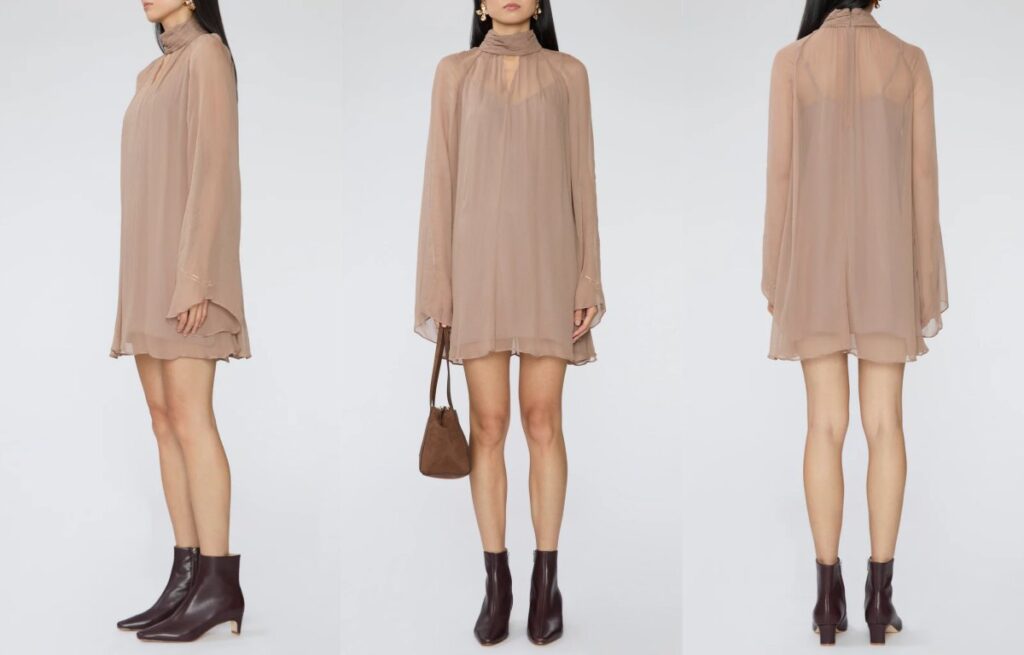
Many buyers like chiffon dresses, but many still choose styles by photo only. That often leads to weak assortment balance, unclear positioning, and slow sales.
I see the chiffon shift dress as one of the most practical chiffon styles because it combines light texture, simple shape, and broad wearability. In a 20+ style chiffon range, it usually works as a stable, easy-to-sell option between trend pieces and occasion dresses.
When I review chiffon dresses, I do not only ask which style looks pretty. I ask which one gives the best balance between drape, comfort, styling ease, and repeat potential.
What Are the Main Types of Chiffon Dresses I Should Know?
A chiffon range looks wide on paper, but most styles can still be grouped in a clear way.
The most common chiffon dress types include shift, A-line, wrap, maxi, midi, mini, empire waist, tiered, ruffle, smock, slip, off-shoulder, halter, shirt, kaftan, bodycon, fit-and-flare, pleated, one-shoulder, babydoll, cape, and high-low styles. Each one serves a different fit need and fashion purpose.
Common chiffon dress styles
- Shift dress
- A-line dress
- Wrap dress
- Maxi dress
- Midi dress
- Mini dress
- Empire waist dress
- Tiered dress
- Ruffle dress
- Smock dress
- Slip dress
- Off-shoulder dress
- Halter dress
- Shirt dress
- Kaftan dress
- Bodycon dress
- Fit-and-flare dress
- Pleated dress
- One-shoulder dress
- Babydoll dress
- Cape dress
- High-low dress
A simple comparison
| Style group | Typical use | Risk point |
|---|---|---|
| Shift, A-line, shirt | Daily and smart casual | Can look plain |
| Maxi, halter, one-shoulder | Occasion and holiday | Needs better lining |
| Smock, tiered, babydoll | Relaxed and youthful | Easy to look bulky |
| Wrap, fit-and-flare, empire | Waist-focused styling | Fit control matters |
I use this kind of split because a chiffon collection can get repetitive very fast if too many styles solve the same problem.
Why Does a Chiffon Shift Dress Stay So Commercial?
The shift dress is simple, but that simplicity is exactly why I take it seriously.
A chiffon shift dress stays commercial because it is easy to wear, easy to style, and easier to fit than many shaped chiffon dresses. Its straight silhouette also lets the chiffon texture stand out without forcing too much structure onto a naturally soft fabric.
Why I rate this style highly
1. The fabric and silhouette match well
Chiffon is light, soft, and slightly airy. A shift shape is straight and clean. These two work well together because the fabric does not need to fight against a heavily sculpted pattern.
2. It gives broader fit tolerance
A chiffon shift dress does not rely on strong waist shaping. That helps reduce fit pressure across sizes, which is useful in wholesale and online selling.
3. It works across many markets
I can position this style for casual, resort, workwear layering, or semi-dressy use, depending on sleeve, lining, print, and length.
Deeper product analysis
| Design factor | Why it matters in a chiffon shift dress |
|---|---|
| Lining | Prevents transparency and improves comfort |
| Length | Changes age feel and use occasion |
| Sleeve design | Affects modesty and seasonality |
| Neckline | Controls whether the dress feels basic or refined |
| Print scale | Can make the dress look younger or more polished |
What I find most important is that the chiffon shift dress lets the buyer control the final market image with small adjustments. A floral print makes it softer. A solid dark color makes it cleaner. A gathered sleeve makes it more feminine. The base style is stable, but the output can still change a lot.
How Is a Chiffon Shift Dress Different From Other Chiffon Styles?
Many chiffon dresses look similar at first glance, but their selling logic is not the same.
A chiffon shift dress is different because it focuses more on ease and versatility than on body definition. Compared with wrap, empire, or fit-and-flare chiffon dresses, it depends less on waist shaping and more on fabric movement, length balance, and clean finishing.
Quick comparison
| Style | Main strength | Main weakness |
|---|---|---|
| Shift dress | Easy fit and broad appeal | Less dramatic silhouette |
| Wrap dress | More waist definition | Fit varies by bust and tie position |
| Empire dress | Soft romantic shape | Can feel too sweet in some markets |
| Fit-and-flare | Feminine and classic | More pattern balance needed |
| Smock dress | Relaxed comfort | Volume can feel excessive |
My deeper view
I do not see the chiffon shift dress as the most eye-catching option. I see it as one of the most useful ones.
A wrap chiffon dress often looks more flattering in a styled photo, but it also creates more fitting variables. The bust overlap, tie tension, and waist placement all matter. A shift dress removes much of that complexity.
A smock or tiered chiffon dress gives comfort too, but those styles add more volume. That can work for trend-driven assortments, yet it can also narrow the audience. The shift dress feels cleaner and easier to understand.
This is why I often treat the chiffon shift dress as an anchor style. It may not carry the whole fashion story, but it helps the whole collection feel more balanced.
What Technical Details Make a Chiffon Shift Dress Look Better?
A chiffon shift dress looks easy to make, but weak execution shows up fast because the silhouette is so simple.
The most important technical details are lining quality, hem neatness, seam cleanliness, shoulder balance, neckline finish, and chiffon weight. When these details are right, the shift dress looks polished. When they are wrong, the dress quickly feels cheap or unfinished.
Technical points I always check
- Lining length should support coverage without ruining drape
- Shoulder shape should stay clean, not collapsed
- Hem finish should look light and even
- Neckline construction should stay flat
- Chiffon weight should match the target use
Why these details matter more in this style
Because the shape is simple, there is nowhere to hide mistakes. A bodycon or ruffle dress can distract the eye. A shift dress cannot. If the hem twists or the lining pulls, the buyer notices it quickly.
I also pay close attention to transparency. Chiffon is naturally light, but the goal is controlled lightness, not accidental exposure. So the lining choice is not just a comfort issue. It is part of the value perception.
How Do I Choose the Right Chiffon Shift Dress for My Collection?
A good chiffon shift dress should fit both the customer and the channel.
I choose the right chiffon shift dress by checking length, lining, sleeve shape, print direction, and end use. A clean midi or knee-length version usually works best for broad markets, while mini or detail-heavy versions fit more trend-led collections.
My simple selection method
- Choose solid colors for cleaner, more polished markets
- Choose soft florals for feminine spring and resort collections
- Choose midi or knee length for safer commercial appeal
- Choose light sleeve detail when I want more style without losing versatility
- Choose good lining and matte chiffon when I want a more premium result
I usually keep this style in the range because it gives stability. It is not the loudest chiffon dress, but it is often one of the easiest to sell and repeat.
Chiffon Smock Dress

Many buyers like chiffon dresses for their soft and light look. But many still choose the wrong style, and that often leads to weak fit, poor movement, or low repeat sales.
I see chiffon dresses as a wide category that includes many popular shapes, from slip and wrap dresses to maxi, tiered, and smock styles. Among them, the chiffon smock dress stands out because it combines softness, comfort, volume, and broad market appeal.
When I review chiffon dresses, I do not only look at style names. I focus on drape, transparency, layering, and how the dress moves on the body.
What Are the Most Popular Types of Chiffon Dresses?
Not every chiffon dress serves the same need. I usually group them by silhouette, occasion, and how much volume they carry.
The most common types of chiffon dresses include maxi, midi, mini, wrap, slip, A-line, tiered, ruffle, off-shoulder, empire waist, smock, babydoll, halter, and shirt dress styles. Each one creates a different balance of movement, fit, and styling value.
Common chiffon dress styles
- Maxi chiffon dress – long and fluid
- Midi chiffon dress – easy and versatile
- Mini chiffon dress – light and youthful
- Wrap chiffon dress – soft waist definition
- Slip chiffon dress – simple and elegant
- A-line chiffon dress – balanced silhouette
- Tiered chiffon dress – more movement and texture
- Ruffle chiffon dress – feminine and decorative
- Off-shoulder chiffon dress – romantic styling
- Empire waist chiffon dress – soft shaping under the bust
- Smock chiffon dress – loose and airy fit
- Babydoll chiffon dress – volume with a youthful mood
- Halter chiffon dress – open shoulder line
- Shirt chiffon dress – more polished and casual
Quick comparison
| Style | Main value | Risk point |
|---|---|---|
| Maxi | Elegant movement | Needs lining control |
| Wrap | Flattering fit | Can shift in wear |
| Tiered | Visual texture | Too much bulk |
| Smock | Comfort and ease | Can lose shape |
| Slip | Simple drape | Needs better fabric control |
I find chiffon works best when the design respects the fabric’s soft and airy nature. If the shape is too heavy or too structured, the result often feels wrong.
Why Is the Chiffon Smock Dress So Popular?
The smock dress looks simple, but its commercial value is stronger than many people think. I see it as one of the most wearable chiffon styles.
A chiffon smock dress is popular because it offers light volume, comfort, easy movement, and flexible sizing. It also works well across casual, vacation, and feminine fashion collections, which gives it wide market reach.
Why this style keeps selling
1. It gives comfort without looking plain
A chiffon smock dress feels relaxed, but the chiffon fabric still gives it softness and visual interest. That makes it more stylish than a basic loose dress.
2. It supports size flexibility
This style usually has a loose body shape. That helps reduce fit pressure, which is useful in online sales and broad-size collections.
3. It fits many wearing moments
I often see chiffon smock dresses used for:
- casual daywear
- spring collections
- vacation edits
- resort capsules
- soft feminine ranges
Deeper style analysis
The success of a chiffon smock dress depends on where the volume starts. If the gathers begin too high, the dress can look childish or maternity-like. If they begin too low, the smock effect becomes weak.
The second key point is fabric transparency. Chiffon is light, but it is often sheer. That means lining is not optional in many cases. A good lining supports comfort and coverage without killing the airy feeling.
The third point is proportion. A chiffon smock dress needs balance between body volume, sleeve volume, and length. If all three are too full, the shape becomes heavy instead of soft.
What I check first
| Detail | Good result | Common problem |
|---|---|---|
| Gather placement | Balanced fullness | Puffy upper body |
| Lining | Soft coverage | Too thick or too sheer |
| Length | Easy movement | Awkward proportion |
| Sleeve shape | Feminine volume | Too much bulk |
This is why I do not treat the chiffon smock dress as a basic loose dress. It needs control in pattern and fabric choice to look refined.
What Technical Details Make a Chiffon Smock Dress Look Better?
A chiffon smock dress looks effortless, but the technical side matters a lot. Small mistakes show up fast in this kind of fabric.
The most important technical details in a chiffon smock dress are lining quality, gather control, seam neatness, sleeve proportion, and hem movement. These details decide whether the dress feels soft and premium or loose and unfinished.
Key technical points
Lining quality
The lining should be light and smooth. If it is too heavy, the dress loses movement. If it is too short or too thin, the dress may feel cheap.
Gather control
The gathers should look even and soft. Too much gathering creates bulk. Too little makes the style look flat.
Sleeve balance
Many chiffon smock dresses use puff or gathered sleeves. I always check whether the sleeve volume matches the body volume.
Hem flow
The hem should move cleanly. A poor hem finish can make chiffon look messy very quickly.
Why these details matter more in chiffon
Chiffon reveals weakness fast. A heavy fabric can hide construction problems, but chiffon does not. Uneven gathering, twisting seams, and poor finishing are easier to notice because the fabric is light and moves constantly.
That is why I often say the chiffon smock dress looks soft, but it is not an easy style to execute well.
How Should I Choose the Right Chiffon Smock Dress for My Collection?
I choose this style by looking at customer need first, not trend alone. That helps me make better product decisions.
I choose the right chiffon smock dress by checking length, volume level, lining, sleeve shape, and customer lifestyle. When these parts match, the dress becomes easier to sell and more reliable in repeat orders.
My simple selection method
- Choose mini or above-knee lengths for younger fashion markets
- Choose midi lengths for broader commercial use
- Choose soft sleeve volume for a more balanced look
- Choose light lining to keep the airy feel
- Choose controlled tiers or gathers to avoid excess bulk
I usually prefer chiffon smock dresses that feel easy but still look intentional. That balance is what makes the style commercially strong.
Chiffon Tiered Dress
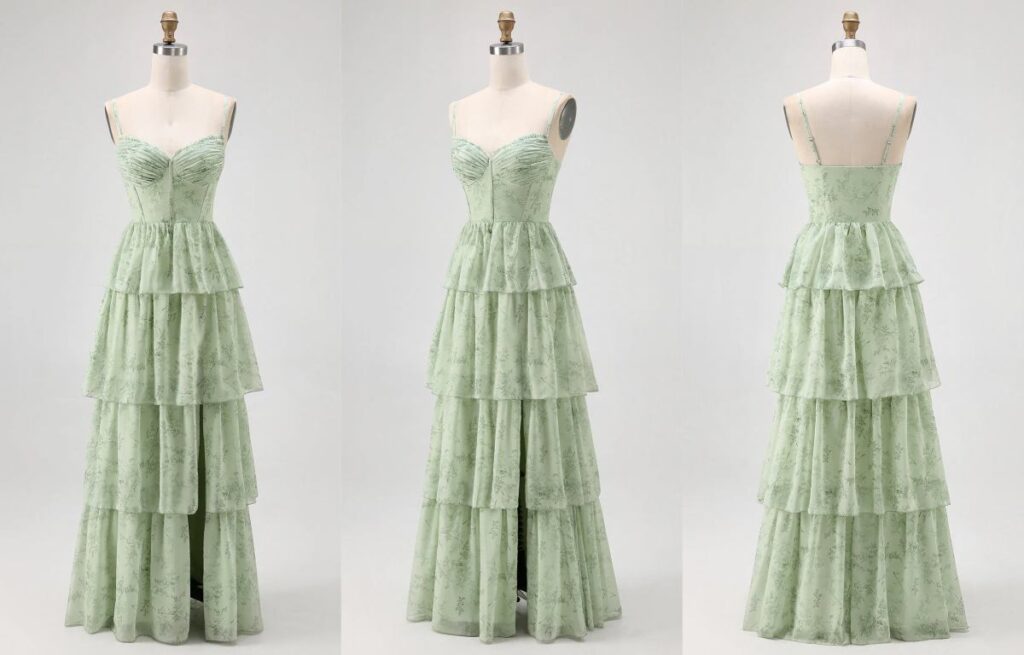
Many buyers like chiffon dresses for their light and soft look. But when the style choice is wrong, the dress can lose shape, feel too sheer, or miss the target market.
I usually divide chiffon dresses into everyday styles, romantic volume styles, occasion styles, and fashion-led silhouettes. Once I compare drape, layering, transparency, and movement together, I can choose the right chiffon dress style more clearly.
When I work on chiffon dresses, I never judge the style name alone. I always study how the fabric moves, how many layers it needs, and how the shape performs in real wear.
Which Everyday Chiffon Dress Styles Usually Sell Best?
Every collection needs some safe chiffon styles. These are the dresses that can work across more seasons and customer groups.
The everyday chiffon dresses I see most often are A-line dresses, shirt dresses, wrap dresses, shift dresses, midi dresses, and simple long-sleeve styles. These shapes sell well because chiffon adds softness without making the dress too hard to wear.
Core everyday chiffon styles
- A-line chiffon dress
- Shirt chiffon dress
- Wrap chiffon dress
- Shift chiffon dress
- Midi chiffon dress
- Long-sleeve chiffon dress
Why these styles work
| Style | Main strength | Risk point |
|---|---|---|
| A-line | Easy and flattering | Needs enough lining |
| Shirt dress | Balanced and wearable | Can lose structure |
| Wrap dress | Feminine and flexible | Neckline control matters |
| Shift dress | Simple and comfortable | May look flat |
| Midi dress | Broad market appeal | Length proportion matters |
I like these styles because they let chiffon show its soft drape in a practical way. They are easier to repeat and easier to sell than more extreme shapes.
Why Is the Chiffon Tiered Dress Such an Important Style?
The chiffon tiered dress looks simple, but I think it is one of the most commercial and technical chiffon categories. It can sell to many markets, but only when the volume is controlled well.
I see the Chiffon Tiered Dress as one of the strongest chiffon styles because it combines movement, softness, and visual texture. It works well for resort wear, casual fashion, and occasion capsules, but the success depends on tier placement, fabric weight, lining, and volume balance.
Why the Chiffon Tiered Dress stands out
A tiered shape gives chiffon more life. When the customer walks, the layers move in a way that feels light and feminine. This is one big reason the style keeps returning in new collections.
At the same time, this style has more technical risk than many buyers expect. If I add too many tiers, the dress can look bulky. If I use the wrong chiffon weight, the shape can collapse or become too puffy.
My deeper analysis of this style
1. Tier placement changes the whole silhouette
I always check where each tier begins.
- A high first tier creates a younger and cuter look
- A mid-level first tier feels more balanced and wearable
- A low first tier looks cleaner but gives less volume impact
This choice affects not only appearance, but also body perception. A badly placed tier can widen the body visually. A well-placed tier can create flow without adding heaviness.
2. Chiffon weight matters more than people think
Not all chiffon behaves the same.
| Fabric behavior | Effect on tiered dress |
|---|---|
| Very light chiffon | Airy but may feel too sheer |
| Medium chiffon | Best balance for shape and movement |
| Heavy chiffon | More volume control but less softness |
I usually prefer medium-weight chiffon for a Chiffon Tiered Dress. It supports the layers better and still keeps the airy feeling.
A tiered chiffon dress often needs careful lining support. Without good lining, the dress may cling, feel transparent, or lose comfort.
I also check whether the lining follows the full length or stops early. A short lining may reduce cost, but it can also reduce the premium feel.
4. Volume control is the key commercial issue
This is where many developments fail. More fabric does not always mean a better dress.
I look at:
- width of each tier
- gathering ratio
- hem weight
- total fabric consumption
- balance between top body and skirt
Too much gathering can make the dress look oversized in the wrong way. Too little gathering makes the tier effect weak. I always try to keep the movement visible but the body line clean.
Where this style works best
- resort collections
- spring and summer launches
- feminine casualwear
- boho-inspired capsules
- occasion styles with soft volume
This is why I treat the Chiffon Tiered Dress as more than a trend item. It is a repeatable silhouette when the proportions are right.
Which Chiffon Dresses Feel More Romantic or Feminine?
Chiffon naturally supports soft and romantic shapes. That is why many of its best-selling styles lean into movement, gathers, and gentle volume.
The most romantic chiffon dress styles are tiered dresses, ruffle dresses, babydoll dresses, smock dresses, empire-waist dresses, and off-shoulder styles. These work well because chiffon gives them a softer edge and more visual movement.
Popular romantic chiffon styles
- Chiffon Tiered Dress
- Ruffle chiffon dress
- Babydoll chiffon dress
- Smock chiffon dress
- Empire-waist chiffon dress
- Off-shoulder chiffon dress
Why these silhouettes suit chiffon
These styles depend on fluid movement. Chiffon supports that better than stiff fabric. It also helps soften details like gathers, ruffles, and flared sleeves.
Still, I do not think every romantic silhouette works equally well. For example, a babydoll chiffon dress can look charming in one market, but too youthful in another. An empire-waist chiffon dress can feel elegant, but the waist point must be accurate or the shape becomes awkward.
My quick style comparison
| Style | Main mood | Main challenge |
|---|---|---|
| Tiered | Flowing and textured | Bulk control |
| Ruffle | Decorative and soft | Over-design risk |
| Babydoll | Youthful and cute | Limited age appeal |
| Smock | Easy and airy | Shape can feel loose |
| Empire waist | Elegant and lengthening | Waist point precision |
I always match these styles to the target customer first. Romantic does not mean universal.
Which Chiffon Dress Styles Work Best for Parties and Occasions?
Occasion chiffon dresses usually win through movement and elegance, not structure. This makes the style choice and layering very important.
For party and occasion use, I usually focus on maxi chiffon dresses, pleated chiffon dresses, halter styles, one-shoulder dresses, wrap dresses, and draped evening shapes. These styles allow chiffon to create softness, flow, and light formal appeal.
Common occasion chiffon styles
- Maxi chiffon dress
- Pleated chiffon dress
- Halter chiffon dress
- One-shoulder chiffon dress
- Wrap chiffon dress
- Draped chiffon evening dress
What makes them stronger for occasionwear
The value of chiffon in occasionwear comes from movement. A maxi chiffon dress can look elegant because the fabric follows the body softly instead of holding a hard shape.
But chiffon also brings challenges:
- transparency
- seam visibility
- lining quality
- weak support in fitted areas
That is why I usually avoid forcing chiffon into very structured dress concepts. It performs better when the design respects the fabric’s natural softness.
How Can I Organize 20+ Types of Chiffon Dresses More Clearly?
Once the number of styles grows, I need a simple system. Without one, different dresses start overlapping too much.
I organize chiffon dresses by silhouette, volume, and occasion use. This helps me compare more than twenty types, including A-line, wrap, shift, maxi, pleated, ruffle, babydoll, smock, shirt, tiered, empire-waist, one-shoulder, off-shoulder, and other chiffon styles.
A practical 20+ style list
- A-line chiffon dress
- Shirt chiffon dress
- Wrap chiffon dress
- Shift chiffon dress
- Midi chiffon dress
- Maxi chiffon dress
- Chiffon Tiered Dress
- Ruffle chiffon dress
- Babydoll chiffon dress
- Smock chiffon dress
- Empire-waist chiffon dress
- Pleated chiffon dress
- Halter chiffon dress
- One-shoulder chiffon dress
- Off-shoulder chiffon dress
- Long-sleeve chiffon dress
- Sleeveless chiffon dress
- Kaftan chiffon dress
- Tunic chiffon dress
- High-low chiffon dress
- Asymmetrical chiffon dress
- Draped chiffon dress
My simple comparison method
| Factor | What I check |
|---|---|
| Silhouette | Straight, flared, wrapped, layered |
| Volume | Light, medium, or full |
| Transparency | Outer layer and lining balance |
| Occasion use | Daily, resort, party, formal |
This method helps me avoid buying too many dresses that solve the same need.
Chiffon Pleated Dress
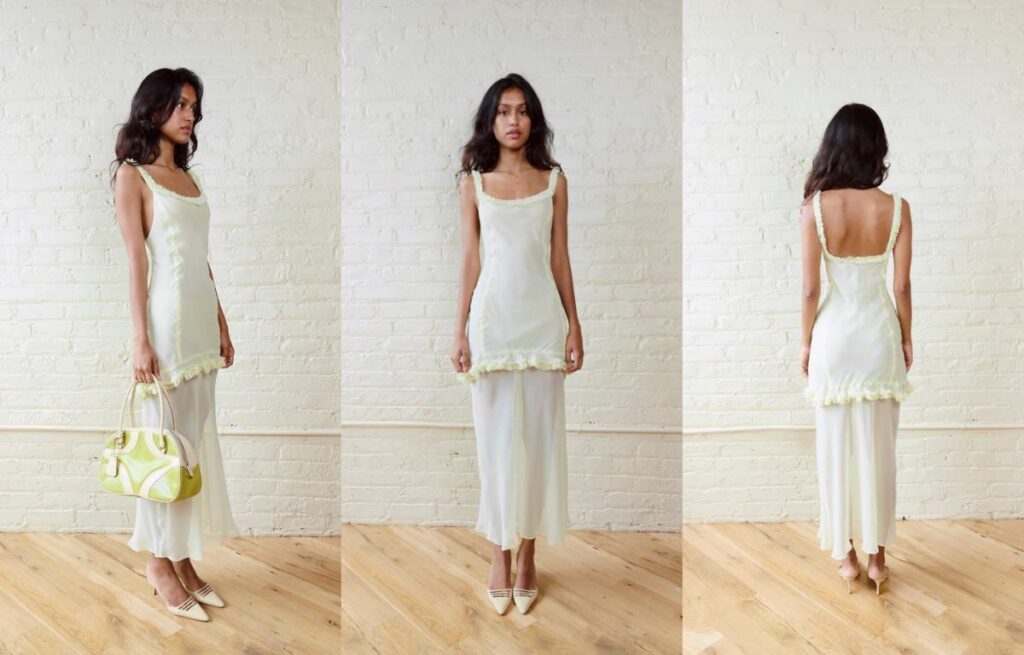
Many buyers like chiffon dresses, but many still choose styles only by appearance. That often leads to weak repeat orders, fit issues, and poor fabric-performance matching.
I see chiffon dresses as a wide category that includes romantic, occasion, and everyday styles. Among them, the chiffon pleated dress stands out because it combines light movement, feminine texture, and broad market appeal across casual, party, and semi-formal collections.
When I review chiffon dresses, I do not only look at the silhouette. I also study transparency, layering, drape, and how the dress moves during real wear.
What Are the Main Types of Chiffon Dresses?
Not all chiffon dresses serve the same customer need. I usually group them by shape, occasion, and visual effect.
The main types of chiffon dresses include pleated dresses, maxi dresses, A-line dresses, wrap dresses, tiered dresses, off-shoulder dresses, ruffle dresses, halter dresses, smock dresses, and slip-layered styles. Each one creates a different balance of softness, movement, and styling value.
Common chiffon dress types
- Chiffon pleated dress – textured and fluid
- Chiffon maxi dress – long and elegant
- Chiffon A-line dress – flattering and easy to wear
- Chiffon wrap dress – adjustable and feminine
- Chiffon tiered dress – more volume and shape
- Chiffon off-shoulder dress – soft romantic look
- Chiffon ruffle dress – decorative and light
- Chiffon halter dress – clean upper body line
- Chiffon smock dress – relaxed and casual
- Chiffon layered slip dress – soft and modern
Why these types matter
| Type | Main value | Risk point |
|---|---|---|
| Pleated | Movement and texture | Pleat consistency |
| Maxi | Elegant shape | Too much transparency |
| A-line | Easy fit | Can look plain |
| Wrap | Waist definition | Front opening control |
| Tiered | Volume and trend appeal | Bulk from too many layers |
The key difference is how each style uses chiffon’s lightness. Some styles focus on flow. Some focus on romance. Some need stronger lining support.
Why Is the Chiffon Pleated Dress So Popular?
This style looks simple at first, but it actually solves many design and selling needs at the same time.
The chiffon pleated dress is popular because pleats add movement, texture, and visual depth without making the dress feel heavy. It looks feminine, works across age groups, and adapts well to midi, maxi, occasion, and daywear silhouettes.
Why I rate this style highly
1. It gives chiffon more visual structure
Plain chiffon can sometimes look too soft or too empty. Pleating adds order to the surface. That makes the dress look more complete.
2. It improves movement
Chiffon already moves well. Pleats make that movement more noticeable. This is why the dress often performs well in photos and videos.
3. It works across many price levels
A chiffon pleated dress can look commercial in a simple daywear version. It can also look elevated in a lined midi or occasion style with better finishing.
My deeper analysis of commercial value
| Feature | Why it helps |
|---|---|
| Pleated texture | Makes the fabric look richer |
| Light drape | Keeps the style feminine |
| Easy visual impact | Helps online presentation |
| Versatile length options | Fits more markets |
| Waist definition options | Supports different body shapes |
What makes this style strong is not only beauty. It is the mix of elegance and flexibility. A buyer can turn the same idea into casual, resort, bridesmaid, or boutique product lines with small changes.
What Technical Points Matter Most in a Chiffon Pleated Dress?
A chiffon pleated dress can look beautiful in a photo, but the technical work decides whether it really feels premium.
The most important technical points in a chiffon pleated dress are pleat stability, lining quality, fabric transparency, seam control, and balanced volume. If these details are weak, the dress quickly loses shape, comfort, and value perception.
Core technical details I always check
Pleat stability
Pleats must stay clean after packing, hanging, and light wear. If they open too fast, the dress loses its identity.
Lining balance
Chiffon usually needs lining. A poor lining can create cling, static, or uneven weight. A good lining supports movement without fighting the outer layer.
Transparency control
Some transparency looks elegant. Too much transparency creates risk. I always check the body, skirt, and bust areas separately.
Volume control
A pleated dress needs movement, but too much fullness can make it look heavy or wide. This is especially important in plus-size grading or maxi lengths.
Technical review table
| Detail | Good result | Common problem |
|---|---|---|
| Pleats | Sharp and even | Uneven or flattening |
| Lining | Smooth support | Static or pulling |
| Hem | Clean fall | Twisting or stiffness |
| Waist seam | Natural position | Bulky join |
| Opacity | Balanced coverage | Too sheer in light |
The biggest issue I see is mismatch. A soft chiffon with weak pleat setting can lose shape. A very stiff lining can also kill the flow. So I always study the outer fabric and inner support together, not separately.
Which Chiffon Pleated Dress Styles Sell Best?
Not every pleated chiffon dress performs the same way. I usually match the style to the customer mood and retail channel.
In my experience, midi chiffon pleated dresses, belted waist styles, long-sleeve versions, and soft occasion maxi styles sell best because they balance elegance, wearability, and easy styling.
Strong selling directions
- Midi pleated dress – best all-around choice
- Belted pleated dress – more shape and broader appeal
- Long-sleeve pleated dress – polished and season-friendly
- Maxi pleated dress – stronger occasion value
- Pleated wrap-style dress – better waist flexibility
Why these versions work
| Style direction | Selling strength |
|---|---|
| Midi length | Safer for more age groups |
| Belted waist | Better body-shape definition |
| Long sleeve | More coverage and polish |
| Maxi occasion style | Higher perceived value |
| Wrap influence | More size flexibility |
I usually avoid over-designing this category. Chiffon pleated dresses already have texture and movement. Too many extra trims can make them look busy and reduce the clean elegance that customers want.
How Do I Choose the Right Chiffon Pleated Dress for My Collection?
A good chiffon pleated dress should match the market, not just the trend mood.
I choose chiffon pleated dresses by checking length, lining, pleat scale, and customer use occasion first. When these points match the target market, the style becomes much easier to sell and repeat.
My simple selection method
- Choose midi lengths for the widest commercial use
- Choose fine pleats for a softer and more premium look
- Choose belted shapes when waist definition matters
- Choose lined versions when quality perception is important
- Choose maxi styles for resort or occasion collections
I do not treat chiffon pleated dresses as only romantic fashion pieces. I see them as strategic products that can bring elegance, movement, and broad styling value into a collection.
Chiffon Ruffle Dress

Many buyers like chiffon dresses, but many still choose the wrong ruffle version. That often leads to weak shape, cheap volume, and poor repeat sales.
I see the chiffon ruffle dress as a soft, lightweight dress that uses ruffle details to create movement, texture, and a more romantic look. It stays popular because it feels feminine, photo-friendly, and easy to adapt for casual, party, and seasonal collections.
When I review this style, I do not only look at the ruffles. I study fabric transparency, layer balance, and how the volume moves on the body.
What Are the Main Types of Chiffon Ruffle Dresses?
Not all chiffon ruffle dresses serve the same purpose. I usually sort them by silhouette, ruffle placement, and length.
The most common chiffon ruffle dress types include tiered ruffle dresses, wrap ruffle dresses, off-shoulder ruffle dresses, high-low ruffle dresses, mini ruffle dresses, maxi ruffle dresses, and sleeve ruffle dresses. Each type creates a different mood and selling angle.
Common chiffon ruffle dress types
- Tiered ruffle dress – layered volume and soft movement
- Wrap ruffle dress – waist definition with a softer edge
- Off-shoulder ruffle dress – more romantic and dressy
- High-low ruffle dress – stronger motion in the hem
- Mini ruffle dress – younger and more playful
- Maxi ruffle dress – more elegant and fluid
- Sleeve ruffle dress – lighter decoration around the arm area
Why these types matter
| Type | Main value | Risk point |
|---|---|---|
| Tiered | Strong texture | Can look bulky |
| Wrap | Flattering waist | Front may shift |
| Off-shoulder | Feminine appeal | Fit stability matters |
| High-low | Dynamic hemline | Harder grading |
| Maxi | Elegant flow | Needs better lining |
The style difference is not only visual. It also changes cost, fit tolerance, and the level of volume the customer can accept.
Why Does Chiffon Work So Well for Ruffle Dresses?
The fabric decides whether the ruffles look soft or messy. That is why I always judge the material before I judge the dress.
Chiffon works well for ruffle dresses because it is light, airy, and fluid. It lets ruffles move naturally instead of looking stiff. This makes the dress feel more romantic, more refined, and more suitable for spring, summer, and occasion wear.
What chiffon does well in this style
1. It gives ruffles natural movement
A ruffle dress needs flow. Chiffon helps each layer fall with less heaviness, so the dress looks softer in motion.
2. It reduces visual weight
Ruffles add volume fast. Chiffon keeps that volume lighter, which helps the dress stay feminine instead of overloaded.
3. It supports layered design
Many chiffon ruffle dresses use more than one layer. Chiffon handles this well because the fabric is thin and does not build bulk too quickly.
Fabric analysis I usually make
| Fabric feature | Effect on ruffle dress |
|---|---|
| Light weight | Better flutter and movement |
| Slight transparency | Needs smart lining use |
| Soft drape | More elegant silhouette |
| Dry handfeel | Sharper ruffle edge |
| Too much stiffness | Cheap and rigid look |
The key problem is balance. If the chiffon is too limp, the ruffles lose shape. If it is too stiff, the dress looks hard and less premium.
Which Chiffon Ruffle Dress Styles Sell Best in Different Markets?
This style can sell in many channels, but not all versions perform the same way. I always match the design to the customer mood.
In my experience, wrap chiffon ruffle dresses, tiered midi styles, mini ruffle dresses, and maxi occasion versions often sell best. The right choice depends on whether the market wants easy daily wear, vacation styles, or dressier event pieces.
Best-selling directions by market
| Market type | Stronger style choice | Reason |
|---|---|---|
| Boutique retail | Wrap and midi ruffle dresses | Easy to wear and flattering |
| Fast fashion | Mini and off-shoulder styles | Strong photo appeal |
| Vacation market | Tiered and maxi styles | Better movement and mood |
| Occasionwear | Maxi and high-low ruffle dresses | More dramatic effect |
My deeper buying logic
I do not only ask which ruffle dress is pretty. I ask which one is easiest for the customer to wear.
A wrap chiffon ruffle dress often sells well because it gives shape without looking too formal. It feels safer for more body types. That makes it more commercial.
A tiered chiffon ruffle dress can look rich and soft, but it can also become visually heavy if the tiers start too high or if the spacing is too tight. In that case, the dress loses elegance and starts to look crowded.
A mini chiffon ruffle dress usually works well for younger markets because it feels playful and energetic. Still, the hem balance matters a lot. Too many ruffles in a short length can make the style look cheap instead of fresh.
A maxi chiffon ruffle dress often performs better in event or holiday collections because the fabric has enough space to move. The longer line helps the ruffles look more intentional.
What I check before selecting the style
- Is the ruffle placement helping the silhouette?
- Does the lining stop at the right level?
- Is the volume balanced from shoulder to hem?
- Does the dress still look clean while walking?
- Does the ruffle design fit the target age group?
These questions help me avoid styles that look good on a hanger but fail in real wear.
What Technical Details Make a Chiffon Ruffle Dress Look More Premium?
A chiffon ruffle dress may look simple, but the technical work behind it is not simple. I pay close attention to the small construction points.
The most important premium details in a chiffon ruffle dress are ruffle proportion, edge finishing, lining quality, seam control, transparency balance, and volume placement. These details decide whether the dress looks polished, wearable, and worth a higher price.
Core technical points
Ruffle proportion
Ruffles must match the scale of the dress. Small ruffles on a long dress can look weak. Oversized ruffles on a mini dress can look overwhelming.
Edge finishing
The edge of the ruffle changes the whole feel. A narrow rolled hem often looks cleaner and lighter. A poor edge finish makes the dress look cheap fast.
Lining strategy
Chiffon usually needs lining, but the lining must not kill the softness. If the lining is too heavy, the outer chiffon loses movement.
Seam control
Chiffon can shift during sewing. That means seam puckering, twisting, and uneven gathering are common risks.
Premium check table
| Detail | Good result | Common problem |
|---|---|---|
| Ruffle scale | Balanced shape | Too flat or too bulky |
| Edge finish | Clean soft wave | Rough or heavy edge |
| Lining | Coverage with movement | Stiff inner layer |
| Gathering | Even fullness | Uneven volume |
| Transparency | Soft and tasteful | Too sheer or patchy |
The biggest mistake I see is overdesign. Many dresses add ruffles to the neckline, sleeve, waist, and hem all at once. That usually weakens the final result. A stronger dress often uses ruffles in one or two places with clear purpose.
How Should I Choose the Right Chiffon Ruffle Dress for My Collection?
A good chiffon ruffle dress has to match both trend and wearability. I always balance beauty with function.
I choose a chiffon ruffle dress by checking silhouette, ruffle placement, lining quality, and end use first. When these points match the target customer, the style becomes easier to sell, easier to photograph, and easier to repeat.
My simple selection method
- Choose wrap or midi ruffle styles for broader commercial appeal
- Choose mini ruffle dresses for younger trend-driven collections
- Choose maxi or high-low styles for occasion and vacation lines
- Choose soft chiffon with clean lining for a more premium look
- Choose controlled ruffle placement instead of excessive decoration
I never choose this style only because it looks romantic. I choose it when the fabric, movement, and body balance all work together.
Chiffon Flutter Sleeve Dress

Many chiffon dresses look similar at first, but many buyers still choose the wrong style. That often causes weak sell-through, poor fit feedback, and low repeat orders.
I see the chiffon flutter sleeve dress as a soft, feminine dress style that combines light chiffon fabric with short flowing sleeves. It works well because it feels airy, looks romantic, and fits casual, occasion, and vacation collections with less styling effort.
When I review this style, I do not only look at the sleeve. I look at the full balance between fabric drape, sleeve movement, body shape, and lining support.
What Are the Main Types of Chiffon Flutter Sleeve Dresses?
Not every chiffon flutter sleeve dress serves the same market. I usually divide this style by length, waist shape, and overall silhouette.
The main types of chiffon flutter sleeve dresses include mini, midi, maxi, A-line, empire waist, wrap, tiered, smocked, pleated, and floral print versions. Each type creates a different mood, from casual and sweet to polished and occasion-ready.
Common types I see most often
- Mini flutter sleeve dress – younger and lighter look
- Midi flutter sleeve dress – balanced and versatile
- Maxi flutter sleeve dress – more elegant and flowing
- A-line flutter sleeve dress – flattering and easy to wear
- Empire waist flutter sleeve dress – soft and romantic
- Wrap flutter sleeve dress – more waist definition
- Tiered flutter sleeve dress – extra movement and volume
- Smocked flutter sleeve dress – comfort with flexible fit
- Pleated chiffon flutter sleeve dress – more texture
- Floral chiffon flutter sleeve dress – stronger feminine appeal
Why these types matter
| Type | Main value | Risk point |
|---|---|---|
| Mini | Trendy and youthful | Less broad size appeal |
| Midi | Most commercial | Can look plain |
| Maxi | Elegant movement | Needs better lining |
| Wrap | Better waist shape | Front coverage matters |
| Tiered | Romantic volume | Too much bulk can feel heavy |
The real difference is not only length. It is how the chiffon moves and how the sleeve supports the full silhouette.
Why Does Chiffon Work So Well for Flutter Sleeve Dresses?
This style depends heavily on fabric behavior. If the fabric is wrong, the sleeve effect becomes weak and the whole dress loses value.
Chiffon works well for flutter sleeve dresses because it is light, soft, and fluid. It creates natural movement in the sleeve and body, which gives the dress a feminine and airy look that many customers want for spring, summer, and occasion wear.
What chiffon adds to this style
1. It creates soft sleeve movement
Flutter sleeves need lightness. Chiffon allows the sleeve to move naturally instead of looking stiff or flat.
2. It supports a romantic image
This fabric gives the dress a softer mood. That is why it appears often in bridesmaid, resort, and feminine daywear collections.
3. It works well in layered design
Chiffon can be used with lining, outer layers, ruffles, and tiers. This helps create more depth without making the dress too heavy.
My fabric analysis for this style
| Fabric feature | Effect on dress |
|---|---|
| Light weight | Better sleeve flow |
| Semi-sheer look | Softer visual effect |
| Soft drape | More elegant silhouette |
| Rough handfeel | Lower comfort |
| Too much transparency | More lining pressure |
A chiffon flutter sleeve dress succeeds when the fabric and pattern work together. If the chiffon is too thin, the dress may look weak. If it is too stiff, the flutter sleeve loses its soft identity.
What Technical Details Make a Chiffon Flutter Sleeve Dress Look Better?
Many people focus on the surface beauty of this dress. I pay more attention to the technical details because they decide whether the product feels refined or cheap.
The most important technical details in a chiffon flutter sleeve dress are sleeve length, sleeve spread, neckline balance, lining quality, seam neatness, waist placement, and fabric transparency control. These details affect both comfort and visual quality.
Core technical details I always check
Sleeve proportion
The flutter sleeve must match the body shape. If it is too short, it looks weak. If it is too wide, it can overwhelm the dress.
Lining support
Most chiffon dresses need lining. Without it, the dress may cling, show too much, or lose structure.
Waist placement
A chiffon dress often looks best when the waistline is carefully placed. A slightly wrong waist point can make the whole silhouette feel awkward.
Neckline and shoulder balance
The sleeve starts near the shoulder, so neckline shape matters a lot. A poor neckline can make the sleeve look disconnected.
Premium check table
| Detail | Good result | Common problem |
|---|---|---|
| Flutter sleeve | Soft and balanced | Flat or oversized |
| Lining | Smooth and secure | Sheer or clingy |
| Waistline | Natural proportion | Too high or too low |
| Seams | Clean and light | Puckering |
| Hem | Flowing finish | Uneven shape |
The biggest issue I often see is poor control of transparency. Chiffon looks beautiful because it is light, but that same feature creates risk. If lining color, length, or attachment is not handled well, the dress quickly looks lower quality.
Which Chiffon Flutter Sleeve Dress Styles Sell Best?
This style can serve many categories, but not every version performs equally well. I always match it to the market and use occasion.
In my experience, midi A-line, wrap, empire waist, and floral chiffon flutter sleeve dresses usually sell best because they balance comfort, femininity, and commercial wearability. Maxi versions also work well for occasion and vacation collections.
Best-selling directions
| Market type | Stronger choice | Reason |
|---|---|---|
| Boutique retail | Midi wrap, floral | Easy and feminine |
| Occasionwear | Maxi, pleated | Better movement |
| Casual springwear | A-line, smocked | Comfortable fit |
| Vacation market | Tiered, maxi | Soft and airy image |
My deeper view on why they sell
I think this style sells well because it solves two needs at the same time. It gives a soft fashion image, and it also feels easy to wear. That makes it stronger than highly structured dresses in many spring and summer collections.
A midi wrap chiffon flutter sleeve dress often performs best because it gives shape without feeling too formal. A floral version also works well because chiffon naturally supports prints. The print and the sleeve movement strengthen each other.
A maxi version can look very strong for events, but it needs better pattern and lining control. If the skirt volume is too large, the dress becomes heavy. If the sleeve is too soft compared with the body, the top and skirt can feel disconnected.
What I study before I choose this style
- Does the sleeve move well during wear?
- Is the lining long enough and smooth enough?
- Does the chiffon match the target price level?
- Is the silhouette flattering across sizes?
- Does the print help the style or make it look too busy?
These questions help me judge whether the dress is only pretty in photos or truly good for production and repeat sales.
How Do I Choose the Right Chiffon Flutter Sleeve Dress for My Collection?
A good dress choice is not just about trend. It must match the customer, season, and selling channel.
I choose a chiffon flutter sleeve dress by checking silhouette, transparency, sleeve proportion, lining quality, and end use. When these factors match the market, this style becomes a strong and repeatable product.
My simple selection method
- Choose midi A-line or wrap styles for wider commercial appeal
- Choose maxi or pleated styles for occasion collections
- Choose floral or tiered styles for spring and vacation lines
- Choose soft lining and matte chiffon for better quality feel
- Choose balanced sleeve volume to avoid an overly dramatic look
I never choose this dress only because it looks feminine. I choose it when the fabric movement, sleeve scale, and body proportion all work together.
Chiffon Puff Sleeve Dress
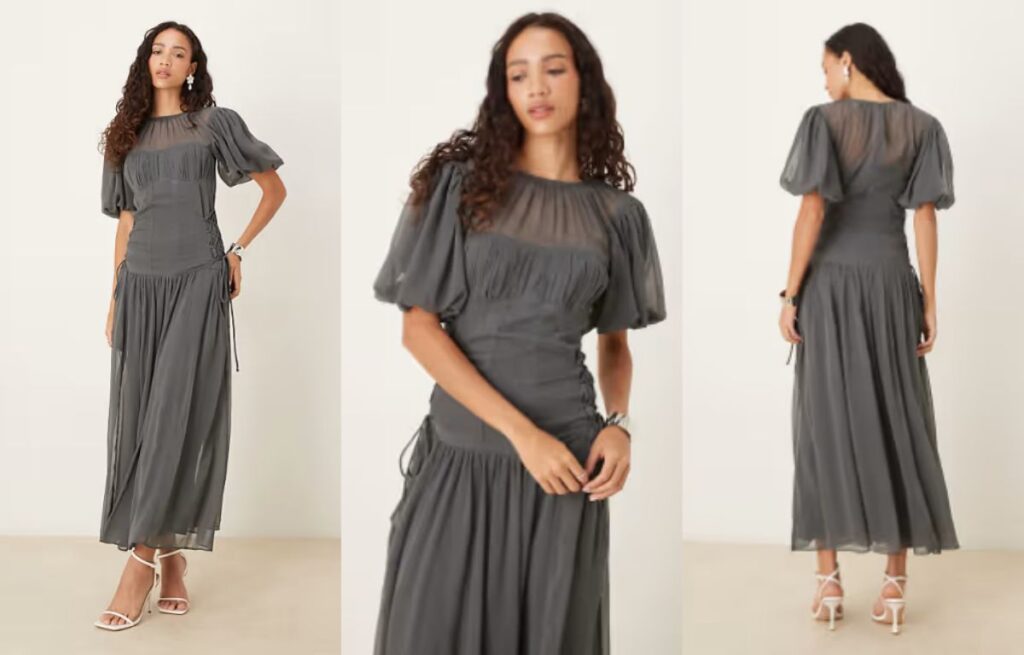
Many buyers like chiffon dresses, but many still choose styles that look good in photos and weak in real wear. That often hurts repeat sales.
I see the chiffon puff sleeve dress as a soft, feminine style that blends light fabric movement with sleeve volume. It stays popular because it feels romantic, works across seasons, and fits both casual and occasion collections.
When I review this style, I do not only look at the silhouette. I also study sleeve balance, fabric transparency, and how the dress moves on the body.
What Are the Main Types of Chiffon Puff Sleeve Dresses?
Not all chiffon puff sleeve dresses serve the same market. I usually group them by length, fit, and neckline.
The main types of chiffon puff sleeve dresses include mini, midi, maxi, smocked, tiered, wrap, square-neck, V-neck, and off-shoulder styles. Each version creates a different mood, from soft daily wear to dressier occasion use.
Common style directions
- Mini puff sleeve dress – youthful and trend-led
- Midi puff sleeve dress – balanced and wearable
- Maxi puff sleeve dress – soft and elegant
- Smocked chiffon dress – flexible and easy fit
- Tiered chiffon dress – more movement and volume
- Wrap chiffon dress – better waist definition
- Square-neck chiffon dress – romantic and structured
- V-neck chiffon dress – more elongating effect
- Off-shoulder puff sleeve dress – stronger fashion feel
Why these types matter
| Type | Main value | Risk point |
|---|---|---|
| Mini | Strong visual appeal | Too sheer or too short |
| Midi | Broad market fit | Can look plain |
| Maxi | Elegant movement | Needs better lining |
| Smocked | Easy sizing | Can look too casual |
| Wrap | More flattering waist | Front coverage risk |
The real difference is not only the dress length. It is the balance between sleeve volume, body shape, and fabric flow.
Why Does Chiffon Work So Well for Puff Sleeve Dresses?
The fabric is the reason this style works. Without the right fabric behavior, the puff sleeve effect loses its charm.
Chiffon works well for puff sleeve dresses because it is light, airy, and fluid. It creates soft volume in the sleeves without looking heavy, and it helps the dress feel feminine, delicate, and easy to wear.
Why chiffon suits this style
1. It builds soft volume
Puff sleeves need lift, but they should not look stiff. Chiffon gives shape in a lighter way, so the sleeve feels airy instead of bulky.
2. It improves movement
This fabric moves easily when the wearer walks. That movement gives the dress more emotional value and makes it feel more special.
3. It supports layering
Because chiffon is often sheer, it works well with lining, gathers, and layered construction. This adds depth without too much weight.
Fabric analysis I usually make
| Fabric feature | Effect on puff sleeve dress |
|---|---|
| Lightweight handfeel | Better sleeve softness |
| Semi-sheer surface | More delicate appearance |
| Good drape | Better skirt flow |
| Too much stiffness | Sleeves look forced |
| Too much transparency | Fit and coverage issues |
Chiffon is attractive, but it is not easy. If the fabric is too thin, the dress may feel cheap. If it is too stiff, the sleeves lose their soft romantic effect.
Which Chiffon Puff Sleeve Dress Styles Sell Best?
This style can work in many collections, but some versions are much easier to sell.
In my experience, midi chiffon puff sleeve dresses, smocked waist styles, square-neck versions, and tiered silhouettes usually sell best because they balance comfort, trend appeal, and fit flexibility better than more extreme versions.
Better-selling directions
| Style direction | Why it sells |
|---|---|
| Midi length | Easy for many ages and occasions |
| Smocked waist | More size flexibility |
| Square neck | Strong romantic look |
| Tiered skirt | Adds movement and detail |
| Wrap shape | More flattering fit |
My deeper buying logic
I do not judge this style only by trend. I check whether the soft image can survive real wear.
For example, a puff sleeve chiffon mini dress may look strong in campaign photos. But if the sleeve volume is too large, the customer may feel overwhelmed when she wears it. The design becomes photo-driven, not body-friendly.
A midi chiffon puff sleeve dress is usually safer. It gives enough romance, but it still feels practical. That is why it often works across boutiques, occasionwear, and spring-summer collections.
A smocked version also performs well because it reduces fit pressure. This matters in online selling, where easy fit often means fewer returns.
What I check before selecting this style
- Does the sleeve volume match the body shape?
- Does the lining give enough coverage?
- Does the neckline stay balanced when worn?
- Does the chiffon drape softly or look flat?
- Does the dress still feel light after gathering and layering?
These points decide whether the dress feels premium or costume-like.
What Technical Details Make a Chiffon Puff Sleeve Dress Look Better?
A chiffon dress often looks simple, but it depends heavily on technical control. Small mistakes show up fast in this fabric.
The most important technical details are sleeve gathering, lining quality, seam cleanliness, neckline stability, cuff construction, and skirt balance. These details affect comfort, transparency control, and the overall premium feel of the dress.
Core technical points
Sleeve gathering
The puff sleeve must have controlled fullness. Too little gathering makes it weak. Too much gathering makes it look oversized and hard to wear.
Lining quality
A good lining improves comfort and solves most transparency problems. It also helps the chiffon outer layer fall more neatly.
Neckline stability
Square necks and off-shoulder shapes need support. Without that, the dress can shift during wear.
Cuff and hem finishing
Elastic cuffs, clean hems, and even gathering all affect how refined the dress looks.
Premium check table
| Detail | Good result | Common problem |
|---|---|---|
| Sleeve gather | Soft rounded volume | Puffy but messy |
| Lining | Good coverage | Too sheer |
| Neckline | Stays in shape | Slips or twists |
| Cuff finish | Clean and light | Tight or uneven |
| Hem balance | Smooth movement | Twisting or drag |
The biggest problem I see is imbalance. Some dresses focus too much on the sleeve and forget the body proportion. A strong chiffon puff sleeve dress needs harmony between the top volume and the skirt shape.
How Should I Choose the Right Chiffon Puff Sleeve Dress for My Collection?
This style only works well when the shape, fabric, and customer all match.
I choose a chiffon puff sleeve dress by checking silhouette, sleeve scale, lining plan, and wearing occasion first. When these details match the target market, the style becomes much easier to sell and repeat.
My simple selection method
- Choose midi or smocked styles for broader market appeal
- Choose square-neck or wrap versions for a more romantic look
- Choose tiered or maxi styles for occasion or vacation use
- Choose soft sleeve volume for easier daily wear
- Choose better lining when I want a more premium result
I never choose this dress only because it looks pretty on a hanger. I choose it by how well the chiffon, sleeve, and body shape work together.
Chiffon Off-the-Shoulder Dress
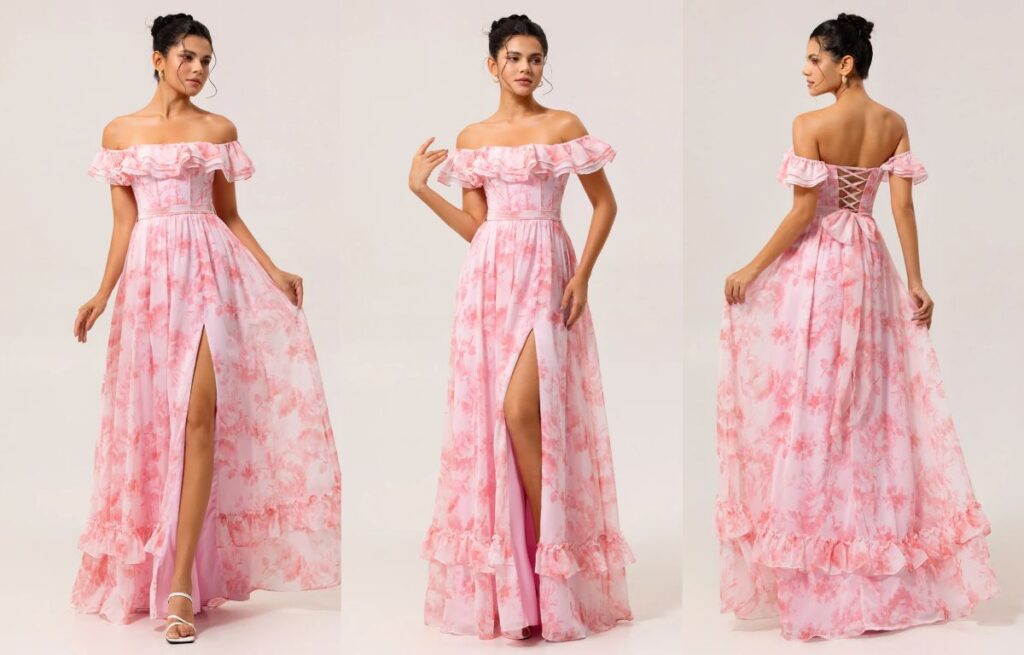
Many chiffon dresses look beautiful at first glance, but many styles fail in real wear. Poor support, weak drape, or bad fit can quickly ruin the effect.
I see the chiffon off-the-shoulder dress as one of the most expressive chiffon dress types because it combines softness, light movement, and clear feminine styling. It stands out by showing the shoulder line while still keeping the dress light, romantic, and highly versatile.
When I compare chiffon dresses, I do not only look at the silhouette. I also study neckline stability, sleeve design, and how the chiffon layer moves with the body.
What Are the Main Types of Chiffon Off-the-Shoulder Dresses?
Not all off-the-shoulder chiffon dresses serve the same purpose. I usually divide them by length, volume, and occasion.
The main types of chiffon off-the-shoulder dresses include mini, midi, maxi, tiered, ruffle-trim, smocked, fitted-waist, and flowy A-line styles. Each one creates a different balance between softness, support, and styling impact.
Common types
- Mini off-the-shoulder chiffon dress – younger and more playful
- Midi off-the-shoulder chiffon dress – balanced and wearable
- Maxi off-the-shoulder chiffon dress – romantic and occasion-led
- Tiered chiffon dress – more movement and volume
- Ruffle off-the-shoulder dress – stronger visual softness
- Smocked neckline dress – better comfort and stretch
- Fitted-waist style – clearer body shape
- A-line flowy style – easier fit and broader appeal
Quick comparison
| Type | Main value | Risk point |
|---|---|---|
| Mini | Trendy and light | Less wearing security |
| Midi | Easy to style | Needs balanced proportion |
| Maxi | Elegant movement | Can feel heavy if over-layered |
| Tiered | Strong visual texture | Too much bulk |
| Smocked | Better comfort | Can look casual |
The difference is not just length. It is how much support, volume, and occasion value the dress can deliver.
Why Does Chiffon Work So Well for Off-the-Shoulder Dresses?
The neckline already draws attention, so the fabric must support that effect instead of fighting it. This is why chiffon matters so much here.
Chiffon works well for off-the-shoulder dresses because it feels light, moves softly, and creates a romantic surface. It helps the neckline look less heavy while giving the whole dress a floating and feminine impression.
Why I think chiffon fits this style
1. It softens the exposed shoulder line
An off-the-shoulder dress can look too sharp in a stiff fabric. Chiffon makes the silhouette feel lighter and more natural.
2. It improves movement
This matters a lot in maxi and midi versions. The dress should react well when walking, turning, or sitting.
3. It adds layered value
Chiffon often performs best when I use it with lining, ruffles, or soft gathers. These details create more depth without making the dress look too heavy.
Fabric behavior I always check
| Fabric feature | Effect on the dress |
|---|---|
| Light drape | More graceful movement |
| Too sheer | Needs better lining |
| Soft surface | Better romantic feel |
| Too dry or stiff | Weak off-shoulder effect |
A chiffon off-the-shoulder dress works best when softness and support stay in balance. If the fabric floats well but the neckline cannot stay in place, the design fails.
What Technical Details Make a Chiffon Off-the-Shoulder Dress Look Better?
This style looks simple in photos, but it is not simple in development. I always pay attention to neckline engineering first.
The most important technical details are neckline stability, elastic strength, sleeve attachment, lining quality, and volume control. These points decide whether the dress feels secure, elegant, and wearable instead of loose, sheer, or unstable.
The technical points I study most
Neckline hold
This is the first thing I test. The dress must stay off the shoulder without slipping too much during movement.
Elastic quality
Weak elastic ruins the style fast. Strong elastic helps support the neckline, but too much tension can hurt comfort.
Sleeve and ruffle weight
Large sleeves or layered ruffles may look attractive, but they pull on the neckline. That changes fit and wear stability.
Lining balance
Chiffon usually needs lining. The lining should support opacity without making the outer layer lose its airy effect.
Technical review table
| Detail | Good result | Common problem |
|---|---|---|
| Neckline elastic | Secure but comfortable | Slips or feels tight |
| Sleeve weight | Soft support | Pulls dress downward |
| Lining | Clean coverage | Heavy or clingy feel |
| Ruffle volume | Romantic texture | Bulky upper body |
The real challenge is balance. If I add too much volume at the neckline, the dress becomes decorative but less wearable. If I reduce too much detail, it loses identity.
Which Chiffon Off-the-Shoulder Dress Styles Sell Best?
A beautiful dress is not always a strong seller. I look at wearability, occasion use, and body tolerance before I judge commercial value.
In my experience, midi and maxi chiffon off-the-shoulder dresses with a defined waist or soft A-line shape usually sell best because they combine elegance, comfort, and broader body fit. Mini and heavily ruffled styles are more trend-led and less stable in volume sales.
Best-selling directions
- Midi A-line styles – safest commercial choice
- Maxi fitted-waist styles – strong for events and vacations
- Smocked bodice styles – easier sizing and comfort
- Soft ruffle versions – good visual appeal without too much weight
Why these styles perform better
| Best-selling type | Why it works |
|---|---|
| Midi chiffon off-shoulder | Easy day-to-night wear |
| Maxi waist-defined style | Higher occasion value |
| Smocked version | Better fit flexibility |
| Light ruffle style | Feminine but still wearable |
I have found that the strongest styles are usually the ones that look special but still feel secure in motion. That is the key difference between a pretty sample and a repeatable product.
How Do I Choose the Right Chiffon Off-the-Shoulder Dress for My Collection?
I do not choose this dress by trend image alone. I choose it by how well beauty, comfort, and construction work together.
I choose the right chiffon off-the-shoulder dress by checking silhouette, neckline support, lining, and target occasion. When these points match the customer’s needs, the style becomes much easier to sell and far more reliable in repeat business.
My simple selection method
- Choose midi or maxi lengths for broader appeal
- Choose defined-waist or A-line shapes for easier fit
- Choose soft ruffle details instead of heavy upper volume
- Choose good lining and stable elastic before decorative extras
- Choose lighter, cleaner designs for better repeat sales
I always treat this style as both a visual product and a technical product. That is what helps me avoid weak developments.
Chiffon Halter Dress
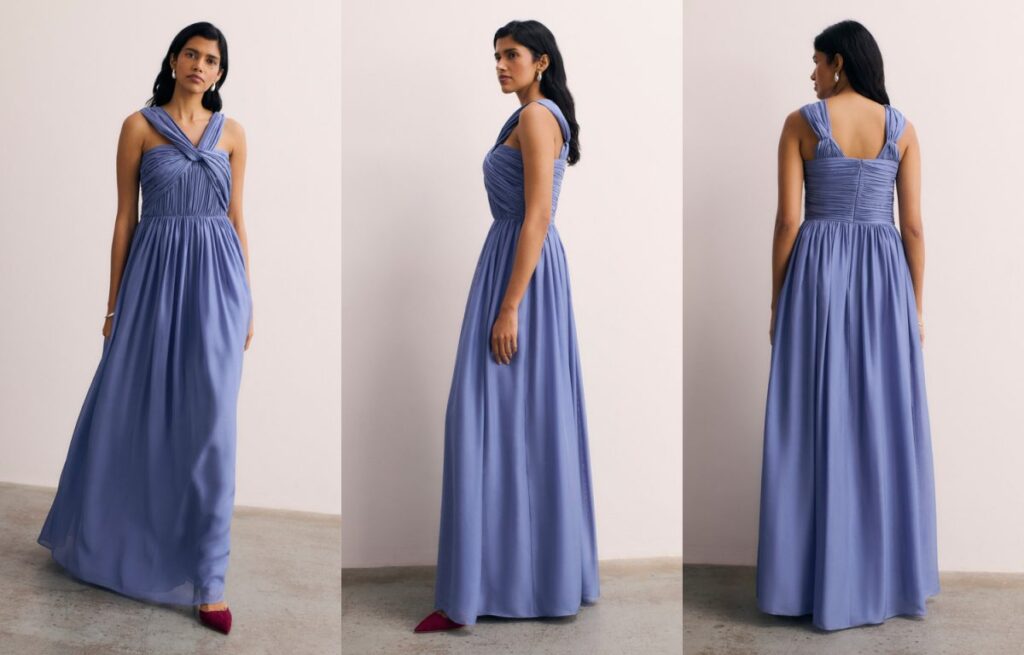
Many buyers like chiffon dresses, but many still choose styles that look pretty in photos and weak in real wear. That often leads to low repeat orders.
I see the chiffon halter dress as one of the most versatile chiffon styles because it combines light movement, an elegant neckline, and strong occasion appeal. It works well for summer collections, partywear, vacation dressing, and feminine fashion lines.
When I review this style, I do not only look at the neckline. I also study drape, lining, shoulder balance, and how the chiffon behaves in motion.
What Are the Main Types of Chiffon Halter Dresses?
Not all chiffon halter dresses serve the same purpose. I usually separate them by length, silhouette, and styling use.
The most common types of chiffon halter dresses include mini, midi, maxi, A-line, tiered, pleated, high-low, wrap-style, empire waist, and ruffle versions. Each one creates a different level of elegance, movement, and market appeal.
Common chiffon halter dress types
- Mini halter dress – younger and more playful
- Midi halter dress – balanced and versatile
- Maxi halter dress – more elegant and formal
- A-line halter dress – flattering and easy to wear
- Tiered halter dress – soft volume and movement
- Pleated halter dress – refined texture
- High-low halter dress – stronger visual flow
- Wrap halter dress – softer fit and better flexibility
- Empire waist halter dress – romantic and light
- Ruffle halter dress – decorative and feminine
Why these types matter
| Type | Main value | Risk point |
|---|---|---|
| Mini | Youthful and trend-led | Less broad wearability |
| Midi | Easy to style | Needs good proportion |
| Maxi | Elegant and flowing | Fabric use is higher |
| Pleated | Premium visual texture | Pleat control matters |
| Tiered | Soft volume | Can look bulky |
The real difference is not just length. It is how the chiffon supports the silhouette and how the neckline works with the body balance.
Why Does Chiffon Work So Well for Halter Dresses?
The halter shape needs the right fabric. If the material is too heavy, the dress loses softness. If it is too weak, the shape loses control.
Chiffon works well for halter dresses because it is light, airy, and fluid. It creates soft movement, supports feminine styling, and gives the neckline a graceful look. That is why it is widely used in resort, occasion, and spring-summer collections.
What chiffon does especially well
1. It creates movement
A halter dress often depends on motion. Chiffon moves easily while walking, which makes the style feel lighter and more elegant.
2. It softens the neckline
The halter neckline can look sharp in some fabrics. In chiffon, it feels more fluid and romantic.
3. It fits occasion dressing
Chiffon already carries a dressy image. That helps a halter style feel more elevated without needing too many extra details.
Fabric analysis I usually make
| Fabric feature | Effect on halter dress |
|---|---|
| Light weight | Better flow and softness |
| Sheerness | Needs lining control |
| Soft drape | More feminine result |
| Slight texture | Better visual depth |
| Low recovery | Risk of distortion |
The chiffon halter dress only works well when the outer layer and lining work together. If the chiffon is nice but the lining is heavy or cheap, the whole dress loses balance.
Which Chiffon Halter Dress Styles Sell Best in Different Markets?
A beautiful style does not sell the same way in every market. I always connect the design to the customer and channel.
In my experience, chiffon halter maxi dresses, pleated midi dresses, and A-line styles usually sell best because they combine elegance with easier wearability. Mini and ruffle-heavy versions often work better in younger or trend-focused markets.
Best-selling directions by market type
| Market type | Stronger style choice | Reason |
|---|---|---|
| Occasion retail | Maxi, pleated, A-line | Elegant and event-ready |
| Boutique fashion | High-low, wrap, ruffle | More visual character |
| Resort market | Tiered, maxi, empire waist | Light and relaxed feeling |
| Young trend market | Mini, ruffle, fitted midi | More photo-friendly |
My deeper buying logic
I do not only ask which style looks pretty. I ask which style keeps its beauty after production, shipping, steaming, and real wear.
A chiffon halter maxi dress often sells well because it gives strong visual movement. It looks elegant in product photos and still feels wearable in real life. That makes it safer than more extreme fashion versions.
A pleated chiffon halter dress often looks more premium. But it also requires better manufacturing control. If the pleats are weak or uneven, the dress quickly loses value.
A mini chiffon halter dress can perform well in a young collection. Still, it has a narrower use case. It depends more on body confidence, styling mood, and climate. So I treat it as more trend-sensitive.
What I check before selecting the style
- Does the neckline sit flat and comfortably?
- Does the armhole shape feel secure?
- Does the lining protect against transparency?
- Does the hem move well without twisting?
- Does the chiffon still look clean after packing and steaming?
These details decide whether the dress feels premium or fragile.
What Technical Details Make a Chiffon Halter Dress Look More Premium?
A chiffon halter dress may look simple, but the technical details decide whether it feels elegant or cheap. I focus on these points early.
The most important premium details in a chiffon halter dress are neckline finish, lining quality, chiffon layering, seam cleanliness, pleat stability, hem flow, and closure comfort. These details shape both the visual quality and the wearing experience.
Core technical points
Neckline finish
The halter neckline is the key visual area. If the edge looks weak or puckered, the whole dress loses polish.
Lining quality
Chiffon usually needs lining. A good lining improves comfort, opacity, and movement. A poor lining makes the dress cling or feel heavy.
Armhole and back balance
Halter dresses expose the shoulder area more clearly. That means bad proportion becomes obvious very fast.
Hem and layer control
A chiffon hem should fall softly. If the layer balance is wrong, the dress can look uneven or messy.
Premium check table
| Detail | Good result | Common problem |
|---|---|---|
| Neckline | Smooth and stable | Rippling edge |
| Lining | Light and clean | Heavy or clingy feel |
| Chiffon layer | Soft movement | Collapse or disorder |
| Closure | Secure and neat | Neck discomfort |
| Hem | Fluid and balanced | Uneven drop |
The biggest mistake I see is treating chiffon as an easy fabric. It looks soft, but it exposes poor finishing very clearly. Small technical mistakes become easy to notice.
How Should I Choose the Right Chiffon Halter Dress for My Collection?
A good chiffon halter dress has to do more than look feminine. It needs to match the brand, season, and customer lifestyle.
I choose a chiffon halter dress by checking four points first: silhouette, transparency control, occasion use, and movement. When these four elements align, the style becomes easier to sell and easier to repeat in future collections.
My simple selection method
- Choose maxi or midi styles for broader market appeal
- Choose A-line or wrap versions for easier fit
- Choose pleated or layered designs for a more premium image
- Choose lighter ruffle details for younger markets
- Choose better lining quality when comfort and opacity matter
I never choose this style by neckline alone. I choose it by how well the chiffon, lining, and silhouette work together.
Chiffon One-Shoulder Dress
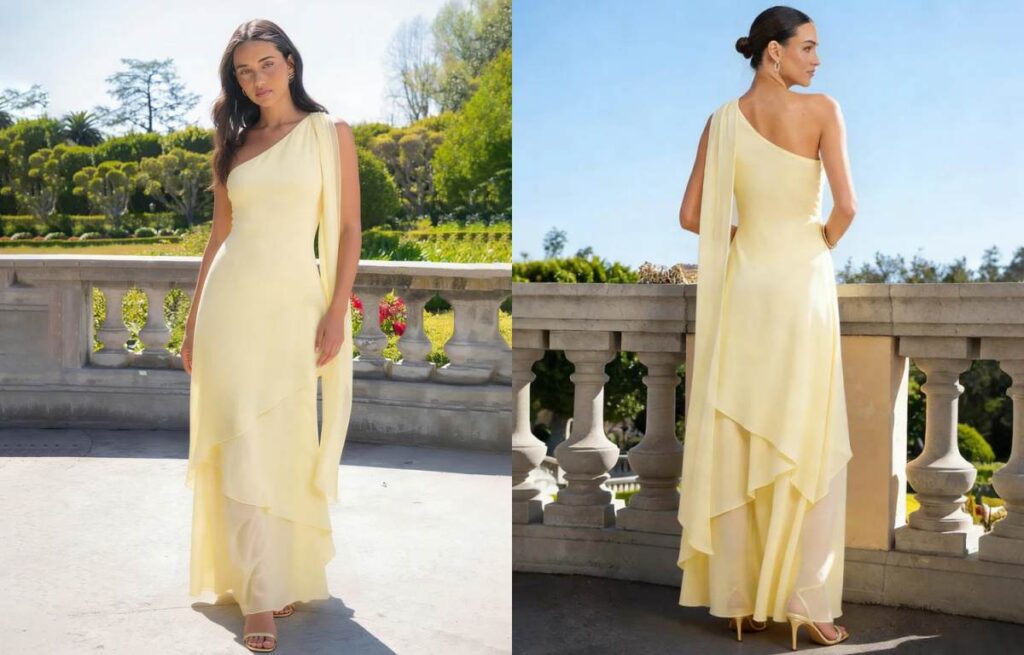
Many chiffon dresses look similar at first, so buyers often choose based on photos only. That can cause weak sell-through, poor fit feedback, and repeated style overlap.
I see the chiffon one-shoulder dress as one of the most visually distinctive chiffon dress styles because it combines soft drape, asymmetrical balance, and occasion appeal. It stands out best in party, bridesmaid, vacation, and evening collections where movement and femininity matter.
When I compare chiffon dresses, I do not just look at the silhouette name. I focus on neckline effect, drape behavior, and how the dress moves when worn.
What Are the Main Types of Chiffon Dresses I Should Know First?
Not all chiffon dresses serve the same purpose. I usually sort them by silhouette, length, and occasion.
The most common chiffon dress types include A-line, maxi, midi, wrap, tiered, shift, slip, empire waist, off-shoulder, halter, and one-shoulder styles. Each type creates a different mood, fit effect, and level of styling versatility.
Common chiffon dress styles
- A-line chiffon dress – flattering and easy to wear
- Maxi chiffon dress – flowing and elegant
- Midi chiffon dress – polished and versatile
- Wrap chiffon dress – adjustable and feminine
- Tiered chiffon dress – soft volume and movement
- Slip chiffon dress – light and minimal
- Empire waist chiffon dress – soft waist emphasis
- Off-shoulder chiffon dress – romantic styling
- Halter chiffon dress – cleaner shoulder line
- One-shoulder chiffon dress – asymmetrical and striking
Why this category matters
| Style | Main value | Risk point |
|---|---|---|
| A-line | Broad body-shape appeal | Can look basic |
| Maxi | Strong movement | Needs good lining |
| Wrap | Flexible fit | Neckline control matters |
| Halter | Clean upper body line | Neck comfort |
| One-shoulder | Strong visual focus | Balance and support |
I usually treat chiffon dresses as image-driven products. That means the shape must look good in photos, but it also has to work in real movement.
Why Is the Chiffon One-Shoulder Dress So Popular?
This style is popular because it feels soft and dramatic at the same time. It gives more shape than a basic chiffon dress without becoming too heavy.
The chiffon one-shoulder dress is popular because it creates an elegant asymmetrical neckline, shows the shoulder line in a refined way, and uses chiffon’s light drape to add movement. It feels dressy, feminine, and visually fresh without needing heavy decoration.
What makes this style commercially strong
1. The neckline creates instant identity
A one-shoulder shape is easy to notice. It breaks the symmetry of the body line, so the dress looks more styled even when the rest of the design is simple.
2. Chiffon adds movement
This style works best when the chiffon layer moves naturally. A soft outer layer can make the dress feel lighter and more premium.
3. It fits many occasion markets
I often see this shape used in:
- bridesmaid collections
- partywear
- holiday dresses
- resort looks
- evening capsules
Why the one-shoulder shape works so well in chiffon
| Design element | Effect |
|---|---|
| Asymmetrical neckline | Creates visual interest |
| Soft chiffon drape | Adds elegance |
| Light layering | Improves movement |
| Shoulder exposure | Makes the style feel modern |
The style is strong because it mixes structure and softness. The neckline gives direction, and the chiffon keeps the dress fluid.
What Technical Details Matter Most in a Chiffon One-Shoulder Dress?
This style looks simple in photos, but it is not easy to execute well. I always study construction details before I approve it.
The most important technical points in a chiffon one-shoulder dress are neckline stability, lining quality, drape control, strap balance, bust support, and side seam accuracy. These details decide whether the dress feels elegant or unstable.
Key construction points I pay attention to
Neckline stability
The top edge must stay in place. If the neckline shifts too much, the customer loses confidence in the fit right away.
Strap and shoulder balance
A one-shoulder design depends on balance. If one side pulls too hard, the whole dress can twist during wear.
Lining choice
Chiffon usually needs lining for comfort and coverage. Without a good lining, the dress may feel thin, clingy, or too transparent.
Layer control
Some designs use gathered chiffon, overlays, or soft pleats. These details look elegant only when the layers fall evenly.
Technical risk table
| Detail | Good result | Common problem |
|---|---|---|
| Neckline | Stable and secure | Slipping or shifting |
| Chiffon layer | Soft and even | Uneven drape |
| Lining | Smooth comfort | Sheerness or cling |
| Side seam | Clean balance | Twisting silhouette |
| Bust area | Flattering support | Collapse or gaping |
The biggest technical issue is that chiffon is light but not very forgiving. If the base pattern is weak, the fabric will expose that weakness fast.
How Do I Judge Whether a Chiffon One-Shoulder Dress Looks Premium or Cheap?
This is where many buyers make mistakes. They focus on the style idea, but the real result depends on fabric and finishing.
I judge a chiffon one-shoulder dress by fabric handfeel, drape smoothness, lining quality, seam cleanliness, and neckline finish. A premium version looks fluid, balanced, and secure, while a weak version often looks thin, twisted, or overly fragile.
My deeper evaluation method
Fabric handfeel matters first
Not all chiffon feels the same. Some chiffon is airy and soft. Some feels dry and flat. The softer version usually gives a more graceful result in one-shoulder styles.
The drape must look controlled
A good one-shoulder chiffon dress should flow, not collapse. Too much limpness can make the design feel weak. Too much stiffness removes the soft elegance that chiffon should bring.
The lining changes everything
A cheap lining can ruin a good outer shell. I look for a lining that supports movement without adding visible bulk.
The neckline finish tells the truth
This is often the fastest way to judge quality. If the neckline edge looks wavy, loose, or poorly turned, the garment usually feels less premium overall.
Premium vs weak result
| Quality signal | Better version | Weaker version |
|---|---|---|
| Fabric feel | Soft and fluid | Dry or harsh |
| Drape | Controlled movement | Flat or messy fall |
| Lining | Smooth and light | Sticky or thin |
| Neckline | Clean and stable | Wavy or unstable |
| Overall image | Elegant | Cheap-looking |
I always remind myself that chiffon does not hide mistakes. It often makes them easier to see.
How Should I Choose the Right Chiffon One-Shoulder Dress for My Collection?
A strong style only works when it matches the customer and the channel. I never choose it by trend alone.
I choose a chiffon one-shoulder dress by checking length, volume, occasion use, and fit security first. Maxi and midi versions often work best for occasionwear, while shorter or ruffled versions suit younger and more trend-led collections.
My quick selection logic
- Choose maxi one-shoulder styles for bridesmaid or evening use
- Choose midi versions for modern event dressing
- Choose ruffled or layered versions for fashion boutiques
- Choose cleaner minimalist versions for elegant brands
- Choose secure lining and neckline construction for better repeat sales
A good chiffon one-shoulder dress should look soft, feel secure, and move well. When those three points come together, the style becomes much easier to sell.
Chiffon Cowl Neck Dress
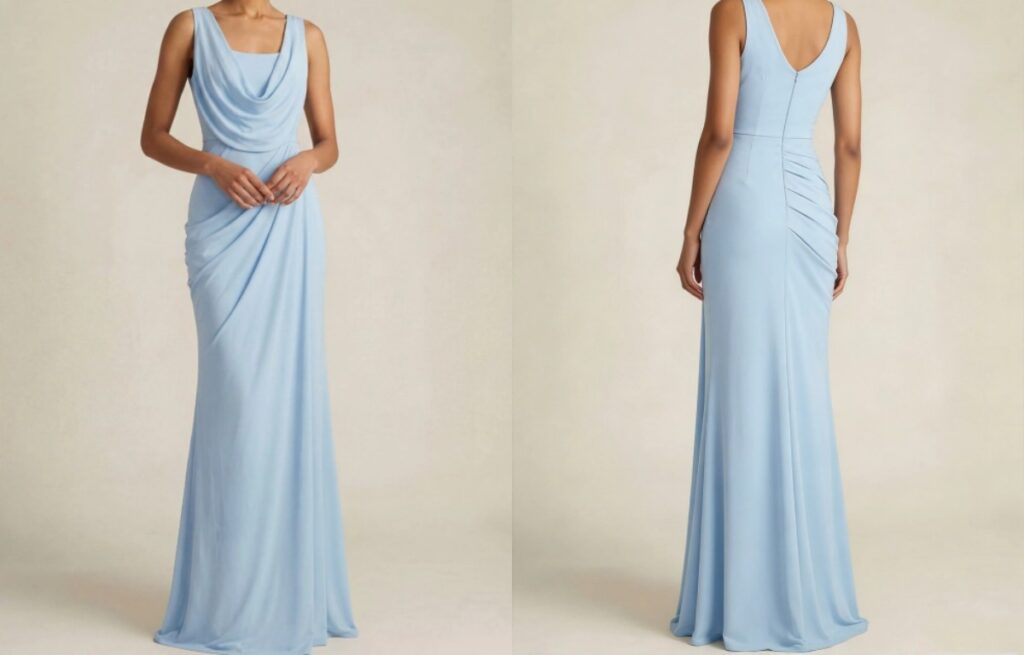
Many chiffon dresses look similar at first, so buyers often miss the details that actually drive sales. That can lead to weak style selection and poor market fit.
I see the chiffon cowl neck dress as one of the most elegant chiffon dress types because it combines soft drape, light movement, and a flattering neckline. It stays popular because it works for occasionwear, summer fashion, and feminine collections across many markets.
When I review this style, I never judge it by neckline alone. I look at drape, lining, strap balance, and how the cowl shape behaves during wear.
What Are the Main Types of Chiffon Cowl Neck Dresses?
Not all chiffon cowl neck dresses serve the same purpose. I usually divide them by length, silhouette, and occasion.
The main types of chiffon cowl neck dresses include slip styles, mini dresses, midi dresses, maxi dresses, bias-cut dresses, body-skimming styles, layered dresses, and occasion-focused designs. Each version creates a different balance of softness, movement, and dress-up value.
Common chiffon cowl neck dress types
- Slip cowl neck dress – light and minimal
- Mini cowl neck dress – youthful and trend-led
- Midi cowl neck dress – balanced and versatile
- Maxi cowl neck dress – elegant and event-ready
- Bias-cut cowl neck dress – smoother drape on the body
- Layered chiffon cowl dress – more volume and softness
- Strappy cowl neck dress – delicate and feminine
- Sleeved cowl neck dress – better for modest or seasonal use
Why these types matter
| Type | Main value | Risk point |
|---|---|---|
| Slip | Clean and modern | Needs strong drape |
| Mini | Strong fashion appeal | Less size tolerance |
| Midi | Broad commercial use | Can look plain |
| Maxi | Higher occasion value | More fabric control needed |
| Bias-cut | Better body flow | Harder production stability |
The style name alone does not tell enough. The real difference comes from how much fluidity, coverage, and structure the target customer wants.
Why Does Chiffon Work So Well for a Cowl Neck Dress?
The cowl neck depends on fabric behavior more than many buyers expect. That is why chiffon often becomes the natural choice.
Chiffon works well for a cowl neck dress because it is light, fluid, and soft enough to create natural folds. It helps the neckline fall gently instead of looking stiff, and it gives the whole dress a more romantic and graceful effect.
Why chiffon supports the cowl shape
1. It creates soft folds
A cowl neckline needs fabric that drops naturally. Chiffon helps the neckline form loose curves instead of sharp angles.
2. It adds movement
When the wearer walks, chiffon moves easily. That makes the dress feel lighter and more feminine.
3. It improves visual softness
This matters a lot in occasionwear and spring-summer dresses. A chiffon cowl neck dress usually looks softer than the same design in a heavier woven fabric.
Fabric behavior analysis
| Fabric feature | Effect on cowl neck dress |
|---|---|
| Light weight | Better neckline drape |
| Soft handfeel | More elegant fall |
| Sheer surface | Needs lining planning |
| Low structure | Less support at bust |
| High movement | Better occasion appeal |
Still, chiffon is not perfect by itself. If it is too thin, the cowl may collapse. If it is too slippery, the neckline can shift too much. So I always study not just softness, but also control.
What Technical Details Decide Whether a Chiffon Cowl Neck Dress Looks Premium?
This dress looks simple, but it is easy to get wrong. Small technical mistakes can quickly make it look cheap.
The most important premium details in a chiffon cowl neck dress are neckline depth, strap placement, lining quality, bust support, seam cleanliness, and hem balance. These factors decide whether the cowl looks elegant, stable, and wearable in real use.
Key technical details I study
Neckline depth
If the cowl is too shallow, the design loses identity. If it is too deep, the dress becomes harder to wear and fit.
Strap balance
Straps matter more than many people think. If they are too long, the cowl drops too low. If they are too short, the neckline loses its soft fold.
Lining structure
Chiffon usually needs lining. Without it, the dress may become too sheer, cling too much, or feel low quality.
Bust and upper-body control
This is one of the biggest hidden issues. A beautiful cowl front still fails if the bust area shifts while walking or sitting.
Premium check table
| Detail | Good result | Common problem |
|---|---|---|
| Cowl depth | Soft and balanced | Too flat or too exposed |
| Straps | Stable neckline | Slipping or pulling |
| Lining | Better comfort | Sheerness or cling |
| Side seams | Clean drape | Twisting shape |
| Hem | Smooth movement | Uneven fall |
Deeper production analysis
I often see people treat the cowl neck as just a design feature. I do not. I treat it as a fabric-engineering issue.
A good cowl neck needs the right relationship between:
- neckline width
- front drop depth
- shoulder point position
- fabric weight
- lining tension
If one of these is off, the neckline stops looking effortless. For example, if the outer chiffon drapes softly but the lining is too tight, the cowl will not fall correctly. If the neckline width is too wide, the straps may pull outward and reduce support. These problems are subtle in photos, but very obvious in wear.
This is why I always believe a premium chiffon cowl neck dress depends on control, not just softness.
Which Chiffon Cowl Neck Dress Styles Sell Best in Different Markets?
This style is flexible, but not every version fits every buyer. I always match it to the sales channel and end customer.
In my experience, midi and maxi chiffon cowl neck dresses sell best in occasion and bridesmaid markets, while mini and slip versions perform better in trend-led fashion retail. More covered or lined versions usually work better in conservative or wider-age markets.
Market-based style direction
| Market type | Better-selling style | Reason |
|---|---|---|
| Occasionwear | Maxi, bias-cut, lined midi | Elegant movement |
| Bridesmaid | Maxi, sleeved, soft drape | Group-friendly styling |
| Fast fashion | Mini, strappy slip | Strong visual appeal |
| Boutique retail | Midi, layered, soft bias | Better versatility |
My buying logic
I do not ask only whether the style is beautiful. I ask where it will actually sell.
A strappy chiffon cowl neck mini dress may look strong online, but it has narrower wear occasions. A lined midi version usually has broader appeal because it feels easier to wear, easier to style, and less risky for more customers.
That is why length and coverage matter so much in this category.
How Should I Choose the Right Chiffon Cowl Neck Dress for My Collection?
A strong chiffon dress should match both trend direction and real wear needs. I always balance visual beauty with technical stability.
I choose a chiffon cowl neck dress by checking drape quality, neckline control, lining, length, and target occasion first. When these points work together, the style becomes easier to sell, easier to wear, and stronger for repeat business.
My simple selection method
- Choose midi or maxi lengths for broader occasion appeal
- Choose bias-cut shapes for softer body flow
- Choose lined versions for better comfort and value
- Choose controlled cowl depth for easier wearability
- Choose clean matte chiffon for a more premium look
I never choose this style only because it looks romantic in photos. I choose it when the fabric and construction can support that romantic look in real wear.
Chiffon Floral Print Dress
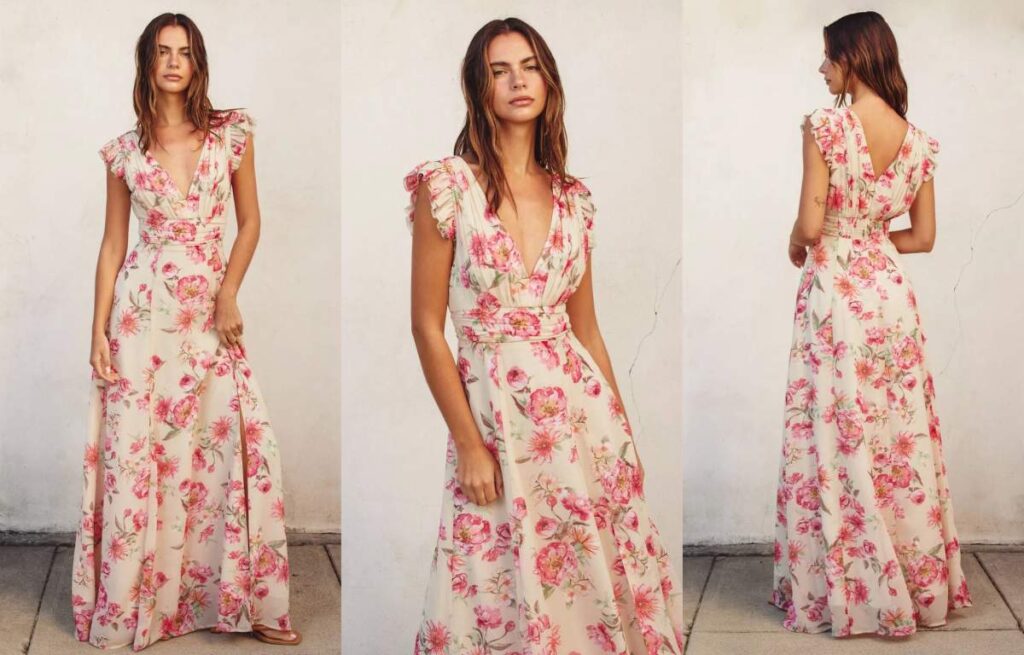
Many buyers see chiffon dresses as light and easy to sell. But if I choose the wrong style, the dress can look weak, too sheer, or too common.
I group chiffon dresses into everyday, romantic, occasion, and trend-driven styles. Among them, the chiffon floral print dress stands out because it combines softness, print value, and strong seasonal appeal, especially in spring and summer collections.
When I review chiffon dresses, I do not only look at shape. I also study print scale, lining, drape, and how the fabric moves on the body.
What Are the Most Common Types of Chiffon Dresses?
Not all chiffon dresses serve the same purpose. I usually sort them by silhouette, length, and styling mood.
The most common chiffon dress types include maxi dresses, midi dresses, mini dresses, A-line dresses, wrap dresses, tiered dresses, smock dresses, off-shoulder dresses, ruffle dresses, and floral print dresses. Each type fits a different customer need and selling season.
Common chiffon dress types
- Maxi chiffon dress – soft and elegant
- Midi chiffon dress – balanced and wearable
- Mini chiffon dress – younger and lighter
- A-line chiffon dress – flattering and commercial
- Wrap chiffon dress – feminine and flexible
- Tiered chiffon dress – more movement and volume
- Smock chiffon dress – easy and relaxed
- Off-shoulder chiffon dress – romantic styling
- Ruffle chiffon dress – decorative and soft
- Chiffon floral print dress – strong seasonal favorite
Why these types matter
| Type | Main value | Risk point |
|---|---|---|
| Maxi | Elegant movement | Too much volume |
| Midi | Easy daily wear | Can look plain |
| Mini | Youthful look | Needs lining control |
| Wrap | Good waist shape | Front coverage risk |
| Floral print | Fresh and commercial | Print choice decides quality |
I see chiffon floral print dresses as one of the safest style directions because they mix fabric mood and visual interest in a natural way.
Why Does the Chiffon Floral Print Dress Sell So Well?
Many chiffon dresses look pretty in photos. But floral print versions usually create stronger first attention and wider market appeal.
The chiffon floral print dress sells well because it combines light fabric, feminine styling, and visible pattern value. It feels fresh, romantic, and easy to wear, which makes it especially strong for spring, vacation, and casual occasion demand.
Why floral print works better on chiffon
1. The fabric supports a softer print story
Chiffon already feels light and flowing. Floral prints match that feeling well. This creates a complete look instead of a disconnected one.
2. The print adds more value fast
A simple chiffon silhouette can look basic in a solid color. Once I add the right floral print, the dress feels more styled and more sellable.
3. It fits many retail settings
I often see chiffon floral print dresses work across:
- spring collections
- boutique retail
- vacation wear
- garden party edits
- casual event dressing
Print analysis I pay attention to
| Print factor | Good result | Common problem |
|---|---|---|
| Small floral | Soft and wearable | Can look too busy |
| Large floral | Strong visual impact | Can overpower the shape |
| Color contrast | Better photo effect | Too harsh can look cheap |
| Print spacing | Clean and premium | Too dense feels crowded |
The real strength of this style is balance. If the floral print is too weak, the dress loses energy. If the print is too loud, the chiffon softness disappears.
What Technical Details Make a Chiffon Floral Print Dress Look Better?
This style looks easy, but it is not simple. Small technical mistakes can ruin the final result very fast.
The most important details in a chiffon floral print dress are print placement, lining quality, transparency control, seam finish, and volume balance. These points decide whether the dress feels premium, wearable, and commercially strong.
The key points I study
Print placement
I always check where the main flowers fall. A strong print near the bust, waist, or hip can change the whole visual balance.
Lining quality
Chiffon is usually sheer. Without the right lining, the dress can feel cheap or uncomfortable. With the right lining, the dress feels fuller and more secure.
Volume control
Too many ruffles, tiers, or gathers can make a floral chiffon dress look overloaded. I want softness, not visual noise.
Surface and seam cleanliness
Chiffon can expose poor sewing very easily. Uneven seams, puckering, or rough finishing reduce the quality feel at once.
Technical check table
| Detail | Good result | Risk if weak |
|---|---|---|
| Print placement | Balanced visual focus | Awkward body emphasis |
| Lining | Better comfort and opacity | Too sheer |
| Gather control | Soft movement | Too bulky |
| Seam finish | Clean appearance | Puckering shows fast |
| Sleeve volume | Romantic effect | Oversized shape imbalance |
I think this is where many buyers make mistakes. They focus too much on the floral pattern itself, but the real product quality comes from how the print, chiffon, and structure work together.
Which Chiffon Floral Print Dress Styles Are the Most Commercial?
Not every floral chiffon dress has the same selling power. I usually look for shapes that are both pretty and easy to wear.
The most commercial chiffon floral print dress styles are wrap dresses, tiered midi dresses, A-line dresses, smock dresses, and maxi dresses. These shapes give the print enough space while keeping the dress flattering and easy to style.
Best commercial style directions
- Wrap floral chiffon dress – clear waist and broad appeal
- Tiered midi floral dress – strong movement and trend value
- A-line floral chiffon dress – safe and feminine
- Smock floral chiffon dress – relaxed and easy fit
- Maxi floral chiffon dress – romantic and event-friendly
My practical style view
| Style | Why it sells | Main caution |
|---|---|---|
| Wrap | Flattering and versatile | Bust coverage |
| Tiered midi | Trend plus comfort | Too much bulk |
| A-line | Safe commercial choice | Needs good drape |
| Smock | Easy fit | Can lose shape |
| Maxi | Strong visual impact | Length and lining control |
For me, the best-selling floral chiffon dress is usually not the most dramatic one. It is the one that gives enough print interest, enough movement, and enough comfort at the same time.
How Do I Choose the Right Chiffon Floral Print Dress for My Collection?
A good style is not enough by itself. I still need to match it to the right customer and channel.
I choose a chiffon floral print dress by checking silhouette, print scale, lining, and wearing occasion first. When these four points match the target market, the dress becomes much easier to sell and repeat.
My simple selection method
- Choose midi or wrap shapes for broader commercial value
- Choose smaller florals for softer daily wear
- Choose larger florals for stronger photo impact
- Choose good lining when comfort and opacity matter
- Choose controlled ruffles or tiers to keep the dress clean
I never choose this style by print alone. I choose it by how well the print works with the chiffon and the body shape.
Chiffon Bridesmaid Dress

Many buyers like chiffon dresses for their soft look, but many still choose the wrong style direction. That often leads to weak assortment balance, poor fit feedback, and lower reorder confidence.
I see chiffon dresses as a broad category that includes casual, formal, and bridal-party styles. Among them, the chiffon bridesmaid dress stands out because it combines light movement, elegant drape, and flexible styling across different body shapes, wedding themes, and price levels.
When I review chiffon dresses, I do not only look at the photo. I pay more attention to drape, layering, opacity, and how the dress moves in real wear.
What Are the Most Popular Types of Chiffon Dresses?
Not all chiffon dresses solve the same need. I usually group them by occasion, silhouette, and styling purpose.
The most popular chiffon dress styles include A-line, maxi, wrap, empire waist, off-shoulder, halter, tiered, high-low, slip, and chiffon bridesmaid dresses. These styles work well because chiffon adds softness, movement, and a more romantic visual effect.
Common chiffon dress types
- A-line chiffon dress – balanced and flattering
- Maxi chiffon dress – flowing and formal
- Wrap chiffon dress – flexible fit
- Empire waist chiffon dress – soft and feminine
- Off-shoulder chiffon dress – romantic neckline
- Halter chiffon dress – clean upper body focus
- Tiered chiffon dress – added volume and texture
- High-low chiffon dress – movement with shape contrast
- Slip chiffon dress – lighter and modern
- Chiffon bridesmaid dress – elegant group styling
Why these styles stay popular
| Style | Main value | Risk point |
|---|---|---|
| A-line | Broad body-shape appeal | Can look basic |
| Maxi | Strong drape effect | Needs good lining |
| Wrap | Better size flexibility | Front coverage matters |
| Empire waist | Soft silhouette | Poor seam placement hurts fit |
| Bridesmaid | High occasion value | Color and size consistency matter |
The key is simple. Chiffon works best when the design lets the fabric move, not fight against it.
Why Is the Chiffon Bridesmaid Dress So Widely Used?
This style is popular for a reason. It solves several wedding needs at the same time.
I see the chiffon bridesmaid dress as one of the most practical formal dress choices because it looks elegant in photos, feels lighter than many heavy occasion fabrics, and adapts well to different silhouettes, wedding seasons, and bridal-party body types.
Why this category performs so well
1. It creates soft group harmony
A bridesmaid group needs visual unity, but each person may have a different body shape. Chiffon helps soften the lineup, so the group looks coordinated without feeling too stiff.
2. It supports many silhouettes
Chiffon works well in:
- A-line
- empire waist
- wrap
- one-shoulder
- halter
- flutter sleeve
- floor-length styles
This gives buyers more freedom when they want one color story with different neckline options.
3. It fits the wedding mood
Chiffon naturally feels light, romantic, and airy. That makes it suitable for garden weddings, beach weddings, spring events, and formal indoor ceremonies.
My deeper product analysis
| Factor | Why it matters in bridesmaid dresses |
|---|---|
| Drape | Affects elegance and movement |
| Lining | Controls opacity and comfort |
| Color consistency | Essential for bridal-party matching |
| Size grading | Important because one style serves many body types |
| Strap and neckline support | Affects wear confidence during long events |
The chiffon bridesmaid dress is not strong only because it looks pretty. It is strong because it balances beauty with group wear practicality. That is the real commercial value.
What Technical Details Matter Most in a Chiffon Bridesmaid Dress?
This category looks soft, but it needs careful construction. Small mistakes show up very fast in wear and in photos.
The most important technical details in a chiffon bridesmaid dress are lining quality, layer balance, seam cleanliness, neckline stability, color consistency, and skirt fullness. These details decide whether the dress looks elegant, supportive, and premium.
The details I study first
Lining quality
Chiffon alone is often too sheer. Good lining improves comfort, modesty, and confidence. Bad lining makes the dress cling, wrinkle, or look cheap.
Layer control
Too few layers make the dress too transparent. Too many layers remove the airy quality that makes chiffon attractive.
Color matching
Bridesmaid dresses often sell in sets or repeated orders. Even a slight shade difference can create problems in the final bridal-party presentation.
Neckline and strap security
Bridesmaids wear these dresses for long hours. The dress must stay stable while standing, walking, sitting, and dancing.
Common technical problems
| Detail area | Good result | Common problem |
|---|---|---|
| Lining | Smooth and opaque | Cling or transparency |
| Layers | Light but full | Heavy or flat look |
| Neckline | Secure fit | Gaping or slipping |
| Hem | Clean flow | Uneven movement |
| Color | Consistent tone | Shade variation across lots |
I always think of chiffon bridesmaid dresses as “soft-looking but technically sensitive.” The softness hides nothing. In fact, weak construction becomes easier to notice because the fabric moves so much.
Which Chiffon Bridesmaid Dress Styles Work Best for Different Wedding Needs?
One bridesmaid style does not fit every wedding. I always match silhouette to setting, season, and group needs.
In my experience, A-line, empire waist, wrap, halter, and floor-length chiffon bridesmaid dresses work best because they offer the strongest balance of elegance, comfort, size flexibility, and wedding-photo appeal.
Best choices by wedding use
| Wedding need | Better chiffon style | Reason |
|---|---|---|
| Outdoor wedding | A-line or wrap | Easy movement |
| Formal evening wedding | Floor-length halter or one-shoulder | More polished look |
| Mixed body types | Wrap or empire waist | Better fit tolerance |
| Younger bridal party | Flutter sleeve or soft A-line | Fresh and light feel |
| Warm-weather event | Sleeveless or halter | Better comfort |
My buying logic here
I do not choose only by fashion trend. I also ask:
- Will the dress suit different heights?
- Will the fabric photograph well in motion?
- Will the silhouette still flatter plus-size and straight-size wearers?
- Will the color stay elegant under indoor and outdoor light?
This is why A-line and wrap chiffon bridesmaid dresses usually stay strong. They reduce fit pressure without losing formality.
How Do I Choose the Right Chiffon Dress Style for My Collection?
A good chiffon dress range needs variety, but it also needs clear purpose.
I choose chiffon dress styles by checking four things first: occasion, silhouette, opacity, and body-shape flexibility. For bridal-party use, I focus even more on color repeatability, lining quality, and group styling consistency.
My simple selection method
- Choose A-line and wrap styles for broader commercial appeal
- Choose maxi and floor-length styles for stronger formal use
- Choose halter or one-shoulder styles for a sharper bridal look
- Choose well-lined chiffon for better quality perception
- Choose stable dye lots when repeat orders matter
I do not treat chiffon as just a pretty fabric. I treat it as a fabric that needs the right structure to show its real value.