...

Two-Piece Dress Manufacturer

Coordinated womenswear development for fashion labels requiring balanced fit, matched materials, controlled bulk production and retail-ready set packing.

  • MOQ starts from 200 pcs per style/color, subject to fabric, trim, color and construction requirements.
  • Medium-complexity two-piece first samples normally require 12-18 days; corset, mesh, lace or sequin structures normally require 15-25 days.
  • Every retail set is managed as two separate patterns, two measurement groups and one coordinated approval standard.
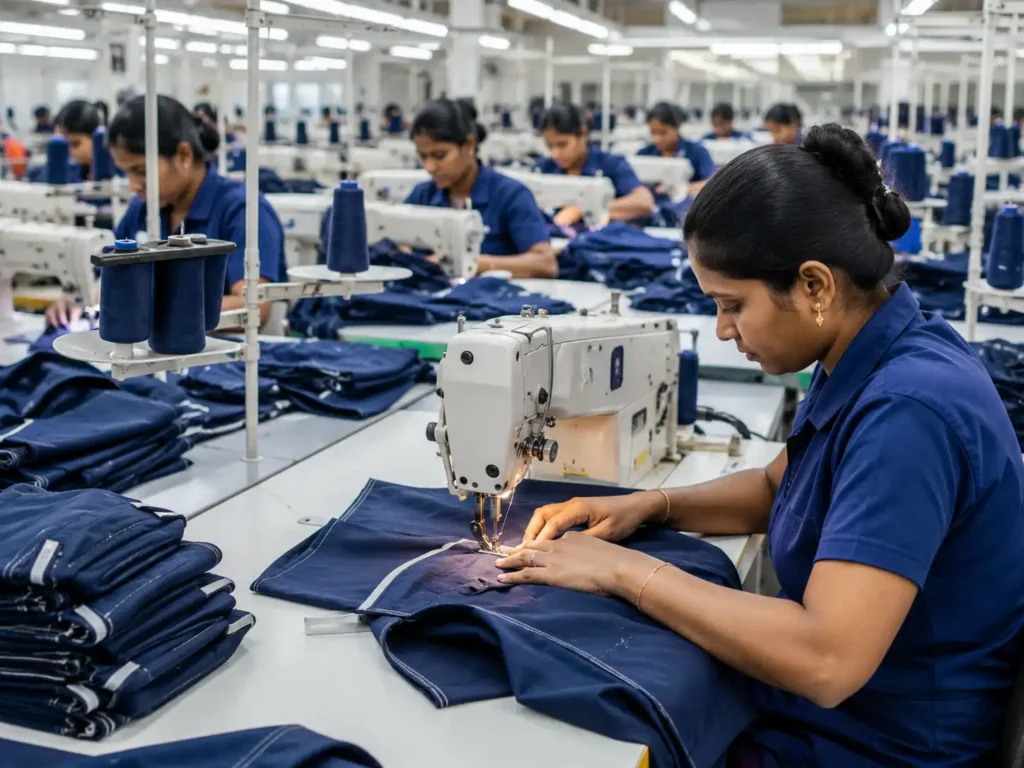
  • Production support includes 6 owned womenswear factories, 10+ long-term production partners and 100,000+ finished garment pieces of monthly capacity.

Manufacturing Resources Behind Every Coordinated Set

Two-piece programs require more than general sewing capacity. Pattern alignment, sample revisions, material matching, production tracking and final pairing must be managed across both garments from the same approved standard.

Since 2008

Jinfeng Apparel has focused on custom womenswear development and production since 2008. Long-term experience covers dresses, skirts, fashion tops, jumpsuits, occasionwear and matching sets, allowing each coordinated set to be reviewed as a complete look rather than two unrelated garments.

Six Owned Factories

Six owned women’s fashion factories provide product-specific production allocation. Woven skirts, stretch tops, occasion sets and complex fabric styles are assigned according to construction, fabric behavior, workmanship requirements and approved delivery plan.

Two Sample Rooms

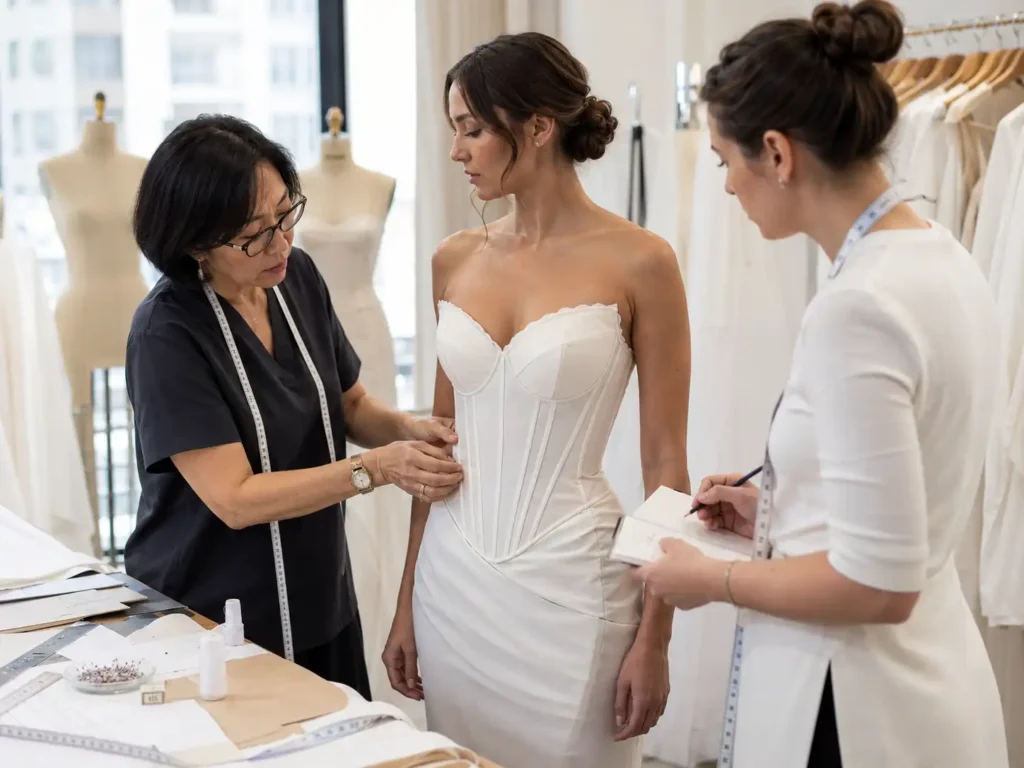
Two sample rooms support first samples, fit samples, revised samples, photo-ready samples, salesman samples, PP samples and golden samples. Two-piece development is checked on-body as a set, with separate comments recorded for the top and bottom.

Seven Pattern Makers

A team of 7+ senior pattern makers reviews bust, underbust, waist, hip, crop length, waistband position, skirt length, strap angle, neckline depth and grading balance. Pattern corrections are recorded before revised samples move forward.

Twenty Sample Machinists

More than 20 sample machinists handle trial construction, complex sewing tests, lining development, corset support, mesh joining, lace placement, satin handling and sample corrections before bulk methods are finalized.

Fifteen QC Inspectors

A 15+ person QC team supports incoming material inspection, cutting checks, sewing inspection, measurement control, final appearance, set pairing, label verification, packing review and project-specific AQL inspection.

Built for Established Fashion Programs

Jinfeng Apparel supports fashion labels, sourcing teams and product developers managing coordinated womenswear ranges with clear style direction, sample approval standards, volume planning and retail delivery requirements.

Suitable Project Profiles

Strong project fit includes premium ecommerce labels, occasionwear collections, partywear ranges, resortwear programs, boutique chains, retail-ready private-label projects and sourcing teams managing multiple styles. The strongest cooperation starts with a reference image, tech pack, original sample, sketch or line sheet, followed by a defined quantity plan and launch window.
  • Multi-style seasonal collections
  • Coordinated top-and-skirt programs
  • Private-label retail delivery
  • Repeat orders and color extensions
  • Multi-batch production and split shipment

Common Supplier Failures

Two-piece orders often fail even when each garment looks acceptable alone. Frequent problems include an incorrect crop-to-waist gap, mismatched shine, different dye lots, uneven grading, top and bottom quantities that do not reconcile, mixed sizes in one polybag and separate production teams following different approval references. Jinfeng Apparel builds one coordinated control standard covering both garments.
  • One approved set, not two isolated samples
  • Shared fabric and color approval
  • Linked pattern and grading review
  • Set-level SKU and packing checks
  • Combined production and inspection schedule
CTA Button: Check Project Fit CTA Button: Share Quantity Plan

Two-Piece Dress Collections We Manufacture

Each product group needs a different relationship between structure, material, movement and styling. Development starts with the intended occasion, target fit and retail position rather than selecting a generic top and bottom.

Crop Top Mini Set

A crop top and mini skirt set is built around a precise exposed-waist gap. Bust coverage, armhole depth, top hem stability, skirt rise and safe mini length must be reviewed together. Stretch woven, ponte, jersey, satin and structured crepe can all work, but recovery, lining and zipper placement change the fit result. Suitable for party, date-night, festival and social-first collections.

Corset Midi Set

Corset tops require cup placement, underbust shaping, boning direction, neckline security and controlled waist compression. The midi skirt must begin at the correct waist level so the corset does not visually shorten or lengthen the torso. Satin, crepe, lace and mesh combinations are common. PP approval should confirm support materials, lining, closures, skirt slit and full-set movement.

Cami Maxi Set

Cami and maxi combinations depend on strap length, neckline depth, bust coverage, skirt drape and hem balance. Satin, rayon, chiffon and soft crepe work well when the top and skirt share the same color and fluidity. Bias-cut skirts need special attention because stretch and hang can change after sewing. Packaging must protect long hems and smooth surfaces from creasing.

Blouse Skirt Set

A blouse-and-skirt set can serve office, occasion, resort or refined casual ranges. Sleeve balance, blouse volume, tuck-in allowance, waistband height and skirt silhouette determine whether the set looks deliberate. Printed woven fabrics require direction control across both pieces. Button spacing, cuff structure, collar shape and skirt closure must follow one material and color standard.

Party Two-Piece Set

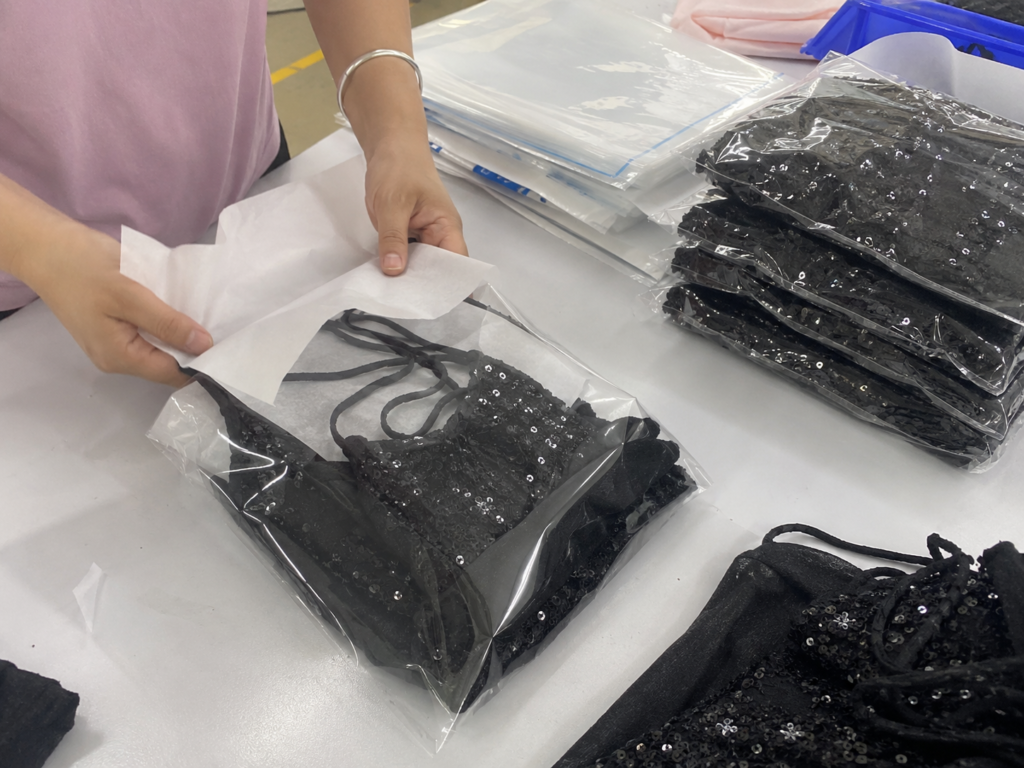
Party sets often use cut-outs, mesh, sequins, stretch satin, rhinestones, ruching or asymmetric shapes. Visual impact must be supported by stable construction. Lining coverage, skin contact, decoration security, zipper smoothness and movement comfort require sample validation. Set packing must prevent sequins or stones on one garment from scratching the other garment.

Resort Co-Ord Set

Resort sets favor breathable fabrics, expressive prints, relaxed movement and easy styling. Common combinations include tie-front tops with maxi skirts, halter tops with flowing bottoms and cropped shirts with shorts or skirts. Print scale, placement, shrinkage, opacity and wrinkle behavior must be reviewed before bulk. Color stories often extend across several styles within one seasonal drop.

Blazer Skirt Set

Blazer-and-skirt sets require sharper tailoring and controlled structure. Shoulder line, lapel roll, sleeve pitch, front balance, waistband shape and hem pressing affect perceived value. Suiting, crepe, tweed-inspired woven and bonded fabrics may be used. Interlining, shoulder support and skirt closure must be selected for the required finish rather than copied from a casual co-ord.

Jacket Dress Set

A jacket-and-dress combination creates coordinated occasion, workwear or transitional collections. The outer layer must fit over the dress without compressing the bust, distorting sleeves or covering important design features. Fabric shade, lining, hardware and hem proportions should align. Two garments can be packed together or managed as linked SKUs according to the retail plan.

More Styling Value From One Development Program

A coordinated range can create several selling combinations from a controlled group of patterns, fabrics and colors. Commercial value improves when each garment works independently while the complete set retains a clear signature.

Higher Outfit Value

A complete set offers a ready-made look without removing individual styling choice. One coordinated unit can carry stronger perceived value than a single garment, while clear construction and packaging make the offer easy to merchandise online or in stores.

Separate Wearability

A top that also works with denim, tailoring or another skirt gives the range a longer styling life. A skirt that pairs with existing wardrobe pieces supports repeat wear. Pattern development should therefore test both the complete outfit and each garment separately.

Collection Extension

One approved top block can be combined with mini, midi and maxi bottoms. One skirt block can be matched with cami, corset, halter or blouse variations. Shared blocks reduce unnecessary redevelopment while maintaining visual variety across a collection.

Color Story Control

A coordinated fabric and trim plan supports multiple colors without losing the collection identity. Core shades, seasonal accents and print options can be developed around the same silhouettes, provided dye-lot, lining and accessory availability are confirmed.

Repeat Order Flexibility

Sales performance may differ between top and bottom silhouettes. Retained pattern, BOM, color, trim, QC and packing records support later repeat orders, new colors and related style extensions, subject to renewed material availability and approval.

Stronger Visual Merchandising

Matching sets create clear campaign looks for photography, social content, product grouping and retail display. Photo-ready samples should therefore be planned early enough for fitting, styling and launch content before the bulk production window begins.

Custom Design Options Across Both Garments

A successful set needs independent design freedom and disciplined coordination. Every detail is reviewed for visual balance, wearability, manufacturability, cost impact and repeatability in bulk production.

Top Silhouette

Choose corset, cami, halter, bandeau, blouse, cropped jacket, one-shoulder or fitted knit directions. Bust support, closure, lining, sleeve, strap and hem construction are developed around fabric behavior and intended styling.

Bottom Silhouette

Develop mini, midi, maxi, pencil, A-line, pleated, ruched, slit or flowing skirt shapes, with selected shorts or trouser extensions for broader co-ord collections. Waistband and hip fit remain central.

Neckline and Straps

Square, sweetheart, V-neck, cowl, halter, strapless and asymmetrical necklines need different edge stability, coverage and support. Fixed or adjustable straps are checked for length, angle, hardware quality and left-right consistency.

Waistline Relationship

High, natural or low waist placement changes the exposed gap and body proportion. Top length and bottom rise should be fitted together across the size range rather than corrected independently after bulk cutting.

Surface Details

Ruching, pleating, cut-outs, lace placement, print placement, embroidery, sequins, rhinestones and decorative trims are evaluated for visual accuracy, sewing sequence, skin comfort, durability and packing protection.

Lining and Support

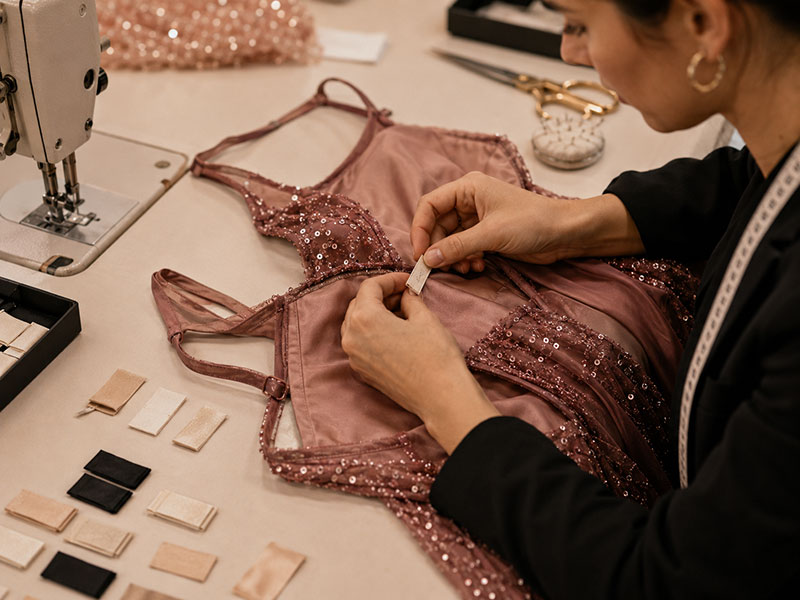
Lining may control opacity, shape, friction or support. Bra cups, boning, underwire, anti-slip tape and elastic can be integrated where the style requires structure, but comfort and end use must guide selection.

Closures and Adjustments

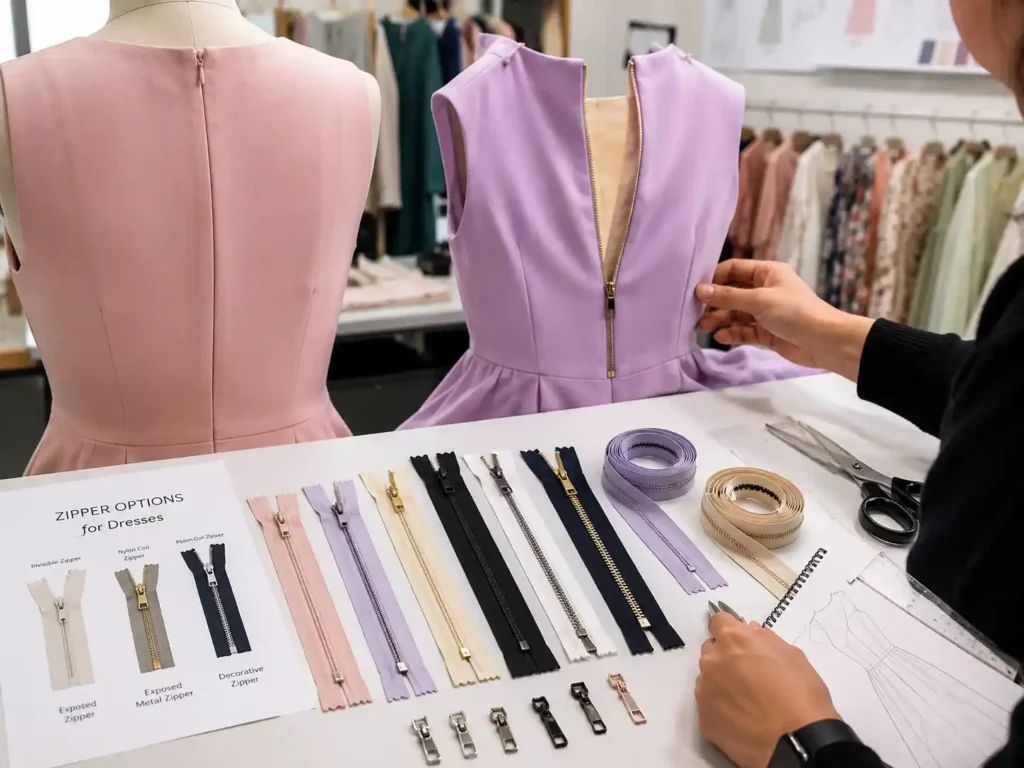
Invisible zippers, exposed zippers, hooks, buttons, ties, elastic and strap sliders affect dressing ease and fit tolerance. Matching color, smooth operation and secure attachment are confirmed during sample review.

Branding and Packing

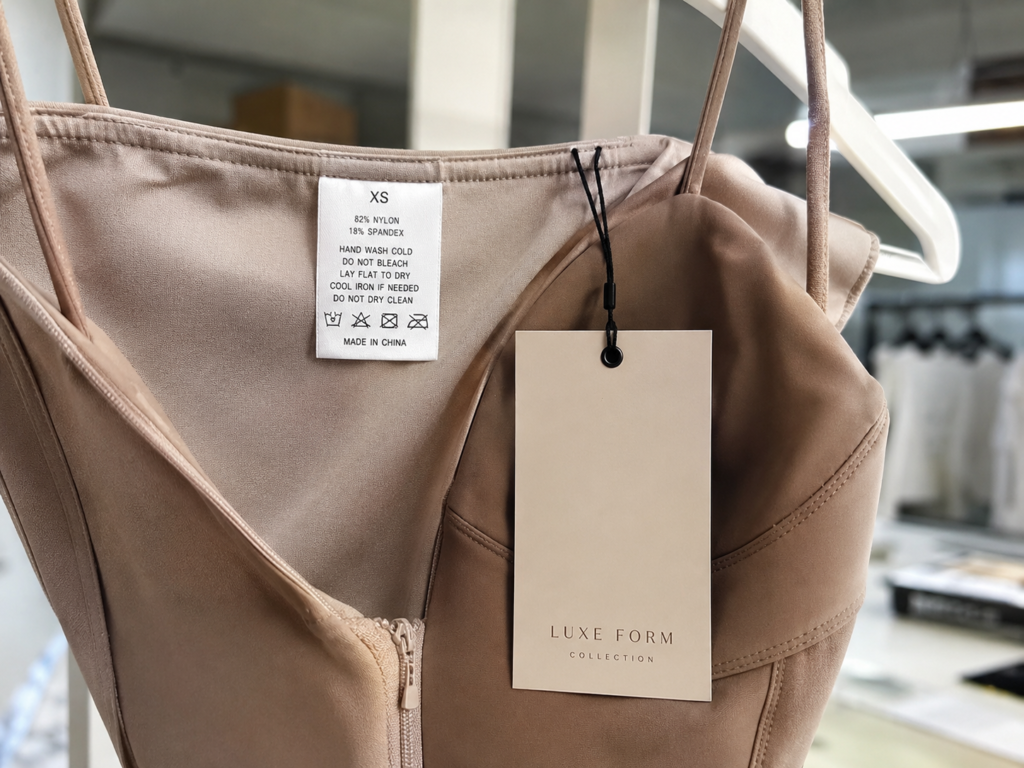
Main labels, size labels, care labels, hangtags, barcode stickers, SKU labels, polybags, inserts and carton marks can be prepared to match the retail and warehouse system. Top-and-bottom identification must remain consistent.

Fabrics Selected for Set Performance

Material choice controls drape, fit, shine, opacity, recovery, pressing and color consistency. Two garments made from the same named fabric can still look different when cut direction, dye lot, lining or tension is not controlled.
5Stretch Satin

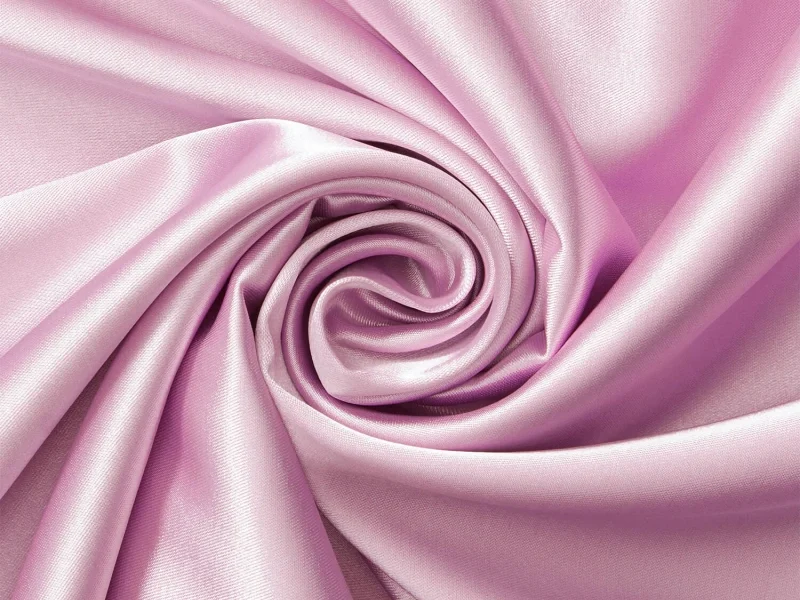
Satin and Stretch Satin

Satin creates a strong occasion and party appearance, but shine direction, snagging, shade variation, seam impression and pressing marks can expose weak workmanship. Matte satin, stretch satin and heavier satin behave differently. Both garments should be cut with controlled direction from the approved batch. Lining color, zipper tape and packing method must be coordinated to prevent visible contrast or pressure marks.
Chiffon

Chiffon

Chiffon supports layered, flowing and resort-led sets. Its low weight and transparency demand lining coverage, stable cutting, controlled seam tension and balanced hems. A chiffon top may require double layers or strategic lining, while the skirt may require a fuller lining length. Print direction and border placement should be planned before marker creation.

Lace

Lace requires decisions on motif placement, scalloped edges, seam position, lining color, stretch direction and skin contact. A lace top and skirt can look mismatched when motif scale or lining tone changes between panels. Bulk inspection should identify holes, fraying, damaged motifs, uneven joins and missing decorative sections before set pairing.

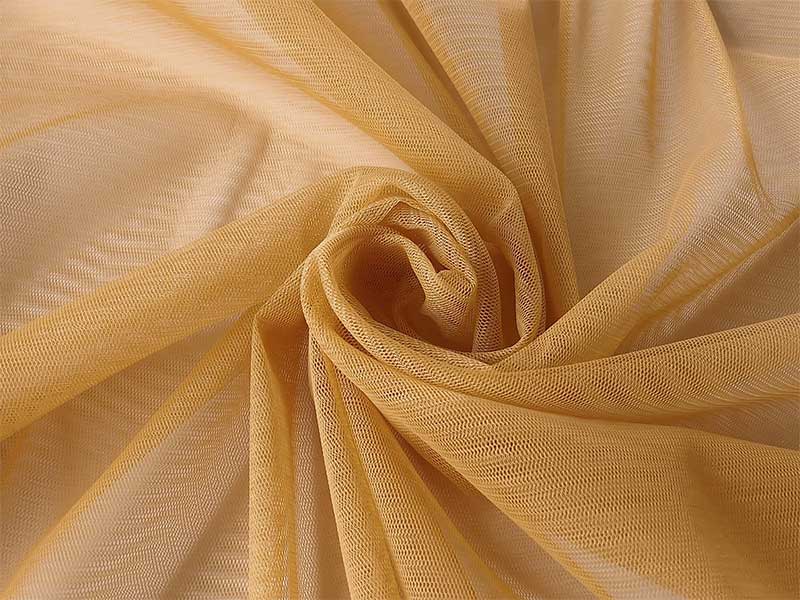
Mesh and Power Mesh

Mesh is common in party, cut-out and fitted sets. Stretch direction, recovery, transparency and edge finish influence both fit and coverage. Power mesh may provide support, while softer mesh creates layering. Pattern pieces must follow the approved stretch direction. Lining boundaries should remain stable across sizes so the final look does not become unexpectedly revealing.

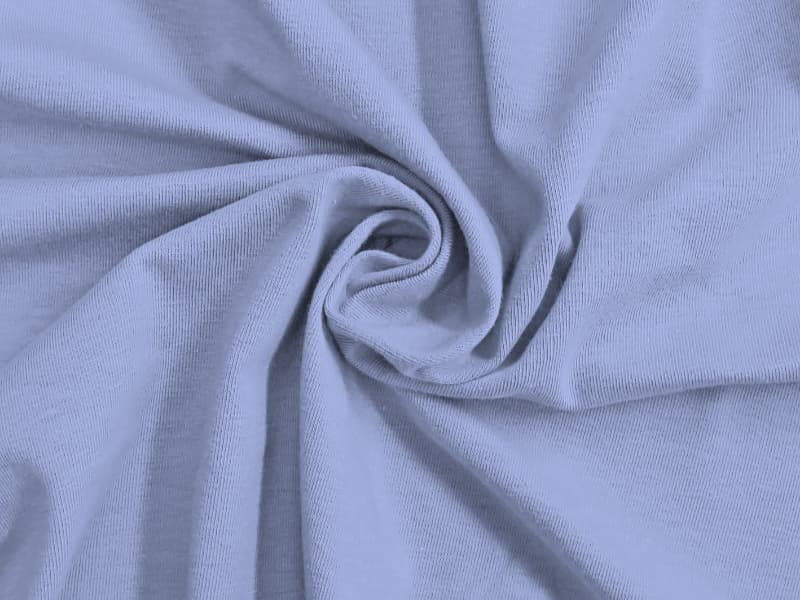
Jersey and Ponte

Jersey supports comfort and body-conforming silhouettes, while ponte offers greater structure and recovery. Fabric weight, stretch percentage, recovery and seam behavior must suit both garments. A fitted top can tolerate different negative ease than a skirt, but the overall compression level should feel consistent. Bulk cutting should account for relaxation and shrinkage behavior.
7Crepe Fabric

Crepe

Crepe can create fluid occasion sets or structured day-to-evening pieces depending on weight and weave. Key controls include drape, surface texture, seam puckering, press response and opacity. A stable crepe often works well for blouses, corset-inspired tops, midi skirts and tailored co-ords when lining and interfacing are selected correctly.

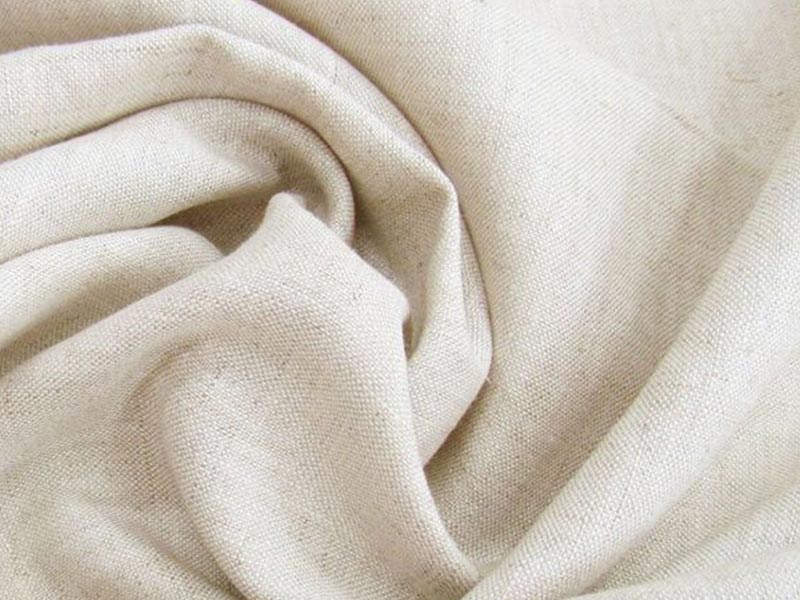
Linen and Rayon

Linen and rayon blends suit resort and vacation sets, but shrinkage, creasing, color variation and seam movement need attention. Pre-production testing helps determine pattern allowance, lining need and care instructions. Printed versions require scale and direction control. Packing should reduce hard folds without creating excessive volume for shipping.

Suiting Fabrics

Suiting fabrics support blazers, structured crops, skirts and tailored co-ords. Weight, body, recovery and interlining compatibility influence final shape. Lapels, waistbands, darts, vents and pressed edges require controlled construction. Fabric batch and fusible performance should be approved before bulk to avoid bubbling, shine or inconsistent structure.

Top Construction Built Around Fit and Support​

The upper garment carries the strongest visual focus in many two-piece looks. Bust position, neckline, shoulder balance and hem level are developed before decorative details are allowed to dominate the silhouette.

Bust, Neckline and Armhole Control

Bust fit is not defined by one circumference alone. Upper bust, full bust, underbust, cup position, neckline depth, side coverage and armhole depth work together. A top can measure correctly across the bust and still gape at the neckline, expose too much at the armhole or lift away from the body during movement.

For cami and halter styles, strap length and strap angle influence neckline height and side coverage. For corset and strapless styles, cup shape, boning, anti-slip tape, lining and closure tension determine stability. Fit samples should be photographed from front, side and back, with movement checks such as sitting, lifting the arms and walking.

Pattern comments are converted into measurable actions: adjust neckline depth, reshape cup seam, reduce side seam, raise armhole, shorten strap, move apex position or alter hem length. Revised patterns are recorded before the next sample is made.

Internal Structure and Clean Finishing

Premium tops often contain more structure than the outer surface suggests. Bra cups, underwire, boning channels, elastic, fusible support, stay tape, anti-slip tape and lining need compatible stiffness and placement. Excessive rigidity creates discomfort; weak support causes collapse or movement.

Clean finishing also influences perceived quality. Lining should not roll outward. Invisible zippers should lie flat. Hook-and-eye placement should not create bulk. Strap sliders should face the correct direction and remain level. Mesh, lace and satin edges need sewing methods suited to the material rather than a single generic finish.

Bulk standards are defined through the approved PP sample, construction notes, measurement chart and detail photographs. Production inspection compares these references across sizes and colors.

Skirt Construction Controlled From Waist to Hem

The bottom garment sets the visual anchor for the complete outfit. Waist position, hip shape, length, slit, lining and hem balance must support the top rather than compete with it.

Waistband, Hip and Closure Engineering

  • Waistband shape determines where the set sits on the body. A high-waist skirt can reduce the exposed gap, while a low-rise skirt can change the entire proportion. Straight waistbands, contoured waistbands, elastic backs and faced waist finishes require different pattern and sewing methods.
  • Hip ease depends on silhouette and fabric. Fitted skirts need enough movement without horizontal drag lines. Bias skirts need controlled hang and stabilization. Pleated or gathered skirts require consistent distribution and waist attachment. Invisible zippers should close smoothly without rippling the side or center-back seam.
  • Grading is reviewed at waist, high hip, full hip and length. A set cannot rely on the top grade rule to solve bottom fit. Separate grade increments are linked through the intended body proportion and size range.

Length, Slit, Lining and Hem Balance

  • Mini length needs movement and coverage checks. Midi length must support the body proportion and footwear styling. Maxi hems require balanced hang, even circumference and packing protection. Slit height is checked against standing, walking and sitting positions, with lining length arranged to avoid visible bunching.
  • Chiffon, satin and bias garments may drop after hanging, so hem assessment should happen after suitable relaxation. Lining should not twist or pull the outer skirt. Heavy embellishment or seam concentration can distort the hem. Pressing must suit the fabric surface, especially satin, velvet-like textures and structured crepe.
  • Final inspection includes waist measurement, hip measurement, length, slit height, zipper, lining, seam appearance, hem evenness and comparison with the coordinated top.

Proportion Engineering Across Top and Bottom​

A technically correct top and a technically correct skirt can still create an unbalanced outfit. Set development must control the visual and functional relationship between both garments across every approved size.

Crop Length and Waist Position

The exposed area between top hem and waistband is one of the most sensitive measurements in a two-piece dress. A 1-2 cm change can alter the overall impression, especially in fitted party or occasion styles. The intended gap should be defined on the fit model and checked through grading.

Key measurements include front top length, back top length, side seam length, waistband height, front rise of the skirt, natural waist position and distance between the top and bottom while standing. Curved hems, pointed corset fronts and asymmetric tops require several vertical reference points rather than one center-front length.

Fabric behavior also changes proportion. A heavy knit may grow. A bias satin skirt may drop. A structured corset may sit higher after boning is inserted. The fit review should use final or representative materials before PP approval.

Visual Balance Across Sizes

Proportion cannot be graded by adding the same amount everywhere. Larger sizes may need more bust depth, armhole coverage, strap adjustment, waistband shaping and hip ease without increasing the exposed gap beyond the approved look. Smaller sizes may need reduced cup spacing and shorter strap positions.

Jinfeng Apparel reviews top and bottom grading as linked systems. Fit comments identify whether the issue comes from pattern length, body position, fabric stretch or styling. Approved changes are recorded in the pattern, measurement file and revision record.

For ecommerce ranges, front, side and back views are checked because visual balance affects photography and returns. The final set should hold its intended silhouette while each garment remains wearable on its own.

Size Grading and Set Pairing Controls

Control AreaTop ControlBottom ControlMain RiskJinfeng Control Method
Bust to WaistFull bust, underbust, side seamWaistband positionTop lifts or gap becomes excessiveFit both garments together and record vertical relationship
Crop ProportionFront, back and side top lengthWaist rise and waistband heightSet looks disconnected across sizesLink grading rules and verify on-body proportion
Size GradingBust, neckline, armhole, strapWaist, high hip, full hip, lengthTop and bottom fit different body profilesSeparate grade review with one coordinated size chart
Stretch AllowanceNegative ease and recoveryWaist and hip recoveryUneven compression or baggingConfirm stretch direction, percentage and recovery
Length ControlHem level and asymmetryMini, midi or maxi lengthStyling changes between sizesGrade intended silhouette, not only total length
PairingTop style/color/size/SKUBottom style/color/size/SKUWrong garment packed as one setSet-level pairing checklist before polybag sealing
Carton AssortmentTop quantity by sizeBottom quantity by sizeUnbalanced inventory at destinationReconcile set quantity before carton close

Trims and Details That Complete the Set

Closures, support materials, decoration and labels affect fit, comfort, appearance and delivery timing. Trim approval covers specification, color, placement, durability, MOQ and bulk availability.

Select Trim Options Review Detail Risks
Zippers and Hooks

Invisible zippers, exposed zippers, hooks and eyes are selected by garment weight and opening requirement. Length, color and smoothness are checked. A top and skirt may use different closures, but finish level and color relationship should remain consistent.

Bra Cups and Boning

Cup shape, thickness, underwire, boning stiffness and channel placement affect corset and bustier sets. Support must hold the intended silhouette without sharp pressure, visible ridges or unstable movement. Final components are confirmed before PP sampling.

Straps and Sliders

Fixed straps, adjustable straps, halter ties and shoulder ties need controlled length, width and strength. Sliders and rings should match the intended quality level. Left-right strap position is checked during sampling and final inspection.

Lace and Decorative Trims

Lace edging, rhinestones, bead chains, sequins and decorative tapes require placement standards and secure attachment. Skin-contact areas may need lining or protective finishing. Packing should prevent abrasion between top and bottom surfaces.

Elastic and Support Tape

Elastic, stay tape and anti-slip tape influence recovery and wearing stability. Width, tension and position should be tested in the sample. Excess tension distorts seams; weak tension allows movement or gaping.

Brand and Care Labels

Main labels, size labels and care labels must use approved artwork, content, material, color and placement. Two-piece sets need clear rules for whether both garments carry full labeling and how set identity appears on hangtags and barcodes.

Two-Piece Sample Development and Approval

Sampling turns design information into measurable production standards. Both garments are reviewed together, while every construction and measurement comment remains traceable to the correct pattern and version.

Project Review

Style complexity, fabric direction, trim requirements, MOQ fit, sample standard and development risks are reviewed before payment and material preparation. Potential conflicts, such as a rigid fabric on a fitted silhouette, are raised early.

First Sample

Medium-complexity dresses, sets and jumpsuits normally require 12-18 days for a first sample. Complex corset, strapless, lace, mesh or sequin structures normally require 15-25 days. Special materials can extend the cycle to 20-35 days.

Fit Sample

The complete set is tried and assessed for bust, waist, hip, crop gap, waistband position, skirt length, strap, armhole, neckline, movement and overall balance. Measurements are compared with the approved chart.

Revised Sample

Revised samples normally require 7-15 days, depending on the changes. Pattern, measurement, material, trim and workmanship comments are recorded so the new version can be checked against a clear revision list.

Photo-Ready Sample

Photo-ready samples prioritize approved appearance, fit and camera performance for campaigns, lookbooks or sales review. Final bulk materials should be used when possible, and any difference from the production standard must be documented.

Salesman Sample

Salesman samples support internal line review, showroom presentation or market testing. Quantity, color and packaging standards are confirmed separately because multiple samples can affect material and scheduling requirements.

PP Sample

The pre-production sample confirms final fabric, color, trims, construction, measurements, labels and packing direction. PP approval is required before bulk cutting. Changes after PP approval can affect price, material use and production schedule.

Golden Sample

A golden sample serves as a retained physical reference for bulk production, QC and repeat orders. It is stored with measurement, BOM, color, trim, sewing, label and packing records, subject to future material reapproval.

From Design Files to Retail Delivery

Every stage has an approval purpose. Skipping pattern, revision, PP, QC or pairing controls transfers unresolved risk into bulk production, where correction becomes slower and more expensive.

Requirement Review

Confirm style, quantity, size, fabric, color, trims, labels, packing, target market and launch date.

Fabric Direction

Review suitable stock, custom color, print, lining and trim options with MOQ, cost and timing implications.

Pattern Development

Create independent top and bottom patterns linked by the approved proportion and size strategy.

First Sample

Build the initial set and verify construction feasibility, visual direction, measurements and wearing stability.

Fit Revision

Convert fitting photographs, measurements and written comments into documented pattern and construction changes.

PP Approval

Confirm final material, color, measurements, details, labels and workmanship before bulk cutting.

Material Preparation

Track fabric, lining, zippers, cups, boning, labels, hangtags, polybags and cartons before production.

Cutting Control

Check shade, direction, print placement, marker, bundle identity and top-bottom quantity balance.

Sewing Control

Transfer PP standards and workmanship notes to the allocated production lines, with inline checks and corrections.

Final Inspection

Review measurements, construction, appearance, set pairing, labels, barcodes, packing and project-specific AQL requirements.

Packing and Cartons

Pair correct style/color/size units, seal approved packaging and verify carton assortment, marks and warehouse labels.

Shipment Coordination

Prepare commercial invoice, packing list, carton data and freight coordination for the agreed shipping arrangement.

Bulk Workmanship Controlled From PP Standard​

Bulk quality depends on repeatable methods, clear references and early correction. Jinfeng Apparel connects pattern, material, cutting, sewing, pressing, inspection and packing through one approved production standard.

Material and Cutting Discipline

Bulk work begins after PP approval and material readiness. Fabric inspection reviews visible defects, color, shade, direction, width and project-specific risks. Satin, velvet-like surfaces and directional prints require marker rules. Stretch fabrics may need relaxation. Lace and mesh require careful handling to avoid distortion or holes.

Top and bottom quantities are planned together. Bundles carry style, color, size and component identity so production teams do not lose the set relationship. Cut parts are checked for symmetry, print direction, matching notches and critical measurements before sewing.

When several factories or lines support a larger collection, each style receives the same approved references: PP sample, measurement chart, BOM, construction notes, detail images, label instruction and packing standard. Product allocation follows fabric and construction capability rather than available space alone.

Sewing, Pressing and Finishing

Sewing standards focus on seam shape, stitch consistency, gathering, zipper flatness, neckline stability, strap symmetry, cup position, waistband alignment, slit construction, lining and decoration security. Inline inspection identifies repeat defects before they spread across the full quantity.

Pressing is part of workmanship, not only final appearance. Heat, pressure and direction must suit satin, crepe, suiting, lace, mesh and embellished fabrics. Incorrect pressing can create shine, flatten texture, distort seams or leave permanent marks.

Finishing removes loose threads, verifies closures, confirms measurements and protects delicate surfaces. Top and bottom are then paired only after both units pass their required checks. Packing teams follow approved SKU, barcode, polybag and carton instructions.

Multi-Style Order Management

Fashion programs containing 10-30 styles need more than one production calendar. Material arrival, sample approval, line allocation, QC windows and packing dates are tracked by style. Hero styles, complex styles and carryover styles may follow different production waves.

A 12+ person merchandising team supports fabric tracking, trim confirmation, sample progress, bulk updates, QC feedback, packing approval and shipment preparation. Key decisions are documented so changes do not remain only in chat messages.

sample_process_01_design_intake_800x600

Quality Control for Complete Two-Piece Sets

Inspection covers individual garment quality and the relationship between both pieces. A set is not complete until style, color, size, quantity, labels and packaging all reconcile.

Incoming Material Check

Fabric, lining and key trims are checked against approved references. Color, shade, direction, visible defects, stretch, hand feel and width are reviewed according to the material risk. Unapproved differences are addressed before cutting.

Cutting Check

Cutting inspection reviews panel accuracy, symmetry, direction, print placement, lace placement, notches and bundle identity. Top and bottom quantities are monitored to prevent an imbalance that would reduce final set output.

Sewing Inspection

Inline inspectors focus on recurring workmanship risks: puckering, uneven ruching, unstable neckline, twisted straps, poor cup position, zipper rippling, waistband distortion, seam exposure, lining pull and decoration failure.

Measurement Check

Critical top and bottom measurements are compared with the approved size chart. Bust, waist, hip, top length, waistband, skirt length, strap, neckline, armhole and slit are checked according to the style.

Set Pairing Check

Approved garments are paired by style, color, size and SKU. Checks prevent M tops with S skirts, shade differences, missing pieces, duplicated tops, mismatched hangtags and incorrect barcode combinations.

Packing Inspection

Final review covers labels, care content, hangtags, barcode scan, polybag, warning text, SKU stickers, carton assortment, carton marks and warehouse labels. AQL or client-appointed inspection can be coordinated by project.

Private-Label Packing for Coordinated Sets
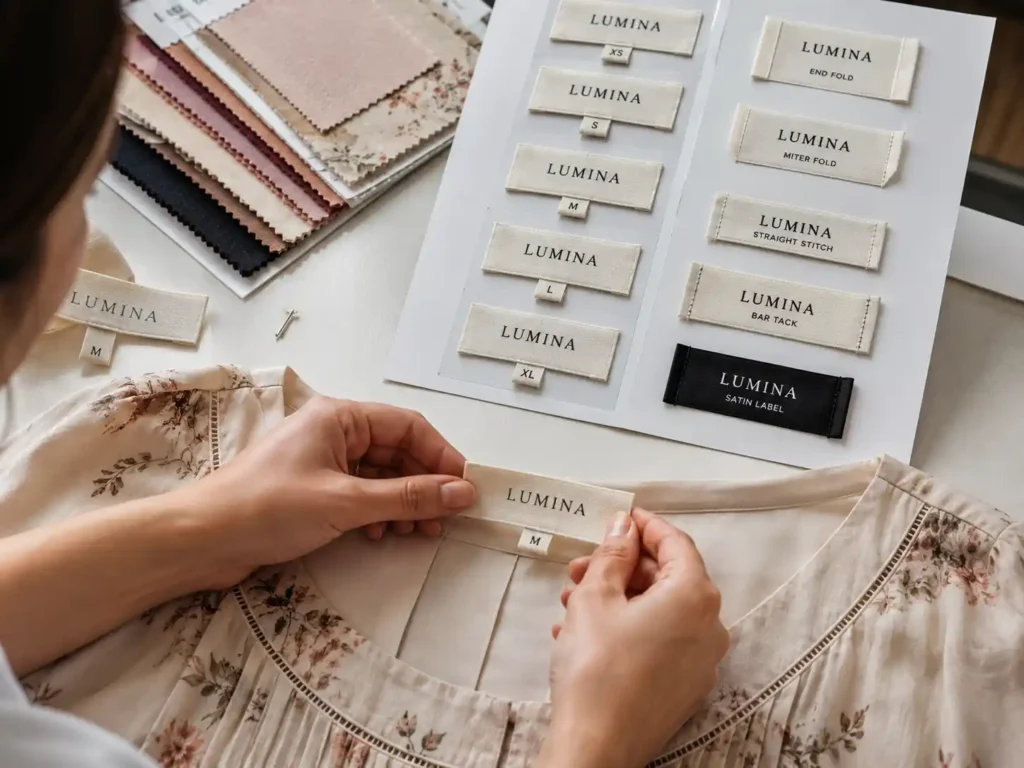
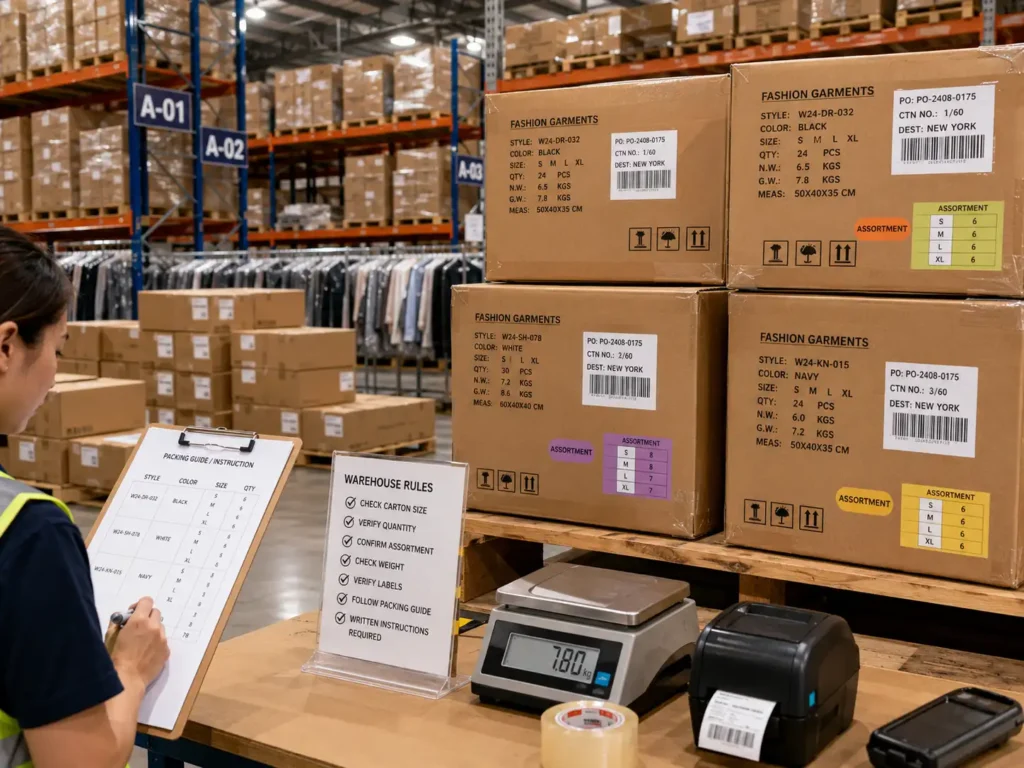
Retail-ready packing must protect both garments, preserve the set relationship and deliver accurate information to ecommerce, retail or third-party warehouses.

Main Labels

Main labels can be sewn into both garments or positioned according to the brand standard. Material, size, color, fold and comfort are approved before bulk attachment.

Size and Care Labels

Each garment may require a size label and care label because composition or care instructions can differ. Content, language, fiber data, origin and placement must match the approved artwork.

Hangtags and Strings

Hangtags can present the set as one retail unit. Style number, color, size, price field, barcode and brand story are checked. Attachment should not damage delicate satin, mesh or lace.

Barcode and SKU

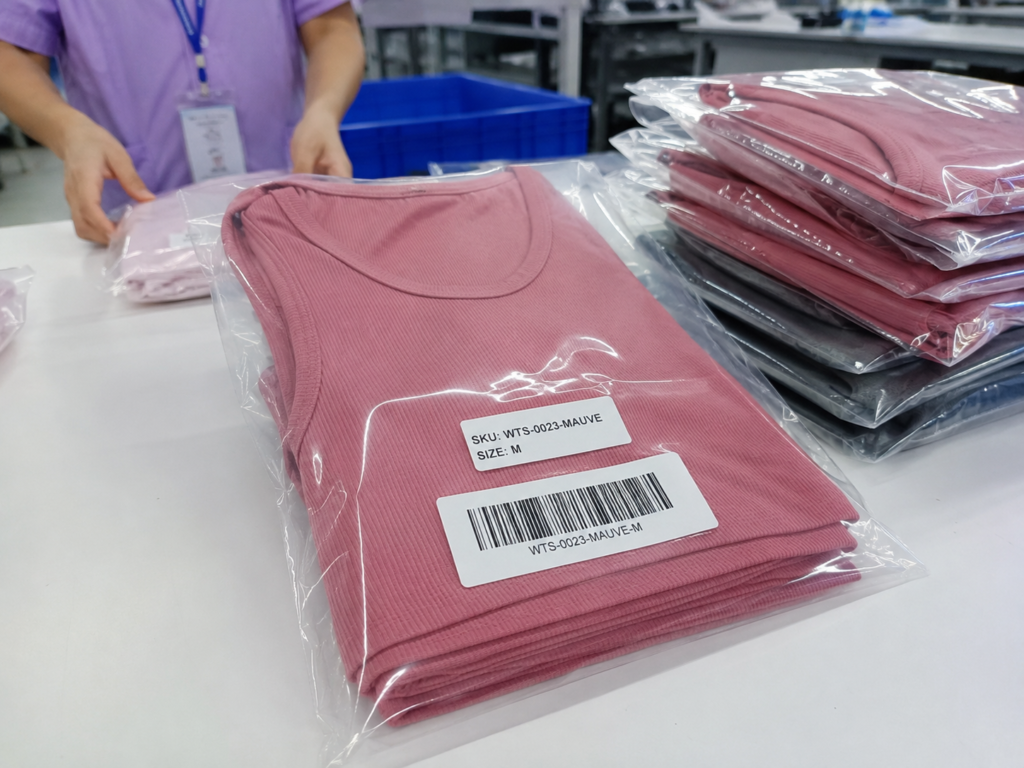
Barcode files and SKU tables need one clear logic for top and bottom. Scannability, style, color and size are verified before packing, especially when the two garments carry linked or separate codes.

Shared Polybag

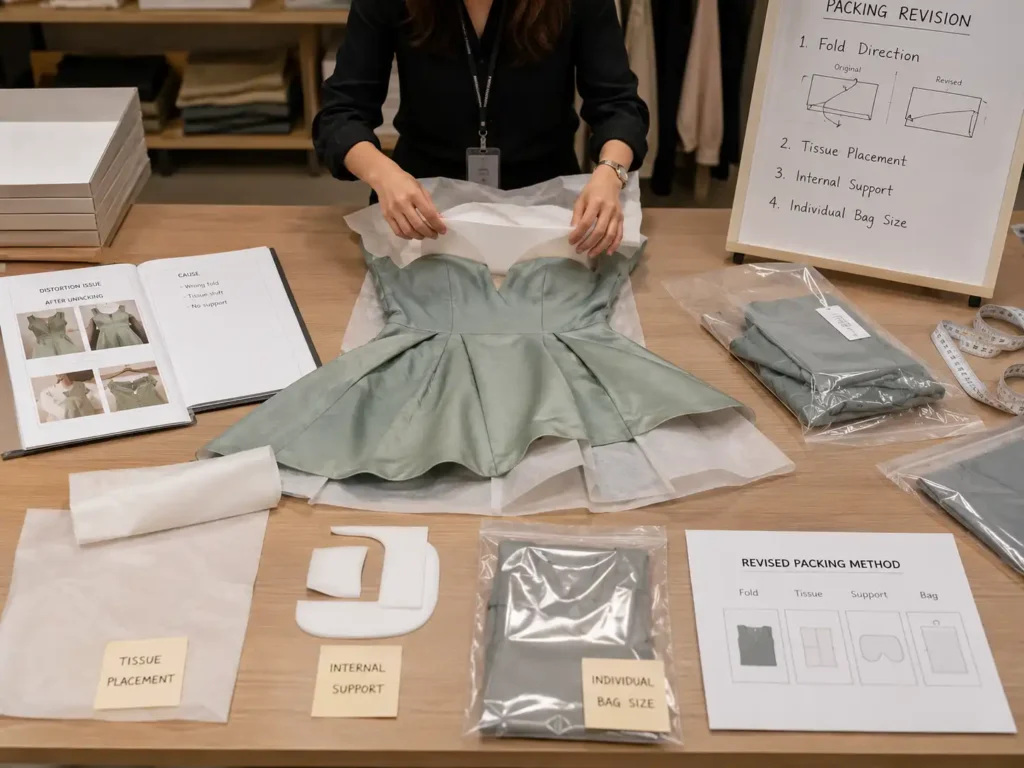
Both garments can be folded into one polybag for a single retail unit. Folding order should protect decorative surfaces and prevent hardware from marking the second garment.

Nested Packing

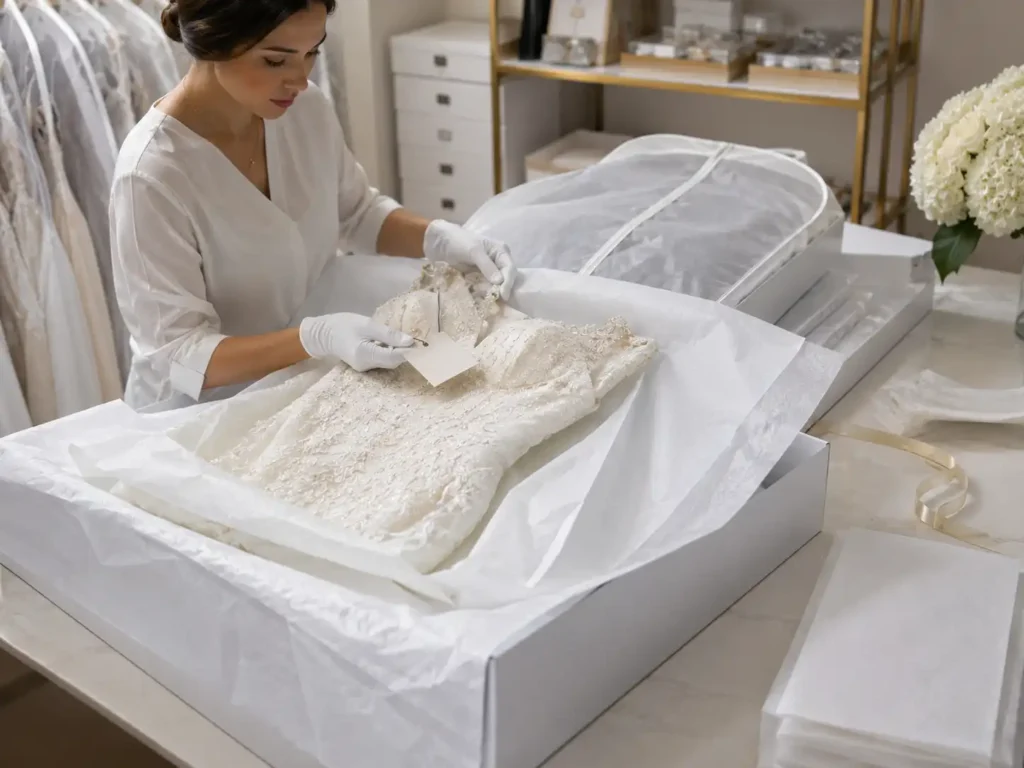
Each garment can be protected in an inner sleeve or tissue layer before both enter a shared outer bag. The structure suits embellished, satin or light-color sets requiring extra surface protection.

Separate Linked SKUs

Top and bottom may ship separately under linked SKUs when merchandising requires flexible sizing or individual sales. Packing lists, carton assortments and warehouse labels must preserve the relationship.

Carton and Warehouse Labels

Carton marks can include PO, style, SKU, color, size, quantity, carton number and destination. Warehouse receiving labels are prepared from the supplied guide to reduce receiving errors or rejection.

MOQ, Cost and Schedule Planning

Planning FactorNormal Effect on MOQ, Cost or TimingInformation Needed
Style and ColorMOQ is assessed per style/color; every color needs enough material and production volumeQuantity by style, color and set
Fabric AvailabilityStock fabric can support faster development; custom weave or dye carries supplier minimumsFabric type, color standard, hand feel and target price
Print DevelopmentArtwork scale, base fabric, color count and placement affect sampling and bulk setupPrint file, repeat size and placement rules
Top ConstructionCorset, cups, boning, mesh, cut-outs and decoration increase pattern and sewing workFront/back details, support level and lining standard
Bottom ConstructionBias cut, pleats, gathers, slits, layered lining and long hems affect material use and sewing timeSilhouette, length, lining and movement requirement
Size RangeMore sizes require broader grading, cutting separation, QC and packing managementSize chart and ratio by size
Private LabelLabels, hangtags, printed polybags and boxes may have independent supplier MOQsArtwork, material, quantity and warehouse rules
Sample CycleMedium-complex first samples normally need 12-18 days; complex styles normally need 15-25 daysApproved files, materials and feedback timing
Bulk ScheduleConfirmed after PP approval, material arrival, factory allocation, QC window and packing planRequired warehouse date and shipping method
Shipment PlanAir, sea or split shipment changes cost and cutoff datesDestination, forwarder and priority quantity

Capacity and Launch Calendar Management

A strong manufacturing plan connects sample approval, material readiness, production, QC, packing and freight to the actual campaign and warehouse dates. Capacity is allocated by product complexity rather than headline volume alone.

100,000+ Pieces Monthly

The structured production system supports 100,000+ finished garment pieces per month across owned factories and long-term partners. Two-piece orders are planned by set quantity, individual garment count and required line loading.

Eighteen Sewing Lines

More than 18 sewing lines support product allocation by construction. Woven skirts, stretch tops, tailored sets and complex occasion styles require different skills and production control. Not every line is assigned to every product.

Six Flexible Lines

Six flexible production lines support selected multi-style, repeat-order and changing-volume programs. Flexibility still depends on approved materials, construction difficulty, line availability and QC time.

Merchandising Follow-Up

A 12+ person merchandising team coordinates material, sample, revision, bulk, QC, packing and shipment milestones. Key updates can include photographs, measurement files, issue notes and approval requests.

Launch Back-Planning

Scheduling begins with the required receiving or launch date. Freight cutoff, packing completion, final inspection, sewing, cutting, material arrival, PP approval and sample deadlines are planned backward to expose risk early.

Split Shipment Options

For time-sensitive programs, selected hero styles, priority colors or core sizes can be reviewed for air shipment while remaining bulk moves by sea. SKU, carton and packing-list separation must be planned before packing.

NDA, Design Protection and Audit Coordination

Unreleased designs, commercial information and manufacturing records are handled as controlled project information. Audit and compliance support is confirmed against the actual factory, material, certificate scope and order requirement.

NDA-Based Cooperation

Jinfeng Apparel supports NDA-based cooperation covering brand identity, tech packs, samples, patterns, measurement files, fabric plans, trims, labels, packaging, quantities, pricing and launch information. Unreleased designs are not used publicly without authorization.

Controlled Case Presentation

Manufacturing examples can be presented anonymously by region, product, quantity, challenge and solution. Brand names, original tech packs, exclusive prints, unpublished samples, barcodes and order data remain protected unless written permission is available.

Audit and Document Support

Factory profile, production-process information, QC records and available audit-related documents can be coordinated according to the factory assigned to the project. Fabric certificates and testing claims must match the supplier, article, color, batch, scope and validity rather than being treated as universal.

Two-Piece Programs Managed at Collection Scale

The following anonymous cases show how multi-style set programs can be structured. Quantities are presented as retail sets and individual garment pieces because line loading, inspection and packing depend on both figures.

United States Partywear Program

A US partywear label developed 18 styles across corset tops, mesh crops, ruched mini skirts and satin midi skirts. The program covered 24,000 retail sets, equal to 48,000 individual garments, in four color families and sizes XS-XL. The main issue was proportion inconsistency between structured tops and different waistband positions. Several first samples created an exposed gap larger than the approved campaign look, while stretch mesh styles showed uneven side coverage. Pattern review linked top length, corset point, waistband height and skirt rise. Mesh stretch direction and lining boundaries were added to the construction notes. Samples followed three priority groups: campaign hero styles, sales-review styles and supporting styles. Medium-complexity first samples were completed within the normal 12-18 day range; corset and mesh styles followed the complex sample window. Bulk production was divided into two waves, allowing the first styles to enter photography and sales review earlier. Pairing inspection identified size and shade discrepancies before polybag sealing. Corrections were completed before final carton close, and the shipment moved under one coordinated SKU and carton plan.

Australian Resort Collection

An Australian resortwear label developed 26 two-piece styles with tie-front tops, halter crops, printed maxi skirts, relaxed midi skirts and selected shirt-and-short co-ords. Total volume reached 31,200 retail sets, equal to 62,400 individual garments, across eight print stories and sizes AU 6-16. The major risks were print direction, shrinkage, transparency and hem balance.
Artwork review defined repeat scale and preferred placement. Fabric testing compared hand feel, drape, opacity and dimensional change. Several light grounds required adjusted lining colors to avoid a grey or yellow cast under daylight photography. Marker instructions separated directional prints from non-directional styles. Maxi skirts were checked after suitable hanging time before final hem confirmation.

A priority shipment of 3,120 sets covered campaign and early launch needs, while the remaining 28,080 sets followed the main freight plan. Retained print, fabric, pattern, measurement and packing records later supported a color extension without rebuilding the entire product system.

United Kingdom Occasionwear Range

A UK occasionwear label placed a 12-style program covering satin cami-and-midi sets, lace corset-and-skirt sets and mesh overlay party sets. The order contained 13,500 retail sets, equal to 27,000 individual garments, across six UK sizes. Satin shade and shine direction created the highest risk. All paired garments were allocated from controlled fabric batches, with cutting direction marked in the production documents. Lace styles required motif placement and lining-tone approval, while mesh styles required stable coverage boundaries across grading.The PP process confirmed zipper colors, cup types, boning, strap hardware, lining and shared packing methods. Final inspection combined measurement, surface checks, closure checks, decoration security, barcode scan and set pairing. Delicate surfaces were separated with protective tissue before shared-polybag packing. The range shipped in two production batches under one approval standard, allowing later styles to continue while first-batch inspection and packing were completed.

Why Fashion Labels Choose Jinfeng Apparel

Manufacturing value comes from product understanding, controlled development and reliable transfer from approved sample to coordinated bulk delivery.

Womenswear Specialization

Core experience covers dresses, skirts, fashion tops, jumpsuits, occasionwear and matching sets. Product decisions are based on women’s fit, fabric behavior, styling and retail finish rather than generic garment production.

Linked Pattern Control

Top and bottom patterns remain independent but connected. Bust, crop length, waist position, hip, skirt length and grading are reviewed as one outfit across the approved size range.

Material Coordination

Fabric, lining, thread, zipper, elastic and decoration are controlled for shade, shine, stretch, hand feel and availability. Matching means more than using the same fabric name.

Traceable Sampling

First, fit, revised, photo-ready, salesman, PP and golden samples serve different approval purposes. Revision records protect critical changes from being lost between development and production.

Set-Level Quality Control

QC covers both garment quality and pairing accuracy. Style, color, size, quantity, label, barcode, polybag and carton data are reconciled before shipment.

Long-Term Program Support

Pattern, BOM, fabric, trim, measurement, QC and packing records support repeat orders, color extensions, seasonal collections and multi-batch production, subject to renewed material confirmation.

Two-Piece Dress Frequently Asked Questions

MOQ starts from 200 pcs per style/color. Final feasibility depends on fabric availability, color development, trims, construction, size breakdown, labels, packing and production schedule. A style containing one top and one bottom is normally evaluated as one retail set, while material and line planning also consider the two individual garments.

Commercial quantity is commonly discussed in sets, while factory capacity and material planning also calculate individual garment pieces. For example, 1,000 sets equal 2,000 finished garments. The quotation and PO should clearly state both figures to avoid quantity or packing misunderstandings.

Yes. Development can begin from a reference image, sketch, tech pack, line sheet or original sample. Clear front, back and detail views improve structural analysis. Measurements, fabric direction, quantity and target timing are still required before formal sampling and quotation confirmation.

Yes, independent size pairing can be evaluated. The approach increases SKU count, barcode logic, inventory allocation, packing checks and warehouse complexity. Same-size pairing is simpler. Independent pairing should be defined before labels, polybags and carton assortments are approved.

Yes. A structured top may pair with a fluid skirt, or a mesh layer may combine with a lined bottom. Color, weight, stretch, care instructions and visual balance must be reviewed together. Separate compositions may also require different care-label information.

Control can include physical color standards, Pantone references, lab dips, approved swatches, dye-lot records, shine-direction rules, lining comparison and bulk color approval. Paired garments are checked before packing to prevent visible shade differences.

Custom prints can be developed according to artwork, base fabric, repeat, scale, placement, color and quantity. Printing carries its own material minimums, sampling process and lead time. Directional or engineered prints require controlled marker and cutting instructions.

Sample types include first sample, fit sample, revised sample, photo-ready sample, salesman sample, PP sample and golden sample. Each serves a different approval purpose. Sample quantity, material standard and required date should be stated before development begins.

Medium-complexity sets normally require 12-18 days for a first sample. Corset, strapless, lace, mesh or sequin styles normally require 15-25 days. Special materials may require 20-35 days. Revised and PP samples commonly require 7-15 days, depending on changes and material readiness.

Samples are charged according to style complexity, fabric, trims, pattern work, workmanship and sample standard. Sample cost covers development work and is separate from the bulk unit price. Project-based deduction can be discussed when an approved order meeting production conditions is placed.

Bulk scheduling is confirmed after PP approval and material readiness. Factory allocation, cutting, sewing complexity, order quantity, QC window, packing requirements and shipment date determine the final production calendar. A responsible schedule does not begin with an unsupported fastest-date promise.

Yes. Support includes main labels, size labels, care labels, hangtags, barcode stickers, SKU labels, polybags, carton marks and warehouse labels. Artwork, content, quantity, material and placement must be approved before bulk preparation.

Top and bottom are reconciled by style, color, size and SKU before polybag sealing. Quantity balance is checked from cutting through finishing. Final packing inspection verifies garment pairing, labels, barcode, polybag and carton assortment.

Yes. NDA-based cooperation can protect tech packs, patterns, samples, measurements, fabrics, trims, labels, packaging, quantities, pricing and unreleased designs. Anonymous manufacturing cases are used unless brand authorization is available.

Yes. Pattern, BOM, fabric, color, trim, measurement, QC, packing and golden-sample records can support repeat production, seasonal extensions and new colors. Material availability, new dye lots and current supplier conditions still require confirmation.
Start Your Two-Piece Dress Program

Send a tech pack, reference image, original sample, sketch or line sheet for an initial manufacturing review. Kelly and the Jinfeng Apparel team will assess product structure, fabric direction, sample requirements, MOQ fit, private-label needs and the information required for a responsible quotation.
Please include:

  • Product type and front/back reference
  • Quantity per style/color
  • Size range and size ratio
  • Preferred fabric, stretch, shine and lining direction
  • Color or print plan
  • Top and bottom pairing method
  • Main labels, care labels, hangtags and barcode needs
  • Packing and warehouse instructions
  • Photo sample, PP and warehouse deadlines
  • Destination and preferred shipping arrangement
Design Discussion

Submit Your Production Inquiry

Please share your product details, estimated quantity, target market, timeline, and development requirements. Our project team will review your inquiry and provide a tailored OEM/ODM production solution.

Women’s Apparel Production for Established Fashion Brands

From sample development to bulk production, JF Apparel supports fashion brands with confidential OEM/ODM manufacturing, stable quality control, and scalable production.