Twist Front Dress Manufacturer

Custom twist front dresses developed for established fashion brands that require controlled drape, stable fit, repeatable bulk construction, and private-label delivery.

  • 4 measurable twist controls: center position, overlap width, drape depth, and opening coverage.
  • 3 approval stages before bulk release: fit sample, PP sample, and production reference.
  • 200 pcs per style/color starting MOQ, subject to fabric, trim, construction, and schedule.
  • 10-30 styles can be managed within a coordinated seasonal dress program.

Jinfeng Apparel develops twist front mini, midi, maxi, bodycon, cut-out, jersey, satin, mesh, resort, and occasion dresses from reference image or tech pack. Pattern development, fabric direction, fitting, sampling, bulk production, quality control, private-label packing, and export coordination are managed within one womenswear manufacturing system.

Measurable Development Capacity Behind Every Twist Style

Twist construction depends on pattern accuracy, sample discipline, sewing control, and final measurement checks. Jinfeng Apparel combines long-term womenswear experience with dedicated development and production resources for multi-style dress programs.

Since 2008

Jinfeng Apparel has focused on custom womenswear development and production since 2008. Long-term work with dresses, skirts, jumpsuits, matching sets, and private-label collections supports stronger judgment around drape, stretch, bust coverage, waist placement, seam balance, and sample-to-bulk consistency.

Six Owned Factories

Six owned women’s fashion factories support style allocation according to fabric type, construction difficulty, order quantity, quality level, and delivery window. A stretch jersey twist dress and a woven satin twist dress are not assigned by appearance alone; each program requires a production environment suited to the material and sewing sequence.

Two Sample Rooms

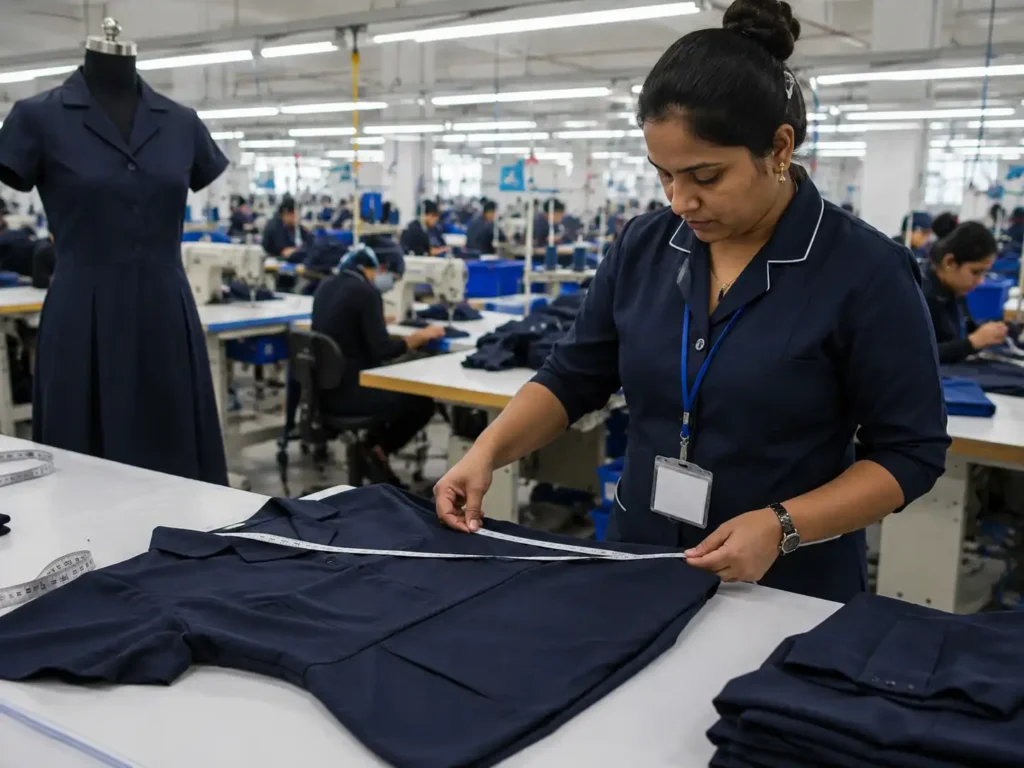
Two sample rooms allow development work to be separated from bulk production. Pattern review, first sample construction, fitting feedback, revisions, photo-ready samples, and PP approval can be tracked by style number and version, reducing the risk of an outdated sample entering production.

Seven Pattern Makers

Seven or more senior pattern makers support bodice balance, twist allowance, cut-out placement, neckline depth, waist position, grading, and lining development. Twist placement must remain visually balanced across sizes rather than simply enlarging every pattern point by the same amount.

Twenty Sample Machinists

More than twenty sample machinists support detailed development for jersey, satin, mesh, chiffon, lace, ponte, viscose, and blended fabrics. Sample sewing is used to test seam thickness, inner finishing, neckline stability, zipper behavior, and twist recovery before bulk planning.

Fifteen QC Inspectors

Fifteen or more QC inspectors support material inspection, cutting review, inline checks, measurement control, final garment inspection, and packing verification. Twist center position, overlap, coverage, symmetry, shade, labels, and packing details can be included in product-specific inspection records.

Built for Established Fashion and Sourcing Teams

Twist front development is most effective when the brand team has a defined product direction, realistic quantity plan, and clear launch objective. Jinfeng Apparel supports structured development programs rather than anonymous stock purchasing.

Fashion Brands

Suitable for fashion labels building a recognizable twist-front category across mini, midi, maxi, party, resort, and occasion collections. Development can begin from an approved design, line sheet, original sample, reference image, or full technical package.

Product Developers

Product development teams can work with Jinfeng on fabric direction, pattern interpretation, fitting comments, sample revisions, BOM alignment, and PP approval. Each change should be linked to a sample version so the final construction remains traceable.

Sourcing Teams

Sourcing teams receive a clearer basis for comparing fabric, trim, construction, MOQ, sample requirements, production timing, packing, and shipment terms. Quotation accuracy improves when the garment structure and approved material direction are established early.

Merchandising Teams

Merchandising teams can coordinate hero pieces, commercial styles, color extensions, length variations, and repeat-order plans within one twist-front assortment. Multi-style programs can be grouped by fabric and construction to improve development order and production flow.

Occasionwear Labels

Occasionwear programs often require satin, mesh, chiffon, lace, lining, concealed zippers, structured bust areas, and careful pressing. Twist details must look intentional under studio lighting and remain wearable through sitting, walking, and movement.

Premium Ecommerce Brands

Online-focused labels depend on photo-ready samples, consistent size specifications, clean private-label presentation, and controlled return risk. Twist positioning, neckline security, opening coverage, and measurement stability deserve the same attention as the front-view image.

Six Risks That Can Weaken Twist Front Dresses

A twist detail can improve visual identity, shape the waist, and create strong campaign imagery. The same feature can also cause fit failures, inconsistent drape, or bulk rework when pattern and material behavior are not controlled.

Shifted Twist Center

A twist positioned several millimeters too high, low, or off-center can change bust coverage, waist proportion, and the entire front silhouette. The approved location should be defined from stable measurement references, not judged only by visual memory during sewing.

Excessive Seam Bulk

Multiple layers may accumulate inside the twist, especially with ponte, double-layer satin, lined jersey, or reinforced cut-out edges. Excess thickness can create a hard knot, visible lump, uneven drape, or discomfort against the body. Seam reduction and internal finishing need sample validation.

Unstable Front Coverage

Twist bust and cut-out designs can expose more area after movement or stretch. Coverage should be checked at the neckline, underbust, waist opening, and side front. Lining, clear elastic, inner panels, or revised overlap may be needed to protect the intended wearing level.

Uneven Drape Depth

Drape may appear balanced in one sample but vary across bulk garments when notch positions, gathering length, stitch tension, or fabric direction change. A defined fold sequence and measurable drape reference help the sewing team repeat the approved appearance.

Poor Stretch Recovery

Jersey, rib, stretch mesh, and stretch satin can lose shape around the twist after repeated fitting or wear. Recovery, direction of stretch, seam elasticity, and stabilizing methods should be tested before a fitted dress is approved for production.

Grading Distortion

A twist that works in the base size may move, tighten, or open too far in larger or smaller sizes. Grading must consider bust growth, underbust position, waist level, cut-out dimensions, overlap, and fabric stretch rather than applying uniform enlargement to every component.

Project Requirements for Efficient Development

A complete project brief allows pattern, fabric, costing, and timing decisions to start on the same foundation. Clear information reduces repeated questions and helps the development team identify risks before sample cutting.

Ready for Development

Programs move faster when the brand provides a reference image or technical drawing, target quantity per style/color, fabric direction, size range, color plan, label requirements, packing needs, and target delivery window. A tech pack, original sample, or approved measurement chart adds greater control.

Requires Clarification

A single front-view image may not show the back, inner construction, twist direction, opening depth, lining, closure, or intended fit. Jinfeng can begin with a feasibility review, but missing information must be resolved before an accurate sample and bulk quotation can be confirmed.

Focused Technical Review

Before pattern cutting, Jinfeng Apparel reviews the design objective, material behavior, construction route, fit requirements, quantity structure, and launch schedule. The review is intended to prevent avoidable sample rounds and expose cost or production risks while changes are still easier to make.

A useful first submission includes front and back references, close-up twist images, intended length, target fabric, size chart, colors, estimated quantity, label files, packaging direction, and required delivery date. When only a reference image is available, the team identifies missing construction information and proposes a development route for approval.

The initial review can cover:

  • True twist, knot-effect, crossover, or gathered construction.
  • Bust, underbust, natural waist, or high-waist placement.
  • Stretch or non-stretch fabric suitability.
  • Lining, zipper, inner support, and opening coverage.
  • Sample sequence and likely revision focus.
  • MOQ, material availability, and production timing.

Twist Front Construction Is Not One Technique

Twist front is a visual description, not a single sewing method. Two dresses with a similar front image may require different pattern pieces, seam allowances, internal support, fabric consumption, sewing time, and fitting controls.

True Fabric Twist

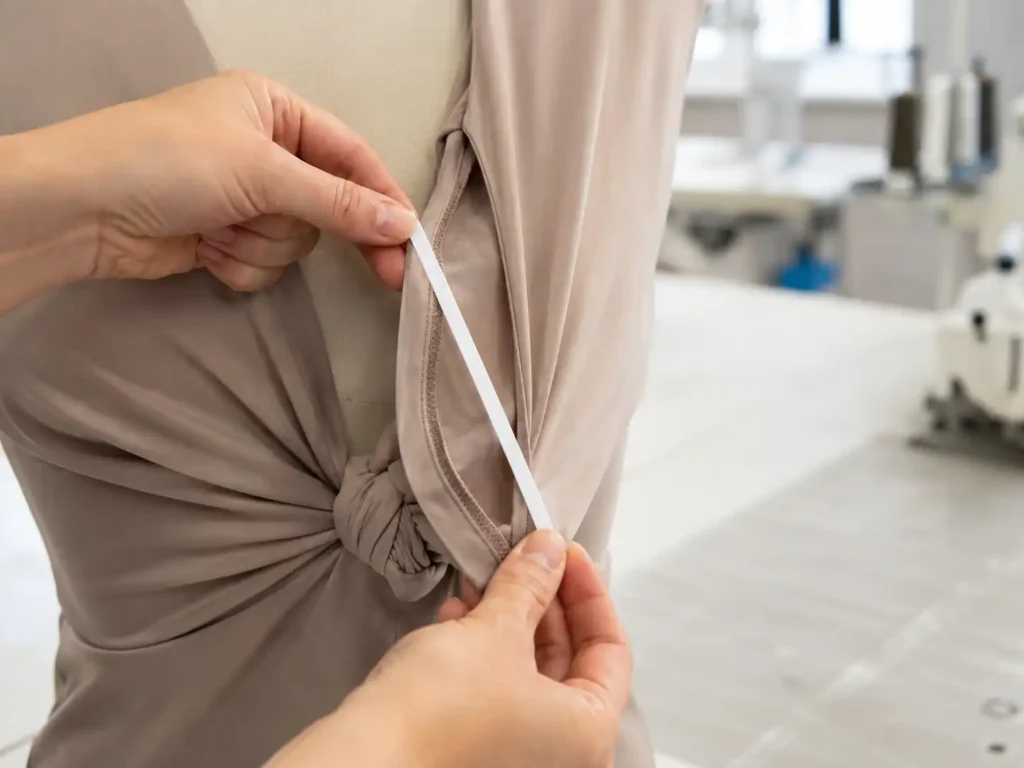
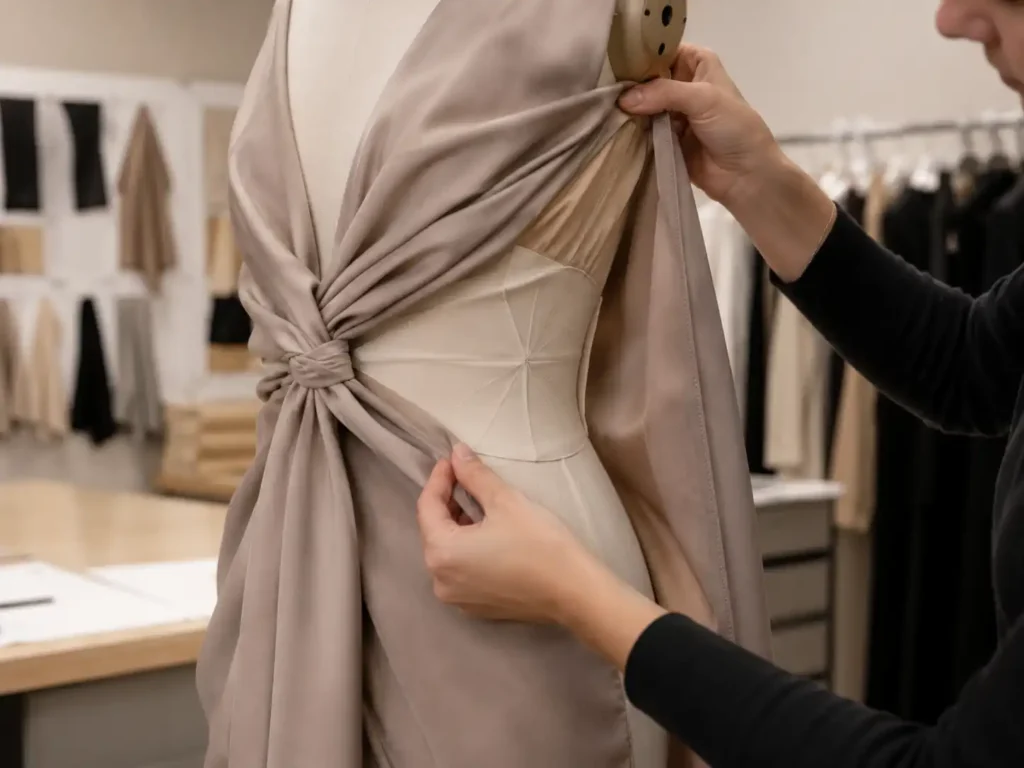
Separate or extended panels rotate around a controlled center before being secured into the garment. Rotation direction, panel width, layer order, and anchor points determine the final shape. The pattern must provide enough length for a natural turn without creating uncontrolled bulk.

Knot-Effect Construction

A knot appearance may be built through looped panels, wrapped bands, concealed joins, or layered drape rather than a literal knot. Knot-effect construction can create a cleaner inner surface and more repeatable bulk result when a true twist would become too thick.

Draped Crossover

Front panels cross and gather into a center or side anchor, creating a twist-like visual line. Drape depth, neckline coverage, and side seam balance depend on fabric fall and controlled fullness. Woven fabrics often need more deliberate shaping than high-stretch knits.

Twist Bust

Twist placement at the bust changes neckline depth, cup coverage, underbust position, and support. Fitting should check both standing posture and movement. Inner panels, cups, lining, or clear elastic may be required according to the intended wearing level.

Twist Waist

A waist twist shapes the center front and can visually lengthen the body. The anchor point must align with the intended natural, high, or low waist. An incorrect location may pull the skirt upward, rotate side seams, or create unwanted pressure across the abdomen.

Asymmetric Twist

An offset twist may connect to a side waist, diagonal cut-out, or one-shoulder line. Visual asymmetry still needs measurable control. The front length, hem balance, opening edge, seam tension, and drape direction must remain stable across sizes.

Custom Twist Front Dress Product Range

Jinfeng Apparel can develop a complete twist-front assortment rather than one isolated SKU. Each product direction requires a different balance of fabric, fit, internal construction, sewing sequence, and commercial positioning.

Twist Front Mini Dress

Mini lengths place greater pressure on proportion because the bodice, waist detail, and hem compete within a shorter silhouette. Jersey and stretch woven fabrics work well for fitted programs, while satin and crepe suit dressier shapes. Development should control twist height, hem safety, seat movement, neckline coverage, and side seam balance. Mini styles are often suited to party, birthday, date-night, homecoming, and event capsules.

Twist Bust Midi Dress

A midi silhouette gives more room for bust drape and skirt movement. The main challenge is connecting the twist to a stable underbust and waist without adding bulk. Suitable materials include jersey, viscose blends, stretch satin, crepe, and selected mesh combinations. The fitting process should review cup coverage, neckline depth, underbust position, torso length, and how the skirt hangs below the twist.

Twist Waist Maxi Dress

Maxi styles depend on front length, waist placement, hem balance, and fabric fall. A waist twist can pull a long skirt upward or create uneven side seams when the pattern does not compensate for drape. Rayon, viscose, jersey, chiffon layers, and soft woven fabrics may be suitable. Resort, vacation, cruise, evening, and wedding-guest programs often use the shape for movement and strong full-length photography.

Twist Front Bodycon Dress

Bodycon construction requires controlled negative ease and reliable recovery. Jersey, ponte, rib, stretch mesh, and stretch satin can support a fitted silhouette, but each material reacts differently at the twist. Bust, waist, hip, side seam, opening, and hem measurements should be linked to fabric stretch. Bulk QC should include twist position and side seam rotation rather than chest, waist, and hip measurements alone.

Twist Cut-Out Dress

Cut-out styles combine visual impact with a lower tolerance for fit error. Opening width, height, edge stability, body coverage, lining position, and seam stretch require careful approval. The opening should remain intentional during sitting, walking, and arm movement. Jersey, ponte, power mesh, and stretch satin are common directions, while internal elastic or stable facing may be added according to the design.

Long Sleeve Twist Dress

Long sleeves can balance a low neckline, cut-out, or fitted body, but they also add tension through the shoulder and upper torso. Sleeve mobility, armhole fit, neckline security, and front twist stability need to work together. Jersey, rib, mesh, velvet, and stretch satin suit seasonal party and evening programs. Sleeve fabric may require different stretch control from the bodice.

Satin Twist Dress

Satin creates a fluid, elevated appearance but exposes shine direction, wrinkles, seam pressure, snagging, and pressing marks. Stretch satin can support closer fits, while non-stretch satin needs additional ease and structured pattern control. The twist should be engineered to avoid a hard center lump. Color, lining, zipper, pressing method, folding, and transport protection should be approved before production.

Jersey Twist Dress

Jersey supports soft drape and wearable fit, making it a strong choice for commercial mini, midi, and maxi dresses. Fabric weight, four-way or two-way stretch, recovery, opacity, and edge stability must be tested. Twist panels should not grow during sewing or fitting. Stabilizing tape, clear elastic, differential feed, or revised seam construction may be required according to the material.

Mesh Twist Dress

Mesh can create layered depth, transparency, and body-contouring effects. Stretch direction, recovery, lining coverage, seam comfort, and hole risk need early review. A double-layer twist may appear richer but can become difficult to control at the center. Power mesh can add support, while soft stretch mesh creates lighter drape. Transparent zones must match the intended occasion and wearing level.

Resort Twist Dress

Resort styles often use soft rayon, viscose, printed woven fabric, lightweight jersey, linen blends, or chiffon layers. The garment should remain comfortable, packable, and visually strong after travel. Twist position, print direction, opacity, lining, wrinkle behavior, and long-hem balance matter. Product planning may include coordinated mini, midi, maxi, and matching-set extensions within the same color story.

Occasion Twist Dress

Occasionwear programs may combine satin, chiffon, mesh, lace, structured lining, cups, concealed zippers, and decorative trims. Studio lighting makes uneven drape, seam impressions, puckering, and asymmetry more visible. The sample process should include photo review as well as fit review. Final pressing and packing need to protect the twist shape through delivery and warehouse handling.

Plus-Size Twist Dress

Larger sizes require independent attention to bust volume, underbust placement, front length, overlap, opening coverage, armhole, waist ease, and support. Simple proportional grading may cause the twist to rise, tighten, or open too far. Size-set review is valuable when the program covers a broad range. Material recovery and internal support should be chosen for comfort and shape retention.

Build a Commercial Twist Front Assortment

A strong assortment combines visual impact with repeatable commercial shapes. Jinfeng can support style grouping by silhouette, material, price level, season, and launch priority so a 10-30 style order does not become a disconnected collection.

Hero Mini Style

Use a high-impact mini with a defined twist, cut-out, asymmetric neckline, or statement sleeve for campaign imagery. The hero piece may use a stronger fabric or more complex construction, but its sample route and bulk risk should be evaluated separately from commercial volume styles.

Commercial Midi Style

A midi dress can carry the same twist identity with broader wearing coverage. Softer neckline depth, controlled opening, and adaptable color options help the style serve occasion, dinner, event, and premium ecommerce ranges. Jersey or stretch crepe often supports repeatable fit.

Resort Maxi Style

A maxi extension creates movement and seasonal range. Rayon, viscose, lightweight jersey, or printed woven fabric can support fluid drape. Print direction, long-hem balance, packing recovery, and waist-twist placement should be coordinated before sample approval.

Seasonal Long Sleeve

A long-sleeve variation extends the concept into fall, holiday, or transitional collections. Mesh sleeves, jersey sleeves, velvet, or stretch satin can change the wearing level and price perception without losing the twist-front identity.

Color Extension Program

Approved patterns can support color extensions when fabric behavior remains comparable. New colors still require shade review, opacity checks, lining and zipper matching, and fabric-lot confirmation. Pale colors may need different lining or increased coverage.

Repeat-Order Core Style

A core twist dress should use stable materials, clear measurements, repeatable construction, and well-documented finishing. Golden sample, PP pattern, BOM, color record, label placement, packing instructions, and QC points help reduce variation during later production.

Engineering the Twist Before Sample Cutting

The front twist should be converted from a visual idea into measurable construction instructions. Pattern, fabric, stitching, and fitting decisions must support the same approved shape.

Twist Center Position

The center can sit at the bust, underbust, natural waist, high waist, or off-center. Location should be recorded from stable reference points such as high shoulder point, center front neckline, underbust, or waist seam. A vague instruction such as “move slightly lower” creates inconsistent revisions and weak bulk control.

Rotation Direction

Clockwise and counterclockwise rotations create different fold direction and visual flow. The pattern and sewing instruction should indicate panel order, turn direction, right side orientation, and final securing position. Mirrored styles need separate left-right control rather than relying on memory.

Panel Width

Narrow panels create a tighter, cleaner twist; wide panels create more volume and softer drape. Width affects seam bulk, opening coverage, fabric consumption, and the ability to reproduce the shape. A fabric with body may need a narrower allowance than a soft lightweight jersey.

Twist Allowance

Extra length is required for rotation and drape. Insufficient allowance pulls the neckline or waist, while excessive allowance causes sagging or a loose center. The correct amount depends on fabric stretch, thickness, weight, and the number of rotations.

Anchor Points

The twist may anchor into a waist seam, side seam, lining, center seam, underbust panel, or concealed inner structure. Anchor points control movement and carry tension. Weak or misplaced anchors can cause the center to drop, rotate, or tear under wear.

Opening Coverage

Cut-out and bust styles require measurable opening width, height, and edge location. Coverage should be checked across the planned size range and on the body during movement. Inner panels, lining, mesh, elastic, or increased overlap may improve security without changing the front concept.

Internal Seam Reduction

The inner construction should remove unnecessary seam layers while preserving strength. Grading seam allowances, clipping, turning, clean finishing, binding, lining integration, or hidden support can reduce a hard central knot and improve comfort.

Drape Reference

An approved close-up image should show fold count, drape direction, depth, and final center appearance. Sewing teams can compare the garment with a physical reference and construction note rather than interpreting a flat sketch alone.

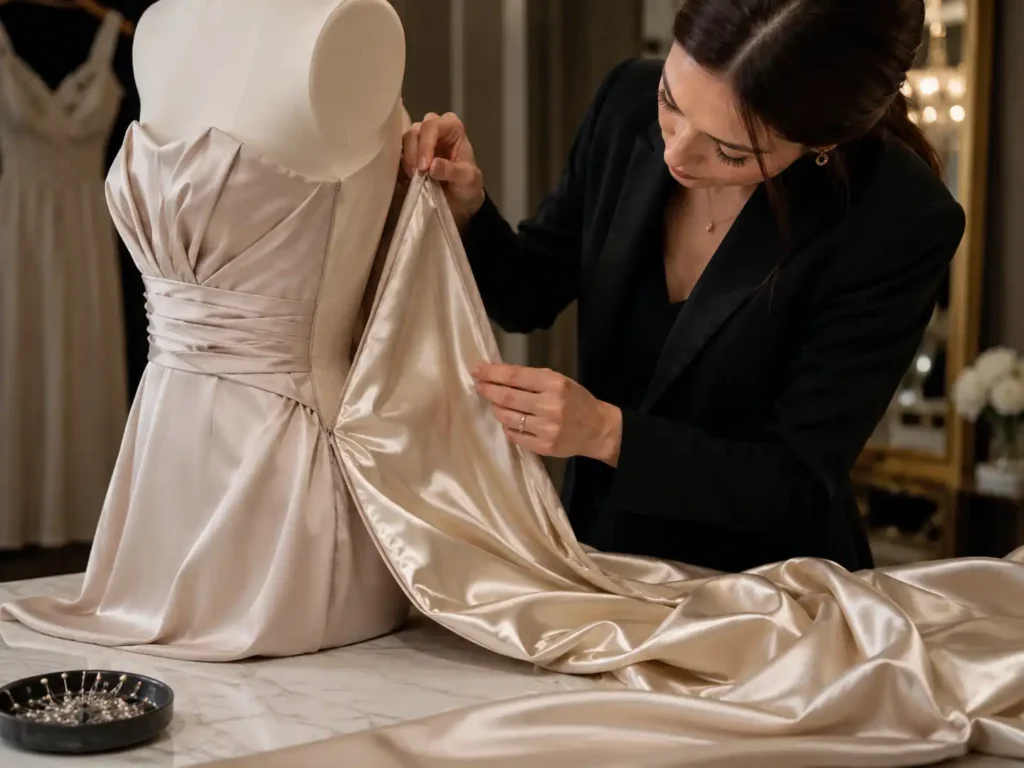
Woman tailoring a patterned dress on a mannequin in a creative workspace.

Fabric Selection for Controlled Drape and Recovery

Fabric choice determines whether the twist appears fluid, structured, compact, or bulky. Composition alone is not enough; weight, thickness, stretch direction, recovery, opacity, surface friction, shrinkage, and pressing response all influence the final garment.

Fabric DirectionStretch and RecoveryDrapeTwist BulkMain Control RiskBest Style Direction
Lightweight jerseyMedium-high to high; recovery must be testedSoft and fluidLowGrowth, neckline stretch, side-seam rotationCommercial mini, midi, maxi
PonteMedium-high with firmer recoveryStructuredMedium-highThick center, seam impressionBodycon, structured cut-out
Rib knitHigh stretch; variable recoveryClose to bodyMediumVertical growth, uneven twist tensionCasual fitted and long sleeve
Stretch satinLow-medium to mediumFluid with shineMediumSnagging, zipper waves, seam pressureParty and occasion styles
Non-stretch satinMinimal stretchFluid to structuredMedium-highRestricted fit, wrinkles, hard knotDraped midi and evening dresses
Viscose or rayonLow to medium by constructionHigh fluidityLowShrinkage, growth, seam slipResort and maxi styles
Stretch meshMedium-high to highLight and transparentLowHole risk, recovery, unstable coverageLayered party and cut-out styles
ChiffonMinimal stretchHigh fluidityLowSlippage, transparency, edge controlOccasion and layered maxi styles
CrepeLow to mediumControlled fluidityMediumGrain direction, seam puckeringMidi, office-to-evening, occasion
Velvet stretchMedium; recovery must be checkedSoft with pile directionMedium-highNap direction, pressure marksHoliday and evening styles

Linings, Closures, and Support Details Matter
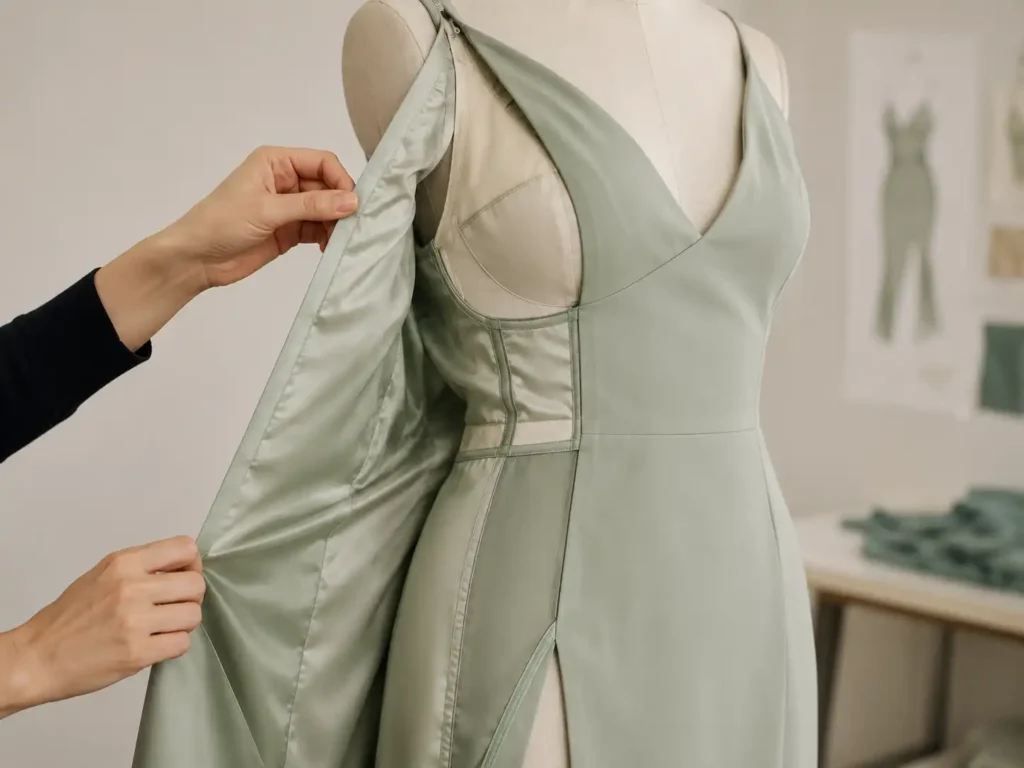
Twist front dresses often look simple from the outside, yet internal components decide whether the garment feels secure, lies flat, and survives bulk production. Each component should be selected around the shell fabric and wearing level.

Lining Coverage

Full, partial, or localized lining can support opacity, bust security, cut-out control, and comfort. A rigid lining under a fluid shell may restrict the twist; a weak lining may stretch beyond the approved opening. Lining pattern, attachment, and edge position need separate approval.

Invisible Zipper

A concealed zipper may sit at the center back, side seam, or another approved location. It should open smoothly without pulling the twist off-center. Satin and fitted styles require special attention to zipper waves, seam support, and top-edge alignment.

Clear Elastic

Clear elastic can stabilize a neckline, cut-out, underbust, or mesh edge while preserving stretch. Tension must be controlled. Excess tension gathers the edge; insufficient tension allows gaping. The approved sample should define where elastic is used and how much stretch is applied.

Bra Cups

Built-in cups may support twist-bust and occasion designs. Cup size, position, shape, lining coverage, and attachment method affect appearance and comfort. Cups should not create visible edges or force the twist into an unintended shape.

Boning or Support

Selected designs may use boning, power mesh, inner panels, or reinforced seams to stabilize the bust and waist. Support should improve shape without creating stiffness, pressure, or visible ridges under the shell fabric.

Labels and Seam Placement

Main labels, size labels, care labels, and internal seams should avoid sensitive skin-contact zones. The twist center can already create internal thickness, so label and seam placement should not add discomfort. Private-label details need approval before bulk packing.

Design Options with Clear Production Consequences

Custom options should be evaluated by their effect on fit, fabric use, sewing time, MOQ, and repeatability. A visual change can alter the full development route.

Twist Placement

Moving the twist from bust to waist changes torso length, coverage, pattern balance, and internal support. Placement should be set before final fabric consumption and grading are confirmed.

Neckline Shape

V-neck, sweetheart, scoop, halter, one-shoulder, off-shoulder, and strapless directions create different support requirements. Neckline depth should be measured from a stable reference and checked during movement.

Sleeve Direction

Sleeveless, cap sleeve, long sleeve, mesh sleeve, and statement sleeve options alter shoulder tension and seasonality. Sleeve stretch and weight should not pull the twist or neckline out of position.

Dress Length

Mini, midi, and maxi versions require more than changing hem length. Waist placement, skirt volume, side seam, slit, lining, and fabric fall may need adjustment to preserve the same visual proportion.

Cut-Out Size

Cut-out width and height affect coverage, edge stability, size grading, and consumer comfort. Openings should be measured and reviewed on the body, especially across a broad size range.

Ruching Level

Light gathering creates controlled texture; heavy ruching changes fabric consumption, seam tension, and visual volume. Ruching length and fullness should be documented for bulk repetition.

Back Construction

Open back, low back, zip back, tie back, elastic back, and covered back options affect support and dressing ease. The back structure must balance the front twist and intended fit.

Color and Print

Solid color, print, gradient, and color-block directions require separate shade, placement, and matching decisions. Printed twist panels can distort motifs, so print scale and rotation should be reviewed before cutting.

Files Needed for Accurate Development and Quotation

Complete project data improves pattern accuracy, sample efficiency, material sourcing, costing, and launch planning. Each file should answer a manufacturing question rather than serve as decoration.

Design Views

Front, back, and side views reveal neckline, twist position, back closure, seam lines, length, and opening shape. Close-up images should show the intended fold direction and inner appearance where possible.

Tech Pack

A useful tech pack includes construction callouts, stitch details, measurements, grading, BOM, colorways, labels, packing, and revision history. Jinfeng can also review incomplete packs and identify missing information before sampling.

Measurement Chart

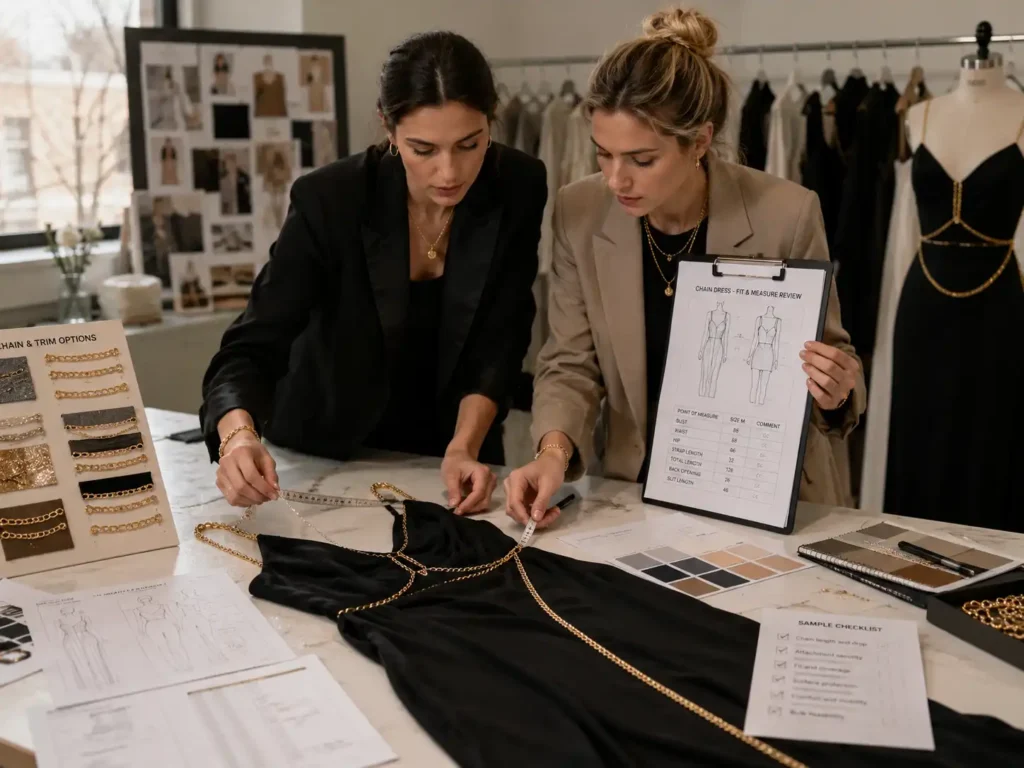
The chart should define the base size, measurement method, tolerance, and size range. Twist center height, opening width, overlap, neckline depth, underbust, front length, and side seam may need additional product-specific points.

Fabric Specification

Composition, weight, width, stretch direction, recovery, color, finish, hand feel, and approved reference help the team source a suitable material. A fabric swatch or original garment can provide a stronger comparison than a fiber name alone.

Color Plan

Pantone references, approved swatches, lab dips, print files, and lining or zipper color requirements reduce mismatched components. Pale colors should be reviewed for transparency and staining risk.

Label and Packing Files

Woven label, size label, care label, hangtag, barcode, SKU, polybag, sticker, carton mark, and warehouse requirements should be supplied before final quotation and production planning.

Production Feasibility Is Checked Before Sampling

A design can be visually attractive yet unsuitable for the chosen fabric, target cost, size range, or production route. Early feasibility review protects the approved appearance before pattern and material costs increase.

Jinfeng Apparel reviews the twist type, panel construction, seam layers, opening, neckline, lining, closure, support, and intended fit. The team also considers whether the selected fabric can hold the required drape, recover after stretch, remain opaque, and repeat consistently across bulk cutting and sewing.

Key review questions include:

  • Can the twist be secured without a hard inner knot?
  • Will the neckline or cut-out remain stable during movement?
  • Does the material provide enough drape without uncontrolled growth?
  • Can seam allowances be reduced while preserving strength?
  • Will the construction remain consistent across the planned size range?
  • Are selected trims, colors, and packaging available at the required quantity?
  • Does the launch calendar allow time for fabric confirmation, fitting, PP approval, production, QC, and shipment?

When risk is identified, Jinfeng may propose a revised twist allowance, alternative anchor, localized lining, stabilizing elastic, different fabric weight, adjusted opening, or modified sewing route. The aim is not to simplify every design, but to protect the intended result in production.

Pattern Development for Stable Twist Placement

Pattern development converts the approved front image into a repeatable garment structure. Twist front styles need more control points than a standard front bodice because rotation, drape, overlap, and opening behavior interact with bust and waist fit.

Base Bodice Balance

Development begins with shoulder, neckline, armhole, bust, underbust, waist, side seam, and front length. A weak base cannot be corrected by adding more drape. The bodice must sit correctly before the twist is refined.

Twist Panel Development

Twist panels may extend from the neckline, bust, side front, waist seam, or separate overlay. Panel length, width, grain direction, rotation, and seam allowance are tested according to fabric behavior and desired fold depth.

Bust and Underbust Control

Twist-bust styles need separate attention to upper bust, full bust, underbust, cup position, neckline depth, and center coverage. The front should look shaped without creating pressure, gaping, or unstable overlap.

Waistline Position

Natural, high, and low waist positions change body proportion and affect how the skirt hangs below the twist. Waist reference should be measured and maintained through sample revisions and grading.

Cut-Out Pattern

Cut-out edges require accurate width, height, curve, seam allowance, stabilization, and lining relationship. The opening should preserve shape without cutting into the body or exposing more than the approved design.

Front Length Compensation

Rotation and gathering can shorten the effective front length. Pattern development must compensate so the hem remains level and the waist does not rise. Long and asymmetric dresses may require additional balance review.

Lining Pattern

The lining may follow the shell, cover only selected zones, or create an independent support structure. A direct copy of the shell pattern is not always suitable. Lining should protect opacity and comfort without restricting drape.

Grading Logic

Twist placement, bust volume, opening coverage, front length, overlap, and support should be reviewed across the size range. Size-set sampling may be recommended when the range is broad or the front opening is sensitive.

Pattern Development Before and After Pleating

Sample Stages Protect the Final Bulk Standard

Different sample stages answer different questions. Combining every decision into one sample often causes unclear approvals and late changes. Sample timing depends on material availability, complexity, fitting feedback, and revision speed. Standard development should be scheduled around the real approval route rather than a fixed promise applied to every style.

First Sample

The first sample verifies the basic structure, twist method, fabric direction, proportions, and construction feasibility. It may not contain final labels, packaging, or exact production material when sourcing is still under review. Feedback should separate fit, design, construction, and material comments.
Fit Control from Sample to Bulk​

Fit Sample

The fit sample checks bust, underbust, waist, hip, neckline, opening, twist placement, length, and movement. Measurements and wearing observations should be recorded together. A visually attractive sample should not pass when coverage or movement remains unstable.

Revised Sample

The revised sample verifies the approved corrections. Revision notes should identify each change, its measurement or construction basis, and the status of unresolved points. Multiple uncontrolled changes should not be left to verbal memory.

Photo-Ready Sample

A photo-ready sample focuses on approved visual proportion, color, drape, twist shape, pressing, and camera-facing finish. Campaign and ecommerce imagery may expose asymmetry or seam impressions that are less visible during a standard fitting.

PP Sample

The pre-production sample should represent the intended bulk fabric, trims, labels, construction, measurements, color, and finish. It becomes the final approval point before production release. Changes after PP approval may affect cost, timing, and material availability.

Golden Sample

The approved golden sample provides a physical reference for sewing, QC, pressing, packing, and repeat orders. Pattern, BOM, measurements, color records, labels, and packing instructions should remain aligned with the same version.

PP Approval Locks More Than the Front View

PP approval should confirm the complete production standard, not only whether the dress looks acceptable in one photograph. The approved package connects development with bulk execution.

The PP record should lock:

  • Final shell and lining fabric references.
  • Approved color, shade, print, and component matching.
  • Final pattern version and grading basis.
  • Twist direction, center position, panel order, fold depth, and anchor points.
  • Bust, underbust, waist, opening, side seam, length, hip, and hem measurements.
  • Stitching, seam allowance, elastic tension, zipper, cups, boning, lining, and support details.
  • Woven labels, size labels, care labels, hangtags, barcode, stickers, and polybags.
  • Pressing, folding, carton assortment, and carton marks.
  • Product-specific QC points and tolerances.

The approved PP sample, golden sample, BOM, measurement chart, trim card, construction notes, label files, packing instructions, and revision history should carry the same style and version reference. Any later change needs written review because one change may affect fabric consumption, sewing time, fit, packing, or delivery.

Production Is Matched to Fabric and Construction

Jinfeng Apparel operates six owned women’s fashion factories and works with more than ten long-term satellite production partners. Allocation is based on product requirements rather than assigning every dress to the same line.

Stretch Jersey Styles

Jersey, rib, ponte, and stretch mesh programs need control over stretch direction, differential feeding, seam elasticity, recovery, neckline stability, and measurement. Production should be suited to fitted womenswear rather than general woven garments.

Satin and Woven Styles

Satin, crepe, viscose, chiffon, and other woven materials need accurate grain direction, controlled handling, seam appearance, pressing, and shade protection. Twist construction may require reduced seam bulk and careful internal finishing.

Mesh and Layered Styles

Mesh and layered dresses require transparent-zone control, lining accuracy, hole prevention, edge stability, and soft seam finishing. Power mesh and soft stretch mesh may need different sewing methods within the same garment.

Complex Cut-Out Styles

Cut-out construction requires accurate opening shape, edge support, bust and waist coverage, and consistent tension. Early production units should be checked against the approved sample before full flow continues.

Multi-Style Collections

Orders containing 10-30 styles can be grouped by fabric, construction, sample status, launch priority, production route, and packing requirement. Each style should retain an independent file, revision record, and PP approval status.

Repeat-Order Programs

Repeat programs can call on retained pattern, BOM, measurement, fabric, trim, color, QC, and packing records. New fabric lots, added colors, revised fits, changed packaging, or updated quantities still require confirmation before release.

Twist Front Dress Production Process

The manufacturing route is organized around material stability, accurate cutting, repeatable twist assembly, controlled sewing, measurement, and presentation. Each stage should protect the approved PP standard.

Fabric Inspection

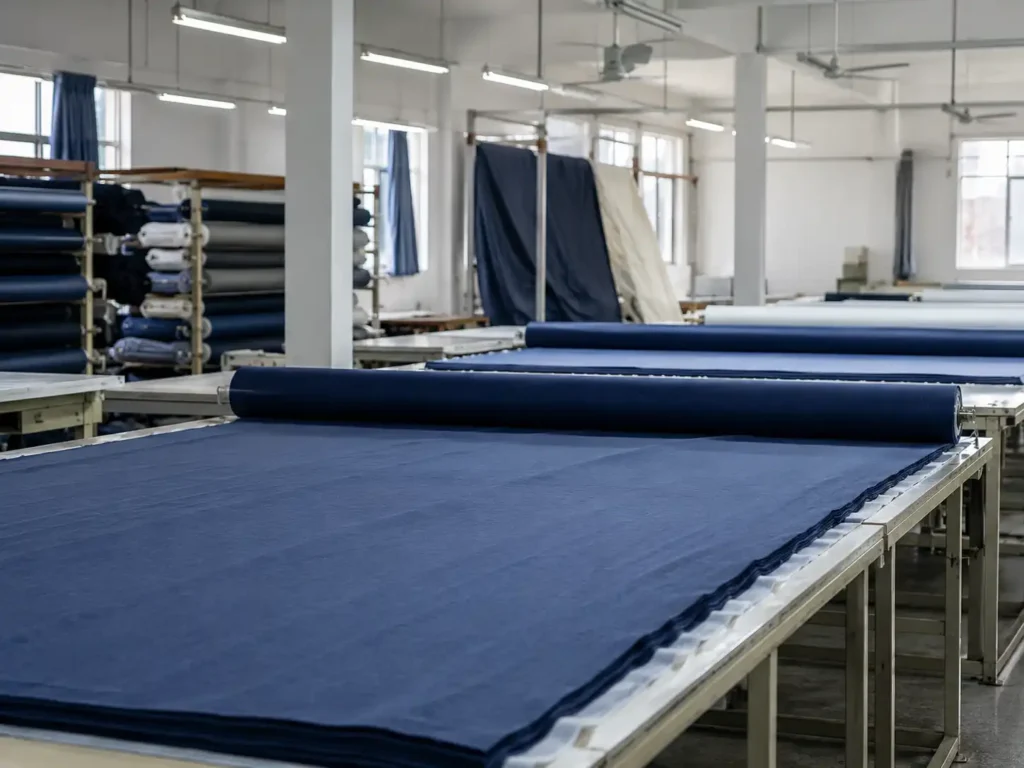
Shell, lining, mesh, elastic, zipper, and key trims are checked against approved references. Review may include shade, hand feel, visible defects, stretch, recovery, opacity, width, and material identity according to the product risk.

Fabric Relaxation

Knit and stretch materials may require relaxation before cutting. Woven viscose or other materials may also need behavior review. Cutting material before it settles can lead to measurement change, twisting, or uneven garment length.

Marker and Cutting

Pattern direction, fabric grain, stretch direction, nap, shine direction, print placement, and left-right components are checked. Twist panels must not be reversed or cut against the required stretch or shine direction.

Bundle Control

Cut pieces are grouped by style, color, size, and bundle reference. Twist panels, lining, and support pieces should remain matched to prevent missing, reversed, or mixed components during sewing.

Twist Assembly

Panel order, rotation direction, notches, anchor points, seam allowance, and fold sequence are controlled. Early units are compared with the approved sample before the operation is repeated across the full batch.

Main Garment Sewing

Bodice, skirt, sleeves, lining, zipper, elastic, cups, support, and hems are assembled according to the approved construction. Sewing sequence should avoid stretching the twist or trapping uneven fullness.

Inline Inspection

Inspectors review twist position, drape, opening, neckline, side seam, zipper, lining, stitching, and key measurements during production. Problems found early can be corrected before large quantities are completed.

Pressing and Packing

Pressing should restore drape without flattening the twist, creating shine, or leaving seam impressions. Folding and packaging should protect the center detail, surface, labels, barcode, size, color, and carton assortment.

Quality Control Built Around Twist-Specific Risks

General garment inspection is not enough for a twist front dress. The inspection plan should include measurable and visual points linked to the approved structure, material, size range, and wearing level.

Incoming Material Control

Fabric is checked against approved color, hand feel, surface, stretch, recovery, opacity, and visible-defect expectations. Satin needs attention to snagging, shade, and shine direction. Jersey and mesh require stretch and recovery review. Lining and elastic should match the intended support.

Cutting Control

Cutting checks cover pattern version, grain, stretch direction, nap or shine direction, print orientation, panel count, left-right pieces, and notches. Twist components cut incorrectly may still be sewable but produce a visibly different front.

First Production Review

Early completed units are compared with the PP or golden sample. Twist center, fold direction, drape, opening, neckline, zipper, side seam, measurements, and pressing are reviewed before full production continues.

Inline Sewing Inspection

Inline checks look for shifted twist centers, uneven folds, exposed lining, gaping, excessive seam bulk, stretched neckline, puckering, zipper waves, side-seam rotation, and missed stitches. Findings should be recorded and corrected at the operation where they arise.

Measurement Inspection

Standard bust, waist, hip, length, sleeve, and hem points are combined with product-specific measurements. Twist center height, opening width and height, overlap, neckline depth, underbust position, and side seam may be added according to the design.

Appearance Inspection

Final appearance review checks symmetry, intended asymmetry, drape, fold count, surface marks, shine, color, pressing, thread ends, stains, damage, and the relationship between twist and overall silhouette.

Wearing Security Review

Selected styles require review of bust coverage, neckline stability, cut-out edge, elastic tension, cups, boning, strap security, and inner seam comfort. The dress should preserve the approved visual level during normal movement.

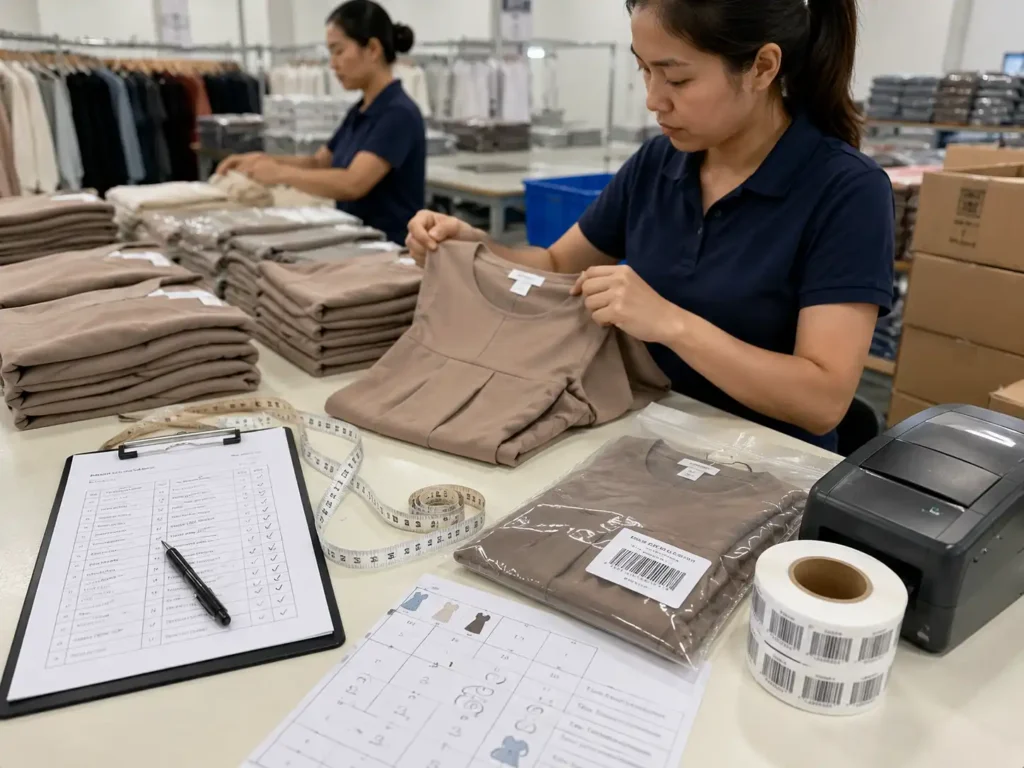
Packing Inspection

Size label, care label, main label, hangtag, barcode, SKU, color, polybag, warning label, folding, quantity, assortment, and carton mark are checked before shipment. Satin, mesh, and embellished fabrics may need extra surface protection.
Cost and MOQ Are Based on Real Construction

Jinfeng Apparel builds quotations from the approved product structure rather than using a generic dress price. Twist complexity, fabric behavior, support, sample route, size range, labels, packing, and delivery all influence the final cost.

Cost ElementWhat Changes the CostInformation Needed for Review
Shell fabricComposition, weight, width, consumption, stretch, color, print, finish, supplier MOQSwatch, reference garment, specification, color plan
Lining and supportFull or partial lining, cups, boning, power mesh, elastic, facingCoverage drawing, wearing level, support requirement
Pattern workTrue twist, knot-effect, cut-out, asymmetric panels, grading complexityFront/back views, tech pack, size range
SamplingFirst sample, fit sample, revisions, photo sample, PP, size setRequired sample stages and approval plan
Sewing timeTwist assembly, ruching, layer count, zipper, lining, support, hemConstruction callouts and approved sample
Trims and labelsZipper, elastic, cups, labels, hangtags, barcode, special trimsBOM and artwork files
Quality controlProduct-specific measurements, visual checks, testing, inspection levelQuality manual or agreed checklist
PackingFolding, tissue, polybag, hanger, barcode, SKU, carton assortmentPacking manual and warehouse requirements
DeliveryIncoterm, shipment method, split shipment, destination, timelineDelivery plan and consignee information

Private Labels and Packaging Complete the Garment

A twist front dress is not ready for retail or ecommerce until labels, barcode, folding, protection, and carton details are aligned with the approved brand program.

Woven Main Labels

Main labels should match the approved artwork, dimensions, color, fold, and attachment location. Placement should avoid heavy seam zones or direct contact with the twist center.

Size and Care Labels

Size and care information should match market, fiber, wash, and language requirements supplied by the brand. Label position should remain readable and comfortable.

Hangtags

Hangtags may include branding, product story, price, barcode, sustainability information, or market-specific text. String, pin, seal, and placement should protect the garment surface.

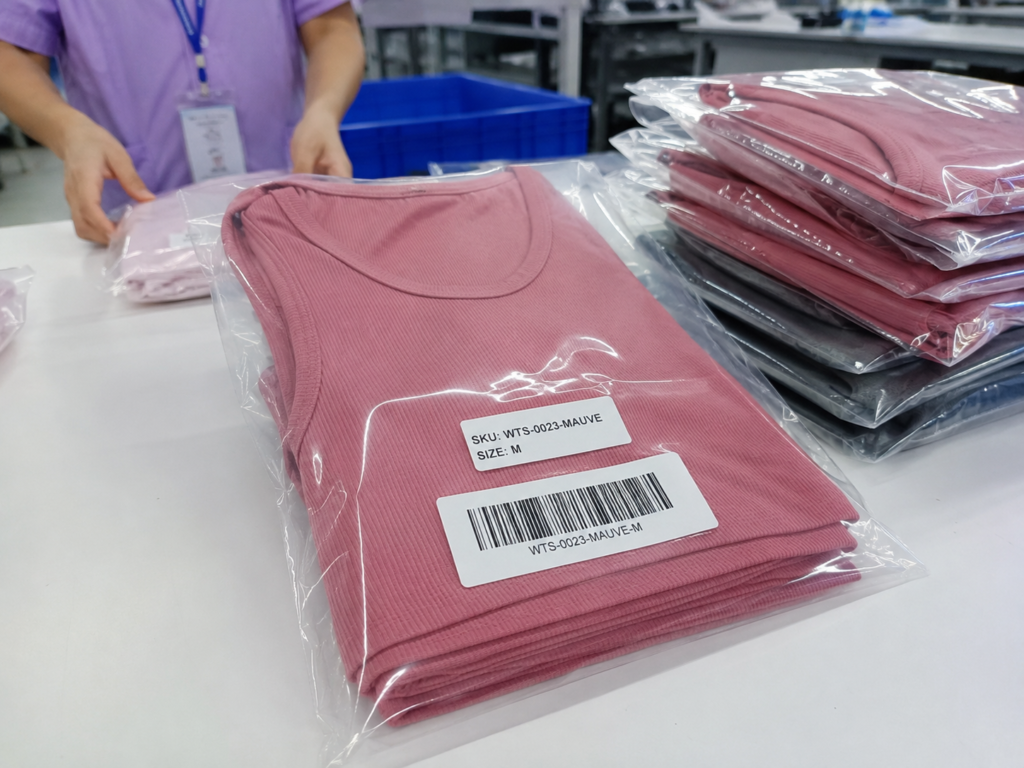
Barcode and SKU Labels

Barcode, SKU, color, size, and warehouse labels must match the packing list and carton assortment. Scannability and placement should be reviewed before bulk packing.

Ecommerce Polybags

Polybags can include size stickers, barcode labels, suffocation warnings, vents, seals, and warehouse references. Folding should protect the twist without forcing a permanent crease through the front center.

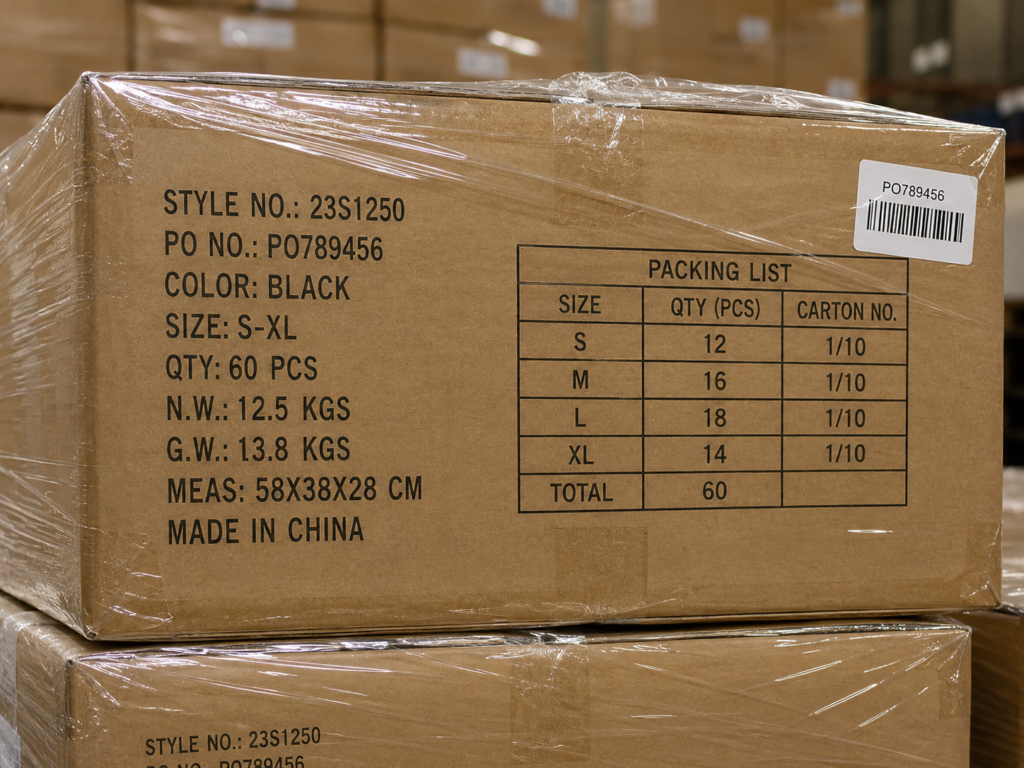
Carton Packing

Carton size, assortment, quantity, weight, carton mark, and internal protection should match the shipment plan. Satin and delicate mesh programs may require tissue, protective film, or adjusted folding to reduce snagging and pressure marks.

Plan Launch Timing, Delivery, and Repeat Orders

Twist front collections require coordinated approval rather than a single production date. Fabric confirmation, pattern, fit review, revisions, PP approval, bulk production, QC, packing, and shipment should be planned backward from the required launch or warehouse date.

Launch Calendar Control

A workable calendar separates brand feedback time from factory execution time. Delayed fabric, color, fit, label, or packing approval can move later stages. Multi-style programs should prioritize campaign samples, hero products, long-lead fabrics, and high-risk construction first.

Shipping Coordination

Jinfeng Apparel supports express courier, air freight, sea freight, split air-and-sea shipments, client-nominated forwarders, and factory-recommended forwarders. EXW, FOB, CIF, DAP, and DDP can be reviewed by project. Commercial invoice, packing list, carton marks, shipment references, and related export coordination can be prepared according to the agreed route.

Repeat-Order Readiness

Approved patterns, grading, measurements, BOM, fabric references, color records, trims, construction notes, golden sample, QC points, labels, and packing files can support future production. A repeat using new fabric, new color, revised fit, changed packaging, or a different quantity still requires updated confirmation.

Design Protection and Project Records Stay Controlled

Jinfeng Apparel supports NDA-based cooperation and protects tech packs, line sheets, original samples, patterns, measurements, fabric directions, trims, private-label files, packaging, quantities, target prices, and unpublished designs throughout development and production.

NDA Cooperation

An NDA can define confidentiality responsibilities before sensitive files are shared. Project documents should be limited to the teams involved in development, production, quality, packing, and delivery.

Tech Pack Protection

Technical files, revision notes, measurements, BOM, and construction drawings should remain connected to the approved style record. Unreleased files are not used as public marketing material without authorization.

Pattern Records

First, revised, PP, lining, grading, and bulk patterns can be archived by style and version. Retained records support repeat orders and related style development while protecting the original ownership context.

Sample Protection

Original garments, development samples, photo samples, PP samples, and golden samples should be stored, returned, or managed according to the agreed project arrangement. Unreleased samples are not displayed publicly without approval.

Label and Packaging Confidentiality

Brand labels, hangtags, barcodes, packaging artwork, carton marks, and warehouse information may reveal commercial plans. Access and use should remain limited to the approved program.

Third-Party Testing Support

When required, Jinfeng can coordinate material or garment testing, inspection, and document preparation according to the target market and brand standard. Testing scope and acceptance criteria should be confirmed before production.

Anonymized Twist Front Dress Project Examples

The following project profiles reflect the scale and operating conditions commonly managed for established fashion programs. Brand names and proprietary files remain confidential.

US Jersey Twist Program

A US online fashion label developed 18 related styles across twist-front mini, midi, long-sleeve, and cut-out bodycon directions. Total order volume reached 36,000 garments across black, chocolate, ivory, red, and seasonal colors. The main challenge was maintaining twist height and opening coverage across a broad size range while using two jersey weights. Jinfeng grouped the styles by base block, fabric weight, twist method, and neckline. Fit comments were converted into measured updates for twist center height, underbust, opening width, side seam, and front length. A size-set review was used for the most sensitive cut-out styles. Bulk control focused on stretch direction, recovery, first production units, inline twist placement, side-seam rotation, and barcode packing. Result: the collection moved into coordinated production after two main fit rounds and PP approval by style group. Pattern, BOM, color, label, and QC records were retained for repeat planning.

Satin Occasion Collection<br

An occasionwear program included 24 styles and 58,000 garments across stretch satin, matte satin, chiffon overlays, and selected mesh panels. The range combined twist-bust midi dresses, asymmetric waist-twist gowns, party minis, and long-sleeve evening styles. Primary risks included shine direction, center bulk, zipper waves, color-lot variation, pressing marks, and packing creases. Jinfeng separated stretch and non-stretch constructions, reviewed twist allowance by fabric weight, reduced unnecessary seam layers, and aligned lining and zipper choices with each silhouette. PP approval covered close-up drape references, pressing method, folding, and carton presentation. Early production units were compared with the golden sample before full flow. Result: the assortment was produced in staged groups to protect fabric handling and launch timing. Satin-specific inspection covered snagging, shade, seam pressure, twist shape, zipper appearance, and packing protection.

Multi-Style Resort Range

A seasonal resort program contained 12 twist-front dresses within a larger 30-style order. Total brand volume reached 24,000 garments. Twist products included printed viscose maxis, jersey midis, lightweight mini dresses, and a coordinated twist-front top with skirt. Main challenges involved print direction, shrinkage, long-hem balance, opacity, travel creasing, and mixed-material scheduling. Jinfeng grouped fabrics by lead time and behavior, prioritized long-hem and printed styles for earlier sampling, and recorded print orientation around the twist panels. Viscose styles were reviewed for shrinkage and settling; pale colors received opacity and lining checks. Packing was adjusted to reduce front-center pressure and help the garments recover after transit. Result: the twist category was delivered within the wider assortment plan using independent style files, sample status tracking, PP approval, production allocation, QC notes, and packing instructions.

Twist Front Dress Frequently Asked Questions
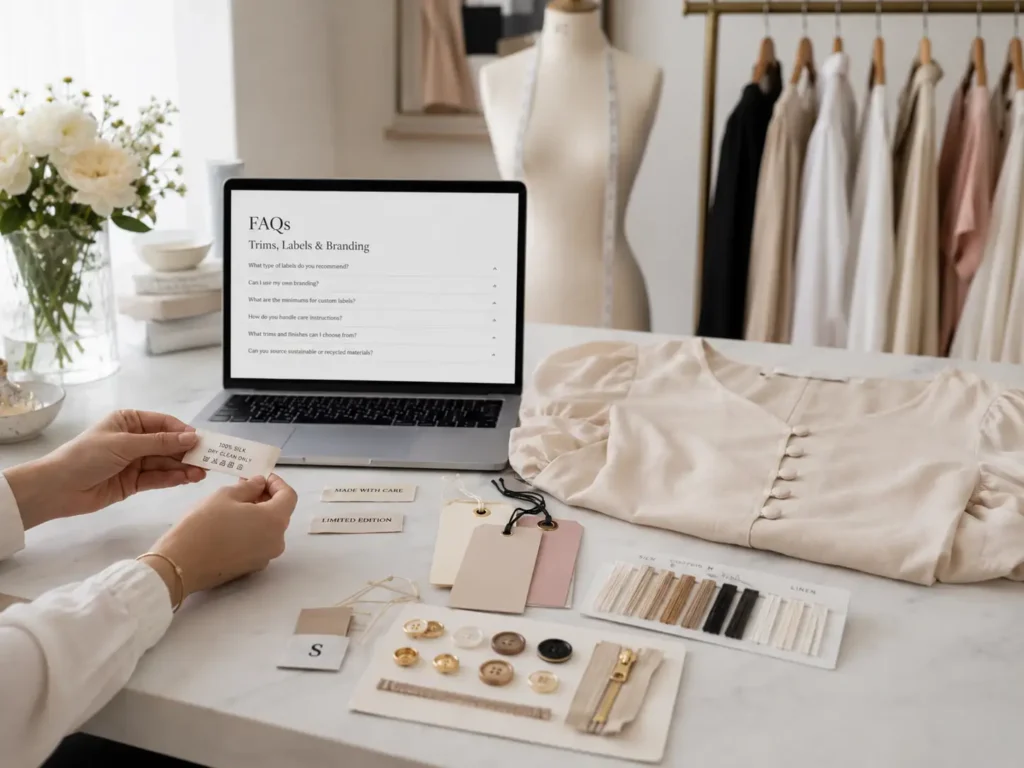
Yes. Jinfeng Apparel develops custom twist front dresses from tech packs, reference images, original samples, sketches, or line sheets. Support can include fabric sourcing, pattern development, fitting, sample revisions, PP approval, bulk production, QC, private labels, packing, and export coordination.
Suitable options include jersey, ponte, rib knit, stretch satin, non-stretch satin, viscose, rayon, mesh, chiffon, crepe, and velvet. The best choice depends on desired drape, support, stretch, recovery, opacity, thickness, price level, and wearing occasion. Fabric should be approved through sample review.
A preliminary review can begin from one image, but accurate development usually needs front and back information, length, fabric direction, size chart, color plan, quantity, and construction clarification. Hidden details such as lining, closure, support, and inner twist method must be confirmed before final sampling.
Twist center height, overlap, opening, bust, underbust, waist, and front length are linked to the grading plan. Sensitive styles may need size-set review. Uniform enlargement alone is not enough when the front structure changes with body volume and torso length.
Yes. Cut-out development can include opening width and height, edge support, lining, elastic, mesh, bust and waist coverage, grading, and movement review. The approved opening should remain stable across the intended size range.
Yes. Jersey and stretch materials require recovery and seam-stretch control, while woven satin, crepe, viscose, and chiffon require more deliberate ease, grain, drape, and closure planning. Different materials may require different patterns even when the front concept looks similar.
MOQ starts from 200 pcs per style/color. Fabric availability, dyeing, printing, trims, size ratio, construction, packaging, and production schedule can change the workable quantity. Multi-style orders should include a clear quantity breakdown by style, color, and size.
The route may include first sample, fit sample, revised sample, photo-ready sample, size set, PP sample, and golden sample. The exact sequence depends on garment risk, fabric, size range, launch needs, and internal approval process. PP approval is required before bulk release.
Yes. Jinfeng can support woven labels, size labels, care labels, hangtags, barcode and SKU stickers, polybags, warnings, folding, carton assortment, and carton marks according to supplied brand files and warehouse requirements.
Consistency is supported through final pattern, grading, BOM, measurement chart, approved fabric and trim references, PP sample, golden sample, construction notes, product-specific QC points, first production review, inline checks, final inspection, and packing verification.
Yes. NDA-based cooperation and design protection can cover tech packs, patterns, samples, fabric directions, labels, packaging, quantities, target prices, and unpublished styles. Public use of confidential project content requires authorization.
Send design views or tech pack, quantity per style/color, size range, fabric preference, color plan, labels, packaging, quality requirements, delivery destination, and target timeline. More complete information allows a more accurate feasibility and costing review.

Develop Your Twist Front Dress Collection

Send Jinfeng Apparel the information needed to evaluate construction, fabric direction, sample route, MOQ, quotation, production timing, private-label requirements, and delivery. A complete submission allows Kelly and the development team to respond with a more useful project assessment rather than a broad estimate.
Please include:

  • Front, back, side, and close-up twist references.
  • Tech pack, original sample details, or measurement chart.
  • Quantity by style, color, and size.
  • Preferred fabric, stretch, weight, hand feel, or reference swatch.
  • Required lining, zipper, cups, elastic, support, or special trims.
  • Main label, size label, care label, hangtag, barcode, and packing files.
  • Target market, launch date, delivery destination, and preferred shipment route.

Tell Us About Your Dress Project

Share your product details, estimated quantity and development requirements. Our team will review your project and provide practical OEM/ODM production feedback.

Premium Women’s Apparel Production for Fashion Brands

From dress sample development to bulk production, JF Apparel supports fashion brands with confidential OEM/ODM manufacturing, reliable quality control and scalable production support.

START YOUR DRESS PROJECT

Ready to Develop Your Next Dress Collection?

Share your design concept, product requirements or sourcing plans with our team. We’ll review your project and provide practical feedback on development, materials, MOQ and production.

7-10 Days

Sample Development

200 PCS

Starting MOQ

Fast Response

Professional Follow-Up