Skip to content
Tulle Dress Manufacturer
Custom development and bulk production for layered, corset, embroidered and occasion tulle dresses built for global fashion programs.
- MOQ starts from 200 pcs per style/color, subject to tulle availability, color development, construction and trim requirements.
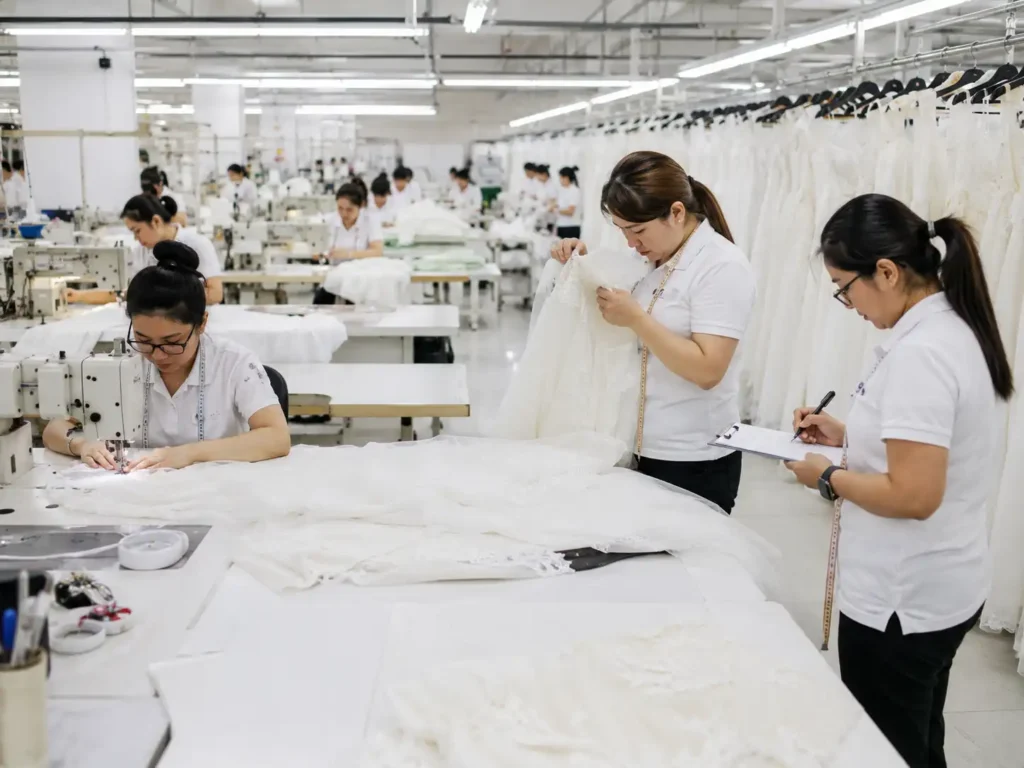
- 2 sample rooms, 7+ senior pattern makers and 20+ sample machinists support fit correction, layer control and pre-production approval.
- 6 owned women’s fashion factories and 10+ long-term production partners support multi-style, multi-color and multi-size programs.
- Tulle structures can be developed from light single overlays to 4-6+ layer skirts with lining, corsetry, embroidery or dimensional decoration.
Jinfeng Apparel converts reference images, samples and tech packs into production-ready tulle dresses through fabric review, pattern development, sampling, PP approval, bulk control, private-label packing and export coordination.
Tulle Dress Manufacturing Capacity Built for Fashion Programs
Since 2008
Six Owned Factories
Ten Plus Partners
Two Sample Rooms
Seven Plus Pattern Makers
Twenty Plus Sample Machinists
A Production Model for Established Fashion Collections
Best Program Fit
- Seasonal dress collections with 10-30 styles developed through planned sampling and PP approval.
- Occasionwear, partywear, premium ecommerce and fashion retail programs requiring consistent fit, color and presentation.
- Orders using private labels, barcodes, SKU packing, warehouse marks and coordinated export documentation.
- Projects with clear quantities, target delivery windows, fabric direction and realistic quality expectations.
Production Boundaries
- Jinfeng Apparel does not operate as a ready-stock tulle dress wholesaler or a dropshipping fulfillment service.
- Micro orders without sampling budgets, quantity plans or production intent do not match the operating model.
- Complex tulle structures cannot be quoted accurately from one image without layer, lining, trim and size information.
- Lowest-price-only projects are not accepted when the target cost removes necessary fabric, construction or inspection controls.
Why Tulle Dress Production Commonly Loses Its Original Effect
Volume Collapses
Uneven Layer Lengths
Poor Transparency Control
Snags and Tiny Holes
Distorted Gathers
Packing Flattens Shape
From Design Reference to Approved Bulk Tulle Dresses
Project Review
Fabric Direction
Pattern Development
First Sample
Fit Revision
PP Approval
Bulk Production
Final Inspection
Export Delivery
Custom Tulle Dress Styles We Manufacture

Tulle Mini Dresses

Tulle Midi Dresses

Tulle Maxi Dresses

Tulle Party Dresses

Tulle Cocktail Dresses

Tulle Evening Dresses

Tulle Prom Dresses

Graduation Tulle Dresses

Wedding Guest Dresses

Corset Tulle Dresses

Tiered Tulle Dresses

Embroidered Tulle Dresses
Tulle Dresses Developed Around Real Selling Occasions

Party Launches

Birthday Collections

Graduation Season

Prom Programs
Prom ranges usually include multiple colors and extended sizes. Support, skirt volume, zipper strength and decoration stability must remain consistent across the grade. Production planning also considers color splits, size ratios and packaging because bulky skirts consume more carton space than standard dresses.

Wedding Guest

Holiday Drops

Evening Capsules

Editorial Styles
Length and Silhouette Options for Tulle Collections

Mini Fit-and-Flare

Soft A-Line Midi

Full Tulle Maxi

Corset Ball Shape

Asymmetric Hem

One-Shoulder Volume

Strapless Tulle

Backless Sheer Style
Choosing the Right Tulle for Shape, Feel and Production
Tulle is not one material. Mesh size, filament, stiffness, stretch, finish and decoration change how a dress falls, gathers, recovers and survives production. Fabric approval should connect directly to the target silhouette.
| Tulle Type | Hand and Structure | Best Applications | Main Production Risks | Development Focus |
|---|---|---|---|---|
| Soft Tulle | Fluid, light and low stiffness | Midi skirts, overlays, soft ruffles, wedding guest styles | Can collapse, twist or cling through static | Layer count, skirt sweep, anti-static handling and lining match |
| Stiff Tulle | Crisp with stronger shape retention | Mini volume, tiered skirts, structured party styles | Can feel rough, stand away unevenly or look costume-like | Skin contact, edge finish, density and controlled fullness |
| Illusion Tulle | Fine, sheer and visually delicate | Necklines, sleeves, back panels, inset areas | Needle marks, seam visibility and low tear resistance | Color match to skin/garment, seam placement and reinforcement |
| Stretch Tulle | Elastic with body-hugging recovery | Ruched panels, fitted sleeves, sheer body sections | Growth, seam waviness and inconsistent stretch direction | Stretch percentage, recovery, grain direction and stitch choice |
| Glitter Tulle | Sparkle finish with variable stiffness | Holiday, party, prom and statement styles | Glitter shedding, surface abrasion and color transfer | Shedding review, lining protection, handling and packing |
| Embroidered Tulle | Patterned, heavier and direction-sensitive | Occasionwear, floral dresses, premium capsules | Motif mismatch, high cutting waste and stiff seams | Motif placement, repeat, scallops and panel engineering |
| Flocked Tulle | Velvet-like surface design | Evening, fashion statement and seasonal programs | Pile crushing, rubbing marks and directional shading | Nap direction, packing pressure and surface inspection |
| Recycled Tulle | Varies by supplier and yarn specification | Collections with verified material requirements | Batch variation and unsupported sustainability claims | Supplier documents, testing, hand feel and repeat availability |
Transparency, Lining and Wearing Comfort Controlled Together
Opacity cannot be judged from tulle alone. Color, lighting, layer density, lining surface and garment fit all influence coverage. Comfort also depends on where rough edges and seams touch the body.
Coverage Mapped by Body Area
Bust, waist, hip and upper-thigh coverage are reviewed separately because a lining that appears adequate on a hanger may stretch or ride up during wear. Pale colors and fitted skirts reveal the greatest risk. Jinfeng checks lining length, opacity, seam allowance and movement while the garment is worn, photographed and viewed under stronger light. Sheer sleeves or upper bodices can remain unlined when the design requires transparency, while critical areas use double layers, cups, modesty panels or shaped lining. Coverage decisions are documented in the tech pack and PP sample so bulk production does not substitute a thinner or shorter lining.
Lining Color Changes the Tulle
Tulle color is visually influenced by the fabric beneath it. A blush tulle over nude lining appears softer and warmer; the same tulle over white may look brighter, while tonal lining deepens saturation. Jinfeng presents combinations when the visual target is sensitive, especially for ivory, nude, pastel, red and black. Lining should also be assessed for dye transfer, static and surface friction. A rough lining can catch fine netting from inside, while a highly static synthetic lining can cause the outer layers to cling and lose volume.
Skin Contact Requires Separate Finishing
Stiff tulle, cut net edges, boning channels and appliqué backs can irritate underarms, neckline, waist or inner sleeves. Comfort is improved through soft binding, lining extensions, seam cover, clean edge placement and careful decoration backing. The goal is not to remove all structure but to keep structural components away from repeated skin movement. Fit samples are worn long enough to identify rubbing that may not appear during a quick standing review. Strapless and corset styles receive extra checks around the top edge and underarm curve.
Static and Cling Managed During Development
Static can make layers stick together, pull toward the lining or attract dust. Fabric composition, finish, humidity and packaging all influence the result. Jinfeng evaluates cling during sampling and avoids relying on temporary spray as the only solution. Softer lining, adjusted layer combinations, controlled pressing, humidity-aware handling and anti-static packaging choices can improve performance. Care instructions should match the fabric and decoration so later cleaning does not damage the surface or change the volume.
Tulle Combined with Fabrics That Control Shape and Value

Tulle and Satin

Tulle and Lace

Tulle and Organza

Tulle and Sequin

Tulle and Chiffon

Tulle and Power Mesh

Tulle and Jersey

Tulle and Crepe
Pattern and Fit Development for Tulle Dress Collections
The skirt may attract attention, but fit begins at the bodice. Waist position, bust shape, shoulder angle, neckline stability and grade rules determine whether the full silhouette feels deliberate.
Bodice Fit Establishes the Dress
Tulle skirts amplify small bodice errors. A waist seam positioned 15 mm too low can make the skirt appear heavy; a loose upper bodice allows the full skirt to rotate; an incorrect bust point distorts corset seams and cups. Pattern development starts with the size chart, target fit and fabric behavior. Jinfeng checks bust width, underbust, front length, back length, shoulder slope, neckline, armhole and zipper entry before focusing on decoration. Reference images are useful for proportion, but they cannot replace measurement data. When a design arrives without a complete tech pack, the team proposes a measurement framework for approval rather than relying on visual guesswork.
Waist and Skirt Connection Must Stay Clean
Layered skirts can create a thick seam at the waist. Seam allowance direction, gathering method, lining attachment and internal support determine whether the waist looks sharp or bulky. For corset styles, the skirt should attach without collapsing the lower bodice or exposing lining. For elastic or gathered waists, the distribution must remain even across sizes. Jinfeng evaluates whether the skirt needs separate support tape, a waist stay or a reduced gathering ratio at side seams. The approved construction is recorded because operators may otherwise compress or trim layers inconsistently during bulk sewing.
Skirt Balance Is Checked in Three Dimensions
A circular or multi-panel skirt can hang differently at the front, side and back due to body shape, seam direction and fabric growth. Hem length is evaluated after the dress has hung for an appropriate period, especially when bias sections are present. Layered hems are compared from several viewing angles. High-low and asymmetric styles use controlled reference points rather than a visual freehand trim. Jinfeng also reviews movement: the skirt should return to a balanced position after walking instead of twisting around the body.
Size Grading Protects the Design Across the Range
Adding equal increments to every area does not preserve a tulle dress silhouette. Larger sizes may require different cup placement, strap position, bodice length, waist support and skirt volume. Jinfeng defines grade rules by measurement area and construction. Full skirts are reviewed for proportion so larger sizes do not become excessively bulky, while smaller sizes retain enough visual impact. Critical measurements and acceptable tolerances are established before production. Size-set or graded samples may be requested for styles with strong structure or an extended size range.

Corset, Bust Support and Internal Structure Options
A dramatic tulle skirt often needs a stable upper body. Support components must be selected as one system so the dress stays secure, comfortable and consistent through the size range.
- Boning Positioned for Real Support
Boning follows seam lines, cup shape and body movement. Decorative channels that do not connect to a stable waist or neckline offer limited support. Jinfeng selects boning type, length and channel construction according to the bodice fabric, lining and target firmness. Ends are covered to prevent sharp points. Placement is checked during fitting so channels do not distort the bust or press against sensitive areas. In bulk, boning length and position are controlled because a small shift can change the entire neckline and waist appearance.
- Cups, Underwire and Power Mesh
Bra cups provide shaping but must match the intended size range and neckline. Underwire adds stronger support when the pattern, channel and cup volume are designed together. Power mesh can stabilize side panels, backs and illusion sections while preserving some stretch. Jinfeng confirms cup size, spacing, wire shape, mesh recovery and lining coverage during sampling. A cup that looks correct on a dress form may sit incorrectly on the body if the bust point or underbust length is wrong.
- Strapless Security without Excess Pressure
Strapless dresses rely on a balanced combination of close fit, boning, anti-slip tape, waist support and neckline tension. Tightening only the upper edge can create discomfort and visible bulging without preventing downward movement. Jinfeng checks whether the skirt weight is transferred through the waist rather than hanging from the neckline. Zipper strength, hook-and-eye placement and opening length are also reviewed so the wearer can enter the dress without damaging the structure.
- Internal Finish Supports Premium Positioning
Inside construction affects comfort, durability and brand perception. Lining seams, cup edges, boning channels, waist stays, label placement and zipper guards should remain clean and secure. Structured styles may require hand tacking at selected points, but uncontrolled handwork can create variation. Jinfeng defines where hand operations are necessary and where machine methods provide better repeatability. Final inspection includes internal workmanship, not only the outside silhouette.
Ruffles, Tiers, Gathers and Pleats with Controlled Proportion

Soft Ruffles

Structured Ruffles

Horizontal Tiers

Graduated Layers

Gathered Fullness

Tulle Pleating
Embroidery, Appliqué and Decorative Details for Tulle Dresses

Machine Embroidery

Lace Appliqué

Three-Dimensional Flowers

Rhinestone Details

Beading

Sequins

Bows and Rosettes

Feather Accents
Information Needed for an Accurate Tulle Dress Review
Reference Images
Tech Pack
Target Quantity
Tulle Preference
Lining Direction
Size Range
Decoration Plan
Private Label
Launch Date
Tulle Swatch, Color and Lining Approval before Sampling
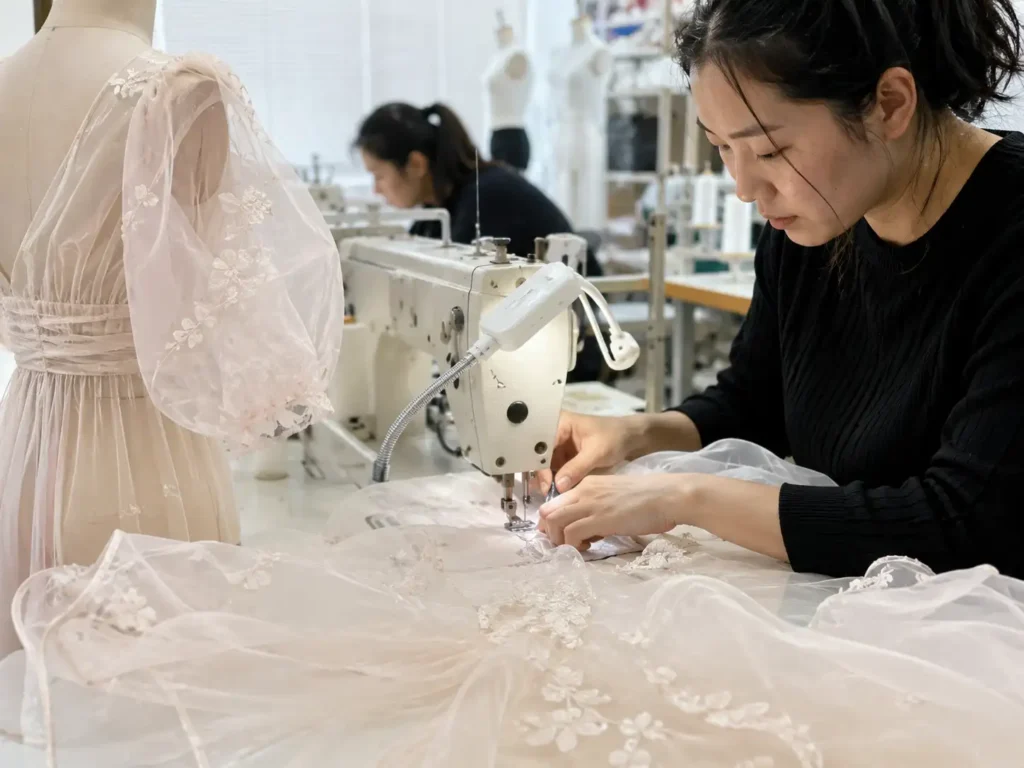
A loose fabric swatch can be misleading. Approval should show how tulle behaves in layers and how the color changes over the selected lining under several lighting conditions.
Swatches Reviewed for More Than Color
Jinfeng compares hand feel, mesh size, stiffness, stretch, recovery, transparency, surface finish and width. A soft tulle that looks correct in one layer may become too heavy when used in five layers. A stiff tulle may create good volume but feel harsh at the neckline or underarm. Swatches are therefore linked to the intended garment area and layer count. When a supplier offers several qualities under the same color name, the exact article reference is recorded for later bulk purchasing and repeat orders.
Color Approval Includes the Lining Combination
Tulle is translucent, so final color depends on the layers beneath it. Jinfeng can present tulle over tonal, nude, white or contrast lining when the design requires visual comparison. For critical colors, lab dips or supplier shade standards may be needed. Approval records should identify tulle shade, lining shade, trim shade and acceptable variation. Bulk fabric lots are checked against the approved reference before cutting because differences between outer net and lining can become more visible across a full dress than on separate swatches.
Availability, Minimums and Repeatability Confirmed Early
Stock tulle supports faster sampling and lower material risk, while custom dye, embroidery, flocking, glitter or special width may involve supplier minimums and longer preparation. Jinfeng checks expected availability before a collection commits to many colors. Repeat programs also need a record of article number, supplier, composition, width, color and finish. When an exact fabric cannot be repeated, alternatives are compared for hand, transparency, stiffness and visual effect rather than substituted without approval.
Custom Tulle Dress Sampling from Structure to PP Approval
Sampling is a controlled development process. Each version should solve defined questions and move the style closer to a repeatable production standard.
Feasibility Review before the First Pattern
The development team reviews the intended silhouette, fabric combination, layer count, decoration, opening, size range, quantity and target timing. Risks are identified before pattern work begins. A reference image may show a full skirt without revealing whether volume comes from tulle layers, organza, petticoat support or temporary styling. Jinfeng proposes a construction route based on the required effect and production reality. Cost-sensitive areas are discussed early so the sample does not become beautiful but commercially unusable. When data is missing, the team lists the assumptions requiring approval.
First Sample Tests Proportion and Construction
The first sample establishes fit, balance, fabric behavior, layer order and workmanship. It may use available material close to the final quality when exact fabric is still under development, but any substitution is clearly identified. Review covers bodice length, bust, waist, zipper, shoulder or strap placement, skirt attachment, volume, lining coverage and overall proportion. Comments should include measurements and photos rather than vague statements such as “make it better.” Jinfeng converts approved comments into pattern and construction changes and records the new version.
Fit and Photo Samples Serve Different Purposes
A fit sample confirms measurements, movement and wearing comfort. A photo-ready sample may prioritize final color, decoration and visual presentation for campaign use. Both should remain connected to the same approved pattern and construction. When photography requires a sample before every bulk material is available, differences are documented so the production version does not drift. For tulle, the photo sample must not rely on hand pinning or excessive styling that the bulk garment cannot reproduce. The target silhouette should come from the garment construction itself.
PP Sample Becomes the Production Reference
The PP sample confirms final or approved bulk fabric, lining, trims, labels, color, measurements, layer count, finishing, decoration and packing direction. Cutting should not begin until critical points are approved. The approved sample, pattern version, bill of materials, measurement chart and workmanship notes form one production package. Where a golden sample is required, it is sealed and retained for inline and final comparison. Sample development commonly falls within 7-15 days depending on fabric readiness, complexity and the number of corrections, while final scheduling is confirmed per project.
Sample Types Used to Control Tulle Dress Development
First Sample
Fit Sample
Revised Sample
Photo Sample
Salesman Sample
PP Sample
Tulle Cutting and Layer Alignment Controlled before Sewing
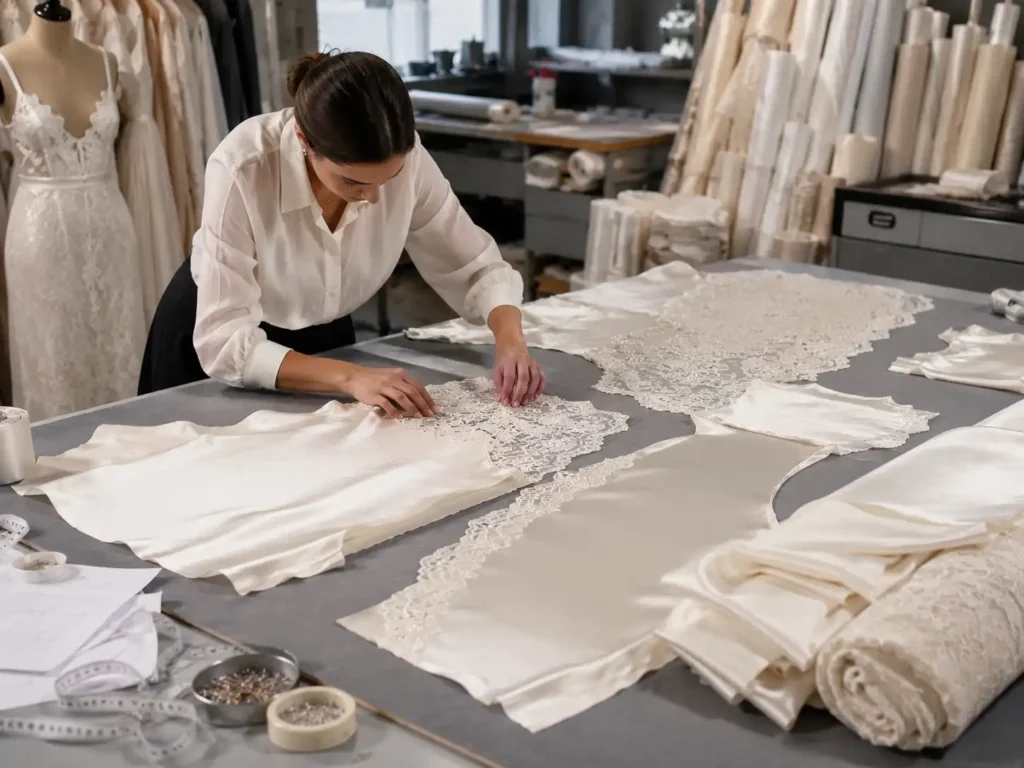
Many visible tulle defects begin at the cutting table. Fabric direction, layer identification, panel count and defect marking must be controlled before sewing can produce a balanced dress.
Incoming Fabric and Surface Review
Tulle rolls are checked for shade, width, holes, snags, stains, inconsistent mesh and surface finish. Glitter, flocked or embroidered qualities receive additional inspection for shedding, missing motifs, pile direction or embroidery damage. Defects are marked so they do not enter visible garment areas. Fabric shade lots are separated when needed. Because transparent materials reveal variation, mixing unapproved lots within one dress can create visible bands even when the shade difference appears small on the roll.Pattern Direction and Panel Identification
Plain tulle may appear non-directional, but stretch direction, finish, embroidery, flocking or glitter can introduce clear orientation. Pattern pieces are laid according to the approved direction. Multi-layer skirts use layer numbers, size identification and front/back marks. When different tulle qualities are combined, each layer receives a material code. Bundle control reduces the risk of attaching a stiff inner layer on the outside or mixing lengths between sizes.Cutting Accuracy for Transparent Layers
Fine tulle can shift under stacked cutting. The cutting method and stack height are selected according to material stability and panel size. Notches must remain visible without tearing the net. Circular and asymmetric hems require consistent reference points because small deviations repeat around the full circumference. For embroidered tulle, motif placement and scallop use often require single-layer or carefully positioned cutting, which changes labor and consumption.Pre-Sew Layer Check
Before assembly, the team checks piece count, layer order, length sequence, symmetry and visible defects. Gather marks and attachment zones are confirmed. Separating problems at this stage prevents a completed skirt from being dismantled after decoration or lining has been added. The bundle travels with size and style identification so later operations can trace the correct pattern and workmanship standard.
Sewing and Edge Finishing Selected by Tulle Quality
No single edge finish suits every tulle. The choice depends on stiffness, mesh size, design visibility, skin contact, price and expected durability. Samples confirm the method before bulk sewing.
| Finishing Method | Suitable Use | Visual Result | Control Points | Cost / Time Effect |
|---|---|---|---|---|
| Clean Raw Edge | Fine tulle skirts and overlays where fraying is minimal | Lightest, almost invisible edge | Accurate trimming, no jagged cuts, layer length control | Lowest sewing time but high cutting accuracy |
| Narrow Rolled Hem | Soft tulle, chiffon-tulle combinations, visible hems | Refined narrow edge with slight weight | Consistent width, tension, no tunneling or waviness | Higher sewing skill and time |
| Baby Hem | Very fine overlays and premium light dresses | Delicate finished edge | Two-stage trimming, even width, no stretching | More labor and operator control |
| Binding | Necklines, armholes and rough tulle edges | Defined edge with improved comfort | Binding stretch, width, seam bulk and color match | Moderate additional material and labor |
| Lace or Trim Edge | Occasionwear, embroidered and decorative hems | Decorative finish that can hide raw edge | Trim tension, motif join, symmetry and secure attachment | Higher trim cost and placement time |
| Horsehair Braid | Structured hems requiring spread and movement | Stronger shape and controlled flare | Braid width, insertion, seam visibility and recovery | Adds material, handling and pressing control |
Bulk Production Controlled from PP Sample to Packing
Material Release
Bulk tulle, lining, trims and labels are checked against approved references before production release.
Pattern Control
Only the approved pattern version and grade rules are issued. Obsolete versions are removed from production use.
Cutting Plan
Marker, layer sequence, shade separation, panel count and defect control are confirmed by style and size.
Bundle System
Cut pieces are grouped by size, color, layer and operation to reduce mixing and loss.
Pilot Sewing
Early pieces verify seam, gathering, layer balance, decoration and measurements before full line output.
Inline Inspection
Critical operations are checked during production so repeated defects are corrected before they spread.
Finishing Review
Thread trimming, steaming, hem balance, surface appearance and decoration security are checked after sewing.
Final Inspection
Measurements, workmanship, labels, packing and carton information are reviewed against the approved standard.
Shipment Release
Packing list, carton marks and logistics documents are checked before goods are handed to the nominated carrier.
Tulle Dress Quality Control Points That Protect Bulk Consistency
Holes and Snags
Layer Sequence
Hem Balance
Gather Distribution
Bodice Fit
Lining Coverage
Seam Stability
Decoration Security
Color Consistency
Shape Symmetry
Internal Finish
Packing Accuracy
Measurement, Color and Appearance Inspection by Size and Style
Critical Measurements
Layer Lengths
Size Grading
Shade Review
Silhouette Review
Packing Recovery
Pressing, Packing and Shape Recovery for Delicate Tulle
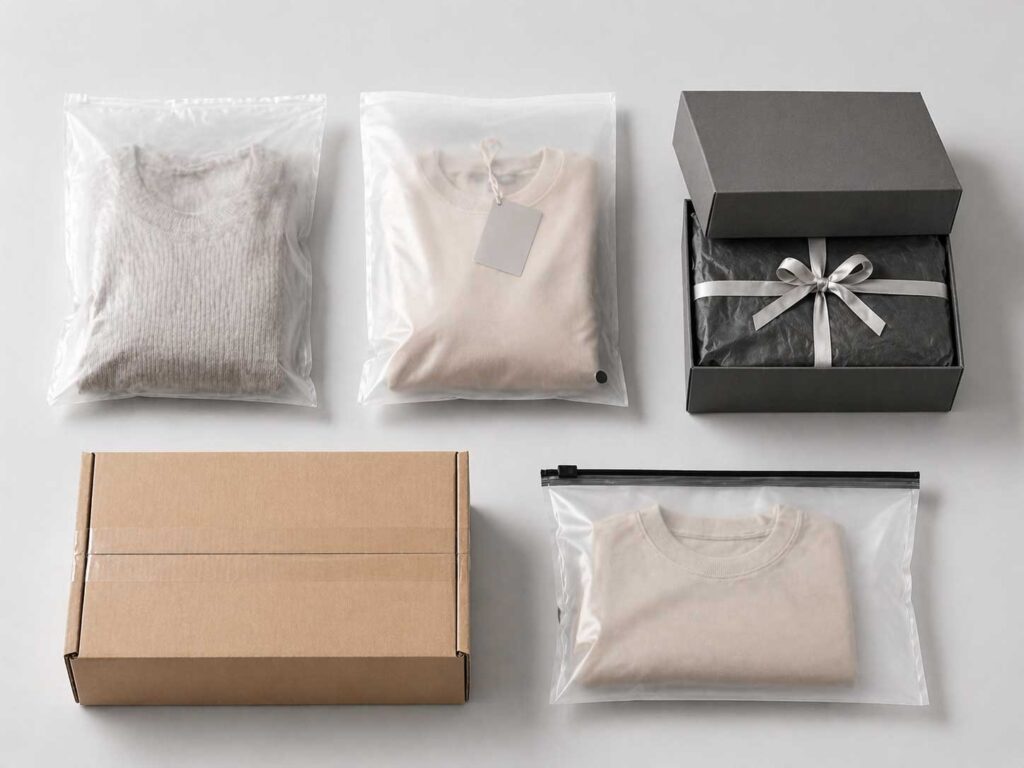
Finishing should restore the intended silhouette without glazing, melting, crushing or stretching the net. Packing then protects the result through warehouse and transport handling.
Steam and Heat Controlled by Material
Tulle, glitter, flocking, embroidery and synthetic lining can react differently to heat. Finishing begins with a tested temperature, steam distance and handling method. Heavy pressure can flatten texture or leave shine, while uncontrolled steam can stretch fine mesh. Structured skirts are shaped through hanging, light steaming and hand arrangement rather than pressing every layer flat. Operators follow style-specific instructions for ruffles, pleats, appliqué and horsehair hems. The final garment is allowed to cool and stabilize before measurement or packing.
Folding Plan Follows the Silhouette
A mini dress with two soft layers can use a compact fold, while a full maxi with 3D flowers may require tissue, a wider fold, hanger packing or reduced carton compression. Jinfeng reviews where the skirt can fold without creating sharp permanent lines. Bodice cups, boning and decoration are protected from direct pressure. Polybag size must allow the dress to sit without forced compression while still controlling movement inside the carton.
Carton Loading Prevents Excess Pressure
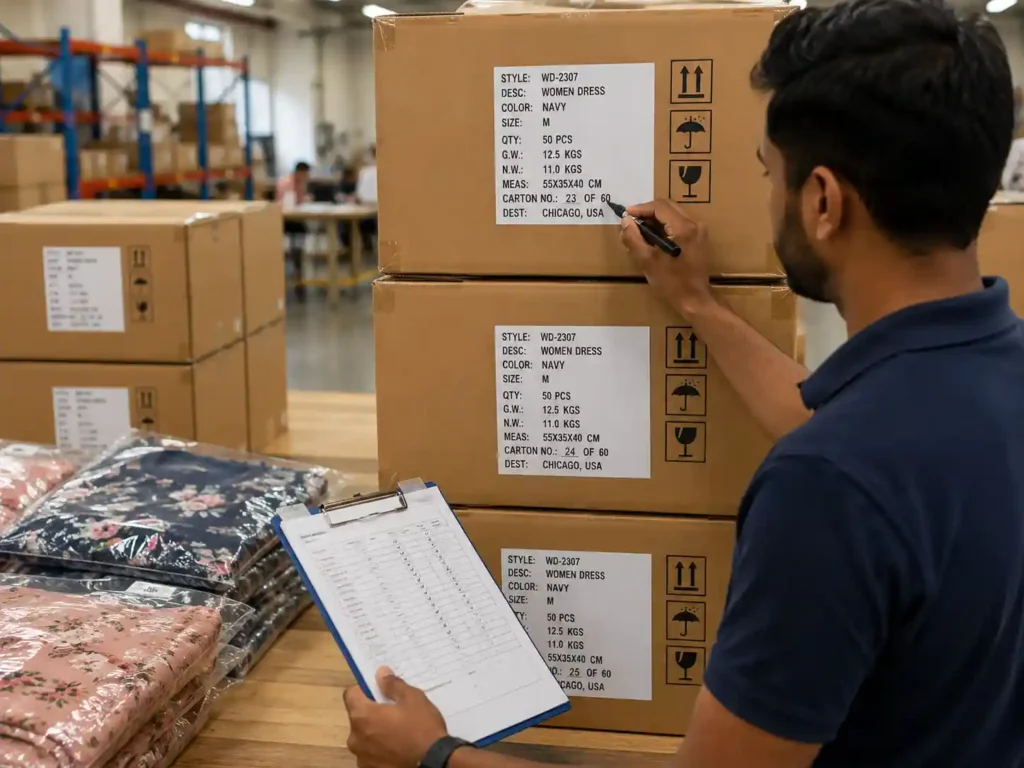
Carton dimensions and quantity per carton are evaluated against garment volume. Overloading may reduce freight space but can crush skirt structure, bend cups or damage flowers. Underloading can allow excessive movement and snagging. Layered dresses may be packed by size or style with protective separation. Carton marks, orientation and handling notes are coordinated with the shipping plan. When required, samples can be packed under the proposed method and reviewed after 24-48 hours for recovery.
Warehouse Preparation Made Clear
Some tulle dresses benefit from hanging, light steaming or rest time after unpacking. Jinfeng can provide garment handling notes for the receiving warehouse or ecommerce preparation team. The objective is to reduce unplanned rework at destination. Care labels and internal handling instructions should match the fabric and decoration; unsupported claims such as machine washing a heavily decorated tulle gown are avoided.
Tulle Dress MOQ and Order Planning by Style and Color
Standard Production Conditions
- Stock or repeatable tulle and lining qualities.
- Regular colors without custom dye or special finish.
- Established zippers, labels and trims.
- Commercial constructions without supplier-specific material minimums.
- Clear size ratio and one approved packing method.
Conditions That May Raise Minimums
- Custom-dyed tulle or lining.
- Exclusive embroidery, flocking, glitter or print.
- Special lace, appliqué, feathers or custom hardware.
- Many colors with small splits in one style.
- Complex structures requiring dedicated line setup or material development.
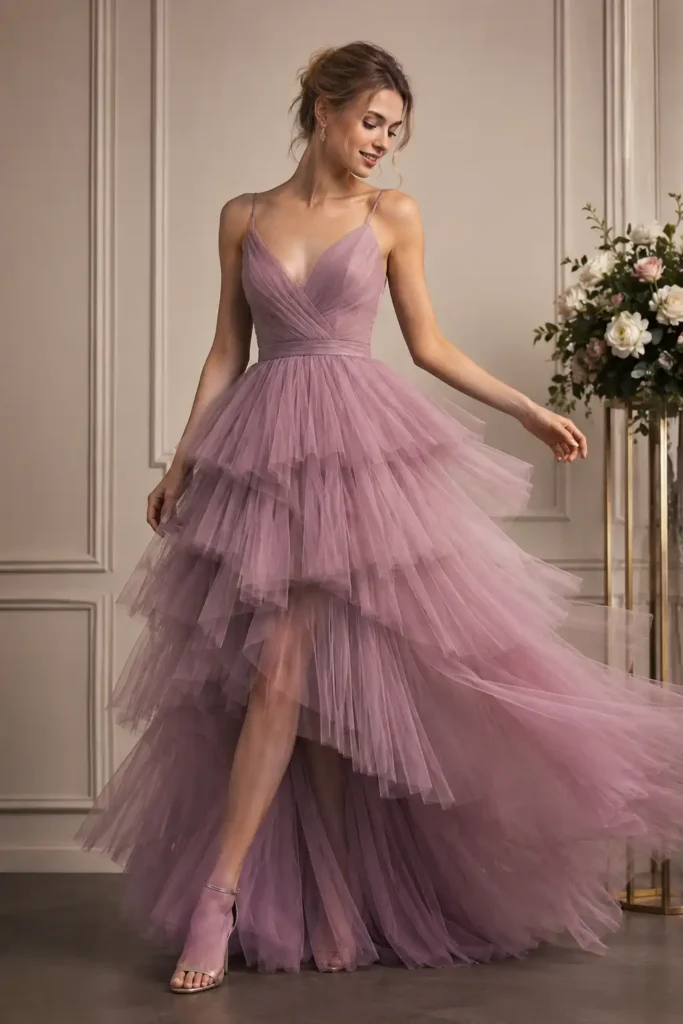
What Determines Tulle Dress Cost before Bulk Quotation
A reliable quotation explains what drives cost. Tulle price is only one part; layer count, skirt sweep, lining, support, decoration, waste, labor and packing often create the larger differences.
- Fabric Consumption Depends on Width and Sweep
Two dresses using the same tulle article can have very different consumption. A fitted overlay may use less than one full skirt layer, while a circular maxi with several layers can require many times more fabric. Fabric width, panel layout, tier circumference, embroidery repeat and defect allowance affect yield. Jinfeng estimates consumption from the pattern route rather than multiplying a generic dress average. Embroidered or directional tulle usually creates more waste because motifs and scallops must align.
- Construction Labor Follows Operation Count
Gathering, tier joining, narrow hemming, corset assembly, cup insertion, boning, appliqué and hand decoration add separate operations. Labor is influenced by precision and handling, not only garment length. A clean raw edge can reduce sewing time but requires accurate cutting; a baby hem adds more operator time. Complex dresses may need separate sub-assembly and inspection points. Quotation should therefore reflect the approved construction rather than a simplified reference image.
- Decoration Cost Includes Placement and Inspection
Sequins, rhinestones, flowers and appliqué have material and application costs. Placement density, size, attachment method and symmetry determine labor. Decoration also increases inspection time and can require protective packing. Jinfeng reviews whether the same visual effect can be achieved through embroidered fabric, placement motifs or adjusted density. Any optimization should be approved during development, not introduced after the PP sample.
- Cost Control through Engineering, Not Hidden Substitution
Commercial targets can be supported by changing the construction intelligently: mixing soft and firm layers, adjusting skirt sweep, sharing lining qualities across colors, simplifying concealed internal details or selecting repeatable trims. Jinfeng does not reduce cost by shortening the lining, removing approved support, lowering layer count or replacing fabric without consent. Transparent cost discussion protects the launch from unexpected quality loss.
Capacity, Lead Time and Launch Planning for Tulle Collections
Tulle schedules depend on fabric readiness, sample approval, decoration and packing depth. A clear launch plan separates development time from bulk production and shipping time.
Sampling Time Confirmed by Complexity
A regular tulle dress using available fabric may move through first sample development in roughly 7-10 days after all required information and materials are ready. Corset structures, custom embroidery, special dye, 3D decoration or several correction rounds may extend development to 10-15 days or longer. Timing is confirmed after the team reviews the style, not offered as one fixed promise. Photo samples and size sets are scheduled separately when required.
Bulk Production Planned after PP Approval
Typical bulk production for established materials and approved constructions may fall within approximately 25-35 days, while complex occasion pieces, large multi-style programs or custom material development can require longer. The production clock should begin after PP approval and bulk material readiness, not from the first inquiry. Jinfeng builds a style schedule covering material arrival, cutting, sewing, decoration, inspection, finishing and packing.
Multi-Style Collections Need a Critical Path
Orders containing 10-30 styles are not managed as one undifferentiated block. Styles are grouped by fabric, construction and launch priority. Campaign samples, key launch styles and complex products may follow separate approval paths. Fabric families and trim orders are coordinated to reduce delays. Weekly progress can track sample status, material readiness, production stage, QC and packing completion. Delays are addressed at the affected style rather than hidden within a general completion percentage.
Delivery Options Aligned with Launch Risk
Express, air and sea routes are coordinated according to quantity, destination, launch date and cost. Split delivery may be considered when a smaller launch quantity must arrive first and the balance can move by sea. Final routing depends on the nominated forwarder, Incoterm and import arrangement. Jinfeng prepares commercial documents, packing lists and carton data required for the approved shipment route.
Private Label and Retail-Ready Tulle Dress Delivery
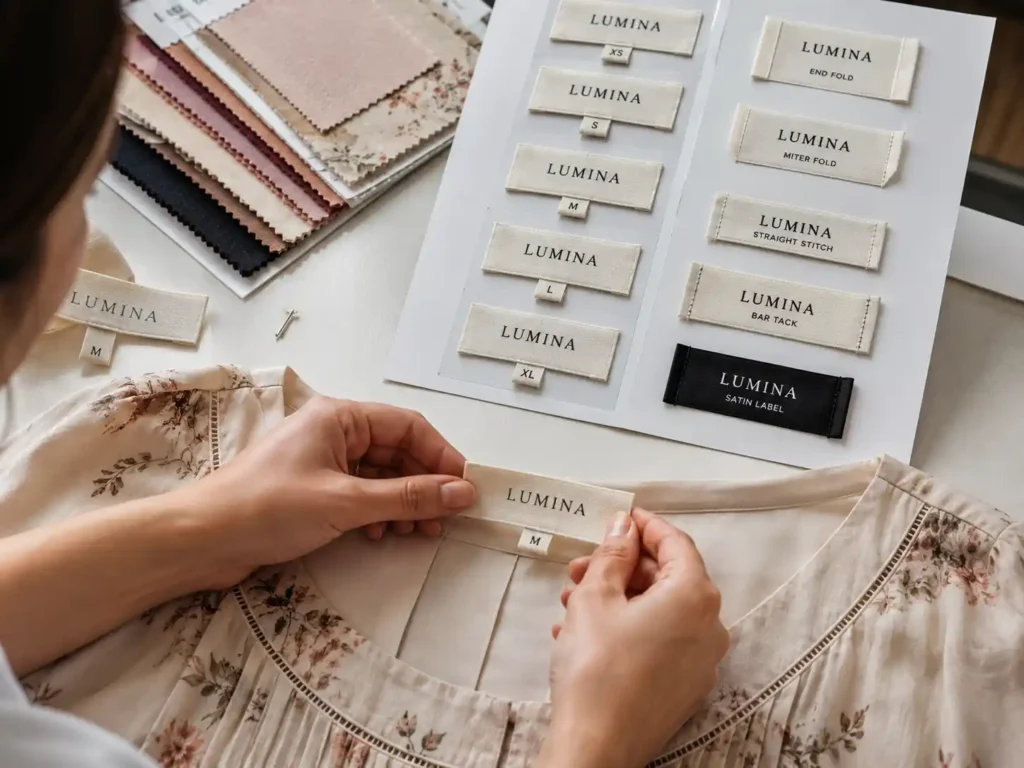
Main Labels
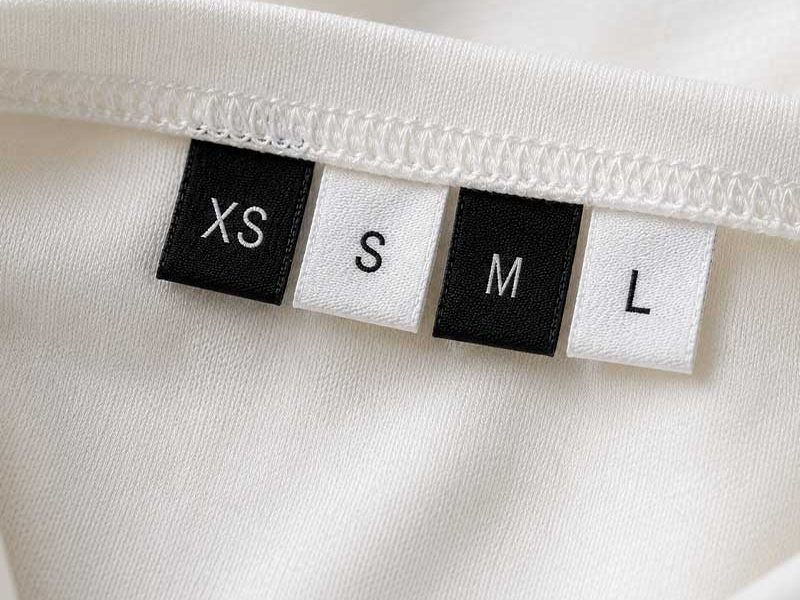
Size Labels
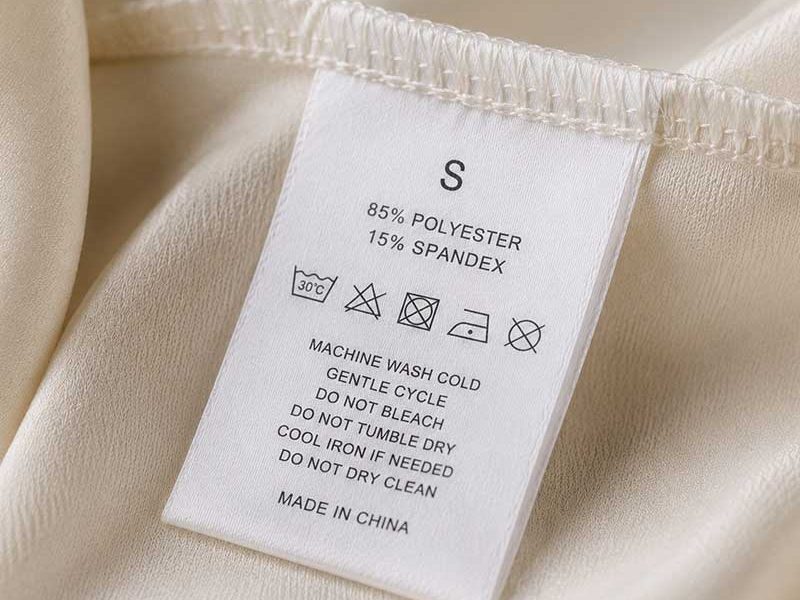
Care Labels
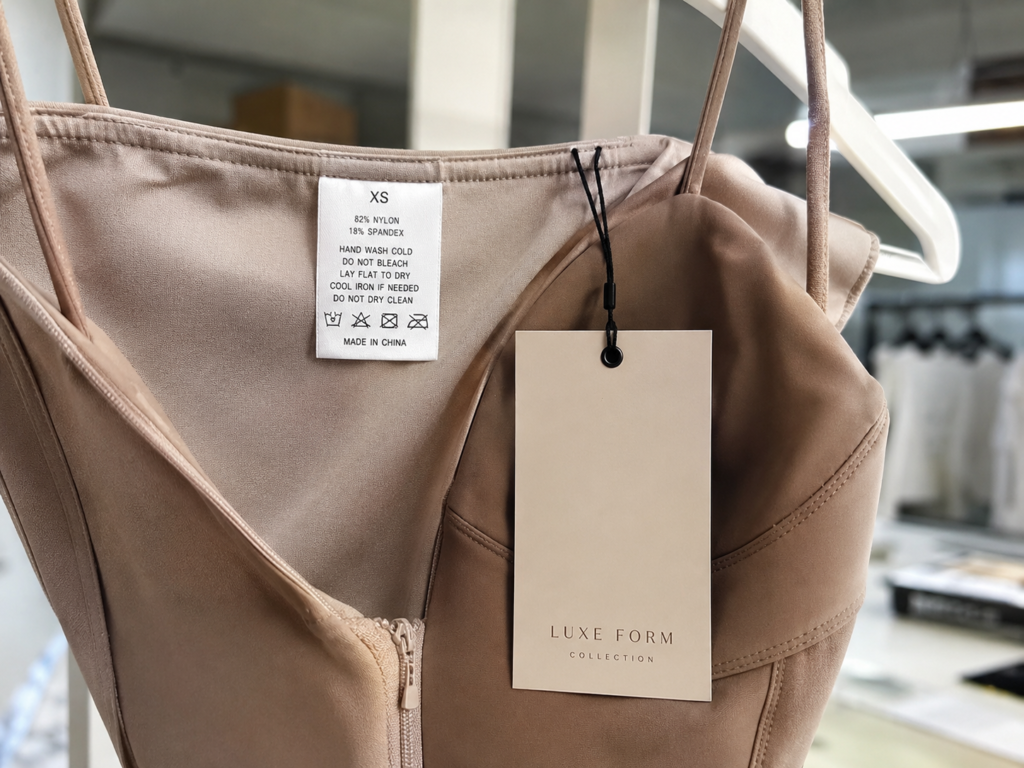
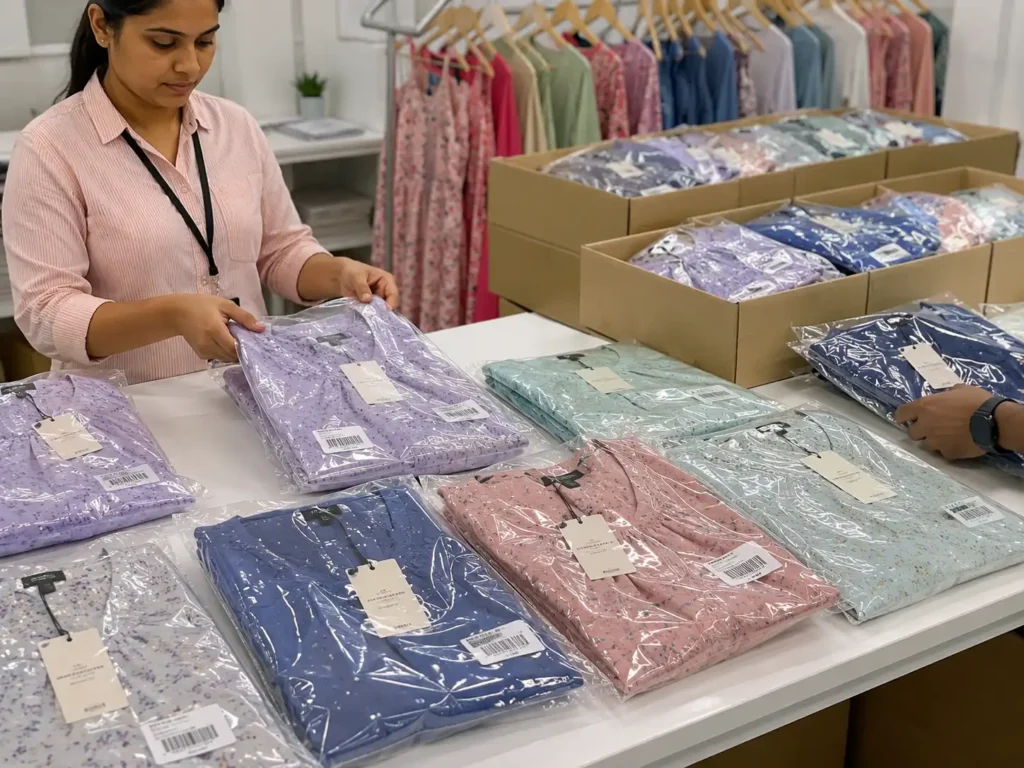
Hangtags
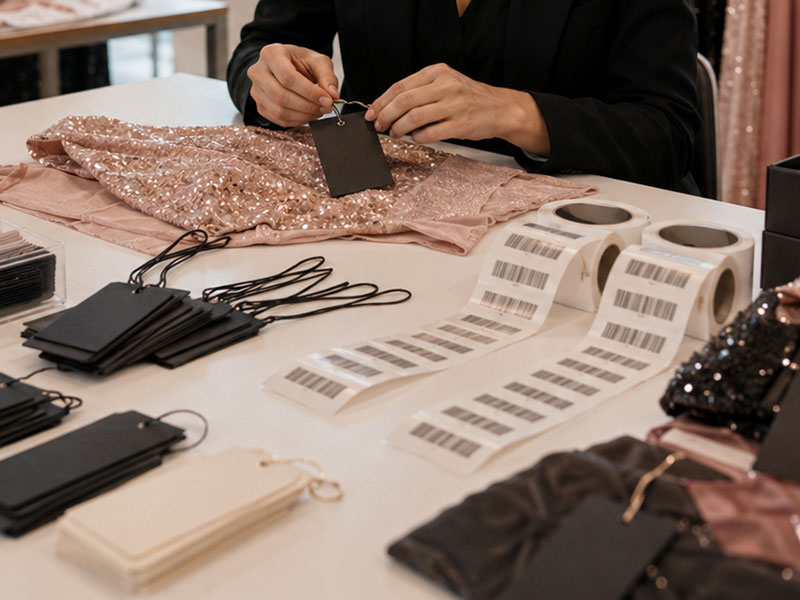
Barcodes
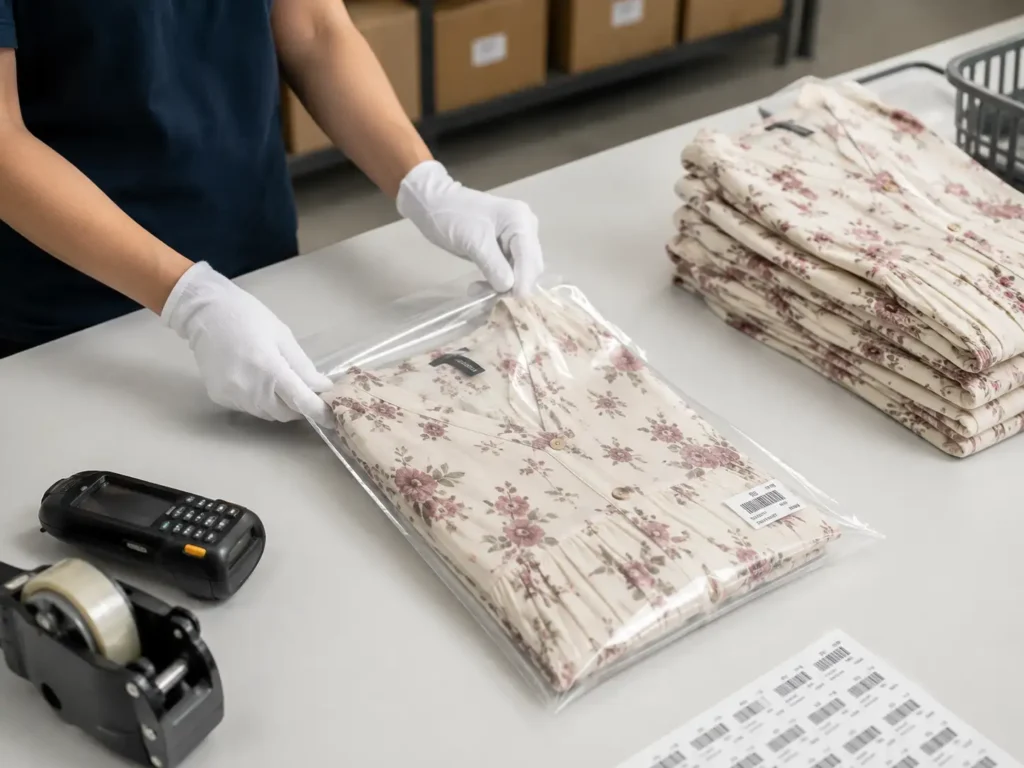
Polybag Packing
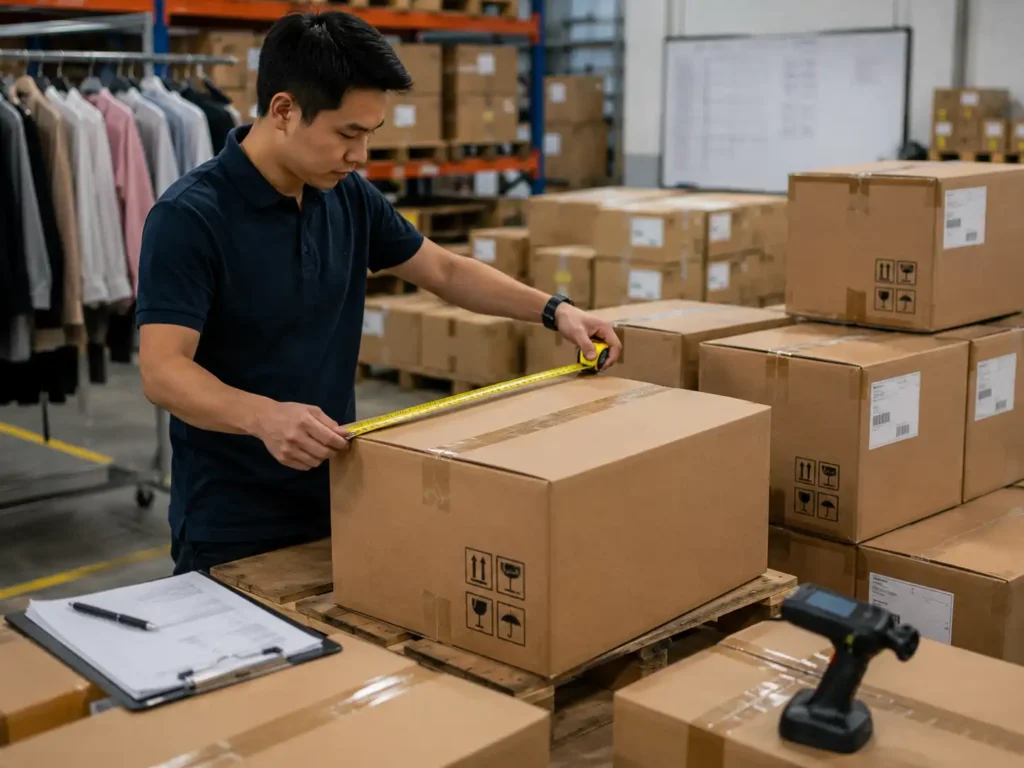
Carton Marks
Ecommerce Ready
Retail Ready
Project Management for Multi-Style Tulle Dress Collections
Large collections require visible decisions, owners and deadlines. Jinfeng manages development and production through structured records rather than scattered messages.
- One Project File Connects All Departments
The project file brings together style list, tech packs, measurements, fabric articles, colors, trims, labels, packing and delivery requirements. Every style receives a status and version reference. Changes to a neckline, lining, layer count or decoration are recorded so sampling, costing and production use the same instruction. When several markets or warehouses are involved, packing and labeling differences are separated clearly rather than handled through last-minute notes. - Sampling Tracker Controls Version History
Each sample is identified by style, color, size, date and version. Comments are linked to the correct sample and translated into measurable actions. Approved items and open items remain visible. For a 10-30 style collection, the tracker helps prioritize campaign samples, complex styles and materials with longer preparation. It also prevents an older approved detail from being replaced unintentionally by a later unrelated change. - Production Progress Reported by Stage
Production status can be tracked through material ready, cutting, sewing, decoration, finishing, inspection, packing and shipment. Percentages alone can hide risk, so key blockers are described by style. When a material or trim delays one design, unaffected styles can continue according to the approved plan. Quality findings and corrective actions are recorded during production rather than appearing only at final inspection. - Repeat Orders Use Retained Records
Pattern files, measurement charts, fabric references, trim details, workmanship and packing requirements can be retained for repeat orders. Repeat production still requires material and color confirmation because supplier lots and availability may change. Record retention shortens re-entry time and protects the approved fit, while current checks prevent outdated assumptions from entering a new batch.
NDA and Unreleased Design Protection throughout Development
Protected Development Files
Controlled Sample Handling
Anonymous Case Presentation
Tulle Dress Development Case Studies for Fashion Collections
The following anonymous programs reflect realistic multi-style order structures. Brand identity and proprietary design files remain protected while the development and production logic is shown clearly.

United States Partywear Collection - 24 Styles, 48,600 Pieces
A US partywear program included 24 styles across tulle mini dresses, corset midi dresses, asymmetric ruffle dresses and sequin-tulle combinations. The order covered 11 colors and a core size range with selected extended sizes. The first challenge was inconsistent volume across reference samples: several styles relied on hand-fluffed skirts that could not be repeated in production. Jinfeng rebuilt the volume through defined skirt sweep, mixed tulle stiffness and controlled gathering ratios. Four high-volume styles used a soft outer layer with two firmer inner layers, reducing total layer count while preserving shape. The second challenge involved pale pink and ivory transparency. Tonal and nude lining options were compared under strong light, and lining length was increased in fitted areas without changing the visible outer silhouette. Corset styles received revised cup placement, waist support and zipper reinforcement after fit review. Sampling ran in prioritized groups so campaign styles moved first while embroidered fabrics were still in development. Bulk production was divided across approved lines by construction complexity. Inline inspection focused on layer order, waist gathers, decoration security and bodice measurements. The final delivery was split into an air shipment for the launch allocation and a sea shipment for the balance. The collection maintained one approved appearance standard across all styles, colors and packing formats.

United Kingdom Occasionwear Range --- 18 Styles, 31,200 Pieces
A UK occasionwear label developed 18 tulle and embroidered-net dresses for wedding guest, graduation and evening use. The range included tiered midis, soft maxi overlays, one-shoulder ruffles and floral appliqué bodices. The main difficulty was coordinating embroidered motif placement with panel seams and size grading. Jinfeng mapped motif zones on the base size, then created grading rules that protected neckline and waist placement without forcing identical motif positions where the panel geometry changed. Scalloped borders were reserved for selected hems and sleeves, while plain mesh sections were used in concealed seam areas to reduce bulk. Several colors used custom-dyed lining, so tulle and lining were approved as combinations rather than separately. During sample review, the team reduced heavy horizontal tier seams by changing the attachment method and redistributing fullness. The approved packing method used wider folds, tissue between embellished areas and controlled carton quantities. Selected cartons were reopened after 48 hours to review layer recovery and appliqué condition. Bulk inspection included motif balance, loose threads, decoration edges, hem lengths and shade consistency. The final order shipped in two coordinated batches aligned with the label’s showroom and online release schedule.

Australian Premium Ecommerce Drop - 30 Styles, 72,000 Pieces
An Australian ecommerce program combined 30 styles across tulle party dresses, mesh-panel bodycon styles, matching sets and statement tops. Total volume reached 72,000 pieces with repeated black, red, ivory and seasonal colors. The program needed fast campaign samples without losing bulk discipline. Jinfeng created a shared material architecture: four approved tulle qualities, three lining families and standardized zipper options were used across the collection, while silhouettes and decorations remained distinct. The approach reduced unnecessary material fragmentation and improved repeat availability. The most complex styles included 3D flowers, rhinestone placement and detachable bows. Placement maps were approved by size, and high-friction zones were cleared to improve wear. Black glitter tulle required shedding and rubbing review before approval; packaging used protective tissue to reduce surface transfer. Production ran by style groups, with structured bodices separated from soft overlay styles. Weekly reporting tracked material readiness, sample approval, cutting, sewing, decoration, QC and packing. A 20% launch allocation moved by air, while the remaining quantity shipped by sea. SKU labels, barcodes and carton marks were checked against the ecommerce warehouse file before release. The repeat order later used retained pattern, fabric and packing records with fresh shade confirmation.
How to Qualify a Tulle Dress Manufacturer before Sampling
Technical Qualification
- Ask for adult fashion tulle examples, not only children’s tutu or bridal gowns.
- Confirm access to pattern makers and sample machinists familiar with corsetry, mesh and layered skirts.
- Review how tulle softness, mesh size, stretch, lining and layer count are approved.
- Ask how cutting pieces are identified and how layer order is controlled.
- Request workmanship standards for gathers, hems, decoration and internal support.
- Confirm PP sample approval, version control and size grading methods.
- Review tulle-specific QC points and packing recovery procedures.
- Verify which factory and line will produce the approved style.
Commercial Qualification
- Confirm MOQ by style/color and identify any material supplier minimums.
- Request a quotation breakdown covering fabric, layers, lining, support, decoration and packing.
- Set sample purpose, expected sample time and number of review rounds.
- Build a critical path from material approval through PP, bulk and delivery.
- Confirm private-label, barcode, SKU and warehouse packing capability.
- Review NDA, design protection and use of project images.
- Ask for anonymous multi-style case experience and order management methods.
- Arrange factory audit, document review or third-party inspection when required.
Tulle Dress Manufacturing Frequently Asked Questions

Start Your Tulle Dress Development with Jinfeng Apparel
A useful starting package includes reference images or a tech pack, target quantity by style and color, planned size range, preferred tulle hand, lining direction, layer or volume expectation, decoration details, private-label requirements and target launch date. The team will review construction feasibility, fabric options, sample route, MOQ conditions, estimated timing and the information still required for quotation. Complex tulle styles receive a risk review before sampling so corsetry, transparency, layer balance, decoration and packing are addressed early rather than corrected after bulk production begins.
- Reference images, sketches, original sample or tech pack
- Target quantity, color plan and size range
- Preferred tulle, lining and decoration direction
- Label, barcode, packing and warehouse requirements
- Campaign, delivery or launch date