Skip to content
Tie-Front Dress Manufacturer
Custom tie-front dress development for global fashion brands, sourcing teams, and multi-style womenswear programs.
- 12 tie-front constructions mapped from tie-bust and keyhole styles to wrap-front and waist-tie silhouettes.
- 12 fit checkpoints covering bust, under-bust, neckline depth, opening width, tie length, anchor spacing, front length, waist, hip, lining, hem, and closure balance.
- 2 sample rooms, 7+ senior pattern makers, and 20+ sample machinists supporting structure review and sample revision.
- Custom production starts from 200 pieces per style and color, subject to fabric, trim, print, dyeing, and construction requirements.
Jinfeng Apparel develops tie-front mini, midi, and maxi dresses from reference images, original samples, sketches, line sheets, and tech packs. Development covers fabric direction, pattern engineering, fit correction, tie construction, size grading, PP approval, bulk production, product-specific QC, private-label packing, and export coordination.
Development Capacity Behind Tie-Front Dress Production
Since 2008
6 Owned Factories
2 Sample Rooms
7+ Pattern Makers
20+ Sample Machinists
15+ QC Inspectors
Built for Structured Womenswear Development Programs
Fast Fashion Brands
Premium Ecommerce Brands
Resortwear Labels
Partywear Brands
Product Development Teams
Sourcing and QA Teams
Confirm Project Fit Before Sample Development
Strong Project Fit
- Reference images, original samples, sketches, line sheets, or tech packs are available.
- Target quantity begins from 200 pieces per style and color.
- Sample fees, material development, and revision work are planned within the product budget.
- A realistic size range, color plan, packaging direction, and launch window can be discussed.
- The program may include multiple styles, seasonal development, repeat orders, or long-term product records.
- Product decisions balance fabric quality, fit, workmanship, cost, and commercial positioning.
Outside Our Production Model
- Ready-stock dress purchasing or open-market wholesale selection.
- Dropshipping, individual parcel fulfillment, or single-piece production.
- Orders below the standard style-and-color quantity without a qualified production plan.
- Projects based only on the lowest quoted unit price while ignoring fabric, structure, testing, and QC requirements.
- Requests for precise quotations without style information, quantity, material direction, or construction details.
- Production release before PP sample, material, measurement, label, and packing confirmation.
Prepare a Complete Tie-Front Dress Development Brief
Reference Images
Tech Pack
Original Sample
Target Quantity
Fabric Direction
Color Plan
Size Range
Launch Date
Tie-Front Dress Styles for Commercial Collections

Tie-Bust Mini Dress

Bow-Front Midi Dress

Keyhole Tie Dress

Front-Knot Cut-Out Dress

Wrap Tie Dress

Tie-Waist Shirt Dress

Under-Bust Tie Dress

Ruched Tie-Front Dress

Halter Tie-Front Dress

Satin Tie-Front Dress

Printed Resort Tie Dress

Jersey Bodycon Tie Dress
Develop Tie-Front Dresses Around Selling Occasions

Resort Collections

Casual Daywear

Party and Clubwear

Occasionwear

Vacation and Cruise

Social-First Ecommerce
Prevent the Six Most Common Tie-Front Failures
Misread Tie Function
Bust Exposure Risk
Fabric Mismatch
Grading Distortion
Weak Tie Anchors
Sample-to-Bulk Gap
Inside a Stable Tie-Front Dress Structure
A front tie interacts with neckline geometry, bust shaping, seam tension, lining, closures, and skirt balance. The strongest development files identify each control point and explain how one change affects the surrounding structure.
Neckline and Bust Panel Relationship
Neckline depth cannot be set independently from bust shape. A deeper neckline may require more front length, stronger edge stabilization, wider tie-anchor spacing, or additional lining. Gathered bust panels need controlled fullness so the tie can shape the center without pulling the side seams forward.
Tie Anchor and Opening Geometry
Anchor spacing determines how the opening changes when tied. Anchors placed too close may collapse the keyhole and create horizontal wrinkles.
Anchors placed too far apart may expose more than intended or pull the neckline outward. The tech pack should show anchor location from a stable reference point, not only from the garment edge.
Under-Bust and Waist Placement
Tie-front designs often visually raise or lower the waist.
Under-bust seam position, waist seam, front length, and skirt attachment need to work together.
A one-centimeter shift can change the perceived proportion, especially on mini dresses or fitted bodices.
Lining and Internal Support
Lining should protect coverage without changing drape or creating tension lines. Partial bust lining may be enough for opaque casual fabrics; satin, chiffon, mesh, or deep-neck styles may need fuller support. Bra cups, elastic, boning, anti-slip tape, or interlining should be selected only when the silhouette requires them.
Closure and Entry Method
Some tie-front dresses use the tie as the main closure. Others use side zippers, back zippers, smocking, elastic panels, or pull-on stretch. Entry method affects ease, neckline stress, tie durability, and fitting. A hidden zipper can improve wearability without changing the front appearance.
Skirt and Hem Balance
The bodice may lift after tying, especially on fuller busts. Front skirt length, waist angle, side seam, and hem balance should be checked on-body. Long skirts also add weight, which may pull against a lightweight tied bodice.
Control Twelve Measurements Before Size Grading
| Measurement Point | Main Risk | Development Control |
|---|---|---|
| Full Bust | Tightness, gaping, side-seam shift | Confirm body ease, fabric stretch, cup shaping, and fit-model feedback |
| Upper Bust | Neckline opening spreads outward | Balance neckline width, armhole shape, and upper-bodice contour |
| Under Bust | Tie line rises or drops | Set seam position and circumference according to silhouette and support |
| Neckline Depth | Exposure or neckline collapse | Measure from stable shoulder or high-point reference and verify tied state |
| Keyhole Width | Opening closes, widens, or becomes asymmetric | Record relaxed and tied dimensions with anchor points |
| Tie Length | Bow too small, ends too long, inconsistent appearance | Define finished length by size and tying method |
| Tie Width | Weak anchor, bulky knot, twisted finish | Match width, layer count, edge method, and fabric weight |
| Anchor Spacing | Horizontal wrinkles or poor center shaping | Measure anchor coordinates from center front and seam references |
| Front Length | Bodice rides up after tying | Add bust-related length where required and check hem balance |
| Waist | Waist seam rotates or pulls upward | Confirm wearing ease and seam position in tied condition |
| Hip | Skirt distortion on fitted silhouettes | Match hip ease, fabric stretch, slit position, and skirt shape |
| Lining Coverage | Visible lining or inadequate coverage | Map lining edge, seam attachment, and movement behavior |
Engineer Tie Details for Strength and Shape
Tie construction influences fit, durability, knot volume, laundering, and visual consistency. Jinfeng develops each tie as a functional garment component with defined finished dimensions, material direction, edge treatment, anchor position, and inspection method.
Define the Load Path
A tie used to close a wrap front carries force from the wearer’s movement into the waist seam. A bust tie transfers force into the neckline or cup panel. A drawstring moves inside a channel. Development begins by identifying where tension enters the garment and where reinforcement should distribute it.
- Functional ties require stronger anchor planning than decorative bows.
- Lightweight fabrics may need hidden reinforcement patches or seam insertion.
- Stretch fabrics need elasticity control so ties do not permanently lengthen.
- Slippery satin may need internal stabilization to keep the knot from loosening.
Control Finished Width and Length
Finished width affects knot size, drape, turning quality, and seam bulk.
Very narrow ties can twist or expose seam allowances; wide ties may create bulky knots and uneven pressing. Length should be measured from the anchor seam to the finished end, with a defined tying method used during approval.
- Record left and right finished lengths separately.
- Approve bow or knot appearance in the final fabric.
- Confirm grade rules instead of adding one universal increment.
- Check whether the tie must pass through loops, channels, or hardware.
Select the Right Edge Method
Common methods include turned-and-stitched tubes, double-layer ties, narrow hems, self-fabric binding, overlocked and folded edges, or clean-finished lined pieces. Choice depends on width, fabric thickness, fraying, transparency, and desired appearance.
- Satin needs smooth turning and low marking pressure.
- Chiffon requires controlled seam allowance and edge stability.
- Linen blends may need fray control and careful topstitching.
- Jersey ties require stretch-compatible seams and recovery review.
Reinforce the Anchor
Backtack, bar tack, double stitching, seam insertion, internal support fabric, or reinforced facing may be used according to the load. Reinforcement should not create a visible hard spot, puckering, or bulky seam around the bust.
- Pull direction should match the wearing action.
- Reinforcement samples should be tested before bulk sewing.
- Stitch density must suit fabric strength.
- Anchor symmetry should be checked against center front and neckline.
Inspect Shape After Pressing and Washing
A tie can pass sewing inspection yet fail after steam, washing, or repeated knotting. Final review should include twisting, edge rolling, shrinkage, width change, seam exposure, color migration, and knot recovery.
- Compare left and right ties after pressing.
- Check finished width at multiple points.
- Verify printed or striped direction.
- Protect delicate tie ends during packing.

Match Fabric Behavior to Tie-Front Construction

Cotton Poplin

Rayon and Viscose

Linen Blends

Chiffon and Crepe
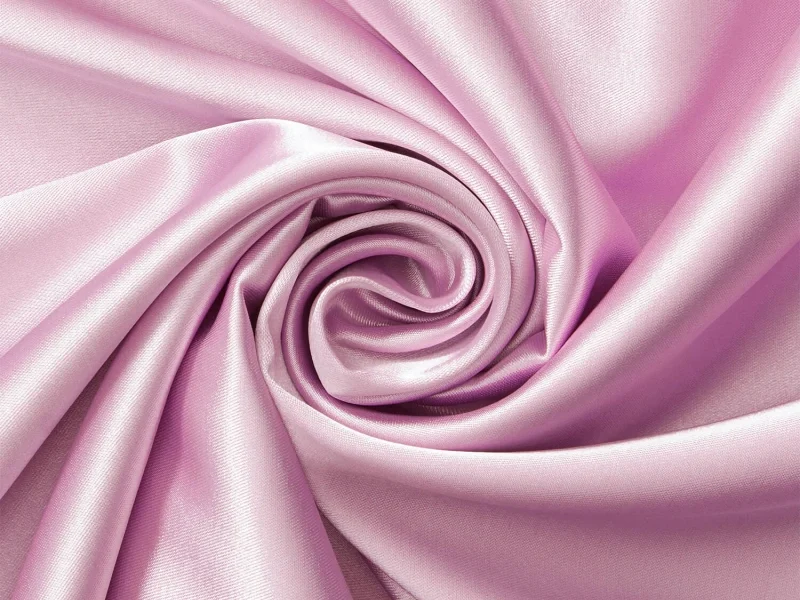
Satin and Stretch Satin
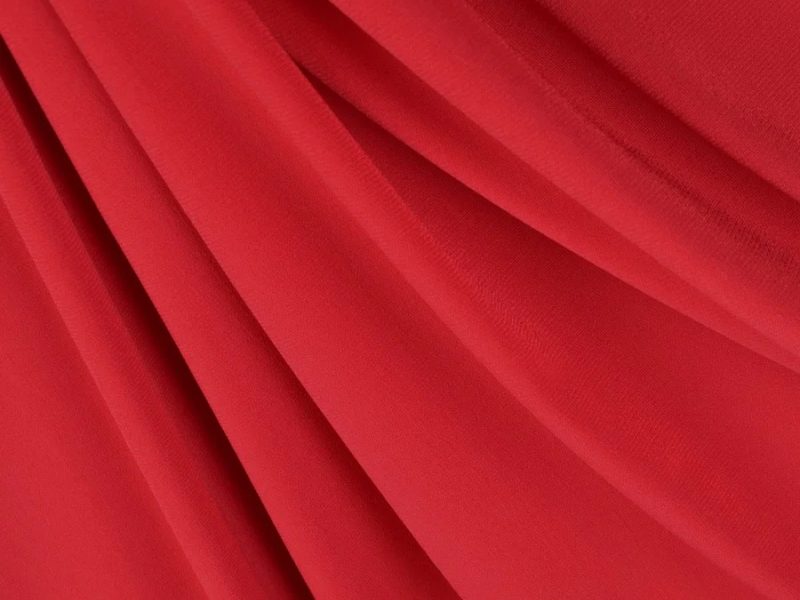
Stretch Jersey
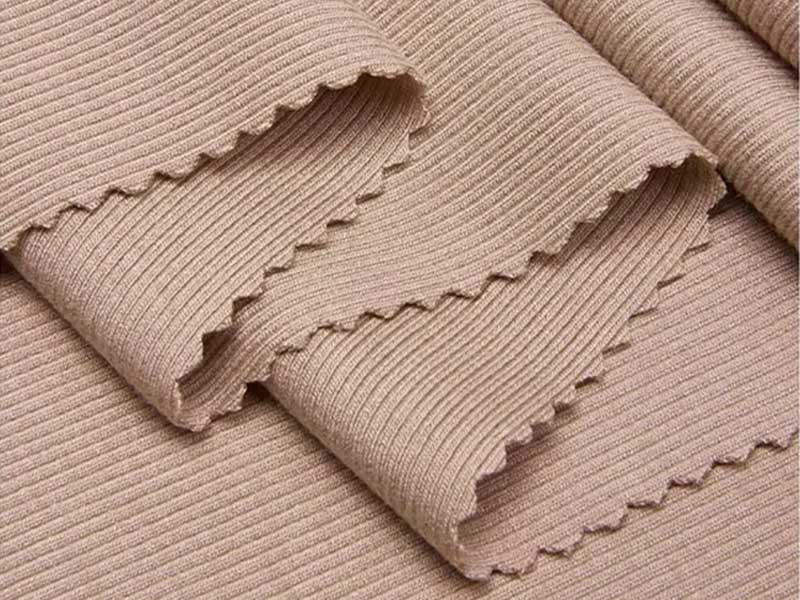
Rib Knit and Textured Knit

Mesh and Power Mesh
Build Support Without Overengineering the Dress

Full Lining

Partial Bust Lining

Bra Cups

Boning

Elastic Support

Anti-Slip Tape

Interlining

Closures and Hardware
Customize Tie-Front Dress Details with Production Logic

Tie Shape

Neckline

Sleeve Direction

Dress Length

Cut-Out Position

Ruching

Print and Color

Closure and Lining
Start Development from the Right Source Material
Complete Tech Pack
Reference Images
Original Garment
Sketch or Line Sheet
Move from First Sample to PP Approval
Sample development is an approval system, not one sewing event. Each sample type has a different purpose, and tie-front dresses often require focused review of opening geometry, tie behavior, fabric tension, and size-related coverage before bulk release.
Project Review and Material Direction
The development team first reviews style complexity, tie function, fabric, trims, lining, closure, size range, quantity, price direction, and launch date. Material options are assessed for drape, stretch, transparency, shrinkage, knot volume, and production risk.
A first timeline can be planned after material readiness is known. Stock fabric and regular trims may move faster than custom dyeing, printing, special lace, custom hardware, or newly developed packaging. Jinfeng avoids fixed promises before the BOM and sourcing route are clear.
Pattern Development and First Sample
Pattern makers establish the base silhouette, neckline, bust panel, tie anchors, opening, waist, skirt, lining, and closure. Sample machinists test the proposed sewing sequence and finishing. Internal review checks measurements, symmetry, seam quality, tie length, and fit before photos or shipment.
First samples are development references rather than automatic bulk standards. Comments should identify measurable changes: reduce keyhole width by a specified amount, move the tie anchor, add front length, change tie width, adjust under-bust position, or replace lining.
Revised, Fit, and Photo-Ready Samples
A revised sample verifies approved changes. Fit samples focus on measurements, balance, movement, and grade direction. Photo-ready samples prioritize campaign appearance, but visual approval does not replace production approval. Fabric, construction, labels, or measurements may still differ from the final PP standard unless clearly locked.
For multi-style collections, styles can be grouped by shared fabric, pattern family, tie method, and launch priority. Revision trackers prevent version confusion across 10-30 styles and multiple colorways.
PP Sample and Golden Sample
The PP sample should represent approved bulk fabric, color, trims, measurements, construction, labels, and packing direction as closely as project conditions allow. Approval locks the production standard. Later changes may affect material booking, cost, schedule, and consistency.
A Golden Sample or sealed reference gives production and QC teams a physical comparison standard. Supporting files include final pattern, size chart, BOM, tie specification, sewing notes, label placement, packing instruction, and product-specific QC checklist.
Grade Tie-Front Dresses Without Losing Coverage
Grading a tie-front dress requires separate decisions for body measurements, neckline geometry, tie dimensions, opening size, front length, and lining. Increasing every point by one proportional rule can change the look and wearability across the size range.
Protect Bust and Neckline Balance
Larger sizes may need additional front length and bust shaping without a deeper or wider opening. Upper-bust contour, neckline width, cup area, tie-anchor spacing, and armhole shape should be reviewed together. A grade can preserve the intended visual opening while adding required coverage.
Grade Tie Length by Use
A bow needs enough length to maintain the approved knot and end drop. A functional wrap tie needs additional reach around the body. A decorative tie may remain nearly constant across several sizes. The grade rule should follow the tying method, not only the bust increment.
Control Keyhole and Cut-Out Dimensions
Openings should not grow automatically with the garment. Width and depth may remain controlled while surrounding bust and waist measurements increase. Size-specific measurements can be added for keyhole width, vertical opening length, and anchor spacing.
Add Front Length Where Needed
Fuller busts consume vertical length and may lift the waist or hem. Front length can require a different grade from back length. Fit review should check waist level, side-seam balance, skirt angle, and hem after the tie is secured.
Review Lining and Support Across Sizes
Cup size, lining coverage, elastic length, boning position, anti-slip support, and closure length may need separate grade logic. A support component suitable for a base size may sit incorrectly after simple scaling.
Use a Controlled Size Approval Plan
A common route is to approve the base size, confirm grade rules, produce selected jump sizes, and review critical points before full bulk cutting. The exact plan depends on size range, fabric, silhouette, order quantity, and brand quality standard.
Transfer Approved Samples into Controlled Bulk Production
PP Approval
Material Booking
Incoming Inspection
Fabric Relaxation
Cutting and Bundling
Sewing and In-Line Checks
Finishing and Pressing
Final Garment Inspection
Packing and Shipment Release
Product-Specific QC for Tie-Front Dress Orders
Tie-front QC follows the product from incoming materials through packing. A final inspection alone cannot detect every risk because opening geometry, tie placement, seam tension, and size accuracy are created during cutting and sewing.
Incoming Material QC
Fabric is reviewed for color, shade continuity, usable width, weight, defects, shrinkage, stretch, recovery, transparency, surface condition, and print direction according to the material and project requirements. Tie pieces often use narrow panels, so local defects or skew can affect a high proportion of components.
Trims are checked for color, size, finish, function, quantity, and compatibility. Zippers, hooks, elastics, cups, boning, labels, and packaging components remain identified by style and color to avoid mix-ups across a multi-style collection.
Cutting QC
Cutting teams use the released pattern version, marker, grain direction, print placement, size breakdown, and bundle identification. Tie pieces, facings, lining, and reinforcement components require controlled quantities because missing small parts can interrupt sewing lines.
Checks include panel direction, notches, keyhole shape, anchor marks, size tickets, fabric lot separation, and first-cut verification. Stretch or unstable fabrics may need relaxation and additional dimensional checks.
Sewing and In-Line QC
In-line inspection focuses on construction while correction remains possible. Tie finished width, left-right length, anchor position, keyhole symmetry, neckline shape, ruching location, lining, closure, and critical measurements are checked against the production file and Golden Sample.
Defects are classified and fed back to the line. Corrective action may involve operator guidance, seam adjustment, pressing changes, component replacement, or additional inspection frequency.
Garment and Measurement QC
Finished garments are checked for measurements, visual balance, seam appearance, tie behavior, stains, holes, skipped stitches, loose threads, zipper function, lining exposure, pressing marks, and label placement. Critical points may include bust, under-bust, neckline depth, opening width, tie length, front length, waist, hip, skirt length, and hem balance.
Brand-specific measurement tolerance, defect lists, AQL levels, and third-party inspection requirements can be reviewed before production.
Packing and Shipment QC
Packing inspection verifies care labels, size labels, woven labels, hangtags, barcode, SKU stickers, folding, tie placement, polybags, size-color ratio, carton marks, carton quantities, and shipment documents. Satin or delicate tie ends may need tissue, paper support, or protective placement to reduce creasing and snagging.
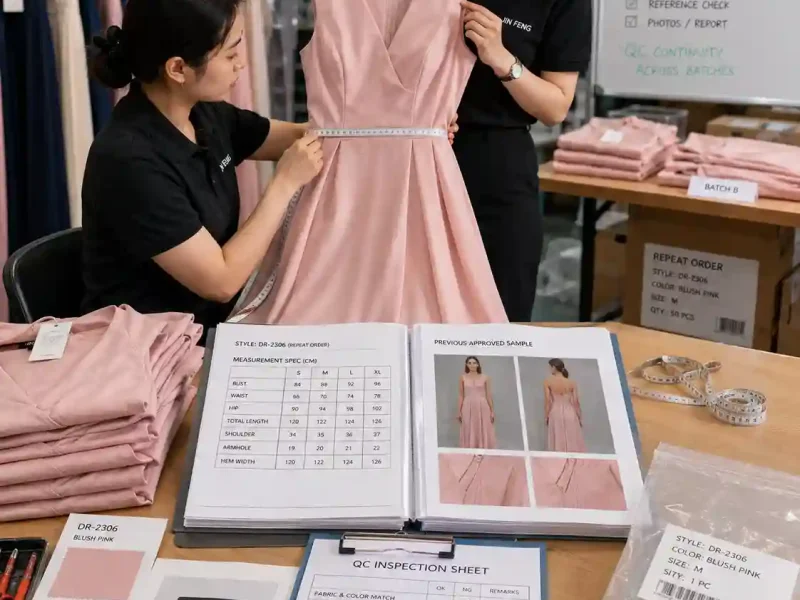
Lock Bulk Standards with PP and Golden Samples

PP Sample Lock
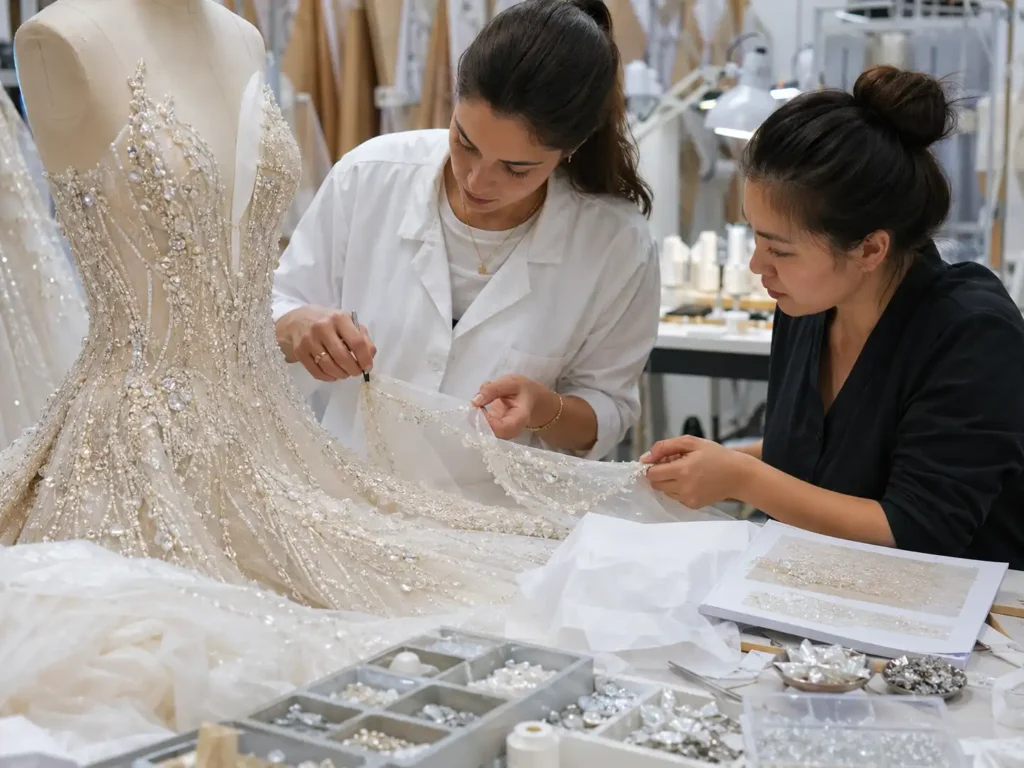
Golden Sample Reference

Production Record Package
Private-Label Packing for Tie-Front Dress Collections
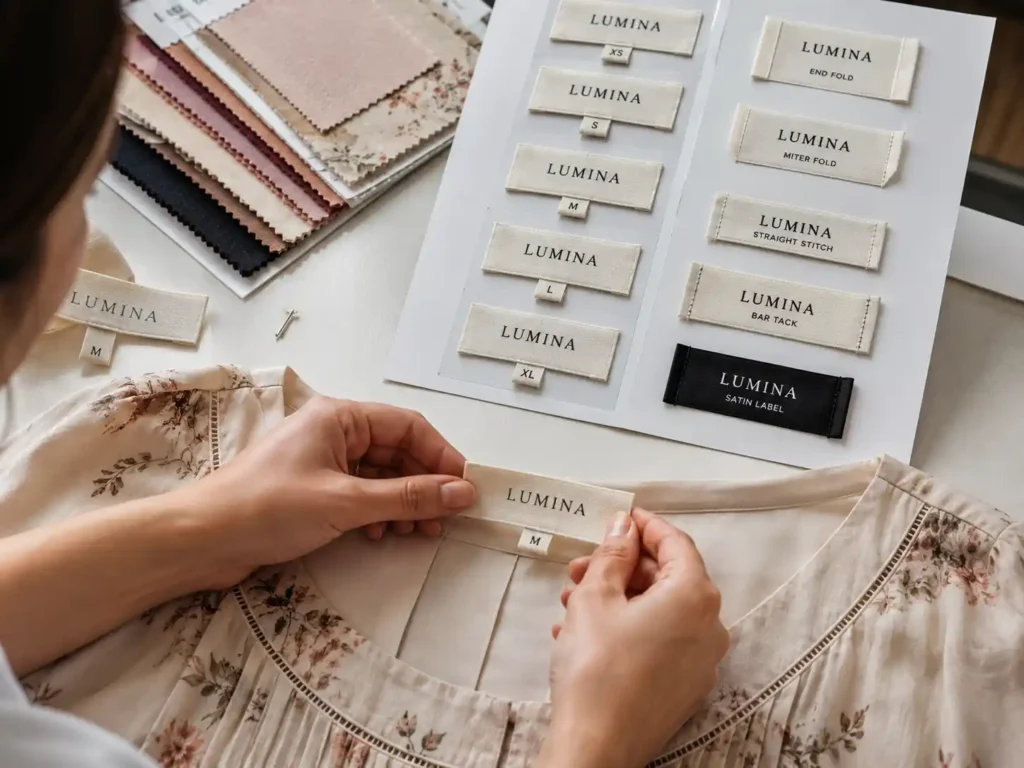
Woven and Main Labels
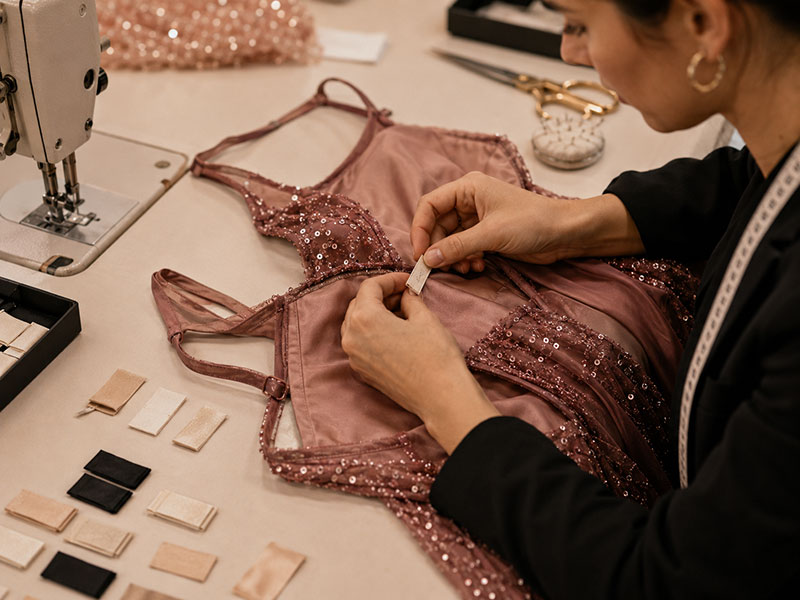
Care and Size Labels
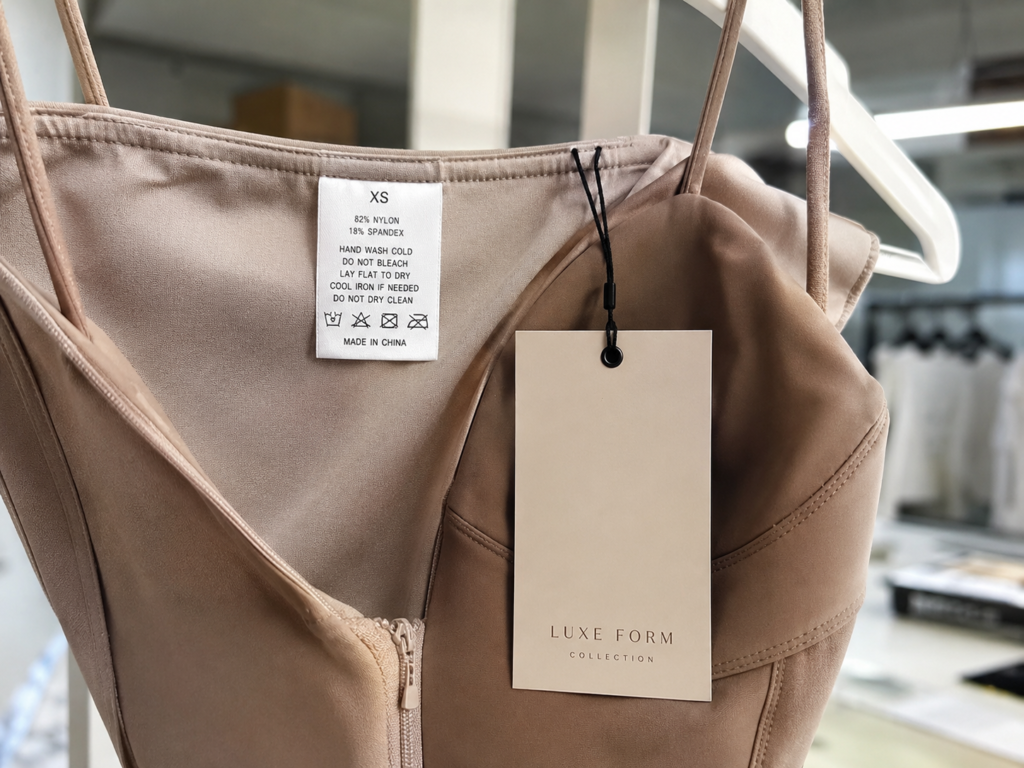
Hangtags and Fasteners
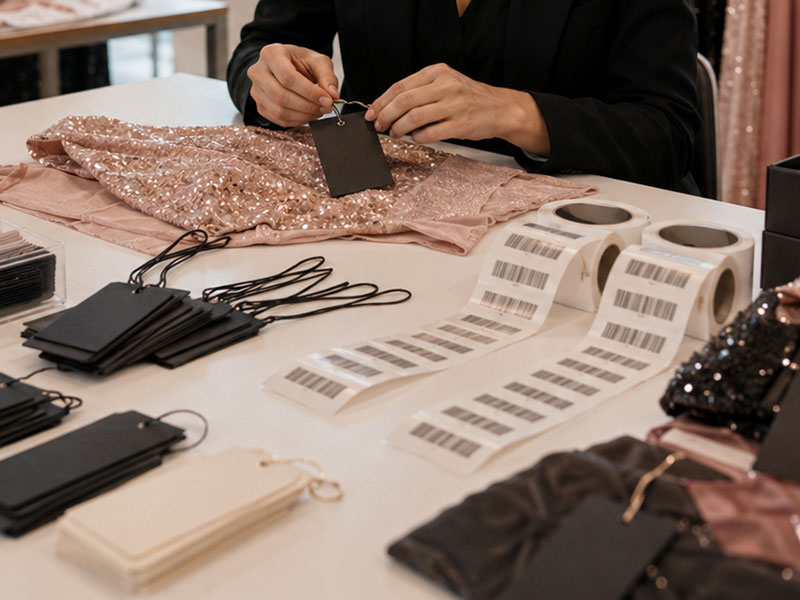
Barcode and SKU Control
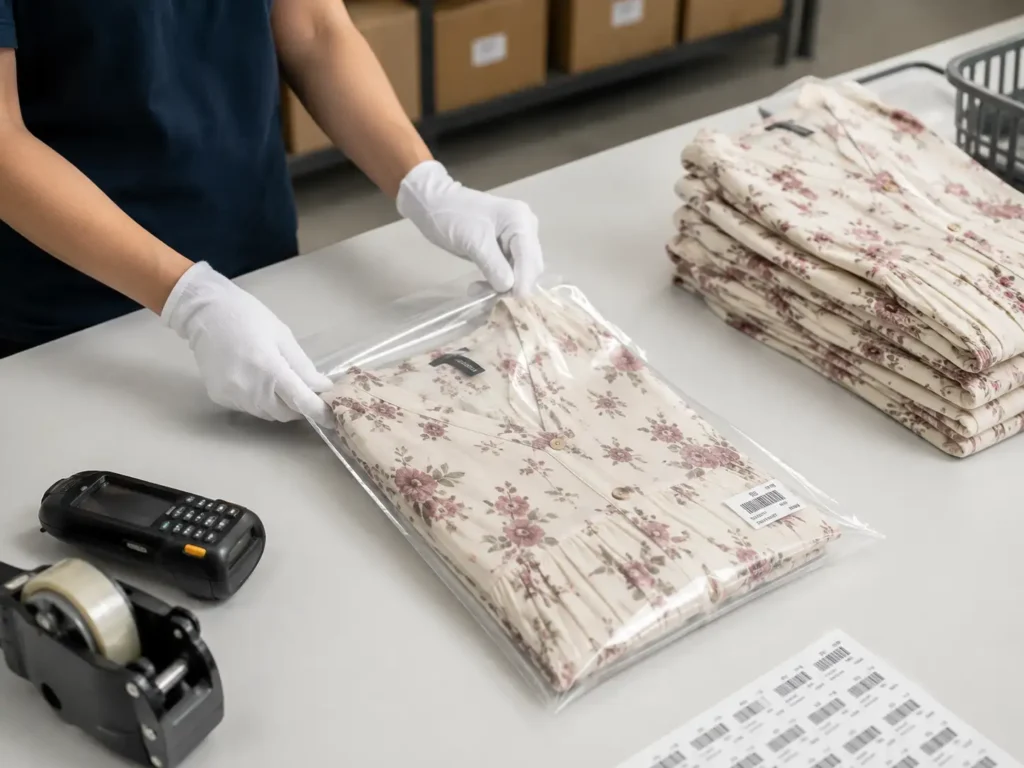
Polybag and Folding
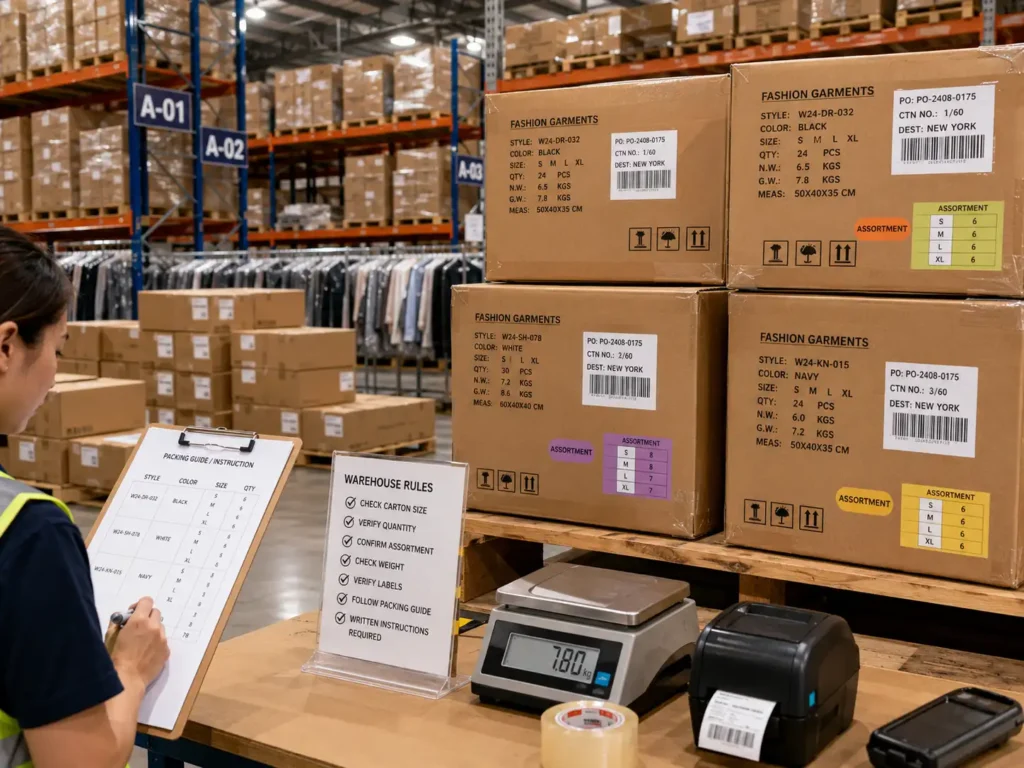
Carton and Warehouse Marks
Understand MOQ, Cost, and Timeline Variables
| Planning Area | Standard Direction | Variables Requiring Project Review |
|---|---|---|
| MOQ | 200 pieces per style and color | Fabric, custom dyeing, printing, lace, hardware, trims, packaging, and supplier minimums |
| Sample Development | Planned after style and material review | Pattern difficulty, fabric readiness, custom trims, sample type, revision rounds, and shipping |
| Bulk Production | Scheduled after PP approval and material confirmation | Total quantity, number of styles, line allocation, fabric lead time, workmanship, QC, and packing |
| Main Fabric Cost | Based on composition, weight, width, finish, and consumption | Custom color, print, certification, wastage, shrinkage, and fabric lot size |
| Construction Cost | Based on operations and sewing time | Ties, cut-outs, ruching, cups, boning, lining, zippers, print matching, and hand finishing |
| Size and Color Plan | Quoted from confirmed breakdown | Extended sizes, small color splits, multiple lengths, and special grade requirements |
| Private Label Cost | Based on approved artwork and quantities | Woven labels, care labels, hangtags, barcode, polybags, inserts, and carton marks |
| Testing and Inspection | Arranged according to project requirements | Fabric tests, garment tests, brand inspection, third-party inspection, and document scope |
| Logistics | Coordinated after packing data is available | Express, air, sea, split shipment, destination, incoterm, forwarder, and warehouse rules |
Why Jinfeng Supports Complex Multi-Style Programs
6 Owned Factories
10+ Long-Term Partners
100,000+ Monthly Capacity
18+ Sewing Lines
12+ Merchandisers
30+ Finishing Workers
Anonymous Tie-Front Dress Production Programs
The following case profiles use anonymous brand information and realistic order structures. Quantities reflect the scale of multi-style programs commonly handled by established fashion labels. Final public use should remain aligned with approved internal records and NDA obligations.

United States Fast-Fashion Resort Program
Order scope: 18 styles, 46,800 garments, 3 coordinated fabric groups, 2-4 colors per style, XS-XL size range.
The range combined printed viscose tie-bust mini dresses, cotton-poplin keyhole styles, wrap-front midi dresses, and two maxi silhouettes. The merchandising calendar required photo-ready samples for six hero styles before the full range completed fit approval.
Development challenge: The initial references used similar front ties but four different functions: bust adjustment, decorative bow, wrap closure, and center-front ruching. Early material options also showed different shrinkage and knot volume. Treating the range as one construction family would have created inconsistent fit and tying appearance.
Development action: Styles were divided into fabric and construction groups. Pattern teams created separate tie specifications for finished width, anchor position, length, reinforcement, and tying method. Viscose styles received shrinkage review and additional neckline stabilization. Poplin styles used adjusted tie layers to reduce knot bulk. Hero styles moved first through photo-sample review while remaining patterns continued in parallel.
Production control: Bulk release followed PP approval by style and color. Cutting bundles were separated by fabric lot. In-line checks recorded keyhole width, tie length, anchor spacing, bust, front length, and skirt balance. Packing instructions required ties to be folded inside the garment rather than pre-knotted to reduce crease marks during transport.
Program result: Eighteen styles moved through three controlled sample waves, followed by coordinated bulk production and SKU-separated packing. The same style files, fabric references, tie specifications, and packing records were retained for later color extensions and repeat-order review.

United Kingdom Occasionwear Program
Order scope: 12 styles, 28,400 garments, satin and chiffon groups, 2-3 colors per style, UK 6-16 size range.
The collection included satin bow-front midi dresses, chiffon keyhole dresses, under-bust tie maxis, and front-knot occasion styles. Visual expectations were high because the garments were planned for event-season photography and online launch.
Development challenge: Early satin trials showed seam waviness, tie twisting, and visible pressing marks. Pale chiffon colors needed additional coverage, while the original tie-anchor position created horizontal drag lines across the bust in larger sizes.
Development action: Satin grain and shine direction were marked for body and tie pieces. Tie widths were adjusted to create a stable bow without excessive seam bulk. Sewing and pressing tests were completed before PP release. Chiffon styles moved to color-matched lining with revised neckline attachment. Grade rules added front length and controlled opening width without enlarging the keyhole proportionally.
Production control: A Golden Sample and style-specific QC sheet recorded tie width, length, anchor coordinates, neckline depth, opening dimensions, lining coverage, and pressing appearance. Shade groups were managed by fabric lot. Delicate ties were protected during folding, and hangtag fasteners were kept away from visible satin surfaces.
Program result: The 12-style order was organized into separate satin and chiffon production groups with shared trims where suitable. Production files supported consistent finishing across colors and created a controlled base for later replenishment discussions.

Australian Ecommerce Collection
Order scope: 24 styles, 67,200 garments, resort and party categories, 4 size groups, mixed air and sea shipment planning.
The assortment combined rib-knit tie-front bodycon dresses, printed resort maxis, halter tie minis, satin party dresses, and ruched drawstring styles. Launch timing required priority units for content creation and an initial warehouse release before the main quantity arrived.
Development challenge: Twenty-four styles created version-control risk across samples, colors, labels, and packaging. Several styles shared visual tie details but used different fabrics and stretch behavior. The brand also required barcode and SKU accuracy across a broad size-color matrix.
Development action: Styles were grouped by knit, lightweight woven, satin, and printed fabric. A priority list identified eight hero SKUs for earlier sample and PP review. Revision trackers recorded pattern version, fabric, color, tie method, grade status, label artwork, and approval date. Knit styles received recovery and tie-elongation checks, while printed styles received placement and shade review.
Production control: Factory allocation followed fabric and construction strengths. Merchandising updates tracked material, PP, cutting, sewing, QC, and packing status by style. Packing lists separated the priority shipment from the main sea shipment, while barcode verification linked style, color, size, and carton data.
Program result: The collection moved through staged approvals and split delivery planning without combining incompatible fabric or tie standards. Retained records created a clear route for bestseller replenishment, new colors, and same-pattern fabric changes.
Protect Designs and Prepare Repeat Orders
Design Protection
- NDA-based cooperation can be arranged.
- Anonymous case presentation avoids revealing brand identity.
- Original files and sample references remain connected to the approved project.
- Access and communication can be organized through named project contacts.
Repeat-Order Records
- New colorways still require shade and material confirmation.
- New fabric can change fit, tie behavior, shrinkage, and sewing.
- New size ratios may affect consumption and production planning.
- Different fabric lots require renewed quality review.
- Prices and timelines are reconfirmed according to current materials and capacity.
Choose the Right Tie-Front Dress Supply Model
Jinfeng Apparel
Ready-Stock Wholesaler
General Apparel Factory
Sewing Workshop
Tie-Front Dress Manufacturer Frequently Asked Questions
Jinfeng develops tie-bust, bow-front, keyhole, front-knot, wrap-tie, tie-waist, under-bust, ruched, halter, satin, resort, jersey bodycon, mini, midi, and maxi dresses. Suitability is reviewed from the construction, fabric, size range, quantity, and quality requirements.
Yes. Front, back, side, and detail images are preferred. Missing information such as fabric, closure, lining, measurements, tie function, and back construction must be confirmed before accurate pattern development and quotation.
Standard MOQ starts from 200 pieces per style and color. Special fabric, custom dyeing, printing, lace, trims, hardware, labels, or packaging may have separate supplier minimums.
Timing depends on pattern difficulty, material readiness, custom color or print, trim development, sample type, and revision rounds. A project timeline is prepared after style and material review rather than applying one fixed duration to every dress.
Development reviews full bust, upper bust, under-bust, neckline depth, keyhole width, tie-anchor spacing, front length, lining, and intended wearing position. Fit comments should be measured and confirmed before PP approval.
Yes. Tie length may follow separate grade rules according to bow size, wrap function, body circumference, fabric stretch, and intended end drop. Decorative ties may require a different rule from functional closures.
Yes, when the silhouette requires support or coverage. Cup shape, boning position, elastic, anti-slip tape, lining extent, fabric weight, and comfort are reviewed during sample development.
PP approval, Golden Sample references, final patterns, measurements, tie specifications, BOM, sewing instructions, label placement, packing standards, in-line checks, garment inspection, and packing QC create the bulk control system.
Yes. Woven labels, care labels, size labels, hangtags, barcodes, SKU stickers, polybags, folding methods, carton marks, and warehouse labels can be arranged according to approved artwork and packing instructions.
Jinfeng supports NDA-based cooperation and protects tech packs, samples, patterns, trims, private-label details, packaging, quantities, and unreleased designs within the project workflow.

Develop Your Tie-Front Dress Collection with Jinfeng
Send the product information available today, even when several details still require development review. Kelly and the Jinfeng Apparel team will assess construction, fabric direction, sample route, MOQ fit, production risk, private-label requirements, and the information needed for a more accurate quotation.
Please include:
- Reference images, original sample photos, sketches, line sheet, or tech pack
- Target quantity by style and color
- Preferred fabric, composition, stretch, weight, hand feel, or reference swatch
- Planned colors, prints, custom dyeing, or special trim requirements
- Base size, size range, measurement chart, and grade direction
- Lining, cups, boning, elastic, zipper, hook, or support requirements
- Woven labels, care labels, hangtags, barcode, polybag, and carton instructions
- Photo-sample, PP, bulk delivery, warehouse, and launch dates