 Skip to content
Supportive Bodycon Construction
Supportive bodycon dresses need more than a close silhouette. Jinfeng Apparel develops fitted womenswear by balancing stretch recovery, pattern tension, bust-waist-hip proportion, lining, internal support details and bulk measurement control for fashion-led collections.
- Since 2008, focused on custom women’s fashion manufacturing.
- 2 sample rooms, 7+ senior pattern makers and 20+ sample machinists support fit development.
- 15+ QC inspectors support measurement, stretch, seam, neckline and finished-garment checks.
- Bodycon programs can use jersey, rib knit, ponte, stretch mesh, power mesh and stretch satin according to design requirements.
- Standard MOQ starts from 200 pcs per style/color; fabric, trims and special developments are reviewed by project.
Development Capacity Behind Supportive Bodycon Dress Programs
Since 2008
Two Sample Rooms
7+ Pattern Makers
20+ Sample Machinists
15+ QC Inspectors
100,000+ Monthly Capacity
What Supportive Bodycon Construction Actually Means in Production
Support begins with controlled tension, not maximum tightness. A well-developed bodycon dress combines fabric recovery, negative ease, balanced pattern lines and selective internal structure so the silhouette stays fitted without creating unstable seams, uncontrolled riding or excessive pressure.

Support Comes From Coordinated Fabric, Pattern and Structure
A supportive bodycon dress works as one tension system. Fabric provides stretch and recovery; the pattern decides where the garment sits against the body; seams and internal details keep that tension from migrating into unwanted areas. If only one part is changed, fit can shift across the whole dress. A higher-recovery fabric may hold the waist more firmly but also increase pressure at the hip. A softer jersey may feel comfortable at first fitting yet grow during wear. A second lining layer can improve opacity and surface smoothness while also changing stretch resistance and finished measurements.
Jinfeng Apparel reviews supportive bodycon construction through connected development decisions rather than isolated trim choices. Fabric direction is checked before pattern confirmation. Bust, waist and hip proportions are reviewed against the intended silhouette and target size chart. Necklines, straps, armholes, side seams, zippers, slits and hems are treated as stability points. When cups, boning, elastic or power mesh are appropriate to the design, their effect on support, comfort, seam thickness and outer-fabric appearance is checked during sampling.
A strong fitted garment should hold its intended shape after movement instead of relying on static mannequin appearance. Fit review therefore looks at front, side and back balance, standing posture, sitting comfort and basic movement. The goal is not medical compression. The goal is fashion-led support: a dress that preserves the planned neckline, waist position, hip line, hem behavior and visual contour through normal wear.

Supportive Fit Must Become a Measurable Bulk Standard
Sample approval has limited value if the fit cannot be translated into production documents. Once a supportive bodycon sample is accepted, the relevant decisions need to move into the final pattern, size chart, fabric reference, trim approval, sewing instructions and QC checklist. Informal comments such as “make it tighter at the waist” or “give more support at the bust” are not sufficient for bulk production because different operators may interpret them differently.
Jinfeng Apparel converts fit corrections into measurable updates. A bust adjustment can change neckline coverage, armhole position and strap tension. A waist correction can alter side-seam balance and skirt length. A hip adjustment can affect riding-up behavior, slit opening and hem position. Fabric substitutions require another review because stretch percentage, direction, thickness and recovery can change the effect of the same pattern.
PP sample approval is used to lock the confirmed combination of fabric, color, trims, measurements, construction, labels and packing before bulk production. A Golden Sample can then serve as a physical reference for appearance and workmanship. During production, garment measurements are checked against the agreed tolerance standard rather than an unrealistic promise of zero variation. Supportive bodycon manufacturing becomes reliable when fit decisions are converted into repeatable controls that can be checked at cutting, sewing, finished garment and final inspection stages.
Supportive Bodycon Versus a Dress That Is Simply Tight
A close silhouette can be produced by reducing measurements, but reduced measurements alone do not create stable support. The comparison below separates useful construction control from uncontrolled tightness that can distort the garment during wear or bulk production.
| Development Point | Simply Tight Bodycon | Supportive Bodycon Construction |
|---|---|---|
| Fabric choice | Stretch is the main criterion | Stretch, recovery, thickness, opacity and growth are reviewed together |
| Pattern approach | Measurements reduced uniformly | Negative ease is adjusted by body zone and fabric behavior |
| Bust area | Relies on fabric tension | Coverage, neckline, lining, cups or structural details reviewed by style |
| Waist and hip | Same tension through the body | Waist placement, hip contour and side-seam balance are controlled separately |
| Lining | Added mainly for coverage | Lining stretch and tension are matched with the outer fabric |
| Movement | Static fitting is often enough | Standing, sitting and movement are checked for riding, gaping and shifting |
| Bulk control | Visual comparison to sample | Pattern, size chart, fabric reference, PP sample and QC points are locked |
| Expected result | Tight appearance | Fitted shape with controlled support, stability and wearable comfort |
Six Bodycon Fit Failures Worth Solving Before Bulk Production
Weak Stretch Recovery
Bust Instability
Waist Riding Up
Side Seam Twisting
Lining Exposure
Size Range Drift
How Support Is Built Through the Bodycon Dress Structure
Supportive construction is created by several controlled layers rather than one hidden feature. Outer fabric, pattern tension, inner components and stability points must work together without creating visible bulk, hard edges or uncomfortable pressure.
Build the Outer Silhouette Before Adding Internal Support
Outer fabric establishes the first level of shape control. Jersey offers softness and easy body contact, but recovery and growth must be checked carefully. Ponte and Roma constructions can provide firmer shape retention and greater seam stability. Rib knit follows the body closely but can lengthen under tension. Stretch mesh and power mesh can support layered designs, yet transparency and edge stability need attention. Stretch satin adds a polished surface but can reveal seam pressure, zipper bulging and uneven internal construction more readily than matte knits.
Pattern engineering determines how those materials behave on the body. Jinfeng Apparel reviews bust, waist, high hip, full hip and garment length with the chosen fabric rather than applying a generic reduction ratio. Negative ease is adjusted around the planned silhouette and stretch behavior. Side seams need to remain visually balanced. Front and back body lengths must be controlled so the waistline does not migrate. Mini and slit styles need movement safety as well as a fitted look. Backless and cut-out styles require enough coverage at the side body to remain stable during wear.
Seam construction must also match the material. Excessive seam tension can create waving, while insufficient control can allow the garment to grow. Neckline and armhole edges may need stabilization according to style. Zippers must lie flat without fighting against stretch. A well-built outer layer should already produce a controlled silhouette before cups, boning or extra lining are added; internal support should refine the structure rather than rescue an unstable base pattern.
Add Internal Support Only Where the Design Needs It
Internal components should solve a defined fit problem. Soft lining can improve comfort, coverage and surface smoothness. A firmer lining or power mesh layer may add localized control when compatible with the outer fabric. Bra cups can shape and stabilize the bust in corset, bustier, strapless or bra-friendly dress designs. Boning can support vertical structure and help a bodice hold its intended line, but placement, length and edge treatment must be checked so the garment does not feel rigid or show hard ridges through the shell.
Elastic can stabilize a neckline, back edge or waist section, yet excessive elastic tension may create cutting, rolling or visible gathering. Strap sliders can improve adjustability, but strap width and anchor points still need enough strength for the garment weight. Invisible zippers should close smoothly without creating a raised ridge through the center back or side seam. Hook-and-eye components, where used, need secure placement and skin-contact comfort.
Jinfeng Apparel evaluates each support component during sampling. The question is not whether a dress contains more internal parts; the question is whether each part improves the intended fit without damaging appearance or comfort. Construction is reviewed from the inside and outside, then tested on the body before PP approval. Supportive bodycon dresses remain fashion garments, so a clean exterior, balanced proportions and photo-ready finish matter as much as the hidden structure.
Supportive Bodycon Styles We Develop for Fashion Collections
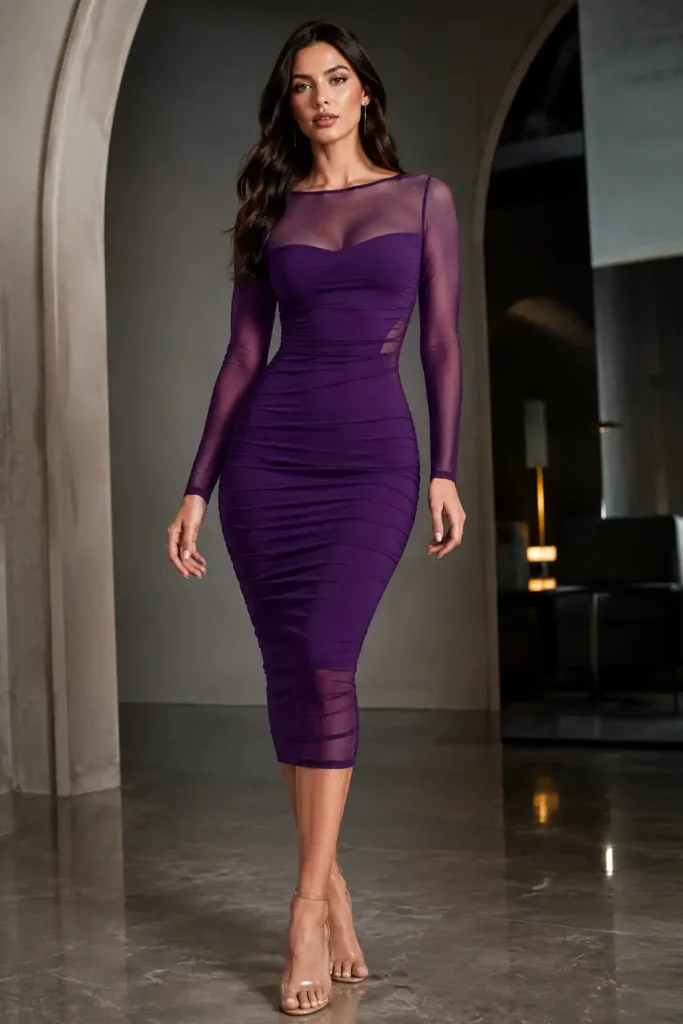
Double-Layer Bodycon
Double-layer bodycon dresses can improve opacity, surface smoothness and a firmer hand, but both layers must stretch and recover together. A tighter lining can pull the outer layer upward, while a looser lining may wrinkle underneath. Development focuses on compatible stretch direction, lining length, seam joining, neckline finish and hem behavior. Double layering is useful for selected jersey and mesh-led styles when the added structure supports the design rather than creating unnecessary thickness. Seam placement and pressing are also reviewed so the extra layer does not create visible ridges across the fitted surface.
- Key focus: outer/inner stretch balance
- Common risk: lining drag and hem riding

Corset Bodycon
Corset bodycon styles combine a fitted skirt with a structured bodice. Support can come from cups, boning, lining, front panels, elastic or secure closures depending on the design. Fit review concentrates on cup shape, bust coverage, under-bust position, waist transition and the point where rigid or semi-rigid structure meets stretch fabric.
A visually sharp waistline still needs sitting comfort and clean seam symmetry before the style is approved for bulk.
The bodice-to-skirt transition is checked closely because mismatched rigidity can create horizontal pressure lines or restricted movement.
- Key focus: bust support and waist transition
- Common risk: hard structure showing through shell

Mesh-Lined Bodycon
Mesh-led bodycon dresses often depend on two materials: a visual mesh shell and a lining or power-mesh layer that manages coverage and support.
Transparency, stretch direction, edge stability and color matching are reviewed together. Necklines and cut-outs require particular attention because small tension changes can distort the opening. Sampling confirms whether lining stops, continues or changes stretch across the body so the finished style stays controlled without losing the intended sheer effect. Color matching between shell and lining is also reviewed because tonal differences become more visible when mesh is stretched.
- Key focus: transparency and layered tension
- Common risk: neckline growth or visible lining edge

Strapless Bodycon
Strapless silhouettes place the full stability requirement on the upper bodice rather than shoulder straps.
Upper-bust circumference, neckline height, cup shape, internal support and anti-slip options are reviewed according to fabric and design. A smaller top edge is not enough; excessive tightness can create discomfort or visible cutting while still failing to hold the garment correctly.
Fit testing checks whether the bodice stays in position during normal movement without repeated adjustment.
Zipper placement, top-edge finish and internal seam bulk are reviewed at the same time because each can affect how the upper bodice grips the body.
- Key focus: upper-bust stability
- Common risk: downward movement and edge pressure

Halter Bodycon
Halter bodycon dresses transfer support through the neck or upper back, creating a different pressure path from regular straps. Pattern development checks neckline depth, shoulder-to-neck balance, armhole coverage, bust position and back opening. Stretch fabrics can pull the neckline deeper than intended if the body length is wrong. The garment should stay centered across the torso while avoiding excessive neck pressure, twisted side seams or loose underarm areas. Back closure position and fabric recovery are checked so support does not depend entirely on tension concentrated at the neck.
- Key focus: neckline and neck-load balance
- Common risk: deepening neckline under tension

Ruched Bodycon
Ruching changes how tension is distributed over the body. The amount, direction and location of gathers can improve shaping and visual coverage, but uneven ruching may twist side seams or change the finished length. Jinfeng Apparel reviews ruching placement, elastic or drawcord behavior where applicable, lining match and symmetry before bulk. The approved garment should retain its planned gather density across the size range without creating one tight section and one loose section. Ruching length and anchor points are documented so bulk units do not vary noticeably from one garment to another.
- Key focus: controlled gather tension
- Common risk: asymmetric side-seam pull

Ponte Bodycon
Ponte and Roma constructions are useful when a collection needs a firmer silhouette, more shape retention and cleaner seam structure than lightweight jersey. Pattern reduction can usually be more controlled because the fabric has greater body, but stretch percentage and recovery still vary by supplier and composition. Development checks waist placement, hip contour, zipper behavior, seam bulk and hem structure so the dress feels supportive without becoming rigid. Pressing conditions and seam allowance are also reviewed because firmer knits can show unwanted ridges through a close silhouette.
- Key focus: shape retention and seam stability
- Common risk: over-reduction in a firmer knit
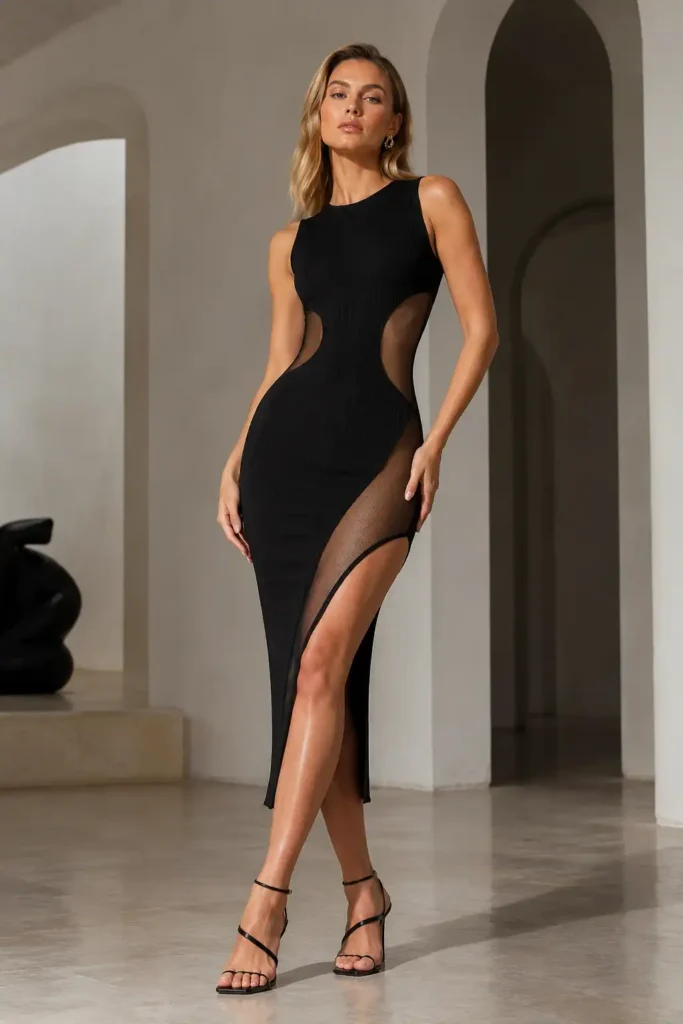
Cut-Out Bodycon
Cut-out designs interrupt the normal tension path of a fitted dress. Every opening changes how pressure moves around the bust, waist or side body. Pattern placement, edge finish, body coverage, lining support and seam anchoring must be reviewed together. Jinfeng Apparel checks whether the opening stays clean during standing and movement, whether the exposed area remains within the intended proportion, and whether nearby seams distort under stretch. Edge reinforcement and lining placement are documented when they are needed to keep the opening from growing in bulk.
- Key focus: opening stability and coverage
- Common risk: edge distortion or uncontrolled exposure
Fabric Engineering for Support, Recovery and Clean Body Contours
Fabric decides how the pattern behaves after the dress leaves the fitting room. Jinfeng Apparel reviews stretch, recovery, weight, opacity, shrinkage, surface and lining interaction before selecting a bodycon construction route.

Match Fabric Behavior to the Intended Level of Structure
Jersey commonly falls around 140-240 gsm in Jinfeng Apparel’s fabric knowledge system, depending on composition and supplier. It can create soft, close-fitting bodycon styles with good drape, but lighter colors and lower weights may become transparent under stretch. Cotton, viscose and rayon-rich jerseys also need greater attention to shrinkage and post-wash size change. A sample that fits perfectly before laundering can move outside the intended measurements if shrinkage and recovery are not considered early.
Ponte and Roma fabrics generally offer a firmer hand, more thickness and stronger shape retention. They suit structured midi or office-to-evening bodycon styles where the silhouette should look smooth rather than fluid. Greater body does not remove the need for fit work: a pattern designed for soft jersey may become uncomfortable or create seam pressure if copied directly into a denser ponte.
Rib knit produces strong visual texture and flexible body contact, yet rib structures can grow in length or width after extended wear. Necklines and hems need recovery control, while rib direction must stay visually straight. Stretch mesh adds transparency and layered construction options. Power mesh can contribute firmer internal support in selected designs, but it should be assessed against outer fabric stretch and comfort rather than inserted automatically.
Stretch satin can create a polished fitted dress with a smoother fashion surface, but internal seams, zipper ridges and uneven tension may be more visible. For every material, the development question is the same: how much stretch does the garment need, how quickly does the material recover, and what happens after the dress has been worn, moved in and cleaned?

Reassess the Pattern Whenever Fabric Changes
Using one pattern across several fabrics is a common source of bodycon inconsistency.
A jersey bodycon and a ponte bodycon may share a silhouette, yet identical pattern measurements can produce completely different pressure, length and movement. Jinfeng Apparel therefore reviews fabric substitutions for stretch, weight, drape, transparency, shrinkage, thickness, recovery, lining requirement, seam treatment and finished garment dimensions before deciding whether the existing pattern can be retained.
A fabric change during sampling may require a revised sample if the fit relationship changes materially. Moving from soft jersey to higher-recovery ponte can alter waist tension, hip pressure and zipper behavior.
Replacing a mesh shell with a firmer mesh can change neckline stability and lining interaction. Switching between stretch satin qualities may influence seam stress, drape and surface appearance even when fiber content looks similar on paper.
Bulk fabric also needs approval against the sampled reference. Color, hand feel, weight and stretch behavior should remain within the agreed direction. Incoming material review is especially important for fitted styles because a small change in recovery can affect every size. When fabric development, custom dyeing, special trims or certified material requirements are involved, supplier MOQ and lead time are confirmed separately by project. The aim is not to force every design into one preferred fabric; it is to select a material whose physical behavior supports the required silhouette and can be controlled consistently in production.
Negative Ease Must Follow Fabric Performance and Body Proportion
Negative ease helps a garment stay close to the body, but there is no universal reduction percentage for every bodycon style. Fabric stretch, recovery, lining, neckline design and target silhouette determine where reduction is useful and where extra room is necessary.

Reduce Measurements by Function, Not by One Global Percentage
A supportive bodycon pattern should not be created by shrinking bust, waist and hip dimensions equally. Different areas carry different fit responsibilities. The bust must provide coverage and shape without flattening or overflow. The waist may need a closer contour to hold position. The high hip and full hip need enough room for movement while still maintaining the intended curve. Front and back body lengths influence where the waist sits and whether the skirt rides upward.
Fabric performance changes every decision. A high-recovery knit can tolerate more controlled negative ease than a soft fabric that stretches easily and remains elongated. A double-layer construction can feel significantly firmer than a single layer even when the pattern is unchanged. A lining with less stretch can become the true limiting layer and create pressure points inside an outer shell that appears flexible. Stretch direction also matters: a fabric with strong crosswise stretch but limited vertical stretch may hold circumference well while pulling the hem upward during sitting or walking.
Jinfeng Apparel reviews the chosen material, sample measurements and on-body result together. Pattern changes are made around the actual problem rather than an abstract size reduction. If a waist feels loose but the hip already rides up, simply reducing the entire side seam can make the problem worse. The correction may instead involve waist shaping, body length, hip distribution or a change in fabric. Supportive fit comes from controlled relationships between measurements, not from maximum compression.
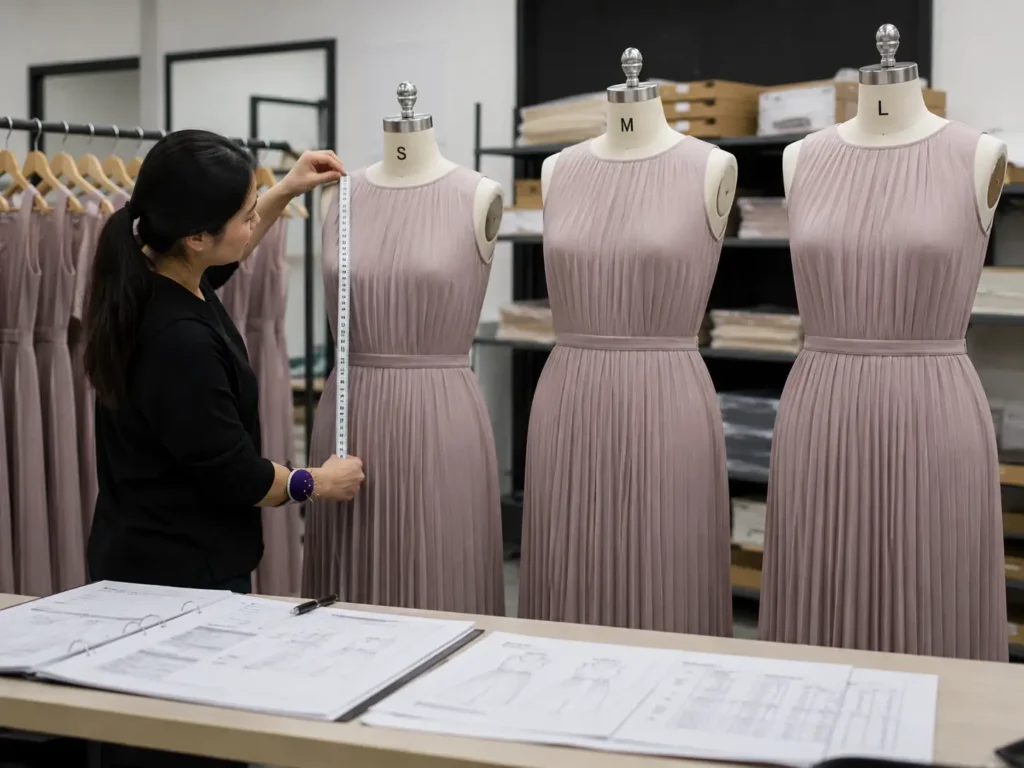
Validate Negative Ease Through Wear, Revision and Size Grading
A fitting session should show whether planned negative ease remains stable during normal wear.
Front, side and back views reveal different issues: side seams show rotational balance, the waistline shows vertical stability, and the hem shows whether tension is pulling the garment upward. Sitting can expose insufficient hip or body length, while basic movement can reveal neckline gaping, strap migration or cut-out distortion that is not visible in a static photo.
Once fit comments are collected, revisions need to be specific. Jinfeng Apparel can review bust-waist-hip proportions, garment length, strap length, armhole, neckline depth, slit height and lining behavior, then update the pattern and size chart. If a major structural or fabric change is made, a revised sample is normally more reliable than approving a correction only through written comments.
Size grading requires another layer of control because negative ease cannot be assumed to scale identically across the full range. A neckline, strap or cut-out may need a different proportional adjustment from waist or hip measurements.
Jinfeng Apparel checks grade rules against the design and target size chart before bulk. The final production standard is then tied to approved measurements, the PP sample and garment QC points so the intended level of support does not disappear or become excessive as sizes change.
Bust, Neckline and Strap Stability Need Separate Fit Decisions
The upper body is often where supportive bodycon styles succeed or fail. Neckline depth, bust coverage, strap tension, underarm height, cups and lining must work together so the garment holds position without visible cutting or repeated adjustment.

Stabilize the Bust Without Flattening the Fashion Silhouette
Bust support begins with pattern placement. Upper-bust circumference, full bust, neckline height, center-front length, underarm position and the intended cup or seam shape all influence how securely the dress sits. A bodycon style can measure correctly around the bust and still fail because the neckline opens, the armhole gaps or the fabric pressure pushes the bust into an unintended shape.
Jinfeng Apparel reviews support details according to style. Corset and bustier bodycon dresses may use bra cups, boning, structured lining or secure closures. Strapless designs may require neckline stabilization, anti-slip options or carefully balanced internal tension. Soft jersey styles may rely more heavily on pattern position and lining than rigid structure. Mesh and cut-out designs need enough edge control to hold the opening while preserving the planned transparency and exposure level.
Support should remain visually clean on the outer surface. Cups that are too thick can show through stretch fabrics. Boning channels can create ridges if the shell is too light. Tight elastic can cut into the top edge or cause gathering. Lining can pull the neckline inward if its stretch is not compatible. Sample fitting therefore checks both appearance and sensation: the garment should hold its intended line while allowing normal breathing, sitting and movement. Fit comments are then translated into pattern, trim or construction adjustments before PP approval.

Treat Straps and Necklines as Load-Bearing Construction Points
Straps do more than complete the neckline. On fitted dresses, they can carry garment weight, control bust position and influence armhole shape. Too-long straps allow the neckline to drop and change coverage; too-short straps can pull the dress upward, distort the bust and create shoulder pressure. Adjustable straps can help wearability, but slider hardware, strap width, anchor position and elastic recovery still need to match the garment weight.
Halter styles create a different load path around the neck and upper back. One-shoulder styles require left-right balance because one side carries more structural responsibility. Backless designs may lose the stable back panel that normally helps control the bust, so side-body coverage and front structure become more important. Strapless dresses remove shoulder support entirely and must hold the bodice through upper-bust fit and internal construction.
Neckline edges require material-specific control. Jersey may roll or grow, mesh can stretch out, and satin can expose uneven stitching. Binding, lining, elastic or clean-finish methods are selected according to the design rather than used as a standard formula. During fit review, Jinfeng Apparel checks neckline symmetry, depth, gaping, armhole height, strap tension and bust coverage together because changing one point often moves another. Stable support is achieved when the whole upper-body structure holds its intended position, not when a single edge is simply tightened.
Waist, Abdomen and Hip Shaping Must Stay Wearable
A supportive bodycon dress should define the waist and hip line without forcing tension into one uncomfortable zone. Pattern balance, fabric recovery and body length determine whether the garment stays positioned or starts to roll, twist or climb.

Shape the Waist Without Creating Rolling or Side-Seam Distortion
Waist definition can come from pattern contour, fabric recovery, panel placement, lining or localized structural details. Excessive reduction at the waist is not automatically more supportive. If the high hip is too tight, tension may pull the waistline downward or force the skirt upward. If the torso is too short, the waist seam may rise toward the ribcage. If fabric recovery is weak, the waist can look clean at first fitting and then lose shape after extended wear.
Jinfeng Apparel reviews natural waist position, high waist or low waist placement where relevant, side seam, front and back body length, lining tension and the relationship between waist and high hip. For styles using corset-inspired structure, the transition from a firmer bodice into a stretch skirt needs enough flexibility for sitting and movement. For soft knit bodycon dresses, the pattern and recovery characteristics carry more of the shaping work.
Surface appearance is also part of support quality. A waist seam should remain level, side seams should stay balanced, and lining should not create internal ridges. Ruching or panel seams can redistribute visual tension, but they must remain symmetrical and stable across bulk production. Fit correction is based on the observed cause of the problem rather than simply removing more circumference. A controlled waist is one that holds its intended position and contour while allowing the rest of the garment to move correctly.

Give the Hip Enough Movement to Prevent Riding and Hem Climbing
The hip area controls much of a bodycon dress’s movement. When full-hip or seat tension is excessive, the garment often seeks extra space by moving upward. Mini dresses become shorter, midi hems climb, back slits open further and waist positions change. A fabric with strong horizontal stretch but limited vertical flexibility can amplify the effect during sitting or walking.
Development therefore reviews high hip, full hip, front hip length, back body length, hem circumference, slit height and fabric recovery together. A low-waist style needs particular attention because stretch can pull the waistline lower and exaggerate hip width if proportions are wrong. Ruched or asymmetrical designs can also create uneven pull if gathers are concentrated on one side. Lining should not restrict the shell or become the hidden source of riding.
Jinfeng Apparel checks bodycon samples from front, side and back and can use fitting photos or video feedback to identify where tension is moving. Pattern revisions may involve hip distribution, side seam shape, body length, hem width or fabric direction rather than a simple size increase. During bulk QC, bust, waist, hip, length and sensitive design measurements are checked against the confirmed standard. The intended result is a close hip line that remains visually controlled through normal wear instead of requiring constant adjustment.
Internal Details That Improve Support Without Adding Unwanted Bulk

Lining Systems
- Check: stretch compatibility
- Check: lining length and edge visibility

Bra Cups
- Check: cup shape and placement
- Check: outer-surface visibility
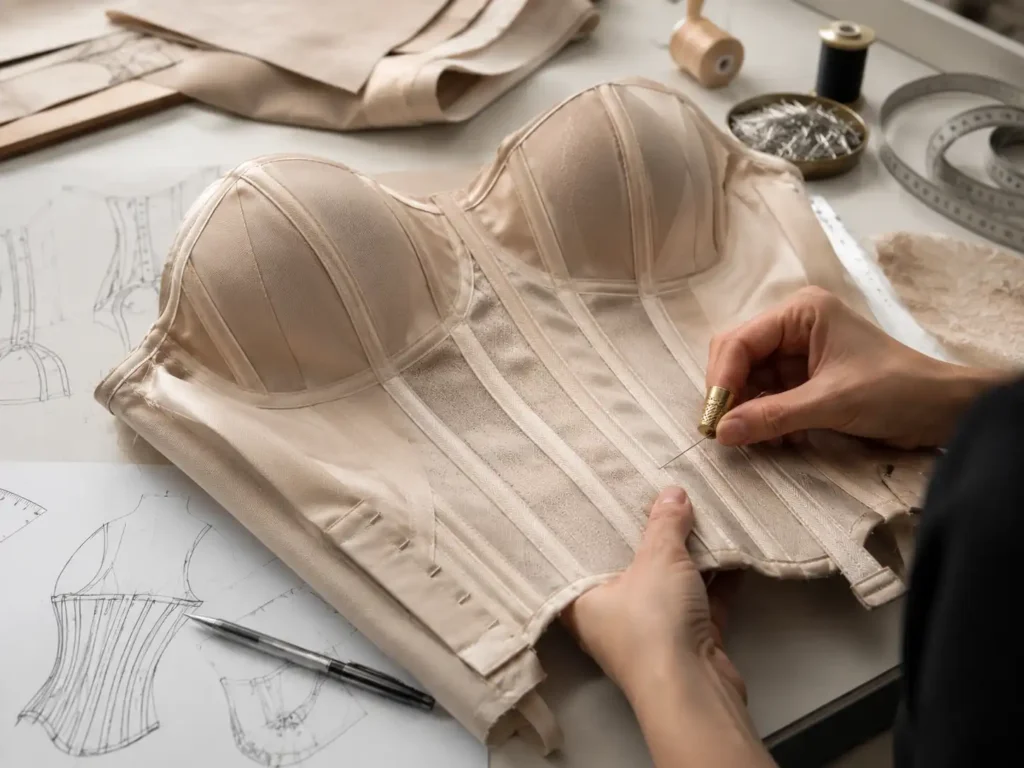
Boning Support
- Check: channel placement
- Check: end comfort and symmetry
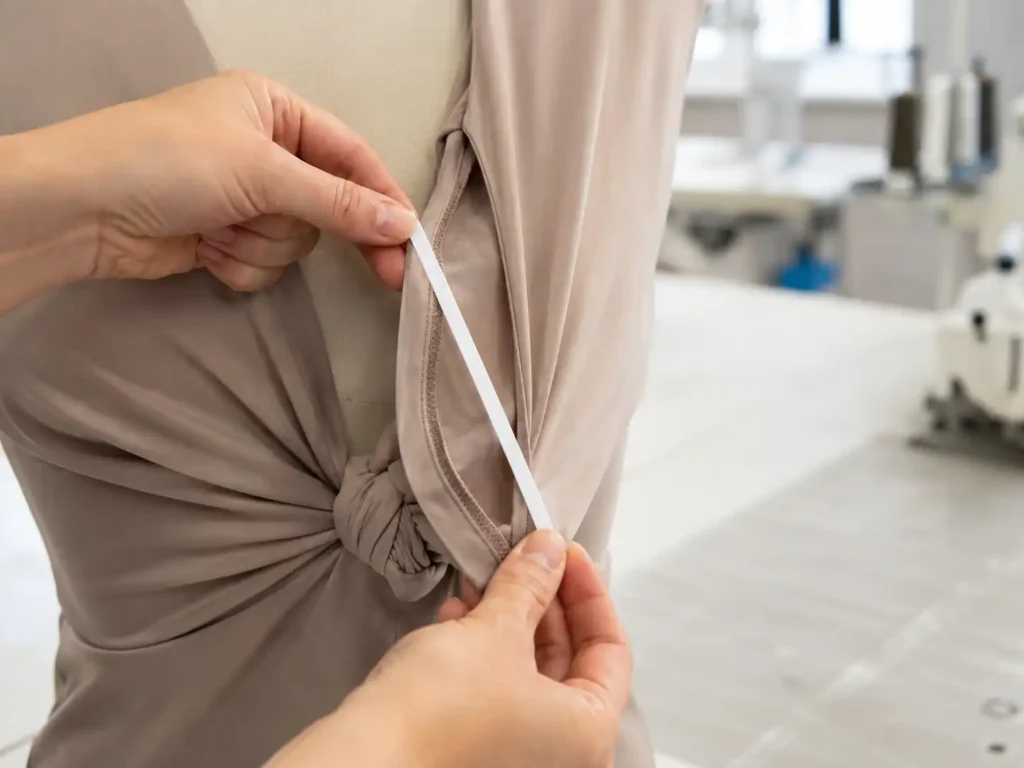
Elastic Stabilization
- Check: recovery after stretch
- Check: pressure and edge appearance
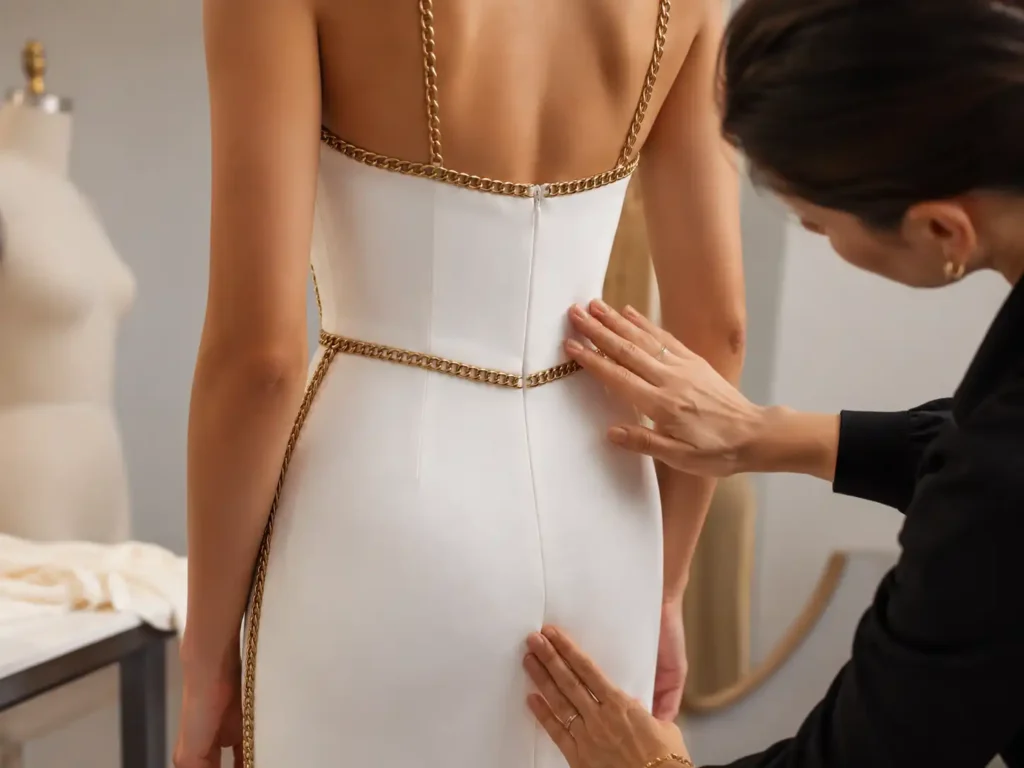
Zipper Integration
- Check: flatness under tension
- Check: smooth opening and closing
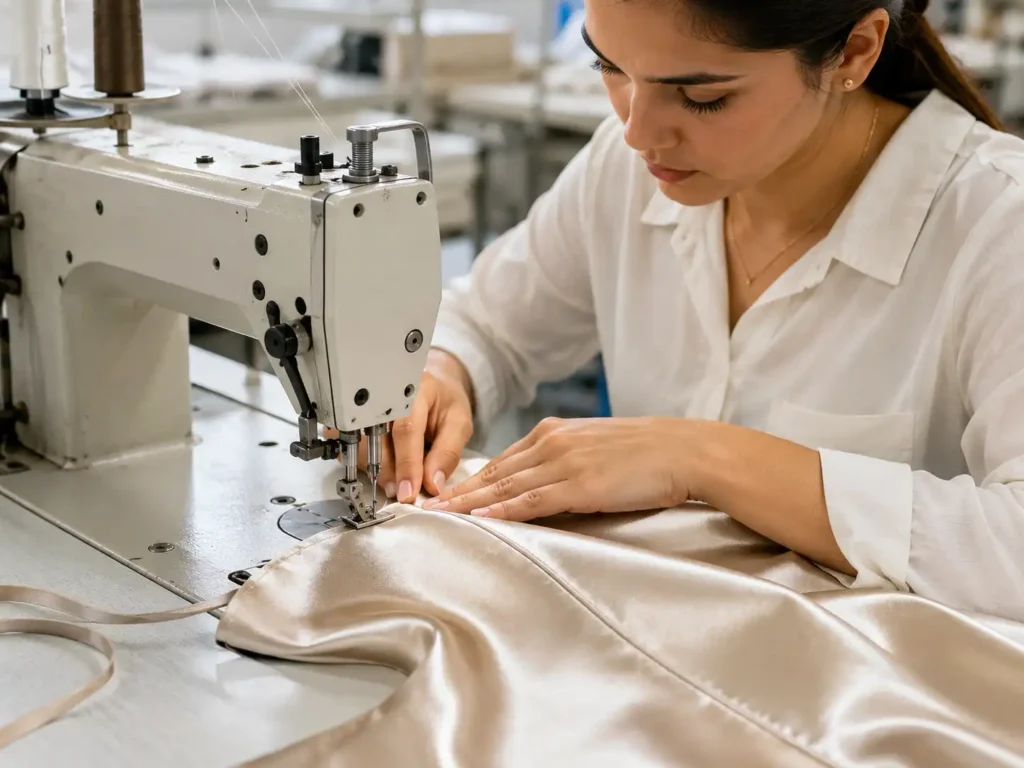
Seam Construction
- Check: seam stretch and recovery
- Check: symmetry and surface smoothness
Size Grading Must Preserve Support Across the Full Range
Supportive fit cannot be copied across sizes with one uniform enlargement rule. Bust shape, waist position, hip proportion, strap length and dress length need grade decisions that preserve the design while remaining wearable in each approved size.
| Fit Point | Grading Risk | Development Control |
|---|---|---|
| Bust | Cup/coverage relationship changes too quickly | Review upper bust, full bust, neckline and cup position by size |
| Waist | Waistline moves vertically or becomes too tight | Grade circumference and body length together |
| High hip | Excess tension creates riding | Check transition from waist into full hip |
| Full hip | Same reduction ratio becomes restrictive | Review ease/negative ease against fabric recovery |
| Straps | Length increase does not match torso proportion | Confirm strap length and anchor position by size |
| Armhole | Gaping or cutting develops | Review armhole depth with bust grade |
| Neckline | Depth becomes too revealing or too closed | Control neckline depth and width separately |
| Dress length | Hem position changes visually across sizes | Confirm front/back length and movement safety |
| Slit height | Exposure changes with body proportion | Grade slit position with total garment length |
| Lining | Inner layer restricts larger sizes | Apply compatible grade and stretch logic to lining |
Sampling Validates Support Before a Bodycon Style Enters Bulk
Supportive fit must be tested in fabric, on the body and through revision. Jinfeng Apparel separates sample stages so design appearance, fit correction and production approval are not treated as the same decision.
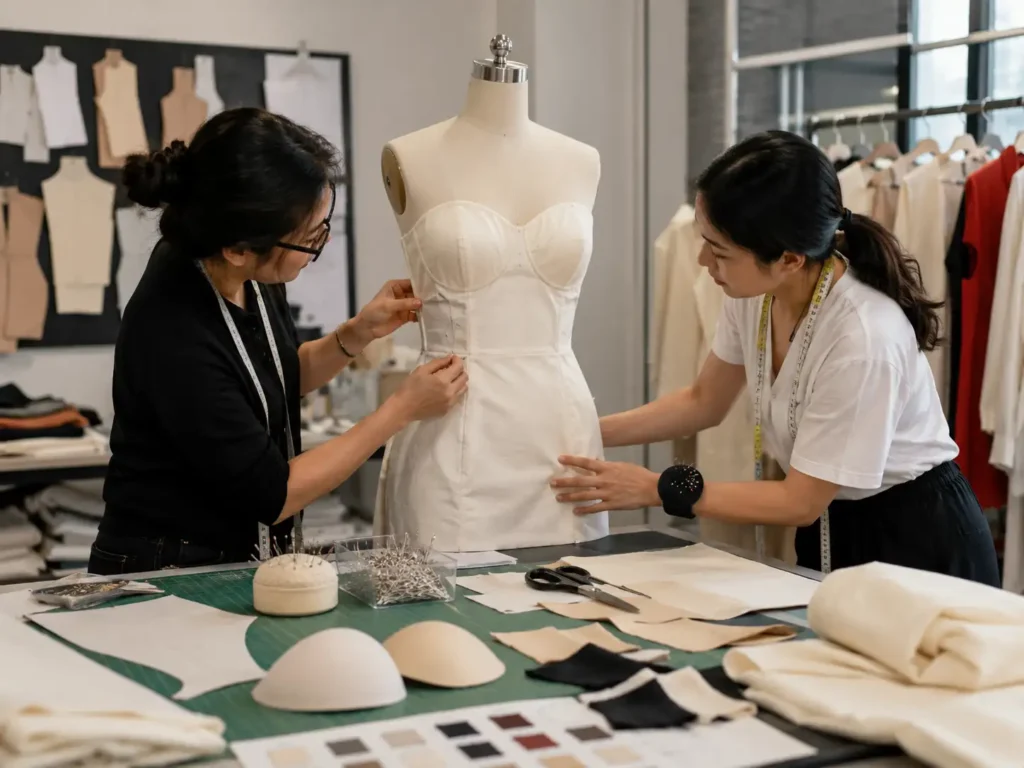
Move From First Sample to Fit Approval With Clear Checkpoints
Development can begin from a tech pack, reference image, original sample, sketch or line sheet, but more complete information produces a more accurate starting point. The first review confirms style structure, fabric direction, trims, target size range, quantity plan and likely production risks. For bodycon, the fabric choice is especially important because stretch and recovery influence the pattern before the first garment is sewn.
A first sample checks whether the overall structure, proportions, fabric direction and construction route are workable. A fit sample focuses more directly on bust, waist, hip, neckline, strap, length, slit and movement. If issues remain, a revised sample is used to confirm corrections rather than carrying unresolved comments into bulk. Photo samples can be prepared when appearance for photography or commercial presentation needs separate validation, but a photo sample is not automatically the production standard.
Normal dress first samples are commonly around 10-15 days after requirements and materials are sufficiently confirmed. Simpler styles may be around 7-10 days. More complex corset, strapless, lace, mesh, sequin or evening constructions are commonly around 15-25 days or evaluated according to the actual structure. Special fabric development, custom colors and special trims can extend the schedule. Sample fees are charged separately because pattern making, material preparation, sewing, checking and revision work are involved; qualifying bulk orders can receive project-based sample-fee deduction.
The purpose of sampling is not speed for its own sake. It is to identify fit and construction risks while changes are still manageable.

Lock the PP Sample and Golden Sample Into Production Documents
PP approval is the point where the production combination should become stable. Fabric, color, trims, measurements, construction, labels and packing requirements are confirmed before the style moves into bulk.
Significant changes after PP approval can affect material purchasing, cost, schedule and consistency, so they need a formal review rather than an informal request to production.
Jinfeng Apparel converts approved sample information into a final pattern, size chart, fabric reference, trim record, sewing instructions, label placement and QC checklist.
A Golden Sample can be sealed as a physical workmanship and appearance reference. These records help reduce the common gap between a development team that understands the sample and a production team that only receives a garment without enough explanation.
Supportive bodycon styles benefit from this handover discipline because many critical points are not obvious from appearance alone.
Stretch direction, neckline stabilization, lining stretch, cup position, boning placement, seam tension, hem movement and measurement tolerance need to be understood by the production unit. Before bulk, the relevant factory is selected according to product type, fabric and complexity. During production, in-line and finished-garment checks refer back to approved documents and samples. The result is a controlled transfer from fit approval into repeatable manufacturing rather than a loose instruction to “copy the sample.”
Fit Corrections We Resolve Before PP Sample Approval

Bust Position
Bust instability can appear as flattening, overflow, gaping or an uneven neckline even when circumference is close to target.
Review covers upper bust, full bust, neckline depth, cup position, armhole height, strap tension and lining. Changes are documented in the pattern or support construction before the revised or PP sample is approved. Front, side and back fitting views are compared so a correction in one area does not create a new imbalance elsewhere.
- Typical correction: neckline/cup/pattern balance
- Bulk risk if ignored: inconsistent coverage

Waist Placement
A waistline that sits too high, too low or moves during wear can change the whole silhouette. Body length, waist circumference, high hip and fabric recovery are reviewed together. Pattern changes may alter side-seam shape or torso length rather than simply reducing the waist measurement. Approved waist placement becomes a measurable reference for grading and finished-garment QC. Where ruching, panel seams or corset lines cross the waist, their vertical positions are also recorded so bulk garments keep the same visual proportion.
- Typical correction: body length and waist contour
- Bulk risk if ignored: riding and poor proportion
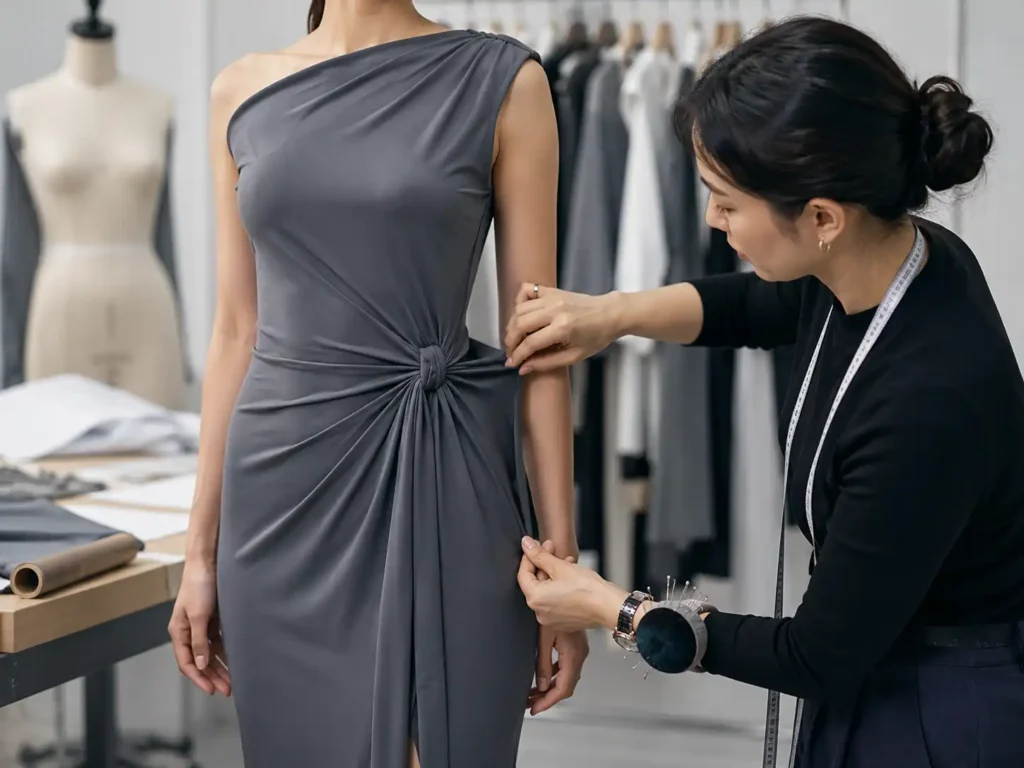
Hip Tension
Excess hip tension can shorten the dress, open slits and rotate side seams. Insufficient tension can remove the intended fitted shape.
Jinfeng Apparel reviews full hip, high hip, back body length, fabric direction and recovery before adjusting the pattern. Movement checks are used to confirm whether the hip remains controlled after sitting and walking. Slit opening and hem movement are reviewed at the same time because both are sensitive to changes in hip tension.
- Typical correction: hip distribution and length
- Bulk risk if ignored: climbing hem
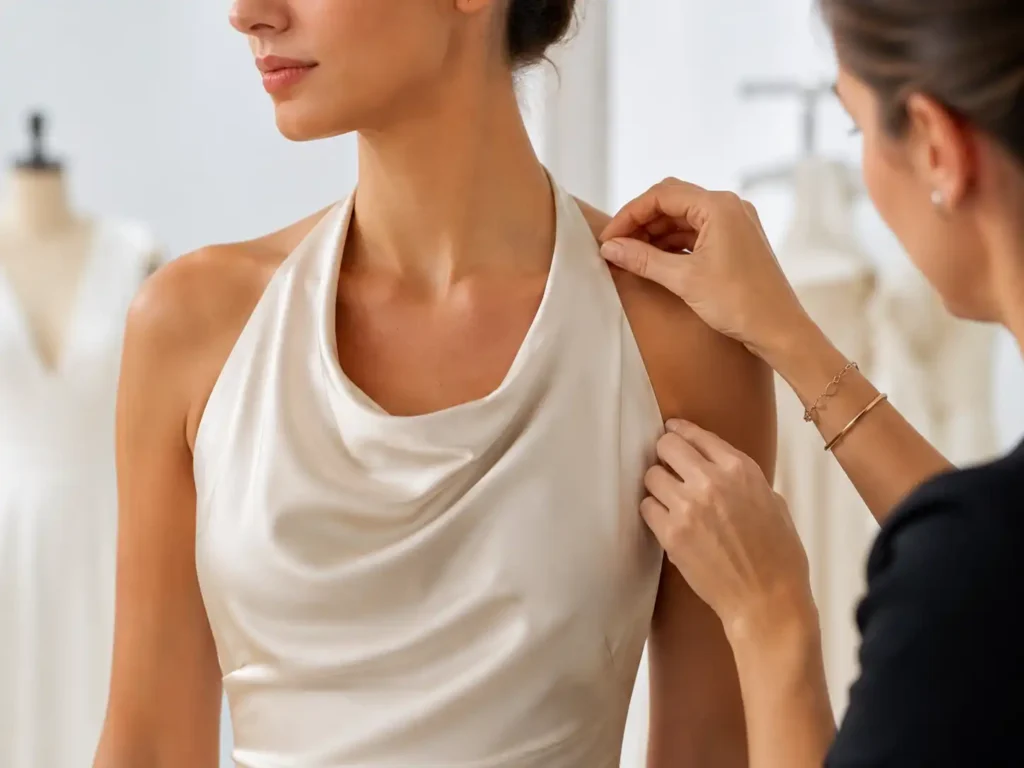
Neckline Stability
Necklines can grow, gape or pull unevenly in jersey, mesh and asymmetrical fitted styles. Edge construction, lining, elastic where applicable, shoulder balance and fabric stretch are reviewed together. The correction can involve pattern shape, stabilization method or material rather than simply tightening the top edge. Symmetry is checked against the center line and shoulder balance before the corrected neckline moves into the PP standard.
- Typical correction: edge stabilization and pattern shape
- Bulk risk if ignored: visible gaping
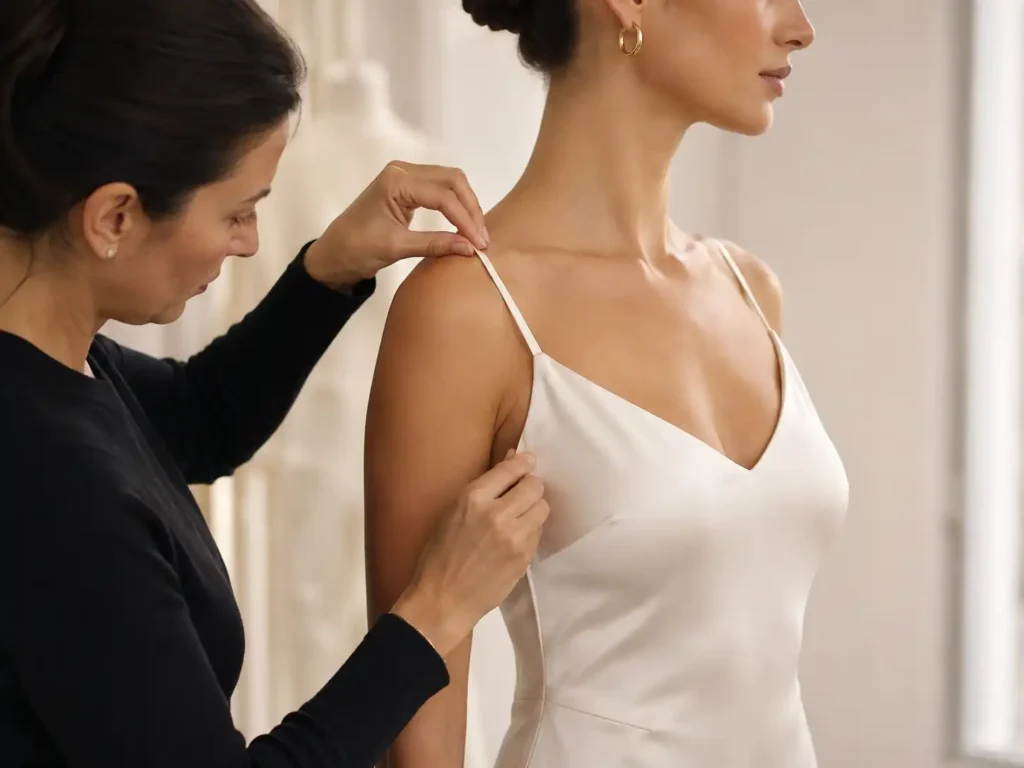
Strap Length
Straps influence neckline height, bust position and armhole shape. Too-long straps reduce coverage; too-short straps pull the entire garment upward. Adjustable hardware can help, but the base strap length and anchor points still need a controlled standard. Fit notes are converted into measurable strap lengths by size before bulk. Strap width, slider position and attachment points are also reviewed where they carry meaningful garment weight or control bust position.
- Typical correction: strap length and anchor position
- Bulk risk if ignored: shifting neckline

Hem and Slit
A fitted hem can move several centimeters during wear if hip tension, garment length or vertical stretch is wrong. Slit height must be reviewed together with the final dress length because riding changes exposure. Jinfeng Apparel checks front/back length, hem circumference, slit position and movement before the production standard is locked. Mini styles receive added attention because a small upward shift can materially change wearing coverage.
- Typical correction: length/hip/slit relationship
- Bulk risk if ignored: inconsistent wearing safety
Stretch Garment Production Needs Controlled Cutting and Sewing
A supportive sample can still fail in bulk if fabric relaxation, cutting direction, seam tension or measurement handling changes. Jinfeng Apparel assigns stretch womenswear to suitable production teams and keeps critical fit points tied to approved references.

Control Stretch Fabric Before and During Cutting
Knitted and elastic fabrics can change dimension between roll, cutting table and finished garment. Fabric relaxing is therefore important before cutting when the material requires it. Direction must be consistent because bodycon patterns rely on known stretch behavior; rotating a panel or mixing directions can change recovery, twist side seams or alter how the garment holds the body. Printed ribs, visible grain lines and directional mesh make cutting control even more noticeable.
Incoming material review looks for relevant issues such as hand-feel variation, visible defects, color difference and abnormal stretch behavior against the approved direction. Cutting teams need the final pattern and size information rather than an early development pattern. Layering and handling should avoid unnecessary distortion before pieces are sewn. When lining or power mesh is used, the inner and outer components must follow their approved relationship so one layer does not become tighter or shorter by mistake.
Jinfeng Apparel’s factory system includes a production unit focused on knit and stretch womenswear such as bodycon, jersey, rib and ponte styles. Production allocation is based on product and material requirements rather than sending every style to the same line. Bulk planning also considers complexity, launch timing and repeat status. The objective is controlled preparation before sewing starts, because a cutting-direction error or unstable fabric lot cannot be fully corrected later through stitching or pressing.

Keep Seam Tension, Measurements and Finished Shape Under Review
Sewing stretch fabric requires balance between seam security and elasticity. Overly tight stitching can create waves or restrict stretch; overly loose construction can allow seams to open or lose shape. Side seams, neckline edges, armholes, waist seams, zipper areas, slit points and hems are reviewed according to the style. Thread, seam method and reinforcement decisions are matched to the actual fabric and construction instead of applying one universal recipe.
In-line inspection helps identify twisting, asymmetry, neckline deformation, zipper bulging and measurement drift before the full order is complete. Finished-garment inspection then checks the agreed measurement points together with appearance. Pressing is controlled carefully because excessive heat or pressure can mark stretch fabrics, flatten texture or alter dimensions. Packing should avoid deep creases or deformation in styles where a smooth fitted surface is part of the commercial appearance.
Jinfeng Apparel supports incoming material QC, cutting QC, sewing QC, in-line inspection, garment inspection, pressing review, packing QC, AQL inspection and client inspection support according to project requirements. For bodycon, measurement tolerance is confirmed against the product, fabric and brand standard rather than presented as zero error. Production control works when every stage understands which points influence fit and when deviations are found early enough to correct them.
Bodycon QC Checks Fit Stability as Well as Measurements
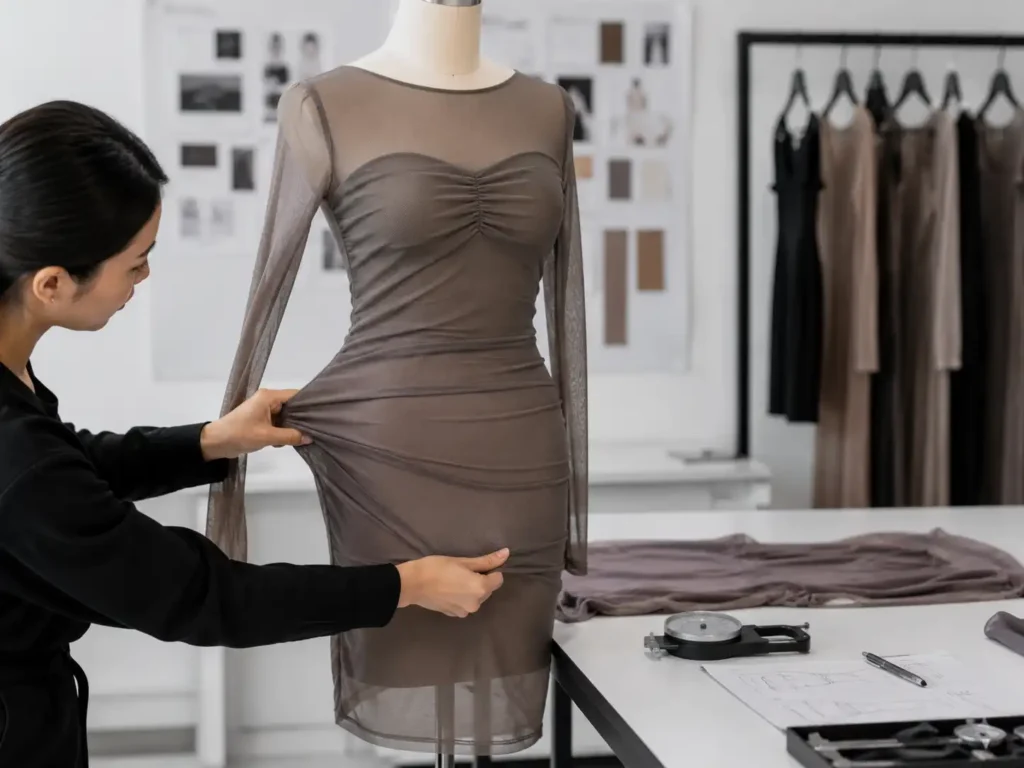
Stretch Recovery
- Check point: recovery after controlled stretch
- Risk controlled: bagging and loss of shape
Bust Coverage
- Check point: bust, neckline, underarm
- Risk controlled: gaping or uneven coverage

Waist Position
- Check point: waist circumference and height
- Risk controlled: rolling and proportion shift

Hip and Seat
- Check point: high hip/full hip
- Risk controlled: riding and twisting

Side Seam
- Check point: seam position and symmetry
- Risk controlled: rotational imbalance

Neckline and Straps
- Check point: neckline height and strap length
- Risk controlled: shifting upper body fit

Hem and Movement
- Check point: front/back length, slit height
- Risk controlled: climbing hem

Lining and Finish
- Check point: inner/outer alignment
- Risk controlled: visible lining and surface distortion
From Approved Sample to Repeatable Multi-Style Bodycon Production

Final Pattern Records
- Related record: final pattern and grade rule
- Purpose: protect approved fit

Fabric and Trim Records
- Related record: fabric/trim approval
- Purpose: reduce substitution drift
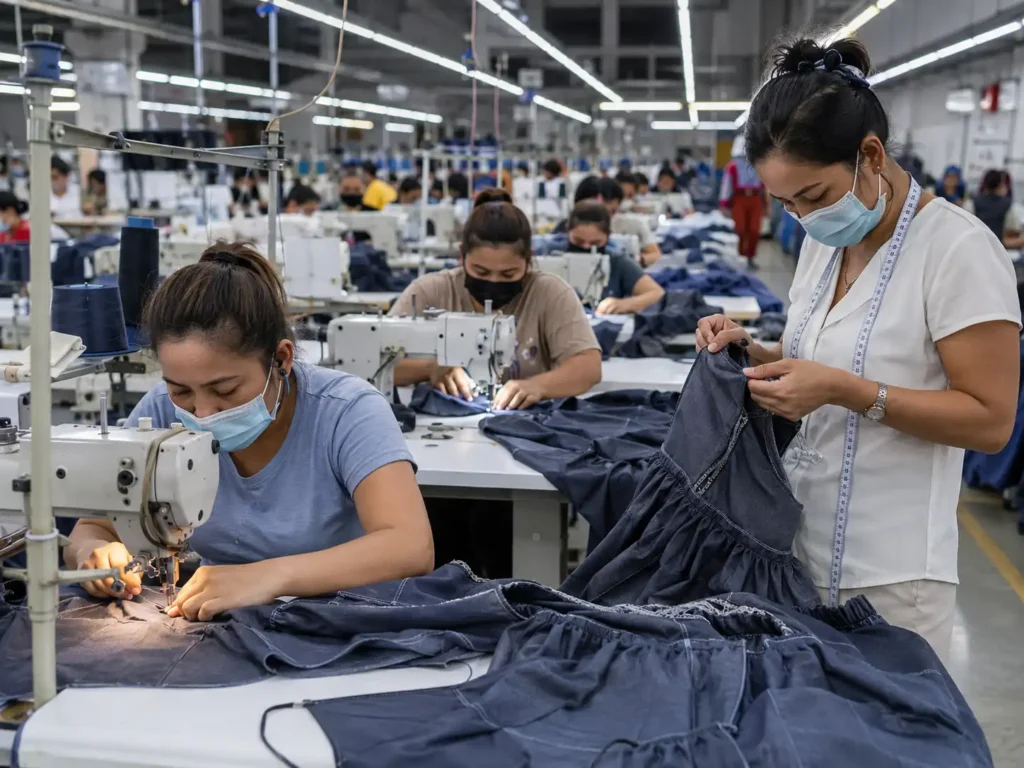
Sewing Instructions
- Related record: sewing standard
- Purpose: control workmanship consistency
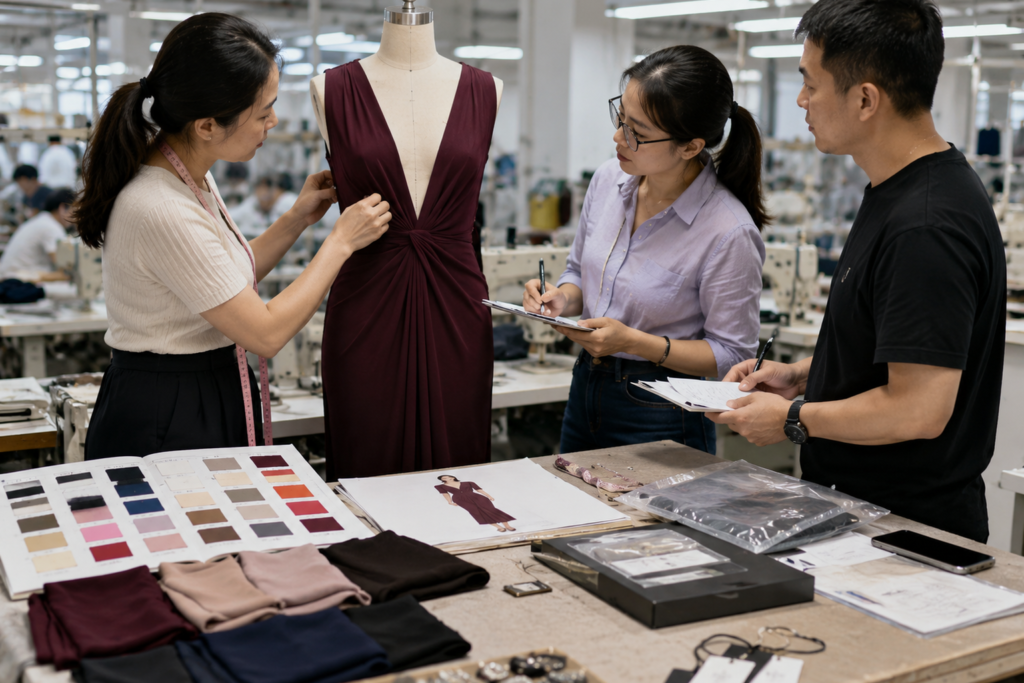
Factory Allocation
- Related capacity: 18+ sewing lines
- Related capacity: 6+ flexible production lines

Production Follow-Up
- Related team: 12+ merchandisers
- Purpose: multi-style coordination

Bulk and Repeat Capacity
- MOQ: starts from 200 pcs per style/color
- Planning basis: material readiness and production schedule
An Established Bodycon Program Built Around Fit and Recovery
An anonymized established fashion brand program reflects the scale now common in Jinfeng Apparel’s mature-brand work: multiple fitted styles, several stretch materials and a bulk quantity large enough for small fit errors to become expensive if they are not corrected before production.

16 Styles and Approximately 42,000 Pieces Across a Fitted Collection
The program covered 16 bodycon styles with a combined order of approximately 42,000 pieces, sitting within the 10-30 style and 20,000-80,000 piece range now typical of larger brand programs handled by Jinfeng Apparel. The collection mixed jersey, rib knit, ponte, stretch mesh and selected spandex-blend fabrics across mini and midi lengths. Several styles included ruching, cut-outs, double-layer sections, structured bust details and back slits, so one bodycon fit rule could not be applied across the collection.
Early sample review found different risks by material. Soft jersey styles showed more growth at the waist and seat after extended fitting. Rib knit needed closer attention to length stability and neckline recovery. Ponte held a cleaner silhouette but required less aggressive pattern reduction to preserve comfort. Mesh-layered styles needed lining tension and transparency decisions before the outer fit could be approved. Across the collection, the development team focused on bust-waist-hip proportion, side-seam balance, neckline stability, skirt riding and post-wash dimensional change.
The styles were grouped by fabric and construction so pattern and sample decisions could be compared within related families. Fit feedback was converted into revised patterns and measurement updates instead of being left as general comments. Higher-risk styles moved through revised samples before PP approval. Fabric references, lining choices, support details and sensitive measurement points were then prepared for production handover. The project approach reduced the chance of one visual bodycon concept producing 16 different fit standards once bulk began.

Bulk Control Focused on Recovery, Side Seams, Length and Size Consistency
Before production, approved patterns, size charts, fabric references and construction instructions were locked for each style. Knit and stretch styles were assigned to production units suited to fitted womenswear.
Incoming materials were compared with the approved direction, with attention to hand feel, weight, visible defects and stretch behavior. Cutting control emphasized fabric relaxation where required and consistent direction so panels did not create uneven recovery or side-seam rotation.
In-line review concentrated on seam stability, neckline shape, zipper flatness, lining alignment and early measurement drift. Finished-garment QC focused on bust, waist, hip, front/back length, side-seam position, slit height and hem behavior according to the design. Selected fit-sensitive styles were checked in standing and basic movement to confirm that the approved silhouette did not ride excessively or shift at the upper body. Post-wash dimensional risk remained part of the review for fabrics where shrinkage or growth had been identified during development.
The program was managed as a collection rather than 16 unrelated garments. Shared fabric groups, recurring fit points and documented sample corrections allowed teams to compare bulk results against consistent references. The value of the process was not an unrealistic promise of zero variation. It was the ability to identify the bodycon points most likely to affect sellable appearance and wearing stability, then carry those controls from sample approval through production and QC at a scale where inconsistent fit would otherwise multiply quickly.
Evaluate a Supportive Bodycon Supplier by Six Manufacturing Signals
Fabric Engineering
Pattern Control
Support Construction
Sample Discipline
Bulk Handover
Bodycon QC
Frequently Asked Questions About Supportive Bodycon Construction
Support comes from the relationship between fabric recovery, pattern negative ease, body proportion, stable seams, lining and selected internal details. Tightness alone can create riding, twisting or discomfort. Jinfeng Apparel reviews bust, waist, hip, neckline, length and fabric behavior together, then validates the result through physical sampling before bulk production.
Common directions include jersey, rib knit, ponte, stretch mesh, power mesh, stretch satin and spandex blends. The best option depends on the required support, hand feel, opacity, surface and comfort. Ponte offers firmer shape retention; jersey offers softer body contact; mesh can support layered designs. Stretch and recovery are reviewed by actual fabric rather than fiber name alone.
There is no single reduction percentage for every style. Negative ease depends on fabric stretch, recovery, thickness, lining and the required silhouette. Bust, waist and hip may need different relationships. Jinfeng Apparel checks the chosen material with the target size chart, then adjusts the pattern through fitting instead of shrinking every measurement equally.
Yes, when the design and fabric are suitable. Cups can shape the bust, boning can stabilize structured bodices and power mesh can add firmer internal support in selected areas. Each component changes thickness, tension and comfort, so placement and construction are confirmed during sampling rather than automatically added to every fitted dress.
Riding can come from excessive hip tension, insufficient body length, weak recovery, lining drag, limited vertical stretch or incorrect hem/slit balance. Jinfeng Apparel reviews high hip, full hip, front/back length, side seam, fabric direction and lining together. The correction depends on the cause rather than simply making the dress larger.
A normal dress first sample is commonly around 10-15 days after requirements and materials are sufficiently confirmed. Simpler styles may be around 7-10 days. Complex corset, strapless, mesh, lace, sequin or evening constructions are commonly around 15-25 days or evaluated by structure. Special fabrics, colors or trims can extend development time.
Jinfeng Apparel reviews grade rules for bust, waist, hip, body length, strap, armhole, neckline, dress length and slit position according to the design and size chart. Supportive fit is not treated as proportional enlargement of one base sample. Sensitive points are then checked through size-specific bulk measurements and agreed tolerance standards.
Jinfeng Apparel’s standard MOQ starts from 200 pcs per style/color. MOQ is calculated by style and color, not by total quantity across unrelated styles. Special fabrics, custom dyeing, printing, certified materials, special trims or custom packaging can carry separate supplier MOQ requirements and are reviewed before final quotation.
Approved fit is transferred through the final pattern, size chart, fabric reference, trim record, sewing instructions, PP sample, Golden Sample where used and QC checklist. Bulk control includes material review, cutting checks, sewing inspection, in-line inspection and finished-garment measurements. The goal is controlled consistency within the agreed product and fabric tolerance, not an unrealistic promise of zero variation.
Yes. Jinfeng Apparel supports NDA-based cooperation for tech packs, original samples, patterns, unpublished designs, label files, packaging files, pricing and order information. Client cases are presented anonymously unless written authorization is provided. Development files are used for the relevant project and should not be exposed publicly without permission.

Send Your Supportive Bodycon Project for Development Review
Jinfeng Apparel works with established fashion brands, sourcing teams, premium ecommerce programs and larger private-label womenswear projects that need controlled product development from concept through bulk production. For a supportive bodycon review, send the available tech pack, reference images, original sample details or line sheet together with the intended size range, fabric direction, colors, quantity per style/color and target delivery window.
If the style includes double layers, cups, boning, power mesh, elastic stabilization, special zippers, cut-outs, ruching or other support details, include those requirements so the development team can assess structure, fabric, sampling route, MOQ fit and production risk before quotation.
Helpful project information:
- Tech pack, sketch, reference image or original sample
- Size chart and target fit direction
- Preferred fabric or required support level
- Style list and quantity per style/color
- Color list and private-label requirements
- Target market and planned delivery window
- Packaging, barcode or warehouse requirements when relevant


