Suiting Dress Manufacturer
Custom Viscose Dress Manufacturing for Global Fashion Brands
Custom tailored dresses for fashion brands requiring controlled structure, feminine fit, stable sampling and scalable private-label production.
- Suiting fabric programs commonly reviewed across approximately 180-320 gsm, selected around structure, stretch, season, hand feel and target price position.
- Fit control covers shoulder width, bust, waist, hip, lapel break, button placement, slit height, hem balance and lining length before bulk approval.
- Two sample rooms, 7+ senior pattern makers and 20+ sample machinists support blazer dresses, sheath dresses, vest dresses and structured mini or midi silhouettes.
- MOQ starts from 200 pieces per style/color, with multi-style programs planned around PP approval, material readiness, size range, packing and launch timing.
Structured Womenswear Capacity Behind Every Program
Since 2008
Long-term womenswear manufacturing experience supports tailored dresses, occasionwear, private-label collections and repeat-order programs for international fashion markets.
- Pattern-to-bulk discipline
- Seasonal collection suppor
6 Owned Factories
- Pattern-to-bulk discipline
- Seasonal collection support
- Woven womenswear focus
- Multi-style allocation
10+ Production Partners
Long-term satellite partners add scheduling flexibility for coordinated collections, while approved patterns, materials, construction files and QC standards remain aligned with the project plan.
- Capacity coordination
- Batch delivery planning
2 Sample Rooms
- First and fit samples
- PP and golden standards
7+ Pattern Makers
- Female fit control
- Structured pattern review
15+ QC Inspectors
- Inline and final checks
- Measurement verification
Built for Fashion Teams Managing Structured Collections
Premium Ecommerce Brands
- Photo-ready silhouette
- Repeatable size grading
Contemporary Workwear Labels
- Structured comfort
- Seasonal fabric options
Occasionwear Brands
- Statement construction
- Controlled internal support
Product Development Teams
- Traceable revisions
- Approval checkpoints
Sourcing Teams
- Project-level costing
- Capacity planning
Quality Teams
- Product-specific QC
- Documented standards
A Manufacturing Model for Planned Brand Production
Strong Project Fit
Suitable programs usually include reference images, a tech pack, an original sample or a line sheet, together with target quantity, size range, color direction, launch date and private-label requirements. Clear inputs allow accurate risk review before pattern work begins.
- Defined style direction
- Sampling and bulk plan
- Commercial quantity structure
Development Expectations
- Fabric and trim review
- Pattern and measurement review
- PP approval before bulk
What Defines a Modern Suiting Dress?
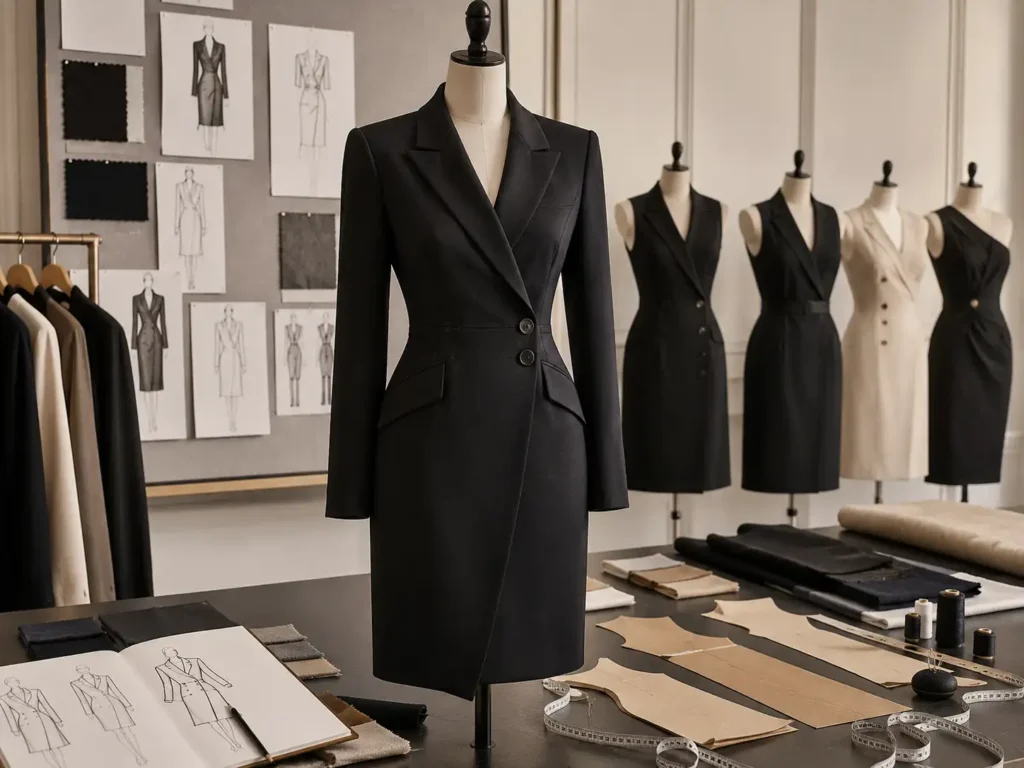
A suiting dress combines tailored structure with a female dress silhouette. Fabric alone does not define the category; pattern shape, internal support, pressing, lining, closure and movement determine whether the finished garment looks refined.
Tailoring Elements
Common tailoring elements include notched or peaked lapels, structured shoulders, double-breasted fronts, welt or flap pockets, shaped waist seams, front overlap, controlled sleeve heads, interlining and clean edge pressing. Each element changes sewing order, seam bulk, balance and finishing requirements.
Dress Fit Elements
A successful result still follows female dress proportions. Bust shaping, waist placement, hip ease, skirt length, neckline depth, sleeve movement, slit height and lining allowance require dedicated pattern decisions. Scaling down a blazer block rarely produces a reliable dress fit.
Commercial Style Families
- Blazer mini and midi dresses with lapels, front overlap and button closures.
- Tailored sheath dresses using princess seams, darts, back zippers and controlled slits.
- Sleeveless vest dresses with clean armholes, front shaping and partial or full lining.
- Structured A-line dresses balancing shoulder definition with a softer skirt shape.
- Corset-suiting hybrids combining bodice support with woven tailoring fabrics.
- Asymmetric tailored dresses using angled panels, offset closures or directional hems.
Where Suiting Dresses Commonly Lose Quality
Lapel Roll Failure
- Check left-right symmetry
- Confirm pressing standard
Interlining Bubbles
- Test bond on bulk fabric
- Inspect after cooling
Uneven Shoulders
- Review front and back balance
- Check sleeve pitch
Waist Shape Drift
- Lock waist reference points
- Review size set
Restricted Lining
A lining cut too short, too narrow or with unsuitable stretch can pull the outer fabric, restrict sitting and create drag lines around the hips and armholes.
- Match movement allowance
- Check lining length
Bulk Size Distortion
A good base sample does not guarantee a reliable full size range. Shoulder width, lapel proportions, button spacing and slit position need deliberate grading rather than uniform scaling.
- Approve grade rules
- Measure production sizes
Custom Suiting Dress Styles for Brand Collections

Blazer Mini Dress
- Best for: party, event and ecommerce collections
- Core QC: lapels, buttons, hem and lining

Tailored Midi Dress
- Best for: premium workwear and occasionwear
- Core QC: balance, slit and measurement

Sheath Office Dress
Sheath dresses depend on controlled bust, waist and hip ease rather than heavy internal structure. Poly-viscose suiting, structured crepe and ponte are common directions. Sitting comfort, armhole shape, back-zip behavior and lining movement deserve equal attention alongside a polished front appearance.
- Best for: workwear and uniform-inspired fashion
- Core QC: fit, zipper and recovery

Sleeveless Vest Dress
- Best for: summer tailoring and layered looks
- Core QC: armholes, neckline and front balance

Double-Breasted Dress
- Best for: statement tailoring collections
- Core QC: symmetry, overlap and reinforcement

Structured A-Line Dress
- Best for: polished daywear and events
- Core QC: waist seam, volume and hem

Corset Suiting Dress
- Best for: party and occasion launches
- Core QC: support, top edge and comfort

Asymmetric Tailored Dress
- Best for: editorial and premium drops
- Core QC: balance, panel alignment and hem
Commercial Uses Across Modern Womenswear Collections
Office and Workwear
- Focus: comfort and repeat wear
- Fit: controlled ease
Office-to-Evening
- Focus: transition styling
- Fit: polished mobility
Cocktail and Dinner
- Focus: visual impact
- Fit: body contour and support
Wedding Guest
- Focus: refined occasionwear
- Fit: movement and coverage
Graduation and Events
- Focus: launch timing
- Fit: camera-ready shape
Premium Ecommerce
- Focus: image-to-product match
- Fit: repeatable size standards

Suiting Fabrics for Structure, Stretch and Wearability
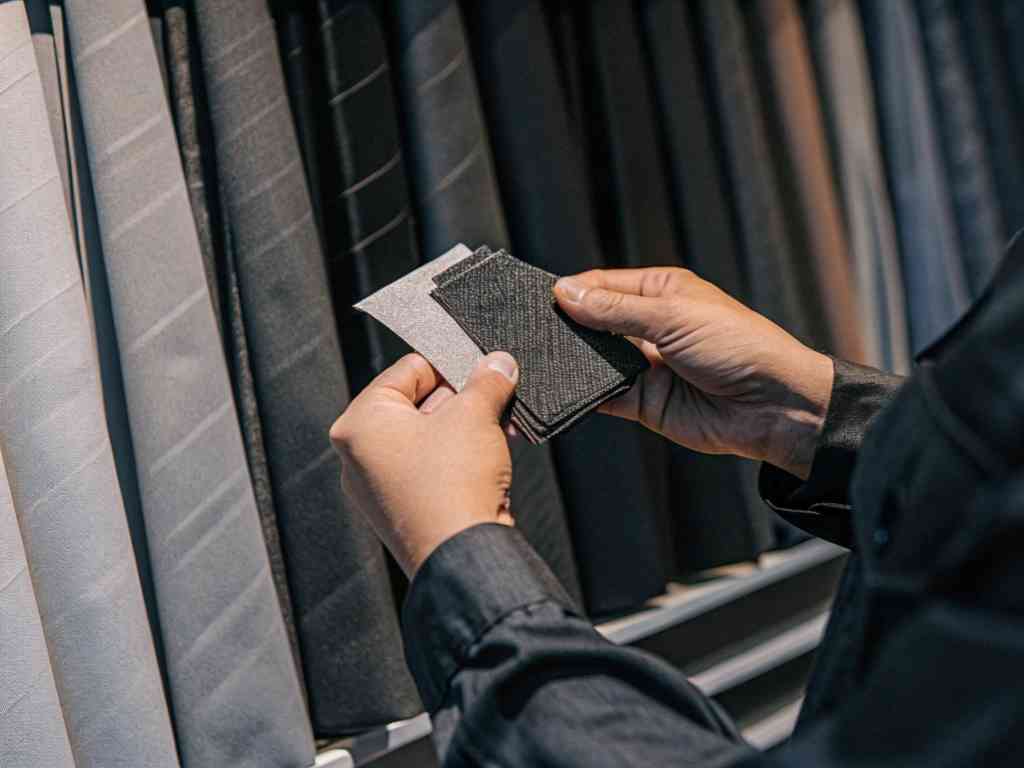
Fabric choice controls silhouette, comfort, seam quality, pressing behavior and price. Jinfeng Apparel reviews suiting materials around the finished garment rather than relying on composition alone.
- Structure and Drape
Medium and firm woven suitings create clear shoulders, lapels and front panels, while softer crepes support fluid tailored shapes. Excess stiffness can make a fitted dress feel restrictive; excess softness can collapse lapels and waist definition. Garment length, lining and internal support influence the correct balance. - Stretch and Recovery
Elastane can improve sitting comfort and body movement, yet recovery must be checked after wear and pressing. Outer fabric and lining require compatible stretch. A stable waist seam, zipper area and pocket opening help prevent localized distortion on fitted silhouettes. - Surface and Pressing
Smooth suitings reveal seam impressions, shine and pressing marks quickly. Textured weaves may hide minor surface effects but create added bulk at lapels and pockets. Pressing trials should use production fabric, interlining and seam construction before PP approval. - Season and Retail Position
- Lightweight poly-viscose and tropical suiting for spring, summer and warm-market workwear.
- Structured crepe and stretch suiting for year-round office-to-evening collections.
- Ponte and structured knit for fitted silhouettes requiring stronger recovery.
- Gabardine and twill for sharper blazer dresses and defined pocket construction.
- Wool-blend directions for premium autumn, winter and soft-tailoring programs.
- Pinstripe, check and melange suitings for pattern-led seasonal stories.
Fabric Selection Matrix for Suiting Dresses
Material selection should connect silhouette, stretch, lining, pressing and wear. Final specifications depend on approved swatches, target price, color availability and sample performance.
Fabric Direction | Typical Structure | Stretch | Strong Applications | Lining Direction | Main Control Risk |
Poly-Viscose Suiting | Medium | Low to slight | Sheath, midi, vest dress | Partial or full | Wrinkle and seam impression |
Stretch Suiting | Medium to firm | Medium | Fitted blazer and body-contoured dress | Stretch-compatible lining | Recovery and zipper distortion |
Structured Crepe | Medium | Low to medium | Midi, A-line and occasion tailoring | By opacity and structure | Press marks and seam ridging |
Ponte | Medium to firm | Medium to high | Fitted workwear and clean sheath shapes | Often unlined or partial | Pilling and growth |
Gabardine or Twill | Firm | Low | Blazer mini, pocket-led tailoring | Usually full | Bulk at lapels and hems |
Light Wool Blend | Medium | Low to slight | Premium soft tailoring and seasonal midi styles | Usually full | Heat sensitivity and shrinkage |
Check or Pinstripe | Varies | Varies | Statement blazers, vest dresses and capsule sets | Usually recommended | Pattern matching and cutting loss |

From Fabric Swatch to Bulk Material Approval
A fabric change alters more than color. Pattern ease, lining, interlining, pressing, cost and schedule may all move when weight, stretch or drape changes during development.
- Define the target hand feel, structure, season, color direction, retail position and garment silhouette.
- Review available swatches or develop suitable alternatives around composition, weight, stretch, recovery, opacity and surface.
- Test compatibility with lining, interlining, shoulder support, zippers, buttonholes and pressing conditions.
- Cut the sample in the selected fabric and review hang, mobility, seam quality, lapel shape and wrinkle behavior.
- Confirm shade, bulk fabric reference, trim compatibility and any approved substitution before material booking.
- Inspect bulk fabric for color consistency, visible defects, hand feel and usable width before cutting.
Changes Requiring Reassessment
- Switching from non-stretch to stretch suiting or changing stretch direction.
- Moving between lightweight and heavy fabric with the same pattern.
- Replacing full lining with partial lining or removing lining.
- Changing button weight, interlining strength or shoulder-pad thickness.
- Adding checks, stripes or directional textures requiring matched cutting.
- Changing from stock color to custom dyeing or certified material sources.
Pattern Strategies for Six Suiting Dress Silhouettes
Blazer Silhouette
Support: shoulder and front edge
Risk: gaping or uneven closure
Sheath Silhouette
Support: seam shaping
Risk: pulling and restricted movement
A-Line Structure
Support: neckline and waist
Risk: excessive flare or stiffness
Fitted Waist Shape
Support: waist seam or internal tape
Risk: grade-rule drift
Vest Dress Shape
Support: facing or lining
Risk: armhole gaping
Corset-Tailored Shape
Support: internal bodice system
Risk: pressure points and distortion
Fit Points Defining a Tailored Dress
Clean tailoring depends on measurement relationships, not isolated numbers. Shoulder, bust, waist, hip, length and internal allowance must support the same intended posture and silhouette.
Upper-Body Balance
- Shoulder width and shoulder slope determine collar position, lapel balance and sleeve hang.
- Upper bust and full bust shaping control front length, closure strain and neckline position.
- Armhole depth and sleeve pitch affect movement without adding loose fabric around the chest.
- Back width and back length prevent drag lines, collar lift and rear hem tilt.
Waist and Hip Control
- Natural waist position must align with darts, seam lines, belts and button stance.
- Hip ease is set around fabric stretch, lining, seated movement and intended body contour.
- Front overlap and pocket bags should not add visible bulk across the waist or hip.
- Side seams should remain vertical when the garment is closed and worn in motion.
Length and Opening Control
- Dress length is measured from an agreed reference point, usually high point shoulder.
- Slit height balances movement, coverage and proportion across sizes.
- Lining length stays protected inside the outer hem without restricting stride.
Sleeve length, cuff position and button placement should follow the full silhouette.
Hidden Structure Behind a Clean Tailored Silhouette
Shoulder Shape
- Confirm on-body proportion
- Check both shoulders after pressing
Fusible Interlining
- Test before production
- Inspect for bubbling
Lapel Support
- Lock breakpoint
- Control seam bulk
Waist Stabilization
- Match stretch behavior
- Check seated comfort
Lining System
- Allow body movement
- Prevent lining exposure
Hem and Slit
- Control hem weight
- Reinforce stress points
Review Inner Structure Approve Support Materials
Design Details Engineered for Production

Notched Lapels
- Pattern: notch and roll line
- QC: symmetry and pressing

Double-Breasted Front
- Pattern: overlap width
- QC: button alignment
Covered Buttons
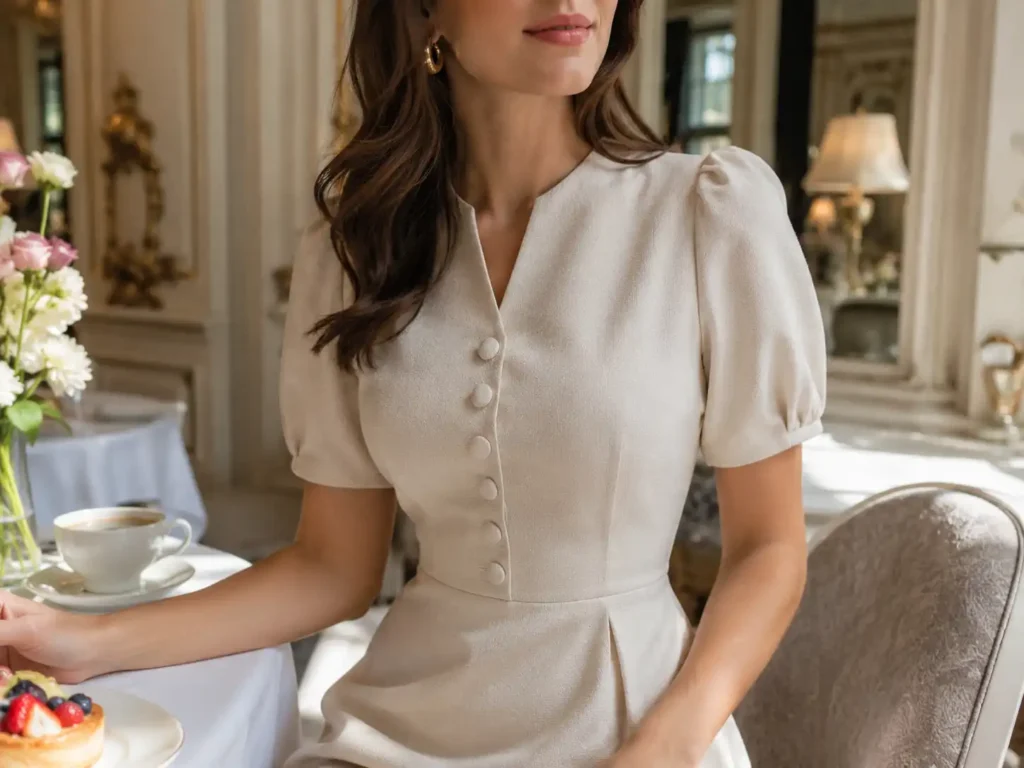
- Material: matching shell fabric
- QC: security and consistency

Shoulder Pads
- Fit: shoulder proportion
- QC: position and balance
Functional Pockets
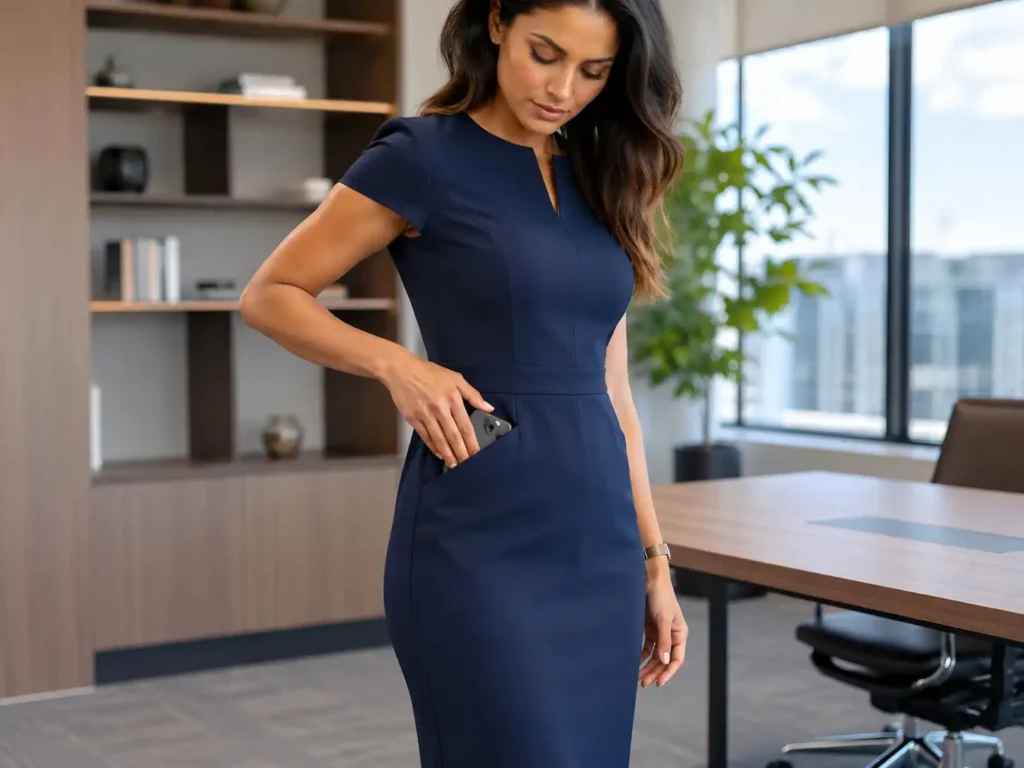
- Pattern: placement and depth
- QC: alignment and strength

Waist Belts
- Fit: waist reference
- QC: loops and hardware
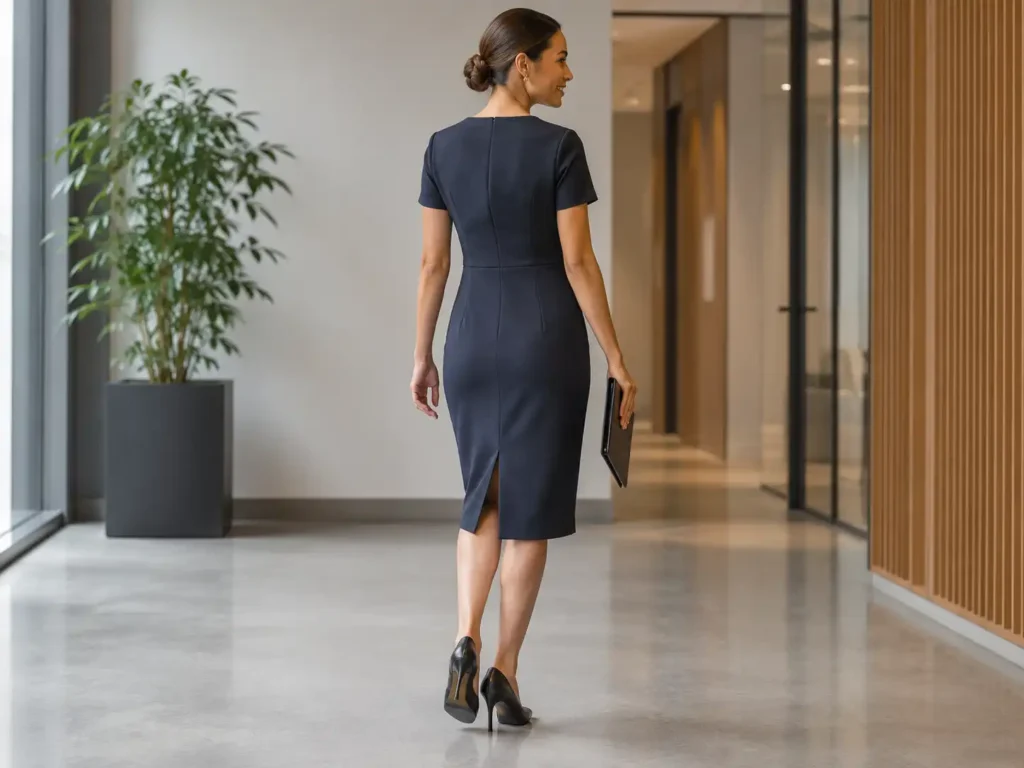
Back Slits
- Fit: stride and coverage
- QC: reinforcement and alignment

Asymmetric Panels
- Pattern: grain and balance
- QC: panel and hem alignment
Trims and Closures Supporting Tailored Construction
Buttons
- Check finish consistency
- Reinforce high-tension points
Invisible Zippers
- Match zipper tape color
- Inspect flatness closed
Metal Zippers
- Review hardware weight
- Protect skin contact
Hooks and Snaps
- Confirm pull direction
- Secure with reinforcement
Lining
- Match outer stretch
- Control hem length
Interlining and Pads
- Test bond and recovery
- Approve thickness in sample
Files Needed for an Accurate Project Review
Reference Images
- Include detail close-ups
- Mark required changes
Tech Pack
- Use latest revision
- Add measurement method
Target Quantity
- List units per color
- Add expected size ratio
Fabric Direction
- State must-have properties
- Identify acceptable alternatives
Color Plan
- List colors by style
- Mark launch priority
Size Range
- Confirm base size
- Define tolerance needs
Branding Files
- Provide editable artwork
- Confirm language content
Launch Date
- Share approval milestones
- Add warehouse deadline
Style Feasibility and Tech Pack Review
A strong review prevents attractive concepts from failing during wear, sewing or bulk production. Jinfeng Apparel examines structure, materials and missing decisions before formal pattern work begins.
Construction Review
- Lapel, collar, front overlap, facing, lining, shoulder support and closure sequence.
- Pocket type, pocket bag, panel intersections, seam bulk and reinforcement points.
- Sleeve construction, armhole movement, slit, hem and internal finishing.
- Potential conflicts between the sketch, measurement chart and sewing instruction.
Material Review
- Suiting weight, stretch, recovery, opacity, wrinkle behavior and pressing sensitivity.
- Lining stretch, interlining strength, button weight, zipper type and hardware finish.
- Color availability, custom dyeing, matched checks or stripes and material MOQ.
- Alternative fabrics or construction adjustments when cost or lead time needs control.
Production Review
- Sampling complexity, likely revision areas and required approval stages.
- MOQ by style/color, expected size split, material booking and production allocation.
- QC points requiring measurement, visual standards or approved reference samples.
- Packing, barcode, carton and logistics information needed before production release.

Pattern Development for Female Tailoring
Suiting dresses require a pattern approach built around female proportions, fabric behavior and finished garment balance. Men’s jacket logic cannot simply be reduced and lengthened into a dress.
- Shoulder and Neckline Balance
Shoulder width, slope, back-neck position and collar geometry control lapel behavior and sleeve hang. Pattern makers review front-to-back balance on the body, then adjust shoulder support and sleeve pitch around the intended silhouette. - Bust and Waist Shaping
Bust volume may be distributed through darts, princess seams, panels, side seams or corset-style construction. Waist suppression must align with button stance, pockets and seam lines. Fit review checks both appearance and breathing or seated comfort. - Front Overlap and Closure
Single- and double-breasted fronts need accurate overlap, edge shape and closure position. Button placement follows bust, waist and hip tension rather than visual spacing alone. Hidden snaps or hooks may support closure security when appropriate. - Hip, Hem and Movement
Hip ease, lining allowance, slit height and skirt shape are planned together. Longer silhouettes require hem balance, while mini styles require secure coverage in sitting and walking. Pattern grain is controlled to reduce twisting after pressing.
Sampling Stages from Concept to Production Standard
Project Review
Fabric Direction
Pattern Development
First Sample
Fit Sample
Revised Sample
PP Sample
Golden Sample
Sample Revision Records and PP Approval Discipline
Revision Record
- Record who approved each change
- Separate open and closed comments
- Carry final data into PP review
PP Standard Lock
- Freeze approved BOM and measurements
- Control post-approval changes
- Transfer standards into production
Sampling Timelines for Single and Multi-Style Programs
Lead time depends on material availability, structure, trim development and feedback speed. A clear priority plan keeps hero styles moving without allowing a 10-30 style collection to become one unmanaged queue.
Working Time Reference
- Regular dress samples commonly require about 10-15 days after materials and development details are confirmed.
- Complex structures, special trims, corset elements, matched checks or advanced tailoring may require about 15-25 days or a project-specific schedule.
- Custom-dyed fabrics, custom hardware, certified materials and unavailable trims can extend development before sewing begins.
- Courier time, review time and revision decisions sit outside factory sewing time and should be included in the launch calendar.
Multi-Style Priority Method
- Group styles by fabric family, pattern complexity, trim family and intended production route.
- Identify hero SKUs, photo-sample deadlines, market launch sequence and material-ready styles.
- Approve shared fabrics, linings, buttons and labels early to reduce repeated decisions.
- Track first sample, revision, PP status and open comments for every style.
- Release production only after approved standards are available for the relevant styles.

From PP Approval to Controlled Bulk Production
The approved sample becomes a production system only after patterns, materials, measurements, sewing instructions, labels, packing and QC points are transferred into one controlled handover.
- Confirm PP approval, final pattern, grade rules, measurements, fabric, trims and construction notes.
- Book or release bulk materials and verify shade, hand feel, usable width and trim references.
- Prepare cutting information, marker planning, matched-stripe or check rules and bundle identification.
- Set sewing standards for lapels, pockets, darts, princess seams, zippers, lining, hems and slits.
- Run inline checks on structure, measurement, workmanship and approved appearance during production.
- Complete pressing, thread cleaning, label checks, final measurement, appearance inspection and repair where needed.
- Pack by approved SKU, color, size ratio, barcode, polybag, carton mark and warehouse instruction.
- Coordinate shipment documents, forwarder handover and delivery sequence according to the approved plan.
Multi-Style Control
Collections with 10-30 styles are managed by style group, fabric group, approval status and launch priority. Shared materials are tracked together, while style-specific patterns, trims and QC points remain separated to prevent mix-ups.
Sewing Workmanship for Tailored Dress Construction
Clean suiting fabrics expose uneven stitching, seam ridges and alignment errors. Workmanship standards must follow the style structure, not a generic dress checklist.
Lapel and Collar
- Match left and right notch position, lapel width and breakpoint.
- Grade seam allowance to reduce bulk at corners and curved edges.
- Control understitching, edge turn and collar attachment before pressing.
- Check collar stand and back-neck contact on the body.
Darts and Princess Seams
- Align dart points and seam intersections with the approved fit sample.
- Press shaping smoothly without puckering or visible seam ridges.
- Keep side seams and princess lines balanced through bust, waist and hip.
- Match seam allowance and notches across size grading.
Closures and Pockets
- Keep zippers flat through waist seams and curved body areas.
- Align buttons, buttonholes, snaps and hidden support closures.
- Reinforce pocket openings without hard ridges or visible distortion.
- Match pocket height, angle and flap direction across both sides.
Lining, Hem and Slit
- Attach lining with adequate movement allowance and clean internal seams.
- Keep lining protected above the outer hem and inside slit edges.
- Reinforce slit stress points and maintain approved overlap.
- Control hem width and fullness to prevent visible rippling.
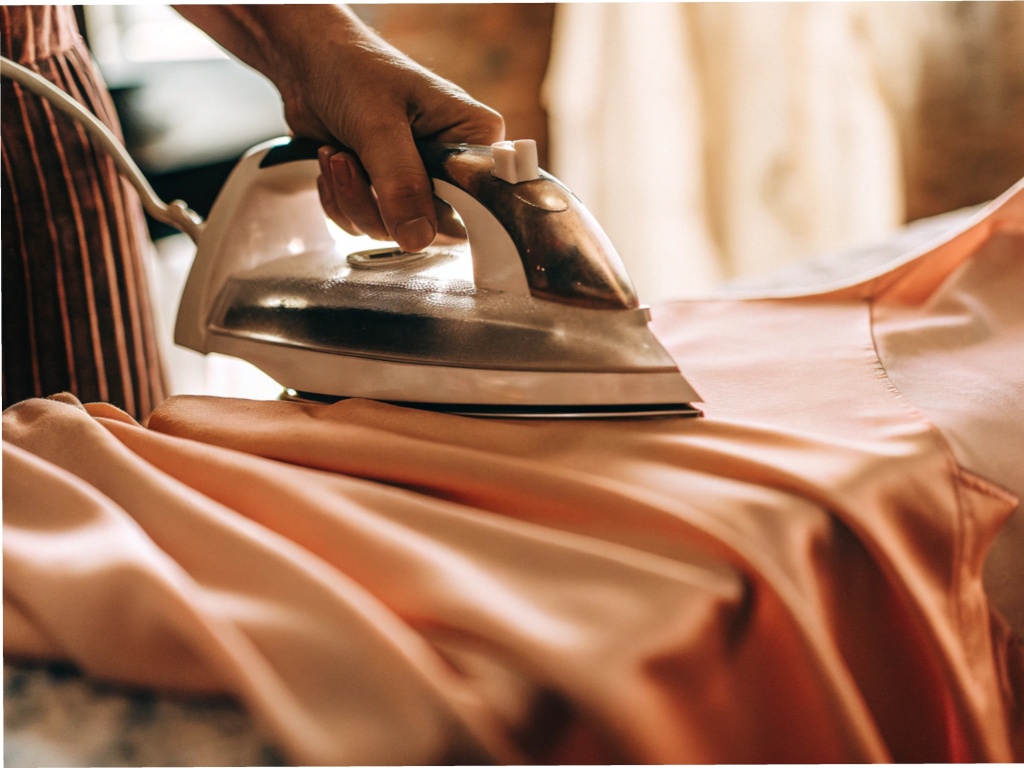
Pressing and Shape Control Before Packing
Tailored dresses gain much of their final value during controlled pressing. Heat, pressure, moisture, sequence and cooling can improve shape or damage surface, bonding and seam appearance.
Lapel and Collar Shape
Pressing establishes the lapel roll, collar curve and breakpoint. Both sides are compared after cooling because temporary heat shape can hide an underlying pattern or bonding issue.
Shoulder and Sleeve Line
Shoulder seams, pads and sleeve heads are shaped without flattening the intended volume. Uneven support, shine or sleeve twisting becomes visible under directional light and on-body review.
Seam and Waist Definition
Darts, princess seams, waist seams and panel edges are pressed in the correct direction to create smooth contour. Seam ridges and over-pressed edges are checked on smooth suitings and stretch fabrics.
Final Garment Inspection
- Compare lapel, pocket, button and hem symmetry.
- Check shine, scorch, adhesive marks, wrinkles and seam impressions.
- Confirm the garment hangs level on hanger and body form.
- Allow the garment to cool before final packing and carton compression.
Measurement and Size Grading Control Matrix
Base-size approval must transfer into a stable size range. Measurement method, tolerance, grade rules and appearance review work together because identical numerical growth can distort tailored proportions.
| Control Point | Sample Focus | Bulk Risk | Verification Method |
|---|---|---|---|
| Shoulder Width | Silhouette and collar balance | Uneven shoulder or oversized upper body | Point-to-point across approved seam references |
| Bust | Closure, ease and shaping | Front pulling, gaping or excess volume | Circumference plus visual fit review |
| Waist | Visual position and comfort | Misaligned buttons, tightness or loose shape | Circumference at defined waist line |
| Hip | Movement and body contour | Restricted sitting or side-seam swing | Circumference with fabric-stretch context |
| Front Length | Lapel, button and hem balance | Front hem lift or waist displacement | High point shoulder to approved reference |
| Sleeve Length | Proportion and movement | Inconsistent cuff position across sizes | Shoulder point to sleeve edge |
| Slit Height | Stride and coverage | Overexposure or restricted walking | Hem upward along approved slit line |
| Lining Length | Coverage and movement | Lining exposure or pulling | Internal hem comparison after hanging |
| Button Position | Closure balance | Strain, gaping or visual waist shift | Measured from fixed pattern references |
Quality Control Built Around Suiting Dress Risks
Fabric Shade
- Check lot identification
- Review under consistent light
Fabric Defects
- Inspect usable width
- Control panel placement
Interlining Bond
- Compare test and bulk
- Inspect lapels and edges
Lapel Symmetry
- Use approved sample
- Check after cooling
Shoulder Balance
- Check pair consistency
- Review on form or body
Button Alignment
- Reinforce tension points
- Check spare button pack
Zipper Flatness
- Check tape color
- Test repeated opening
Measurement Control
- Record results by size
- Escalate repeated deviations
Pressing and Packing
- Cool before packing
- Protect lapels and buttons
MOQ, Costing and Production Planning
Jinfeng Apparel’s basic MOQ starts from 200 pieces per style/color. Final conditions depend on material availability, color, structure, trims, size split, packing and production schedule.
MOQ by Style and Color
One style in black at 200 pieces forms one standard review unit. One style split into black 100 and ivory 100 does not equal 200 pieces per color. Multi-color collections work best when quantity plans are prepared by style, color and size before quotation.
Cost Optimization Without Flattening the Design
- Compare fabric alternatives with similar structure and hand feel.
- Simplify hidden construction while protecting the visible silhouette.
- Consolidate colors or shared trims across a coordinated collection.
- Plan size ratios and production quantities around real sales needs.
- Use priority shipment for launch units and economical freight for remaining bulk where suitable.
Main Cost Drivers
- Outer fabric composition, weight, finish, color method, usable width and cutting loss.
- Full or partial lining, stretch compatibility and opacity requirements.
- Interlining, shoulder support, internal tape, cups, boning or underwire where required.
- Lapels, sleeves, pockets, panels, asymmetric construction, matched checks and stripes.
- Buttons, zippers, custom hardware, labels, hangtags, barcodes and packing materials.
- Pattern development, sampling, sewing time, pressing, QC and project coordination.
- Size range, color count, order volume, split delivery and logistics documentation
Private-Label Packing for Retail and Ecommerce Delivery
Garment Labels
- Confirm final artwork
- Check placement sample
Hangtags and Strings
- Approve print proof
- Control tag position
Barcode and SKU
- Match style-color-size
- Verify readable placement
Folding or Hangers
- Choose packing method early
- Control fold lines
Polybags
- Fit garment volume
- Avoid excess compression
Cartons and Marks
- Manage carton-level data
- Photograph shipment preparation
Design Protection and Delivery Coordination
NDA and Design Protection
- Use anonymized project references
- Control access to development files
- Retain repeat-order records securely
Shipment Coordination
- Confirm forwarder and warehouse data
- Plan launch-priority shipment
- Coordinate required documents
Anonymized Suiting Dress Production Programs

US Ecommerce Program
A premium ecommerce label developed 24 tailored styles totaling 58,400 pieces across blazer minis, sheath midis, vest dresses and matching separates. The size run covered XS-XL with four launch colors. Seven fabric and trim groups were organized into three sampling priorities. Main challenges included lapel consistency, stretch recovery, mixed button programs and coordinated barcode packing. Pattern files, fit comments and PP approvals were tracked by style. Bulk delivery was organized in three waves: hero styles first, core colors second and replenishment-ready units third.
- 24 styles
- 58,400 pieces
- XS-XL
- 3 delivery waves

UK Contemporary Label
A UK label developed 16 structured dress styles totaling 31,200 pieces, including double-breasted minis, tailored midis and sleeveless vest dresses. Five suiting directions covered poly-viscose, stretch suiting, structured crepe, pinstripe and lightweight wool blend. The collection used UK 6-18 sizing. Development focused on shoulder balance, front overlap, waist placement and lining movement. Two fit rounds were completed on key silhouettes before PP approval. Shared buttons, linings and labels reduced material fragmentation across the program.
- 16 styles
- 31,200 pieces
- UK 6-18
- 5 fabric groups

Australian Occasion Program
- 12 styles
- 24,600 pieces
- 6 colorways
- Warm-season fabrics
Suiting Dress Manufacturer Frequently Asked Questions

Start Your Suiting Dress Development
Jinfeng Apparel can assess silhouette, suiting fabric direction, lining and interlining needs, pattern complexity, sample stages, MOQ structure, private-label requirements and bulk production risks before a formal development plan is confirmed. Strong project files do not need to be perfect, but they should show the intended garment, commercial quantity and launch direction. A tech pack gives the clearest starting point; reference images, an original sample or a line sheet can also support review when measurements and material expectations are added. Kelly coordinates initial communication, file collection and project routing with the relevant development team.
- Reference images, tech pack, original sample details or line sheet.
- Quantity by style, color and expected size ratio.
- Fabric composition, weight, stretch, hand feel or physical swatch.
- Base size, size range, measurement chart and fit notes.
- Buttons, zippers, lining, interlining, labels and packaging requirements.
- Sample deadline, launch date, destination and preferred shipping arrangement.