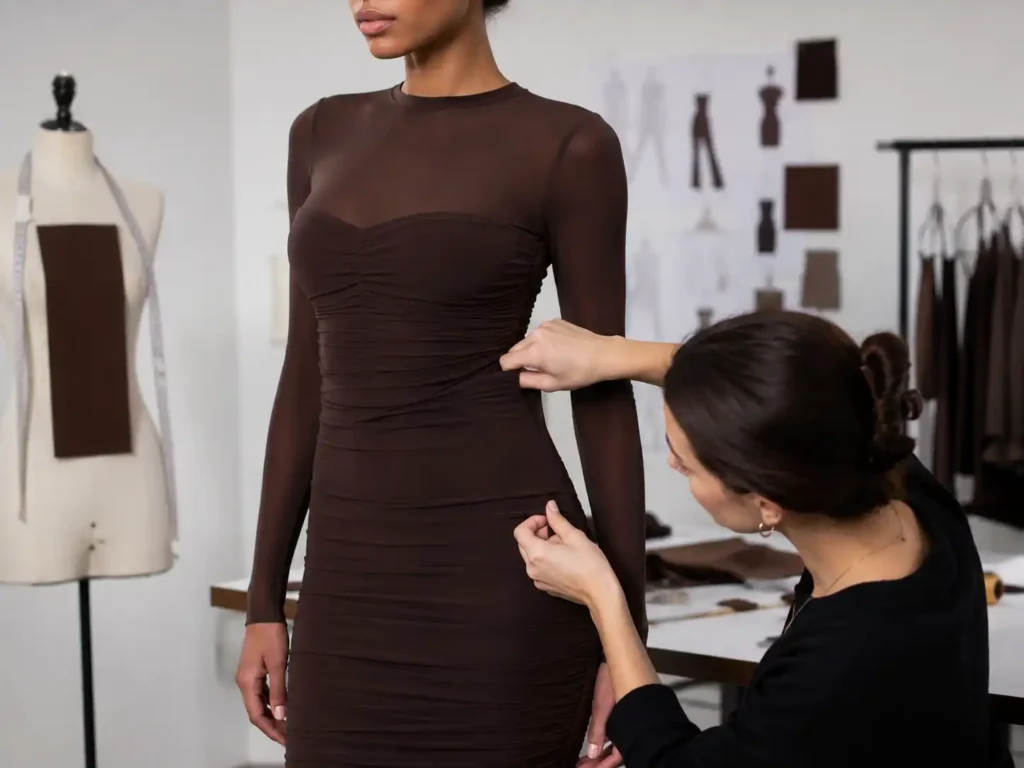
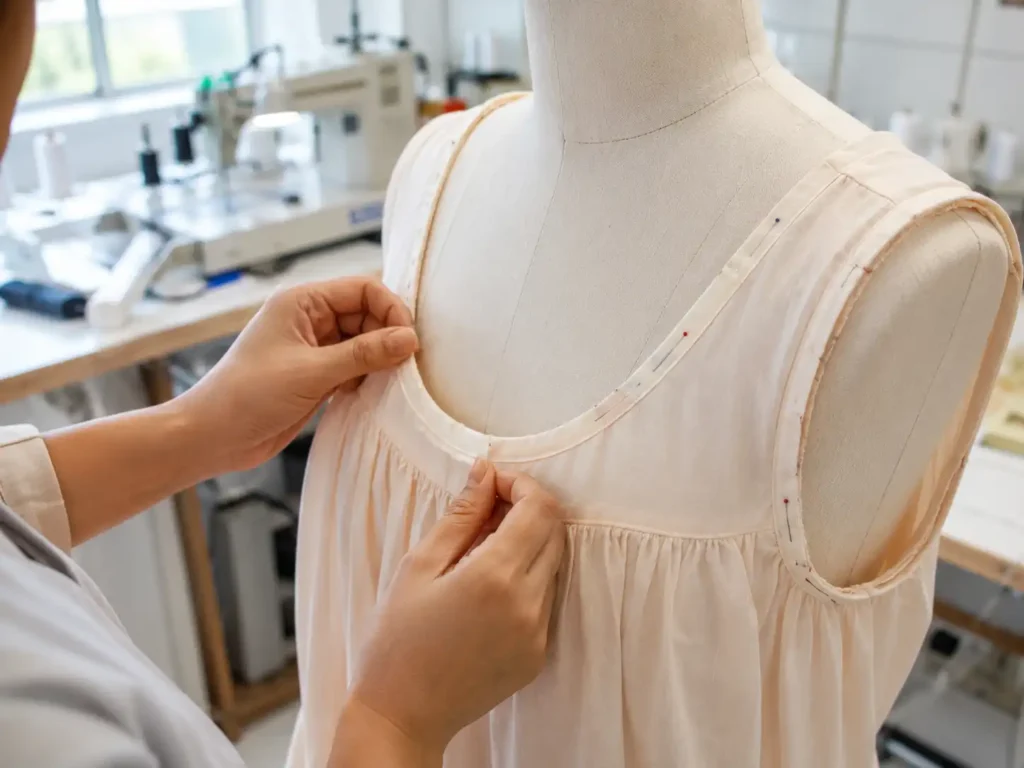
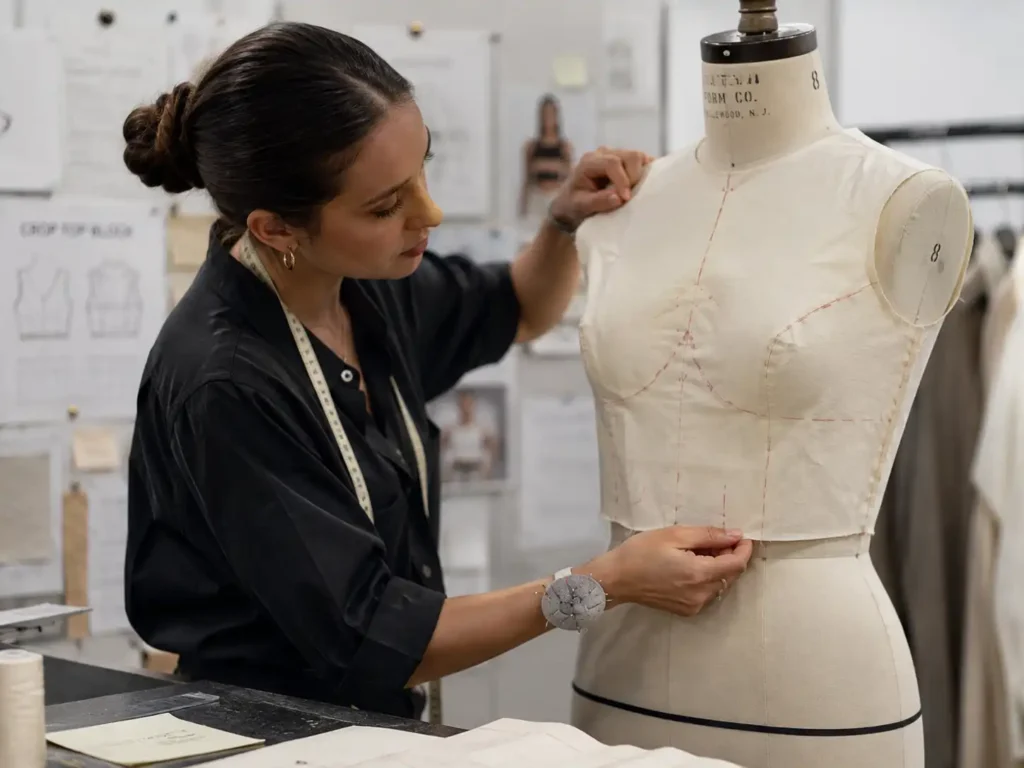
...

Stretch Dress Negative Ease

Fit-led OEM/ODM development for stretch dresses requiring controlled compression, clean body lines, reliable recovery, and consistent sizing through bulk production.

  • Zoned control: Negative ease is assigned by bust, waist, hip, thigh, neckline and length rather than one garment-wide percentage.
  • Material evidence: Two-way or four-way stretch, recovery, weight, opacity and wash behavior are reviewed before finished measurements are released.
  • Three approval gates: Fit sample, size set and pre-production sample decisions protect the approved silhouette before cutting begins and before bulk components enter the line.
  • Program fit: Development supports bodycon, ruched, mesh, knit, cut-out, corset-inspired and other fit-sensitive dress collections.

What Negative Ease Means in Stretch Dress Production

Negative ease means the finished garment measures smaller than the body at selected points. Stretch allows the dress to expand during wear, while recovery brings the fabric back toward its original dimensions after movement. Production approval links both behaviors to specific measurements.

Negative Ease

Negative ease is an intentional reduction, not a cutting error. A 90 cm body measurement paired with an 81 cm finished garment measurement represents a 10% reduction at that point. The same reduction cannot automatically be applied to the waist, hip, neckline or hem because every zone carries a different fit, movement and support function. Pattern records should therefore identify the exact point of measurement and the fabric direction used during approval.

Zero Ease

Zero ease places the finished measurement close to the body measurement. It can suit stable knits, layered constructions or areas where compression is undesirable. A dress may combine zero ease at a lined neckline with negative ease through the waist and hip, allowing the silhouette to stay close without pulling every area equally. The decision remains visible in the finished specification so later sample corrections do not remove intentionally neutral zones.

Positive Ease

Positive ease makes the garment larger than the body and creates room for drape or movement. A fitted stretch dress may still need positive ease in a sleeve cap, skirt flare, gathered panel or overlay. Ease therefore belongs to the complete pattern specification rather than a single percentage printed beside the style name. Mixed-ease construction lets close body zones coexist with fluid layers, functional sleeves or decorative volume without disturbing fit balance.

Why Negative Ease Changes Commercial Dress Performance

The approved reduction influences appearance, comfort, movement and return risk. A dress can match the flat specification and still fail in wear when fabric recovery, seam extension or pressure distribution has not been developed together. Fit and material evidence must agree.

Silhouette and Comfort

Controlled negative ease keeps the dress close to the body without creating uncontrolled horizontal drag lines. Excessive reduction can compress the bust, distort the neckline or restrict stride, while insufficient reduction can leave the waist loose and the hip baggy. Fit approval must balance visual contour with movement during sitting, walking and raising the arms. The approved pressure should feel intentional across the full wearing period, not merely during a brief standing review.

Size Consistency

One approved sample does not prove that every size will perform equally. Grade increments, body proportions and fabric tension interact differently across the range. A size set helps confirm whether the neckline, armhole, waist placement, skirt length and hem circumference remain commercially balanced from the smallest approved size through the largest. Recorded fit comments should distinguish true grading problems from changes caused by a different fabric lot or sample construction.

Bulk Reliability

Fabric lots, relaxation time, cutting direction, sewing tension and pressing can change finished measurements. Small shifts become more visible in a close-fitting dress because the garment carries constant tension during wear. Reliable production therefore depends on controlled inputs, recorded approvals and inspection at defined stages rather than final measurement alone. Early inline findings allow correction before the same variation is repeated across an entire color or size group. 

Stretch Dress Categories Requiring Different Fit Strategies

Every stretch dress category needs its own relationship between silhouette, material extension, support and construction. Product development starts with the intended wearing experience instead of applying a standard bodycon block to every design. Category-specific risks guide the sampling route.

Bodycon Jersey Dresses

Single-jersey bodycon dresses depend heavily on recovery, opacity and seam stability. Lightweight qualities may reveal underwear lines or become sheer over the hip, while heavier qualities can feel restrictive if the pattern reduction is too aggressive. Development reviews garment length, ride-up, side-seam balance and waist suppression under movement rather than relying only on a static fitting pose. Color approval also matters because pale shades often reveal extension and seam bulk more clearly than the original dark sample.

Ruched Stretch Dresses

Ruching changes local tension because the gathered outer layer and the supporting layer may not stretch equally. Drawcord channels, elastic lengths and gathering ratios must remain repeatable across sizes. The underlying pattern still requires a controlled fit map; ruching should disguise minor visual variation, not compensate for weak grading or unstable fabric recovery. Notches and finished ruched lengths give sewing teams measurable references instead of relying on visual gathering alone.

Stretch Mesh Dresses

Mesh can provide high extension while offering limited opacity and different recovery from the lining. The outer mesh, lining and seam construction must work as a system. Misaligned stretch directions can cause twisting, displaced ruching or a loose outer layer. Panel matching and seam allowance control become especially important when transparent areas expose internal construction. Sample approval also checks edge waviness, snag sensitivity and whether the lining remains hidden during movement.

Knit Midi Dresses

Knit midi dresses require balanced width reduction and vertical stability. A fabric that grows under its own weight can lengthen the dress, drop the waist position and disturb the hem after hanging. Fit approval therefore considers garment weight, hanger behavior, seating recovery and length after relaxation, especially for rib structures and viscose-rich qualities. Storage and packing methods are reviewed when prolonged hanging or compression could change the released presentation and hem balance.

Cut-Out Dresses

Cut-outs interrupt the normal tension path through the garment. Edges can gape, roll or pull toward the strongest stretch direction unless they are stabilized and patterned with the surrounding panels. Strap position, binding length, elastic tension and opening shape should be approved together because a small change can alter both coverage and comfort. Placement is verified across representative sizes so the opening remains intentional rather than drifting with the grade.

Corset-Inspired Styles

Corset-inspired stretch dresses combine flexible body panels with comparatively stable cups, boning channels, underbust seams or waist structures. Negative ease must support the body without forcing the rigid components to carry unintended tension. Cup volume, neckline security, zipper load and lining behavior require fitting in the intended fabric and complete internal construction. Boning ends, seam transitions and closure areas are checked for concentrated pressure, lasting wearer comfort and visible distortion.

Fabric Selection for Controlled Negative Ease Dresses

Fabric approval should record structure, weight, usable stretch direction, recovery, opacity and surface behavior. The ranges below are development references; the approved bulk specification must come from the selected quality, color and tested lot. Every color remains subject to confirmation.

Fabric familyReference weightStretch characterSuitable applicationsMain development control
Nylon/elastane jersey170-260 gsmSmooth two-way or four-way stretch with strong potential recoveryBodycon, cut-out and lined fitted dressesShine, heat sensitivity, seam grin and opacity under extension
Polyester/elastane jersey160-250 gsmStable stretch with broad print and color optionsRuched, printed, mini and party dressesRecovery after heat, print distortion and surface pilling
Viscose/elastane jersey180-280 gsmSoft hand and fluid drape with possible length growthMidi, maxi and softly fitted dressesRelaxation, shrinkage, hanger growth and torque
Rib knit180-320 gsmHigh width extension with visible structural linesTank, column, casual and contour dressesRib opening, skew, width recovery and length stability
Ponte or double knit250-380 gsmFirm structure with moderate controlled stretchPanelled, office-to-evening and sculpted silhouettesBulk, seam impression, pressing marks and restricted movement
Stretch mesh70-150 gsmHigh extension with transparent open structureSheer panels, overlays, sleeves and club dressesRecovery, snagging, edge control and lining compatibility


How Fabric Behavior Changes the Approved Pattern

Two fabrics with the same fiber content can require different patterns because knitting structure, finishing, weight and elastane performance alter extension and recovery. Approval should follow the selected quality rather than a generic composition description. Supplier data alone does not replace garment review.

Stretch Direction

Two-way stretch normally provides meaningful extension across the width, while four-way stretch adds usable lengthwise movement. Pattern orientation must respect the approved direction. Rotating a panel to save fabric can change body pressure, length growth and recovery even when the color and composition remain unchanged. Grain and stretch arrows belong on the controlled pattern set. Marker review confirms that approved orientation survives material utilization decisions during bulk cutting and replanning.

Recovery After Extension

Stretch percentage shows how far a material can extend; recovery shows how well it returns. A 10 cm specimen extended to 14 cm demonstrates 40% extension, but the result is incomplete without checking the relaxed length after release and repeated movement. Poor recovery can produce bagging at the seat, elbows, waist or knee area during wear. Direction, extension method, hold time and rest period should accompany every recorded result used for pattern decisions.

Opacity Under Tension

Opacity should be reviewed at the intended garment extension, not only while the fabric lies flat on a table. Light colors, fine yarns and low-cover structures can become noticeably transparent over the hip or bust. Lining selection, seam placement and pattern reduction may need adjustment when the approved color shows lower coverage than the original development color. Review photographs should use consistent lighting and extension so color decisions remain comparable.
Relaxation and Growth

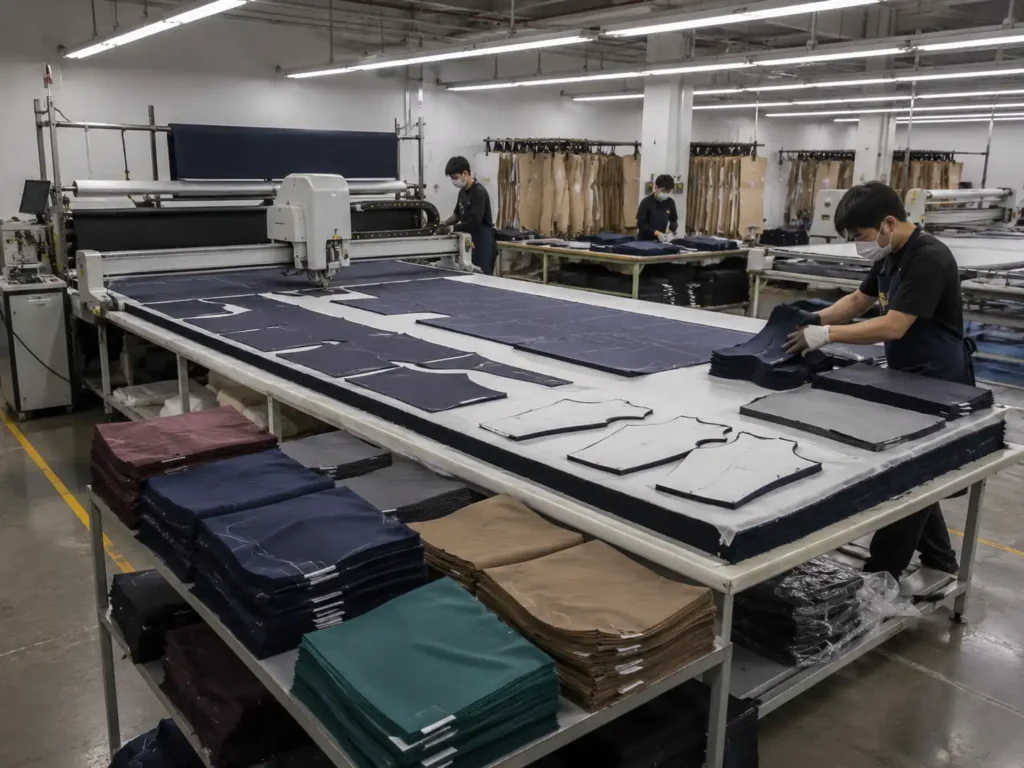
Knitted fabric changes after unrolling, cutting, sewing, pressing, washing or hanging. Relaxation time and handling rules should be agreed before bulk cutting. Viscose-rich qualities and long dresses deserve special attention because garment weight can create length growth even when width measurements remain within tolerance. Fit review includes both immediate and rested measurements. Bulk rolls should not be cut under conditions that differ materially from the approved relaxation and handling procedure.

Engineering Negative Ease Across Different Body Zones

A useful fit specification separates the dress into functional zones. Each zone receives its own target measurement, tolerance, stretch direction and construction support according to coverage, movement and visual requirements. Zoned decisions are verified on the approved fit standard.

Bust Containment

Bust reduction must work with cup volume, neckline height, armhole shape and fabric recovery. Excess tension can flatten the bust or pull the neckline downward; insufficient tension can create gaping. Lined, strapless and corset-inspired styles also require the outer fabric, support layer and closure to share load without visible distortion. Fit comments record both circumference, volume and precise shaping changes.

Waist Definition

The waist often carries the strongest visual suppression, yet aggressive reduction can push the dress upward or create rolling at a seam. Waist placement is checked on the intended body block, then coordinated with elastic, lining, boning or panel seams. A stable waist should define the silhouette without becoming the only point holding the garment. Sitting review confirms pressure remains acceptable after movement.

Hip and Seat

Hip fit depends on opacity, recovery and enough vertical length to cover the curve. Too little length or too much width reduction can cause horizontal drag lines and ride-up. Seat recovery is assessed after sitting because a fabric can appear smooth during standing and remain permanently extended after repeated movement. Side-seam position provides another visible fit, symmetry and balance reference.

Neckline Security

Neckline edges need a controlled finished length, not a guessed elastic tension. Strapless, square, halter and cut-out necklines react differently to movement. Stabilizing tape, elastic, binding or lining may be required, but added support must not create rippling. Approval covers edge position, recovery and comfort after normal dressing and wear. Finished edge length is retained as a controlled production measurement.

Thigh and Stride

Mini and midi silhouettes must allow walking, stairs and sitting. A close thigh circumference can restrict stride or pull the entire dress upward. Slits, stretch direction, hem circumference and skirt length are developed together. The fit sample should be evaluated dynamically, particularly when the fabric has strong width stretch but limited lengthwise extension. Movement findings are translated into measurable pattern corrections.

Length Stability

Negative width ease can change apparent garment length as the dress expands around the body. Heavy knits may also grow vertically after hanging. Shoulder-to-waist, waist-to-hip and total length measurements are reviewed on body and after relaxation. Hem balance is approved only after the garment has settled in the intended fabric and construction. Packing presentation should preserve the released length condition.

Calculating Negative Ease Without Using One Fixed Percentage

Negative ease begins with measurements, but calculation alone cannot release a production pattern. Jinfeng Apparel connects the numerical reduction with fabric behavior, construction and the intended silhouette, then records the approved result in finished garment specifications. Sample evidence completes the calculation.

From Body Measurement to Finished Specification

Reduction can be expressed as: (body measurement minus finished garment measurement) divided by body measurement, multiplied by 100.

A 90 cm body measurement and an 81 cm finished measurement produce a 10% reduction at the measured point. The value is a development input, not proof of acceptable fit. A fabric with high extension but weak recovery may tolerate the measurement during fitting and still become loose after wear. Another fabric may have lower extension, stronger recovery and a firmer perceived pressure at the same nominal reduction.

Jinfeng therefore records the point of measurement, body reference, finished target, tolerance, fabric direction and construction condition together. Bust, waist, high hip, full hip, thigh and hem are reviewed separately. Lining and outer-layer measurements are also separated when they carry different loads. Fit comments should identify an observed problem and required correction, such as neckline gaping, hip drag lines or excessive waist pressure, rather than instructing a uniform percentage change across the garment.

An approved calculation record should also identify the sample size, fit model or body standard, fabric code, color and sample version. Without those references, a percentage can be detached from the conditions that made it successful. The same documentation lets pattern, merchandising and quality teams discuss one controlled result instead of comparing measurements taken from different revisions.

From Development Value to Production Control

The approved sample becomes useful only when its conditions can be repeated. Fabric lot, color, relaxation state, wash treatment, pressing condition and measurement method are recorded before the size set and pre-production sample are released. Measurement points need clear diagrams because a curved neckline, ruched side seam or asymmetric hem can produce different results when operators measure from inconsistent locations.

Production tolerances should reflect garment function. A neckline opening, strap length or waist seam may need tighter control than a gathered overlay. Tolerances cannot be copied blindly from a relaxed woven dress because small dimensional changes carry greater visual consequences in a garment worn under tension. When material performance changes between development and bulk, the correct action is a controlled review of pattern and process, not an unrecorded sewing adjustment on the line.

Release records connect the approved pattern version with the graded specification, bill of materials, construction notes and reference sample. Any authorized change receives a dated revision before cutting. Clear version control protects the silhouette when several styles, colors and production lines move through the program at different times, and it makes later reorder comparisons more reliable.

Measurement tools, garment positioning and relaxation conditions should remain consistent when production results are compared with the approved reference.

Construction Choices That Preserve Stretch and Recovery

Pattern reduction works only when seams, hems, linings and support components extend with the garment. Construction approval therefore includes seam behavior under movement, recovery after release and the appearance of the finished edge. Operation details are confirmed using production materials.

Seams and Stitches

Overlock, coverstitch, lockstitch and reinforced seams serve different loads. Stitch density, differential feed, thread elongation and seam allowance influence how far a seam can extend before cracking or restricting the fabric. Curved body seams need smooth feeding so one layer does not grow against another. Seam choice is approved on the actual fabric combination rather than selected from a generic sewing chart. A production seam sample verifies appearance and extension before bulk sewing.

Necklines and Armholes

Binding, turnback edges, clear elastic, stay tape and lining can stabilize openings, but the finished edge must still recover cleanly. Excessively short elastic creates gathers; excessive length allows gaping. Strap attachment points and underarm seams receive reinforcement without forming hard spots that show through the garment or irritate the wearer during movement. Approved edge lengths and elastic cut lengths are recorded by size for repeatable sewing, finishing and final inspection.

Linings and Support Layers

A lining can improve opacity and comfort, yet a less extensible lining will limit the entire dress. Power mesh, stretch tricot and self-fabric linings are selected according to support and coverage. Layer directions, seam positions and finished measurements are coordinated so the outer shell does not ripple over a tighter inner layer or hang loosely over an overextended one. Layer combinations are fitted and tested together rather than approved independently.

Closures and Internal Structure

Zippers, hooks, boning channels, cups and waist stays introduce stable components into an elastic garment. Seam reinforcement and load paths must prevent stress from concentrating at the zipper base, cup edge or boning end. Fit approval includes dressing access, closure smoothness and body movement because a dress may appear correct while standing but place damaging stress on the closure during entry or sitting. Bulk checks compare component placement with the approved internal construction.

Common Fit Failures and Their Manufacturing Causes

Visible fit problems often come from several interacting causes. Diagnosis should compare pattern, fabric, seam behavior and measurement records before changing the garment, preventing one correction from creating a new failure elsewhere. The root cause determines the corrective owner.

Dress Rides Up

Possible causes include excessive hip or thigh reduction, insufficient body length, restricted stride, lining mismatch or poor recovery. Evaluation includes walking and sitting rather than pulling the dress down during a static fitting. Corrections may involve width, vertical length, panel shaping, slit position or material selection. The team rechecks waist placement after correction because added hip room can change how the dress settles.

Neckline Gapes

Gaping can result from excessive edge length, weak recovery, incorrect bust shaping, unstable binding or misplaced straps. Shortening the entire neckline is not always correct because it may distort the bust or armhole. Pinning during fitting should be translated into an exact pattern and edge-control change. The revised opening is then reviewed during movement and dressing, not only in a front photograph.

Fabric Turns Sheer

Opacity loss normally appears where extension is greatest, often at the hip, bust or seat. Low-cover fabric, light color, aggressive reduction and seam bulk can contribute. Review under production lighting and movement helps determine whether the solution belongs in fabric selection, lining, pattern measurement or seam placement. A solution approved in one color is reconfirmed when lighter shades create a different coverage risk.

Seams Crack or Grin

A seam may restrict extension even when the fabric stretches adequately. Inappropriate thread, stitch formation, needle, density or seam allowance can cause cracking, popped stitches or visible opening. Testing should compare seam extension with the intended body movement and verify the result after pressing and washing. Inline inspection also checks skipped stitches and tension changes before the defect spreads through a production lot.

Waist Rolls Down

Rolling can come from excessive local pressure, insufficient vertical support, incorrect waist placement or an elastic construction that fights the garment. The waist should be evaluated as part of the full tension path from bust to hip. Added elastic alone may make pressure and visible ridging worse. Review after sitting helps separate construction failure from temporary folding caused by posture.

Seat Becomes Baggy

Bagging after sitting usually indicates limited recovery, pattern imbalance or heat and wash sensitivity. Immediate flat measurements may still pass. Wear evaluation, rest time and repeated extension reveal whether the material can regain shape. Bulk approval should use the same fabric quality and finishing condition as the reviewed sample. The seat is reassessed after the agreed rest period before a pattern change is authorized.

Pattern Grading for Consistent Fit Across Sizes

Grading preserves the intended relationship between body, garment and fabric across the size range. Uniform enlargement can change pressure, coverage and garment balance, especially in structured or highly fitted stretch dresses. Representative sizes verify the released grade logic.

Grade by Measurement Zone

Bust, waist, hip, thigh, neckline and length increments are reviewed as separate decisions. The grade must maintain waist position, bust capacity and hip depth while allowing the intended pressure to remain commercially consistent. Asymmetric cut-outs, ruching and panel seams also require graded placement rather than simple enlargement from a central point. Each revised point returns to the graded measurement chart and controlled pattern nest. Cross-size alignment is reviewed before release.

Verify a Size Set

A size set checks whether the approved base-size logic survives across representative sizes. Measurements, visual balance, coverage and movement are reviewed together. Special attention goes to the smallest and largest approved sizes because cup proportion, strap position, armhole depth and skirt length may need controlled corrections beyond standard width increments. Findings are resolved before bulk markers are authorized. Approved changes are rechecked in the affected sizes and adjacent grade positions.

Lock Released Patterns

After approval, the released pattern set identifies every panel, seam allowance, notch, grain or stretch direction, drill mark and version. Finished garment specifications, graded nests and construction notes must refer to the same release. Version control prevents an earlier fit correction or sample-room adjustment from reappearing during bulk cutting. Superseded files are separated so production teams cannot select them accidentally. Release dates, version numbers and responsible approval owners remain visible.

Sampling Steps for Fit-Sensitive Stretch Dress Programs

Sampling converts design intent into a measurable garment. Each stage has a defined question, from material feasibility and initial silhouette through size confirmation and final production release. Recorded decisions prevent unresolved fit assumptions from entering bulk production.

Technical Review

The team reviews the sketch, reference sample, Tech Pack, body or fit-model standard, size range, finished measurements, construction and target fabric. Missing information is identified before pattern work begins. Fabric stretch direction, recovery, opacity, weight and finish are treated as development inputs, not details to be resolved after the first fitting. The review also defines approval owners, sample purpose and required technical files for each development stage, revision and release.

First Fit Sample

The first sample tests silhouette, body pressure, coverage, balance and movement. Simple samples normally require 7-10 days, while a regular dress commonly requires 10-15 days. Medium-complexity styles may require 12-18 days. Timing begins after development information, available materials and required components are sufficiently confirmed. Comments are issued against the exact sample version so corrections remain traceable through later rounds. Movement photographs and detailed measurement records can support written fit observations.

Revision and Size Set

Fit comments are translated into controlled pattern, measurement and construction changes. Revised or pre-production samples commonly require 7-15 days. Representative sizes are then checked for grade balance, neckline position, strap length, waist placement, hip coverage and dress length. Additional rounds depend on the number and scale of changes. Approved corrections are transferred to the specification, pattern and construction record together rather than held in email alone. Revision history remains visible to production.

Complex Sample Approval

Corset, strapless, lace, mesh and sequin dresses commonly require 15-25 days because internal structure, placement and specialized operations must be developed together. Custom fabric, special trims or supplier-developed components may require 20-35 days or the confirmed supplier cycle. Schedule approval follows material availability and design complexity rather than a universal sample promise. Each complex component is reviewed in its final relationship with the stretch shell, lining, internal support and closure.

Validation Checks Before a Stretch Dress Is Approved

Approval covers material, garment and wear behavior. Results are recorded against the selected fabric, color, size and construction so production teams can repeat the same conditions during bulk manufacturing. Each check answers a defined release question.

Stretch Measurement

A controlled specimen is measured before extension, at the agreed extension point and after release. Direction, load or extension method, rest time and result should be recorded. A percentage without method or direction is not sufficient for pattern approval because width and length behavior may differ substantially. The approved bulk quality is checked against the same recorded method whenever lot behavior is uncertain.

Recovery Review

Recovery is observed immediately and after an agreed rest period. Repeated extension can reveal growth that a single pull test misses. Waist, seat, knee and neckline areas deserve special attention because retained deformation becomes visible during wear even when initial stretch appears adequate. Results are compared with the physical sample to connect material behavior with the observed fit and wear response.

Opacity Check

The selected color is reviewed at the intended extension over a representative background or body. Shell and lining combinations are checked together. Dark development fabric cannot be used as proof for a light bulk color because yarn coverage, dyeing and surface reflection can change perceived transparency. Approval records identify the tested color and layer combination to prevent an unsupported substitution.

Seam Extension

Production stitches and thread are applied to the intended seam direction, then extended to evaluate cracking, skipped stitches, seam grin and recovery. Reinforced areas are also checked for hard transition points. The seam should support expected movement without becoming the limiting component in the garment. Needle condition, stitch density and thread selection are retained with the approved operation and machine instructions.

Dynamic Fit Review

The wearer walks, sits, raises the arms and performs movements relevant to the style. Review covers ride-up, neckline security, strap movement, waist rolling, lining shift and recovery after motion. A static front photograph cannot release a fit-sensitive stretch dress for production. Side and back views are recorded when they reveal tension or coverage changes not visible from the front. Notes identify the movement performed.

Wash and Rest

Where required by the program, the garment is evaluated after the agreed care cycle and rest condition. Measurements, torque, surface appearance, seam behavior and recovery are reviewed. Any approved change must return to the controlled specification, pattern or construction record before release. Care instructions and test conditions should match the intended market claim and approved label information. Results stay linked to the tested color and size.

Transferring Approved Fit Into Stable Bulk Production

Bulk consistency depends on controlling the approved inputs before cutting and maintaining them through sewing, finishing and packing. Close-fitting garments leave little room for undocumented process variation. Early controls reduce late-stage sorting and rework risk.

Bulk Fabric Approval

Color, hand feel, weight, width, stretch direction, recovery, defects and shrinkage are checked against the approved quality. Lot differences are identified before mixing. When a bulk lot performs differently from the sampled fabric, pattern or process decisions return for review rather than being corrected informally during sewing. Approved and rejected lots remain clearly identified during storage, material issue and cutting.

Relaxation Before Cutting

Knitted rolls need handling and relaxation suited to the selected fabric and finishing condition. Spreading tension, ply height and direction can change panel dimensions. Cutting teams follow the released grain or stretch arrows and keep lots traceable so measurement changes can be investigated accurately. Cut-panel checks confirm dimensions before high-volume sewing begins. Results are recorded by size, color, direction and lot.

First-Piece Confirmation

An initial production piece verifies measurements, seam behavior, construction order, elastic lengths, alignment and appearance using bulk components. Findings are recorded before full-line output increases. The check is particularly important for transparent layers, ruching, bindings, zippers and internal support structures. Operators receive the approved reference and any risk-specific instructions before output expands. Line leaders confirm the approved method and inspection points.

Inline Measurement

Critical points are measured during sewing while correction is still possible. Neckline openings, waist seams, hip widths, strap lengths and garment lengths may receive different control frequencies according to risk. Data are compared by size and operation rather than waiting for final random inspection. Trends trigger process review before individual deviations become repeated defects. Corrective actions are documented and rechecked.

Pressing and Finishing

Heat, steam and handling can change elastane performance, seam impression and garment dimensions. Pressing settings follow the approved material and finish. Garments are allowed to settle before final measurement when recovery or vertical growth affects the result, preventing temporary pressed dimensions from being recorded as stable measurements. Finished pieces are protected from stretching during transfer, temporary hanging, measurement and inspection.

Packing Release

Final appearance, measurements, labels, assortment, folding and carton information are checked against the approved order requirements. An AQL inspection represents a sampling plan, not a claim of 100% inspection. Third-party inspection can be coordinated when required by the agreed program. Shipment release follows the agreed inspection result and completed packing records. Deviations require documented review, disposition and authorization before dispatch.

Quality Control for Stretch Dress Measurements and Appearance

The control plan links each risk to a production stage, review record and release decision. Inspection depth and tolerances are confirmed for the specific style, fabric, size range, order volume and market requirements. Records support timely corrective action.

Control stagePrimary checksStretch-dress risk addressedTypical record or release
Incoming materialColor, width, weight, defects, stretch direction, recovery and shrinkage where requiredLot variation, unexpected pressure, transparency and growthApproved lot reference and incoming report
CuttingRelaxation, marker direction, panel dimensions, notches and lot separationTwisting, size drift and mixed material behaviorCut-panel check and bundle traceability
Sewing inlineStitch formation, seam extension, elastic length, matching, binding and key measurementsSeam cracking, gaping, rolling and asymmetryInline inspection and corrective action record
Measurement reviewBust, waist, hip, length, neckline, straps and risk-specific points by sizeInconsistent negative ease and grading imbalanceSize-based measurement report
Finished garmentFit-critical appearance, opacity, ruching, seams, closures, pressing and recoveryRide-up, seam grin, distortion and surface damageFinal inspection result and approved reference
PackingLabel, size, color, assortment, folding, protection and carton marksMixed SKUs, presentation damage and shipment errorsPacking audit and shipment release

Manufacturing Resources Behind Reliable Fit and Delivery

Jinfeng Apparel combines dress development resources with multi-line production and defined quality roles. Capacity figures are connected to the work required for fit-sensitive collections rather than presented as isolated factory statistics. Resources are allocated according to confirmed program needs.

Development Since 2008

Experience since 2008 covers premium custom women’s fashion, including dresses, skirts, jumpsuits, matching sets and related collections. Long-term development exposure supports decisions involving silhouette, commercial fit, decorative construction and production feasibility. Every new style still follows its own material and sample approvals; operating history does not replace project-specific validation. Historical knowledge helps teams identify likely risks earlier and plan the appropriate approval route.

Two Sample Rooms

Two sample rooms support parallel development, revisions and pre-production work. The team includes 7+ senior pattern makers and 20+ sample machinists. Dedicated resources help translate fit comments into controlled patterns, graded specifications and construction decisions before a style moves into a sewing line. Sample versions and approvals remain connected to the relevant style, fabric, color, construction, revision and size record.

Owned Factory Network

Six owned women’s fashion factories provide the core manufacturing structure, supported by 10+ satellite production partners for suitable programs. Allocation depends on product construction, operation requirements, schedule, order size and approved quality controls. Production routing is confirmed by project rather than promised from headline capacity alone. Assigned facilities follow the released sample, specification and inspection plan for the relevant order.

Flexible Sewing Capacity

Jinfeng operates 18+ sewing lines and 6+ flexible lines with regular monthly capacity above 100,000 pieces. Flexible lines support collections containing several dress constructions, while standard lines provide repeatable output for stable styles. Line planning follows approved samples, material readiness and delivery requirements. Capacity is reserved against confirmed production conditions rather than an incomplete concept brief or provisional material plan.

Dedicated Quality Roles

The quality team includes 15+ QC inspectors covering incoming, cutting, inline, measurement, garment appearance, pressing and packing checkpoints. Inspection plans are adjusted to the style risk. Fit-sensitive openings, elastic lengths, stretch seams and high-tension areas can receive additional attention during development and bulk production. Findings are communicated to production while correction remains possible. Follow-up checks verify the corrective response and result.

Merchandising Coordination

Twelve or more merchandisers and order follow-up specialists coordinate specifications, samples, materials, approvals, production status and shipment requirements. Clear communication is essential when pattern measurements, fabric behavior and construction changes are linked. Thirty-plus finishing and packing workers support final presentation, assortment and shipment preparation. Program records keep decisions aligned across internal teams, assigned facilities, material suppliers and authorized brand contacts.

Private Label Options for Stretch Dress Collections

OEM, ODM and private label support can cover a single developed silhouette or a coordinated multi-style collection. Every option remains tied to confirmed materials, construction, quantity, packaging and approval requirements. Scope and responsibilities are agreed before development starts.

Product Development

Brands can provide a Tech Pack, sketch, reference sample, line sheet or defined product brief. Jinfeng supports pattern development, material sourcing, sampling, fit correction, grading and pre-production confirmation. The scope is agreed before work begins so design ownership, approval responsibilities, target measurements and development rounds remain clear. Unresolved design points are listed for decision before they become sample-room assumptions. Confirmed answers return to the controlled development record before sampling proceeds.
Designer planning collection with color swatches and fabric

Collection Coordination

Stretch dress programs may combine bodycon, ruched, mesh, knit, cut-out and structured styles. Shared colors, trims or fabric families can be coordinated while preserving the different fit requirements of each silhouette. Line planning considers style count, operation complexity, material readiness and delivery grouping rather than forcing every style through one production route. Collection-level tracking keeps color, labeling and packing decisions consistent across related styles, approved size ranges and delivery groups.

Labels and Packaging

Private labels, care labels, size labels, hangtags, polybags, protective materials and cartons can be developed according to approved artwork and market requirements. Special packaging, certified materials and custom components may carry supplier minimums or longer lead times. All brand assets and unreleased product information are handled within agreed confidentiality controls. Pre-production approval verifies content, placement, size, color and attachment method before bulk use. Packing references guide final presentation and assortment.

Commercial Terms for Structured Brand Production Programs

Commercial planning begins with a defined style, color, quantity and material route. Transparent thresholds help sourcing and product teams evaluate feasibility before committing development time or reserving production capacity. Confirmed inputs support a more accurate quotation.

Order Minimum

MOQ starts from 200 pieces per style per color, not 200 pieces across an entire order. Custom dyeing, printing, certified fabrics, specialty trims, developed hardware or packaging can require higher supplier minimums. Final feasibility depends on style complexity, color count, size breakdown, material utilization and requested schedule. Quantities are reviewed at component level when one trim or fabric serves several styles. Confirmed minimums and assumptions belong in the commercial approval.

Development Timing

Sampling ranges from 7-10 days for simple styles to 10-15 days for regular dresses and 12-18 days for medium-complexity designs. Corset, strapless, lace, mesh or sequin styles commonly require 15-25 days. Custom materials may require 20-35 days or the confirmed supplier cycle. Bulk delivery is quoted after approvals, material readiness, quantities and line scheduling are reviewed. Revisions affecting fabric, structure or grading can change the approved timeline and release date.

Program Information

Accurate review requires product drawings or references, size range, finished measurements, fabric requirements, colorways, style quantities, packaging, compliance needs, sample deadline and delivery destination. Early disclosure of launch dates or inspection requirements helps the merchandising team identify material or schedule risks before the program advances. A clear size and color breakdown also improves material, marker and line planning. Missing technical inputs are listed and resolved before quotation assumptions are fixed.

A Representative Multi-Style Stretch Dress Production Program

The following anonymous program profile reflects the scale and decision structure commonly handled for established fashion brands. Brand identity, original designs, pricing, patterns, labels and order records remain confidential. Figures illustrate program planning without disclosing proprietary assets.

Development Scope and Fit Control

The representative order contains 18 styles and 42,000 pieces across bodycon jersey, ruched mesh, cut-out mini, lined midi and corset-inspired silhouettes.

Quantities are planned by style, color and size, with no assumption that one base pattern or negative-ease percentage can serve the entire collection.

The program uses six principal fabric qualities, each approved for weight, stretch direction, recovery, opacity and relevant wash behavior before final pattern release.

Development begins with a technical review of measurements, fit-model requirements, styling details and material availability.

Every style receives a risk map covering neckline security, bust support, waist pressure, hip opacity, stride and length stability.

Fit samples establish the base silhouette; representative size-set pieces verify grading; pre-production samples confirm bulk fabric, trims, labels and construction.

More complex corset and layered mesh styles receive longer sampling windows than stable jersey silhouettes, keeping decisions aligned with actual operation content.

Each approval is tied to a numbered sample version and the corresponding measurement record. A change to neckline length, lining stretch or elastic tension is therefore traceable across the pattern, BOM and construction notes. Shared collection elements are coordinated, but no style inherits another style’s fit approval merely because both use the same color or fabric family.

Bulk Allocation and Release Control

Production is allocated according to sewing operations, fabric behavior, style volume and schedule rather than distributing equal quantities across lines. Flexible lines handle lower-volume or operation-heavy styles, while stable repeatable constructions move to suitable standard lines after first-piece approval. Fabric lots remain separated and traceable through cutting. Critical measurements are monitored during sewing, including neckline openings, waist seams, hip widths, strap lengths and total lengths according to the risk of each style.

Final release combines measurement results, garment appearance, closure function, seam extension, opacity, label accuracy and packing assortment. The program structure protects a collection containing different silhouettes without pretending every style needs identical controls. It also gives brand teams a single approval trail from Tech Pack and fit comments through bulk records, third-party inspection support when requested, and shipment documentation, while all unreleased design information remains confidential.

The 18-style, 42,000-piece profile sits within the 10-30 style and 20,000-80,000 piece range commonly associated with current brand programs. Actual routing, capacity reservation and delivery planning remain specific to the confirmed assortment. No brand name, original artwork, pattern, order price or private contact detail is used to present the program.

Reorder planning can compare new fabric lots, colors and measurements with the original approval trail while still requiring fresh confirmation for changed materials or constructions.

Compliance, Confidentiality and International Delivery Support

Documentation, inspection and shipment arrangements are confirmed by project. Claims remain linked to the relevant factory, material supplier, production batch, certificate validity and agreed trade terms. Records must match the assigned production route and order.

Compliance Support

Quality management follows ISO 9001-related principles, while SMETA/Sedex or BSCI support can be discussed according to the assigned production facility and program. OEKO-TEX, GOTS or GRS material resources are evaluated by project, supplier, batch and valid certificate. A broad company statement cannot replace document verification for the selected material and order. Required evidence is identified before sourcing decisions are finalized. Certificate validity and scope are checked against the order.

Design Confidentiality

Tech Packs, original patterns, unreleased designs, labels, packaging, order details, pricing and contact information are treated as confidential project records. NDA arrangements can be agreed before sensitive materials are exchanged. Anonymous project presentations exclude brand identity and proprietary assets unless written authorization permits disclosure. Access and file circulation remain limited to the roles required for development and production. Obsolete files are separated from current controlled pattern releases and approval records.

Inspection and Delivery

Incoming, cutting, inline, measurement, finished garment, pressing and packing controls can be combined with an agreed AQL plan or third-party inspection. Express, air and sea options are available according to schedule and destination. EXW, FOB, CIF, DAP or DDP terms are confirmed by project and cannot be assumed before route, customs responsibility and destination requirements are reviewed. Shipment planning begins after packing volume and release conditions are known. Final documents follow the agreed trade term.

Stretch Dress Negative Ease Frequently Asked Questions

Reduction percentage can be calculated as body measurement minus finished garment measurement, divided by body measurement, multiplied by 100. The result is evaluated separately at each measurement point. Fabric stretch, recovery, opacity, construction and intended pressure determine whether the calculated value works in wear, so the formula alone cannot release a production pattern.

No. Bust, waist, hip, thigh, neckline and length perform different functions. Each area may require a different reduction, tolerance or stabilization method. Outer fabric and lining can also need separate measurements. The final map is confirmed through fitting, movement and size-set review.

Useful information includes fiber content, knit or woven structure, weight, usable width, stretch direction, measured extension, recovery, shrinkage, finish and opacity at the intended extension. A physical swatch or approved quality reference gives the pattern team more reliable evidence than composition alone.

Opacity is reviewed in the approved color while the material is extended near its intended garment condition. High-risk areas include bust, hip and seat. Shell, lining, seam allowance and lighting are considered together. A darker development color cannot automatically approve a lighter production color.

Simple samples usually require 7-10 days, regular dresses 10-15 days and medium-complexity styles 12-18 days. Corset, strapless, lace, mesh or sequin styles commonly require 15-25 days. Custom material or special trim development may require 20-35 days or the confirmed supplier cycle.

A size set is strongly recommended for fit-sensitive programs because pressure, coverage, grade balance and length can change across sizes. Representative sizes help verify neckline position, bust capacity, waist placement, hip depth, strap length and hem balance before bulk cutting.

MOQ starts from 200 pieces per style per color. Custom dyeing, printing, certified fabric, specialty trims, developed hardware or packaging can require higher minimums from the relevant supplier. Style complexity, color count, size breakdown and schedule are reviewed before final confirmation.

Yes. Development can begin from a Tech Pack, sketch, line sheet, reference sample or structured product brief. Clear ownership and confidentiality arrangements should be established before proprietary materials are exchanged. Pattern, material, fit and construction decisions are documented through the agreed approval stages.

Yes, third-party inspection can be coordinated when included in the agreed order plan. Inspection scope, sampling level, timing, access and reporting requirements should be confirmed before production completion. An AQL inspection is a sampling method and should not be described as 100% inspection.

Provide available Tech Packs, sketches, reference images, finished measurements, size range, fabric requirements, colorways, style quantities, packaging instructions, compliance needs, target sample date and delivery destination. Early technical information allows clearer feasibility, sampling and production planning.

Start Your Stretch Dress Development Program

Send available Tech Packs, sketches, reference images, finished garment measurements, size range and target fabric information. Include expected quantities by style and color, required labels or packaging, target sample date, delivery destination and any inspection or compliance requirements. Jinfeng Apparel will review pattern feasibility, material behavior, negative-ease risks, sampling route and production conditions before preparing the next commercial step.

Sensitive designs can be handled under an agreed NDA, and missing technical details can be identified during the initial review. Early evaluation also checks whether the proposed shell, lining, seams, support components and closures can achieve the intended pressure without sacrificing movement or coverage. For multi-style collections, provide the relationship between shared fabrics, trims, colors and delivery groups so material minimums and production routing can be reviewed together.

A complete brief supports clearer sample priorities, fewer uncontrolled assumptions, stronger schedule visibility and a quotation aligned with the actual assortment.

  • Product information: Dress category, design files, reference sample and required construction details.
  • Fit information: Body or fit-model standard, finished measurements, size range and known fit concerns.
  • Material information: Fabric composition, weight, stretch direction, recovery data, colorways, lining and trims.
  • Program information: Quantity per style and color, sampling target, delivery schedule, market and packing requirements.
  • File upload: Tech Pack, graded specification, artwork, BOM, label files or relevant inspection requirements.


Tell Us About Your Dress Project

Share your product details, estimated quantity and development requirements. Our team will review your project and provide practical OEM/ODM production feedback.

Premium Women’s Apparel Production for Fashion Brands

From dress sample development to bulk production, JF Apparel supports fashion brands with confidential OEM/ODM manufacturing, reliable quality control and scalable production support.

START YOUR DRESS PROJECT

Ready to Develop Your Next Dress Collection?

Share your design concept, product requirements or sourcing plans with our team. We’ll review your project and provide practical feedback on development, materials, MOQ and production.

7-10 Days

Sample Development

200 PCS

Starting MOQ

Fast Response

Professional Follow-Up