 Skip to content
Stretch Bodysuit Manufacturer
Custom Stretch Bodysuit Development for Global Fashion Brands, Multi-Style Collections and Repeatable Bulk Production
- MOQ starts from 200 pcs per style/color, subject to fabric, color, trim and construction requirements.
- Standard jersey and rib bodysuit samples commonly require 10-18 days; complex mesh, cut-out or structured styles may require 15-25 days.
- Two sample rooms, 7+ senior pattern makers and 20+ sample machinists support fit-focused development before bulk production.
- 15+ QC inspectors control fabric batches, cutting direction, measurements, stretch seams, closures, labels and packing.
Jinfeng Apparel develops cut-and-sew stretch bodysuits from tech packs, original samples, reference images or line sheets. Product work covers fabric direction, negative ease, bust-waist-hip balance, torso length, neckline stability, leg openings, crotch construction, sample revisions, PP approval, bulk production, private-label packing and export coordination for established fashion programs.
Built for Scalable Stretch Bodysuit Programs
Since 2008
Six Owned Factories
Ten-Plus Partners
Two Sample Rooms
Fit Development Team
Quality Oversight
Choose the Right Bodysuit Construction Route
Stretch bodysuits can look similar on a product image while requiring very different manufacturing methods. Selecting the correct route early prevents unsuitable fabric choices, unrealistic fit expectations and quotation errors.
| Manufacturing Route | Typical Materials | Development Focus |
| Cut-and-Sew Fashion | Jersey, rib knit, modal blends, cotton-spandex, ponte, stretch mesh and layered fabrics | Pattern development, negative ease, seam stretch, torso balance, leg openings and closures. Core Jinfeng Apparel route. |
| Panel-Engineered Stretch | Fashion bodysuits with power-mesh panels, double layers, shaping seams or mixed materials | Panel tension, layer alignment, opacity, support, seam placement and comfort. Suitable after fabric and structure review. |
| Circular-Knit Seamless | Programmed seamless tubes with knitted compression or support zones | Requires dedicated knitting programming and verified seamless production capability. Reviewed separately rather than presented as a standard cut-and-sew service. |
Stretch Bodysuit Styles We Develop

Long-Sleeve Bodysuits

Short-Sleeve Bodysuits

Sleeveless Bodysuits

Square-Neck Bodysuits

One-Shoulder Bodysuits

Backless Bodysuits

Mesh-Panel Bodysuits

Thong and Brief Bodies
Who We Manufacture Stretch Bodysuits For
Global Fashion Brands
Regional Leading Brands
Mature DTC Brands
Premium Ecommerce Brands
Partywear Labels
Fashion Active Labels
Lingerie-Inspired Labels
Sourcing Offices
Private-Label Programs
Stretch Fabrics Selected for Fit and Recovery
Material selection starts with the intended silhouette, wearing tension, opacity, hand feel, surface appearance, care method and target cost. Fabric names alone are not enough; stretch direction, recovery and batch behavior must suit the pattern.
Nylon-Spandex and Polyester-Spandex

Nylon-spandex can provide a smooth hand, strong recovery and close body contact, making it suitable for sleek fashion bodysuits, double-layer bodies and contouring silhouettes. Polyester-spandex offers broad color and print possibilities, often with better cost control for fashion programs. Development compares composition, GSM, width, stretch direction, recovery after repeated extension, surface sheen and opacity at the planned negative ease. A fabric that looks opaque on the table may become transparent across the bust or hip, especially in pale colors. Bulk approval therefore uses the actual color, layer structure and intended fit rather than a generic black swatch.
- Review point: horizontal and vertical stretch behavior.
- Review point: recovery after extension and wash.
- Review point: opacity at bust, hip and seat tension.
- Review point: surface shine, pilling and snag sensitivity.
Jersey, Modal and Cotton Blends

Jersey, modal-spandex and cotton-spandex deliver softness and everyday wearability, but each group behaves differently during cutting, sewing and washing. Lightweight jersey may twist, curl or grow after handling. Modal can drape beautifully yet require careful stabilization at necklines and armholes. Cotton blends may feel familiar but need shrinkage control and consistent recovery. Pattern allowance is adjusted after fabric review rather than copied from a different knit. For long-sleeve bodies, sleeve recovery and elbow bagging receive added attention; for white and light colors, double layers or selective lining may be necessary.
- Best for: everyday fashion bodies, layering pieces and soft second-skin programs.
- Key risk: twisting, neckline growth, shrinkage and loss of shape.
- Sampling focus: torso length, sleeve mobility, edge stability and wash response.
Rib Knit and Ponte

Rib knit expands easily across the body and can create a clean fitted look, yet the visual rib structure can reveal cutting direction, panel distortion and uneven tension.
Ponte and Roma knits offer more body and shape stability, making them useful for structured necklines, smooth outerwear styling or double-knit bodysuits. Heavier fabrics can reduce transparency but increase pressure at the crotch and leg openings if negative ease is not recalculated. Development therefore balances GSM, stretch, recovery and garment length rather than treating thicker fabric as an automatic quality upgrade.
- Rib control: rib direction, width recovery and side-seam straightness.
- Ponte control: bulk at seams, comfort, pressing and leg-opening finish.
- Fit control: fabric-specific negative ease and torso allowance.
Stretch Mesh and Power Mesh

Stretch mesh supports transparent panels, layered necklines, sleeves and cut-out effects. Power mesh can add localized support or coverage, but excessive tension may feel restrictive or create visible pressure lines. Mixed-material bodysuits require stretch compatibility between the main fabric, mesh, lining and binding. Panel edges are checked for rippling, seam breakage and unequal pull. Color matching also matters: black-on-black materials can differ in undertone, while nude and pale layers can shift visibly under studio lighting. Every layered construction is reviewed on-body before bulk materials are released.
- Panel control: compatible stretch ratios and grain direction.
- Comfort control: seam placement and soft edge finishing.
- Visual control: transparency, color matching and layer alignment.
Performance Checks Behind a Reliable Stretch Bodysuit
Stretch Direction
Recovery Control
Opacity Under Tension
Dimensional Stability
Colorfastness Review
Surface Durability
Fit Engineering from Bust to Crotch
A bodysuit joins the upper body and bottom into one continuous fit system. Torso length, negative ease and fabric recovery must be developed together or the garment can pull, gape, wrinkle or shift during movement.
Torso Length and Negative Ease
Torso length is evaluated from the upper-body anchor point through the crotch rather than treated as a standard top length. Excessive negative ease can pull the neckline downward, raise the leg opening, create shoulder pressure or make the closure uncomfortable. Too little tension can cause waist wrinkles, a loose back and poor seat control. Pattern makers compare front and back body length, fabric stretch, intended compression level and closure construction before setting the base size. Fit comments are recorded with measurements and on-body observations, then converted into an updated pattern and measurement chart.
- Front body: neckline depth, bust projection and waist shaping.
- Back body: shoulder position, back length and seat transition.
- Vertical balance: shoulder-to-crotch length and closure comfort.
- Ease balance: enough recovery for shape without excessive pull.
Bust, Waist and Hip Balance
Bust, waist and hip measurements do not scale at the same rate across styles or fabrics. A deep neckline may need more bust containment; a high-cut leg changes how tension reaches the hip; a double-layer front behaves differently from a single-layer back. The base pattern is reviewed against the approved size chart, model fit notes and fabric data. Side seams should remain vertical, waist shaping should sit at the intended level, and the seat should stay smooth without overstretching. Fit changes are evaluated as a system so correcting one area does not create a new problem elsewhere.
- Bust control: coverage, projection, neckline contact and support layers.
- Waist control: contour placement and wrinkle reduction.
- Hip control: stretch distribution and side-seam balance.
- Seat control: coverage, tension and bottom-shape stability.
Necklines, Armholes and Leg Openings
Openings must stay clean through movement while remaining comfortable against the skin.
Necklines can gape when edges are not stabilized or when bust tension is underestimated. Armholes can cut in, reveal undergarments or distort the side seam. Leg openings can roll, shift or create pressure lines when elastic, binding or pattern shape is mismatched.
Sampling reviews the opening in a relaxed state, during movement and after the garment is worn for a suitable fitting period. Edge construction is chosen according to fabric thickness, recovery, style direction and the approved visual finish.

Crotch Construction Designed for Comfort and Security
The bottom section affects the fit of the entire garment. Body shape, gusset length, closure position, edge finish and fabric tension are reviewed together to protect comfort, stability and ease of dressing.
Thong and Brief Shapes
Thong bodies need a smooth transition from the seat into a narrow back without creating hard seams or twisting. Brief bodies need balanced coverage and leg openings that stay in place without cutting into the skin. High-cut legs change visual proportion and increase the importance of curve symmetry. Pattern development considers back width, seat contour, leg-opening height, crotch width and the relationship between the bottom shape and upper-body tension. The final shape is approved on-body, not judged only from a flat pattern.
Gussets and Inner Layers
Gusset construction can use the main fabric, a compatible lining or a selected skin-contact material depending on the garment specification. Layer thickness, seam placement, breathability, care labeling and closure bulk all influence comfort. Mesh or power-mesh bodies may need a more stable inner layer around the closure area. The gusset should remain flat, avoid twisting and connect cleanly to the leg-opening finish. Material substitutions are not made in bulk without reviewing their effect on stretch and thickness.
Snap or Hook Closures
Snap closures are common because they allow convenient dressing, but placement and reinforcement must be accurate. The closure should sit away from high-friction skin areas, remain flat under clothing and withstand repeated opening without tearing the surrounding fabric. Hook-and-eye constructions can offer a flatter or more adjustable solution for selected products.
Closure type, spacing, tape, reinforcement, thread and skin-contact side are confirmed during sampling. Pull strength or repeated-use testing can be included when required by the brand standard.

Design Details Customized Around Your Collection

Neckline Shapes

Sleeve Options

Backless Construction

Cut-Out Placement

Mesh Paneling

Ruching and Draping

Double-Layer Coverage

Branding and Trims
Stretch Bodysuit Sampling Before Bulk Production
Sampling turns fabric behavior, paper patterns and design intent into a production-ready standard. Each stage has a defined decision so unresolved fit or material risks do not move silently into bulk production.
Project Review
Structure Analysis
Fabric Direction
Pattern Development
First Sample
Fit Review
Revised Sample
Approved comments are converted into updated patterns, measurement charts, fabric records, trim details and sewing instructions. Revised samples verify whether corrections work together.
PP Sample
Golden Sample
Pattern Correction and Size Grading for Stretch Fits
One approved sample size does not automatically create a reliable size range. Stretch behavior, torso proportions and bottom construction must remain balanced from the smallest to the largest approved size.
Base-Size Correction
The base size is corrected from measured results and fitting observations rather than visual comments alone. Records can include neckline width, bust, waist, hip, front body length, back body length, shoulder, armhole, sleeve, leg opening, crotch width and total torso length.
A change to one area is checked against connected areas. Increasing body length may alter neckline tension; changing hip width can affect leg openings; adding bust room can change side-seam balance. Updated measurements and pattern files replace informal chat instructions before revised sampling.
Grade Rules by Zone
Stretch bodysuits often need zone-based grading instead of equal enlargement in every direction. Bust, waist and hip increments may differ, while torso length and crotch depth need controlled vertical growth. Sleeve, armhole and neckline changes must protect the original design line. Thong and brief bottoms may require different grading logic because seat coverage and leg-opening tension respond differently. Grade rules are reviewed with the fabric stretch and approved fit objective, then verified through selected size samples or production measurements according to the program requirement.
Tolerances and Size Sets
Measurement tolerances should reflect garment structure and material behavior, not a generic tolerance copied from another product. Critical points such as total torso length, neckline width, bust, waist, hip, sleeve length, leg opening and closure position receive greater control because small variations can strongly affect fit. A size set may be requested for broader ranges, new blocks or high-risk styles.
The approved specification becomes the reference for cutting, sewing, in-line checks, final measurement and future repeat orders.

Seam Construction That Moves with Stretch Fabric
Workmanship is selected according to fabric stretch, garment tension, layer thickness and visual requirements. No unverified equipment quantities are used as proof; construction quality is shown through approved seam methods, samples and inspection records.
Stretch-Compatible Seams
Seam type, thread, needle, stitch density and seam allowance are selected to move with the fabric without creating breakage or excessive bulk. A seam that appears clean while flat may fail when the garment is pulled over the body. Sampling therefore checks extension, recovery, seam appearance and skin contact. High-stress locations include shoulders, armholes, side seams, seat seams, leg openings and the closure area. Sewing instructions record the approved method so production lines follow the same standard as the PP sample.
Clean Edge Finishing
Necklines, armholes, sleeves and leg openings can be finished with binding, turned edges, elastic, clean-finish layers or other approved methods. Edge choice depends on fabric thickness, recovery and design appearance. Excessive elastic can cause cutting pressure and rippling; insufficient control can produce gaping.
Binding direction and tension need consistency across bulk. The finished opening is checked for symmetry, stretch, recovery, comfort and whether it stays close to the body during movement.
Layer and Mesh Alignment
Double layers, mesh panels and power-mesh inserts can shift during cutting and sewing because each material carries different stretch. Marking, controlled bundling, approved seam allowances and in-line checks help keep panels aligned. Transparent areas also make seam quality more visible. Layered sections are checked for twisting, trapped wrinkles, mismatched colors, uneven pull and exposed seam edges. Approved construction details are photographed or documented where needed for production guidance.
Pressing and Handling
Stretch knits can show shine, pressure marks, distortion or edge growth when handled with unsuitable heat and tension. Pressing is adapted to the material and should support the silhouette rather than flatten or stretch the garment. Finished pieces are allowed to recover before measurement when required. Packing folds, hanger use and polybag size are also reviewed so the bodysuit reaches the warehouse without permanent stretching, creasing or hardware pressure marks.
Controlled Production from Fabric to Packed Bodysuits
Bulk Fabric Approval
Incoming Inspection
Fabric Relaxing
Marker and Cutting
Cut-Panel Check
Sewing Release
In-Line Inspection
Final Inspection
Packing and Shipment
Quality Checks for Stretch Bodysuit Bulk Consistency
Fabric Batch
Cut Direction
Critical Measurements
Seam Stretch
Closure Security
Panel Symmetry
Opacity and Coverage
Labels and Packing
Capacity for Multi-Style Bodysuit Collections
100,000+ Monthly Capacity
Six Owned Factories
10+ Satellite Partners
Two Sample Rooms
27+ Development Staff
15+ QC Inspectors
MOQ, Sampling, Quotation and Delivery Requirements
Commercial planning becomes accurate after style structure, fabric direction, quantity, color split, size range, private-label needs and delivery terms are sufficiently clear. Values below provide a working framework for project evaluation.
| Planning Item | Working Reference | Important Conditions |
|---|---|---|
| MOQ | From 200 pcs per style/color | Fabric availability, custom dyeing, prints, trims, color split, size split and construction may change the workable minimum. |
| Standard First Sample | About 10-18 days | Common for standard jersey, rib or similar cut-and-sew bodysuits after sufficient files and materials are confirmed. |
| Complex First Sample | About 15-25 days | Common for mesh, cut-out, layered, asymmetric, structured or special-closure styles; material sourcing may extend timing. |
| Revised Sample | About 7-15 days | Begins after consolidated comments, updated measurements and material decisions are confirmed. |
| PP Sample | About 7-15 days | Uses approved bulk direction for fabric, trims, measurements, construction, labels and packing. |
| Bulk Lead Time | Confirmed after PP approval | Depends on material arrival, style count, total quantity, color/size plan, production allocation, QC and packing. |
| Quotation Basis | Style-specific costing | Fabric, lining, trims, pattern work, sewing time, workmanship, QC, labels, packing, quantity and delivery terms are included. |
| Typical Brand Order | 10-30 styles / 20,000-80,000 pcs | Program planning may use several production windows, grouped fabrics and phased shipment according to launch needs. |
Private Label Bodysuits Ready for Brand Delivery

Main Labels

Size Labels

Care Labels

Hangtags and Barcodes

Polybags and Stickers

Cartons and Marks
From Fit Challenge to Production-Ready Bodysuits
The following anonymous program model reflects the order scale and development structure commonly handled for established fashion brands. Brand identity, artwork, pricing and unpublished designs remain confidential.
Program Scope: 16 Styles, 42,800 Pieces

A United States fashion label planned a seasonal bodysuit collection containing 16 styles and 42,800 pieces across black, chocolate, ivory, burgundy and two limited fashion colors.
The line included long-sleeve jersey bodies, square-neck double-layer styles, stretch-mesh panels, asymmetric necklines, high-cut briefs and thong-bottom designs. Sizes ran from XS to XL. Four material groups were selected so core styles could share fabric while visual variety came from neckline, sleeve, panel and bottom construction. Shared materials reduced avoidable shade and hand-feel variation without forcing every style into the same fit block.
Development Challenge: Fit Across Mixed Fabrics

The first review found that a single negative-ease rule could not work across all four fabric groups. The modal blend grew slightly after wear, the rib knit recovered quickly but created more pressure at the leg opening, and the mesh-panel style pulled upward because the lining and outer layer carried different stretch. Pattern work separated the program into three fit families. Torso length, front neckline tension, back rise, leg-opening shape and closure position were corrected by family. Selected styles received revised samples, while two high-risk designs also used size-set review before PP approval. The final files included updated patterns, measurements, fabric records, panel directions and closure instructions.
Bulk Control: 20,000-Piece First Release
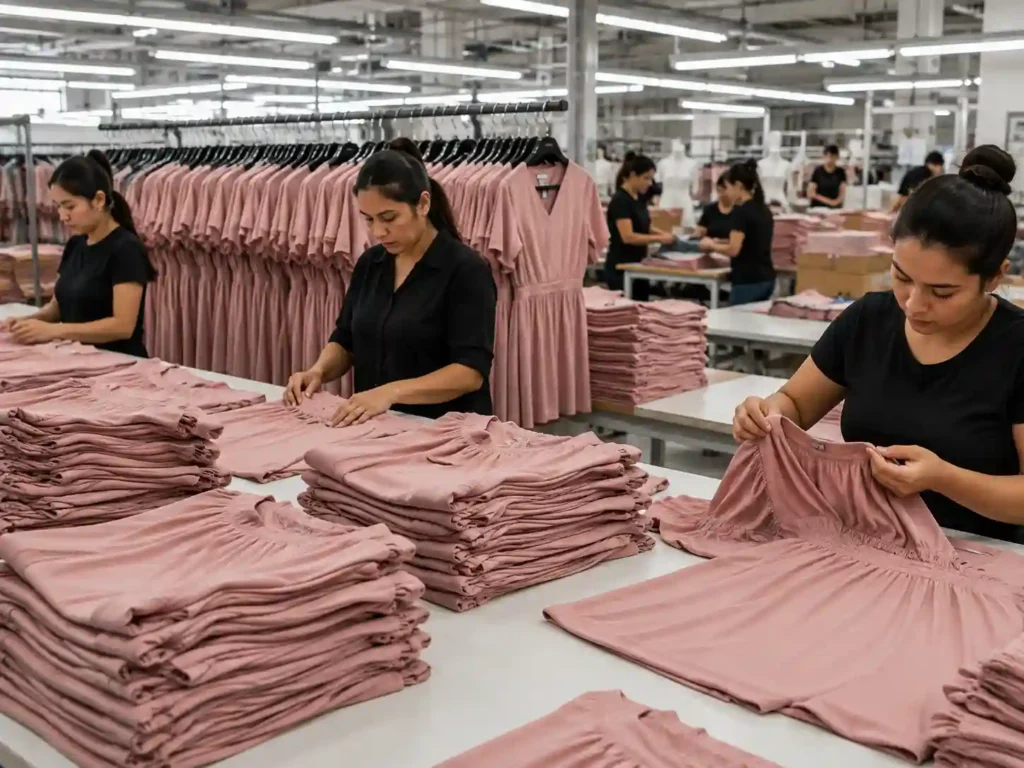
The launch was divided into a 20,000-piece first release and a 22,800-piece follow-on production window. Early bulk checks focused on fabric batch recovery, torso length, neckline width, side-seam balance, mesh symmetry, seam stretch and snap position. Packing was arranged by style, color, size ratio and barcode file. The first release supported photography, ecommerce launch and initial warehouse allocation, while the second window protected the broader sales schedule. Pattern, BOM, PP sample and packing records were archived for repeat planning. The project structure allowed later color extensions to begin from approved references instead of rebuilding the program from zero.
Measured Project Outcome

- 16 styles organized into three fit families instead of one generic pattern rule.
- 42,800 pieces planned across two production windows for launch control.
- Four fabric groups managed through separate recovery, opacity and fit reviews.
- XS-XL size range supported with selected size-set verification for higher-risk styles.
- Private-label labels, barcodes, polybags and carton marks matched to the SKU plan.
- Approved patterns, BOMs and Golden samples retained for repeat-order evaluation.
Stretch Bodysuit Manufacturing Frequently Asked Questions
Start Your Stretch Bodysuit Development
Send your project files to Kelly for a structured review of style construction, fabric direction, fit risk, sample timing, MOQ, quotation requirements and production planning. A complete brief helps the development team distinguish fashion stretch, layered contouring and specialist compression requirements before recommendations are made. Jinfeng Apparel can begin from a tech pack, original sample, line sheet or clear reference images and convert approved decisions into pattern, sample, PP, bulk, QC and private-label records.
- Reference image, tech pack, original sample or line sheet
- Target quantity per style/color and planned number of styles
- Size range, base size and any existing measurement chart
- Preferred fabric composition, GSM, hand feel or fabric swatch
- Color plan, lining, mesh, elastic, snaps and other trims
- Thong, brief or high-cut bottom requirement
- Main labels, care labels, barcodes and packaging files
- Launch date, delivery window and shipping destination


