 Skip to content
Strapless Jumpsuit Manufacturer
Custom Strapless Jumpsuit Development for Occasionwear, Partywear and Premium Fashion Collections
Jinfeng Apparel develops strapless jumpsuits from design reference or tech pack through pattern engineering, fabric and trim selection, fit sampling, PP approval, bulk production, quality control and private-label delivery. Development work connects two demanding fit systems: a secure strapless bodice and a balanced jumpsuit body with controlled torso length, waist position, hip ease, rise and movement. The objective is a garment that holds its shape, stays in position and remains wearable across the approved size range.
- 2 sample rooms, 7+ senior pattern makers and 20+ sample machinists support structured bodice and jumpsuit development.
- 6 owned women’s fashion factories and 10+ long-term satellite production partners support multi-style bulk programs.
- MOQ starts from 200 pcs per style/color, subject to fabric, color, trim, construction and packing requirements.
- 100,000+ pcs monthly capacity and 15+ QC inspectors support seasonal collections, repeat orders and multi-batch delivery.
Built for Structured Jumpsuit Development
Development Resources
Production Capacity
Quality Oversight
Who We Manufacture Strapless Jumpsuits For
Global Fashion Brands
Occasionwear Labels
Partywear Brands
Premium Ecommerce Brands
Sourcing and Development Teams
Private-Label Programs
Common Strapless Jumpsuit Production Failures
Neckline Slipping
Weak Bust Support
Incorrect Torso Length
Uncomfortable Rise
Fabric Mismatch
Bulk Variation
Custom Strapless Jumpsuit Styles We Develop

Corset Bodice Jumpsuit

Bustier Jumpsuit

Wide-Leg Jumpsuit

Fitted-Leg Jumpsuit

Satin Occasion Jumpsuit

Tailored Crepe Jumpsuit

Sequin Party Jumpsuit

Cut-Out Strapless Jumpsuit
Two Fit Systems Must Work as One
A strapless jumpsuit succeeds only when the upper-body support system and lower-body movement system are engineered together. Solving the neckline without solving the torso and rise can still create downward pull. Solving the trousers without stabilizing the bodice can still produce slipping or gaping.
Strapless Bodice Stability
Upper-Bust Control: The upper edge must sit close enough to remain stable without creating an aggressive cutting line. Pattern tension is adjusted through neckline shape, side seam position, back width and the stretch behavior of the chosen fabric.
Bust and Under-Bust Balance: Bust volume, cup placement and under-bust definition work together. A narrow cup can create side overflow; an oversized cup can leave empty volume. Under-bust seams and internal panels must follow the approved body shape rather than generic cup geometry.
Internal Load Support: Boning, interfacing, elastic, grip tape, cups and lining divide the load. Boning should stabilize vertical sections without digging into the body. Grip components support the neckline but cannot compensate for an incorrect pattern.
Back and Closure Engineering: Back height, zipper length, hook-and-eye reinforcement and seam allowance influence stability. A low back may need stronger internal support, while a high back can improve control but must match the design intent.
Movement Review: Raising arms, twisting, sitting and bending reveal whether the neckline remains stable and whether vertical tension from the jumpsuit body pulls the bodice down.
Jumpsuit Length and Mobility
Torso Length: The distance from upper body to waist and crotch must match the intended body posture. Too little length pulls at the neckline and crotch; too much length creates waist folds and lowers the visual rise.
Front and Back Rise: Front rise controls abdomen comfort and zipper placement. Back rise controls seat coverage and sitting movement. The difference between front and back requires deliberate shaping rather than equal extension.
Hip and Seat Ease: A fitted visual line still needs enough functional ease for walking and sitting. Ease depends on fabric stretch, recovery, seam direction and the width of the trouser leg.
Leg Silhouette: Wide-leg, straight-leg, flared and fitted silhouettes use different hip release, knee shaping and hem balance. A wide leg needs clean vertical drape; a fitted leg requires stable recovery and controlled seam stretch.
Entry and Dressing: Strapless jumpsuits usually depend on back or side openings. Zipper length and waist construction must allow dressing without weakening the neckline or distorting the hip area.
Strapless Bodice Support and Construction Options

Upper-Bust Control

Bra Cup Selection

Boning Placement

Anti-Slip Structure
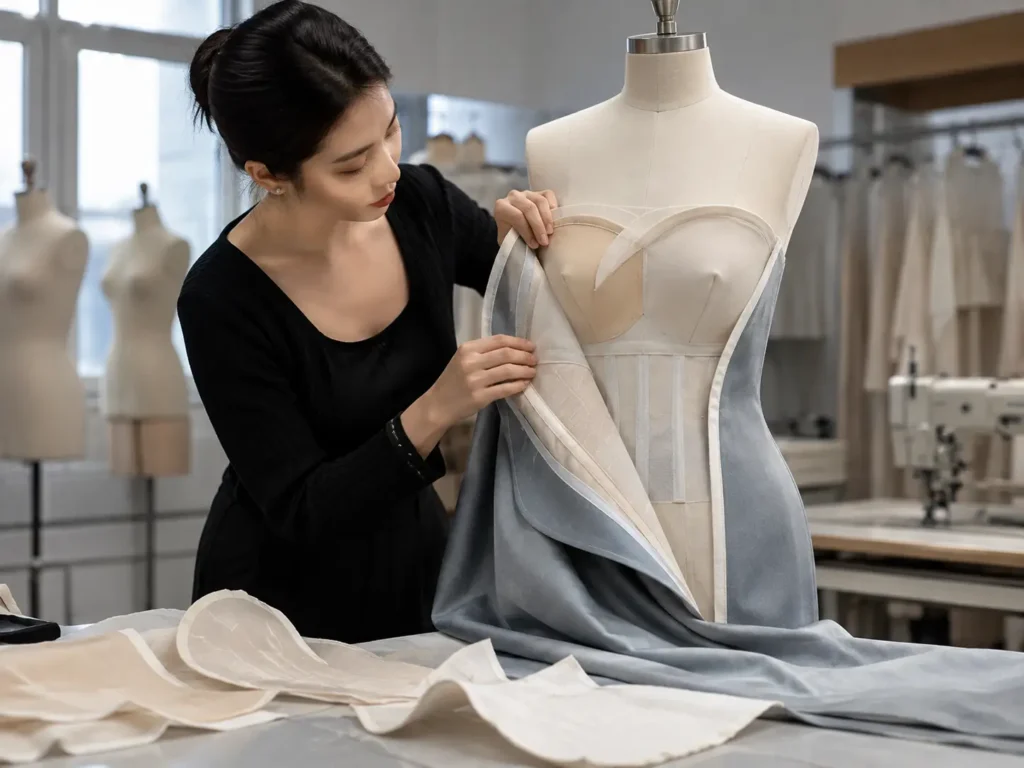
Lining and Interfacing
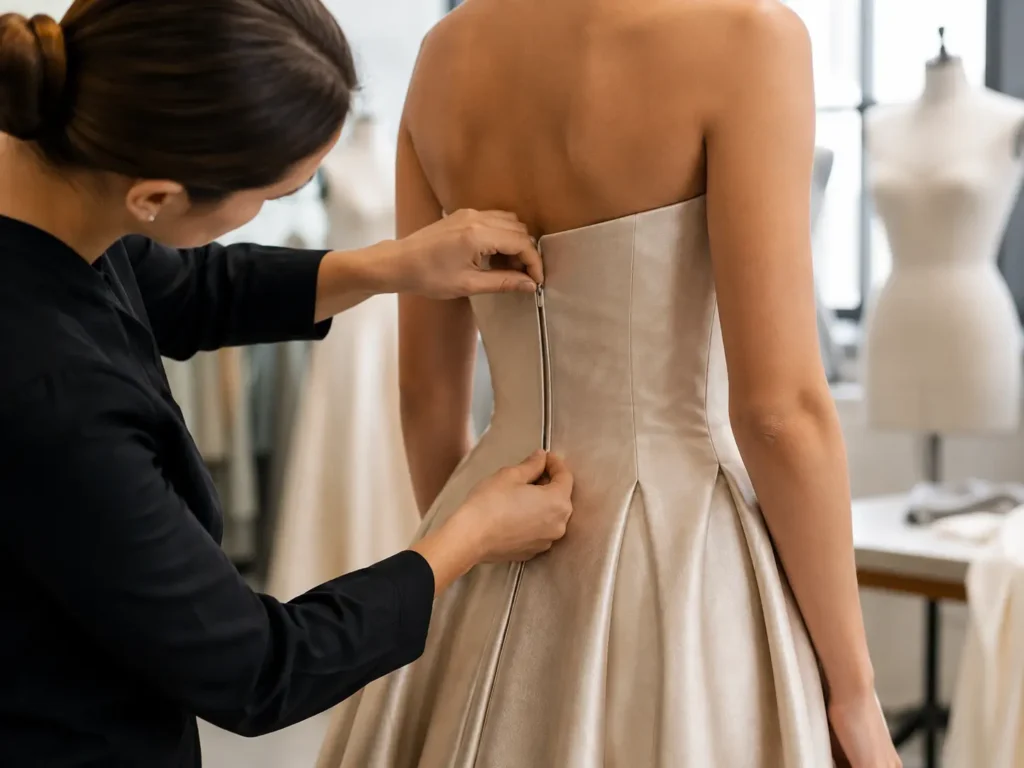
Zipper and Hook Closure
Fit Control from Bust to Crotch
Fit control uses a connected measurement map rather than isolated bust, waist and hip numbers. A change at the neckline can alter vertical balance; a change at the rise can affect the bodice. Sample reviews track the full relationship before size grading and bulk production.
Torso Length and Waistline
Vertical Measurements: Bodice length, side seam length, center-front length, center-back length and waist-to-crotch relationships are checked against the brand size chart and on-body appearance.
The intended waist may be natural, high or lowered, but the pattern must remain balanced through front and back.
Waist Seam Stability: A level waist seam serves as a visual and structural anchor. Twisting can come from uneven bodice length, incorrect grain direction, side seam imbalance or asymmetrical sewing. Structured styles often use waist stay or internal stabilization when the design and comfort target require it.
Proportion Review: Leg length, torso length and neckline height are reviewed together. A fashionable long-leg effect cannot come from shortening the torso beyond wearability. Visual proportion should be created through controlled waist placement, leg line and fabric drape.
Hip, Rise and Crotch Balance
Front Rise: Enough length is needed for abdomen comfort and movement without creating excess fabric. Zipper placement, waist seam and front pleats can change the required shape.
Back Rise: Seat depth, body posture and fabric stretch determine back rise. Insufficient length causes pulling and downward pressure; excessive length creates folds under the seat.
Crotch Curve: Front and back curves are developed separately. The depth and extension must suit the intended fit, body shape and stretch level. A straight transfer from trouser blocks often fails when connected to a rigid strapless bodice.
Hip Ease: Ease is distributed through side seams, darts, pleats or stretch. Fitted products require controlled recovery; wide-leg products require enough release to maintain clean vertical drape.
Movement and Leg Silhouette
Movement Tests: Fit samples are checked through sitting, walking, bending, turning and stair-like movement. The review looks for neckline movement, waist drag, crotch pressure, seat restriction, thigh pull and zipper stress.
Wide-Leg Control: The leg should fall evenly from hip or upper thigh without collapsing inward. Fabric weight, grain direction, front pleats and hem width influence the line.
Fitted-Leg Control: Stretch and recovery must support repeated movement. Side seams should remain vertical, knees should not bag quickly and hems should stay balanced after wear testing.
Length Planning: Full length, ankle length and cropped directions require shoe and styling assumptions. Bulk tolerances should reflect the approved size chart and selling channel.

Fabric and Lining Options for Strapless Jumpsuits
Fabric selection changes the pattern, support system, sewing method, pressing plan and bulk risk. Final approval should consider drape, stretch, recovery, opacity, abrasion, seam impression and the ability to hold a secure strapless neckline.
Fabric | Best Use | Behavior | Support Direction | Bulk Control |
Tailored Crepe | Occasion, formal and wide-leg styles | Stable drape with moderate body; mechanical stretch varies | Lining plus selective interfacing; boning according to bodice height | Shade, shrinkage, seam impression, pressing and zipper flatness |
Stretch Woven | Fitted or clean commercial silhouettes | Controlled stretch with structured appearance | Cup, boning and inner stay can be integrated cleanly | Stretch percentage, recovery, seam grin and lot consistency |
Ponte | Bodycon and fitted-leg jumpsuits | Dense knit with strong recovery when specified correctly | Stable lining at bodice; support layer prevents edge rolling | Recovery after wear, seam stretch, surface pressure and pressing |
Stretch Satin | Party and occasion collections | Luster and drape with variable stretch and snag sensitivity | Hidden support layer, smooth lining, controlled neckline tension | Luster direction, snags, shade, zipper rippling and packing folds |
Heavy Satin | Structured evening and bridal-inspired styles | Full body and elevated luster; limited stretch | Stronger pattern ease, cups, boning and stable inner construction | Creasing, seam marks, grain direction, shade and pressing |
Jersey | Soft bodycon and draped styles | High movement and drape; recovery depends on composition | Power mesh or stable lining may support the bodice | Growth, recovery, neckline stretching and hem behavior |
Velvet | Seasonal party and evening styles | Rich surface, directional pile and moderate body | Low-bulk support layers; careful seam and zipper construction | Pile direction, crushing, shade, seam pressure and packing |
Sequin / Mesh Mix | Statement partywear and event styles | Decorative weight, abrasion and variable stretch | Inner corset system carries weight; skin-contact lining required | Sequin loss, rough edges, needle damage, weight and packing protection |
Design Details for Brand-Specific Jumpsuits

Straight Neckline

Sweetheart Neckline

Corset Paneling

Defined Waistline

Wide or Flared Leg
Leg volume is controlled through hip release, pleats, darts and hem sweep. Fabric weight decides whether the leg falls cleanly or collapses. Pattern balance and cutting direction are checked so both legs hang evenly and side seams stay vertical.

Pockets and Openings
Side pockets, welt pockets and concealed openings can add function but also bulk around the waist and hip. Pocket bags should not show through the outer fabric or pull the side seam. Opening length must support dressing without weakening the bodice.

Ruching and Draping

Cut-Outs and Embellishment
Workmanship Standards for Structured Strapless Jumpsuits
Premium workmanship comes from controlled preparation, accurate assembly and consistent finishing. Structured jumpsuits combine delicate visible surfaces with hidden load-bearing elements, so clean external appearance must be supported by disciplined internal construction.
Pattern Matching and Cutting Accuracy
Pattern Preparation: Final patterns include grain lines, notches, cup placement, boning positions, zipper points, waist match points and balance marks. Structured panel pieces are checked as a complete set before cutting.
Cutting Control: Fabric relaxation, face direction, pile direction, satin luster and stretch direction are confirmed before marker planning. Cut panels are grouped by shade and size to reduce mismatch.
Panel Accuracy: Small errors in corset panels can shift cup position or waist alignment. Cut-piece checks focus on mirrored symmetry, neckline curves, side seam length and waist connection points.
Bodice Assembly and Internal Finish
Cup and Support Installation: Cups, boning, elastic, grip materials and support layers are placed according to the approved trim card and construction file. Stitching should secure the support without creating visible impressions.
Seam Control: Princess seams and curved panels are eased smoothly. Seam allowances are clipped, graded or pressed according to material behavior. The inside should remain clean and comfortable without bulky intersections.
Top Edge Finish: Facings, lining and anti-slip components must join cleanly. The neckline should stay level, smooth and stable without stretched sections or exposed internal materials.
Jumpsuit Assembly and Waist Balance
Bodice-to-Trouser Joining: Waist notches and side seams are matched before permanent assembly. Any mismatch can twist the garment or change the intended rise.
Rise and Seat Sewing: Curved seams are stitched without stretching or puckering. Reinforcement is added where the construction and wear load require it.
Pocket and Zipper Integration: Pocket bags, zipper tape and waist support must remain flat. Bulk is reduced at intersections so the waist does not become rigid or uneven.
Pressing and Final Appearance
Pressing Sequence: Panels are pressed during assembly rather than only at the end. Temperature, pressure and protective layers depend on fabric sensitivity.
Surface Protection: Satin, velvet and sequins require guarded handling to prevent shine marks, pile crushing, snags or abrasion.
Final Shape: The garment is set on the approved silhouette, with neckline, waist, leg crease or drape and hem balance checked before packing.
From Tech Pack to Approved Strapless Jumpsuit Sample
Project Review
Risk Assessment
Material Direction
Pattern Development
First Sample
Fit Revision
Measurements, wearing comments, photos and videos are converted into a revision record.
Pattern, fabric, trim and sewing changes are separated so each correction remains traceable.
PP Sample
The pre-production sample uses confirmed materials, construction, measurements, labels and packing direction.
Bulk work begins only after required approvals are locked.
Golden Standard
The approved sample, final pattern, measurement chart,
BOM, trim card and workmanship file form the reference set for production and QC.
Wear Testing and Size Range Validation
Static Fit Review
Movement Test
Size Set and Grading
How Approved Samples Become Repeatable Bulk Standards
Sample approval is only the beginning of production control. Bulk consistency comes from translating the approved garment into measurable files, physical references and line-level checkpoints. Every critical feature receives a defined standard before material cutting starts.
Final Pattern and Measurements
Pattern Lock: Approved pattern pieces, grading rules, seam allowances, grain lines and match points are released as the production set. Changes after PP approval require controlled review because they may affect fit, cost and schedule.
Measurement Chart: Points of measure include upper bust, bust, under bust when applicable, waist, hip, bodice length, front rise, back rise, crotch depth, inseam, outseam and total length. Tolerances are assigned according to fit sensitivity.
Size-Set Reference: Approved size-set comments are attached to grading and QC files so production inspectors understand which areas require closer attention.
BOM, Trims and Sewing Standards
Material Specification: Main fabric, lining, interfacing, power mesh, cups, boning, grip elastic, zipper, hooks, labels and packaging are listed with color and supplier references.
Construction File: Seam type, stitch direction, reinforcement, cup position, boning channel, zipper insertion, top-edge finish, waist joining and hem method are defined.
Visual Standards: Approved neckline shape, waist level, leg silhouette, pressing and inside finish are supported by sample photos and the golden sample.
QC and Packing Handover
Checkpoint Planning: Incoming material, cutting, inline sewing, measurement, finishing, packing and final inspection points are established before production begins.
Packing Specification: Folding method, hangtag, barcode, size sticker, polybag, carton ratio, carton mark and warehouse label requirements are linked to the style and SKU list.
Version Control: Tech pack, revision log, BOM, measurement chart, QC checklist and packing instruction must use the same approved version to prevent conflicting information.

Bulk Production Process for Structured Jumpsuits
Material Inspection
Fabric Lot Control
Pattern and Cutting
Bodice Construction
Jumpsuit Assembly
Inline Inspection
Finishing and Pressing
Packing and Release
Fit-Sensitive Quality Control Before Packing

Fabric and Recovery Check
Incoming fabric is reviewed for shade, width, stretch, recovery, surface defects, luster or pile direction and approved hand feel. Recovery is especially important for fitted styles because weak recovery can loosen the neckline, waist or knees during wear.

Bust Support Inspection

Measurement and Rise Check

Zipper and Workmanship Check

Appearance and Lining Check

Label and Packing Check

Capacity for Multi-Style and Repeat-Order Programs
Large collections need controlled allocation, shared milestones and clear version management. Jinfeng Apparel combines owned factories, long-term production partners, development teams, merchandisers and QC resources to coordinate multi-style programs without treating every style as an isolated order.
Product-Based Factory Allocation
Styles are grouped by fabric, structure, decoration and required workmanship. Corset bodices, tailored crepe, satin, stretch knits, sequins and mixed-material products may need different teams. Allocation considers skill fit, line capacity, launch timing and QC requirements. The assigned factory and production unit are confirmed by project rather than assumed from a general company profile.
Multi-Style Project Management
Project tracking covers tech packs, material progress, sample versions, revision logs, PP approvals, quantity by style/color/size, production status, QC feedback, packing approval and shipment planning. Large programs can use a consolidated progress sheet so brand, sourcing and factory teams work from the same milestones and version numbers.
Repeat and Multi-Batch Delivery
Approved patterns, measurements, fabric references, trim details, workmanship files and packing requirements are retained for repeat production. Reorders still require fabric lot, color, material availability, capacity and delivery review. Air, sea or air-and-sea split shipment can be coordinated according to launch priority, quantity and destination.
Private Label Packing and Brand Protection
Woven and Size Labels
Care Labels and Hangtags
Barcode and SKU Labels
Polybags and Cartons
NDA and Design Protection
Export Delivery Support
MOQ, Quotation and Project Planning
Commercial planning becomes accurate after structure, materials, quantity, size range, packing and launch timing are clear. The figures below are planning references rather than unconditional promises; final schedules depend on material readiness, approvals, capacity and destination.
| Topic | Planning Reference | What Changes It | Required Input |
|---|---|---|---|
| MOQ | From 200 pcs per style/color | Custom dyeing, printing, special lace, sequins, cups, boning, trims, labels and packaging may have separate supplier MOQ | Quantity by style, color and size |
| First Sample | Commonly about 7-12 working days after required materials are ready | Complex corsetry, embellishment, custom trims, fabric development and incomplete files | Tech pack or reference, size chart, fabric and trim direction |
| Revised Sample | Often 5-10 working days after comments and materials are confirmed | Pattern scope, replacement materials, new decoration or new fit model comments | Consolidated revision comments and approval priorities |
| Bulk Production | Common planning range of 35-55 days after PP, materials and files are locked | Order size, style count, fabric lead time, decoration, testing, peak season, packing and factory allocation | PO, PP approval, final BOM, size ratio, packing and delivery target |
| Express Sample Delivery | Often 3-7 days depending on destination and courier | Customs, remote areas, courier capacity and account arrangement | Full address, phone, postal code and courier account if used |
| Air Freight | Often 5-12 days depending on route and service level | Flight capacity, customs, final-mile delivery and warehouse booking | Destination, shipment volume, trade terms and forwarder instruction |
| Sea Freight | Often 20-40+ days port-to-port depending on route | Sailing schedule, port congestion, customs, LCL/FCL and final delivery | Destination port, forwarder, cut-off date and warehouse plan |
| Quotation | Built from confirmed specifications | Fabric, consumption, trims, pattern work, sewing time, finishing, QC, packing, testing, logistics and quantity | Tech pack, quantity, color plan, size range, packing and target delivery |
Structured Womenswear Programs and Production Evidence
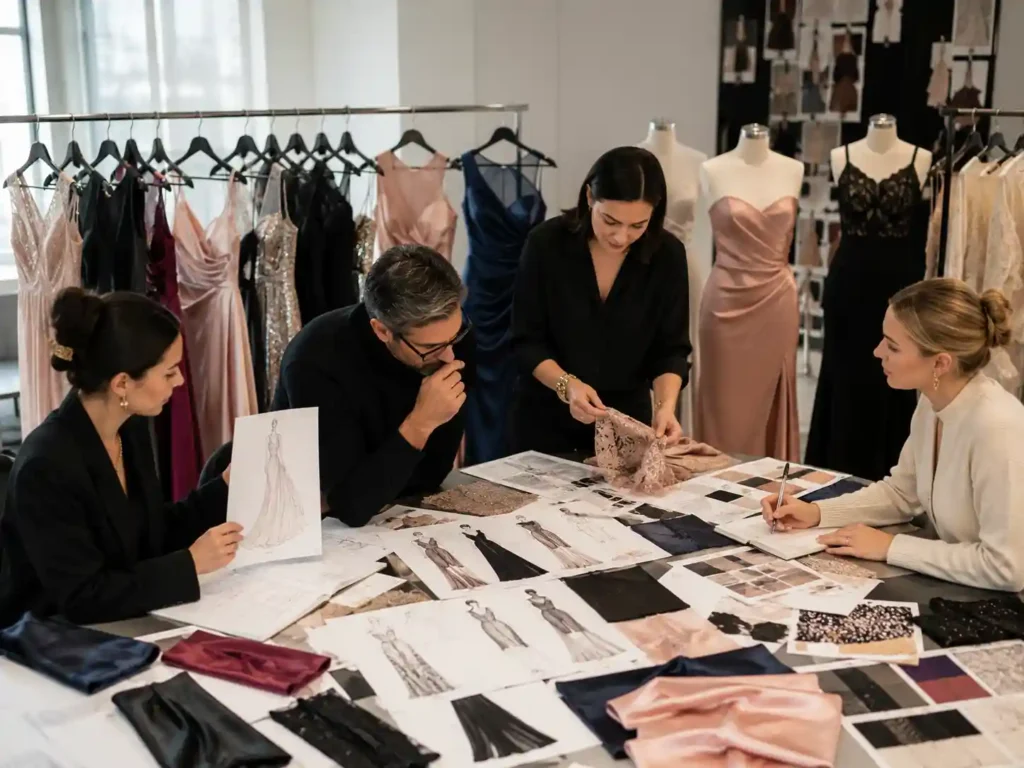
U.S. Occasionwear Program
Project Snapshot: 18 styles, 46,800 garments, 4 strapless jumpsuit styles, 3 core color groups and a brand-defined US 2-14 size range. Fabrics included tailored crepe, stretch satin and sequin mesh combinations. Two fit rounds were completed on the higher-risk jumpsuit styles before PP approval.
Main Risk: The first wide-leg strapless sample held the neckline during standing but pulled downward when seated because the front torso and rise were too short. Pattern correction added controlled vertical length, adjusted the waist seam and redistributed upper-bust tension rather than tightening the neckline.
Bulk Control: Cups, boning lengths, grip elastic, front and back rise, zipper flatness and waist alignment were added to inline checks. The 46,800-piece program was divided by fabric and construction group, with barcode and carton ratios managed by SKU.
Result: The approved fit standard was maintained across the selected size-set checkpoints, and the program moved through planned bulk inspection and split shipment for launch priority.

European Partywear Program
Project Snapshot: 22 styles, 63,400 garments, including 6 structured jumpsuits and 9 corset or strapless dresses.
Materials included stretch woven, velvet, sequins, mesh and rhinestone trims. Most styles used two colors, while high-volume commercial styles used three colors.
Main Risk: Decorative weight on two sequin jumpsuits pulled the upper body downward and created visible neckline movement. A stronger internal support layer, adjusted boning placement and lower decoration density near the top edge transferred load away from the outer fabric.
Bulk Control: Sequin edge preparation, skin-contact lining, cup symmetry, boning placement, zipper operation and embellishment security were checked during production. Packing used protective tissue and individual polybags to reduce surface abrasion.
Result: The collection retained the intended statement appearance while meeting fit, handling and packing standards suitable for ecommerce distribution.

Australian Eventwear Program
Project Snapshot: 12 styles, 27,600 garments, including 3 tailored strapless jumpsuits, 5 occasion dresses and 4 matching sets. The order used crepe and stretch woven fabrics across coordinated colors, with brand labels, hangtags, barcode stickers and warehouse-specific carton marks.
Main Risk: Size grading increased cup width too quickly in upper sizes while torso length and back support did not increase enough. The size set was reviewed at four checkpoints, and grading rules were corrected for cup placement, upper-bust circumference, bodice length and back rise.
Bulk Control: Measurements were tracked across upper bust, bust, waist, hip, bodice length, front rise, back rise, inseam and total length. A consolidated progress sheet connected PP approval, production, QC, packing and shipment milestones.
Result: The revised grade maintained a consistent neckline shape and improved movement across the approved range, supporting a coordinated eventwear launch.
Frequently Asked Questions About Strapless Jumpsuit Manufacturing
Start Your Strapless Jumpsuit Project
A useful project review begins with enough information to assess fit risk, material direction, MOQ, sample work, production allocation and delivery planning. Send a tech pack, reference image, original sample photos or a line sheet together with the target quantity for each style and color. Include the intended size range, main fabric, lining preference, desired bust support, leg silhouette, label and packing requirements, and the target launch or delivery window. Kelly will organize the materials for an initial review and coordinate the next step with the development team. Confidential files are used only for project evaluation, sampling, production, QC, packing and delivery coordination.
- Tech pack, sketch, reference image or original sample photos
- Target quantity per style/color and planned size ratio
- Fabric, lining, cup, boning and anti-slip preferences
- Color plan, design details and embellishment requirements
- Brand labels, hangtags, barcodes, polybags and carton instructions
- Target sample date, launch window and delivery destination


