 Skip to content
Strapless Dress Pattern Development
Production-ready strapless patterns engineered for stable bust fit, controlled necklines, accurate grading and repeatable fashion production.
Jinfeng Apparel develops strapless dress patterns for established fashion brands, occasionwear labels, premium ecommerce programs and product development teams. Development can begin from a tech pack, reference image, sketch, line sheet or original sample, then move through structural review, pattern making, fit sampling, correction, grading and PP approval before bulk production.
- 7+ senior womenswear pattern makers
- 2 dedicated sample rooms
- 20+ sample machinists
- Pattern control for bust, upper bust, under bust, waist and neckline
- Development linked directly to sampling and bulk-production standards
Pattern Development Capability Built for Fashion Programs
7+ Pattern Makers
2 Sample Rooms
20+ Sample Machinists
15+ QC Inspectors
Since 2008
100,000+ Monthly Capacity
Built for Established Fashion Development Teams
Best Fit Programs
- Tech pack or reference review
- Fabric and trim coordination
- Pattern development
- Fit correction
- Size grading
- PP sample approval
- Bulk production
- Measurement QC
- Private-label preparation
- Repeat-order records
Development With Production Intent
A fashion pattern has commercial value only when another team can reproduce the approved garment consistently.
Jinfeng develops patterns within a wider manufacturing system covering sampling, merchandising, production, QC, finishing and packing.
A brand can therefore evaluate fit at sample stage while already considering fabric availability, sewing construction, grading logic, production tolerances and repeat-order requirements.
The objective is not merely to make a visually convincing sample; the objective is to establish a controlled garment standard that can survive the transition into multiple sizes and bulk quantities.
What Strapless Dress Pattern Development Actually Controls
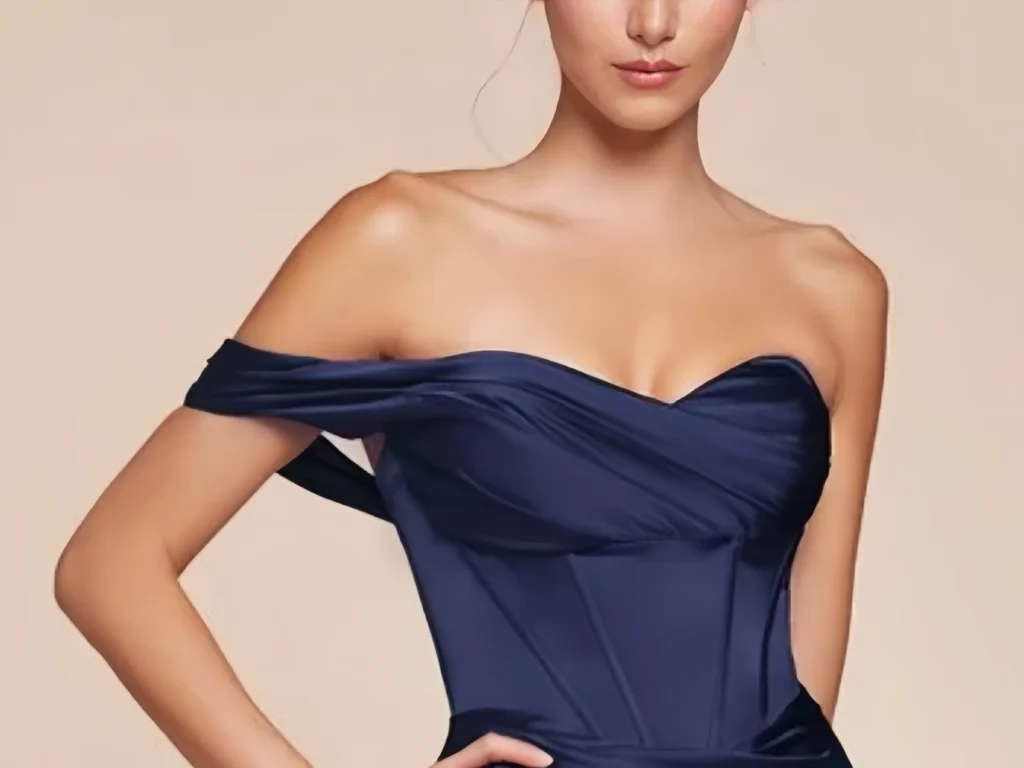
Strapless dress pattern development converts a design reference into a wearable and reproducible garment structure. Without shoulder straps carrying vertical load, the bodice must manage fit through body contour, neckline tension, bust shaping, waist relationship, back position and internal support.
More Than Removing Shoulder Straps
A standard bodice cannot normally become a reliable strapless bodice simply by deleting straps or lowering the neckline. The entire upper body relationship changes.
Pattern development begins by reviewing how the garment should sit around the upper bust, full bust and under bust. Excess ease near the upper edge can create gaping or visible separation from the body. Excessive reduction can create uncomfortable compression, distorted seams or a neckline that rolls outward. Waist position also matters because many fitted strapless designs rely on a stable waist-to-bust relationship to distribute tension.
The pattern maker also reviews front and back balance. A front bodice carrying more bust volume needs enough shaping without pulling the side seam forward. Back height must support the intended silhouette without forcing the front neckline downward. Princess seams, darts or panel seams may be moved according to the visual design and the amount of shaping required.
Fabric behavior enters the calculation early. A rigid satin, stretch satin, ponte and power mesh do not generate the same tension around the body. A pattern that works in one material may need adjustment when stretch, recovery, drape, thickness or lining changes.
From Fashion Shape to Production Standard
An industrial pattern needs more than a flattering outline.
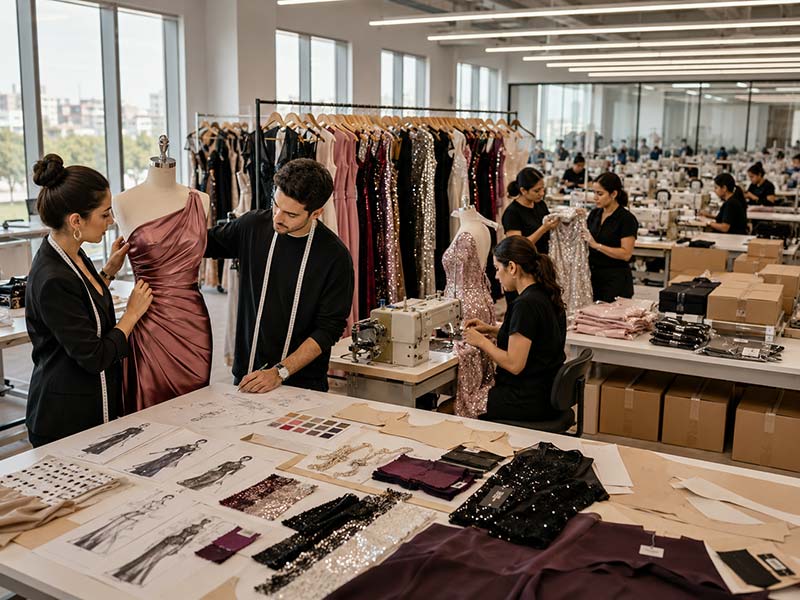
Seam positions must be sewable, internal support must fit within available construction space, zipper length must suit the opening, lining must follow the intended shell structure and critical measurement points need to be measurable by both sampling and QC teams.
Jinfeng can begin from a tech pack, original sample, sketch, line sheet or reference image.
The first pattern establishes a testable structure. A sample then reveals how the pattern behaves in real fabric. Fit feedback may lead to corrections around bust volume, upper edge tension, waist position, side seam balance, back height, garment length, lining or support construction.
Approved changes are transferred into updated production information rather than remaining as informal comments.
Bulk-relevant revisions can be incorporated into updated patterns, size charts, BOM information, sewing instructions and QC checkpoints before PP approval.
Six Common Strapless Pattern Failure Points
Neckline Gaping
Dress Slipping
Bust Compression
Empty Bust Volume
Side Seam Rotation
Grading Instability
From Tech Pack to Production-Ready Strapless Pattern
Pattern development works best as a controlled sequence. Each stage removes a different type of uncertainty before fabric, trims and labor are committed to a larger production program.
Development Inputs and Structural Review
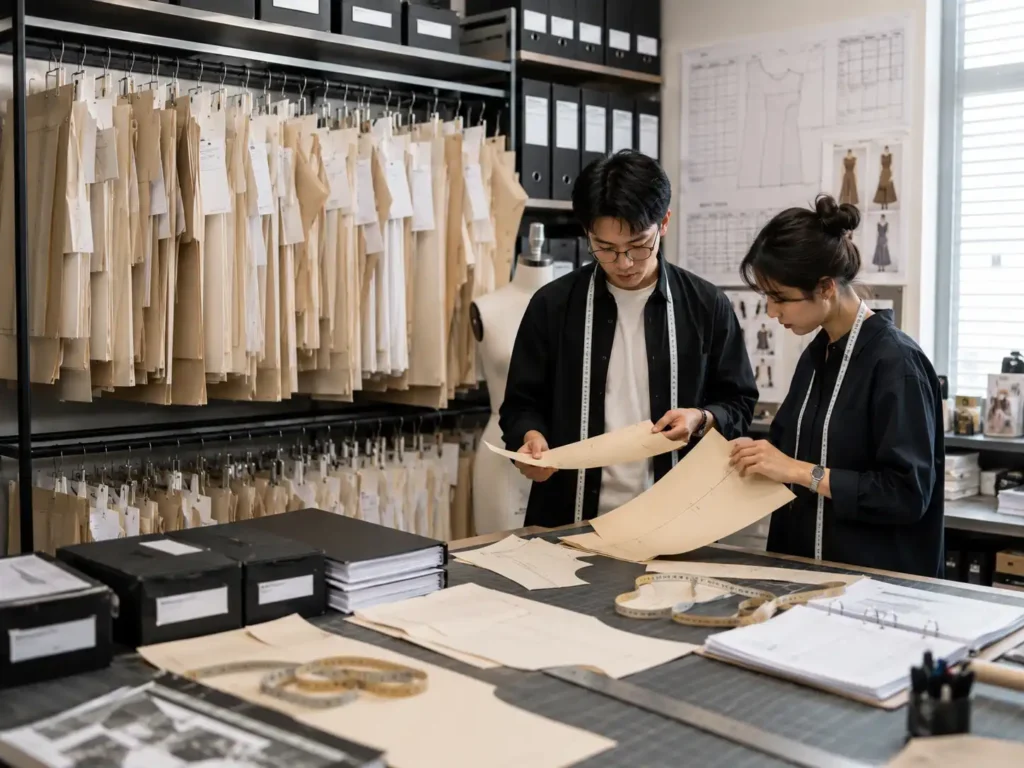
A mature project usually starts with a tech pack, reference image, original sample, sketch or line sheet. A size chart, fabric direction, color plan, intended size range, support requirements and target market make the review more accurate.
Jinfeng first examines the design as a garment structure. For a strapless dress, key questions include neckline shape, bust coverage, upper-bust tension, under-bust shaping, waist position, back height, center-back or side opening, lining, cups, boning and intended silhouette.
Fabric is reviewed at the same stage because structural decisions depend on material behavior. A rigid woven shell may need more internal shaping and support. Stretch satin requires recovery control. Power mesh can provide compression but changes internal tension. Lightweight mesh may require additional lining or support layers.
The goal before pattern cutting is to identify contradictions early. A drawing may show an extremely low neckline while the fit specification expects strong coverage. A chosen fabric may not provide enough body for a sculpted silhouette without additional internal construction. Catching those conflicts before sampling prevents avoidable development rounds.
Pattern, Sample, Revision and Approval
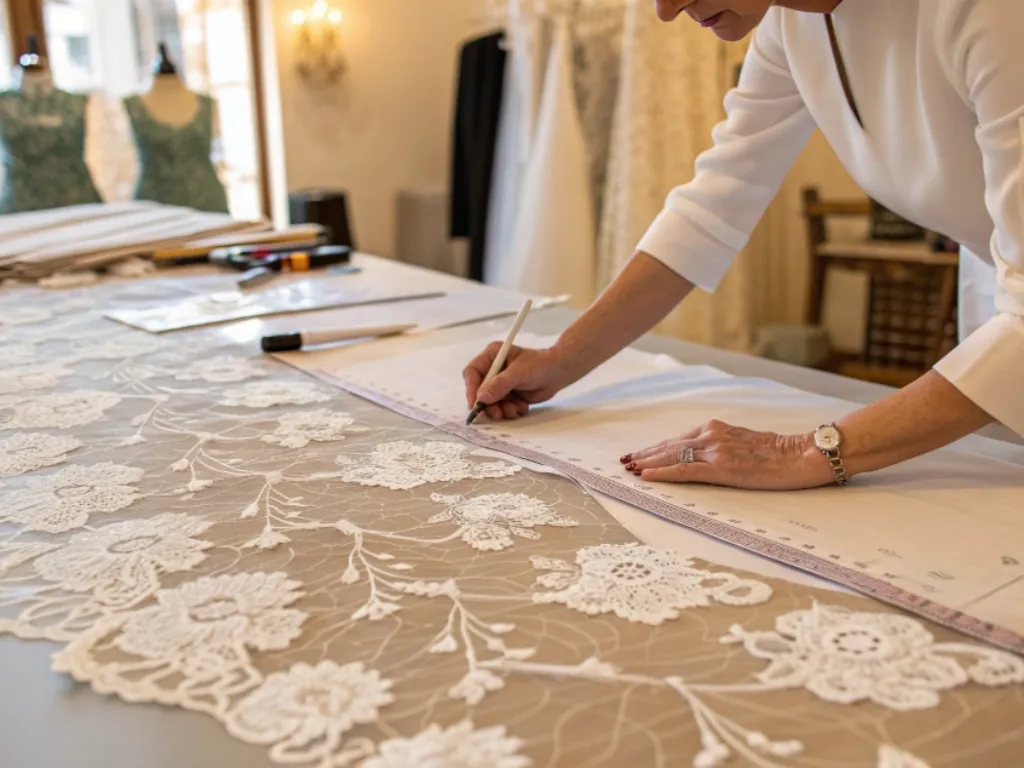
After structure review, the pattern maker develops the initial pattern around the agreed size and silhouette. Sample machinists turn the pattern into a physical garment so seam behavior, fit, support, lining and construction can be assessed together.
The first sample establishes a measurable starting point rather than an expectation of instant perfection. Fit review can use measurement reports plus front, side, back and close-up photos.
Comments are then translated into technical actions: change neckline contour, redistribute bust volume, adjust side seam balance, move the waist seam, modify back height, change cup position or revise support placement.
Larger structural changes may require a revised sample.
Once fit, materials, trims, construction and relevant specifications are approved, the project can progress toward PP approval and final production pattern control.
Jinfeng’s sampling system covers first, fit, revised, photo-ready, salesman, PP and Golden sample stages according to project needs.
Engineering Stable Bust and Neckline Fit
Bust stability is the technical center of most strapless designs. Pattern work must manage upper-bust contact, bust volume, under-bust transition, waist positioning and neckline shape without creating excessive compression or visible strain.
Upper Bust, Bust and Under Bust
Three measurements can behave very differently even on garments sharing the same nominal bust size. Upper bust affects how closely the top edge sits against the body. Full bust determines required projection and volume. Under bust helps define the transition toward the waist and the amount of structural control available below the bust.
Jinfeng’s confirmed pattern-development scope includes bust, upper bust and under bust control for strapless and other fit-sensitive dresses.
For a fitted strapless bodice, pattern makers may redistribute shaping through princess seams, darts or multi-panel construction. The best route depends on silhouette, fabric, cup treatment and visual design. A smooth satin bodice often exposes small fit defects more clearly than a heavily textured surface, while stretch fabric can hide some shaping problems initially but create neckline recovery issues after wear.
Fit review should look beyond whether the zipper closes. Useful observations include top-edge contact, bust position, horizontal wrinkles, vertical drag lines, side seam direction, back height, waist position and whether the wearer feels the need to pull the garment upward.
Neckline Stability Without Over-Tightening
A common development mistake is solving every slipping problem by reducing circumference. Excessive reduction can cause flesh compression, seam distortion, zipper stress, rolling edges and discomfort without creating reliable support.
A stronger solution identifies where the garment should anchor and how load travels through the bodice. Neckline contour can be adjusted independently from the waist. Back height can influence front stability. Internal support can reduce pressure on the outer shell.
Boning may stabilize vertical areas, while cups or support layers can help maintain bust shape.
The target is controlled contact rather than maximum tightness.
Fit approval should therefore assess the garment while standing, sitting, raising the arms and moving naturally. A neckline that appears stable for a static photo may still shift after several minutes of wear.
The approved solution should preserve the intended fashion silhouette while giving the later production team measurable construction and fit references.
Internal Support Built Into the Pattern

Bra Cup Position

Boning Placement

Lining Structure

Power Mesh Support

Closure Engineering

Edge Stabilization
Fabric Behavior Changes Strapless Pattern Decisions
Fabric selection can change ease, support, drape, seam tension and neckline recovery. Pattern approval should therefore be tied to the intended material rather than treated as an independent step.
| Fabric Direction | Main Pattern Concern | Support Consideration | Sample Review Focus |
|---|---|---|---|
| Satin | Limited stretch can expose small shaping errors | Lining and internal structure may carry more support | Neckline contour, bust projection, zipper flatness |
| Stretch Satin | Stretch direction and recovery affect circumference | Support must work without fighting shell stretch | Upper-bust recovery, seam tension, side balance |
| Mesh | Low structure and transparency complicate fit | Lining or internal support often becomes more important | Coverage, edge stability, seam position |
| Power Mesh | Compression can alter intended body contour | Often used as an internal shaping layer | Support level, recovery, comfort, grading |
| Ponte / Roma | Stable knit structure allows controlled contour | Moderate internal support may be sufficient by style | Negative ease, neckline recovery, seam balance |
| Jersey | High stretch variation can change fit dramatically | Recovery control becomes critical | Growth, neckline stability, size consistency |
Strapless Pattern Directions for Fashion Collections

Straight Neckline

Sweetheart Bodice

Corset-Inspired Dress
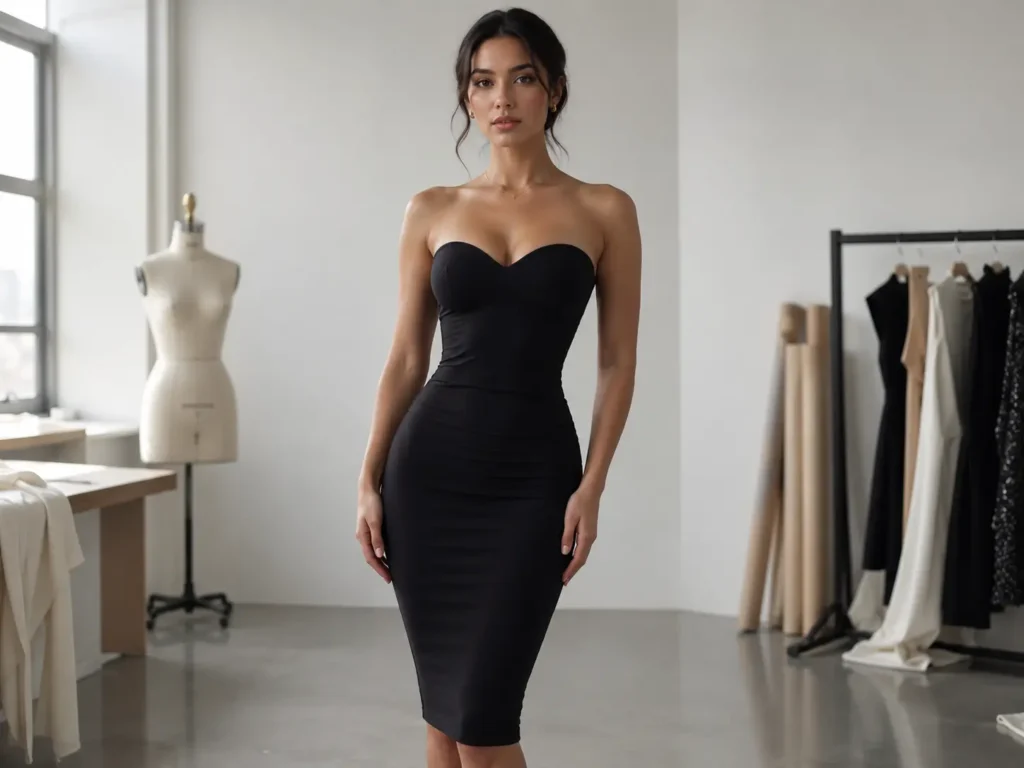
Contour Bodycon
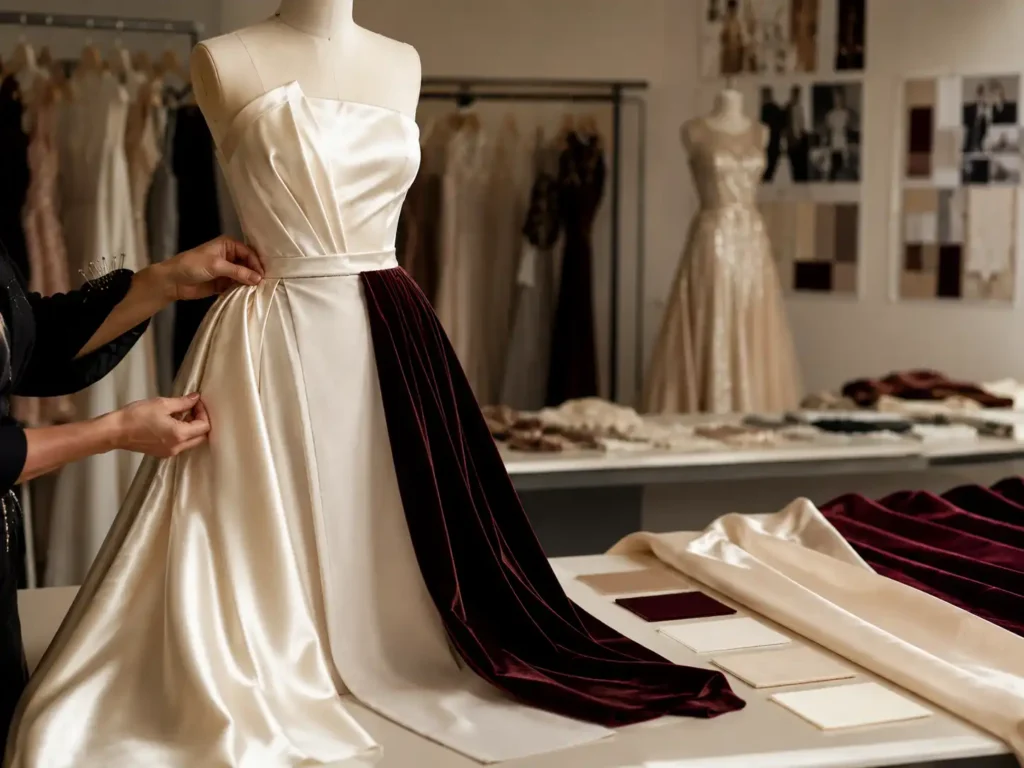
Satin Occasion Dress
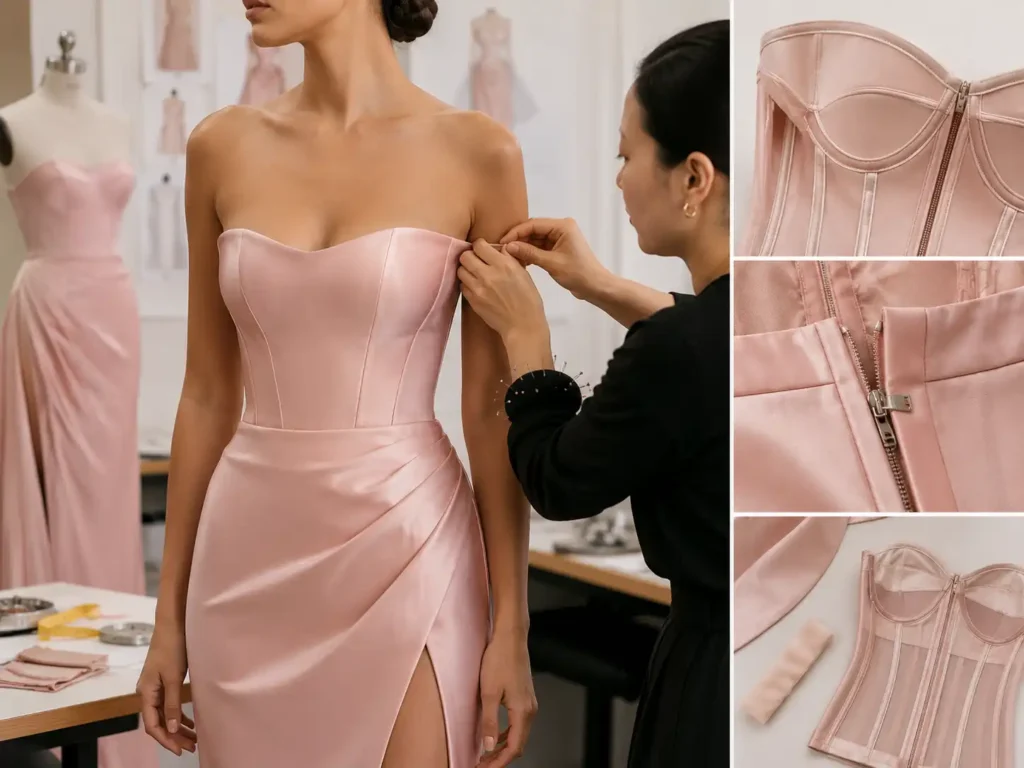
Draped Strapless Bodice

Strapless Mini Dress

Strapless Midi or Maxi
Inside Jinfeng’s Pattern and Sample Development Team
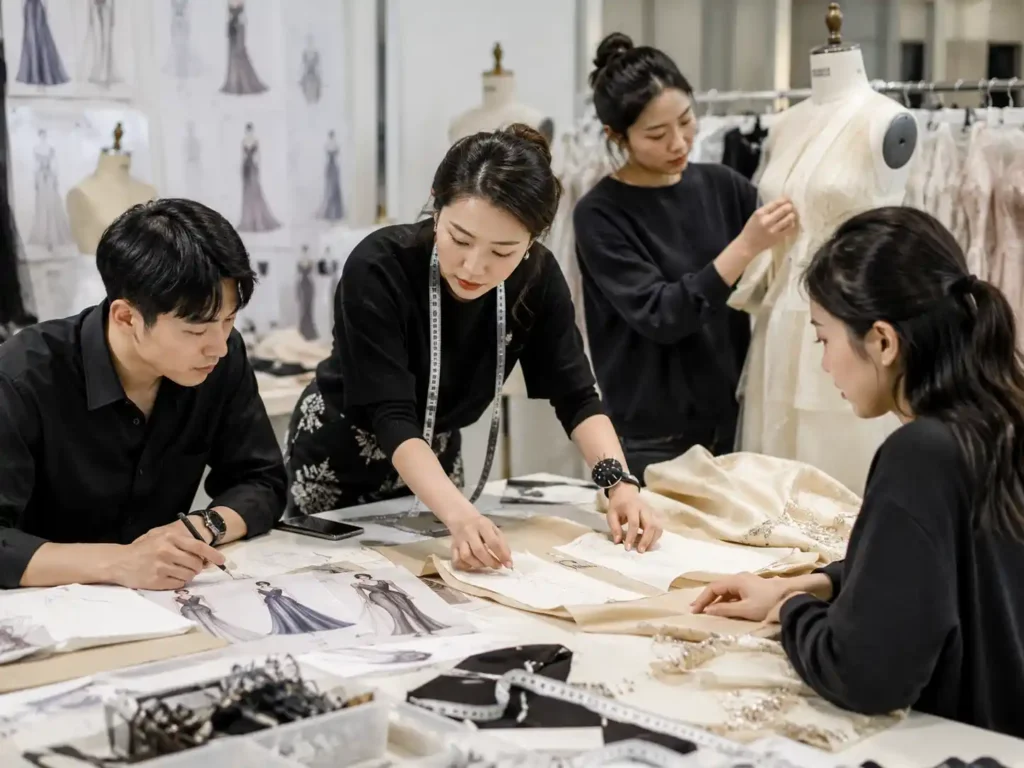
Senior Pattern Team

Dedicated Sample Rooms

Sample Machinist Team
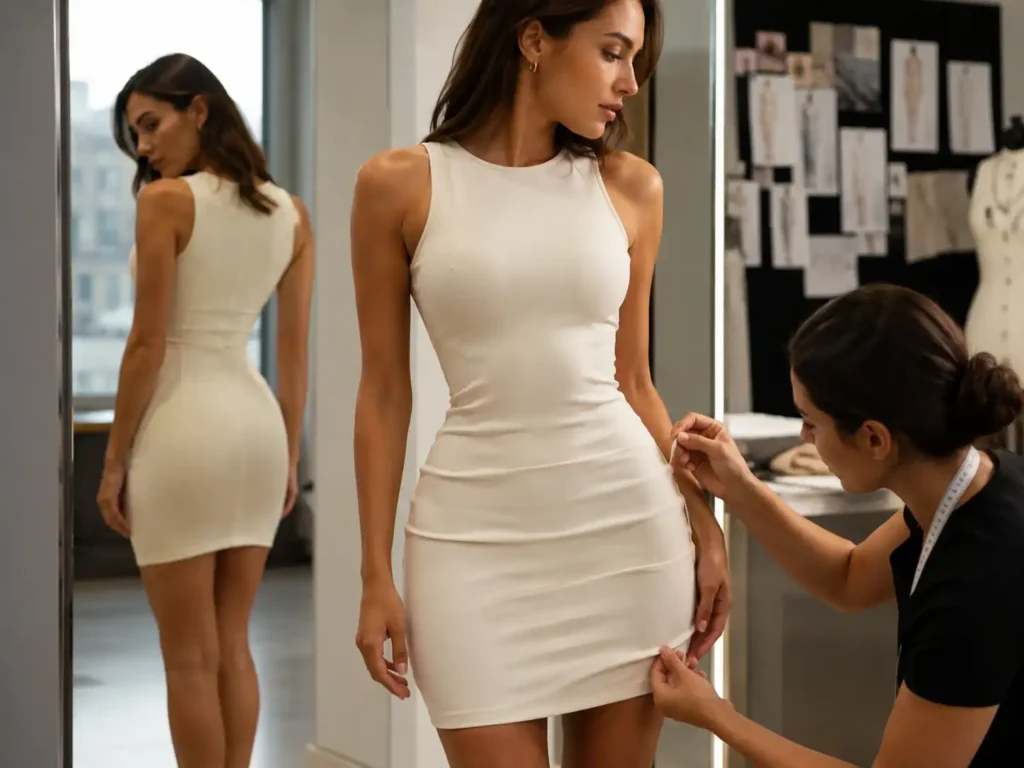
Fit Samples Turn Comments Into Pattern Changes
A useful fit sample does more than show whether a dress “looks good.” It creates specific evidence about where the pattern, fabric or construction needs correction before the style is released toward production.
Reading Fit Feedback Correctly
A brand team can provide a measurement sheet together with front, side, back and close-up fit images. Comments such as “the neckline feels loose” or “the dress keeps moving down” are then separated into possible causes rather than answered with arbitrary tightening.
The pattern maker may review upper bust, full bust, under bust, waist, back height, side seam direction and neckline position. Wrinkle direction can reveal where fabric is under tension or where volume is excessive. A side seam moving toward the front may suggest insufficient front volume rather than a side-seam problem alone.
Construction is checked at the same time. A cup may be the wrong shape even when the outer pattern is close. Boning may be positioned correctly on paper but terminate at an uncomfortable point. Lining can create extra tension if its stretch behavior differs from the shell.
Jinfeng’s fit-sample process specifically covers bust fit, waistline, hip ease, neckline, garment length and lining relationships, with fit comments translated into pattern decisions.

Revised Samples Before Production Lock
A revised sample is appropriate when the correction changes structural fit, fabric, important trims or construction.
Significant pattern changes should not be hidden inside a comment sheet and pushed directly into bulk sewing.
Jinfeng records the problem, cause and technical action. Bulk-relevant changes can update the pattern, size chart, BOM, fabric information, trim records, sewing instructions and QC checklist.
The revised garment is then evaluated against the agreed comments.
Once fit, materials, support components, construction and other required details are confirmed, the style can move toward PP approval.
Sample timing is confirmed by project because construction complexity, fabric sourcing, trim development and the number of revision rounds vary significantly between styles. A fixed universal sample promise would not reflect the actual technical work involved.
Strapless Size Grading Needs Controlled Proportions
Upper Bust Grade
Bust Volume Grade
Under-Bust Grade
Waist Grade
Back Height Grade
Neckline Grade
Length Grade
Measurement Tolerance
Pattern Correction Before Bulk Production
The highest-cost fit mistake is not a problem discovered on a sample; it is a known sample problem allowed to enter bulk production. Strapless styles amplify that risk because small neckline or bust errors can affect every size and every piece.
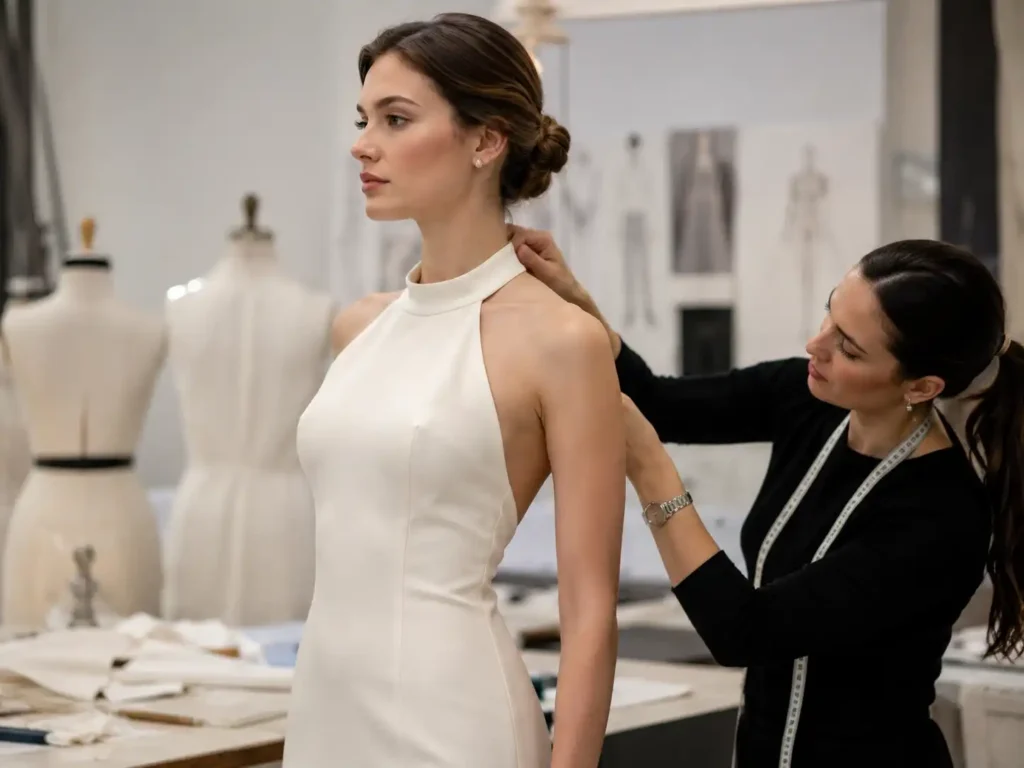
Locking the Final Fit Standard
Before a strapless style moves into bulk production, approved fit comments need to become production information.
- Fit photos
- Measurement comments
- Approved pattern revision
- Final size chart
- Grade rules
- Fabric approval
- Cup and boning specifications
- Lining specification
- Construction instructions
- PP sample comments
- Defined QC measurement points
The final pattern should reflect approved corrections rather than an earlier sample version. A change to neckline contour, cup position, waist seam or back height must be carried into all related pattern pieces and later grading rules.

PP Approval as a Production Boundary
A PP sample represents a more controlled production reference than an early fit sample.
Fabric, color, trims, measurements, sewing method, labels and relevant packing details are reviewed before bulk release.
Late changes after PP approval can affect fabric consumption, trim procurement, sewing methods, cost or timing.
For a strapless design, even a seemingly small neckline or support change can require pattern revision across several pieces.
Jinfeng therefore uses PP approval to create a clearer boundary between product development and production execution.
The aim is not bureaucratic control; the aim is preventing different teams from sewing different interpretations of the same approved design.
Approved Patterns Must Survive Bulk Production
Final Pattern Handover
Size Chart Control
Fabric Reference
Trim Reference
Sewing Instructions
QC Checklist
Strapless Dress Quality Control Points
Neckline Shape
Bust Measurements
Cup Position
Boning Position
Side Seam Balance
Zipper Flatness
Lining Control
Finished Measurements
Choosing a Strapless Pattern Development Partner
A strong development partner should be judged by more than the ability to sew a good-looking sample. Established fashion programs need evidence that fit decisions can be developed, documented, graded and repeated in production.
| Evaluation Point | What a Brand Should Verify | Jinfeng Apparel Capability |
| Pattern Team | Experienced womenswear pattern makers able to interpret fit problems | 7+ senior pattern makers |
| Physical Sampling | Real garments used to test paper-pattern decisions | 2 sample rooms |
| Complex Sewing | Sample team able to handle cups, boning, lining and shaped panels | 20+ sample machinists |
| Strapless Fit Control | Upper bust, bust, under bust, neckline and waist reviewed together | Confirmed strapless pattern-development scope |
| Fabric Integration | Pattern decisions adjusted for stretch, recovery and drape | Satin, stretch satin, mesh, power mesh, jersey, ponte and more |
| Size Grading | Approved fit converted into controlled multi-size rules | Pattern and grading support linked to production |
| PP Control | Final sample standard established before bulk | PP sample and Golden sample workflow |
| Quality Control | Measurement and construction inspected during production | 15+ QC inspectors |
| Bulk Capacity | Approved pattern can move into commercial quantities | 100,000+ pcs regular monthly capacity |
| Design Protection | Patterns and unreleased development files protected | NDA-based cooperation supported |
Representative Strapless Development Programs
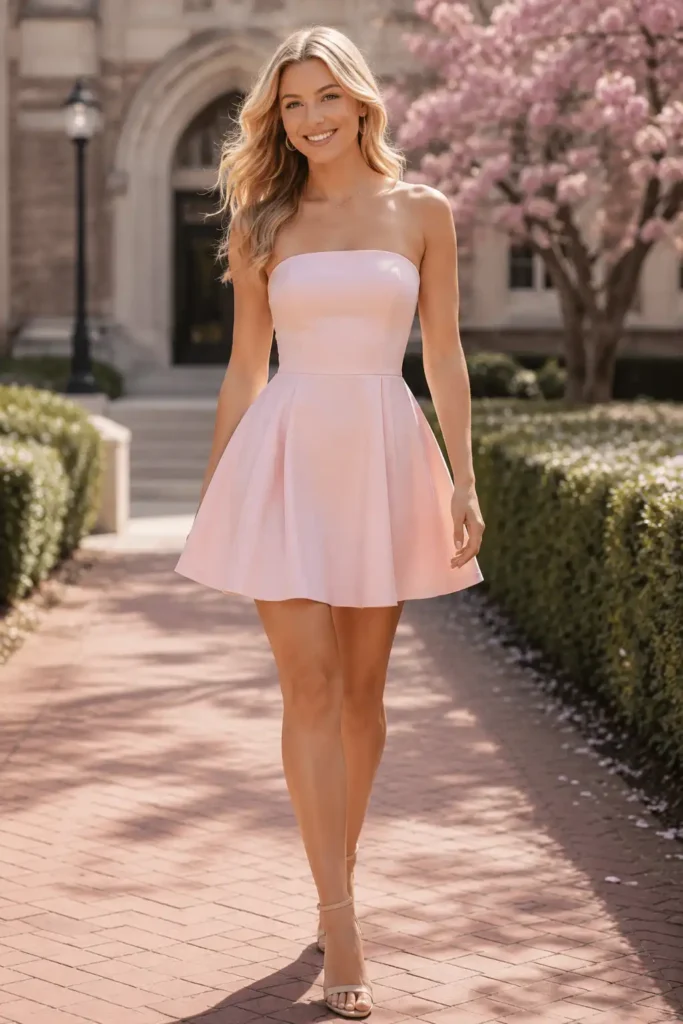
U.S. Occasionwear Program
Representative scale: 18 styles / approximately 42,000 pieces
A seasonal occasionwear program can combine straight-neckline strapless minis, sweetheart midis, corset-inspired silhouettes and satin evening styles within one collection. Even when several styles share a visual direction, each pattern can create different bust, neckline and fabric risks.
Development can be grouped by structural family rather than treating all 18 styles independently. Core bodice logic, cup direction, support materials and fitting comments can be organized across related styles, while individual patterns retain their own neckline, waist and skirt relationships.
Typical technical attention includes:
- Satin and stretch-satin behavior
- Upper-bust stability
- Cup and boning positions
- Mini versus midi proportion
- Size-range grading
- PP approval sequence
- Measurement QC
The aim is to keep a multi-style program technically organized from sample development through bulk release.
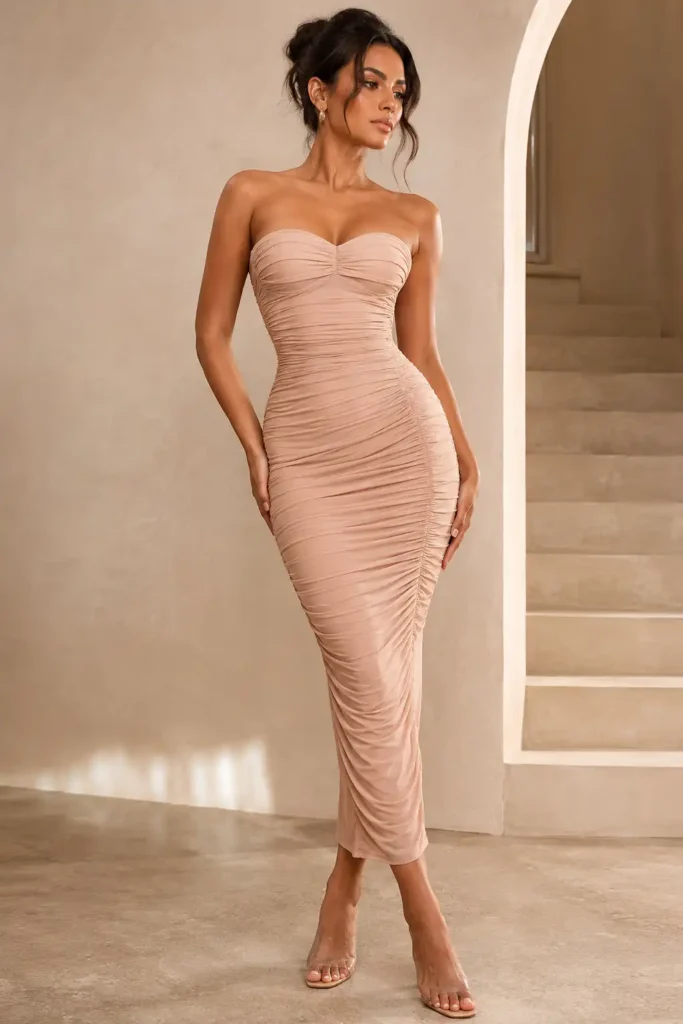
Premium Ecommerce Dress Program
Representative scale: 24 styles / approximately 64,000 pieces
A larger ecommerce collection may mix strapless bodycon dresses, structured woven dresses, draped bodices and special-occasion silhouettes.
Development pressure is higher because photo samples, fit approval, online size consistency and production scheduling all interact.
Patterns can be grouped by fabric and fit risk. Stretch styles require recovery and negative-ease review, while woven structured styles place more weight on bust shaping and internal support.
Photo-ready samples may require additional visual review around neckline smoothness, zipper flatness, pressing and model fit before the commercial version is locked.
Revision records become especially important when several styles are being corrected at the same time.
Approved changes should flow into final patterns, size charts and PP standards rather than staying scattered across messages.

Partywear Collection Program
Representative scale: 12 styles / approximately 26,000 pieces
A smaller but more technically concentrated partywear collection can include corset-inspired strapless minis, mesh-panel designs, satin bodycon silhouettes and shaped sweetheart bodices.
High visual impact often creates high fit sensitivity.
A few millimeters at the neckline or cup can change how the garment photographs and how secure it feels during movement.
Sample development therefore concentrates on bust coverage, upper edge contact, waist shaping, side seam balance, support construction and stretch recovery.
Bulk preparation then shifts attention toward repeatability: correct boning placement, cup symmetry, zipper flatness, lining control and measurement consistency across the approved size range.
Frequently Asked Questions About Strapless Pattern Development
Jinfeng can review a tech pack, reference image, sketch, line sheet or original sample. A size chart, fabric direction, intended size range, quantity plan and construction details make the initial evaluation more accurate.
Yes. A reference image can be used to analyze proportion, neckline, bodice structure and likely fabric direction. Additional information is still needed before accurate sampling and commercial quotation because a photo does not reveal all measurements, materials or internal construction.
Yes. Existing patterns can be reviewed together with fit photos, measurements, sample comments or an original garment. Corrections may involve bust volume, upper-bust tension, neckline contour, waist position, back height or other structural points.
There is no single universal adjustment. Pattern makers review upper-bust fit, bust and under-bust shaping, waist relationship, back height, fabric behavior and internal support before deciding whether the pattern, construction or both need correction.
Yes. Cup shape, cup position, boning length and boning placement can affect available space, seam construction and finished fit. Structural components should be considered during development rather than added after the outer pattern is approved.
Often, yes. Stretch, recovery, weight, thickness and drape affect how a strapless bodice sits on the body. Moving from rigid satin to stretch satin, mesh or knit fabric can require changes in ease, support or construction.
The approved base pattern is converted through grade rules that control bust, upper bust, waist, neckline, length and other relevant POMs. Strapless grading should preserve stability and silhouette rather than enlarging every dimension uniformly.
Jinfeng Apparel’s basic MOQ starts from 200 pieces per style/color. Special fabrics, custom dyeing, printing, certified materials, specialty trims or custom packaging may have separate project requirements.
Timing is confirmed after reviewing style complexity, fabric and trim availability, revision requirements, order structure and current production scheduling. Jinfeng does not apply one fixed sample or bulk lead time to every strapless project.
Yes. Jinfeng supports NDA-based cooperation covering tech packs, original samples, patterns, unpublished designs, label files, packaging files, pricing and order information. Client materials are not publicly disclosed without authorization.

Send Your Strapless Dress Development Brief
A strong development conversation starts with enough information to identify structure, fit and production risks before the first pattern is cut. Send your strapless dress tech pack, line sheet, reference image, original-sample details or design sketch together with the commercial information already available.
Jinfeng’s product development and pattern teams can review the project around neckline structure, bust and upper-bust fit, under-bust shaping, waist position, fabric behavior, internal support, grading requirements and the route from sampling into bulk production. The goal is to clarify the development path before unnecessary sampling changes, material commitments or production risks appear.
For a more useful review, include:
- Tech pack, sketch, line sheet or reference images
- Target sample size and full size range
- Shell and lining fabric direction
- Cup, boning or internal-support requirements
- Intended neckline and bust coverage
- Quantity per style and color
- Target market
- Private-label requirements where relevant
- Planned launch or delivery window
- Existing fit comments or previous sample photos
- Original pattern or sample information when transferring suppliers


