 Skip to content
Strapless Dress Construction
Engineering Secure Fit, Built-In Support and Repeatable Bulk Production for Strapless Fashion Dresses
A successful strapless dress must remain stable without shoulder straps while keeping the neckline clean, the bust supported and the body comfortable through movement. Jinfeng Apparel develops strapless structures from pattern and sample engineering through production control.
- 7+ senior pattern makers work on upper-bust, full-bust, under-bust, waist and neckline relationships for fit-sensitive dresses.
- 2 sample rooms and 20+ sample machinists support first samples, fit samples, revised samples, PP samples and Golden samples.
- Strapless control points include anti-slip placement, boning position, cup shape, bust coverage, back height and zipper flatness.
- 15+ QC inspectors support measurement, construction and finishing checks before structured styles move through bulk production and packing.
Development Capacity Behind Structured Strapless Dresses
7+ Senior Pattern Makers
2 Sample Rooms
20+ Sample Machinists
15+ QC Inspectors
6 Owned Fashion Factories
Core production can be allocated according to fabric, construction difficulty, order schedule and quality requirements rather than forcing every strapless style through the same production setup.
100,000+ Pieces Monthly Capacity
What Makes Strapless Dress Construction Different

Stay Secure Without Straps

Support the Bust

Hold the Intended Silhouette

Remain Comfortable in Motion
Strapless Dress Styles We Develop for Fashion Collections

Strapless Mini Dress
Mini silhouettes often combine a fitted upper body with a short skirt, making downward movement immediately visible. Development focuses on upper-bust control, cup placement, side fit, back height and secure hem-to-bodice balance. Satin, stretch satin, crepe, mesh overlays and structured woven fabrics are common directions. For party or graduation programs, photo-ready appearance and movement security need to be confirmed together rather than treating the upper bodice as a static shape.

Strapless Midi Dress
Midi lengths add more garment weight below the waist, so the bodice cannot depend on neckline tension alone.
Structured lining, waist shaping, boning direction and zipper stability may carry more importance.
Fit review checks whether the dress remains level after walking or sitting and whether the bodice supports the skirt without pulling the neckline downward.

Strapless Maxi Dress
Longer skirts increase load and can magnify imbalance between the bodice and lower garment. Fabric weight, skirt volume, lining length and waist anchoring should be reviewed before pattern approval.
A strapless maxi in satin, chiffon overlay or occasion fabric may need a stronger internal support plan than a lightweight fitted mini even when the neckline looks similar.

Corset-Inspired Strapless Dress

Strapless Bodycon Dress

Embellished Strapless Occasion Dress
Anatomy of a Stable Strapless Bodice
A strapless bodice works as a connected system. No single trim can compensate for errors across pattern shape, fabric stability, internal support and closure. During development, Jinfeng Apparel reviews each layer according to the role it plays in fit, support, comfort and bulk consistency.
Outer Fabric and Structural Layer
The outer fabric defines the visible surface, but surface beauty alone does not determine whether a strapless bodice will hold its shape. Satin can show every seam and pressure mark; stretch satin introduces recovery and compression variables; lace and mesh may need a stable base; sequins can increase weight. Interfacing, underlining or another supporting layer may be considered when the fashion fabric lacks enough body for the intended silhouette. The supporting layer should stabilize the design without creating stiffness, bubbling or an unnatural handfeel.
Pattern Panels and Support Lines
Princess seams, darts, side seams, under-bust seams and waist seams shape the body and establish where tension travels. Upper-bust contouring needs to follow the intended neckline and body shape.
The pattern must control both front and back because a secure front cannot compensate for an overly loose back.
A structured strapless bodice is developed as a three-dimensional form, not a flat rectangle tightened around the torso.
Cups, Boning and Internal Support
Built-in cups help define bust shape and coverage. Boning supports vertical shape, helps resist collapse and can reinforce waist shaping.
Their positions must relate to seam lines and body anatomy. Cup edges, boning ends and channels need clean protection so internal support does not create pressure points.
For stronger constructions, cups, boning, lining and closure are reviewed together rather than sourced as independent accessories.
Anti-Slip and Upper-Edge Control
Anti-slip tape or related support can improve contact at the upper edge, yet it should not be used as the only method for keeping a poorly fitted dress in place. Position, width, softness and skin contact matter.
Too much friction or a poorly positioned strip may become uncomfortable; too little control may allow downward movement. Fit samples verify the balance.
Lining and Skin Comfort
Lining separates the body from seams, boning channels, embellishment backing and other internal elements. It also influences opacity, weight, stretch behavior and perceived quality. Lining must lie smoothly without twisting, pulling the neckline or appearing above the outer layer. Structured styles may use different lining logic from lightweight strapless dresses, so the final choice follows fabric and support requirements.
Zipper and Back Closure
A zipper carries meaningful tension on fitted strapless garments. Position, length, seam allowance, reinforcement and sewing accuracy affect whether the back lies flat. Hook-and-eye or additional inner closure may be used according to design needs. Zipper bulging, uneven back height or excessive pull often signals a broader fit or construction issue rather than a zipper problem alone.
Bust Fit Comes Before Extra Support
Strapless performance begins with fit. Adding cups, boning or anti-slip tape to an incorrect bodice rarely produces a stable result. Jinfeng Apparel develops strapless patterns around measurable body relationships and then uses sample feedback to refine the pressure, coverage and visual proportions required by the brand.
Upper Bust, Full Bust and Under Bust
The upper bust controls how the neckline contacts the body. Full bust influences volume and cup shape. Under bust helps determine where support can anchor below the bust. A difference of only a few centimeters at the wrong point can change whether the neckline gaps, compresses or slides. Fit review therefore separates these measurements instead of treating “bust” as one number.
Bust Point and Cup Position
Cup position has to align with the target body and neckline. A cup sitting too high can flatten the bust and raise the neckline awkwardly; a cup sitting too low can create empty space, weak support or excessive exposure.
Cup shape and thickness also affect pattern volume, so changing a cup during sampling may require pattern and lining updates rather than a simple trim replacement.
Neckline Height and Back Height
The front neckline and back height work together around the torso.
Lowering the front can increase exposure and reduce the area available for support. Raising the back may improve stability but alter the intended fashion line.
Each adjustment should be evaluated in front, side and back views instead of correcting only the most visible area.
Waist and Torso Length
Waist placement influences where a structured bodice can anchor.
A waist seam sitting too high or low can shift pressure toward the upper edge. Torso length also changes how boning and cups align with the wearer. Fit-sensitive strapless styles need vertical balance as well as circumference control.
Size Range and Grading
Jinfeng Apparel supports US, UK, EU and AU size development, alpha sizing such as XS-XL, and extended, plus, petite or tall adjustments according to a brand’s size standard. Strapless grading needs more than adding equal width around every seam. Cup position, upper-bust control, back height, neckline length and support placement must remain proportionate across sizes.
Fit Evidence Used for Correction
Pattern correction can be based on measurement results, front/side/back fitting photos, body or dress-form observation, fabric stretch behavior and written fit comments. Approved changes are transferred into updated patterns, measurement charts and later bulk QC points so the fit solution becomes a production standard rather than a one-off sample adjustment.
Boning Placement, Channels and Wearing Comfort
Boning is one of the most visible technical signals in structured strapless development, but correct use is more important than quantity. Jinfeng Apparel evaluates boning according to silhouette, seam direction, support demand, fabric, lining and comfort rather than treating every strapless dress like a rigid corset.
What Boning Is Expected to Do
Boning can reinforce vertical lines, reduce bodice collapse, stabilize shaping and support a cleaner waist-to-bust silhouette.
On some dresses, only selected seams require support. On more structured corset-inspired styles, additional channels may be needed.
The goal is controlled shape, not maximum hardness.
Placement Follows Pattern Architecture
Boning normally works best when aligned with meaningful support lines such as princess seams, side areas or selected panel boundaries. Placement should support the pattern rather than fight it. A channel placed too close to a cup edge, zipper or underarm can create pressure or distortion. A channel placed without considering size grading may shift away from the intended body location in larger or smaller sizes.
Channel Construction Matters
A clean boning channel should hold the bone securely, maintain straight alignment and avoid twisting through sewing or wear.
Channel width, seam allowance and internal finishing influence both appearance and durability.
Satin and fitted fabrics can reveal channel irregularities on the outer surface, making sewing control especially important.
End Protection Is a Quality Detail
Boning ends need protection so they do not press through fabric, scratch the wearer or create a hard point at the neckline and waist.
Internal finishing should be reviewed during samples, not hidden from inspection simply because it sits behind the lining.
Hardness and Comfort Need Balance
Changing boning hardness can change fit. A softer option may improve comfort but reduce vertical support; a firmer option may improve shape but create pressure when sitting. Jinfeng Apparel treats a major boning change as a construction change that may require another fit review before PP approval.

Built-In Cups and Bust Support Options

Cup Shape
Round, contoured or more projected shapes change the bust profile. The correct direction depends on neckline, target fit and brand aesthetic.
A cup should support the visual design rather than force every wearer into the same exaggerated shape.

Cup Depth

Thickness and Softness
Thicker foam may provide more shape but can increase bulk and heat. Softer cups can feel more natural but may require stronger support from pattern, lining or boning.
Material choice should reflect occasion, target retail quality and wearer comfort.

Fixed or Removable Construction
Fixed cups provide a controlled position and are common in more structured dresses.
Removable systems introduce pocket construction and can change consistency during wear. The choice needs to match the garment concept rather than being added as a generic feature.

Cup Position Control
Left-right symmetry, vertical height, distance from center front and under-bust alignment need defined sample standards. A cup moving only slightly can change cleavage, neckline height and perceived fit.
Bulk QC should therefore check position, not merely confirm that cups are present.

Cup, Boning and Lining Integration
Lining, Anti-Slip and Closure Work as One System
Structured Lining
Anti-Slip Support
Elastic Assistance
Zipper Stability
Hook-and-Eye or Inner Closure
Trim Approval Before Bulk
Fabric Choices Change Strapless Construction Decisions
A strapless pattern cannot be separated from fabric behavior. Surface weight, stretch, recovery, transparency, drape and seam visibility change how much internal support is needed and where production risk appears.
| Fabric Direction | Suitable Strapless Uses | Support Direction | Main Risk | Bulk Control Focus |
|---|---|---|---|---|
| Satin | Mini, midi, cocktail, occasion | Structured lining, selected boning, cup options | Snagging, zipper waves, pressure marks | Shine direction, seam smoothness, zipper flatness, pressing |
| Stretch Satin | Bodycon, party, corset-inspired | Controlled stretch, cups, boning as needed | Over-compression, recovery loss, seam tension | Stretch direction, bust/waist fit, recovery, measurement |
| Crepe | Midi, fitted occasion, clean silhouettes | Pattern shaping with moderate internal support | Edge rolling, neckline distortion | Upper-edge stability, seam balance, pressing |
| Ponte / Stable Knit | Fitted bodycon strapless | Stretch-based fit with internal stabilization | Excessive compression or downward movement | Recovery, neckline tension, size consistency |
| Lace Overlay | Cocktail, wedding guest, occasion | Stable base, lining, cup/boning according to shape | Motif distortion, transparency, edge irritation | Motif placement, lining color, seam cleanliness |
| Mesh Overlay | Party, corset-inspired, sheer detail | Structured base, lining coverage, support trims | Stretch distortion, exposure, seam visibility | Mesh tension, coverage, cup edge, lining alignment |
| Sequin Fabric | Party, holiday, evening | Stronger base and protected internal structure | Weight, scratching, seam thickness | Sequin direction, lining, edge protection, packing |
| Chiffon Overlay | Soft maxi or layered formal styles | Stable inner bodice with lightweight outer layer | Outer layer pull, transparency, hem imbalance | Layer control, inner support, lining, finishing |
Pattern Development for Production-Ready Strapless Fit
Pattern development turns visual direction into controlled geometry. Jinfeng Apparel can start from a tech pack, reference image, original sample, sketch, line sheet, size chart or fabric swatch, but development accuracy improves when the brand supplies clear fit and construction expectations.

Structure Review Before Pattern Cutting
The team reviews neckline shape, bust coverage, cup requirement, boning direction, back height, closure, lining, waist seam, skirt weight and intended size range.
A simple-looking strapless mini may need less internal structure than a full-length occasion style, while a corset-inspired design may require dedicated cup and boning pattern components.

Base Pattern and Brand Fit Direction
Pattern work begins around the brand’s measurements and target market rather than an arbitrary house block. US, UK, EU or AU sizing, alpha sizes such as XS-XL, and requested extended sizes can be developed according to supplied standards. Brand-specific preferences such as higher bust coverage, a lower back or a tighter waist need to be defined early because they influence the whole support system.

Neckline and Upper-Bust Contouring
The neckline needs enough contour to lie close to the body without digging. Pattern correction may redistribute shaping through seams or darts rather than simply reducing circumference.
Front and back upper edges are reviewed together so stability remains balanced around the torso.

Cup and Boning Mapping
When the design uses cups or boning, their locations should be established in the pattern package. Cup position relates to bust point and under-bust lines; boning follows support lines and needs space for protected channels. These elements should not be left for the sewing floor to place by visual judgment.

Lining and Internal Pattern Pieces
Structured lining, cup pockets, boning channels and internal support may require dedicated pattern pieces.
Their seam lengths and stretch behavior need to match the shell so internal layers do not twist or distort the exterior.

Grade Rule Review
Strapless grading needs attention to cup placement, upper-bust circumference, back height, neckline length and support components.
Size changes should preserve the intended balance rather than merely scaling every component by the same amount.
Fit Samples Test Security Through Real Movement
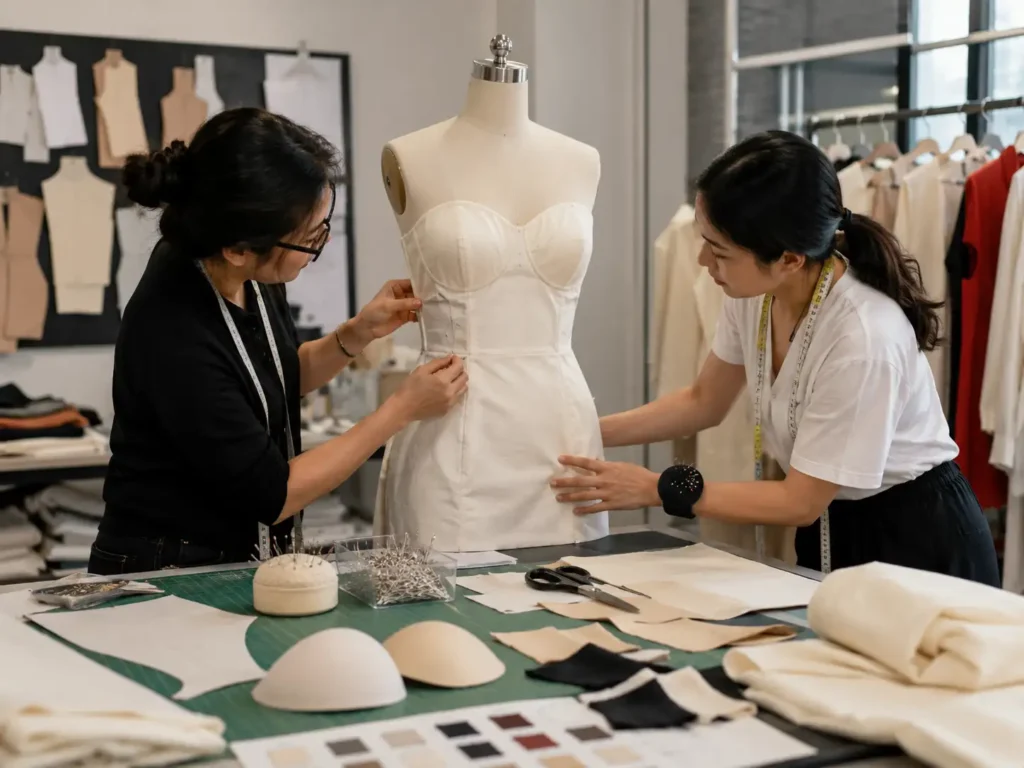
First Sample - Validate the Construction Direction

Fit Sample - Verify the Body Relationship
Fit samples focus on upper bust, full bust, under bust, waist, cup position, boning position, neckline, back height, lining and overall length.
Front, side and back photos are useful because a secure front can still hide side gaping or back distortion.

Movement Review
Standing confirms the basic silhouette; walking shows whether the bodice migrates downward; sitting reveals waist, boning and cup pressure; arm raising tests whether the upper edge moves with the torso; turning or reaching can expose side and back instability. The goal is not to create a sports garment, but a fashion dress should remain secure during normal event, retail and social movement.

Revised Sample - Confirm the Corrections
Fit comments are separated into pattern, measurement, cup, boning, anti-slip, lining, zipper or fabric issues. Major structural changes may require a revised sample rather than a small local alteration.
Each correction should be measurable enough to transfer into production records.

PP Sample - Lock the Bulk Standard
PP approval is not the stage for large design changes. Final fabric, color, trims, measurements, construction, lining, labels, packing and commercial conditions need to be confirmed before production.
The approved PP sample and Golden sample become reference points for bulk execution and QC.

Timeline Planning
Jinfeng Apparel builds project schedules around fabric approval, trim approval, pattern work, sample making, feedback, revised samples, PP approval, material arrival, cutting, sewing, in-line QC, finishing, packing, inspection and shipment. Timing is confirmed by style complexity, fabric and trim availability, revision rounds, quantity, color count, size range and required delivery window rather than one blanket promise.

Sample Revisions Must Become Controlled Production Records
A sample correction has little value when it remains only in a message thread. Jinfeng Apparel converts approved changes into updated production documents so fit and construction decisions can survive the handover from development to bulk production.
- Separate the Cause Before Changing the Garment
Neckline gaping may come from upper-bust circumference, cup volume, back width or fabric stretch. Zipper bulging may come from seam tension, waist fit or zipper installation. Boning discomfort may involve hardness, length, end protection or placement. Identifying the cause avoids correcting one visible symptom while creating a new problem elsewhere.
- Structural Changes Need New Confirmation
Large pattern changes, fabric replacement, major stretch differences, bust structure changes, boning or cup changes, anti-slip changes, major neckline or back revisions and other support-related modifications can justify a new sample. A strapless bodice should not move to PP simply because the exterior looks close to the reference image.
- Revision Records Feed the Next Stage
Approved revisions can update the pattern, size chart, measurement record, BOM, fabric approval, trim approval, sewing instruction, QC checklist and PP comments. The record should note whether a change affects cost, timing or the next sample action.
- PP Entry Requires More Than Fit Approval
Before PP approval, the program should have confirmed fit, measurements, fabric, color, trims, sewing, lining, labels, packing, MOQ, cost and production timing. Locking these inputs reduces the risk of a sample decision being reinterpreted later on the sewing line.

From Approved Sample to Repeatable Bulk Construction
The commercial test of strapless construction is not one good sample; it is whether the approved support system can be reproduced across colors, sizes, production batches and repeat orders. Jinfeng Apparel uses a documented handover so the development standard becomes a manufacturing standard.
- Final Pattern and Grade Rules
Approved shape corrections are transferred to the final pattern and size rules. Strapless control points such as upper bust, cup position, boning line, back height and waist remain visible in the technical standard rather than relying on memory. - Fabric and Trim References
Bulk material needs to match approved handfeel, stretch, color and structural behavior. Cups, boning, anti-slip components, zippers, lining and hook-and-eye specifications are confirmed as part of the trim reference. New batches or substitutions require review when they can change fit or support. - Sewing Instructions
Construction notes can define seam allowance, sewing sequence, boning channel method, cup attachment, zipper position, lining method and other style-specific details. A structured bodice should not depend on operators guessing how the sample was assembled. - PP and Golden Sample
The PP sample represents the production-ready reference after final components and measurements are approved. A Golden sample can serve as the highest-priority visual and construction reference for production, QC, repeat orders and dispute resolution. - QC Checklist
Strapless-specific checks are added to normal garment inspection. Upper-bust measurement, cup symmetry, boning position, anti-slip placement, zipper flatness, back height, lining exposure and left-right balance can all become defined checkpoints. - Repeat-Order Records
Pattern files, size charts, fabric references, trim records, sewing instructions, packing standards, QC notes and Golden samples reduce communication loss when a style returns for a new batch. New colors, new fabric lots or changed trims are still rechecked rather than assumed identical.
Fit-Sensitive QC for Strapless Dress Production
Upper-Bust Stability
Cup Shape and Position
Boning Position and Finish
Anti-Slip Placement
Zipper and Back Height
Lining and Internal Finish
Capacity for Multi-Style Structured Dress Programs
6 Owned Fashion Factories
Owned production provides core control for custom womenswear, including dresses, skirts, jumpsuits, sets and structured fashion styles.
Production allocation follows fabric, construction risk and schedule rather than treating every factory as interchangeable.
10+ Long-Term Satellite Partners
Partner factories support peak-season capacity, repeat orders, regular-style allocation and phased production.
Higher-risk first-time structured styles can remain concentrated in more suitable production units before proven construction is considered for broader allocation.
18+ Sewing Lines and 6+ Flexible Lines
12+ Merchandisers and Order Follow-Up Specialists
15+ QC Inspectors
QC resources support material, sewing, measurement, garment and packing control across multiple production units.
High-risk strapless points can be included in project-specific checklists.
30+ Finishing and Packing Workers
Anonymous Structured Dress Program for a US Brand
A representative anonymized US occasionwear program within Jinfeng Apparel’s regular large-brand order profile involved 18 styles and approximately 28,000 pieces. The assortment combined multiple dress constructions and fabrics, with structured and fit-sensitive styles requiring tighter control of samples, trims, measurements and production records. Brand identity, purchase-order details and unreleased designs remain confidential.
Program Profile
- Market: United States
- Styles: 18 womenswear styles
- Total order: approximately 28,000 pieces
- Fabric groups: satin, mesh, jersey, lace and crepe
- Development stages: first sample, revised sample, PP sample and Golden sample
- Production model: multi-style coordination with phased shipment and private-label packing
Development Challenge
The main commercial risk was not producing one attractive sample.
Multiple styles had different fabric behaviors, fit sensitivities and trim requirements, while packaging and SKU information needed to remain consistent across the program.
Structured styles required extra review around bust fit, lining, closure stability and the approved internal construction standard.
Development Control
Jinfeng Apparel organized style-level sample versions and material information rather than treating the 18 styles as one undifferentiated order. Fit and construction comments were transferred into revised patterns, measurement records and later PP standards. Where a structured bodice used support trims, approved cup, boning, anti-slip, lining and zipper specifications were treated as part of the style record.
Bulk Handover
Production moved forward after sample and commercial approvals were aligned. Material arrival, cutting, sewing, in-line QC, finishing, private-label packing and inspection requirements were managed by project stage.
Structured styles retained dedicated inspection points rather than relying only on general appearance checks.
Delivery Approach
The order was managed through phased production and shipment coordination.
The focus was keeping sample versions, fabrics, SKU packing and shipment documents synchronized across multiple styles rather than chasing one headline production speed.

How to Evaluate a Strapless Dress Manufacturer
A supplier should be evaluated on the ability to connect pattern engineering, internal support, sample correction and bulk control. A factory that can sew a strapless neckline is not automatically prepared to reproduce a fit-sensitive structured bodice across multiple sizes and production batches.
| Evaluation Area | What a Brand Should Check | Jinfeng Apparel Approach |
|---|---|---|
| Pattern Development | Upper bust, full bust, under bust, neckline, back height and waist are treated separately | 7+ senior pattern makers with fit and structure development support |
| Strapless Expertise | Anti-slip, boning, cups, lining, closure and bust coverage have defined logic | Strapless-specific development and QC checkpoints |
| Sample Process | First sample is not mistaken for the bulk standard | First, fit, revised, photo, salesman, PP and Golden sample stages supported |
| Fit Feedback | Photos and measurements can be converted into pattern corrections | Front/side/back feedback, measurement review and revision records |
| Size Development | Support elements remain aligned through grading | US, UK, EU, AU, XS-XL and project-based extended sizing support |
| Trim Control | Cup, boning, zipper and anti-slip changes are reviewed for fit impact | Trim approval and sample re-evaluation for structural changes |
| Sample-to-Bulk Transfer | Approved construction becomes documented production instructions | Final pattern, size chart, BOM, trim record, sewing instruction and QC checklist |
| Bulk QC | Strapless-specific defects are checked, not only general sewing appearance | Upper bust, cup, boning, anti-slip, back height, zipper, lining and symmetry checks |
| Program Capacity | Multi-style orders can be allocated and tracked without losing style-level detail | 6 owned factories, 10+ partners, 100,000+ pcs/month regular capacity |
| Confidentiality | Unreleased designs and technical files are protected | NDA support and confidential handling of tech packs, patterns, labels and packing files |
Confidential Development, Quality and Compliance Support
NDA and Design Protection
Client Quality Standards
Testing and Audit Documentation
Jinfeng Apparel can coordinate quality-management, audit-documentation, certified-fabric sourcing and third-party testing support according to the relevant project. ISO 9001-related quality-management references, SMETA/Sedex/BSCI-related documentation and OEKO-TEX/GOTS/organic/GRS-related fabric resources must be confirmed according to current certificates, supplier scope, fabric batch, color, MOQ and order needs. Third-party testing or inspection can be coordinated with SGS, Intertek, BV, ITS or a client-appointed organization when required.

Frequently Asked Questions About Strapless Dress Construction

Start Your Strapless Dress Development With Jinfeng
- Style image, sketch, tech pack or original sample reference
- Target fabric, color direction and lining preference
- Size range and target market standard
- Quantity per style/color and collection style count
- Cup, boning, anti-slip or corset-inspired support requirements, if already defined
- Private-label, barcode, SKU and packing requirements
- Target launch date, delivery window and any inspection requirement


