 Skip to content

Statement Dress Development
Distinctive dresses need more than bold styling. Jinfeng Apparel develops visually strong womenswear from concept, reference image, original sample or tech pack into fit-tested, production-ready garments for established fashion brands and mid-to-large apparel programs.
- 2 dedicated sample rooms support development, revisions and pre-production approvals.
- 7+ senior pattern makers work on silhouette, fit, proportion and structural corrections.
- 20+ sample machinists handle complex dress construction before bulk release.
- 18+ sewing lines and 6+ flexible production lines support multi-style commercial programs.
- 100,000+ pcs regular monthly capacity across Jinfeng Apparel’s coordinated womenswear production system.
- Core development strengths include corset, satin, mesh, lace, sequin, cut-out, draped, structured and occasion-led dresses.
Where Statement Dress Development Usually Breaks Down
A statement style can look powerful in a sketch and still fail during fitting, sewing or bulk production. The most expensive problems usually begin before cutting: the fabric behaves differently from the visual reference, the structure cannot hold the intended shape, or the pattern does not support movement and grading.
Strong Sketch, Weak Fit
Wrong Fabric Behavior
Structure Cannot Hold
Sample Loses the Impact
Sample Cannot Scale
Cost Leaves the Range
Statement dresses often contain more pattern pieces, lining, structural trims, embellishment, hand positioning, longer sewing time and more inspection points. A commercially useful development process identifies which visual features create value and which features create cost without enough retail impact, so the final design remains aligned with the intended price architecture.
From Creative Direction to Production-Ready Dress
Statement dress development works best as a controlled sequence. Each stage should remove a specific uncertainty before the next stage begins, so visual design, fit, materials, construction and production standards become progressively clearer instead of being solved during bulk production.
Design Input
Reference image, sketch, tech pack, line sheet or original sample is reviewed together with intended occasion, target market, size range, quantity plan and launch timing.
Feasibility Review
Fabric Direction
Pattern Development
First Sample
Fit and Revision
PP Approval
Bulk Production
Cutting, sewing, in-line control, finishing and garment inspection follow approved production references rather than relying on the development team’s memory.
QC and Delivery
Product-specific checks, packing instructions and shipment documentation complete the transition from a creative style into a repeatable commercial SKU.
Development Capacity Built Around Complex Womenswear
Two Sample Rooms
7+ Pattern Makers
20+ Sample Machinists
Flexible Production Allocation
15+ QC Inspectors
Multi-Style Coordination
Statement Dress Directions We Develop
Statement dressing can come from silhouette, proportion, structure, transparency, surface texture or controlled embellishment. The following directions represent different development problems, so fabric choice, pattern work, sample review and bulk control must be adjusted for each style rather than handled through one generic dress process.

Corset Statement Dress

Sculptural Mini Dress

Draped Statement Dress

Asymmetric Dress

Cut-Out Dress

Mesh Statement Dress
Design Feasibility Before Pattern Cutting
A strong development partner should challenge unclear or unstable construction before the first sample is sewn. Early feasibility review protects the visual idea while identifying where the design needs a different fabric, hidden support, altered seam position or clearer production method.

Read the Design as a Garment
The first review looks beyond the front image. A statement dress needs a back, side profile, closure method, lining solution, seam plan and movement allowance. For a deep-V or open-back style, the question is not simply whether the shape can be cut; the question is how the neckline stays controlled, how the bust is supported, where seam tension travels and whether the wearer can move without distortion. For a sculptural mini, the team evaluates where volume is created, what holds it, how the hem behaves and whether the shape survives pressing and packing.
Inputs can include a tech pack, sketch, reference image, original sample or line sheet. More complete inputs improve accuracy, but incomplete inputs can still be reviewed when the intended silhouette, target fabric direction, size range, order plan and market are clear. The development team then separates confirmed information from open decisions. Open points are resolved before pattern work wherever they materially affect fit, cost or construction.
The goal is not to simplify every difficult idea. The goal is to identify which details carry the visual identity and which details need engineering to become repeatable.

Test Commercial Feasibility Early
Statement design can become expensive through hidden construction rather than visible fabric consumption. Built-in cups, boning, anti-slip tape, lace-up backs, mesh binding, rhinestone application, sequin sewing, ruffle layers, cut-out finishing and complex draping add labor and inspection time. Some details also increase material waste or require special supplier minimums.
Early review therefore connects design choices to the intended order and price structure. If a visual effect can be achieved through a cleaner seam, a different fabric weight or a more stable trim, the alternative can be discussed before the first sample locks the wrong direction. If the original detail is essential to the brand’s design identity, the development plan keeps it and adjusts the surrounding construction instead.
For established brands, commercial feasibility also includes launch timing. A hero style with a complex trim should not be planned as if it has the same material readiness as a regular satin dress. The sample and bulk calendar should reflect the real dependency chain.
Pattern Engineering Protects the Statement Silhouette
Pattern development determines whether a bold design keeps its proportion on a real body. Jinfeng Apparel treats fit-sensitive dresses through measurable control points and style-specific construction rather than relying on a generic block for every neckline, fabric and silhouette.

Build Proportion Before Decoration
Statement silhouettes are often remembered because of proportion: a low waist placed at a precise level, a shaped bust sitting correctly, an asymmetric neckline crossing the body at the right angle, or a cut-out creating the intended negative space. These effects can be lost even when measurements appear close on a flat table.
Pattern review focuses on bust position, under-bust, waistline, hip line, front and back length, neckline depth, shoulder slope, strap placement, armhole shape, slit height, cut-out location and hem balance. Corset and strapless styles add cups, boning and upper-edge stability. Bodycon and mesh styles require stretch and recovery to be considered with negative ease. Draped styles require enough controlled length for folds without allowing side seams to rotate.
When the first sample is fitted, comments should be converted into pattern changes rather than only sewing adjustments. If the waist sits too high, if the neckline opens during movement or if the hip line pulls a side seam forward, the underlying pattern needs correction before the next approval stage.

Grade Without Losing the Design
Size grading is especially sensitive on statement garments because visual details are often tied to body landmarks.
A fixed-width cut-out may become too small relative to the body in larger sizes.
A neckline that is simply enlarged can create exposure. Cup spacing, strap position, waist depth and slit height may need controlled grade rules rather than uniform scaling.
For production, the final pattern should work together with the approved size chart and QC measurements. Critical points are identified so in-line and final inspection can verify more than total bust, waist and hip. Depending on the style, inspection may include neckline width, strap length, cup position, cut-out opening, slit height, front-back hem relationship or lining coverage.
The result is a dress whose visual identity is defined through measurable pattern decisions, making repeat production more stable.
Fabric Direction for Statement Dress Development
The same sketch can become a completely different garment when fabric weight, stretch, transparency, shine or stiffness changes. Fabric selection should be tied to the required visual effect, pattern structure and production method before the sample is treated as a reliable reference.
| Fabric Direction | Typical Visual Effect | Best-Suited Structures | Development Risks | Bulk Control Focus |
|---|---|---|---|---|
| Satin / Stretch Satin | Smooth shine, fluid drape, evening polish | Slip, draped, corset, asymmetric, occasion dresses | Shade difference, snagging, grain direction, zipper waves, pressing marks | Shade approval, cutting direction, zipper flatness, pressing and packing |
| Mesh / Power Mesh | Transparency, body contour, contrast panels | Cut-out, bodycon, layered, corset-panel styles | Stretch variation, holes, transparency shift, seam distortion | Stretch/recovery check, lining coverage, binding and seam stability |
| Lace | Texture, romantic surface, mapped transparency | Occasion, corset, structured midi, overlay dresses | Placement mismatch, holes, edge damage, inconsistent motifs | Pattern placement, matching, lining, seam and edge inspection |
| Sequin Fabric | High-impact surface and event appeal | Mini, bodycon, party, evening statement styles | Sequin loss, skin scratch, broken needles, seam bulk | Cutting protection, lining, seam cleaning, final surface inspection |
| Organza | Crisp volume and sculptural shape | Puff sleeve, bubble, layered, volume-led mini | Excess stiffness, visible seams, crushing, unstable volume | Layer count, seam finish, pressing, shape recovery after packing |
| Tulle | Lightweight volume and layered transparency | Skirt volume, overlays, soft sculpture | Snagging, uneven layers, edge distortion | Layer alignment, hem control, packing protection |
| Crepe | Controlled drape with cleaner matte surface | Column, asymmetric, draped midi, occasion dresses | Stretch or weight mismatch, seam impressions | Fabric lot control, pressing, seam balance and fit |
| Velvet | Rich depth and directional surface | Evening, fitted, structured seasonal dresses | Nap direction, shade shift, pressure marks, bulk | Cutting direction, panel shade check, gentle finishing and packing |

Internal Structure Makes Bold Dresses Wearable
Many statement dresses succeed or fail because of components the wearer barely sees. Jinfeng Apparel develops structural trims together with the outer silhouette so support, comfort, closure and movement are resolved before the style reaches bulk production.
Bust and Neckline Support
- Corset, strapless, deep-V and low-back dresses often require a combination of cups, boning, underwire, elastic, anti-slip tape and structural lining. The correct solution depends on outer-fabric stretch, neckline shape, desired compression and the amount of exposed skin.
- Cup position must align with the pattern and target size range. Boning should support without creating visible ridges or uncomfortable pressure points. Anti-slip tape can improve strapless stability but cannot compensate for an incorrect upper-edge pattern. Deep-V styles may need hidden support or controlled tension so the neckline does not open during movement.
- Sample fitting should test standing, sitting, raising the arms and normal walking. If the wearer must continually adjust the garment, the structure is not finished.
Closures, Bindings and Edge Stability
- Invisible zippers, metal zippers, hooks, snaps, strap sliders and bindings have direct effects on shape. Satin can reveal zipper waves; mesh edges can stretch during sewing; cut-outs can change size when binding tension is inconsistent. A closure should be selected for both appearance and the load it carries.
- For asymmetric and bodycon designs, zipper position may also affect how the garment twists. Lining seams, zipper tape, hooks and reinforcement need to sit flat enough that the outer surface remains clean. On sequin or beaded styles, the zipper area may require local clearing and hand finishing so hard components do not jam the closure or scratch the wearer.
- These details should be documented in the sample and PP stage so sewing teams are not forced to invent solutions during bulk production.
Details That Create Statement-Level Visual Impact

Draping and Ruching

Cut-Out Construction

Lace Placement

Sequin and Rhinestone Work

Ruffles and Volume
Ruffles, layered skirts, puff sleeves and bubble shapes depend on controlled volume. The development team considers panel length, gathering ratio, fabric stiffness, edge finish and internal support. Too little volume loses the concept; too much can distort fit and increase packing problems.

Satin Clean Finishing
Sampling Turns a Visual Idea Into a Garment
Sampling is the core development stage for statement dresses because construction, fabric behavior and fit cannot be confirmed from drawings alone. Jinfeng Apparel uses different sample stages for different decisions instead of treating every sample as the same approval garment.

First Sample and Fit Sample
The first sample tests whether the main direction works in three dimensions. It verifies silhouette, major proportions, fabric behavior, lining concept, closure, initial support and construction feasibility. It is not treated as evidence that every detail is already production-ready.
A fit sample goes deeper into body interaction. Bust, under-bust, waist, hip, shoulder, strap length, neckline, armhole, cut-out, slit, hem and lining are reviewed according to the style. For corset or strapless dresses, support and movement are part of fit. For bodycon and mesh styles, stretch recovery and seam position matter. For draped satin, the fit review includes whether the fabric falls from the intended anchor points.
Simple first samples may typically be developed in about 7-10 days, while regular dresses often require around 10-15 days. Medium-complex dresses, sets or jumpsuits may need around 12-18 days, and corset, lace, mesh, sequin or highly structured styles may require roughly 15-25 days. Custom fabrics and special trims can extend the cycle because supplier lead time becomes part of development.

Revised, Photo and Sales Samples
Revision should convert clear feedback into controlled changes.
Measurement comments, fitting photos, construction notes and visual references are reviewed together so one correction does not create a new problem elsewhere.
A shorter strap, for example, can also change neckline tension and bust position.
Photo samples may require especially clean visual finishing because they are used for campaign, ecommerce or lookbook review. Salesman samples can support internal sales or collection presentation.
Their purpose is different from a PP sample, so approval language should stay clear: a visually approved photo sample is not automatically the production standard if materials or construction still differ from bulk conditions.
Revised samples commonly need about 7-15 days depending on complexity and material readiness.

PP Sample and Golden Sample
The PP sample is the point where the style should be ready to enter bulk under defined conditions.
Main fabric, color, trims, measurements, construction, label placement and packing direction are confirmed. If a critical component changes after PP approval, cost, timing and repeatability should be reviewed again.
A Golden Sample can serve as a physical reference for production and QC together with the final pattern, size chart, trim card, sewing instructions and measurement tolerances.
Complex statement garments benefit from having both a physical reference and written control points because not every visual requirement is captured by total body measurements.

Fit and Wearability Are Part of the Design
A statement dress should create visual impact without requiring constant adjustment. Fit review therefore checks exposure, support, movement, proportion and comfort together with appearance, especially on corset, strapless, mesh, cut-out, bodycon and floor-length styles.
Control the High-Risk Fit Zones
- Bust instability is one of the fastest ways a dramatic design loses credibility. Cup position, neckline edge, strap tension, side seam placement and under-bust shape need to work with the fabric. Waist placement then controls the relationship between upper body and skirt. On low-waist or corset-led styles, even a small vertical shift can change the intended proportion.
- Hip fit matters on bodycon, column and cut-out silhouettes because excessive tension can rotate side seams, pull zippers and shift openings. Armholes and shoulders need enough movement for one-shoulder, halter and sleeved statement designs. Slits and mini lengths are checked for movement safety rather than judged only on a static mannequin.
- Longer dresses add front-back hem balance and walking clearance. Lining length should support coverage without appearing below the outer layer.
Validate the Garment in Motion
- Fit comments are more useful when they describe what happens during wear. A strapless style may measure correctly and still slide down after movement. A sequin armhole may pass visual inspection and still scratch the skin. A cut-out may look balanced from the front but open excessively when seated.
- Review can include front, side and back photographs, key measurements, movement observations and close-up construction notes. Video is particularly useful for drape, skirt movement, stretch recovery and layered volume because still images can hide behavior.
- After review, important changes are transferred to the pattern and sample record. The objective is not only a better next sample; it is a final production standard that reflects the approved wearing result.
Lock the Sample Before Bulk Production
The transition from approved sample to bulk is where many visually complex garments lose consistency. Jinfeng Apparel converts the approved version into production references covering pattern, measurements, materials, trims, sewing, labels, packing and QC before bulk release.
Convert Approval Into Production Files
A final sample alone is not enough. Bulk teams need a controlled package that connects the physical garment to measurable and repeatable information. Depending on the project, the handover can include:
- final pattern files
- approved size chart
- grade rules
- fabric reference
- trim card or BOM
- construction notes
- label placement
- packing instruction
- critical QC measurements
For a corset dress, the production reference may highlight cup position, boning channels, zipper construction and upper-edge stability. For a ruched style, it may define gathering points and finished panel lengths. For an asymmetric dress, hem relationship and neckline balance may be critical. The objective is to identify what must not drift.
PP Lock Prevents Late Instability
- After PP approval, fabric, color, trims, measurements, construction, labels, hangtags, polybags, carton marks and packing method should not change casually. A late fabric substitution can alter fit. A trim change can affect sewing sequence. A packaging change can introduce a separate supplier minimum or lead time.
- When changes are genuinely required, they should be reviewed against cost, timing and product risk before release. This discipline protects both the brand and production team from informal changes that never reach every department.


Bulk Control for Complex Statement Dresses
Bulk quality should reproduce the approved visual and wearing result, not merely pass general sewing inspection. Jinfeng Apparel uses product-specific checks across materials, cutting, sewing, finishing and garment inspection so high-risk details receive attention where variation is most likely to occur.
Fabric-Specific Production Control
- Satin requires shade grouping, cutting-direction control, careful handling, zipper flatness and pressing discipline.
- Mesh requires stretch and transparency review, hole prevention, stable binding and lining coverage.
- Lace needs motif placement, seam joining and edge checks.
- Sequin fabric needs surface protection, seam-area control, loose-piece inspection and scratch prevention.
- Organza and tulle require layer alignment, shape control and careful pressing.
- Velvet needs nap direction and pressure-mark control.
Each material creates a different failure pattern, so the QC plan should reflect the actual garment rather than a generic checklist.
Structure and Measurement Control
- Statement styles often have critical measurements beyond bust, waist and hip. Depending on the design, inspection may include cup position, under-bust, strap length, neckline width, cut-out opening, slit height, zipper length, lining length, shoulder position, front-back hem difference or ruffle placement.
- Cutting QC helps prevent left-right imbalance before sewing. In-line inspection catches construction problems while correction is still possible. Final garment inspection reviews measurement, appearance, workmanship, closure function, lining, finishing and surface condition. Pressing and packing are part of quality because some fabrics can be permanently marked by excessive pressure or poor folding.
Multi-Style Development for Seasonal Dress Programs
Group by Fabric
Group by Complexity
Set Hero Priorities
Track Every Revision
Coordinate PP Status
Plan Repeat Orders
Development Cost and MOQ by Complexity
Statement dress pricing is driven by more than fabric area. Pattern work, sample revisions, structural trims, sewing time, embellishment, finishing, inspection and material supplier minimums all affect the commercial result. Jinfeng Apparel’s garment MOQ starts from 200 pcs per style/color, while special materials or packaging may have separate supplier requirements.
| Complexity Level | Typical Examples | Development Drivers | Bulk Cost Drivers | Commercial Planning Note |
|---|---|---|---|---|
| Moderate | Satin slip, clean asymmetric midi, simple ruched mini | Fabric direction, fit, zipper, lining | Fabric quality, cutting direction, sewing and pressing | Suitable when the visual effect comes mainly from silhouette and fabric |
| Medium-High | Mesh cut-out, one-shoulder, draped satin, lace overlay | Pattern placement, stretch, lining, drape control | More sewing steps, higher inspection load, trim use | Requires stronger sample review before final costing |
| Complex | Corset, strapless structured, lace placement, layered organza | Cups, boning, support, multiple pattern pieces, fit revisions | Structural trims, longer sewing time, pressing and QC | Cost should be reviewed after structure and materials are defined |
| High-Complexity | Sequin corset, embellished cut-out, multi-layer evening dress | Surface work, structure, complex fit, special trims, multiple revisions | Embellishment labor, material loss, protection, extended QC | Best planned as a hero SKU with realistic material and production timing |
Statement Dress Programs Developed for Commercial Scale

US Occasionwear Program
A US occasionwear label developed 18 statement-led styles across satin, stretch satin, lace and structured woven fabrics, with a total production plan of approximately 36,000 pcs.
The range included asymmetric midi dresses, corset minis, wedding-guest styles and draped occasion dresses.
Development focused on satin shade consistency, bust support, zipper flatness, waist placement and hem balance. Several styles required fit revisions before PP because early samples looked correct on a hanger but shifted at the bust and waist during wear.
Production references were then locked around final pattern, fabric lot, lining, critical measurements and finishing standards. The multi-style program was scheduled by material readiness and launch priority rather than releasing every style at the same time.

Australian Partywear Program
An Australian partywear brand worked on 14 styles totaling about 28,000 pcs, centered on mesh bodycon, cut-out, one-shoulder, ruched and sequin statement dresses. The main development challenge was keeping high visual exposure controlled across different body positions and sizes.
Mesh stretch and lining coverage were reviewed together with cut-out placement. Ruching ratios were standardized to reduce left-right variation. Sequin styles received lining and surface-protection attention so seam areas did not become abrasive. Several higher-risk styles stayed in revision while approved styles advanced to PP and material preparation. The program demonstrated the value of managing a collection by style status instead of forcing all garments through one timeline.

European Designer-Led Drop
A European fashion label developed 22 styles for a seasonal drop with a planned total of approximately 52,000 pcs. The assortment mixed corset dresses, strapless minis, draped satin, lace-panel midis, organza volume and selected sequin evening pieces.
The development team separated styles into fabric and complexity groups, then prioritized hero SKUs needed for campaign photography.
Corset and strapless pieces received additional pattern and fit work around cups, boning, neckline stability and zipper load.
Organza styles were reviewed for volume recovery after packing, while satin styles were checked for pressing and shade consistency.
Approved PP standards were transferred into bulk with style-level QC notes and packing instructions.
Compliance Support for International Dress Programs
Quality Management
Social Audit Support
Material Documentation
Preferred Material Options
Third-Party Testing
Inspection Support
Protect Unreleased Designs During Development
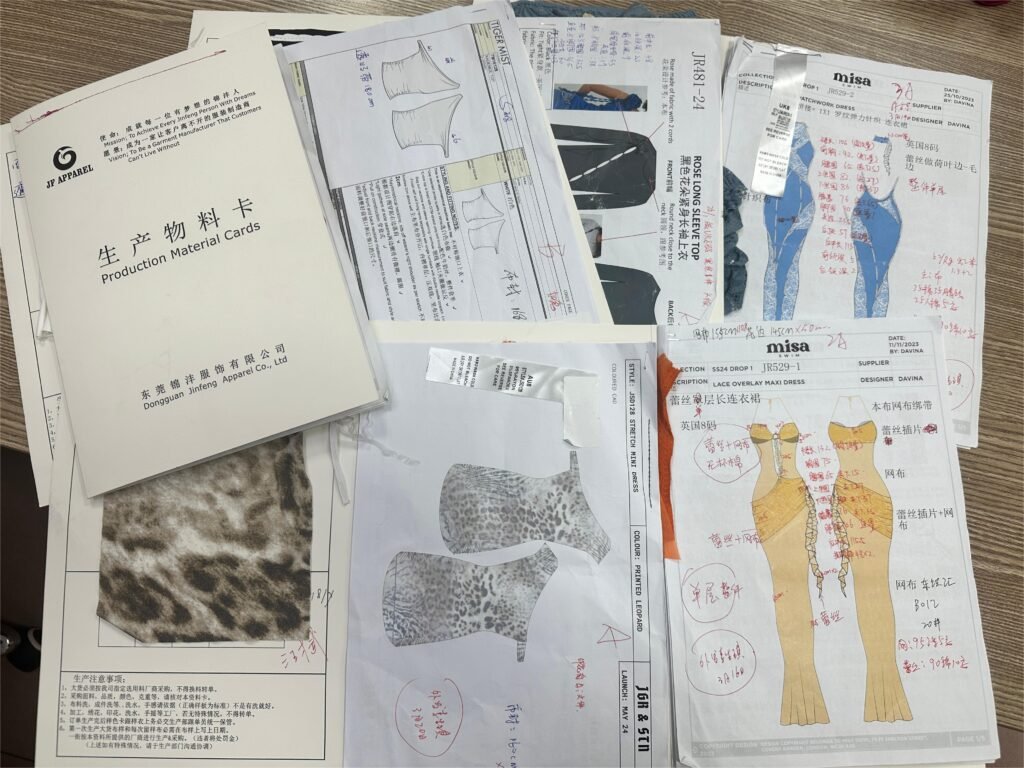
Tech Pack Protection
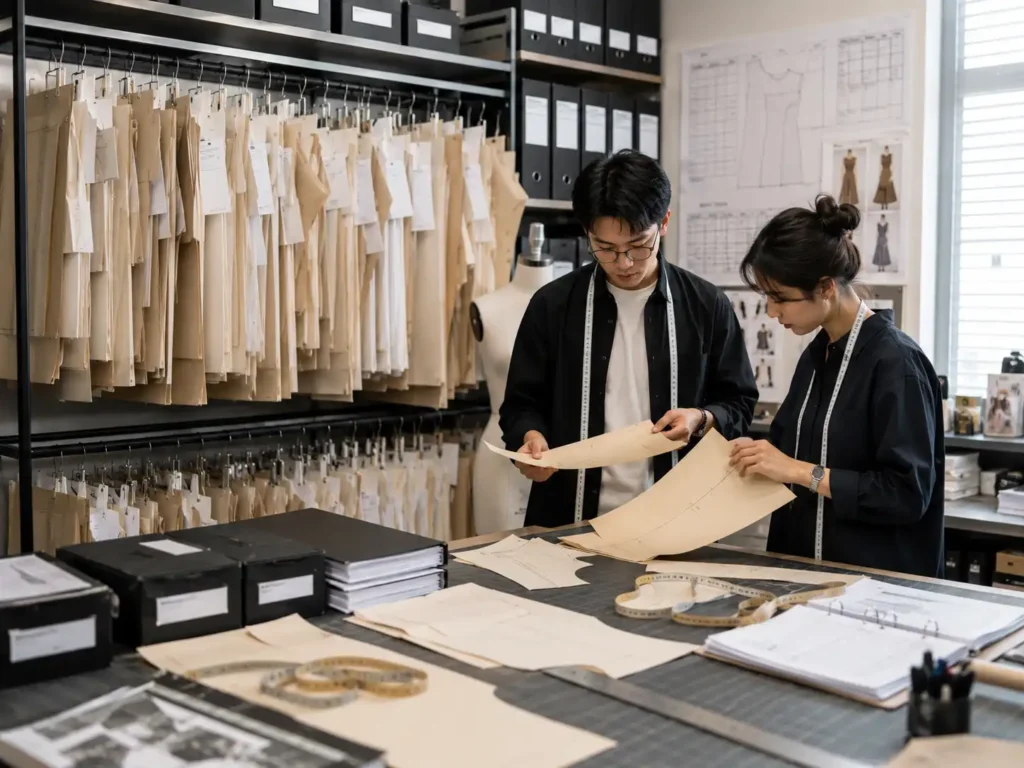
Pattern Protection

Sample Image Protection
Sample photos may reveal unreleased silhouettes, fit changes, trim details or launch direction. Development images can be used for review with the brand while remaining outside public marketing unless permission is granted.

NDA Before File Transfer
Brands that prefer formal protection can request an NDA before sharing full tech packs, original samples, unreleased references or collection plans. Early conversations can begin with limited information and move into detailed development after confidentiality expectations are agreed.
Statement Dress Development Frequently Asked Questions
Yes. A sketch can be used as a starting point when the intended silhouette, fabric direction, size range, key details and commercial purpose are clear enough to evaluate. The team may request additional measurements, back-view information, construction references or fabric guidance before pattern work begins.
Yes. Reference images can communicate silhouette, drape, neckline, volume and surface direction. They are treated as development references rather than exact technical files, so hidden construction, measurements, materials and finishing still need to be defined before the sample is considered production-ready.
A complete tech pack improves accuracy, but development can also begin from a sketch, original sample, line sheet or reference image. At minimum, product direction, size range, fabric preference, quantity plan and target market should be clear enough for a meaningful review.
Timing depends on structure and material readiness. Regular dresses commonly need around 10-15 days; medium-complex styles may need around 12-18 days; corset, mesh, lace, sequin or highly structured dresses may need roughly 15-25 days. Custom materials can extend the cycle.
Jinfeng Apparel works with satin, stretch satin, mesh, power mesh, lace, sequin fabric, organza, tulle, velvet, crepe and other womenswear materials, together with cups, boning, underwire, anti-slip tape, zippers, rhinestones, bead trims, labels and packaging components.
Development considers cup position, boning, under-bust shape, neckline tension, anti-slip support, zipper load, lining and body movement. Fit is reviewed before bulk so the garment holds its intended position rather than depending on constant adjustment.
The approved version is supported by final pattern, size chart, fabric and trim references, construction instructions, label and packing direction and QC points. PP approval and, where used, a Golden Sample help keep production aligned with the agreed garment.
The biggest drivers are fabric, structural trims, embellishment, number of pattern pieces, sample revisions, sewing time, difficult finishing, material loss, inspection requirements and packaging. Complex visual effects can increase cost even when the garment uses relatively little fabric.
Jinfeng Apparel’s garment MOQ starts from 200 pcs per style/color. Special fabric, dyeing, printing, trims, labels or packaging may carry separate supplier minimums, so material requirements should be reviewed together with the garment quantity.
Yes. NDA support is available for confidential development involving tech packs, patterns, samples, trims, private-label materials, unpublished designs and order information. Confidentiality requirements can be discussed before full project files are transferred.

Send Your Statement Dress Development Brief
Send the information already available for your collection, even if the project is still moving from creative direction into technical development. Jinfeng Apparel can review the style structure, fabric direction, likely support requirements, sampling complexity, MOQ fit and bulk-production risks before a formal sample program begins.
More complete inputs allow a more accurate review, but a clear sketch or reference can still be useful when the intended market, silhouette and order plan are defined.
For a stronger first review, include:
- Reference images, sketches, tech packs or original sample information
- Planned number of styles and estimated quantity per style/color
- Target size range and destination market
- Preferred fabrics, trims, lining or embellishment direction
- Required private-label items and packing expectations
- Target sample, photo-shoot, launch or delivery milestones
- Any critical fit, visual or construction details that must remain unchanged
- NDA requirement before full file transfer, if applicable


